
Want to go on a 7-Day South African Safari but have no idea which reserve to visit? Having visited several National Parks and Reserves in South Africa, I’m here to help!
In South Africa I’ve found that each reserve provides something different in terms of the wildlife and you can’t see everything in one location. This means you need to carefully plan your itinerary to include a number of parks to maximise your chances of seeing all the key animals.
Greater Kruger National Park is South Africa’s largest wildlife area (not to mention one of the biggest in the world!) and contains more species of large mammals than any other African game reserve. Pretty impressive, right?
It’s my personal favourite safari location in South Africa, not only due to the large numbers of animals you can see, but because it has a genuinely wild feel due to not having fences between the reserves.
Greater Kruger is right up there with the Serengeti National Park in Tanzania and the Maasai Mara National Reserve in Kenya.
Seven days lets you spend three nights in two different private Greater Kruger game reserves: Timbavati and Sabi Sand, with enough time to give you a good chance to spot most animals on your wish list, as well as actually getting to enjoy the facilities at your lodge.
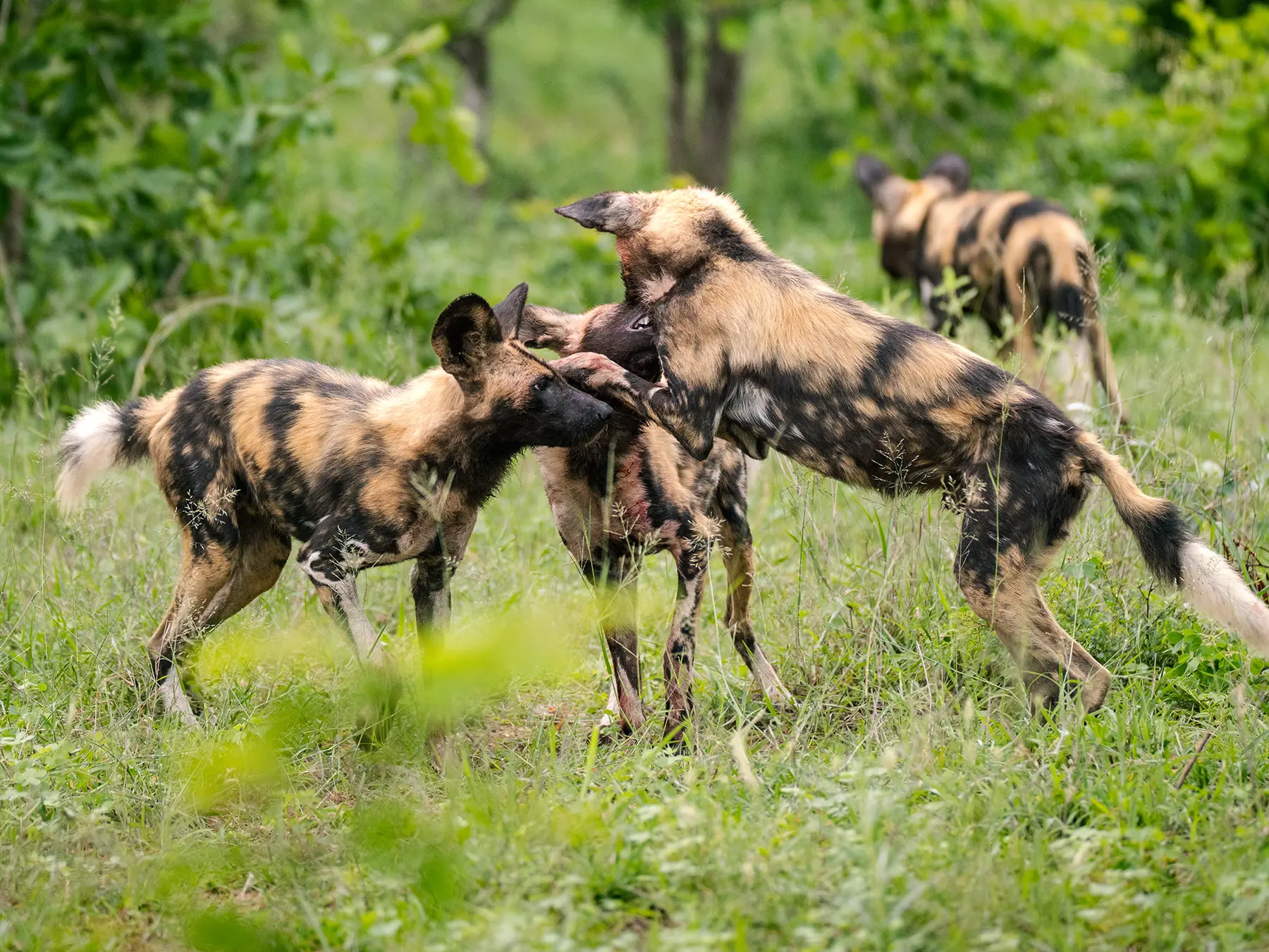
I’ve carefully selected the reserves in this itinerary to make sure you have the best chance of seeing the Big Five as well as other iconic species, such as African wild dogs.
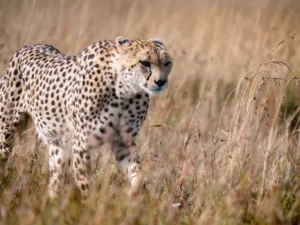
If you want to maximise your chances to see cheetahs as well, consider my 10-day South Africa itinerary which adds Manyeleti as well.
Alternatively, if you want a shorter itinerary taker a look at my 5-day South Africa itinerary which packs the same parks as the 7-day itinerary into a shorter trip.
I’ve also considered travel time between the reserves to ensure you maximise your time on safari.
Each reserve in this itinerary is renowned for different species.
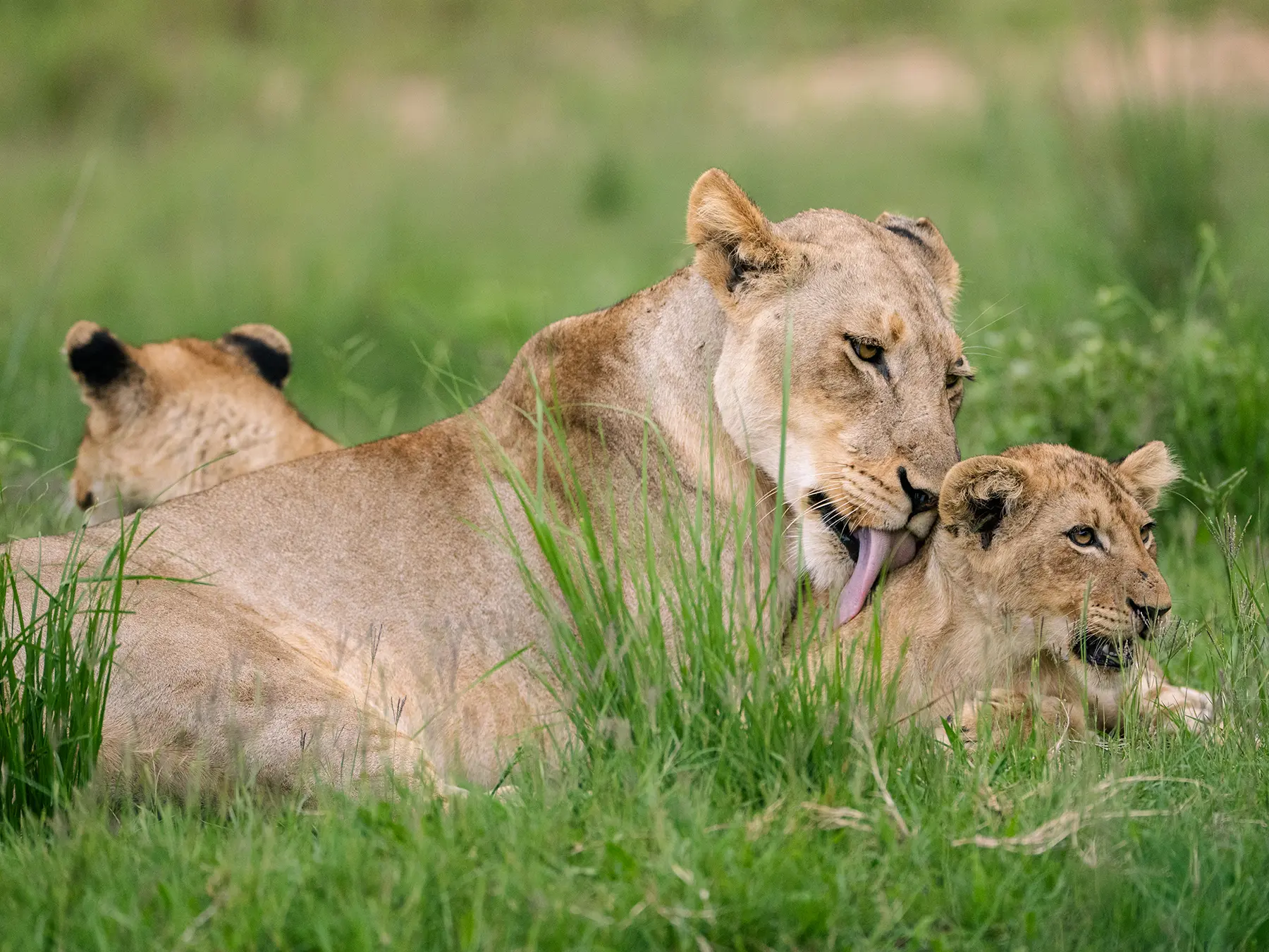
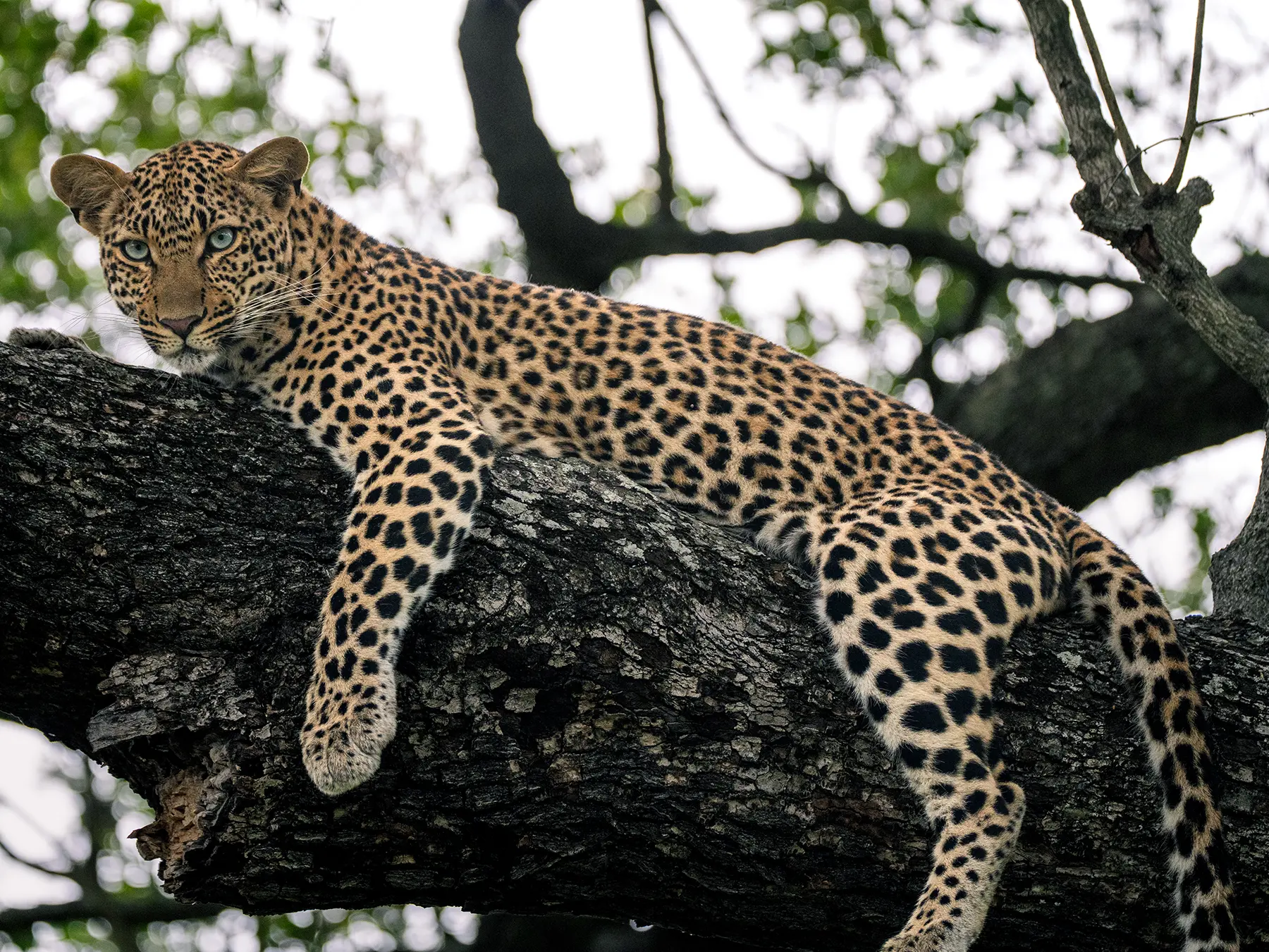
Our first stop, Timbavati, is famous for its indigenous white lions and over 40 mammal species. Sabi Sand holds the highest leopard density surveyed in South Africa, at a whopping 12.2 per 100 km2!
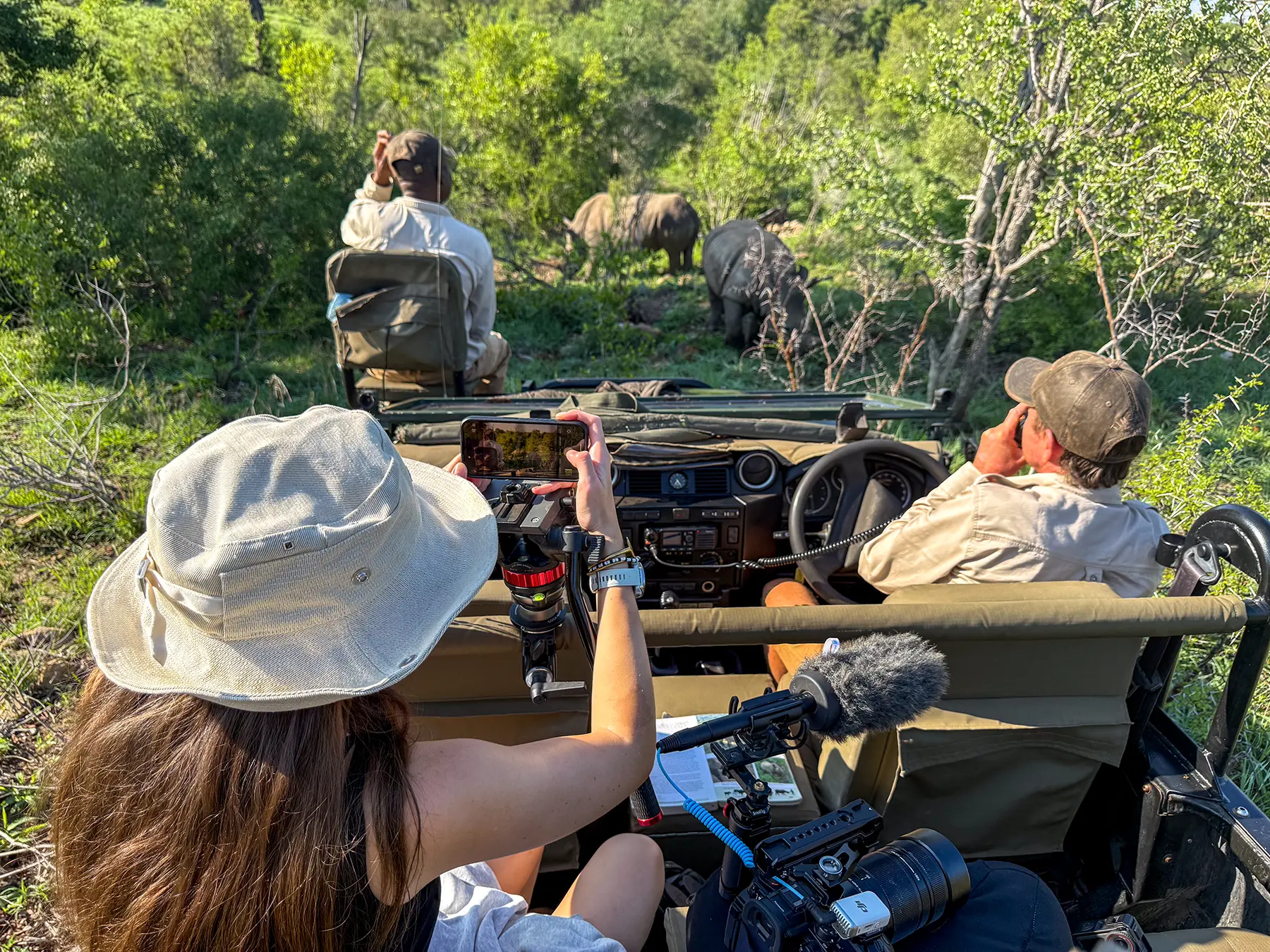
After several visits and, most recently, spending 30 days on safari in South Africa, I’ve perfected this 7-day South Africa itinerary to show you all of what Greater Kruger has to offer as well as giving you the most ‘bang for your buck’.
I’m going to give you an idea of how much it will cost, the best time to visit and how to find the best safari tour company.
As I walk you through the itinerary, I’ll share tips, tricks and how to avoid some of the mistakes I’ve made.
I’ve also spoken at length with my favourite South Africa guides as well as conducting copious amounts of additional research to ensure you receive everything you need to know to have the ultimate 7-day South Africa safari.
It’s easy to focus only on the fun stuff when planning the trip of a lifetime, but I’ll make sure your itinerary includes the practicalities too, like allowing time to navigate rough roads or building in moments to relax. These details often make all the difference.
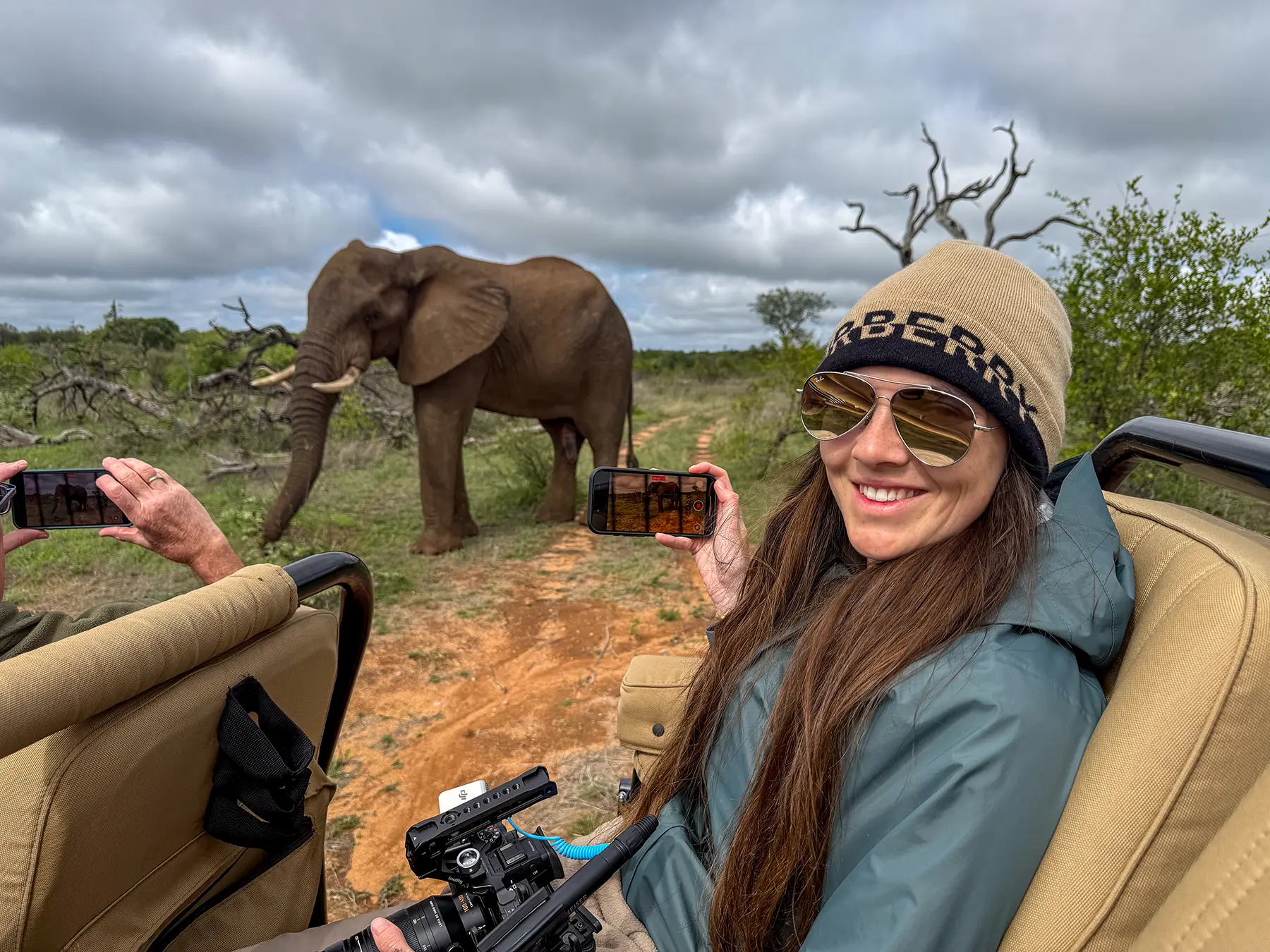
Key Takeaways
- Trip Duration: 7 days (6 nights) across 2 reserves
- Budget Range: $3,400-$8,100 per person
- Best Time to Visit: On paper May-October (dry season) but in reality any time other than January and February. April and May or September to December are my favourite months to visit. These shoulder months offer excellent game viewing at slightly lower rates than the July to August peak.Whilst wildlife was slightly harder to spot (still not exactly hard) due to the green vegetation, it made for spectacular photos and, as you can see from my photos in this guide and YouTube videos from the trip, I still saw a lot of wildlife.
- Key Destinations: Timbavati, Sabi Sand (Greater Kruger)
- Wildlife Highlights: Big Five, white lions, leopards, wild dogs
- Transfers: 1hr road on Day 1; a 1hr flight or 4hr drive on Day 4
- Difficulty Level: Easy (lodge-based, short transfers)
South Africa 7-Day Safari Itinerary Map
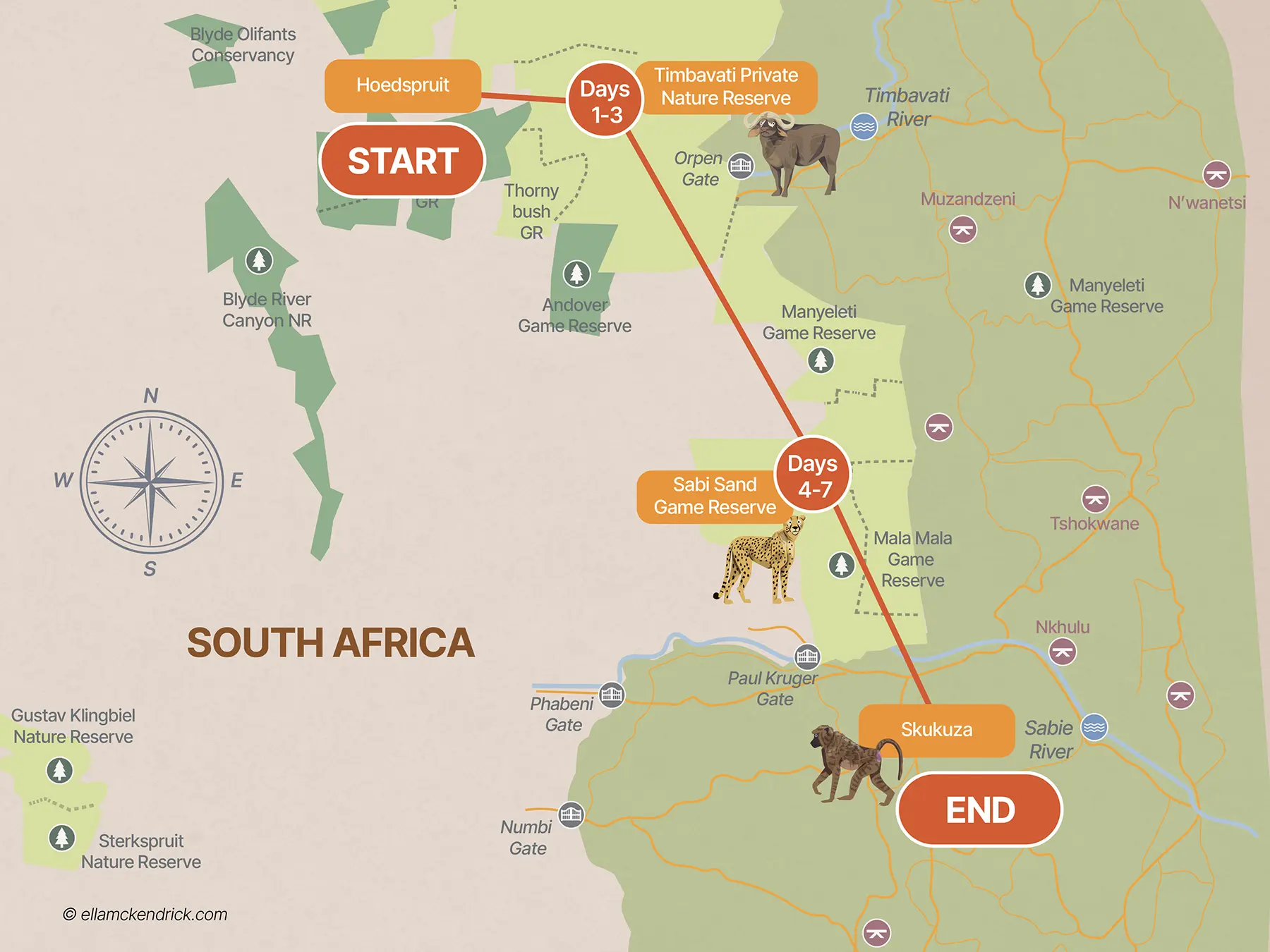
Below is the route map for my recommended 7-Day South Africa itinerary. We’ll cover this itinerary in detail in this guide.
Embark on the Safari of Your Dreams
Save time and ensure an incredible safari experience by getting quotes from my recommended local safari companies
I’m here to make booking your perfect safari quick, easy and risk-free.
Join the rapidly growing tribe of over 1,000 travellers who’ve booked their dream safari using my insider tips and recommendations.
It takes under 60 seconds to fill out the form and in under 48 hours you will receive multiple, no-obligation proposals from my favourite local tour operators with glowing online reviews.
Get your free no-obligation safari quotes and my top safari tips and recommendations
In This Guide
- Why Go on Safari in South Africa?
- How Do You Book a 7-Day South Africa Safari?
- Should You Choose a Private or Group South Africa Safari?
- How Much Does a 7-Day South Africa Safari Cost?
- When Is the Best Time to Visit South Africa?
- How Many Days Do You Need for a South Africa Safari?
- What Does This 7-Day South Africa Itinerary Look Like?
- Day by Day Breakdown
- South Africa Safari FAQs
- Final Thoughts – Is a South Africa Safari Worth It?
Why Go on Safari in South Africa?
South Africa’s Big Five game viewing is among the best in the world.
All of the Big Five (lions, leopards, rhinos, elephants and buffalos) thrive in pristine conservation areas that cover more than 3% of this large country’s total area.
Added to that, the Greater Kruger ecosystem alone is home to 147 large mammal species, which is more than any other game reserve in Africa.
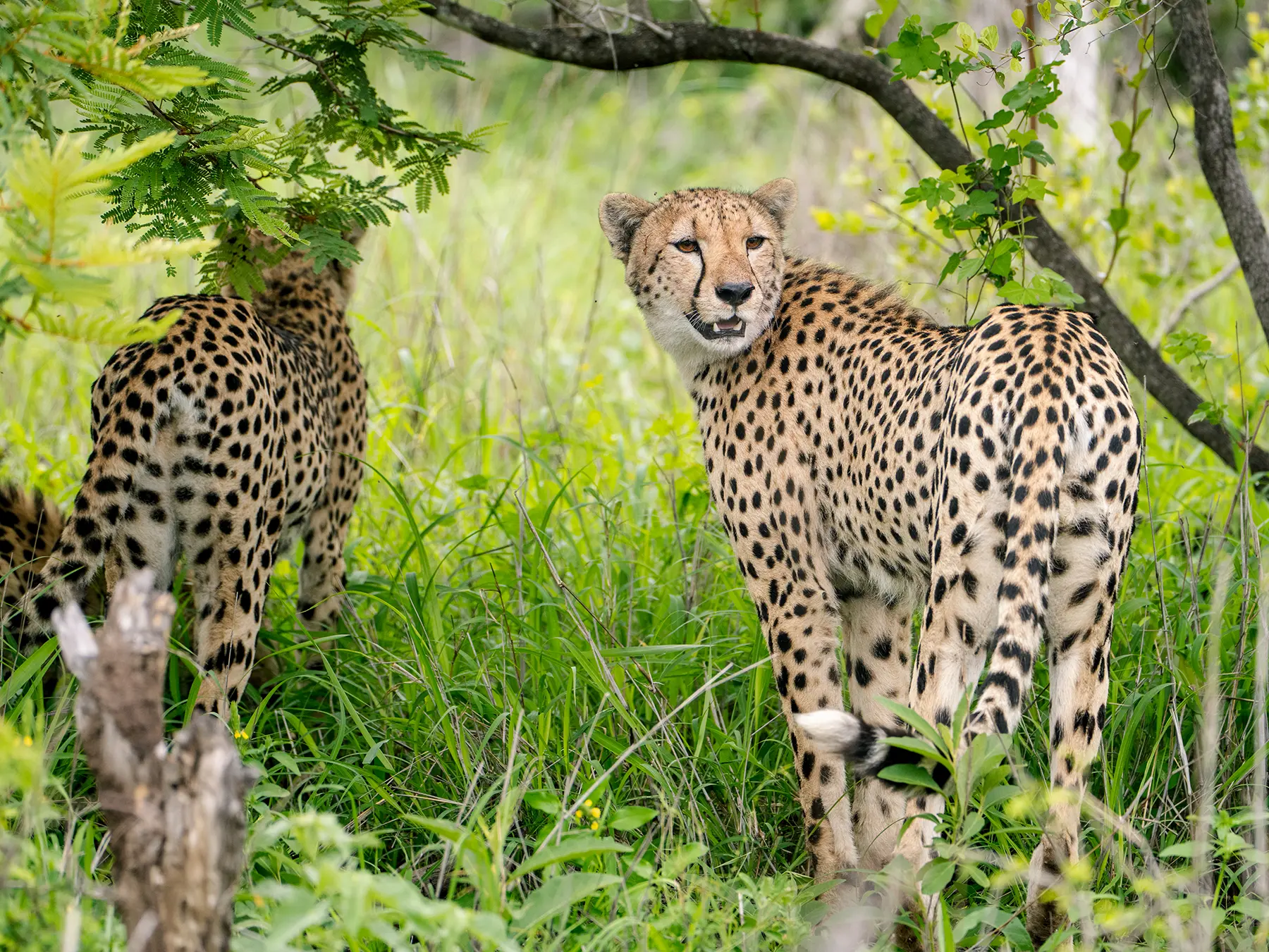
A 7-day itinerary in Greater Kruger will give you spectacular sightings on off-road tracking expeditions, exclusive night drives and thrilling walking safaris, opportunities that aren’t as easily available inside Kruger National Park itself.
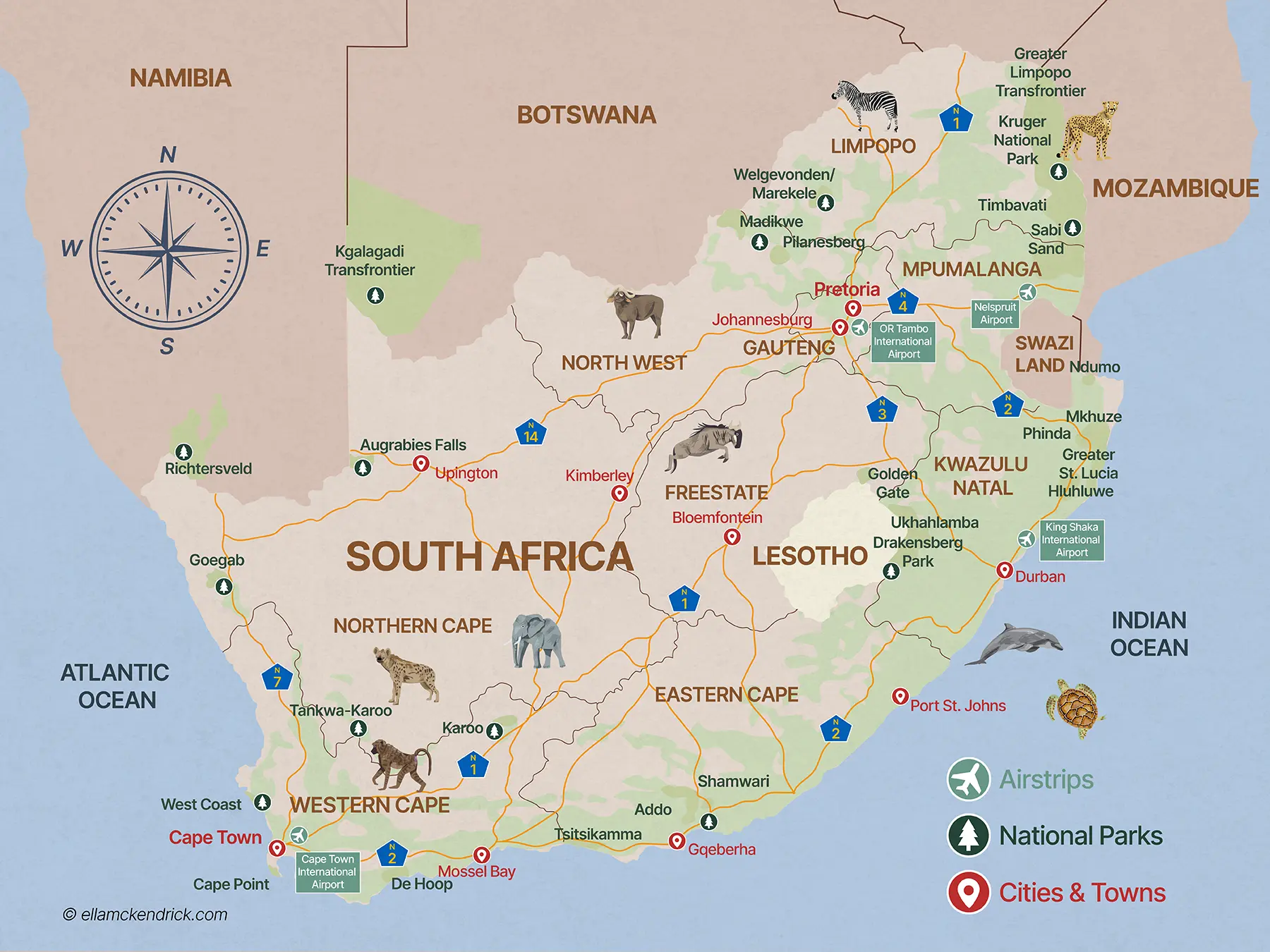
Below is a map I made of South Africa showing the safari highlights.
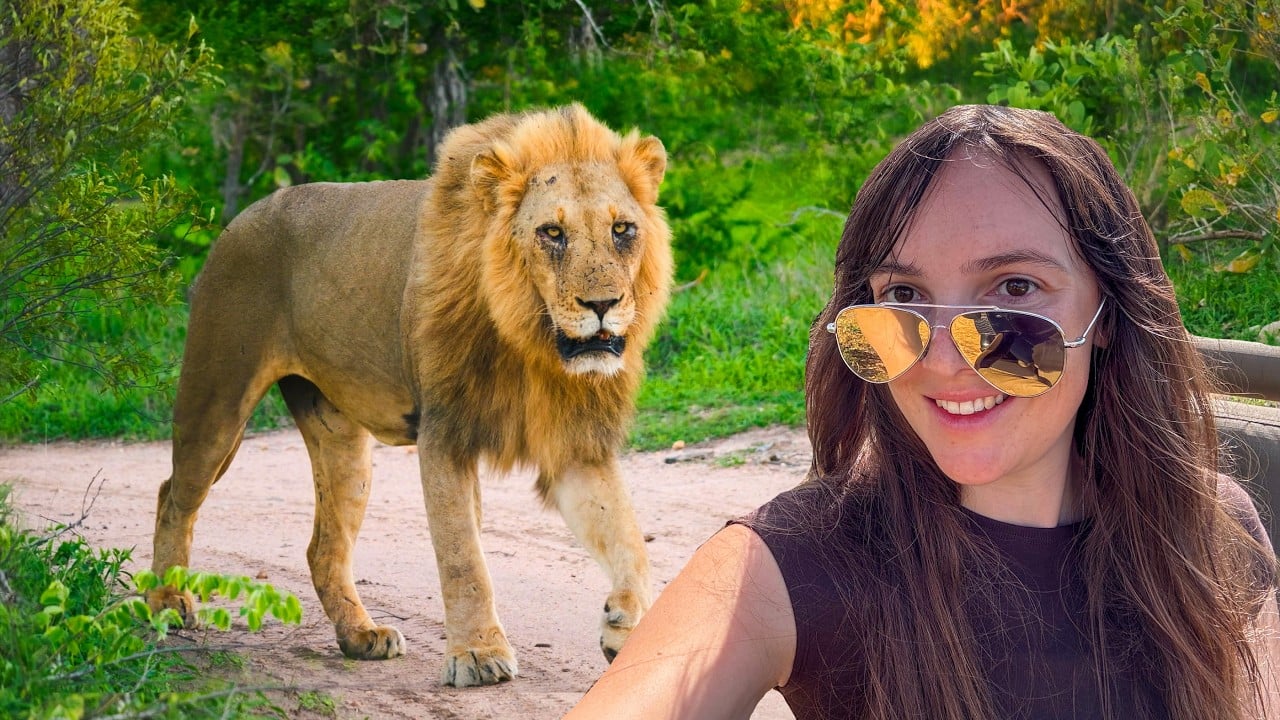
You can watch my South Africa experience video below or, if you’re short on time, skip ahead to my 7-day South Africa itinerary.
Easy Access via Johannesburg and Greater Kruger Airports
International travel to South Africa is straightforward, with direct flights to Johannesburg and Cape Town operating daily from London, Amsterdam, Atlanta, New York, and many other cities.
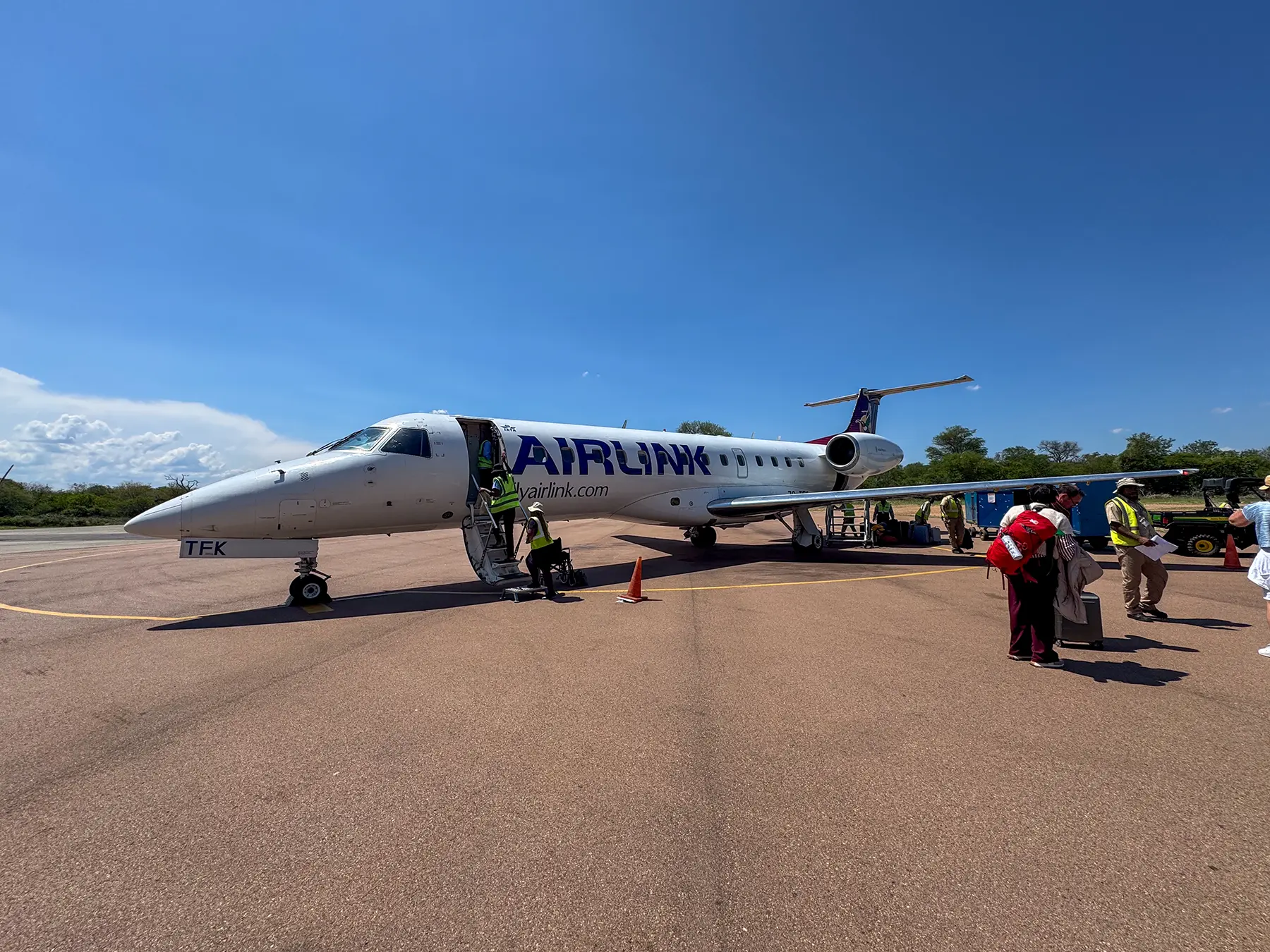
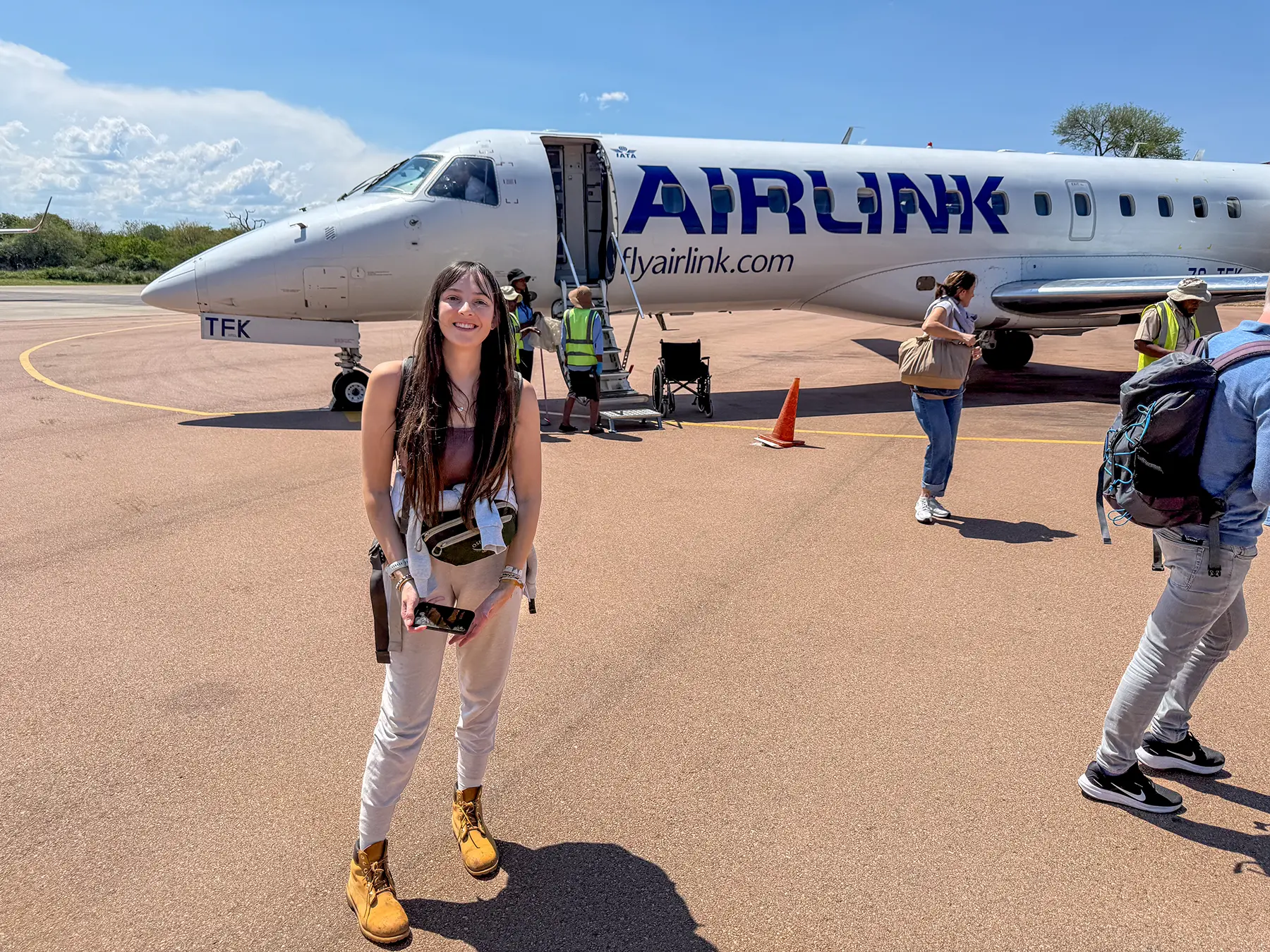
From Johannesburg, local airline Airlink operates daily connecting flights to three airports that are just a short drive from Greater Kruger: Hoedspruit Eastgate, Nelspruit and Skukuza.
Airlink is one of my favourite carriers in Africa. It’s reliable and has comfortable planes, and even has a complimentary meal service on the short 1-hour hop from Johannesburg to Hoedspruit.
World-Class Private Reserves Bordering Kruger
The world-renowned Greater Kruger conservation area is made up of the Kruger National Park and a number of private reserves right next to it.
What’s quite unique about this ecosystem is that there are no fences between the Greater Kruger private reserves and Kruger National Park, so animals move freely throughout one continuous ecosystem.
The main Kruger National Park is accessible and popular with local and international visitors, but the surrounding private reserves on its periphery provide the best safari experiences, albeit at a higher cost. These private reserves are the focus of this itinerary.
Private reserves allow off-road tracking, small-group night drives and walking safaris, experiences which aren’t easily arranged in Kruger National Park.
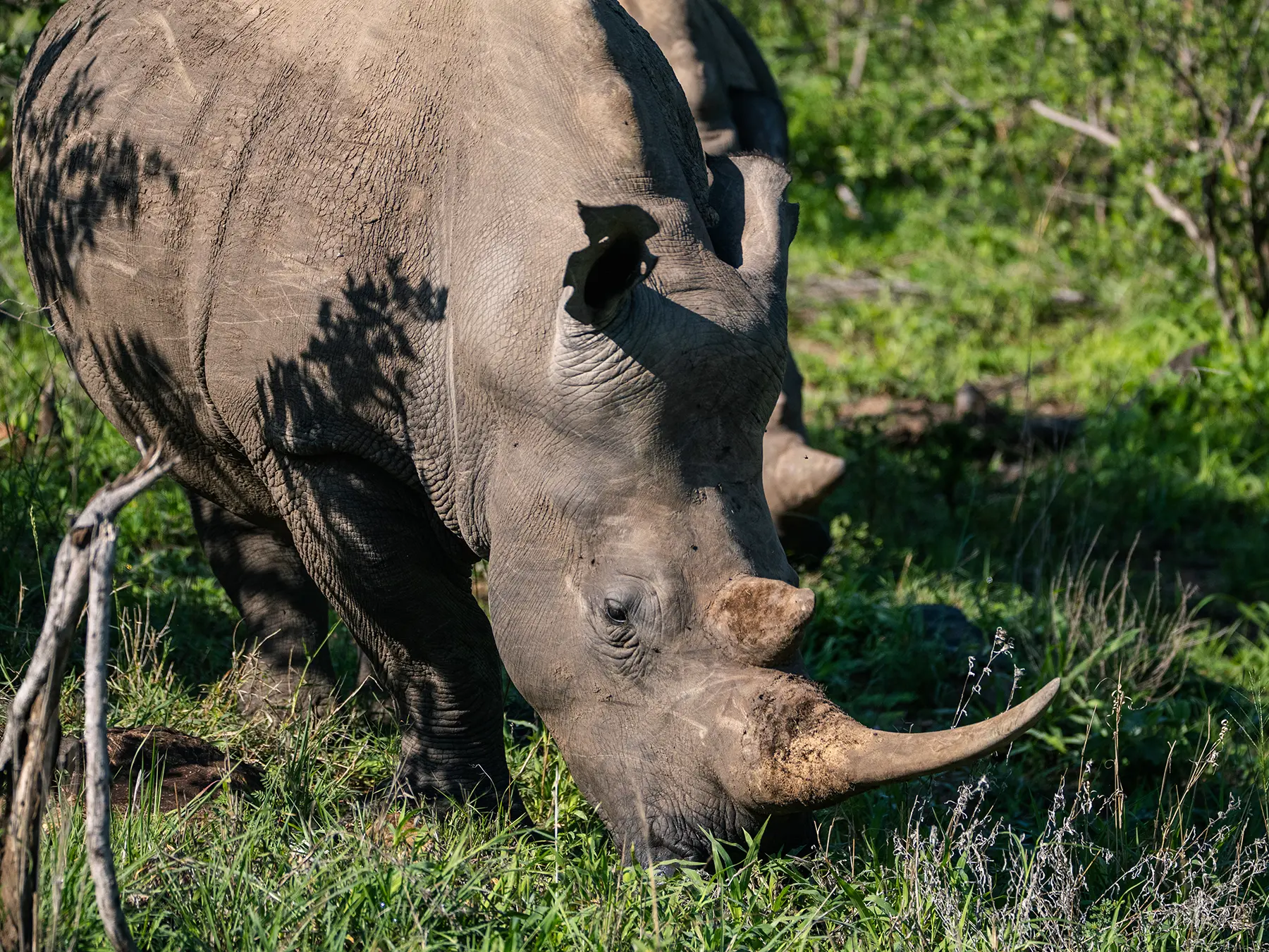
Another major advantage of safaris in the private reserves is that vehicle traffic at sightings is tightly controlled. This is because only guests of the private reserves are allowed to go on game drives within their bounds. Many private reserves cap the number of vehicles allowed at a sighting, and Timbavati strictly enforces a maximum of 2 vehicles per sighting.
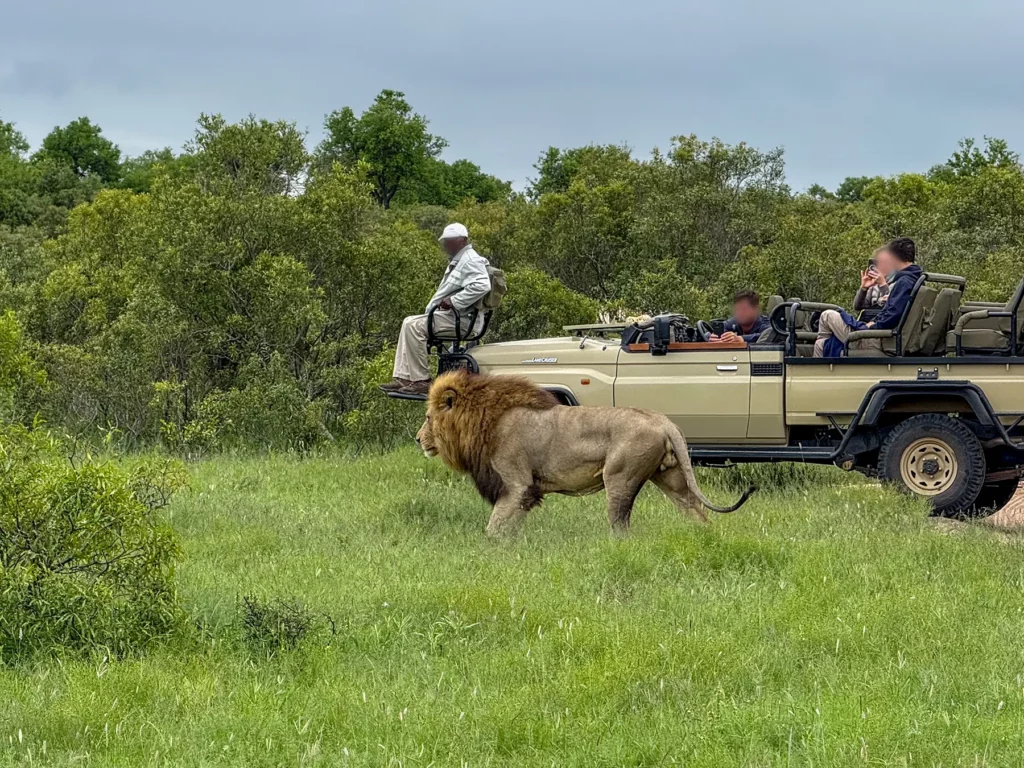
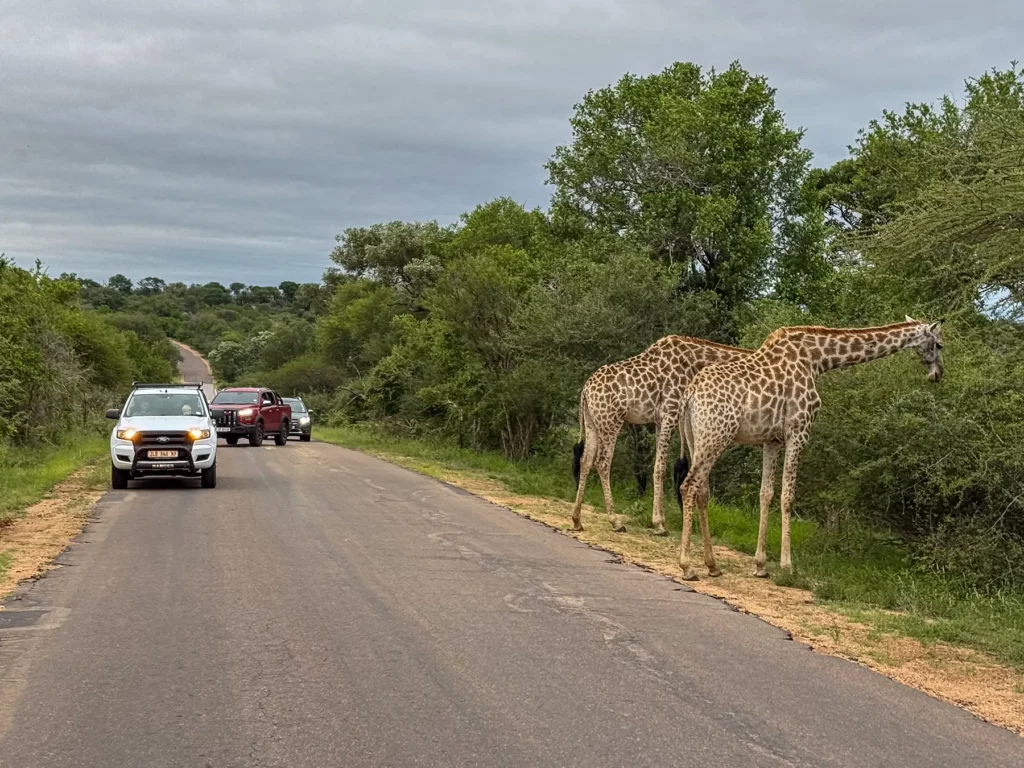
By contrast, in the Kruger National Park popular sightings can easily attract dozens of vehicles, and you sometimes even have to queue to get your turn at a sighting.
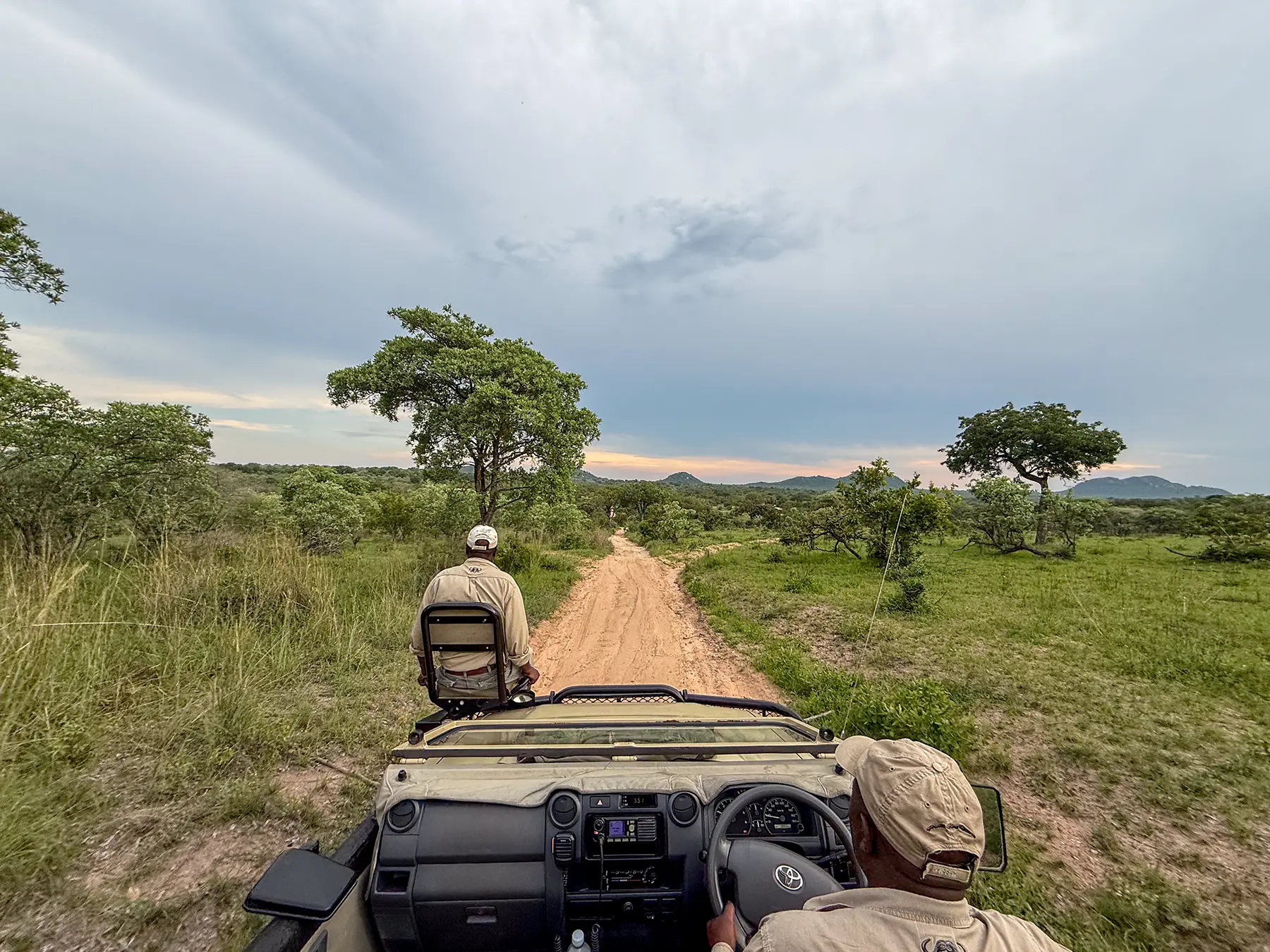
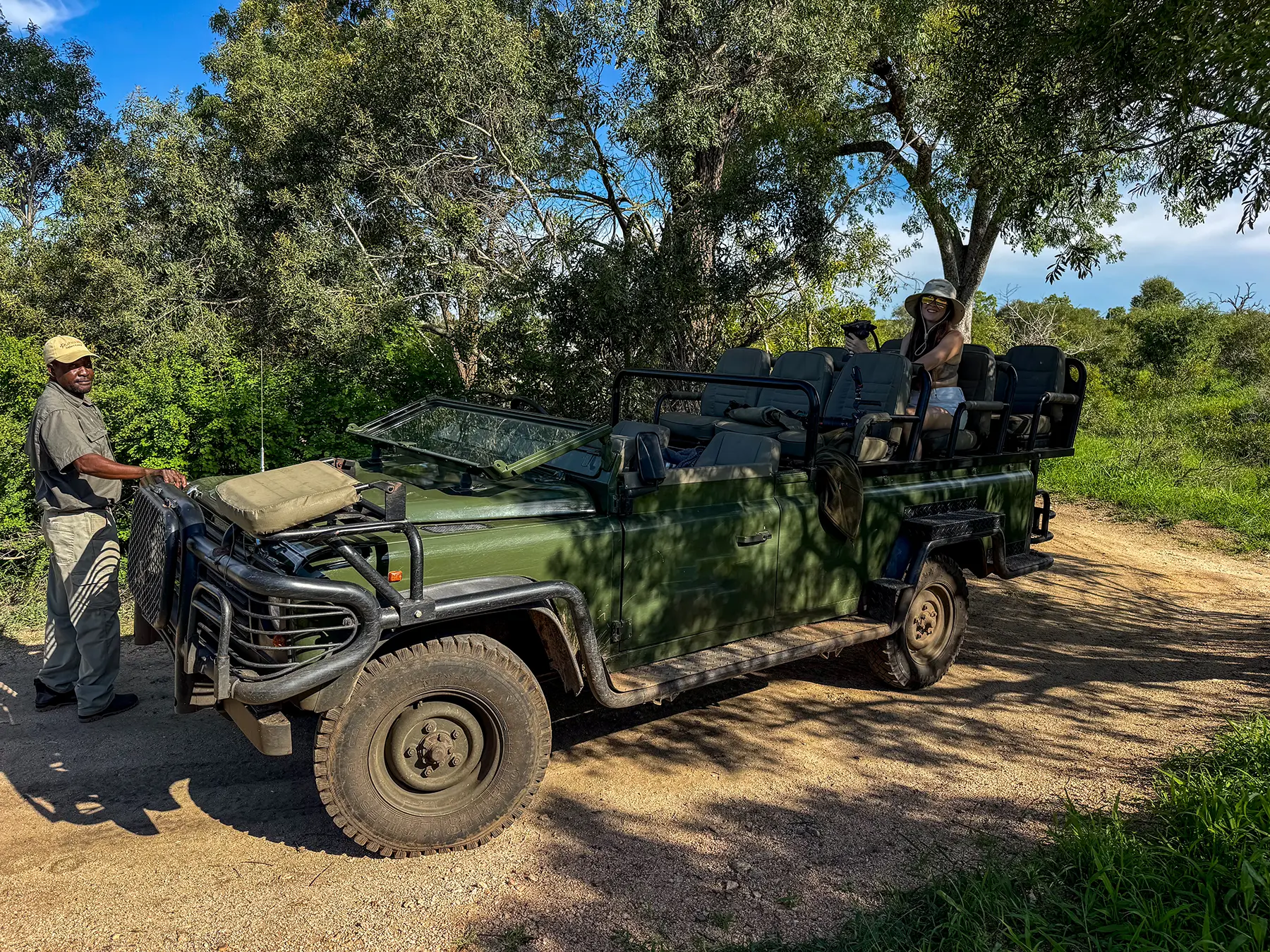
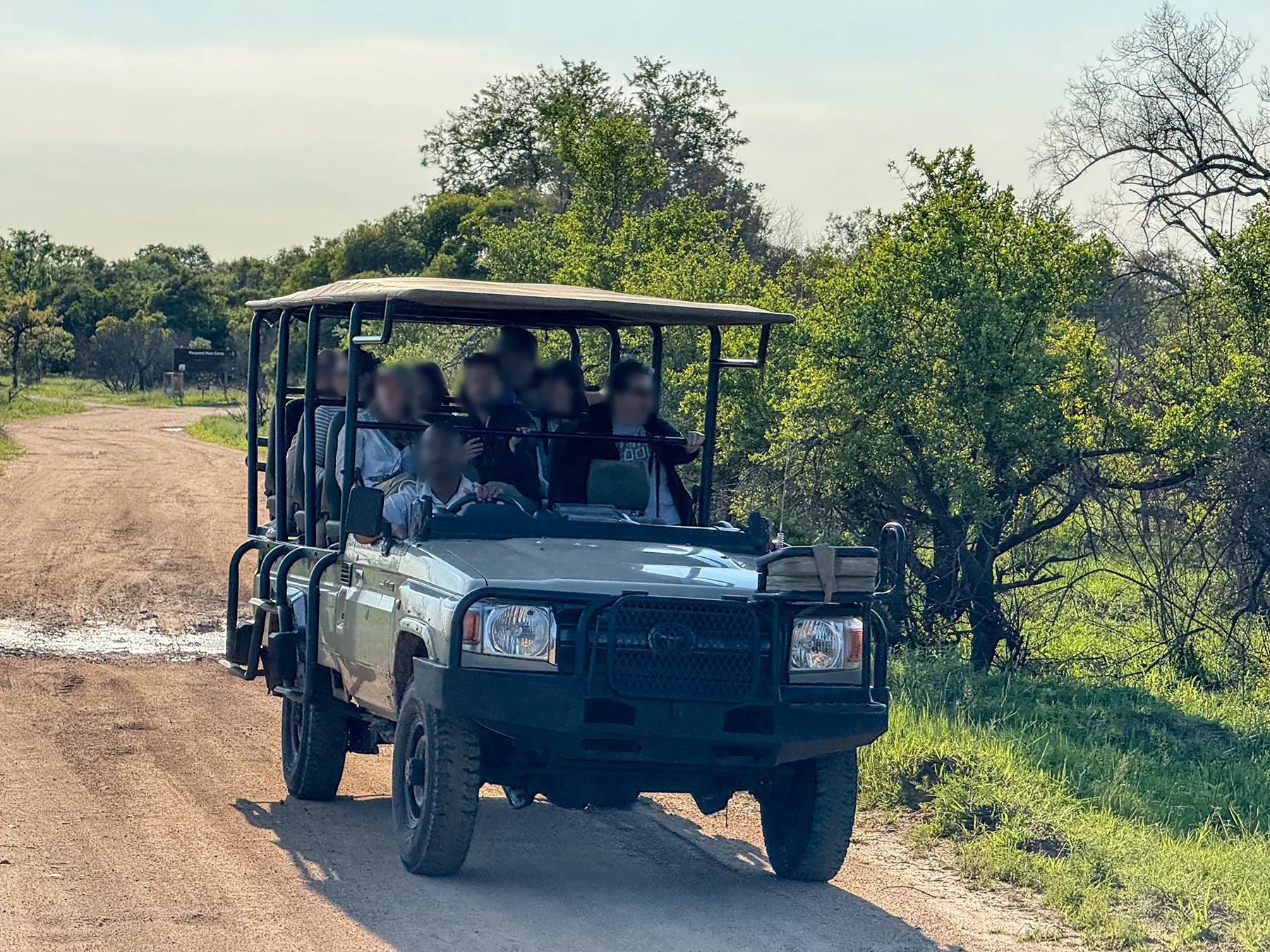
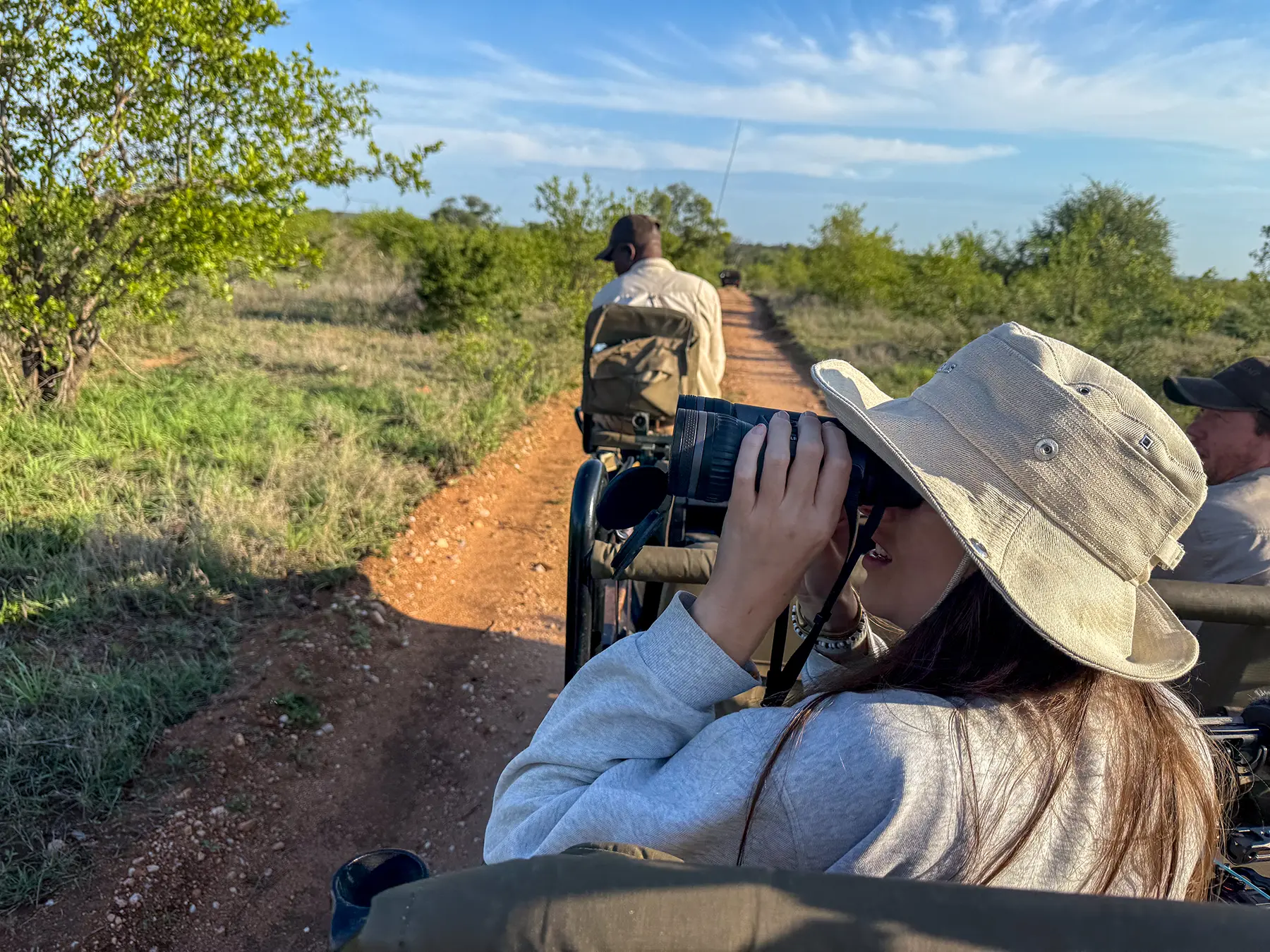
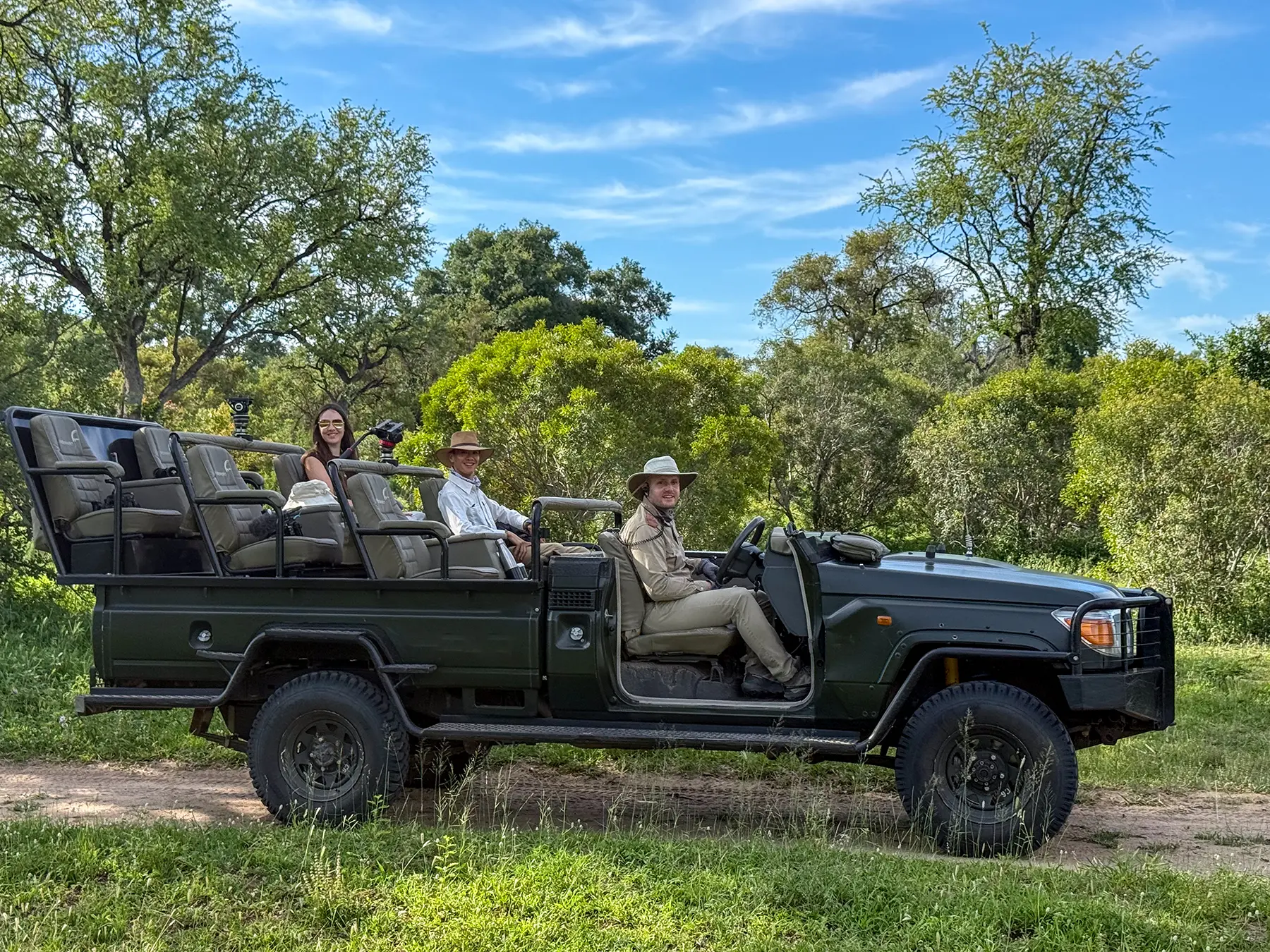
South Africa is the only safari destination I’ve visited where you are assigned a separate driver and tracker on the safari vehicle. This isn’t guaranteed in every camp, but it is quite common practice.
The tracker sits on the very front of the truck to give them the best visibility of wildlife in the bush as well as of tracks on the ground. If the quality of the sightings on my Greater Kruger game drives is anything to go by, then two sets of expert eyes are definitely better than one!
Quick Easy Transfers Between Reserves
Travelling between reserves in the Greater Kruger is straightforward, since they are right next to each other, and can be done by road or air.
Transfers by road can be a bit round-about, as limitations on traversing rights in certain reserves mean that you have to exit the conservation area and travel some distance on public roads. The condition of these roads can be quite rough.
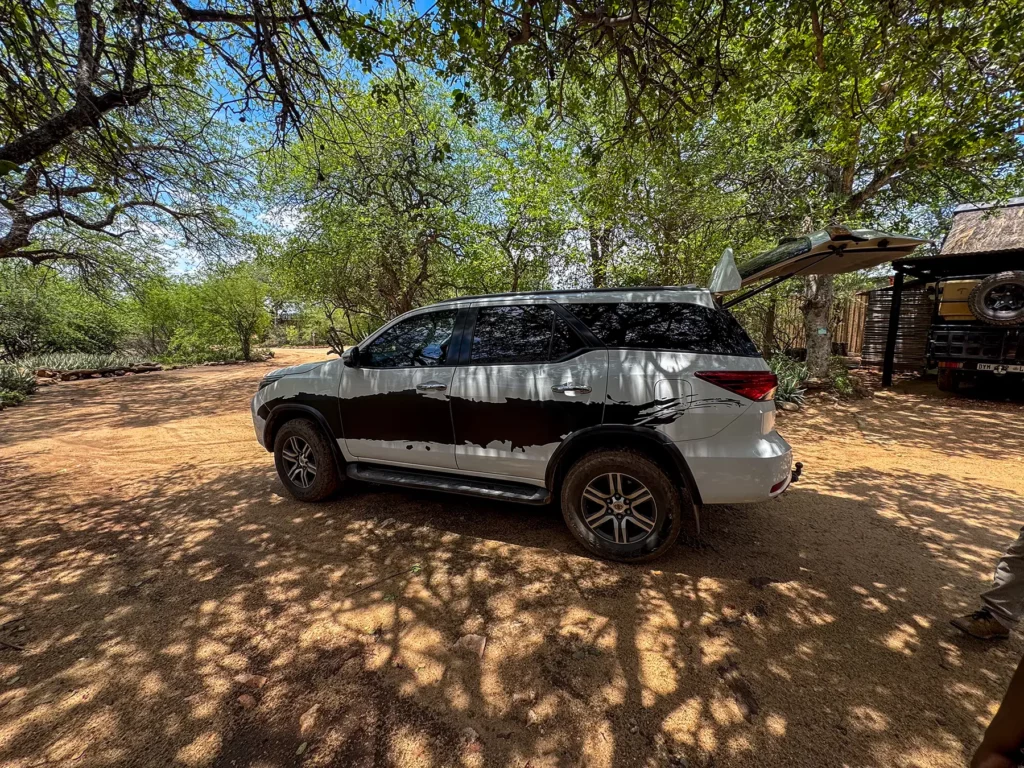
Even so, road transfers between reserves typically take 2 to 4 hours.
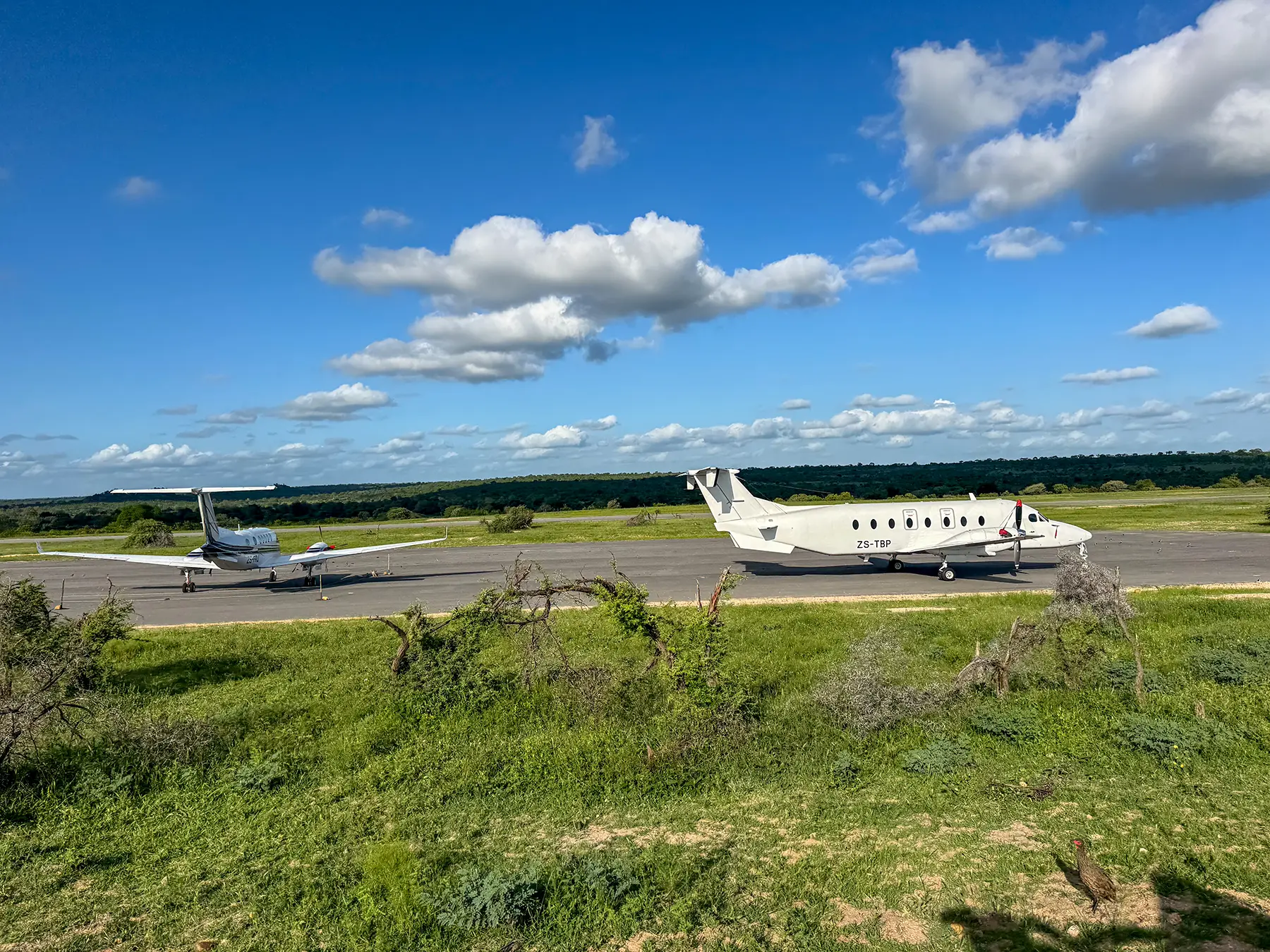
If you prefer to avoid road travel, each private reserve has its own airstrip, and a light aircraft transfer takes around 1 hour. Flying also gives you the advantage of stunning aerial views of the bush below.
All of the Big Five Plus Exceptional Leopard and Wild Dog Viewing
The Greater Kruger is home to all of the Big Five (lions, elephants, rhinos, leopards and buffalos), and thanks to fantastic rhino conservation efforts, you have a good chance of spotting these critically endangered creatures.
I was lucky enough to see all of the Big Five within three days during my stay at Timbavati, with multiple sightings of each. Also at Timbavati, I was even treated to a rare sighting of wild dogs on the hunt!
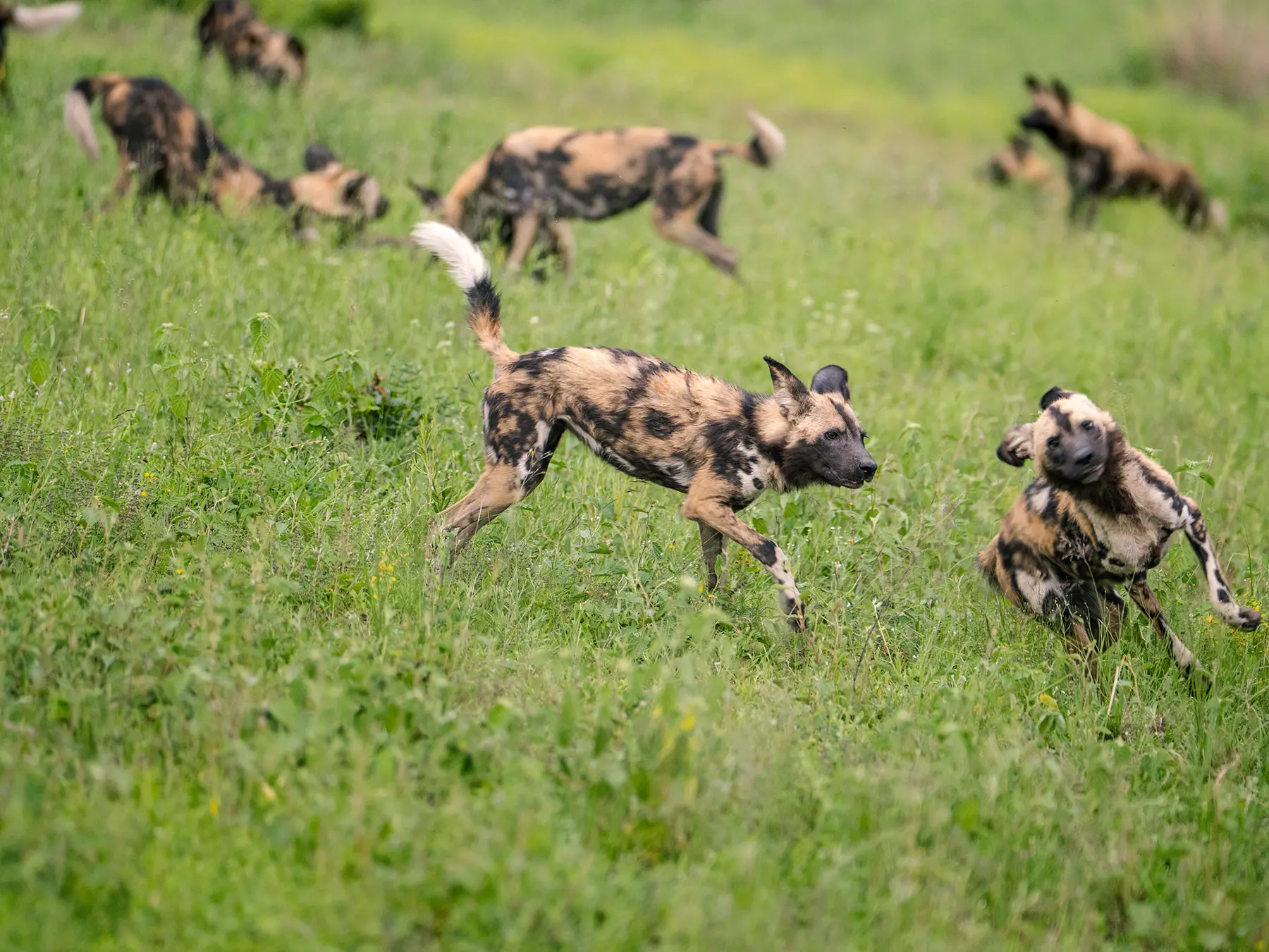
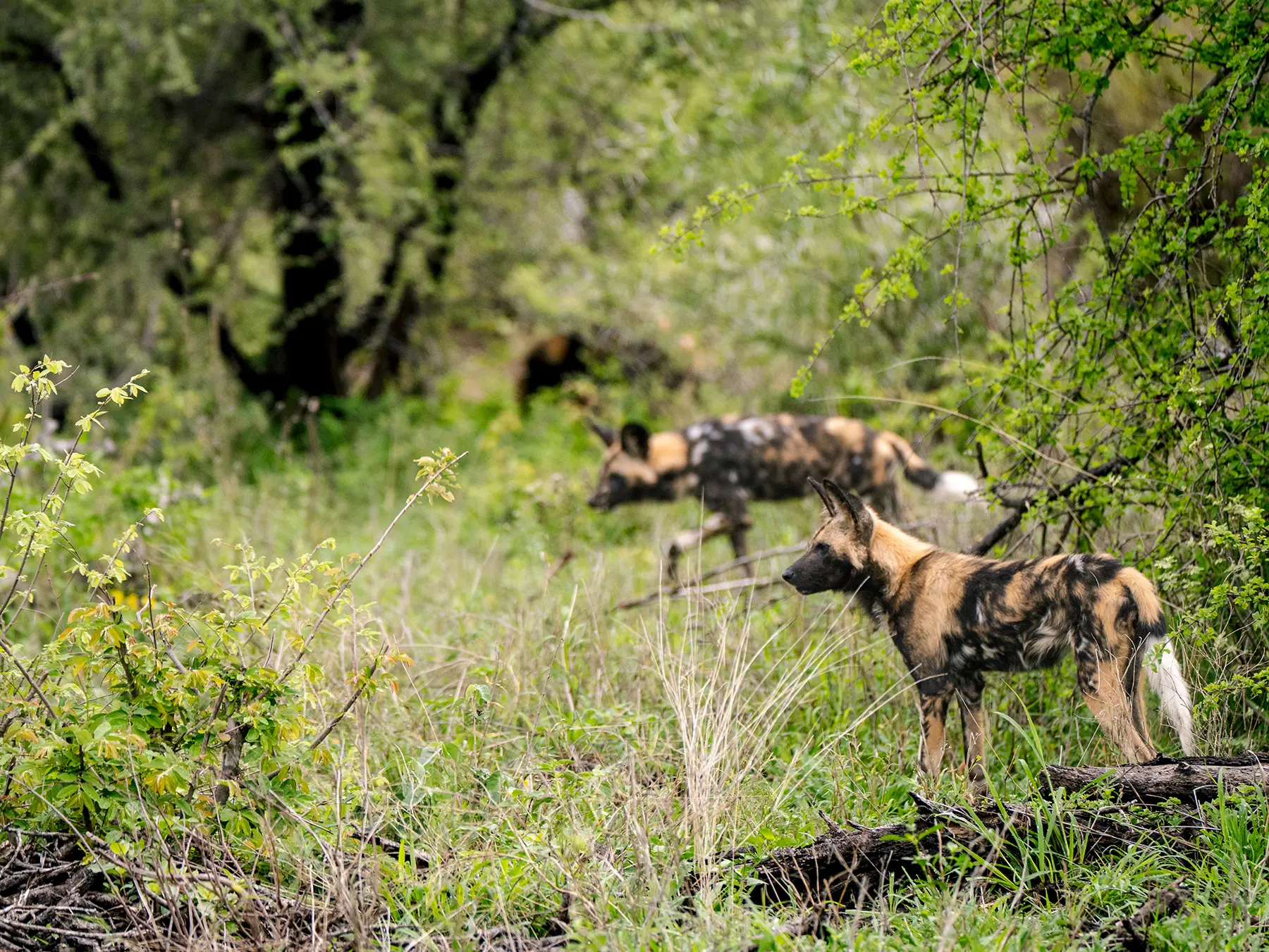
What I was thrilled to discover is that Greater Kruger is in fact one of the most reliable places in Africa to see endangered African wild dogs.
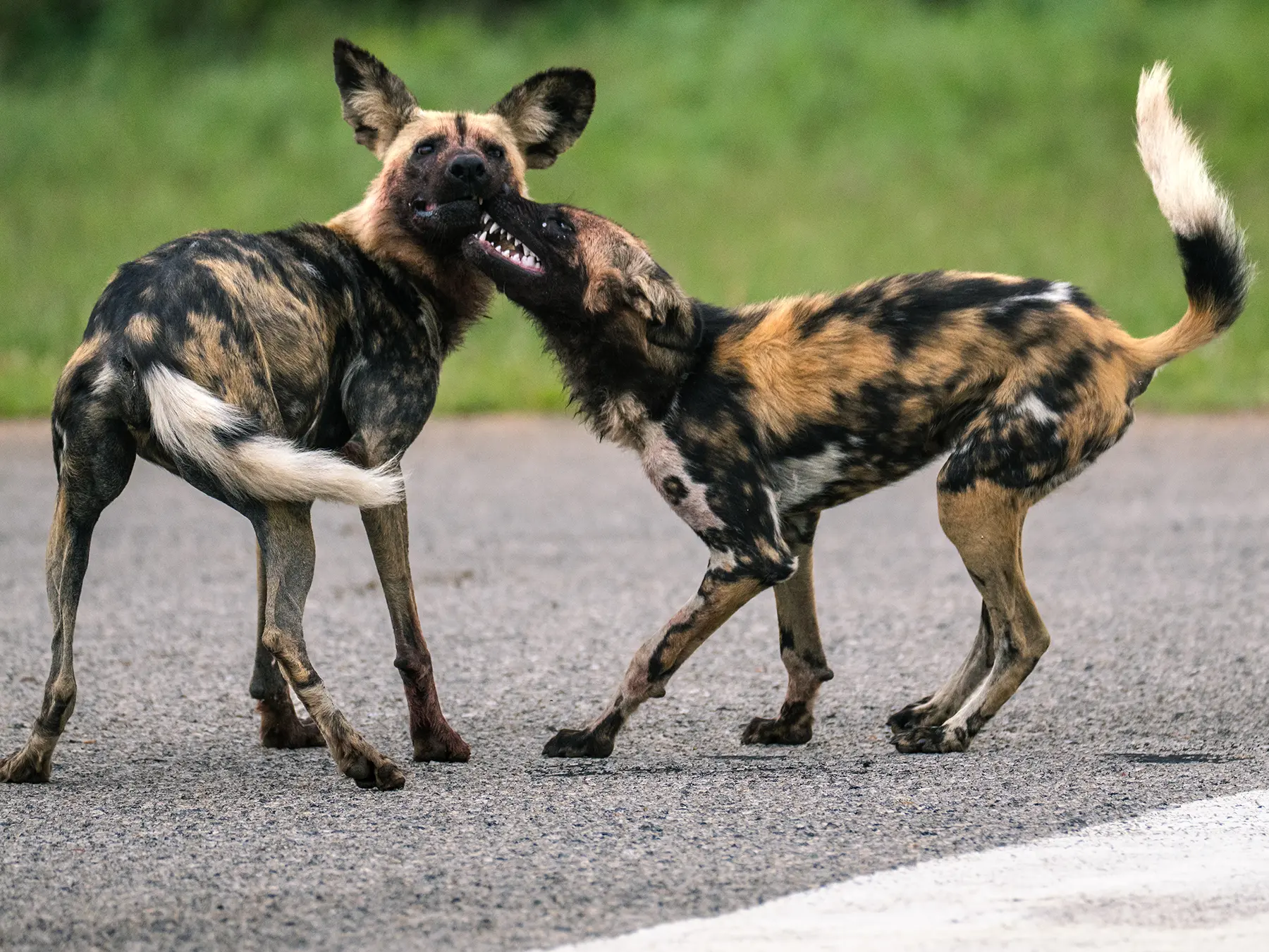
I had six wild dog sightings across three reserves during my month spent in Greater Kruger. In one sighting at Sabi Sand, I even saw wild dogs taking down an impala.
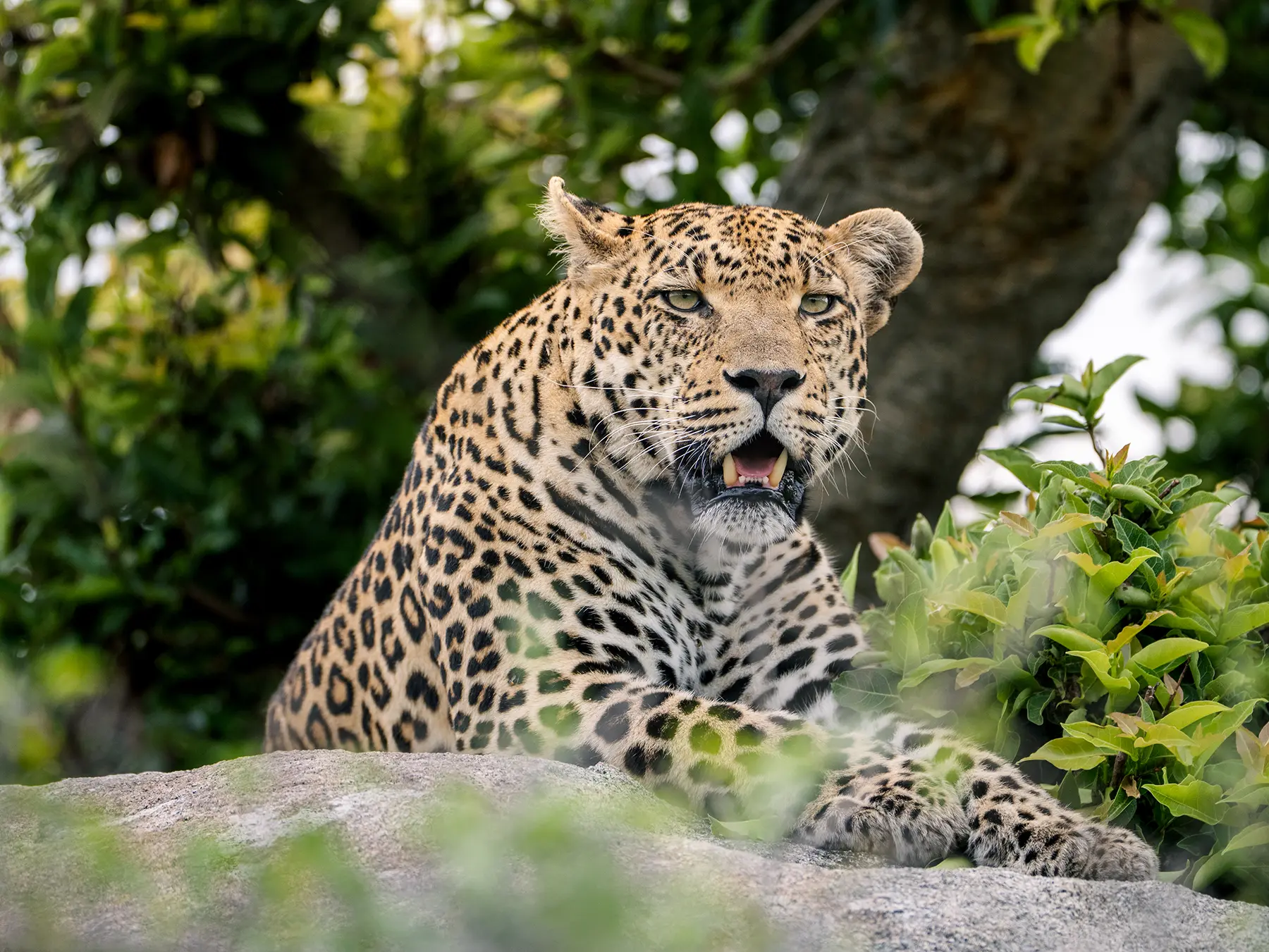
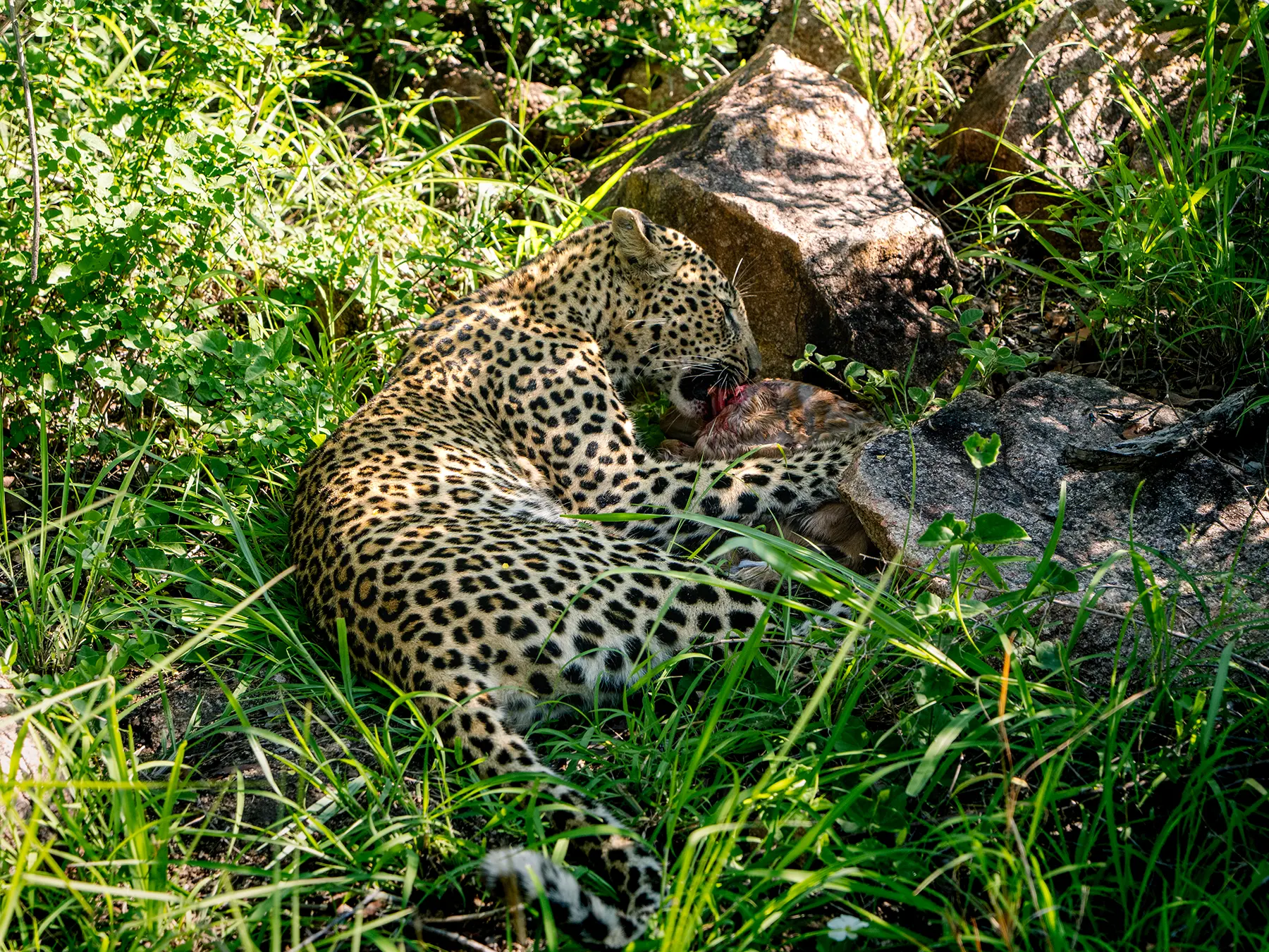
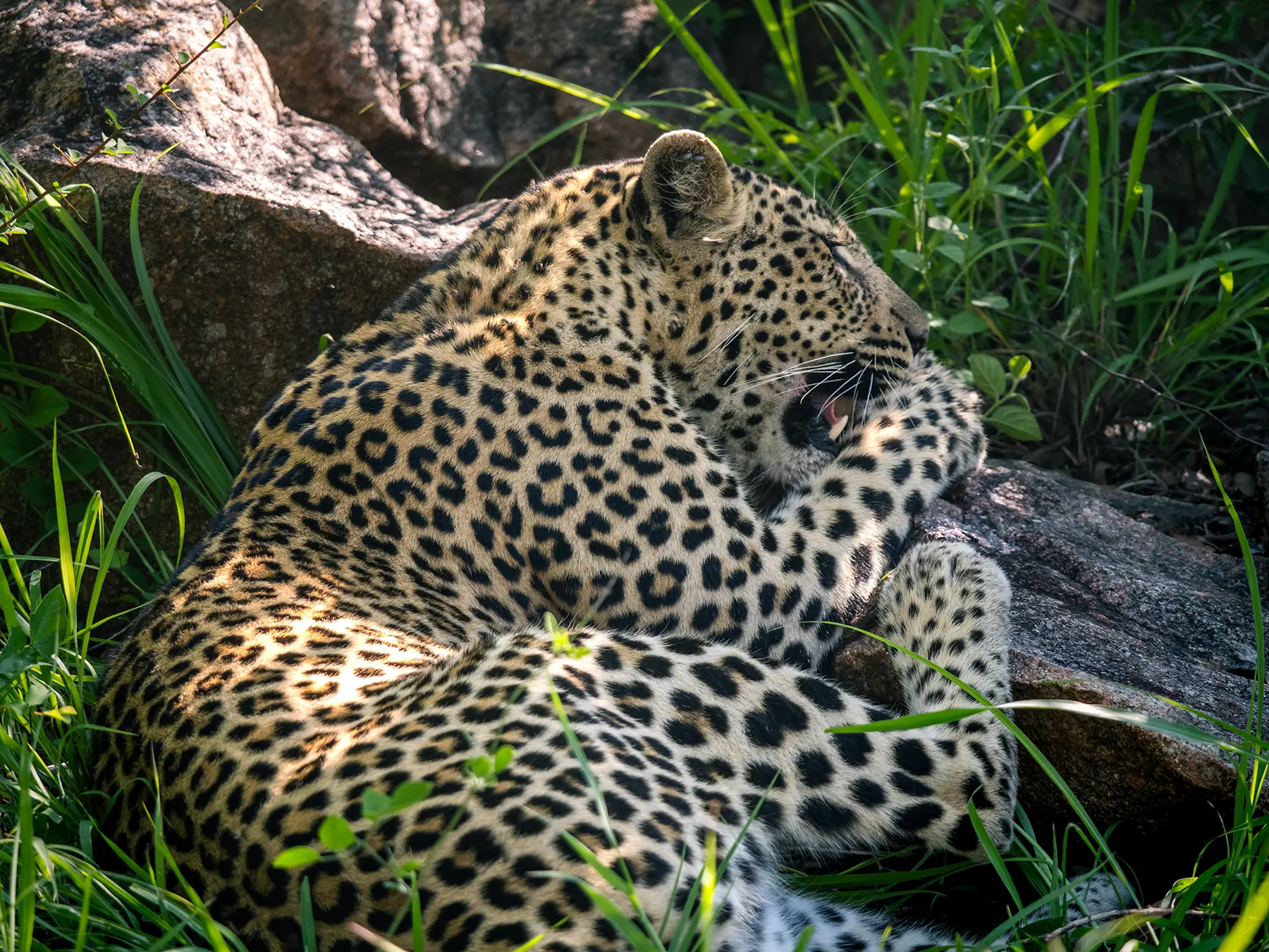
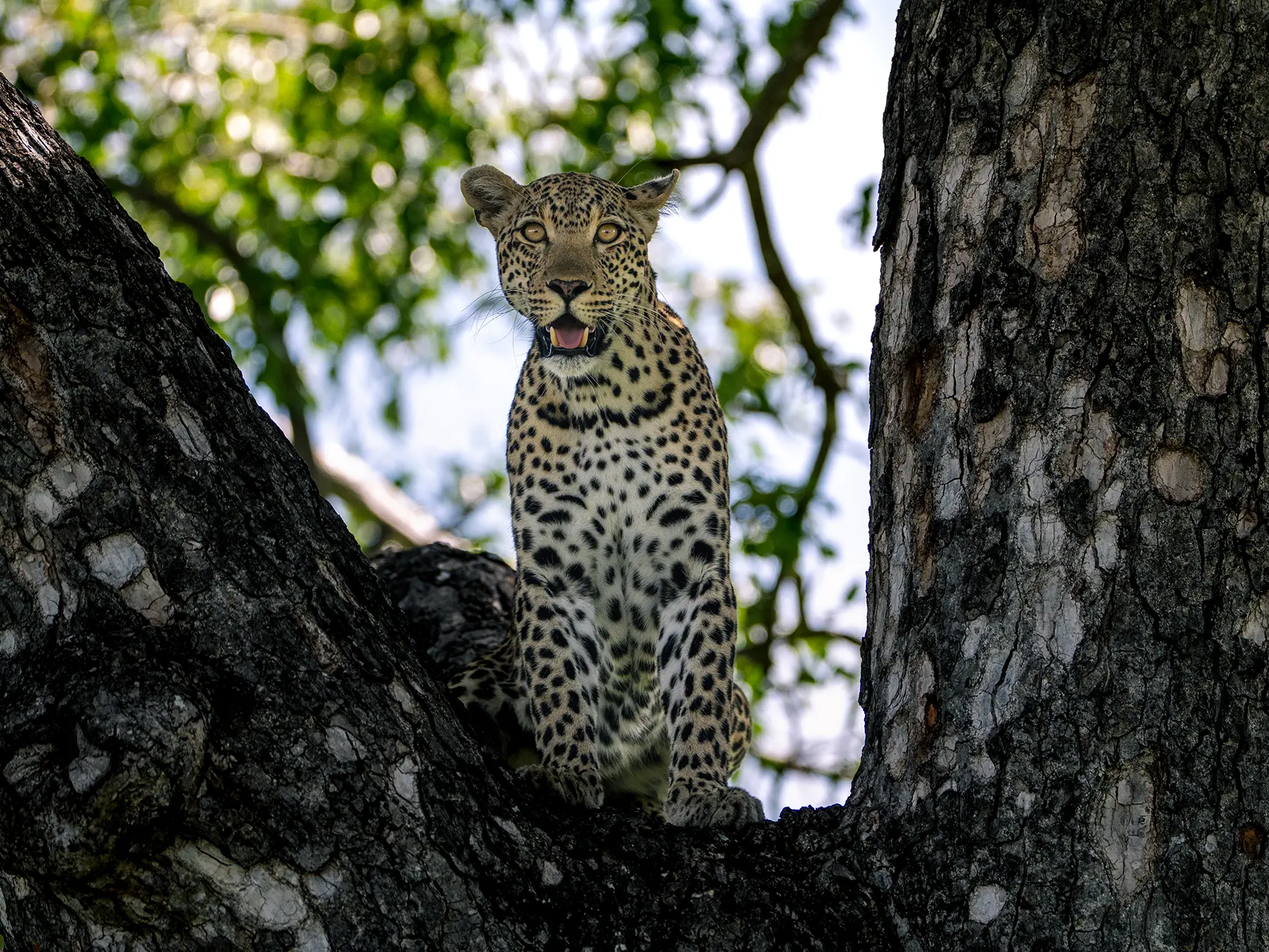
Leopards really steal the show at Sabi Sand, though. This reserve has the highest leopard density recorded in South Africa, with an incredible 12.2 leopards per 100 km². Guides in the area have identified approximately 85 individual leopards by the unique patterns of their spots.
I spotted an astounding 15 leopards during my South Africa safari, 10 of which I saw during my 5 nights in Sabi Sand alone.
One of the signs of a truly healthy ecosystem is species diversity, and Greater Kruger is world famous for the superb range of its wildlife populations. There are 147 different species of large mammals in the Kruger, as well as over 500 bird species.
Pros of Safaris in South Africa
- World-class Big Five viewing in the private reserves of Greater Kruger, with expert guides and trackers, low vehicle density and the ability to drive off-road for closer sightings.
- Easy international access with direct flights from London, Amsterdam and several other global centres into Johannesburg and Cape Town, as well as daily Airlink connections to three Greater Kruger airports.
- No fences between Kruger National Park and the surrounding private reserves, creating one continuous ecosystem for free-roaming wildlife.
- Minimal vehicle traffic at sightings in the private reserves because only in-reserve guests can safari there, in contrast to the Kruger National Park, where popular sightings attract dozens of vehicles.
- Sabi Sand offers some of the best leopard viewing in Africa at 12.2 leopards per 100 km². Guides are able to identify 85 resident individuals.
- Reliable wild dog sightings in Greater Kruger, including the chance to witness a successful hunt.
- Easy transfers between the private reserves by road (2 to 4 hours) or an hour-long light aircraft hop between the reserves’ airstrips.
Cons of Safaris in South Africa
- Greater Kruger private lodges tend to be more expensive per night than comparable lodges in East Africa, with most starting from around $500 per person per night.
- Budget accommodation is extremely limited inside the private reserves. Self-catering and camping options that exist in Kruger National Park aren’t available in Sabi Sand or Timbavati.
- The entire Greater Kruger area is classified as a malaria risk zone, so antimalarial medication, insect repellent and mosquito nets are required – a consideration for families with young children.
- The complex traversing rights system between reserves can make road transfers longer than the straight-line distance suggests, because vehicles often cannot drive directly through neighbouring reserves.
- Self-drive safaris are not permitted in most private reserves including Timbavati and Sabi Sand. All game drives must be conducted by professional guides.
- Tarmac roads inside main Kruger National Park can reduce the wilderness feel compared with the dirt roads of the private reserves.
- Summer temperatures in the Lowveld region of South Africa can exceed 40°C, making midday game drives uncomfortable from November through April.
- There is no Great Migration spectacle in South Africa, unlike the seasonal river crossings you can see in Kenya and Tanzania.
How Do You Book a 7-Day South Africa Safari?
Without a doubt, the easiest and best value-for-money way to arrange your 7-day South Africa safari is by booking through a reputable local tour operator.
That’s what I did for my own safaris in South Africa, and they were absolutely amazing.
A local tour operator will arrange your accommodation, reserve permits, game drives, and inter-reserve transfers at lower cost than international agents. Other booking options include using an international travel agent or arranging everything yourself and self-driving.
You can get quotes from the same local tour companies I use to organise my own trips here: Safaris By Ella
Here is a summary of the three main ways to book a safari, each with different trade-offs on cost, flexibility, and experience.
Booking Options at a Glance
| Option | Cost | Flexibility | Best For |
|---|---|---|---|
| Local Tour Operator | $$ | High | Most travellers, best value |
| Self-Drive | $ | Extremely High | Experienced drivers comfortable with driving on dirt roads and wildlife spotting |
| International Agent | $$$ | Medium | Those wanting international flights and safari in one package, willing to pay 30-50% more than a local tour operator |
Greater Kruger has some details worth knowing about before you choose a booking method.
Self-drive is not permitted in Timbavati or Sabi Sand. It is only permitted in the public Kruger National Park and, on the roads, in Manyeleti.
If you are considering self-driving, bear in mind that finding wildlife can be very tricky without an experienced guide and radio network. On a self-drive in neighbouring Namibia, I missed elephants, rhinos and cheetahs entirely because I didn’t have the tracking expertise of a local guide.
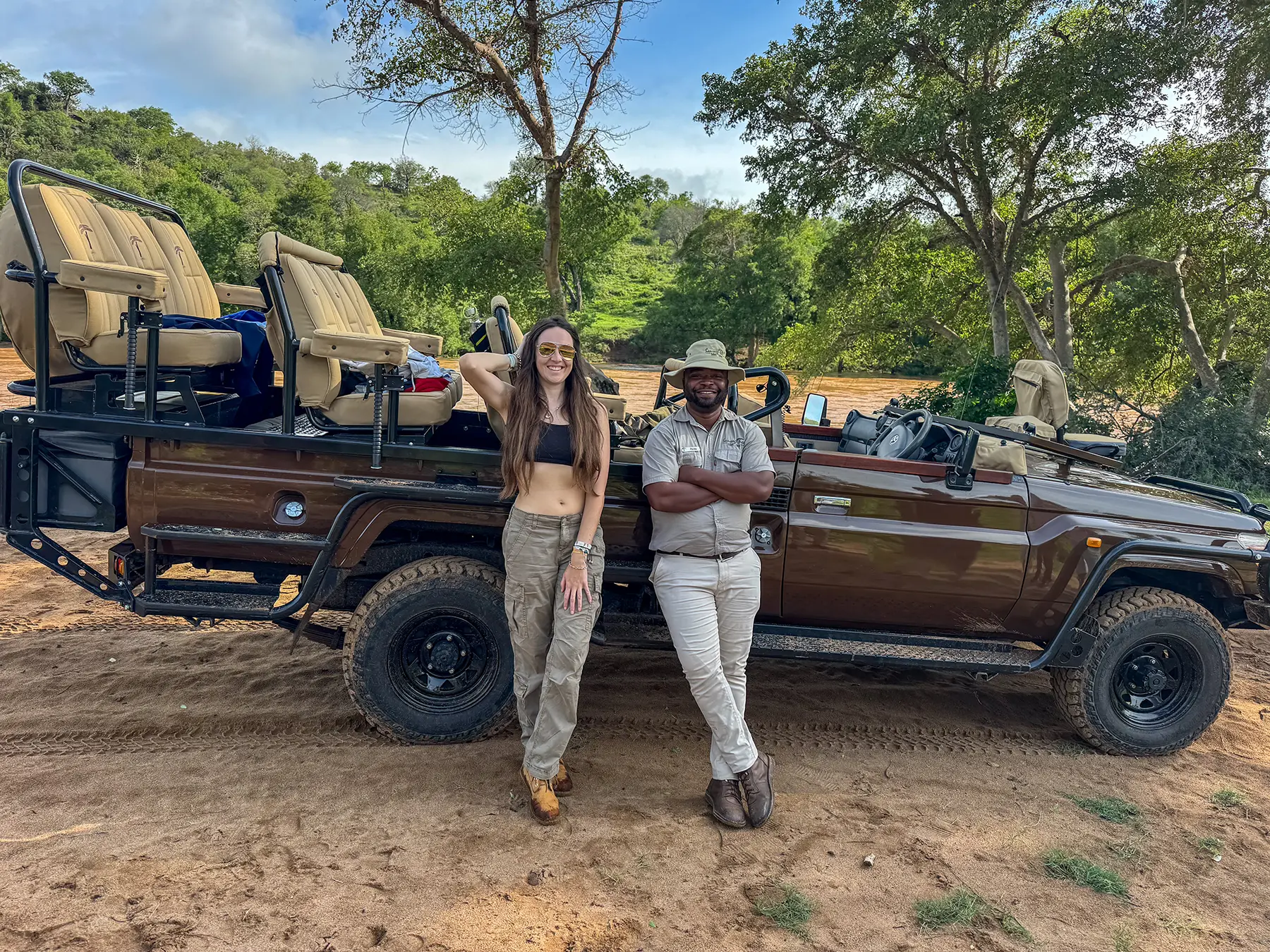
You will need a guided safari (not self-drive) for the three main advantages of staying in the private reserves, which are off-road driving, night drives, and walking safaris.
If you’re considering booking with an international travel agent, it’s useful to know that they tend to subcontract your bookings back to local South African operators anyway.
This means that the 30-50% markup they put on these outsourced bookings really buys you nothing other than the convenience of being able to book your international flights as part of the same package (for an additional cost) and a billing relationship in your home country.
Why I Recommend a Local Tour Operator for South Africa
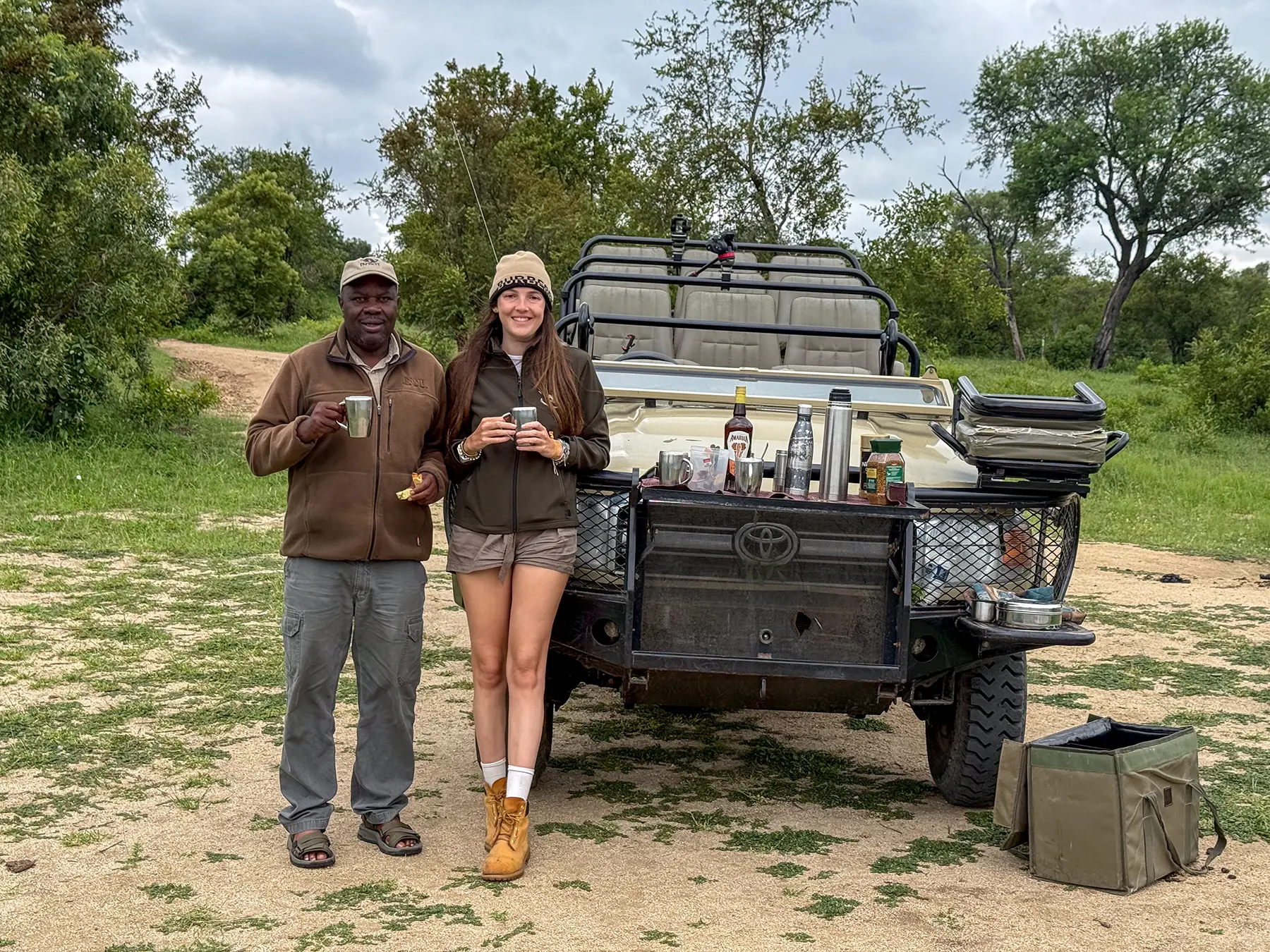
Having tested all three booking methods, and learned the hard way, I always opt to book my safaris with local tour operators these days.
A local tour operator in South Africa handles all your reservations at your destination, including accommodation across private reserves, road transfers from Hoedspruit Eastgate Airport, inter-reserve air or road transfers, as well as guides and game-drive vehicles at the lodges.
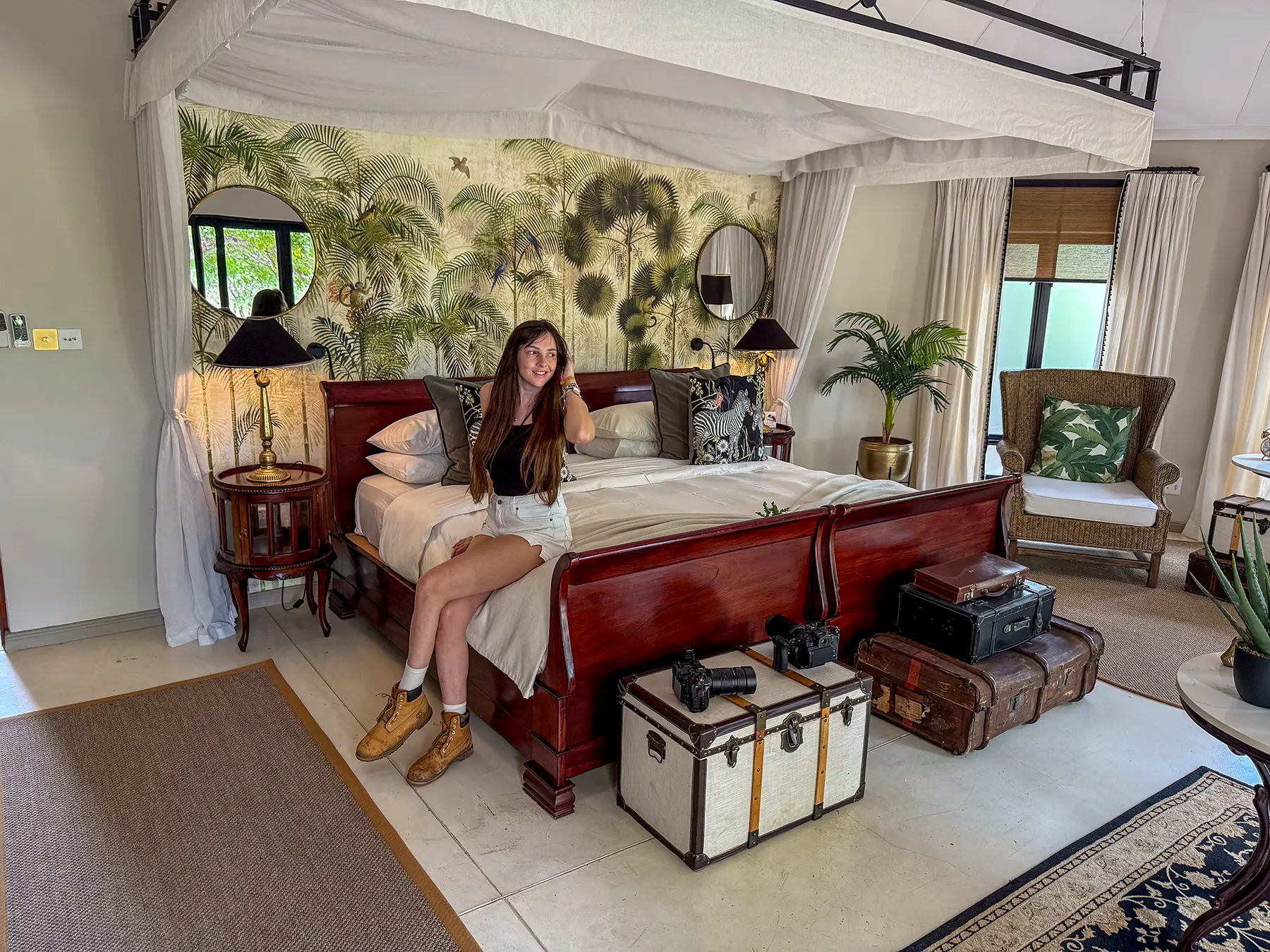
Local operators in South Africa also have access to rooms at lodges in flagship reserves such as Sabi Sand and Timbavati even when these appear fully booked on public websites.
Local tour operators will also give you impartial advice on which lodges and reserves provide the best wildlife sightings whereas lodges will always tend to be biased towards recommending their own location and reserves and the last thing you want is to pay a lot of money to stay at a lodge in a poor wildlife location and miss out on sightings.
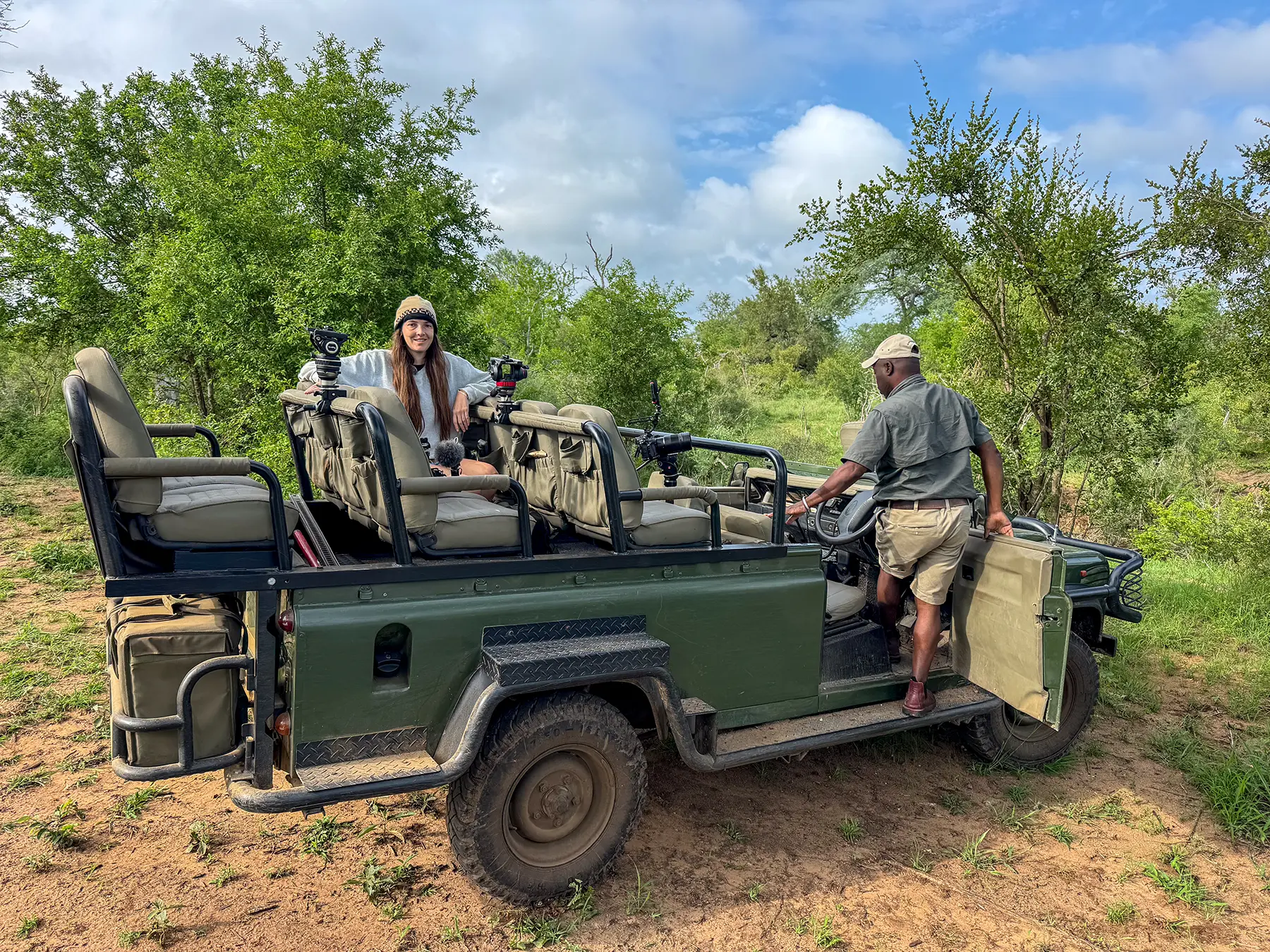
A common misconception is that it’s more expensive to book through a local operator than to book everything directly yourself. But the truth is that the costs work out about the same because operators access agency rates that aren’t publicly advertised.
By booking through a local operator you get real expertise, as well as one point of contact for the whole trip and no admin to think about while you are out on game drives.
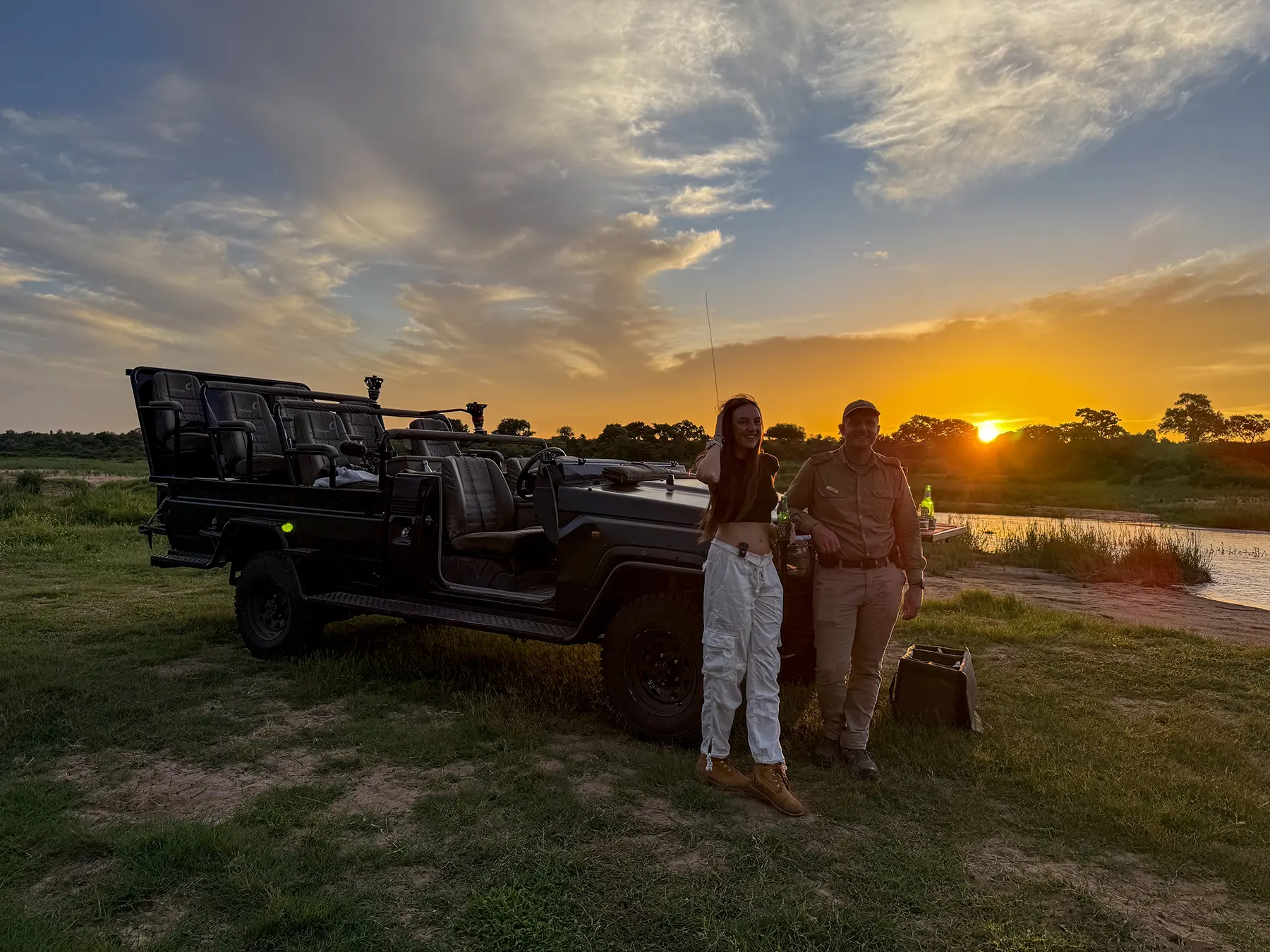
What a Local Operator Gives You
- End-to-end service across Greater Kruger and the whole of South Africa, including accommodation, road transfers from Hoedspruit Eastgate Airport, light-aircraft inter-reserve transfers, expert guides and game-drive vehicles.
- Flagship Greater Kruger lodges such as MalaMala, Singita Sabi Sand, Londolozi and Inyati often appear fully booked on public booking sites. However, they often hold inventory back for local tour operators at preferential rates.
- Operators have up-to-date knowledge of the latest sightings to help you plan the best itinerary around your wildlife preferences.
- Across Sabi Sand’s 18 unfenced sub-reserves and the broader Greater Kruger ecosystem, guide radios let your driver pivot mid-drive when another vehicle reports a leopard sighting. That means less aimless driving and more time at sightings.
What to Watch Out For
- Quality varies between Greater Kruger operators. The cheapest packages may use budget camps outside the unfenced private reserves, and shared self-drive in the public Kruger National Park (where vehicles can’t go off-road) instead of private guided drives in Sabi Sand or Timbavati.
- Some guides lack expertise, especially when it comes to things like the unique leopards in Sabi Sand. It’s important to book with a reputable local operator to make sure you get the best guides.
- Local operators don’t book your international flights. You need to arrange your own long-haul flight to Johannesburg or Cape Town (for example direct from London or Amsterdam, or from US hubs such as Atlanta or New York). The local operator picks up the chain from there, typically with a domestic flight or transfer to Hoedspruit Eastgate or Skukuza Airport, and then a road transfer to your first lodge.
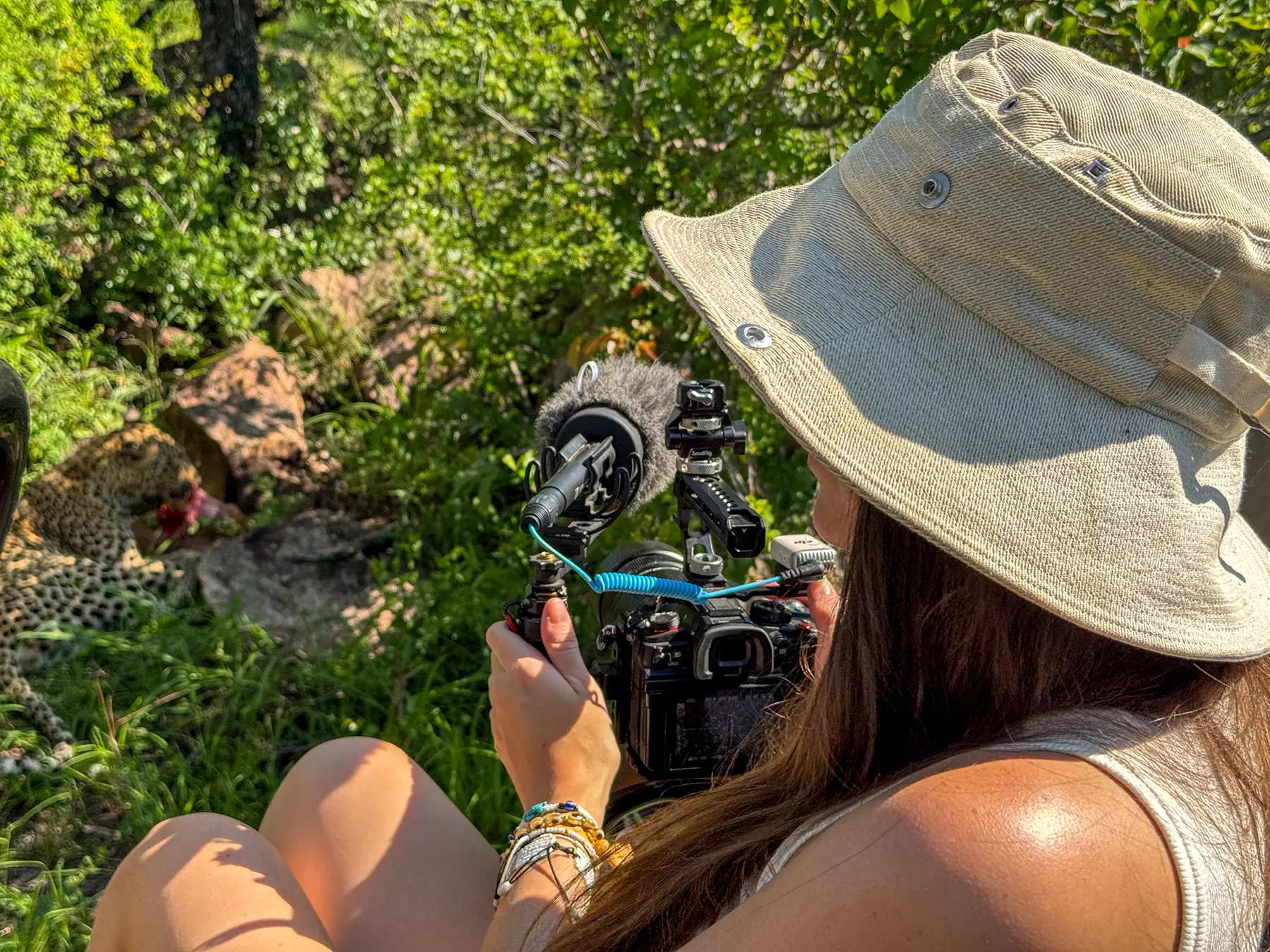
Greater Kruger Booking Tips
Greater Kruger’s safari system has some specific characteristics that affect how you should book.
- Private vs Shared vehicles: Lodges will typically share vehicles with other guests. If you want a private vehicle make sure to let your tour operator know this and expect a premium of up to 100% on the lodge cost.
- Self-drive limits: Timbavati and Sabi Sand do not allow self-drive. In Manyeleti, self-drive on roads is permitted, but off-road driving is not.
- Lead time: Book 6 to 9 months ahead for the May to September peak season, especially for Sabi Sand where popular lodges sell out early.
- Airport choice: Flying to Hoedspruit Eastgate Airport (approximately 1 hour from Johannesburg) will spare you the 5-6 hour drive from Johannesburg on roads of varying quality.
- Off-road driving: This is only available in private reserves with guided drives. Off-road driving is not permitted on self-drive safaris or in the public Kruger National Park.
- Night Drives: While limited night drives are available within Kruger National Park for visitors staying in the basic South African National Parks camps inside the park, these make use of enormous, noisy safari trucks that have limited visibility. The guided night drives offered in private reserves are a much more comfortable, agile and less intrusive experience, and you’re likely to have better sightings.
Financial Protection When Booking Direct
You can take steps to give similar financial protection to booking with an international agent. Paying by credit card (not a debit card) gives you purchase protection on anything you buy for more than 100 pounds and up to 30,000 pounds (in the UK it’s called Section 75), good travel insurance covers trip interruption, and choosing a recommended local safari company that takes balance payment closer to your trip date minimises risk.
Recommended Booking Options For Your 7 Day Greater Kruger South Africa Safari Itinerary
Private Safari
Most popular & best experience – typical prices for this itinerary start from $500 per person per day.
Visit safarisbyella.com for free quotes from trustworthy local tour companies I use to book my own trips.
How to Book with the Best Local Safari Companies
- Comparison sites which provide multiple quotes from verified suppliers such as Safaris By Ella
Join the rapidly growing tribe of over 1,000 travellers who’ve booked their dream safari using my insider tips and recommendations.
Should You Choose a Private or Group South Africa Safari?
In South Africa game drives organised by your lodge are ordinarily shared with guests at the same lodge. Private game drives are possible if you pay a large premium, which can be as much as your accommodation.
However, there are a number of mitigating factors that make sharing a perfectly good option in this situation, most notably the fact that all passengers are at the same lodge and you don’t have to drive around picking people up at the start of your game drive.
To be clear, your overall safari itself can be private (private rooms, private transfers etc.) but your game drives are usually shared.
Below I’ve listed my usual complaints with group safaris and in the right-hand column I explain how most of them are not actually applicable to lodge-based safaris in South Africa.
| Usual Group Safari Cons | South Africa Lodge-Based Safari |
|---|---|
| It’s common to waste time picking up and dropping off guests from other camps during prime game-viewing time at the start and end of each game drive. | Everyone is already at the same lodge, so departure is usually not delayed. |
| Safari companies often reserve their best guides for private safaris. | As shared game-drives on lodge-based South Africa safaris are the default, you’ll get the same guides as private. |
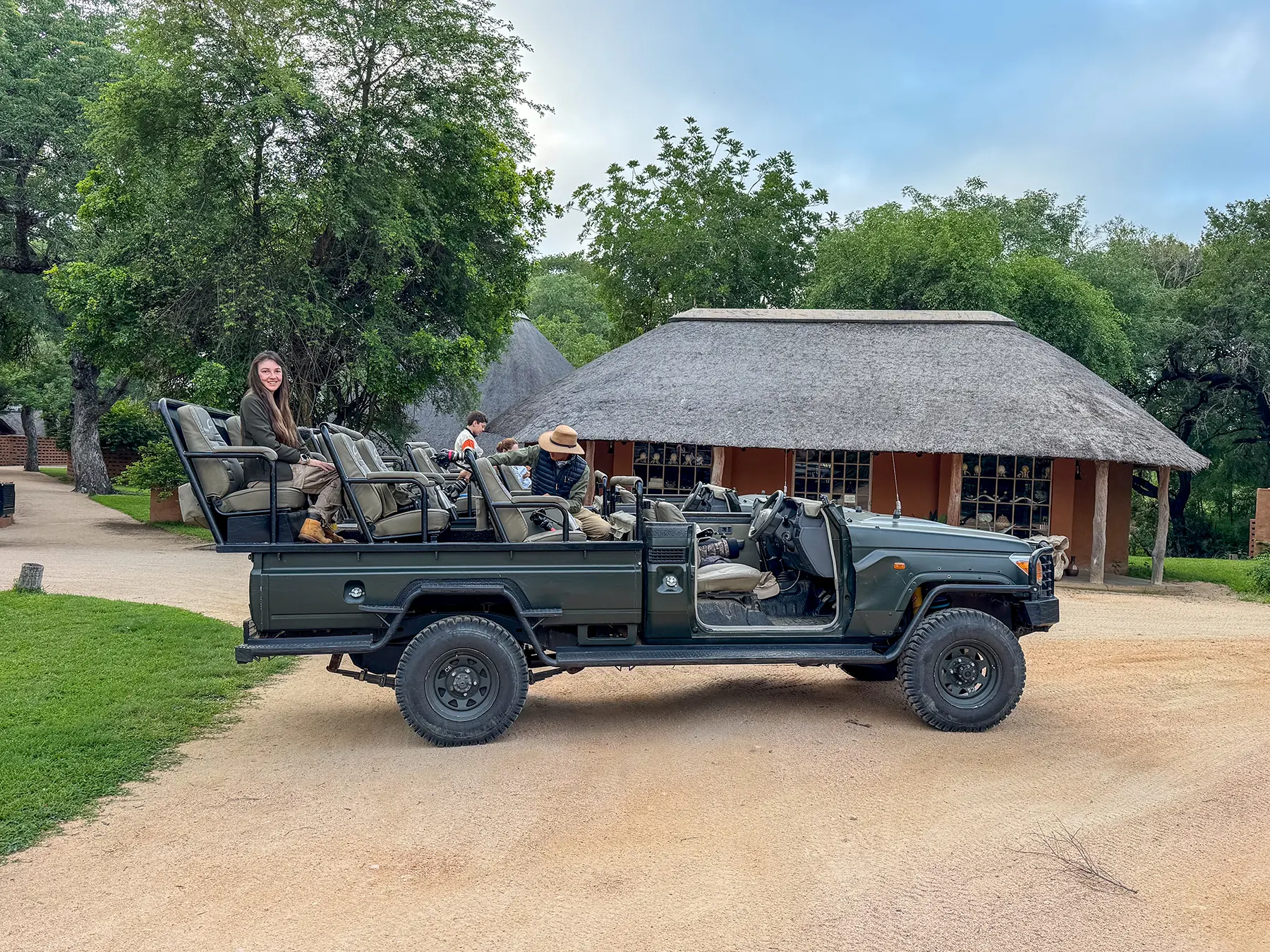
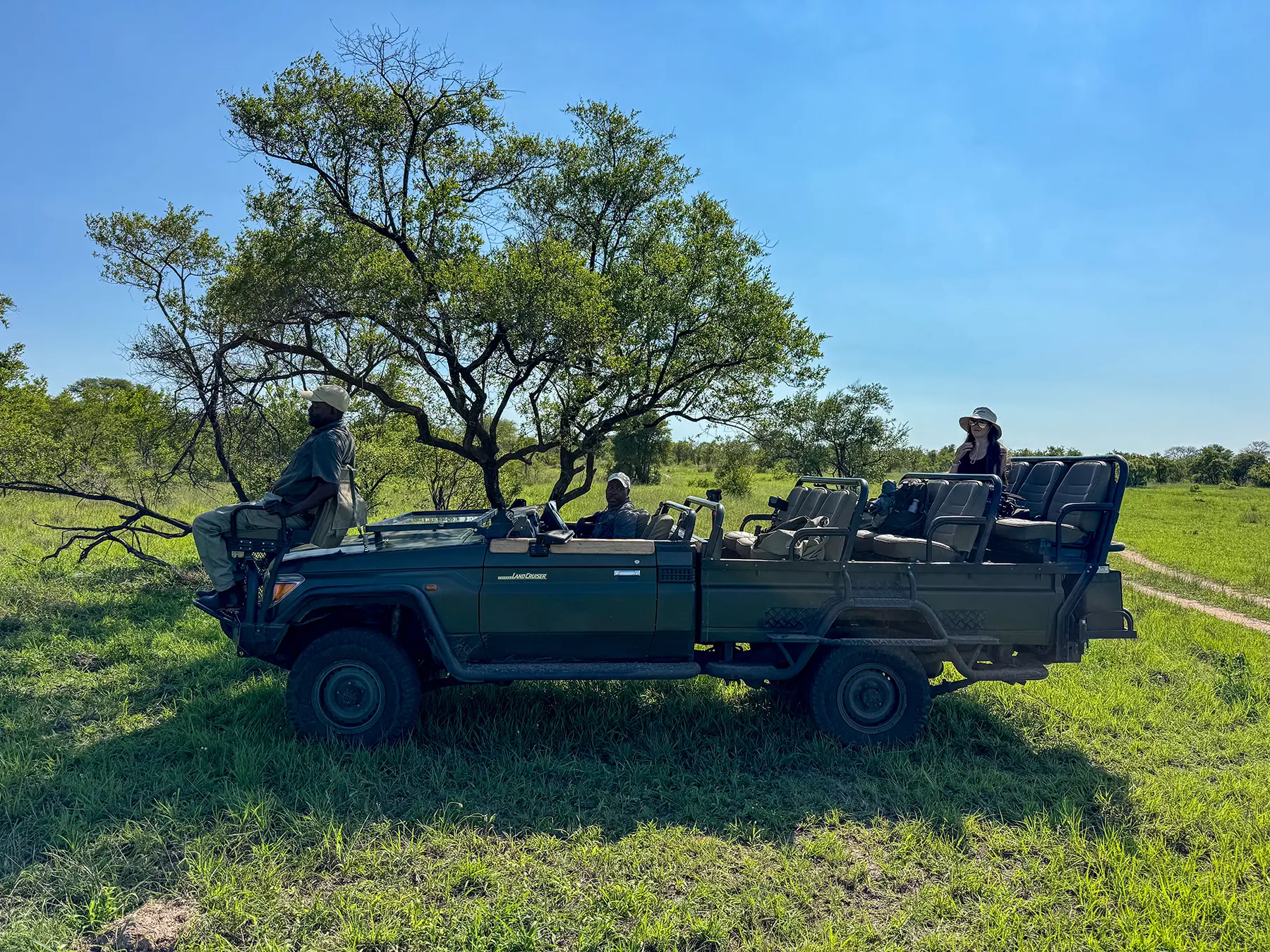
| Game drives are often conducted in mini-vans and not safari trucks. | Lodge-based safaris in South Africa typically all use the same open-topped Toyota Land Cruisers and Land Rover Defenders for both shared and private game drives. |
| The vehicle is shared with 6-8 other travellers, which limits space for photography. | If you’re a serious photographer this is workable due to the open-sided vehicles, but you might prefer to have a private vehicle to have more control over which sightings you prioritise and how long you spend at them. Could be an issue if the vehicle has middle seats but you can check this in advance. |
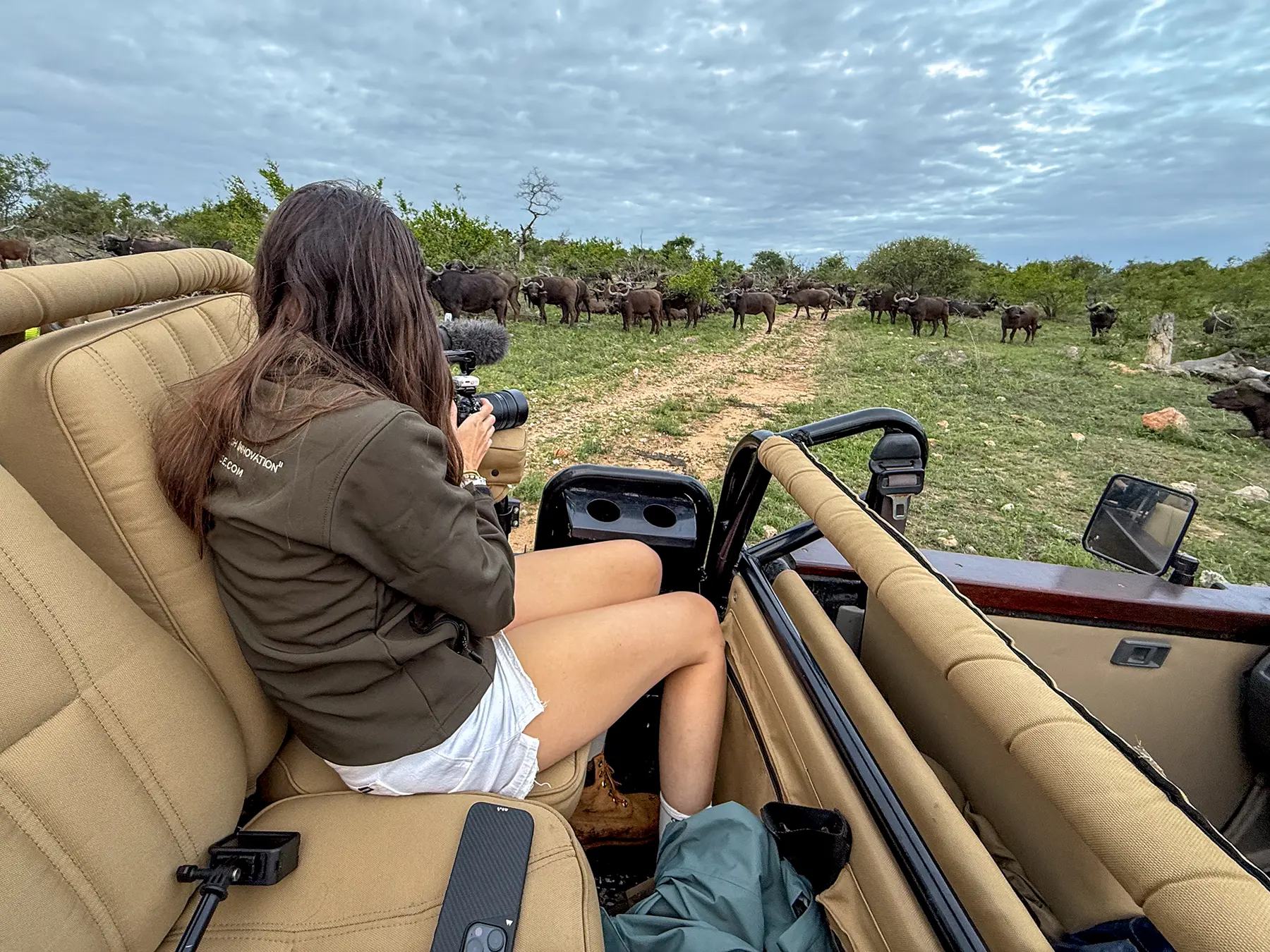
My Recommendation
For most people, a shared game drive vehicle for a South African lodge-based safari works well as many of the usual issues with shared game drive vehicles are not applicable.
However, if you plan to go on game drives in the main Kruger National Park, I would recommend a private vehicle as the standard vehicle type used in the national park has less visibility. The extra cost for a private vehicle is fairly nominal, at around $150 extra per day.
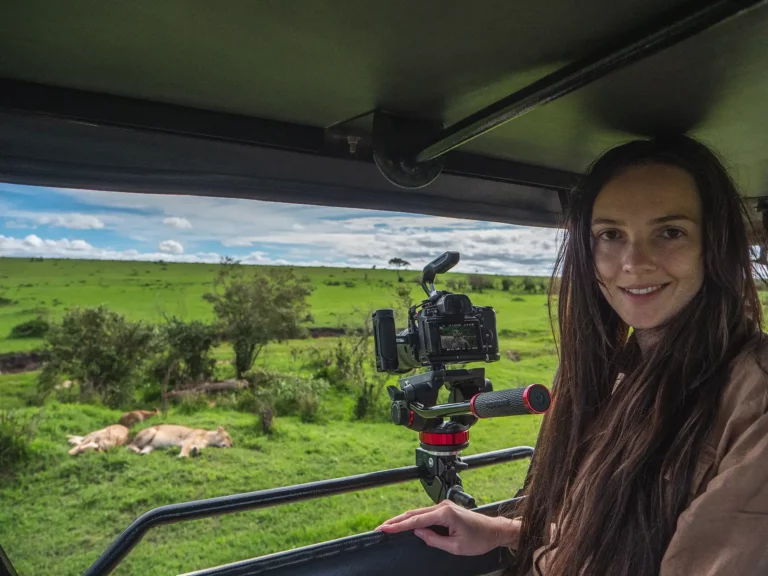
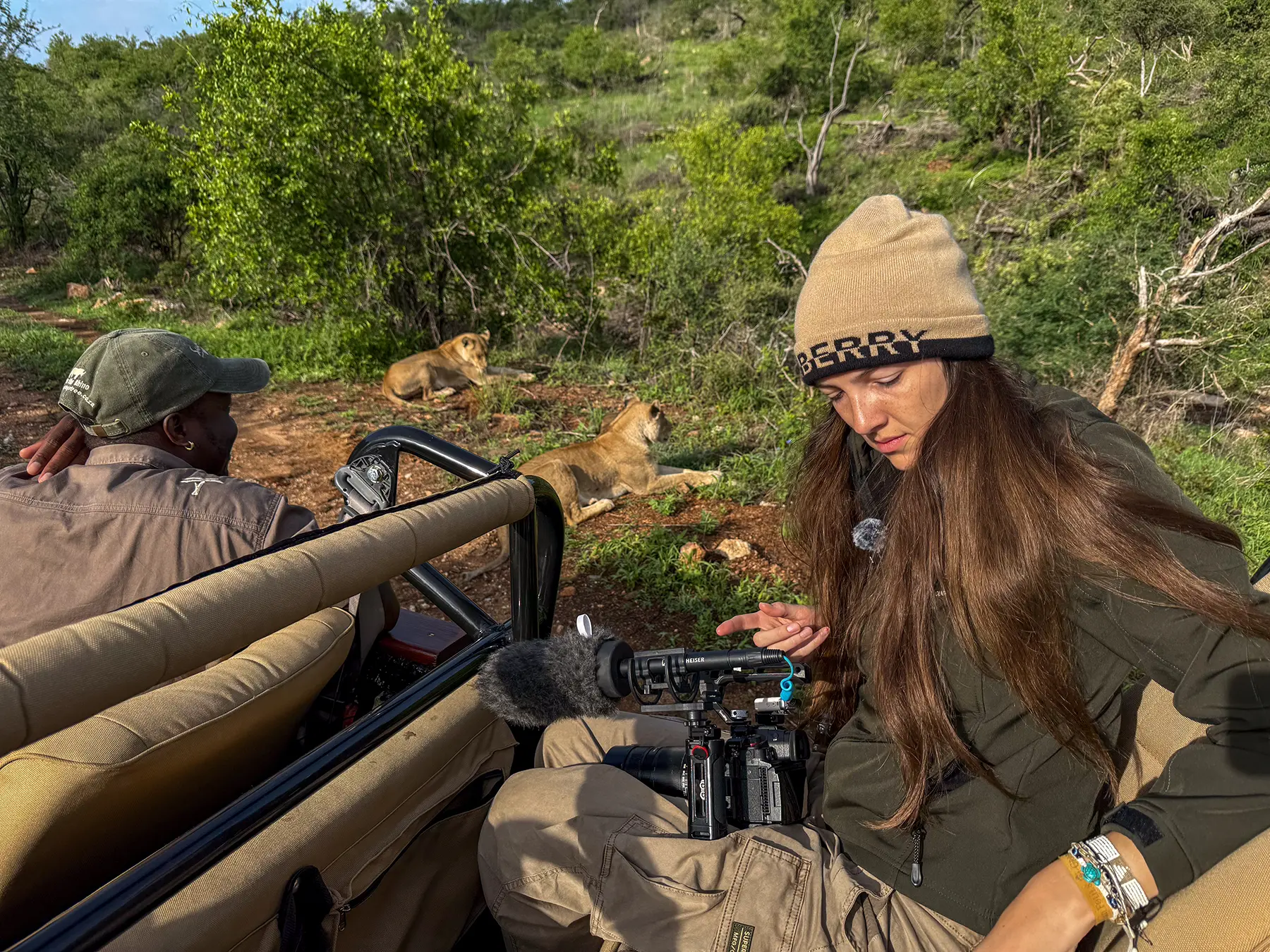
For my own South Africa safari in the Greater Kruger private reserves, I did a mixture of both options to try them both out. Both were excellent but the slight benefit I found on the private game drives was that I could spend far longer than most visitors would want to spend at sightings to get the best pictures.
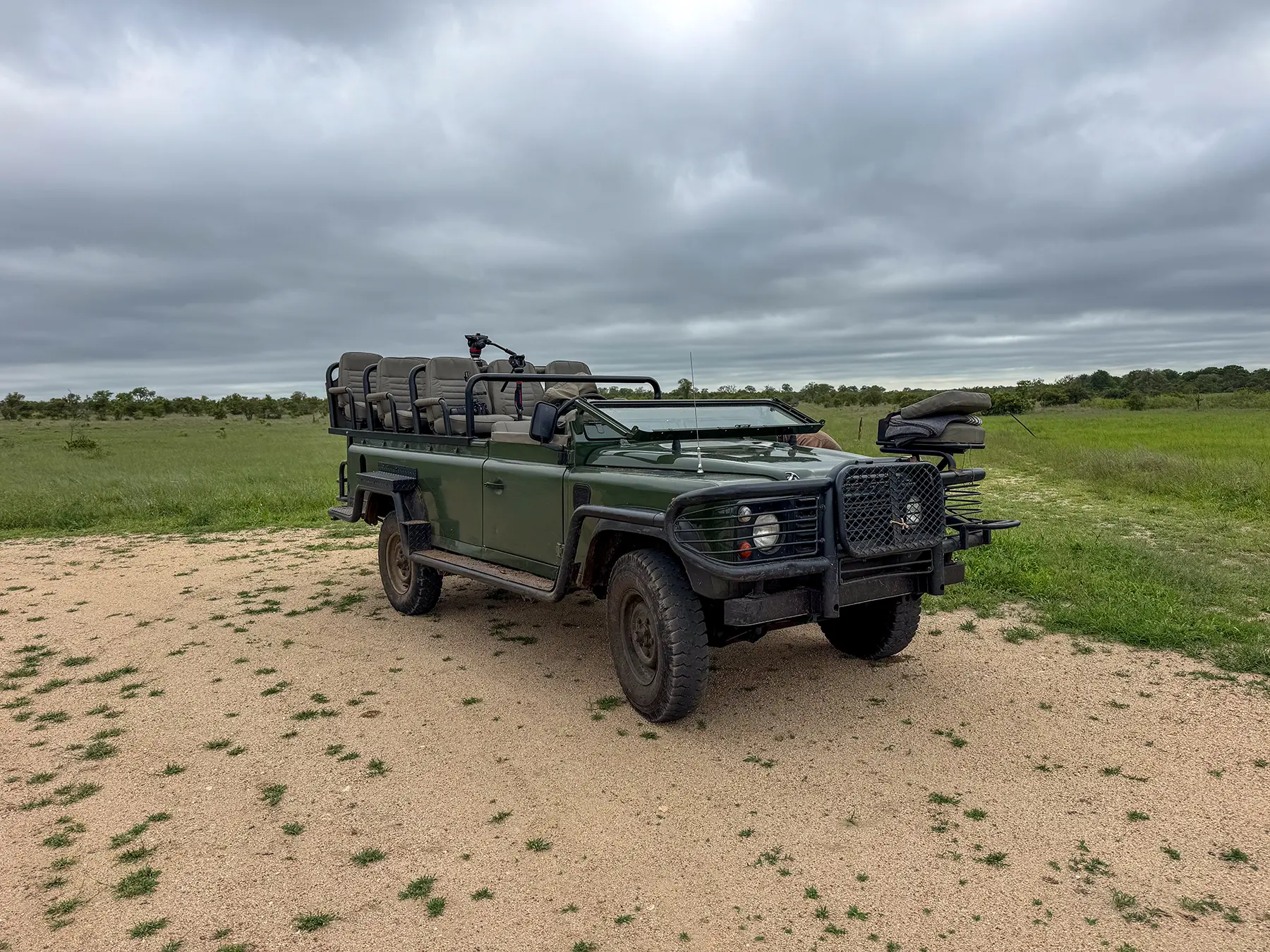
At one mid-range tented camp the vehicles had middle seats (3 seats to a row) which would not have been ideal for photography if I was sat in the middle, but luckily we didn’t have a full truck so they were not in use.
If money is no object and you are a serious photographer, it can be worth paying the often large premium to have a dedicated private vehicle for your game drives.
This allows you to decide exactly which wildlife you want to focus on and also to spend more time at sightings (although sometimes you have to move anyway if there are other vehicles waiting for a better view of the sighting; you can wait and go back after the other vehicles have moved on).
How Much Does a 7-Day South Africa Safari Cost?
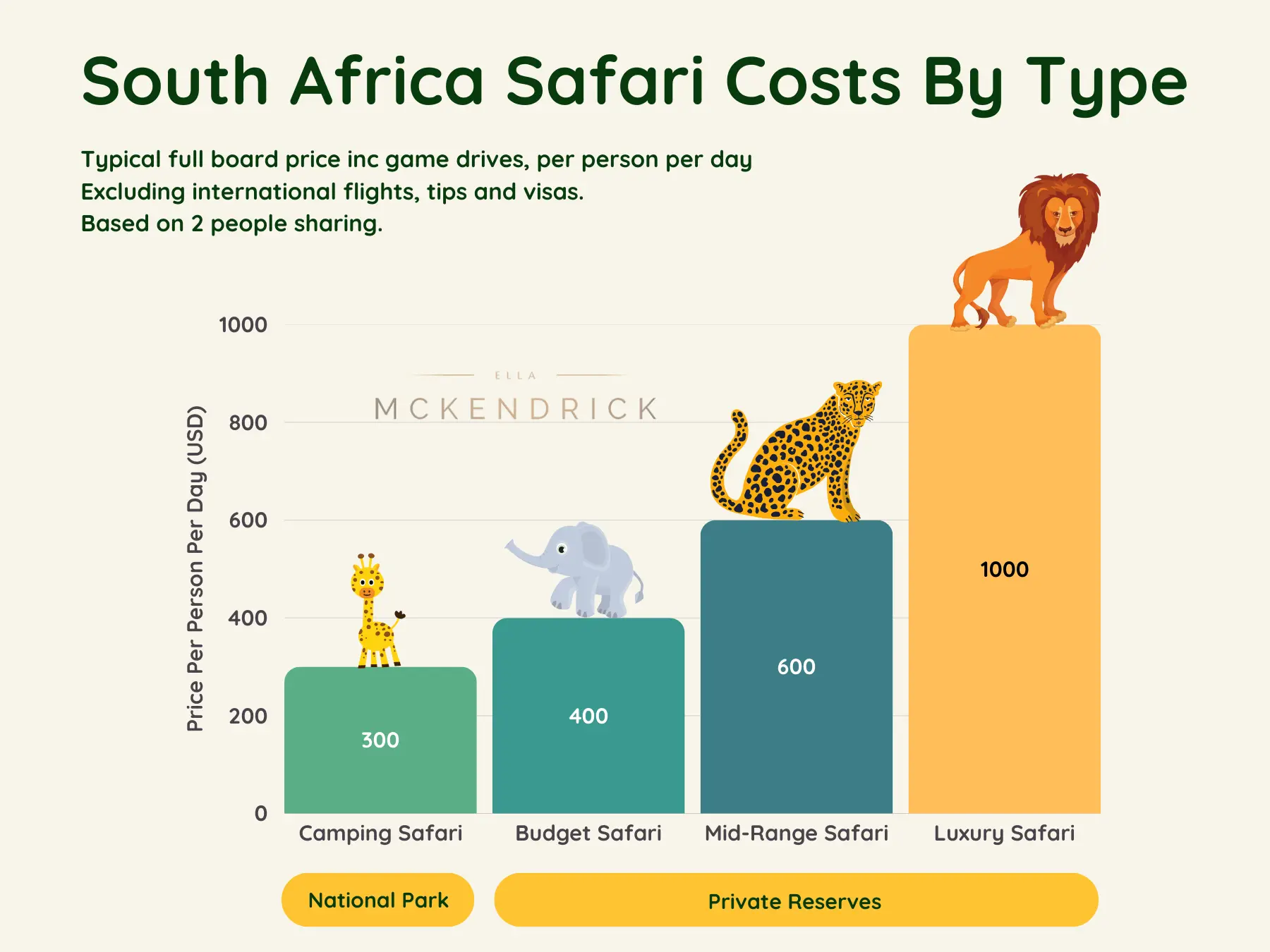
A private 7-day South African safari in Greater Kruger costs from approximately $500-600 per person per day for mid-range lodges.
Luxury properties range from $800 to $2,500+ per person per day and this covers accommodation, all meals, drinks, and game drives twice a day.
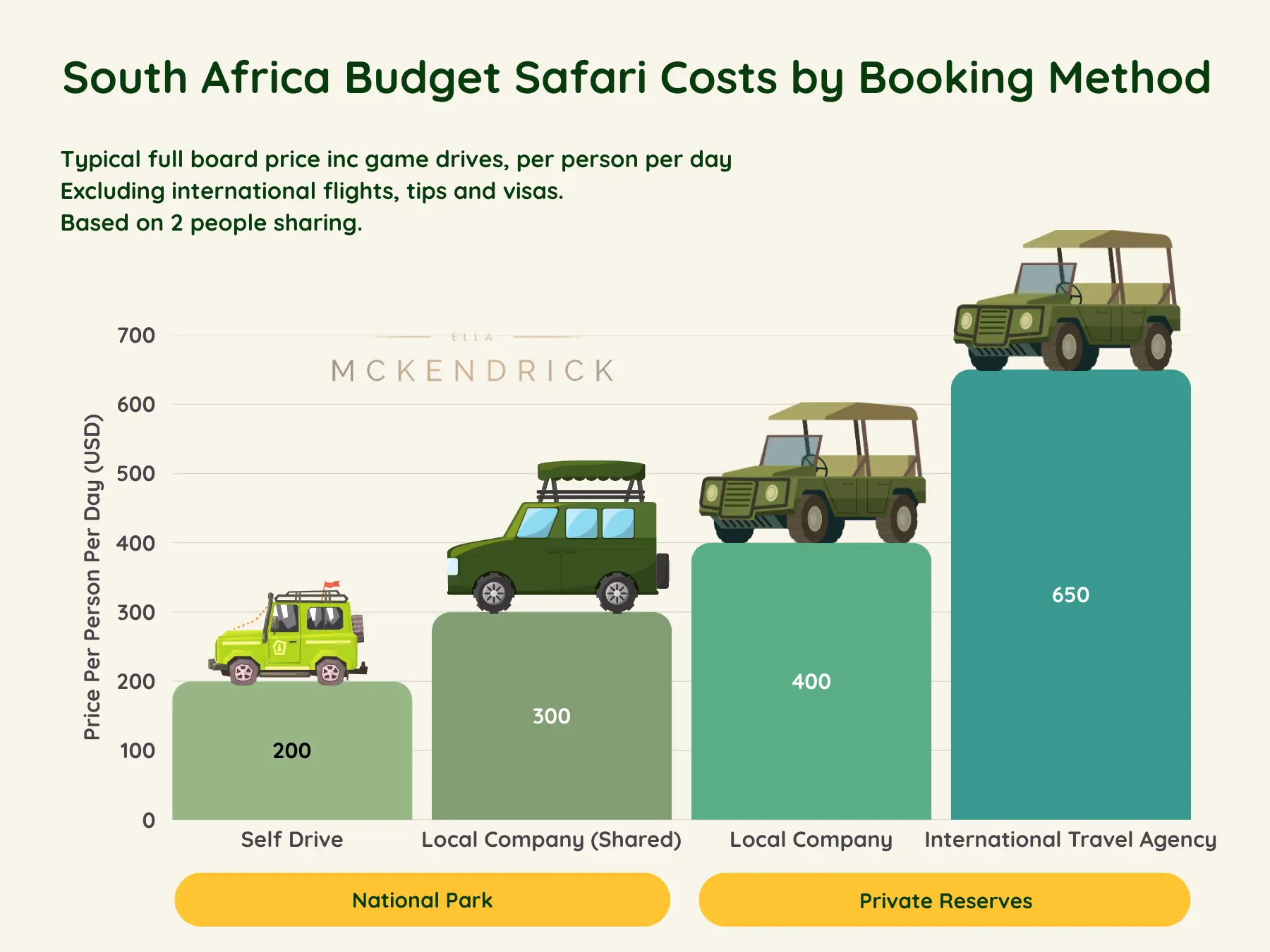
There are very limited budget options in the private reserves, so for budget South African safaris, you would stay in self-catering camps inside Kruger National Park instead of the surrounding private reserves. If you’re staying within Kruger National Park, prices start from $200 per person per day.
The chart below shows typical prices for Greater Kruger safaris by luxury level.
Safari Prices Typically Include
- Reserve conservation levies
- Two game drives per day, morning and afternoon
- Accommodation in a private lodge or tented camp
- Full-board meals (breakfast, lunch, dinner)
- Selected beverages including house wines, beers and spirits
- Road transfers between lodges
- Bush walks with an armed ranger
- Laundry service
Safari Prices Typically Do Not Include
- International flights
- Local flights at the start and end of your safari, e.g. from Johannesburg or Cape Town to Hoedspruit or Skukuza as these are usually booked as part of your international flights
- Tips and gratuities for rangers, trackers and lodge staff
- Optional air transfers between reserves
How Do South Africa Safari Costs Compare to Other African Safaris?
Greater Kruger private lodges are generally more expensive per night than East African equivalents. Private safari prices start at around $300 per day in Kenya and $350 in Tanzania, compared to $500-600+ in Greater Kruger’s private reserves.
However, safaris in Kruger National Park are comparable with East African safaris, starting at around $200 per person per day for group budget safaris.
You can see how costs compare across popular African safari destinations below:
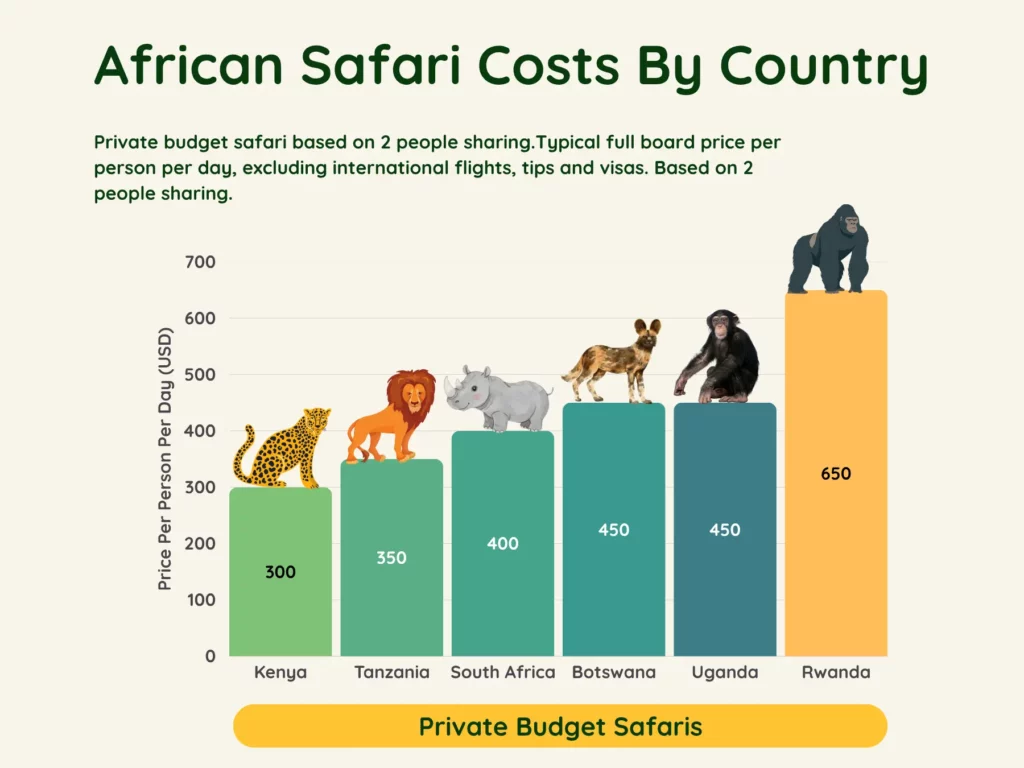
| Destination | Private Budget Safari Cost PP/Day |
|---|---|
| Kenya | 300 USD |
| Tanzania | 350 USD |
| South Africa | 400 USD |
| Botswana | 450 USD |
| Uganda | 450 USD |
| Rwanda | 650 USD |
Breakdown of South Africa Safari Costs
Let’s break down the cost of a Greater Kruger safari booked with a local tour operator so you can see what you’re actually paying for.
The majority of the total cost (around 60-70%) goes directly to the lodge for accommodation, meals, drinks, and game drive activities.
Conservation levies and reserve entrance fees account for approximately 10-15% of the total amount. These costs support anti-poaching units and habitat management.
The remaining costs are transfers from airports and between reserves, operator costs and insurance. These will of course be a higher percentage if you opt to fly between reserves.
Factors Impacting South Africa Safari Costs
Your choice of reserve, accommodation luxury level, the time of year you travel and how you transfer between reserves will all have an impact on your total safari cost.
Below we’ll look at each of these factors in more detail to help you decide which are worth the extra cost.
Jump to more information on each factor using the links below.
Your Level of Accommodation
Without a doubt the factor that impacts pricing the most is the level of luxury that you select for your accommodation.
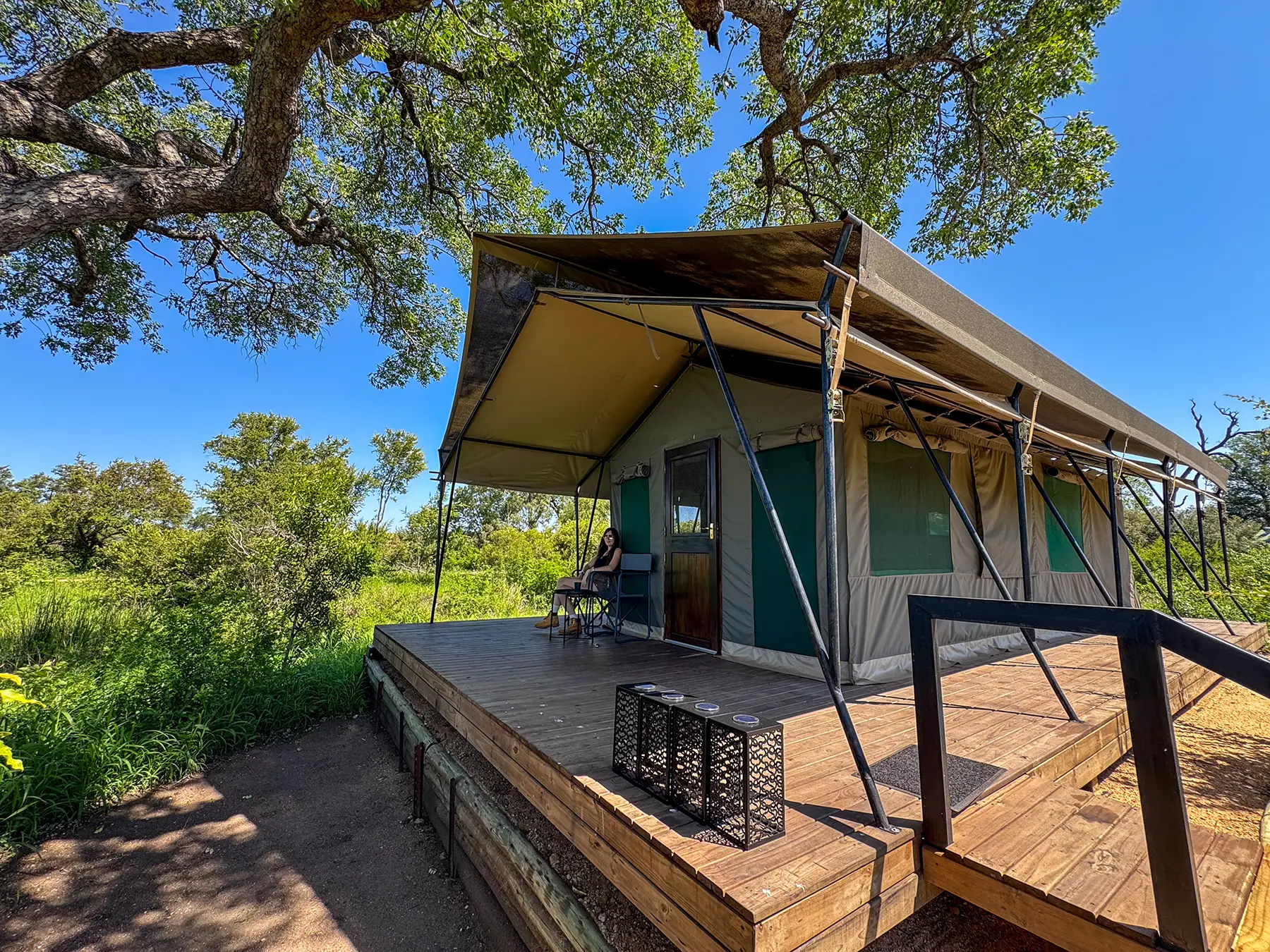
Budget tented camps and lodges can start from $400 per person per night. This type of accommodation generally offers smaller rooms than mid-range camps and no additional amenities such as swimming pools.
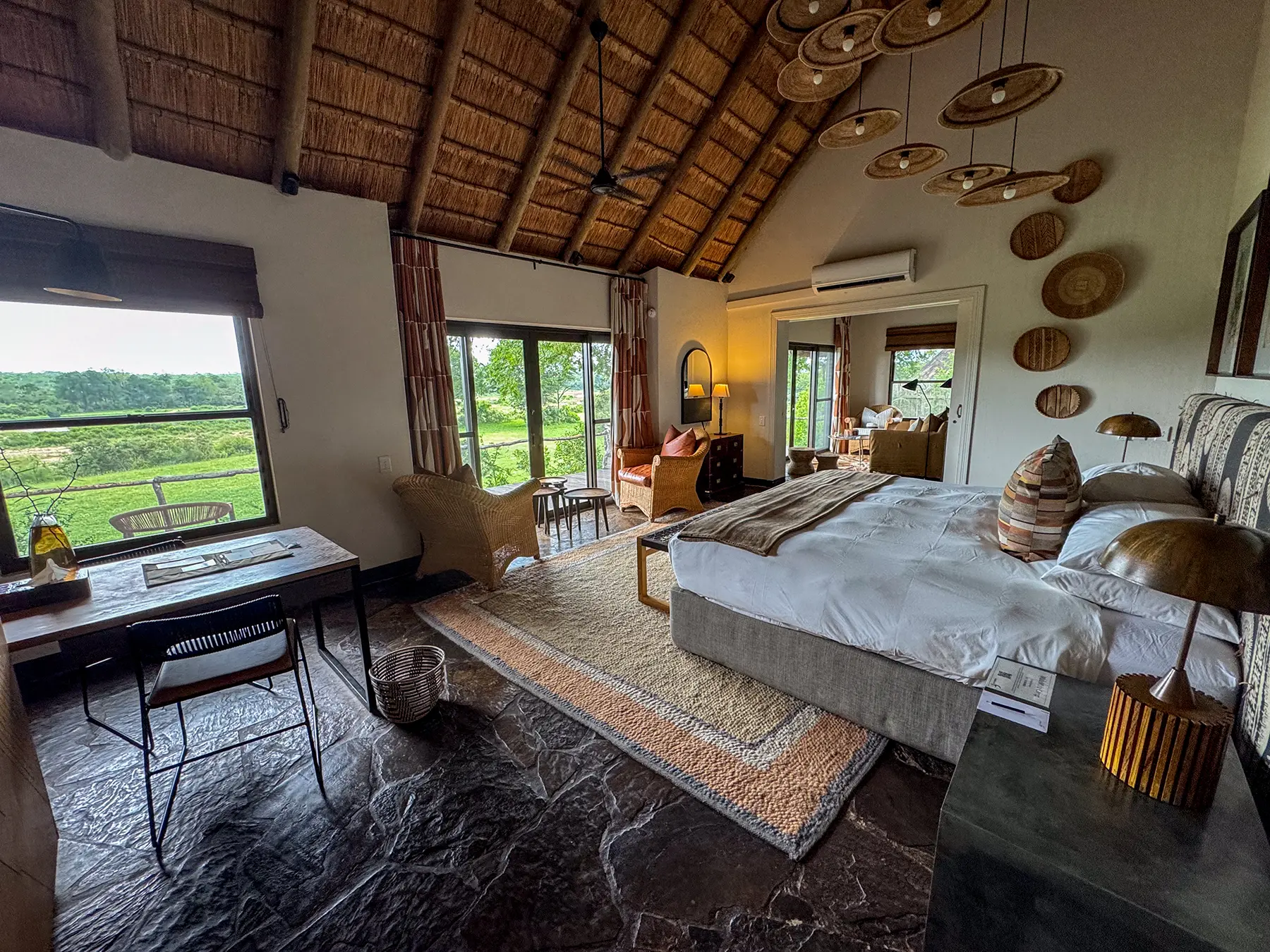
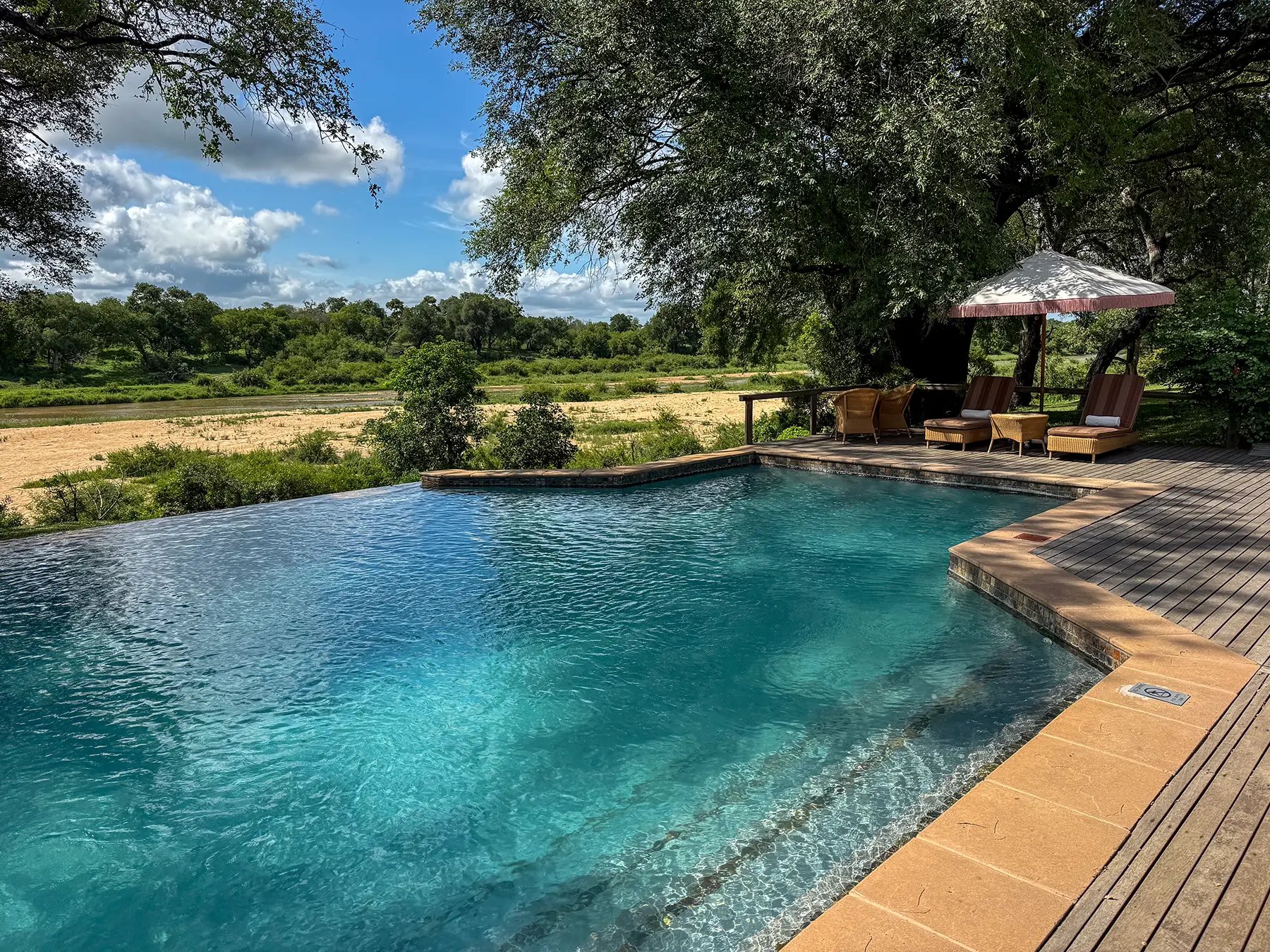
Mid-range camps and lodges start from $500-600 per person per night. Rooms are slightly larger than those in budget camps, with more luxurious touches in the decor. They often have a swimming pool in the communal area.
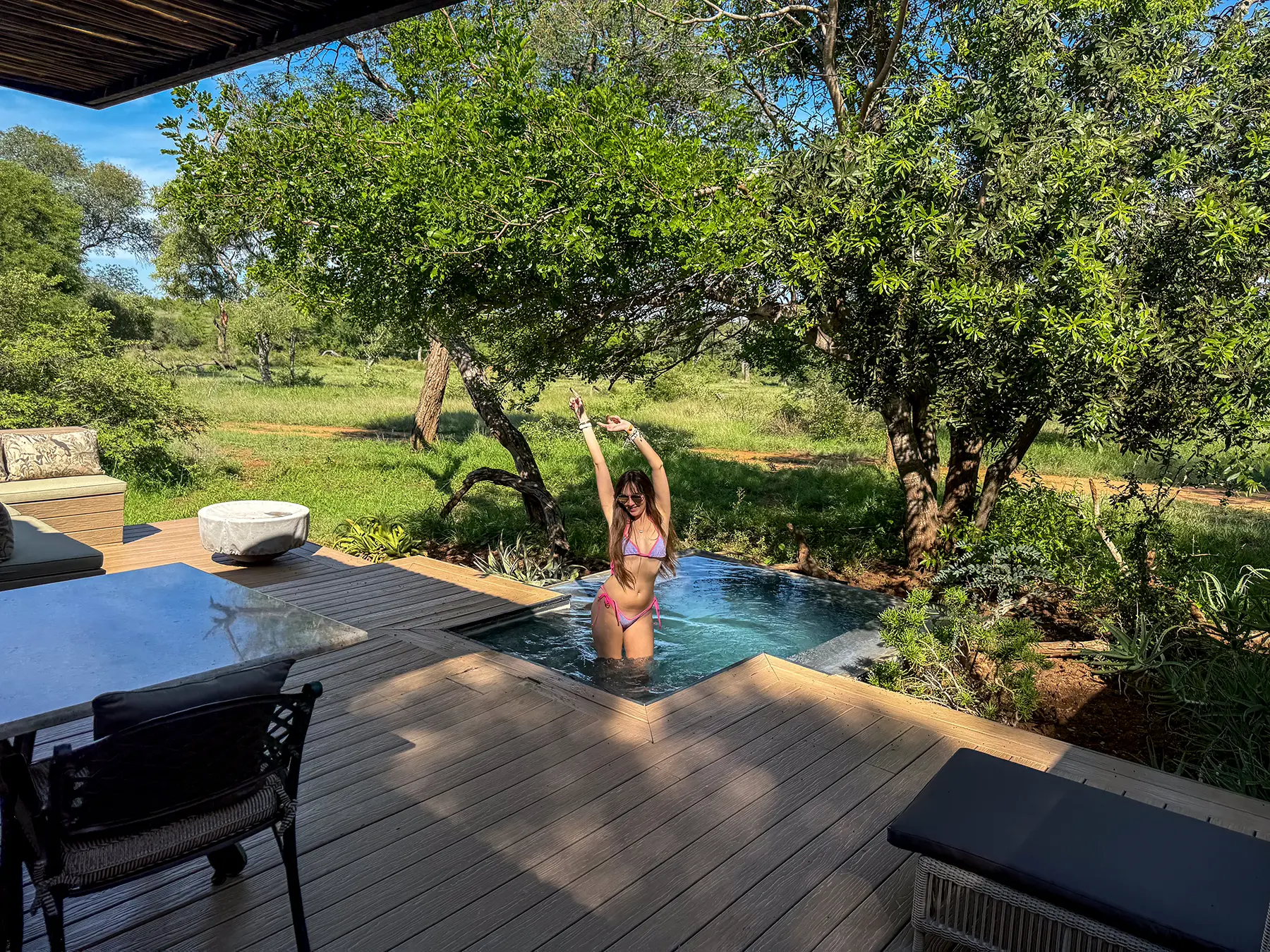
Luxury camps and lodges have large rooms, often with additional seating areas with coffee tables, balconies and sometimes even your own private pool. The communal areas come equipped with swimming pools, spas and gyms. Prices for luxury camps and lodges start from $1,000 per person per night.
My Preference: Generally in South Africa, I like to have a mixture of mid-range and luxury accommodation. I’m happy to pay extra for luxury accommodation where it gives me access to go on safari in excellent wildlife areas I wouldn’t otherwise be able to traverse without staying at the lodge.
An example of this is MalaMala which has the largest traversable area in Greater Kruger, over 70% of which is accessible exclusively to guests at their lodge.
Which Reserves you Visit
As well as the levels of luxury detailed above, the exact reserve that you visit will also have a profound impact on your overall safari costs.
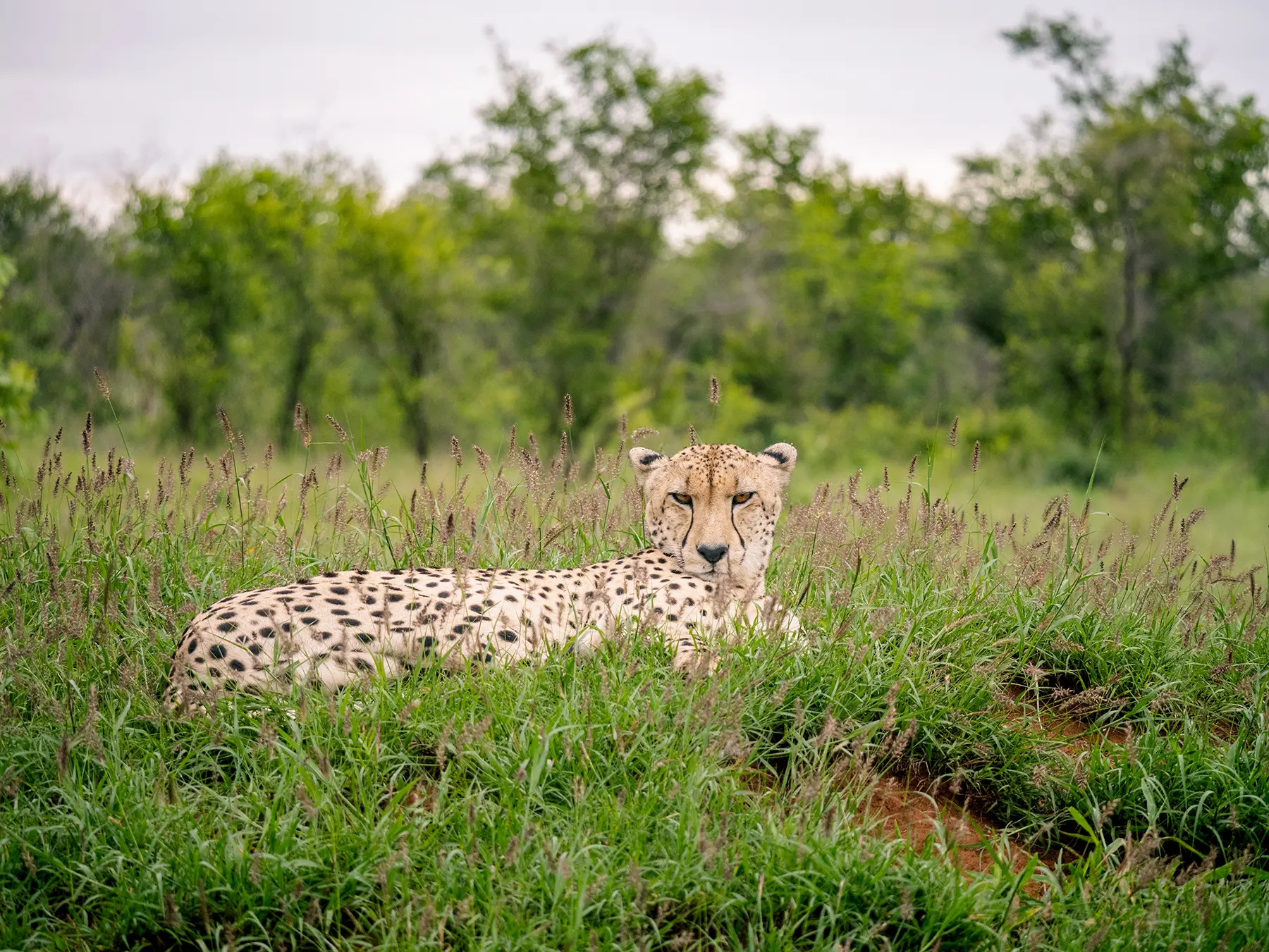
Manyeleti is one of the most affordable reserves in Greater Kruger. At the very lowest end price-wise is Manyeleti Main Camp, which has a basic campsite and small self-catering units. This is completely unique to Manyeleti as no other reserve has options like this.
Even the tented camps in Manyeleti are more budget-friendly than neighbouring reserves and start at $350 per person per night.
Timbavati comes in slightly more expensive with lodges starting from $500 per person per night.
At the higher end of the scale, Sabi Sand is the most expensive Greater Kruger reserve. The most ‘budget-friendly’ lodges cost $800 per person per night.
The table below shows prices per person per night in various reserves. Budget accommodation is not typically available in the private reserves listed.
| Reserve | Mid-Range (USD) | Luxury (USD) |
| Sabi Sand | $643 | $1,703 |
| Timbavati | $500 | $1,000 |
| Manyeleti | $425 | $1,506 |
| Klaserie | $411 | $1,655 |
| Thornybush | $440 | $1,568 |
| Balule / Olifants West | $684 | $888 |
| Kapama | $824 | $1,164 |
| Kruger National Park | $300 | $843 |
How You Book Your Safari
How you book your safari is also a factor in your overall costs. Booking through a local tour operator is more cost-effective than booking directly with lodges (lodge-booked transfers are not competitively priced) or using an international travel agent.
Local tour operators will also advise on the best reserves and lodges to maximise sightings, as staying in the wrong lodges in the wrong locations effectively wastes money.
Using an international travel agent will cost the most as they add a significant mark-up on the base price of the safari. This can increase your total safari cost by around 30-50%.
Self-driving is not an option for this itinerary, so there isn’t really an advantage to trying to book the different aspects of your safari directly yourself.
My Preference: I always book through local tour operators in Greater Kruger as they offer the best balance of value and quality as well as offering great advice.
Time of Year
As with many other safari destinations, climate patterns in South Africa determine which seasons are most popular for safari visitors. The cost of accommodation varies significantly from season to season.
Peak season (May to September, in the dry winter) commands the highest rates, while the green season (November to April) can be up to 40% cheaper.
Conservation levies are the same year-round.
My Preference: April and May or September to December are my favourite months to visit. These shoulder months offer excellent game viewing at slightly lower rates than the July – August peak.
I have visited in November and December which gave better lodge pricing and beautiful, lush vegetation. Whilst wildlife was slightly more obscured by the green vegetation (still not hard to spot), this made for spectacular photos.
As you can see from my photos in this guide and YouTube videos from the trip, I still saw a lot of wildlife.
Mode of Transport Between Reserves (Road or Air)
Whether you travel between reserves by road or charter flight will impact your safari cost. Flights add approximately $300-500 per person per hop, but can save you hours.
Road transfers between Timbavati and Sabi Sand take around 4 hours and flights take 1 hour.
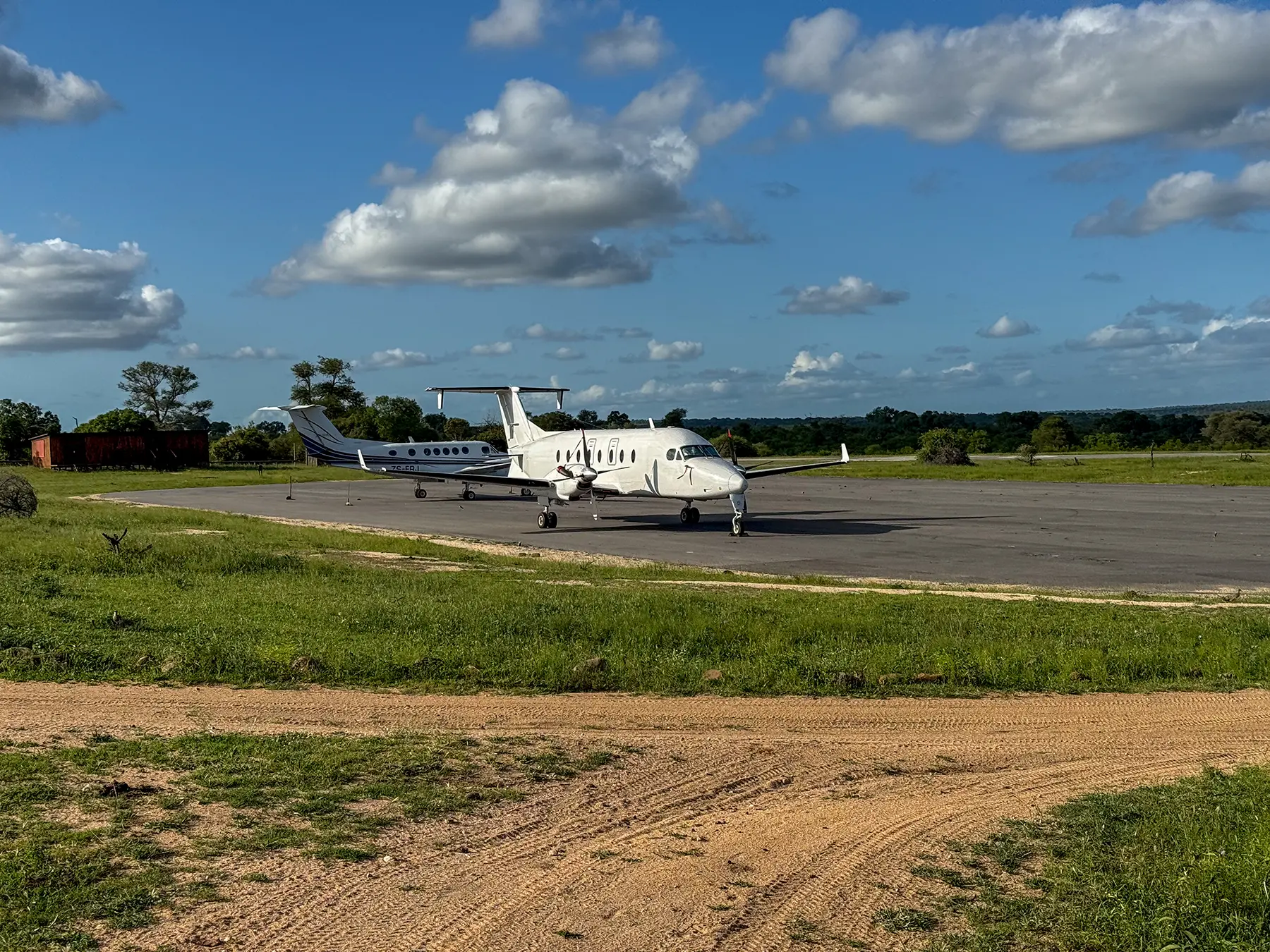
Federal Airlines is the main service offering flight connections between reserves.
My Preference: Given that the base level of this safari is quite luxurious, and the itinerary is fairly short at 7 days, my feeling is that flying between Sabi Sand and Timbavati is a good value option. The journey is more straightforward than driving, and you get great aerial views of the reserves.
Group Size
Since lodge rates in Greater Kruger are per-person, group size has less impact on cost than in East Africa where vehicle hire is a fixed cost shared between passengers.
However, the cost of a private vehicle for your travelling party naturally works out to less per person when split between 2 or more travellers.
In general, groups of 2 or more will typically pay less per person than solo travellers, who will often have to pay a single person supplement for the room.
My Preference: I recommend travelling with a companion to avoid the single person room supplement fees at lodges.
When Is the Best Time to Visit South Africa?
The very best time to visit South Africa for safari is during the dry season, from May to October. During this period, rainfall is minimal, vegetation is at its thinnest and wildlife congregates around the last remaining water sources.
That said, any time can work well for a safari in South Africa except for a rather wet two-month period from late December to late February. And, of course, there are many benefits to visiting outside of peak season.
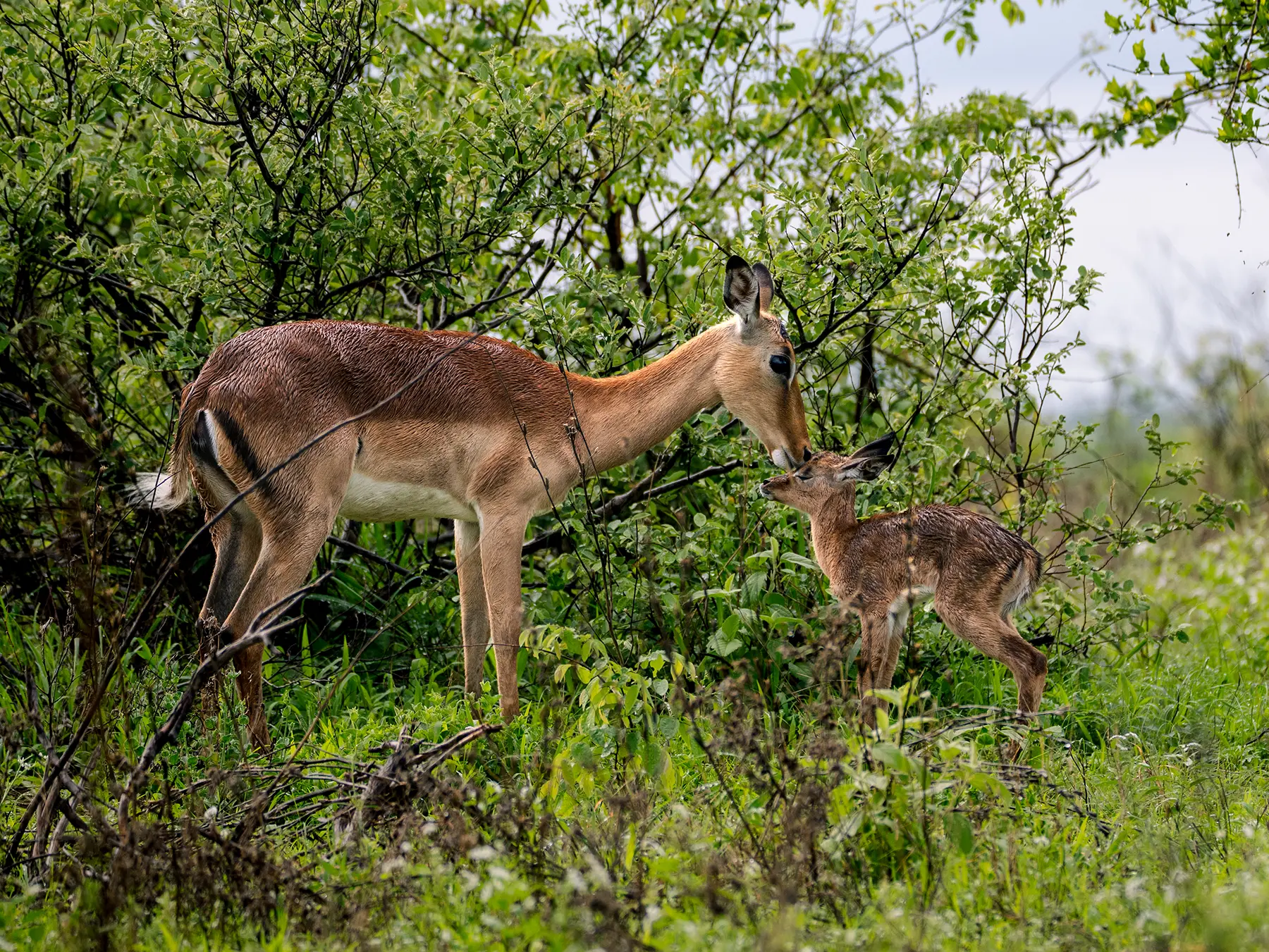
As I value the peace and quiet that comes with visiting outside of peak season, I always prefer visiting in the shoulder season. My recent trip to Greater Kruger was from mid-November to mid-December and I think I timed it perfectly. We were able to see newborn impala lambs and a vast array of migrant bird species – all without the crowds!
Whilst the wildlife was arguably a little harder to spot than it would have been in the dry season due to the thicker vegetation, I still had a huge number of incredible sightings. These included lots of baby animals and related hunting activity from big cats and wild dogs, including several successful hunts.
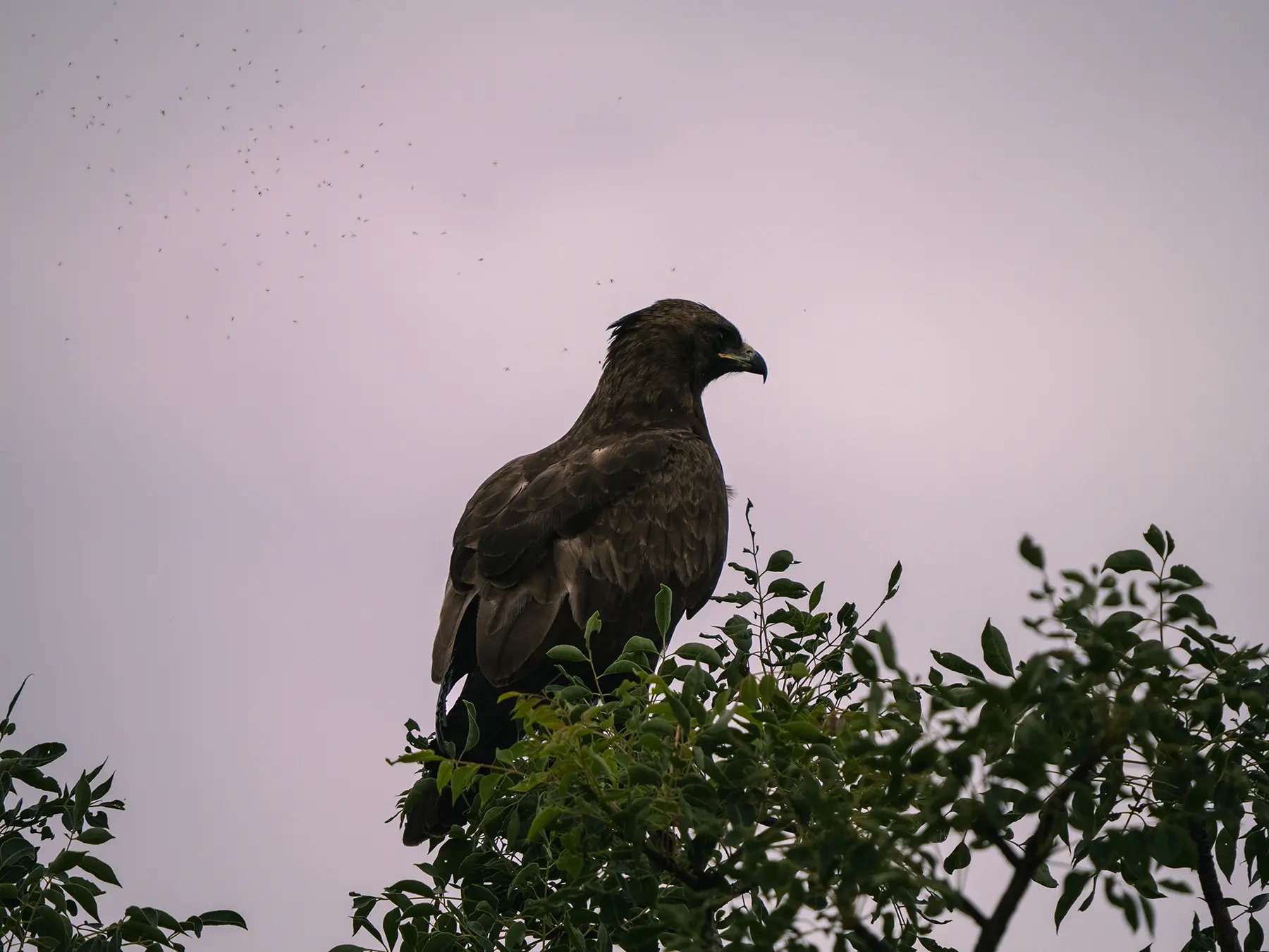
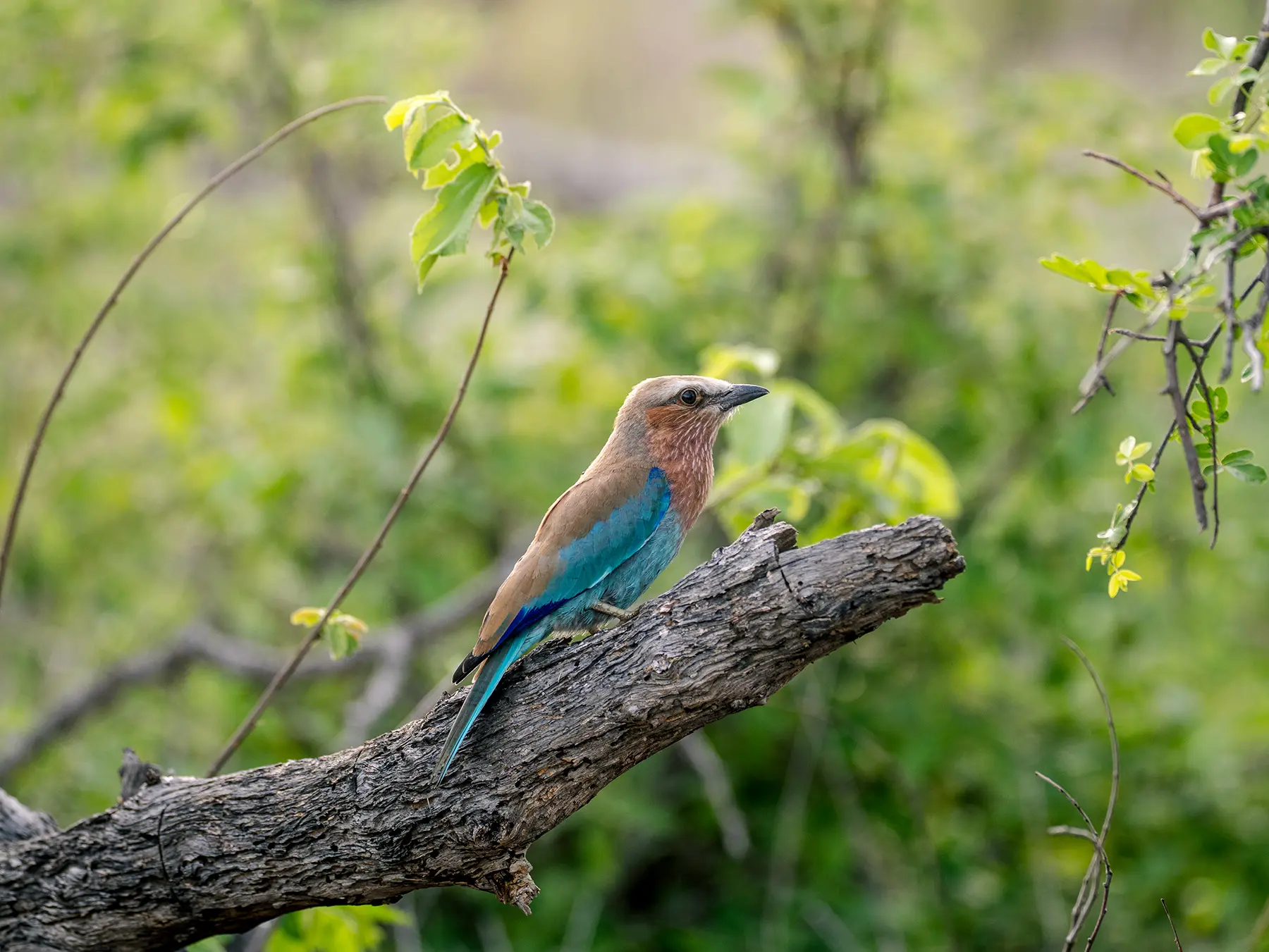
Birding was also excellent with migratory species present, such as the vibrant blue woodland kingfisher, European roller and the great Wahlberg’s eagle. I had a particularly memorable sighting of a Wahlberg’s eagle being mobbed repeatedly by an angry fork-tailed drongo, intent on protecting its nest.
What’s more, the lush green background made for better photos than I might have achieved in the dry season. You can see my photos here and my videos on YouTube.
Greater Kruger is a malaria area, so if you want to minimise the risk of contracting malaria, the dry winter months of June to August have very low transmission.
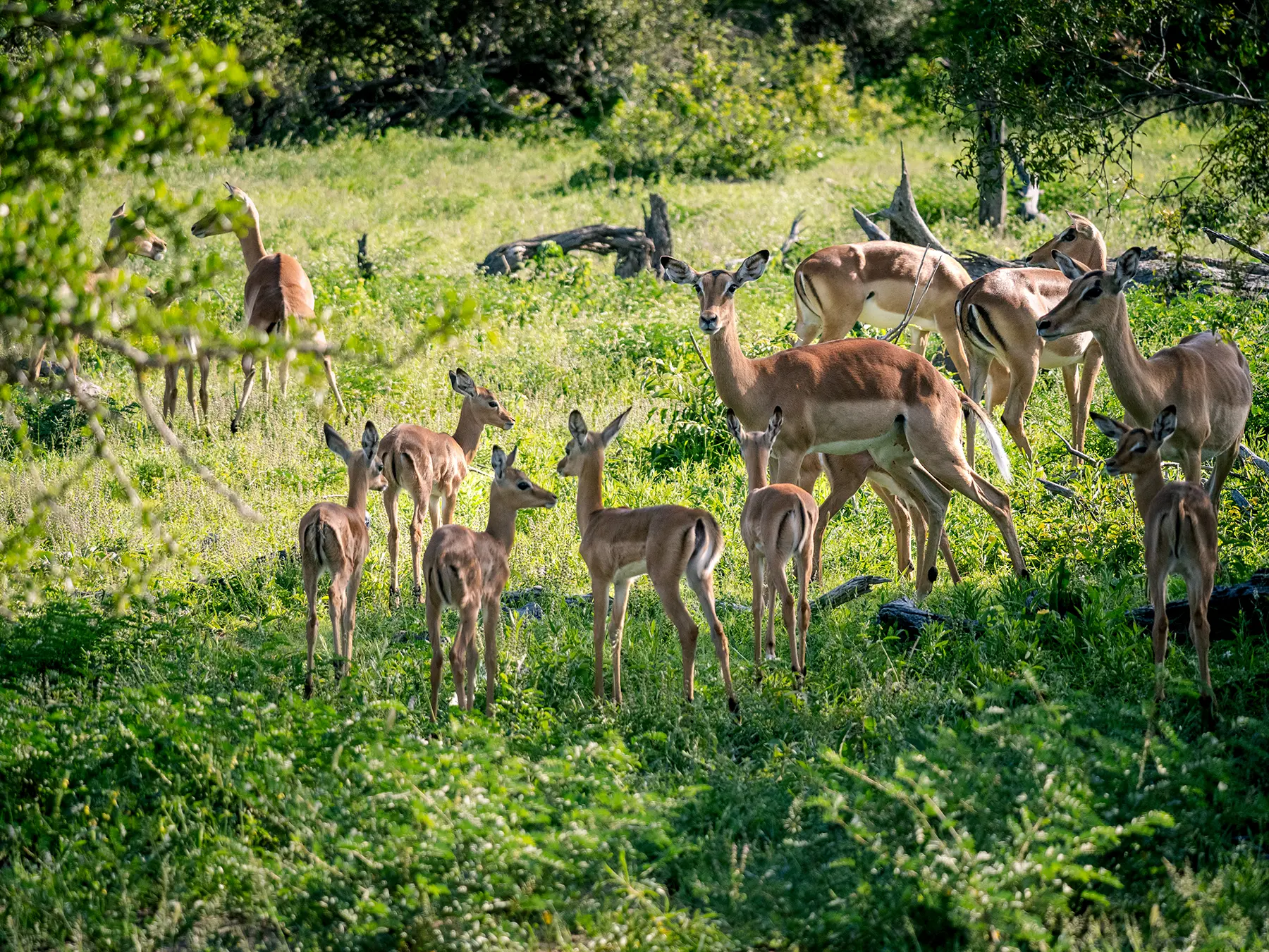
If you want lush photography backdrops and newborn impala, plan for November to December.
The end of December as well as January and February can be a little risky as seen by the flooding in this period from December 2025 into February 2026.
My Preference: For me, the best months to visit Greater Kruger are September to early December, particularly if you want the green season beauty combined with abundant baby animals and related predator activity.
Alternatively, I’d recommend April and May if you want the excellent dry season game viewing with thinner vegetation, fewer crowds than the July-August peak, and better value than high season rates.
That said, just because these are my favourite months does not mean they will be yours too. We all have different preferences and priorities. Read on to find out more about each season so you can choose the time that suits you best.
Let’s look at the pros and cons of each season.
Jump to more information on each of the seasons using the links below.
The Dry Season (May – October)
The Dry Season (May – October)
If you want the best general game viewing in Greater Kruger combined with the most favourable weather, the dry season is the prime time to visit.
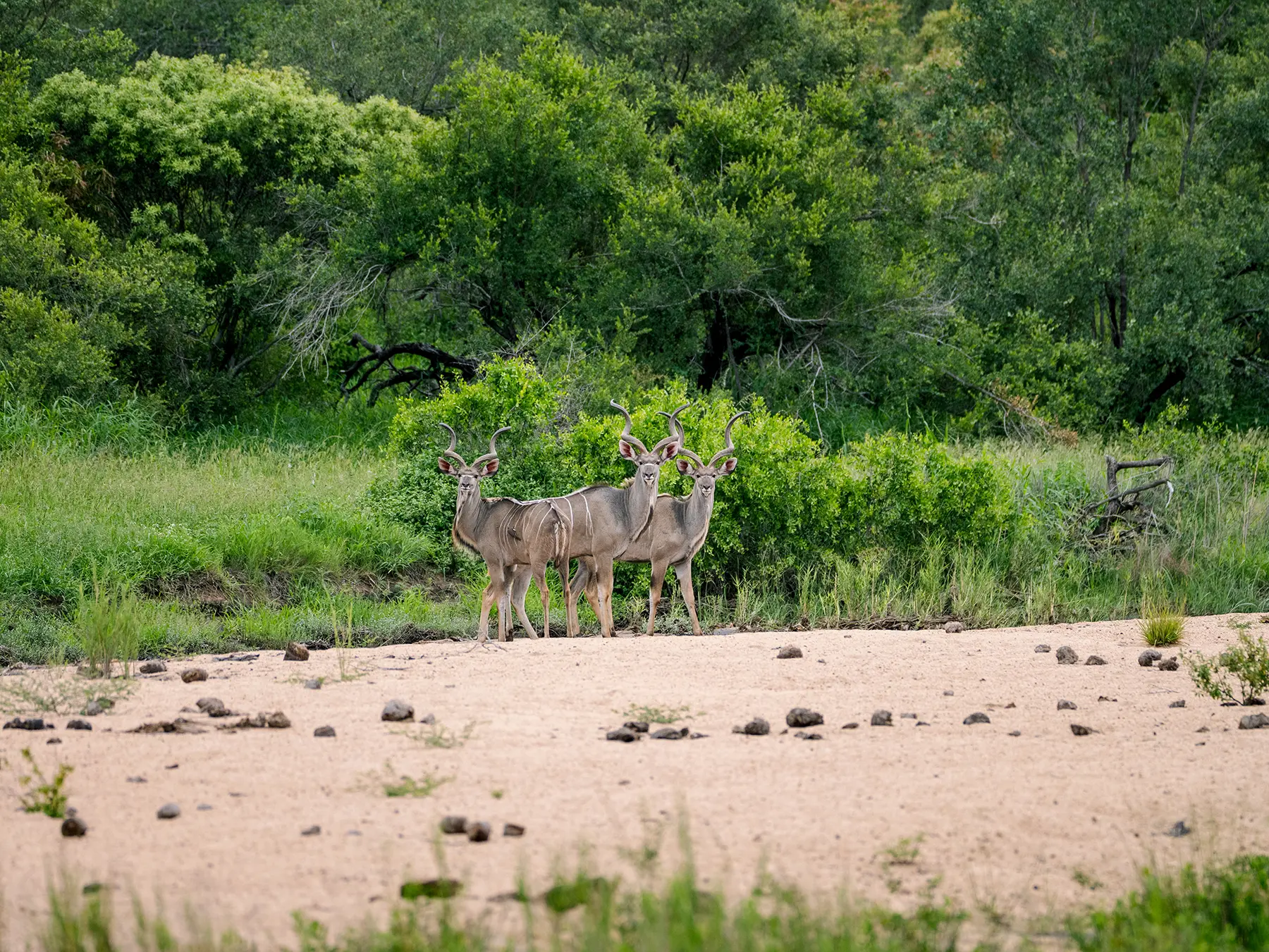
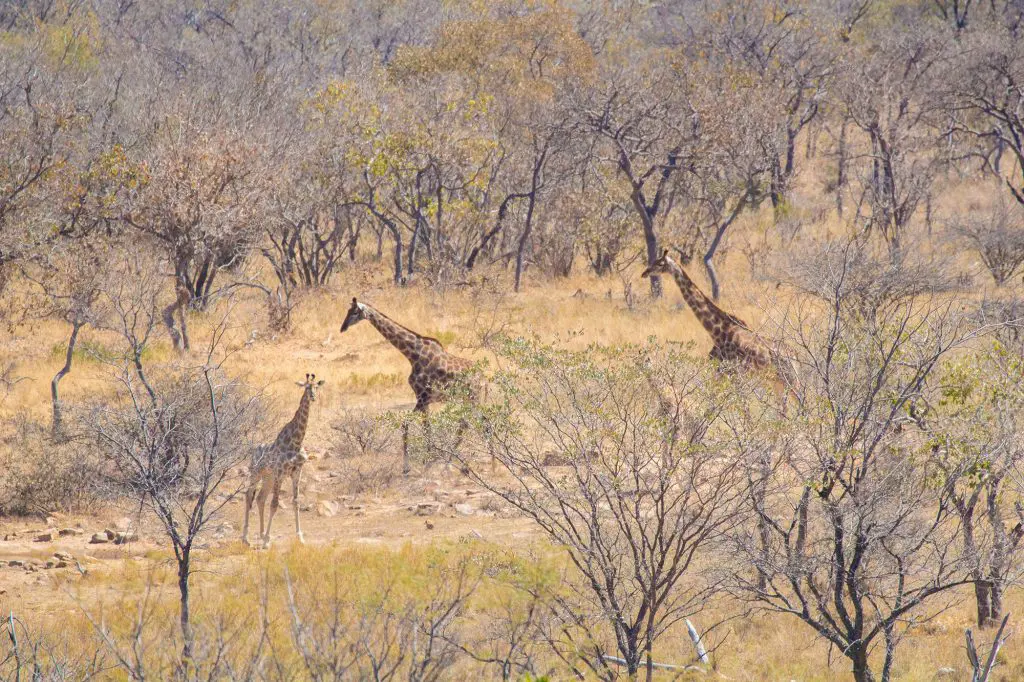
Vegetation is sparse, temperatures are mild, and animals cluster around permanent water sources, making their movements more reliable than at other times of year.
This is the peak safari season in Greater Kruger, with the highest demand from tourists and increased rates at lodges.
The cooler temperatures make for relatively comfortable game drives without the oppressive summer heat. Mornings and evenings can be very chilly, so make sure to pack warm layers.
May to August overlaps with wild dog denning season, making it an excellent time to see these endangered predators as their location becomes more predictable.
As well as being a great time for wild dog sightings, Sabi Sand’s famous leopards are easier to spot in the dry season when the bush is sparse. Despite their reputation for lounging in trees, leopards can often be found resting beneath bushes.
If you’re looking to visit in peak season, book well in advance, especially if you want to include Sabi Sand in your itinerary. At least 12 months in advance is advisable.
Quick Facts
Prices: High. Peak season rates at most lodges, especially in July and August.
Weather: Clear, dry days with morning temperatures as low as 5 – 10°C and daytime highs of 25 – 28°C. Cold mornings on open game drive vehicles require warm layers.
Wildlife: Excellent. Thin vegetation and concentrated water sources make animals easier to find. Predator activity is high as prey is forced into predictable areas.
Birding: Resident species only during winter months. Summer migrants have departed, but raptors and large birds are easier to spot without leaf cover.
Reasons to Visit in the Dry Season
- Best wildlife viewing of the year with animals concentrated at water sources
- Comfortable daytime temperatures and minimal rainfall
- Very low malaria risk during June to August
- Thin vegetation makes leopards and other elusive species easier to spot
- Overlaps with wild dog denning season (May to August)
Reasons to Avoid the Dry Season
- Highest prices
- Reserves are at their busiest
- The most popular lodges sell out up to a year in advance
- Landscape is brown and dry, less photogenic for scenery shots
- Cold early morning game drives (bring warm layers and a beanie)
The Green Season (November – April)
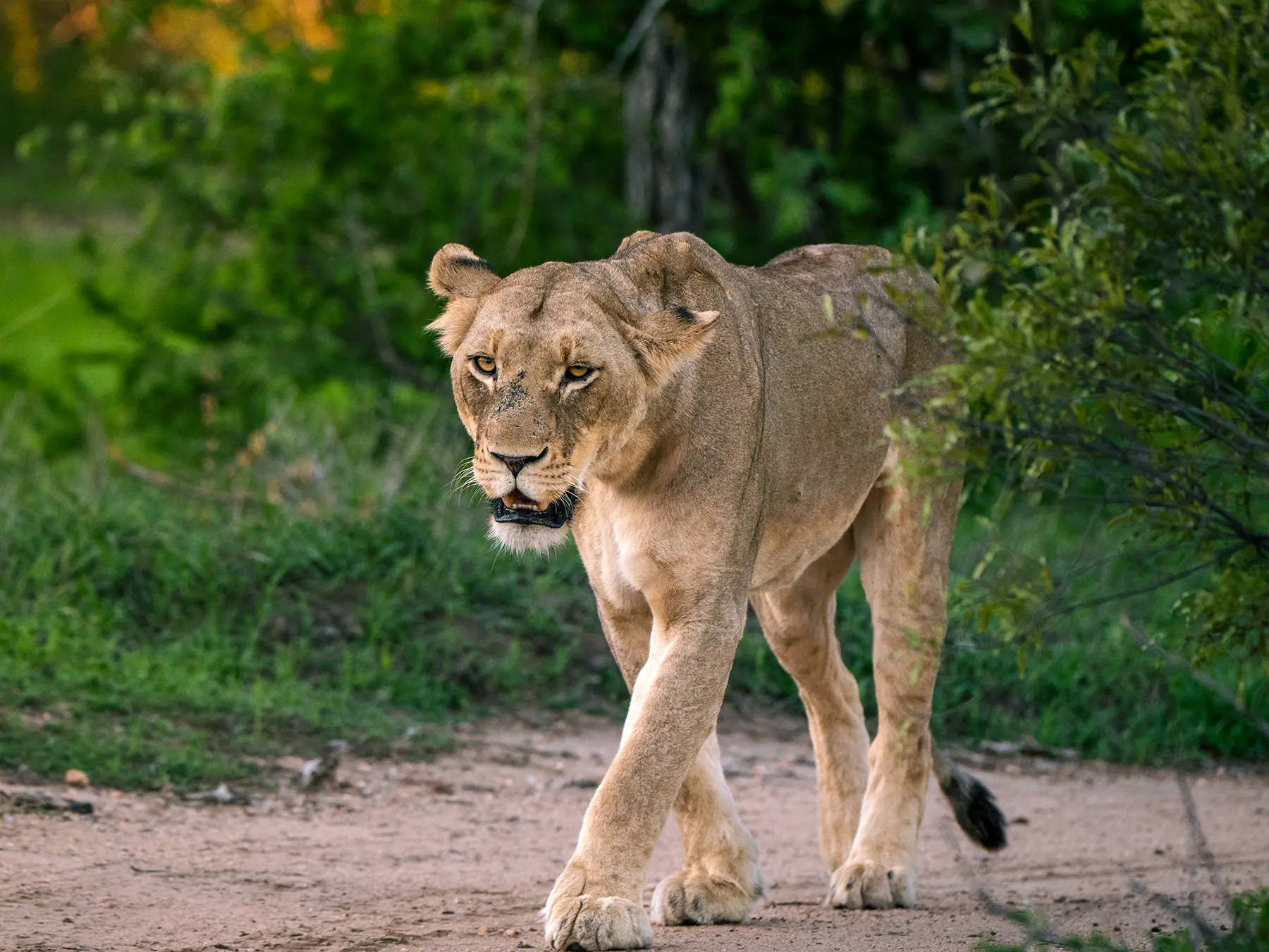
The green season is Greater Kruger’s wet period, with lush vegetation, dramatic thunderstorms, and the highest rainfall. This is the best time for birding enthusiasts, photographers wanting green backdrops and dramatic skies, and travellers looking for lower prices.
While abundant water and food mean that wildlife is more dispersed, you can still have good sightings in the private reserves where expert trackers and off-road access compensate for the thicker bush. Lodge rates drop significantly, with discounts of up to 40% off peak season prices.
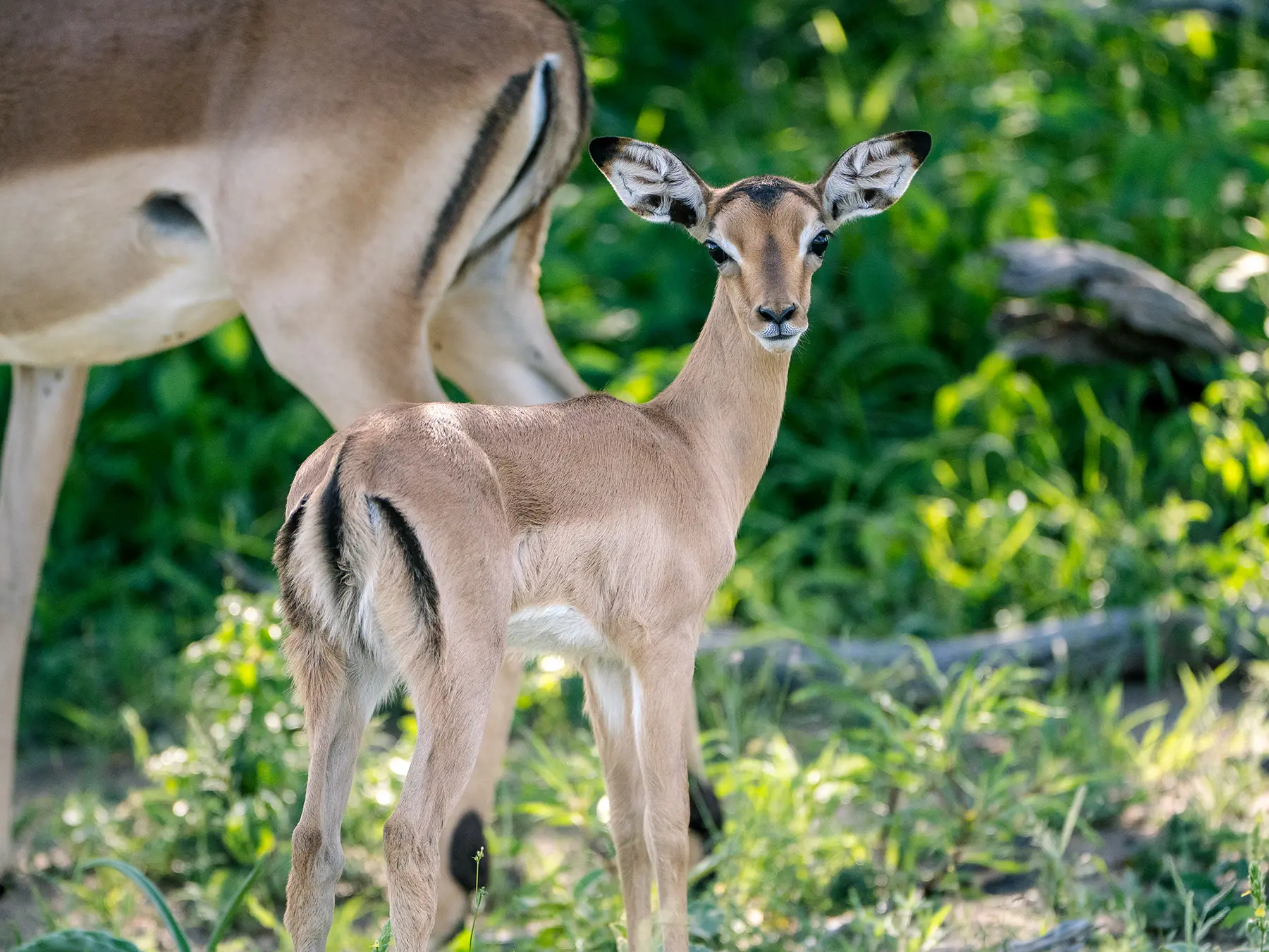
The impala lambing season begins in mid-November. This is a great time to see these tawny antelopes take their first wobbly steps.
The impala mothers all give birth within a couple of weeks of each other, overwhelming the bush with babies all at the same time. So much new life inevitably means that there’s a good chance of seeing predators in action.
To give you a sense of the predator action that takes place, during my November-December visit to Greater Kruger, I saw 10 instances of predators feeding on young impalas, and I actually witnessed 2 of those kills.
During the early green season months of November and December, the bush isn’t too thick yet. You can still enjoy a vibrant green landscape but the grass hasn’t grown too long yet.
January and February are by far the wettest months and are the worst time to visit Greater Kruger.
Quick Facts
Prices: At their lowest. Green season discounts of up to 40% at many lodges.
Weather: Hot and humid (28-40°C), with dramatic afternoon thunderstorms most days. January and February are the wettest months. Mornings are usually clear and warm.
Wildlife: Abundant, but sightings are more challenging than the dry season. Animals are dispersed as water is plentiful. Excellent for baby animal sightings and predator-prey interactions.
Birding: Peak season. Migratory species present, including European rollers, cuckoos, and bee-eaters.
Reasons to Visit in the Green Season
- Lowest prices of the year with significant lodge discounts
- Lush green landscapes and dramatic thunderstorm skies for photography
- Peak birding season with migratory species present, plus newborn animals
- Lots of baby animals to see
- Predator activity is high due to the abundance of new life
- Reserves are a lot quieter than in peak season
Reasons to Avoid the Green Season
- Highest malaria risk period
- High heat and humidity, with the chance of afternoon rain that can disrupt game drives
- Wildlife more dispersed and harder to spot in thick vegetation
How Many Days Do You Need for a South Africa Safari?
Seven days is a good amount of time for a Greater Kruger safari if you want unhurried time in two contrasting private reserves.
7 days gives you 3 nights at Timbavati where you’ll focus on seeing white lions on game drives and going on a bush walk, and 3 nights in Sabi Sand for world-class leopard sightings. Both offer the chance to see all of the Big Five and wild dogs too.
What 7 Days in South Africa Gets You
- Timbavati Private Nature Reserve (3 nights): Big Five drives across 53,395 hectares, bush walks and underground hide sessions (at select properties), and the only place on Earth where white lions occur naturally.
- Sabi Sand Game Reserve (3 nights): Big Five and Africa’s highest leopard density at 12.2 per 100 km², with guides able to identify around 85 resident leopards.
If seven days is more than you can spare, a shorter 5-day trip focused on one or two reserves still gives a strong Greater Kruger experience.
For travellers with more time, a longer 10-Day Greater Kruger Safari lets you add a third reserve such as Manyeleti, where you’ll have a greater chance of cheetah sightings.
If a South African safari is stretching your budget, you may wish to consider some of Africa’s more budget-friendly safari destinations. Either a 7-day Tanzania Itinerary or a 7-day Kenya Itinerary is an excellent choice for more budget-conscious travellers due to the wide availability of budget lodges in both countries.
My Preference: For me, 10 to 14 days is the sweet spot for Greater Kruger because it lets you include Manyeleti, which shorter trips skip. It also gives you more time to spot the Big Five and other animals on your wish list.
Safaris are unpredictable, but that’s also what makes them so exciting.
Often I find I have to spend a good few days at each location to experience great sightings.
It’s perfectly normal to have a morning, or even a full day, in which you see very little wildlife. Then, you may have an action-packed day and see all of the Big Five within a short space of time.
No two days are ever the same on safari and that’s what makes the experience so special.
What Does This 7-Day South Africa Itinerary Look Like?
This 7-day South Africa safari itinerary covers two Greater Kruger private reserves, with three nights in Timbavati and three nights in Sabi Sand. You arrive at Hoedspruit Eastgate Airport, transfer to Timbavati, fly to Sabi Sand on Day 4, and depart from Skukuza Airport back to Johannesburg or Cape Town.
I designed this itinerary around my own Greater Kruger trip, splitting the week between two reserves so you get an in-depth experience of each.
Quick Facts
Transfer time: around 1 hour on Day 1 from Hoedspruit to Timbavati, and on Day 4 between reserves either a 1-hour light aircraft flight (recommended) or a 4-hour road transfer.
On full safari days you won’t experience any driving outside of game drives as accommodation is in the heart of the reserve.
Best times of year: On paper May-October (dry season) but in reality any time other than January and February. April and May or September to December are my favourite months to visit.
These shoulder months offer excellent game viewing at slightly lower rates than the July-August peak. Whilst wildlife was slightly harder to spot (still not exactly hard) due to the green vegetation, it made for spectacular photos and, as you can see from my photos in this guide and YouTube videos from the trip, I still saw a lot of wildlife.
7-Day South Africa Safari Map
Day-by-Day Breakdown of the Perfect 7-Day South Africa Safari
South Africa has so much to offer that seven days will zip by – I’ve crafted this itinerary to make sure you make the most of every moment!
I have also considered the wildlife you can see in each reserve and transfer times in order to come up with the most enjoyable itinerary.
Click any of the days below to jump to my full notes on that day.
- Day 1: Hoedspruit to Timbavati
- Days 2-3: Timbavati Private Nature Reserve
- Day 4: Timbavati to Sabi Sand
- Days 5-6: Sabi Sand Game Reserve
- Day 7: Sabi Sand to Johannesburg
You can get quotes from the same local tour companies I use to organise my own trips here: Safaris By Ella
Day 1: Hoedspruit to Timbavati
Drive Time (Excluding Game Drives): 1 hour
Today you’ll arrive in South Africa, and after just a short 1-hour transfer you’ll be at your first safari destination, Timbavati Private Nature Reserve.
The reserve is famous for its white lions and you might get to see them on your first game drive this afternoon.
Itinerary
Once you land in Johannesburg or Cape Town, you’ll take a short domestic flight to Hoedspruit Eastgate Airport in Limpopo Province. The Johannesburg leg takes approximately 1 hour; the Cape Town flight is longer.
This local flight is usually booked together with your international flights. I recommend choosing a window seat for this trip, as you’ll have breathtaking views of the Drakensberg Mountains on the descent.
It’s also possible to have a road transfer to Greater Kruger from Johannesburg (but not from Cape Town). The drive takes 5-6 hours and road conditions vary, so in my opinion, flying is preferable.
From the Hoedspruit airport, a short road transfer of around one hour takes you to your Timbavati lodge. You’ll pass a picturesque mixture of open savannah, riverine woodland and seasonal pans along the way, as you wind through Limpopo and Mpumalanga provinces.
Once you arrive at your lodge, take a moment to settle in over a late lunch. Next up, it’s time for the first activity of your stay – a leisurely sunset game drive filled with incredible sightings.
Your late afternoon game drive sets out between 16:00 and 16:30 in an open-top safari vehicle. You’ll be on the road in the reserve until roughly 19:00, continuing into darkness for a brief night drive on the way back to camp.
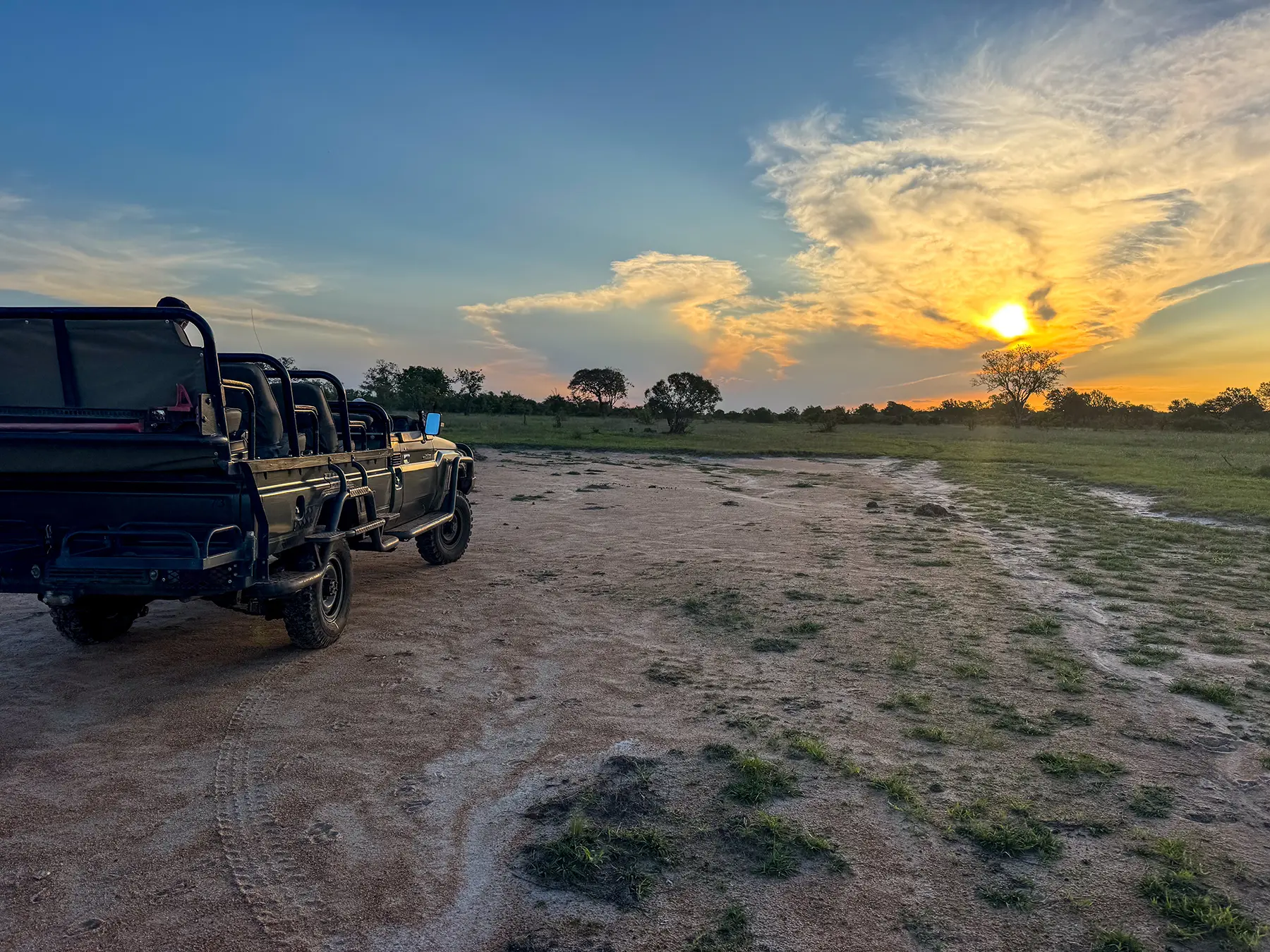
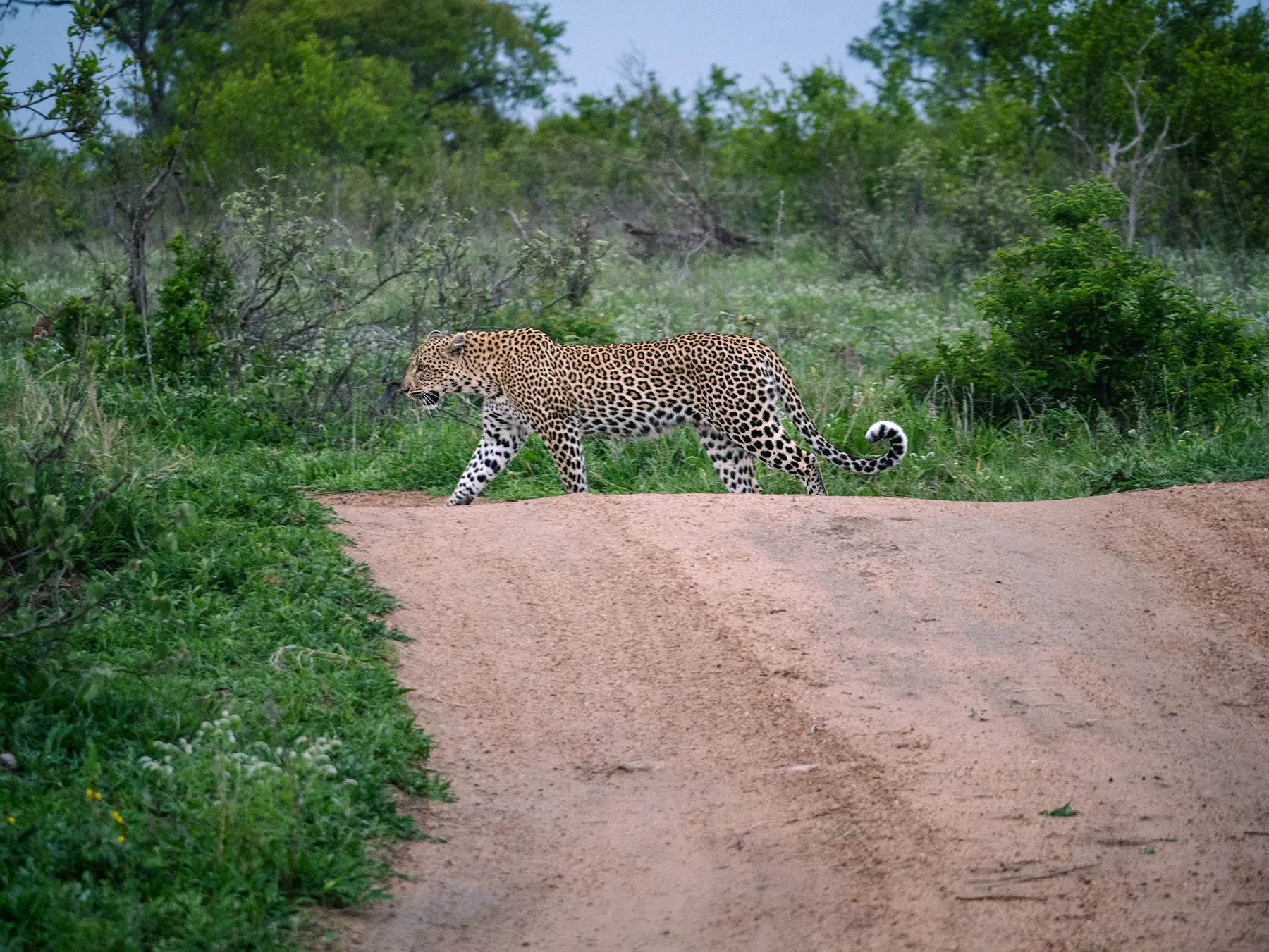
Expect to chase the golden light looking for elephants at the waterholes, and be sure to look out for leopards stirring as the heat of the day passes. At night the spotlight the tracker shines into the bush might pick out hyenas, civets and nightjars as you make your way back to your lodge.
About Timbavati Private Nature Reserve
The spectacular Timbavati Private Nature Reserve is a world-class game reserve in the Greater Kruger ecosystem.
It covers 53,395 hectares on the western edge of Kruger National Park, with which it shares a 31-mile (50 km) unfenced border. Big cats, herds of elephants, wild dogs and thousands of other animals roam freely.
Timbavati was officially established in 1956 when a group of conservation-minded game farmers came together to reclaim and protect the Lowveld ecosystem from destructive crop and cattle farming. They formed the Timbavati Association, which today has 50 members.
Timbavati is adjacent to a number of other private wildlife concessions neighbouring Kruger National Park, and pooled together the area of unfenced private reserves extends to roughly 75,000 hectares..
But what’s truly awe-inspiring is just how much untouched wilderness there is when you consider that there’s no fencing between the private reserves and the Kruger National Park itself. Together, the Greater Kruger ecosystem exceeds 2.1 million hectares of contiguous wildlife habitat, making it one of the largest conservation areas in Africa.
Animals move freely between public and private land, which is testament to what can be achieved when governments and private entities work together towards conservation goals.
What Wildlife Can I See in Timbavati Private Nature Reserve?
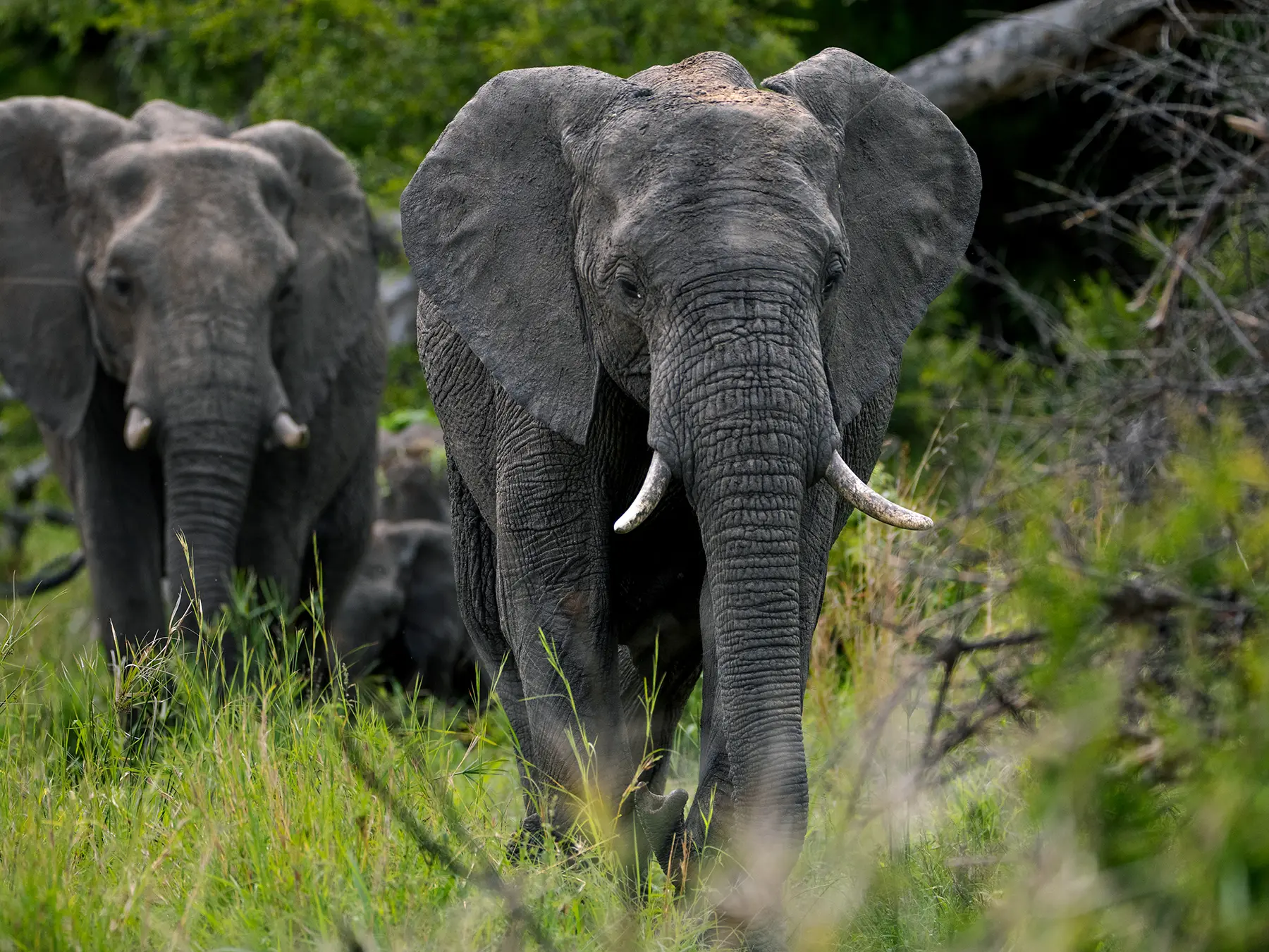
You have excellent chances of seeing all of the Big Five (lions, leopards, elephants, white rhinos and buffalos) in Timbavati, just as I did during my 3-night stay in the reserve.
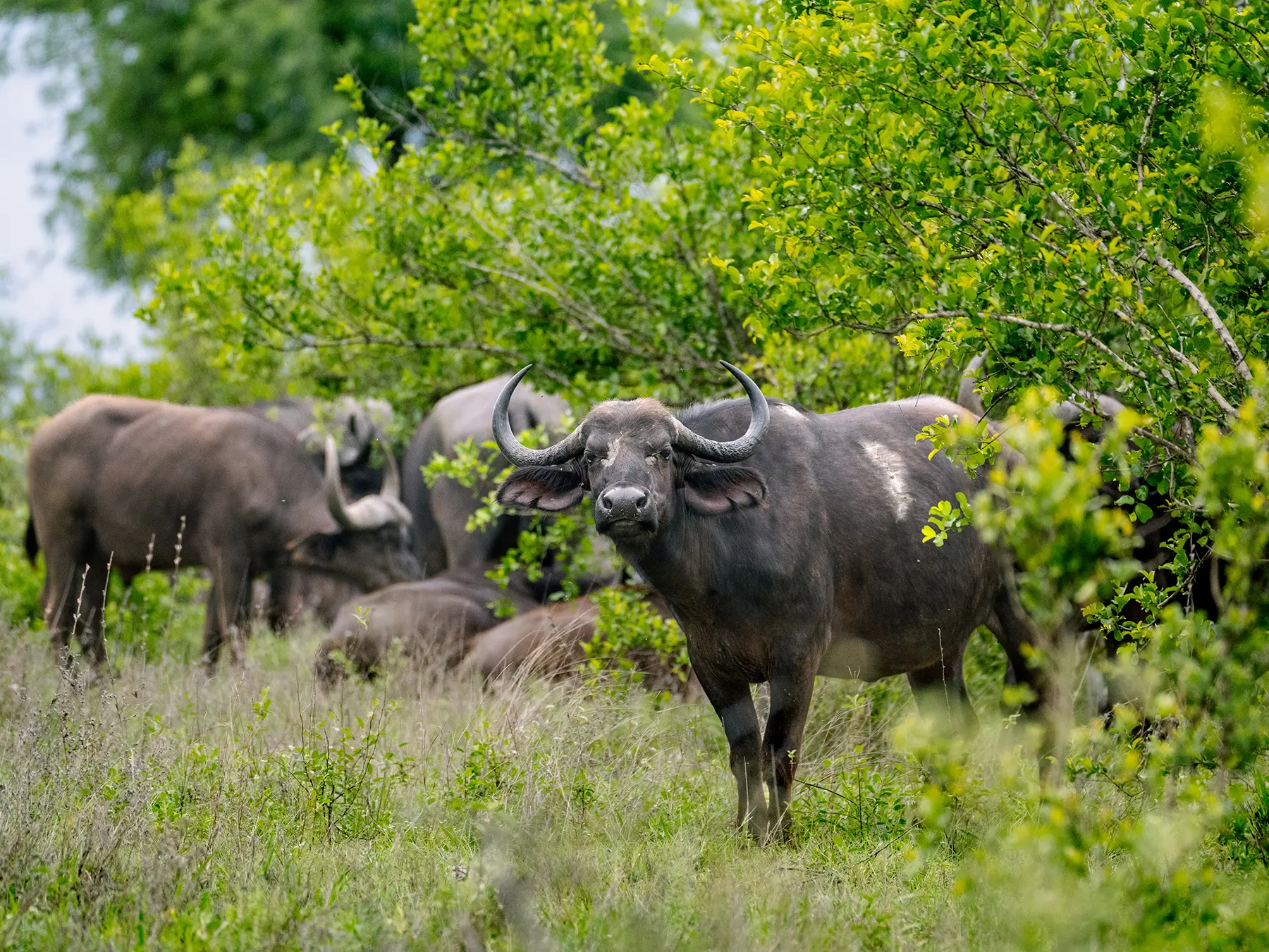
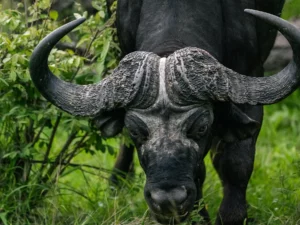
Out of all the Big Five, buffalos are the hardest to spot in this area, and as a rule they are easier to see in the open bushveld than in denser habitats.
There are two really special things you’re likely to see in Timbavati that you may not find anywhere else in Greater Kruger.
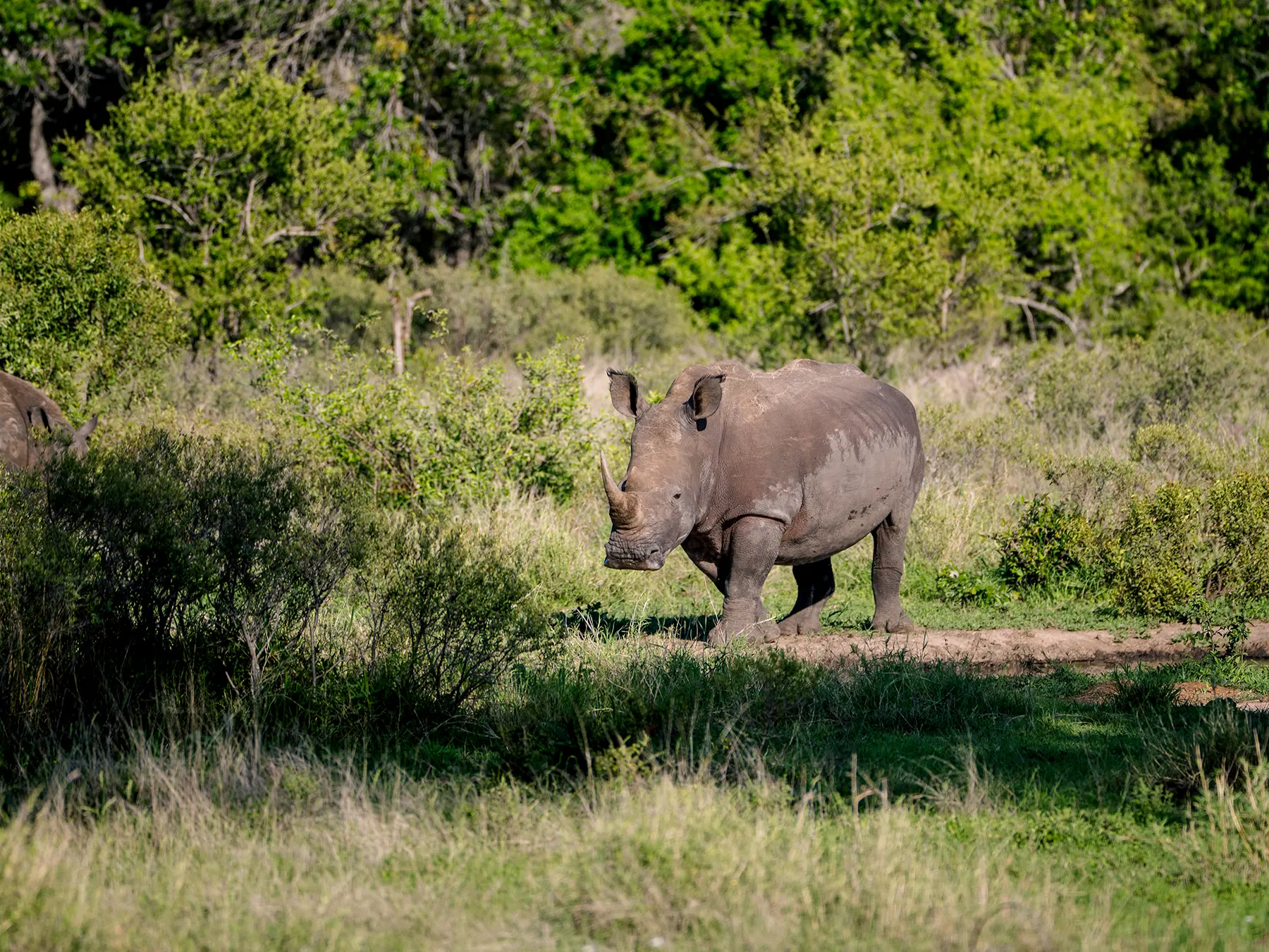
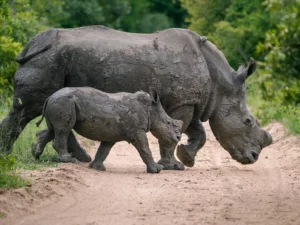
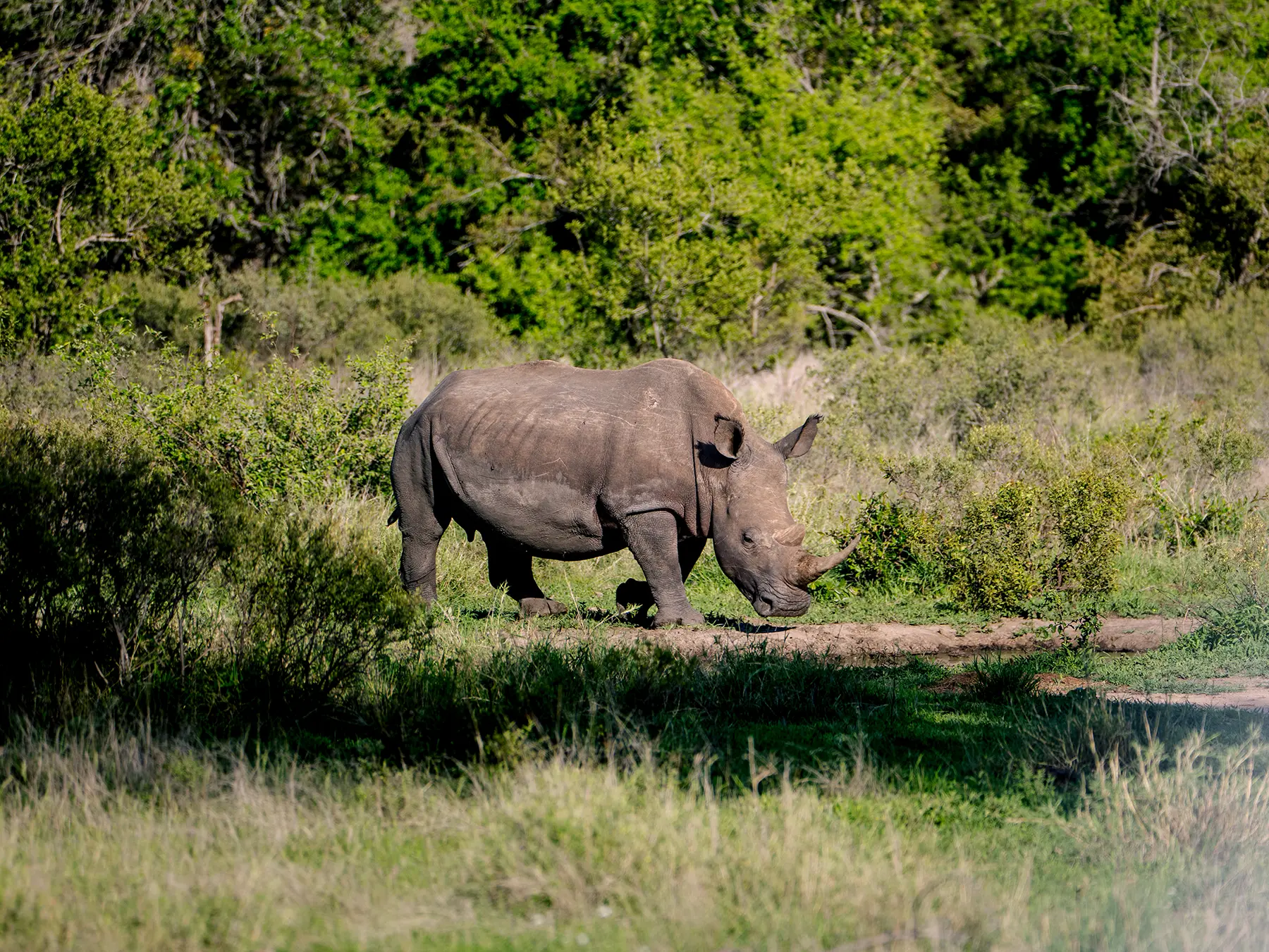
The first is white rhinos with their horns intact. It’s fairly common practice in South Africa, as in several other places in Africa, for rhinos’ horns to be removed (safely and under sedation) in order to discourage poachers from killing them for their horns.
Timbavati is the only Greater Kruger reserve that doesn’t dehorn their rhinos, giving you a chance to admire these prehistoric giants in all their glory.
I managed to see multiple horned white rhinos during my 3 night stay.
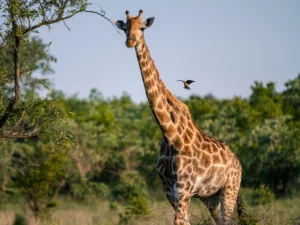
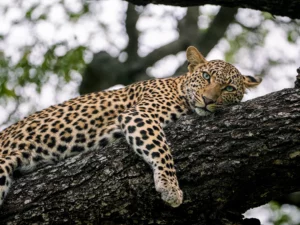
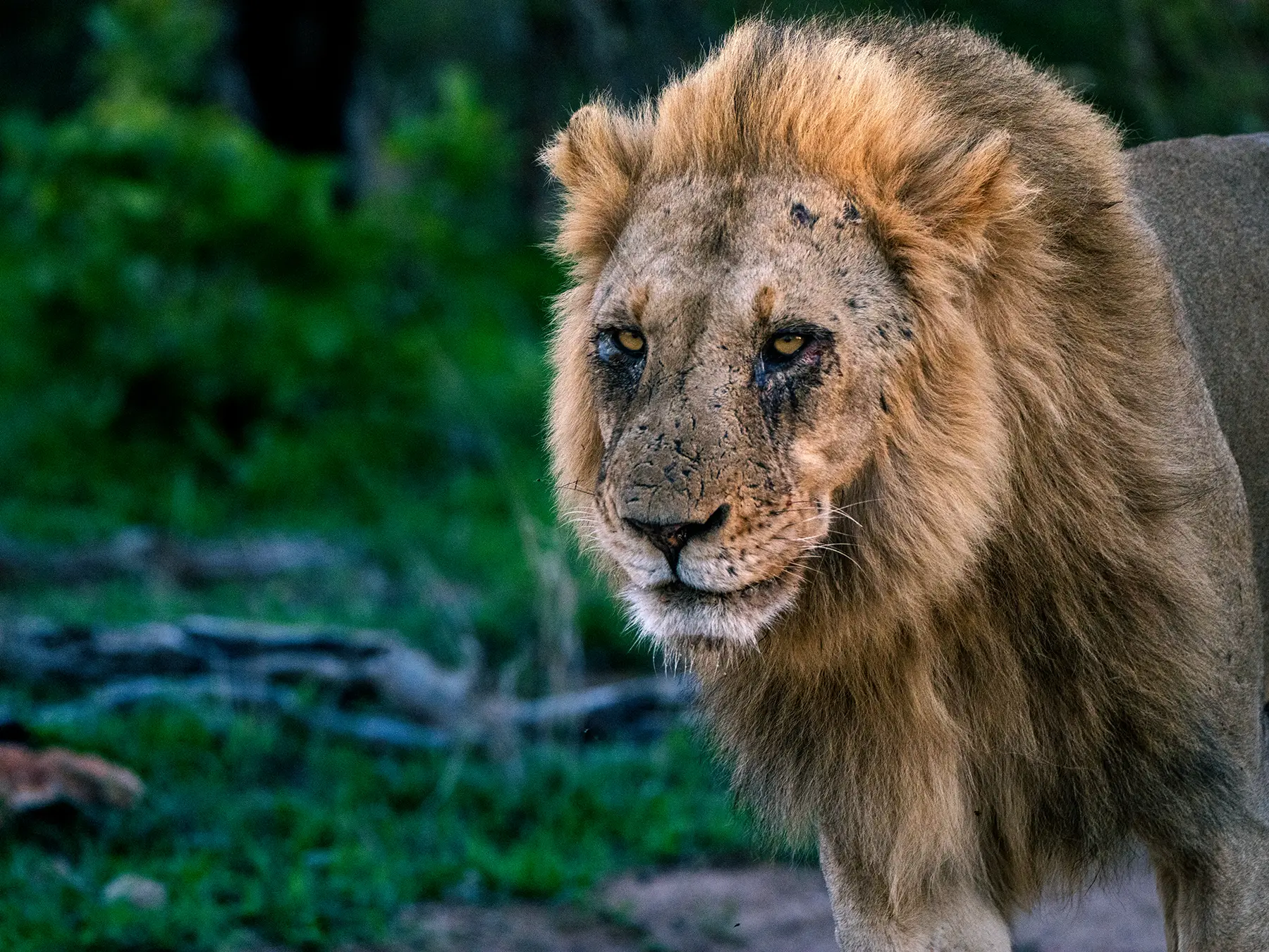
The second unique Timbavati experience is seeing white lions. Timbavati is the only place where white lions occur naturally in the wild.
First recorded here in 1938, this genetic aberration is caused by a recessive leucism gene. When present in two parent lions, their offspring will be much lighter in colour than normal lions and will often have pale green or yellow eyes.
Sadly, I didn’t get to see any white lions during my stay. However, a new white lion cub has recently been found, born into the Giraffe Pride in central Timbavati.
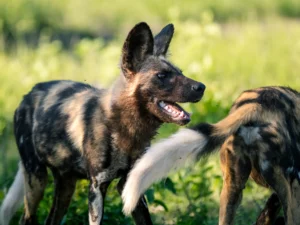
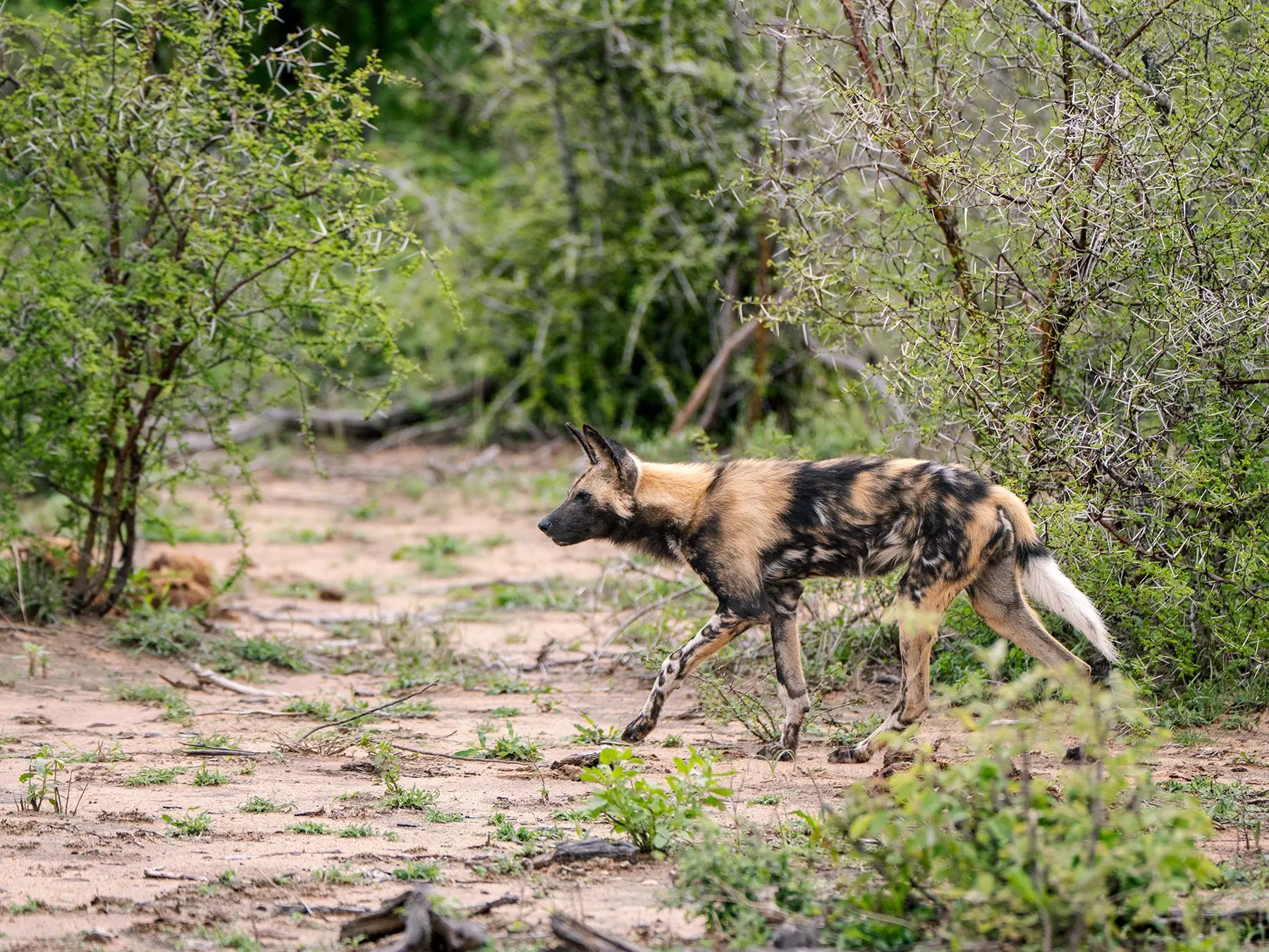
The African wild dogs that frequent the reserve are another Timbavati highlight. Some difficulties with genetic diversity are a long term concern for this population, though the Kruger study found the dogs are not currently inbred and the worry is what their low genomic variation could mean for future viability.
The Greater Kruger population currently stands at around 350 individuals. Wild dogs are always one of my favourite sightings on safari, and I had many opportunities to feast my eyes in Timbavati.
Night game drives are a great time to spot elusive nocturnal species like the honey badger, civet, genet, and African wild cat. In the velvety dark of the bush, you’ll be able to pick them out with a safari spotlight that catches and reflects off their eyes. I was lucky enough to see a civet and several white-tailed mongooses.
Tips for Your Journey to Timbavati
Here are some tips to help your journey to Timbavati go as smoothly as possible.
- Book your safari, including Airlink flights from Johannesburg to Hoedspruit Eastgate Airport, well in advance, especially in peak season. There are limited flights on this route and they sell out fast.
- Catch the earlier 10:30 flight if possible, to ensure you are settled at your accommodation in time to join the afternoon game drive.
Optional Activities
- I highly recommend going on a walking safari with an armed ranger. This experience offers a completely different perspective as you learn to read tracks and identify birds by their calls. Walking safaris normally happen in between the game drives and are optional. They usually don’t cost anything extra.
Where to Stay in Timbavati Private Nature Reserve
Timbavati offers a range of accommodation options with a focus on mid-range and luxury.
Mid-range tented camps and lodges typically cost $500 to $800 USD per person per night on a full-board basis including game drives, with top-end lodges running higher.
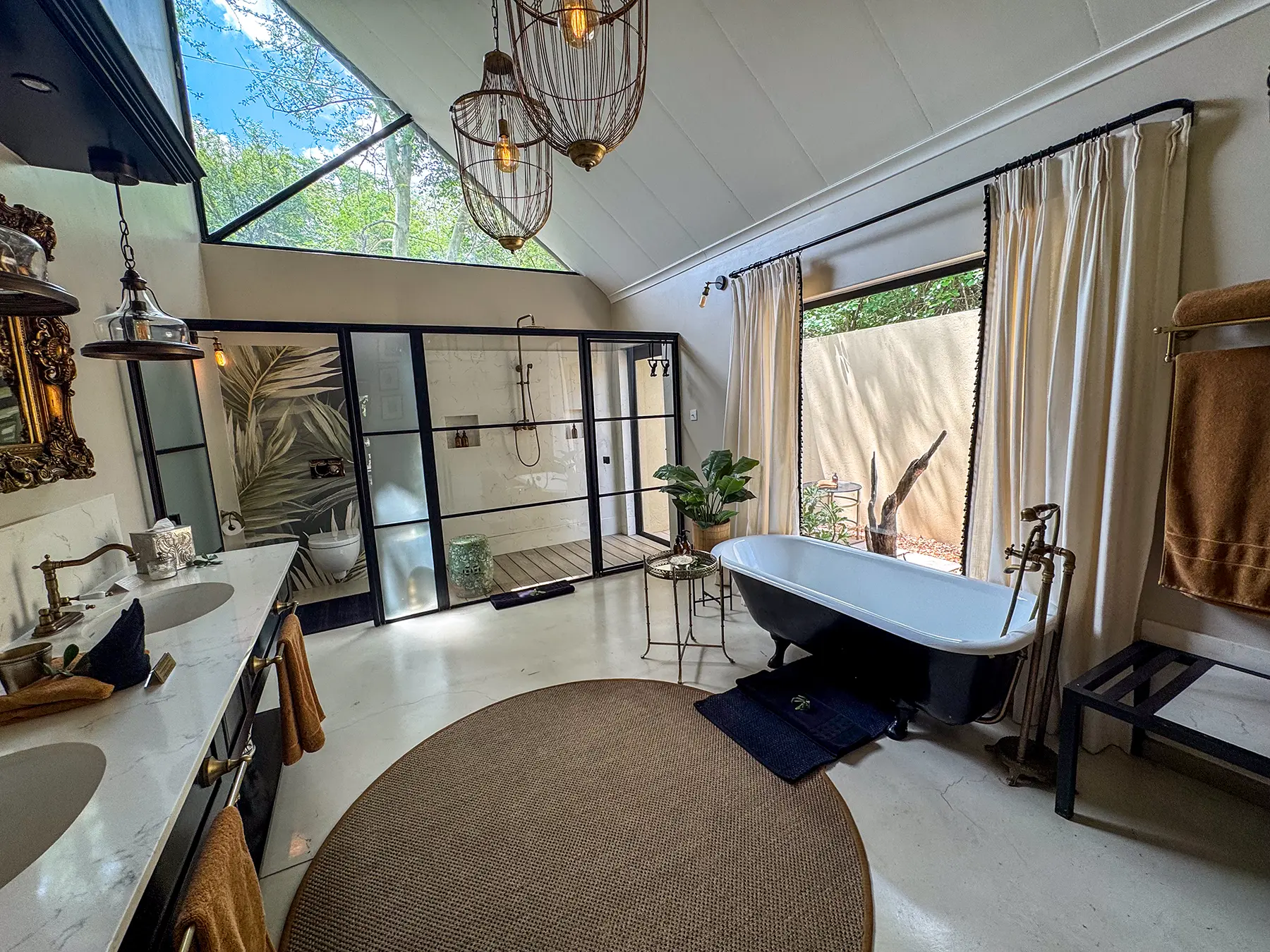
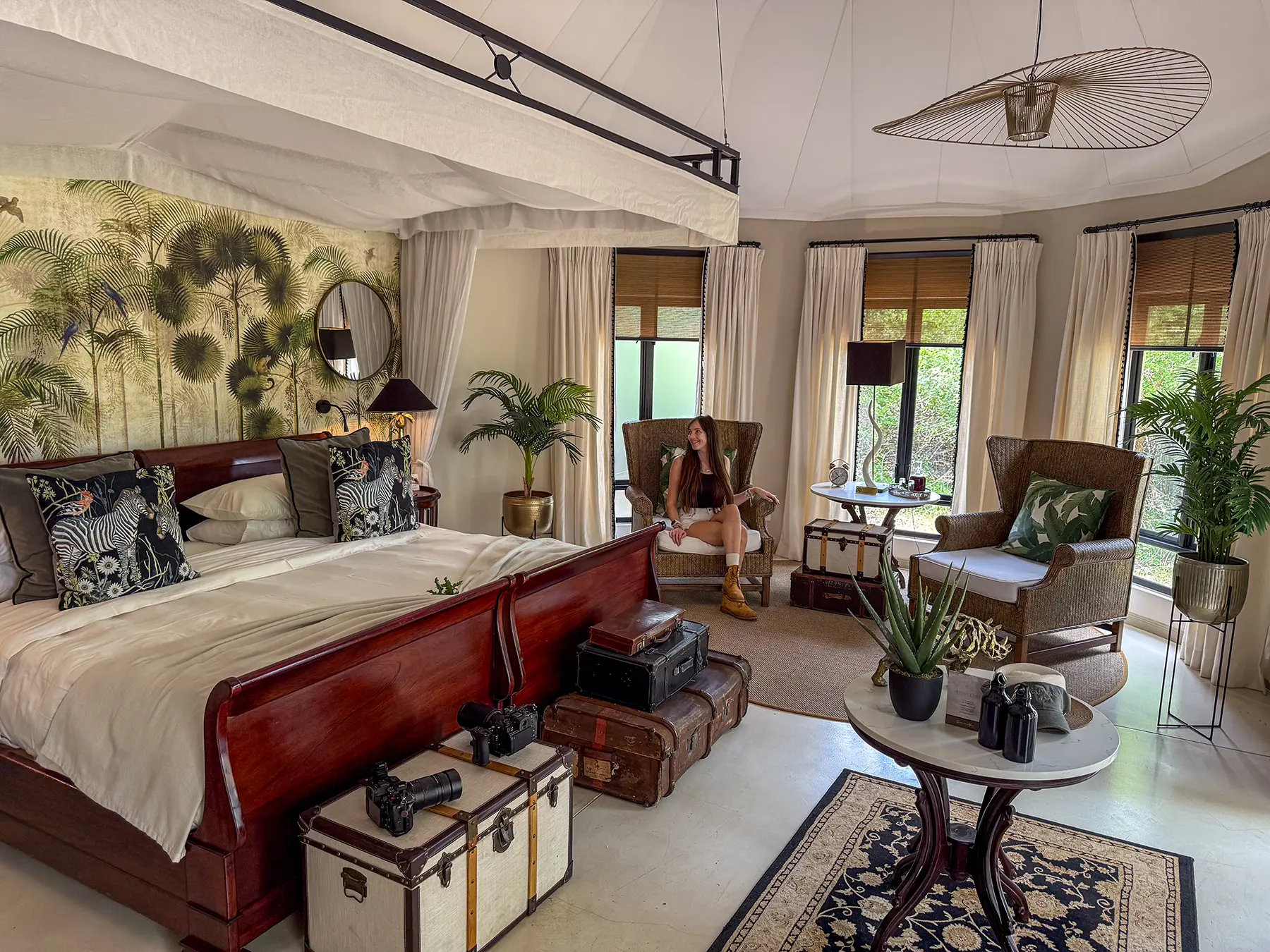
I stayed at Kings Camp, a luxury lodge with a traditional African feel and a large area of 100 km² that can be traversed on your game drives.
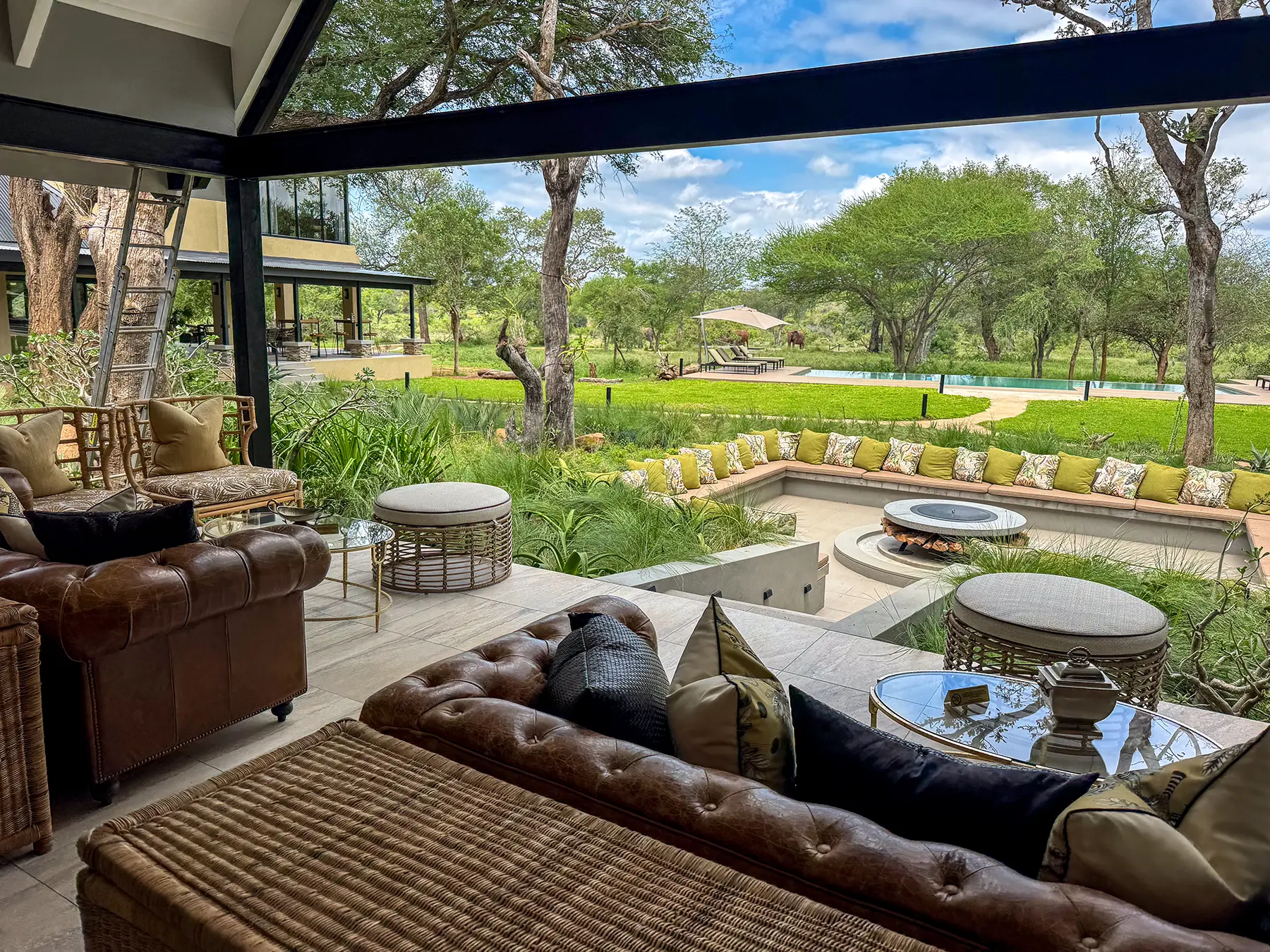
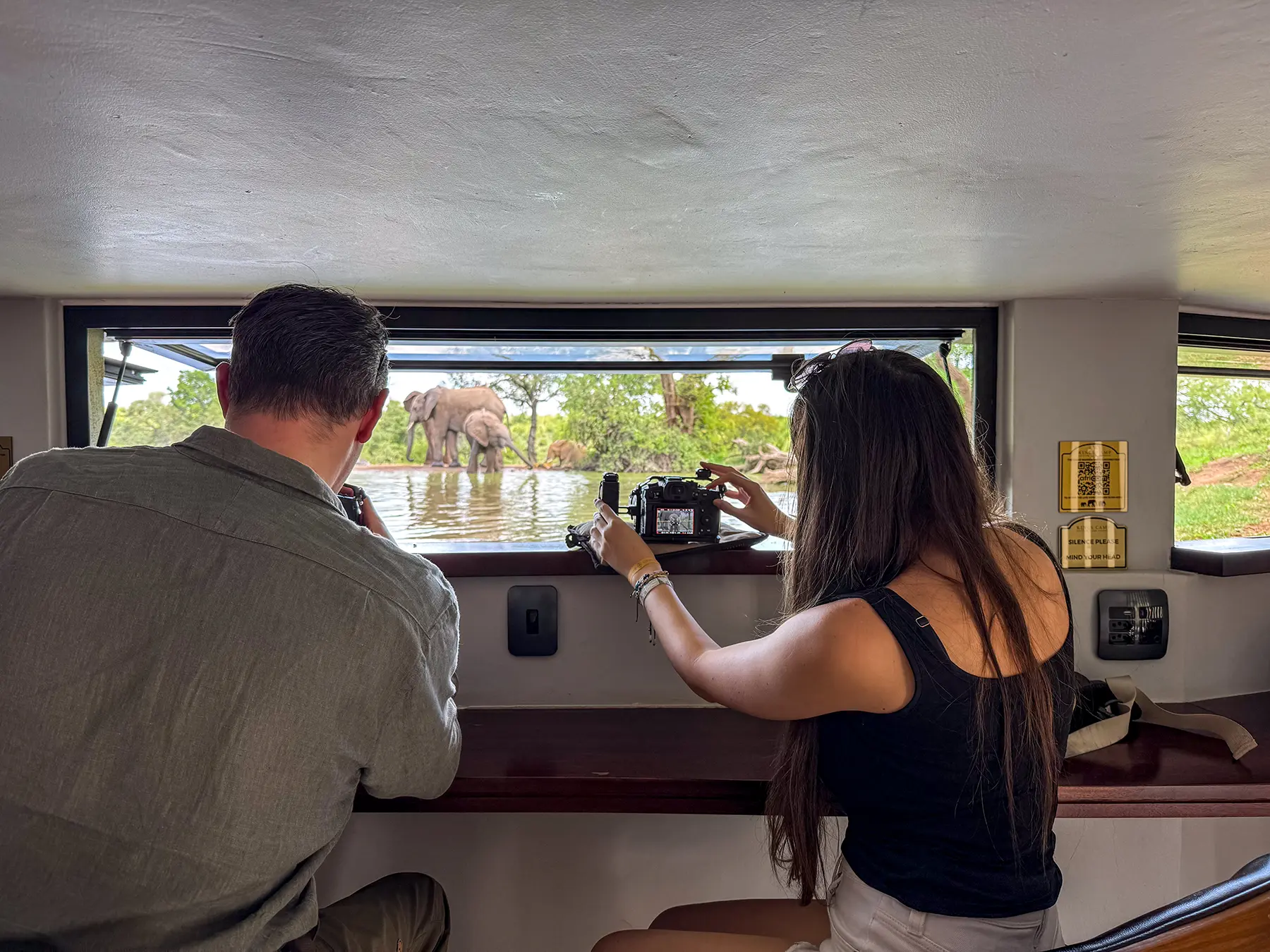
Kings Camp has built its own ground-level hide at the edge of a waterhole, which attracts plenty of wildlife, including herds of elephants. They also have a photography studio where you can print off your photos. This is a nice touch, but unfortunately I didn’t get round to testing the printer out as there was so much else to see and do!
My Experience of the Journey to Timbavati
After a smooth, hour-long flight with stunning views of the Drakensberg Mountains, I touched down at Hoedspruit Eastgate Airport at 13:30.
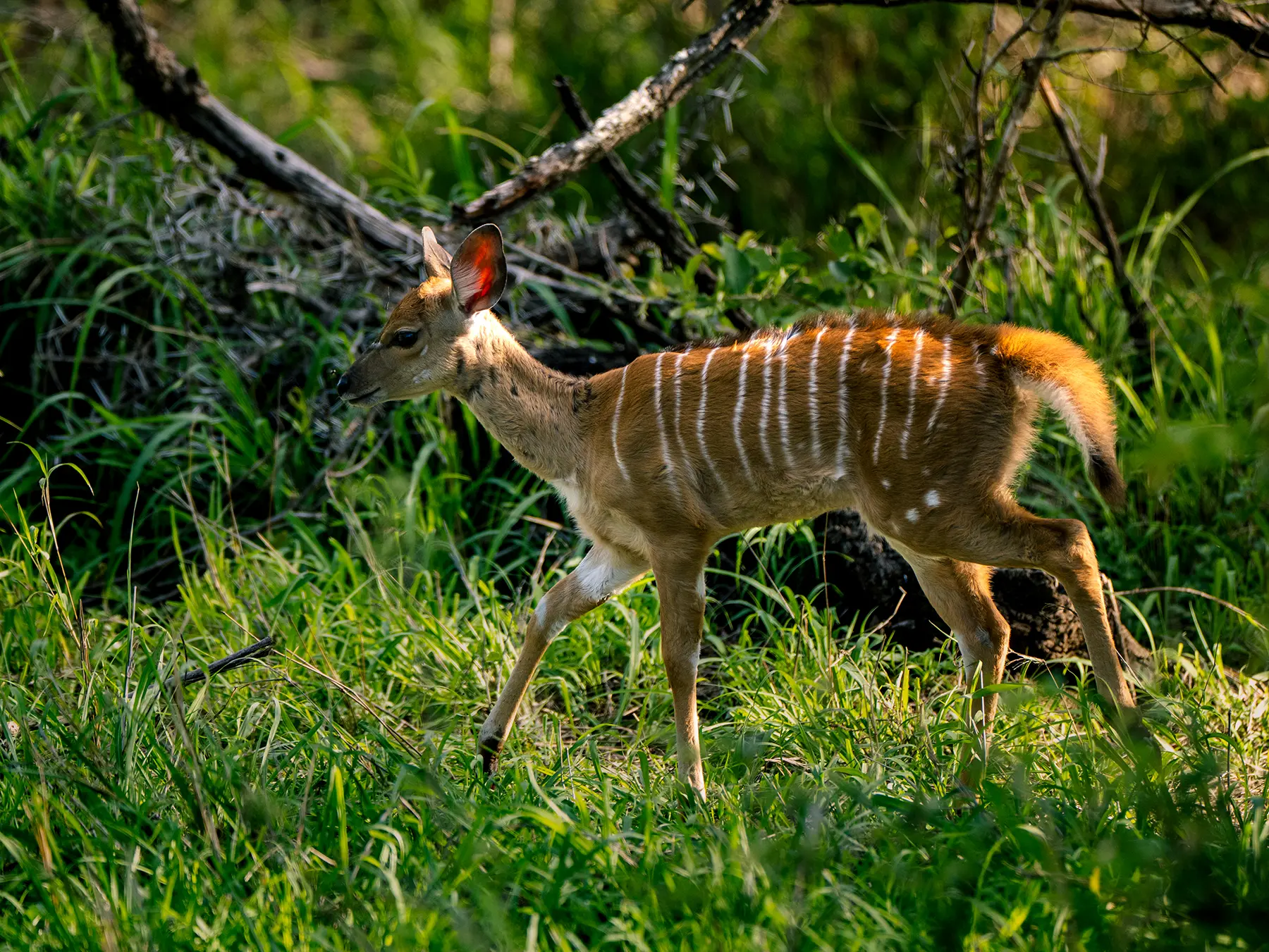
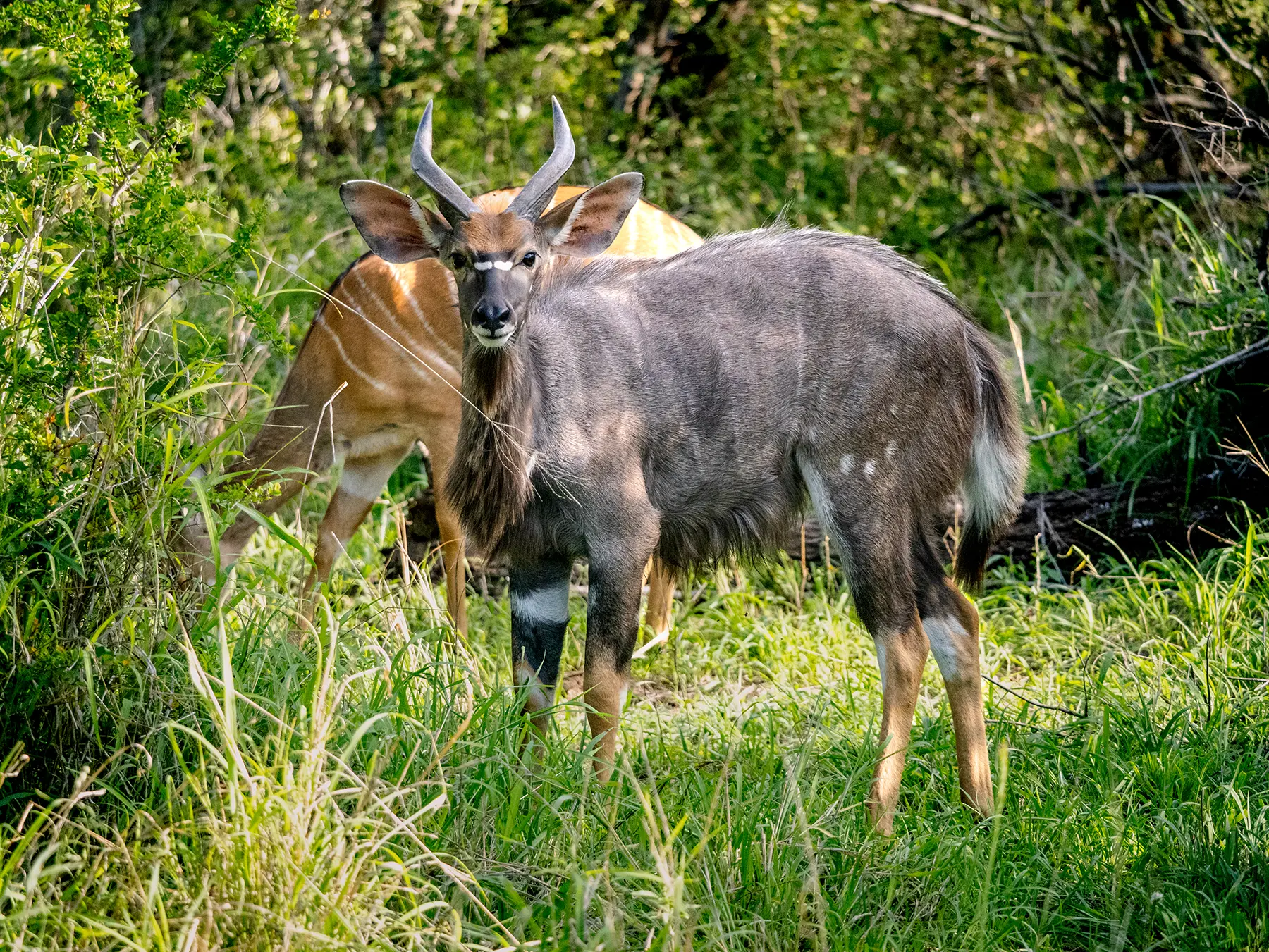
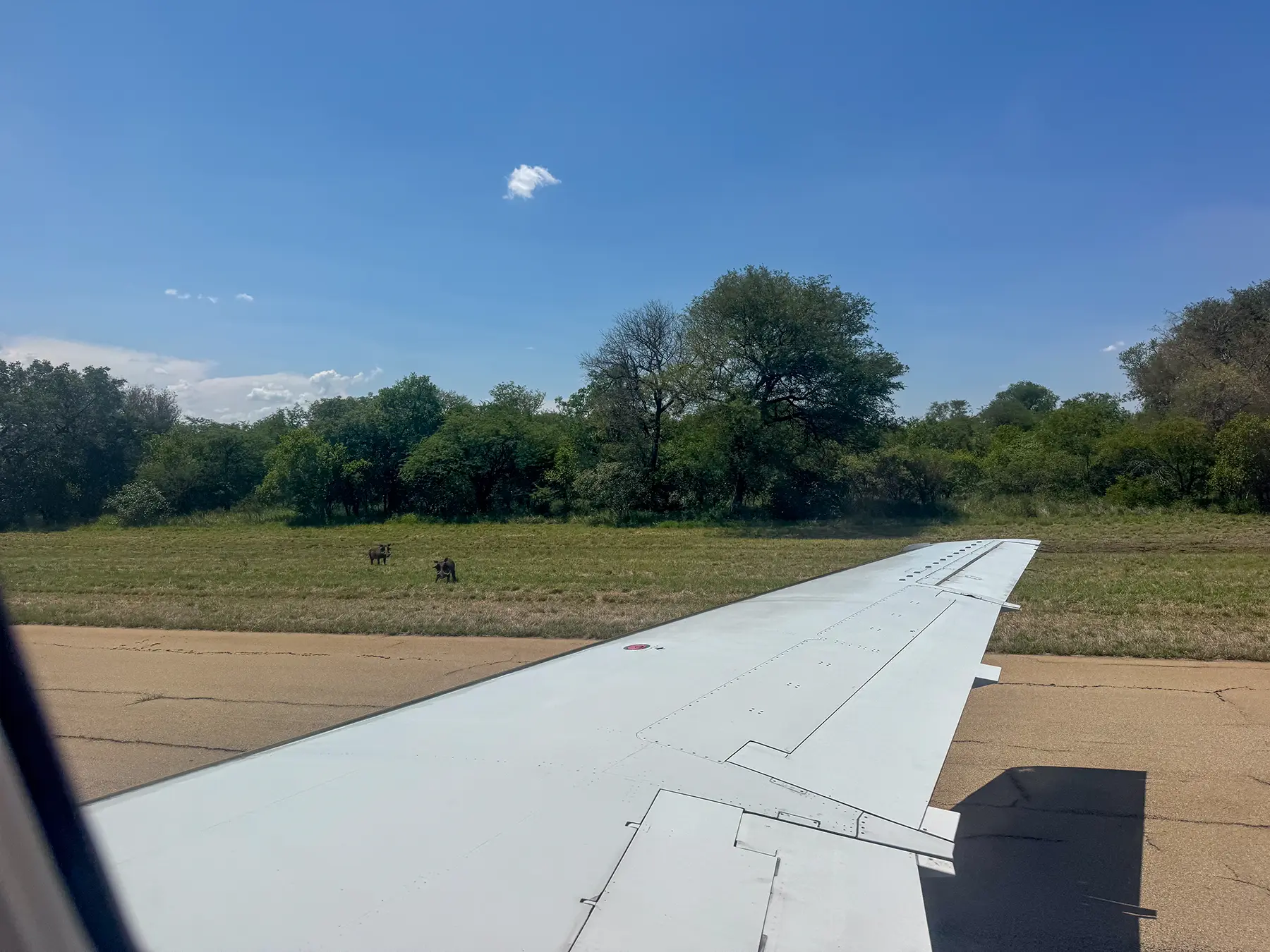
It was a fairly lengthy journey down the tarmac to reach the dainty airport terminal, and on the way I spotted some warthogs, impalas and even some female nyalas. The safari had begun and I hadn’t even left the plane yet!
Since Timbavati is only a 1-hour drive from Hoedspruit, it was pretty straightforward getting there. The road between Hoedspruit and Timbavati is tarred and in good condition.
Once within the reserve, a wide gravel road leads you deeper into the bush. Again, it’s well-maintained, making for a fairly smooth drive.
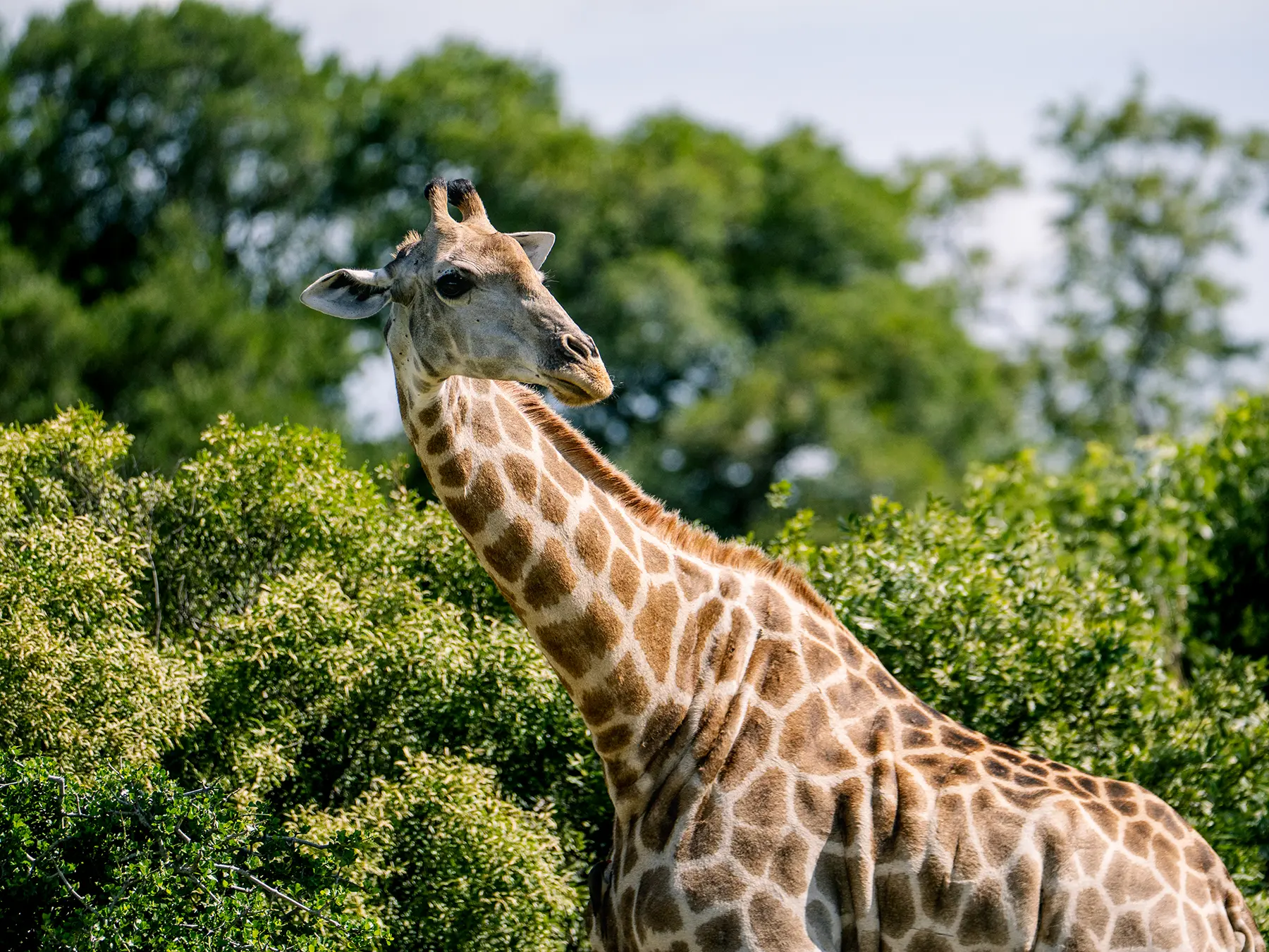
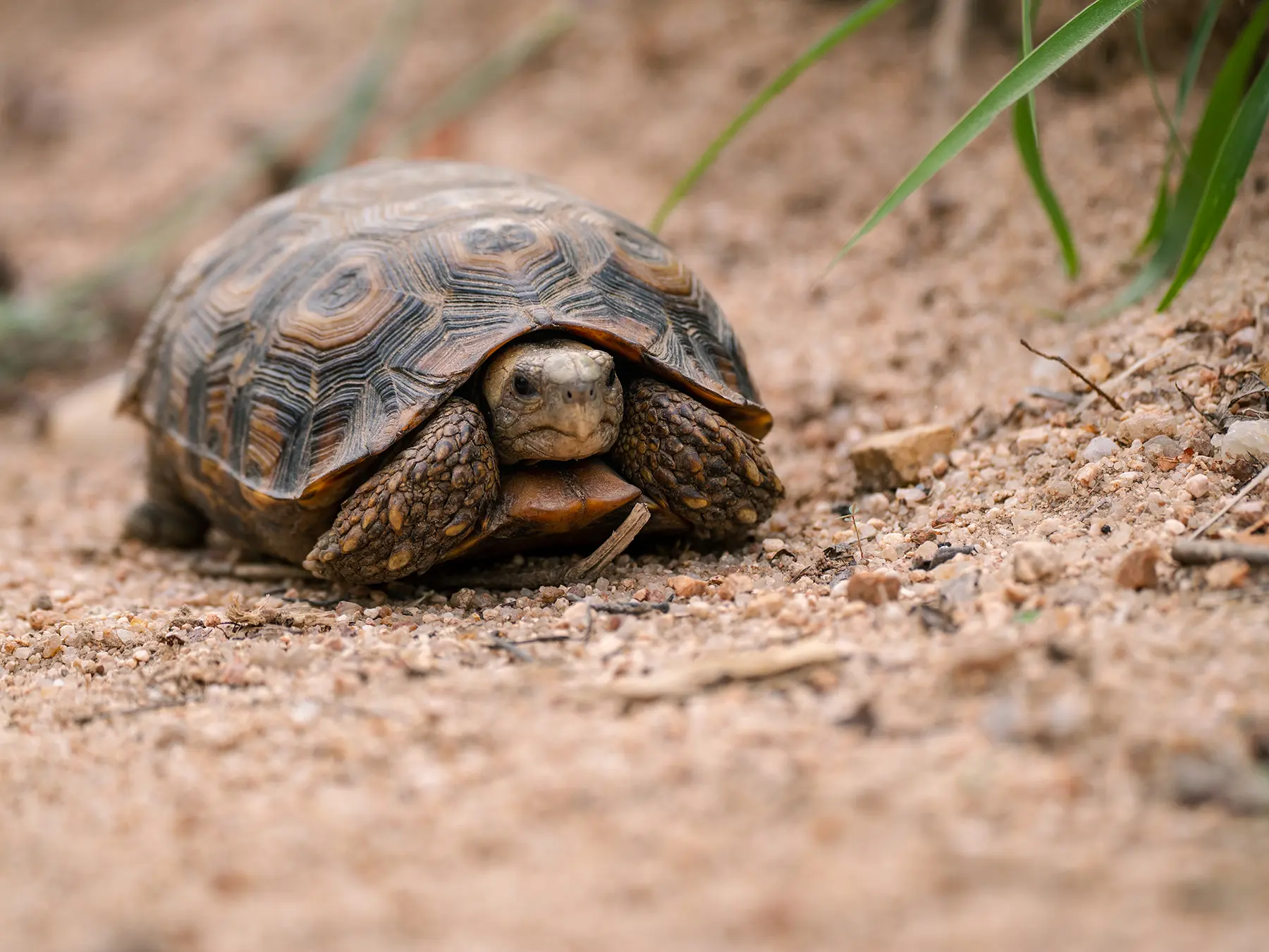
Our game drive had well-and-truly begun by the time we hit the gravel road – I spotted giraffes, impalas (including our first glimpse of some newborn lambs!) and even a leopard tortoise.
The final stretch of the drive took us down a winding dirt track, and before I knew it, we had arrived at Kings Camp.
You can view a video of my Timbavati experience below.
Days 2-3: Timbavati Private Nature Reserve
Drive Time (Excluding Game Drives): 0 hours (full days in the reserve, no transfer)
You’ll have two full days to enjoy Timbavati’s magnificent, untouched wilderness, with opportunities for morning and afternoon game drives on both days.
Itinerary
One of the most relaxing things about safari trips is the routine you slip into, in tune with the natural rhythms of the day, and Greater Kruger is no different.
From rising early to catch the sunrise to laying low in the heat of the day, it’s all about synchronising with the bushveld..
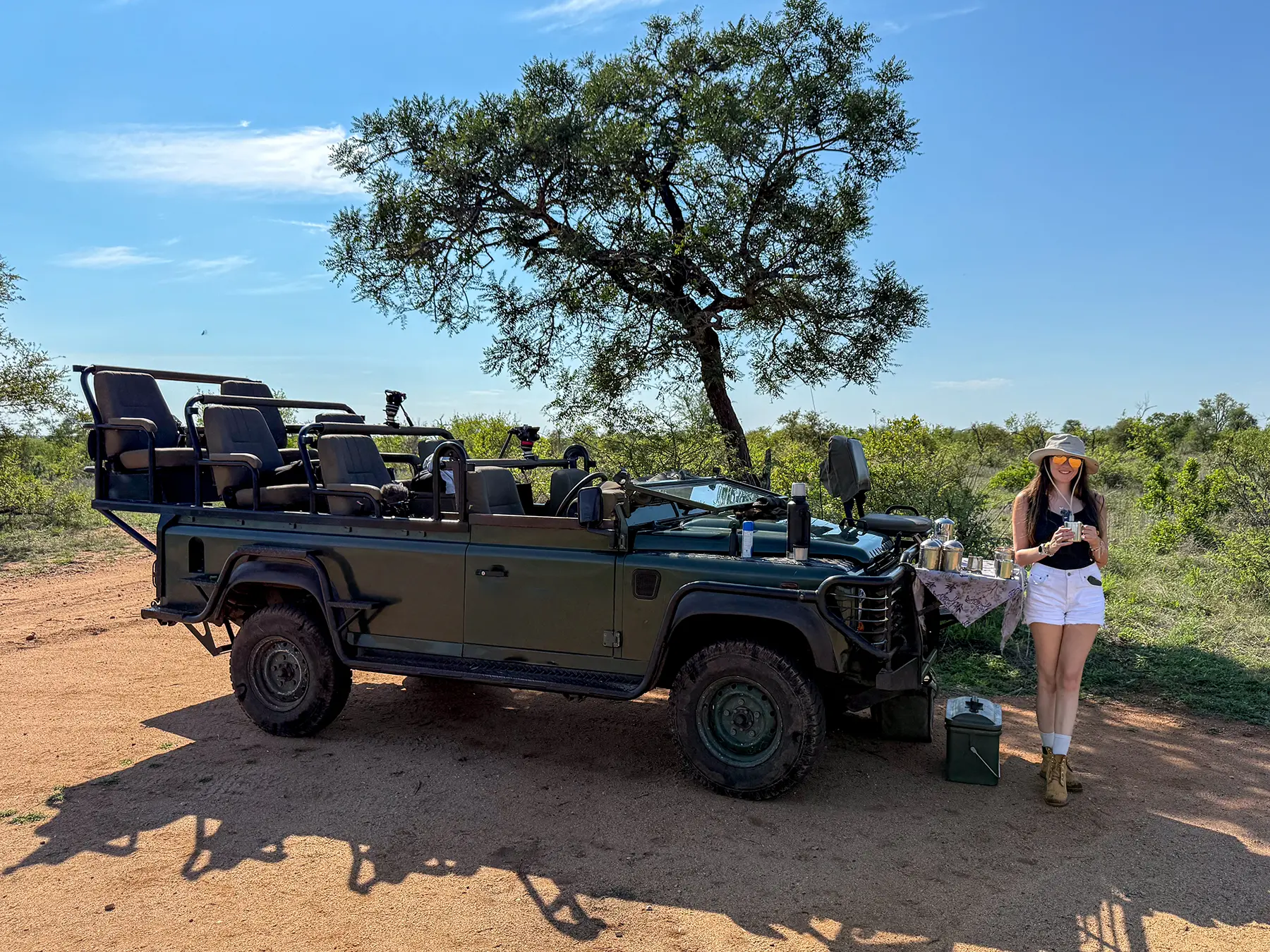
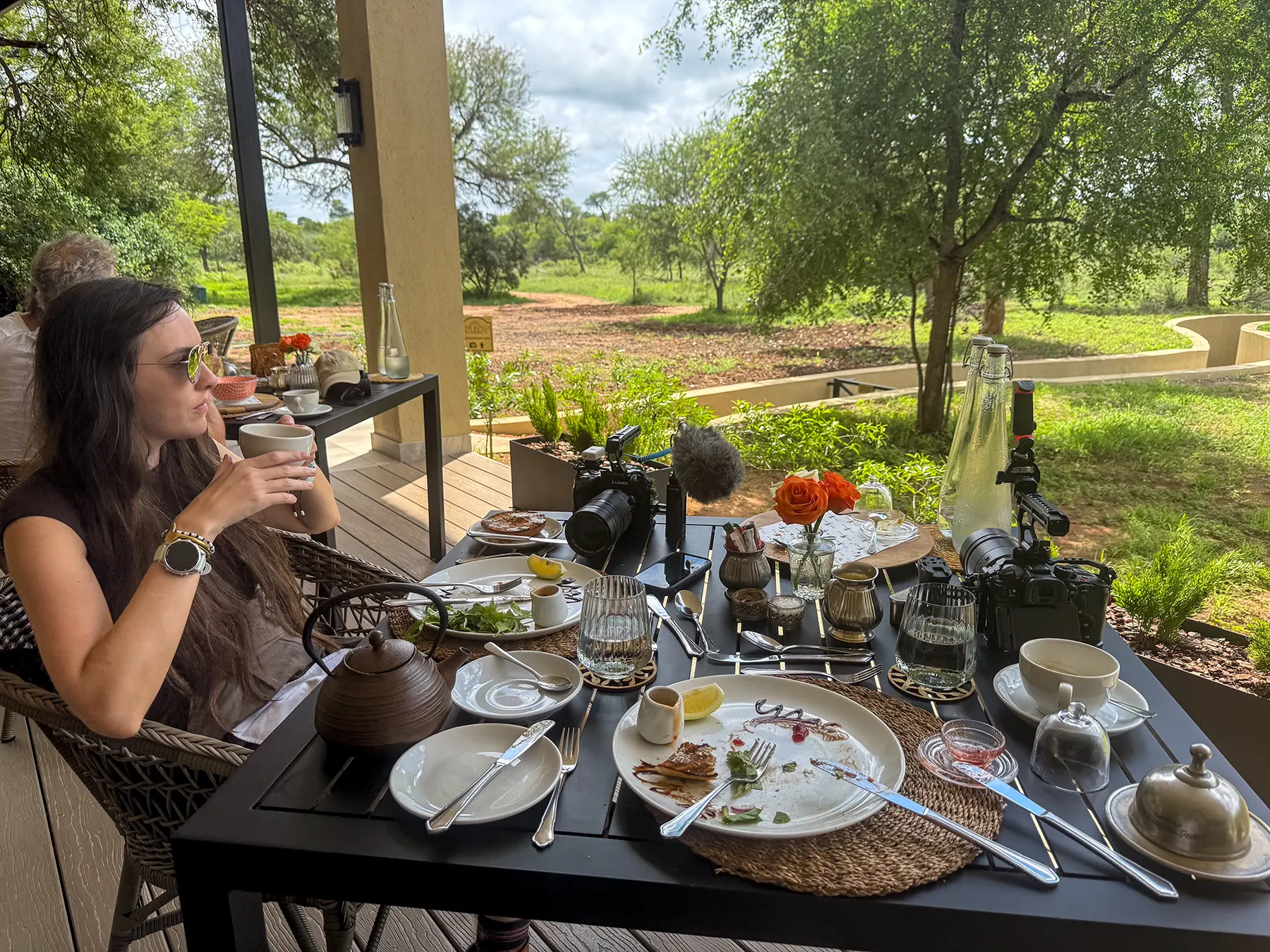
Your lodge will give you a bright and early wake-up call before dawn, which will give you just enough time for a hot cup of coffee (or tea in my case) before setting out on your morning game drive.
Typically, the morning game drive departs at 5:30 to 6:00 am, and lasts for three to four hours.
The gentle dawn light and cooler conditions are favoured by predators still on the move from the night before, so this is your strongest window of opportunity to see lions, leopards and hyenas before the heat of the day sets in.
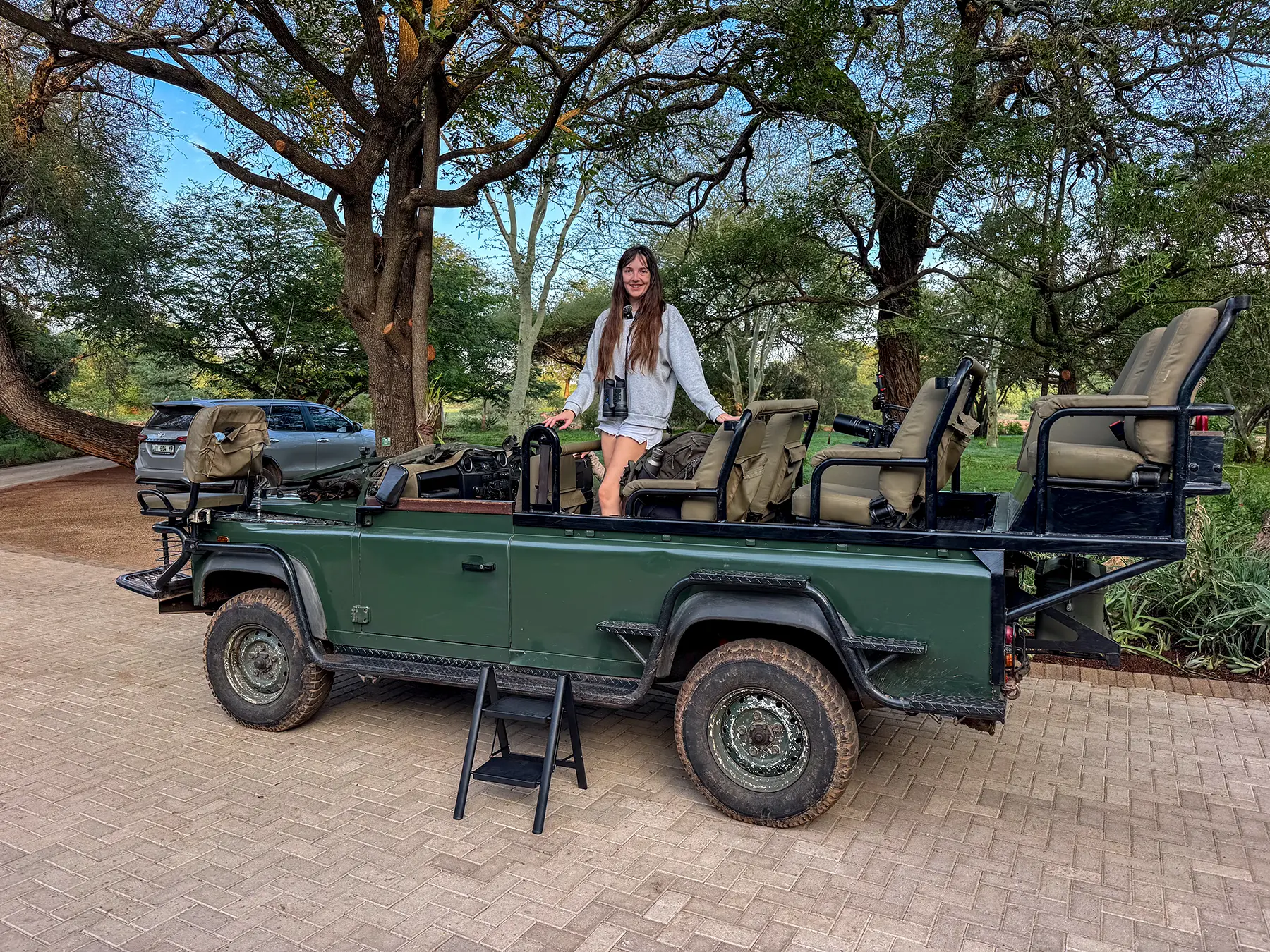
Your safari vehicle has an open top, which is great for feeling right up close to nature, but it can be chilly if you’re visiting during winter. Temperatures drop to between 5 and 10 degrees Celsius on winter mornings, so remember to wear warm layers that you can remove as the morning warms up.
After a morning hopefully spent tracking wild dogs and photographing leopards as they protect a kill, your safari vehicle will return to camp in time for brunch or late breakfast.
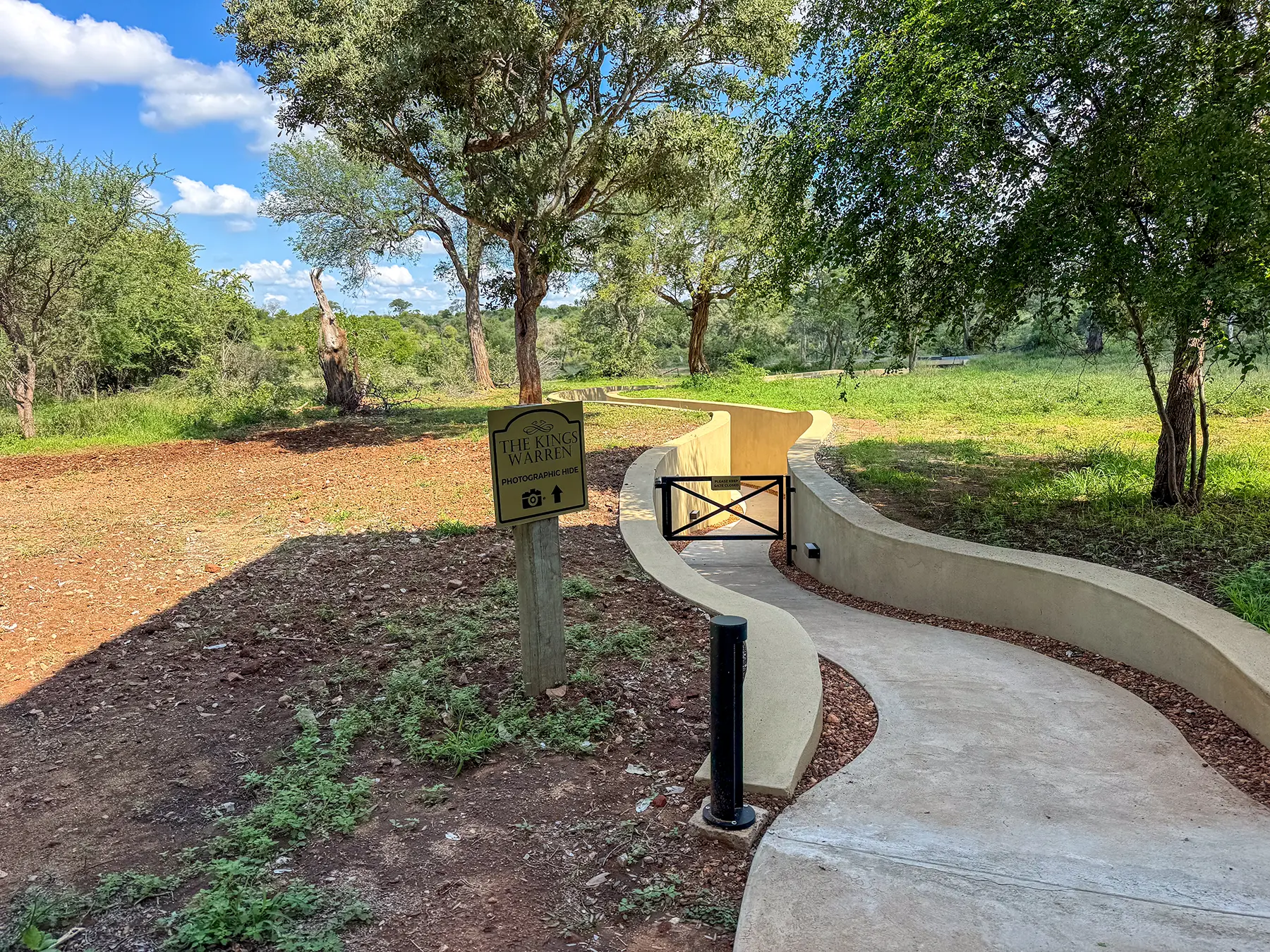
The middle of the day is a great time to head out for a guided bush walk, or you could hang out in the underground hide near the waterhole and wait for the wildlife to come to you!
At 15:30 it’s time for an indulgent afternoon tea to get you ready for your second game drive of the day. You’ll set out between 16:00 and 16:30, just as the shadows of the trees and grasses are lengthening. Many animals are particularly well-camouflaged at this time of day, so keep a keen eye out.
Just before sunset, golden light will pour over the savannah. Soak it in and have your camera at the ready, because you’re bound to take some excellent photographs.
After the sun has dipped below the horizon, you’ll spend a short while driving in the dark – a great opportunity to catch a glimpse of nocturnal species and predators on the prowl. Your tracker will use a spotlight to pick out animals in the dense bush. Remember to look out for their eyes glinting as they reflect the beams of the spotlight.
After an exciting afternoon-to-evening game drive it’s time to head back to camp for dinner and some rest. Having been up since before dawn, you’ll need it, rounding out a long day from pre-dawn wake-up to night drive.
The next morning, you’ll keep the rhythm and head out before dawn. Try a different route in search of the white lions or majestic horned rhinos.
Tips for Visiting Timbavati Private Nature Reserve
Here are my top tips for visiting Timbavati Private Nature Reserve!
- If you stay at a lodge with an underground hide it’s best to visit in the dry season as that’s when wildlife comes to the waterhole
- If you’re keen on photography, choose a lodge with cars without middle seats to ensure you always have a good view of the action
- White lion sightings are possible but not guaranteed so consider spotting them as a bonus. If it’s a priority, tell your guide to focus on them.
- For photography, bring a telephoto lens (for example, 100-400mm) for wildlife
- If you want to splash out, you can also bring thermal binoculars which are great for evening game drives after darkness falls
Where to Stay in Timbavati Private Nature Reserve
You’ll be nicely settled in Timbavati on Days 2 and 3, and you will stay at the same lodge you arrived at on Day 1.
My Experience of Timbavati Private Nature Reserve
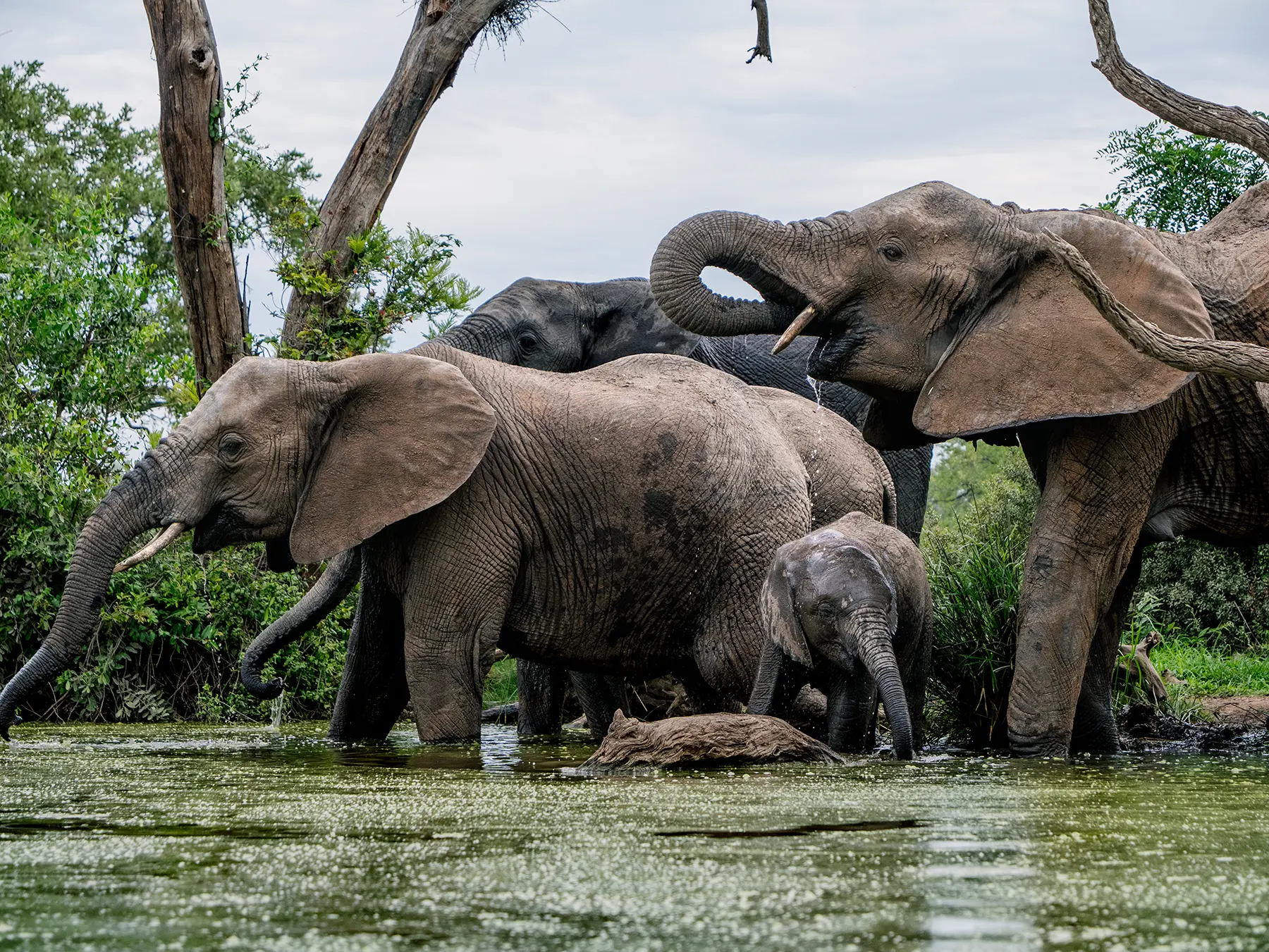
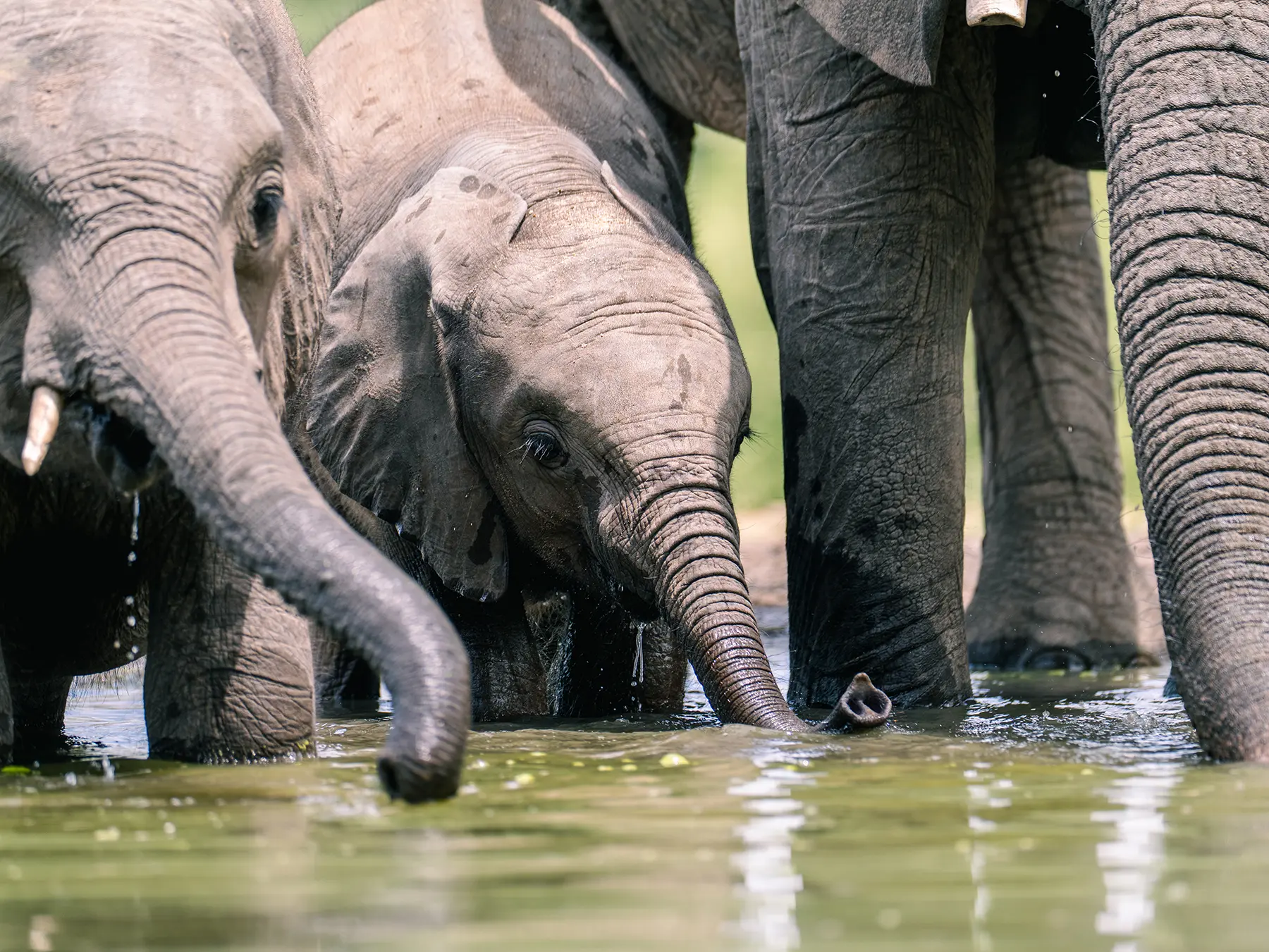
My welcome at Kings Camp in Timbavati really set the tone for the whole visit. We were given welcome drinks on arrival, and were about to be escorted to our room when we were informed that some elephants were visiting the camp’s underground hide. We headed straight down to the hide just as one herd left and another appeared.
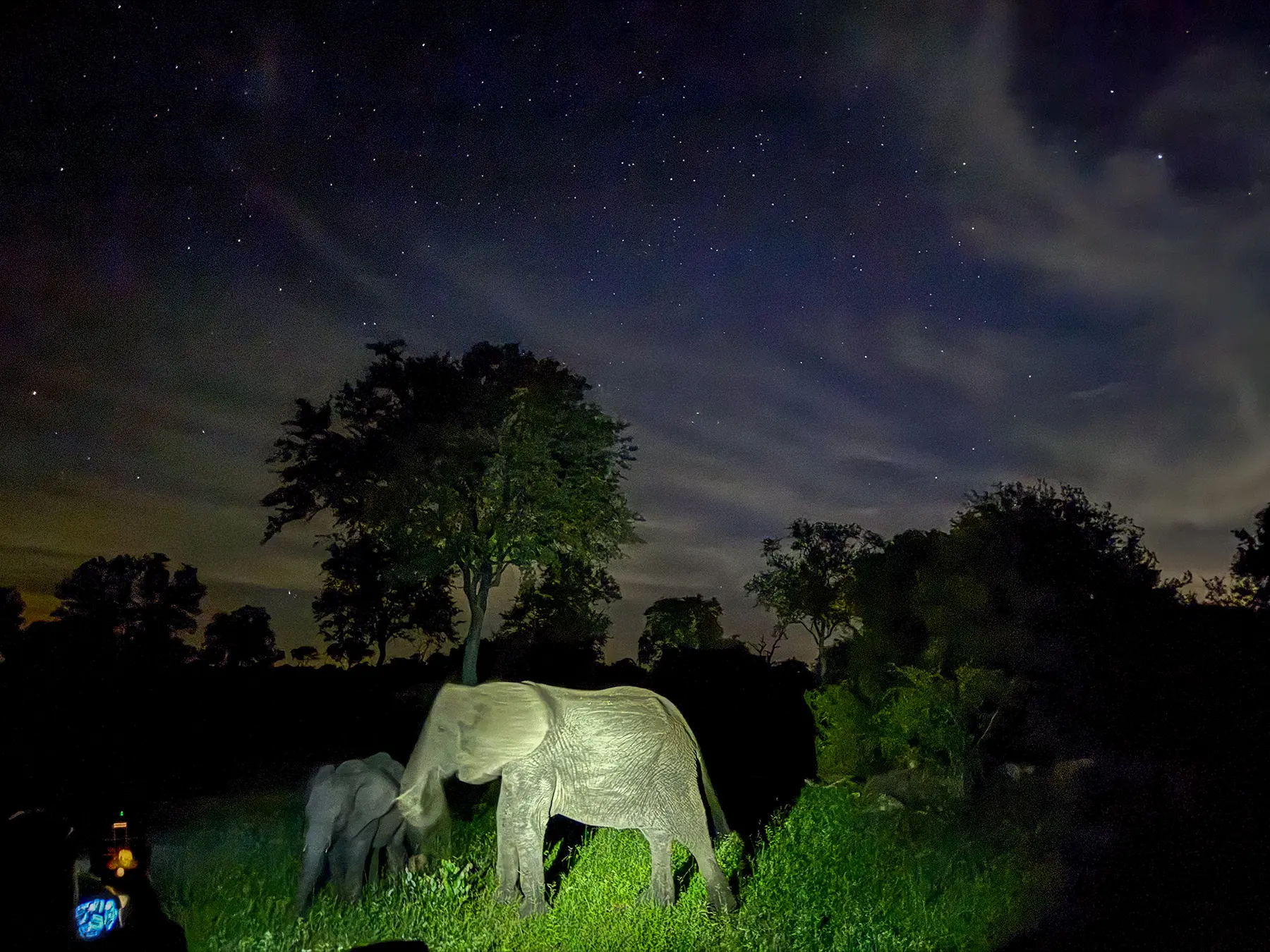
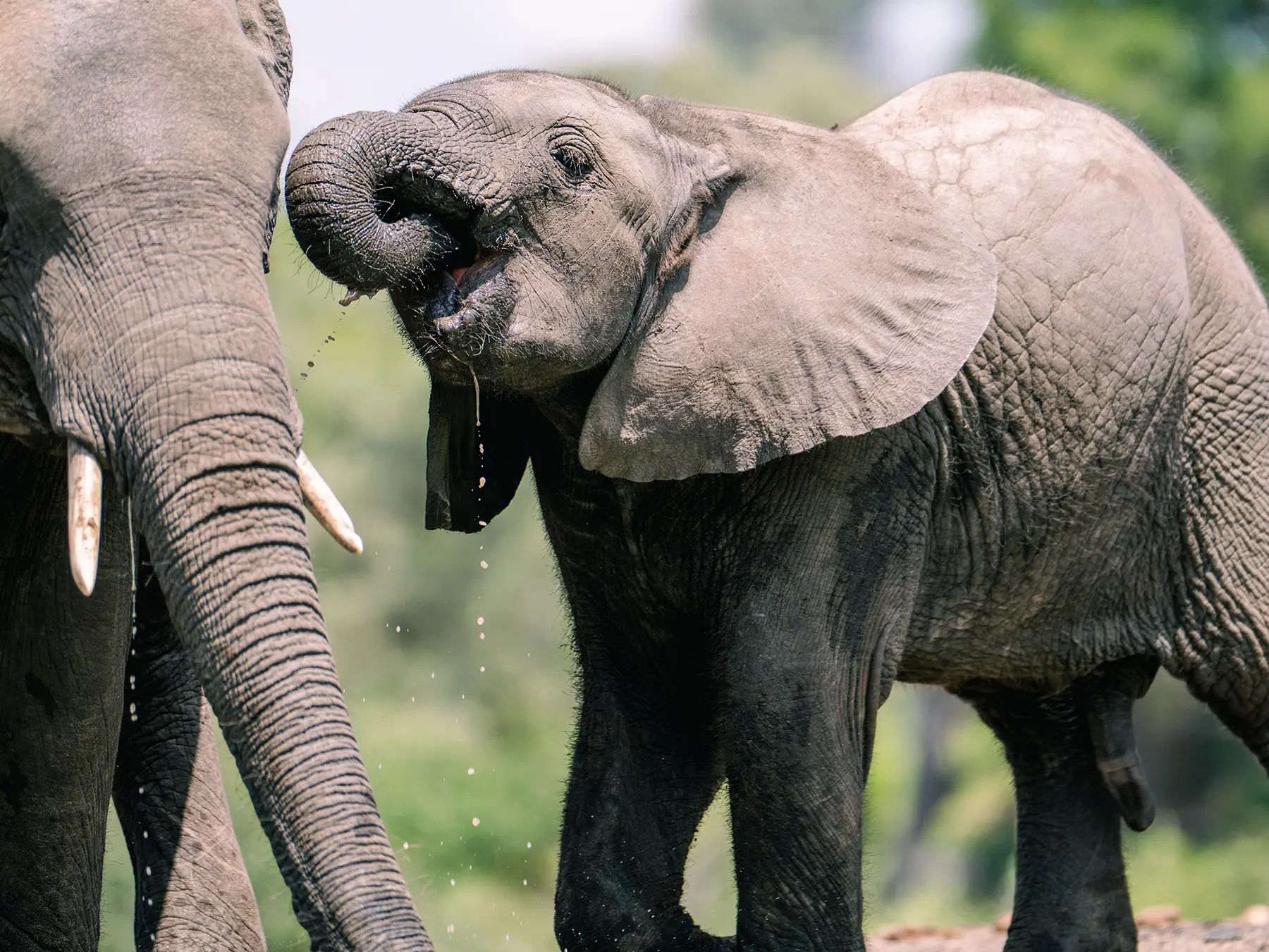
This sighting was a spectacular way to arrive! It was amazing watching them at eye-level as they drank, sprayed water and splashed about. I found the young ones particularly adorable.
The herd eventually moved off and were followed by two baby impalas, and then yet another elephant herd.
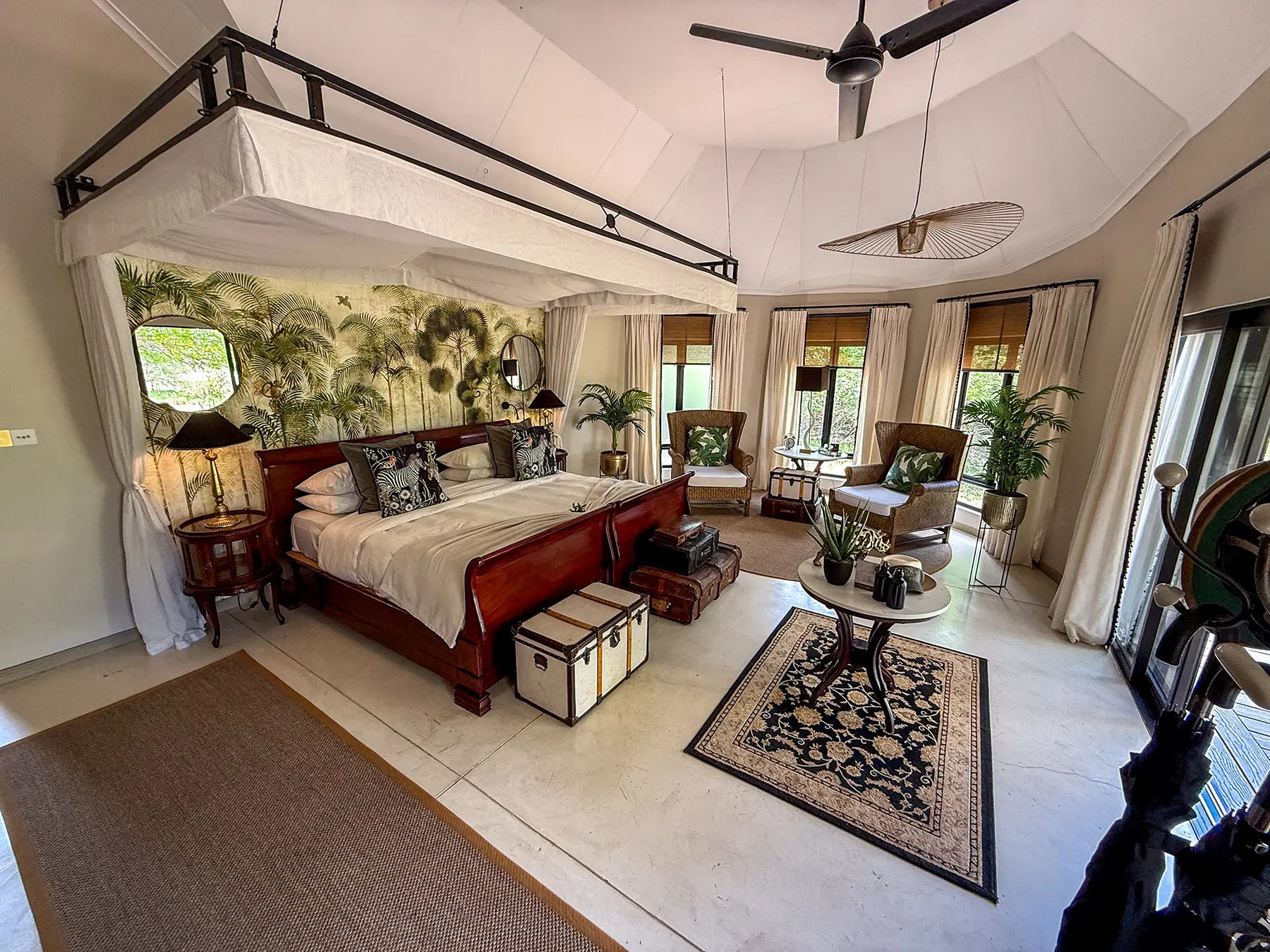
It was hard to pull ourselves away from this incredible hide and get on with the business of checking in. Eventually, the elephants helped us by leaving, and we were able to get settled into our huge, magnificent room.
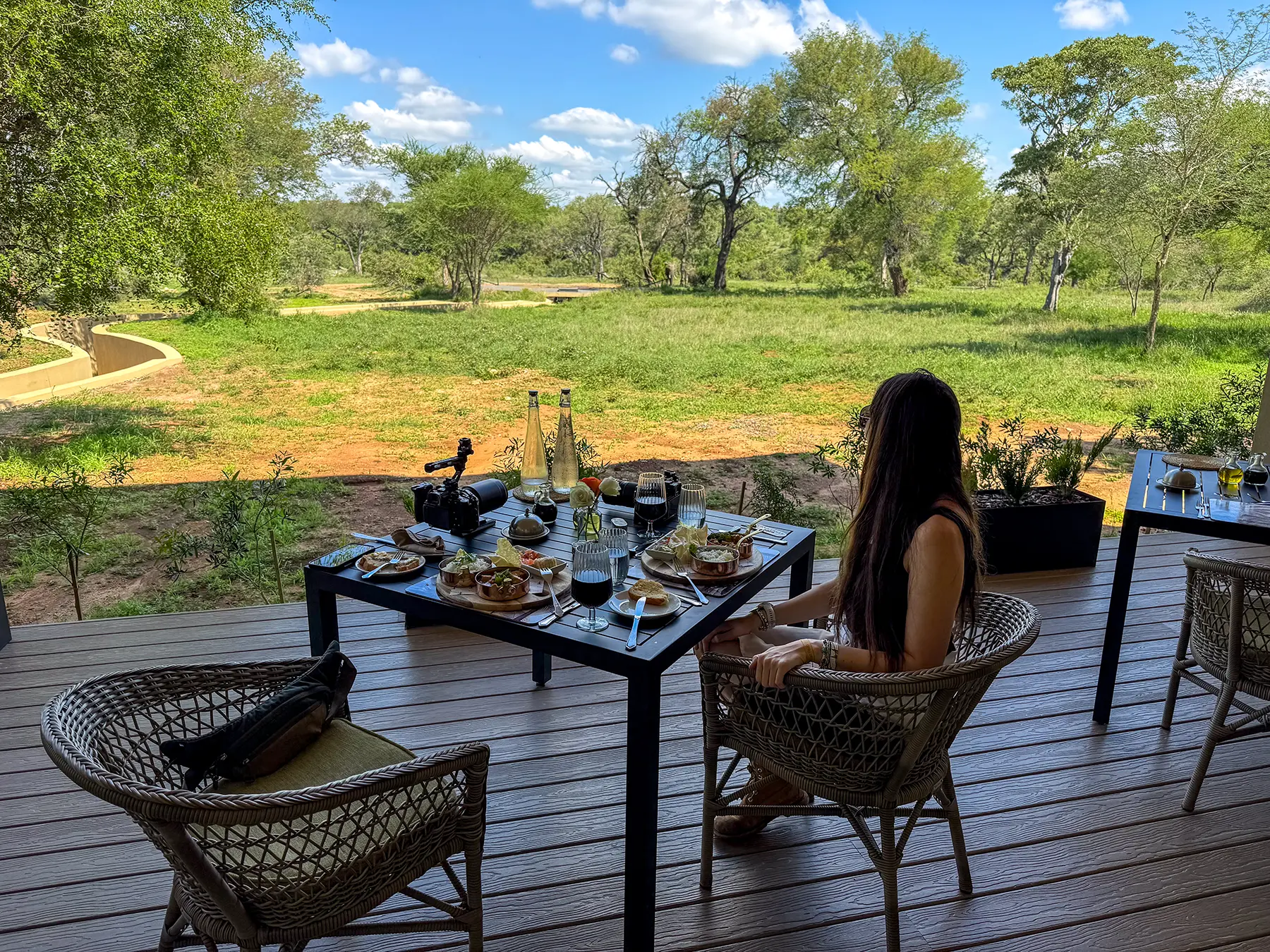
We hadn’t even had the chance to leave the lodge before more wildlife arrived, this time in time for lunch. Whilst we were enjoying an excellent chicken curry, more elephants came to the hide and we admired them from our lunch table.
One was a cheeky bull who located the source of the water in the waterhole – a hosepipe – and lifted it to drink straight from it.
You can watch a video of my Timbavati South Africa safari experience below.
Day 4: Timbavati to Sabi Sand
Transfer (Excluding Game Drives): 1 hour flight (recommended) or 4 hour drive
Today you’ll leave Timbavati after a final morning game drive and transfer south to Sabi Sand. This is the premier private reserve in the Greater Kruger and one of the finest leopard viewing destinations in southern Africa.
You’ll arrive in time for lunch, a lodge orientation and your first afternoon game drive in Sabi Sand.
You’ll have two full days in Sabi Sand, so get ready for game drives with plenty of bucket-list sightings!
Itinerary
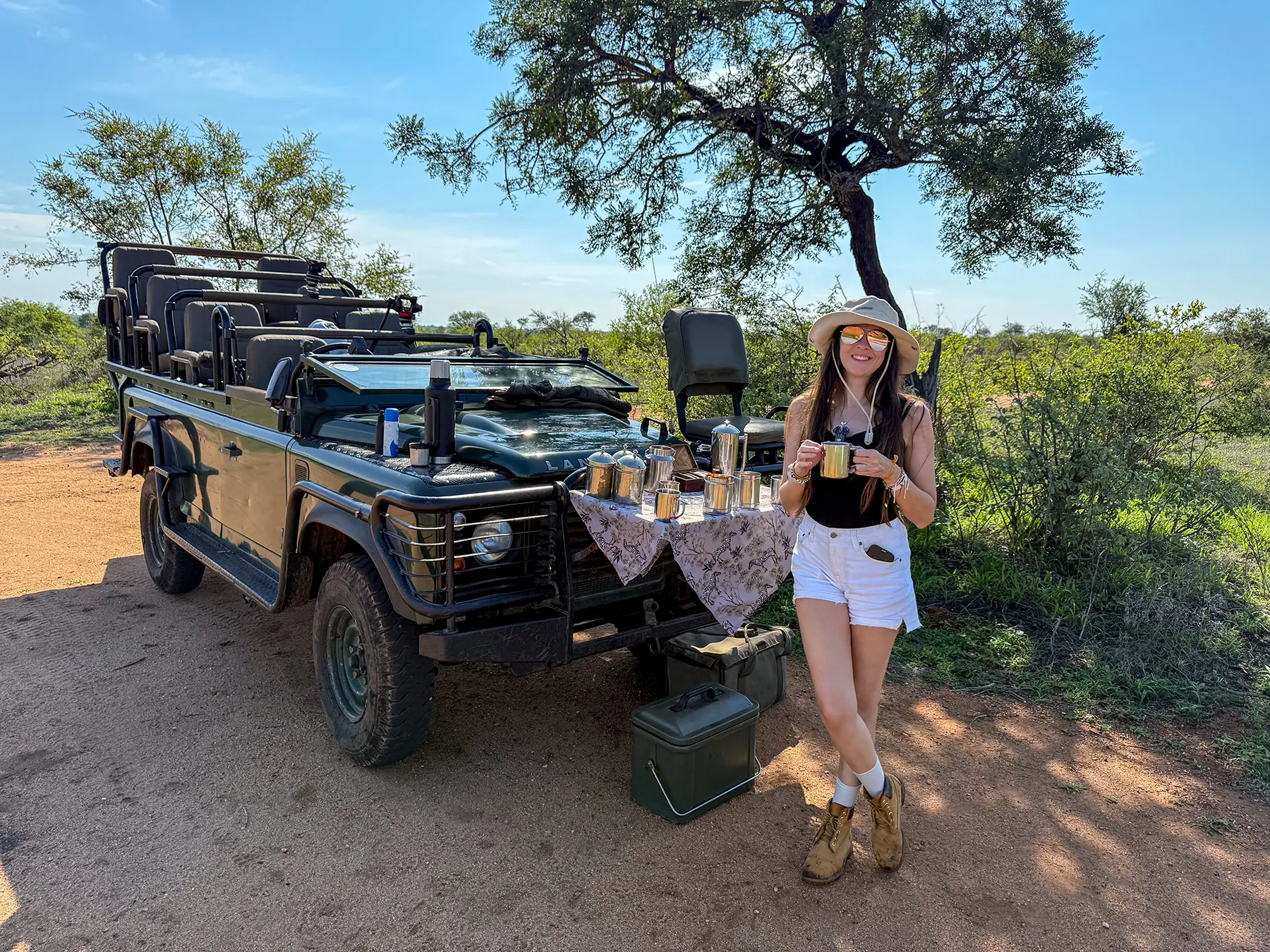
Rise before dawn for one last morning drive at your Timbavati lodge. After your 5:30 – 6:00 start, you’ll feel ready for a tea and coffee stop in the bush halfway through your three to four hour game drive.
Around mid-morning, you’ll return to your lodge for a late breakfast. Then it’s time to pack up and be at reception in time for your 11:00 check-out.
This time aligns with most guest transfers, and an 11am check-out ensures that you’ll get to Sabi Sand in good time..
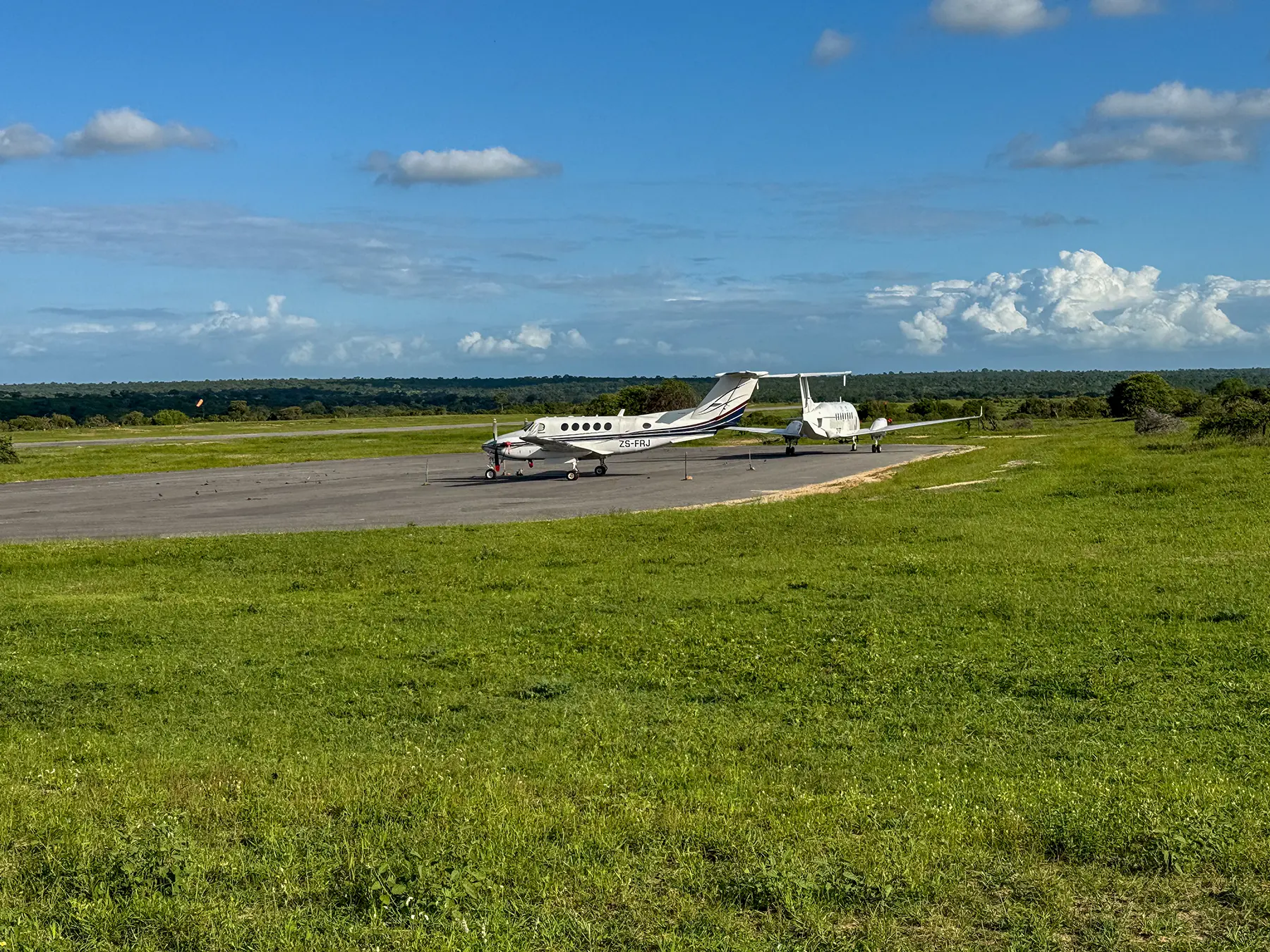
There are two ways to get from Timbavati to Sabi Sand: a light aircraft flight of around 1 hour, or a road transfer of around 4 hours. I’d recommend choosing the flight, as it’s convenient and you get great aerial views of the landscape.
Each Greater Kruger private reserve has its own airstrip for charter flights, and the short hop from Timbavati’s Rockfig Airstrip to Arathusa Airstrip in Sabi Sand saves you most of a day.
If you’d rather travel by road, the transfer takes you out of Timbavati and into Sabi Sand via the local road network, rather than driving through the reserves themselves. This is because of traversing regulations between the different private reserves, and is part of what makes sure you don’t encounter too many other vehicles on your game drives.
Plan on being on the road for around 4 hours, depending on which lodges you’re travelling to and from, and the routing through the local villages.
Particularly if you choose to drive, bring water, snacks and a sun hat for the journey, and travel in lightweight layers so you can peel them off as the afternoon heats up.
You’ll arrive at your Sabi Sand lodge in time for lunch if you’re flying, or a late lunch or afternoon tea if you’re driving. Then it’s time for a welcome briefing from your new guide and tracker, and a moment to settle into your room.
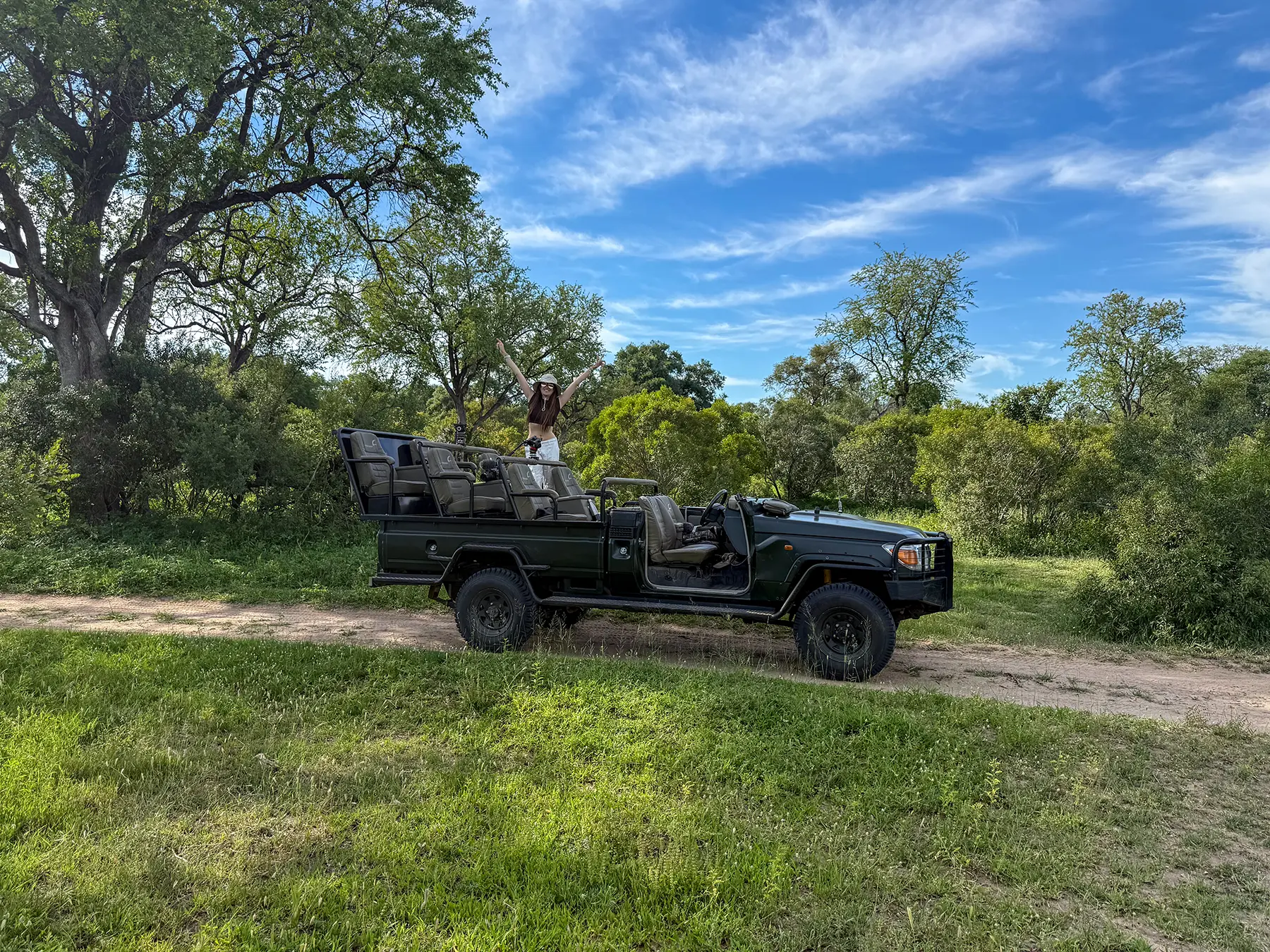
The afternoon game drive departs between 16:00 and 16:30, and you’ll be in an open safari vehicle, as is standard in Greater Kruger. You’ll be out in the reserve until darkness falls, so bring something warm to wear once the sun dips below the horizon.
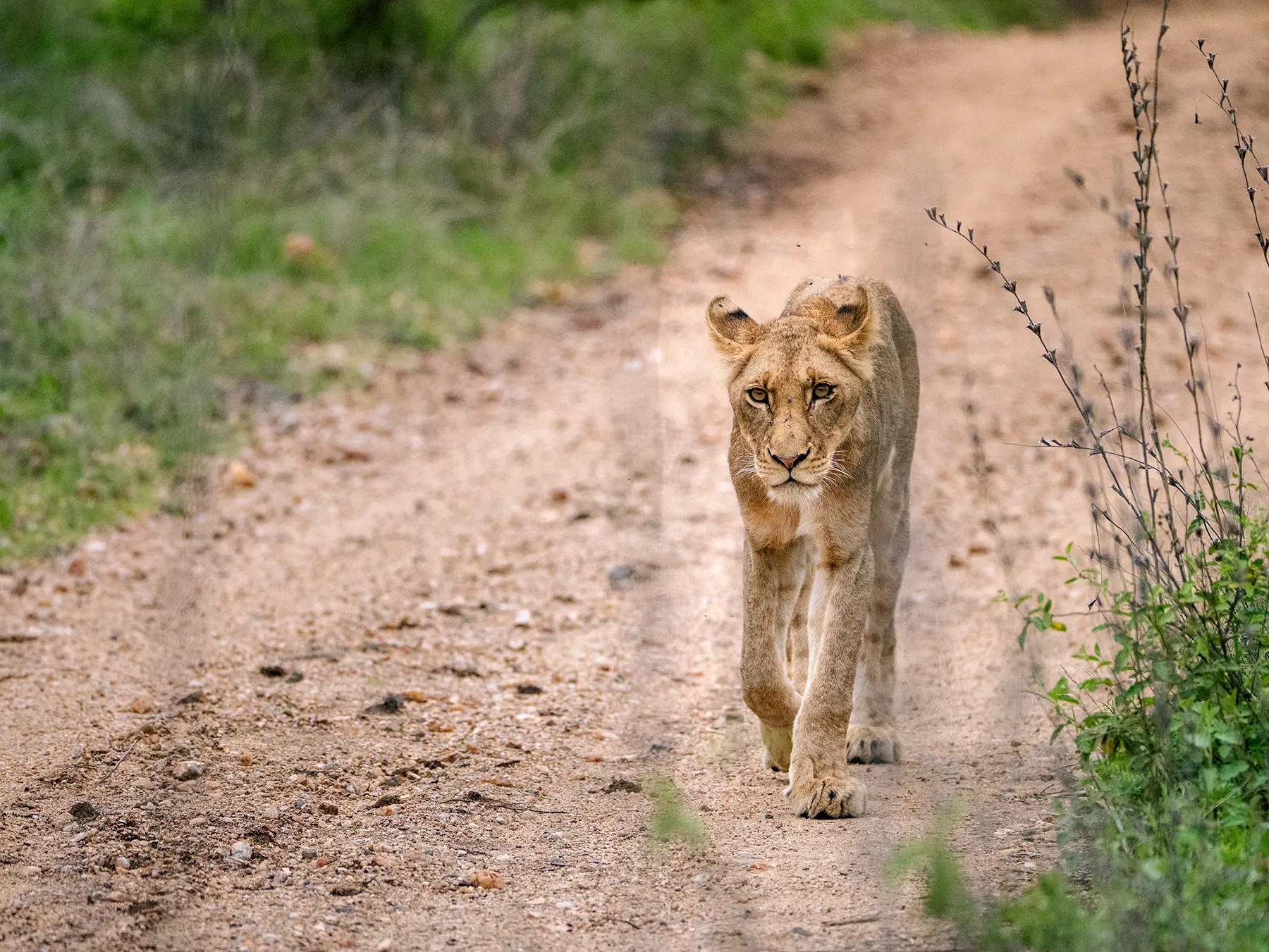
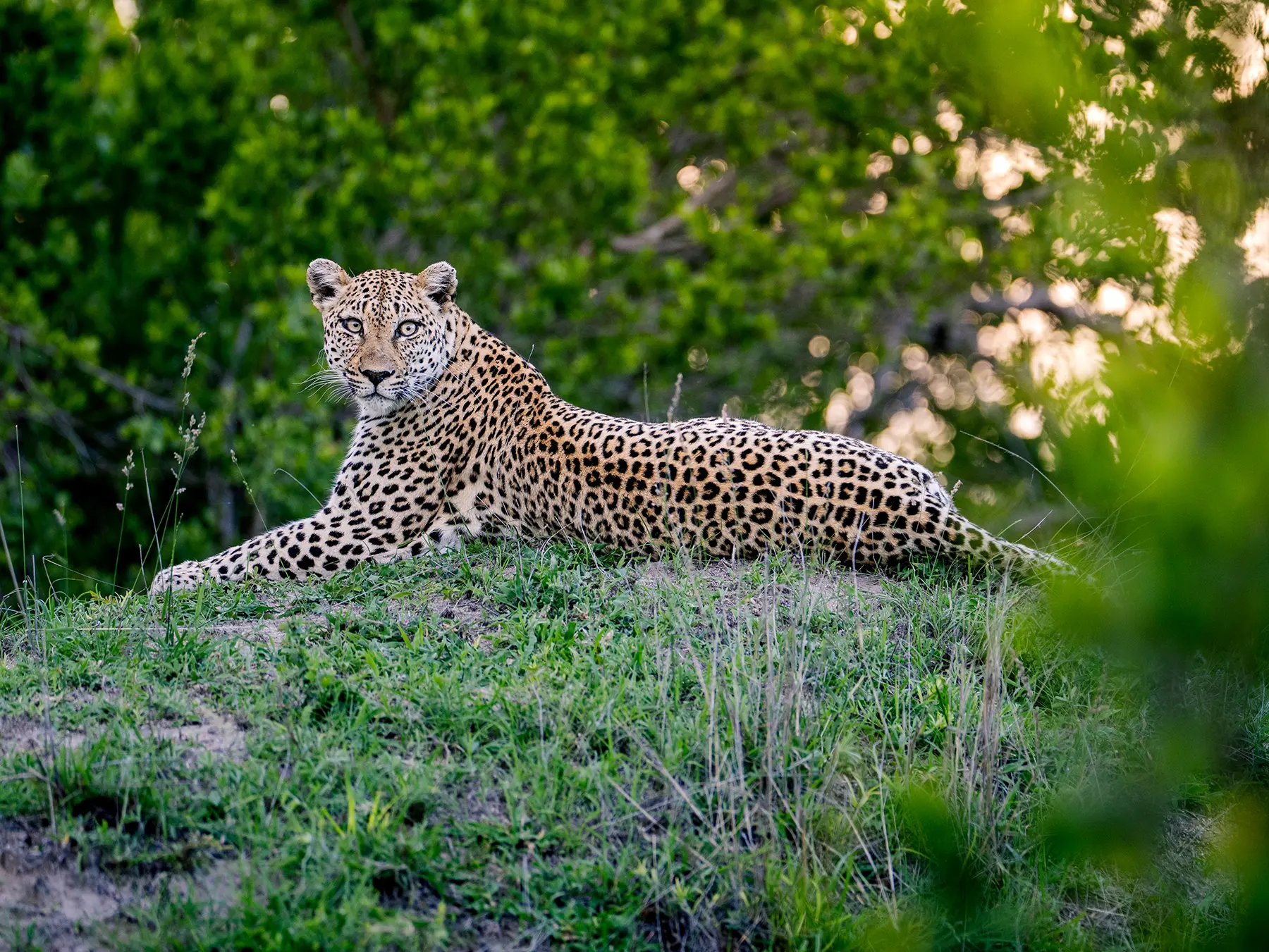
Sabi Sand is famous for its leopard sightings, and many of the leopards have become quite accustomed to seeing safari vehicles in their environment. While this doesn’t at all mean that they are tame, it is possible to get closer to them than you might in any other reserve.
The late afternoon and night drive on day one is a great opportunity to do just that, along with seeing general game like elephants, buffalos, kudus and impalas along the Sand River.
About Sabi Sand
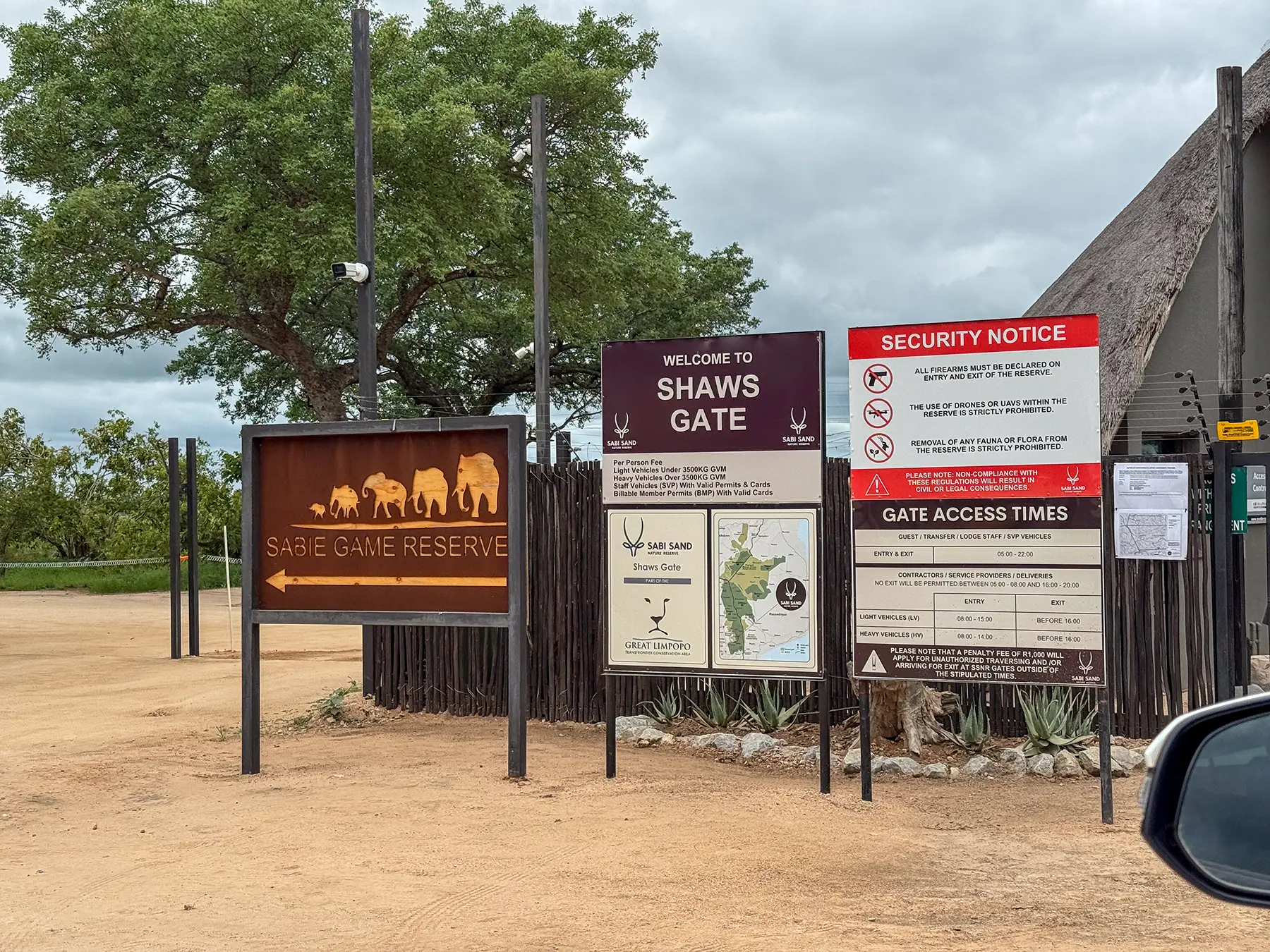
Sabi Sand is the oldest private game reserve in South Africa. It has a conservation history that dates back to 1898, and was consolidated in 1948 when landowners neighbouring the Kruger National Park banded together to create a unified protected area for wildlife.
The reserve covers 65,000 hectares and is a patchwork of 18 unfenced private properties on the western boundary of Kruger National Park. The fences between Kruger National Park and Sabi Sand were removed in 1993 to allow free movement of wildlife across the wider Greater Kruger ecosystem.
The reserve takes its name from the Sabi and Sand rivers, which run through it. The Sand River flows for 50 kilometres south-east through the bush before joining the Sabie River inside the Kruger National Park.
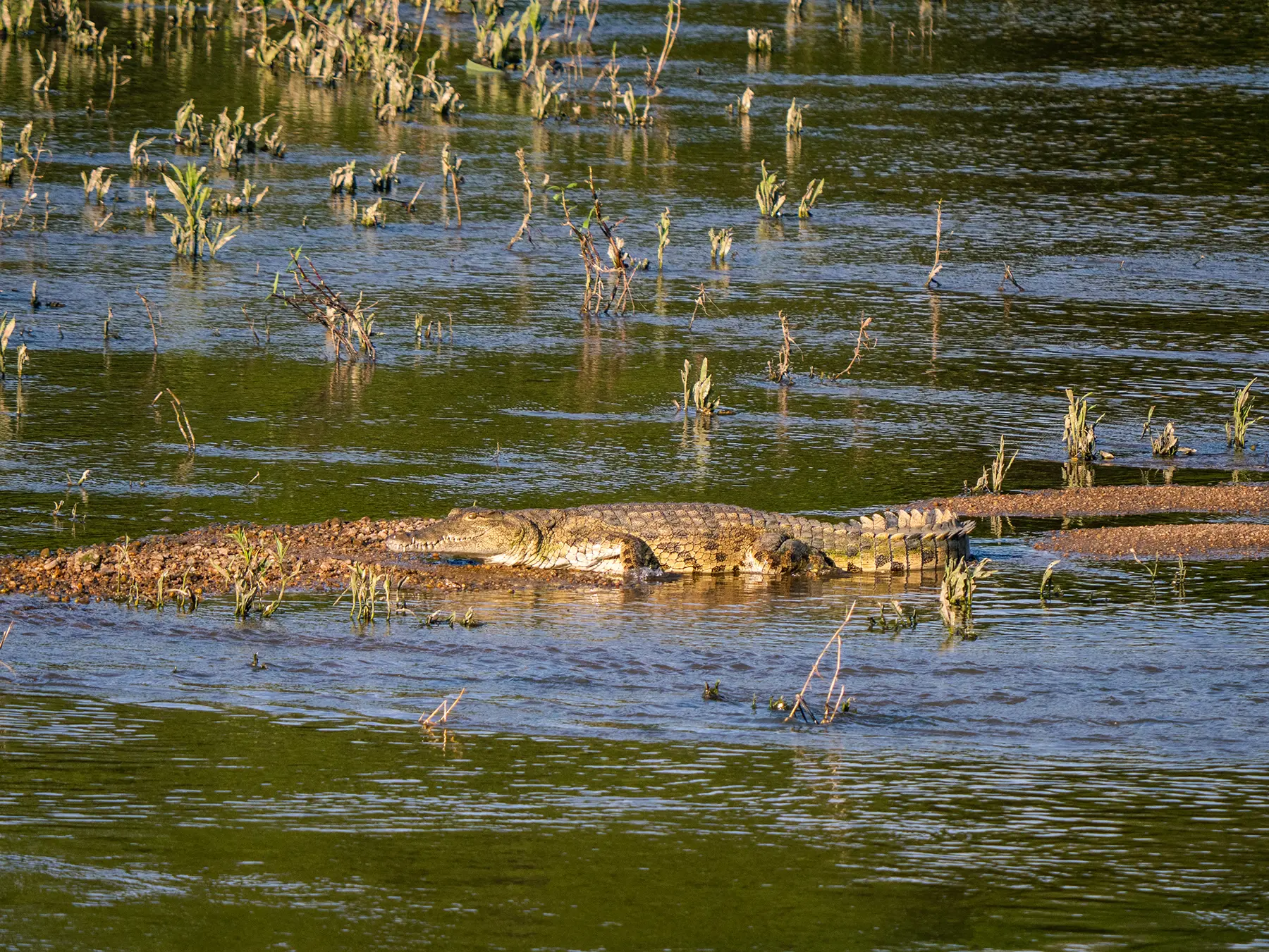
The Sand River is the central wildlife corridor of the reserve, with alternating pools and rapids that support fish, crocodile nesting, and prey concentrations that attract predator action near the lodges located on its banks.
Sabi Sand is renowned for its world class luxury lodges and is the most expensive reserve in Greater Kruger with mostly luxury accommodation.
What Wildlife Can I See in Sabi Sand?
Sabi Sand is home to 148 mammal species and an astonishing 505 bird species across its 65,000 hectares of unfenced wilderness.
These high species counts reflect the diversity of habitats in the reserve and the advantages of free movement of wildlife within the Greater Kruger ecosystem.
Sabi Sand is the premier leopard destination in southern Africa, with the highest leopard density of any protected area surveyed in South Africa. There are approximately 12.2 leopards per 100 square kilometres within the reserve.
Panthera’s Sabi Sand Leopard Project is the longest and most comprehensive leopard research study ever undertaken, documenting over 800 individual leopards since 1979 and providing the depth of life history that drives the close-range leopard encounters in the reserve.
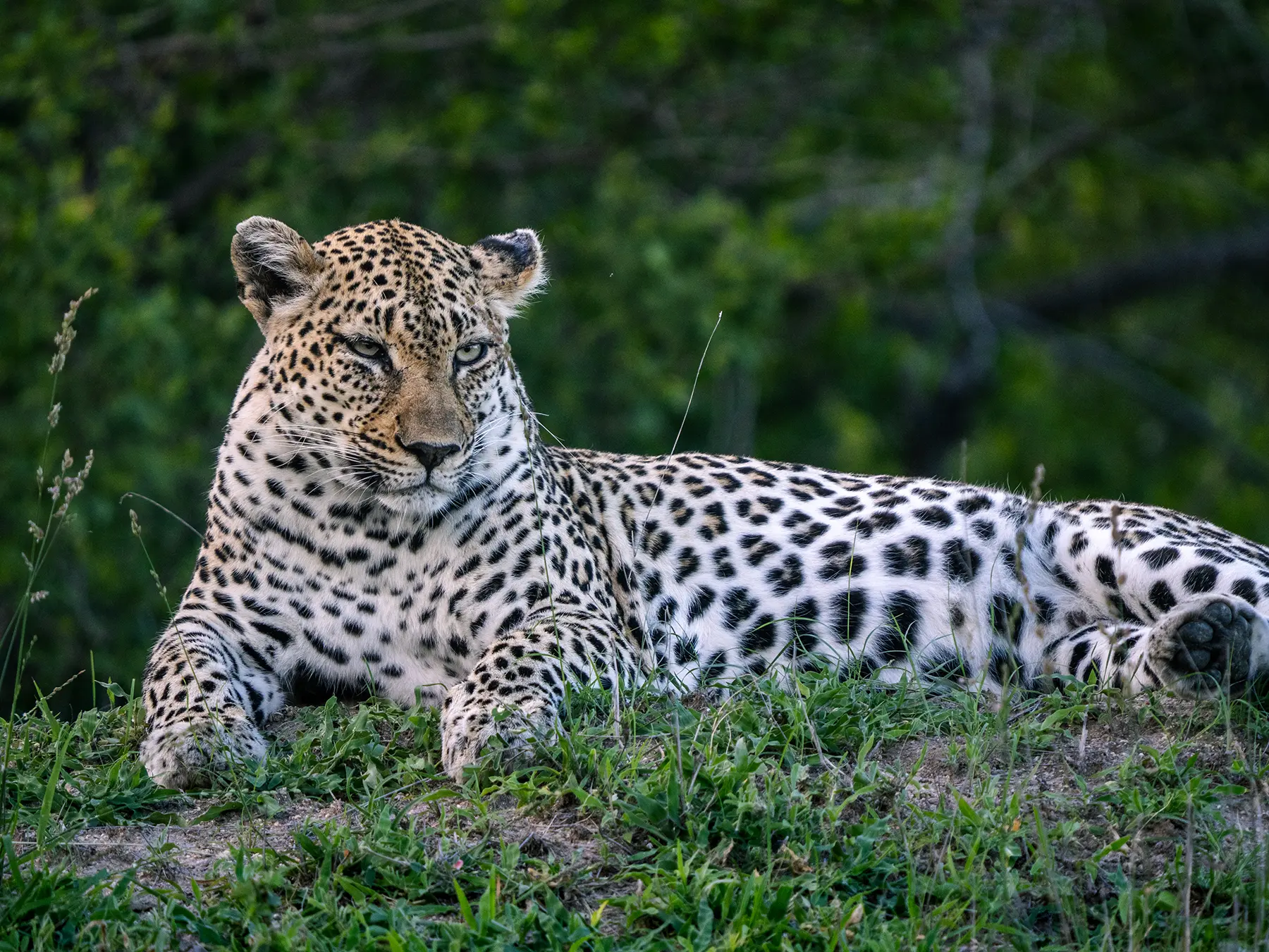
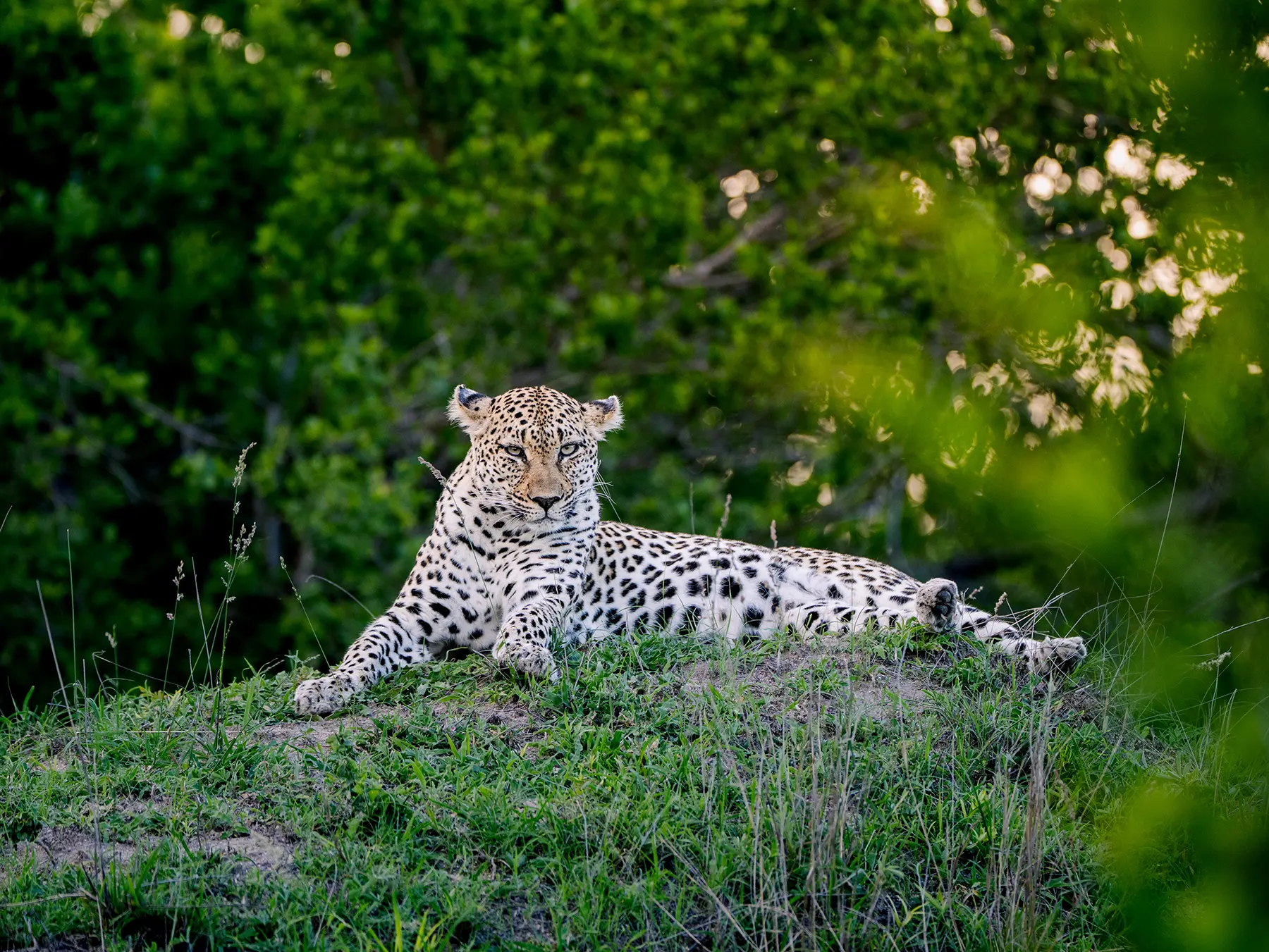
Using Panthera’s photo-identification programme, safari guides in the Sabi Sand Game Reserve are able to identify and monitor up to 85 individual resident leopards using their unique rosette patterns..
The rest of the Big Five – lions, elephants, white rhinos and buffalos – are all abundant in Sabi Sand as well.
Sabi Sand is also a reliable destination for wild dog sightings, with many packs ranging across the unfenced Kruger boundary into the private reserves.
Not to forget nocturnal species, night drives in the Greater Kruger private reserves are excellent opportunities to see civets, large-spotted genets and the occasional brown hyena loping through the tall grasses.
Tips for Sabi Sand Game Reserve
Here are my top tips for getting the most out of your days in Sabi Sand.
- The lodge you choose is important, as lodges have different traversable areas which vary in terms of size and wildlife.
- Choosing a lodge on the Sand River allows you to see wildlife, including elephants, from the lodge.
- For itineraries with 3 days or more in Sabi Sand consider staying at more than one lodge to see a variety of areas. I stayed at two locations across 5 nights in Sabi Sand.
- Your guide will know each individual leopard and lion pride by name. When you encounter a leopard or lion pride, ask your guide about them and you’ll be fascinated as you learn about their history.
Optional Activities
- I highly recommend an after-dark game drive. Sabi Sand permits spotlit night drives that continue into darkness after the standard afternoon drive. This allows close-range viewing of nocturnal predators.
- Guided bush walks on foot are available at most Sabi Sand lodges. These give a quieter, slower-paced and more sensory experience of the bush than a game drive.
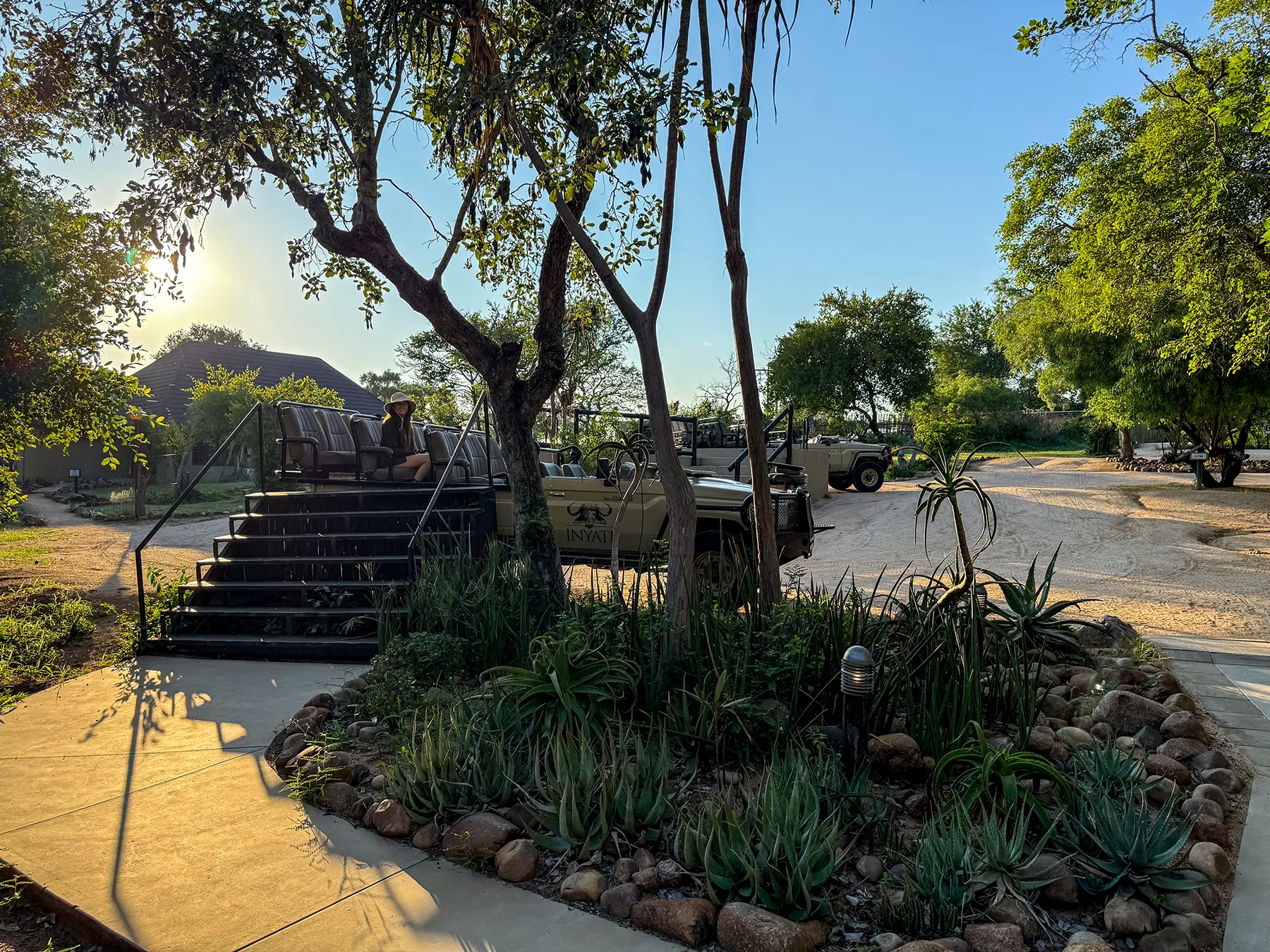
- Inyati is the only Sabi Sand lodge to offer fishing in addition to game drives, a rare alternative activity if you’re into fishing.
Where to Stay in Sabi Sand Game Reserve
Sabi Sand has the widest range of lodge options in Greater Kruger, from mid-range to ultra-luxury.
The most famous properties in Sabi Sand are Singita, Londolozi, MalaMala and Sabi Sabi. These are all high-end luxury lodges.
Slightly more affordable options include Inyati and Idube. Despite their more favourable price-points, these lodges are still top-notch, with excellent locations and luxurious spacious rooms.
To really get a feel for Sabi Sand, I’ve stayed in two properties within the reserve.
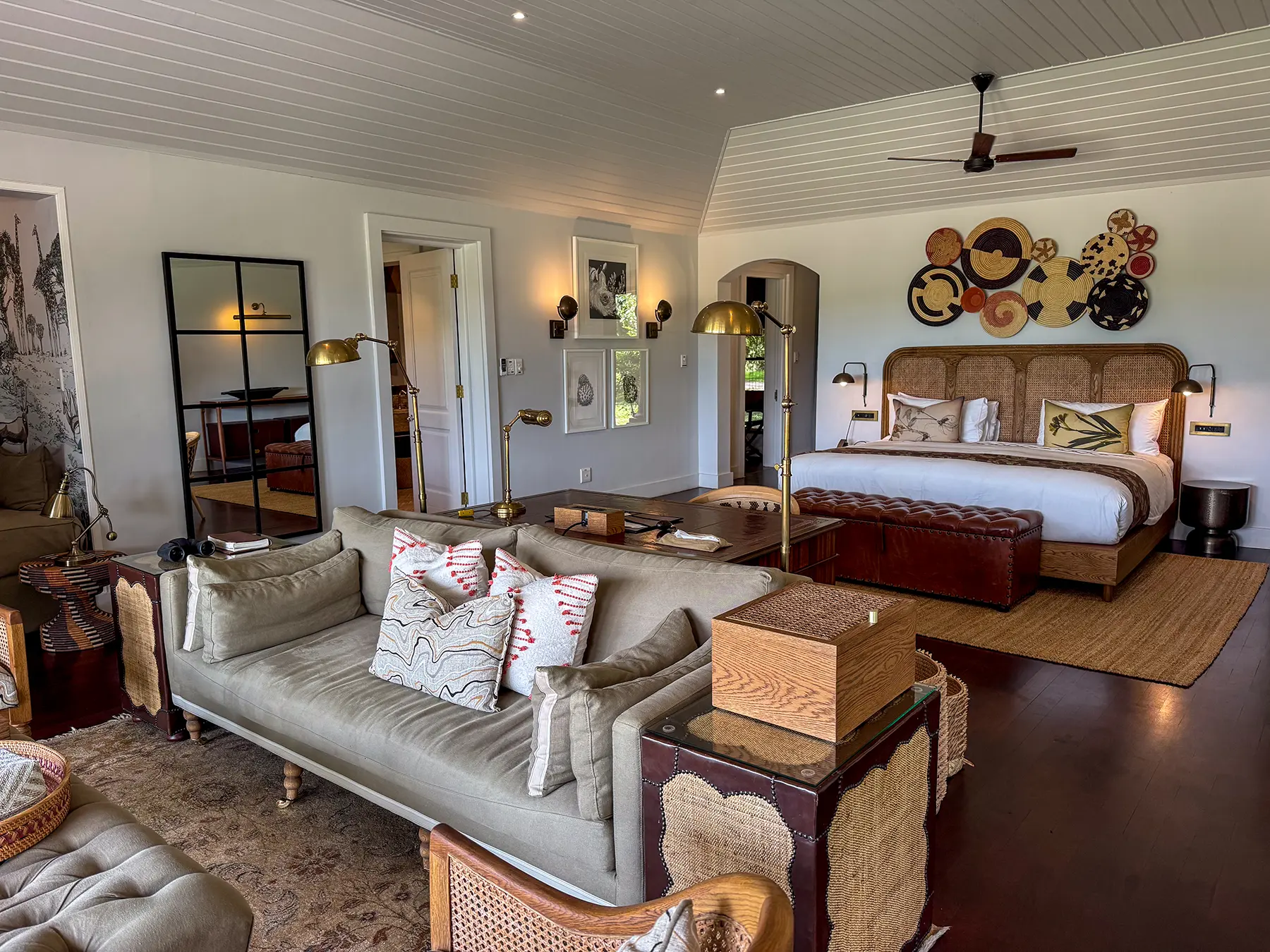
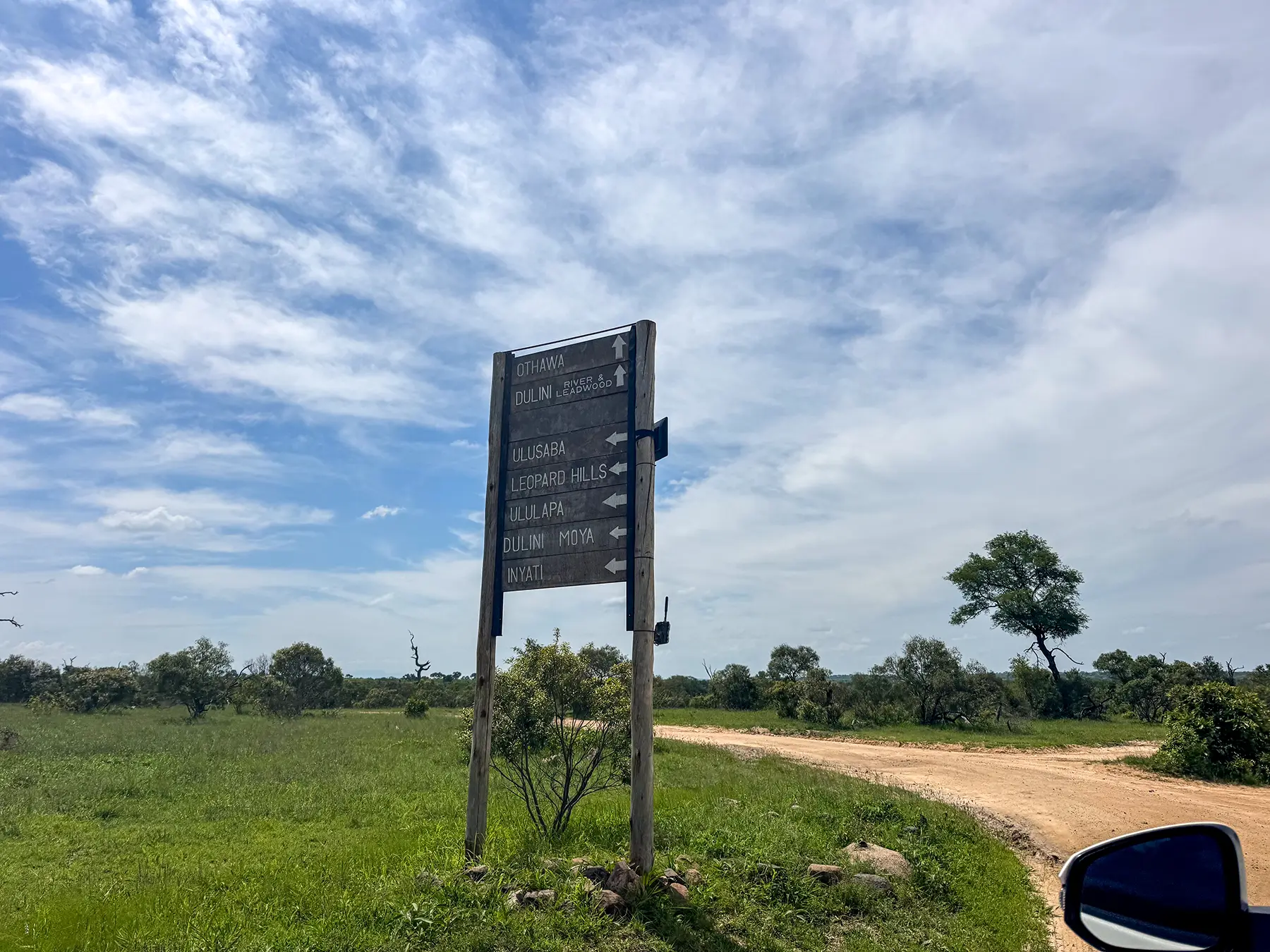
First I spent 3 nights in Inyati Game Lodge in the west of Sabi Sand. Inyati shares traversing rights with nearby lodges Ulusaba, Idube and Leopard Hills, and its game drives cover around 10,000 hectares of Big Five territory.
It’s an extremely well-populated area of wilderness and I managed to spot all of the Big Five here, as well as enjoy three wild dog sightings.
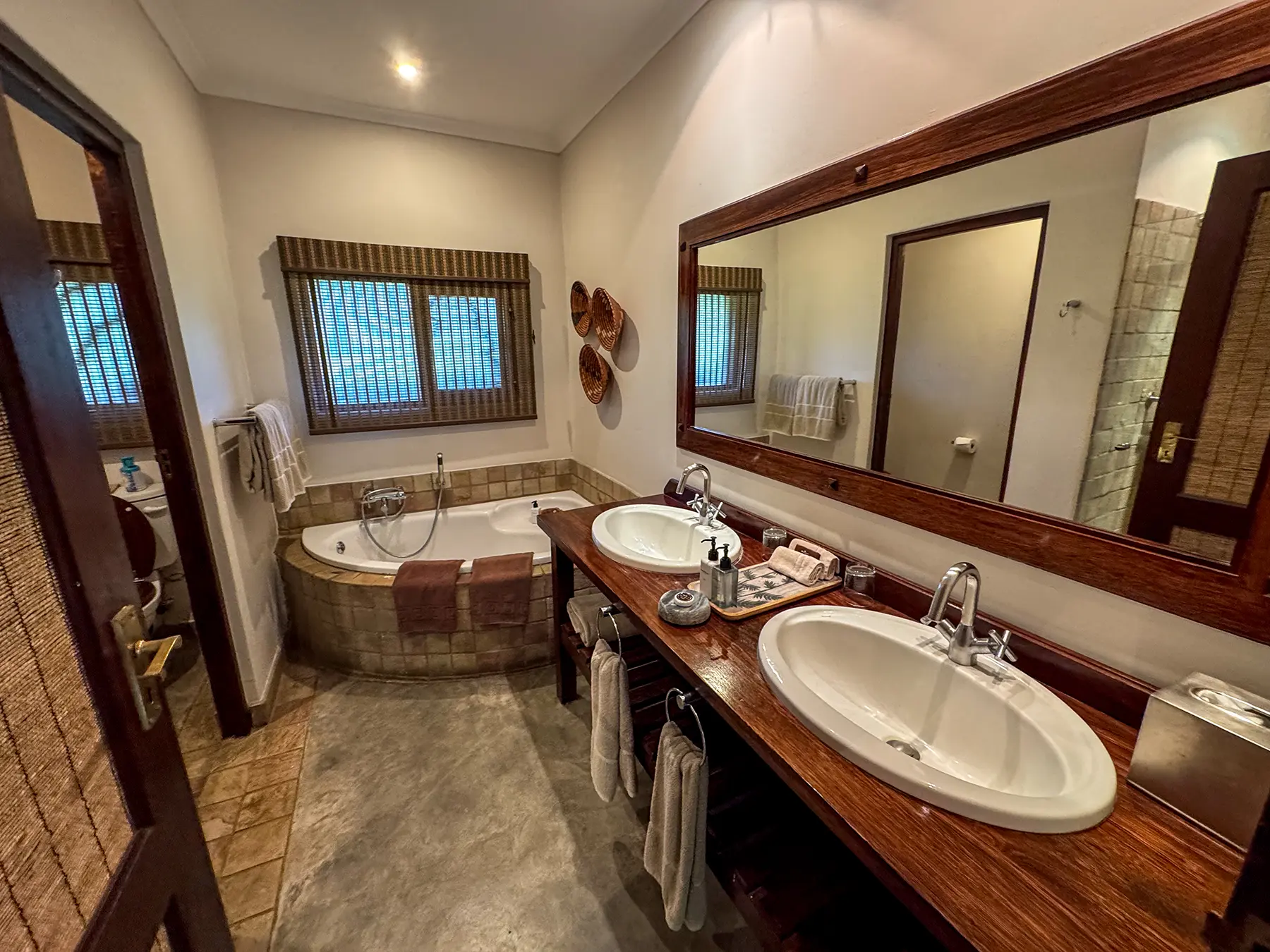
In terms of the lodge itself, Inyati, whilst technically mid-range compared to other Sabi Sand properties, is still extremely luxurious. The rooms are spacious with really comfortable beds, air conditioning and an additional seating area in the room. The bathroom consists of a bathtub and both an indoor and outdoor shower.
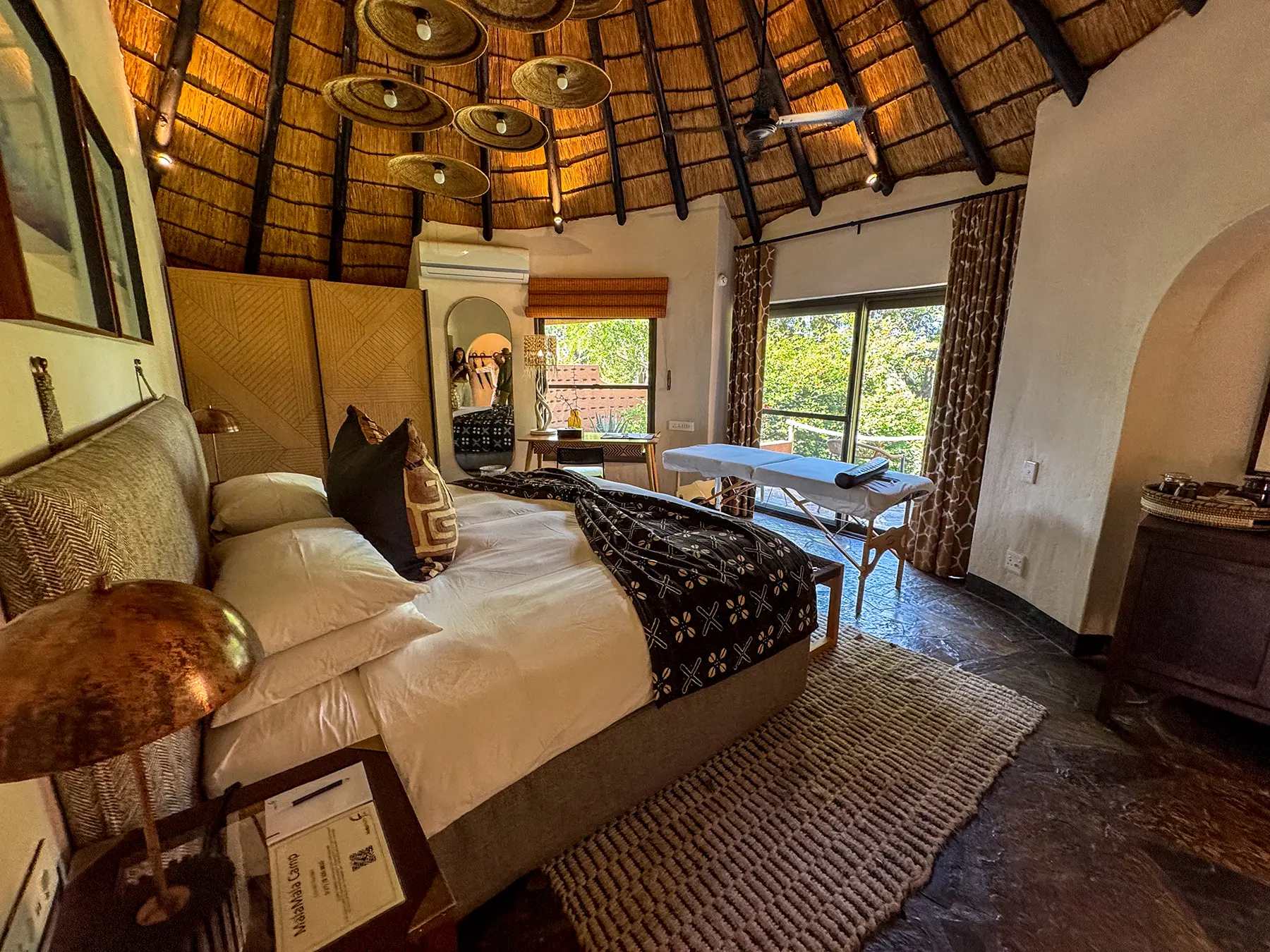
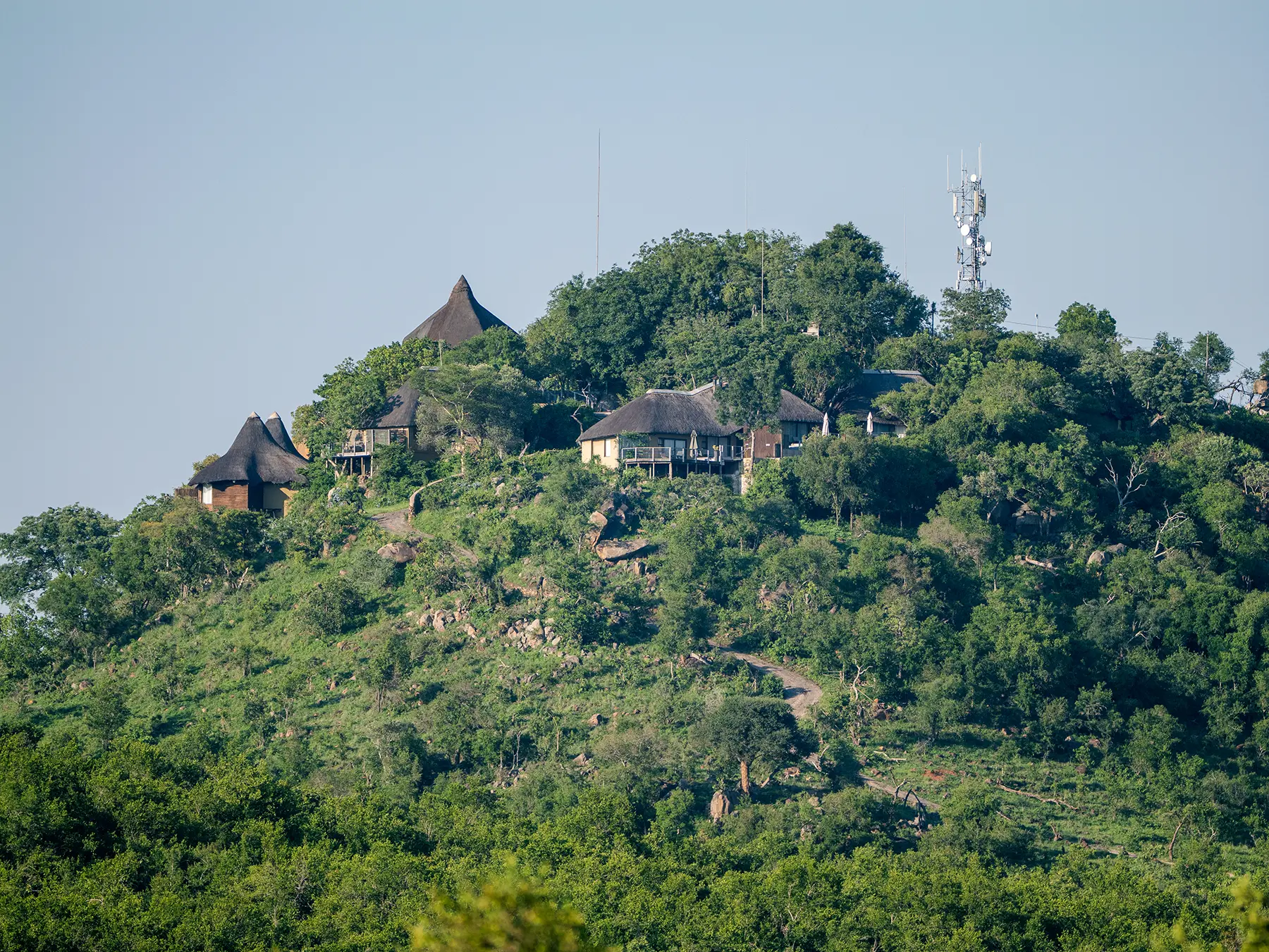
At the other end of the reserve, I spent 2 nights at MalaMala, the oldest private game reserve in South Africa. I stayed in a luxury suite in their Sable Camp, which is attached to the Main Camp.
MalaMala is completely unique for its strong sense of history and heritage. It has maintained much of its old-world feel through its thatched rondavel-style rooms and classic decor.
My room was enormous and even had a private deck! My favourite thing about it, however, was the fact that it had two bathrooms and each one had a bathtub!
MalaMala’s guides are also top class. They really know their way around the reserve, which is the biggest in Sabi Sand.
Around 70% of MalaMala’s land is traversable only by its own guests, which means that you encounter very few other vehicles throughout the reserve. It’s so big that you never actually make it to the other end unless you decide to spend all day on game drives without coming back for lunch!
MalaMala has three camps and they are building a fourth in the south. I had a look at all the camps and here are my personal thoughts on each:
MalaMala main camp: this is the original camp and it’s where most people stay. Rooms range from mid-range to luxury suites, and some have views of the river. It’s a great camp for families.
Sable Camp: this is a smaller version of the main camp with its own private dining and pool area for use only by Sable guests. Although it’s located right next to Main Camp, it has a smaller and more intimate feel. The rooms are similar to the main camp.
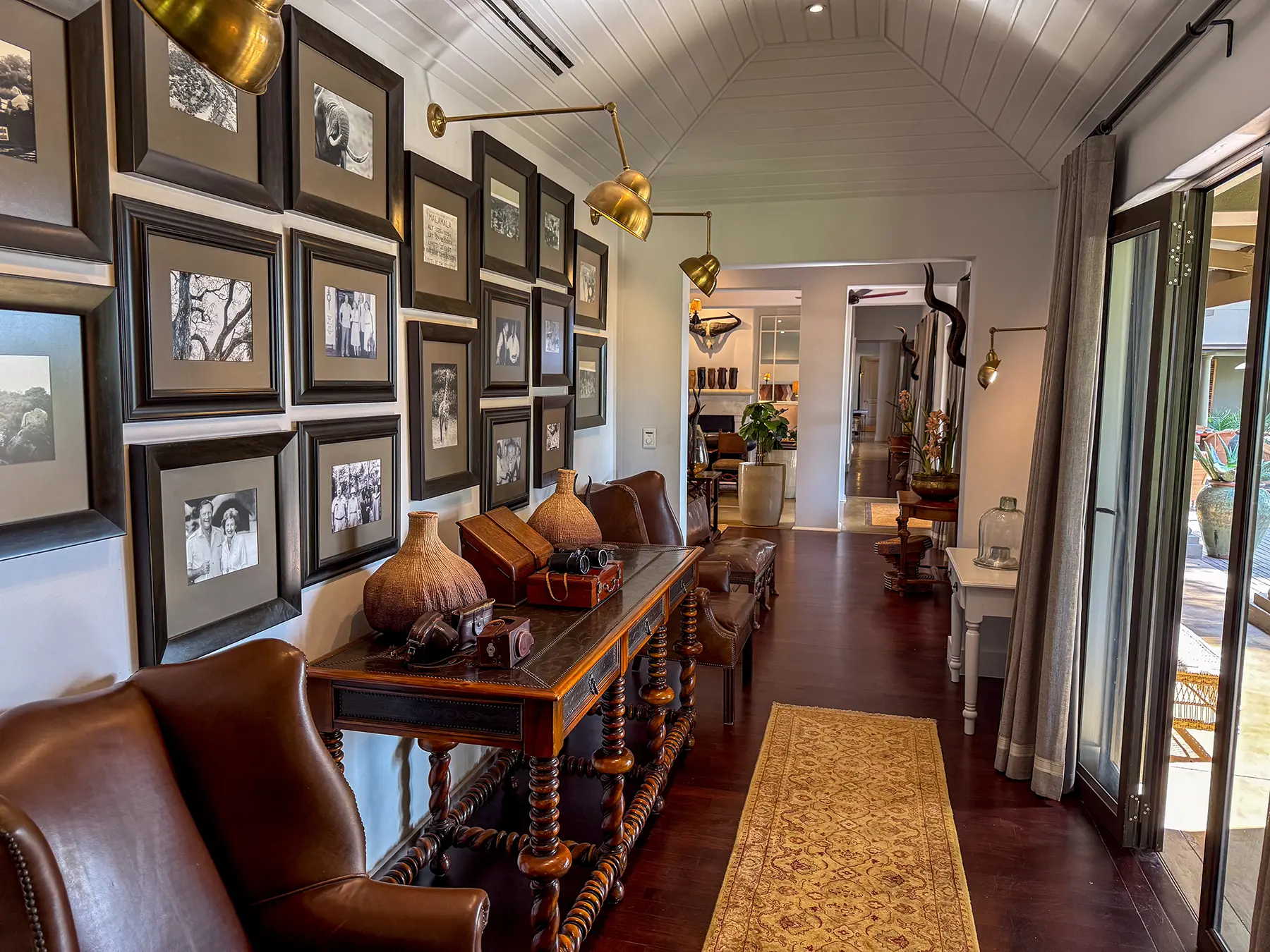
MalaMala Rattray’s Camp: this small, very exclusive camp is around 30 minutes’ drive from Main Camp and is set on another section of the Sand River. It has an authentic Out of Africa feel which really takes you back in time. The accommodation comprises luxurious villas which boast their own private plunge pools.
Fourth camp: When I visited they were building a fourth super luxury camp in the south of the reserve which could take a year or two to be ready.
My Experience at Sabi Sand
My stay in Sabi Sand covered the far west of the reserve, at Inyati Game Lodge, and MalaMala at the eastern end. The types of animals I saw and the quality of sightings were consistently excellent across both regions.
This led me to the conclusion that you can’t really go wrong with which part of the reserve you choose to stay in. The Big Five density and the leopard sightings are remarkable wherever you base yourself.
During my time at Inyati I encountered four individual leopards across five different sightings, and I could easily have seen more if my objective had been only to find leopards. Our focus was on a variety of wildlife, so at times we deliberately moved on from leopard sightings to chase other species.
George, my driver at Inyati, was incredibly attentive, asking me what wildlife I most wanted to see. I told him I was keen on wild dogs and witnessing a successful hunt. I was so impressed by how George went out of his way to make sure I managed those bucket-list sightings.
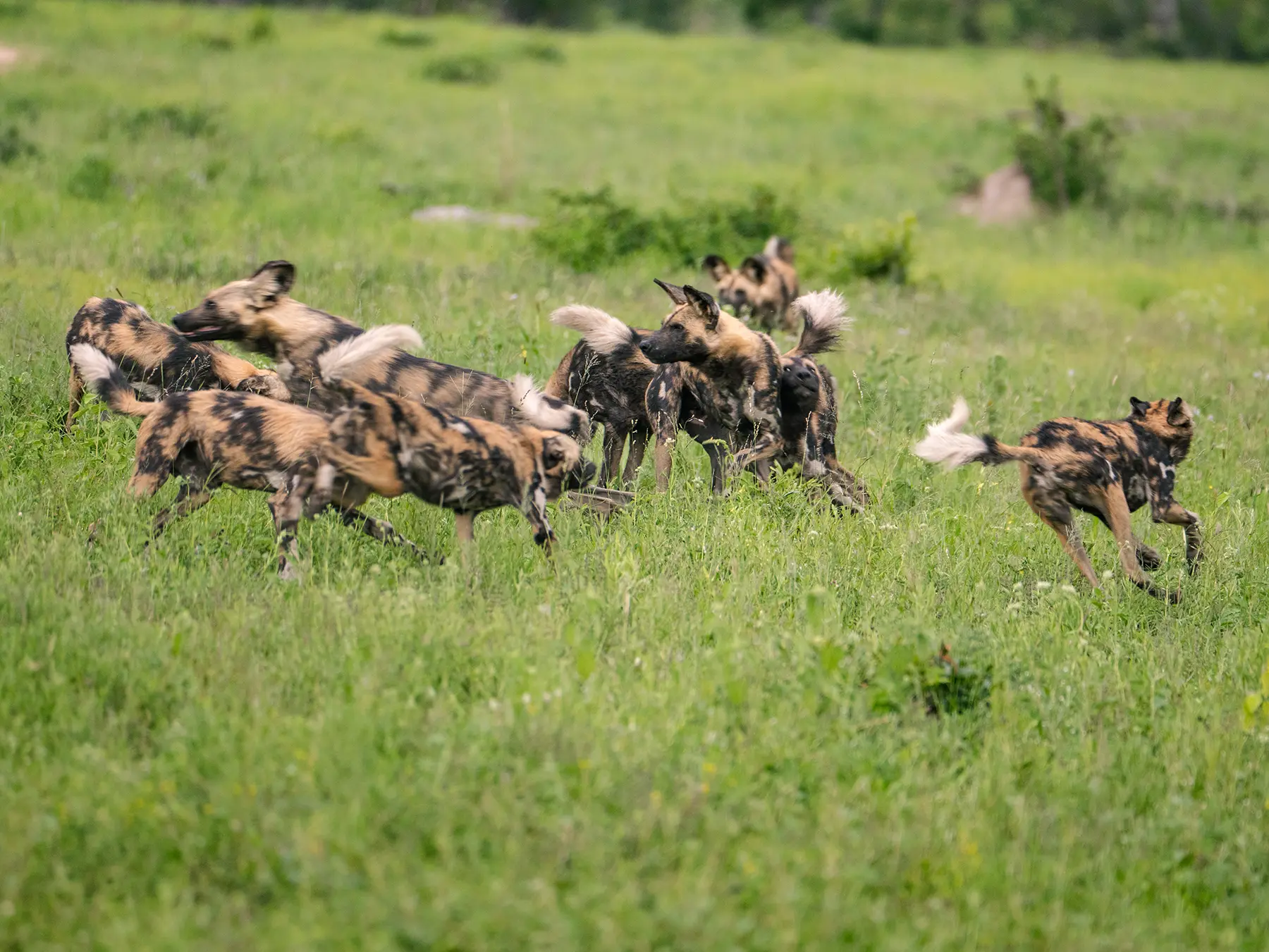
We had 3 separate wild dog sightings at Inyati and each one was memorable. However, the grand finale on our final morning was when we found a pack on the hunt.
George kept up with the pack, moving with agility and keeping just enough distance so as not to get in their way as they chased and caught an impala lamb. I was so thrilled to have seen a successful wild dog hunt!
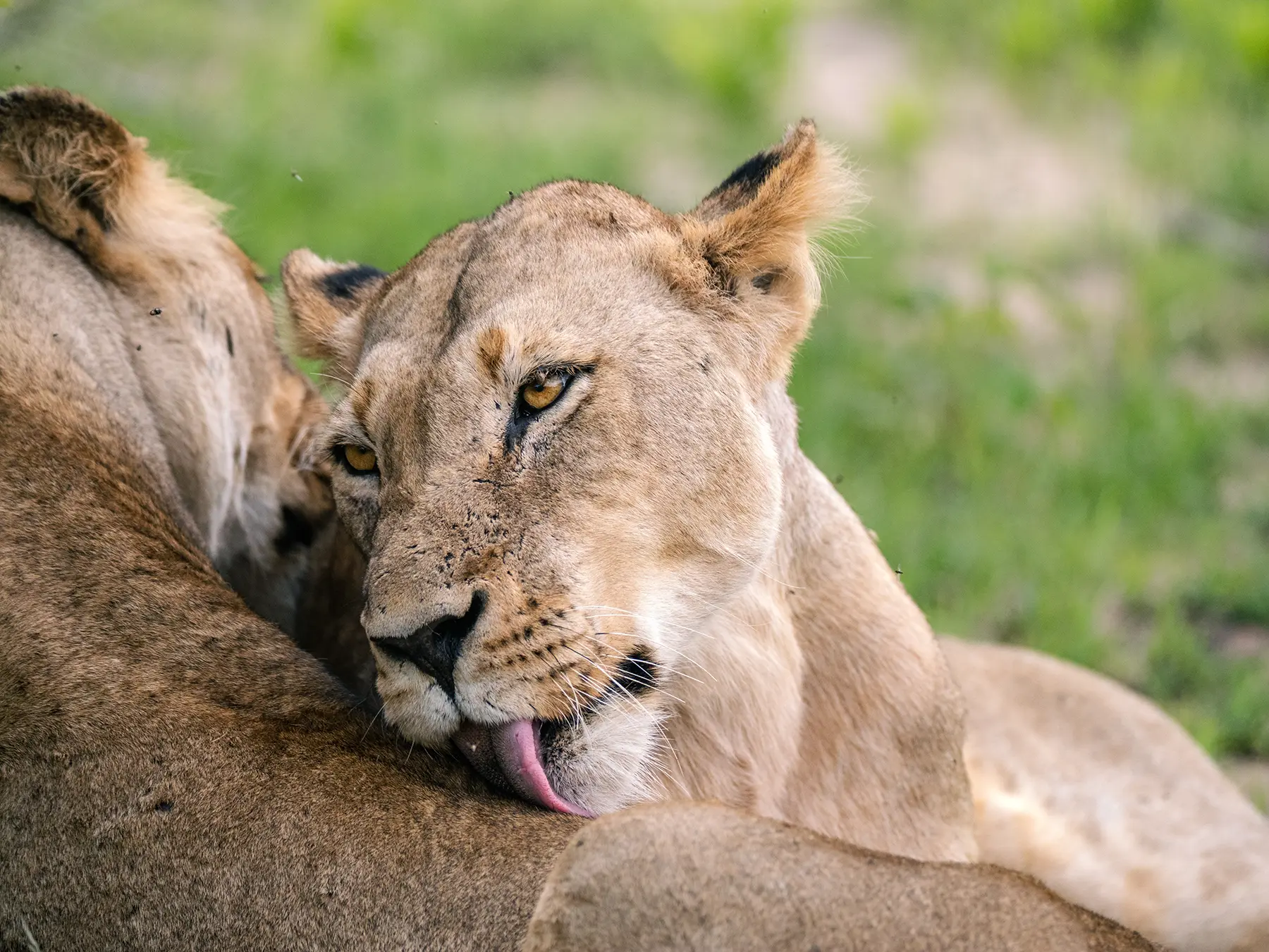
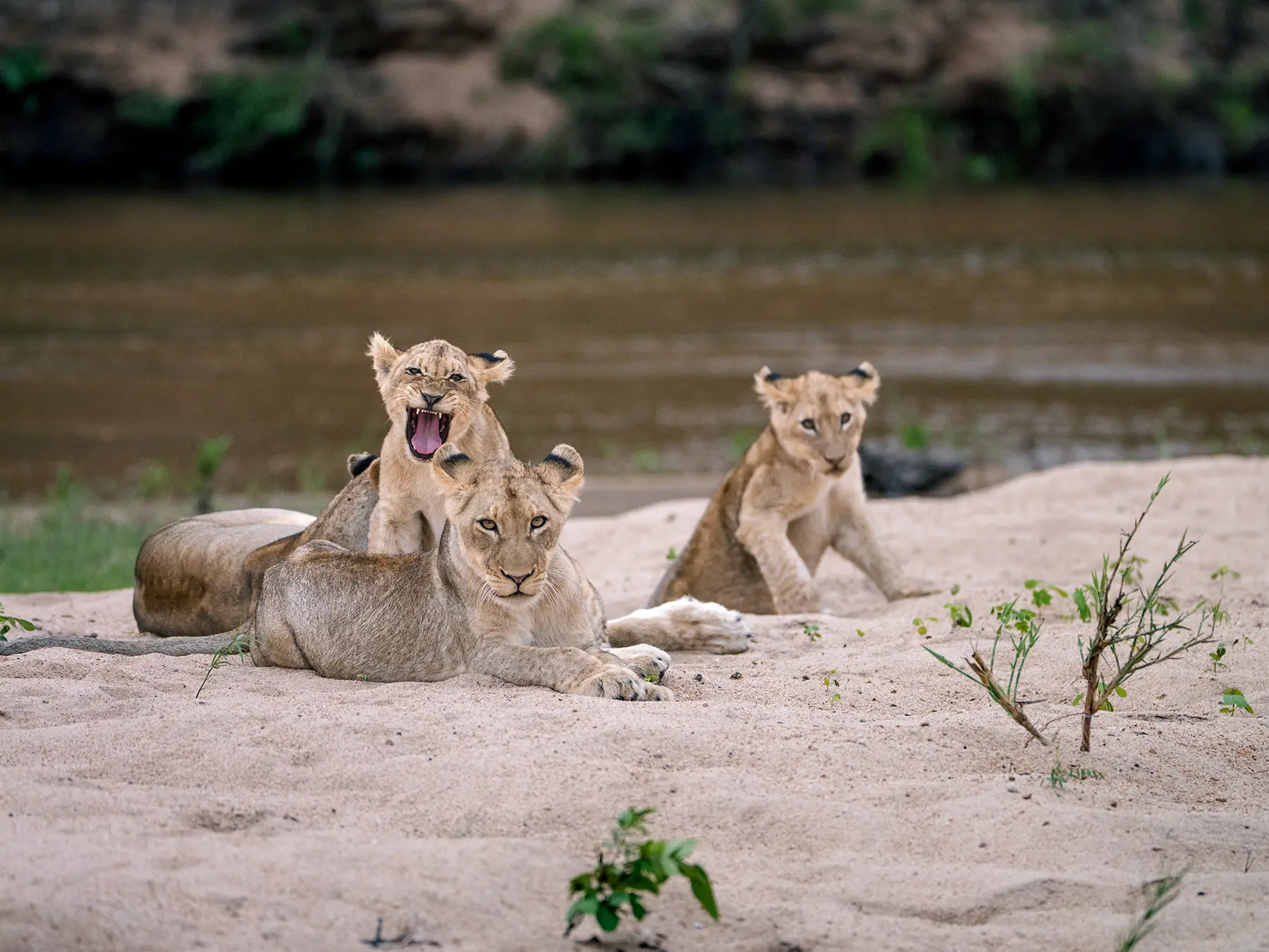
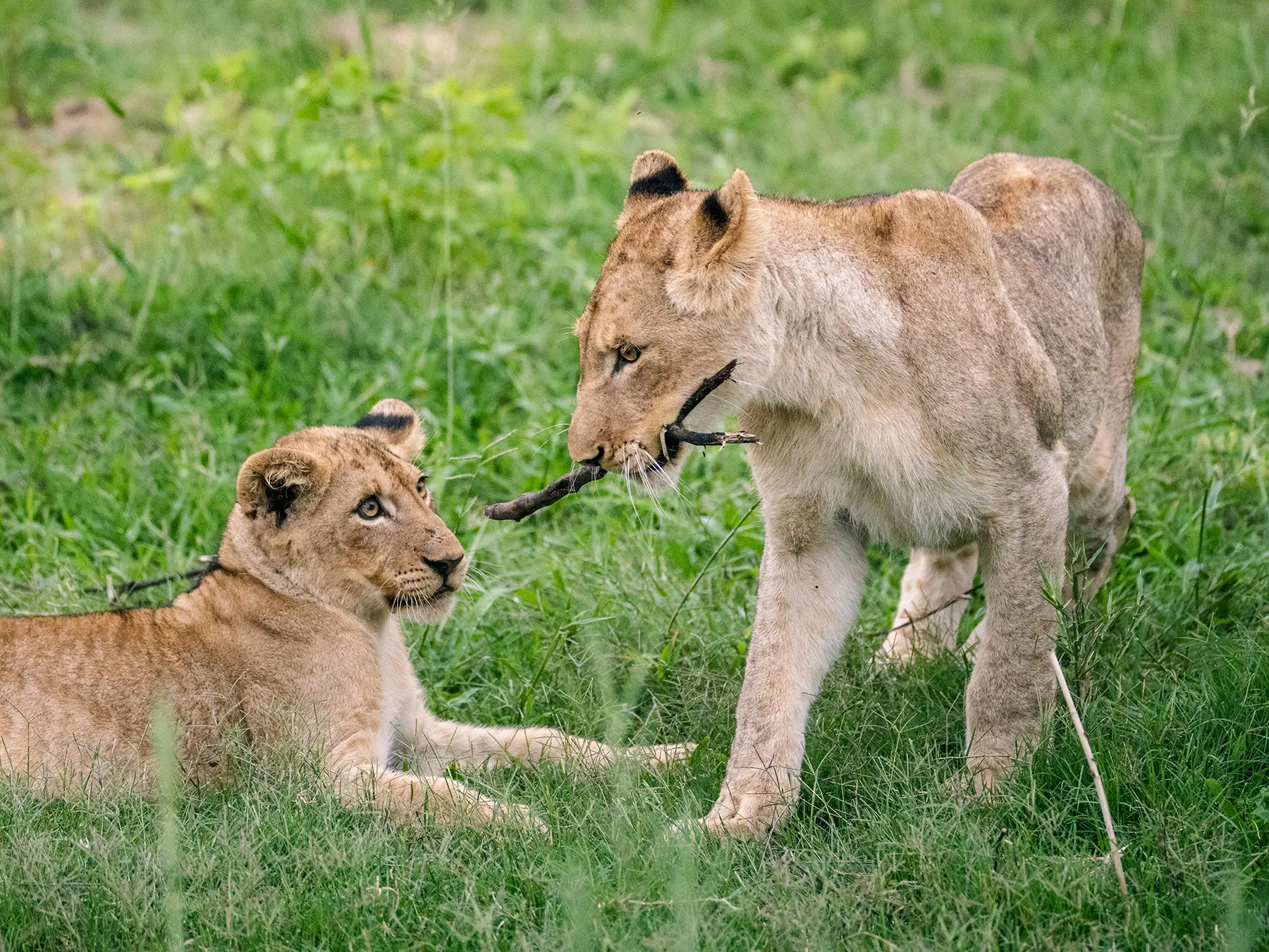
Another incredible highlight at Inyati was watching the Othawa lion pride relaxing on the sandy banks of the Sand River. As evening drew closer, 3 young cubs became active and began to play, wrestling with each other, play-fighting over a stick and chasing and pouncing on one another.
This was my best ever lion sighting to date, which is an accomplishment given how many lion sightings I have had over the years.
From Inyati I moved across the reserve to MalaMala in the eastern sector. I thought that no lodge could possibly match what we had just experienced – but, lucky for me, I was wrong! MalaMala delivered an absolutely incredible safari experience, with great sightings, an expert guide and luxurious accommodation.
My guide, Jacques, again asked if there were any specific species we wanted to see, and at that point we had already seen all of the Big Five numerous times, so I gave him an extra challenging list: leopard cubs, lion cubs and a successful hunt.
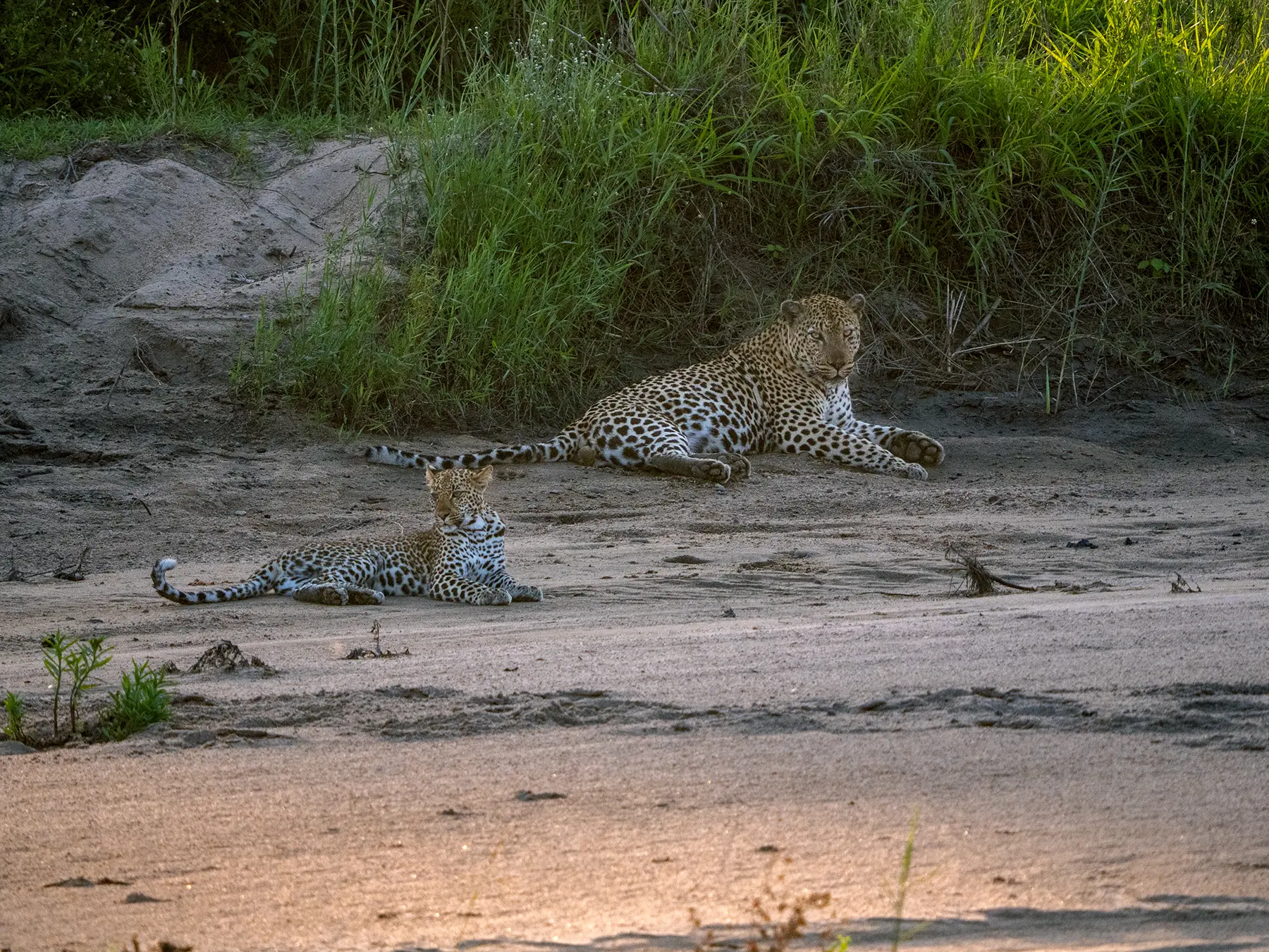
On our first evening at MalaMala we were rewarded with an entire leopard family sprawled out on the Sand River right outside camp, including the Piccadilly female with her 1-year-old cub and the cub’s father, the Flat Rock male. Leopard cub – check!
The following morning we came upon a different female, the Sibuya female, with a 9-month-old male cub enjoying an impala lamb kill before they began playing.
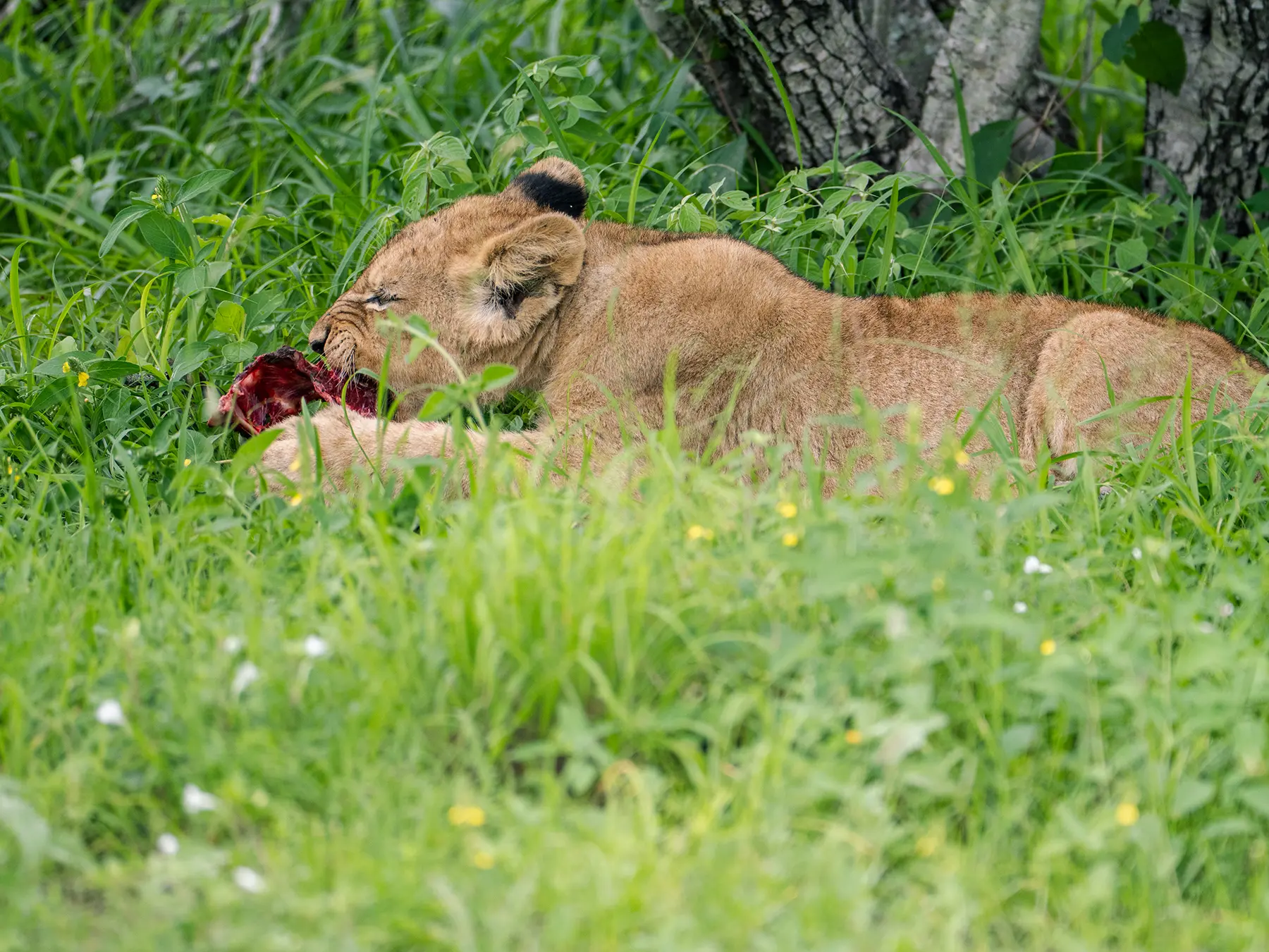
That evening we found the Kambula lion pride active as the females separated from the cubs and began stalking impalas. Lion cubs – check!
In a remarkable twist, while the two lionesses stalked, the 6 cubs took down an impala lamb all by themselves!
One lioness abandoned her hunt to see what was going on, looking extremely proud of her youngsters, while the other lioness successfully took down a second impala lamb of her own. Successful hunt – check and check!
I was amazed that in 5 nights in Sabi Sand, in completely different sectors, I had seen everything that was on my bucket-list!
Days 5-6: Sabi Sand Game Reserve
Drive Time (Excluding Game Drives): None
Days 5 and 6 are full days in Sabi Sand with no transfers. You’ll spend your time on game drives or walking safaris in the reserve famous above all for its leopards.
Since you’ll have 2 nights at the same camp, there will be ample time for your guide to track individual leopards for you.
Itinerary
Each day in Sabi Sand follows the Greater Kruger rhythm that revolves around game drives in the early morning and the late afternoon into evening.
The morning starts with a pre-dawn wake-up and hot drinks at camp around 5:30. Thereafter the morning game drive sets off in an open vehicle for 3 to 4 hours of tracking before the heat builds and the big cats settle into the shade.
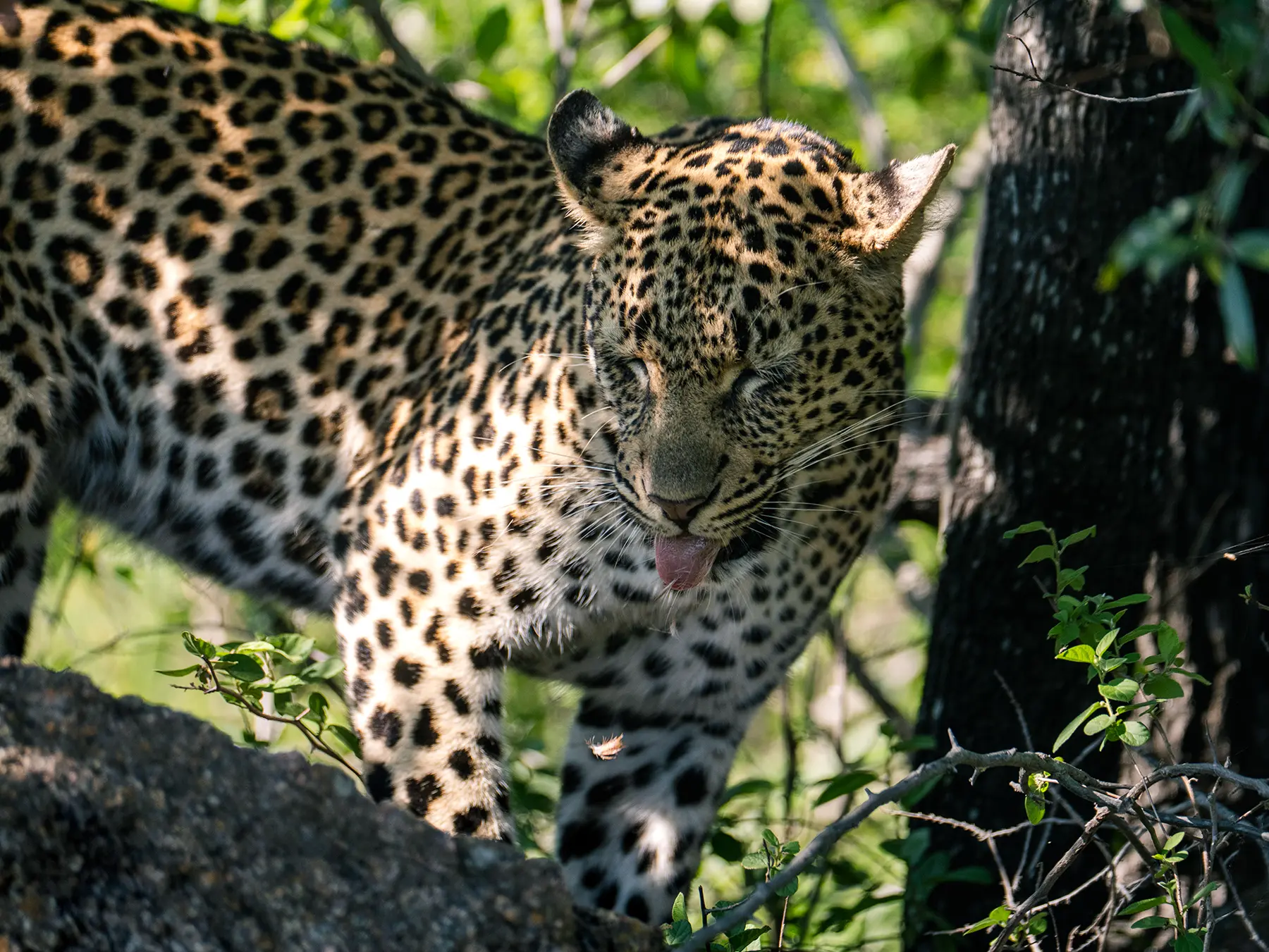
With Sabi Sand’s resident leopards habituated to humans in safari vehicles since the late 1970s, dawn game drives often deliver sightings of named individuals as they move between territories along the Sand River frontage.
After brunch back at the lodge, take the middle of the day to relax. Afternoon tea is served around 16:00, just in time for the afternoon drive, which heads out at 16:30.
The afternoon drive continues straight through sunset and turns into a night drive with spotlights after dark. This is the time to look for hyena, civet, genet and the occasional leopard on the move.
Drives typically wrap up around 19:00, giving you time to freshen up before dinner at the lodge.
By Day 6 the guides know exactly what you have already seen and can pivot the remaining drives to fill in any gaps.
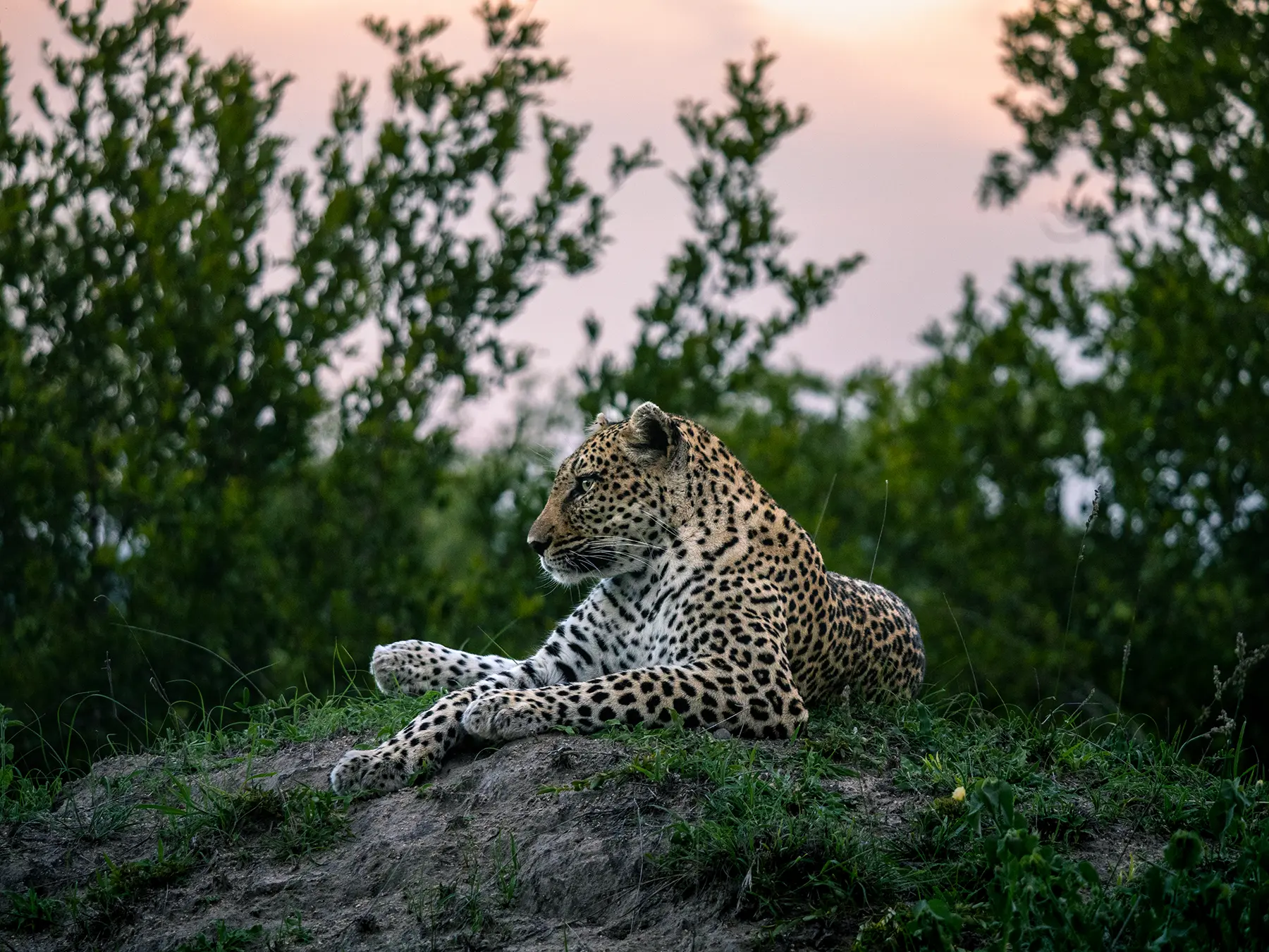
If the Big Five came easily on Day 4 and the morning of Day 5, this is the moment to ask the guide to chase bucket-list moments. These could be wild dogs on the hunt, a successful kill, or a particular leopard or pride the tracker has been telling stories about.
Where to Stay in Sabi Sand Game Reserve
You’ll stay at the same Sabi Sand lodge as the previous night.
Day 7: Sabi Sand to Johannesburg
Drive Time (Excluding Game Drives): 1-2 hours to Skukuza Airport, then a 1 hour Airlink flight to Johannesburg
Today is your final day in Sabi Sand. After a last early-morning game drive, you’ll transfer to Skukuza Airport inside Kruger National Park, and take an Airlink flight to Johannesburg O.R. Tambo International Airport. From there you’ll catch your international flight home.
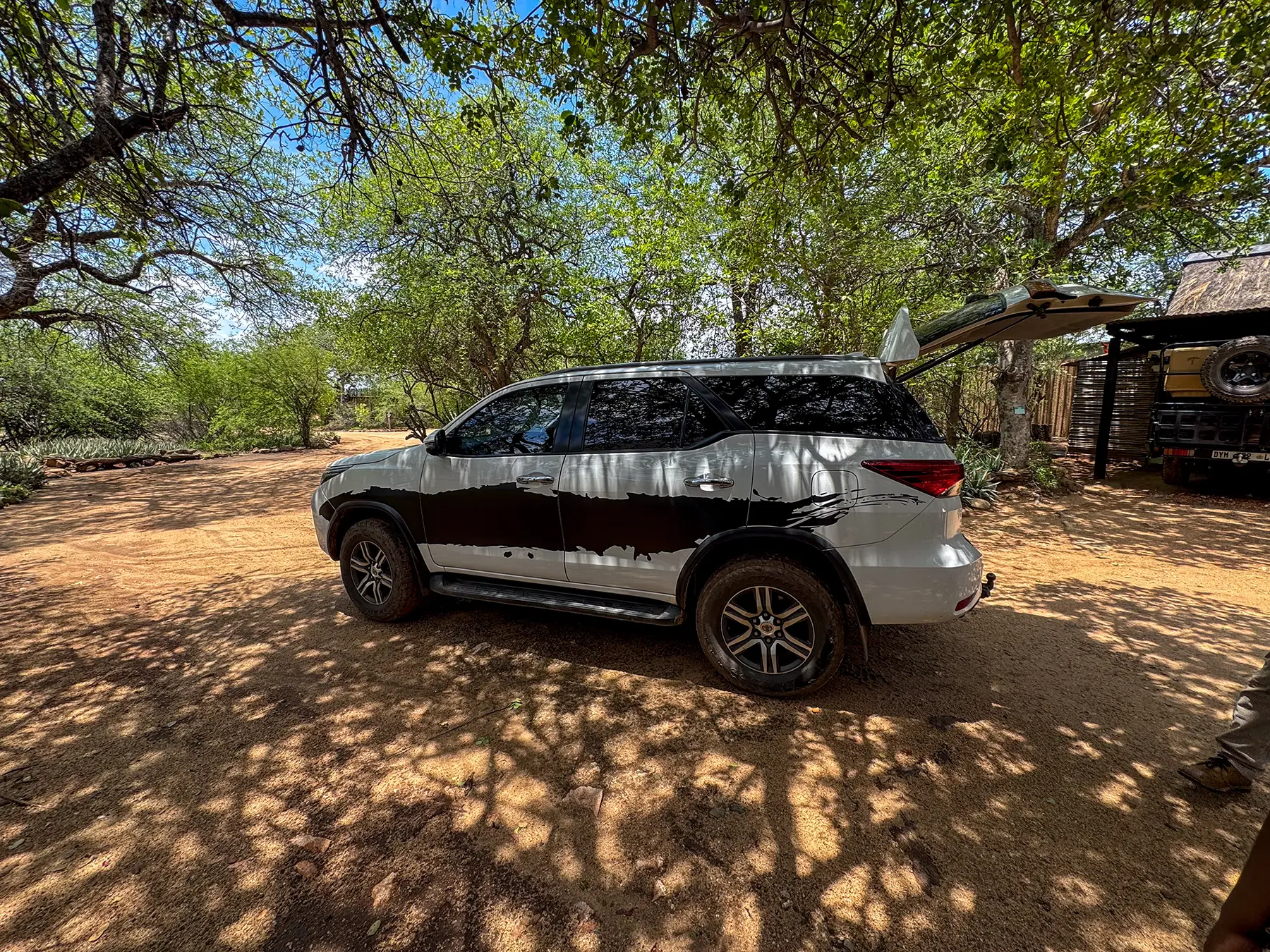
Itinerary
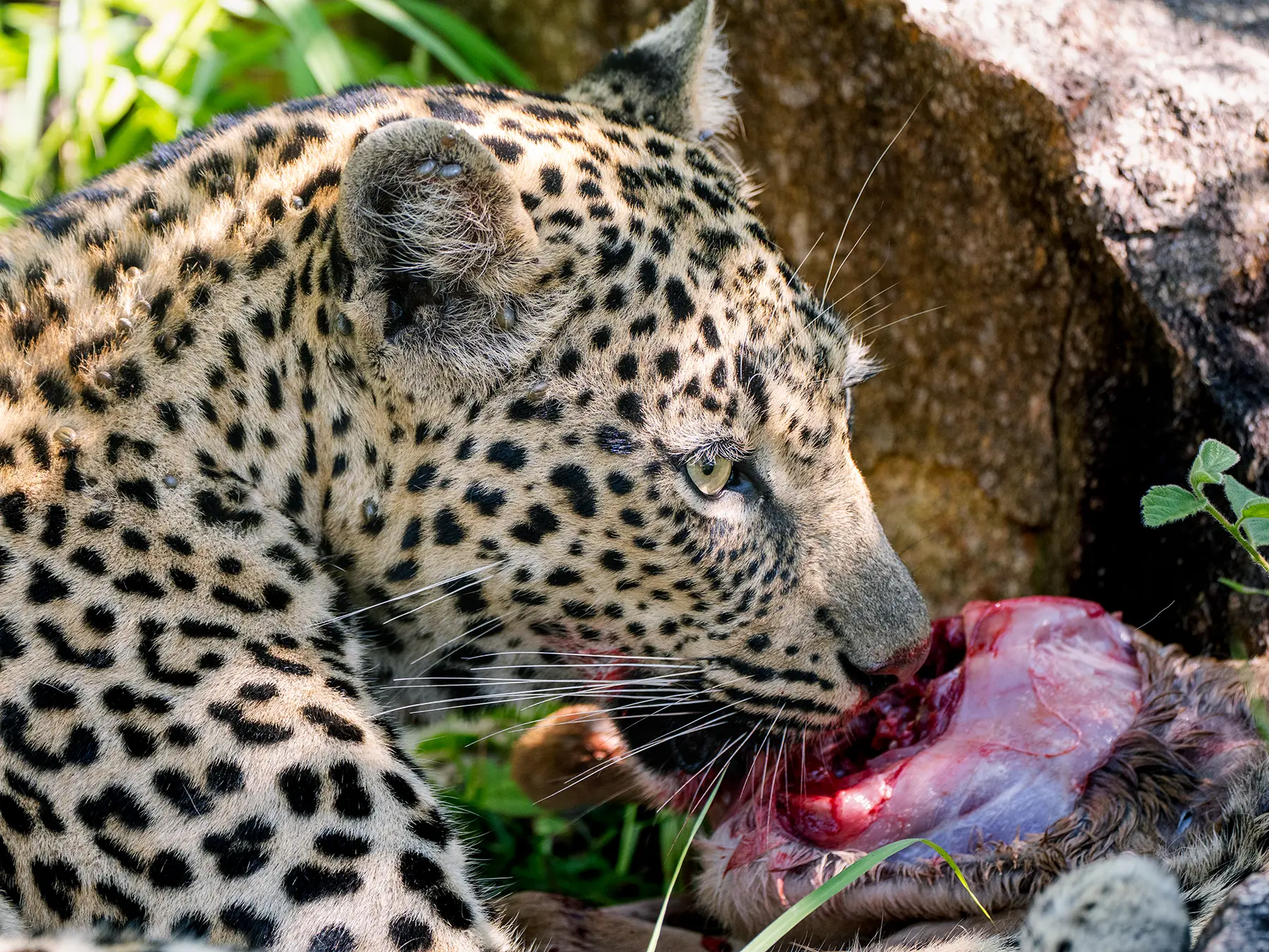
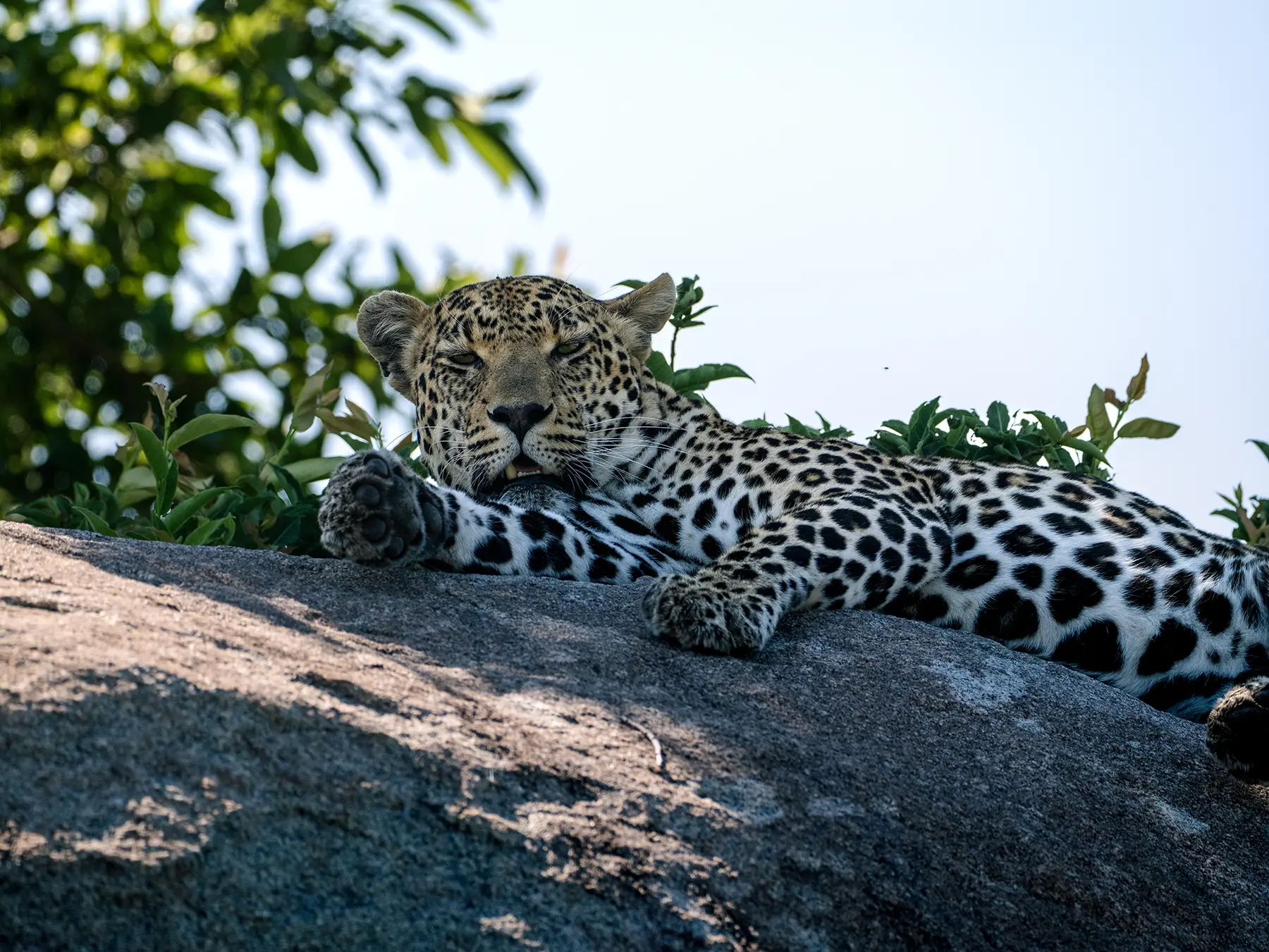
This is your last morning in Sabi Sand, so soak up the exquisite South African sunrise on your early morning game drive before check-out. By now you should have seen all the leopards you could possibly wish for, but if you have an appetite for more sightings, just tell your guide what you’re after.
This is the reserve with the highest leopard density surveyed in South Africa, at 12.2 leopards per 100 square kilometres, so even a short final drive often turns up a memorable big cat sighting.
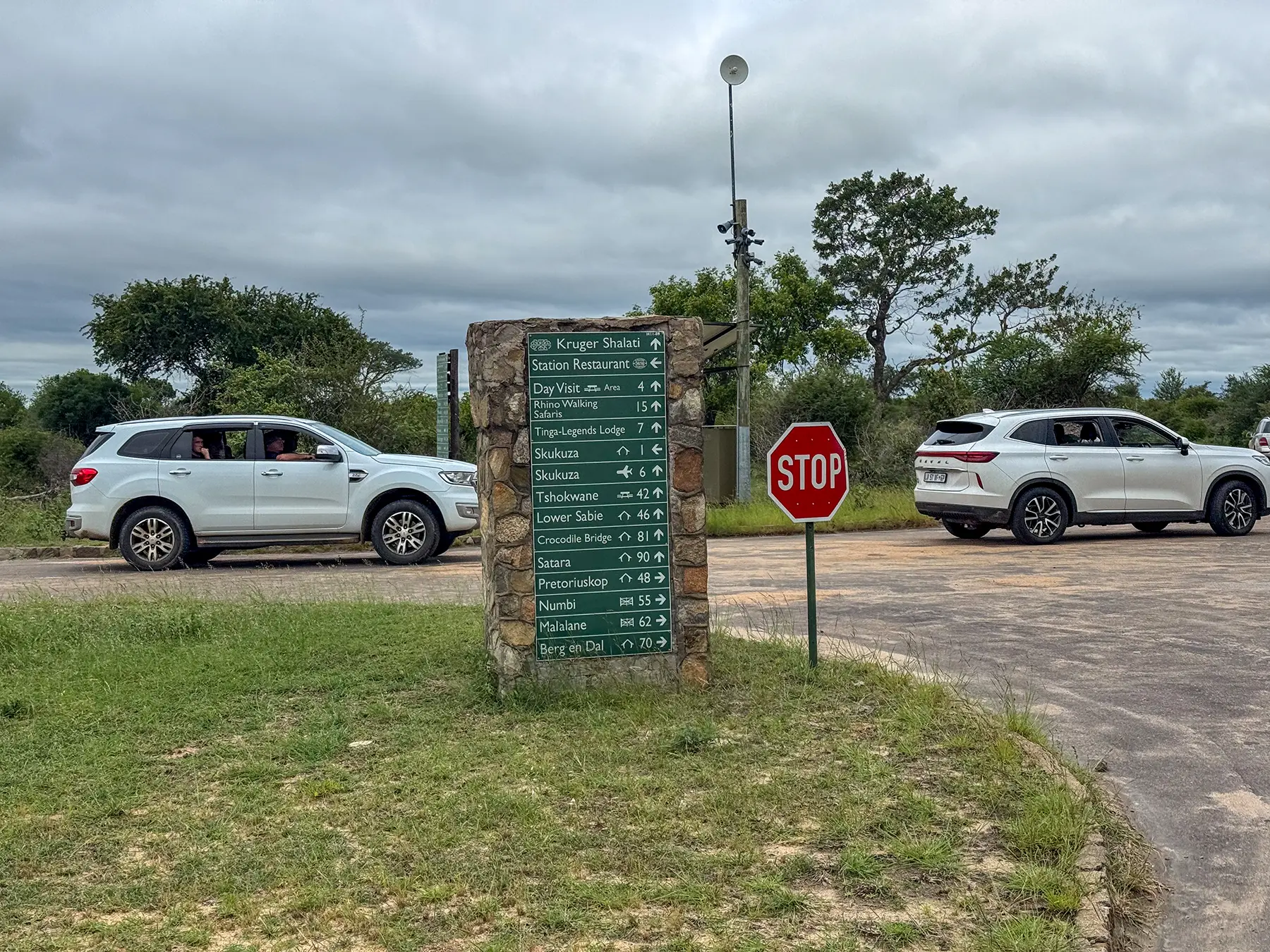
After breakfast and check-out, you will transfer by road to Skukuza Airport, which is located just inside Kruger National Park. Allow 1 to 2 hours for the drive depending on which lodge you stayed at.
The route to the airport runs through Kruger National Park, so the transfer doubles as a final game drive and lets you see a snippet of the wider national park.
From Skukuza, Airlink operates regular flights to Johannesburg’s O.R. Tambo International Airport, with a flight time of around 1 hour. Most travellers connect at O.R. Tambo straight onto their international flight home.
Skukuza Airport is very small, so a 1 to 2 hour arrival window before the flight is plenty. If you are staying at MalaMala or Kirkman’s Camp, your local tour operator should book the airport transfer through the lodge, as their vehicles can access Skukuza Airport without leaving the reserve, saving on driving time.
In Johannesburg, it typically takes an hour or two to retrieve your luggage, re-check for the international leg, clear immigration and grab a meal in international departures.
Most airlines advise that you arrive at O.R. Tambo 3 hours before your international flight. Even though you’re unlikely to need quite that much time, there can be unforeseen delays at check-in and passport control.
South Africa Safari FAQs
Click on any of the frequently asked questions below to show the answer.
Is Greater Kruger safe for safari tourists?
Yes, the Greater Kruger private reserves are very safe for safari tourists. You are always accompanied by trained rangers on game drives, lodges have professional security teams, and the reserves are well managed with strict access control.
I flew straight from O.R. Tambo International Airport in Johannesburg to Hoedspruit, so I can’t comment much on Johannesburg, but Hoedspruit felt very safe and my driver told me he’s always found it to be a safe area.
The game drives themselves felt very safe as the guides were all very experienced and knew the wildlife well. The animals themselves are very used to safari trucks so seemed super relaxed around us.
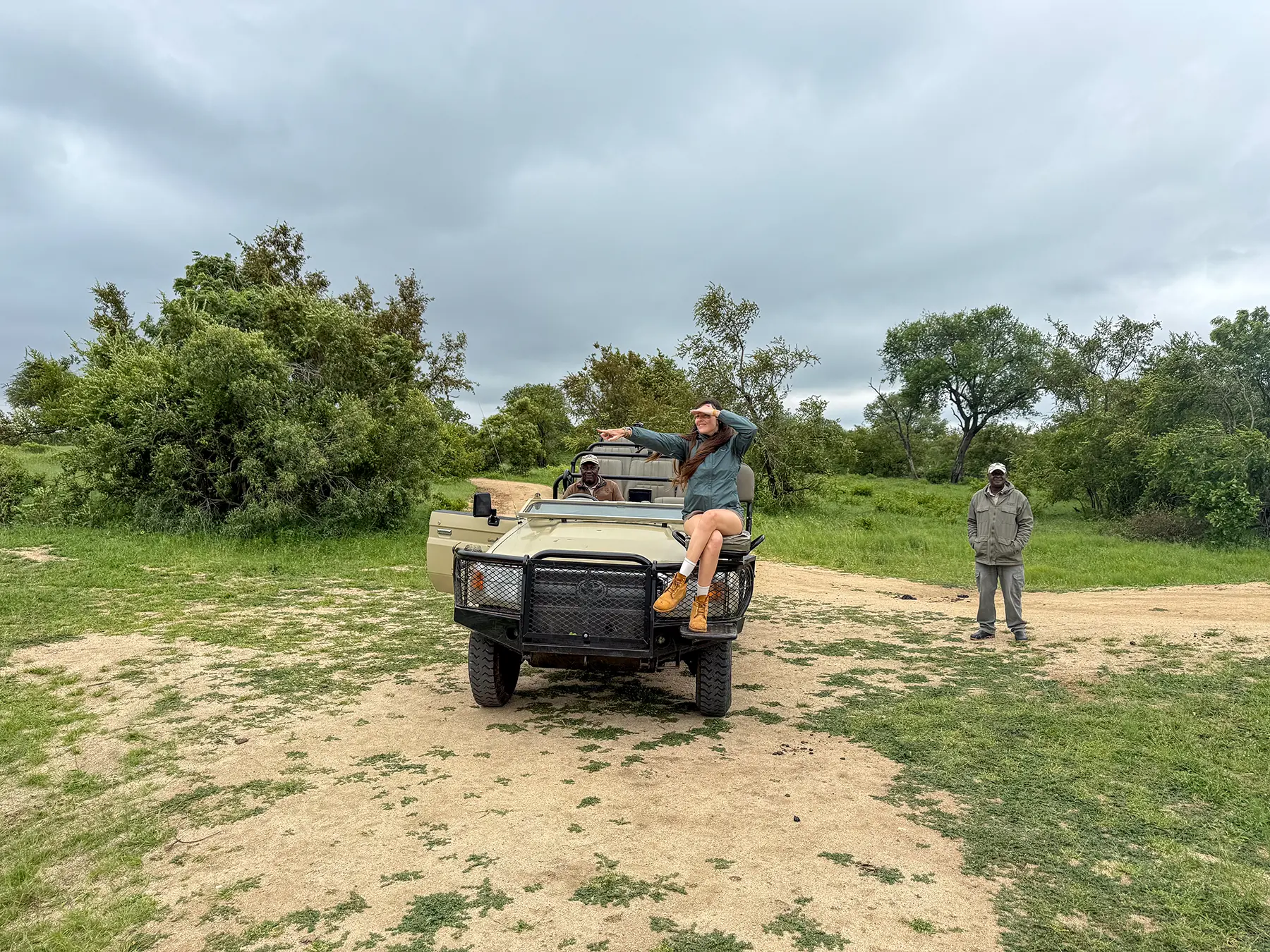
When is the best time to visit Greater Kruger?
Personally, I think the best months to visit Greater Kruger are September to early December if you want the green season beauty combined with abundant baby animals and related predator activity.
Alternatively, I’d recommend April and May if you want the excellent dry season game viewing with thinner vegetation, fewer crowds than the July-August peak season, and better value than high season rates.
That said, just because May and September are my favourite months doesn’t mean they will be yours. We all have different preferences and priorities. Read my best time to visit section to find out more about each season so you can choose the time that suits you best.
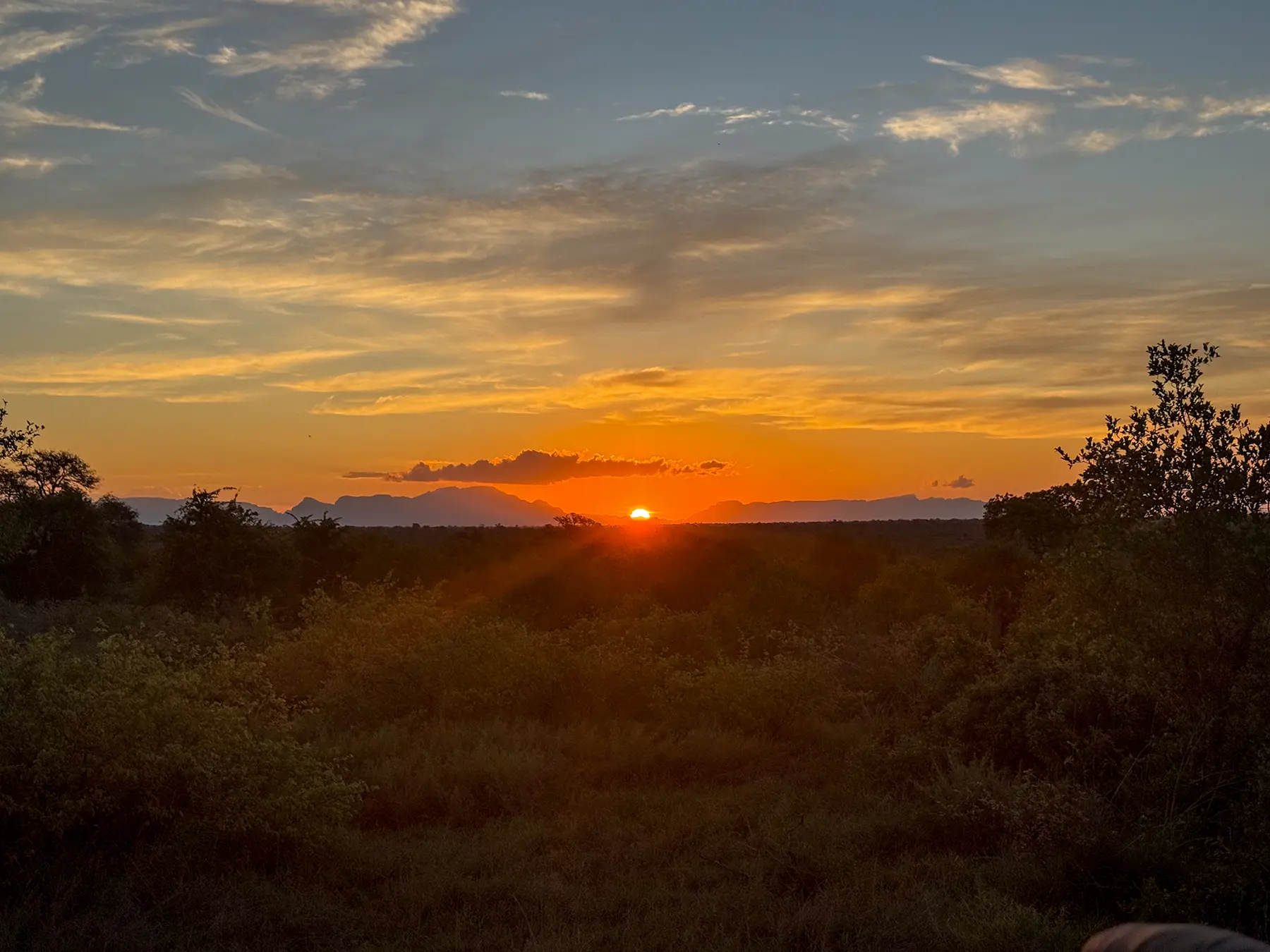
How much does a Greater Kruger safari cost?
A 7-day Greater Kruger safari costs from approximately $500-600 per person per day for mid-range lodges, rising to $1,500-$3,000+ per person per day for ultra-luxury properties in Sabi Sand. This is more expensive per night than a comparable Kenya safari or Tanzania safari.
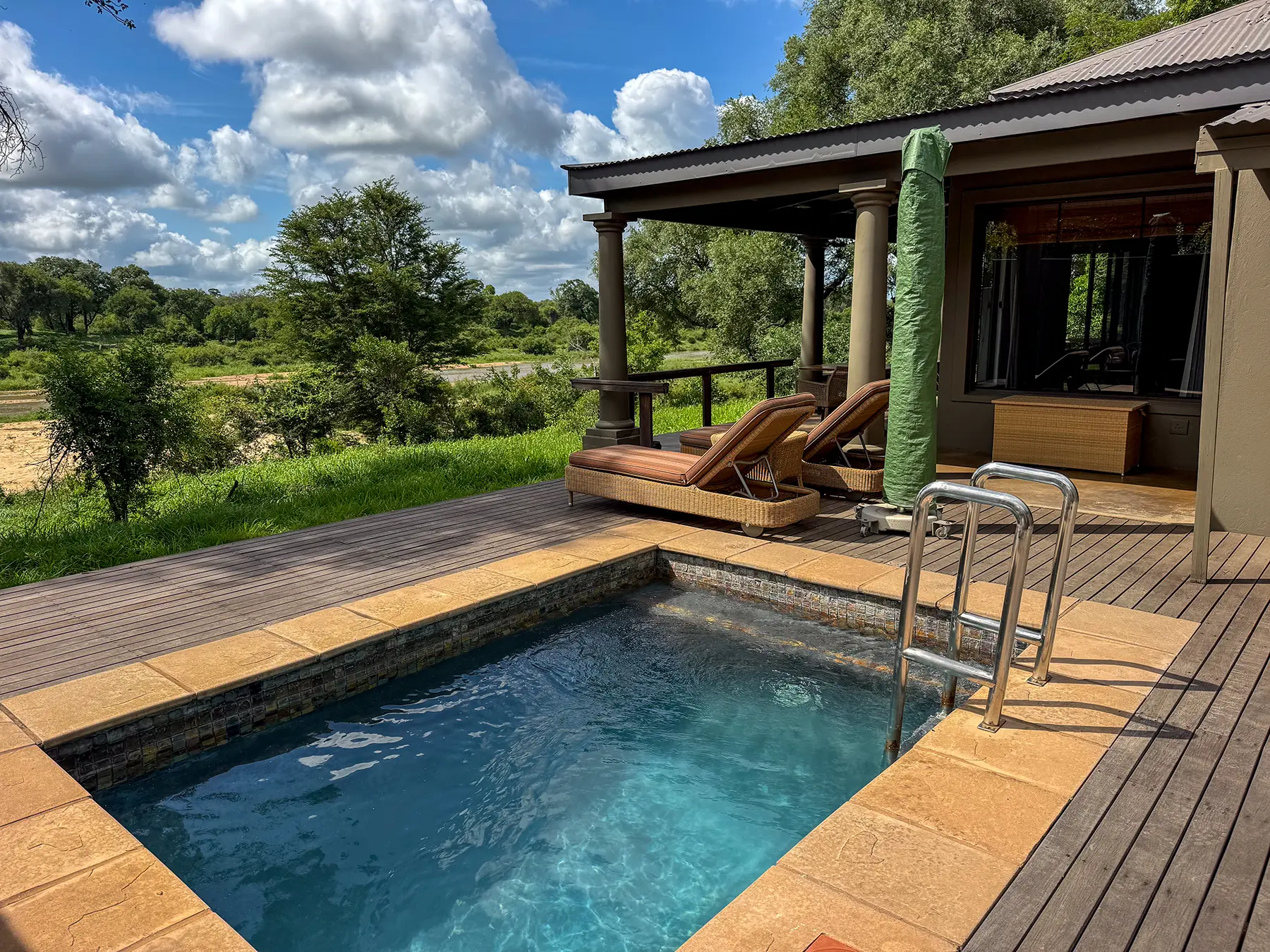
What is the difference between Kruger National Park and the private reserves?
Private reserves like Timbavati, Manyeleti, and Sabi Sand offer off-road driving, night drives with spotlights, and guided walking safaris that are not generally available to visitors in Kruger National Park, where SANParks runs only limited guided walks.
The fences between private reserves and Kruger were removed in 1993, so the same Big Five wildlife moves freely across both areas.
Private reserves also limit vehicle numbers at sightings, giving you a more exclusive and intimate encounter.
I tried out both the Greater Kruger private reserves and Kruger National Park and they are very different experiences at different prices. Whilst both are excellent, if you can afford it the Greater Kruger private reserves give you substantially more Big Five, leopard and cheetah sightings with fewer other vehicles, in a more untouched wilderness setting.
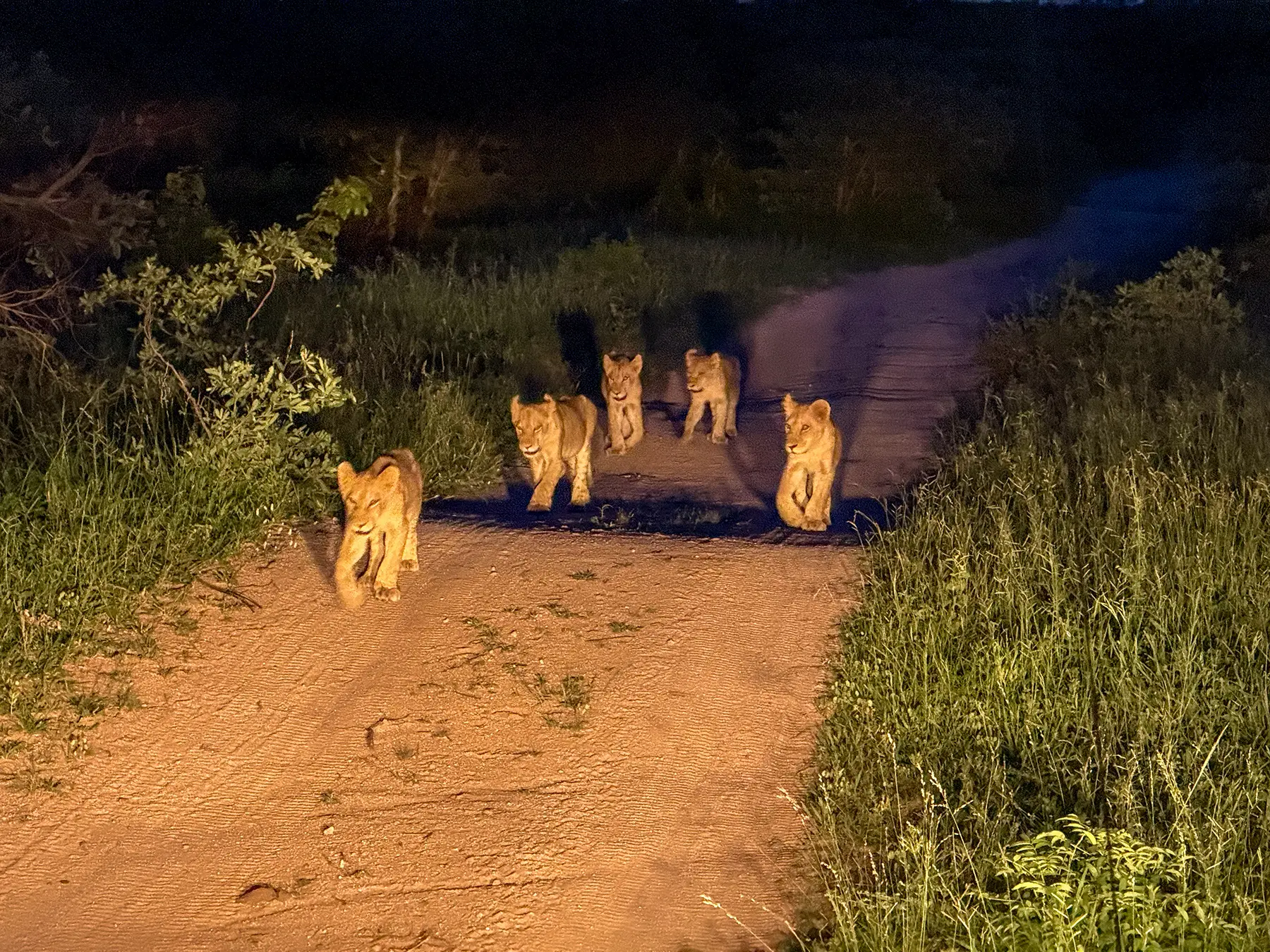
Can you see leopards in Greater Kruger?
Sabi Sand has the highest leopard density surveyed in South Africa at 12.2 per 100 km². Experienced guides can identify up to 85 resident leopards by their unique spot patterns, which means that each sighting is usually an encounter with a named individual. Leopard sightings in Sabi Sand are among the most reliable anywhere in Africa.
I personally saw 10 leopards in Sabi Sand in 5 nights, which was incredible!
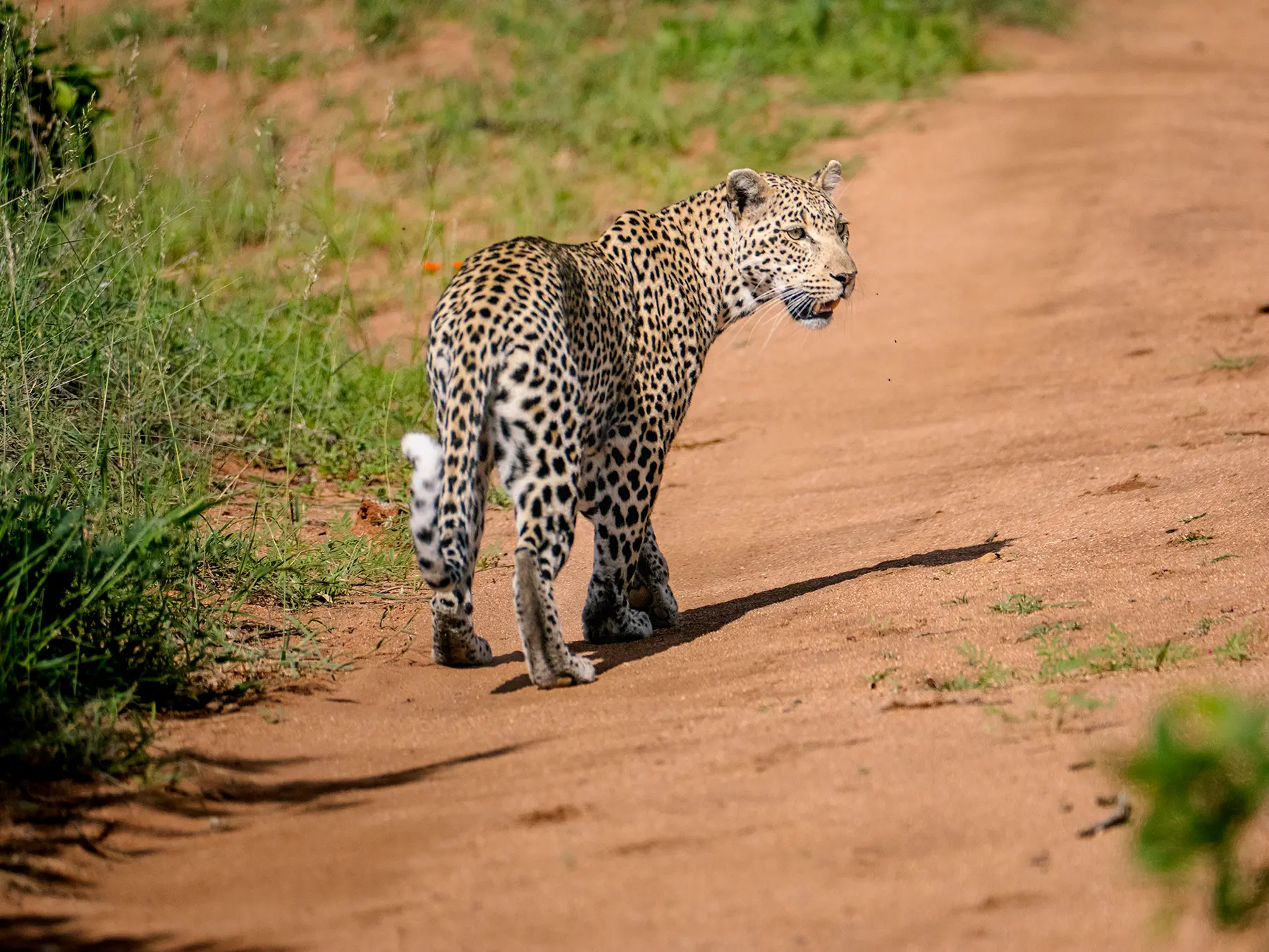
Do I need malaria tablets for Greater Kruger?
Yes, the entire Greater Kruger area is classified as a malaria risk zone by public health authorities. Antimalarial prophylaxis is strongly recommended, particularly from September to May when transmission risk peaks with the warm, wet weather.
During the dry winter months (June to August), risk is substantially lower but antimalarial tablets are still advised. Consult your doctor before travelling for the most appropriate medication for your circumstances. Remember that some antimalarial medications need to be taken some days in advance of your travel.
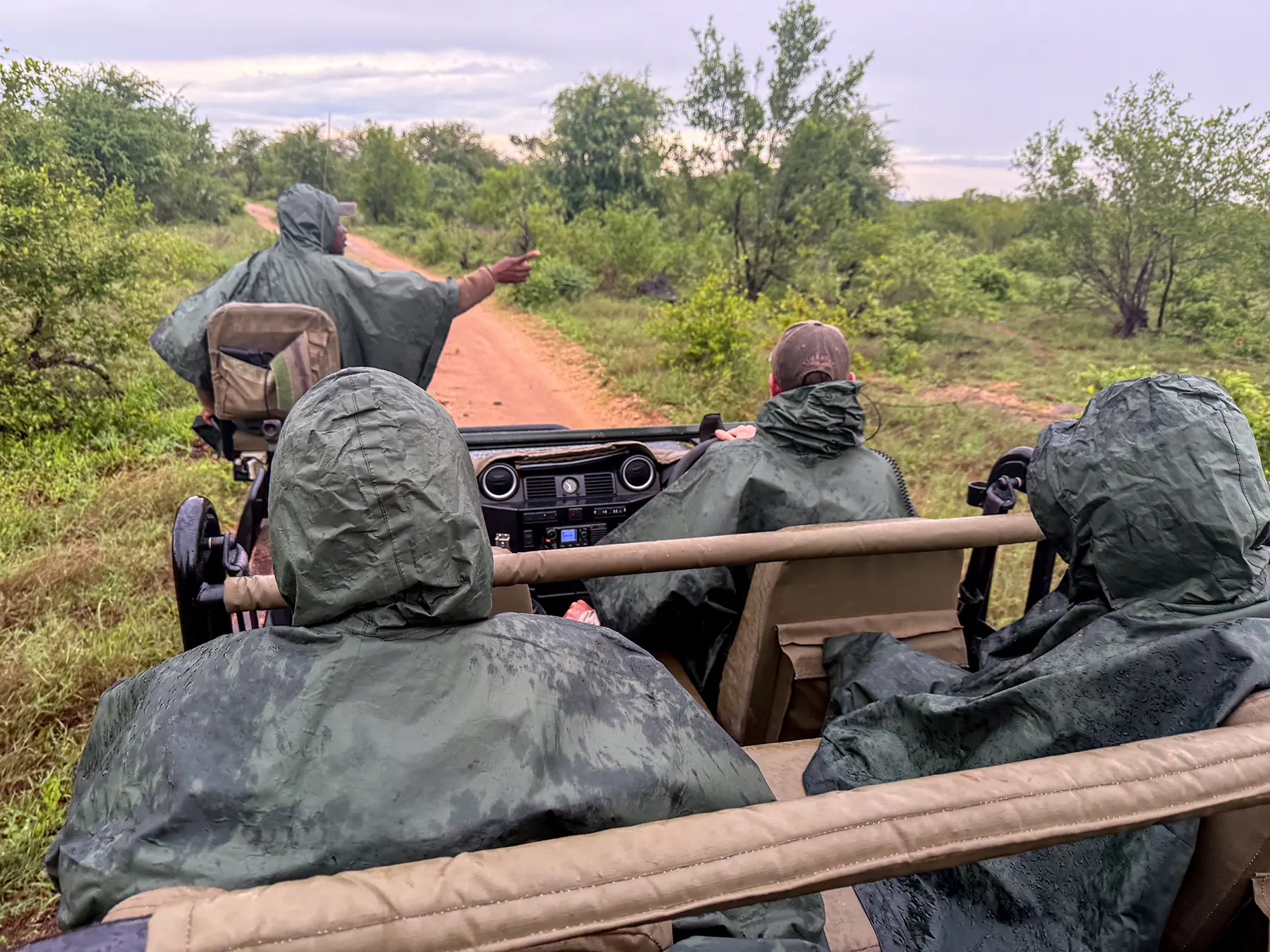
How do you get to Timbavati and Sabi Sand?
The main gateway to Timbavati is Hoedspruit Eastgate Airport in Limpopo Province, with daily Airlink flights from Johannesburg (about 1 hour) and Cape Town.
For Sabi Sand, Skukuza Airport is closer. Again, there are daily flights to and from both Johannesburg and Cape Town.
Your tour operator will arrange a road transfer from the airport to your first reserve, which typically takes between 30 and 90 minutes, depending on the location of your lodge. Some lodges also have their own airstrips for charter flights.
Whilst you can drive between Johannesburg and Greater Kruger, I took the flight as it saves a lot of time and it was great to have the aerial views over the landscape.
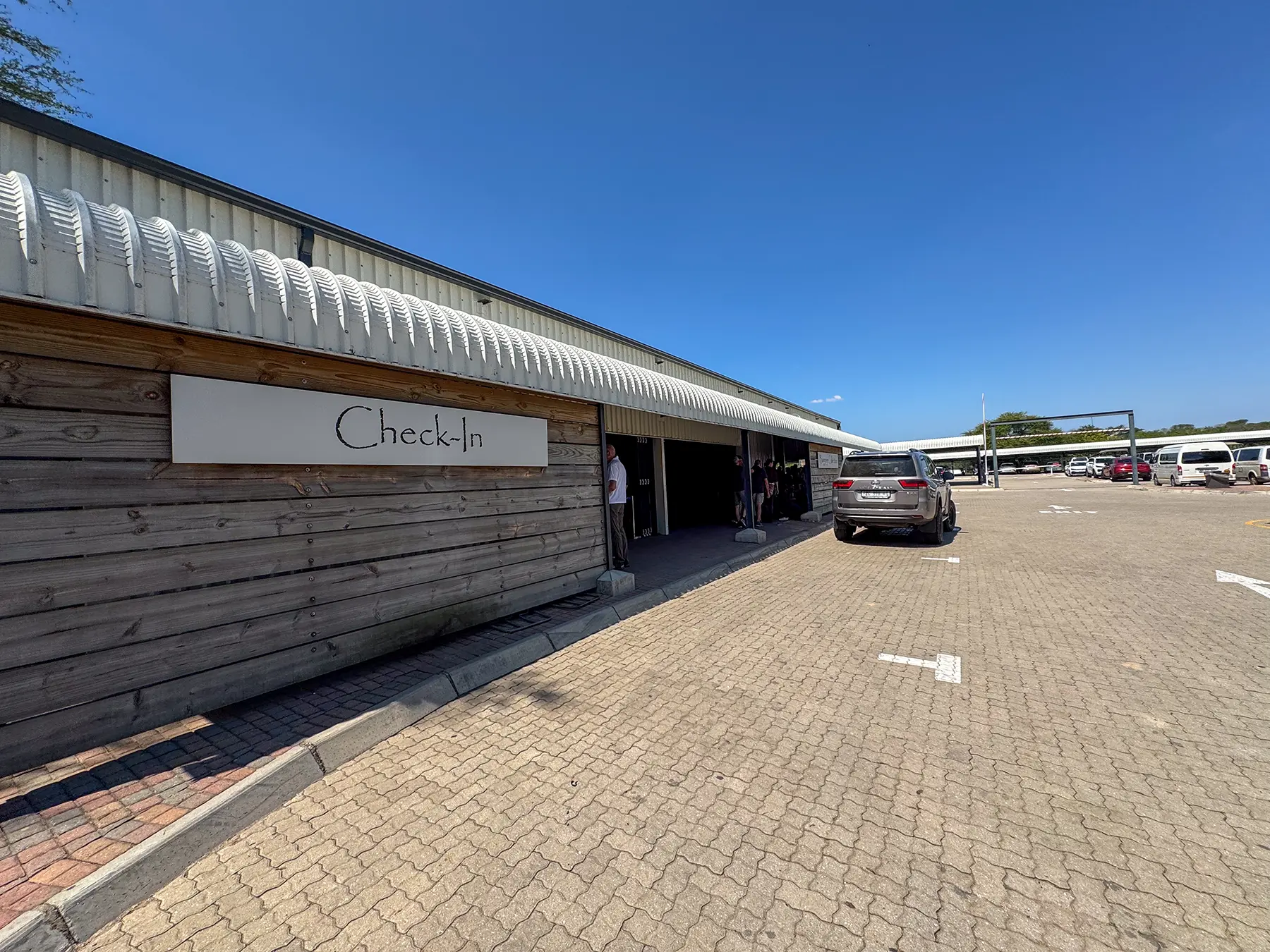
Recommended Booking Options For Your 7 Day Greater Kruger South Africa Safari Itinerary
Private Safari
Most popular & best experience – typical prices for this itinerary start from $500 per person per day.
Visit safarisbyella.com for free quotes from trustworthy local tour companies I use to book my own trips.
Final Thoughts – Is a South Africa Safari Worth It?
Yes! A 7-day South Africa safari in the Greater Kruger is one of the most rewarding short safaris in Africa. Building your safari around Timbavati and Sabi Sand is perfect for maximising a relatively short stay in this world-class wildlife destination.
7 days in Greater Kruger gives you opportunities to see rare endemic white lions, majestic white rhinos with their horns pointing skyward, and more leopards per 100 km² than anywhere else in South Africa.
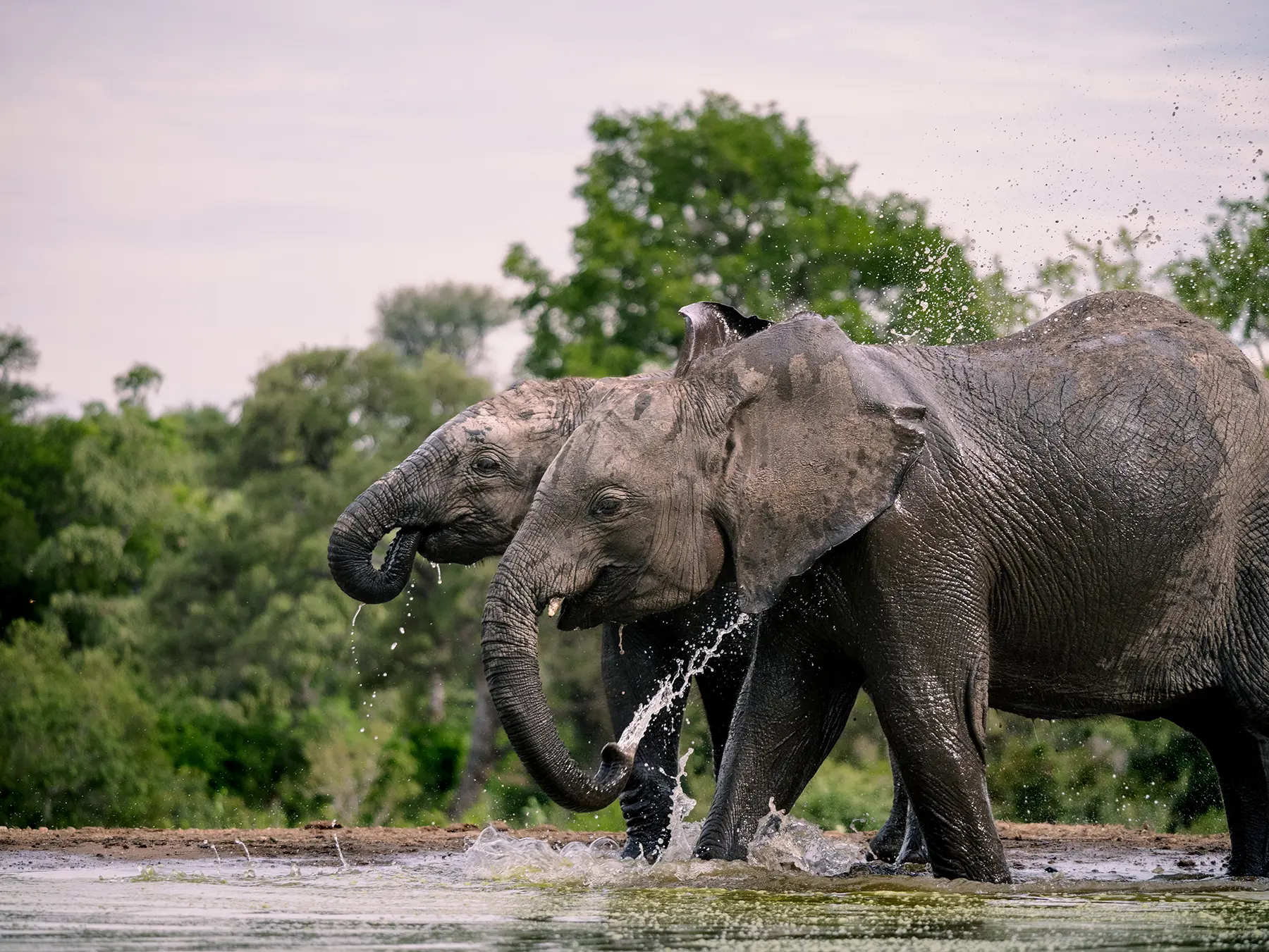
This is bucket-list safari at its finest, with luxury lodges, golden sunrises and the sound of elephants splashing at a waterhole while you enjoy your breakfast – nothing else comes close!
Read More South Africa Guides
South Africa Itineraries
Recomended itineraries and how to book them.
10-Day South Africa Safari Itinerary & Costs
7-Day South Africa Safari Itinerary & Costs
5-Day South Africa Safari Itinerary & Costs
Costs & Planning
How to get the most bang for your buck and the best time of year to visit depending on what you want to do and see.
Coming soon.
National Parks & Reserves
Complete guides to the best and most famous safari reserves, including the wildlife you’ll see, entrance costs and best time to visit.
Coming soon.
How to Book Your Safari
Save time and ensure an incredible safari experience by getting quotes from my recommended local safari companies.
Join the rapidly growing tribe of over 1,000 travellers who’ve booked their dream safari using my insider tips and recommendations.