
Considering a 5-Day South African Safari but not sure which reserve to visit or whether to include more than one? Having spent a month on safari in South Africa, I’m here to help!
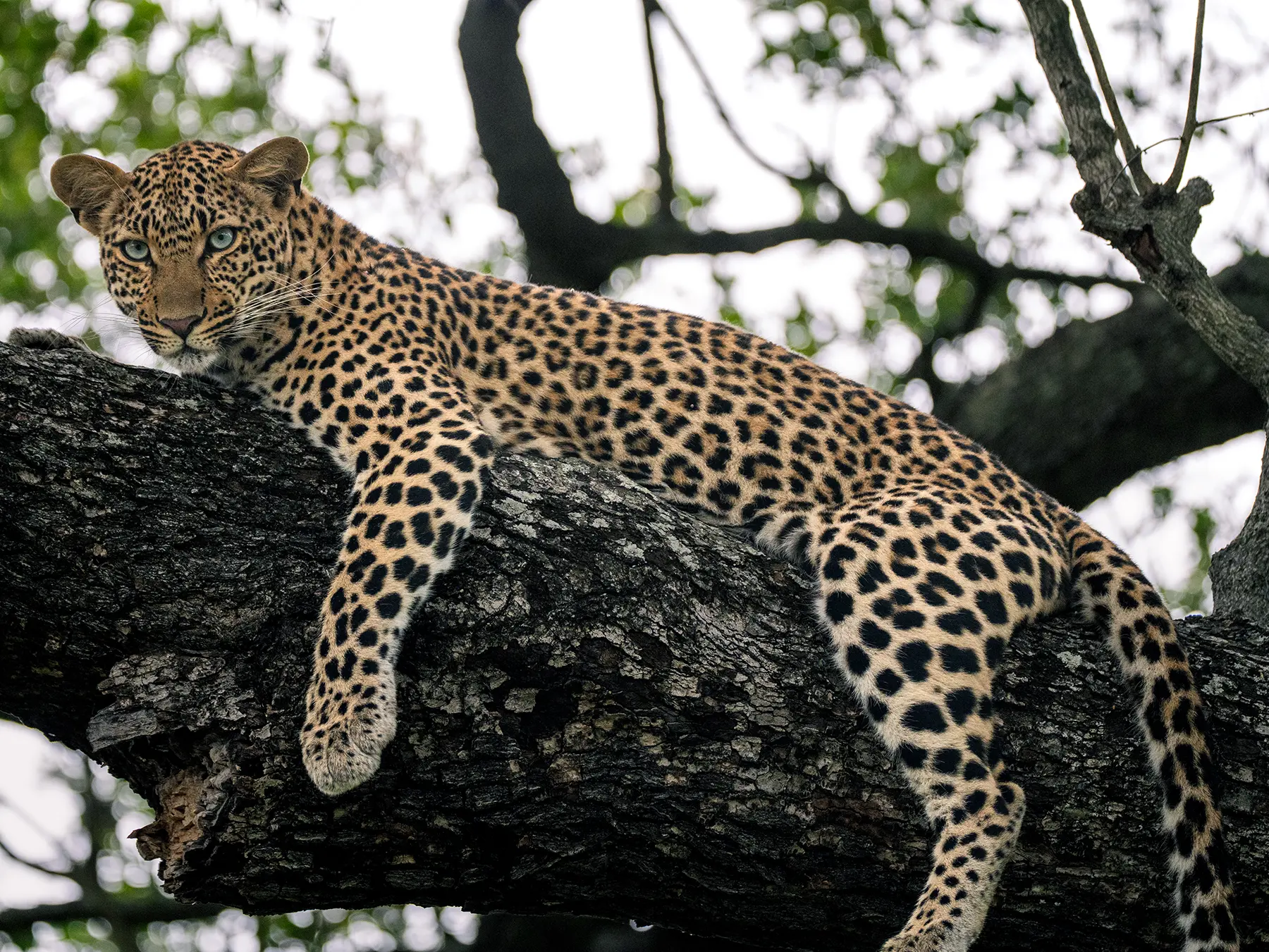
I’ve found that reserves vary a lot in terms of frequency of sightings and you can’t typically see all the wildlife you want in one location. This means you need to carefully plan your 5-day itinerary to include a couple of very productive reserves which maximise your chances of seeing all the key wildlife.
Greater Kruger National Park is South Africa’s largest wildlife area at over 8,100 square miles (21,000 square kilometres) (not to mention one of the biggest in the world!) and contains more species of large mammals than any other African game reserve. Pretty impressive, right?
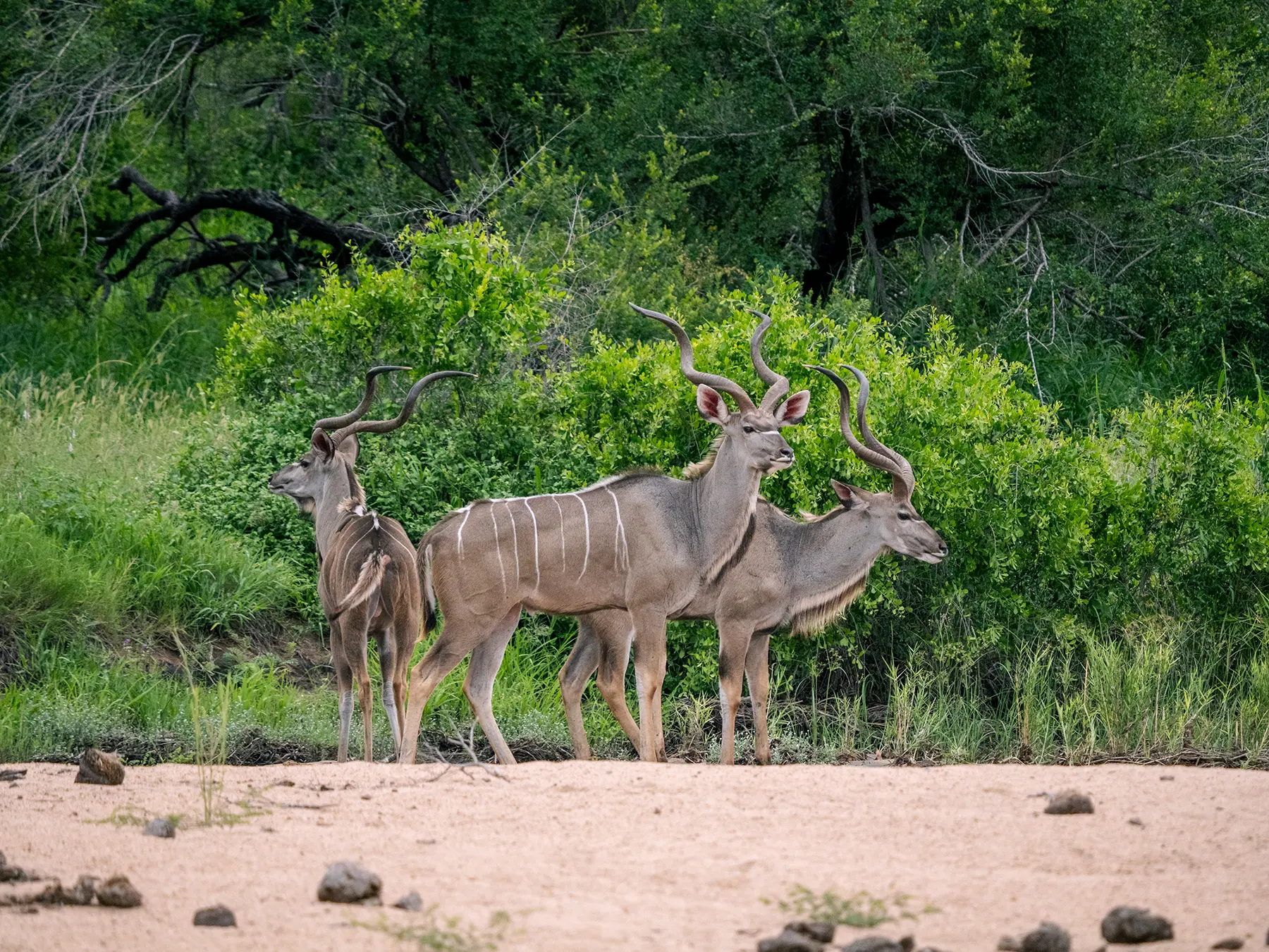
The area comprises the public Kruger National Park in the middle with private (mostly unfenced) conservancies on the edges.
It’s my personal favourite safari location in South Africa, not only due to the large numbers of animals you can see, but because it has a genuinely wild feel due to not having fences between the reserves.
Greater Kruger is right up there with the Serengeti National Park in Tanzania and the Maasai Mara National Reserve in Kenya.
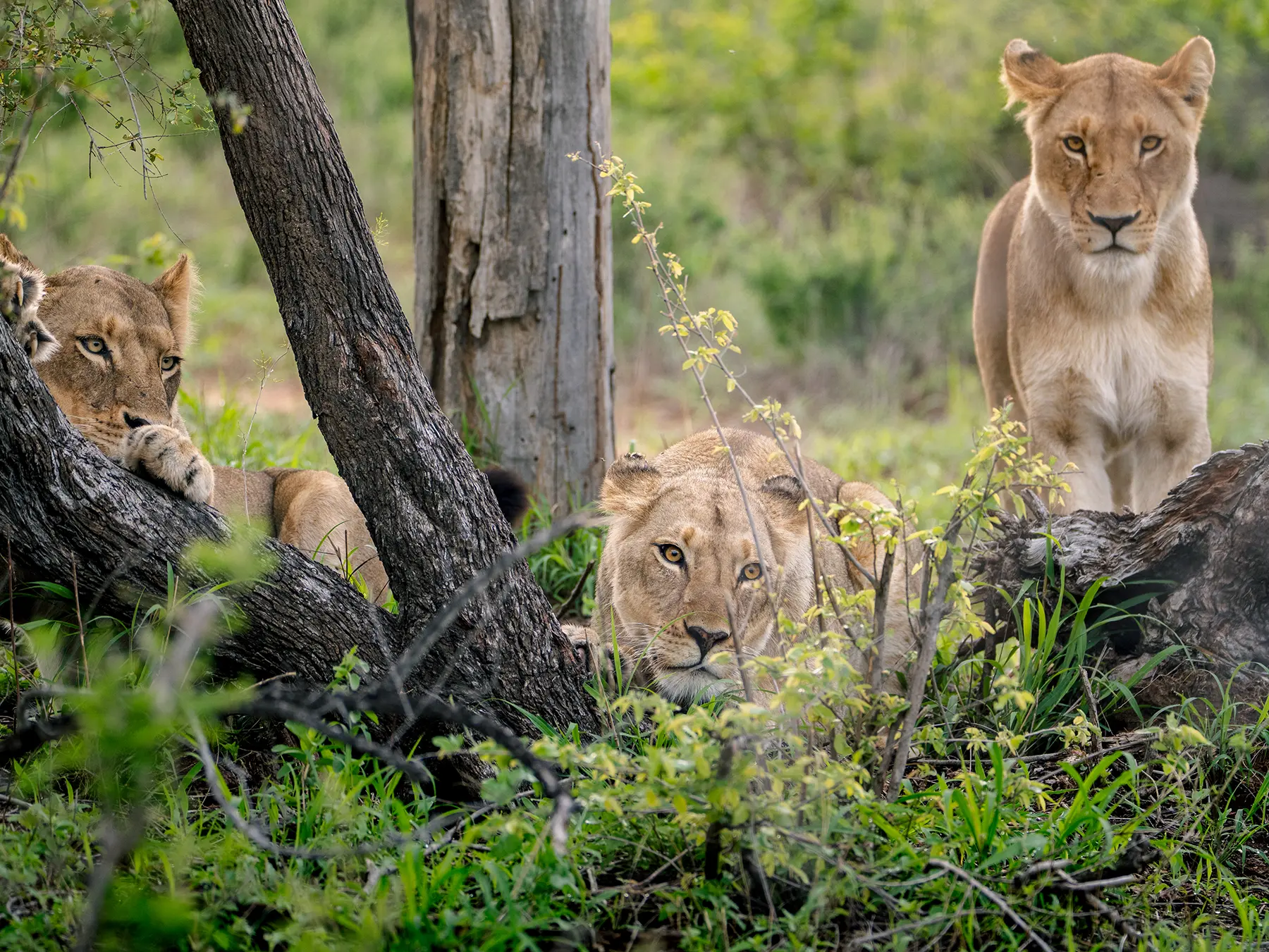
Five days lets you spend two nights in each of two different private Greater Kruger game reserves: Timbavati and Sabi Sand, with enough time to give you a good chance to spot most animals on your wish list.
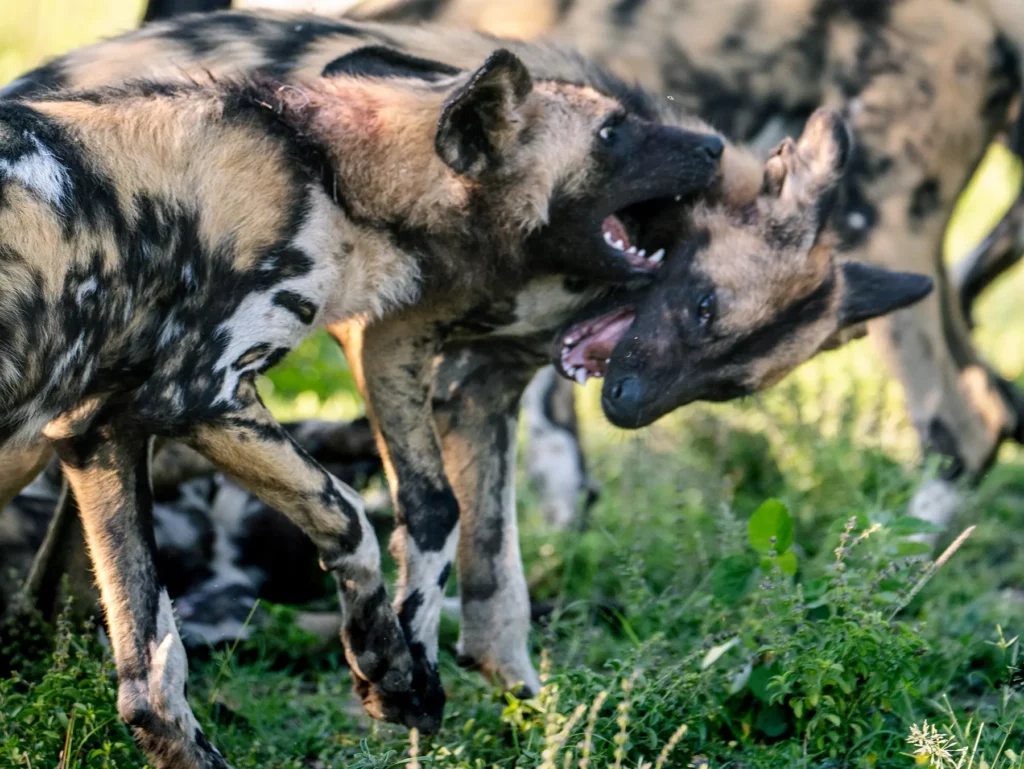
I’ve carefully selected the reserves in this itinerary to make sure you have the best chance of seeing the Big Five as well as other iconic species, such as African wild dogs.
The private conservancies give you more sightings compared to the main park and I’ve chosen two of the best to maximise your sightings in the 5 days and combined them with an internal flight to save time.
To have a more leisurely trip you can extend to my 7-day South Africa Itinerary or if you want to maximise your chances to see cheetahs as well, consider my 10-day South Africa itinerary which adds Manyeleti as well.
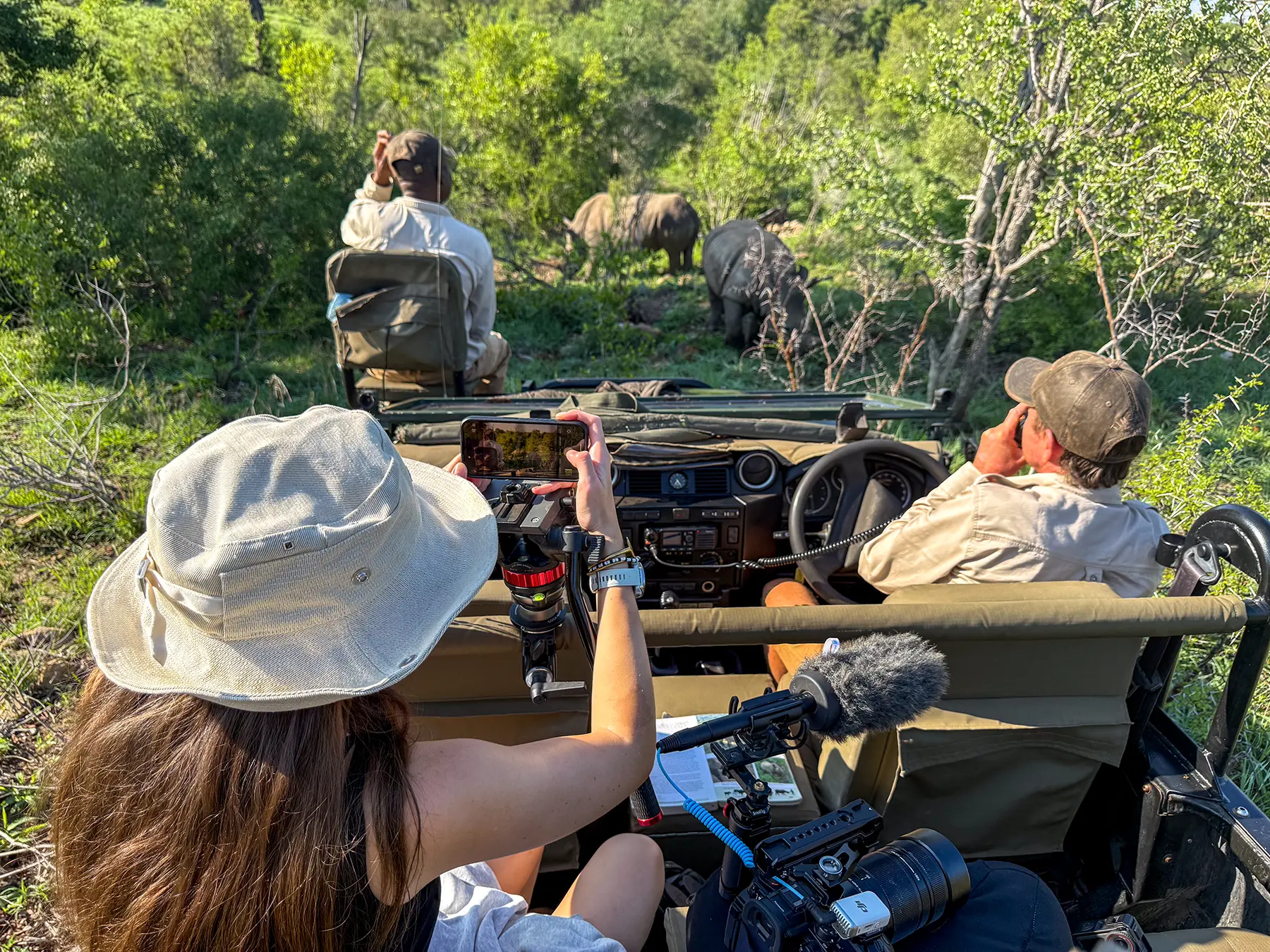
After exploring South Africa’s Greater Kruger reserves in person, I’ve put together this 5-day South Africa itinerary to show you everything the Greater Kruger has to offer as well as giving you the most ‘bang for your buck’.
I’m going to give you an idea of how much it will cost, the best time to visit and how to find the best safari tour company.
As I walk you through the itinerary, I’ll share tips, tricks and how to avoid some of the mistakes I’ve made.
I’ve also spoken at length with my favourite South Africa guides as well as conducting copious amounts of additional research to ensure you receive everything you need to know to have the ultimate 5-day South Africa safari.
It’s easy to focus only on the fun stuff when planning the trip of a lifetime, but I’ll make sure your itinerary includes the practicalities too, like choosing between a road or air transfer between reserves, or building in moments to relax. These details often make all the difference.
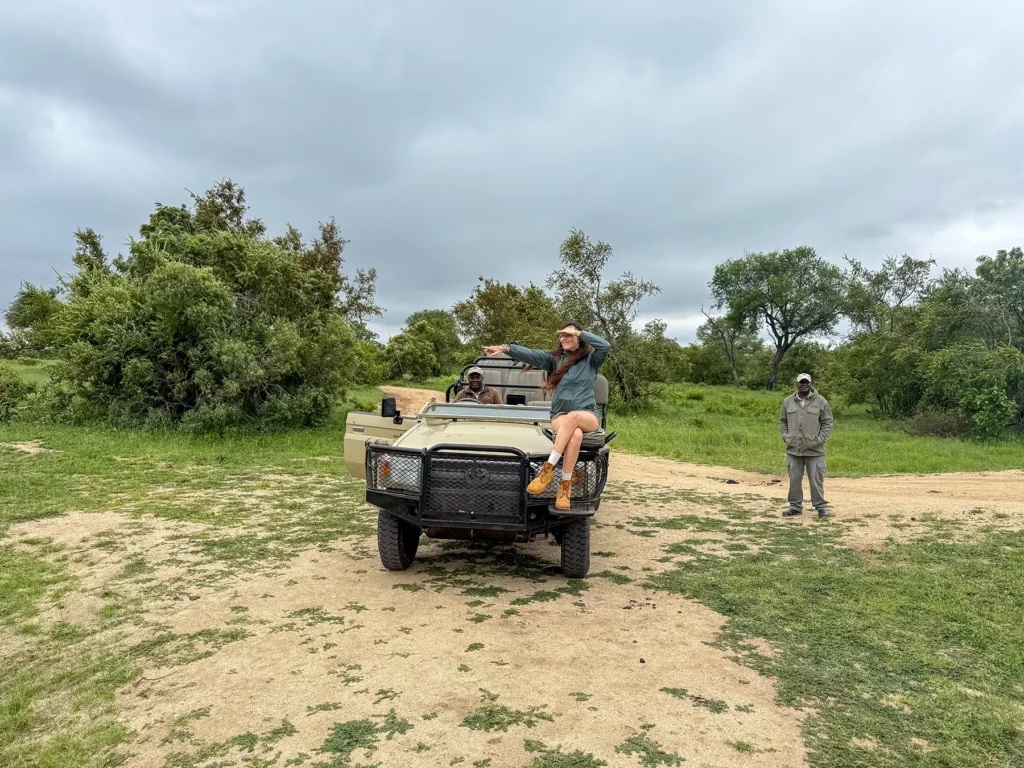
Key Takeaways
- Trip Duration: 5 days
- Budget Range: $2,500-$4,800 per person
- Best Time to Visit: On paper May-October (dry season) but in reality any time other than January and February. April and May or September to December are my favourite months to visit. These shoulder months offer excellent game viewing at slightly lower rates than the July – August peak. Whilst wildlife was slightly harder to spot (still not exactly hard) due to the green vegetation, it made for spectacular photos and, as you can see from my photos in this guide and YouTube videos from the trip, I still saw a lot of wildlife.
- Key Destinations: Timbavati (2 nights), Sabi Sand (2 nights), Hoedspruit, Skukuza
- Wildlife Highlights: Big Five, leopards, white lions, wild dogs
- Average Drive Time: 1-hour flight between reserves
- Difficulty Level: Easy (suitable for all fitness levels)
South Africa 5-Day Safari Itinerary Map
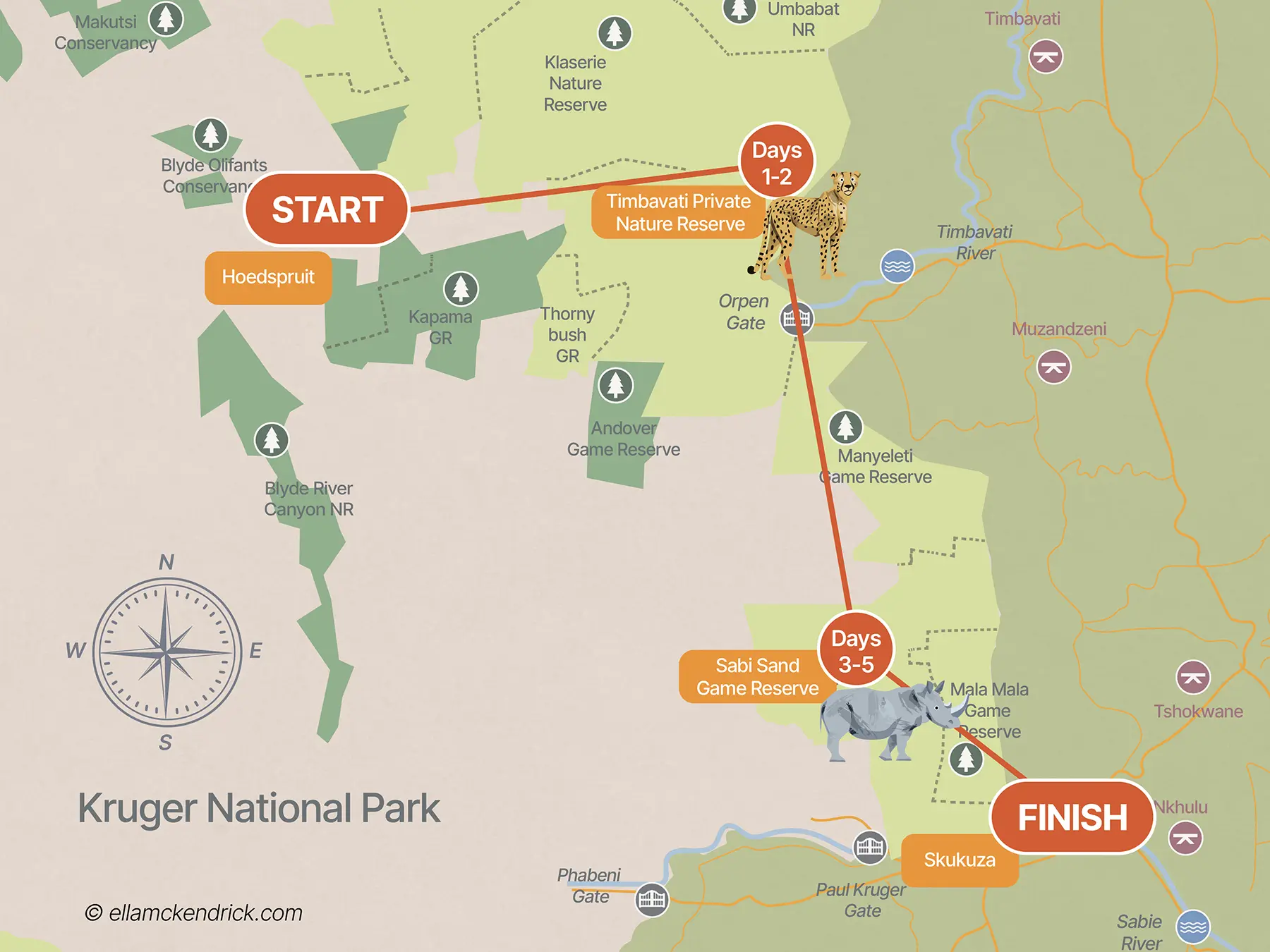
Below is the route map for my recommended 5-day South Africa itinerary. We’ll cover this itinerary in detail in this guide.
Embark on the Safari of Your Dreams
Save time and ensure an incredible safari experience by getting quotes from my recommended local safari companies
I’m here to make booking your perfect safari quick, easy and risk-free.
Join the rapidly growing tribe of over 1,000 travellers who’ve booked their dream safari using my insider tips and recommendations.
It takes under 60 seconds to fill out the form and in under 48 hours you will receive multiple, no-obligation proposals from my favourite local tour operators with glowing online reviews.
Get your free no-obligation safari quotes and my top safari tips and recommendations
In This Guide
- Why Go on Safari in South Africa?
- How Do You Book a 5-Day South Africa Safari?
- Which Is Best: A Private or Group South Africa Safari?
- How Much Does a 5-Day South Africa Safari Cost?
- When Is the Best Time to Visit South Africa?
- How Long Should You Spend on a South Africa Safari?
- What Does This 5-Day South Africa Safari Itinerary Look Like?
- South Africa Safari FAQs
- Final Thoughts – Is a South Africa Safari Worth It?
Why Go on Safari in South Africa?
South Africa deserves its place among Africa’s premier safari destinations. Big Five viewing here rivals the continent’s best, and the private reserves of Greater Kruger offer experiences you simply won’t find in public parks, such as off-road game drives, night drives and walking safaris.
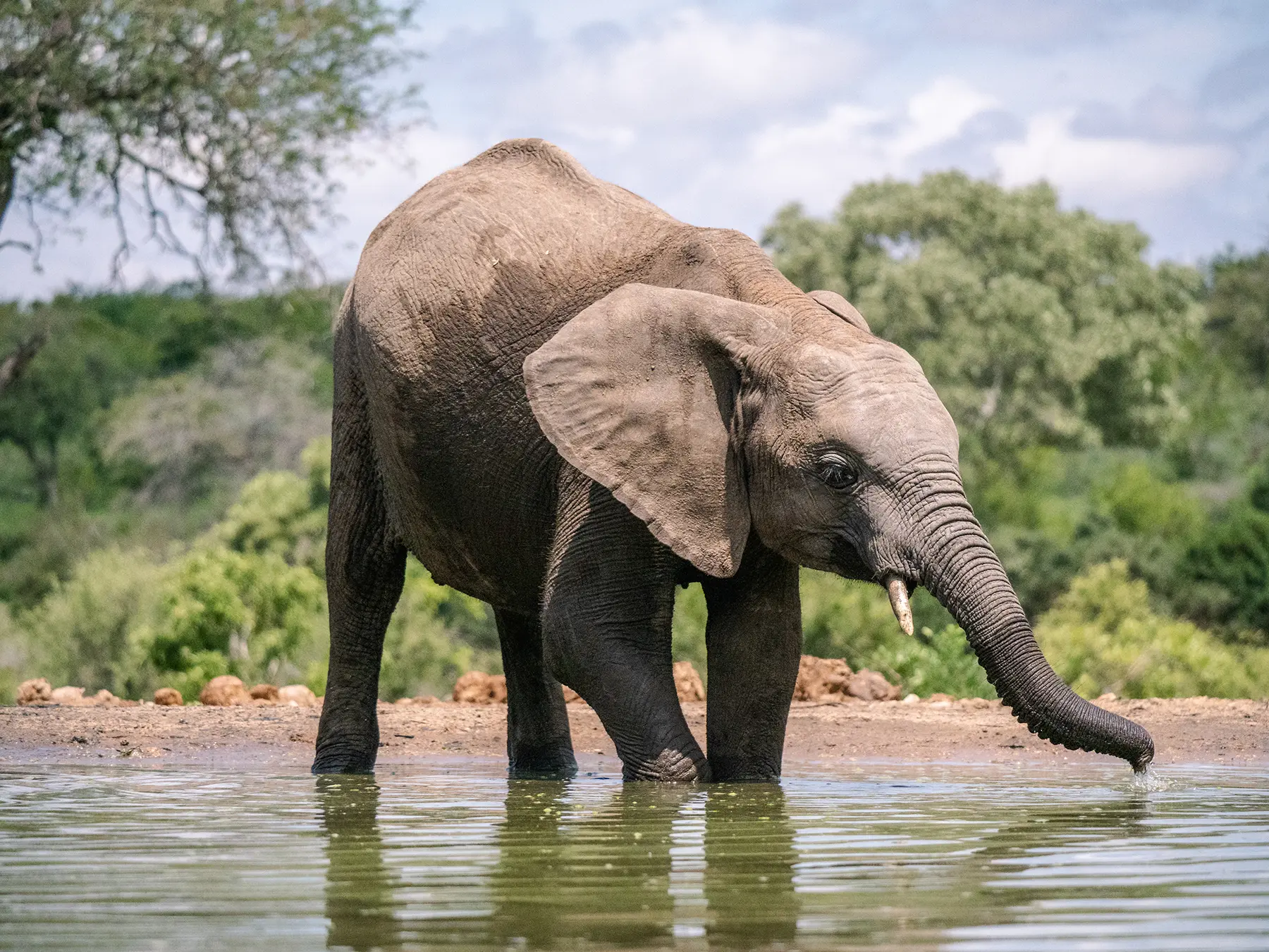
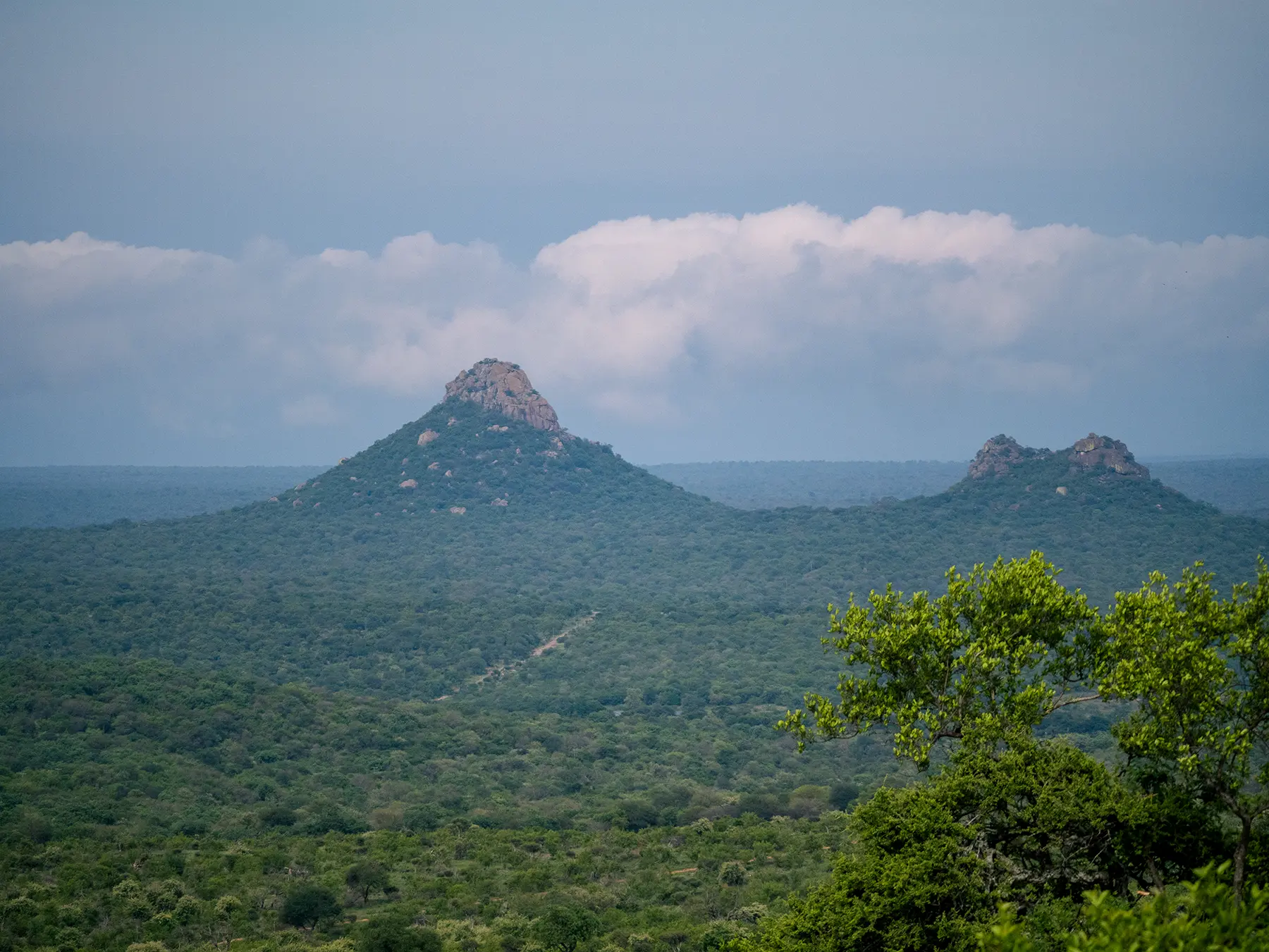
In fact, even a short five-day safari taking in Timbavati and Sabi Sand will enable you to enjoy two entirely distinct wilderness experiences and encounter the country’s most iconic species up close in one of the continent’s largest conservation areas.
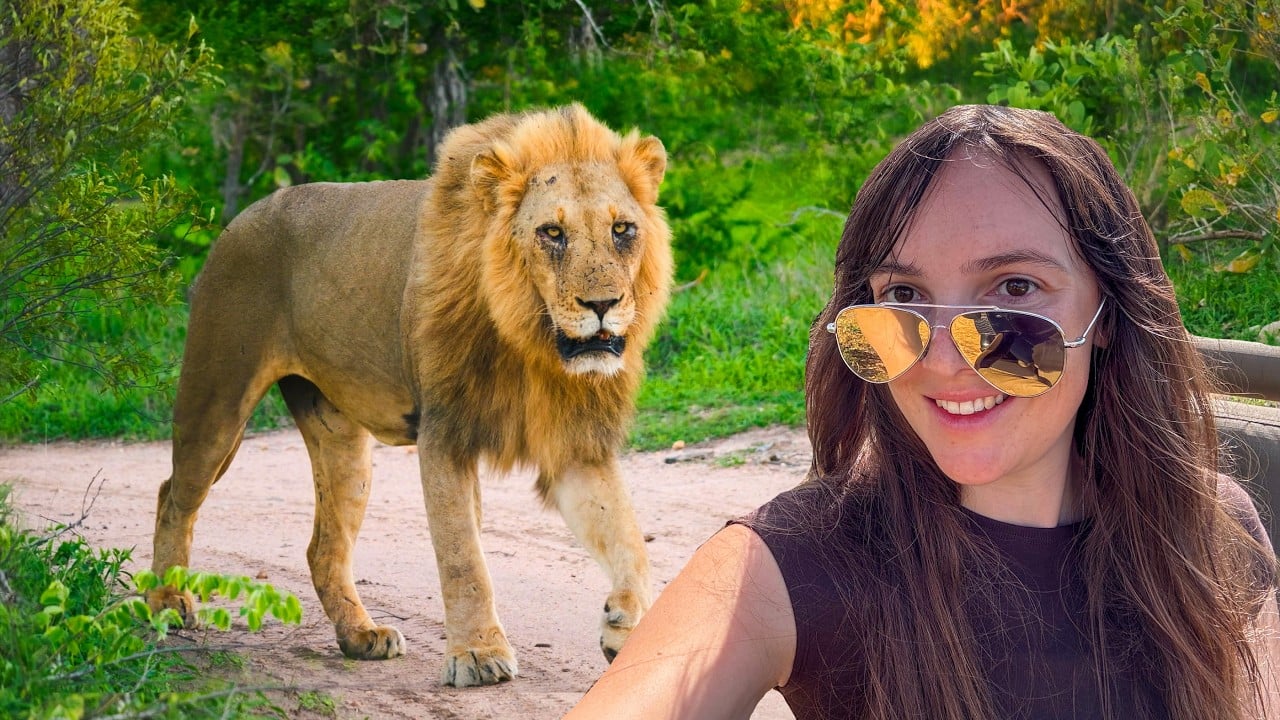
I’ve included a video of my South Africa safari below for you to watch or, if you’re short on time, you can skip ahead to my 5-day South Africa itinerary. Alternatively, read on to find out more about the benefits a South African safari has to offer!
Jump straight to any of the features below.
Easy Access to Greater Kruger From the Main International Airports
With direct flights to Johannesburg and Cape Town from multiple major hubs such as London, Amsterdam, Atlanta and New York, South Africa is among Africa’s most accessible safari destinations.
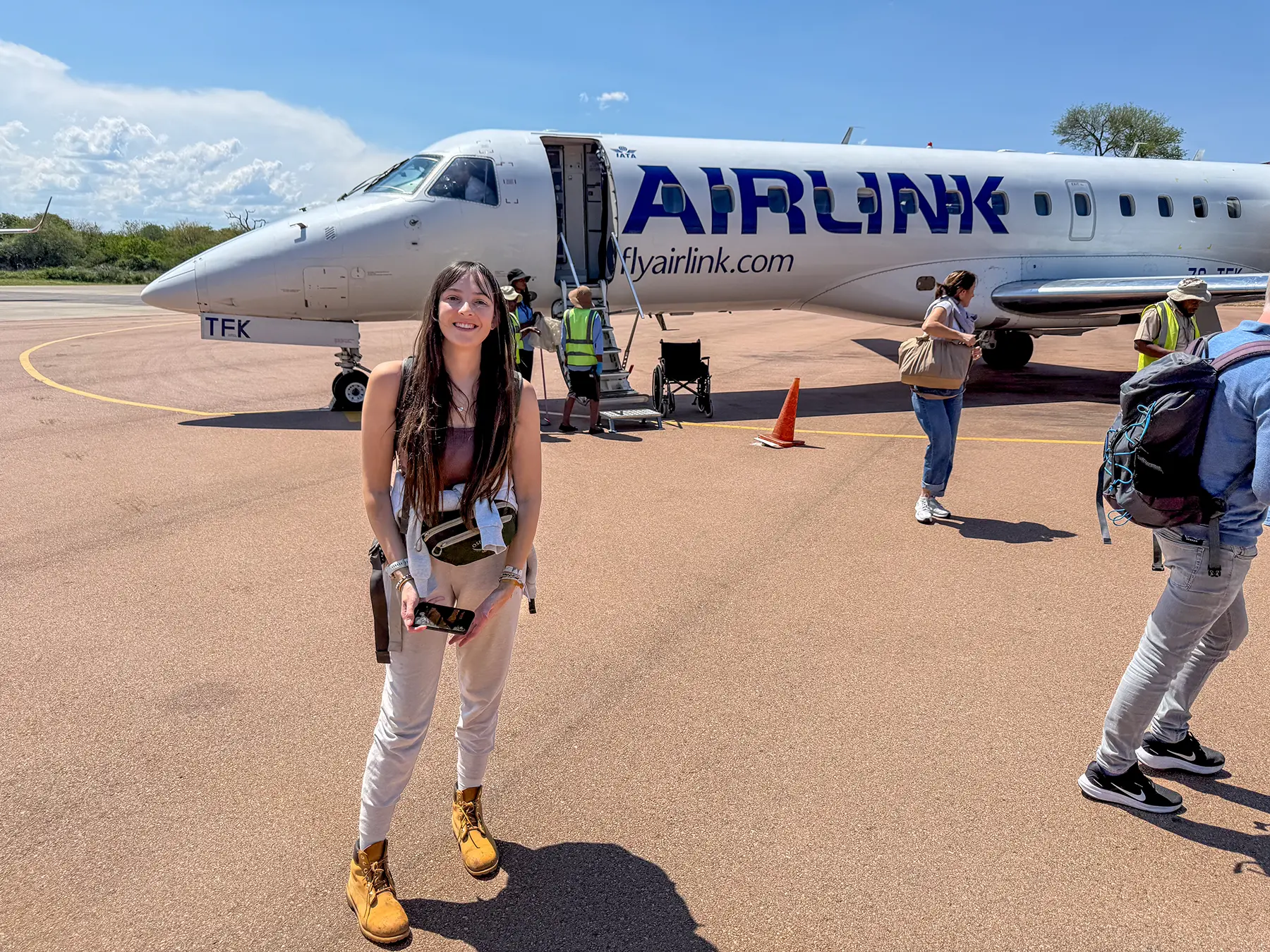
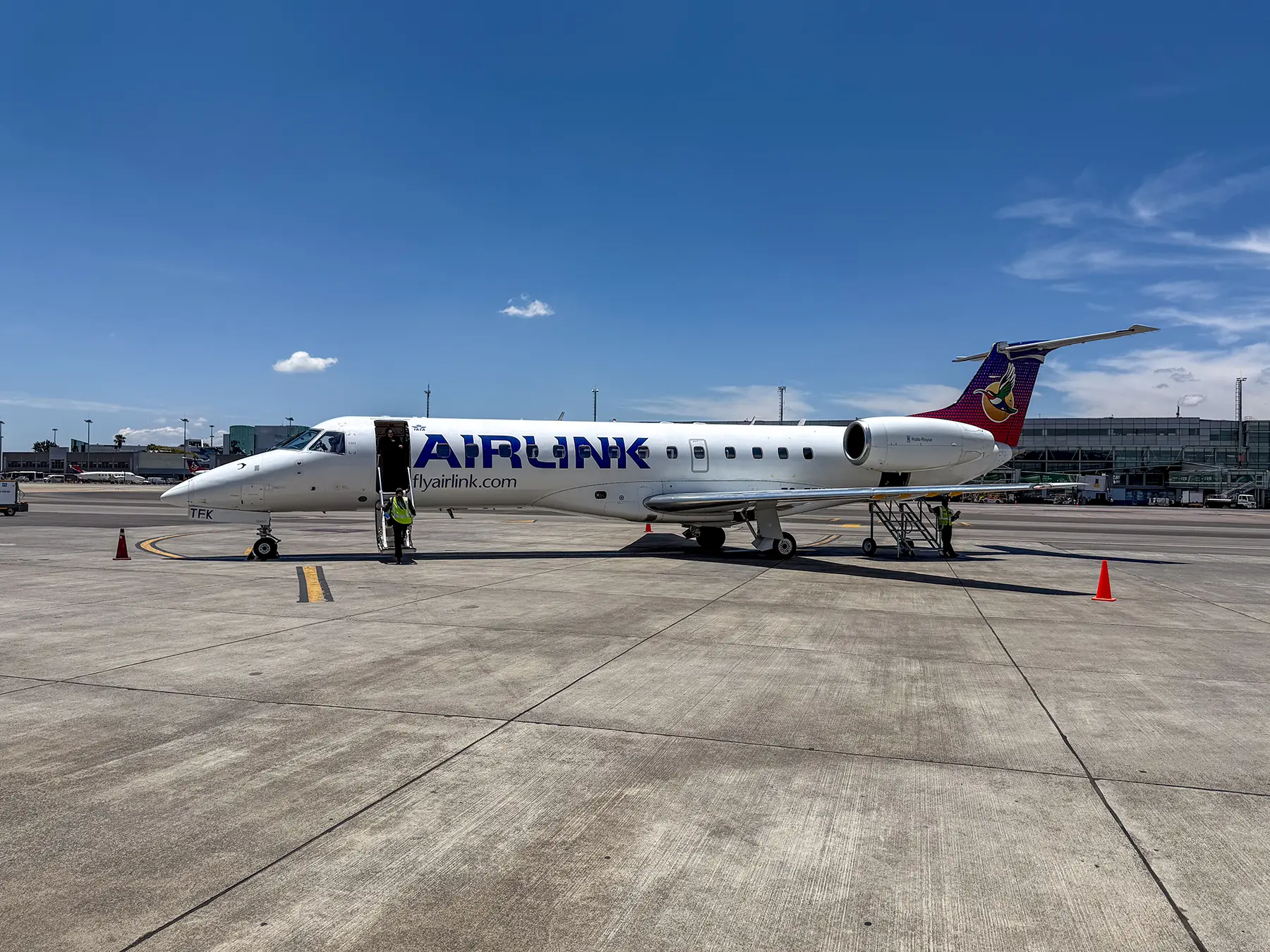
What’s more, Greater Kruger is especially easy to reach thanks to daily Airlink flights from Johannesburg and Cape Town to Hoedspruit Eastgate Airport, Nelspruit Airport and Skukuza Airport (all located near different Kruger reserves).
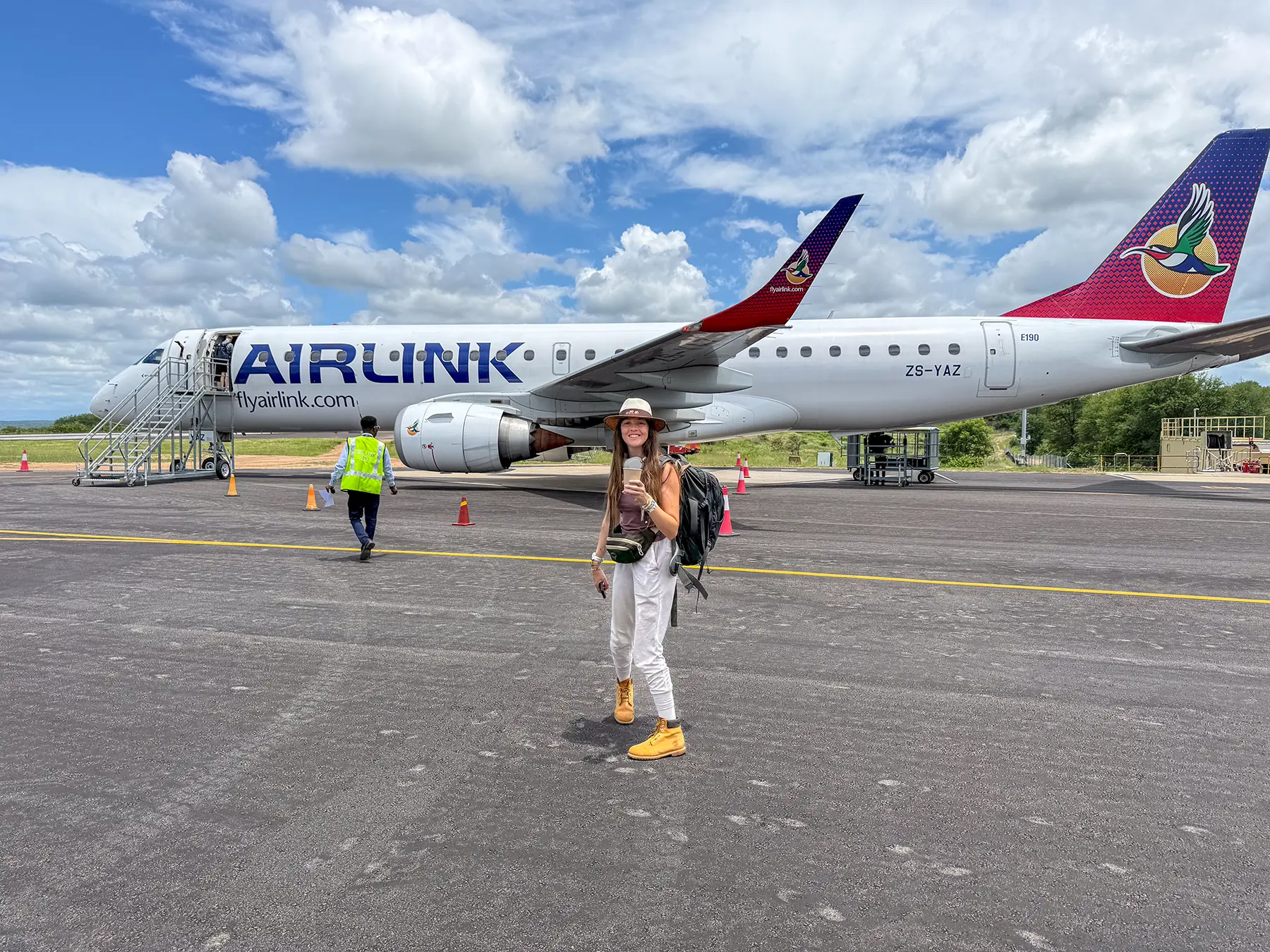
Of all the airlines I’ve flown with in Africa, Airlink is one of my favourites. They offer a reliable service with comfortable planes and even a complimentary meal on every flight (including the short 1-hour hop from Johannesburg to Hoedspruit!). And the dramatic views over the Drakensberg Mountains are an added bonus!
World-Class Private Reserves
I don’t know about you, but for me, the term ‘private reserve’ has always conjured up images of a fenced-in, artificial zoo-type establishment where the resident animals aren’t truly wild. As a result, I’ve always been rather dubious about them and the degree of freedom the wildlife enjoy.
But the private reserves in Greater Kruger are not like that at all – in fact, they’re actually a model for what a private reserve should be! With no fences separating them from Kruger National Park, animals can roam unrestricted between them, ensuring a natural feel and allowing animals to travel as far as they wish.
Private reserves differ from public parks in two main respects. Firstly, they offer special experiences that aren’t available in public parks, e.g. off-road drives that get you closer to wildlife, night-time safaris that take in rarely seen nocturnal species and other activities such as walking safaris or safaris on horseback.
The second difference (and the most important one in my opinion) is that private reserves strictly limit vehicle traffic, only permitting lodge guests to safari within the reserve and prohibiting self-driving altogether. This makes for peaceful, uncrowded sightings that do not stress wildlife, ensuring you can enjoy an intimate experience and get better photos, too.
Aside from these distinctions, each of the private reserves on this itinerary also has its own special character and features.
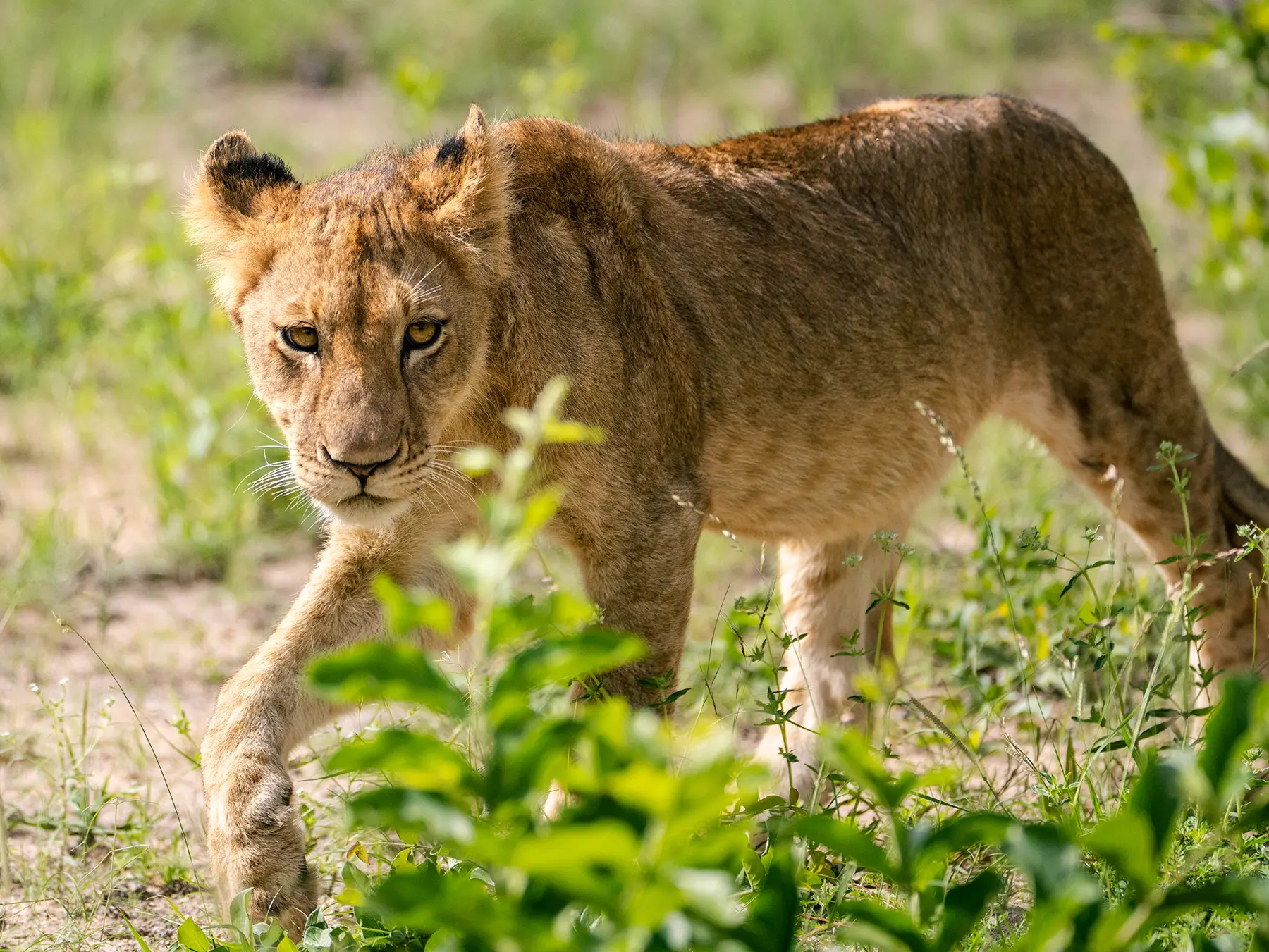
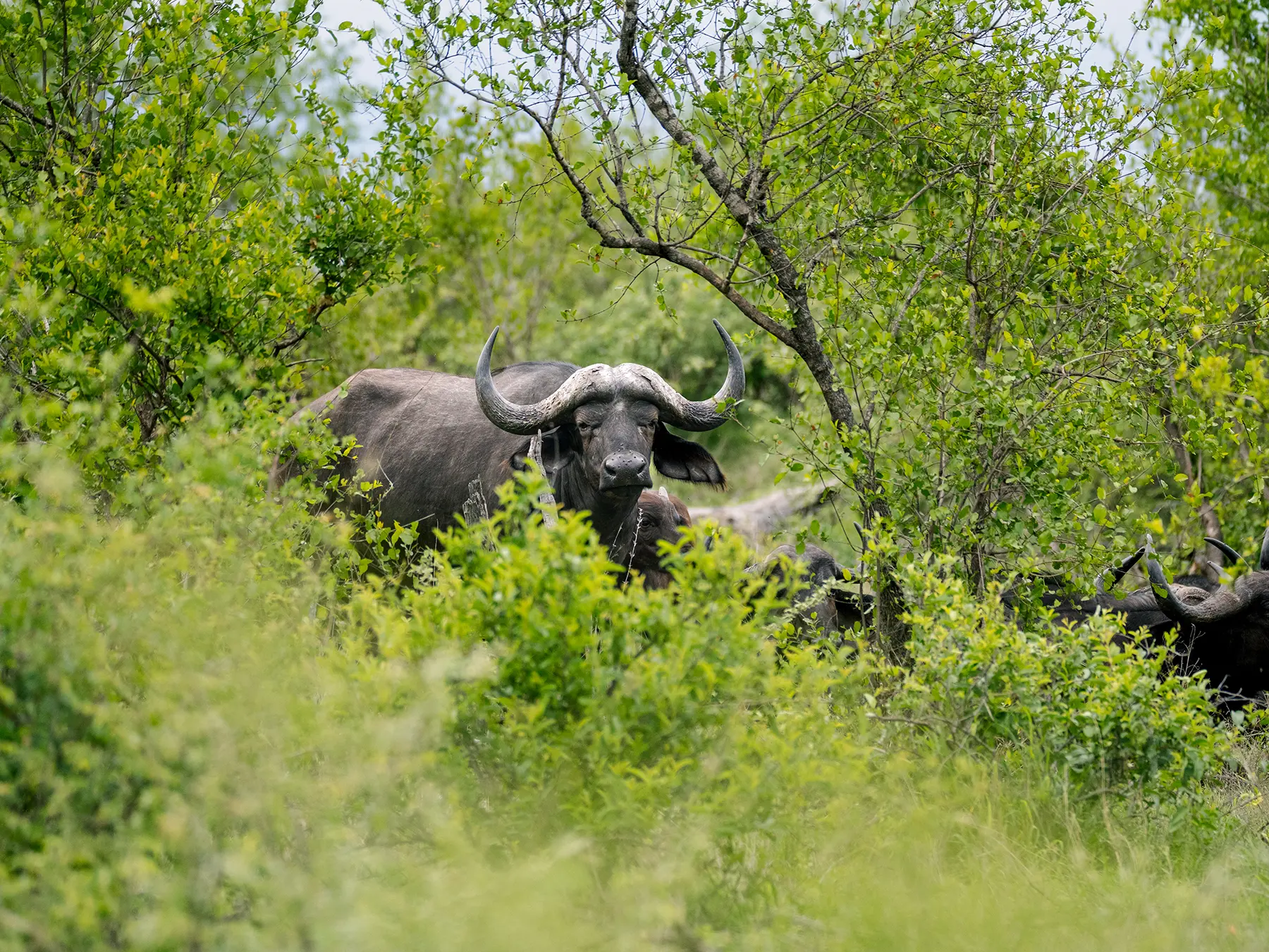
Timbavati is best known as the birthplace of the white lion and offers some of the most reliable Big Five viewing in South Africa. During my visit, I spotted all of the Big Five within three days, with multiple sightings of some species, and even had the good fortune to see some African wild dogs hunting.
Located south of Timbavati, Sabi Sand has one of Africa’s densest leopard concentrations. It is probably the best known private reserve in Greater Kruger, and is especially famed for its luxurious lodges such as MalaMala, Londolozi and Singita, although it does have a few more budget-friendly options like Inyati.
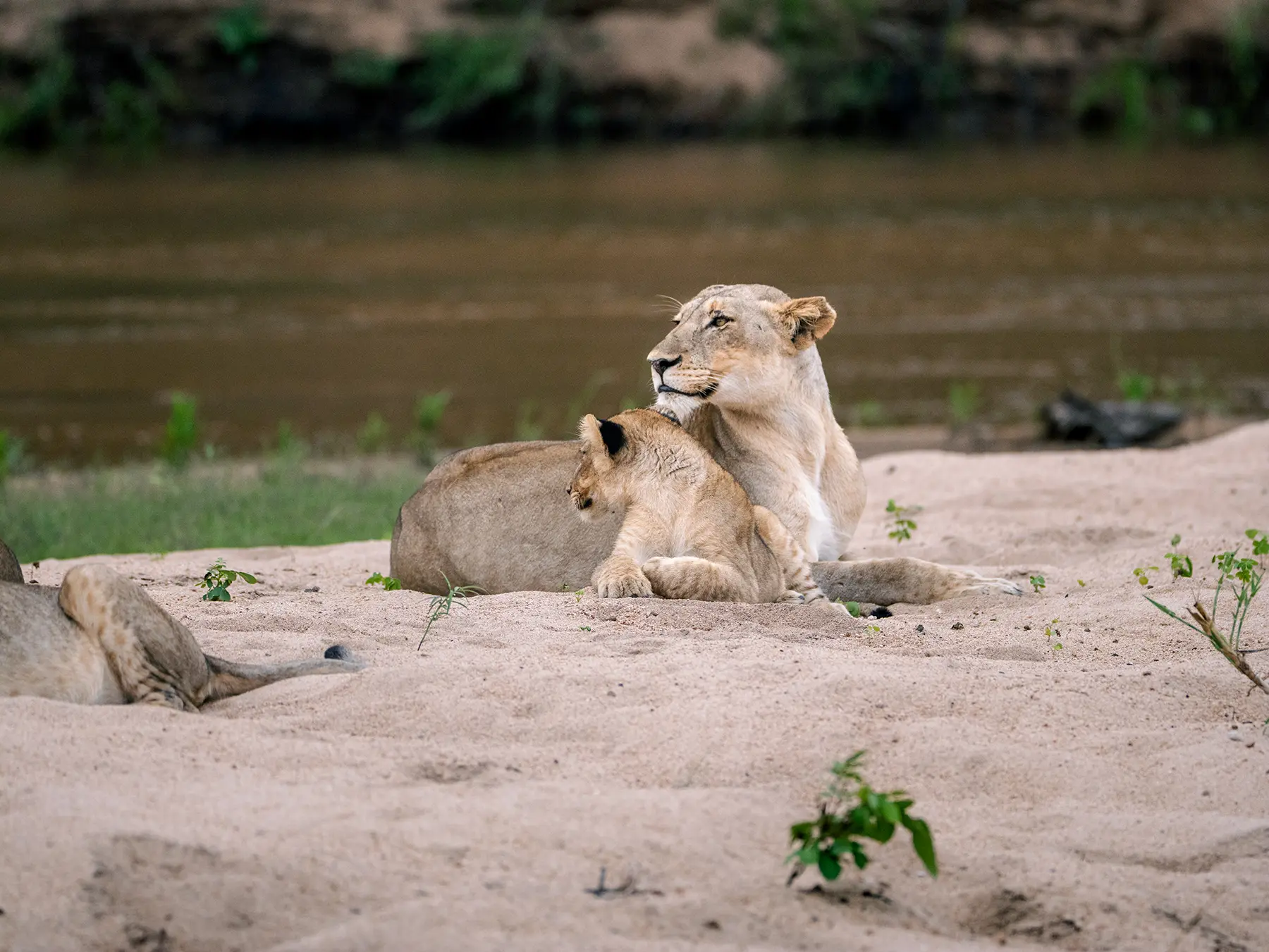
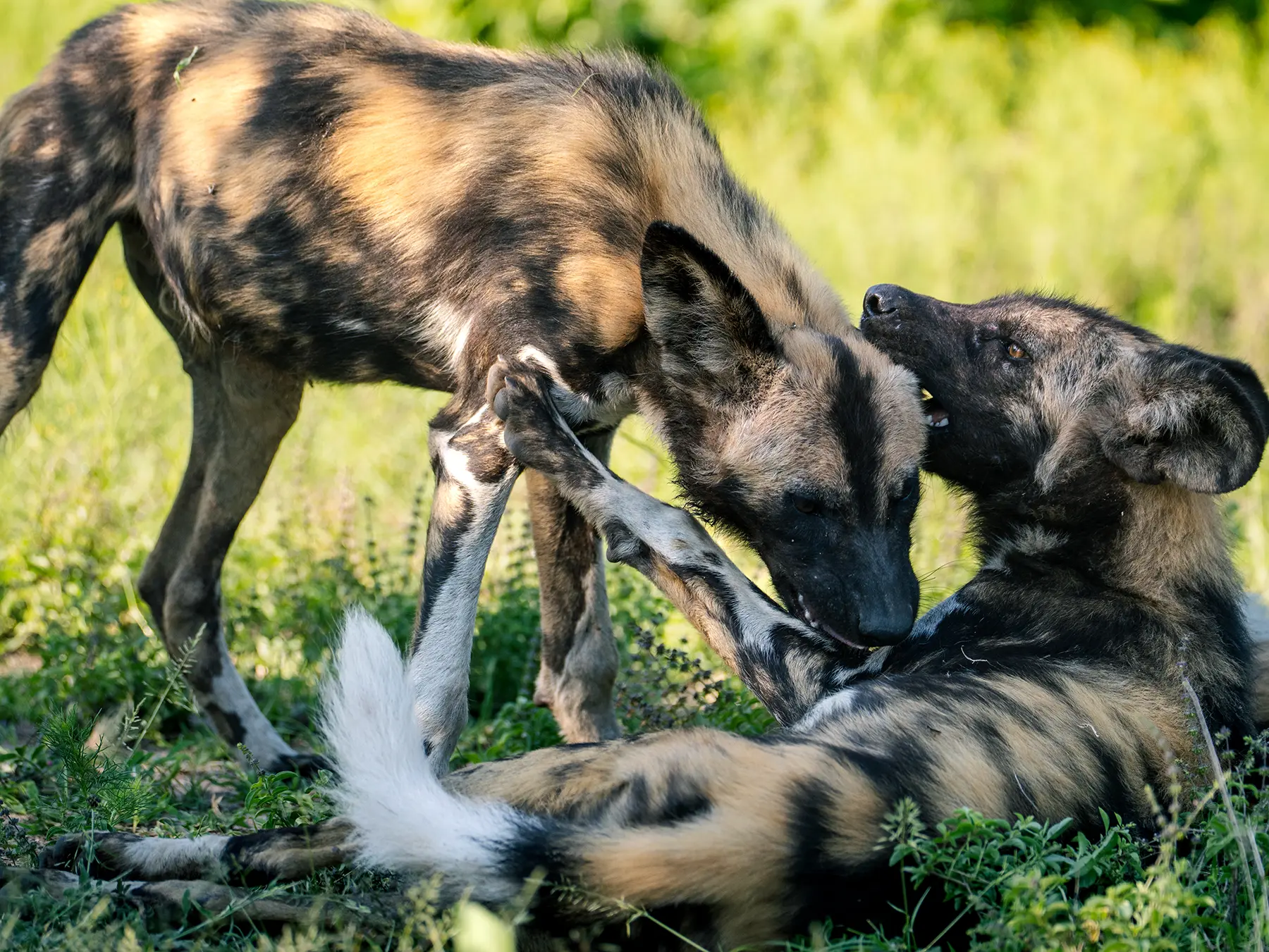
I generally find that really famous destinations rarely live up to the hype, but Sabi Sand exceeded all expectations for me. My visit was packed with incredible sightings, from adorable lion cubs frolicking together to a leopard family snoozing in the shade, to a pack of wild dogs chasing down an impala and so many more!
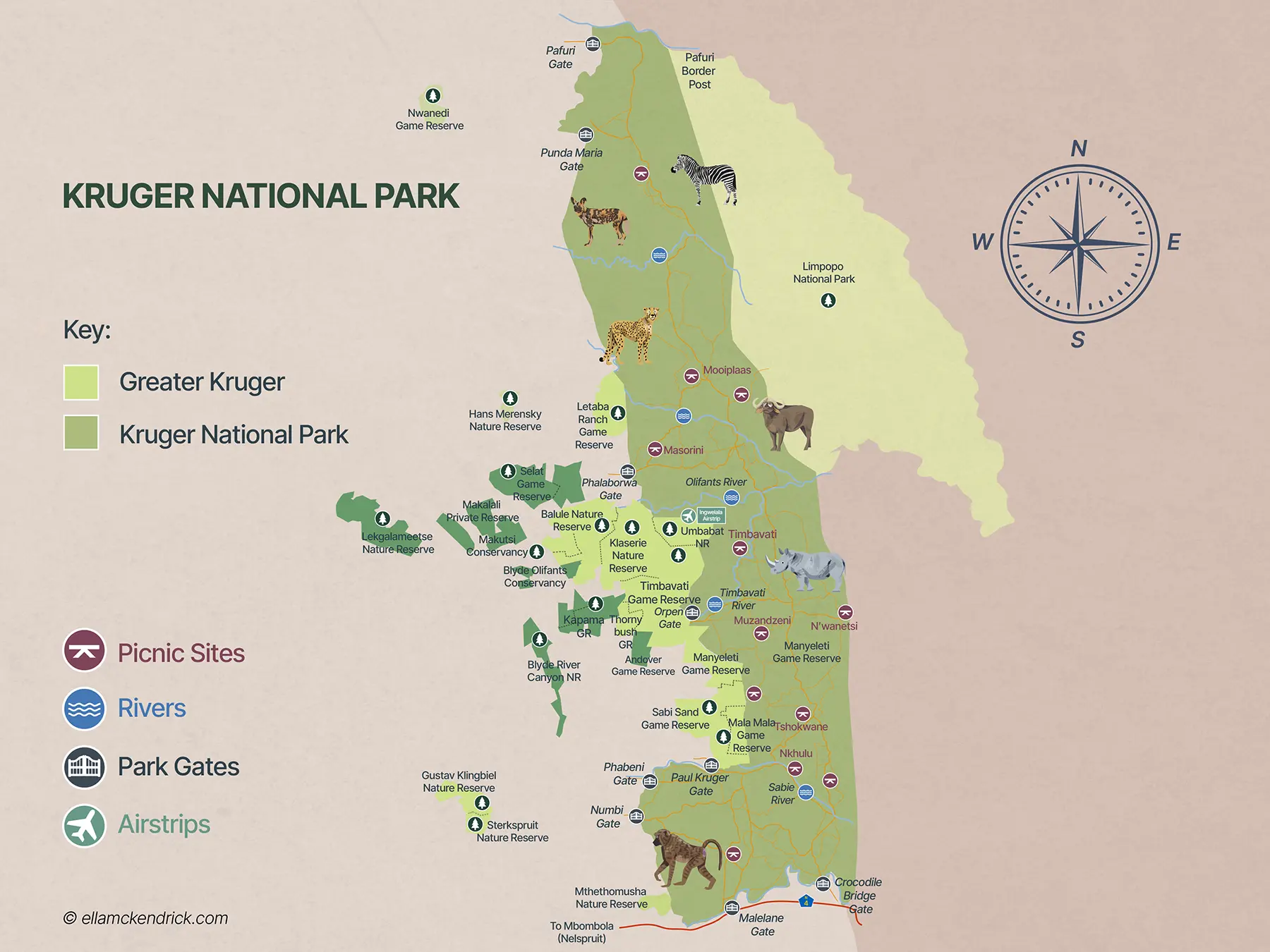
Below is a map I made of the Greater Kruger area.
Quick, Easy Transfers Between Reserves
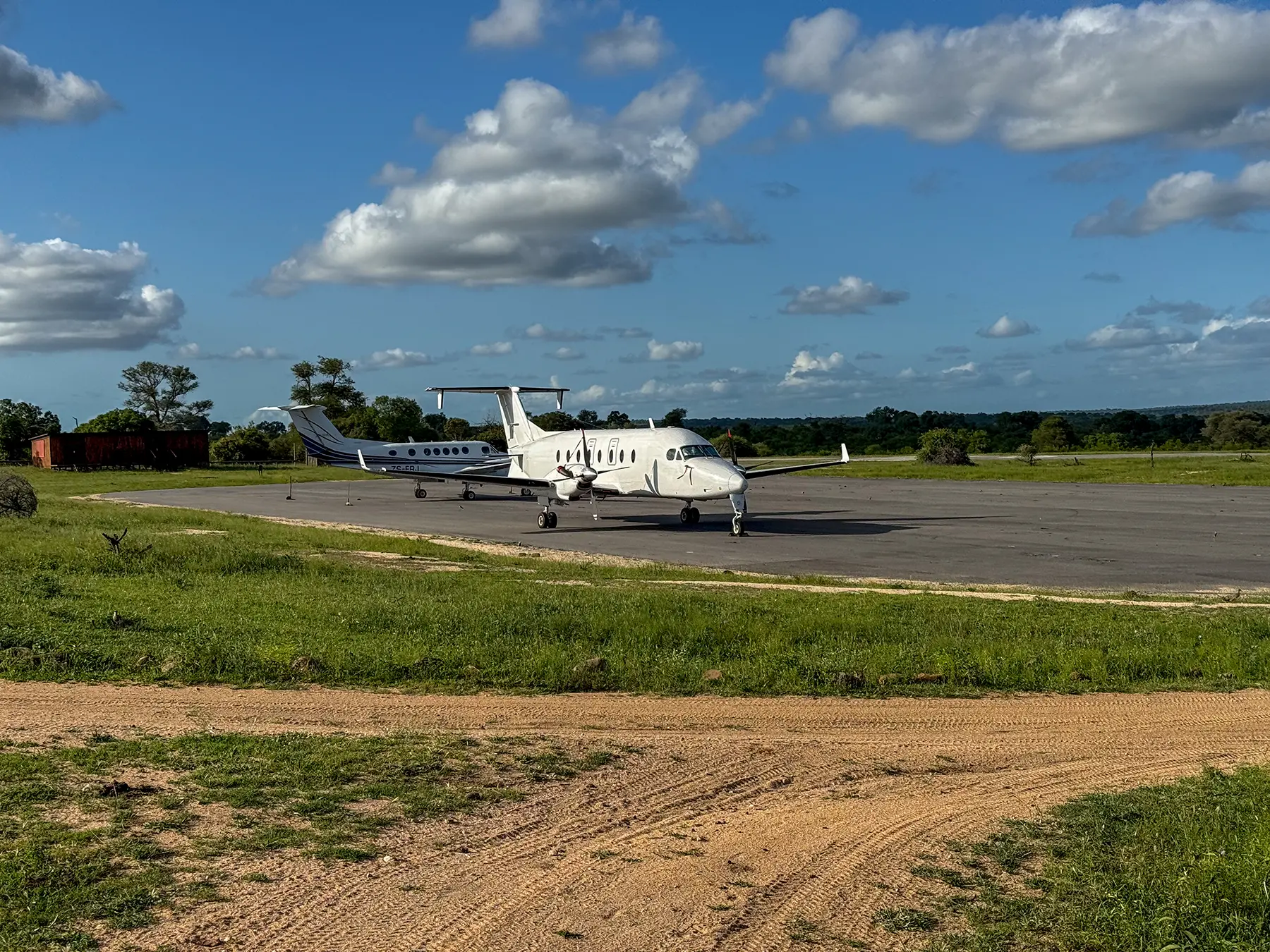
As the reserves are situated right next to each other, moving from one to another is pretty easy. You can either drive (usually two to four hours per transfer) or fly via light aircraft, which is very convenient as each reserve has its own airstrip.
Since the roads are not always very well maintained and the complicated traversing rights system can add to drive times, I would say flying is the easiest way to travel, especially on shorter itineraries such as this five-day trip, and where you have the extra budget for it.
Wildlife Diversity and All of the Big Five
Greater Kruger is one of the most reliable places in Africa to see all of the Big Five (lions, elephants, rhinos, leopards and buffalos), thanks in particular to the resounding success of its rhino conservation efforts.
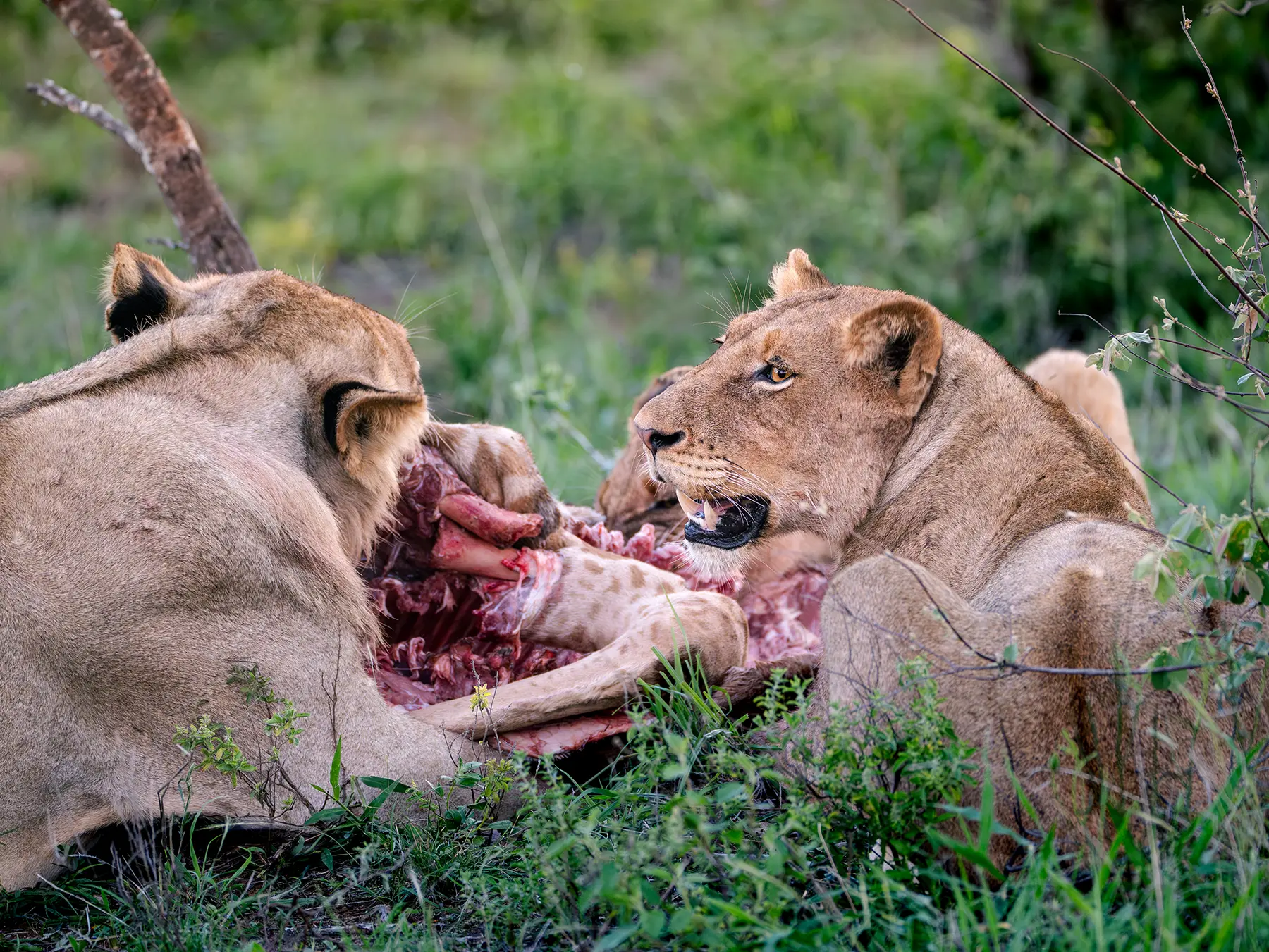
What I would say to you, though, is that the Big Five are still just a handful of the many, many species South Africa has to offer. There are more than 500 bird species and 147 large mammals in Kruger alone, including one of the largest wild dog populations in Africa.
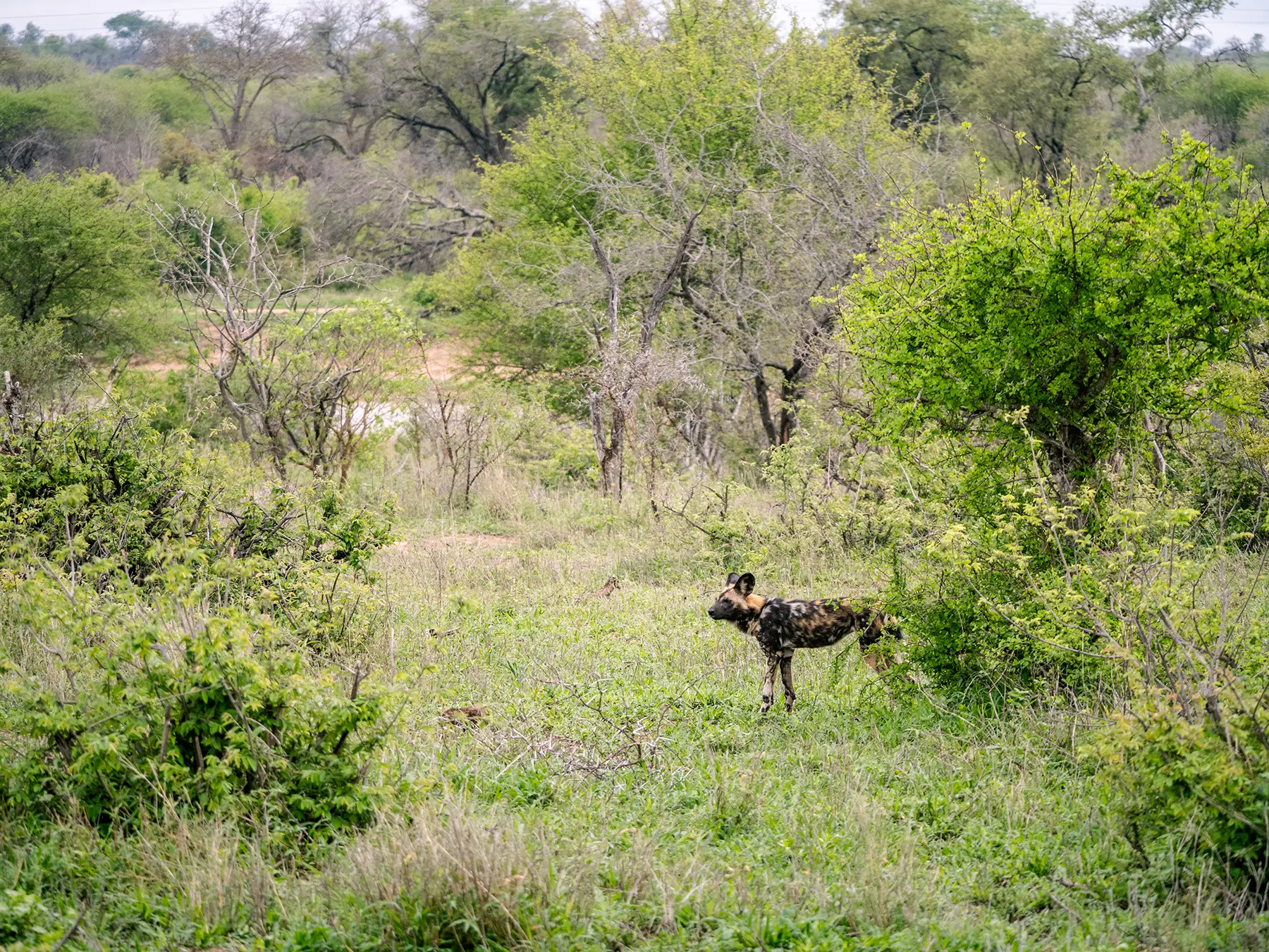
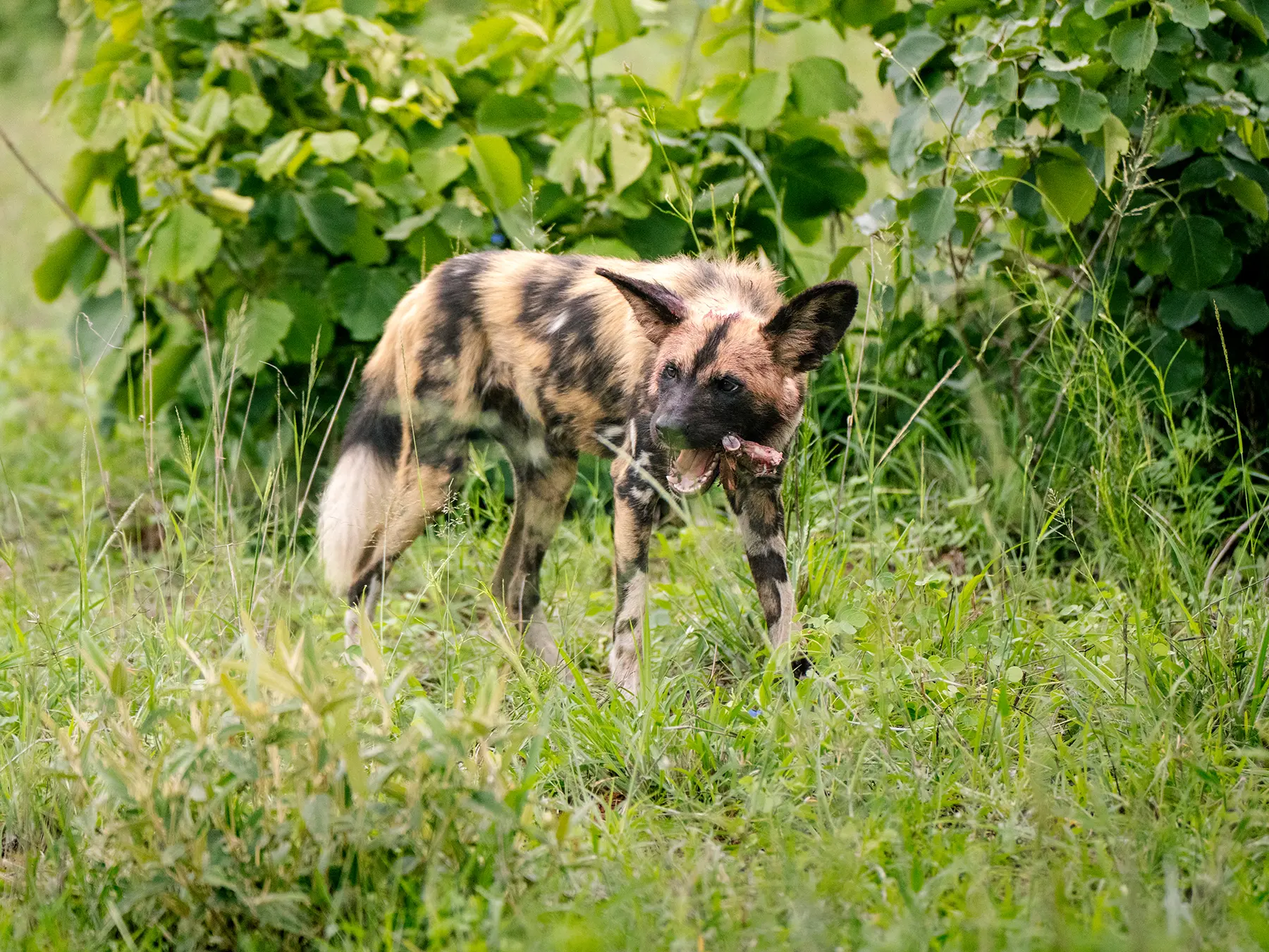
In fact, it is one of the best locations for sightings of this endangered animal. During my one-month safari, I was lucky enough to enjoy six individual wild dog sightings!
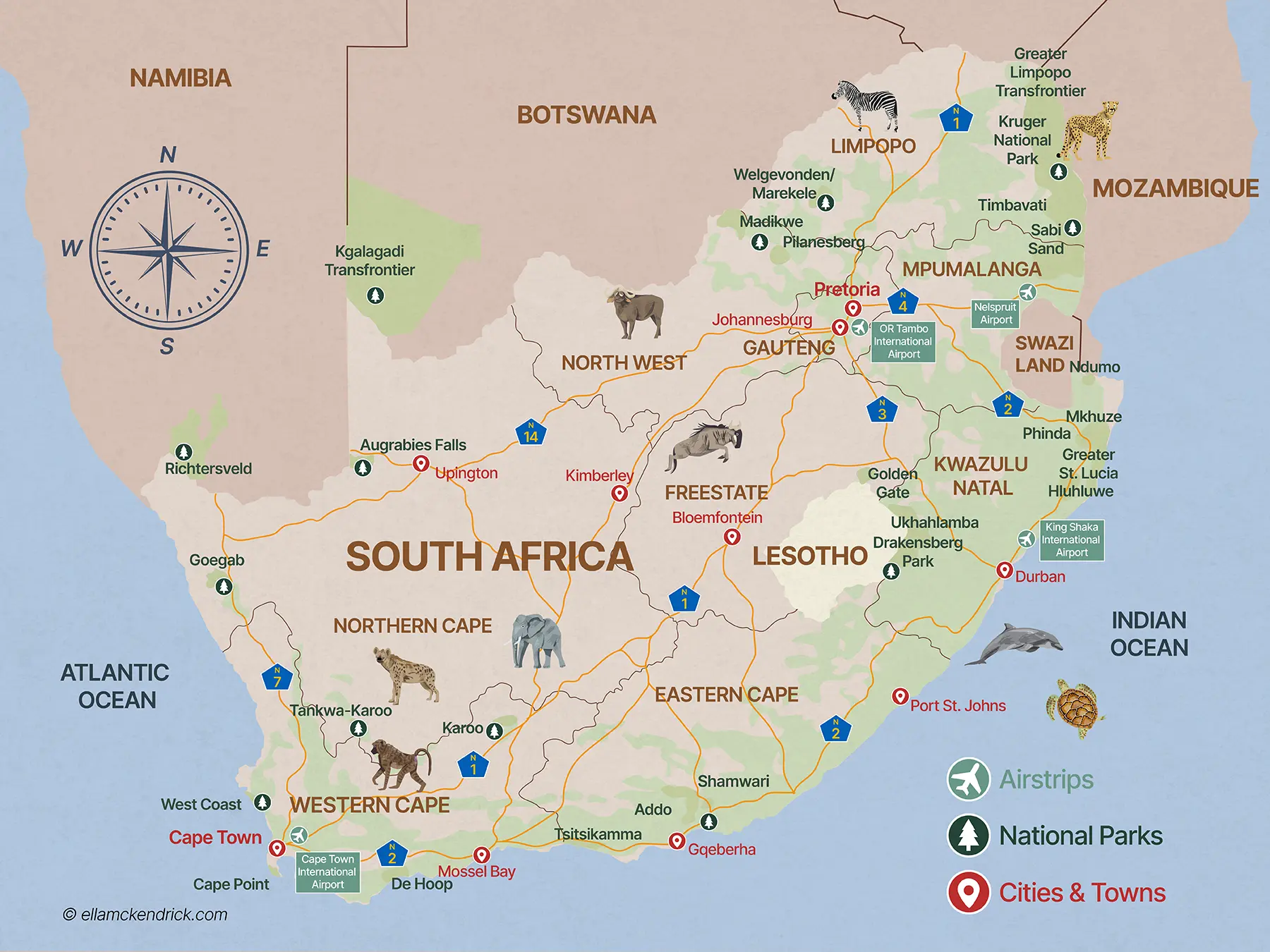
Here is a map I’ve made showing South Africa’s safari highlights.
Enhanced Wildlife Tracking With a Dedicated Driver and Tracker (Unique to South Africa)
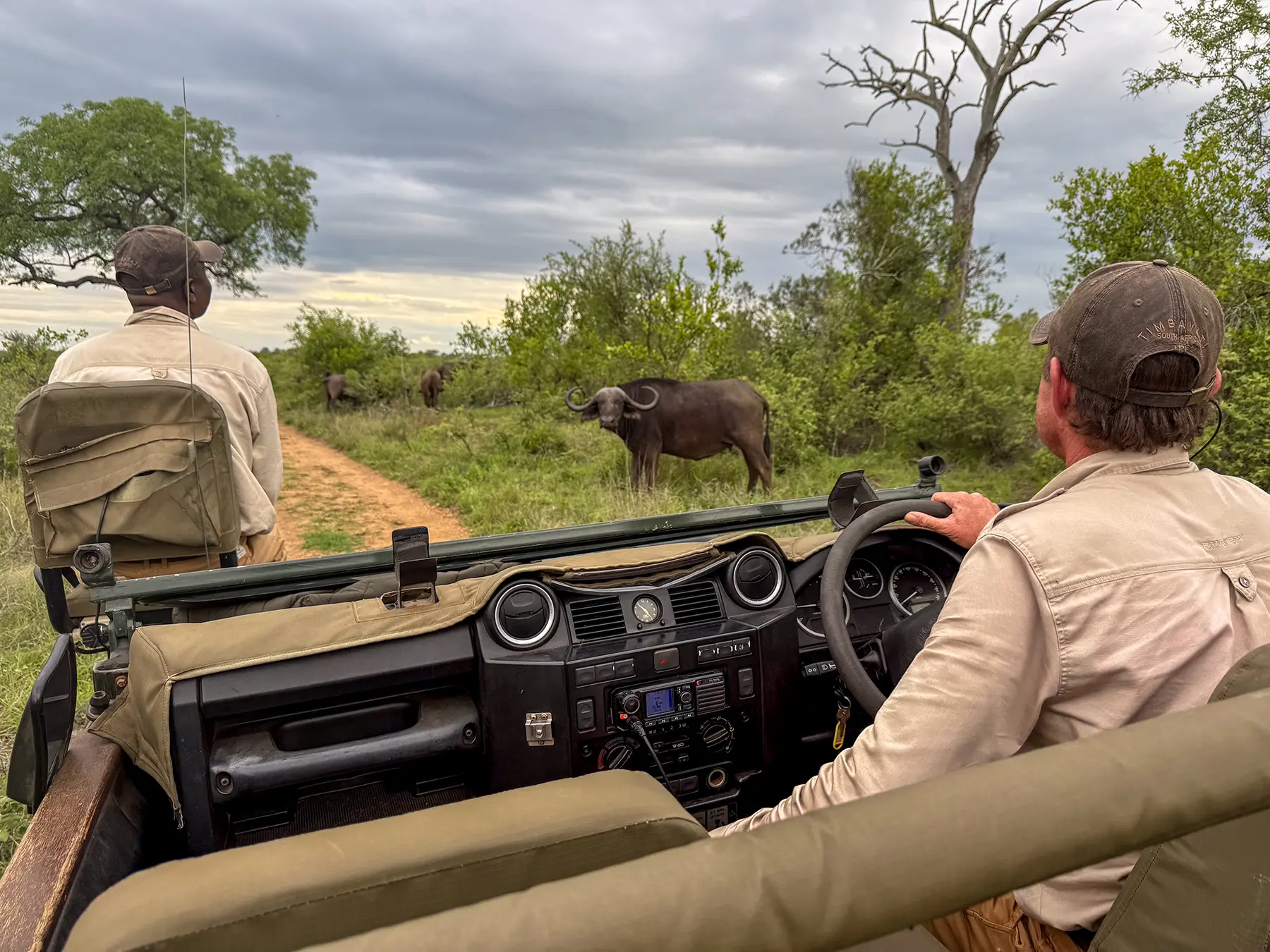
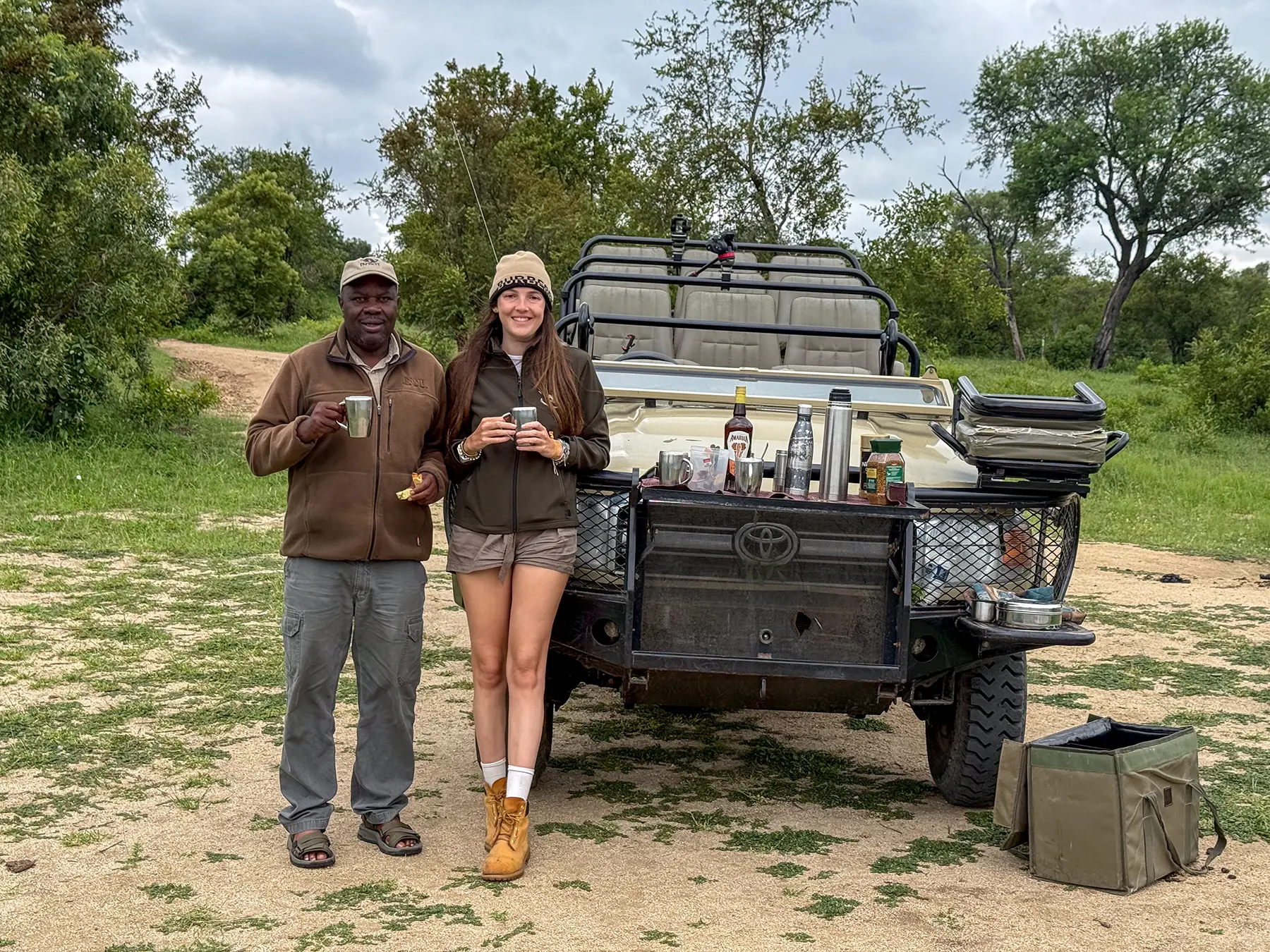
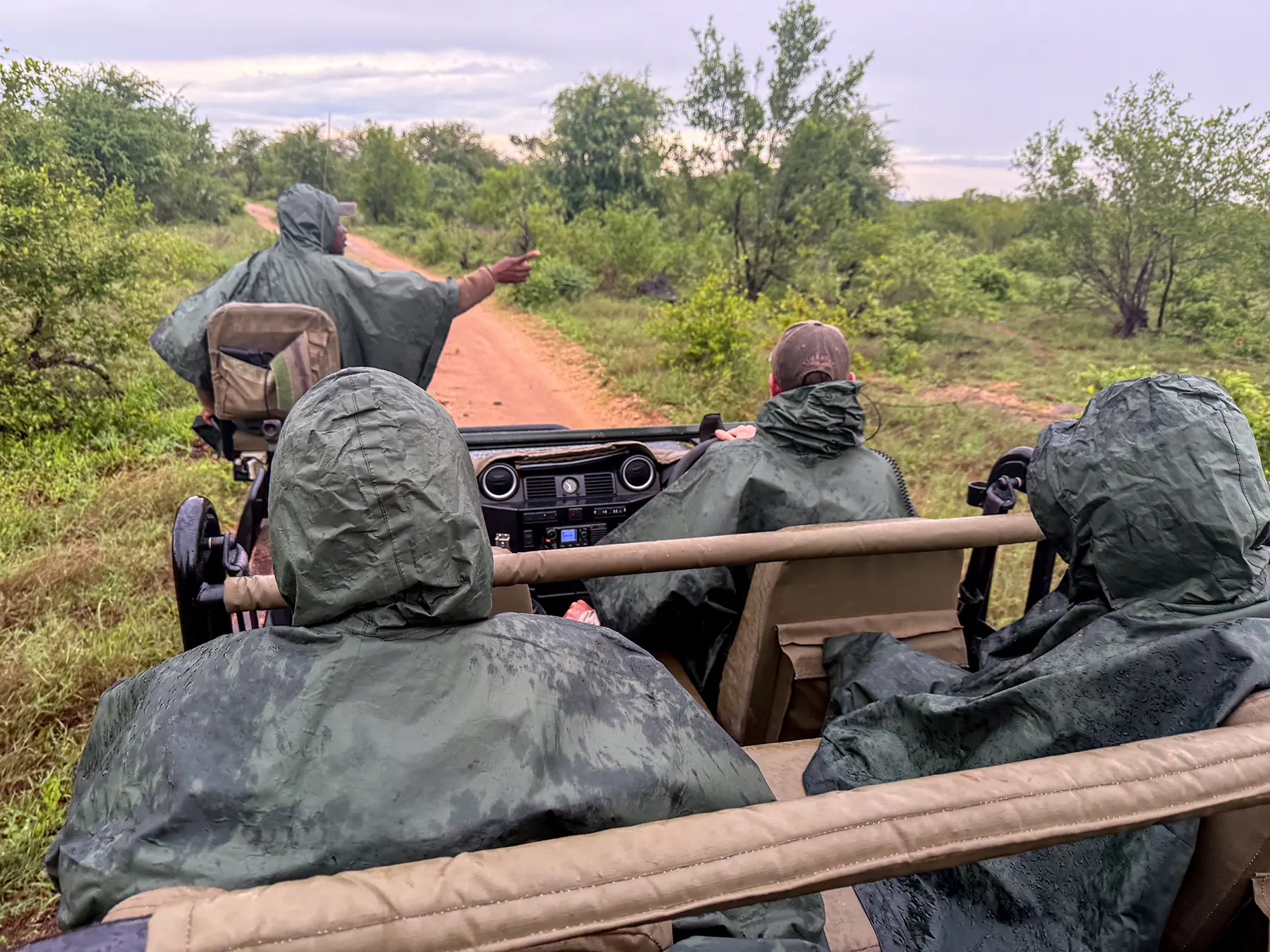
As far as I’m aware, South Africa is the only safari destination where you’ll have a separate driver and tracker on your game drives. This is a huge bonus for sightings – it’s always better to have two sets of eyes on the lookout, and the tracker usually sits at the very front of the vehicle, keeping a sharp eye out for wildlife and their tracks.
That’s not to say you’ll get this experience in every Greater Kruger camp, but it was offered everywhere I stayed apart from MalaMala. Instead, they have developed their own unique approach, tailored to what works best on the reserve. We had some fantastic sightings there, so clearly it’s working well!
Pros of Safaris in South Africa
- Good chance of wild dog sightings – I had several sightings, including a successful hunt.
- All of the Big Five across multiple private reserves and Kruger National Park, with no boundary fences to restrict wildlife movement. I saw all of the Big Five in many reserves.
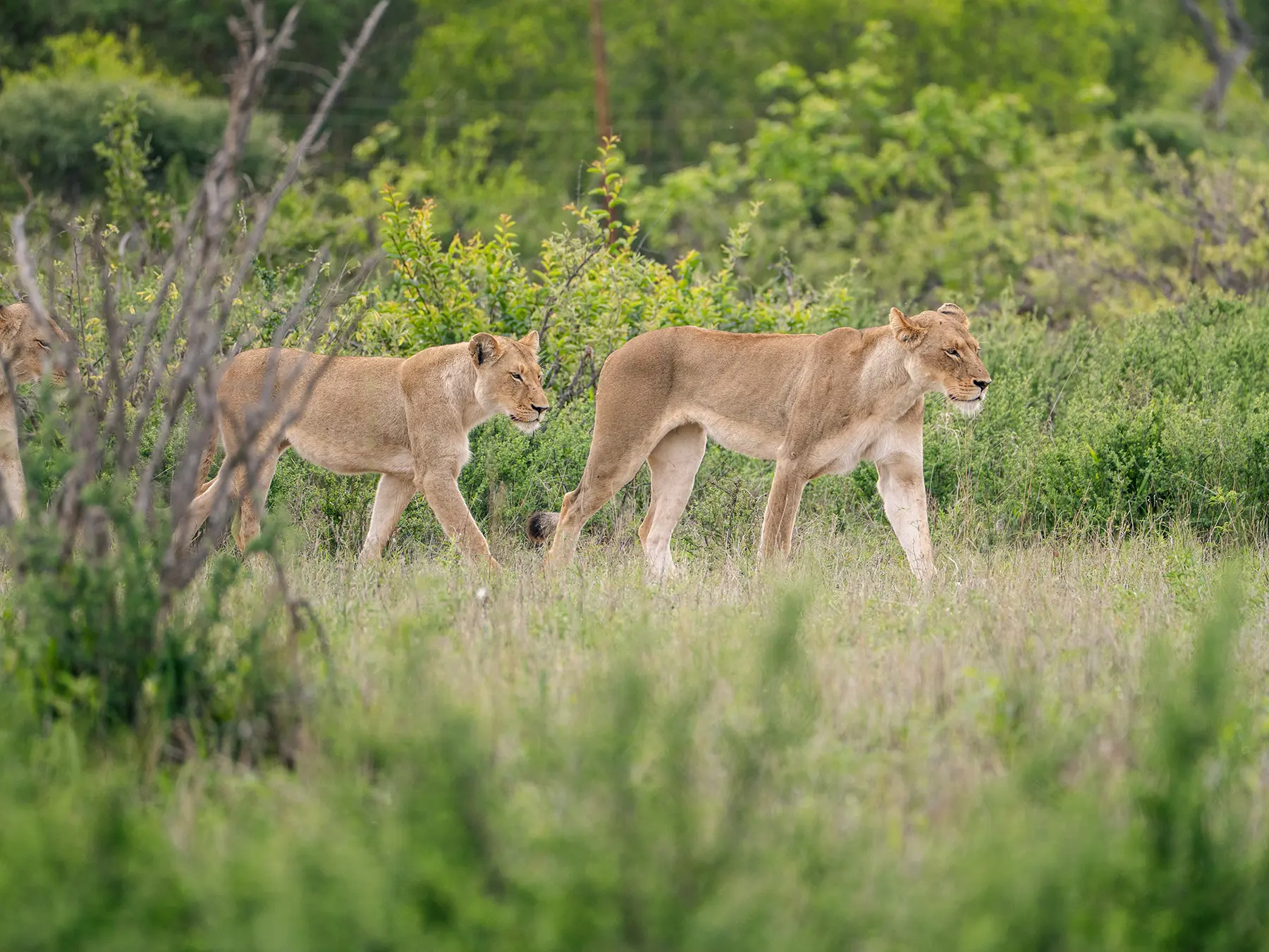
- Private reserves in Greater Kruger offer special experiences you don’t get in Kruger National Park, e.g. off-road driving, night drives, and walking safaris. On one night game drive in Sabi Sand, I saw some lion cubs bring down an impala!
- Great accessibility with daily flights from Johannesburg and Cape Town to nearby Hoedspruit, Nelspruit and Skukuza airports.
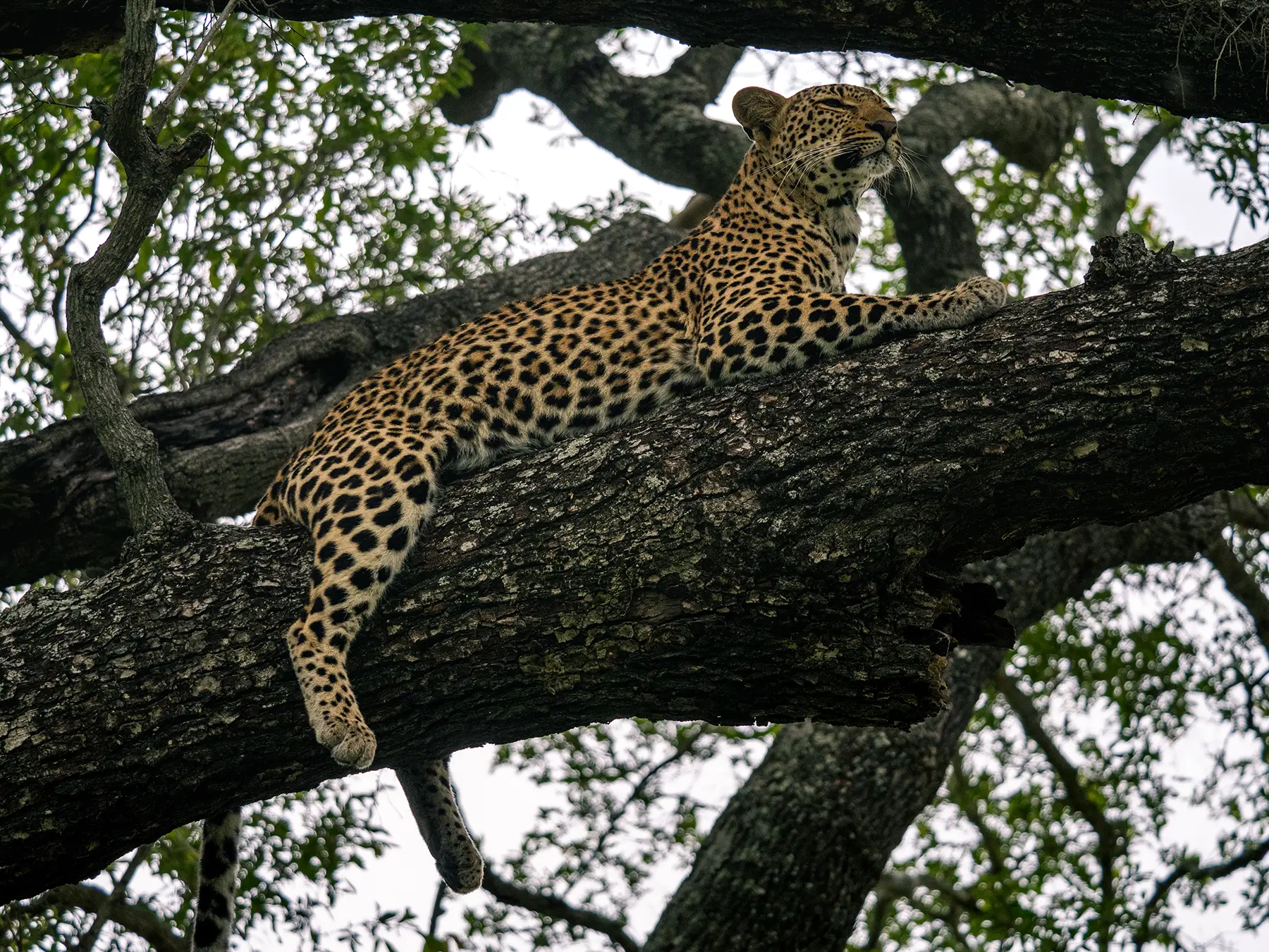
- Sabi Sand boasts some of Africa’s best leopard viewing. I saw a whopping 15 leopards during my South Africa safari and 10 of them were during my 5-night stay in Sabi Sand.
Cons of Safaris in South Africa
- Greater Kruger private reserve prices reflect the luxurious accommodation standards, with most lodges charging from $500 per person per night.
- While most private reserves have dirt roads, the roads in Kruger National Park are tarmac, taking away from the wild/natural feel.
- Unless you’re willing to shell out a significant amount for a private safari vehicle, game drives are generally shared. Nevertheless, shared game drives on the private reserves are much better than those in other locations (see private vs. shared section).
- In the summer, temperatures in the Lowveld can exceed 104 degrees Fahrenheit (40 degrees Celsius), making game drives less pleasant at times.
- Unlike Kenya/Tanzania, you can’t see the Great Migration spectacle in South Africa.
How Do You Book a 5-Day South Africa Safari?
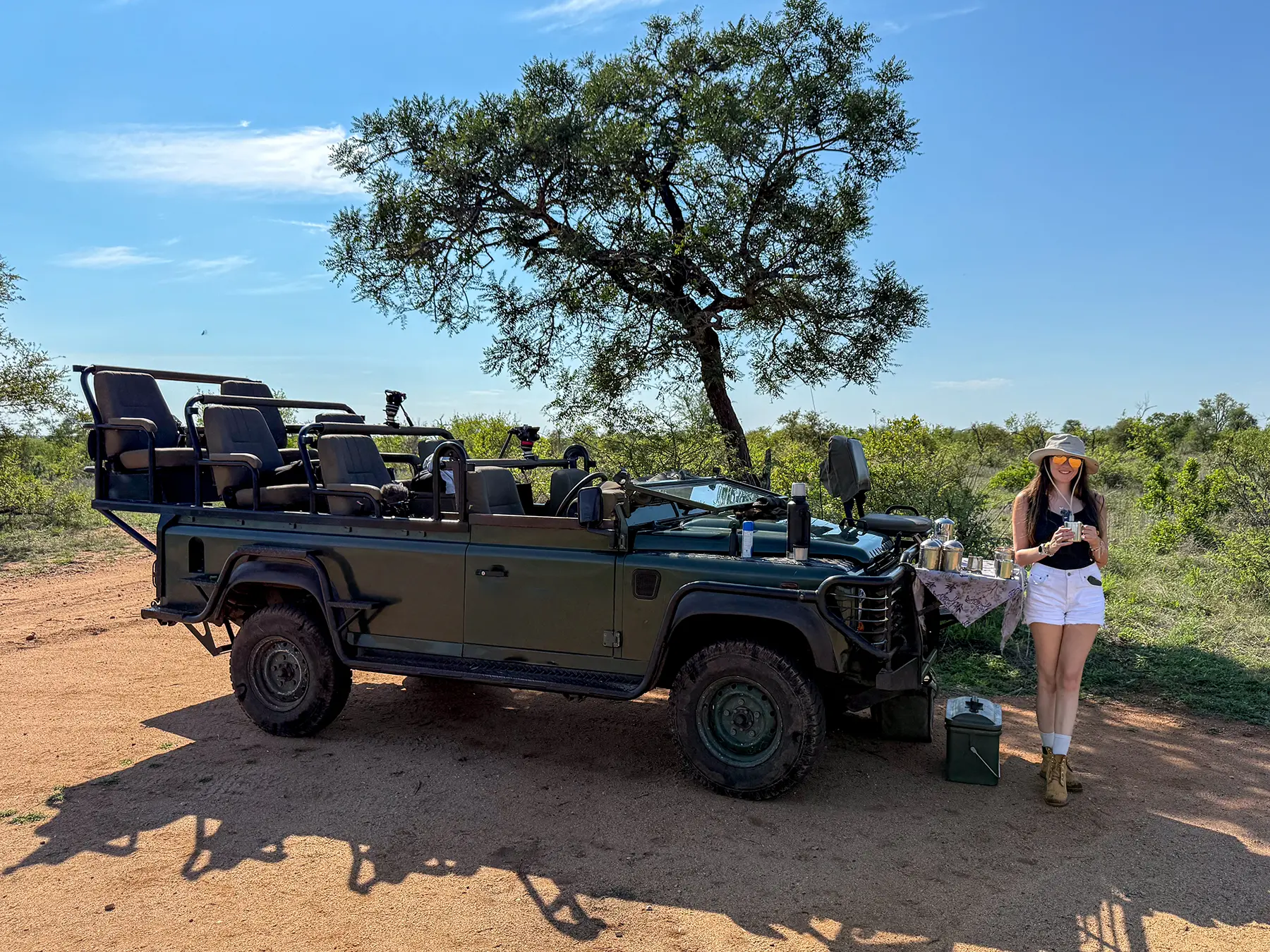
Booking through a reputable local operator is hands down the easiest and best value way to organise a safari in Greater Kruger.
That’s how I book my South African safaris and they never disappoint! Local tour operators can sort accommodation, permits, game drives and transfers at a better price than international agents, which subcontract to the same local providers and apply a substantial markup.
If you prefer, however, you can also opt to book through an international travel agent or choose to self-drive (but note that most private reserves don’t allow self-driving) and book each element of your trip individually.
You can get quotes from the same local tour companies I use to organise my own trips here: Safaris By Ella
Below is an overview of these three main options for booking your South African safari, along with the differences in terms of cost, flexibility, and experience.
Booking Options at a Glance
| Option | Cost | Flexibility | Best for |
|---|---|---|---|
| Local tour operator | $$ | High | Most travellers; best value |
| Self-drive | $ | Extremely High | Experienced drivers who are used to gravel roads and good at spotting wildlife |
| International agent | $$$ | Medium | Anyone wanting an all-in-one international flight and safari package who is willing to pay 30-50% more than if booking via a local tour operator |
Within Greater Kruger, self-driving is only permitted in Kruger National Park itself and in a small number of community-owned reserves in certain areas. You should be aware that even in these areas, self-drivers are subject to limitations that don’t apply to guided vehicles and are not allowed to drive off-road.
Self-driving is not permitted at either of the private reserves I’ve included on this itinerary (Timbavati and Sabi Sand). Instead, all game drives are led by professional lodge guides who can take you off-road for the best sightings.
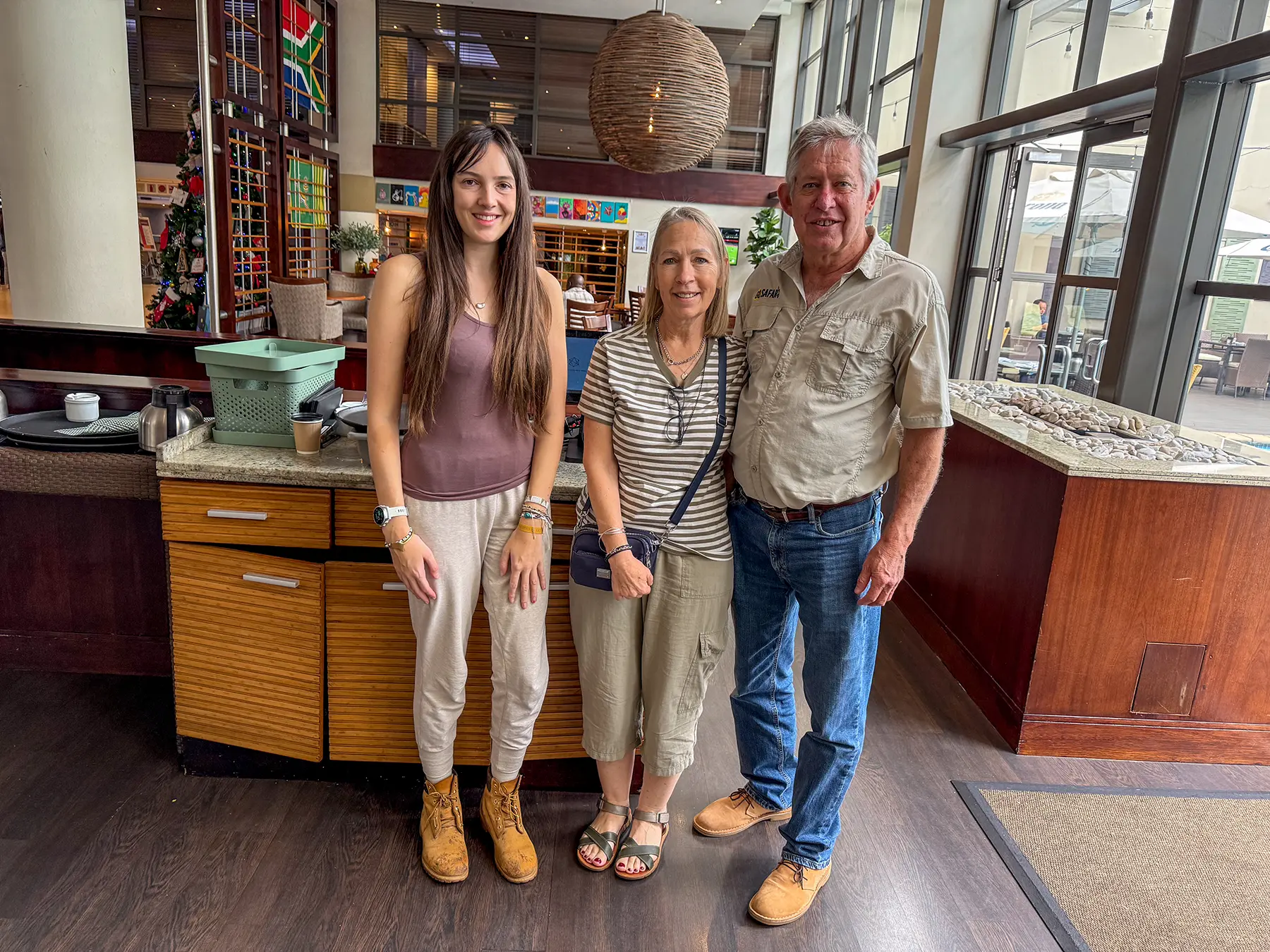
Why I Recommend a Local Tour Operator for Your South Africa Safari
I’ve tried all three approaches to booking a safari, and a local tour operator wins every time! Local operators take care of everything from the moment you land in the country, from accommodation and permits to transfers between reserves and to/from the airport.
Their invaluable local knowledge also means they know which lodges have the best wildlife viewing and the best guides and trackers, have reliable drivers for transfers and can often secure better rates than even booking online.
I once booked the various elements of my trip separately for one visit to South Africa thinking it would save me a bit of money, only to end up stranded at Hoedspruit airport when my transfer didn’t show.
I then spent one of the most stressful hours of my life scrambling for a solution before a friendly driver who was picking up some other guests helped me make other arrangements. What a start to my trip!
When I made arrangements via a local tour operator, on the other hand, everything was taken care of and it all ran like clockwork. Every transfer was punctual (often as much as 30 minutes early), and the vehicles were pristine and comfortable, with excellent drivers.
Then there was my very first trip to South Africa, which I booked through an international tour operator because I wasn’t aware you could simply book with local companies. While there were no logistical disasters to contend with, I was aghast when I found out from other guests at my lodge that I’d paid nearly twice as much as they had for the same experience!
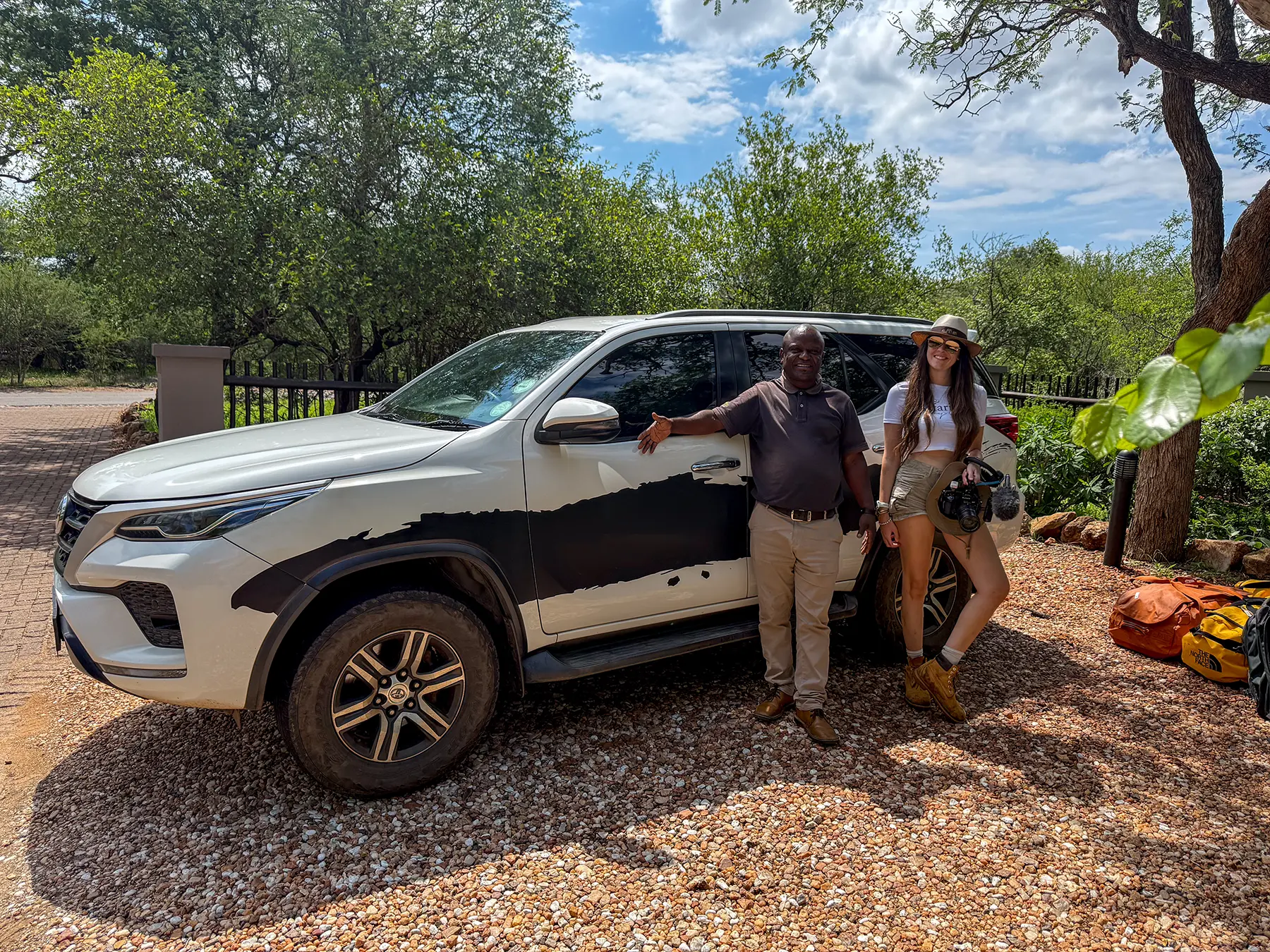
Booking your safari with a local company costs more or less the same as self-booking because the discounted rates local providers can secure tend to compensate for the modest mark-up they apply.
The little extra you might end up paying is money well spent: not only is everything taken care of, leaving you to simply enjoy your trip, but there’s also a single point of contact to assist with any queries or requests and the local operator’s on-the-ground knowledge is hugely beneficial.
What a Local Operator Gives You
- Price includes accommodation, reserve permits, transport and transfers.
- Expert knowledge to help you choose from dozens of lodges in Timbavati and Sabi Sand.
- Discounted accommodation rates, often cheaper than a direct booking.
- Coordination of flight and road transfers from Johannesburg to your first lodge.
- Hands-on experience of roads, access rules and weather conditions year-round.
What to Watch Out For
- Some operators are better than others, and the lowest price might mean less experienced guides or a lower standard of accommodation.
- Prices that appear very low can be a red flag, with hidden costs arising subsequently during your stay.
- Local tour operators usually don’t book international flights, so you’ll need to sort these separately.
Embark on the Safari of Your Dreams
Save time and ensure an incredible safari experience by getting quotes from my recommended local safari companies
I’m here to make booking your perfect safari quick, easy and risk-free.
Join the rapidly growing tribe of over 1,000 travellers who’ve booked their dream safari using my insider tips and recommendations.
It takes under 60 seconds to fill out the form and in under 48 hours you will receive multiple, no-obligation proposals from my favourite local tour operators with glowing online reviews.
Get your free no-obligation safari quotes and my top safari tips and recommendations
How to Book with the Best Local Safari Companies
- Comparison sites which provide multiple quotes from verified suppliers such as Safaris By Ella
Join the rapidly growing tribe of over 1,000 travellers who’ve booked their dream safari using my insider tips and recommendations.
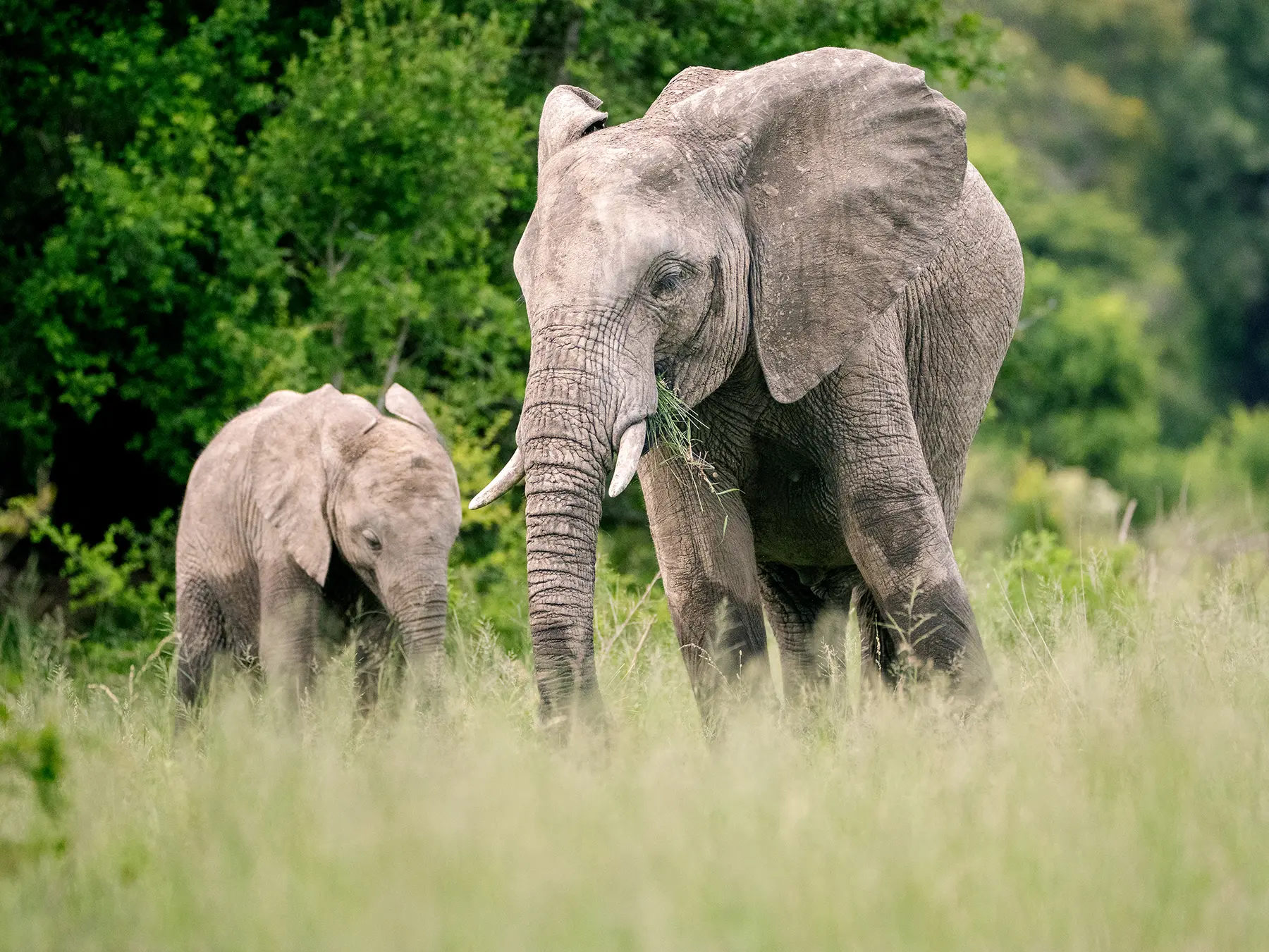
Greater Kruger Booking Tips
The private reserve system in Greater Kruger has some unique features that are relevant to how you book your stay.
- Reserve traversing rights: All Timbavati and Sabi Sand lodges have their own traversing areas, which affects the variety of game you’ll see during your stay. When booking, therefore, I’d recommend asking how many hectares the lodge traverses.
- Quality of wildlife viewing differs a lot between lodges: Local tour operators add a lot of value when it comes to impartially recommending which lodges currently offer the best wildlife viewing as the individual lodges will never tell you this.
- Peak season availability: You’ll often need to book a minimum of 6-9 months in advance if visiting South Africa during the dry winter season (May-October). Lodges in Sabi Sand sell out particularly fast.
- Flights vs. road transfers: It’s much easier to fly from Johannesburg to Hoedspruit (about 1 hour) than drive (5-6 hours). Your operator can coordinate flights with lodge transfers on request.
- Private vs. shared vehicles: Generally, vehicles are shared with other guests unless you specifically request a private truck. Booking a private safari vehicle will cost more – up to 100% on top of the lodge price.
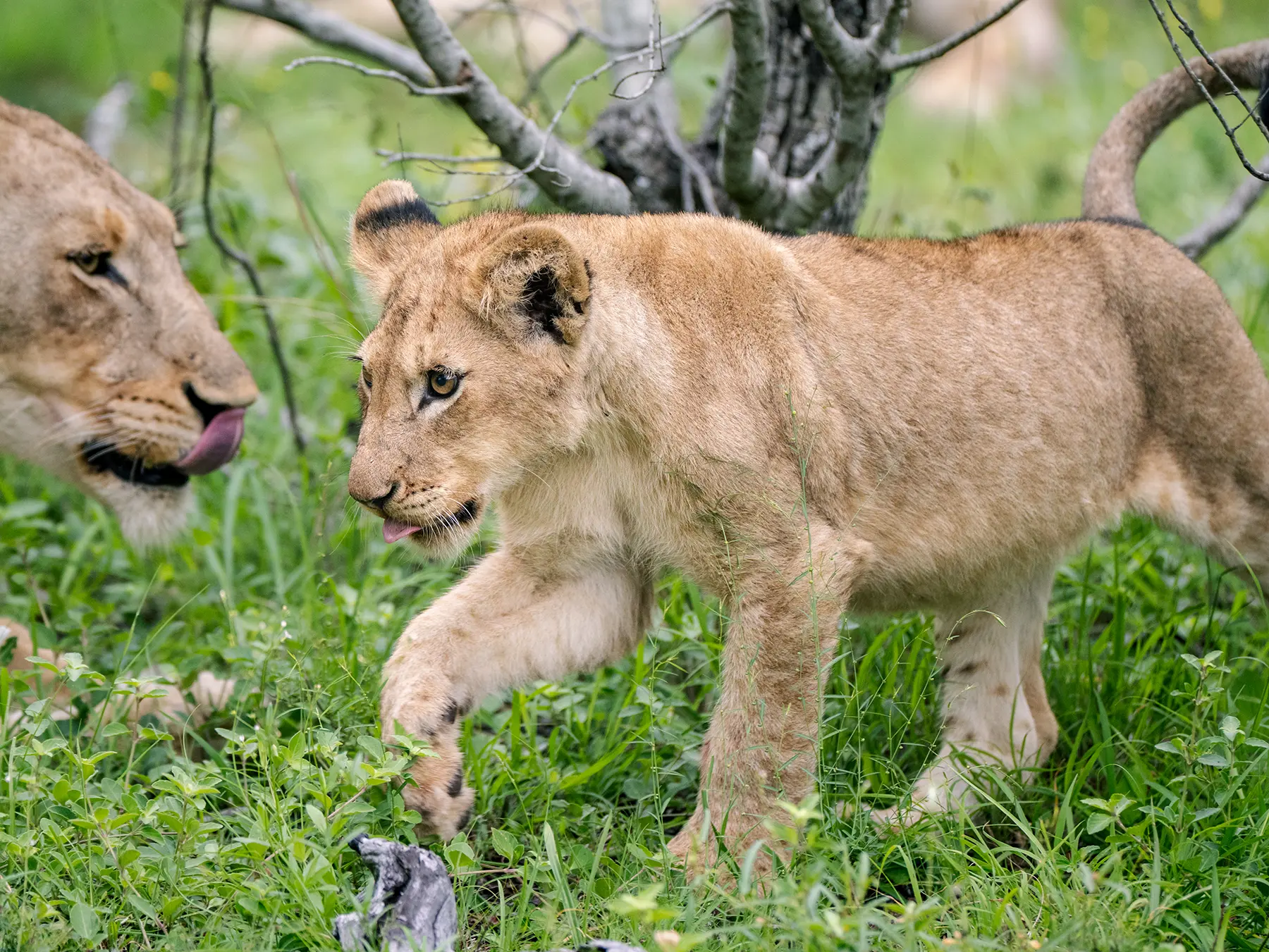
Financial Protection When Booking Direct
A safari is a significant expense and it’s natural to want some peace of mind when paying for it. You’ll be pleased to know there are steps you can take when booking with a local operator that ensure a similar level of protection to booking with an international agent.
Often, paying by credit card (not a debit card) offers purchase protection on purchases over £100 and up to £30,000 (Section 75 protection in the UK).
In addition, taking out a good travel insurance policy will protect you if your trip is interrupted, while opting for a reputable local safari company that takes a small deposit upfront and only charges the balance closer to your trip further reduces risk. Some of the local tour operators I recommend are members of payment protection initiatives similar to those used by international tour operators, offering total reassurance.
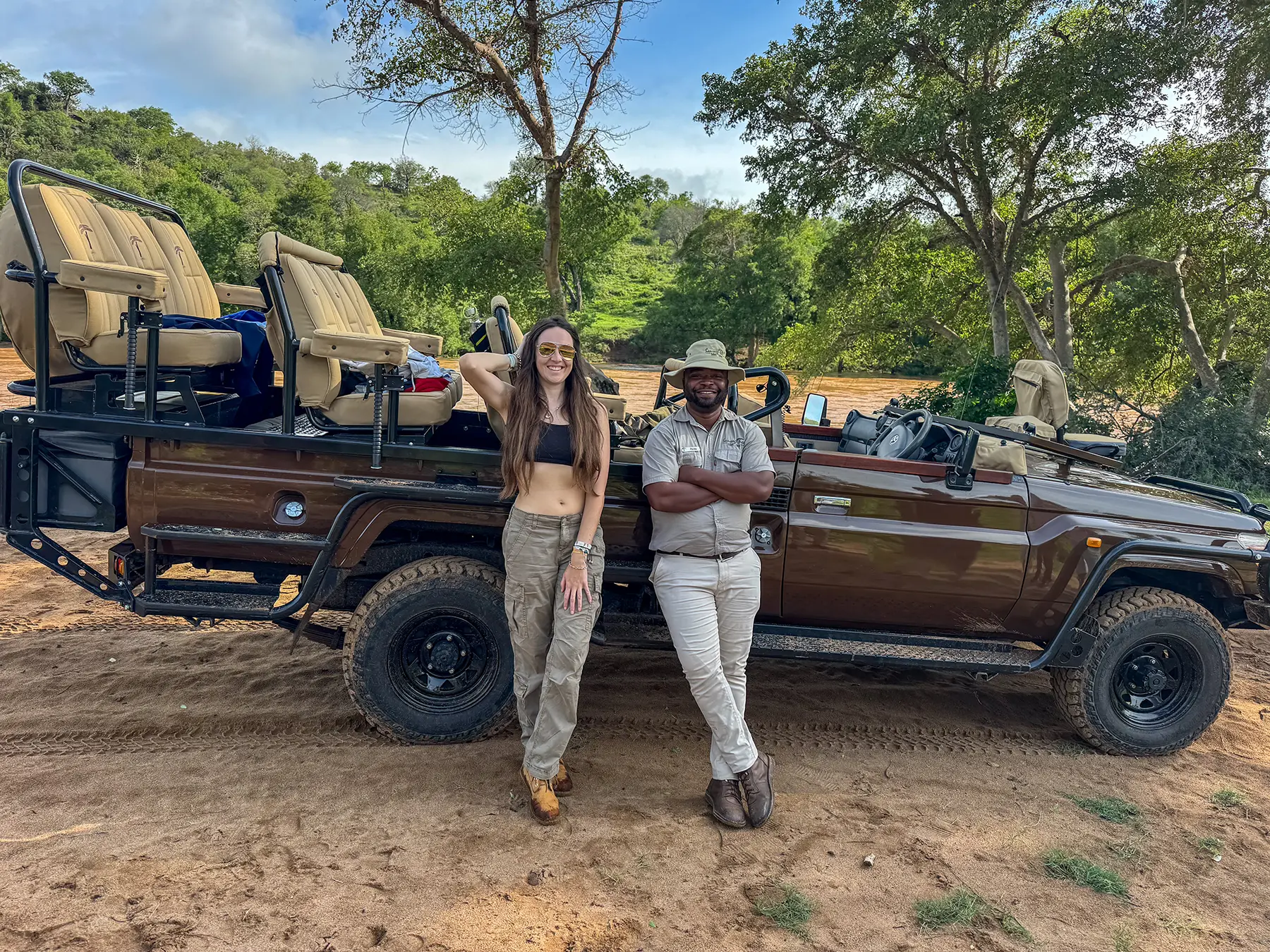
Recommended Booking Options For Your 5 Day Greater Kruger South Africa Safari Itinerary
Private Safari
Most popular & best experience – typical prices for this itinerary start from $600 per person per day.
Visit safarisbyella.com for free quotes from trustworthy local tour companies I use to book my own trips.
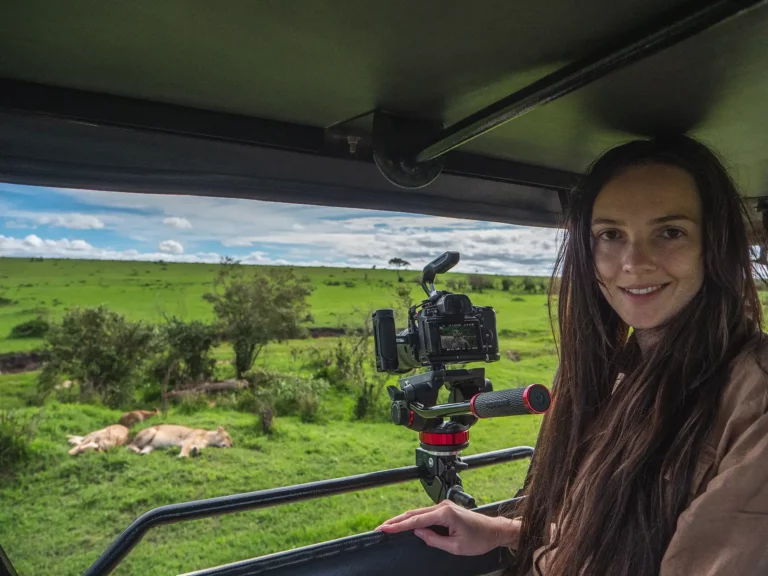
Which Is Best: A Private or Group South Africa Safari?
Game drives at South African lodges are shared unless you specifically reserve a private vehicle at considerable additional cost. In some cases, it can actually double the cost of your stay! Of course, the shared element only affects the game drives – your room, transfers and all other aspects are still private.
I would usually strongly recommend private safaris, but things are a little different in South Africa and sharing a game drive vehicle is actually more than acceptable here.
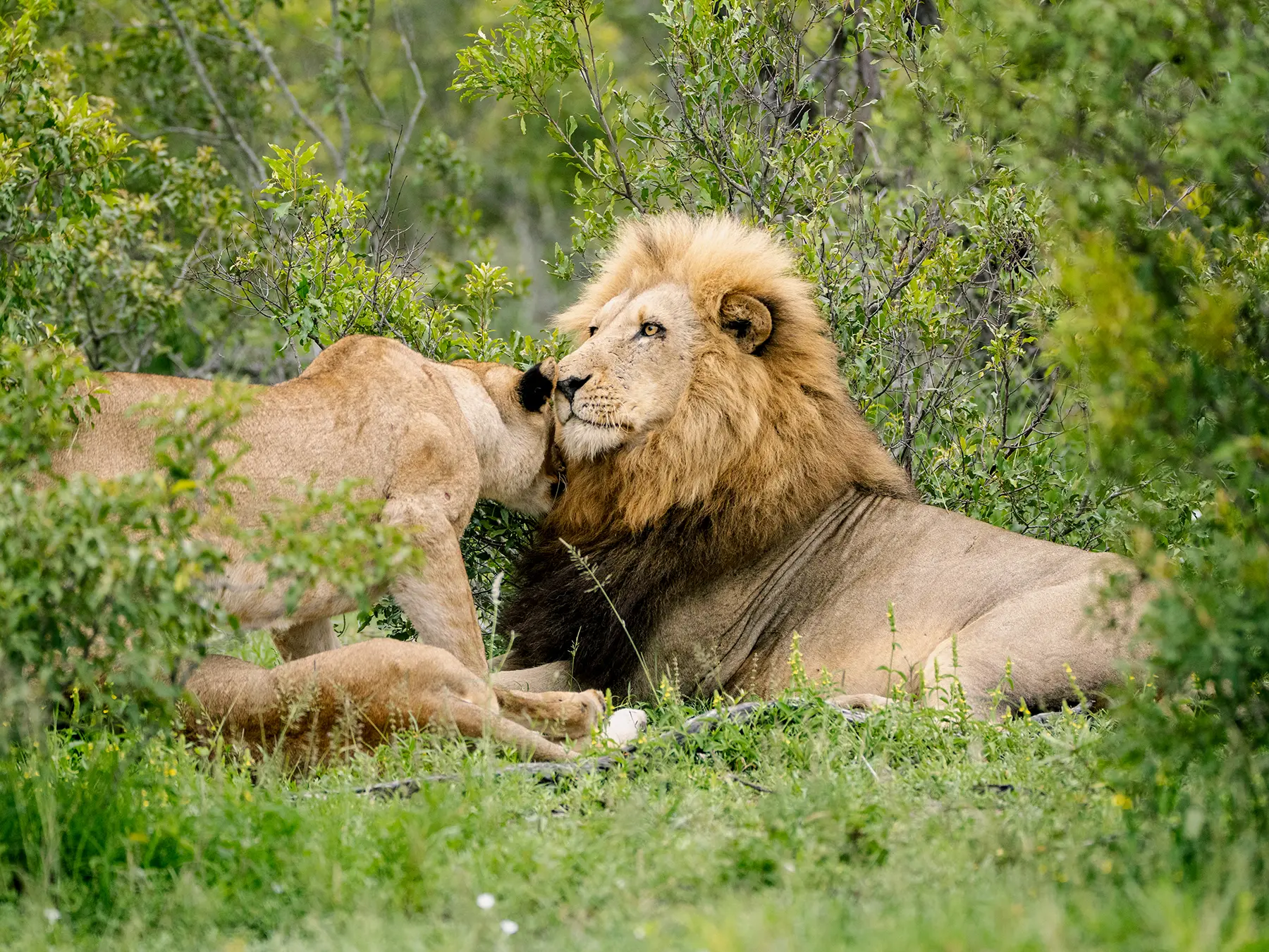
For the sake of clarity, I’ve put together an overview below of the aspects I’d usually criticise when it comes to group drives and the difference in South Africa.
| Common group safari cons | South Africa lodge-based safari |
|---|---|
| Pick-ups and drop-offs for other guests waste time that could otherwise be spent on sightings, especially in the early mornings | All guests are usually at the same lodge, meaning no delays |
| Companies’ best guides are often reserved for private safaris | Shared game drives are the standard for lodge-based safaris in South Africa, so the best guides will be working on them. |
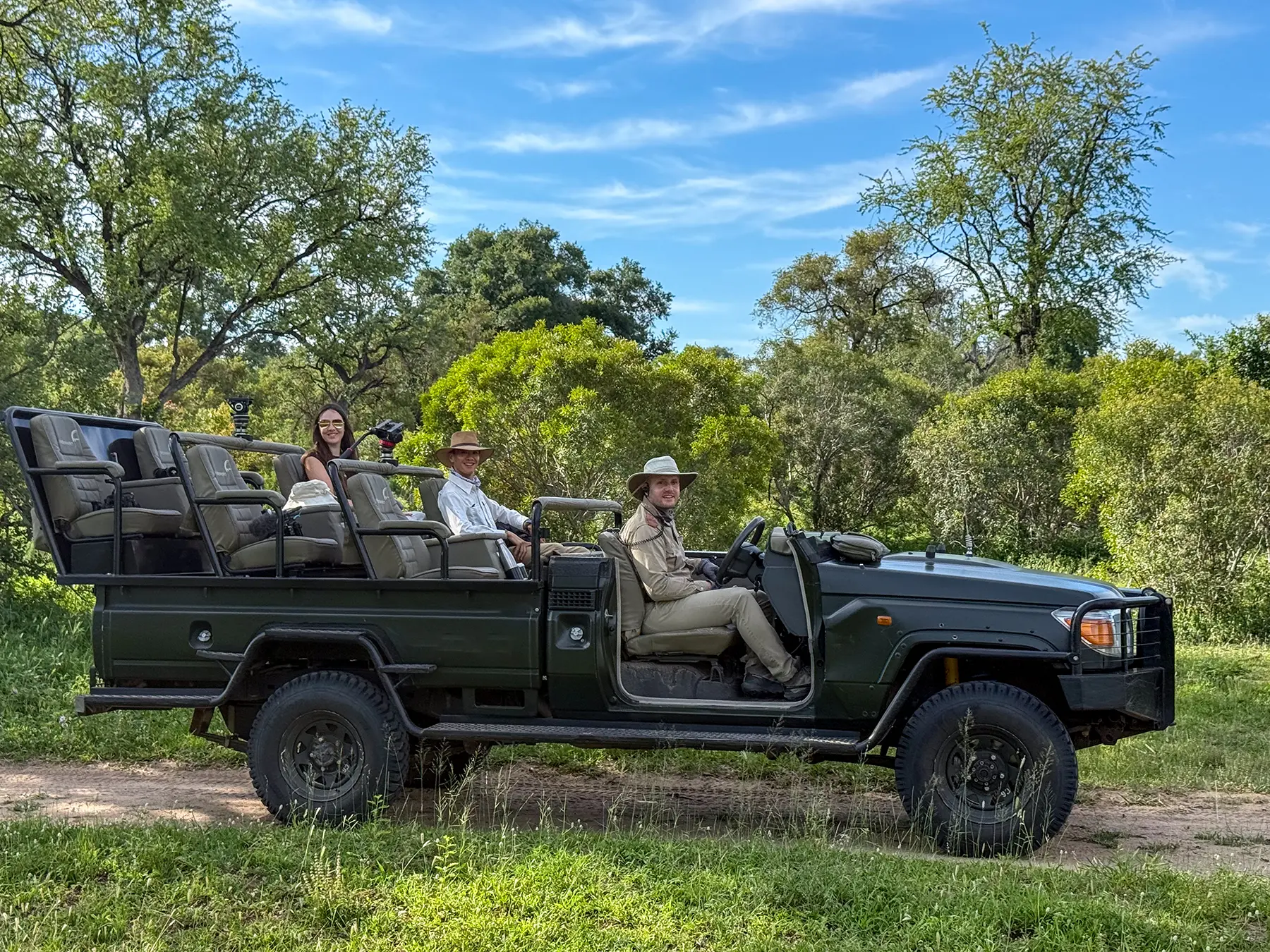
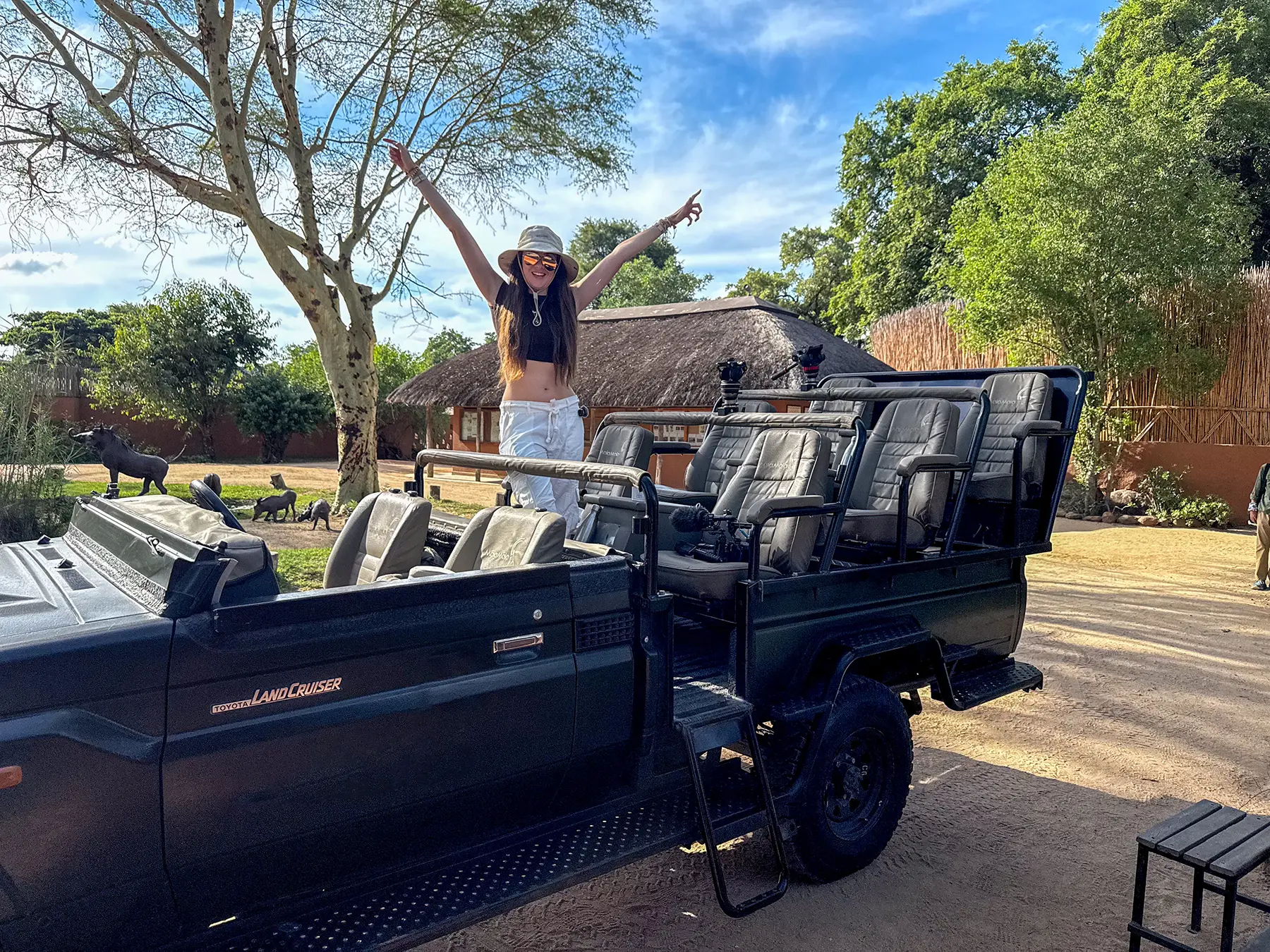
| Shared safaris often use minivans instead of safari trucks | South African lodge-based safaris generally all use the same vehicles for shared and private game drives: open-topped Toyota Land Cruisers or Land Rover Defenders. |
| Sharing a vehicle with 6-8 other travellers means restricted space for photography | Since safari vehicles are open-sided as standard in South Africa, even serious photographers will find there’s ample room to get that perfect shot. A vehicle with middle seats could be a bit more cramped, but you can check in advance to see if that’s the case. You might still prefer a private vehicle for more control over the sightings you focus on and how long you spend at each, but otherwise, shared should be fine. |
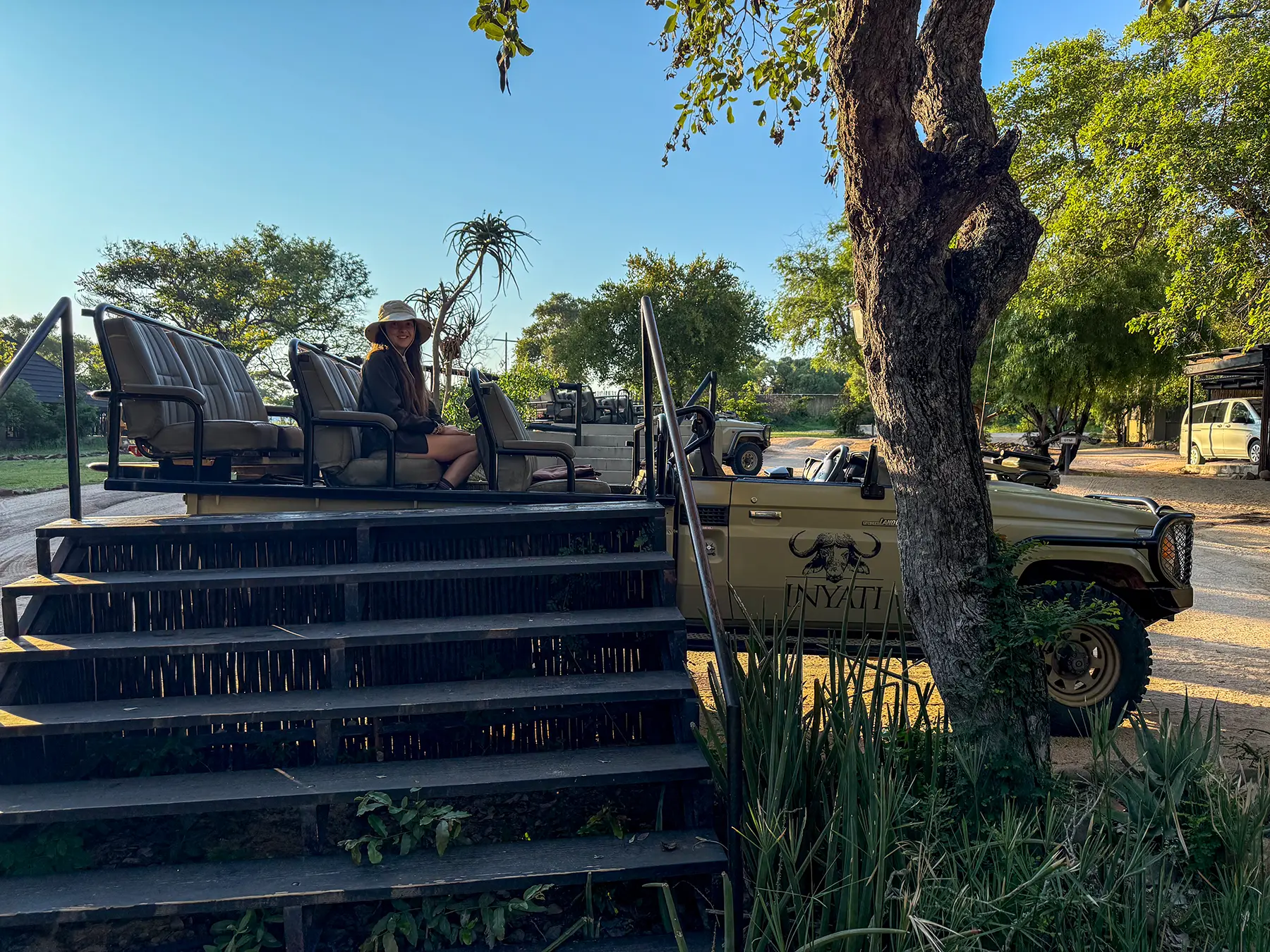
My Recommendation
Shared game drives usually work perfectly well for most people on South African lodge-based safaris because they offer a totally different experience to shared safaris in other countries.
That being said, I would recommend looking into a private vehicle for Kruger National Park, as vehicles there are different to the lodge vehicles, with poorer visibility. The additional cost for a private vehicle there was also much less than in the lodges, running at around $150 more per day.
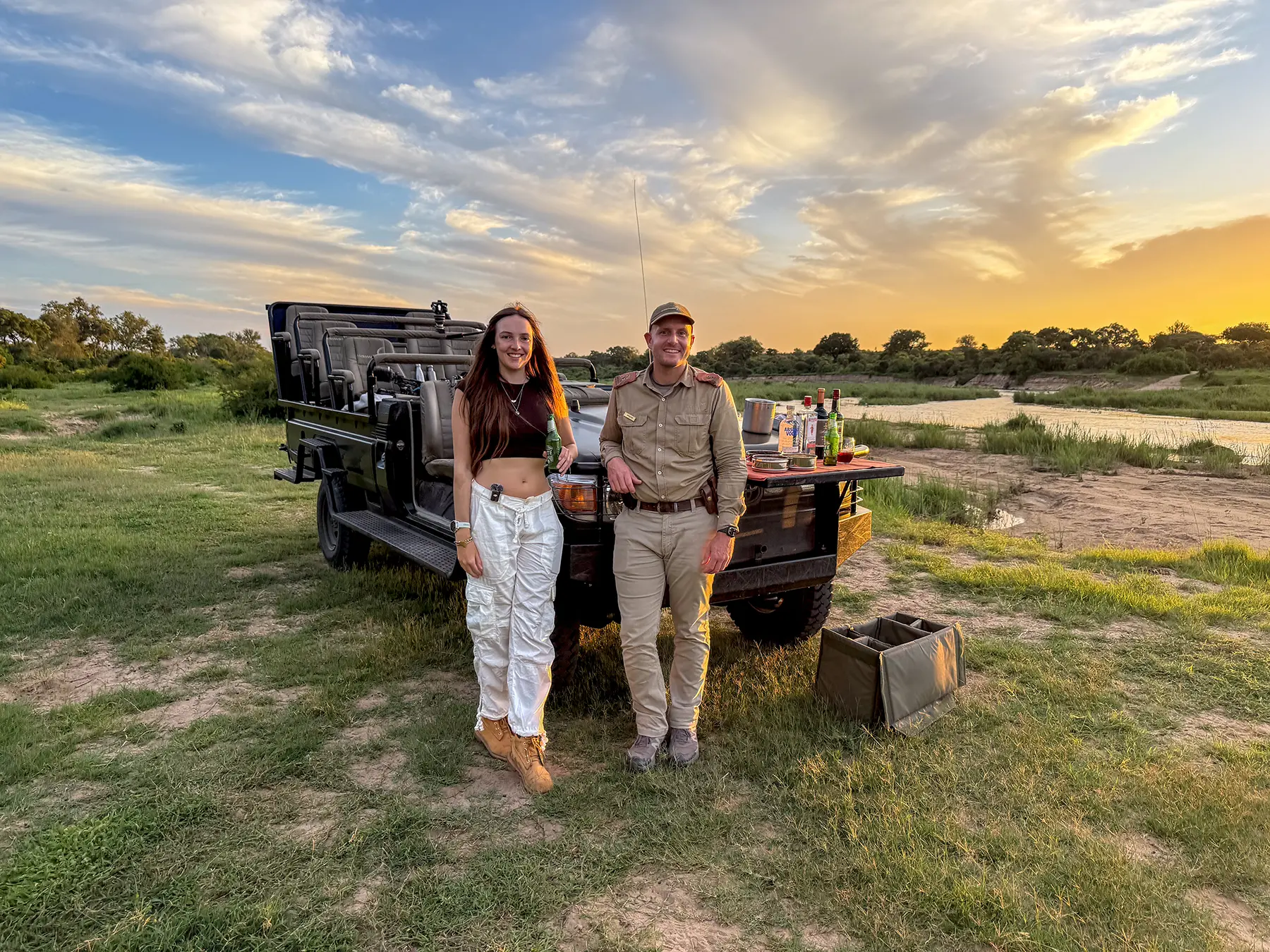
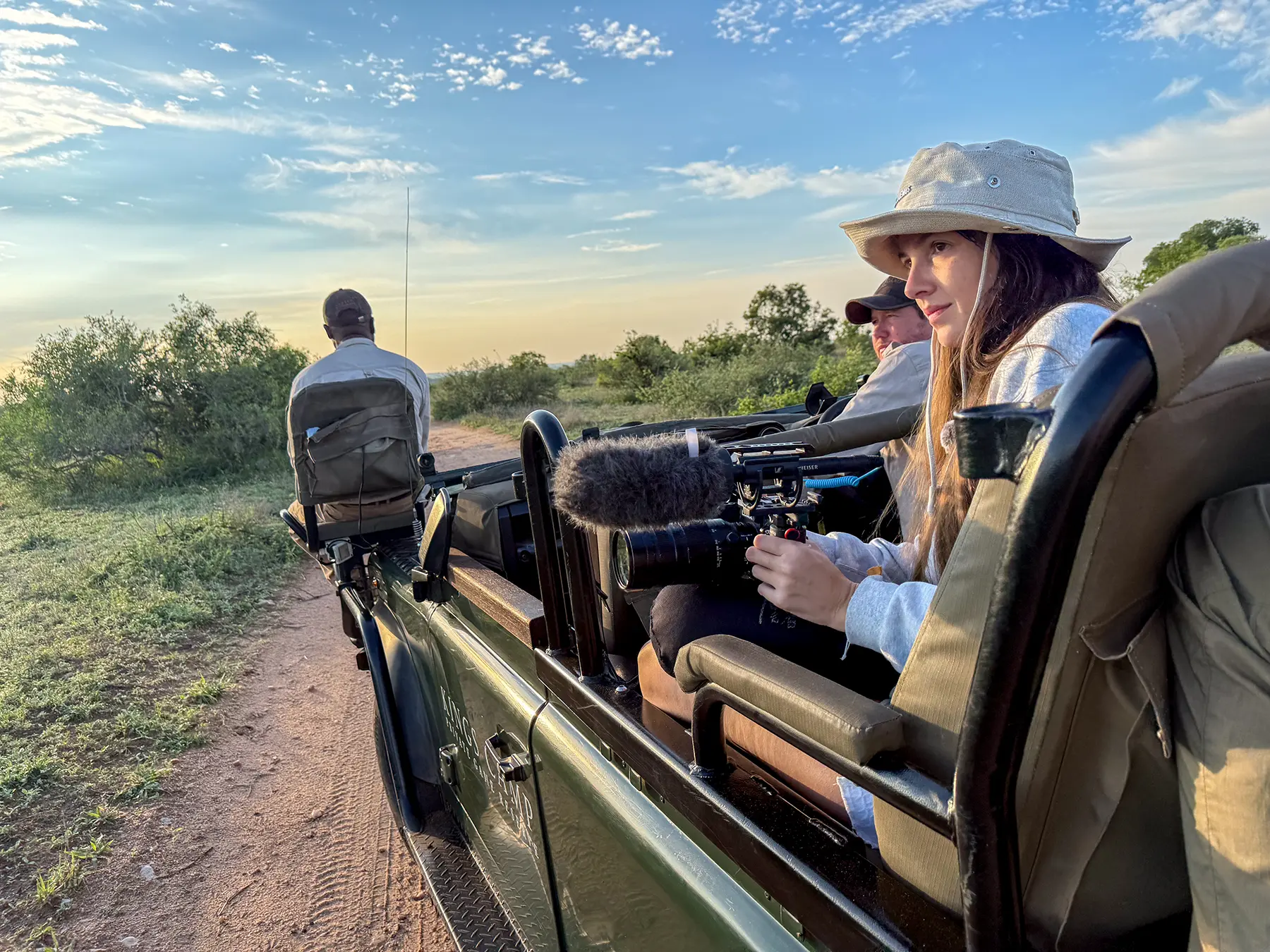
When I visited the Greater Kruger private reserves as part of my own South Africa safari, I tried both options and found each excellent. Private game drives had a slight edge in that when I wanted to, I was able to spend much longer at a sighting than in a shared vehicle, which meant I got some incredible photos.
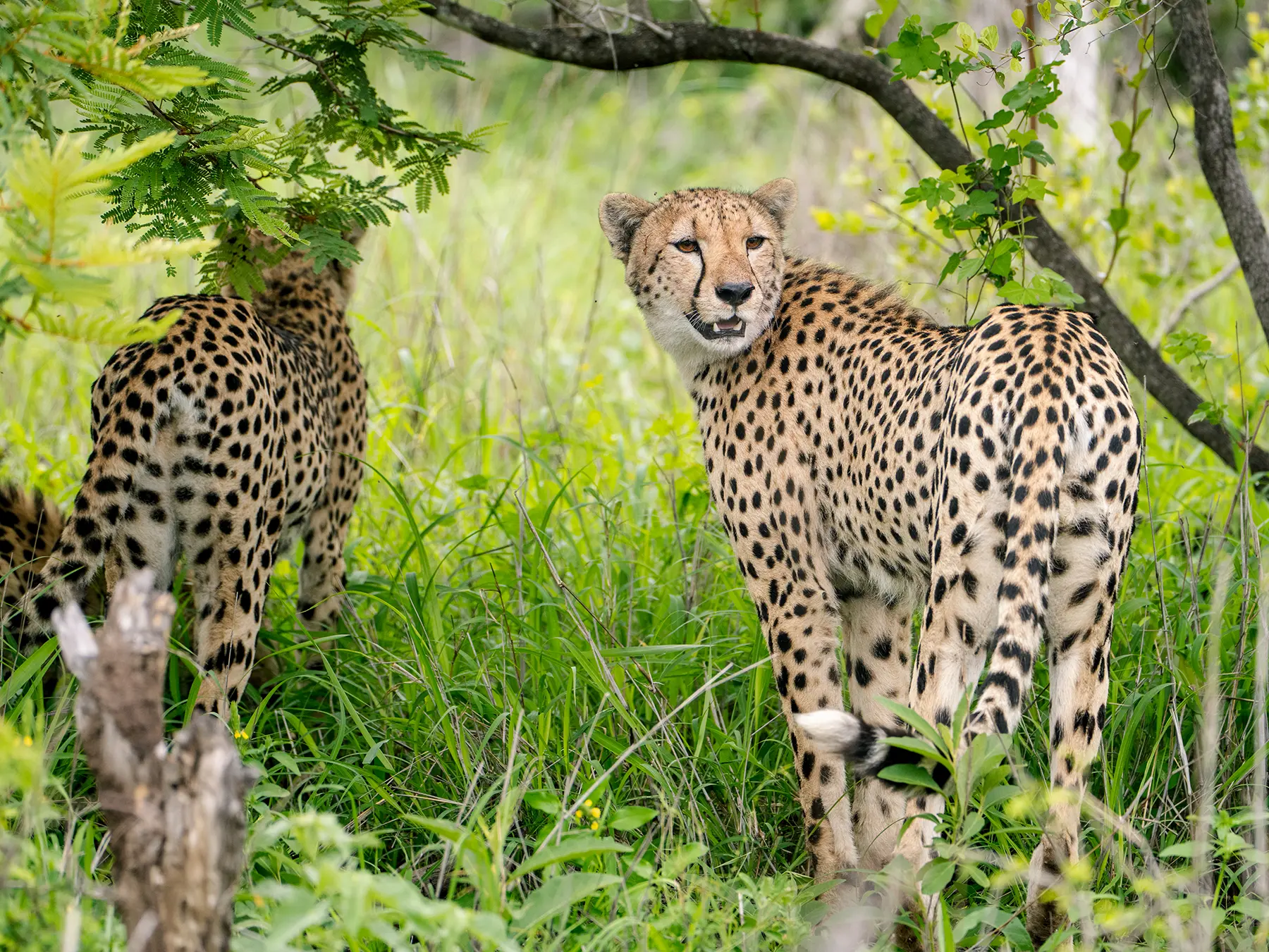
Safari vehicles at one of the mid-range tented camps I stayed in had middle seats (so 3 seats to a row), which I think would have made photography awkward if I’d been in the middle seat, but this wasn’t an issue as the truck wasn’t full.
All in all, I’d say that if you’re a serious photographer and your budget allows for it, it can be worth paying the extra so you have your own vehicle for game drives.
It will mean you can choose which wildlife to focus on and stay on at particular sightings (be aware, though, that you may sometimes have to move if other vehicles are waiting to see it, but you can always return later on when they have left).
How Much Does a 5-Day South Africa Safari Cost?
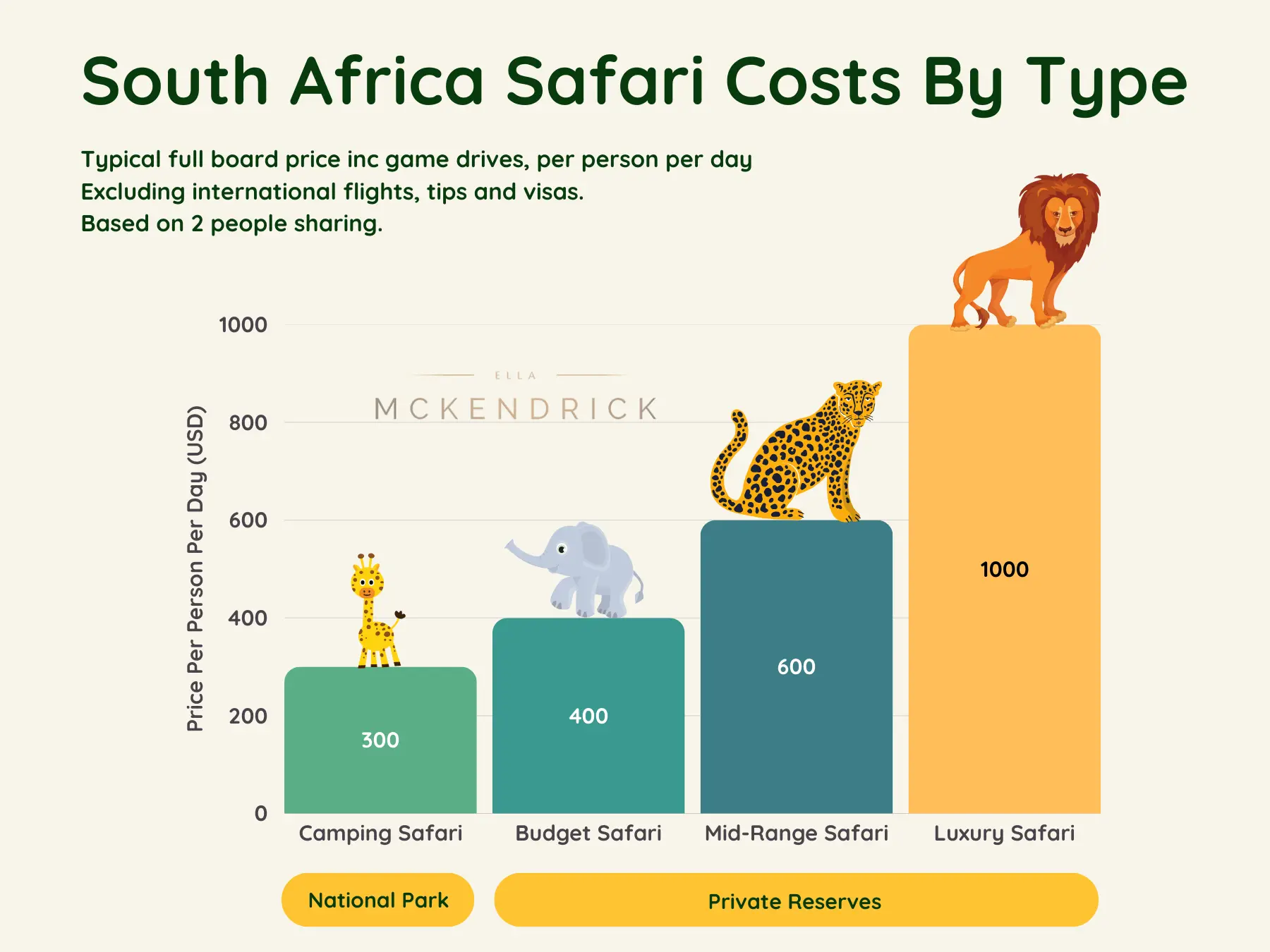
The cost of a private 5-day safari in Greater Kruger starts at around $500-600 per person per day for mid-range lodges and rises to between $800 and $2,500+ per person per day for luxury properties. These prices include all meals and drinks and two game drives each day as well as the accommodation itself.
Please note that low-cost accommodation is a rare commodity in the private reserves, so if you’re planning a budget South African safari, it’s best to focus on Kruger National Park rather than the adjacent private reserves, as the national park itself has options from around $200 per person per day.
Below is a chart showing the standard Greater Kruger safari prices by luxury level.
Safari Prices Typically Include
- Reserve conservation levies
- Two daily game drives, morning and afternoon
- Private lodge/tented camp accommodation
- Full-board meals (breakfast, lunch, dinner)
- Selected beverages including house wines, beers and spirits
- Road transfers between lodges
- Bush walks with armed ranger
- Laundry service
Safari Prices Typically Do Not Include
- International flights
- Local flights at the start and end of your safari e.g. from Johannesburg or Cape Town to Hoedspruit or Skukuza as these are usually booked as part of your international flights
- Tips/gratuities for rangers, trackers and lodge staff
How Do South Africa Safari Costs Compare to Other African Safaris?
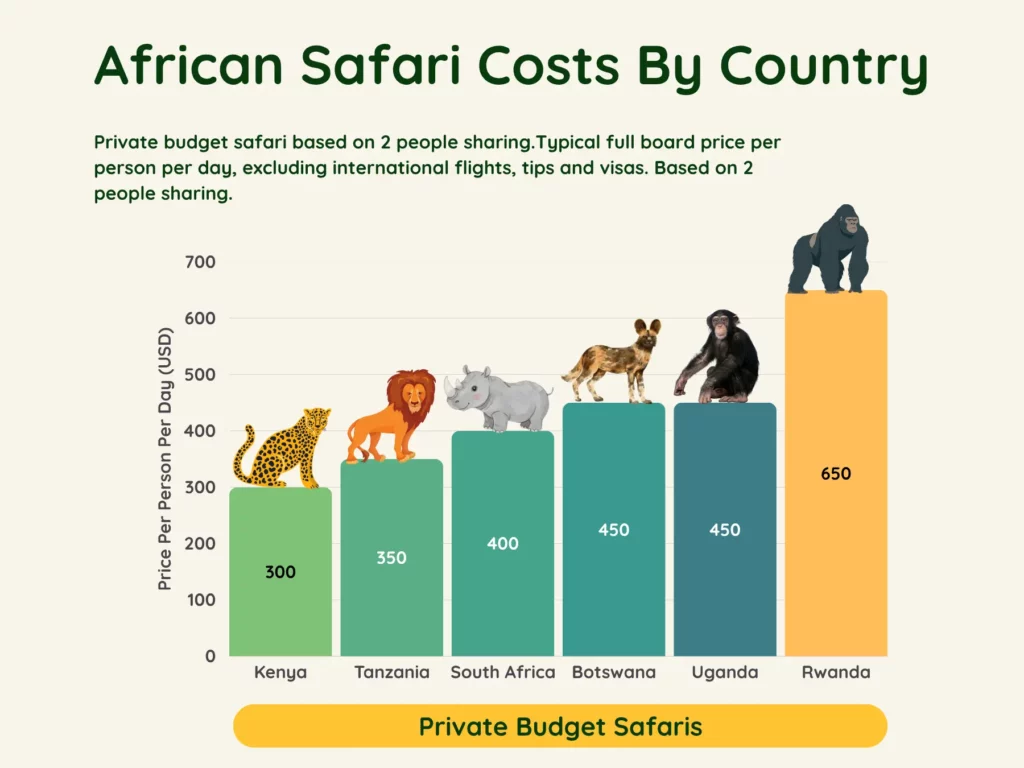
Private lodges in Greater Kruger are usually costlier than their East African counterparts, with prices starting at $500+ per person per night compared to about $300 per day in Kenya and $350 in Tanzania.
However, rates in Kruger National Park itself are similar to East African safaris, starting from about $200 per person per day for group budget safaris.
You can see how costs compare across popular African safari destinations below:
| Destination | Private Budget Safari Cost PP/Day |
|---|---|
| Kenya | 300 USD |
| Tanzania | 350 USD |
| South Africa | 400 USD |
| Botswana | 450 USD |
| Uganda | 450 USD |
| Rwanda | 650 USD |
Breakdown of South Africa Safari Costs
Sometimes it’s hard to see where your money is going when you book a major trip such as a safari, so let’s break down the total cost and see what exactly it includes.
Firstly, most of what you pay (around 60-70%) goes directly to the lodge, covering accommodation, meals, drinks, and game drive activities. A further 10-15% covers conservation levies and park entrance fees, helping to fund anti-poaching and habitat management initiatives.
Lastly, the remainder pays for your transfers as well as operator costs and insurance.
Factors Impacting South Africa Safari Costs
The total cost of your safari will depend on your chosen reserve, the luxury level of your accommodation, the time of year you travel and whether you opt for air or road transfers.
I’ll examine each of these elements in a little more detail below so you can decide which are most important to you.
Just click the links below to view more information about each element.
Accommodation Level
The luxury level you choose when booking your accommodation is by far the greatest determiner of how much your safari costs.
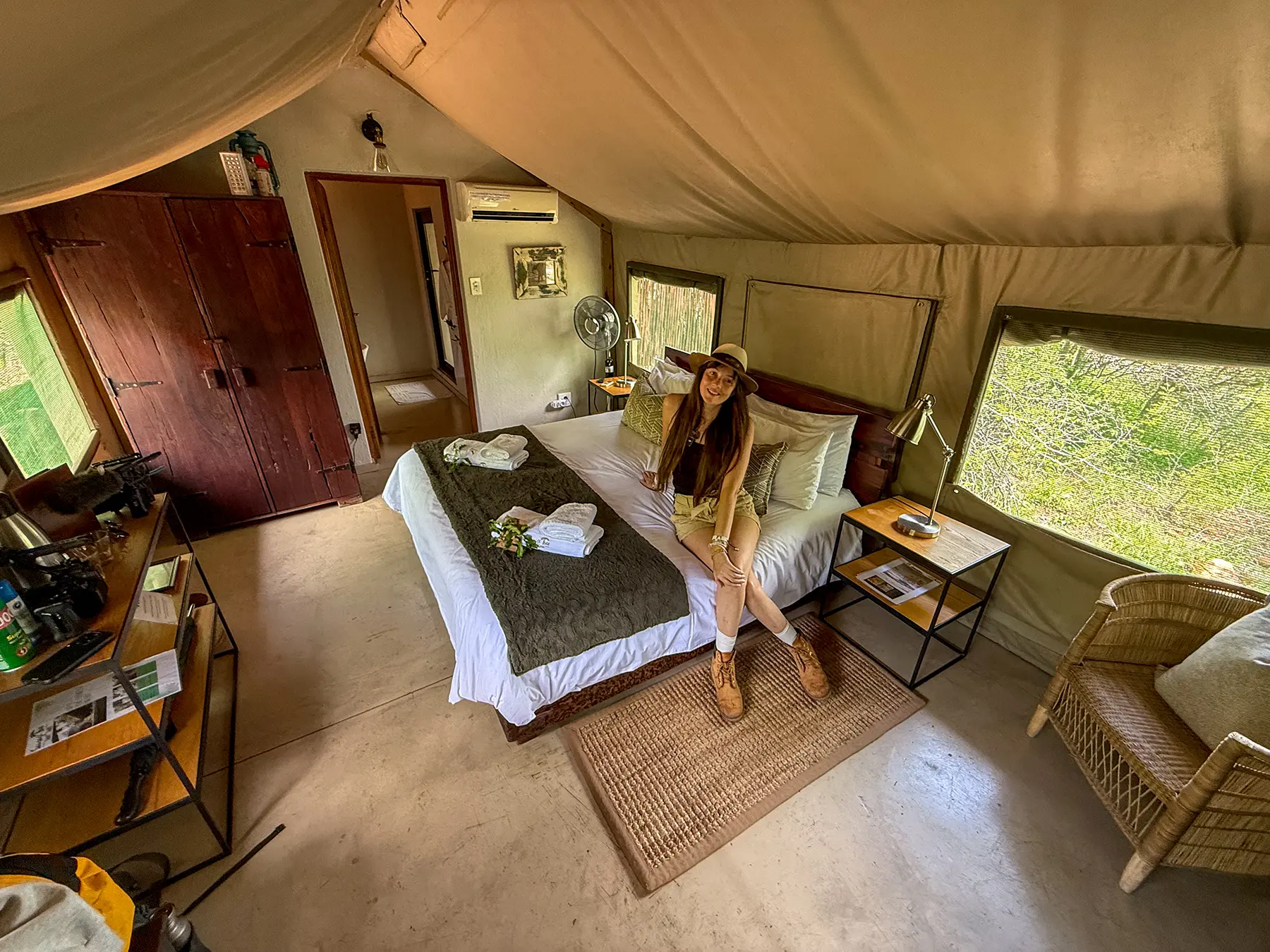
Starting from $400 per person per night, budget tented camps and lodges are the least expensive option and generally have smaller rooms with no extra facilities such as swimming pools.
By comparison, mid-range camps and lodges have slightly larger and plusher rooms and often have a shared swimming pool as well. Prices start from $600 per person per night.
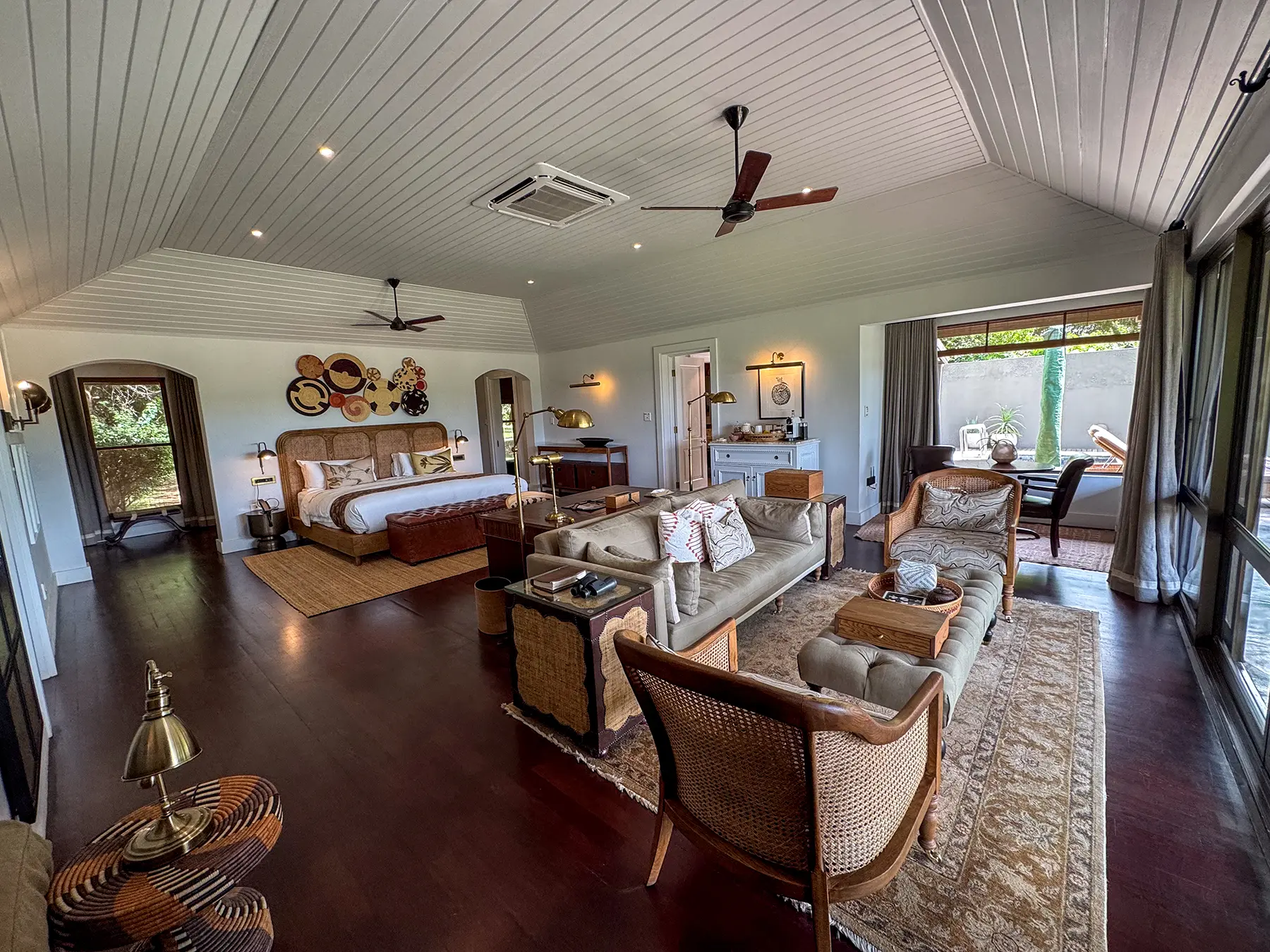
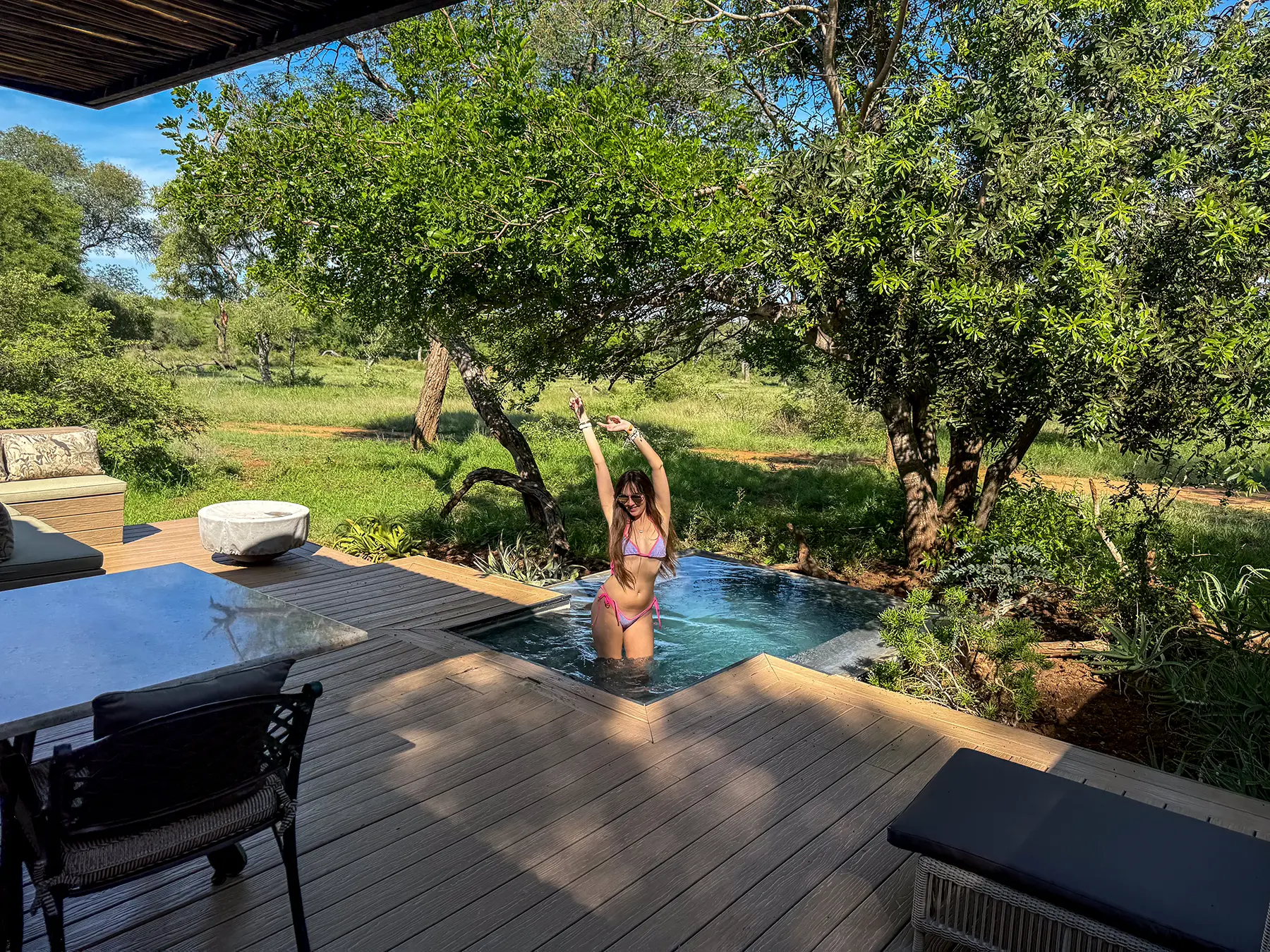
At the other end of the scale, luxury camps and lodges have large rooms and often come with additional seating areas, balconies and even private pools in some cases! Communal areas have extras like swimming pools, spas and gyms.
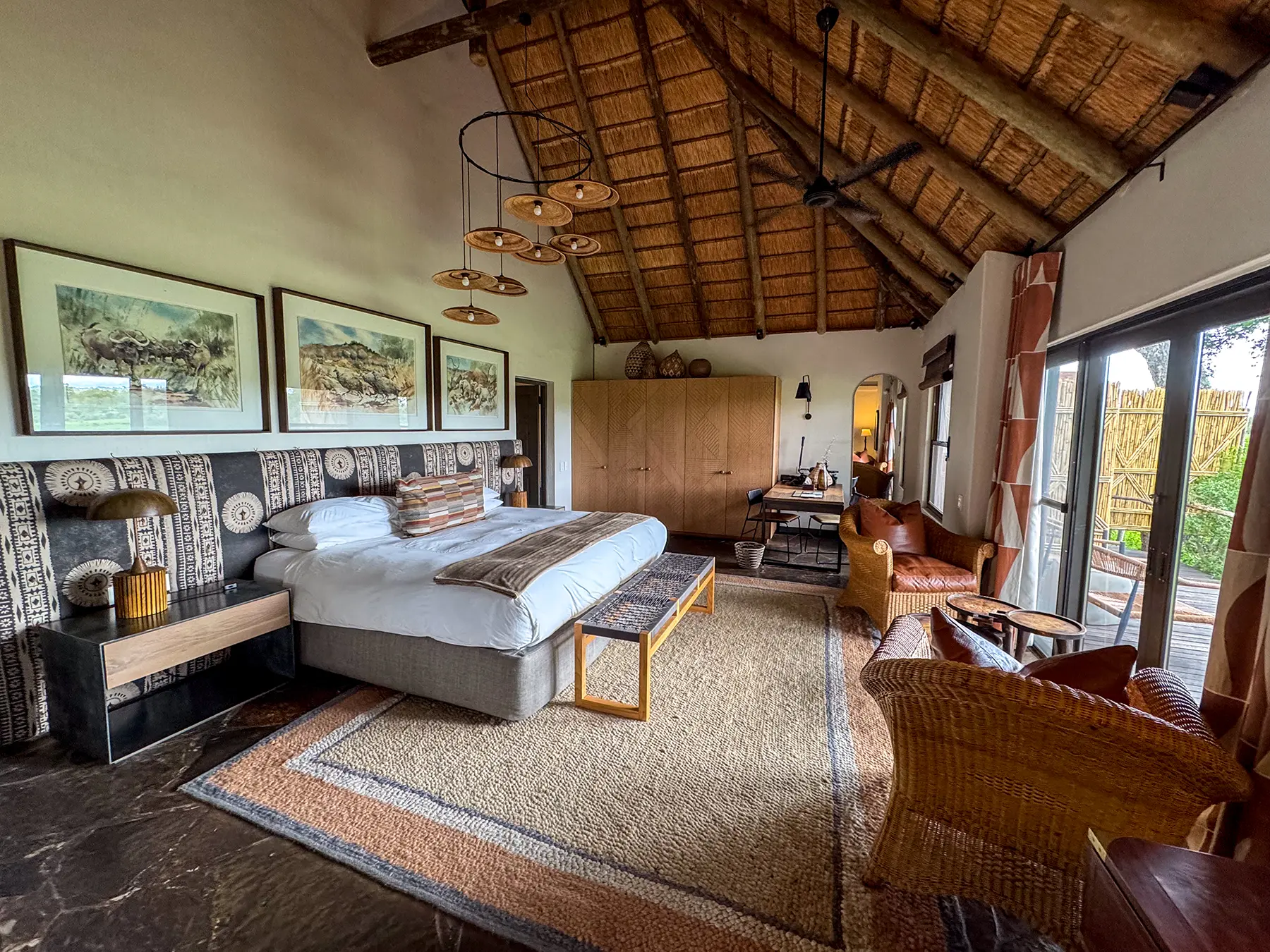
These additional perks are reflected in the price, however, with rates starting from $1,000 per person per night.
My preference: When on safari in South Africa, I usually opt for a blend of mid-range and luxury accommodation. I feel it’s worth paying extra for a luxury lodge if it allows me to safari in outstanding wildlife areas that I wouldn’t otherwise be able to access.
For example, MalaMala sits on the largest traversable area in Greater Kruger, over 70% of which is exclusively for guests at their lodge.
Selected Reserves
It’s not just the luxury level that affects the cost of your safari; the specific reserve you stay at also has a significant influence on what you’ll pay overall.
The more affordable of the two reserves on this itinerary, Timbavati offers lodge accommodation priced from $500 per person per night. Meanwhile, Sabi Sand is the most expensive reserve in Greater Kruger, where even the most ‘inexpensive’ lodges will set you back $800 per person per night.
Below is a table overview of accommodation prices per person per night for a selection of Greater Kruger reserves. You should be aware that these reserves generally don’t offer budget accommodation.
| Reserve | Mid-range (USD) | Luxury (USD) |
| Sabi Sand | $643 | $1,703 |
| Timbavati | $500 | $1,000 |
| Klaserie | $411 | $1,655 |
| Thornybush | $440 | $1,568 |
| Balule/Olifants West | $684 | $888 |
| Kapama | $824 | $1,164 |
| Kruger National Park | $300 | $843 |
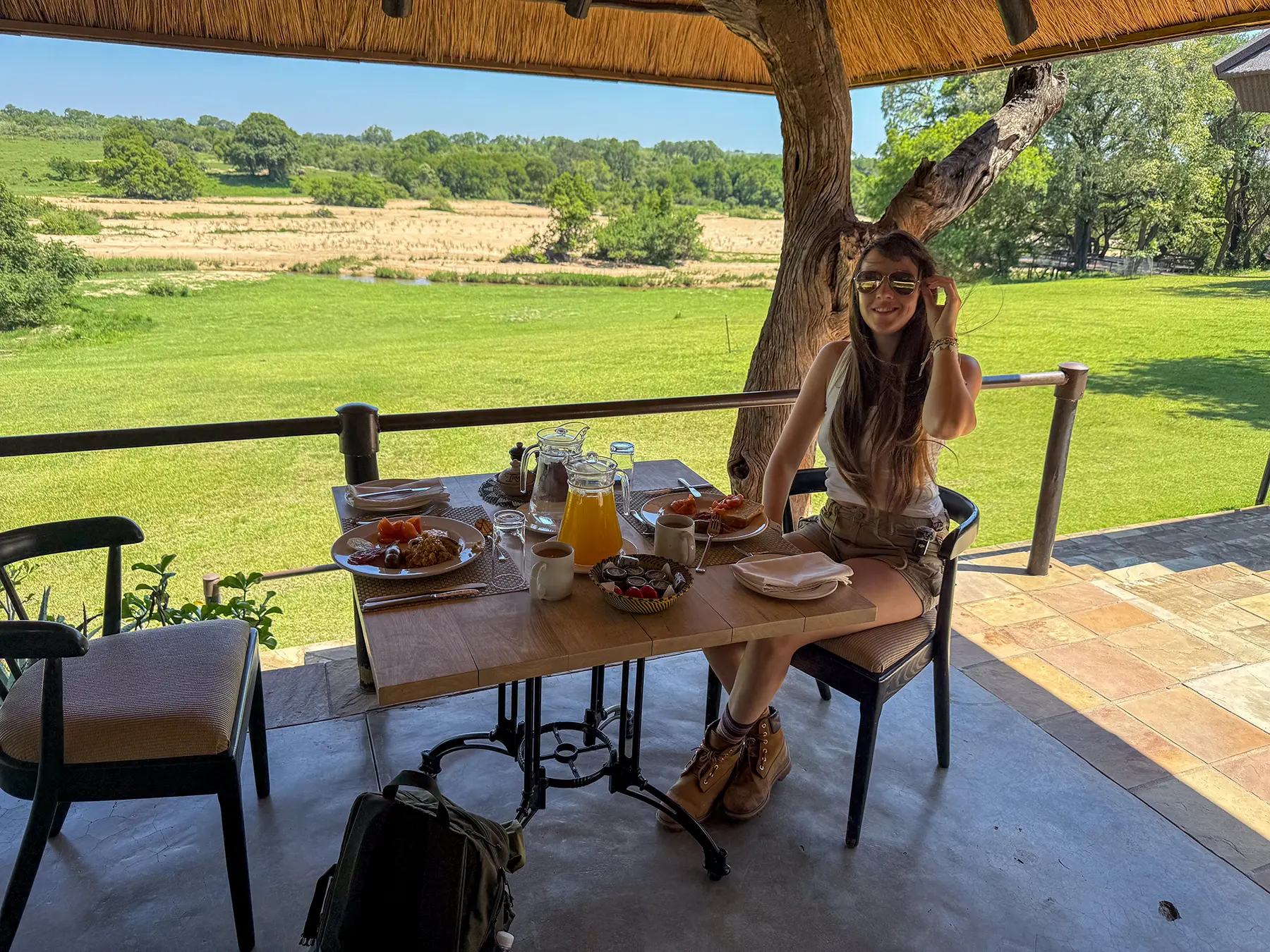
My preference: For a 5-day itinerary, I’d advise splitting your time between Timbavati and Sabi Sand. If your trip is longer, including a third reserve will enable you to see an even wider range of wildlife and landscapes. You can view my 10-day South Africa safari itinerary for an example of how to fit a third reserve in.
How You Book
The way you book your safari will also affect the total price you pay. I’ve learned from experience that booking with a local agent works out better value overall than booking directly with the lodges (as transfers booked this way are usually pricey and often you can waste money in the wrong lodge or locations) or going with an international tour operator.
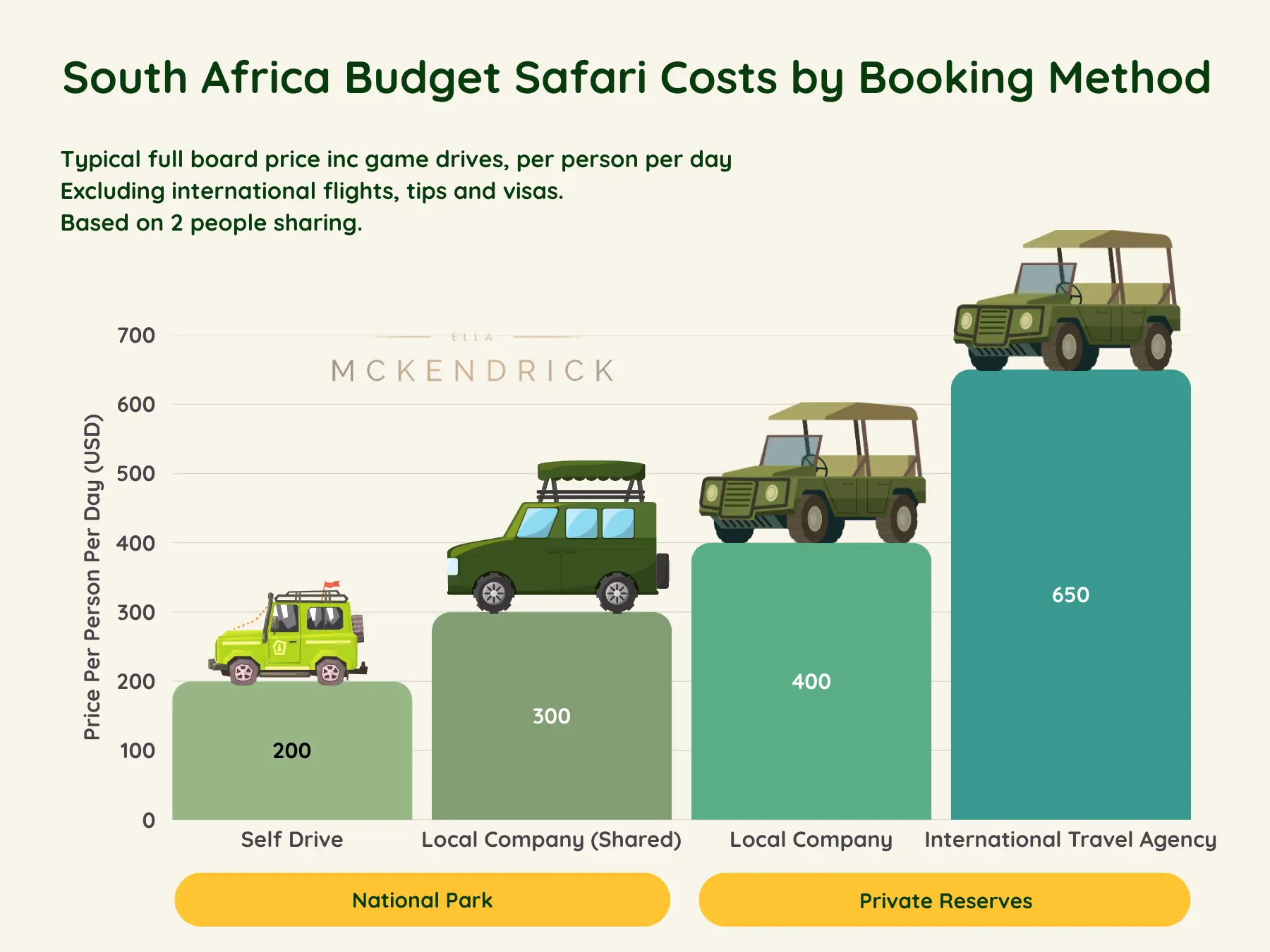
International travel agents apply a generous markup to their safari prices, driving up the cost by anywhere between 30-50%.
While self-driving can help you reduce costs and is a viable option in some South African reserves, it is not an option for this itinerary as the private reserves in this Greater Kruger itinerary do not allow it.
My recommendation is to book through a local tour operator for any Greater Kruger safari, as this option offers unbeatable value.
My preference: For me, local tour operators are always the best option, offering the ideal balance of value and quality.
Time of Year
Accommodation costs in South Africa fluctuate considerably depending on the season, which in turn is determined by the country’s climate patterns. While conservation levies don’t change over the year, lodge rates fluctuate significantly. They are at their highest in peak season (May-October) and drop by up to 40% in green season (November-April).
My preference: My own favourite times to safari in South Africa are either April and May or September to December. Known as the shoulder months, they still offer outstanding sightings but rates are slightly lower than during peak season.
I’ve also been there in November and December, when lodge prices were lower, and although the lush greenery made it a little more challenging to spot wildlife, I still saw lots of animals and got some amazing photos, some of which I’ve included in this guide.
Transfer Type (Road or Air)
How you opt to travel between reserves also affects the cost of your safari, with air transfers costing around $300-500 extra per person each way.
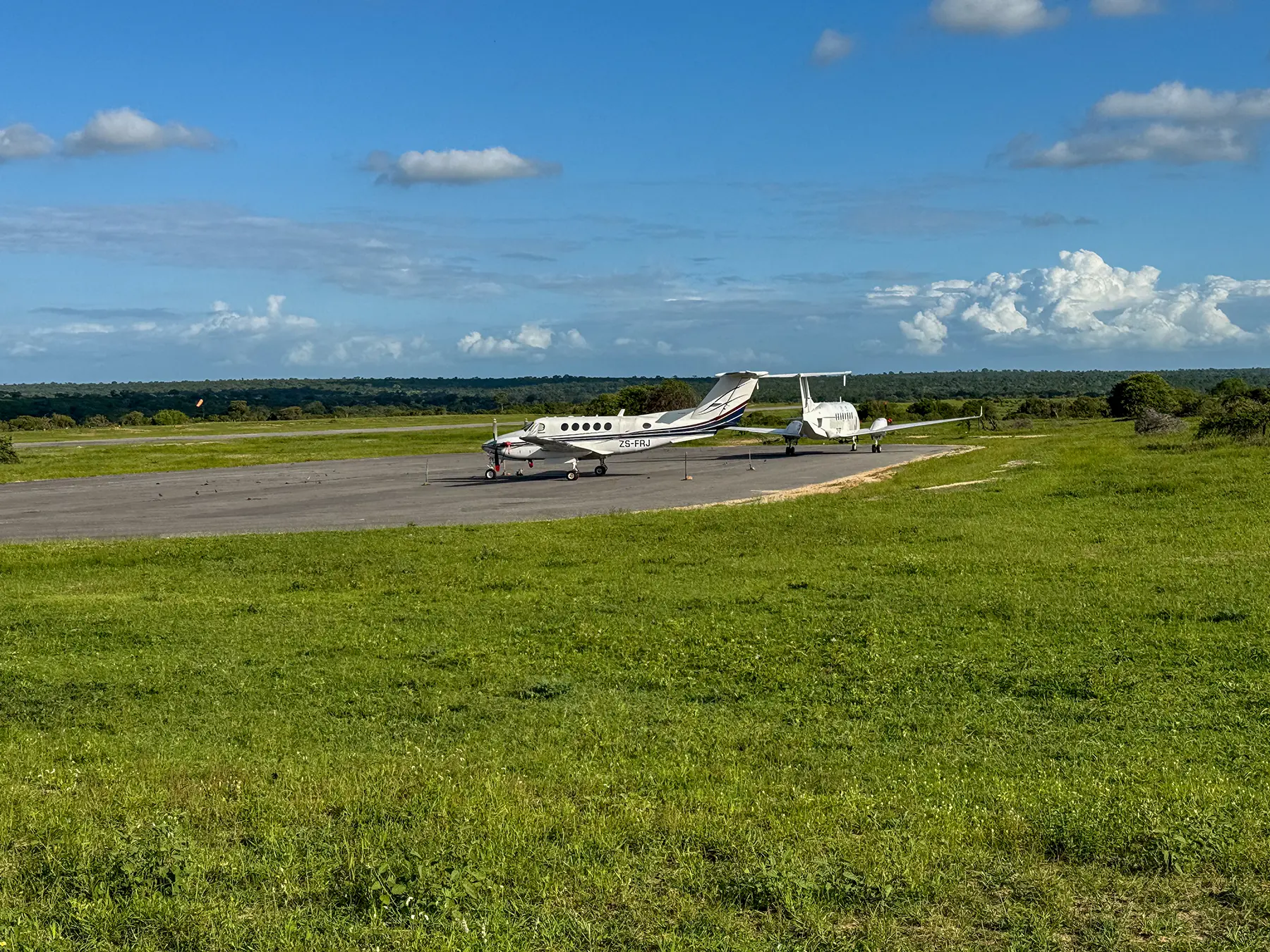
It takes about four hours to drive from Timbavati to Sabi Sand, compared to roughly one hour for a flight. As the roads outside the reserves can be poor, be prepared for a slow and bumpy journey if driving. For this itinerary, though, I recommend flying with Federal Airlines, the main service connecting the reserves.
My preference: Based on the cost of accommodation in the selected reserves, this itinerary is for a luxury safari with a relatively generous budget. Since flying is simpler and more convenient, I’d advise plumping for an air transfer between both reserves. If you would still prefer to drive, the 4-hour journey is perfectly doable, but it does eat into your 5-day trip.
Group Size
Unlike in East Africa, where the cost of vehicle hire is shared among passengers, Greater Kruger lodge rates are charged per person, meaning that group size does not affect the cost of a safari to the same extent.
That said, it’s generally cheaper to split the cost between two or more people if you’re booking a private vehicle for your group. In addition, those travelling alone often have to pay a single occupant supplement for a room, so groups of two or more usually pay less per person.
My preference: Travelling in a group of at least two is best as you can avoid paying a single traveller supplement in the lodges.
When Is the Best Time to Visit South Africa?
Most people would say that the dry season (May-October) is the best time to visit South Africa, as vegetation is sparse and dry conditions draw wildlife to water sources, making for more predictable sightings. However, any time other than the wettest months (late December to late February) really is fine, and I’d actually say that there are a number of perks to going outside of peak season.
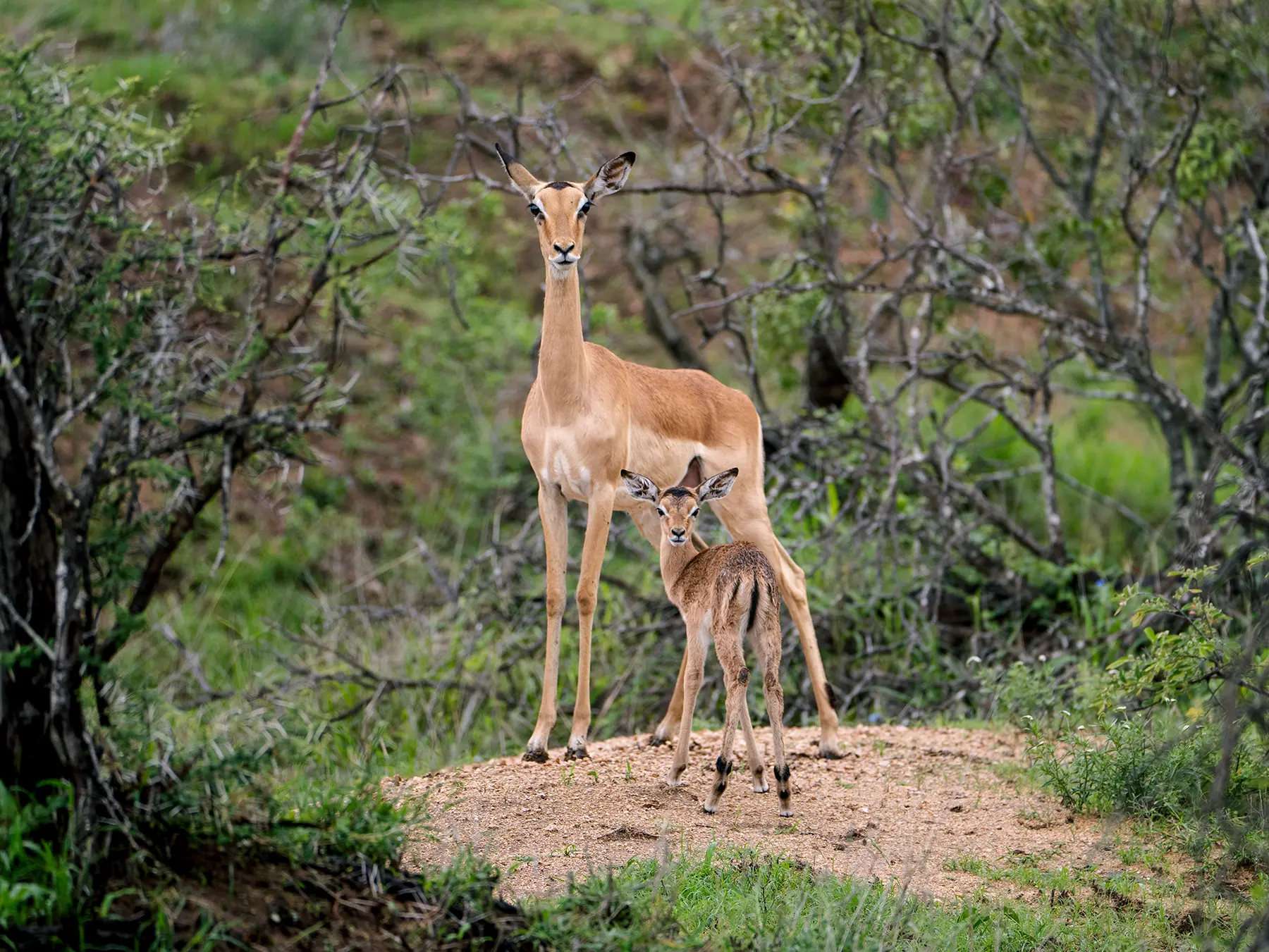
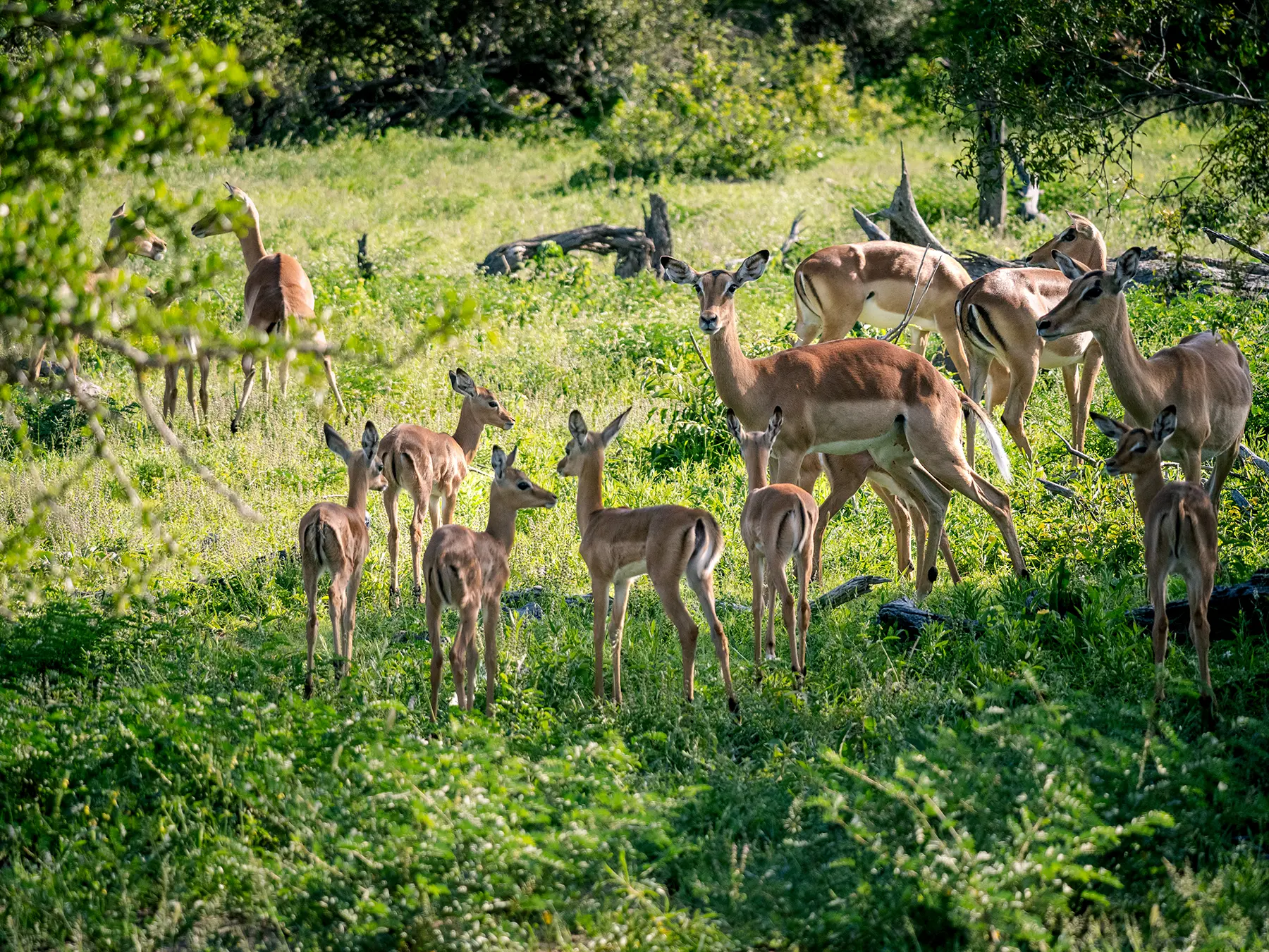
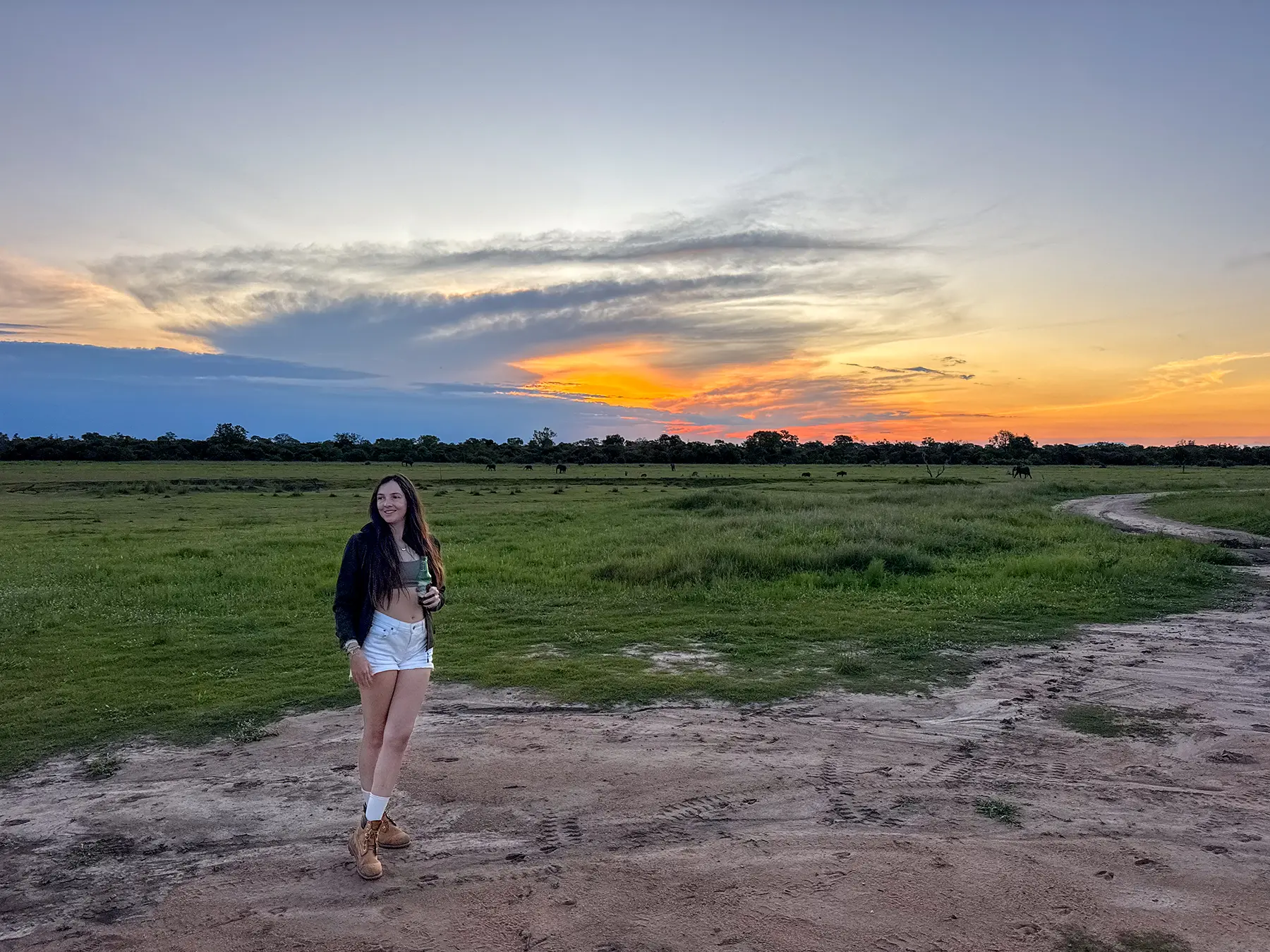
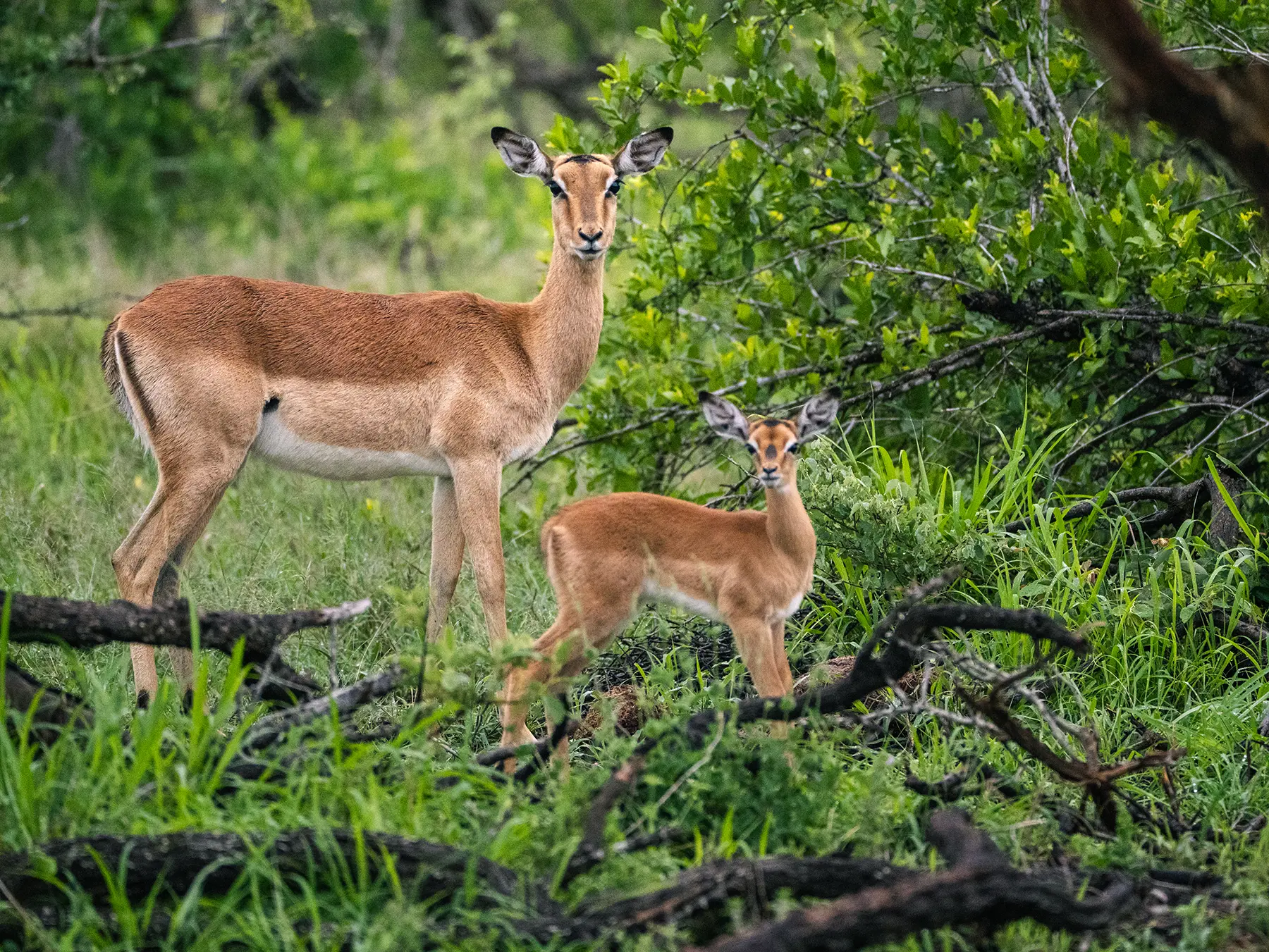
Personally, I prefer to visit during shoulder season because it’s so much less crowded, allowing you to enjoy your trip in peace. I was recently in Greater Kruger from mid-November to mid-December and it was perfect timing, honestly. We saw masses of migrant bird species and adorable newborn impalas, and there were no crowds in sight!
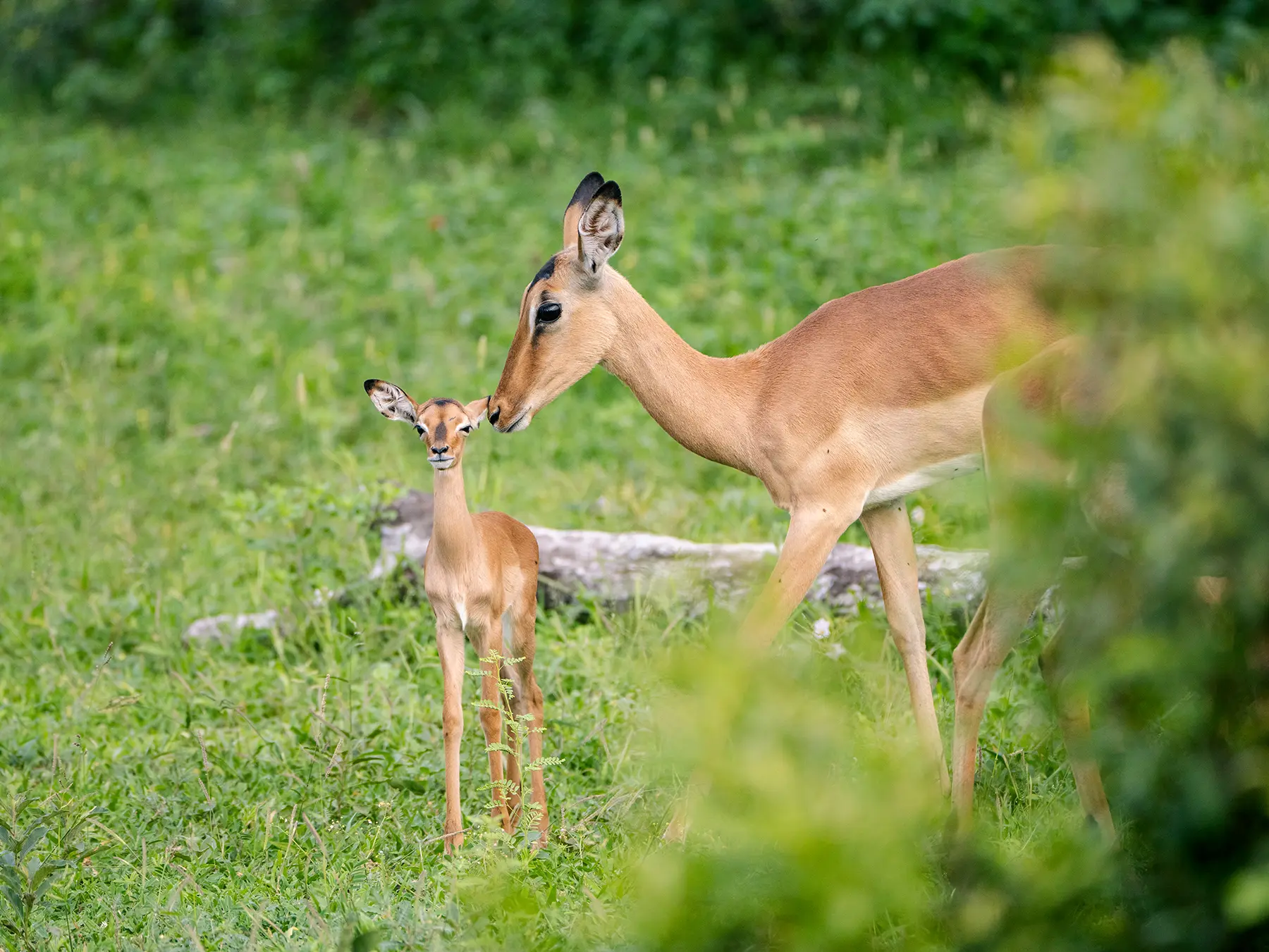
Although the vegetation was denser and made it a tiny bit harder to see the wildlife at times, I still enjoyed countless incredible sightings, with lots of baby animals and the thrilling hunting activity they attract from big cats and wild dogs.
The rich green backdrop also offered a beautiful contrast for my photos, and I think they turned out even better than they would have been in the dry season as a result. I’ve included a few of them here, and you can also watch my videos on YouTube to get a better impression of the landscape.
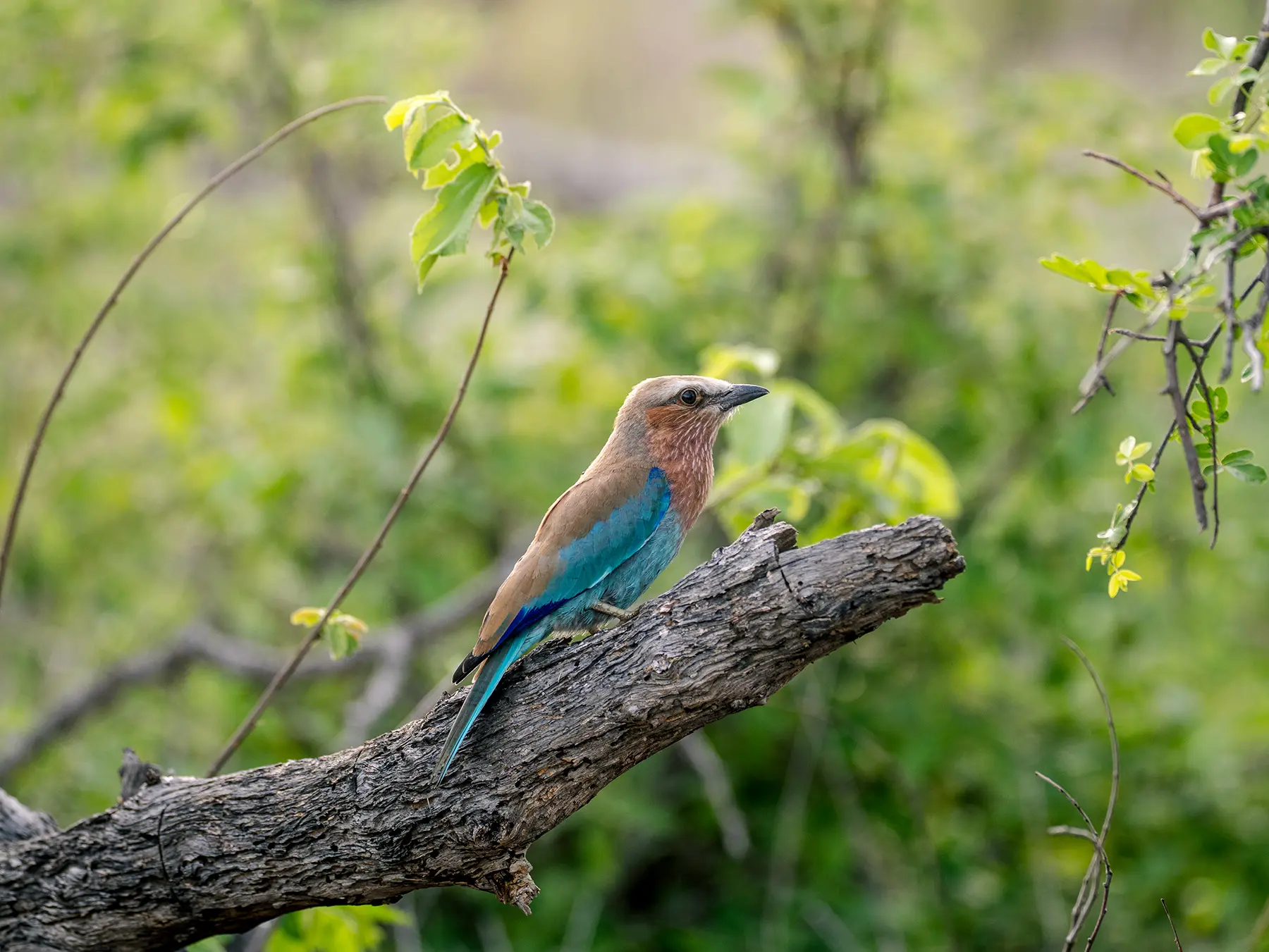
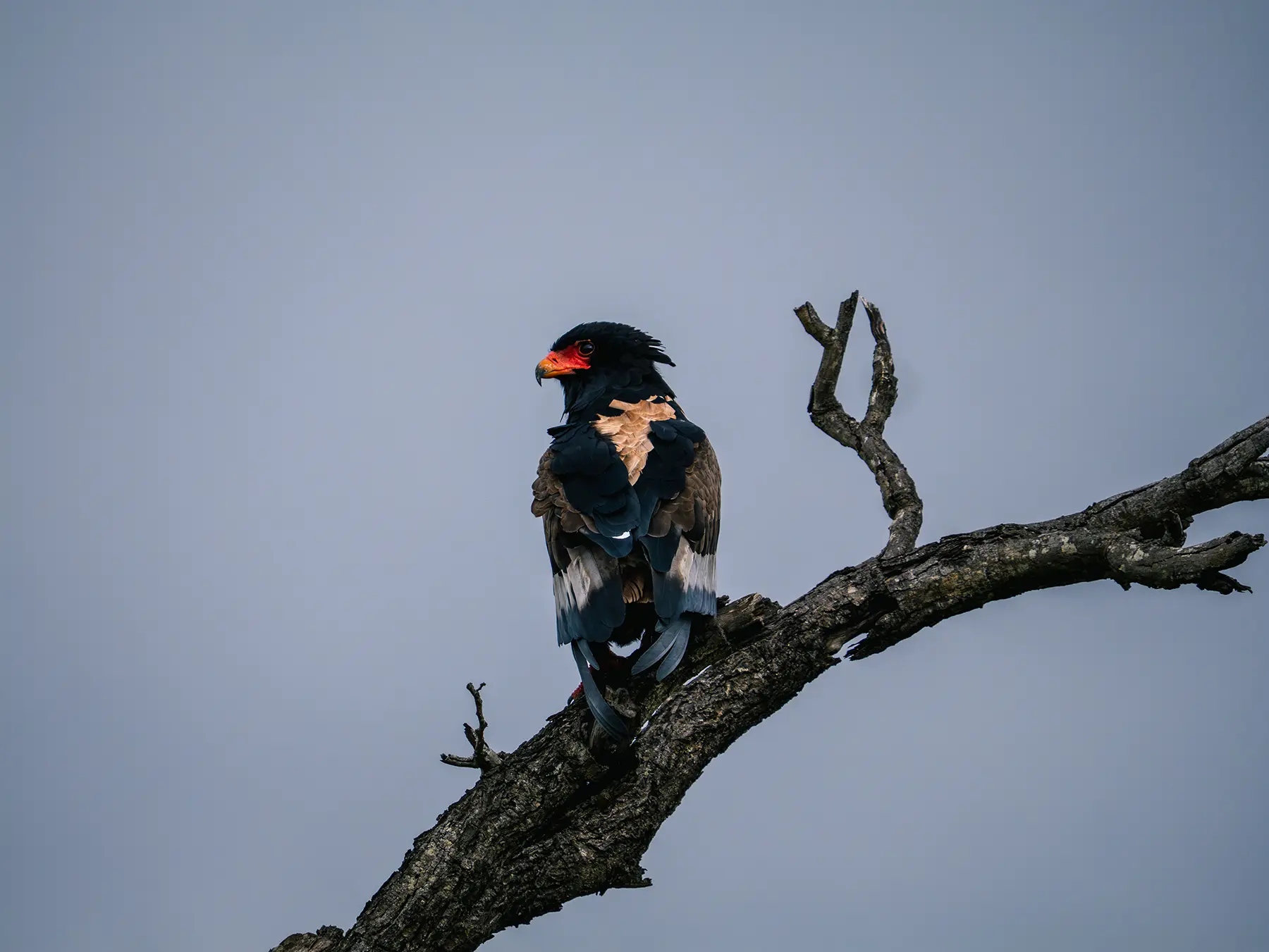
There were also a host of migratory bird species in evidence, including the beautiful blue woodland kingfisher, the brilliant blue European roller and the great Wahlberg’s eagle. The most memorable bird sighting I had was of a fearless fork-tailed drongo repeatedly chasing off one Wahlberg’s eagle to protect its young!
If malaria risk is a concern for you, plan to go during the dry winter months (June-August), when transmission is very low. For lush vegetation that adds an extra dimension to your photographs and adorable baby impala to admire, you should travel between November and December.
A word of caution: there can be a risk of adverse weather in late December, January and February, such as the severe flooding that hit the region between December 2025 and January 2026. Aside from the obvious safety concerns, this can also lead to road closures or force lodges to shut their doors and could therefore impact your trip significantly, even in areas not directly hit by floods.
My preference: In my opinion, September to early December is the ideal time to see Greater Kruger, as you get the gorgeous fresh vegetation, adorable baby animals and dramatic predator action. May is a great alternative for sparser vegetation and outstanding dry season game viewing with less crowding and better rates than peak season.
But it’s important to be aware that a safari is a very personal thing, and we all have our own wishes and preferences. While these are my favourite months, you might find that a different time of year suits you better. Keep reading to discover more about the different seasons so you can choose the perfect one for you!
I’ve outlined the pros and cons of each season below.
Simply click the following links to jump to a detailed information section on each season.
The Dry Winter Season (May-October)
The Dry Winter Season (May-October)
The dry season delivers unbeatable general game viewing along with the best weather.
Dry conditions draw animals to permanent water sources, making sightings more predictable, while sparse vegetation ensures improved visibility. What’s more, temperatures are pleasant, making game drives more enjoyable.
It’s no surprise, then, that this is peak safari season in Greater Kruger, with demand and lodge rates at their highest. The dry season also includes wild dog denning season (May-August), when the location of these endangered predators is more predictable, which in turn means much better chances of a sighting.
But wild dogs aren’t the only rare predators waiting to be seen during the dry season. The leopards for which Sabi Sand is so well known are also easier to sight amid the thinner growth, especially as they often rest under bushes and are not as effectively camouflaged when the vegetation is sparse.
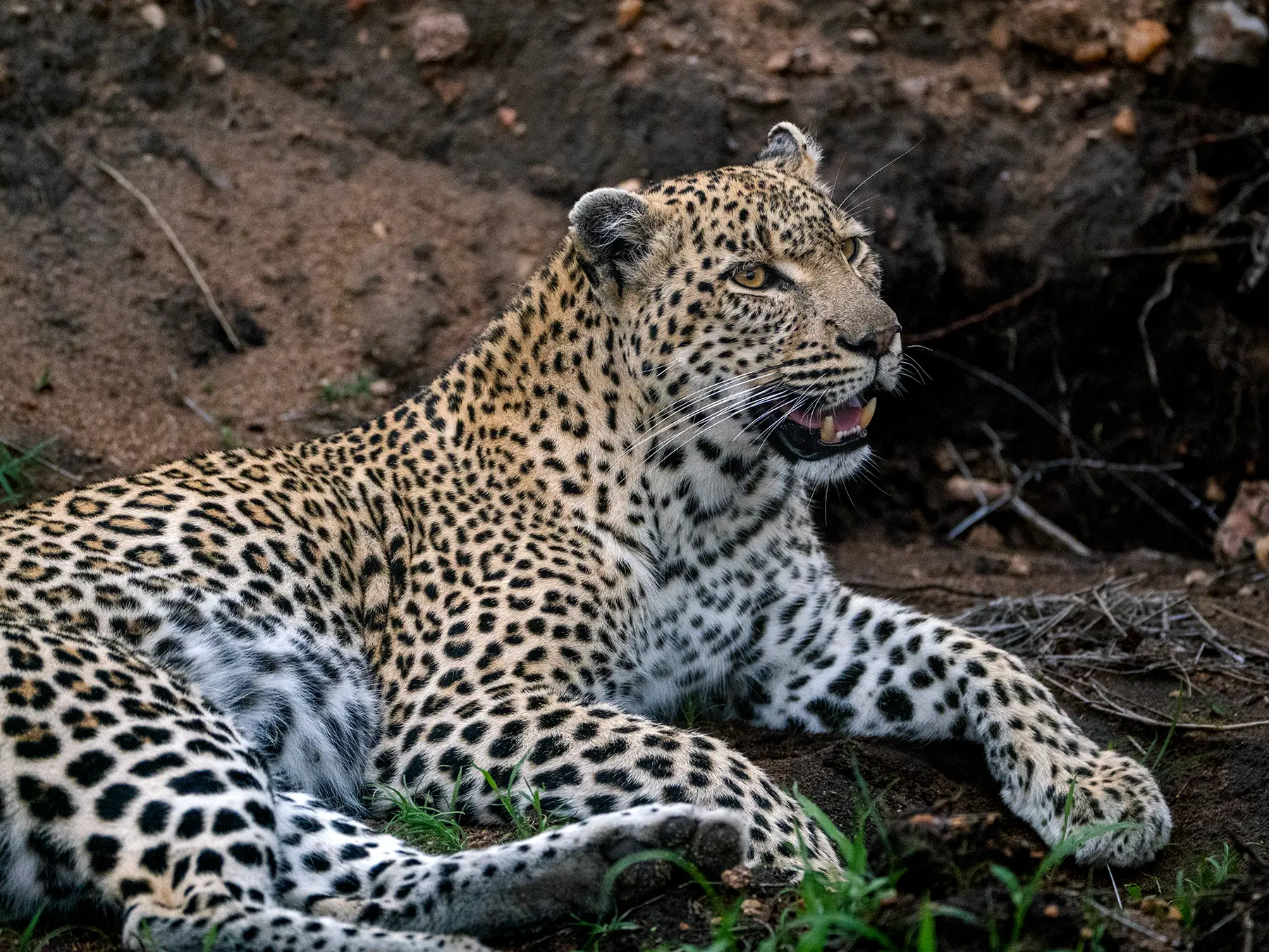
As I’ve said, the cooler temperatures during this season make game drives comfortable in general. However, mornings and evenings can actually be very nippy, so be sure to pack warm layers to keep you snug.
Lastly, if you’re planning your visit for peak season, you’ll need to book well ahead, especially if you want to stay at Sabi Sand. Lodges book out pretty far in advance, so allow yourself at least 12 months to avoid disappointment.
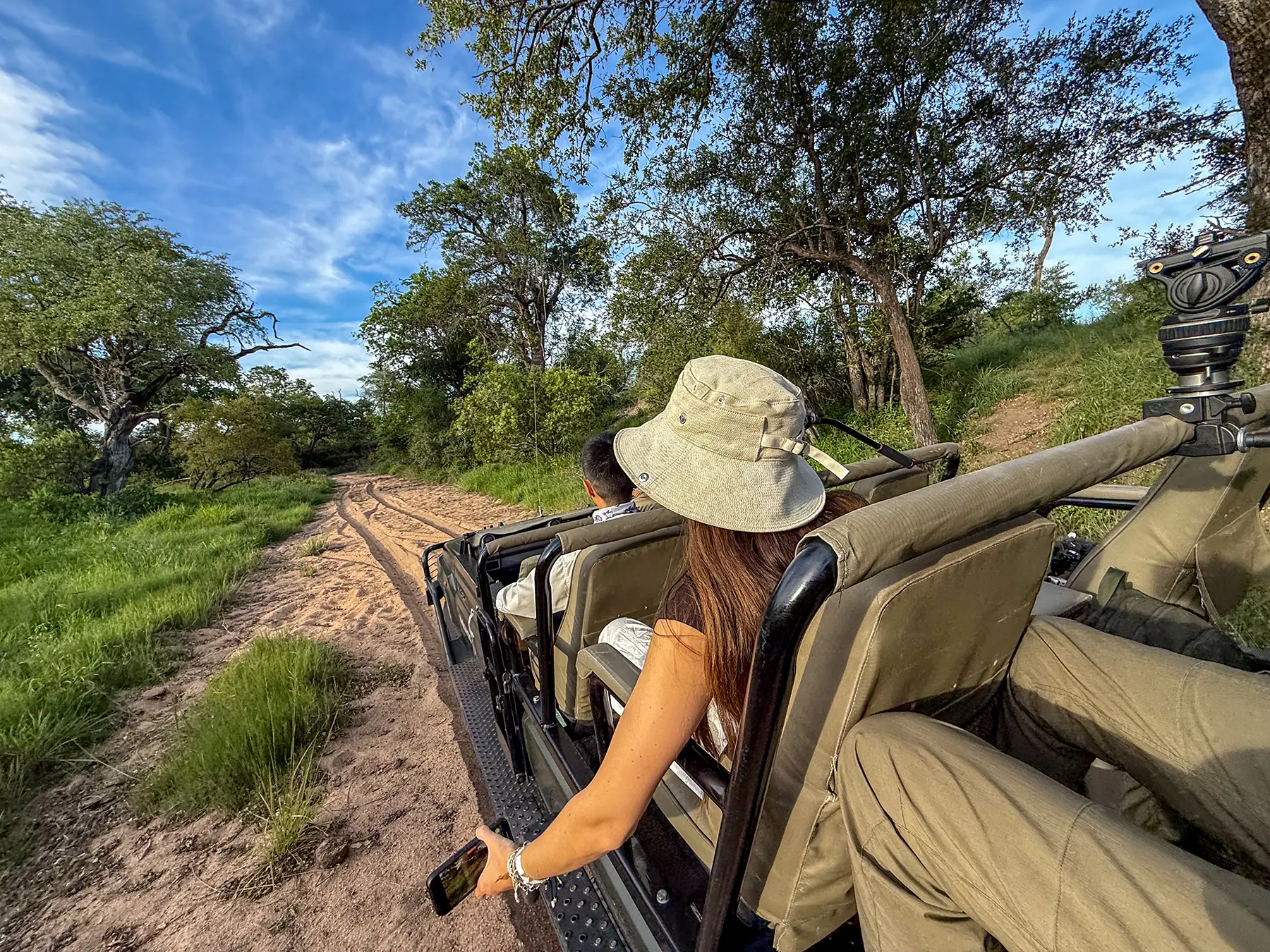
Quick Facts
Prices: High. Peak season rates at most lodges, especially July and August.
Weather: Clear and dry with temperatures as low as 5-10C in the early mornings and highs of 25-28C during the day. Be sure to pack warm layers to stay comfortable in open game drive vehicles on cold mornings.
Wildlife: Excellent. Animals are easier to find thanks to sparse vegetation and limited water sources. This also means lots of predator activity as prey movements are predictable.
Birding: Summer migrants will have left by this time, with only resident species remaining behind. The absence of leaf canopy makes raptors and large birds easier to see.
Reasons to Visit in the Dry Season
- Unparalleled wildlife viewing with animals congregating around water sources
- Pleasant daytime temperatures, little rainfall
- Malaria risk very low from June to August
- Leopards and other reclusive species are easier to see thanks to sparse vegetation
- Wild dog denning season (May to August)
Reasons to Avoid the Dry Season
- Peak prices
- Reserves busiest
- Top lodges sell out up to 12 months in advance
- Brown, dry landscape is less appealing for landscape photography
- Chilly early morning temperatures can leave you feeling cold on game drives (pack warm layers and a beanie)
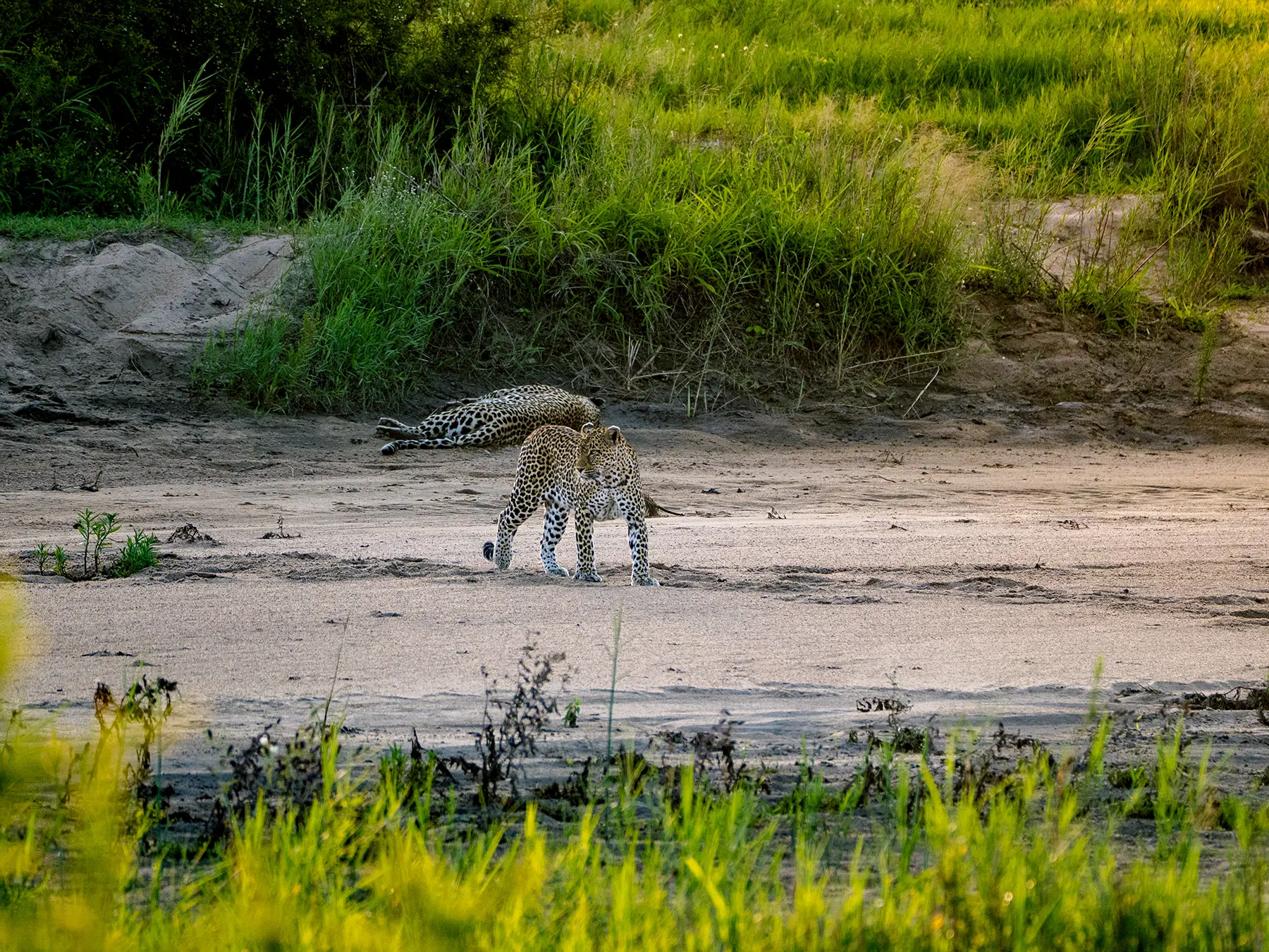
The Green Season (November-April)
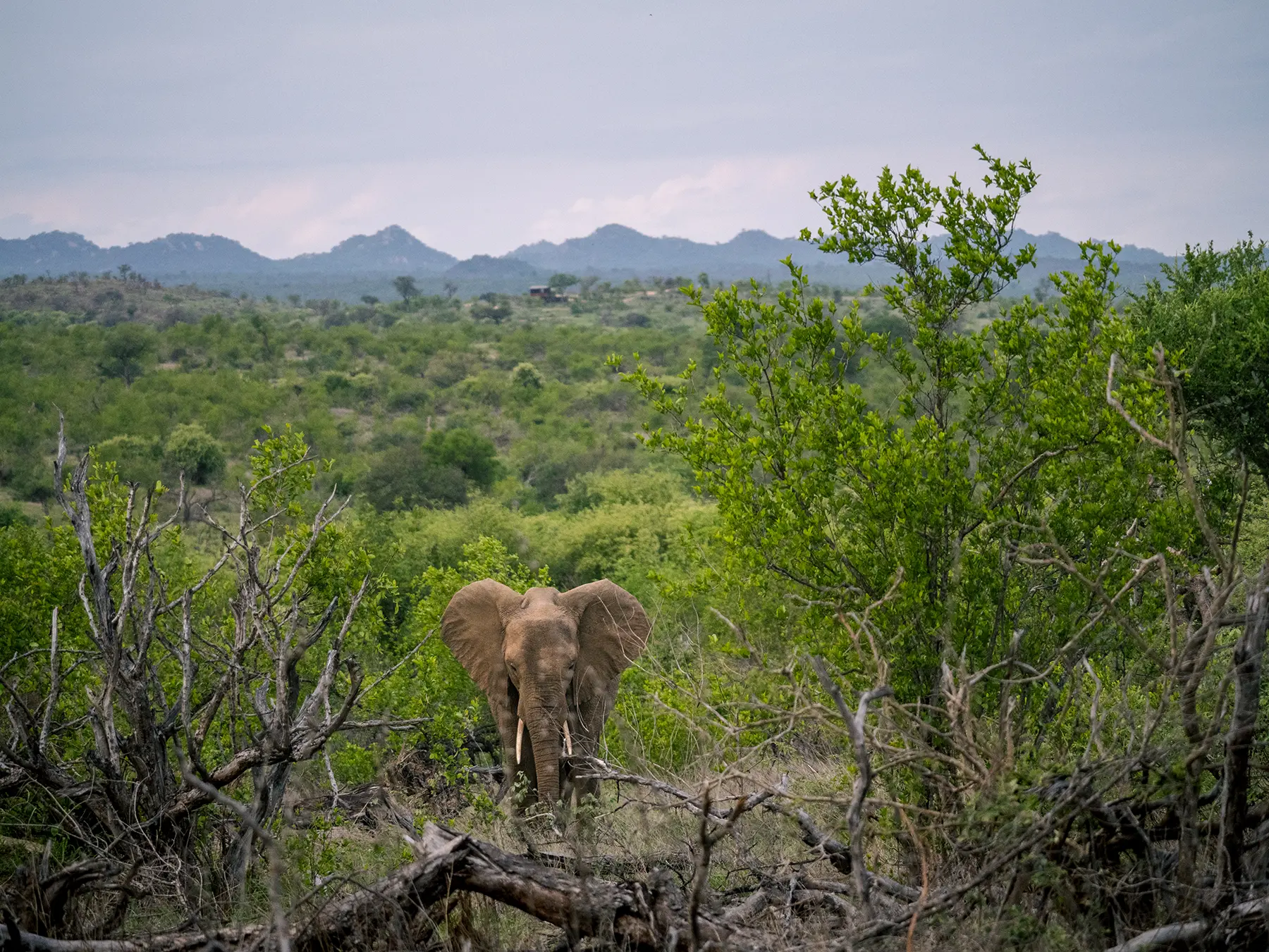
The green season is the wet period in Greater Kruger, bringing theatrical thunderstorms, rich green vegetation and the region’s highest rainfall levels.
It’s perfect for birders, safari-goers seeking off-peak prices and photographers in search of striking skies and lush green backgrounds.
Although wildlife patterns can be less predictable with food and water plentiful everywhere and thick vegetation obscuring animals, private reserves still ensure good sightings thanks to their expert trackers and off-road access. What’s more, you can make real savings on accommodation, with lodge rates dropping by up to 40%.
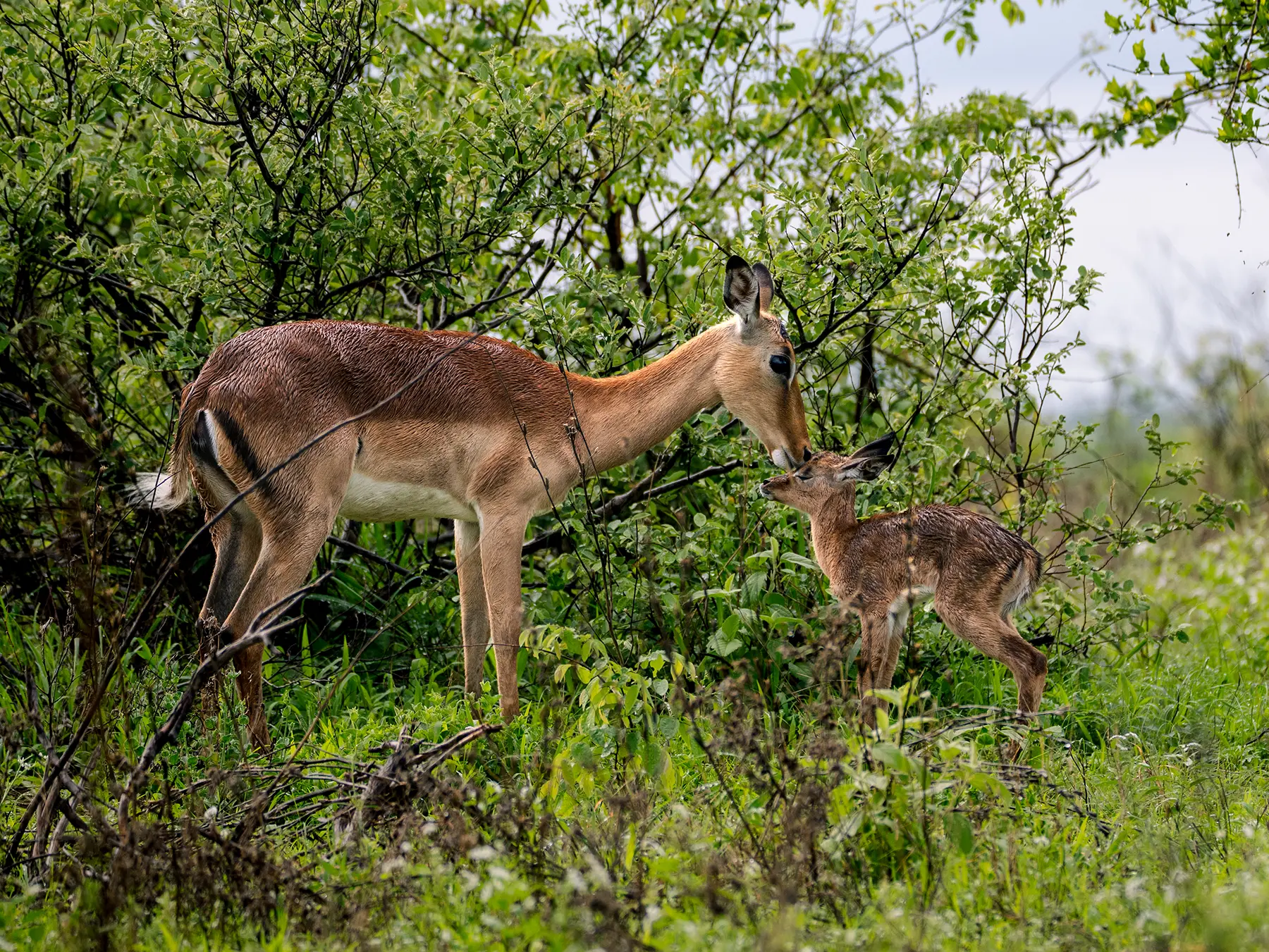
Mid-November marks the start of the impala lambing season, and as the mothers all give birth within a few weeks of one another, the bush is soon packed full of adorable baby antelopes taking their first uncertain steps.
But the influx of new life also brings with it a massive surge in predator action, with big cats and wild dogs surrounded by more prey than they know what to do with. When I visited in November/December, I had 10 sightings of predators feeding on impala lambs, and even got to see 2 of the kills!
November and December are a good time to visit because you get the fabulous greenery that the wet season brings, but the grass hasn’t grown long enough to make sightings really difficult. However, the weather is at its wettest in January and February, and these are the worst months to visit Greater Kruger as a result.
Quick Facts
Prices: At their lowest. Discounts of up to 40% at many lodges in the green season.
Weather: Hot and humid (28-40C), with clear, warm mornings and thunderstorms most afternoons. Wettest months are January and February.
Wildlife: Plentiful but can be more difficult to spot than during dry season as animals are spread out due to plentiful food and water. Excellent baby animal sightings and predator action.
Birding: Peak season with migratory species present, e.g. European rollers, cuckoos, and bee-eaters.
Reasons to Visit in the Green Season
- Lowest accommodation prices, significant discounts
- Fantastic photography conditions with vibrant green landscapes and striking stormy skies
- Outstanding birding with migratory species present
- Huge numbers of baby animals
- Massive predator activity due to the large numbers of young prey
- Fewer crowds for more intimate sightings and a more relaxed experience overall
Reasons to Avoid the Green Season
- Malaria risk at its highest
- Unfavourable weather conditions, with often unpleasant heat and humidity and frequent afternoon rain, which can affect game drives
- Wildlife is scattered all over and can be more difficult to see amid the denser greenery
How Long Should You Spend on a South Africa Safari?
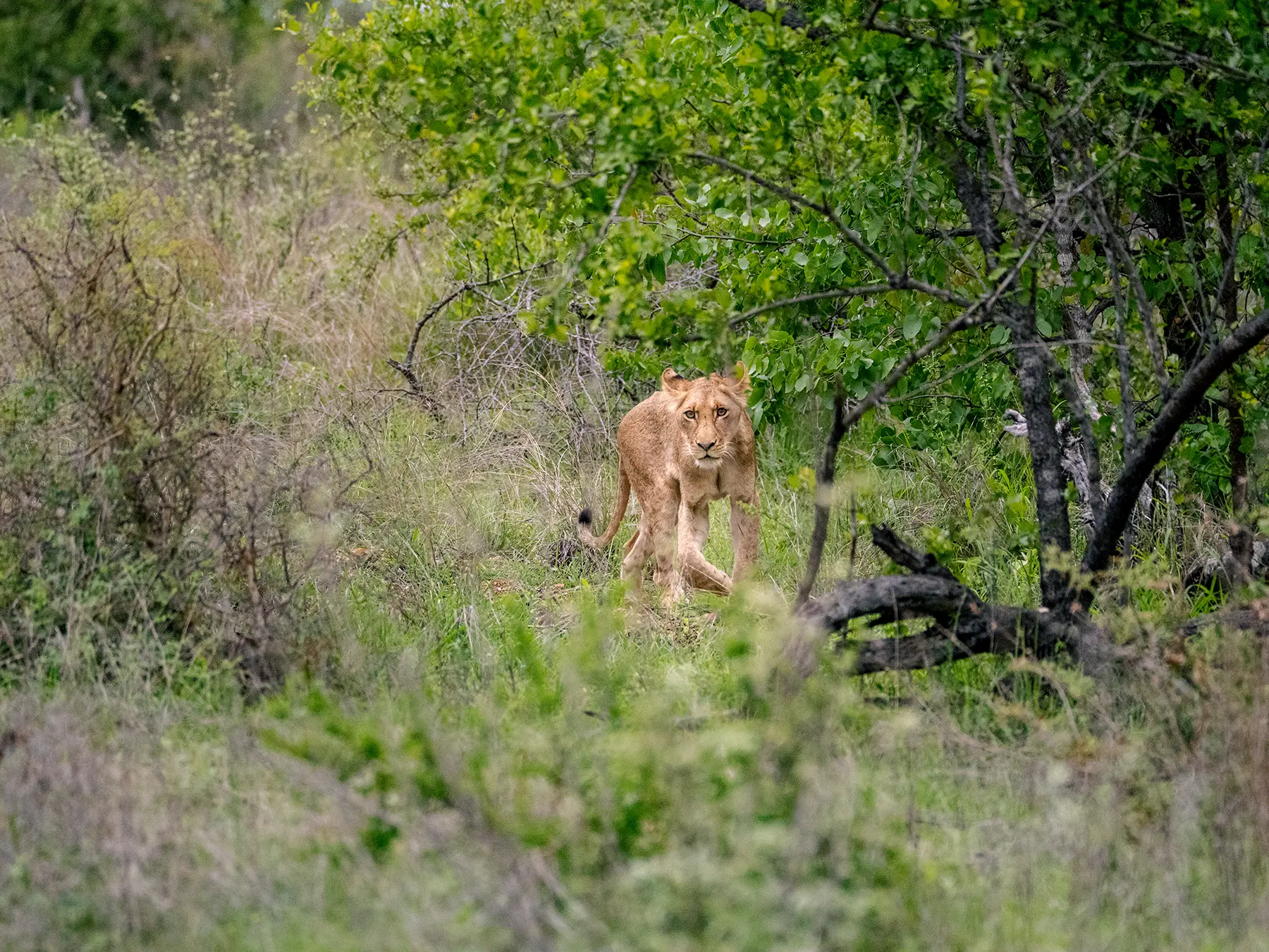
I feel five days is sufficient time for a great safari in Greater Kruger. This will allow you to visit two private reserves, taking in the lion-rich bushveld of Timbavati and Sabi Sand’s famous leopards, with sufficient game drives to ensure a reasonable chance of seeing wild dogs as well as each of the Big Five.
If time and budget allow, you could extend to a 7-day itinerary or even allow yourself ten days and either use the extra time to go on additional game drives in both reserves or head to Cape Town and spend a few days there.
Although my latest visit to South Africa was a month long, this was because I was covering as many reserves as possible to offer informed opinions and clear guidance on my blog and YouTube channel. My time there also included a number of rest days for backing up pictures and videos.
What 5 Days in Greater Kruger Gets You
- Timbavati (Days 1-3): Ample lion sighting opportunities plus the possibility of seeing the white lions for which the reserve is renowned. Bush walks through the unfenced 206-square-mile (53,395-hectare) territory are another highlight. Max 2 vehicles per sighting.
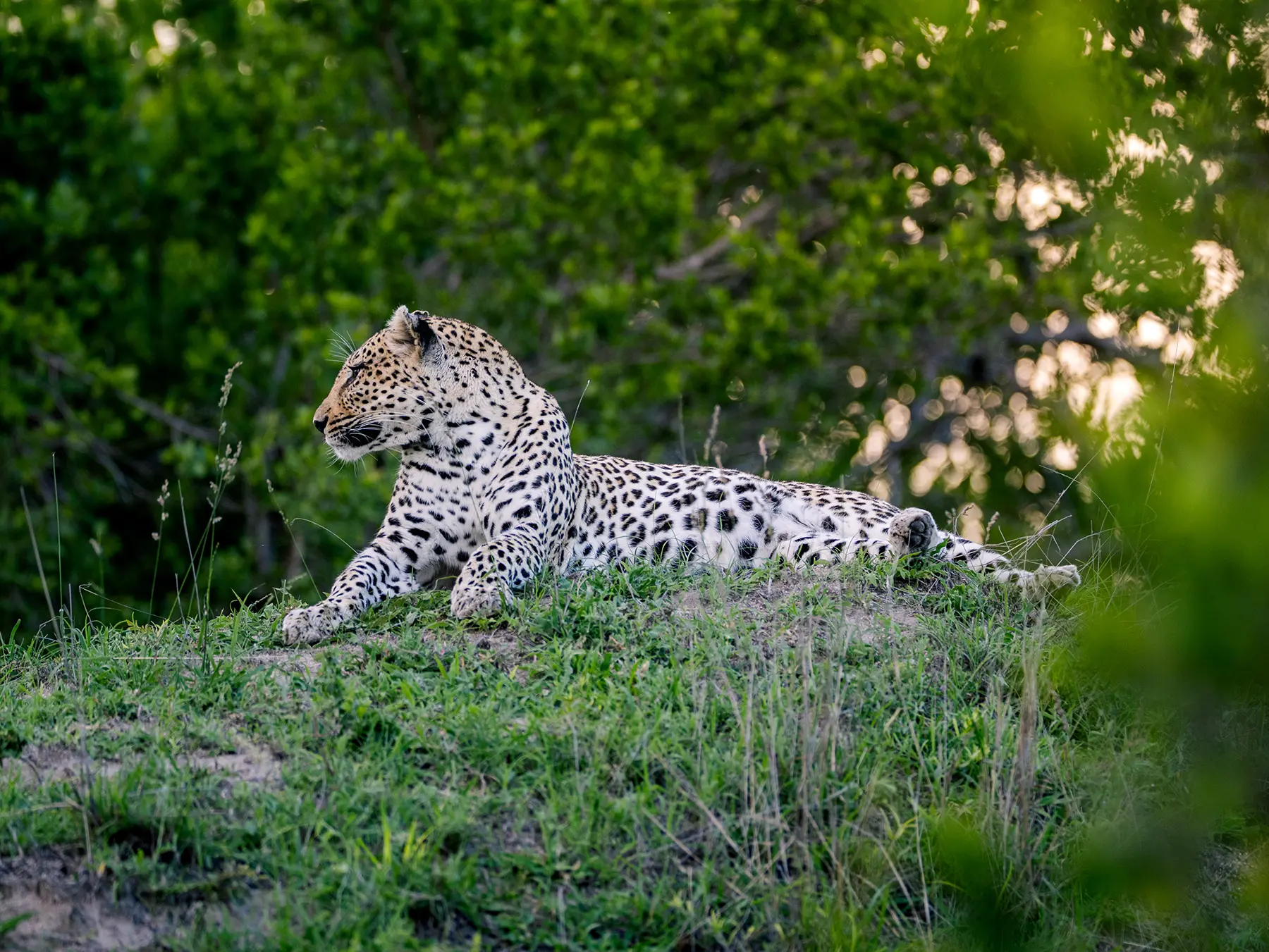
- Sabi Sand (Days 3-5): Unrivalled leopard viewing and expert guides who can distinguish up to 85 individuals by coat pattern. Max 2-3 vehicles per sighting.
- Arrival and departure (Days 1 and 5): Domestic flight from Johannesburg to Hoedspruit Eastgate followed by a short road transfer. Fly out of Skukuza Airport to Johannesburg or Cape Town.
If your time is very limited and you can’t stretch to five days, a two- or three-day trip will still deliver a good experience in Greater Kruger but you would stick to one reserve.
As South Africa is on the pricier end of the safari scale, those with limited budgets might prefer to look at one of the more cost-efficient destinations in Africa. Thanks to the wide choice of budget lodges in both countries, a 5-day Tanzania Itinerary or a 5-day Kenya Itinerary makes an excellent alternative for the more budget-conscious traveller.
My preference: If you have the time and the budget, 10 to 14 days is the perfect length for a Greater Kruger safari as it gives you time to visit a third private reserve, which simply isn’t feasible on a shorter trip. You’ll also have more time to see the Big Five and any other animals you’re hoping to spot.
In my experience, you often only enjoy great sightings after spending a few days at a safari location, as you never really know what a given game drive or day will bring.
Some days are quiet and others can be so action-packed it’s almost exhausting – I remember days when I saw so many lions that I felt I’d maxed out by the time I got back to the lodge! It’s that very unpredictability that I find most appealing about safari – no two days are ever the same.
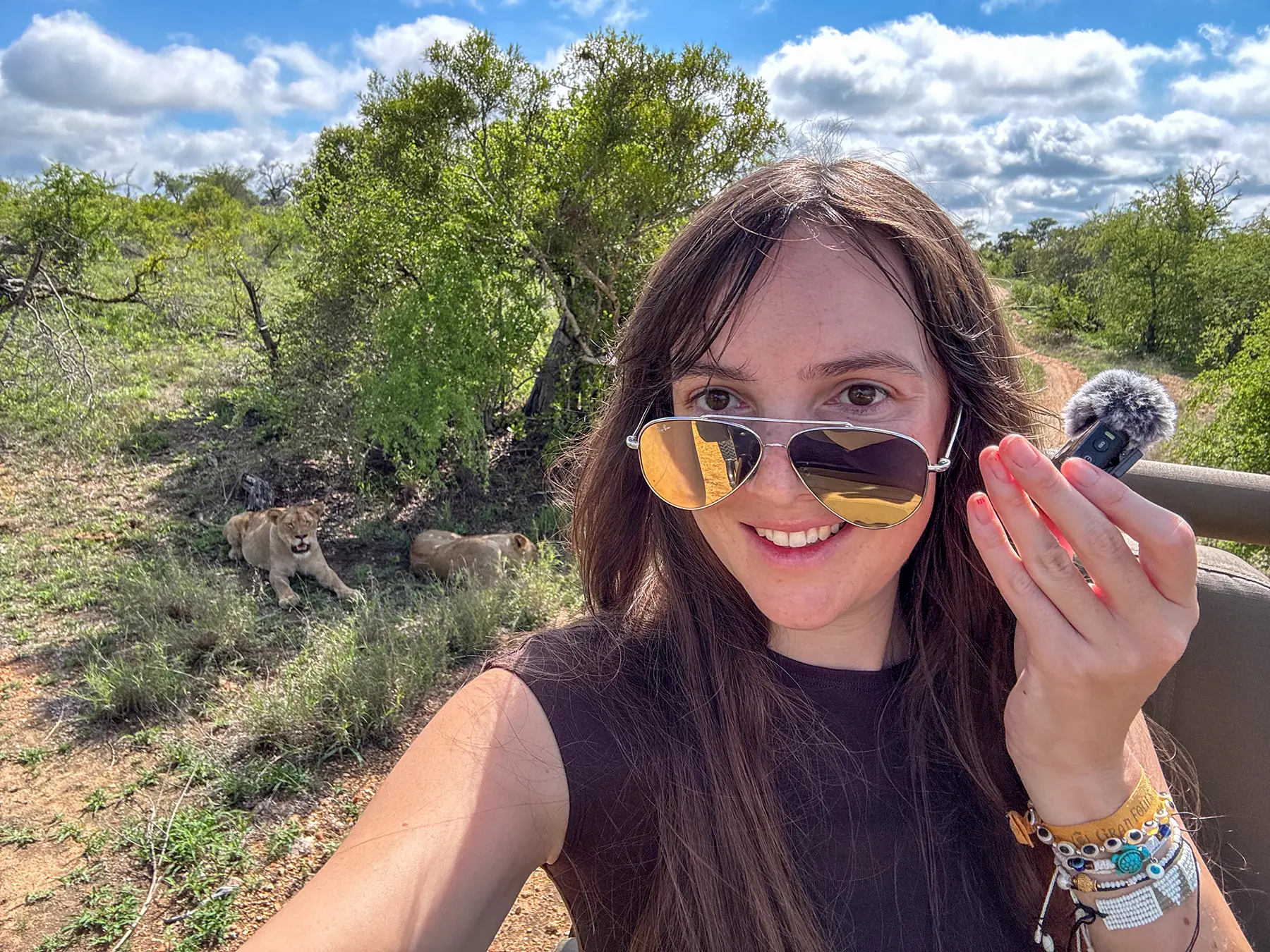
What Does This 5-Day South Africa Safari Itinerary Look Like?
This five-day itinerary covers two Greater Kruger private reserves. You arrive at Hoedspruit for two nights in Timbavati, home of the white lion, then transfer to Sabi Sand for two nights before flying home from Skukuza.
I built this route to keep transfers short, so your days go on game drives rather than the road. It pairs Timbavati’s open bushveld and white lions with Sabi Sand’s legendary leopards. Both reserves also feature all of the Big Five!
Quick Facts
Average driving time per day: Around 1 to 2 hours on transfer days, with no driving beyond game drives on full safari days.
Best times of year: On paper May-October (dry season) but in reality any time other than January and February. April and May or September to December are my favourite months to visit. These shoulder months offer excellent game viewing at slightly lower rates than the July – August peak. Whilst wildlife was slightly harder to spot (still not exactly hard) due to the green vegetation, it made for spectacular photos and, as you can see from my photos in this guide and YouTube videos from the trip, I still saw a lot of wildlife.
5-Day South Africa Safari Map
Day-by-Day Breakdown of the Perfect 5-Day South Africa Safari
South Africa has so much to offer, and five days in the Greater Kruger will zip by, so I have crafted this itinerary to make sure you make the most of every moment!
I have also considered the distance between Timbavati and Sabi Sand and the transfer times in order to come up with the most enjoyable itinerary.
You can get quotes from the same local tour companies I use to organise my own trips here: Safaris By Ella
Click any of the days below to jump to my full notes on that day.
Day 1: Hoedspruit to Timbavati Private Nature Reserve
Drive time (excluding game drives): 1 hour
Today, you’ll be flying into Hoedspruit Eastgate Airport before making the one-hour road transfer to Timbavati Private Nature Reserve, renowned for its unique white lions. Once you’ve settled in, you’ll be heading out on your first afternoon game drive.
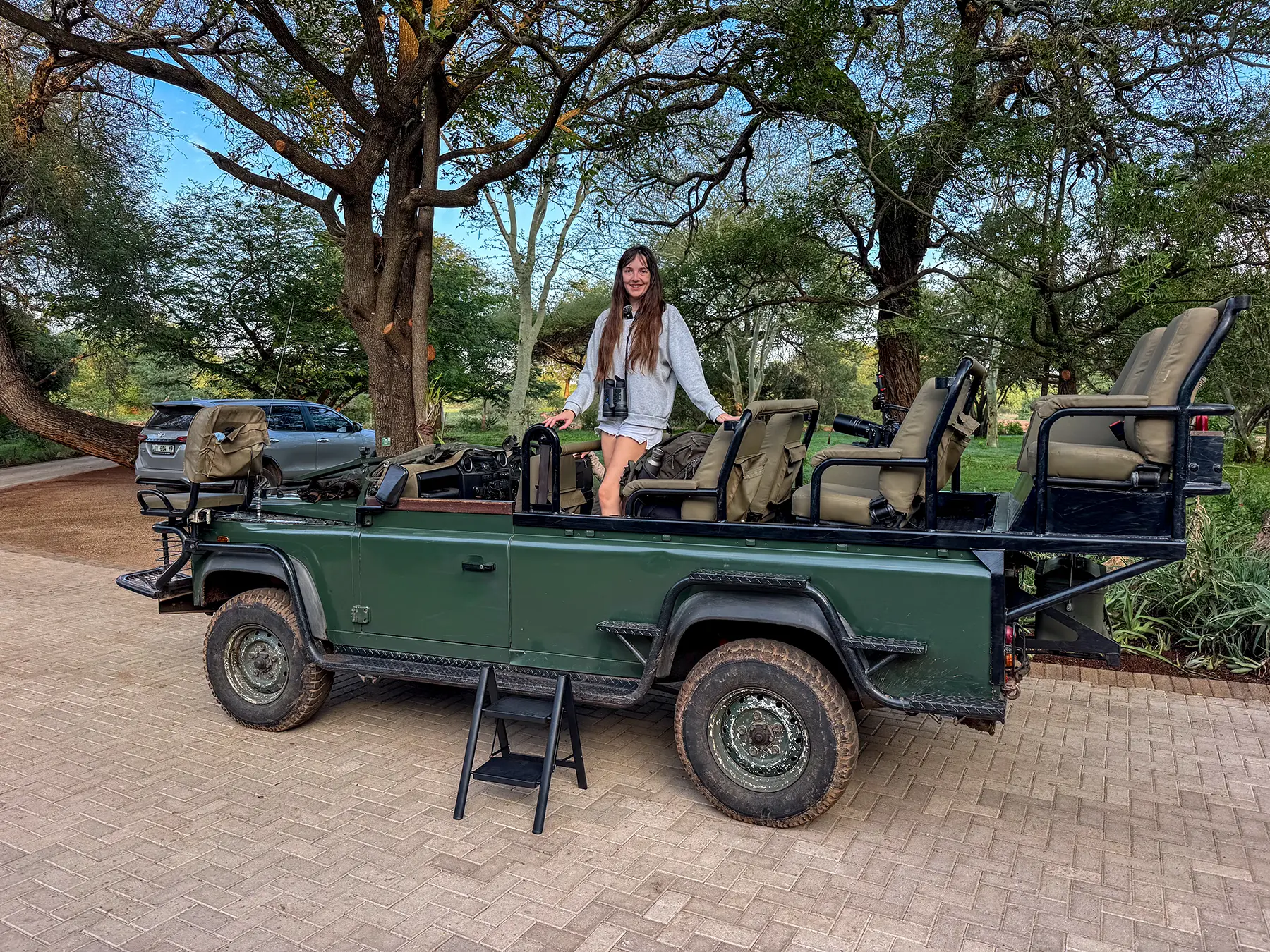
Itinerary
Your safari begins as soon as your plane taxis up to Hoedspruit Eastgate Airport, the main hub serving Greater Kruger’s central reserves. Although the airport sits outside the reserves themselves, wildlife is often visible from the runway, and we spotted warthogs and antelope before we’d even left the airport.
From here, the road transfer to Timbavati takes just one hour, changing from a tarred surface to a wide gravel road once inside the reserve.
Once you’ve settled in at the lodge, you’ll be embarking on your first game drive on this Big Five reserve where lion, leopard, elephant, white rhino and buffalo all roam the open bushveld.
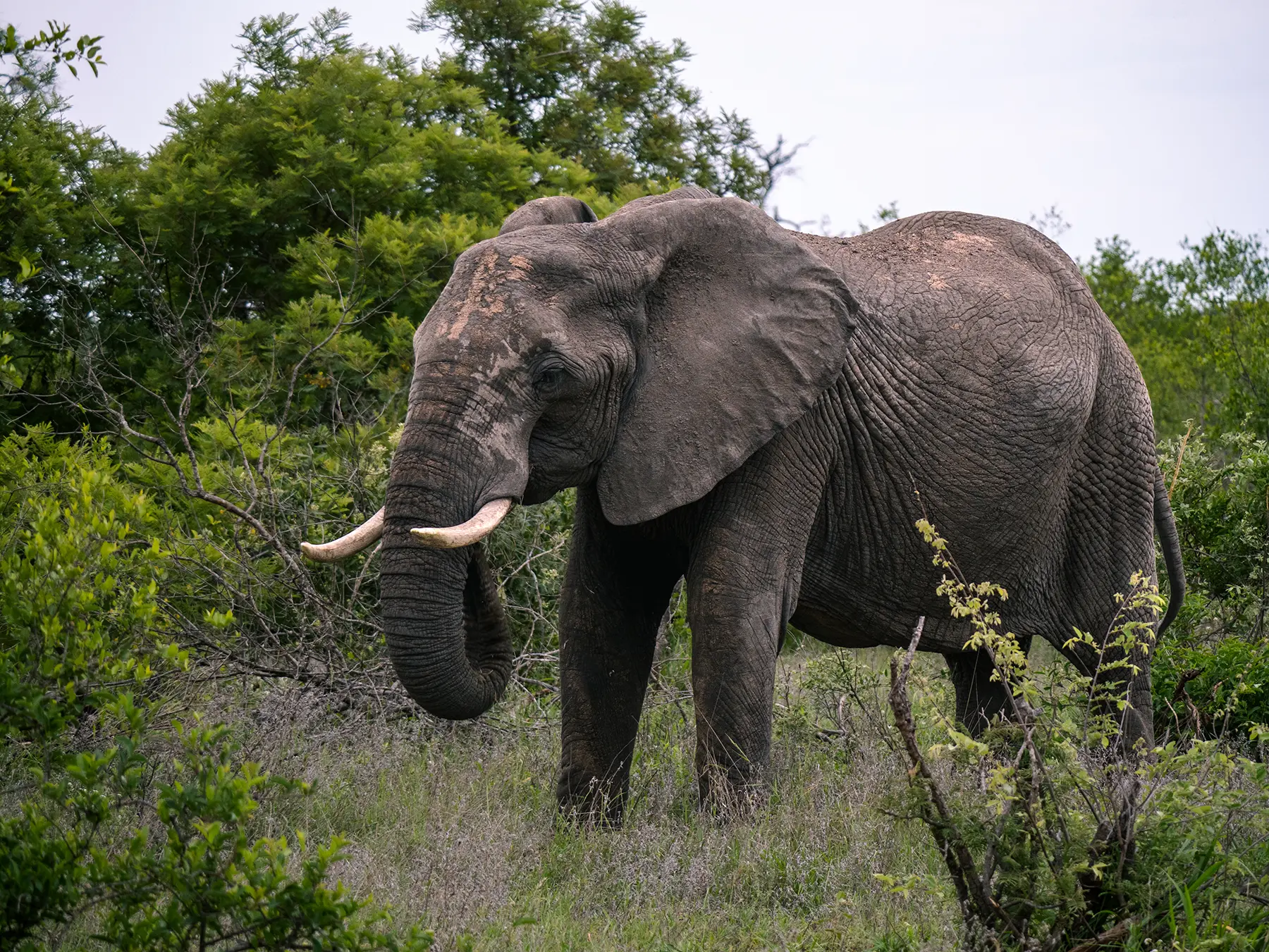
About Timbavati Private Nature Reserve
Spanning a 206-square-mile (53,395-hectare) site on the western side of Kruger National Park with which it shares a 31-mile (50 km) unfenced border, Timbavati Private Nature Reserve is home to all of the Big Five and known for reliable sightings of each.
The reserve was originally established in 1956 when a group of game farmers formed the Timbavati Association, a non-profit organisation now 50 strong whose aim is to protect the area’s natural habitats and species. The broader wilderness area on and around Timbavati extends to roughly 290 square miles (75,000 hectares) once neighbouring concessions are included.
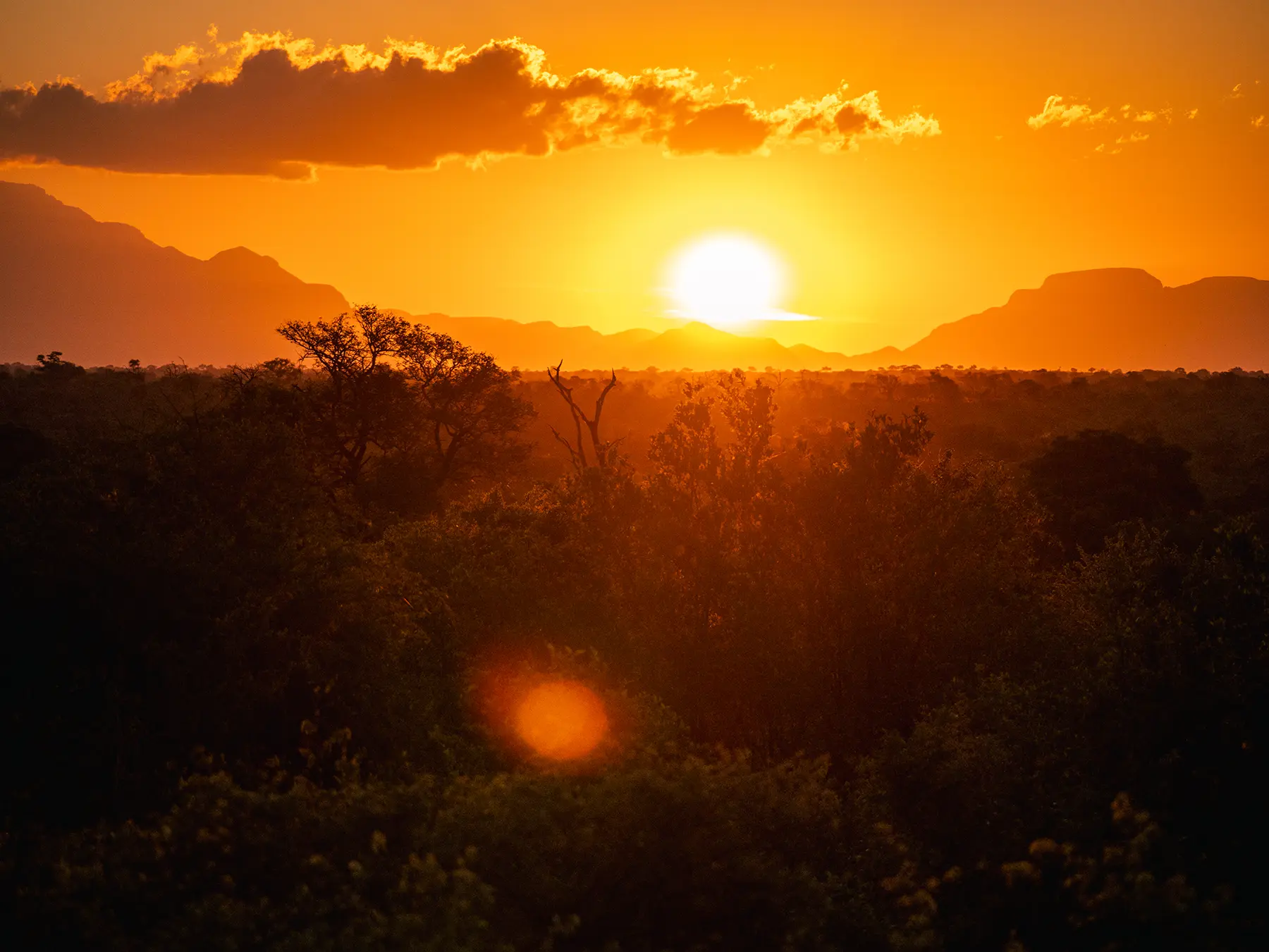
The Associated Private Nature Reserves took a huge step towards supporting and conserving the region’s wildlife in 1993 with their decision to remove the fences separating the private reserves from the adjacent Kruger National Park.
This move created a vast, open ecosystem in which elephants, buffalo and wild dogs can now roam freely over nearly 772 square miles (200,000 hectares) of private land as well as the full territory of Kruger National Park.
What Wildlife Can I See in Timbavati Private Nature Reserve?
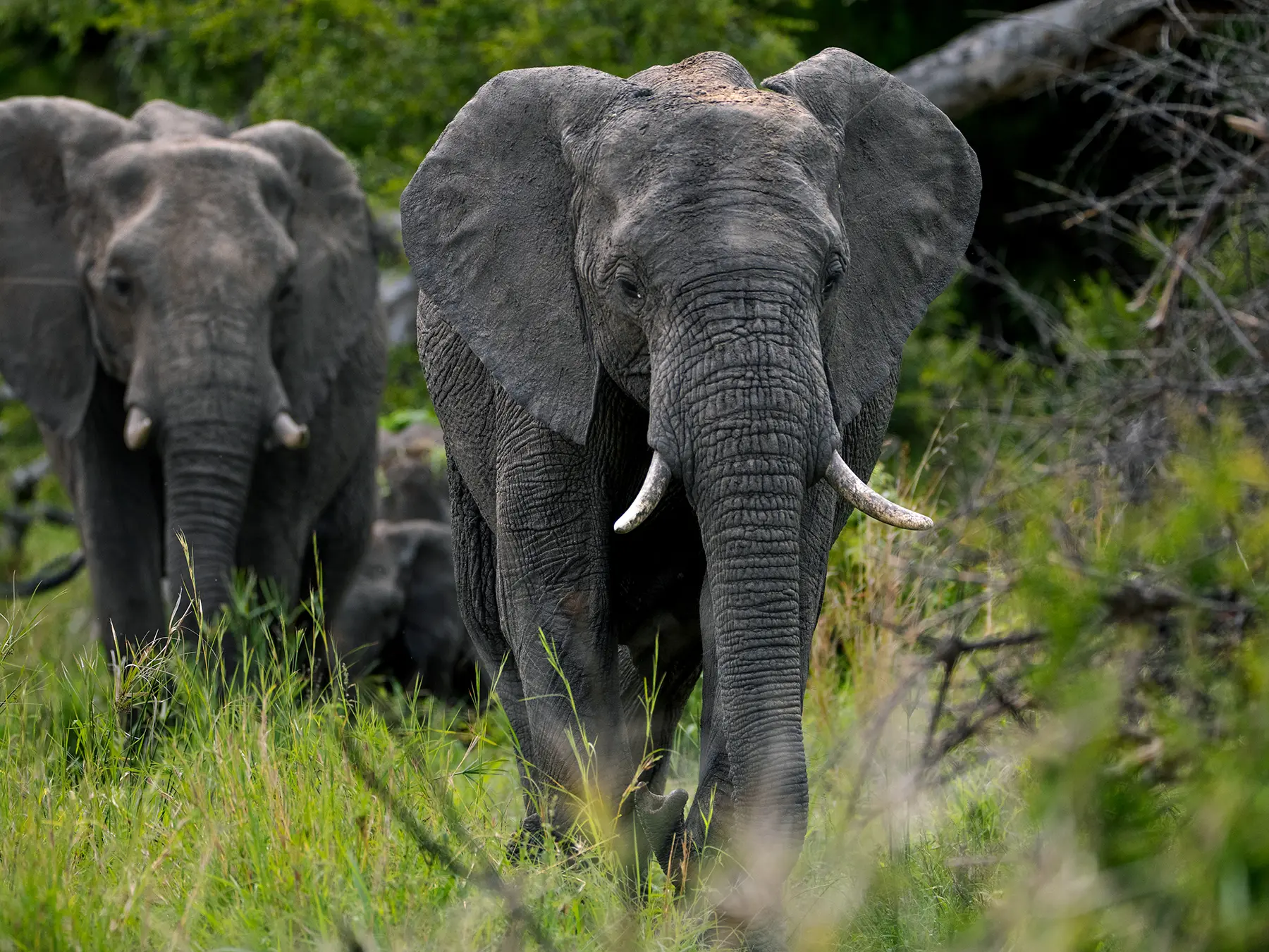
Best known as the home and birthplace of the rare white lion, Timbavati also houses all of the Big Five, with regular sightings of each reported at the reserve. During my stay, I was lucky enough to see all five species.
Of the Big Five, buffalos are the hardest to find in Timbavati due largely to their tendency to spend most of their time near secluded waterholes or in thickets and shaded areas.
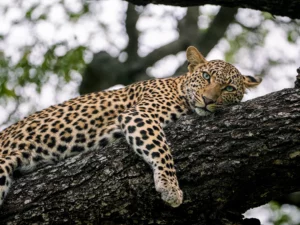
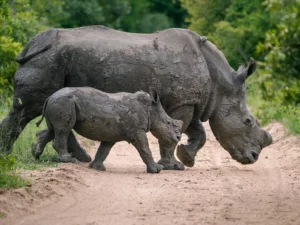
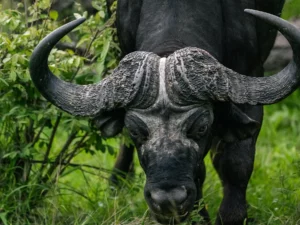
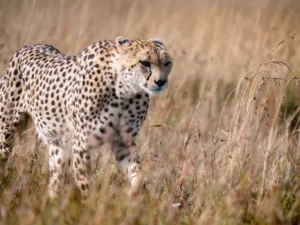
Timbavati is the only place in the world where you’ll find white lions in the wild. The first documented sighting of these incredible big cats, which get their unusual colouring from a recessive leucism gene, was in 1938, although they are believed to have lived in the region for much longer.
With fewer than 20 individuals now living in the wild, a white lion sighting is an extremely rare event, so it was not too surprising that I didn’t see any during my stay, much as I’d have loved to.
However, the recent discovery of a new white lion cub in the Giraffe Pride in central Timbavati was a truly historic find, marking a massive win for conservationists who have dedicated so much time and energy to protecting these iconic creatures.
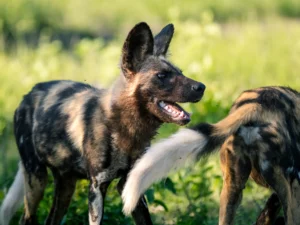
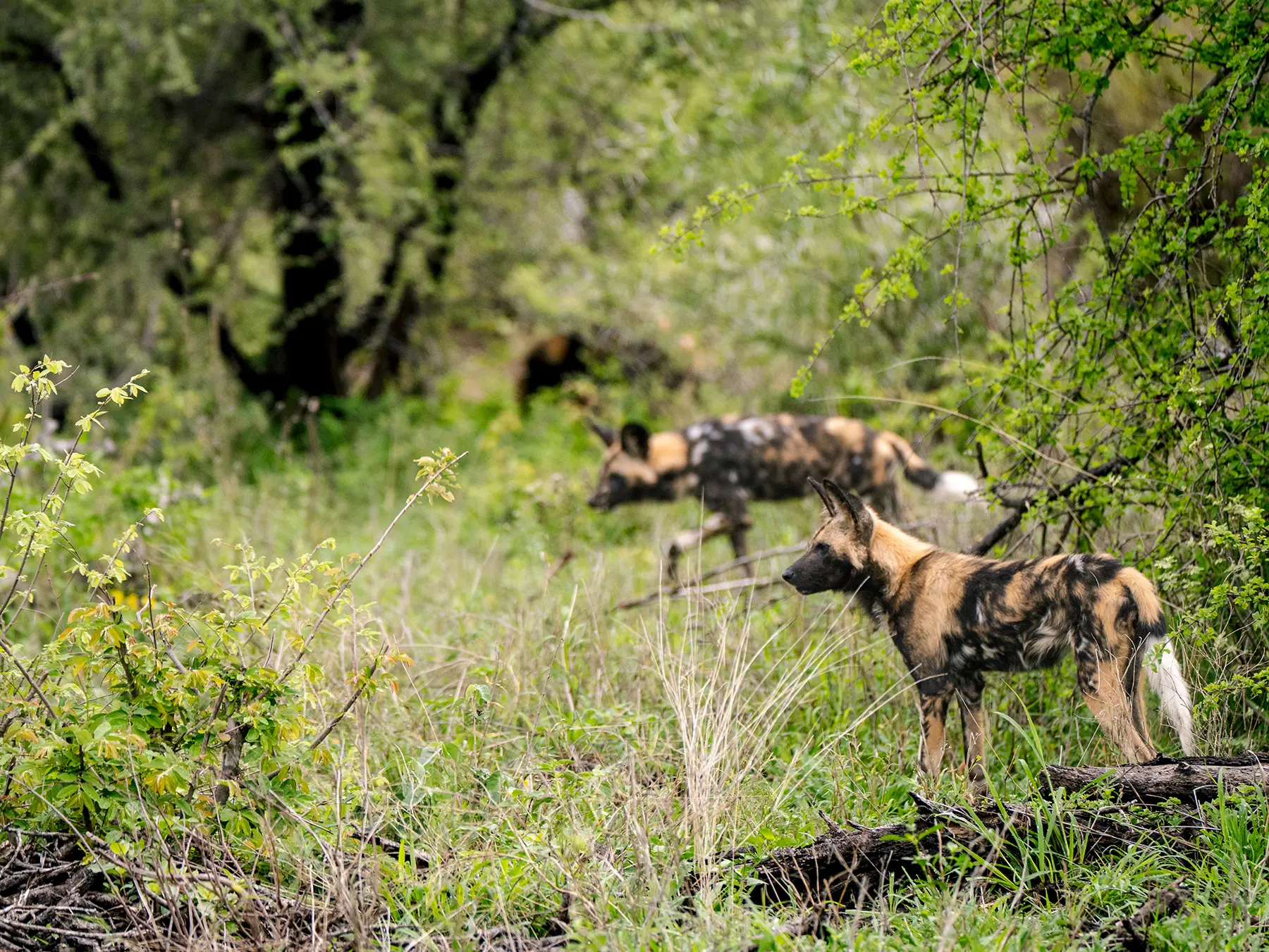
Now numbering around 350 individuals across the wider Greater Kruger ecosystem thanks to dedicated conservation effort, wild dogs have become a regular sight in Timbavati. During my time there, I enjoyed multiple sightings of these still-rare predators.
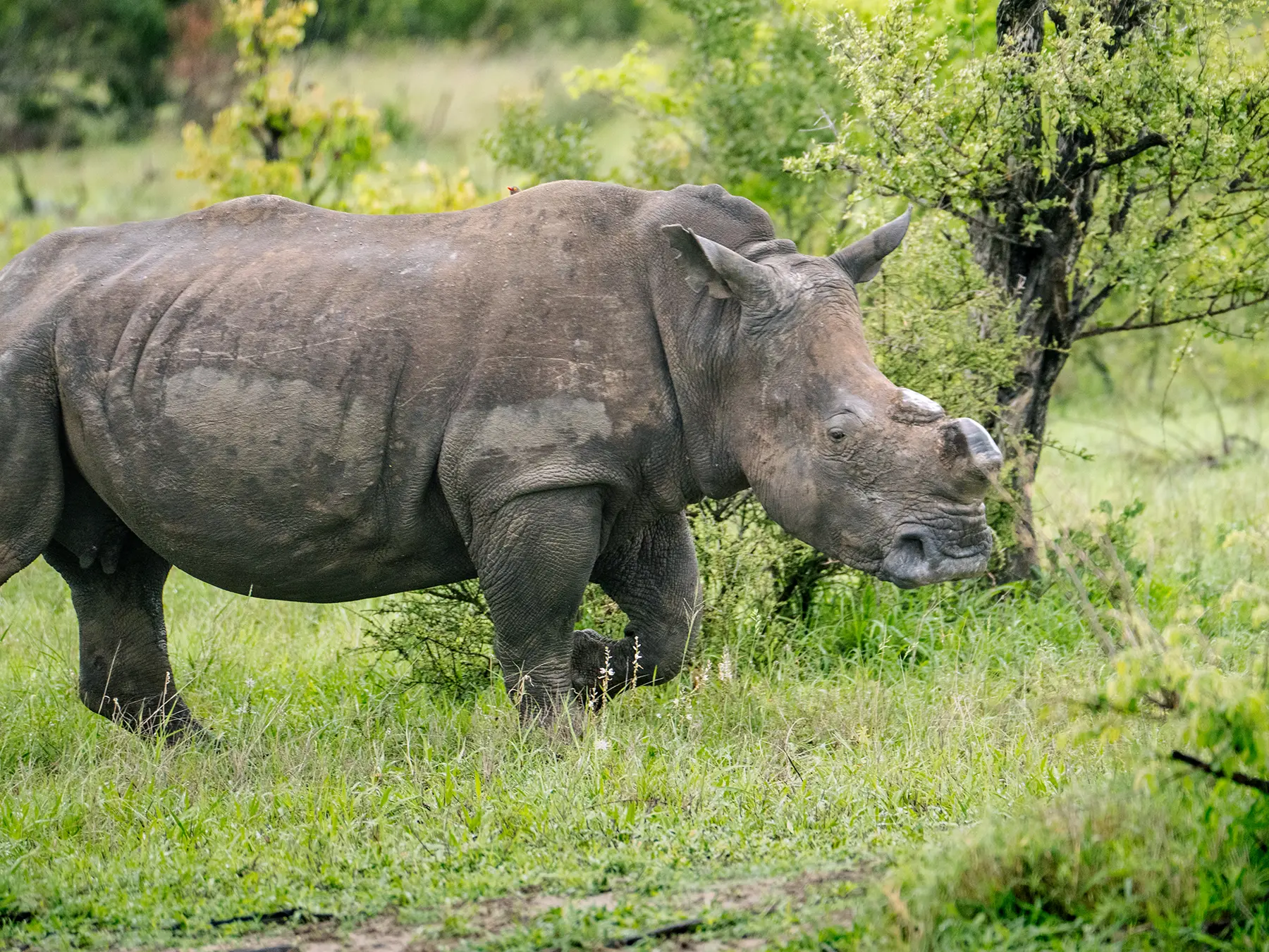
The reserve also has healthy numbers of leopards, elephants, buffalo and rhino, boasting more reliable sightings than other reserves with denser vegetation thanks to its wide swathes of open bushveld. Timbavati is also the only Greater Kruger reserve that avoids dehorning its rhinos, so visitors are treated to sightings of these ancient-looking behemoths in all their imposing natural splendour.
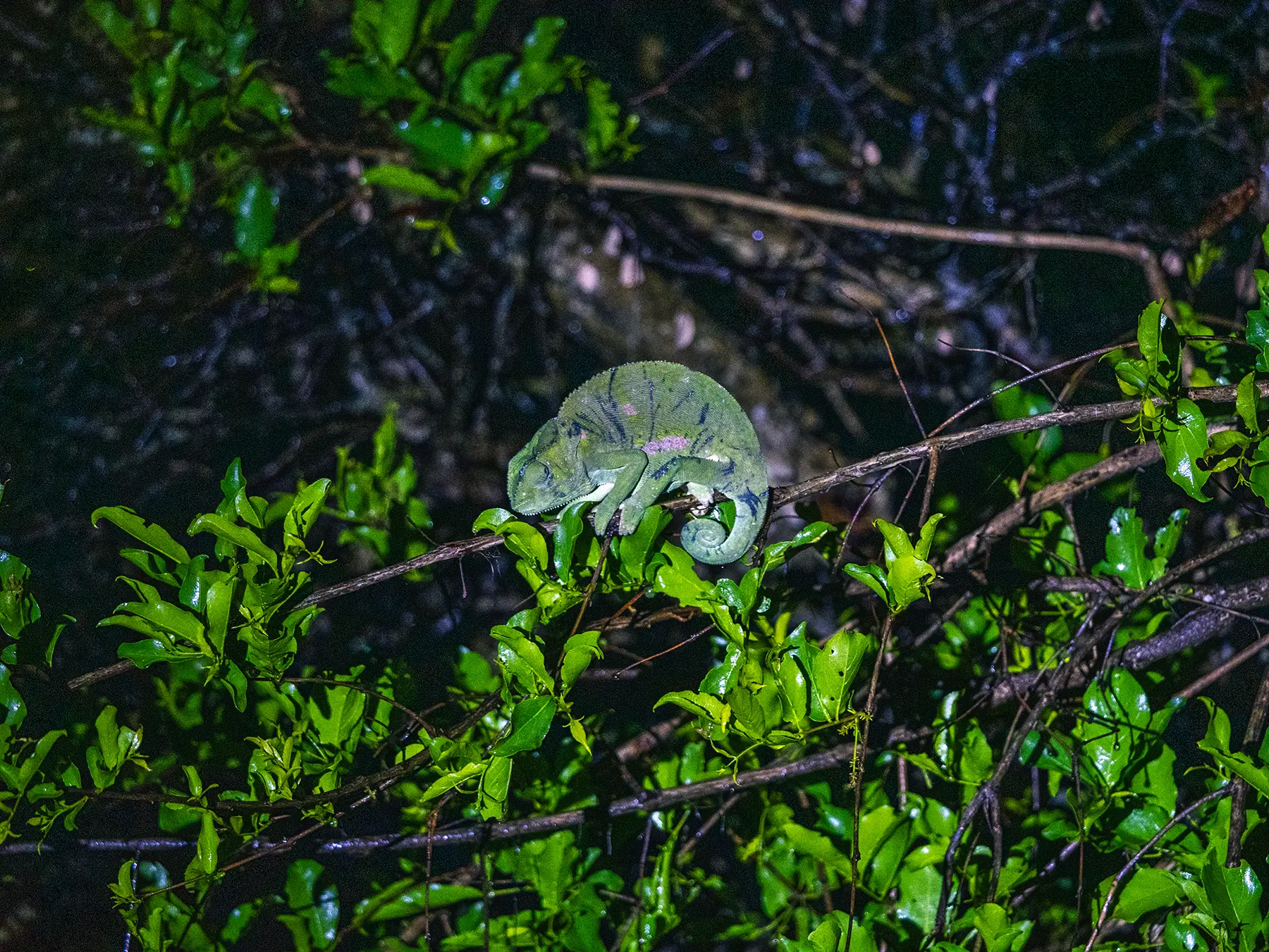
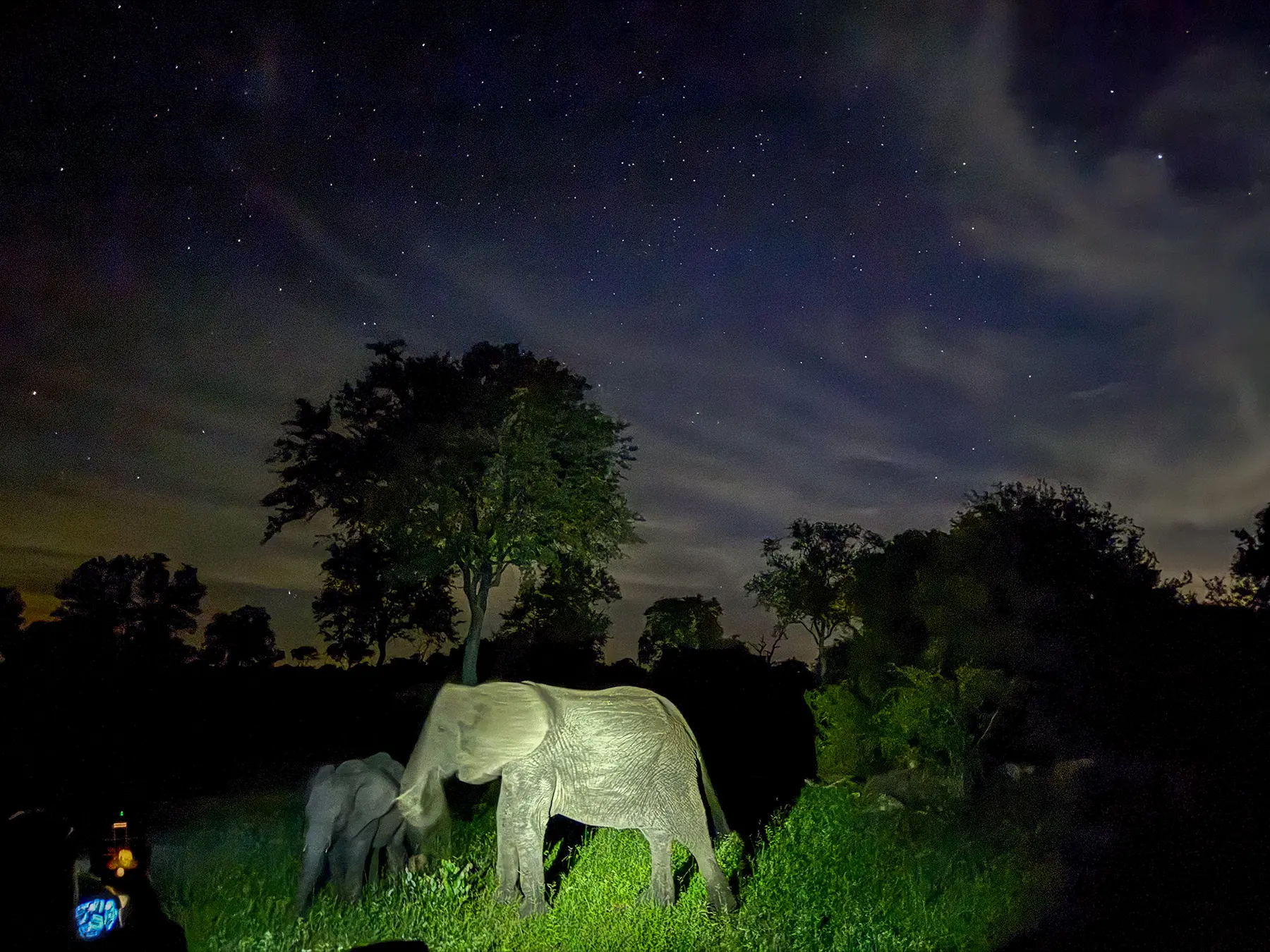
Spotlit night drives are also offered on the reserve, presenting an opportunity to sight nocturnal species such as honey badger, civet, genet and African wild cat that you otherwise wouldn’t encounter. When we went out on our night drive, I spotted a civet and several white-tailed mongooses.
Tips for Your Journey to Timbavati
Here are a few hints to ensure your trip to Timbavati is as low-hassle as possible:
- Where possible, book your safari (including Airlink air transfers from Johannesburg to Hoedspruit Eastgate Airport) well ahead of your trip, particularly if travelling during peak season. Flights are fairly limited and tend to book out quickly.
- If possible, opt for the earlier flight at 10:30 so you arrive in time for the afternoon game drive.
Optional Activities
- In between the morning and afternoon game drives, Timbavati guests can also go on optional walking safaris, accompanied by an armed ranger. These are generally offered at no additional charge and represent a totally different take on the safari experience, with participants learning how to read animal tracks and identify various bird calls.
Where to Stay in Timbavati Private Nature Reserve
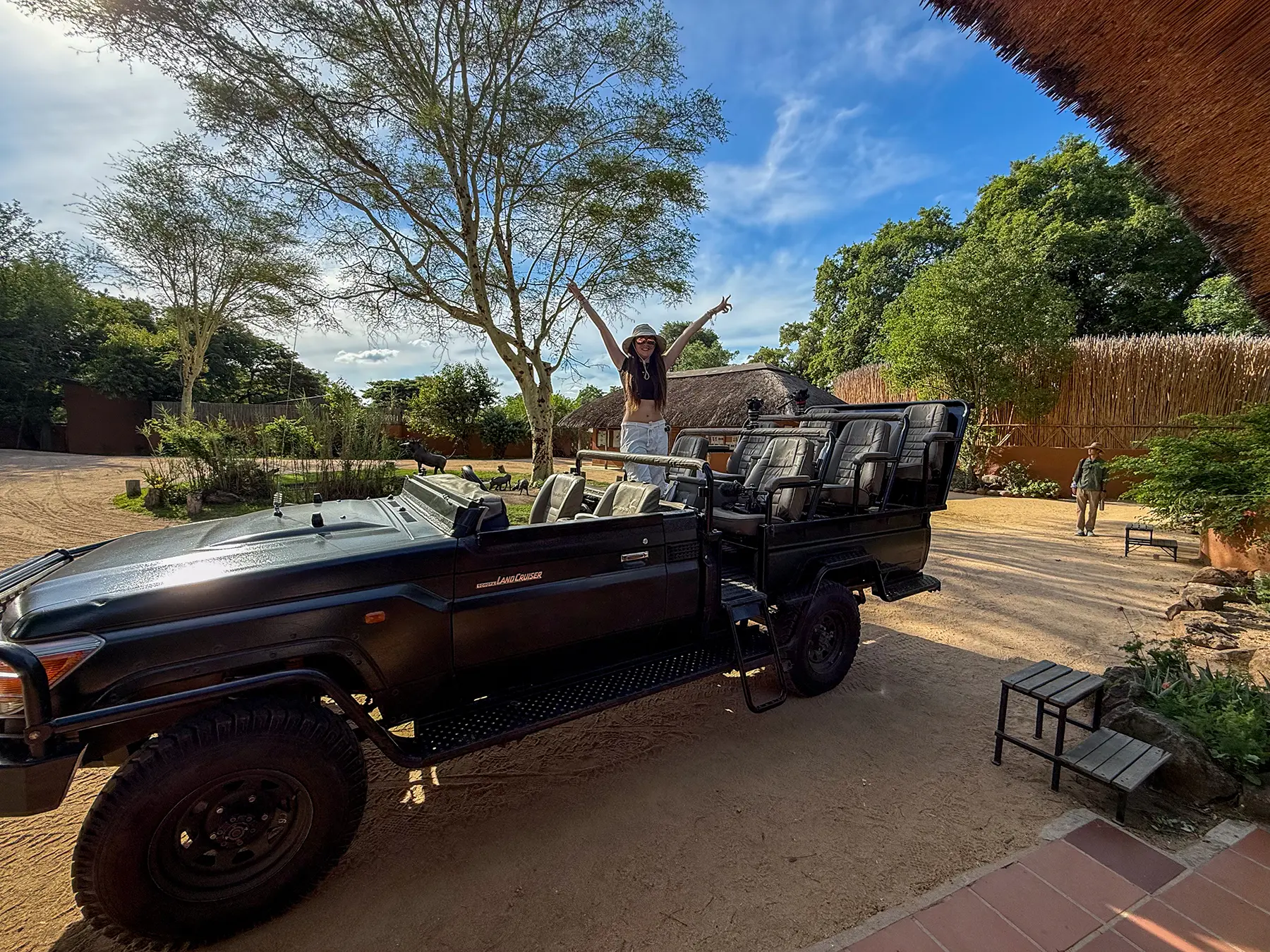
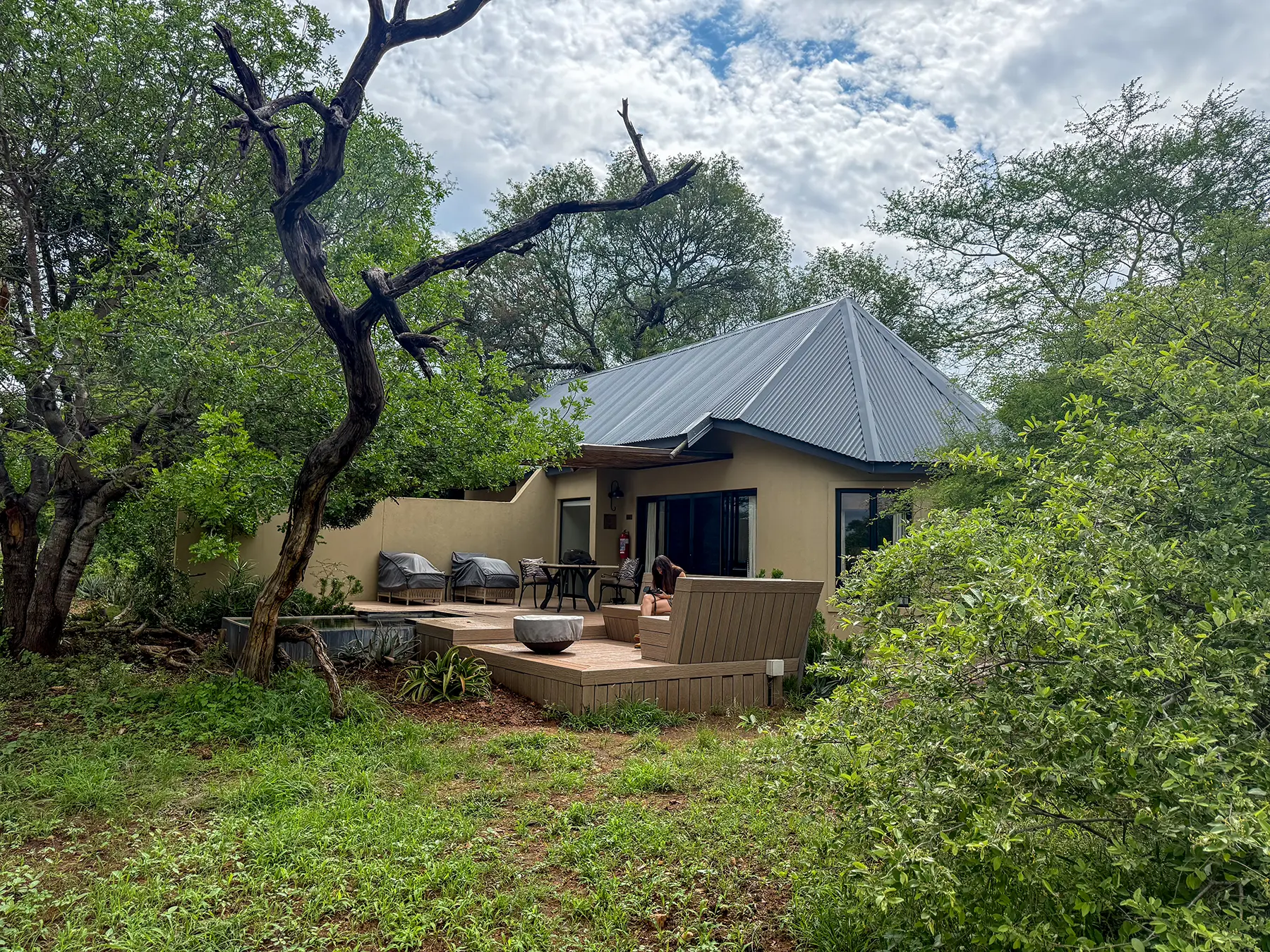
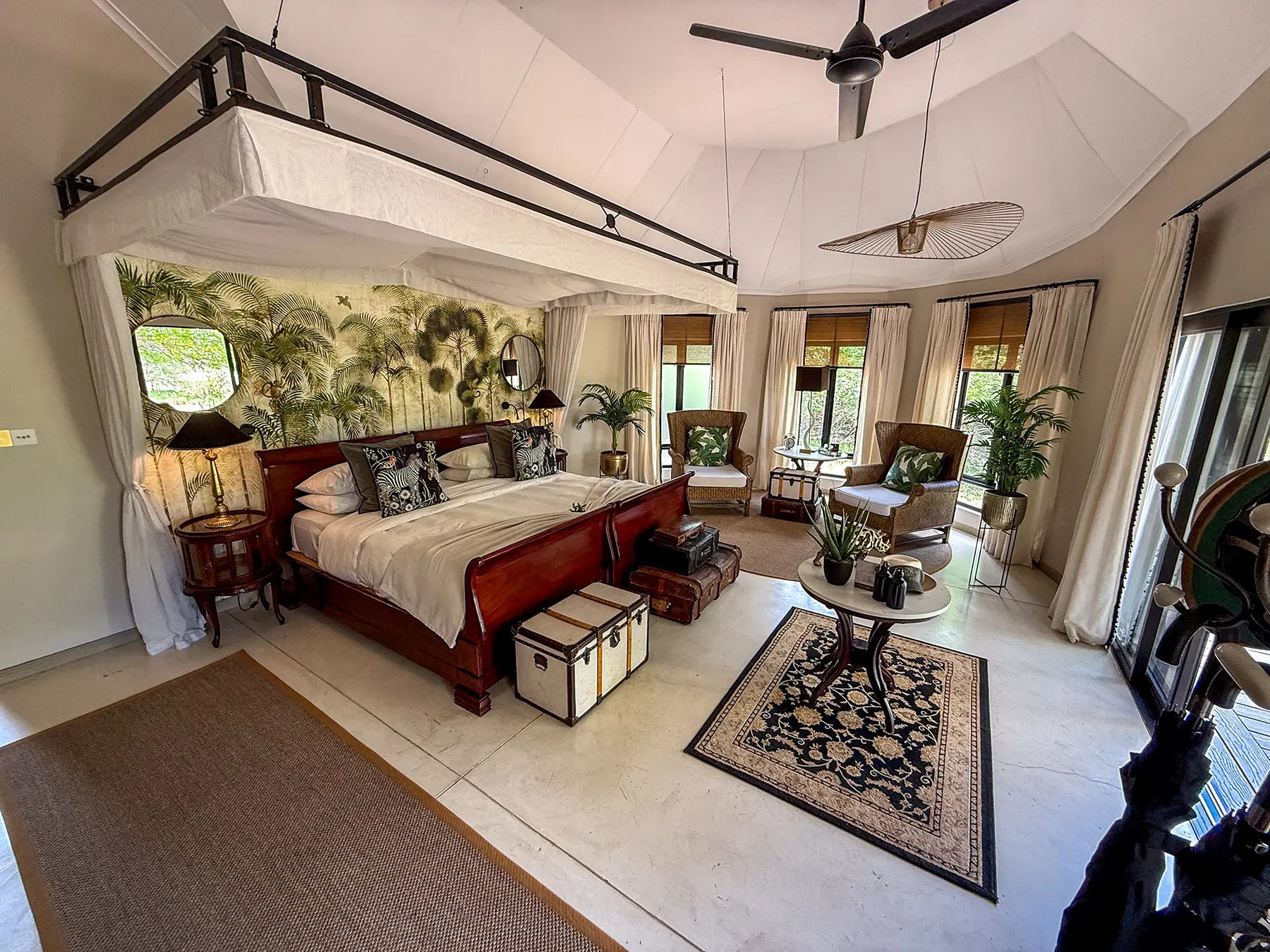
From basic bush camps to plush high-end lodges, Timbavati has a wide range of accommodation to choose from. During my visit, I stayed at the Kings Camp luxury lodge, which has a great traditional African feel and traverses a generous 39-square-mile (100 km²) area.
One of the things that appealed to me most about Kings Camp was its low-level hide, where you can observe a nearby waterhole, watching the local wildlife come and go at eye level.
The lodge also has a photography studio with a photo printing service, which is nice – but there was so much to see and do, I didn’t get a chance to try it out! (Not the worst complaint, mind you!)
My Experience of the Journey to Timbavati
My flight into Hoedspruit treated me to some incredible views of the Drakensberg Mountains, landing at 13:30. I remember seeing some warthogs, impalas and female nyalas as we taxied along the runway to the cute little airport terminal and thinking that my safari had already begun though I hadn’t even set foot on the ground yet!
The drive to Timbavati took just one hour and the tarred road was in good nick, making for a comfortable drive. Even the gravel road inside the reserve itself was well maintained, so it was a fairly smooth trip. Along the way, I saw giraffes and impalas, including some gorgeous newborn lambs, and even spotted a leopard tortoise at one point!
On the very final stretch, the gravel road gave way to a serpentine dirt track, and suddenly, we had arrived!
I’ve included a video of my visit to Timbavati below so you can get a better impression of the reserve.
Day 2: Timbavati Private Nature Reserve
Drive time (excluding game drives): N/A
You’ll enjoy two game drives today, one at dawn and one in the afternoon, with a few relaxing hours back at the lodge in between. After your afternoon drive, you’ll retire to the lodge for the second night of your stay at Timbavati Private Nature Reserve before a final morning game drive and the transfer to Sabi Sand tomorrow.
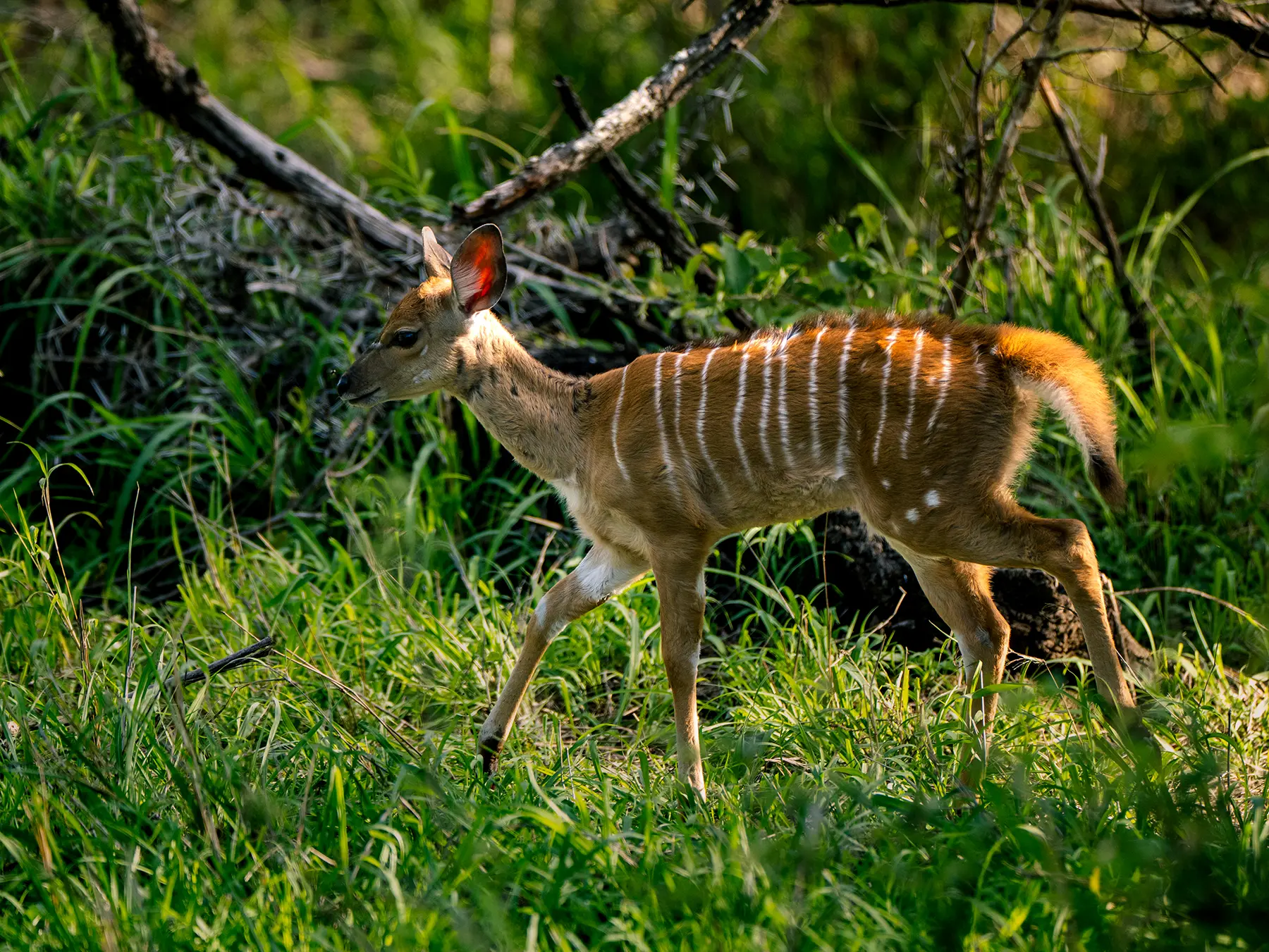
Itinerary
There are no transfers to worry about today. Instead, you’ll enjoy an early morning game drive, returning to the lodge afterwards before the afternoon drive begins.
It’ll be an early start this morning as the morning game drive will be departing at dawn so you can catch predators still on the prowl after a night’s hunting.
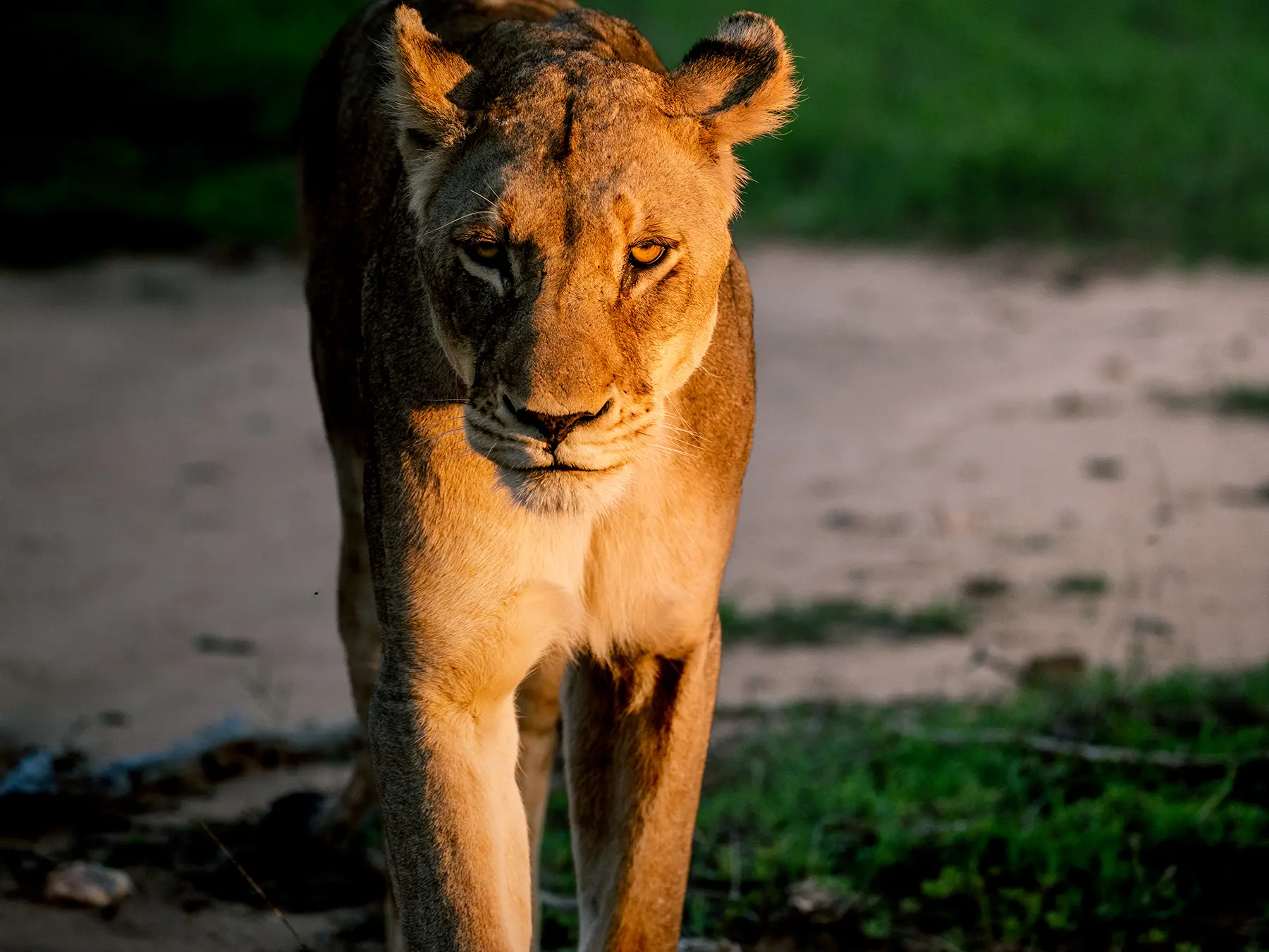
Meanwhile, the afternoon drive will take you through the golden sunset, continuing beyond nightfall with spotlights to ensure clear sightings of the reserve’s nocturnal species.
In between drives, you’ll be back at the lodge for a few hours, leaving you time to take on a walking safari with one of the lodge’s armed rangers or, if you prefer, head to the underground hide and watch for wildlife.
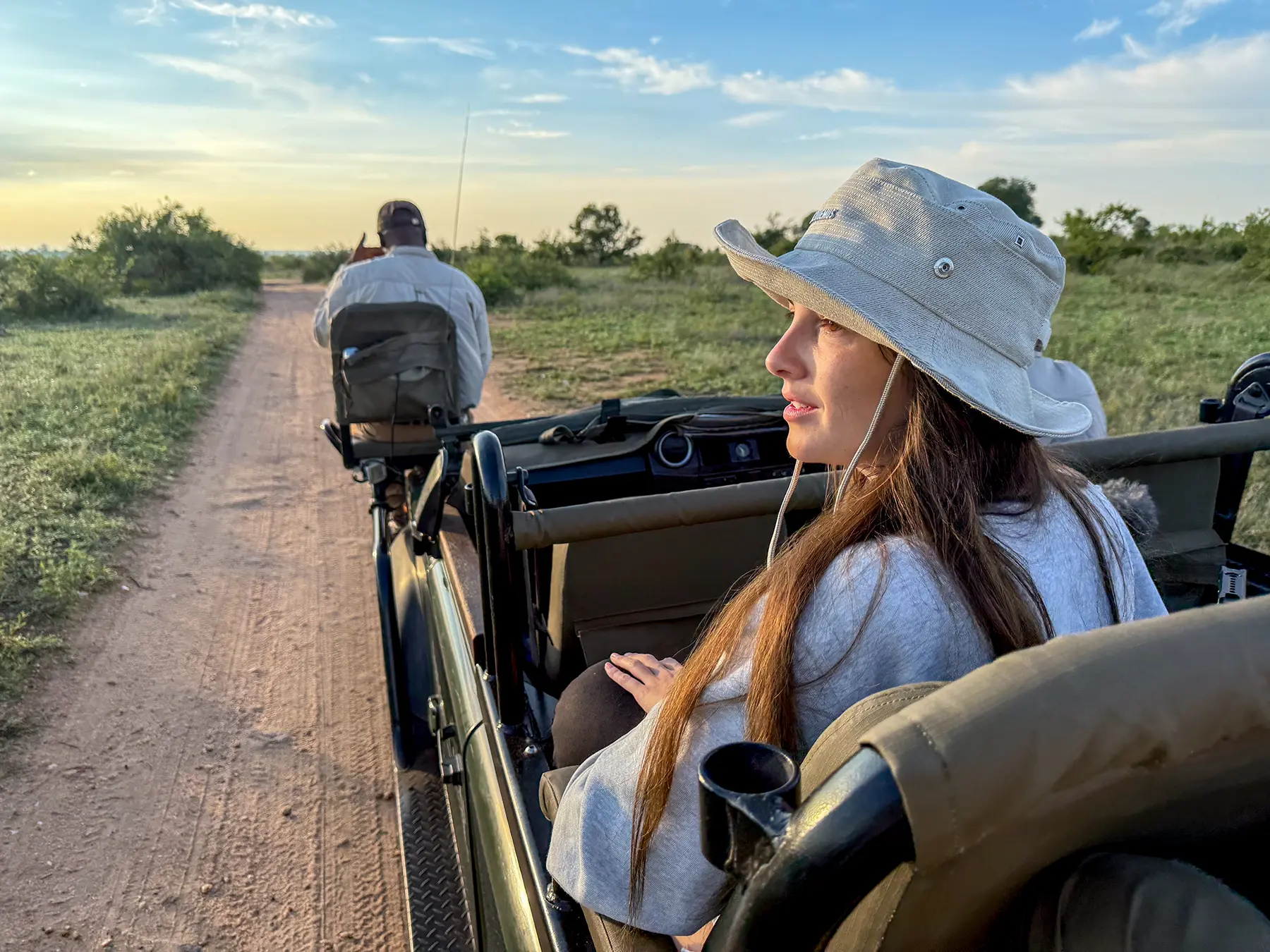
Tips for Visiting Timbavati Private Nature Reserve
Here are a few tips to help make your stay at Timbavati Private Nature Reserve extra special!
- If you’ve chosen a lodge with an underground hide, the best time to go is in the dry season as the dry conditions will ensure wildlife seek out the waterhole
- For keen photographers, make sure the vehicles at your lodge have no middle seats so that your view is never obstructed
- Bring a telephoto lens (for example, 100-400mm) for wildlife photos
- If you feel like splurging, you could always pick up a pair of thermal binoculars to bring as well; these are really handy on evening game drives after dark
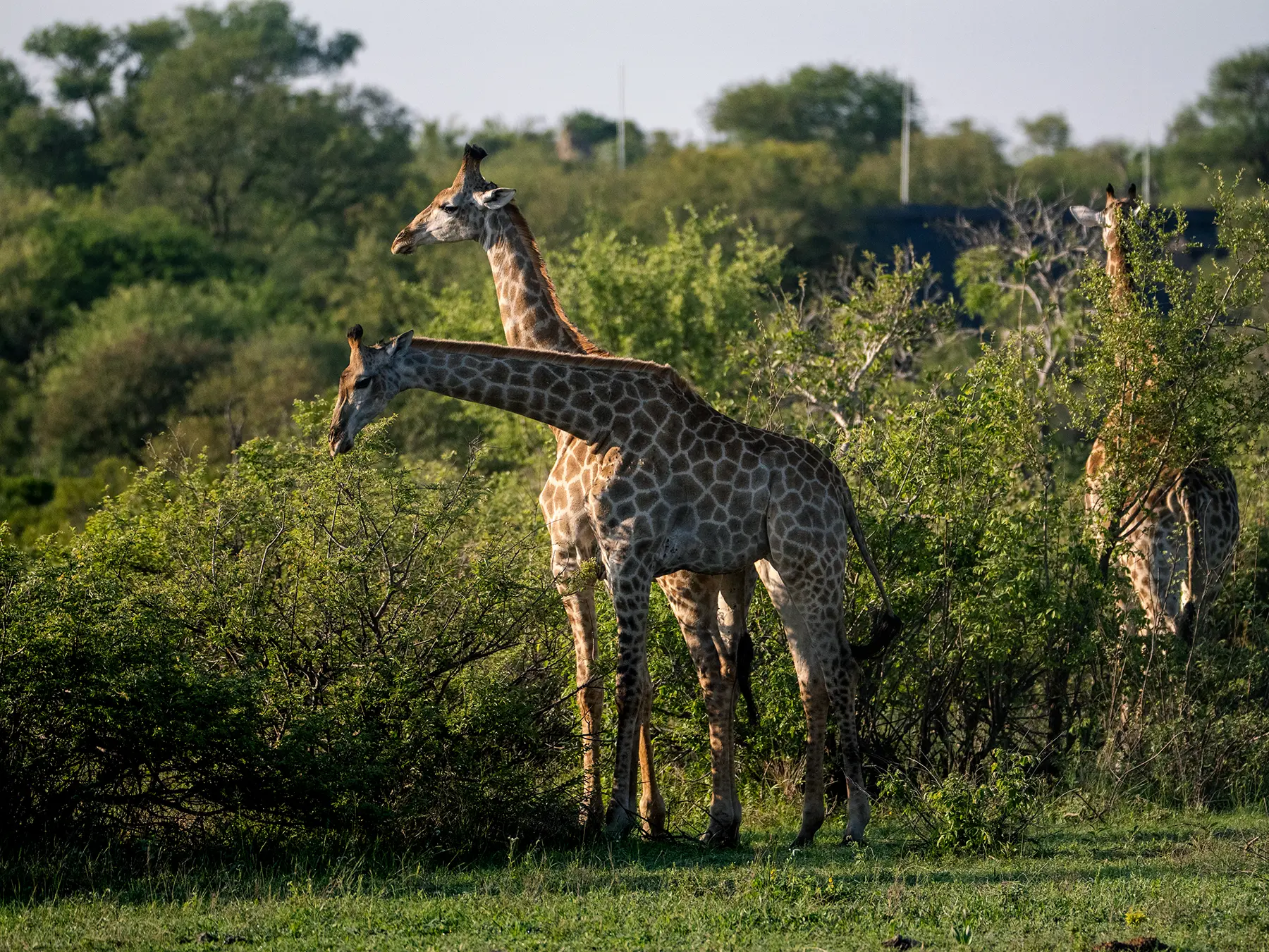
Where to Stay in Timbavati Private Nature Reserve
You’ll be spending your second night in Timbavati at the same lodge you stayed in last night. See the Day 1 section for details of the various accommodation options available.
My Experience of Timbavati Private Nature Reserve
One of the things that really stood out about Kings Camp, where I stayed during my visit to Timbavati, was the warm welcome we received, which continued throughout our stay.
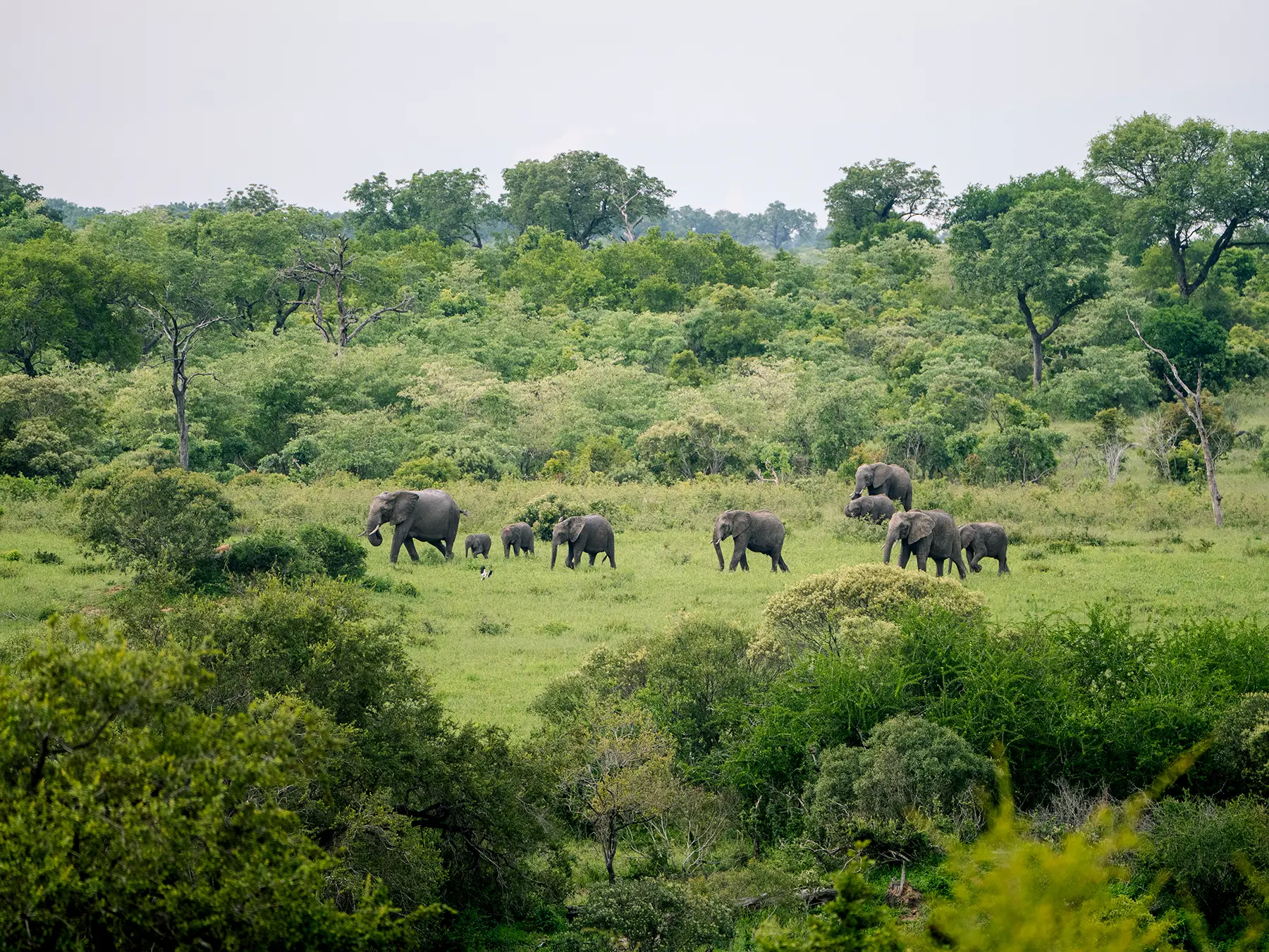
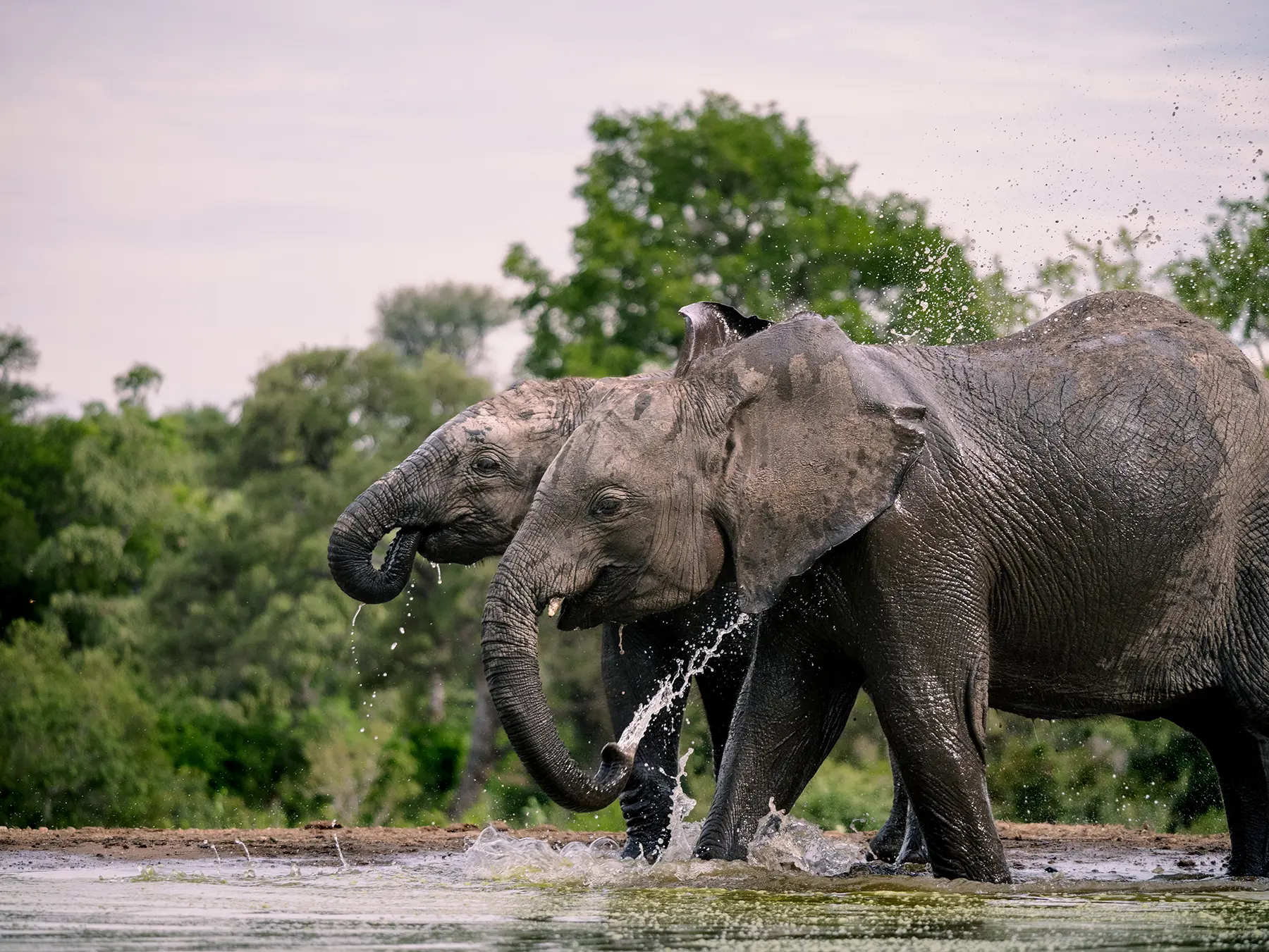
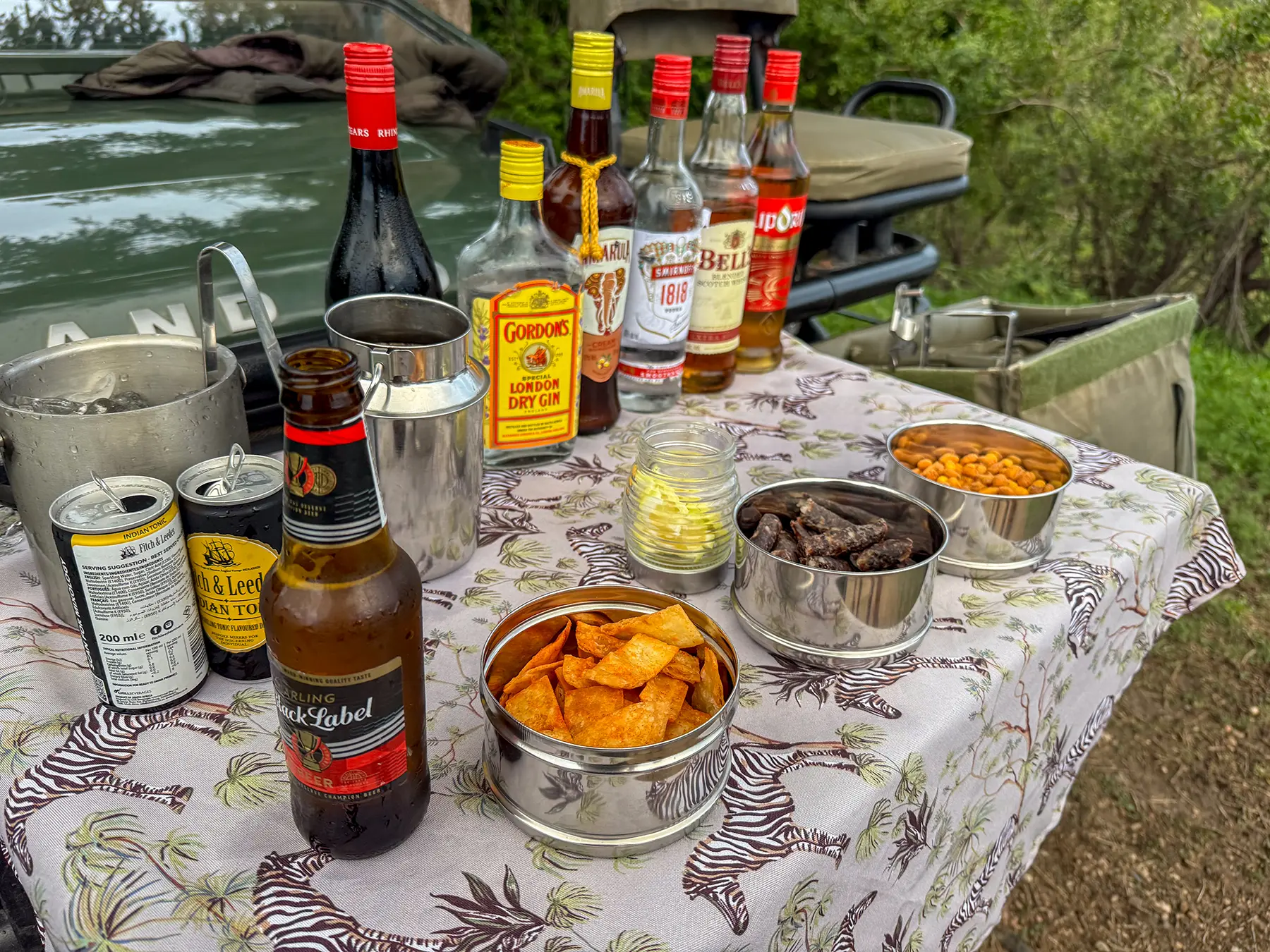
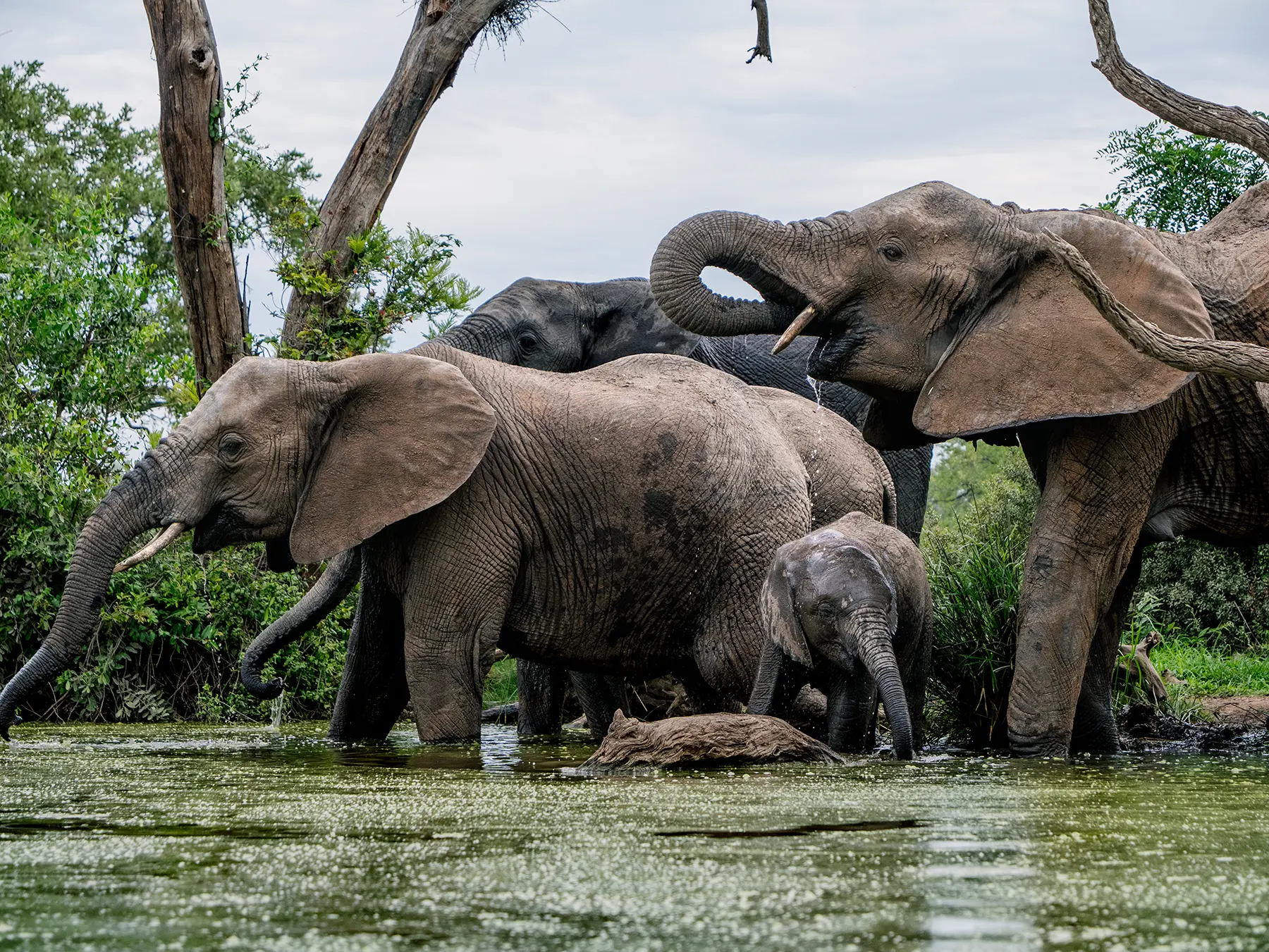
We were greeted with welcome drinks and, before there was time to be shown to our room, we were told that a herd of elephants was currently drinking at the waterhole the camp’s underground hide looked onto. We were able to head straight to the hide, getting there just as one herd departed and another arrived.
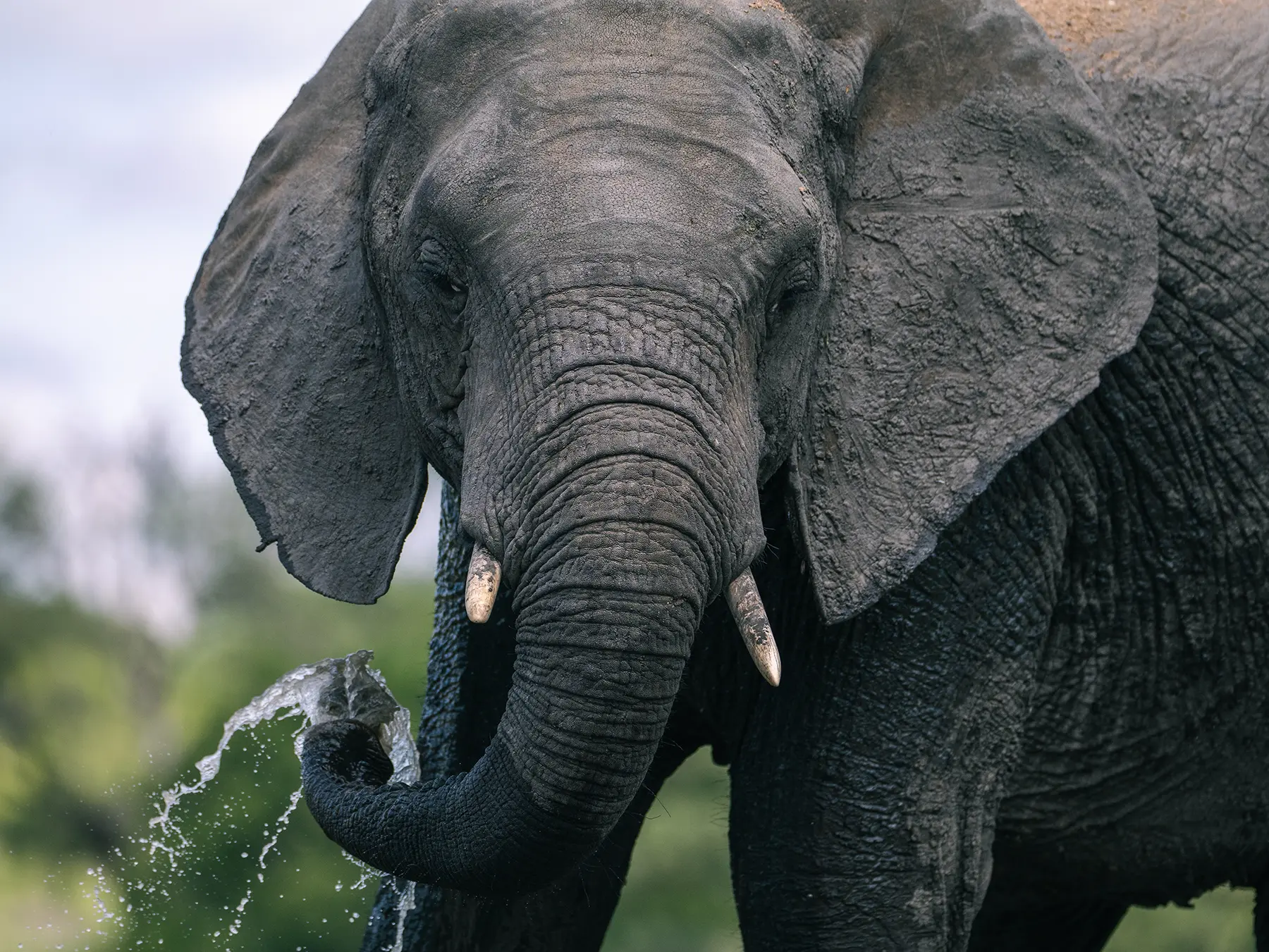
Watching them from such close quarters as they drank, sprayed water and played around was absolutely fantastic – what a highlight to be met with on arrival! There were two little calves that were particularly cute. Once the herd left, two baby impalas wandered up, and they were soon followed by yet another herd of elephants.
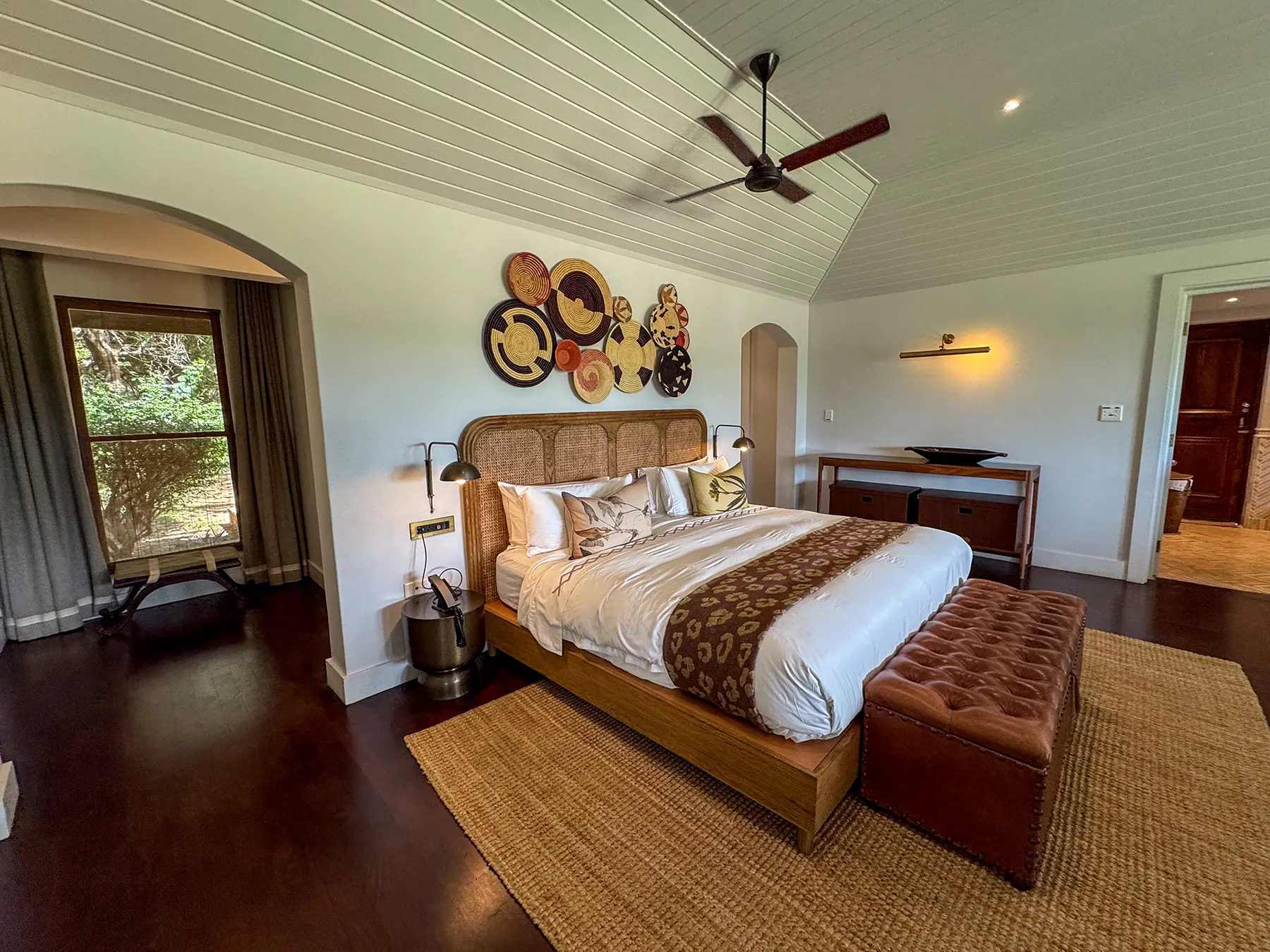
After the last of the elephants went, we finally checked into our room, which was absolutely huge and so exquisitely decorated. Even as we sat eating our lunch, we were treated to more wonderful sightings, with more elephants arriving for us to admire from our table.
I remember one cheeky bull in particular who figured out that the water in the waterhole was coming from a hosepipe and actually lifted it up to drink directly from it!
Day 3: Timbavati Private Nature Reserve to Sabi Sand Game Reserve
Drive time (excluding game drives): 1 hour
You’ll have time for one final game drive this morning before making the trip to Sabi Sand Game Reserve, South Africa’s oldest private reserve and one of the continent’s top locations for leopard sightings. Once you’ve arrived, you’ll have a little time to settle in before exploring your new surroundings on an afternoon game drive.
Itinerary
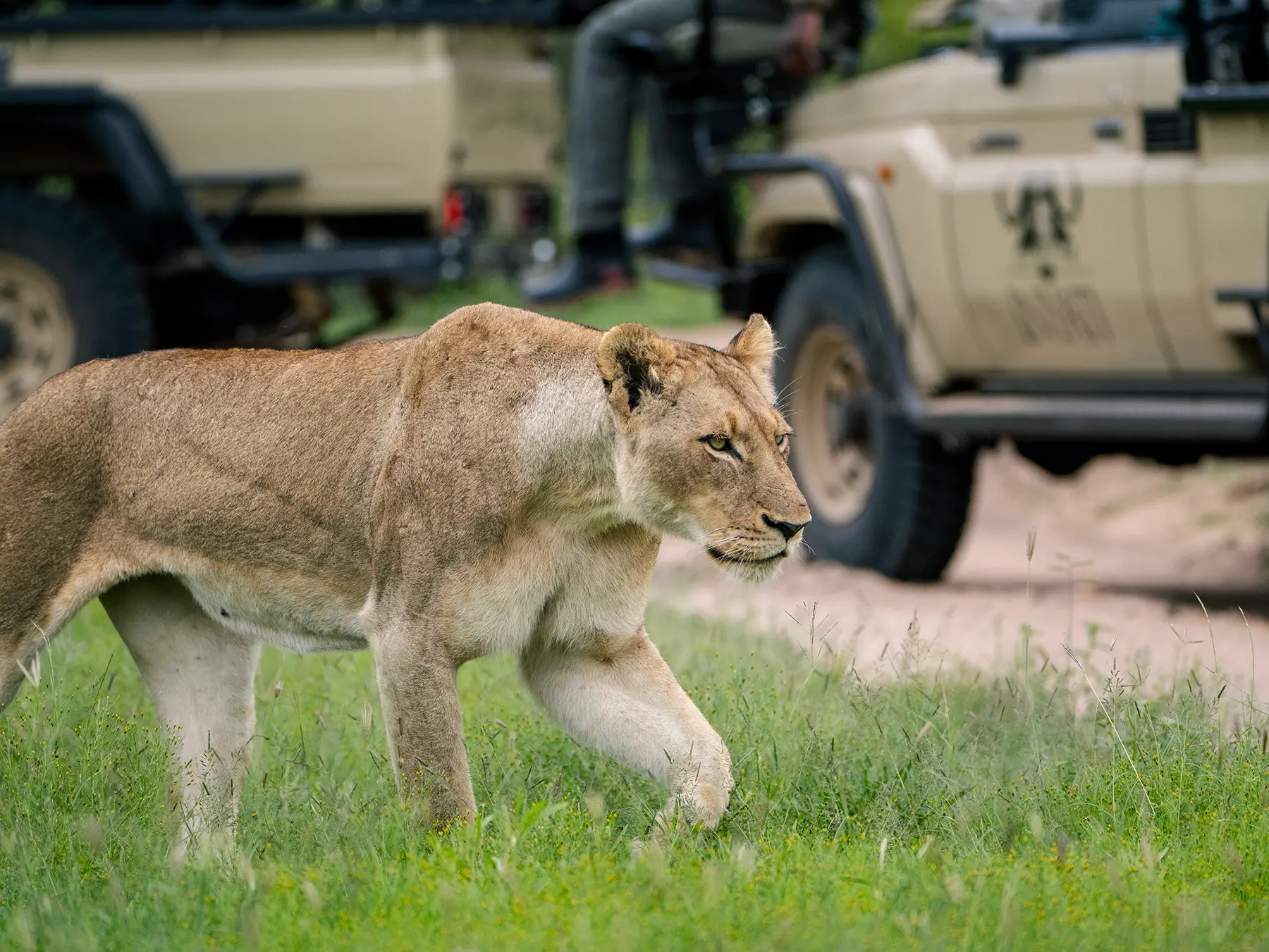
You’ll start your day with a final morning game drive in Timbavati, making the most of your final opportunity to try and spot one of the reserve’s iconic white lions or see some of the Big Five before checking out.
You’ll then bid Timbavati farewell and make the trip to Sabi Sand Game Reserve. This can be done by road (around four hours) or by taking a short flight (recommended).
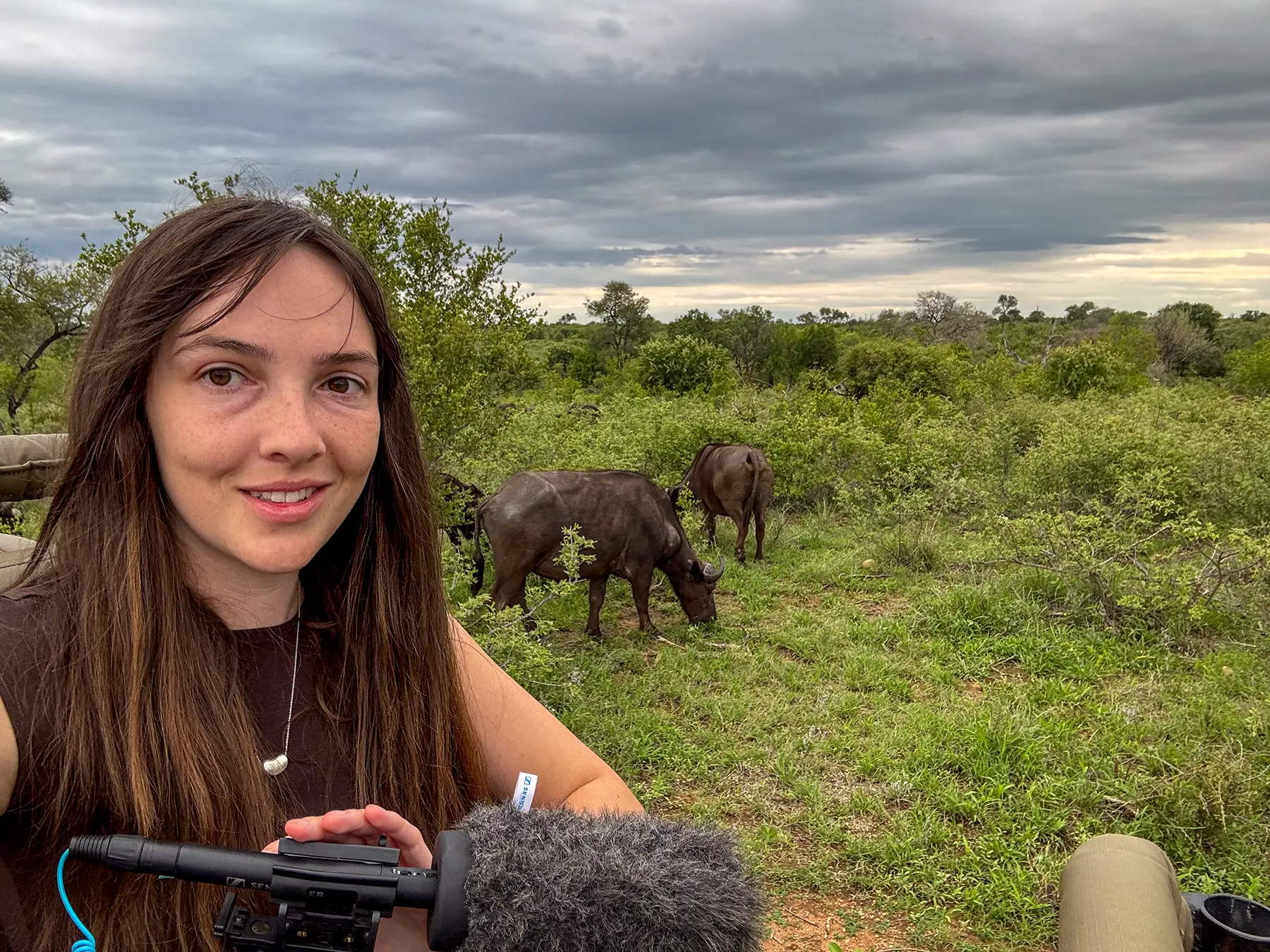
It takes about an hour to fly from Timbavati’s Rockfig Airstrip to Arathusa Airstrip in Sabi Sand, and opting for this short hop rather than spending a long day on the road will leave you more time to discover what Sabi Sand has to offer. And believe me, it’s a lot!
In the afternoon, you’ll be embarking on your first game drive in Sabi Sand, with its rows of lofty sausage and marula trees and the leopards for which it is so renowned.
About Sabi Sand Game Reserve
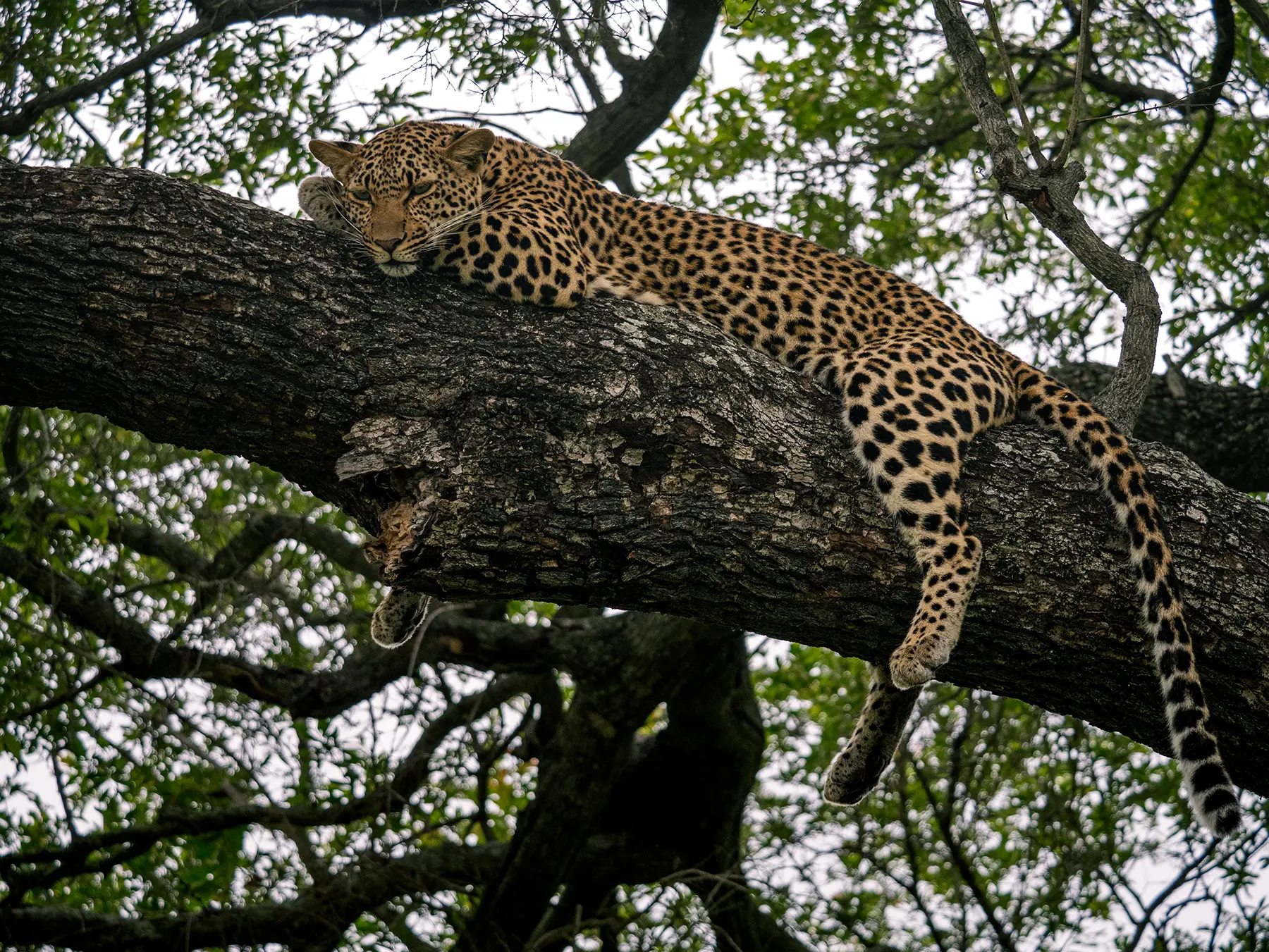
With roots dating back to 1898, Sabi Sand predates all other private game reserves in South Africa. It covers some 18 separate conservation areas, including world-class lodges such as Londolozi, Singita, MalaMala, and Sabi Sabi. Officially called the Sabi Sand Wildtuin (Afrikaans for “game reserve”), the reserve is named after the Sabi and Sand rivers that flow through it.
The largest reserve by far within the wider Sabi Sand reserve is MalaMala, and with around 70% of its considerable territory reserved exclusively for guests staying at one of its three camps, crowding is never an issue.
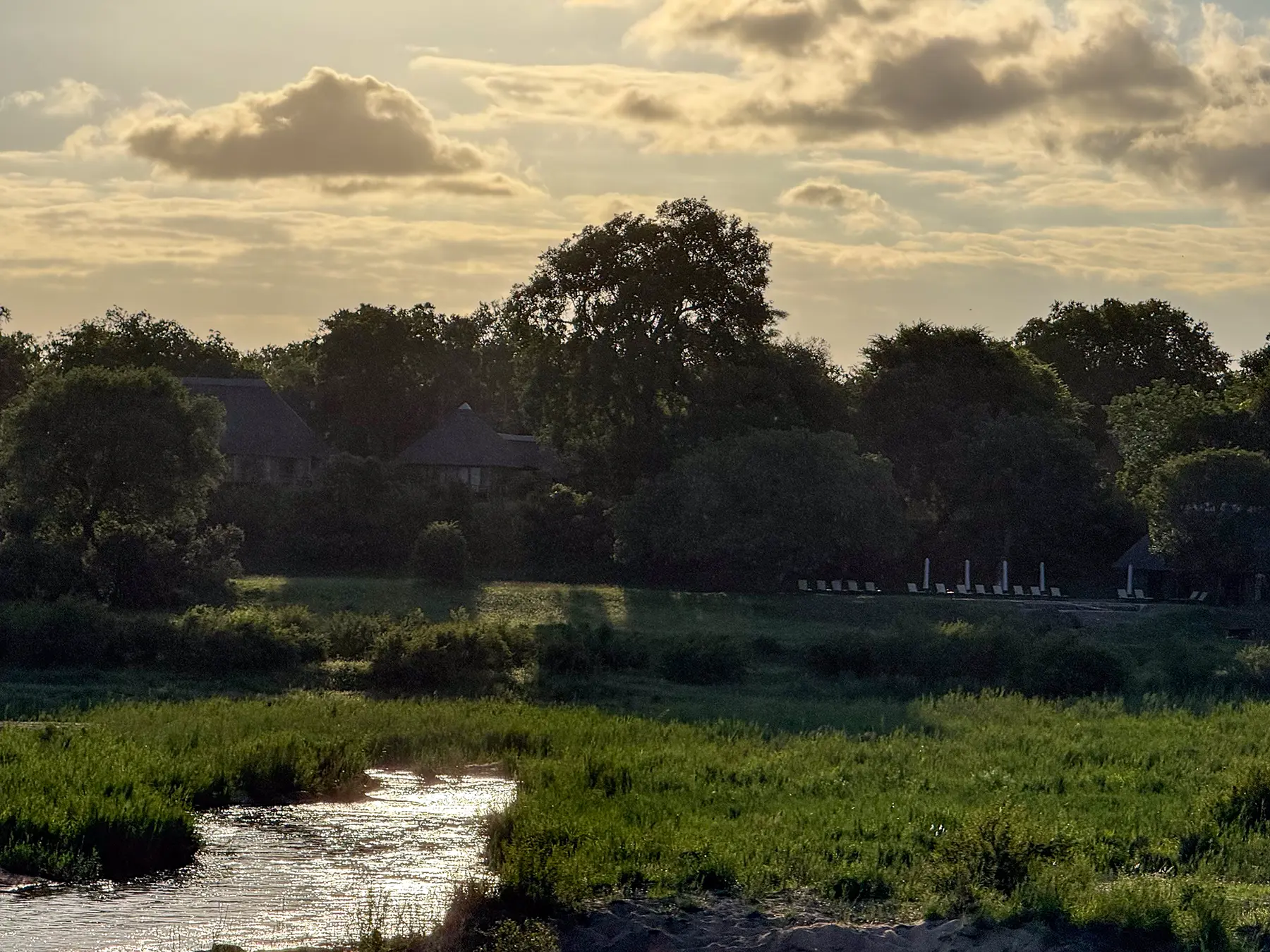
Incredibly, Sabi Sand’s safari guides are able to distinguish as many as 85 resident leopards by the unique patterns of their coats!
The reserve is famed not just for its abundant leopard sightings, but for the extremely close encounters safari-goers can enjoy with these usually elusive creatures. This habituation of leopards to safari vehicles was pioneered in Londolozi during the late 1970s, transforming the way in which visitors experience the resident wild leopards.
One of the main focal points for game drives on the reserve is the Sand River, which draws large numbers of wildlife to its banks along the 31-mile (50 km) course it traces through the reserve.
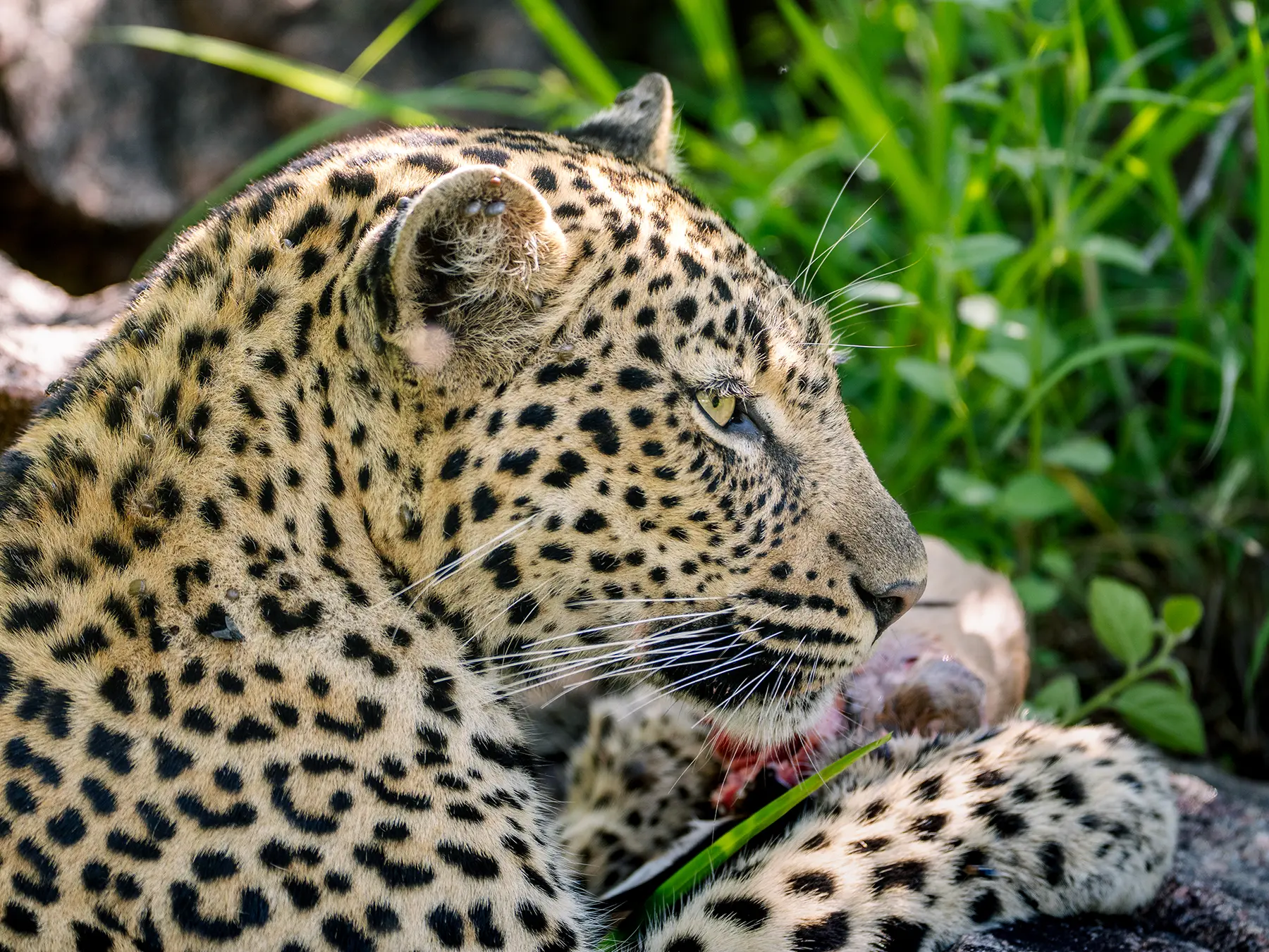
What Wildlife Can I See in Sabi Sand Game Reserve?
All of the Big Five are resident in Sabi Sand, and I was fortunate enough to see each of them when I visited. But the reserve has so much more to offer on top of that, housing a whopping 500 bird species and 145 mammal species.
Sabi Sand is especially renowned for predator sightings, and leopards are the standout attraction. The reserve has one of the world’s highest concentrations of these big cats, thanks in no small part to its suitability as a habitat – the huge sausage and marula trees that line the many drainage lines in the region offer the perfect place for them to hide their prey after a kill.
The leopard population here is subject to careful study, with Panthera’s Sabi Sand Leopard Project documenting more than 800 individuals since 1979.
The other big cat Sabi Sand is renowned for is the lion – or more specifically, the infamous Mapogo lion coalition, consisting of six exceptionally strong, large males who decimated the lion population in the west of the reserve between 2006 and 2012, killing anywhere between 40 and over 100 fellow lions.
In the wake of their violent attacks, lion numbers took a nosedive, leaving space for leopards to flourish.
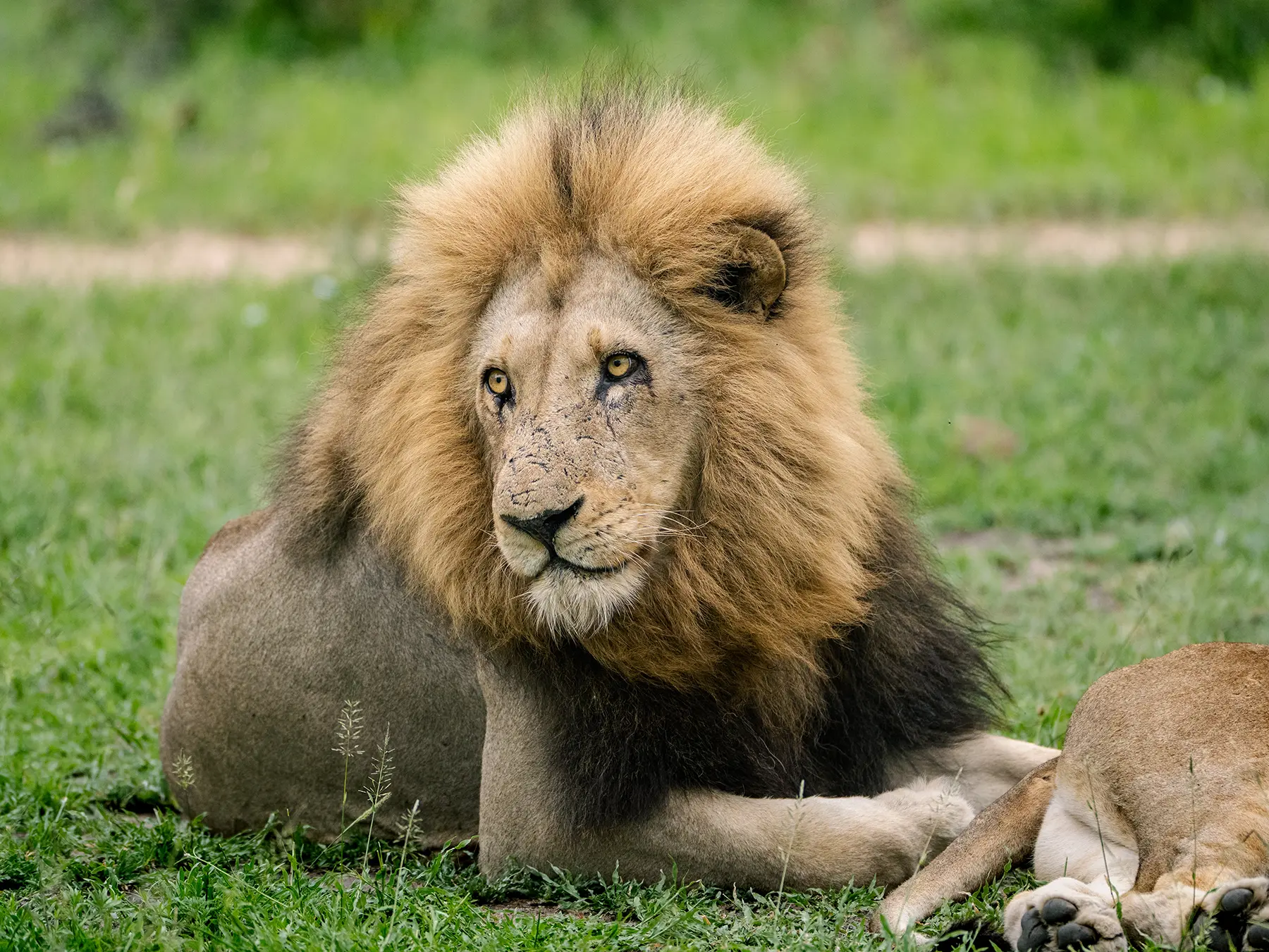
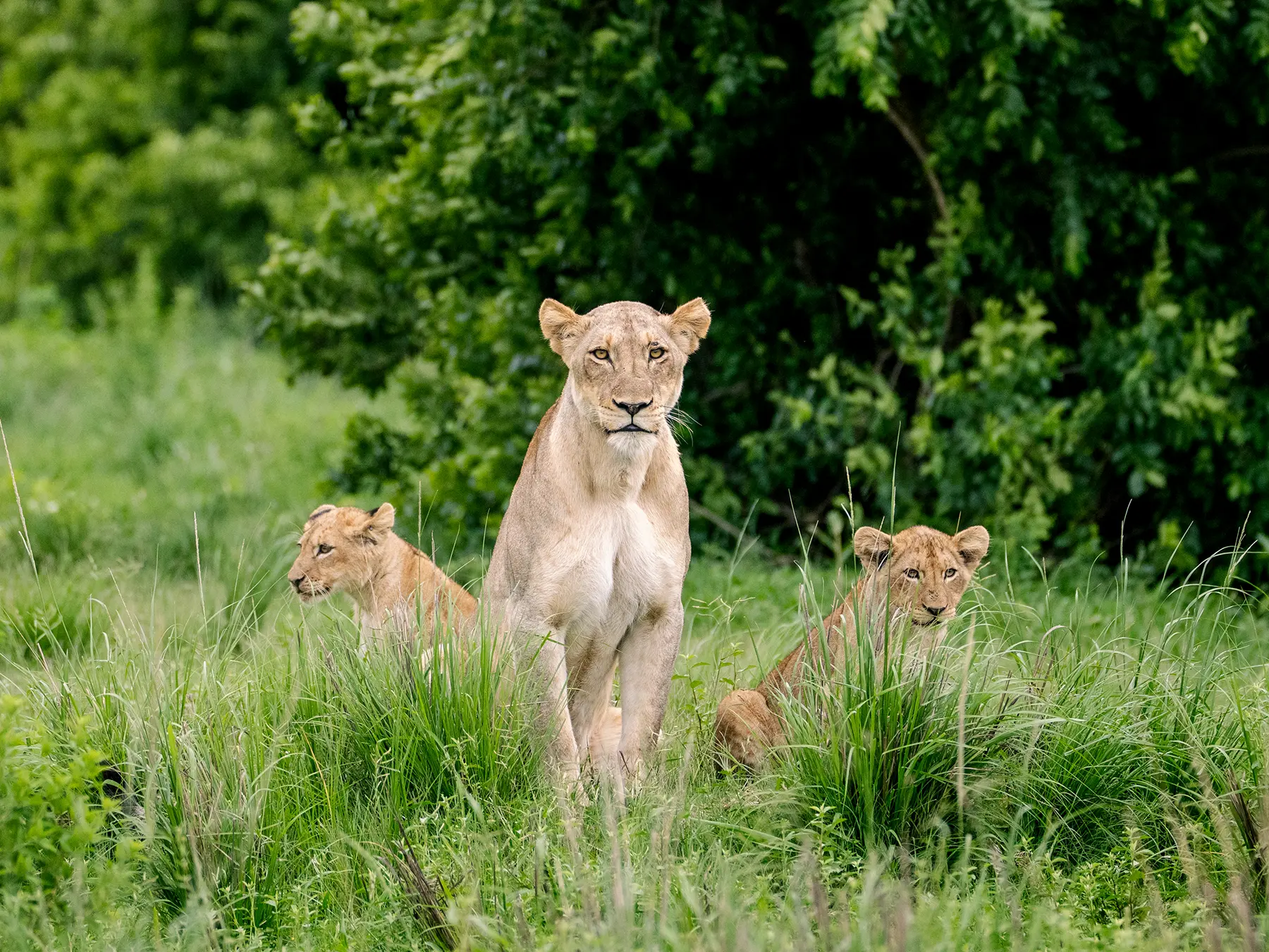
Although the last of the Mapogos died well over a decade ago, the effects of their reign of terror are still visible today. Once a veritable lion stronghold, the western region of Sabi Sand is currently home to just two very small prides (the Othawa pride comprising two lionesses and another consisting of just one lioness and her two adolescent daughters).
While lion numbers in Sabi Sand are significantly lower than in other reserves, though, I still found it very reliable for lion sightings.
Tips for Your Journey to Sabi Sand Game Reserve
Here are a few tips to make sure your transfer from Timbavati to Sabi Sand runs smoothly.
- While road and light aircraft are both viable options, I’d recommend flying as the one-hour flight time leaves you with more time for game drives compared to the four-hour drive.
- Because of the complex Greater Kruger traversing system, you can’t simply drive directly from one reserve to another – your operator will organise the route you take.
Optional Activities
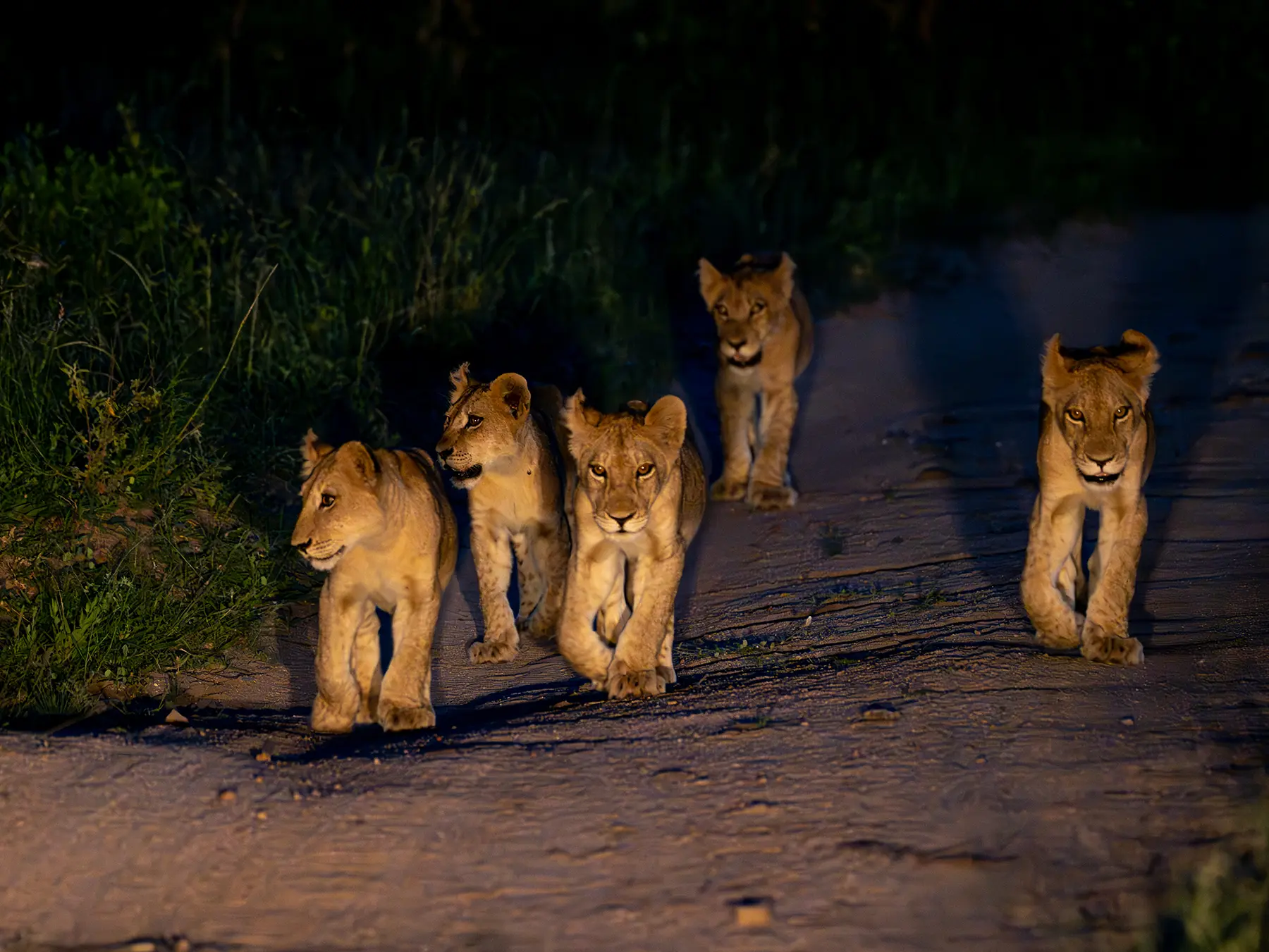
- Sabi Sand offers spotlit night game drives after dark, presenting an opportunity to see nocturnal species and observe predators on the prowl. My most memorable night sighting by far was a group of lion cubs making a successful kill.
- Walking safaris with an armed guide are also available between game drives, giving you a completely different, ground-level perspective on the bush that you cannot easily get in Kruger National Park itself.
Where to Stay in Sabi Sand Game Reserve
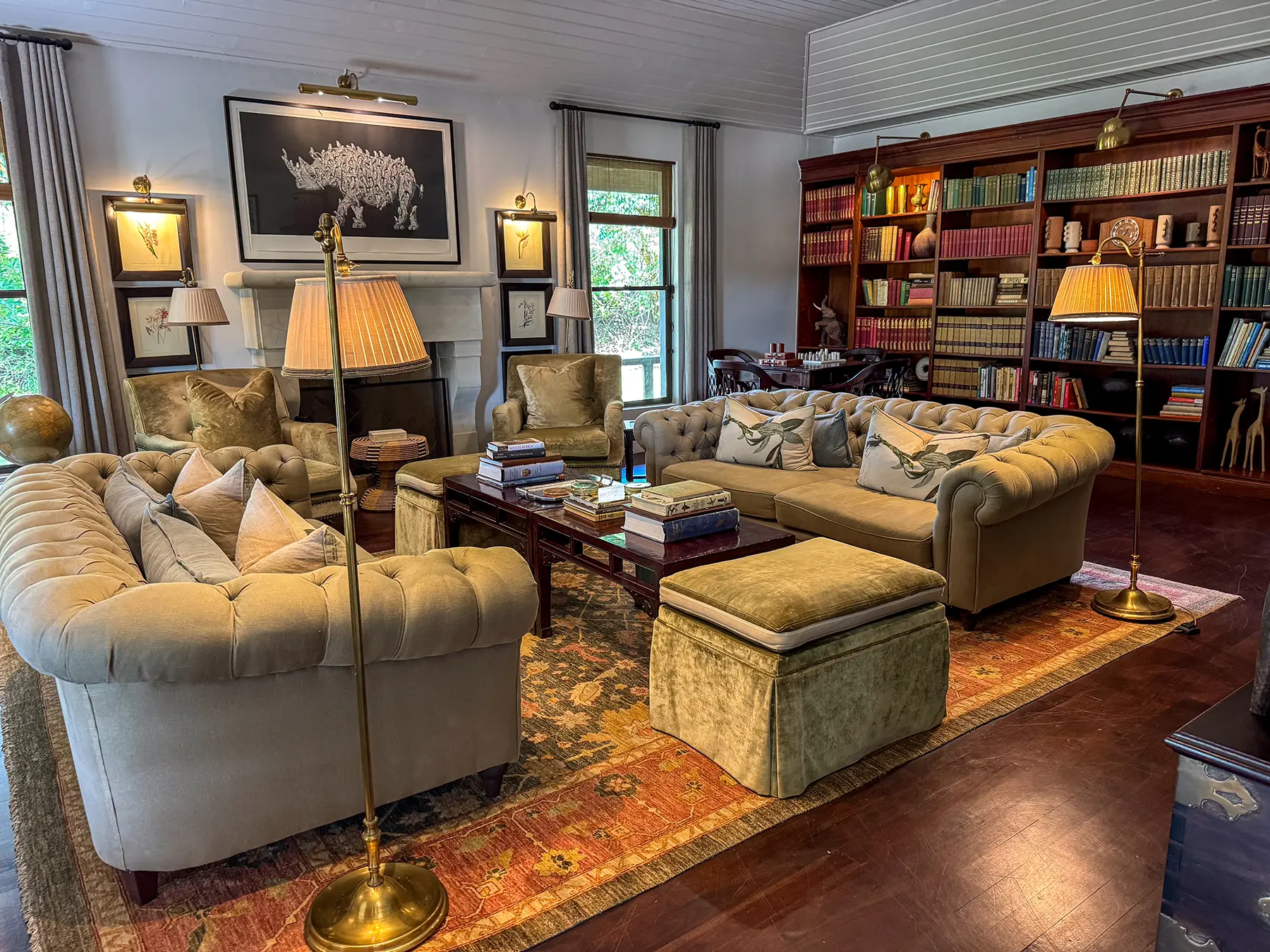
Of all of the Greater Kruger private reserves, Sabi Sand offers the most diverse choice of accommodation, from mid-range to ultra-luxury. Its most famous lodges are Singita, Londolozi, MalaMala and Sabi Sabi, all of which fall into the high-end luxury category.
More affordable options such as Inyati and Idube are still top-class, with large, opulent rooms and excellent locations for wildlife.
During my visit, I stayed at two different properties: Inyati Game Lodge and MalaMala. I first stayed at Inyati Game Lodge in the west of Sabi Sand for three nights. Sharing traversing rights with the nearby Ulusaba, Idube and Leopard Hills lodges, Inyati is an extremely rich wilderness area. During my stay, I saw all of the Big Five here and was also treated to three wild dog sightings!
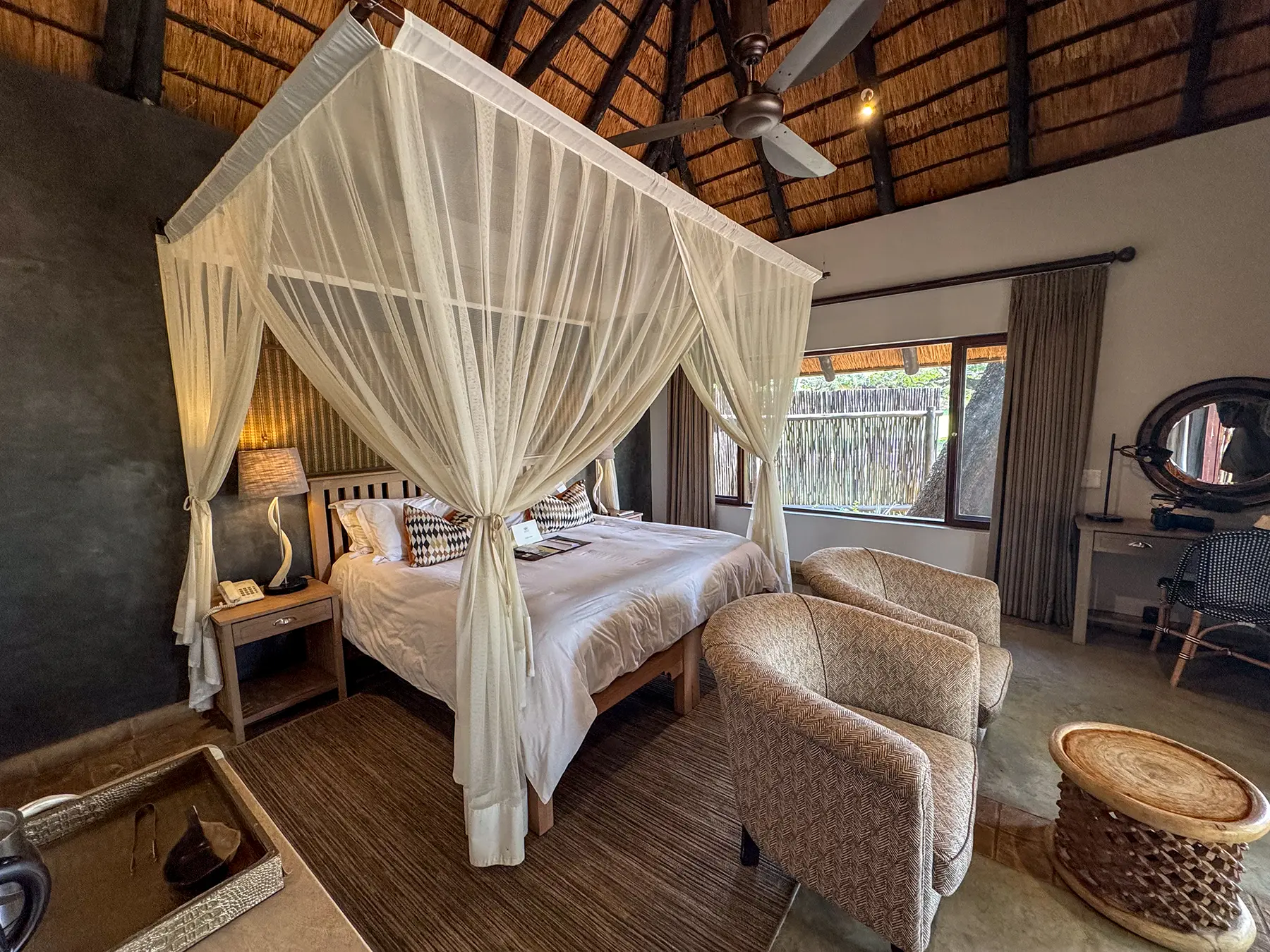
Technically, Inyati is a mid-range lodge by Sabi Sand standards, but it was very luxurious. The rooms were generously proportioned, with lovely, comfortable beds, air conditioning and an extra little seating area. I also loved the bathroom, as it had a bathtub plus both outdoor and indoor showers.
I then moved to MalaMala, Sabi Sand’s oldest lodge, which is located at the opposite end of the reserve. There, I stayed in a luxury suite in their Sable Camp (attached to Main Camp).
Steeped in history, MalaMala stands apart from all the other lodges in Sabi Sand, and its rich heritage is reflected in its circular thatched rooms and traditional decor. My room was absolutely huge and came with its own private deck. But even better, it had two bathrooms, each with its own bathtub!
The guides at MalaMala were also exceptional and really did justice to the lodge’s massive reserve, 70% of which is open only to guests. This exclusivity means that there are never many other vehicles around when you’re out on a game drive and that, coupled with the sheer size of the reserve, means it never feels crowded.
In fact, the plot is so vast, the only way you’d make it to the end is if you devote the whole day to game drives and avoid coming back for lunch!
There are currently three camps at MalaMala, with a fourth under construction. I’ve had a look at all of them, and here are my observations:
MalaMala main camp: The original and most popular camp. Accommodation from mid-range to luxury suites, some with river views. Great for families.
Sable Camp: A smaller version of the main camp with dedicated dining and pool areas reserved for Sable guests only. Located right beside Main Camp, it has similar rooms but a more compact, intimate feel.
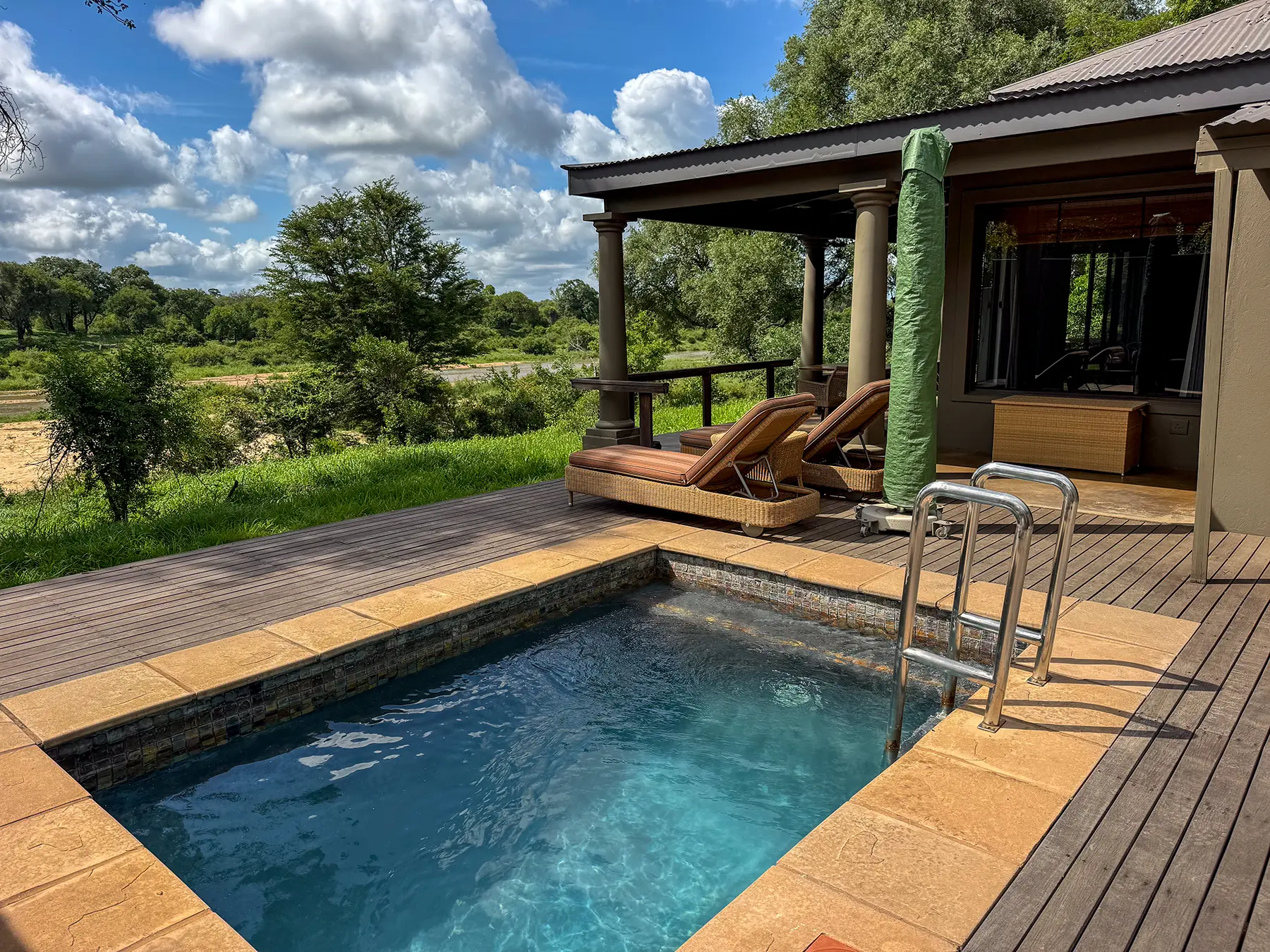
MalaMala Rattray’s Camp: A small, highly exclusive camp along a section of the Sand River about 30 minutes’ drive from Main Camp. This camp makes you feel as though you’re stepping back in time thanks to its authentic Out of Africa feel. Guests stay in sumptuous villas with their own private plunge pools.
Fourth camp coming soon: At the time of my visit, the fourth camp was still under construction in the south area of the reserve. This may not be finished for a year or two yet but will offer super luxury accommodation when it opens.
Day 4: Sabi Sand Game Reserve
Drive time (excluding game drives): N/A
You’ll explore Sabi Sand extensively today on two game drives, one in the morning and one in the afternoon, with a few hours at the lodge in between. Afterwards, you’ll return to the lodge for your second night here before leaving the reserve tomorrow.
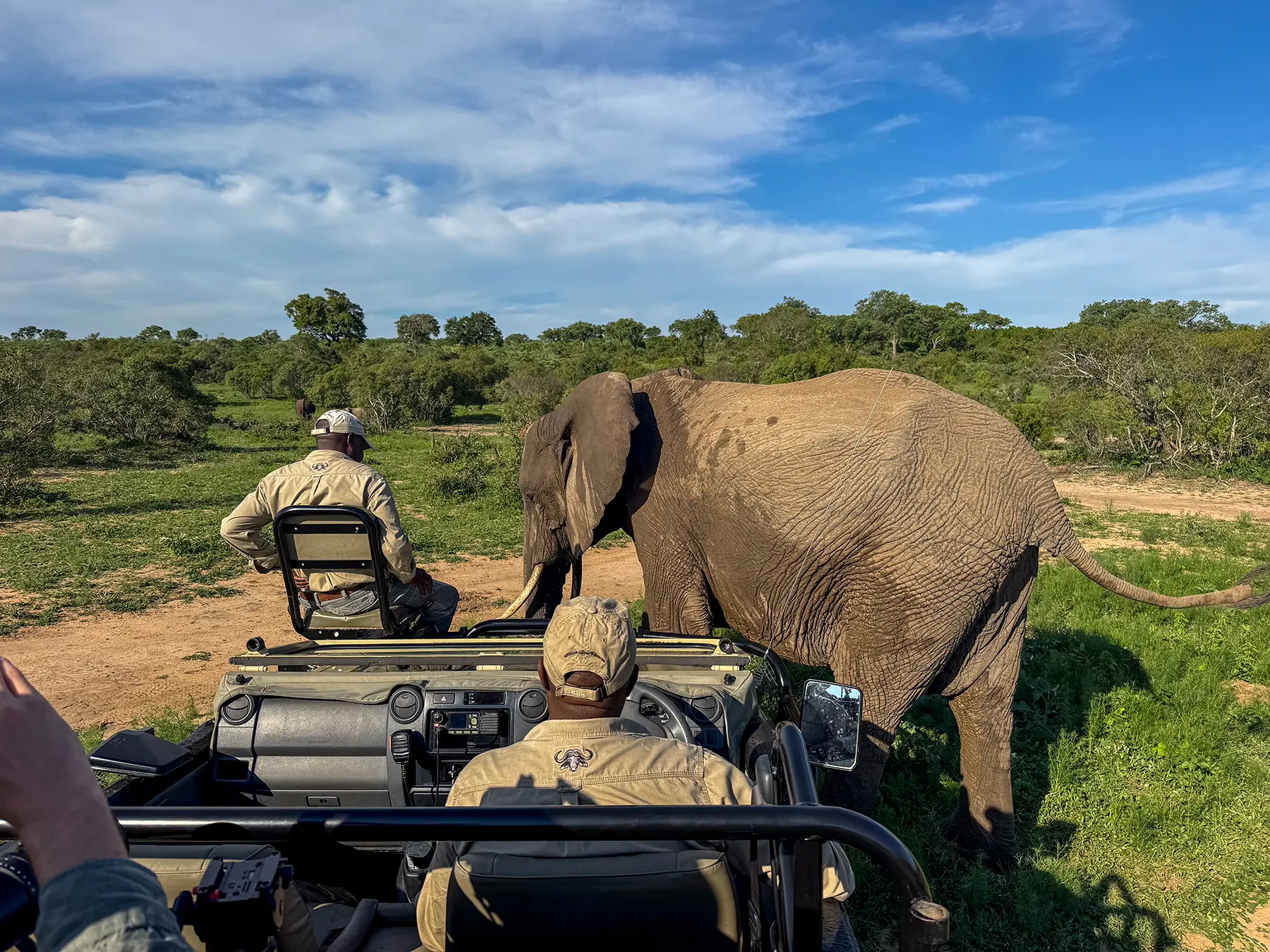
Itinerary
As you have no travel today, you can devote the day to discovering the remarkable wildlife Sabi Sand has to offer. With both a morning and an evening game drive to enjoy, you’ll have ample opportunity for sightings.
Getting off to an early start, your morning drive will bring you into the bush in the chill dawn light, surrounded by the sounds of the wilderness waking around you.
Keep your eyes peeled for predators, still active at this early hour after a night’s hunting before they retire to rest in the late morning heat. You might even spot some napping in the shade on your afternoon drive!
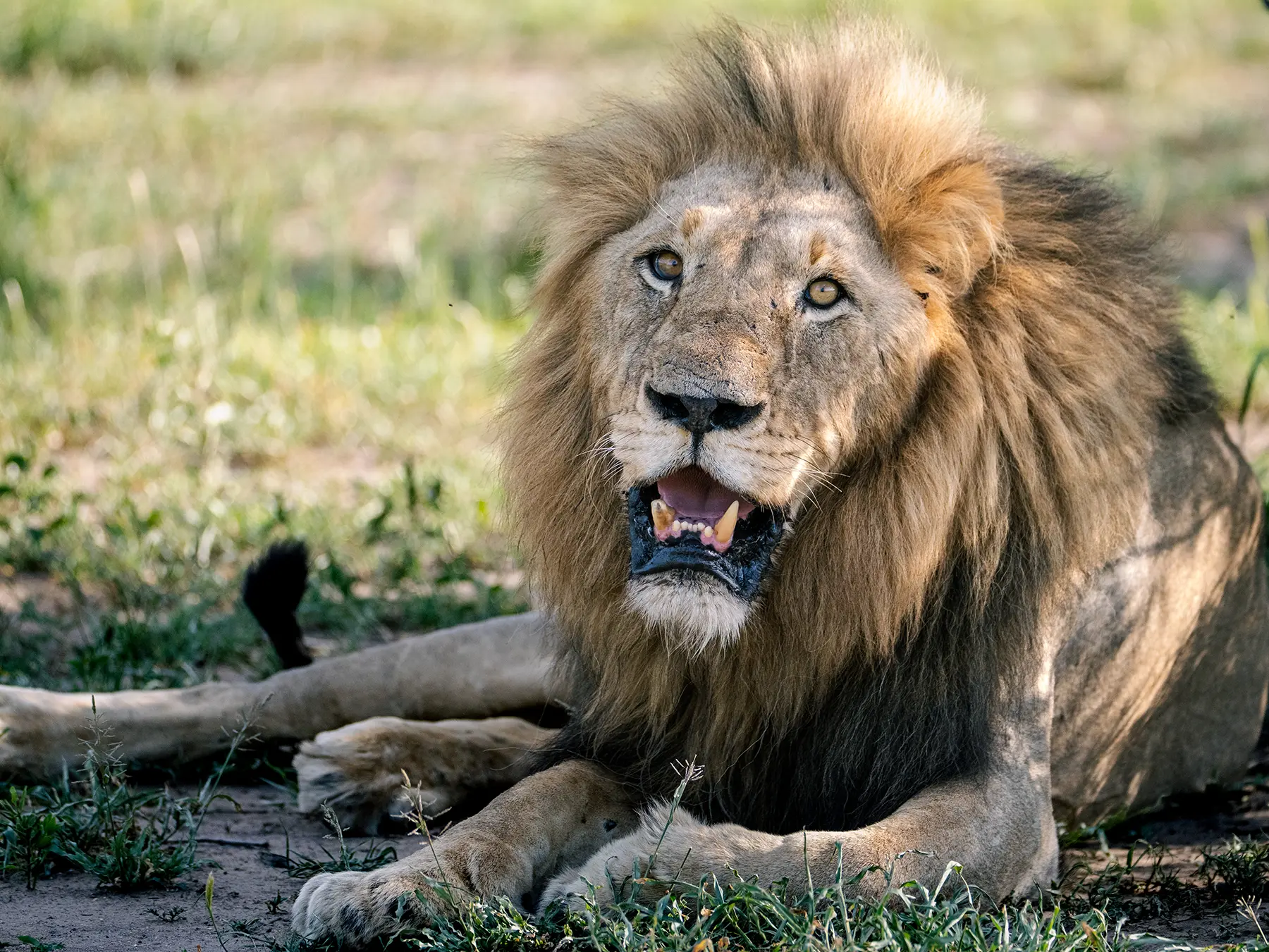
Continuing through sunset into the dark, this second game drive will bring you face to face with nocturnal species that are rarely otherwise seen, with spotlights ensuring you don’t miss a thing.
The towering sausage and marula trees that stand sentry-like along Sabi Sand’s drainage lines are a favourite place for leopards to stash a kill, so be sure to watch the branches and the ground around the trees closely.
The few hours between outings in the middle of the day are yours to spend as you wish, whether you opt for a walking safari with an armed guard or take the opportunity to relax for a bit before your afternoon drive.
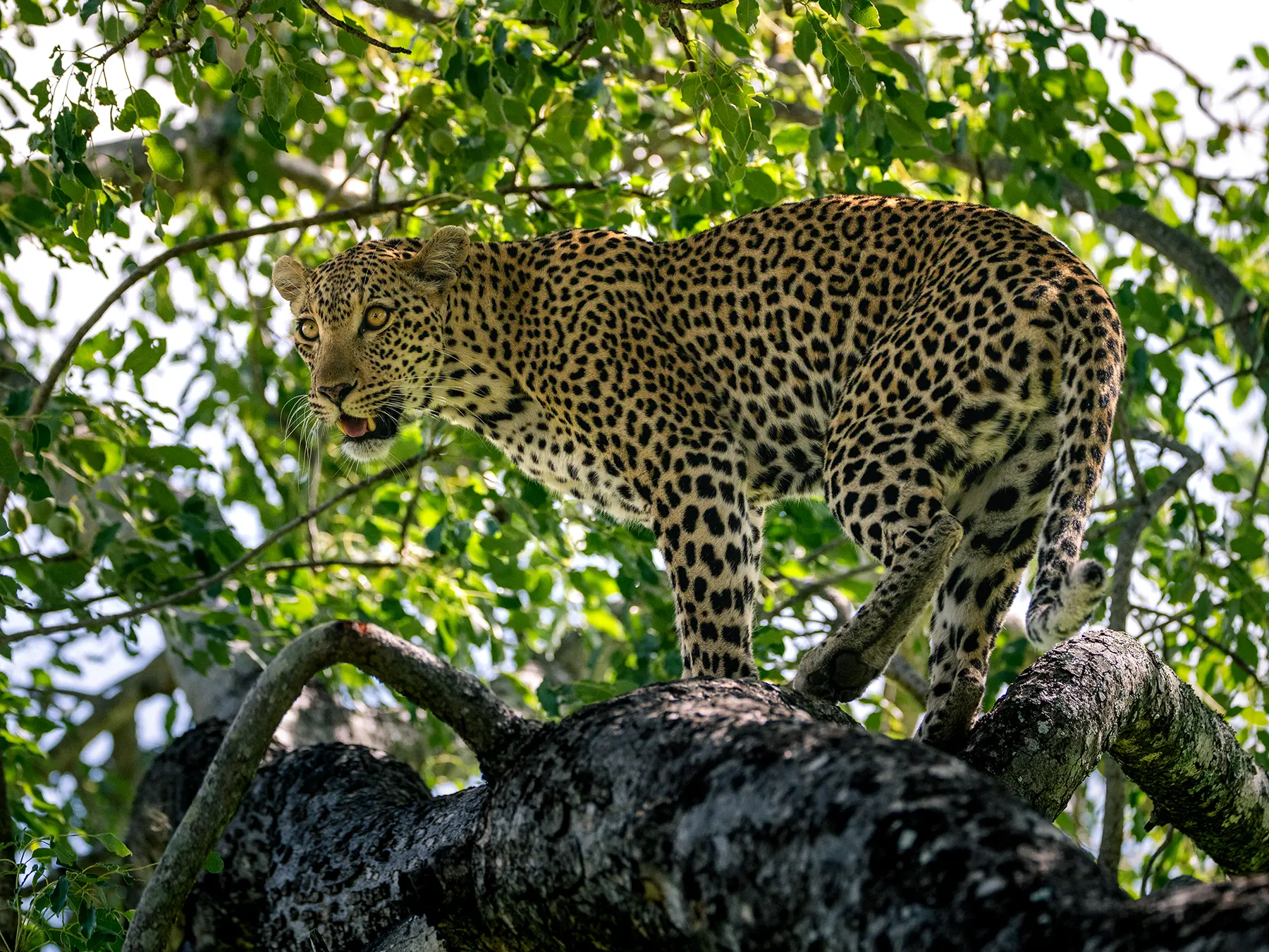
Tips for Visiting Sabi Sand Game Reserve
Here are my top tips to help you get the most out of your game drives in Sabi Sand Game Reserve!
- Pay attention when selecting a lodge, as traversable areas vary by property in terms of size and wildlife.
- I’d recommend choosing accommodation on the Sand River, as this allows you to see wildlife (even elephants!) from the lodge itself.
- The guides have incredibly detailed knowledge of the leopards and lion prides, so don’t be afraid to ask about the history when you have a sighting – you won’t believe what they can tell you!
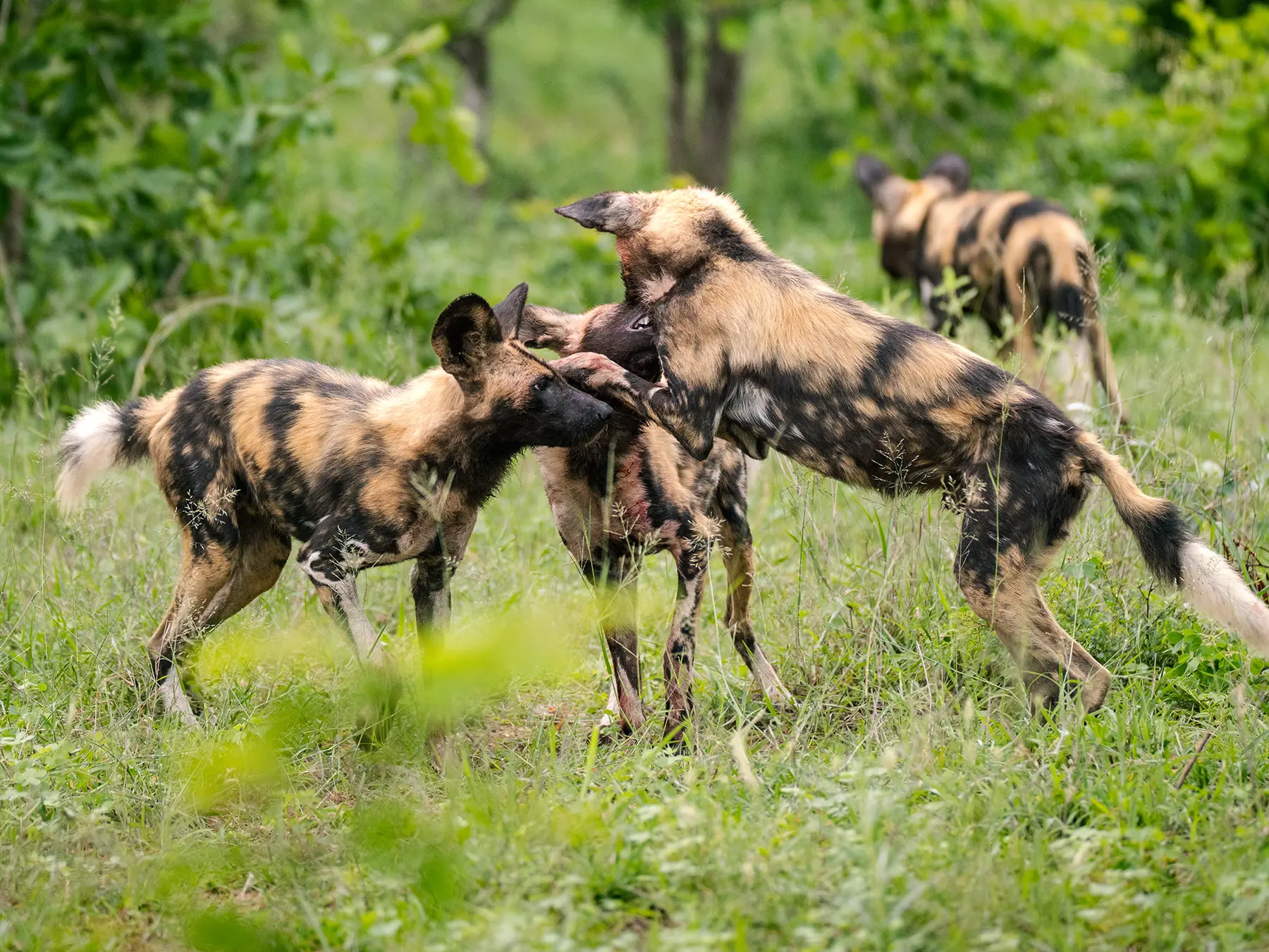
Where to Stay in Sabi Sand Game Reserve
You’ll be spending tonight at the same lodge in Sabi Sand as last night, so there’s no packing or transfers to worry about. You can find details on the entire range of accommodation the reserve offers under Day 3, from super-opulent lodges such as Singita, Londolozi, MalaMala and Sabi Sabi to the more affordable Inyati Game Lodge.
Spending more than one night at the same lodge is fantastic because your guide and tracker will be able to plan the second day’s game drives around the sightings that you haven’t yet ticked off your wish list. Be sure to let them know what you most want to see – in my experience, they will be only too pleased to make your safari dreams come true!.
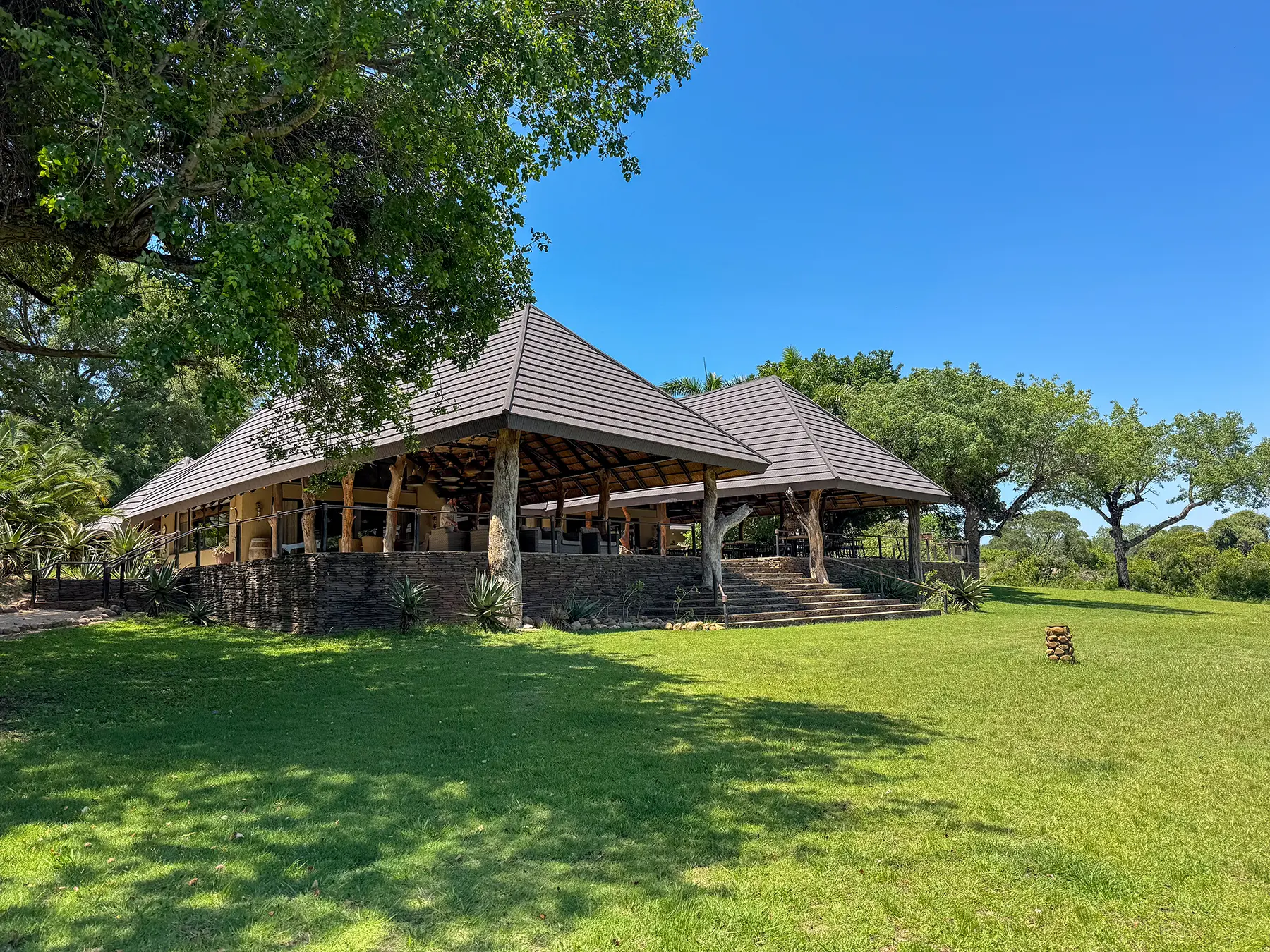
My Experience of Sabi Sand Game Reserve
I intentionally split my visit to Sabi Sand between two lodges at opposite ends of the reserve so I could get a proper feel for the place. Having a second day at each was a real benefit, as it helped me to grasp the extent to which the specific lodge impacts your overall experience.
Inyati Game Lodge, in the west of the reserve, shares traversing rights with the adjacent Ulusaba, Idube and Leopard Hills, and their shared territory is absolutely packed with wildlife, yielding many incredible sightings during my stay. I was amazed at the level of luxury we enjoyed at Inyati, given that it is considered a mid-range lodge.
But the real highlight of my stay at Inyati was my driver and guide, George. He was unbelievably attentive, taking the time to find out what species I most wanted to view and then going above and beyond to make sure I saw them.
When you have a driver who is so devoted to making sure your stay exceeds all expectations, spending a second day in one reserve is so worthwhile.
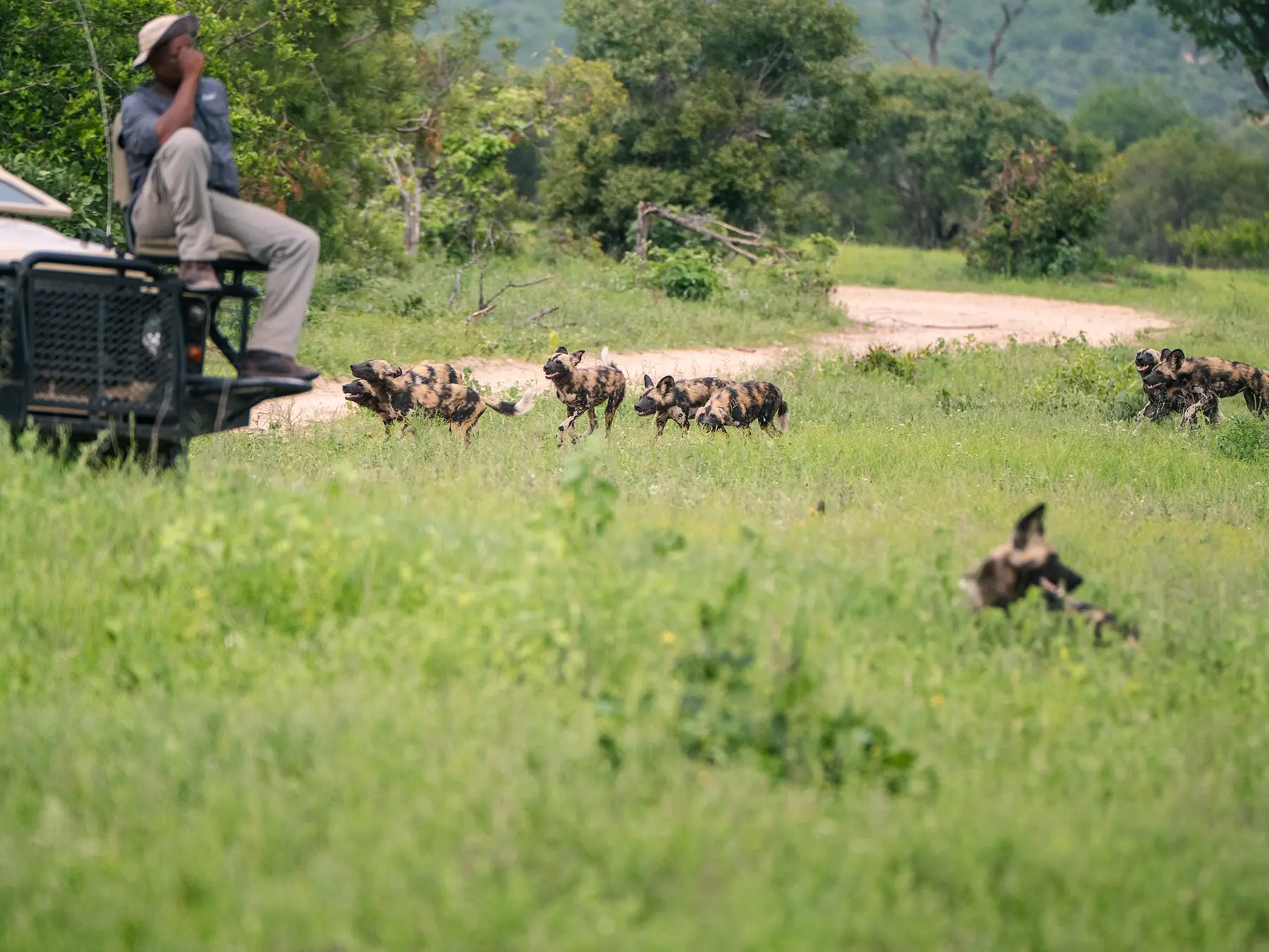
On moving to my second lodge, MalaMala on the eastern border of the reserve, I was wowed by the historic aesthetic with its thatched, roundel-style rooms and traditional design. While I loved the decor, though, the two bathrooms complete with bathtubs were the real winner for me – there’s nothing like a good soak after a full day in the bush!
I found the guides at MalaMala excellent, and the vast expanse of the reserve plus the fact that 70% of it was open only to residents gave the place a wonderfully intimate feeling, with few other vehicles around during game drives.
As the reserve is so expansive, having an extra day here is great as you get to cover much more of it, opening up opportunities for completely different sightings.
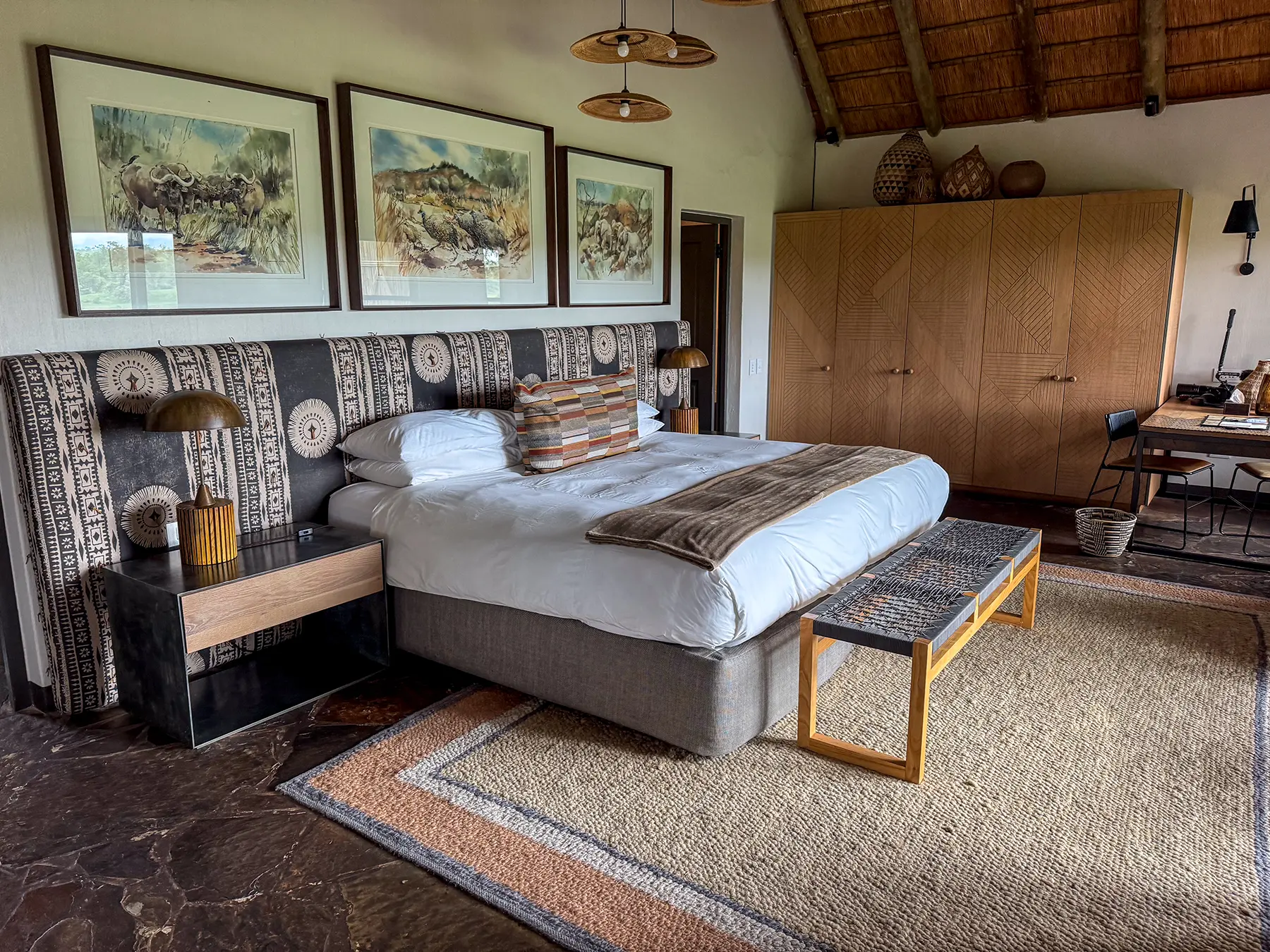
Day 5: Sabi Sand Game Reserve to Skukuza Airport
Drive time (excluding game drives): 1 to 2 hour road transfer to Skukuza Airport
Can you believe this is the last day of your safari? You’ll have time for a final morning game drive in Sabi Sand before setting out for Skukuza Airport on the first leg of your trip back home. The drive offers a beautiful last look at the bush, as the airport is located within Kruger National Park.
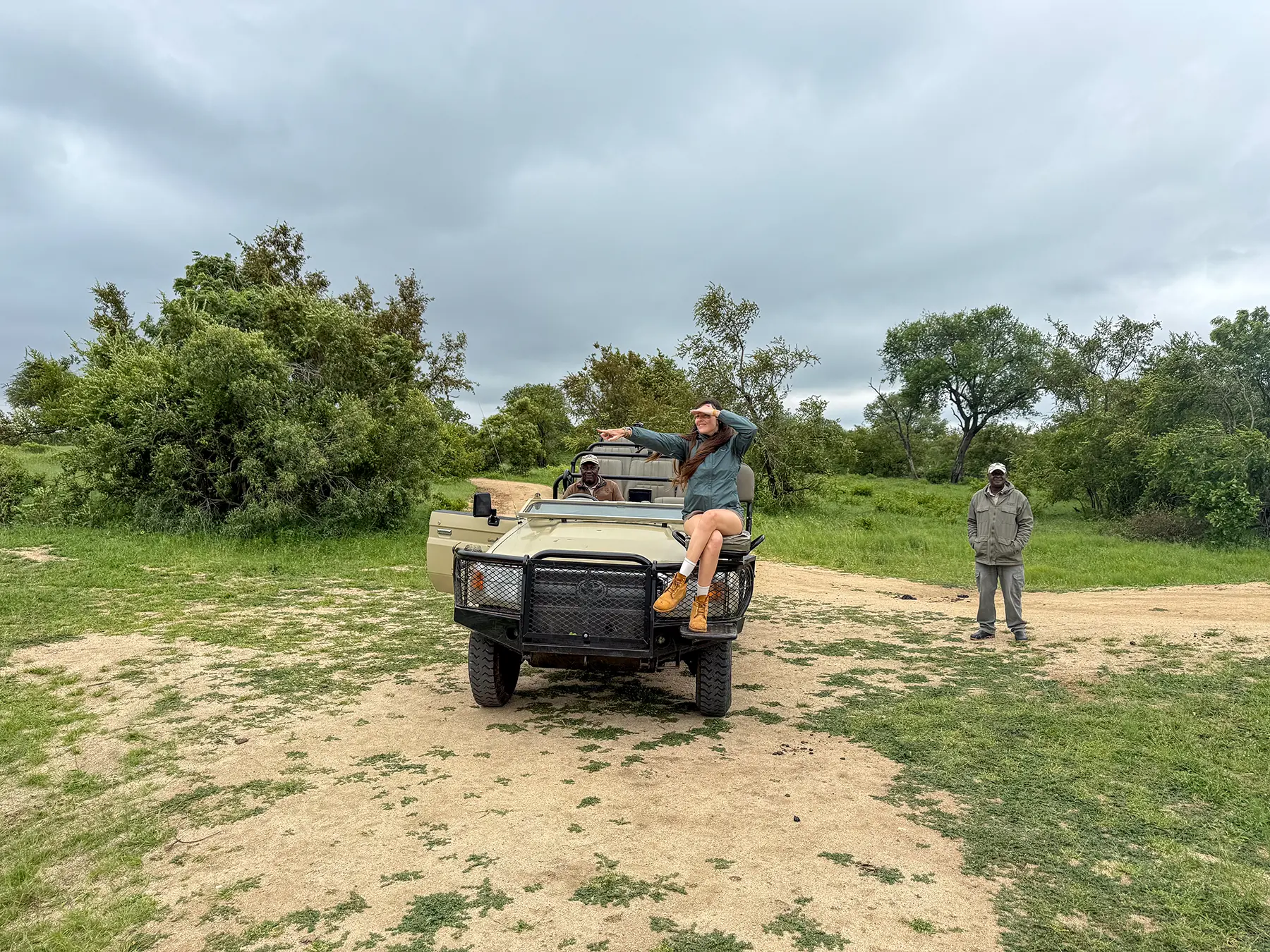
Itinerary
Rising before dawn, you’ll head out on your final game drive in Sabi Sand as the first fingers of light emerge on the horizon.
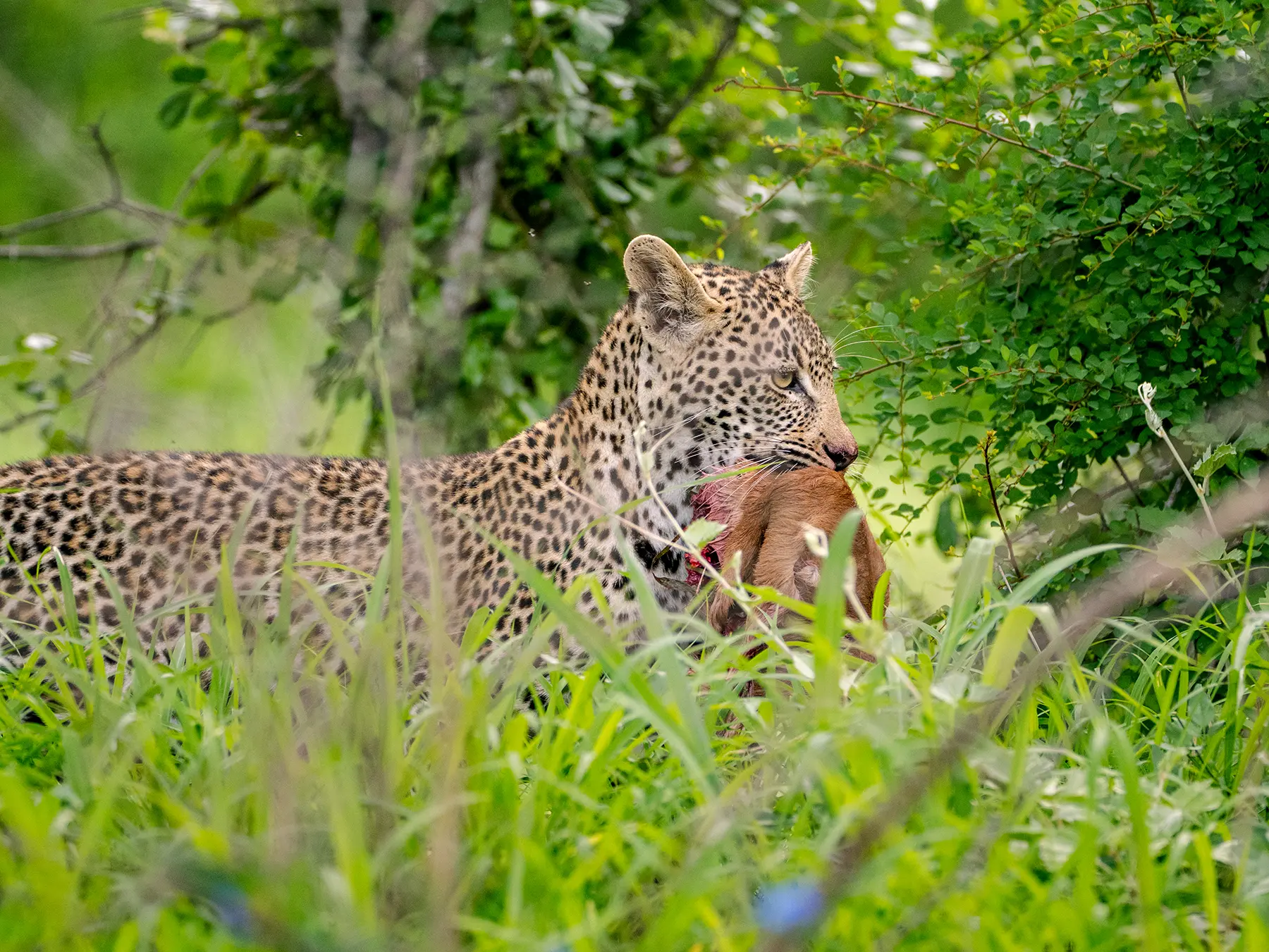
Layered against the chill air, keep a sharp watch for leopards and lions returning from a night’s hunting. If they’ve been successful, you might be lucky enough to spot them hiding their kills in a thicket, dragging them up a tree or even settling down to feed before they rest.
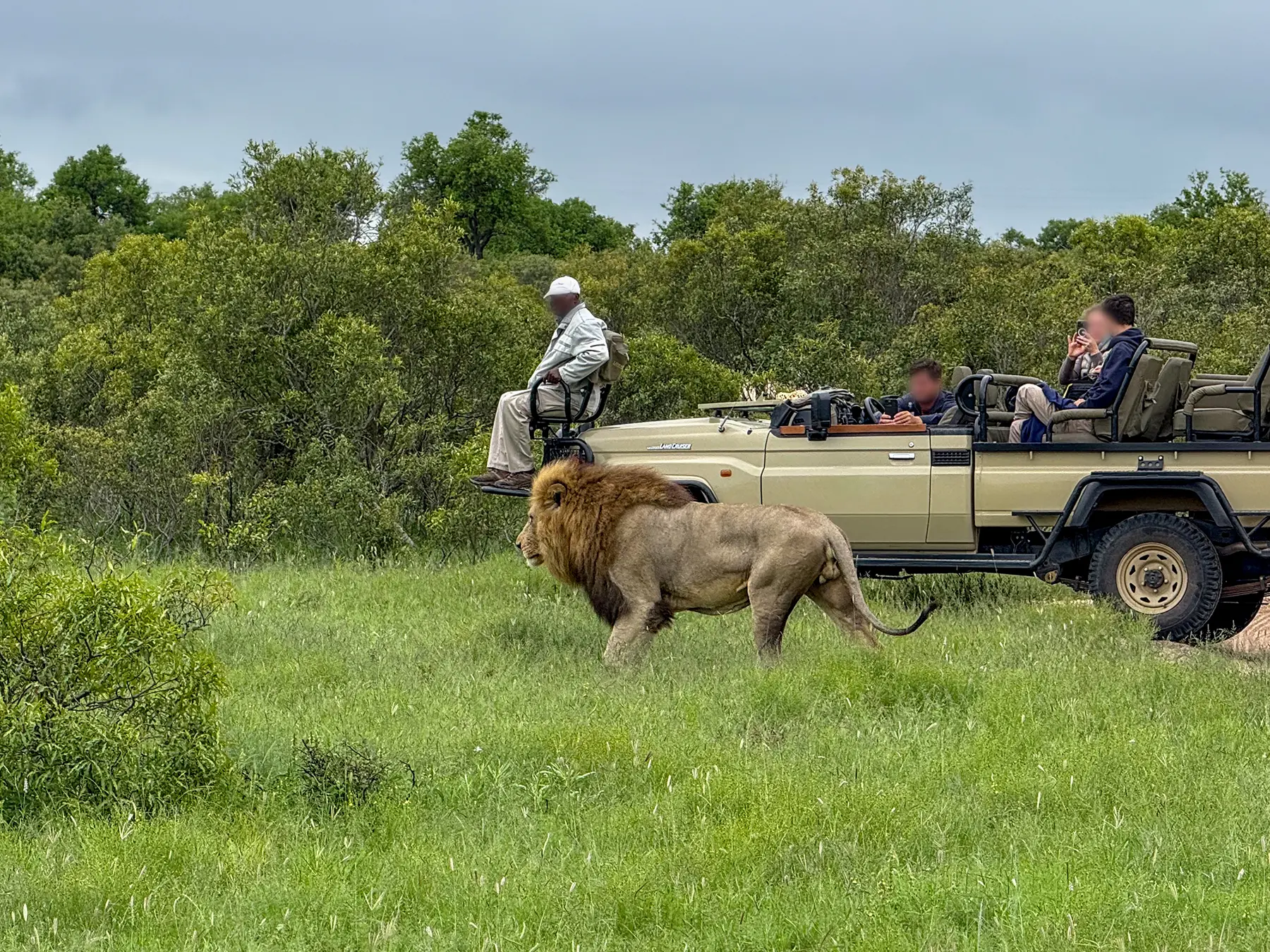
Lion coalitions sometimes regroup at this time before they sleep, their manes silhouetted against the rising sun, making for outstanding photos. Morning also sees the elephant herds move off in search of water, sometimes crossing the tracks near your safari vehicle for a thrilling close-up encounter.
All too soon, though, it’s time to head back to the lodge for a welcome breakfast before packing up and checking out. With lodge checkouts normally at 11:00 in the Greater Kruger reserves, you’ll be on the road reasonably early as you travel to the airport.
Skukuza Airport, a key departure airport for travellers staying in the southern Greater Kruger reserves such as Sabi Sand, is a 1-2 hour drive from your lodge in Sabi Sand.
The drive itself is almost like one last game drive because the airport is located inside Kruger National Park, giving you a final opportunity to spot some wildlife and take in the landscapes of this iconic national park as you travel.
The airport itself is lovely and compact, allowing you to enjoy a laid-back, pleasant end to your safari trip. Connected to both Johannesburg and Cape Town, it has regular Airlink flights to bring you to your connection home.
Tips for Your Journey From Sabi Sand to Skukuza Airport
As vehicles from MalaMala or Kirkman’s Camp can drive straight to Skukuza Airport without leaving the reserve, be sure to ask your local tour operator to arrange your transfer through the lodge if you are staying at either. This will allow you to save on driving time.
Where to Stay
Since Skukuza Airport is located within an easy distance of Sabi Sand and has regular Airlink connecting flights to Johannesburg and Cape Town, travellers usually fly out on the same day rather than spending the night near the airport.
South Africa Safari FAQs
Simply click any of the frequently asked questions below to reveal the answer.
Is Greater Kruger safe for safari tourists?
Yes, the private reserves in Greater Kruger are very safe. Safari tourists are always accompanied by trained rangers on game drives. In addition, lodges are protected by professional security teams and all reserves are tightly managed with strict access controls.
I can’t really comment on Johannesburg as I flew straight to Hoedspruit on arrival, but I felt very safe in Hoedspruit and my driver also told me he’s always found it to be a safe area.
The guides were extremely experienced and very well versed in the wildlife, so the game drives also felt very safe. It also helped that the wildlife were accustomed to safari trucks and very laid back around us.
When is the best time to visit Greater Kruger?
My own personal favourite time to go to Greater Kruger is September to early December, as you get the lush green growth plus tons of baby animals and the related predator action.
If you prefer to go during the dry season, I’d recommend visiting in April or May as the vegetation is thinner for easier viewing, but there are fewer crowds than in peak season (July-August) and lodge rates are lower than in high season.
But we all have different likes and priorities, so you might not necessarily like the same times of year as me! Have a read of my best time to visit section to learn more about what each season offers, and then you can pick the time that most appeals to you.
How much does a Greater Kruger safari cost?
For a 5-day Greater Kruger safari, you can expect to pay around $500-600 per person per day for mid-range accommodation and up to $1,500-$3,000+ per person per day if staying at an ultra-luxury property in Sabi Sand. A comparable Kenya safari or Tanzania safari would cost less, with private safaris starting at around $300 per person per day in Kenya and $350 in Tanzania.
What is the difference between Kruger National Park and the private reserves?
The main difference is that private reserves like Timbavati and Sabi Sand allow off-road driving and also offer spotlit night drives and guided walking safaris, none of which are permitted in Kruger National Park.
In 1993, the fences separating the private reserves from Kruger itself were removed, leaving Big Five wildlife to roam freely between the two areas. However, vehicle numbers are limited at sightings in private reserves, making for a more intimate, personal experience.
Having been to both Kruger National Park and several of the Greater Kruger private reserves, I would say that they offer very different experiences at different prices. Both are amazing, but if your budget allows, you’ll enjoy significantly more Big Five, leopard and cheetah encounters at the private reserves with fewer vehicles and in a wilder, more natural setting.
Can you see leopards in Greater Kruger?
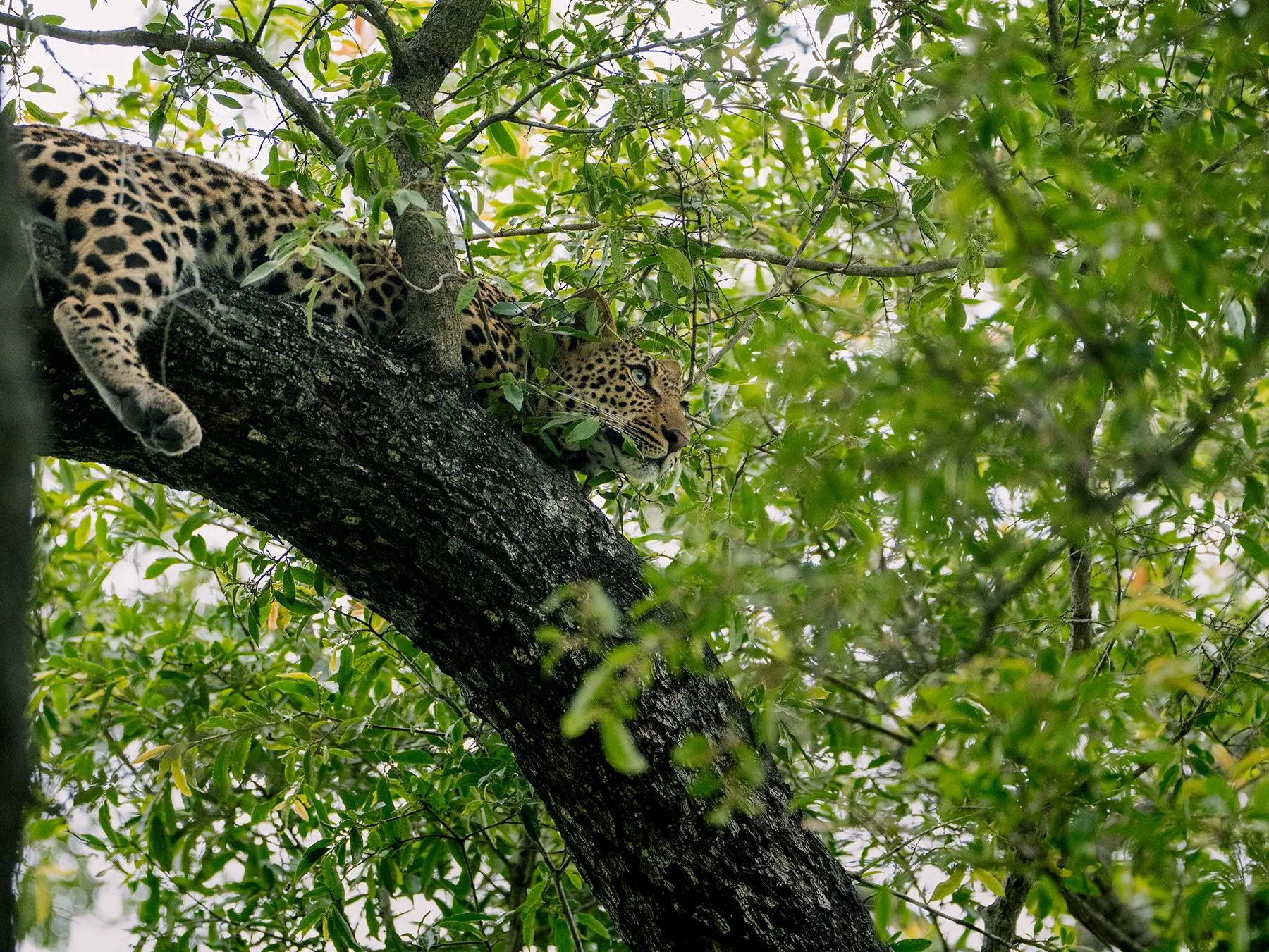
With a leopard concentration of 12.2 per 100 km², Sabi Sand boasts South Africa’s highest surveyed leopard density. What’s more, each encounter is made extra special because the reserve’s expert guides can actually distinguish up to 85 individual leopards by their coat patterns!
Sabi Sand is known as one of Africa’s most reliable locations for leopard sightings, and this certainly rang true during my visit: I saw 10 leopards in just 5 nights!
Do I need malaria tablets for Greater Kruger?
Yes, as the whole Greater Kruger area is designated as a malaria risk zone by public health authorities. As a result, taking antimalarial medication is strongly recommended for anyone visiting the area, particularly from September to May when the warm wet conditions drive up transmission risk.
While the risk is considerably lower during the dry winter months (June to August), antimalarial medication is still advised.
Be sure to check with your doctor before travelling to ensure you have the most appropriate medication.
How do you get to Timbavati and Sabi Sand?
The vast majority of visitors access Timbavati via Hoedspruit Eastgate Airport in Limpopo Province, which is served by daily Airlink flights from Johannesburg (about 1 hour) and Cape Town.
Meanwhile, Skukuza Airport is closer for those headed to Sabi Sand. Like Hoedspruit, Skukuza has daily flights to and from both Johannesburg and Cape Town.
You can organise road transport from the airport to your first reserve via your local tour operator. The drive usually takes between 30 and 90 minutes depending on where your lodge is situated. A number of lodges also have their own airstrips for charter flights.
You can also drive from Johannesburg to Greater Kruger, but I opted to fly because it only took about a quarter of the time and I was treated to some stunning views of the landscape along the way.
Recommended Booking Options For Your 5 Day Greater Kruger South Africa Safari Itinerary
Private Safari
Most popular & best experience – typical prices for this itinerary start from $600 per person per day.
Visit safarisbyella.com for free quotes from trustworthy local tour companies I use to book my own trips.
Final Thoughts – Is a South Africa Safari Worth It?
A 5-day South Africa safari is definitely worth it! Five days in Timbavati and Sabi Sand is enough to experience two entirely different private reserves as well as Africa’s most reliable leopard viewing and also gives you a chance to see all of the Big Five plus the ultra-rare white lions – and all without extended drives.
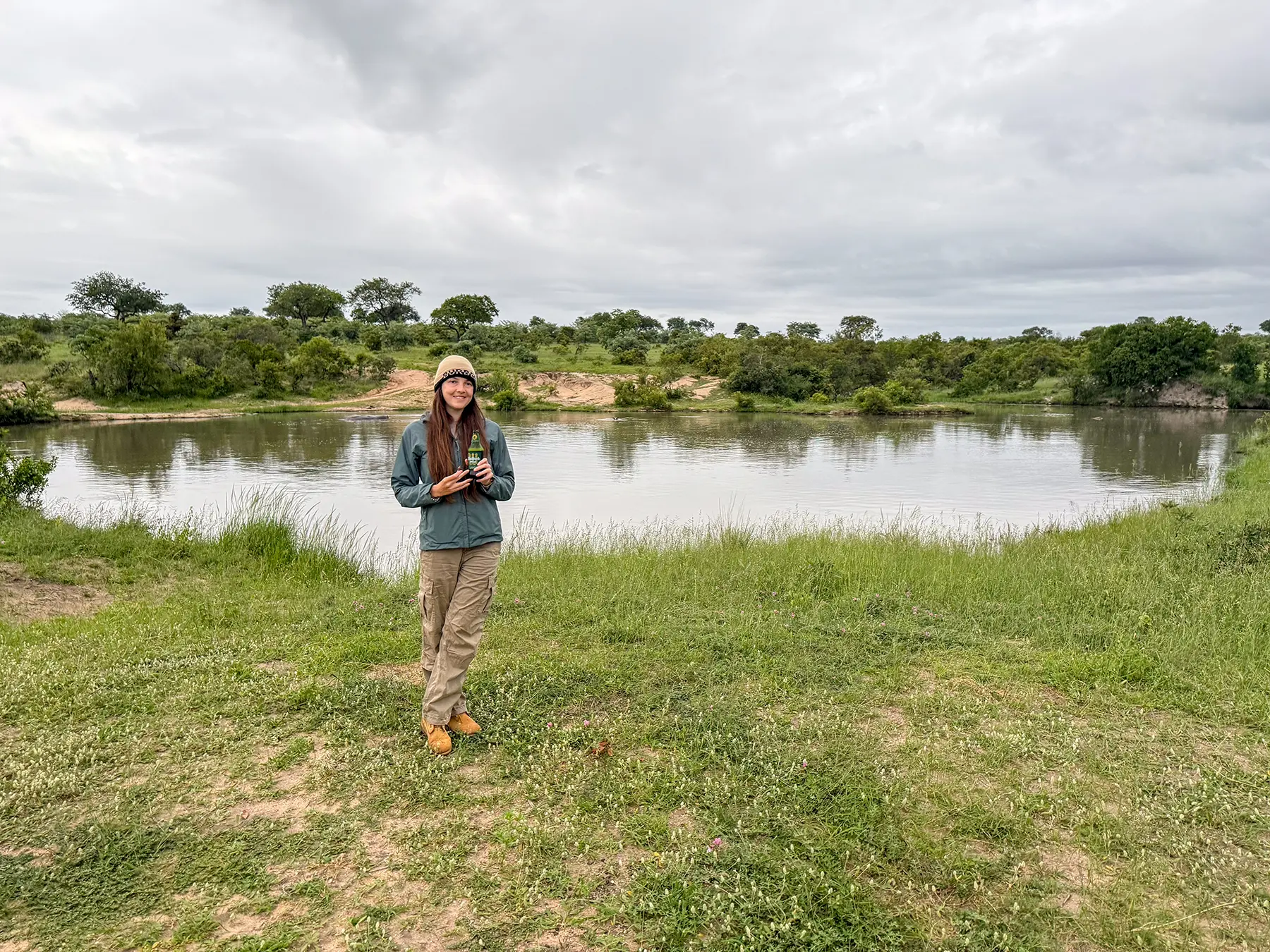
For me, it was my guide George who truly took my visit to Sabi Sand to the next level. I’ll never forget the interest he took in my bucket-list wishes or the effort he made to make sure they came true!
His willingness to go the extra mile taught me that whether your safari is five days or five weeks, an excellent guide makes all the difference between a great trip and an utterly unforgettable experience.
You can get quotes from the very same tour operators I use on safarisbyella.com
Read More South Africa Guides
South Africa Itineraries
Recomended itineraries and how to book them.
10-Day South Africa Safari Itinerary & Costs
7-Day South Africa Safari Itinerary & Costs
5-Day South Africa Safari Itinerary & Costs
Costs & Planning
How to get the most bang for your buck and the best time of year to visit depending on what you want to do and see.
Coming soon.
National Parks & Reserves
Complete guides to the best and most famous safari reserves, including the wildlife you’ll see, entrance costs and best time to visit.
Coming soon.
How to Book Your Safari
Save time and ensure an incredible safari experience by getting quotes from my recommended local safari companies.
Join the rapidly growing tribe of over 1,000 travellers who’ve booked their dream safari using my insider tips and recommendations.
This is such a helpful safari guide! 😊 The Greater Kruger sounds like an incredible destination, and I love how you’ve shared both the itinerary and cost details. It’s great for travelers planning their first African safari. Thanks for sharing such valuable insights!