
Rwanda packs more primate magic into its small footprint than almost anywhere else on earth, and a single week is all the time you need to see the very best of it without rushing.
Known as the Land of a Thousand Hills, Rwanda is compact, safe and remarkably well-organised, which makes planning a gorilla and chimpanzee and Big Five safari straightforward!
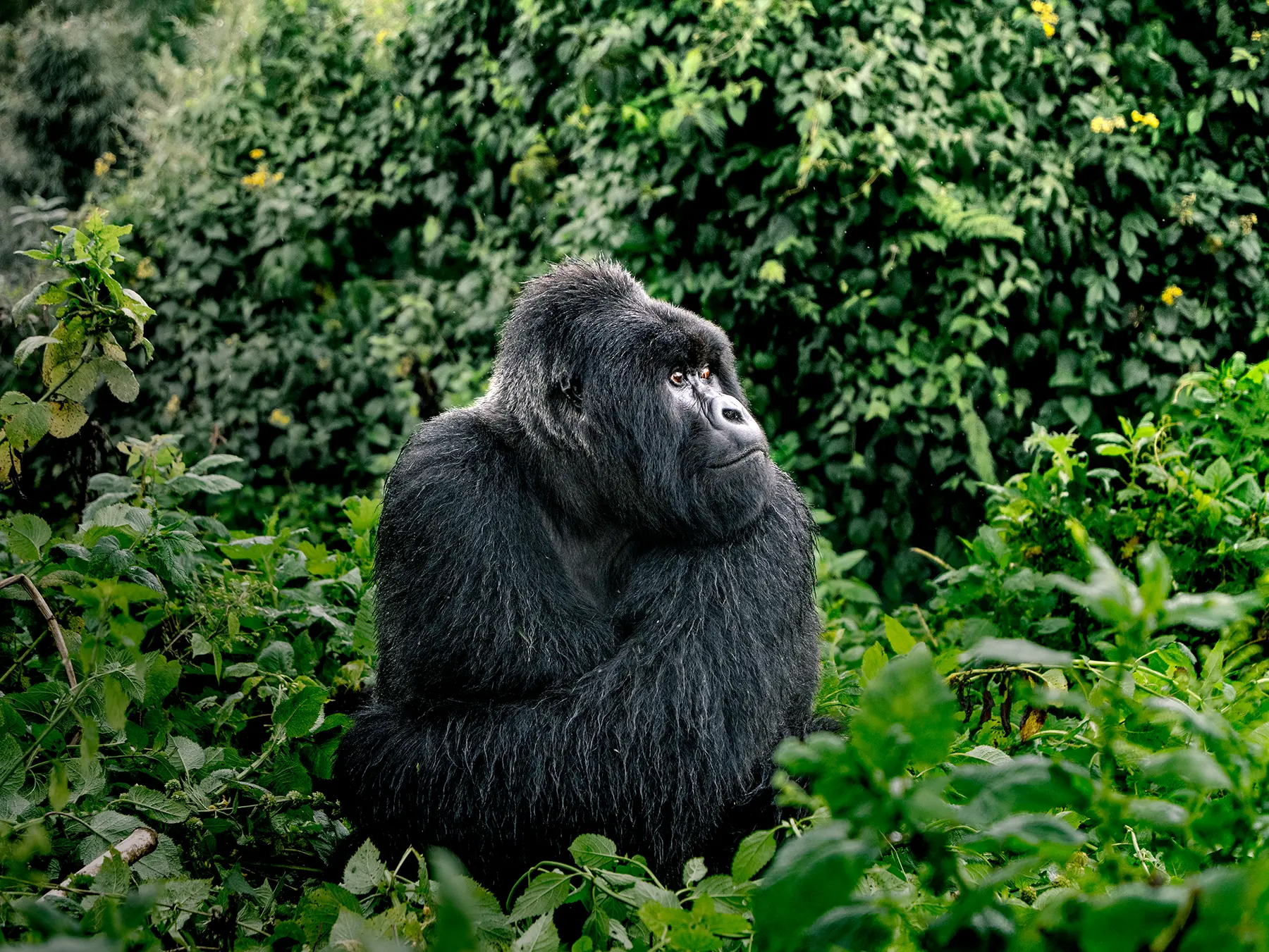
Volcanoes National Park delivers mountain gorilla trekking on the slopes of the Virunga Massif, Akagera in the east now holds all of the Big Five after a remarkable conservation turnaround, and Nyungwe Forest guards habituated chimpanzee groups inside an ancient UNESCO rainforest.
My own experience of Rwanda was nothing short of incredible! I am working on you Youtube video of my experience and will post it here when complete.
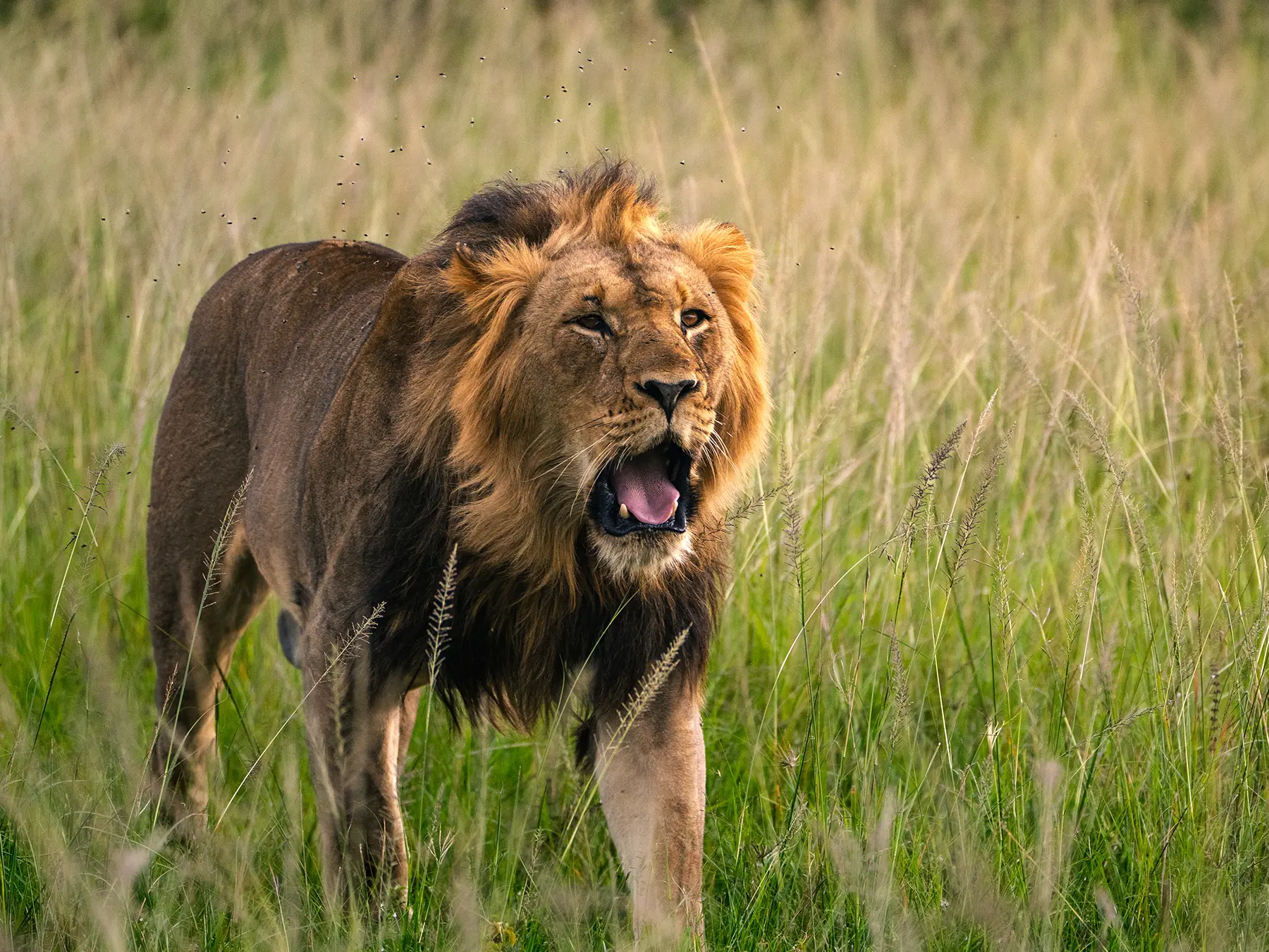
My highlights include observing a huge family of mountain gorillas with babies on the mountain side of Volcanoes national park to chasing after chimps through the Nyungwe rain forest to having the the best white rhinos sightings of my life in Akagera National park!
Seven days is enough to combine gorilla trekking in Volcanoes, chimp tracking in the rainforest of Nyungwe, a restful stop on the shores of Lake Kivu, and a proper taste of Akagera’s reintroduced lions and rhinos, all without marathon driving days or rushed activities.
For longer trips, you can also incorporate neighbouring Uganda with a 2-week Uganda and Rwanda safari itinerary.
After visiting Rwanda twice, I’ve perfected this 7-Day Rwanda itinerary to show you all of what Rwanda has to offer as well as giving you the most ‘bang for your buck’.
I’m going to give you an idea of how much it will cost, the best time to visit and how to find the best safari tour company.
As I walk you through the itinerary, I’ll share tips, tricks and how to avoid some of the mistakes I’ve made.
I’ve also spoken at length with my favourite Rwanda guides as well as conducting copious amounts of additional research to ensure you receive everything you need to know to have the ultimate 7-Day Rwanda safari.
It’s easy to focus only on the fun stuff when planning the trip of a lifetime, but I’ll make sure your itinerary includes the practicalities too, like allowing time to navigate rough roads or building in moments to relax. These details often make all the difference.
Key Takeaways
- Trip Duration: 7 days
- Budget Range: $4,500-$12,000 per person
- Best Time to Visit: June-August (dry season)
- Key Destinations: Akagera, Volcanoes NP, Lake Kivu, Nyungwe
- Wildlife Highlights: Mountain gorillas, chimps, Big Five, golden monkeys
- Average Drive Time: 3-5 hours between parks
- Difficulty Level: Moderate (gorilla and chimp trekking on steep terrain)
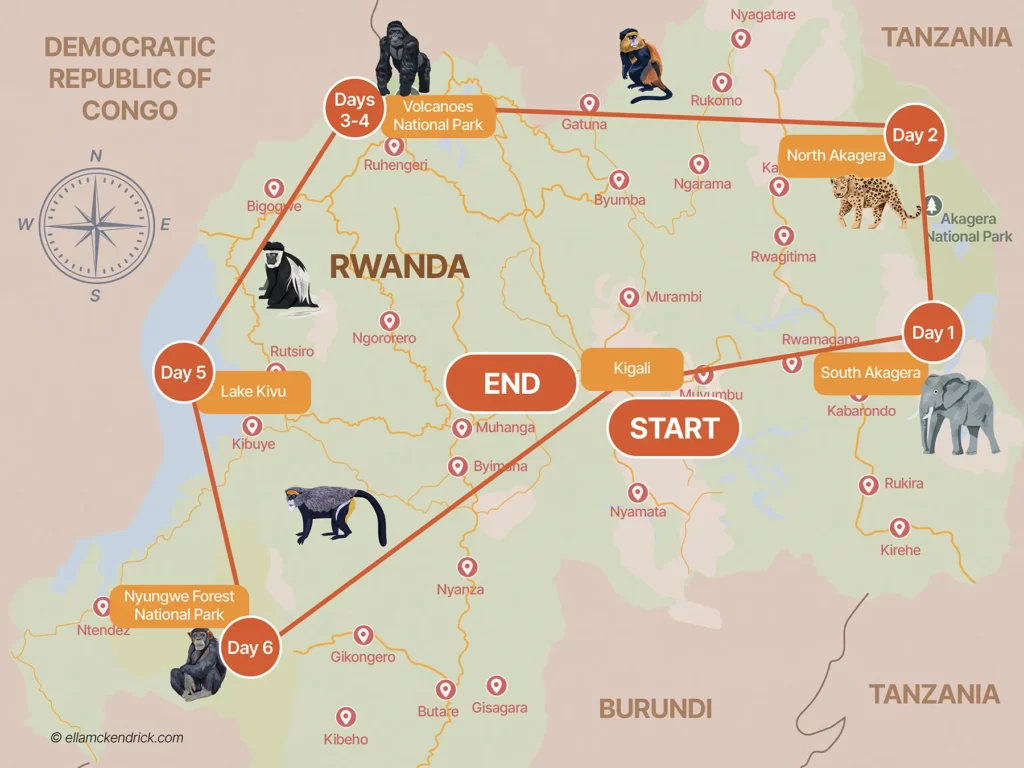
Rwanda 7-Day Safari Itinerary Map
Below is the route map for my recommended 7-Day Rwanda itinerary. We’ll cover this itinerary in detail in this guide.
Embark on the Safari of Your Dreams
Save time and ensure an incredible safari experience by getting quotes from my recommended local safari companies
I’m here to make booking your perfect safari quick, easy and risk-free.
Join the rapidly growing tribe of over 1,000 travellers who’ve booked their dream safari using my insider tips and recommendations.

It takes under 60 seconds to fill out the form and in under 48 hours you will receive multiple, no-obligation proposals from my favourite local tour operators with glowing online reviews.
Get your free no-obligation safari quotes and my top safari tips and recommendations
In This Guide
- Why Go on Safari in Rwanda?
- How Do You Book a 7-Day Rwanda Safari?
- Should You Choose a Private or Group Rwanda Safari?
- How Much Does a 7-Day Rwanda Safari Cost?
- When Is the Best Time to Visit Rwanda?
- How Many Days Do You Need for a Rwanda Safari?
- What Does This 7-Day Rwanda Itinerary Look Like?
- Rwanda Safari FAQs
- Is a 7-Day Rwanda Safari Worth It?
Why Go on Safari in Rwanda?
Rwanda’s lush, green and mountainous landscape is one of Africa’s most diverse safari destinations as well as having great infrastructure and one of the safest countries in Africa.
An impressive 9% of Rwanda’s land is protected for wildlife and conservation), with a total of 4 national parks.
Rwanda offers visitors mountain gorilla trekking in Volcanoes National Park, chimpanzee tracking in the ancient rainforest of Nyungwe, and Big Five safaris on the open plains of Akagera National Park.
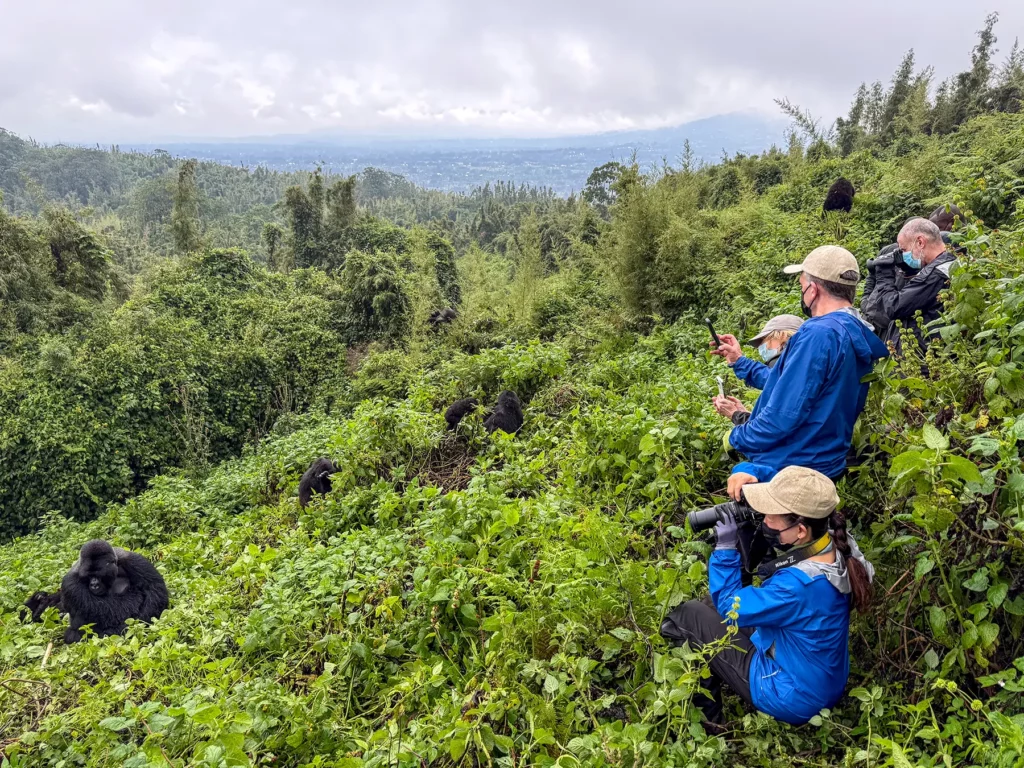
Because the country is small and easy to navigate, 7 days on safari in Rwanda is enough time for you to encounter primates, plains game and predators, all in one compact loop.
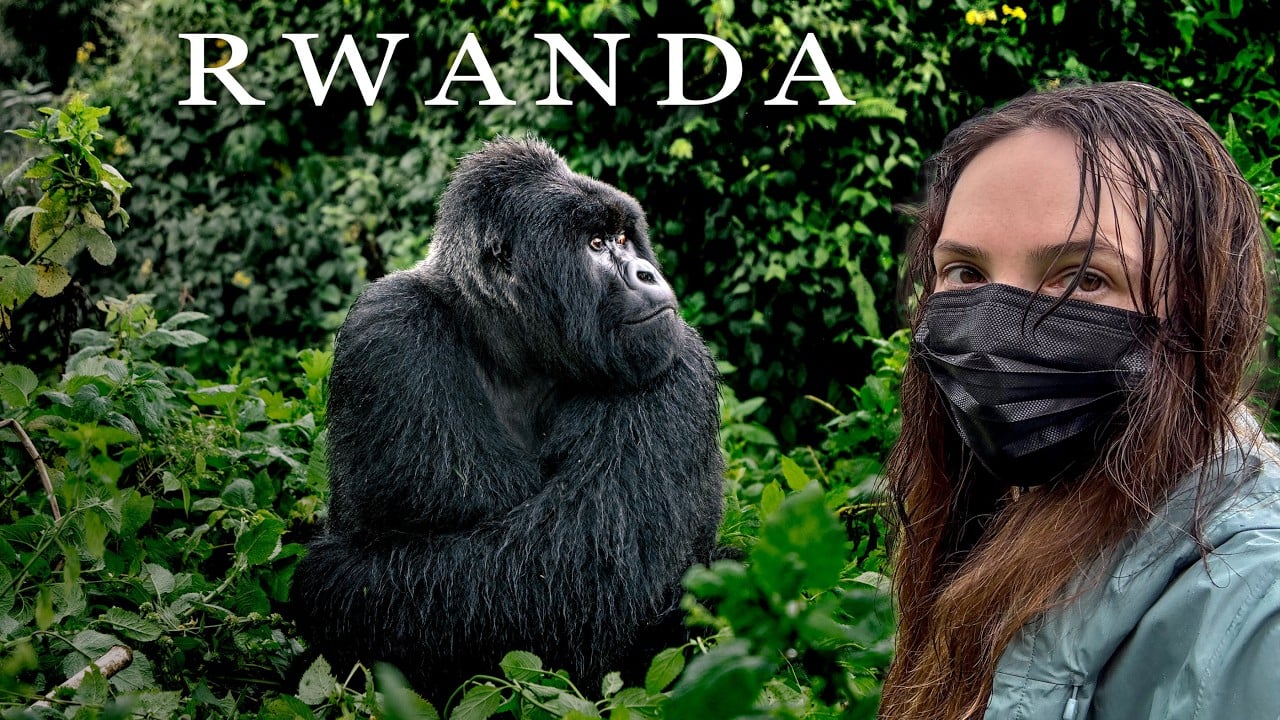
You can watch a video of my Rwanda experience below or scroll down to dive into some of the features that set Rwanda apart as a safari destination or jump straight to the itinerary.
Easy Access via Kigali
Compared to most other safari destinations in Africa, Rwanda’s parks are easy to access thanks to good connections by air and overland.
I found the smooth tar roads and small size of Rwanda quite a contrast to the much longer bumpy drives between locations in neighbouring Uganda. However, you do pay extra for the great Rwandan infrastructure via much higher gorilla tracking fees.
Right in the centre of the country is the main gateway to Rwanda, Kigali International Airport. There are direct flights here from London, Brussels, Amsterdam, Doha, Dubai and several African hubs.
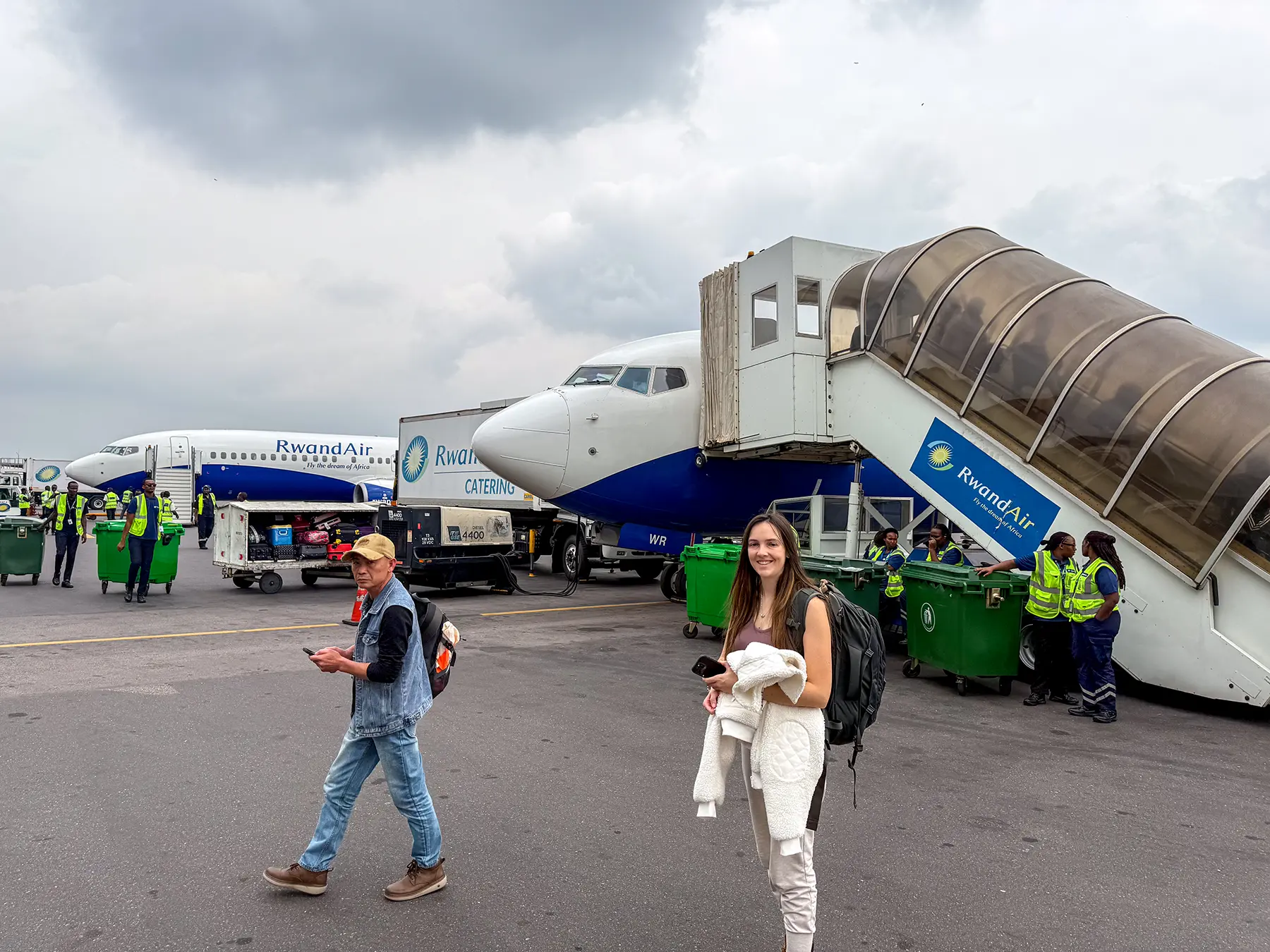
Travellers from the US connect through one of these hubs, reaching Kigali with a single stop from gateways such as New York, Atlanta or Washington.
From the landing strip to the first park gate is a short journey: Volcanoes National Park is only around 2.5 hours drive from Kigali, via well-maintained, paved roads.
Rwanda is widely considered the safest country in East Africa, with clean urban centres, strong governance and excellent road infrastructure.
Below is a map I made of Rwanda showing the safari highlights.
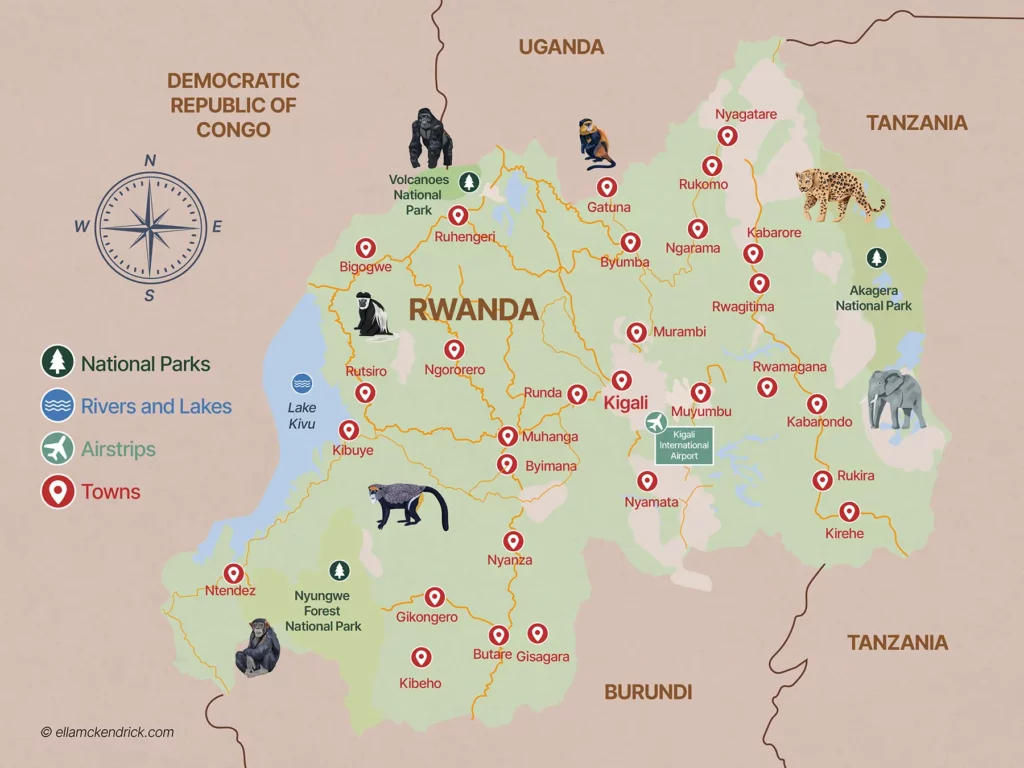
World-Class Primate Viewing
In Rwanda is one of the best places in the world to see primates in the wild including mountain gorillas, chimpanzees and golden monkeys.
Rwanda is one of only three countries in the world where mountain gorillas can be seen in their natural habitat, the others being Uganda and the Democratic Republic of Congo.
Volcanoes National Park is Rwanda’s flagship reserve and offers everything you could hope for in a gorilla trekking experience: lush rain forests, dramatic mountain paths, and, of course, critically endangered mountain gorillas.
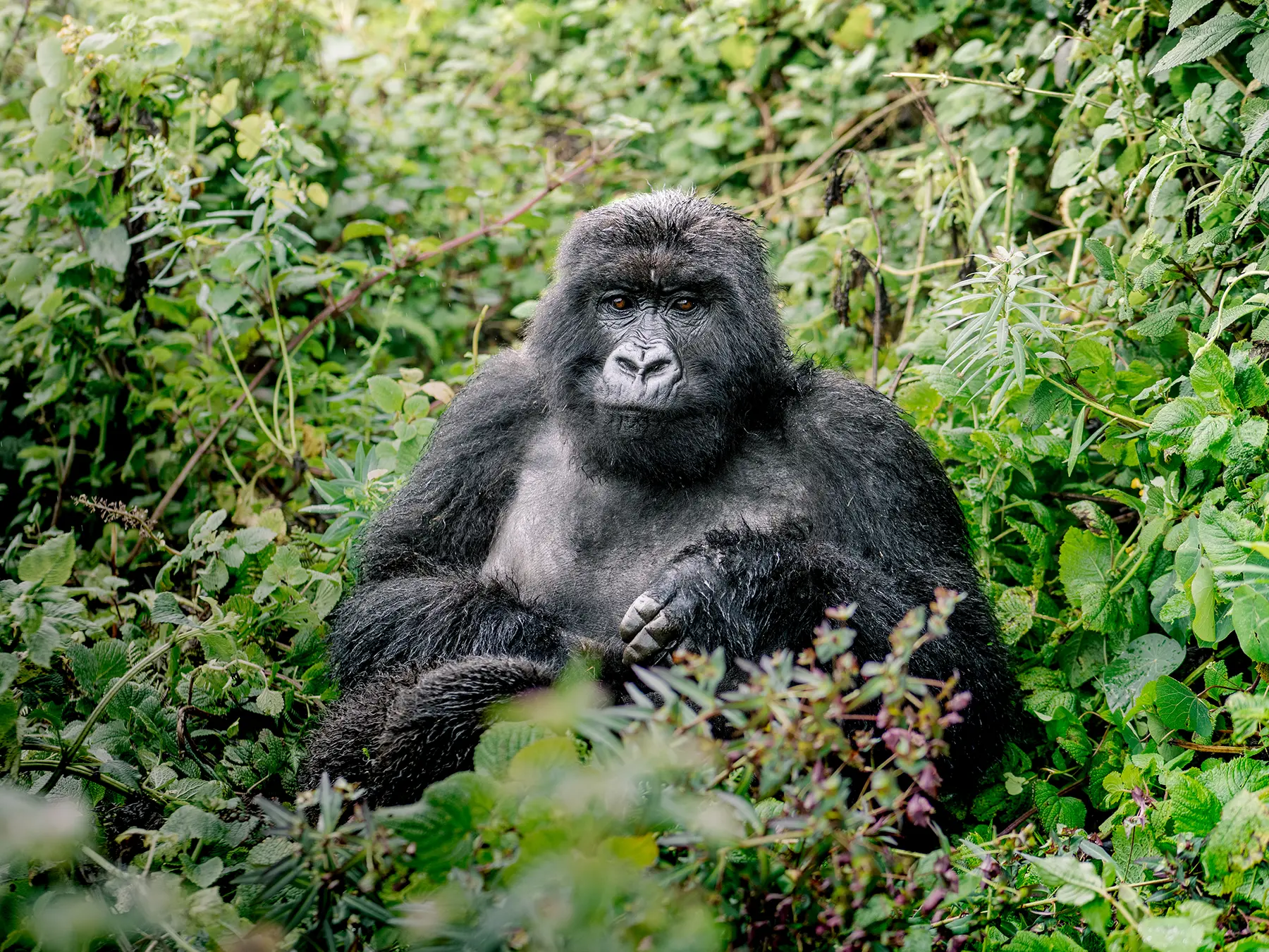
The park is a UNESCO Biosphere Reserve and part of the Virunga Massif, a mountain range that spans Rwanda, Uganda and the DRC, and covers 62 square miles (160 km²).
The Virunga region is the primary habitat for mountain gorillas in Africa, and Volcanoes is home to around 300-350 individuals across 10 habituated families.
There are just over 1000 wild mountain gorillas left in the world. They inhabit two isolated populations:
- Virunga Massif – includes Volcanoes National Park (Rwanda), Mgahinga Gorilla National Park (Uganda), and Virunga National Park (DRC).
- Bwindi Impenetrable Forest – often referred to as the Bwindi-Sarambwe ecosystem, since it includes Uganda’s Bwindi Impenetrable National Park and the small adjacent Sarambwe Nature Reserve in DRC.
| Population | Gorillas | Location |
|---|---|---|
| Virunga Massif | 604 | Rwanda, Uganda, DRC |
| Bwindi-Sarambw | 459 | Uganda, DRC |
| TOTAL GLOBAL | 1,063 |
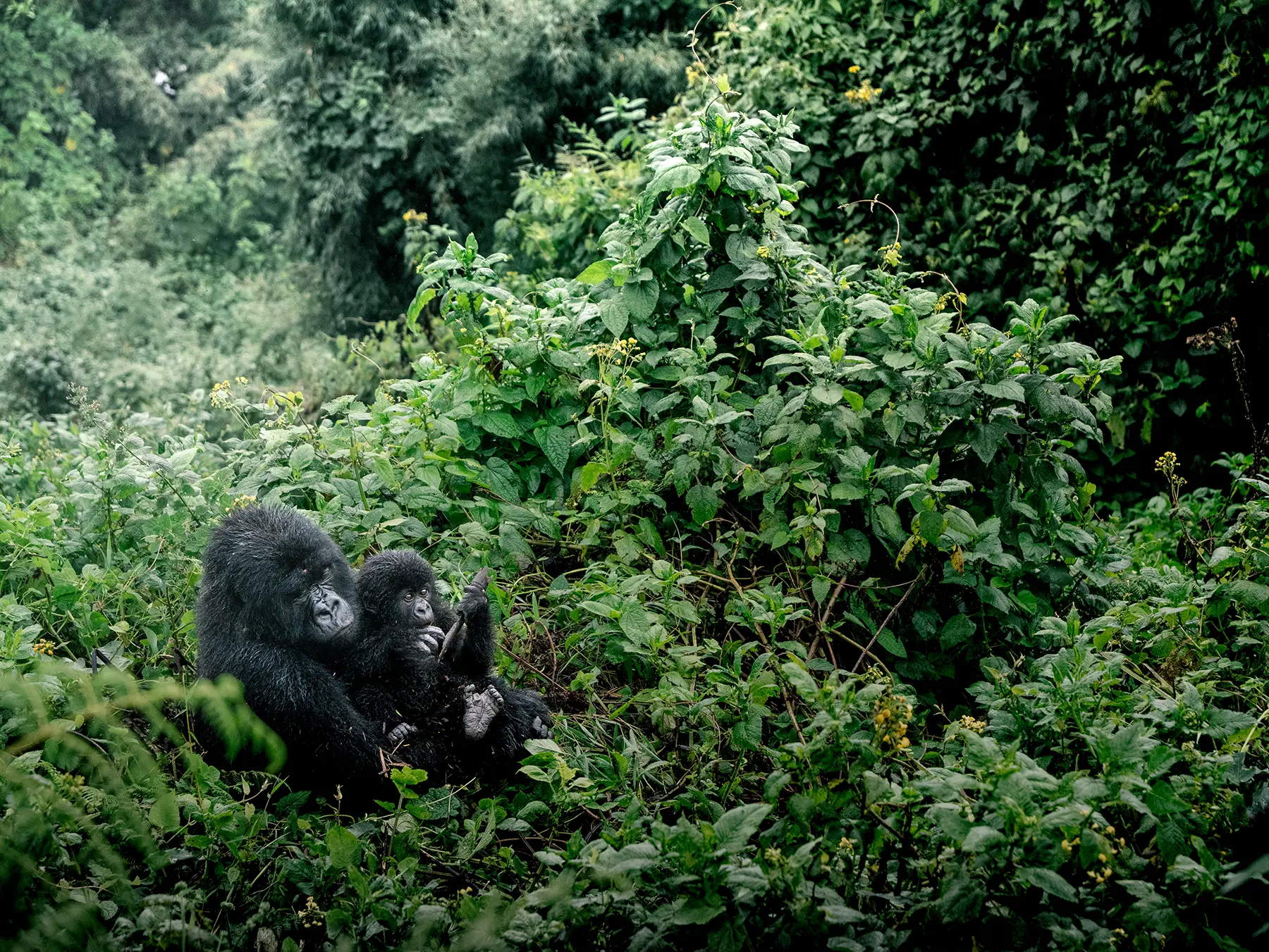
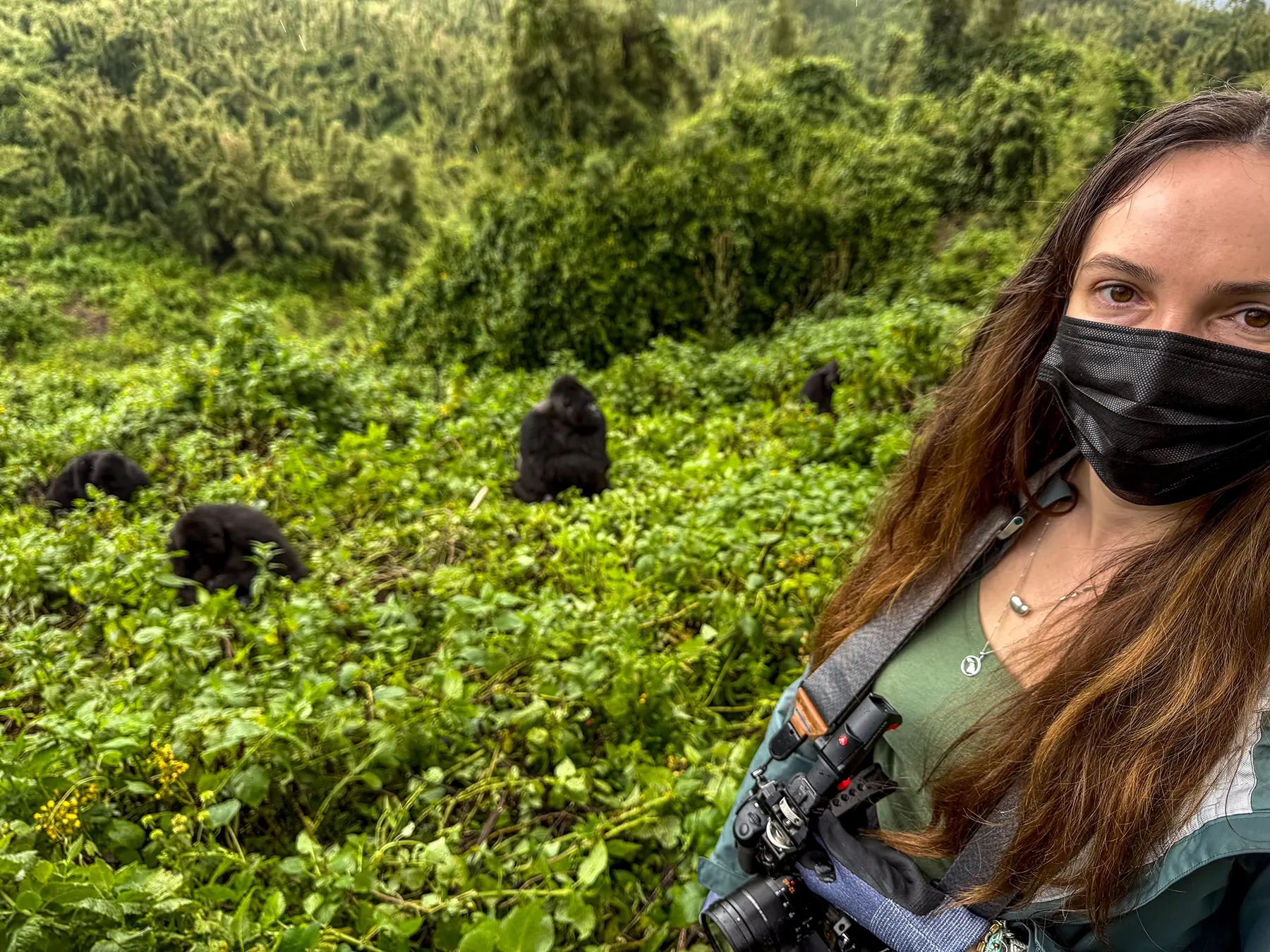
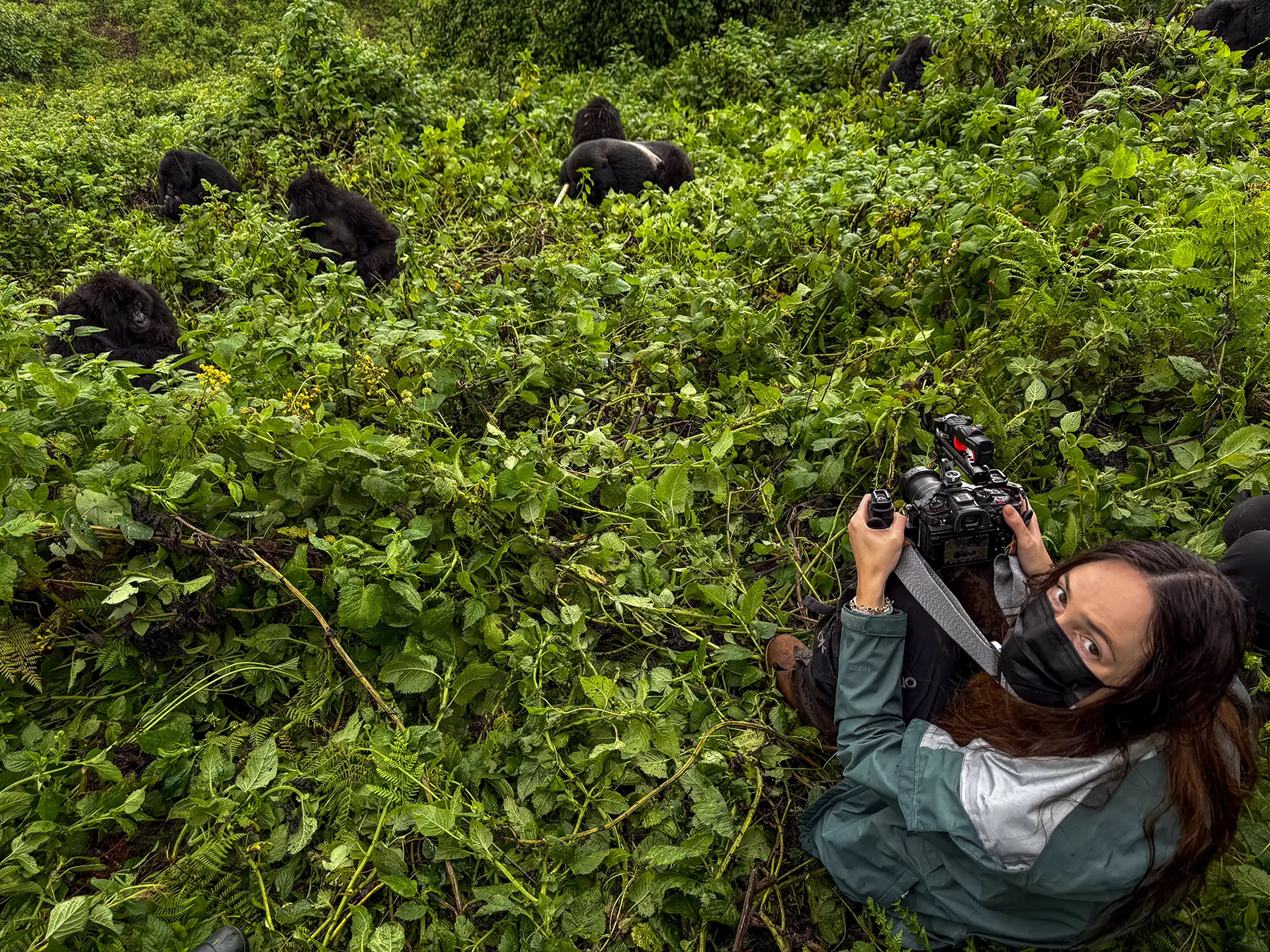
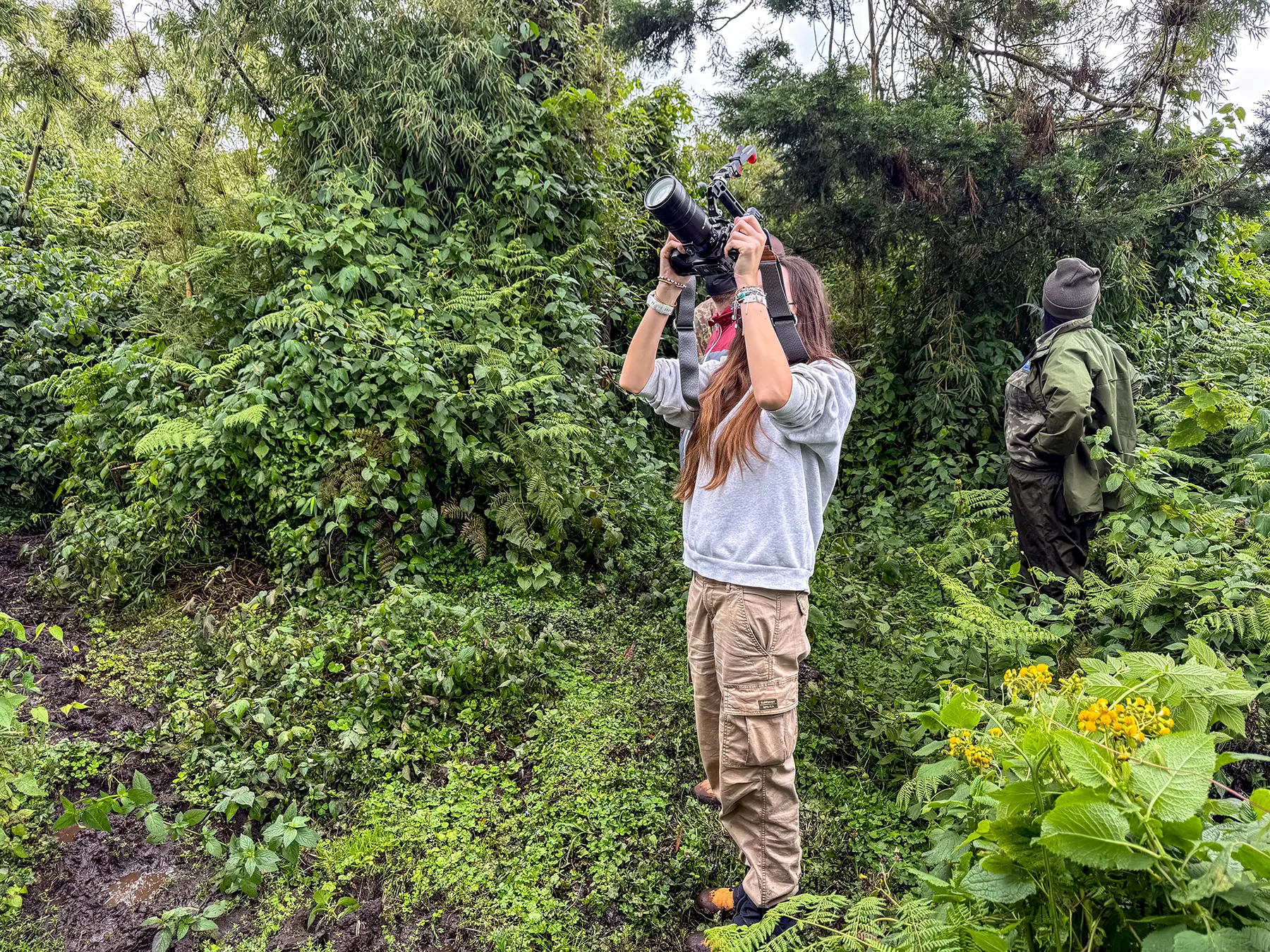
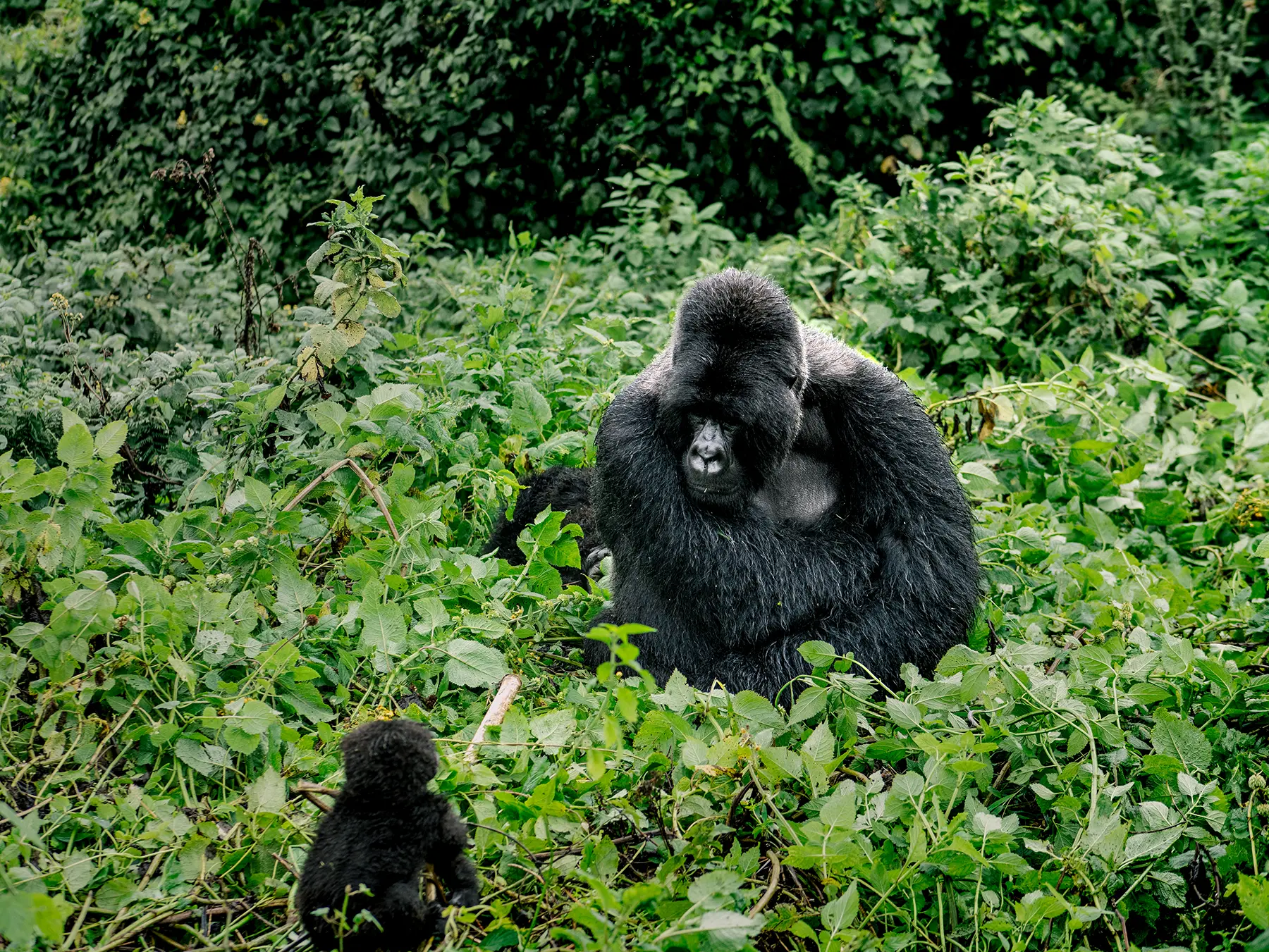
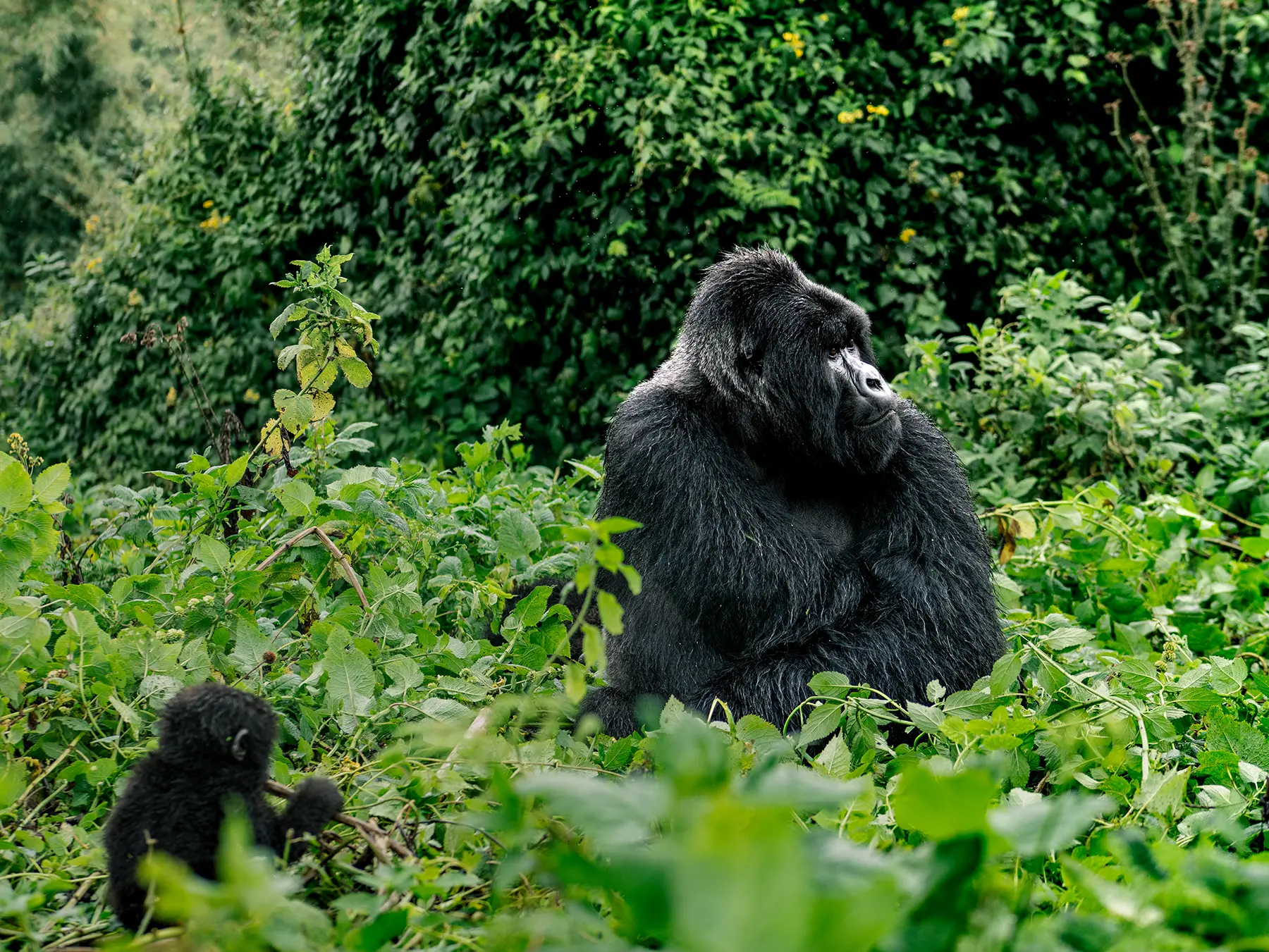
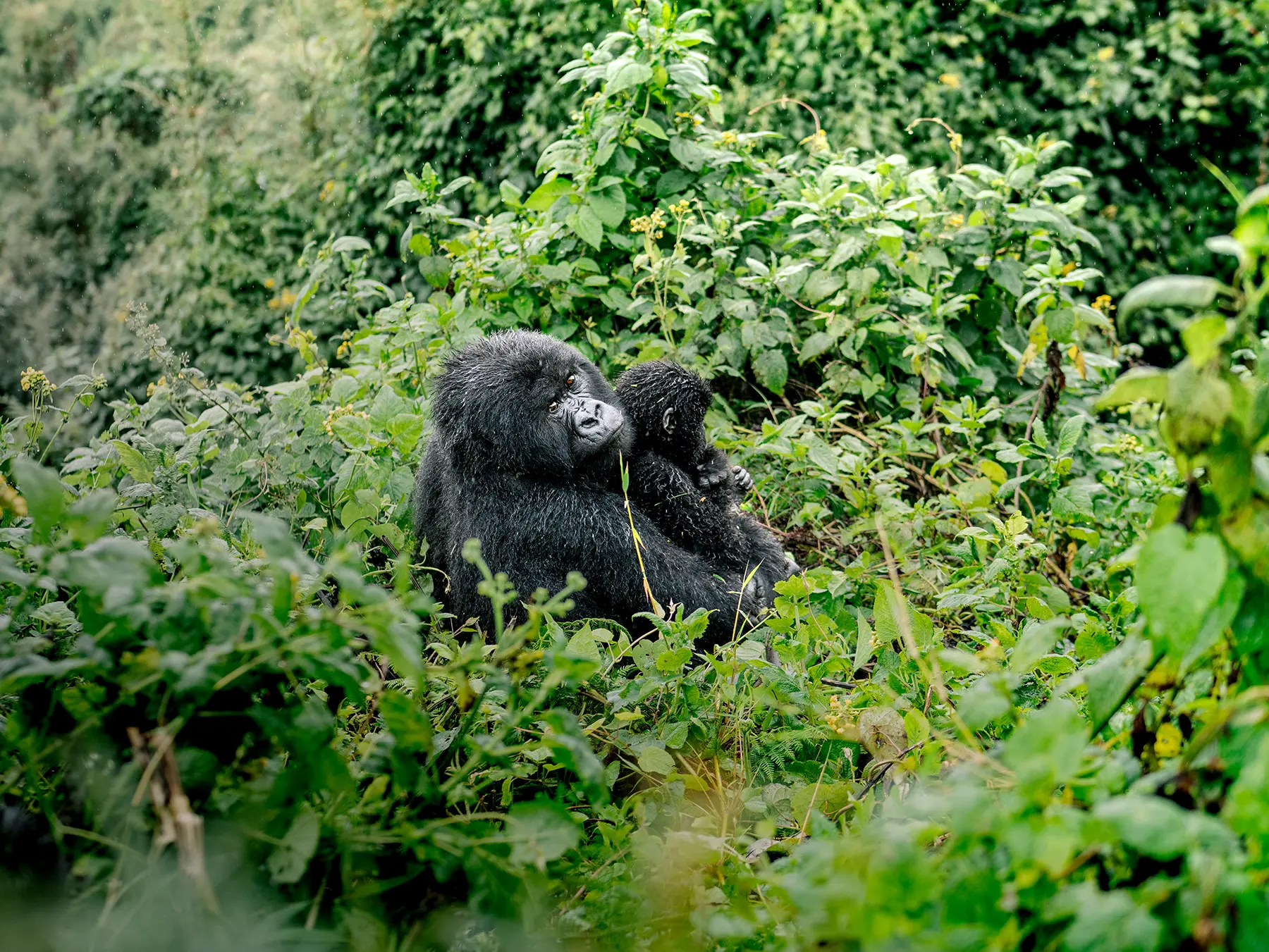
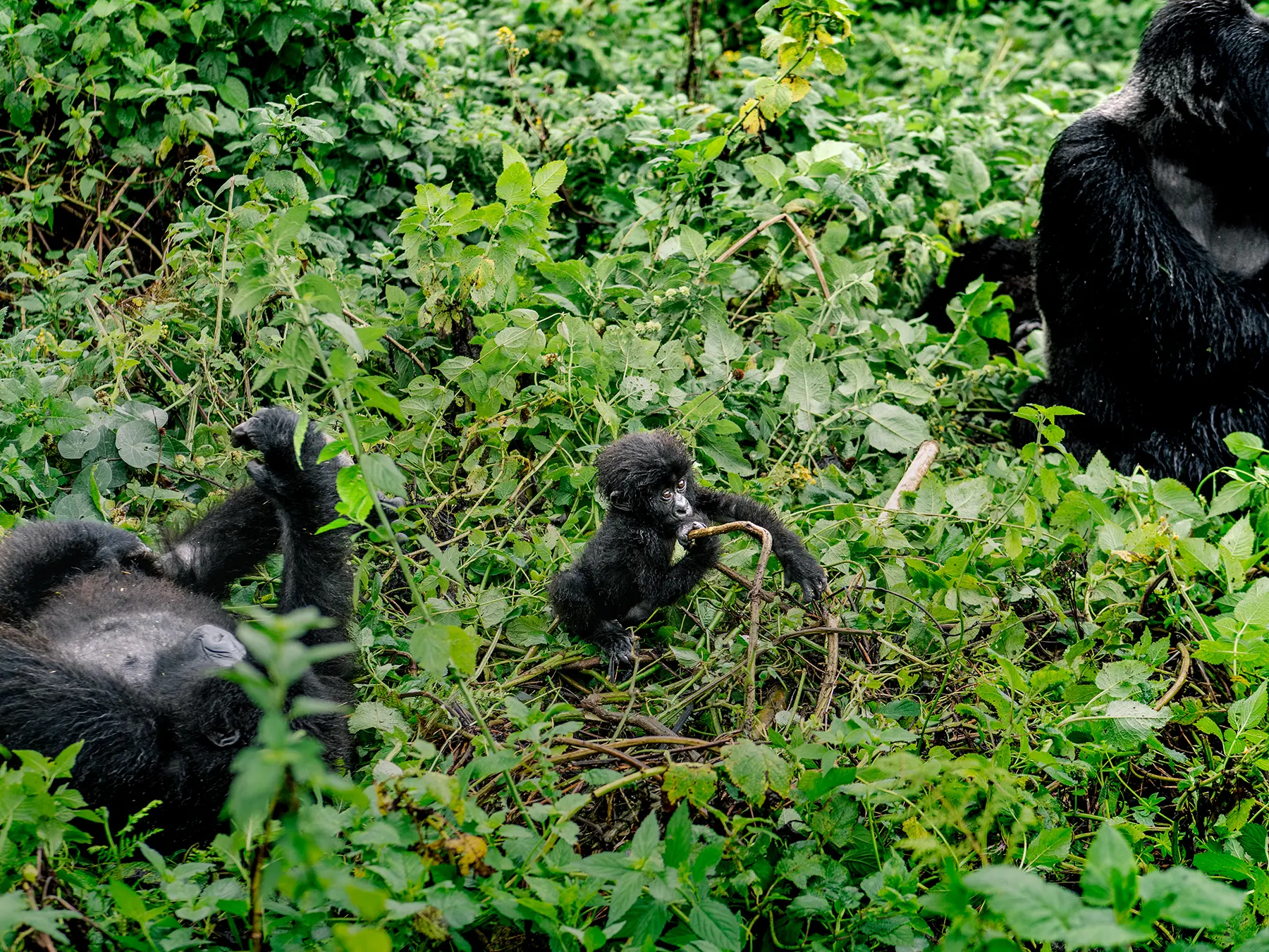
On my most recent gorilla trekking journey, it took us nearly 2 hours to find the Hira family. But it was worth every step! We watched them for an hour, and this was one of the most magical experiences of my life.
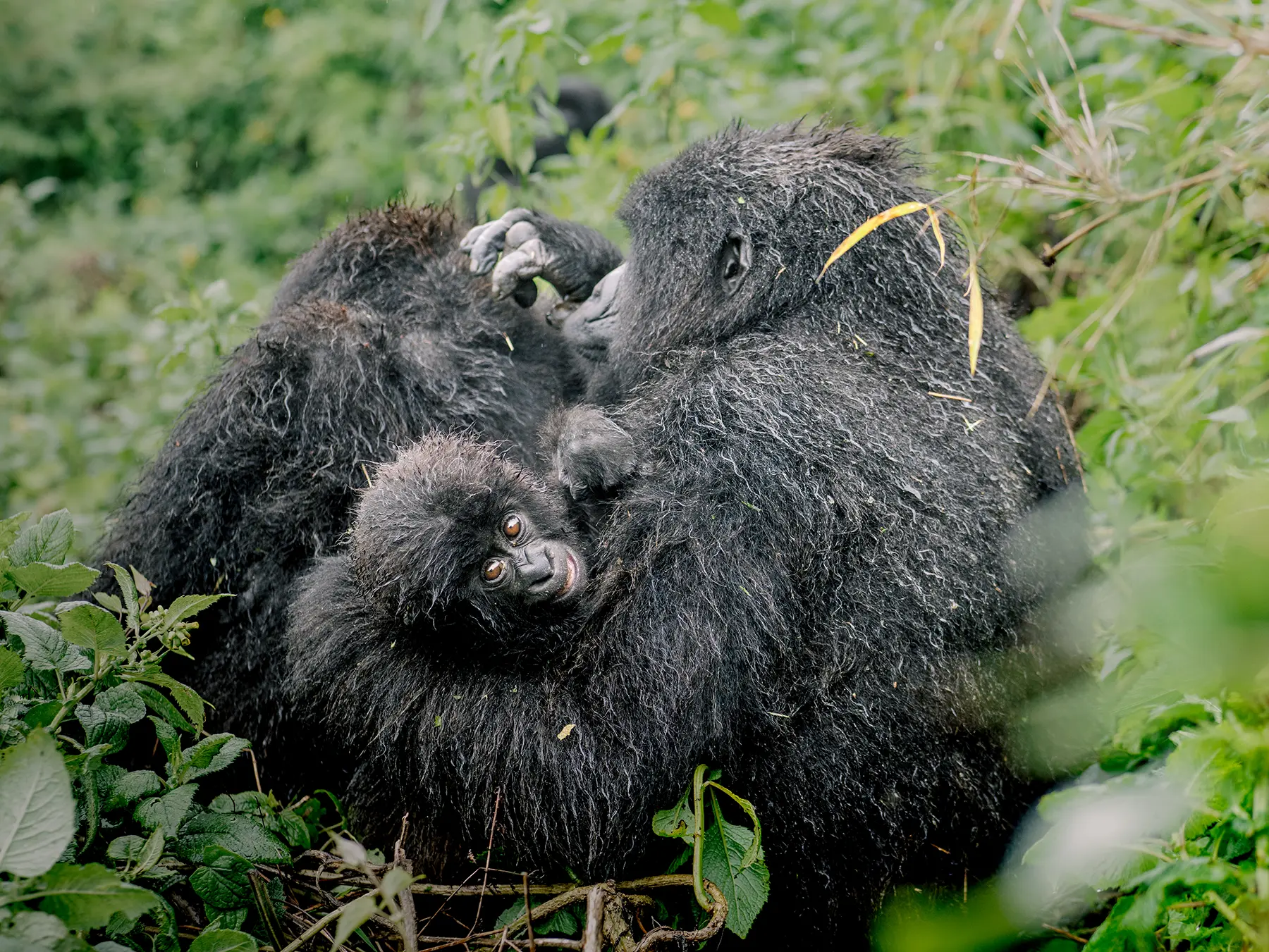
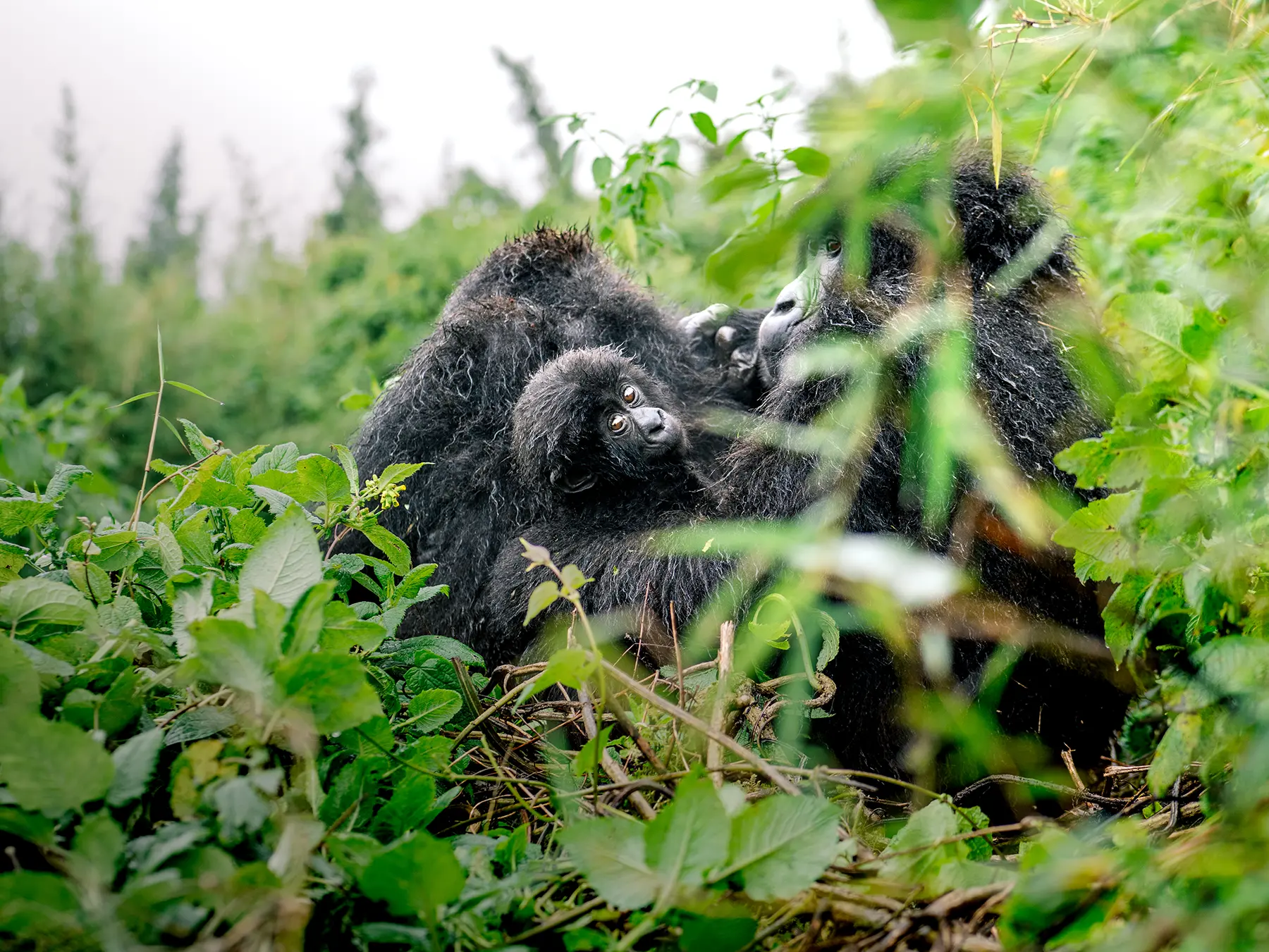
There seemed to have been a baby boom in the Hira family as several mothers were cradling babies. The adorable infants wriggled restlessly in their mother’s arms while some slightly older youngsters played energetically and tested their mothers’ patience.
We were also treated to an extremely rare sight, and witnessed a great silverback mating with a female.
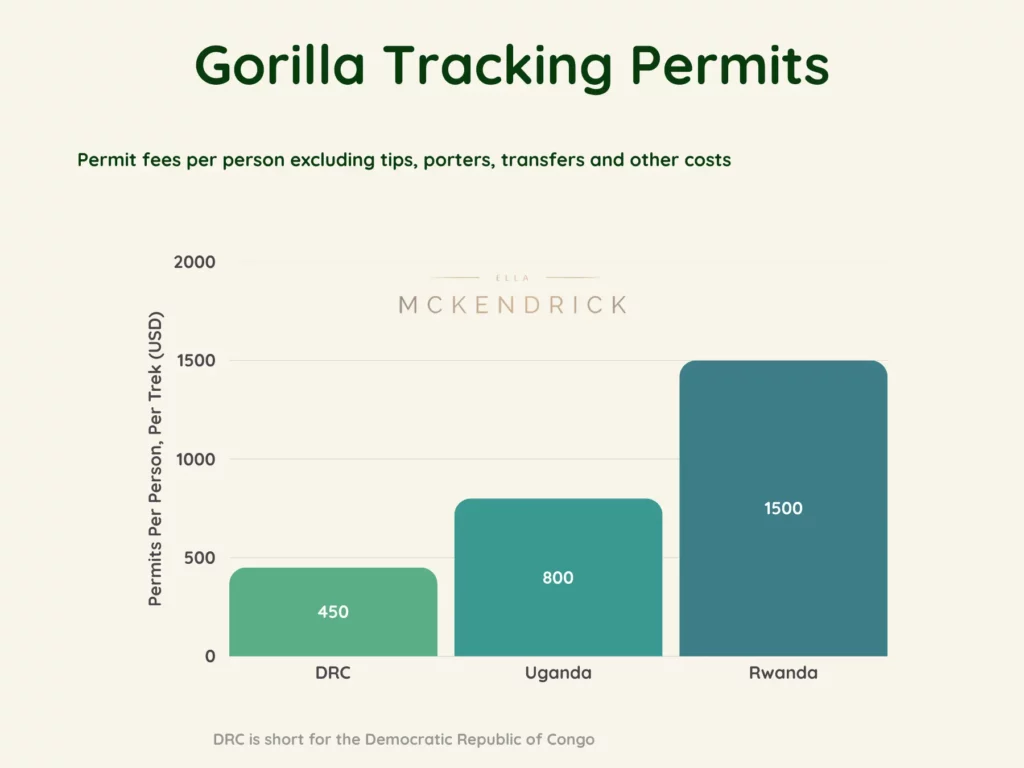
You can see a table below showing gorilla tracking permits by destination.
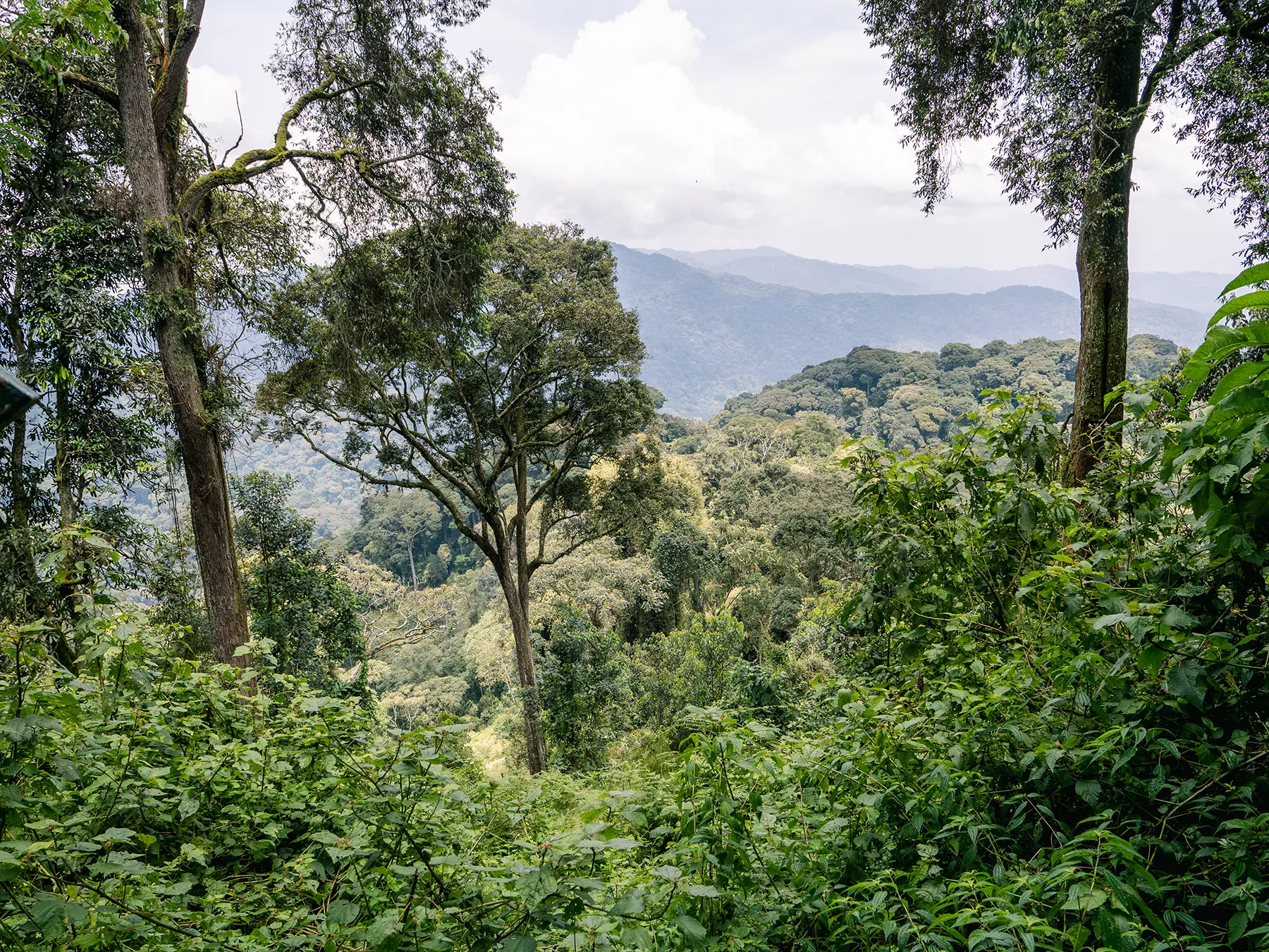
Rwanda is also excellent for chimpanzee trekking and you can do this in Nyungwe Forest National Park, covering 393 square miles (1,019 km²), this is one of the oldest rainforests in Africa and is a UNESCO World Heritage Site. There are 13 different monkey species in the reserve as well as habituated families of chimpanzees.
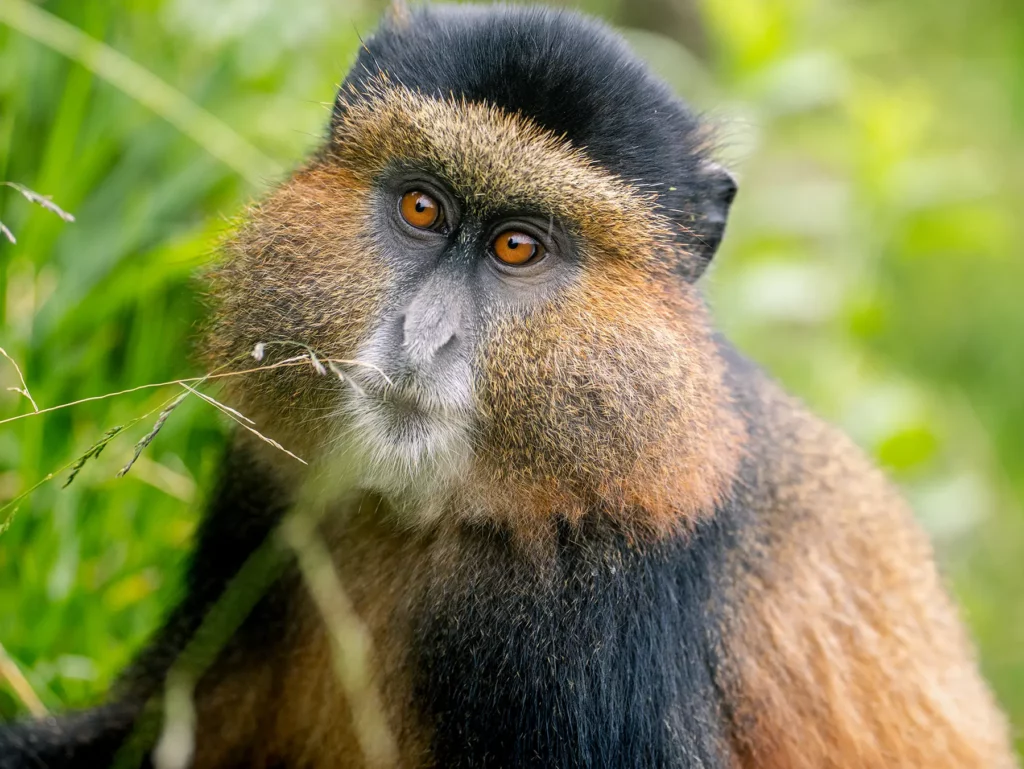
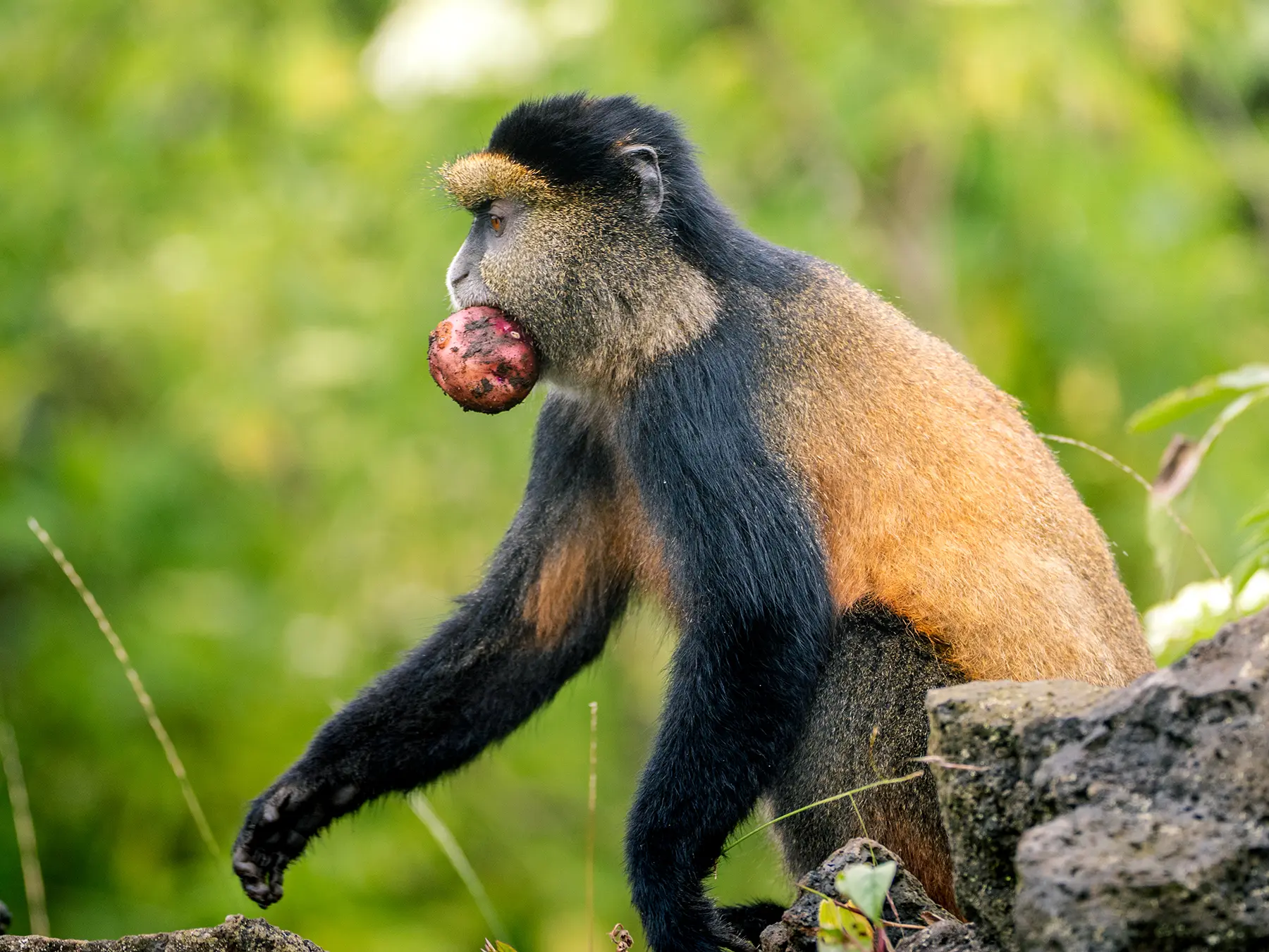
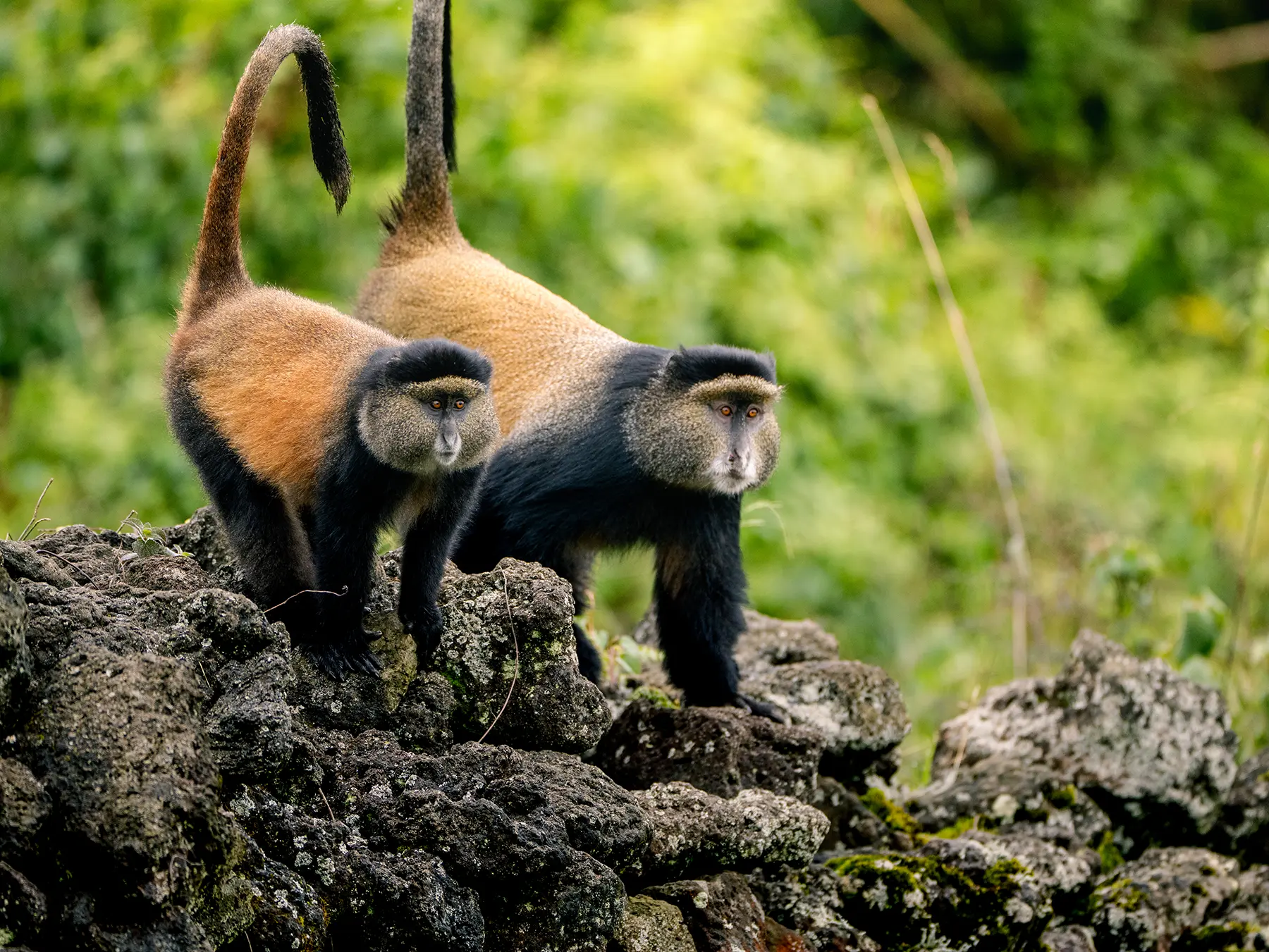
You can also witness Golden monkeys in the volcanic Virunga Mountains. These endangered primates live only in this corner of Rwanda, Uganda and DR Congo, and are found nowhere else on earth.
A Compact Country with Everything Within Reach
Rwanda has a tiny footprint, which means driving between the key parks and having enough time in each one is manageable within a week. From Kigali, Volcanoes is a 2.5 hour drive north, and the southern gateway town of Musanze sits right at the park’s edge.
The roads are well-paved throughout and scenery is spectacular, with terraced highlands and tea plantations dotted between breathtaking rainforests and mountains.
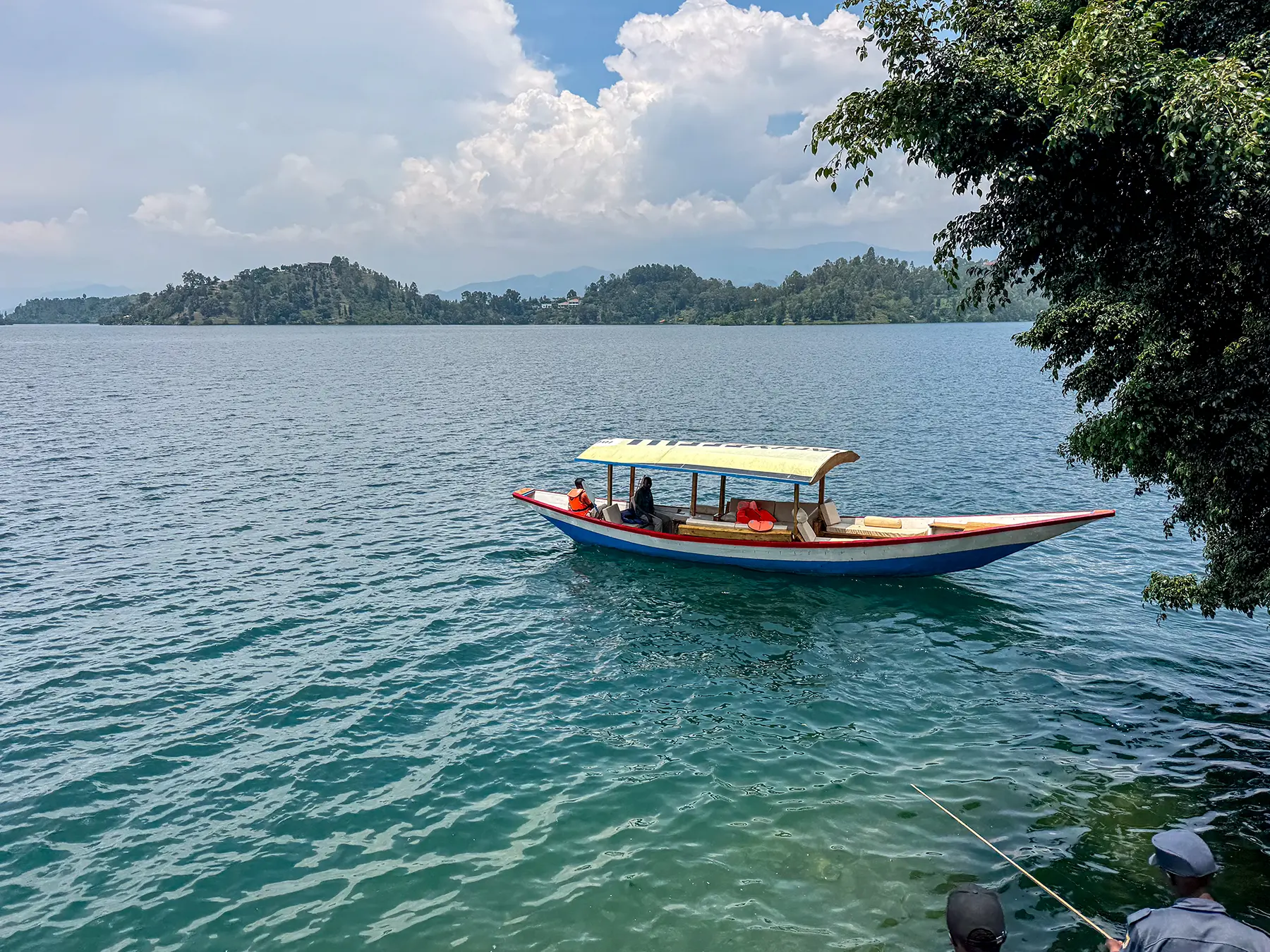
There is also spectacular Lake Kivu, where you can stop to break up the longer drive between Volcanoes and Nyungwe into two comfortable halves.
Having been on safari in Rwanda and neighbouring Uganda I found the drivers much shorter and the roads much smoother but you do pay a premium vs Uganda.
All of the Big Five
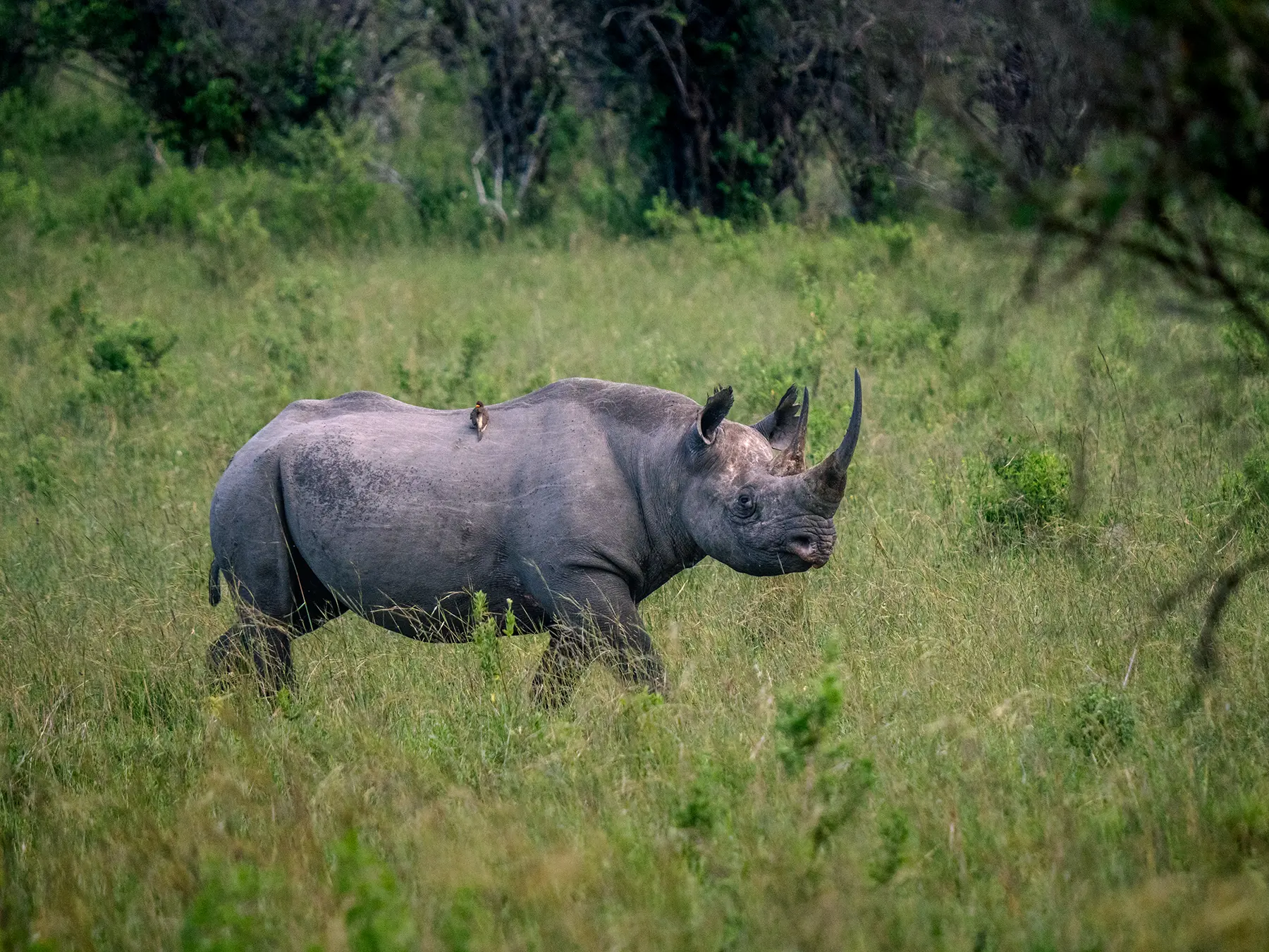
You can now see all of Big Five in Rwanda’s Akagera National Park after lions were reintroduced into the park in 2015 and rhinos from 2017.
In the 1990s and early 2000s, the rhino population in Rwanda was virtually wiped out by extensive poaching, and they were completely absent from the park between 2007 and 2017.
Likewise, lions were officially declared extinct in Rwanda in 2000, after years of human-wildlife conflict following the Rwandan Genocide in 1994.
The reintroduction of lions and rhinos to the park is one of Africa’s greatest conservation success stories, and it really shows.
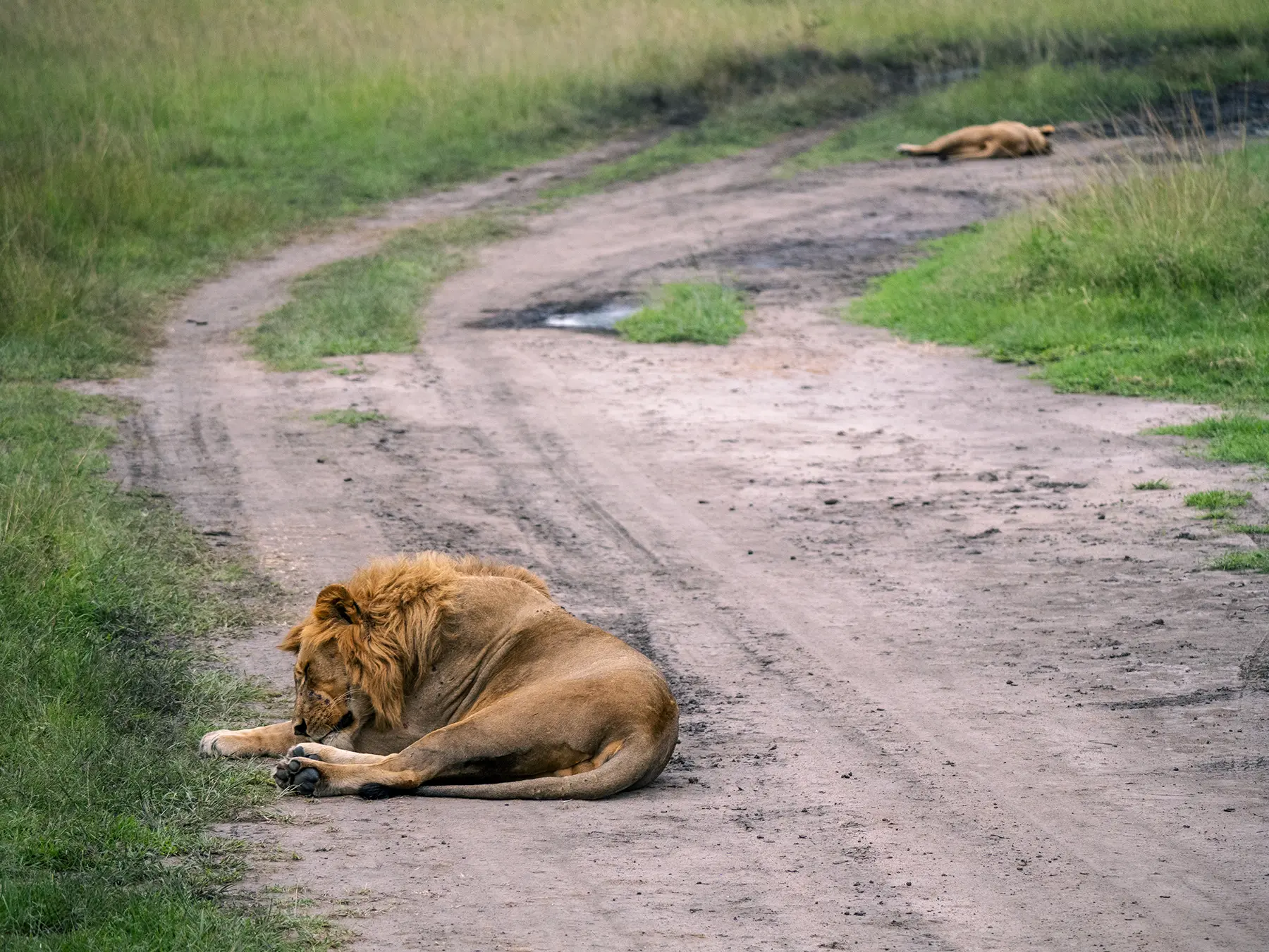
I had remarkable sightings of both lions and rhinos in Kilala Plain in Akagera National Park.
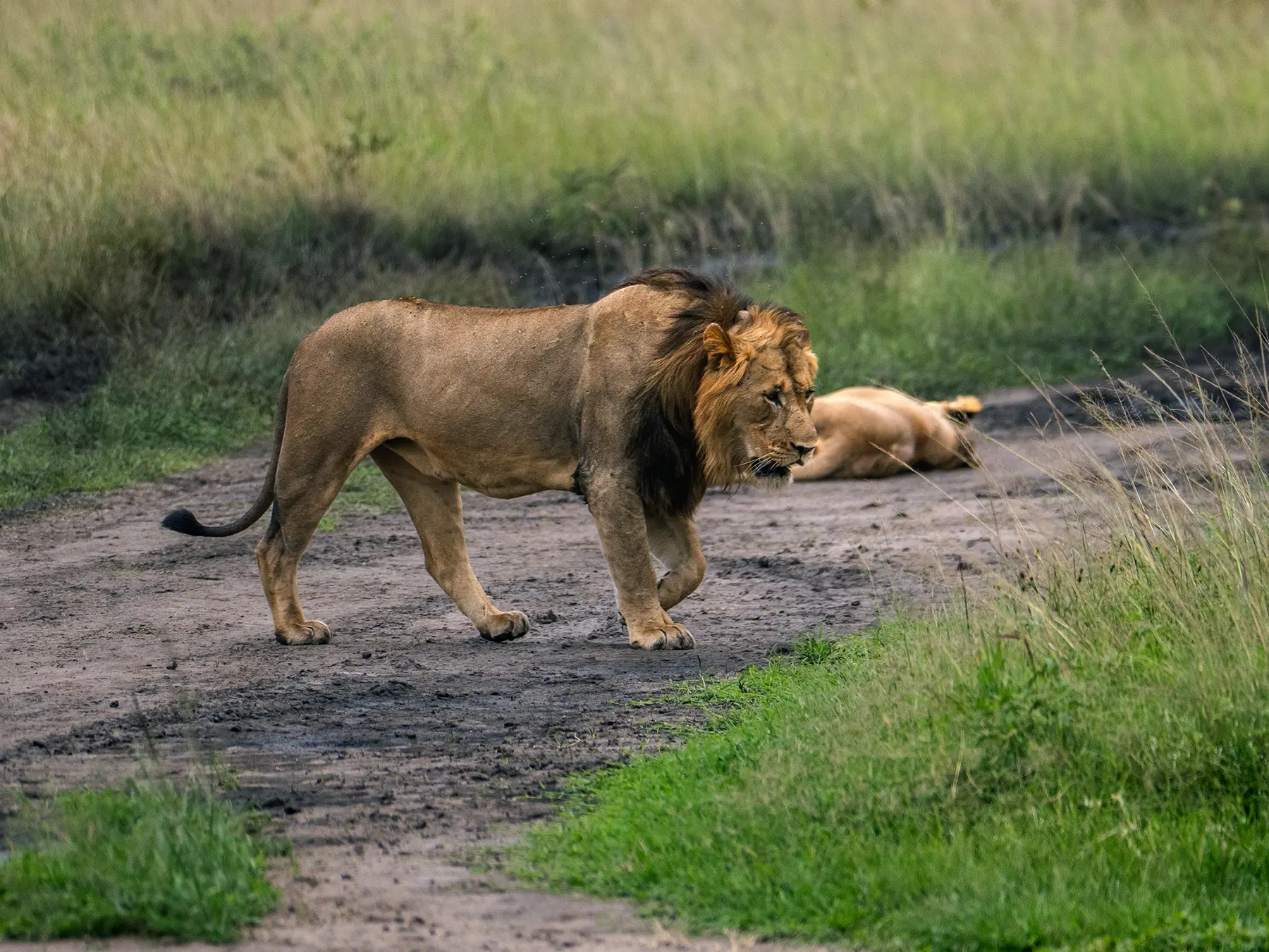
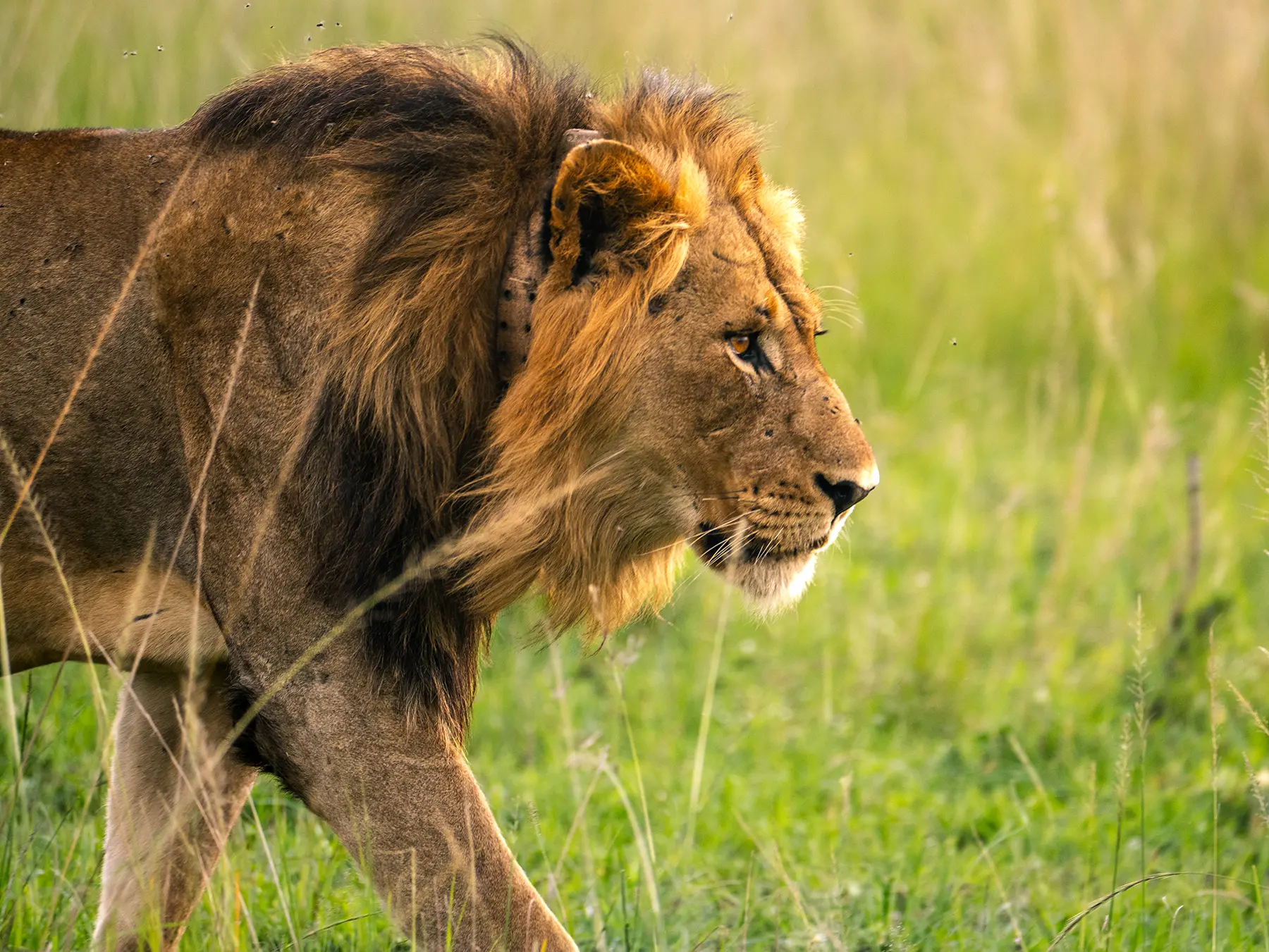
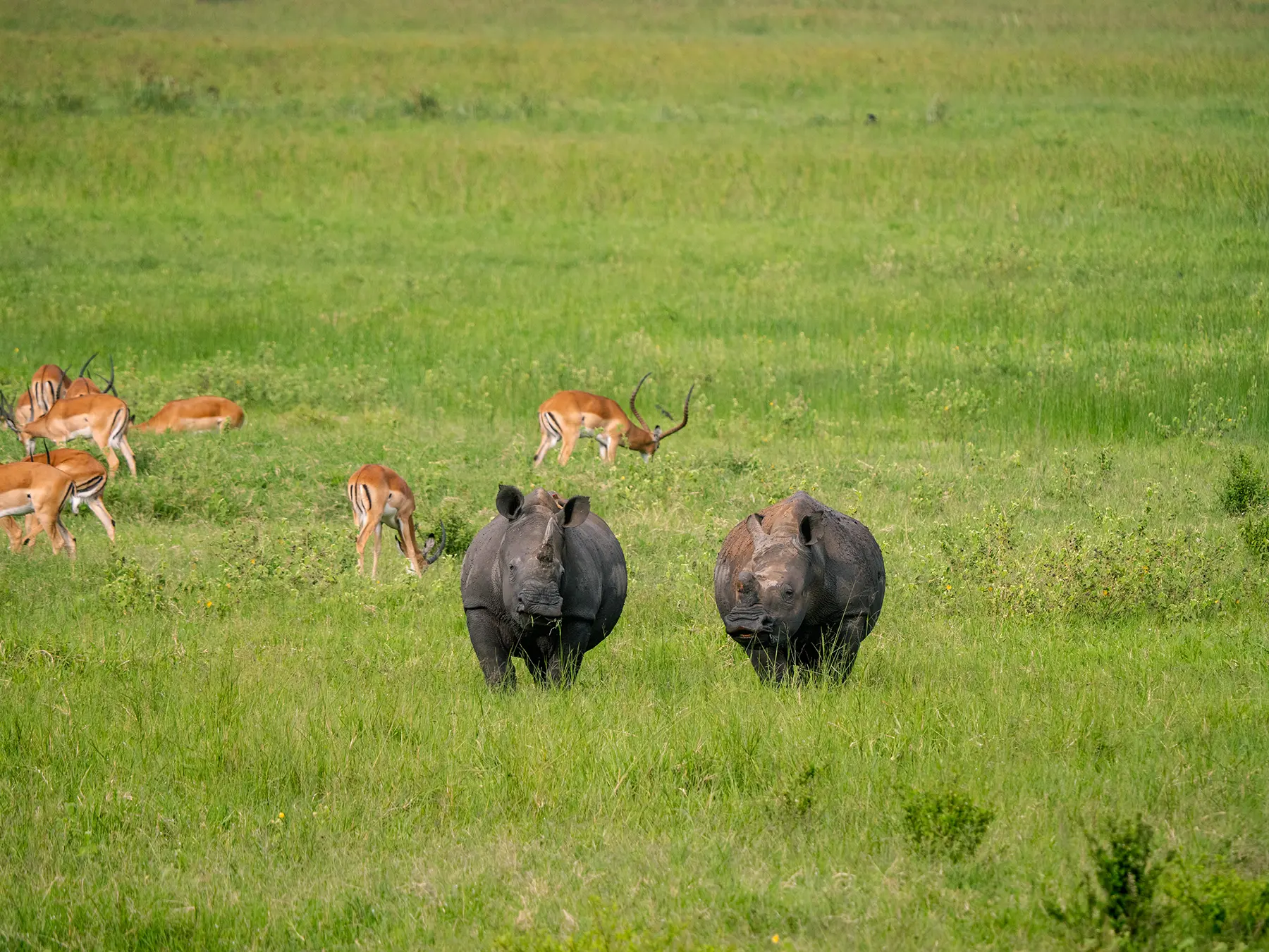
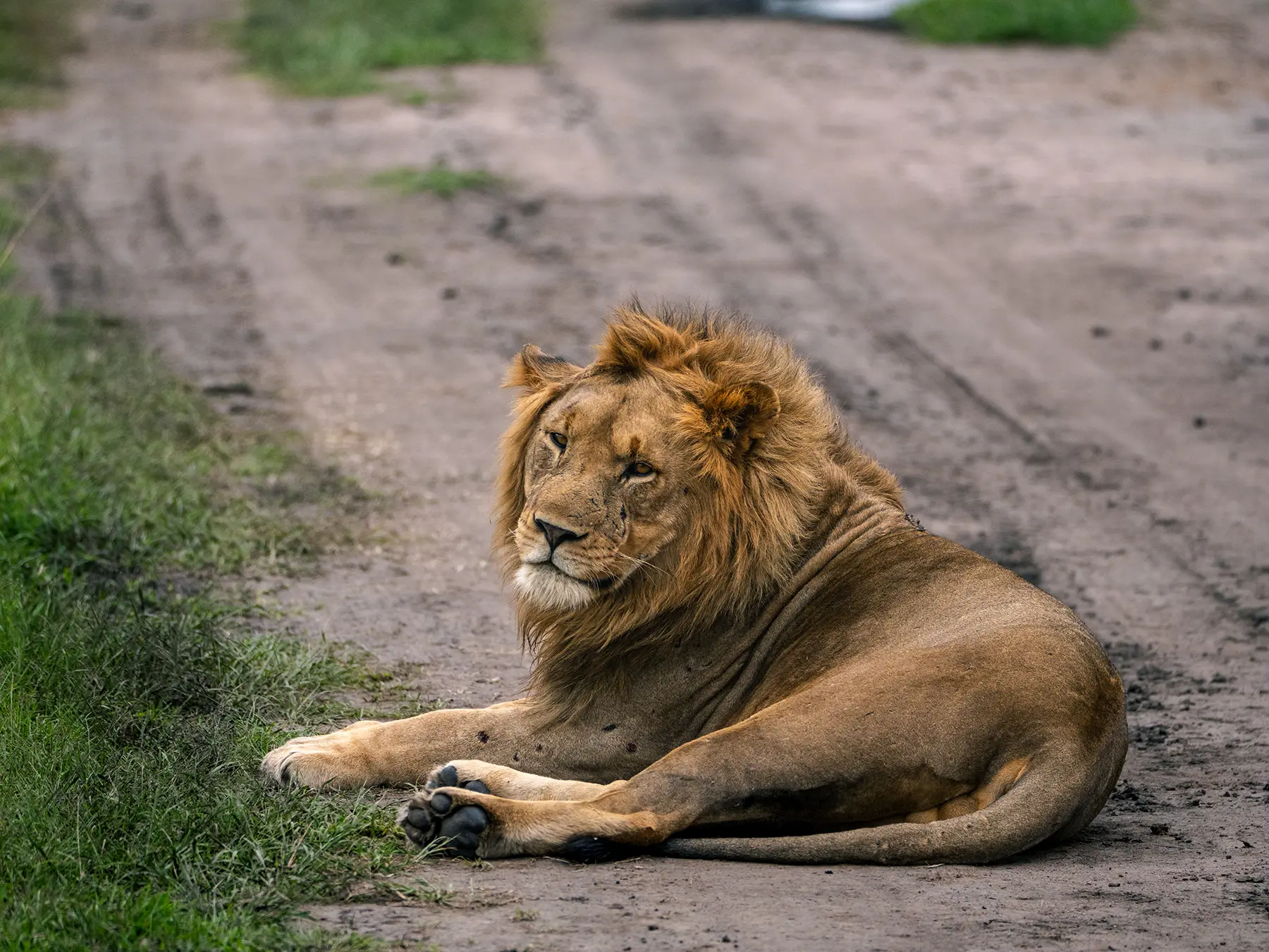
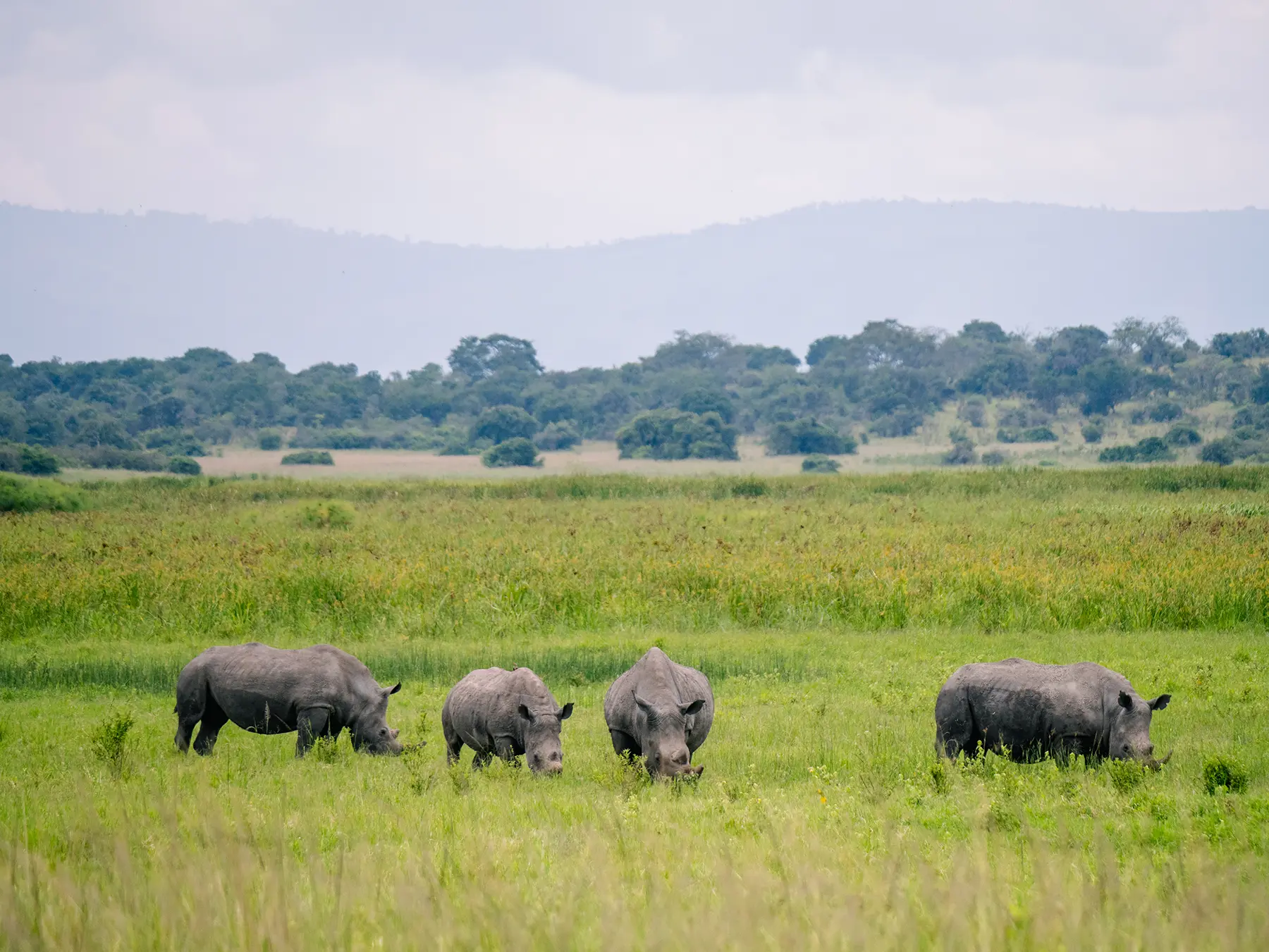
We spotted three lions – two males and a female – taking a nap right in the road! And nearby, as if to demonstrate the success of Rwanda’s conservation efforts, we came across four rhinos grazing out in the open, including a mother with her calf.
I then noticed three more rhinos a little further down the plain, grazing right next to a sleeping lion. Neither the rhinos nor the lion seemed concerned about the other’s presence.
Pros of Safaris in Rwanda
- Mountain gorilla trekking in Volcanoes National Park is particularly comfortable and convenient compared with other gorilla trekking destinations, with less strenuous trekking conditions and better road access.
- Volcanoes National Park is very accessible, located only 2.5 hours’ drive from Kigali International Airport.
- Rwanda is ranked one of the safest countries in East Africa. In addition to its excellent road infrastructure, it has clean cities and strong local governance.
- Golden monkey trekking in the volcanic Virunga Mountains is a totally unique experience. These endangered primates live only in this corner of Rwanda, Uganda and DR Congo, and are found nowhere else on earth.
- Rwanda’s Akagera National Park is home to all of the Big Five (lions, leopards, rhinos, buffalos and elephants).
Cons of Safaris in Rwanda
- Gorilla trekking permits are $1,500 per person. This is almost double Uganda’s $800 per person, which significantly raises the overall safari budget if you are planning multiple treks.
- Accommodation costs are higher across all tiers compared with neighbouring Uganda. Budget lodges start at around $60-$120 per night and luxury properties near Volcanoes National Park often exceed $1,500 per night.
If you’re short on time, skip ahead to my 7-Day Rwanda itinerary.
How Do You Book a 7-Day Rwanda Safari?
Without a doubt, the easiest and best value-for-money way to arrange your 7-day Rwanda safari is by booking through a reputable local tour operator.
That’s how I’ve booked my own safaris in Rwanda, and I’ve always been really happy with my experience..
Other booking options include using an international travel agent which typically costs 30 – 50% more than a local operator or self-driving, where you organise everything yourself.
Let’s dig in to the three main ways to book a safari, and consider the different trade-offs on cost, flexibility, and experience.
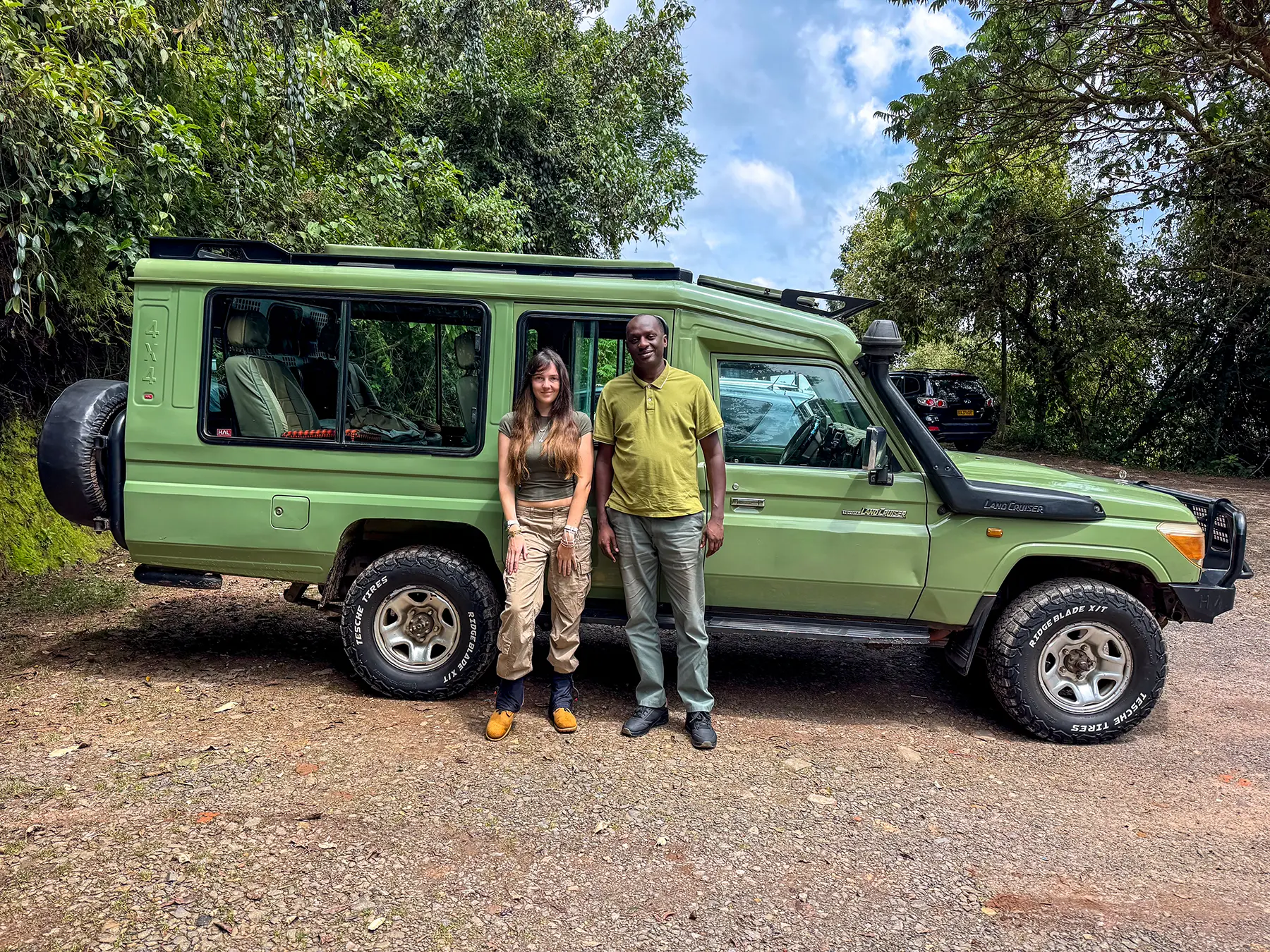
You can get quotes from the same local tour companies I use to organise my own trips here: Safaris By Ella
Booking Options at a Glance
| Option | Cost | Flexibility | Best For |
|---|---|---|---|
| Local Tour Operator | $$ | High | Most travellers, best value and experience and those wanting to maximise wildlife sightings |
| Self-Drive | $ | Extremely High | Experienced drivers who are comfortable with gravel roads and good at wildlife tracking and spotting |
| International Agent | $$$ | Medium | Those wanting International flights and safari in one package and are happy to pay 25 – 50% more than a local tour operator |
Why I Recommend a Local Tour Operator for Rwanda
Take it from me, I’ve tried all three booking methods in the past, and the best option by far is to use local operators..
A local tour operator in Rwanda will arrange all of your trekking permits (for mountain gorillas, golden monkey, and chimpanzees), your game drives in Akagera National Park, a dedicated driver-guide, accommodation at lodges inside or outside the parks, airport transfers, transfers between parks, and even your park entry fees.
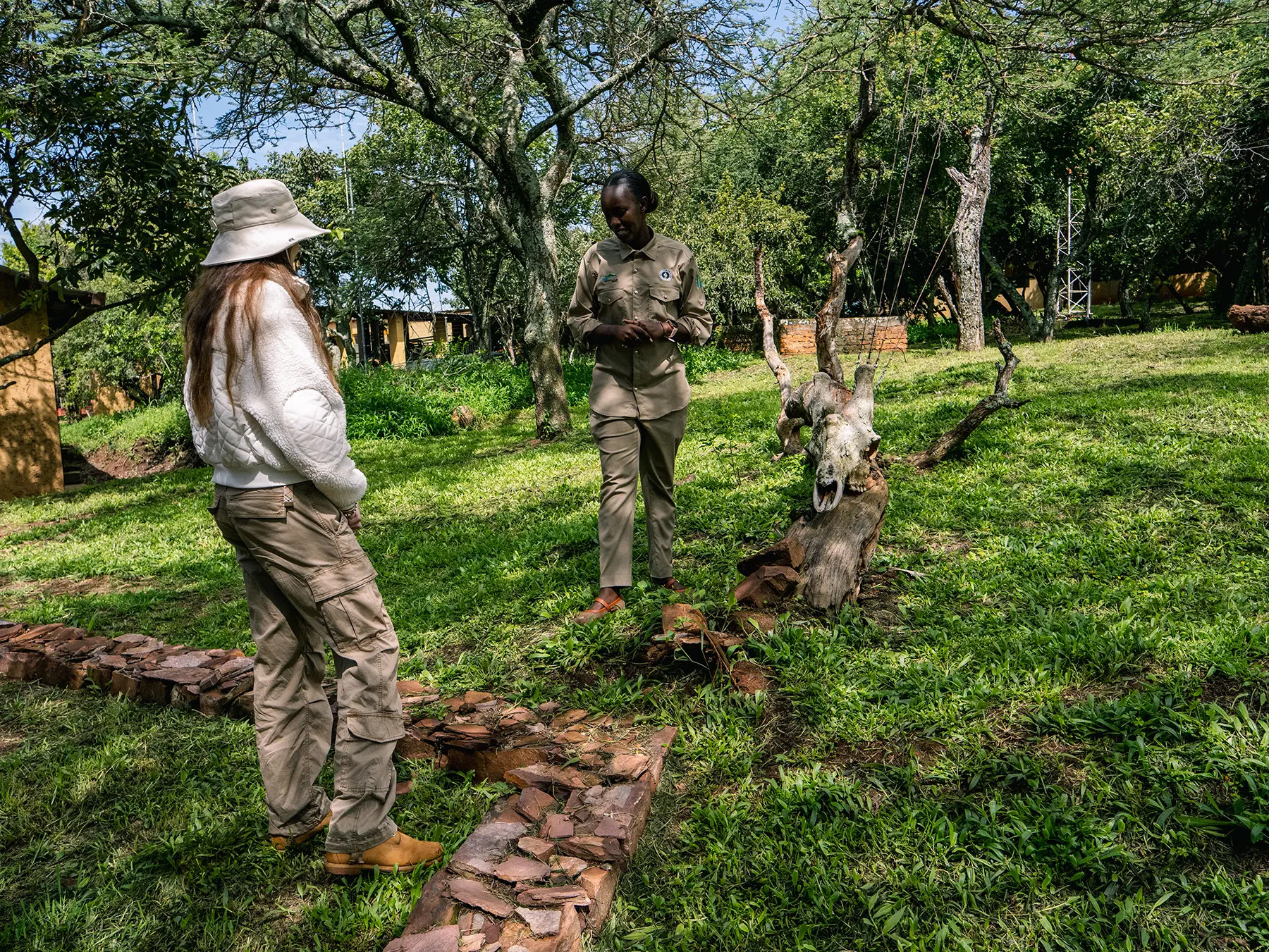
On my first trips, when booking directly or through hotels, I would spend evenings researching lodges, chasing confirmations and working out which gate to enter each park through. A good Rwanda operator does away with all this hassle and simply sends a driver to your hotel at 7am, gets you to the briefing hut in time, and the whole day flows from there.
Local operator pricing in Rwanda is typically at the same level as what you’d pay arranging your own accommodation, vehicle and permits yourself, because the operator buys rooms at preferential rates and owns their own fleet of specialist safari vehicles.
You end up with a far more optimised itinerary, driving less and seeing more, because local operators place you at the right lodge for each park sector. Local operators even often have access to rooms when the online booking sites say ‘sold out’.
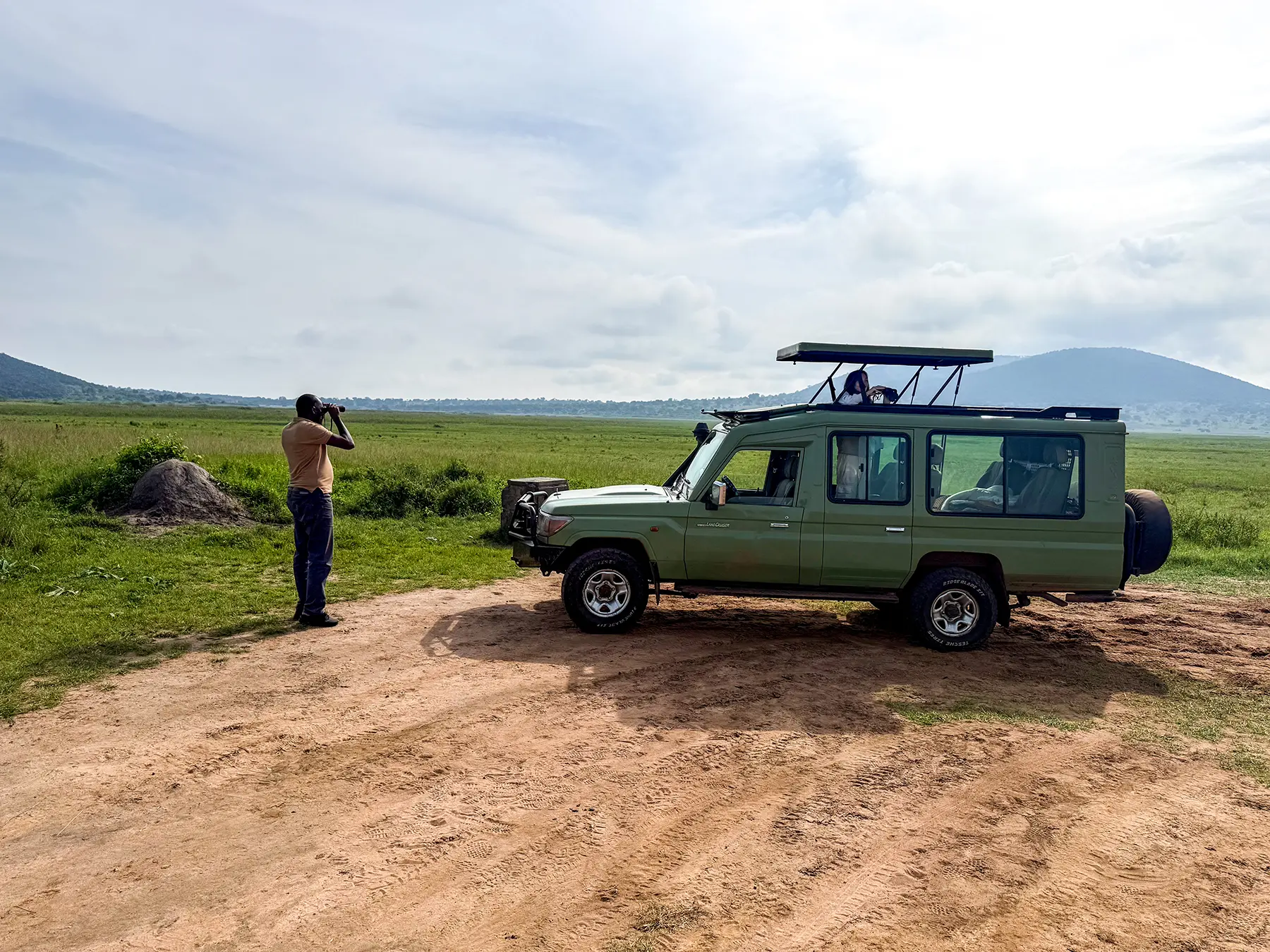
What a Local Operator Gives You
- The best local tour operators provide end-to-end service, managing everything from arranging park permits to booking accommodation according to your specifications.
- Local tour operators have networks with deep expertise. Your local guide’s intimate knowledge of the terrain, wildlife behaviour, and tracking techniques is invaluable.
- Another huge advantage is your guide’s access to a radio network of fellow professionals. This communication web significantly increases your chances of good wildlife sightings.
- Having experienced both self-organised and professionally managed safaris, I can assure you that letting experts handle the details makes the whole trip extremely relaxing.
- Some lodges hold rooms specifically for local tour operators, so even if there seems to be no availability online, they might still be able to find you a spot.
What to Watch Out For
- Not all tour operators maintain the same standards, and the cheapest option is not always the best. Substantially cheaper packages may come with lower-quality accommodations, less experienced guides, and cheaper parks, which can negatively affect your overall safari experience.
- Local operators typically do not book international flights, so you will need to arrange those separately.
Rwanda Booking Tips
There are a few unique features of Rwanda’s safari system which you should bear in mind when booking..
- Gorilla permits: You should book your gorilla trekking permits 6-12 months ahead for peak season trips (June to August and December to February) to secure your preferred dates
- Lodge proximity: It’s a good idea to stay at a lodge close to the park headquarters at Volcanoes National Park. Gorilla treks start at 7am at park HQ, and the road is single-track with quite a few cargo trucks. You don’t want to get caught in traffic!
- Protective clothing: Many of the more upmarket hotels will offer you waterproof gaiters, which are recommended for gorilla and chimp trekking. Check this in advance with your tour company so you know whether or not to bring your own.
- Single operator for border crossings: If you’re traveling between Uganda and Rwanda, a single Kigali or Kampala-based operator can organise a Uganda and Rwanda combined trip, including the border crossing. This significantly simplifies the booking process.
Financial Protection When Booking Direct with a Local Tour Operator
When you book a safari with an international travel agent, there are usually financial protections in place in case of unforeseen cancelations or other issues. However, you can easily take steps to give similar financial protection to your booking. Paying by credit card or debit card often gives you purchase protection (in the UK it’s called Section 75) and good travel insurance covers trip interruptions.
You should also choose a recommended local safari company that takes balance payment closer to your trip date, which minimises risk.
Recommended Booking Options For Your 7-Day Rwanda Itinerary
Private Safari
Most popular & best experience – typical prices for this itinerary start from $450 per person per day.
Visit safarisbyella.com for free quotes from trustworthy local tour companies I use to book my own trips.
How to Book with the Best Local Safari Companies
- Comparison sites which provide multiple quotes from verified suppliers such as Safaris By Ella
Join the rapidly growing tribe of over 1,000 travellers who’ve booked their dream safari using my insider tips and recommendations.
Should You Choose a Private or Group Rwanda Safari?
Private safaris give you a great degree of control over your schedule, routes through the parks, and the amount of time you spend at each wildlife sighting and are the best choice for most travellers visiting Rwanda.
The other option is a group (shared) safari where you share the vehicle with other tourists. In my experience, the only scenario where a group safari makes sense in Rwanda is if you are a solo traveller on a tight budget.
I always book private safaris in Rwanda as it gives me maximum freedom and the best photography experience
Importantly, your guide works exclusively for you, so there is no time lost collecting or dropping off other guests at the beginning and end of game drives.
As always on a game drive, you want to be at sightings as close to sunrise and sunset as possible, as this is when the animals are most active.
Private vs Group at a Glance
| Private Safari | Group Safari | |
|---|---|---|
| Cost per day | $400-600 per person | $300 per person |
| Flexibility | Full control of schedule and route | Fixed times and pre-planned routes |
| Vehicle | Dedicated Land Cruiser and guide | Shared with 6-8 other travellers |
| Best for | Couples, families, photography enthusiasts | Solo travellers on a budget |
In Rwanda, the private vs group distinction matters most on game drives in Akagera, where having a private vehicle lets you pause for longer at lion and rhino sightings on Kilala Plain and choose which sightings to prioritise.
It’s worth noting that regardless of whether you’re on a private or group safari, the walking portions of gorilla and chimpanzee trekking are always group activities with 6-8 people. The major difference is in the transfers, the game drives and the flexibility of your schedule between treks.
What many people don’t know is that the price difference between private and group safaris is smaller than you might expect especially for group of two people or more.
A private Rwanda safari with budget accommodation and a dedicated Land Cruiser typically costs from $450 per person per day, while the equivalent group options cost around $300.
For a couple or small group of friends or family travelling together, splitting the private vehicle cost reduces the difference so that a private safari is only marginally more expensive than a group tour. The superior experience of a private safari makes it a really excellent value option for most travellers.
My Recommendation
I always recommend going private, if your budget allows. When traveling with companions, I keep numbers to 3-4 people maximum to ensure comfort and flexibility, particularly with photography.
With only 3-4 people in a private vehicle, everyone is able to move around adequately when you stop for a sighting, meaning you all get a great view and unobscured photographs.
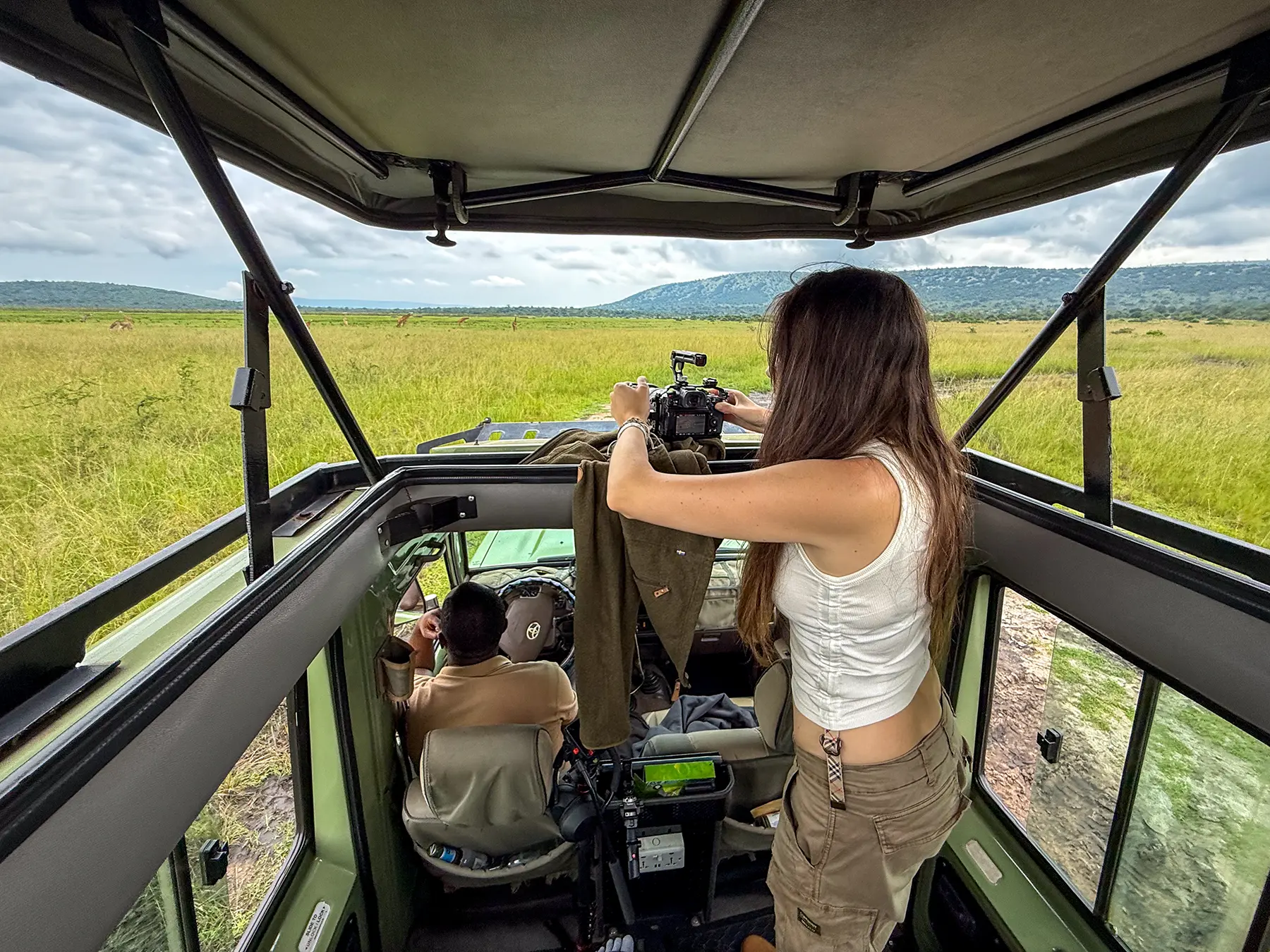
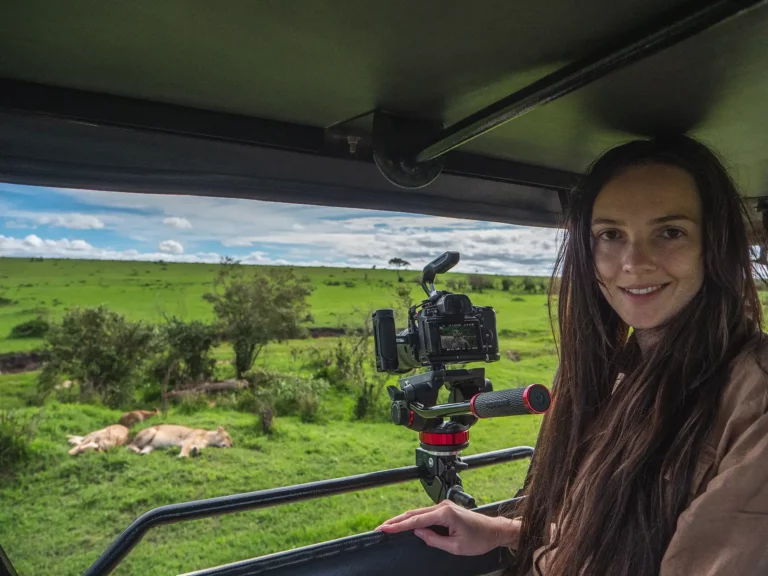
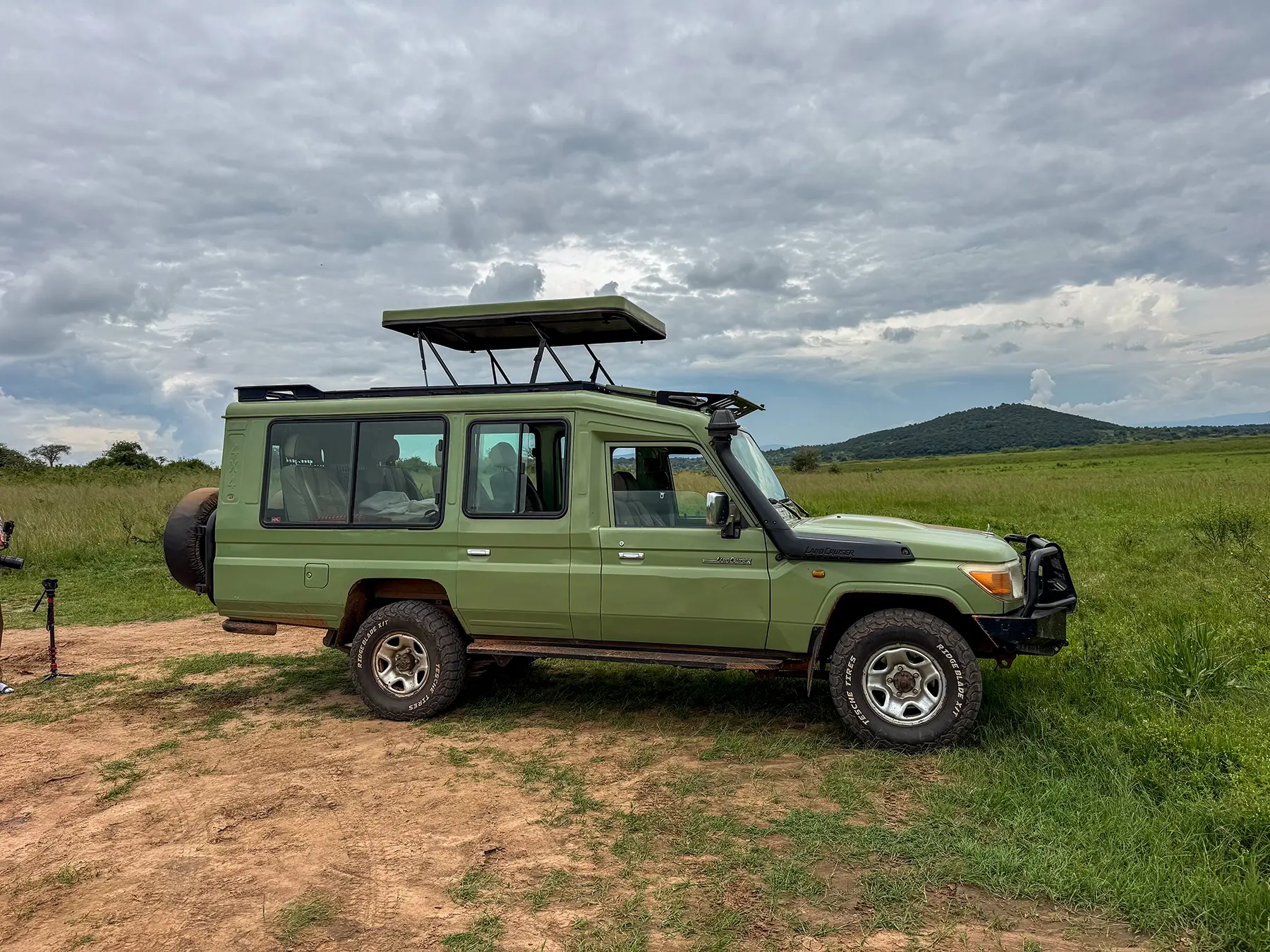
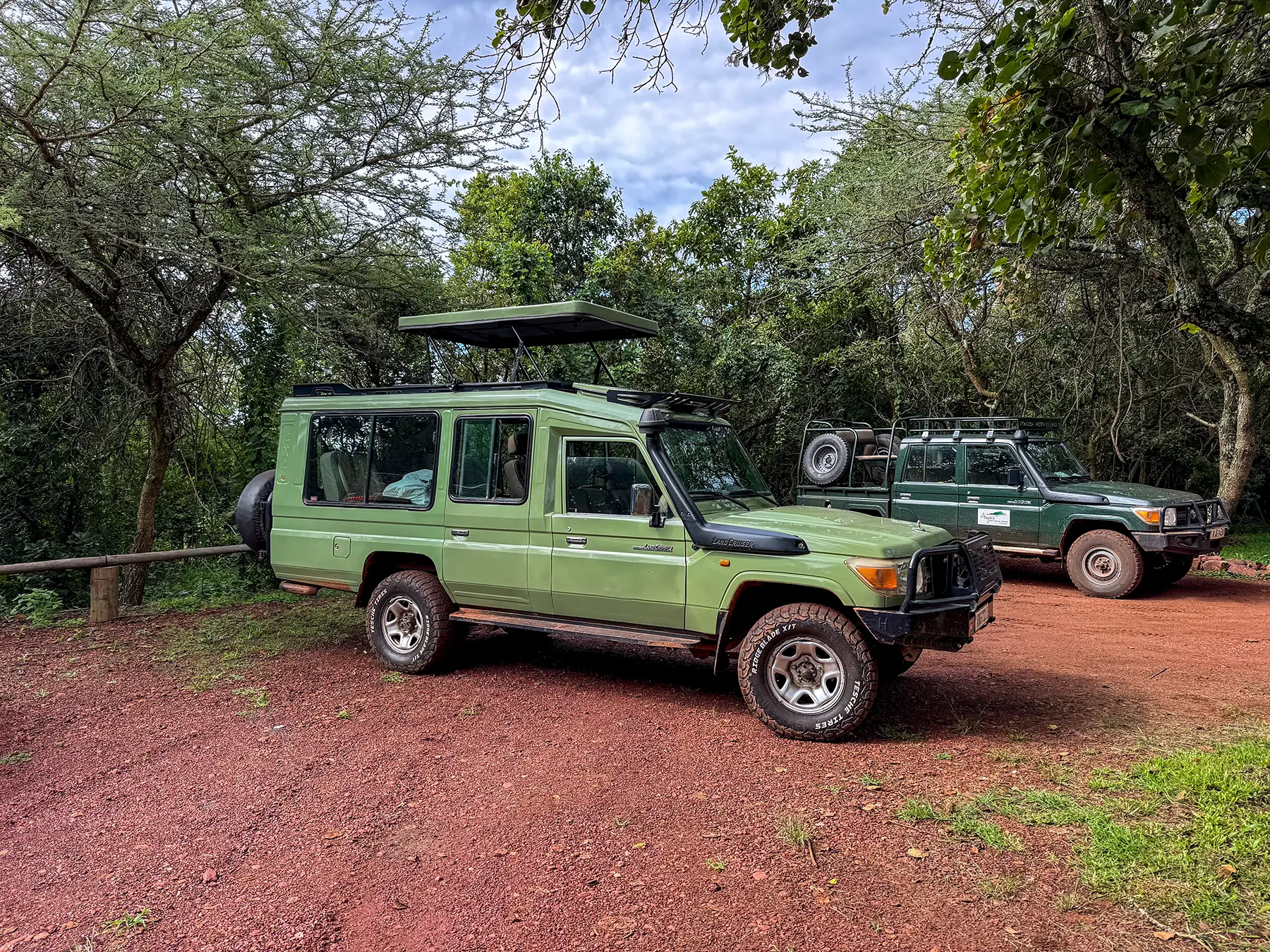
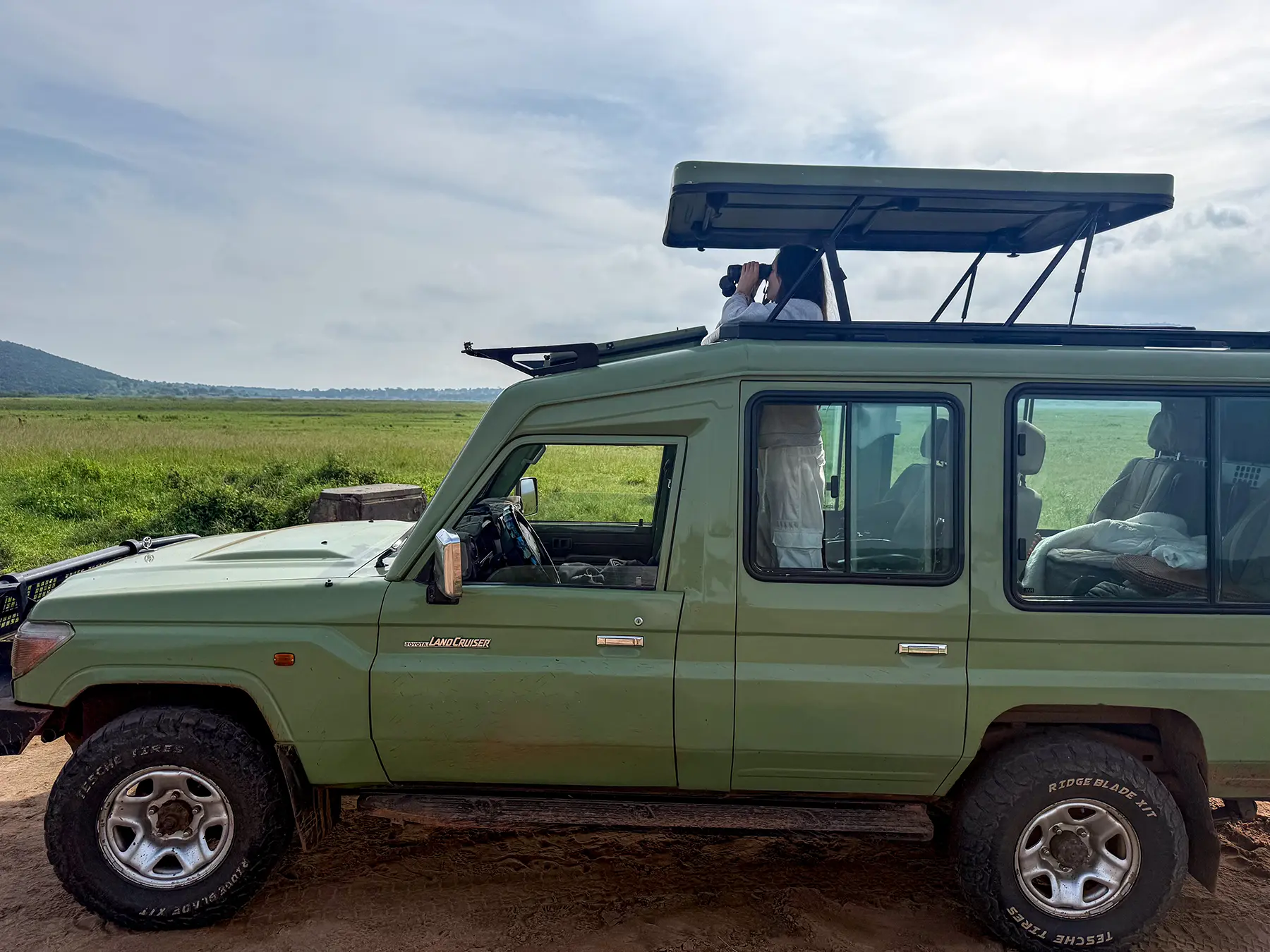
On that note, I also always ask for Land Cruisers with open sides, which are even better for photography and allow you to feel really close to the wildlife!
How Much Does a 7-Day Rwanda Safari Cost?
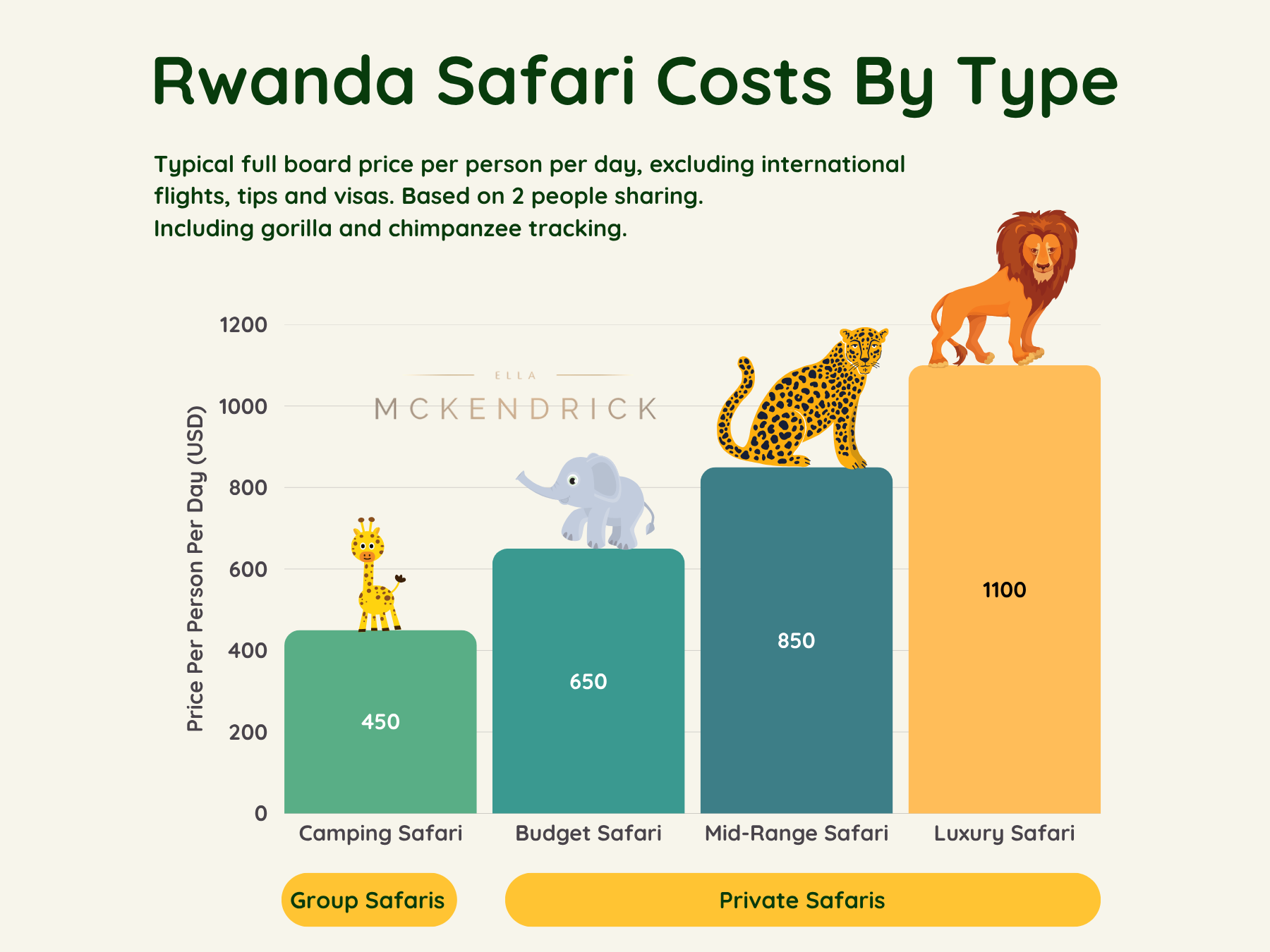
A private 7-day Rwanda safari typically costs from $3,500 for budget accommodation, $4,550 for mid-range and $6,500 for luxury, per person in total.
This covers your accommodation, food, transport, park fees, gorilla and chimp trekking permits and game drives.
If you break it down to a daily average, a private safari in Rwanda starts at $450 per person per day. Shared group safaris are a little cheaper, starting at around $300 per day.
The gorilla permit is the single biggest line item in your safari budget, and comes in at $1,500 per person per trek.
A 7-day Rwanda trip generally works out to a lower per day average than a 3-day gorilla-only trip.
This is because the days you spend on safari, which cost less, will offset the expensive gorilla trekking day(s). If you extend your itinerary to 14 days, covering Uganda and Rwanda, this reduces the average daily rate further still.
The chart below shows typical prices for Rwanda safaris, with comparisons based on the level of luxury of your accommodation.
Rwanda Safari Prices Typically Include
- Park fees at national parks
- Gorilla or chimp trekking permits
- Accommodation at lodges and tented camps
- Full-board meals (breakfast, lunch and dinner)
- Drinks at most lodges (soft and alcoholic)
- Transport and vehicle
- English-speaking driver guide
- Game drives, boat cruises and walking activities
Uganda Safari Prices Typically Do Not Include
- International flights
- Tips and gratuities for trackers, guides and porters
How Do Rwanda Safari Costs Compare to Other African Safaris?
Safari costs in Rwanda are higher than in Uganda. The gorilla permit is almost double what you’d pay in Uganda ($1,500 vs $800) and accommodation costs tend to run slightly higher across all tiers.
Compared with Kenya and Tanzania, for example, the total trip cost is higher mainly because of the gorilla and chimp trekking permits.
For instance, a Kenya private safari, where your focus is on game drives in reserves, starts from around $300 per person per day.
Park fees in Rwanda are are lower cost than those in Kenya and Tanzania so it’s the gorilla trekking permits and accommodation which are the more expensive parts.
You can see how costs compare across popular African safari destinations below:
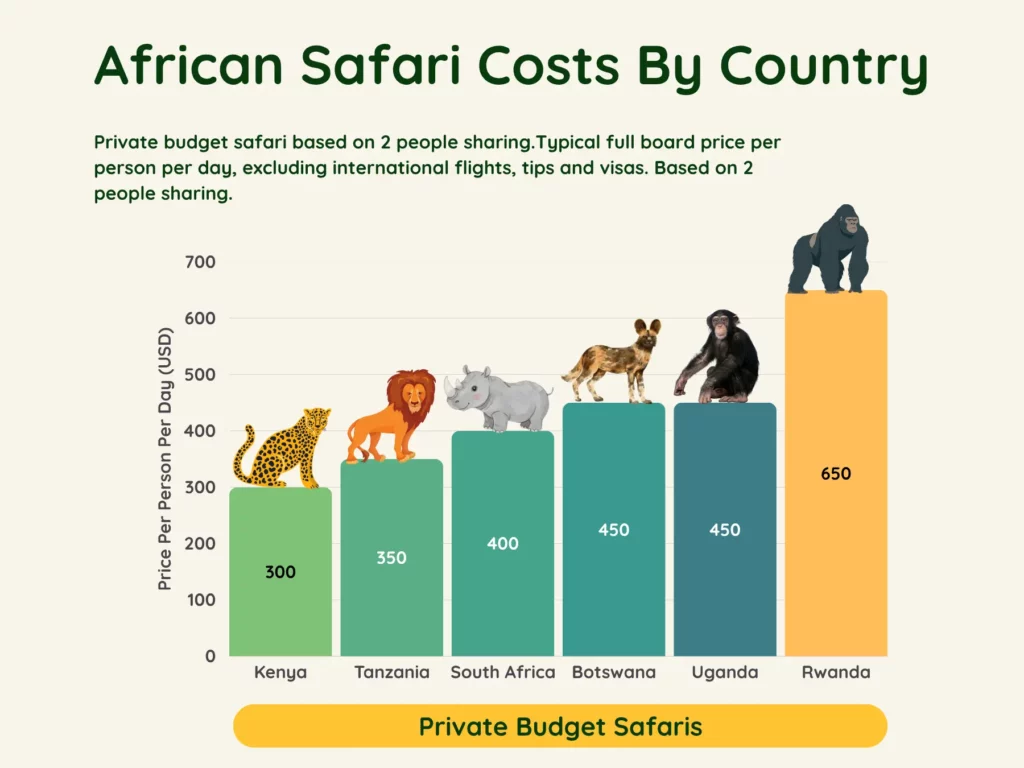
| Destination | Private Budget Safari Cost PP/Day |
|---|---|
| Kenya | 300 USD |
| Tanzania | 350 USD |
| South Africa | 400 USD |
| Botswana | 450 USD |
| Uganda | 450 USD |
| Rwanda | 650 USD |
Breakdown of Rwanda Safari Costs
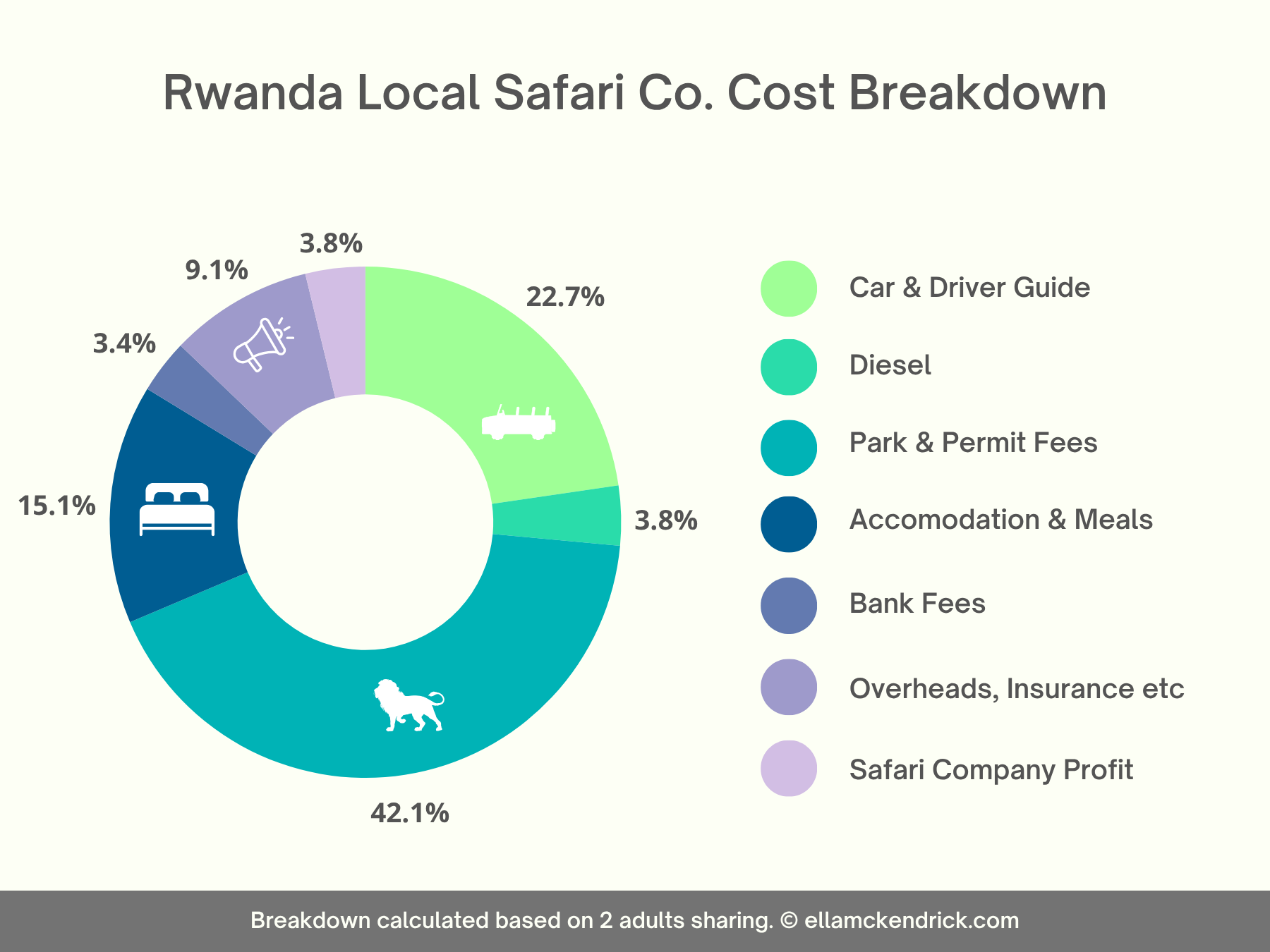
Let’s break down the total cost of a Rwanda safari booked with a local tour operator.
On a budget safari around 40% of the total cost of your trip goes towards permits and park fees such as the $1,500 per person per day gorilla tracking fees.
The next biggest cost which accounts for around 23% of your total cost is your safari vehicle and your professional driver guide who looks after you and takes you between locations as well as taking you on safari in the national parks and finds the wildlife.
15% goes towards your accommodation and meals on a private budget safari but this figure will be a bigger percentage on a mid-range or luxury safari and can reach over 50%.
The remaining 16% covers bank fees, administration such as operational costs and the tour operator’s overheads, insurance and profit for providing the trip.
Factors Impacting Rwanda Safari Costs
The biggest factor impacting the cost of your Rwanda safari is usually the level of luxury of the accommodation that you select. A Rwandan safari with high-end accommodation will cost a lot more than a trip where you’re staying in budget or mid-range lodges.
The booking method you use for your safari will also impact the cost. Booking through an overseas travel agent will cost 30-50% more than booking through a local tour operator.
In Rwanda, the number of days you choose to spend gorilla and chimpanzee Trekking will have a big impact on the average daily cost, as permits for these activities ($1,500 per person per gorilla trek) are high compared to general entrance fees for national parks.
Let’s take a closer look at the different factors affecting the overall cost of your safari.
Even though they represent a substantial cost, it’s important to remember that permit fees directly fund conservation efforts to protect the fewer than 1,100 mountain gorillas that remain in the wild.
Let’s look in more detail at the main elements that impact how much your safari will cost.
Jump to more information on each factor using the links below.
How You Book Your Safari
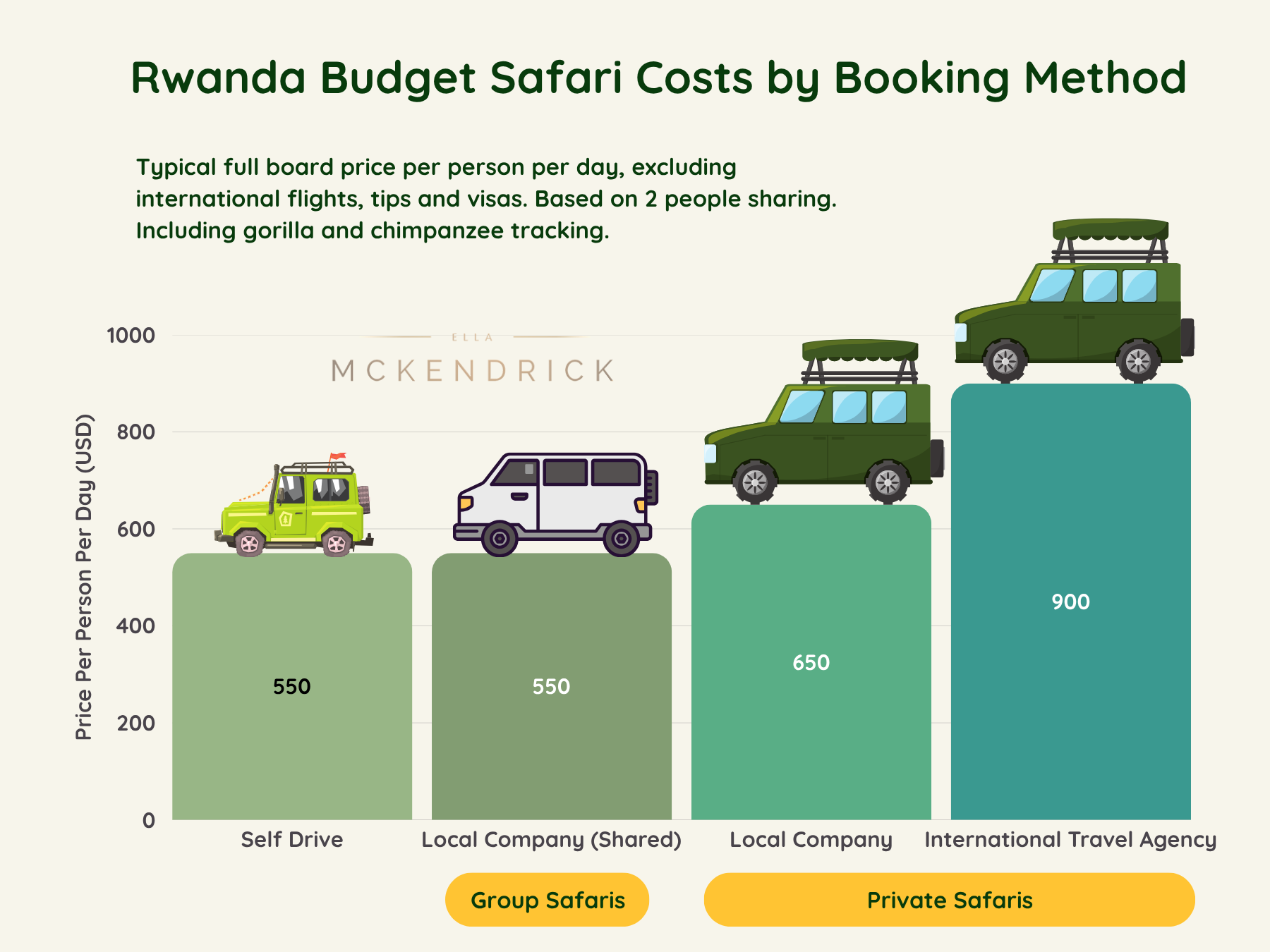
How you book your Rwanda safari can impact your safari cost by as much as 50%.
Booking your safari through an international travel agent or directly with your hotel is the most expensive way to organise your trip.
International travel agents typically charge anything from 25% – 50% more than local tour operators for the equivalent package as they typically just sub-contract the tip to the local tour operator and add their profit on top.
By comparison, going direct to a local tour operators tends to work out much more cost-effective whilst providing a similar experience.
My Preference: I always book through local tour operators as they offer the best balance of value and quality, and take all of the stress out of arranging permits, lodges and transport.
Even when I occasionally opt for flying between parks on my safaris, I still rely on local tour operators for these bookings, as well as for game drives and other arrangements. Their local knowledge is invaluable.
Accommodation
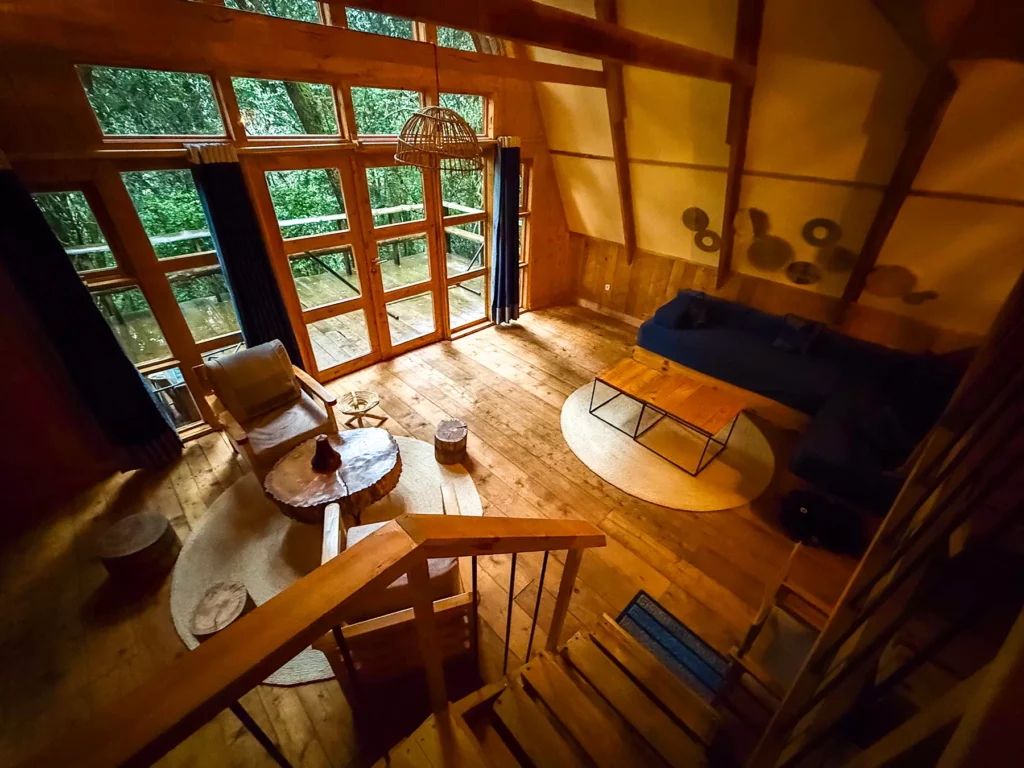
With accommodation costs in Rwanda ranging from $60 to $3,000+ per person per night, your choice of accommodation will have a big impact on your overall safari cost. For most travellers, mid-range accommodation options offer the best balance of comfort and cost.
Remember, you’ll be out on game drives or treks for most of the day, so you probably won’t have loads of time at your hotel or lodge to enjoy too many special facilities.
Accommodation Prices in Rwanda (Peak Season)
| Accommodation Level & Location | Price Per Person Per Night |
|---|---|
| Budget near Volcanoes NP | $60-$150 |
| Mid-range near Volcanoes NP | $250-$500 |
| Luxury near Volcanoes NP | $800-$1,500 |
| Luxury Plus inside Akagera (Magashi) | $1,500-$3,000+ |
My Preference: I tend to mix accommodation types throughout my journey. Sometimes I splurge on luxury lodges at the start and end of my trip, or on a rest day after a long drive, when comfort becomes more of a priority. Other than that, I find that mid-range accommodation is perfect for most of the trip.
Time of Year
Peak season, which runs from June to August and December to February, is the most expensive time to visit Rwanda, with lodge rates at their highest.
Many lodges offer discounts of up to 30% over the long rainy season, from March to May, but game viewing and trekking conditions can be difficult with the wet weather.
You’ll pay the same for a gorilla permit at all times of the year, but availability fluctuates seasonally. Be sure to book your trekking permits 9-12 months in advance for peak season travel.
My Preference: I find that visiting Rwanda in the shoulder season, from October to November, offers the best mix of weather, wildlife and value-for-money.
How Many Days you Spend Gorilla and Chimpanzee Trekking
Park and trekking permit fees form the largest part of your overall costs at between 30 – 40% of total costs for budget and mid-range safaris.
Unlike Tanzania and Kenya, park and trekking fees in Rwanda stay the same year round.
In Rwanda you’re looking at $1500 for gorilla trekking and $150 for chimp trekking.
The comparatively low park fees in other wildlife reserves such as Akagera of around $100 per person per day offset the high cost of primate trekking. So on a longer safari trip, with proportionally fewer days primate trekking, you’ll notice a lower average daily spend.
My Preference: In Uganda I opted for 2 days gorilla trekking but in Rwanda I opted for just one due to the higher fees. Doing two days in a row ensure you maximise sightings but it can be quite tiring doing two treks one after the other.
On my next visit I’d probably opt for two treks as it’s such a great experience as you tend to have different sightings each day but add a rest day in-between them.
Mode of Transport Between Parks (Road or Air)
If you travel between parks by domestic flights it typically cost between $100 and $300 per person per flight, but can save you several hours of driving.
The drive from Nyungwe in the southwest to Akagera in the east takes around 6 hours. Flying cuts that down considerably: Akagera has its own airstrip inside the park (a 15–30 minute helicopter or charter hop from Kigali), and Kamembe Airport near Nyungwe is a 40-minute scheduled flight from Kigali, followed by a 1–2 hour road transfer to the park.
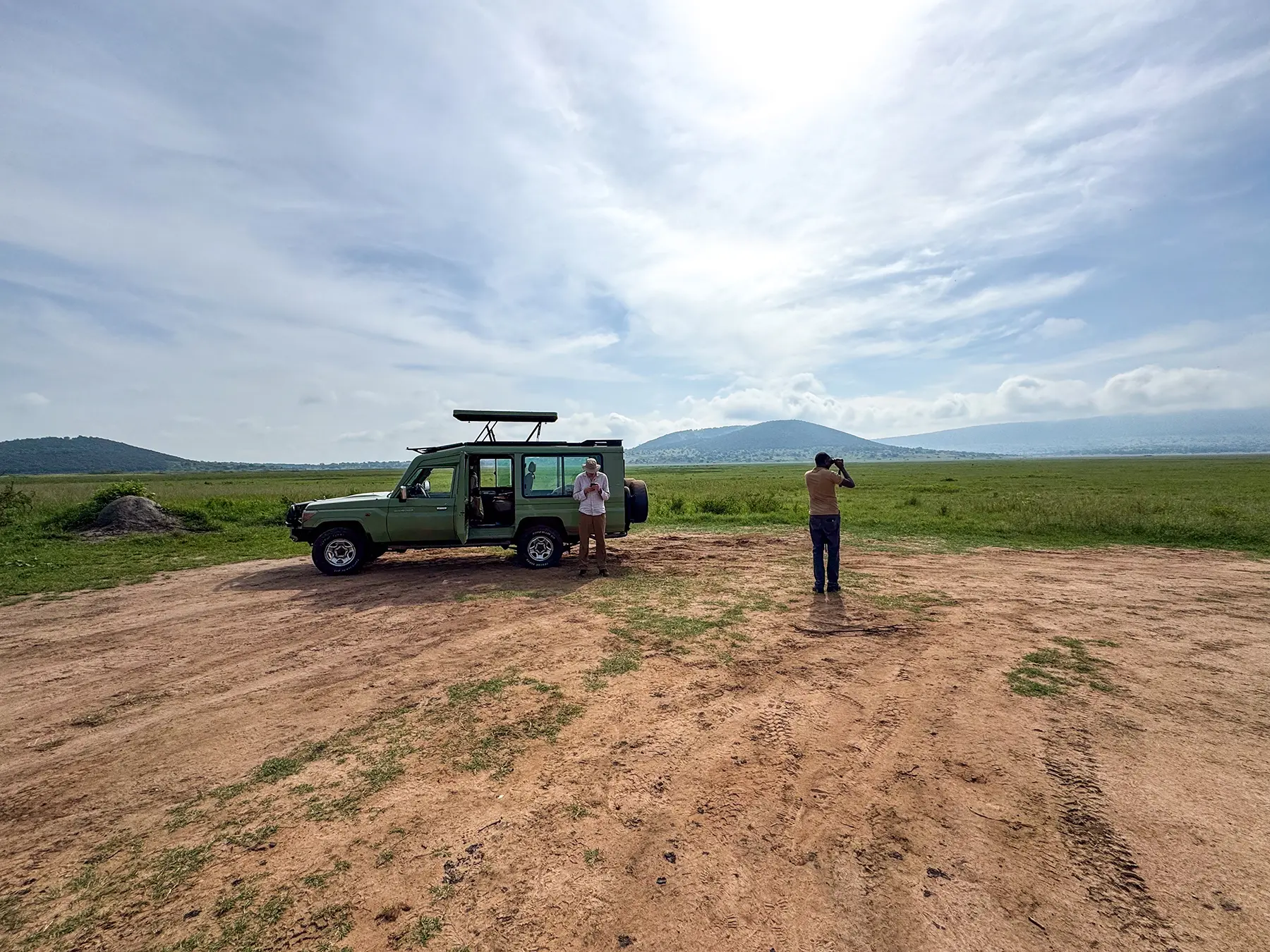
Traveling by road is typically no extra cost as the driver and car already have to make the transfer anyway to meet you and provide your transport and safaris.
My Preference: Generally, I enjoy road travel because I get to see more of the landscape and have flexibility in case of wildlife sightings en route. However, if the road travel options exceed 6 hours and there are flight alternatives, I tend to fly instead.
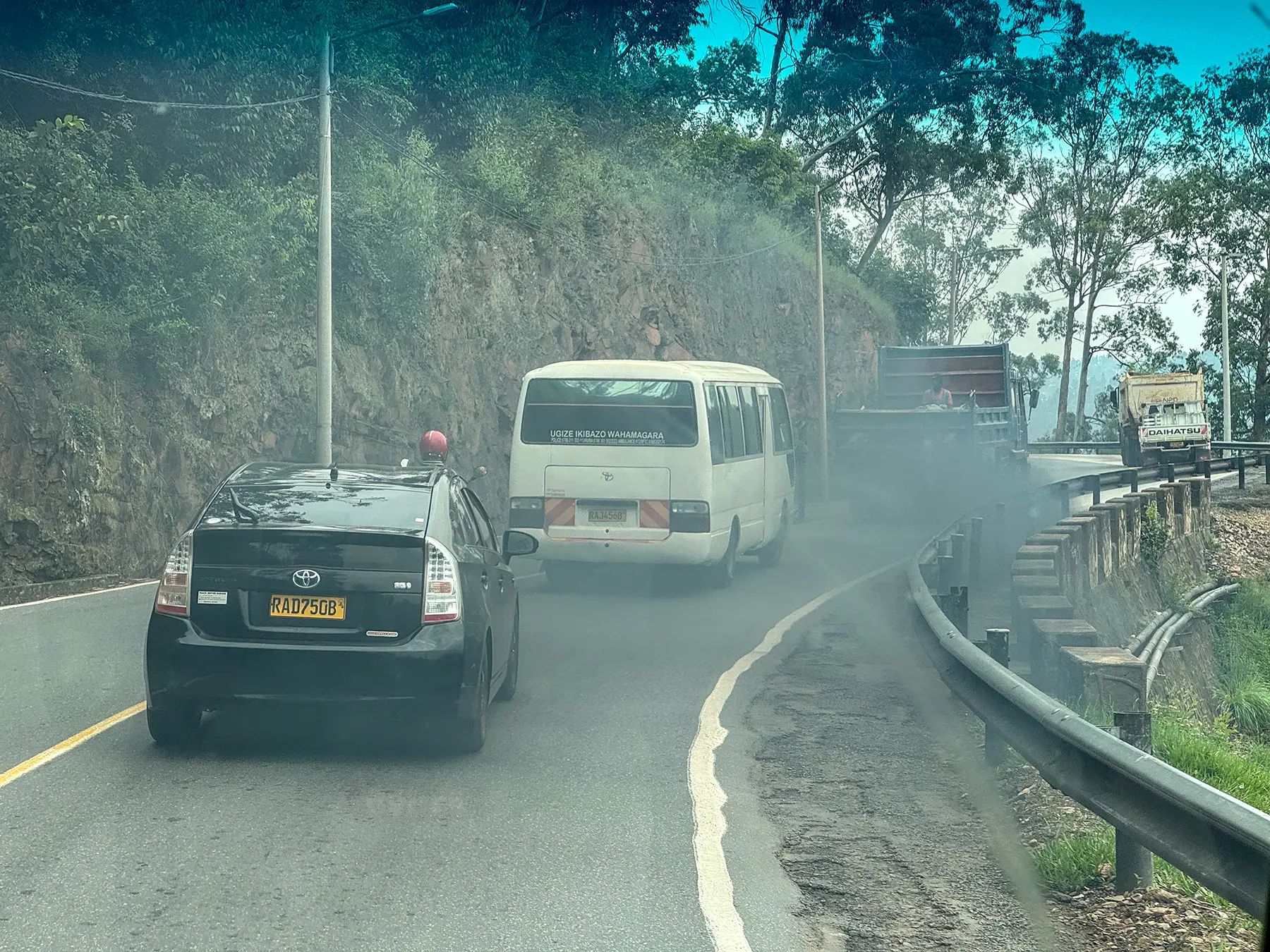
Group Size
In Rwanda group size is not as big of a factor as other safari destinations such as Kenya as your biggest cost, the gorilla tracking, is paid per person.
However, the number of people in your travel group has an impact on your accommodation as single travelings often have to pay a single supplement to have a private room. It will also impact fixed costs, as you would have to shoulder all the fixed costs such as your safari vehicle and driver guide.
The bigger the group the greater the reduction of the per-person cost. A word of caution though: most safari vehicles can only take a maximum of 6-7 people comfortably, and traveling with larger groups reduces your flexibility.
For couples and small families, private safaris work out to be good value-for-money, as the cost of the vehicle and guide is only slightly higher than a group rate.
My Preference: I like to keep the group small so that everyone has the flexibility to move around and get the best views and photo opportunities during wildlife sightings. Usually 3 or 4 people, including myself, is the maximum group size I’m comfortable with, as with a larger group it can be difficult for you all to find an optimal spot in the game drive vehicle.
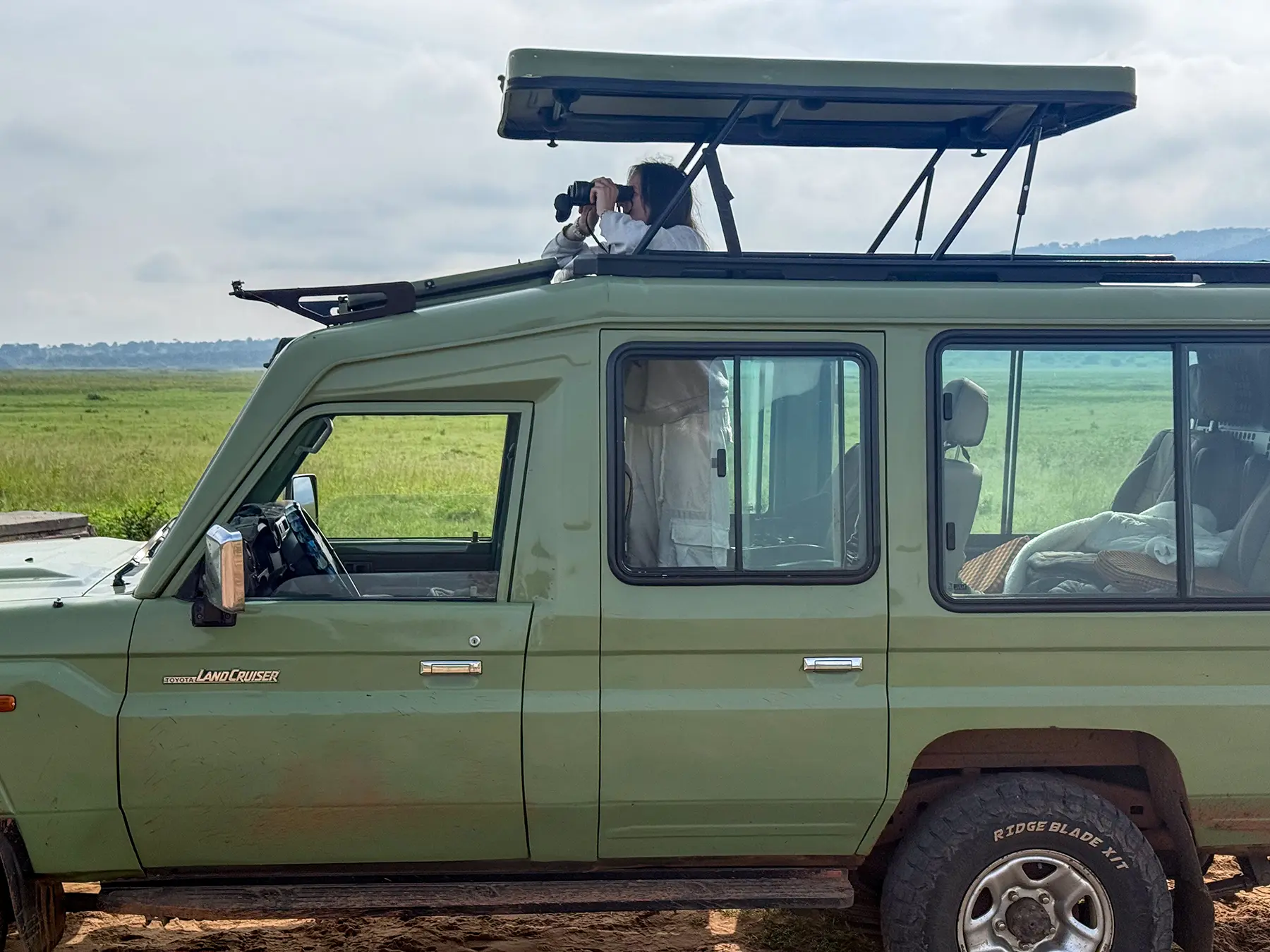
When Is the Best Time to Visit Rwanda?
The best time to visit Rwanda for gorilla trekking as well as a traditional Big Five safari is during the dry seasons: June to August and December to February.
During these times, the trekking trails are drier and easier to navigate on foot and the sparser vegetation and limited water sources makes Akagera’s wildlife easier to spot.
Logistics can become challenging in the rainy season, as I’ve discovered first-hand. On one particular chimp tracking expedition in a very muddy Nyungwe during the long rains, I had to take a 2-hour, all uphill detour on foot thanks to a stuck truck that had blocked the main exit road.
If your priority is communing with primates with the least mud underfoot, you should aim for June to August. This is the peak season, though, so you will have to book your permits 9-12 months in advance.
If you would like to balance out the cost of gorilla trekking with cheaper park fees at Akagera and quieter game drives, the shoulder periods of October, early November and late December are sweet spots.
My Preference: My favourite time of year to visit Rwanda is the shoulder season in October and November. The weather is generally good, the gorilla trekking trails at Volcanoes are quieter, and accommodation is less costly since it’s outside of peak season. There is a chance of rain at this time of year so bear this in mind as it can make the hiking trails a bit more challenging. I personally find a bit of mud adds to the adventure, hence why I enjoy this time of year so much..
But just because October is my favourite time in Rwanda doesn’t mean it’s best for everyone. Below I’ve outlined considerations and advantages associated with each time of year, so that you can choose the time that suits you best.
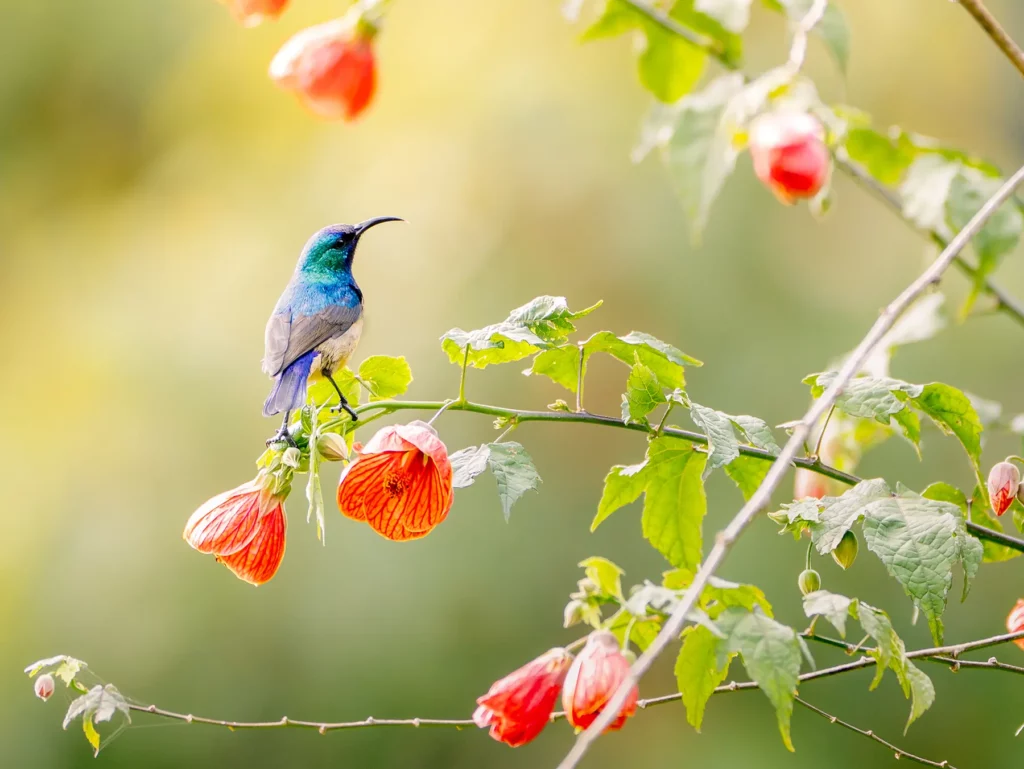
The Important Role of the Rains
As with most other safari destinations in East or Central Africa, Rwanda is hugely impacted by East Africa’s rains. They dictate when the animals migrate and when they give birth and there arrival times very from year to year.
Jump to more information on each of the seasons using the links below.
The Short Dry Season (Mid-December – February)
The Long Rainy Season (March – May)
The Long Dry Season (June – Mid-October)
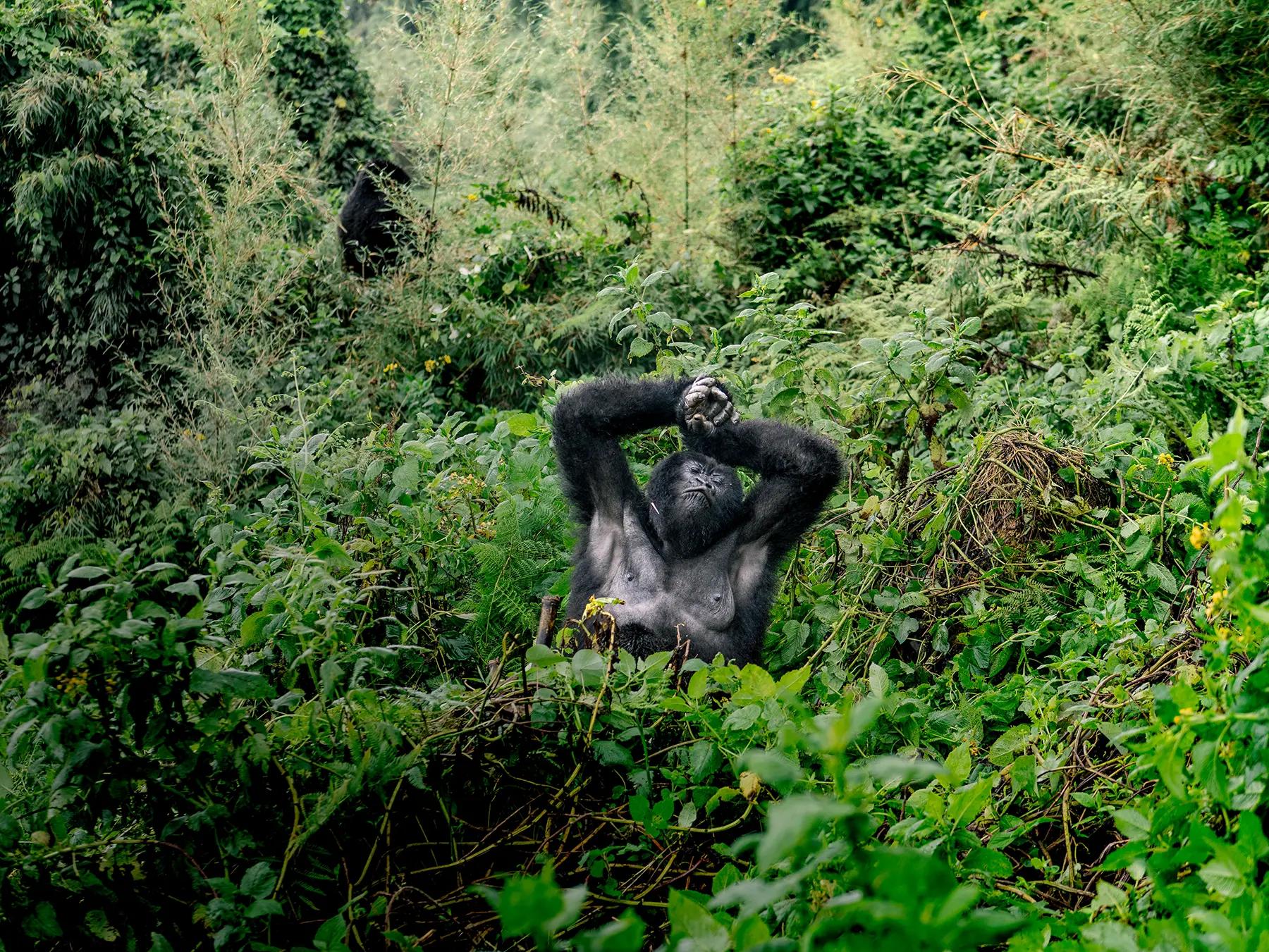
The Short Dry Season (Mid-December – February)
If you want the balance between quieter parks and pleasant weather and don’t mind a slight chance of rain or higher temperatures, the short dry season is for you.
This is Rwanda’s hottest stretch, with sunny days, dry trails and abundant wildlife at Akagera. Because of the heat, the gorillas retreat to higher altitudes where it’s cooler, which means you’ll have to cover more elevation in your trek.
My experience visiting in The Short Dry Season: I’ve been to neighbouring Uganda in the short dry season and despite it being dry, I found Uganda extremely green and lush compared to Kenya and Tanzania.
Quick Facts
Prices: Peak season, highest prices
Weather: Hottest time of year with sunny and dry days and sporadic rainfall, daytime temperatures 75-91°F (24-33°C)
Wildlife: Abundant at Akagera. Gorillas move to higher elevations in Volcanoes National Park, so both treks and the drives to the start points can be longer
Birding: Local species joined by northern hemisphere migrants. Main breeding and nesting season
Unique features: Calving season with young animals across the parks
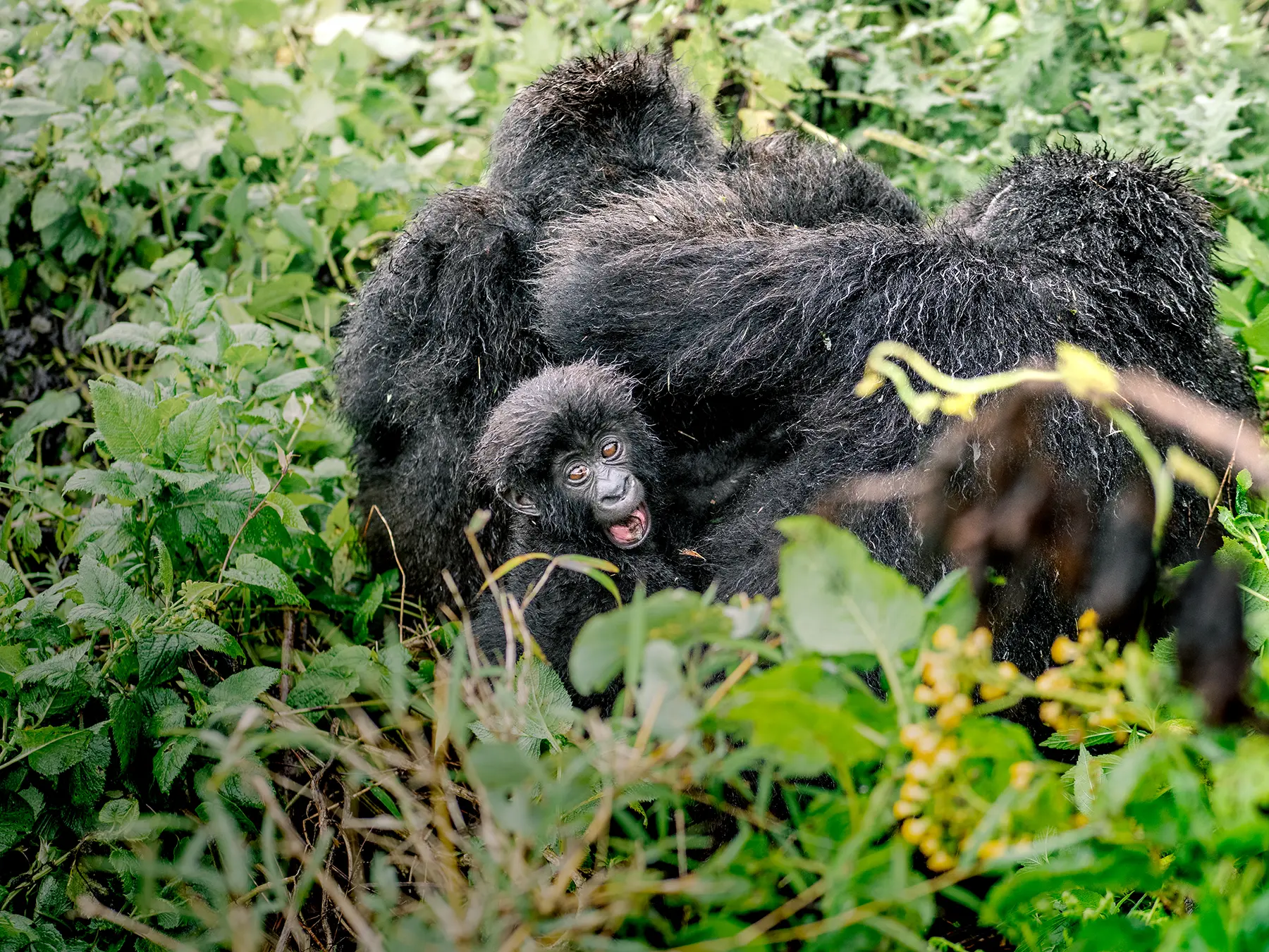
Reasons to Visit in the Short Dry Season
- Excellent gorilla trekking conditions
- Wildlife easier to find
- Fewer mosquitoes
- Calving season with young animals
- Main breeding and nesting season for birds
- Northern hemisphere migrant bird species present
Considerations When Visiting in the Short Dry Season
- Hottest time of year
- Parks and lodges are busy
- Gorilla permits need to be booked long in advance
- Gorillas at higher elevations so treks can be longer and more challenging
- Drives to gorilla trekking start point can be longer
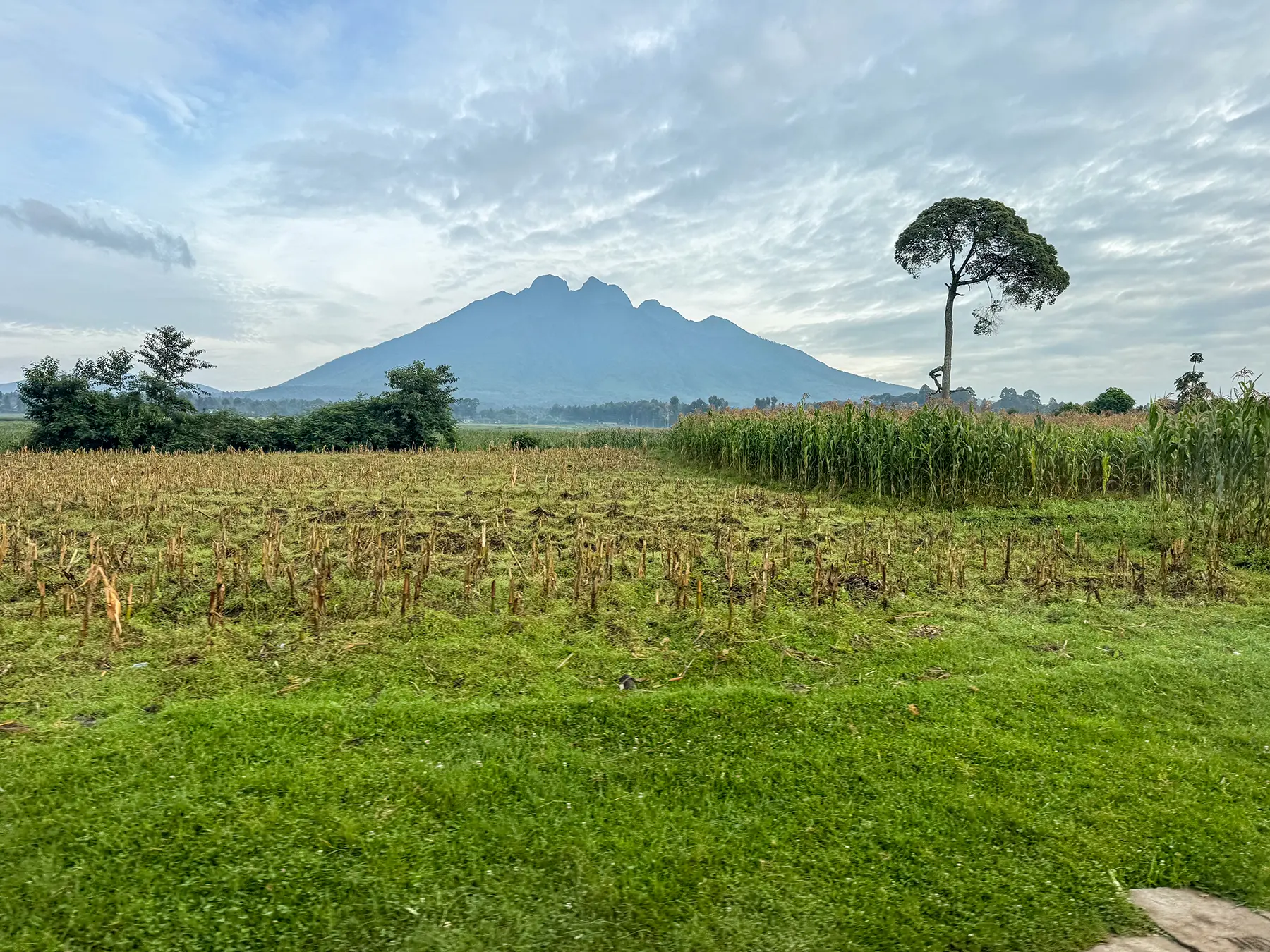
The Long Rainy Season (March – May)
The long rainy season suits adventurous travellers who are not bothered by heavy rain and muddy trails. In return you’ll enjoy the lowest prices and quietest parks.
This is the low season in Rwanda when visitor numbers are at their lowest and lodges tend to offer significant discounts. The weather is wet, with daytime temperatures of 61-82°F (16-28°C).
Gorilla tracks are shorter as the smaller number of visitors means that only the closer gorilla families are visited at this time of year which means shorter drives to the start point and shorter tracks
My experience visiting in The Long Rainy Season: I visited Rwanda at the very start of the long rainy season. One morning heading to Nyungwe for chimp trekking, our vehicle had to detour around a vehicle stuck in mud, then we hiked two hours uphill back to the truck after a road block. Gorilla trekking was extremely muddy, so I’d recommend taking two trekking poles.
Quick Facts
Prices: Lowest prices with discounts on accommodation
Weather: Wet season. Daytime temperatures 61-82°F (16-28°C), colder at higher elevations
Wildlife: Abundant, but viewing can be more difficult because of dense foliage and rain
Birding: Abundant, including migrants but spotting is difficult due to thick vegetation
Unique features: Lush green landscapes with wildflowers
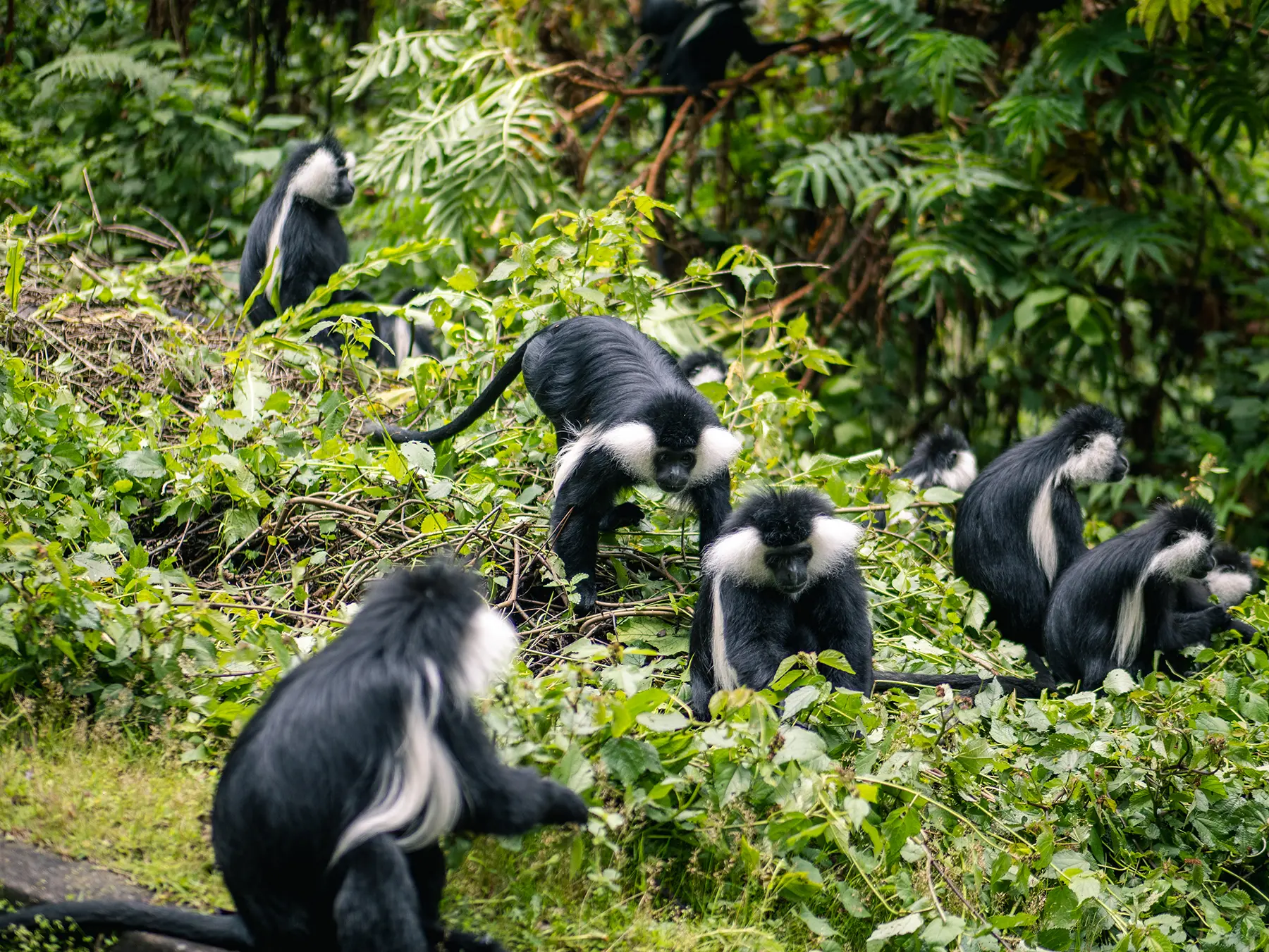
Reasons to Visit in the Long Rainy Season
- Parks at their quietest
- Permits readily available
- Gorilla tracks are shorter (shorter drive to start point and shorter treks too)
- Best prices of the year for accommodation
- Lush green landscapes with wildflowers
- Migrant bird species still present
- Cool highland daytime temperatures
Considerations When Visiting in the Long Rainy Season
- Heavy rain and potential flooding
- Some lodges may close
- Trails are muddy
- Dense foliage makes viewing difficult
- More mosquitoes
- Some attractions close such as the hike to Dian Fossey’s grave which closes when there is wet weather
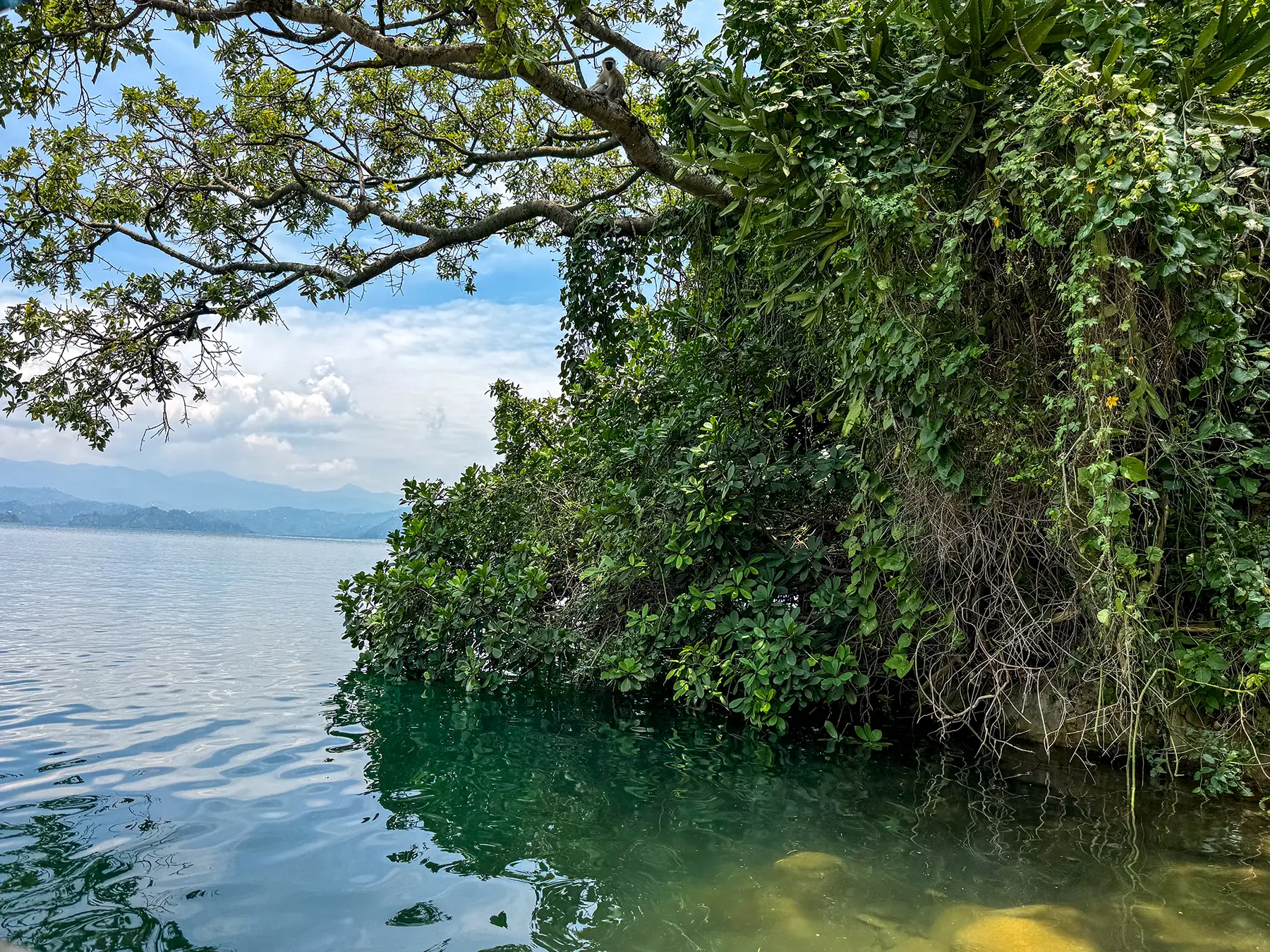
The Long Dry Season (June – Mid-October)
With the driest trails and firmest underfoot conditions for gorilla trekking, the long dry season is the most popular time to visit Rwanda.
Because it’s so popular, you should expect the highest lodge rates and book your gorilla permits well in advance.
My experience visiting in The Long Dry Season: I have not visited Rwanda in the long dry season myself. My most recent trip was in early March at the very start of the rains, but I have seen the parks in shoulder season conditions and it was easier to track the gorilla and chimps with less mud.
Quick Facts
Prices: Peak tourist season, highest prices
Weather: Warm, mostly dry days with cooler mountain areas. Daytime temperatures 64-82°F (18-28°C)
Wildlife: Abundant. Animals congregate around water sources in Akagera
Birding: Excellent with diverse species present.
Unique features: Good hiking conditions for gorilla trekking thanks to dry footpaths
Reasons to Visit in the Long Dry Season
- Comfortable weather conditions
- Excellent gorilla trekking conditions
- Animals congregate around water sources
- Dry footpaths for trekking
- Excellent birding with diverse species
- Cooler nights at higher elevations
- Annual Kwita Izina ceremony in September
Considerations When Visiting in the Long Dry Season
- Peak tourist season with high prices
- Parks and lodges can be busy
- Gorilla permits need advance booking
- Mountain areas can feel cooler at night
- Gorillas at higher elevations so treks can be longer and more challenging
- Drives to gorilla trekking start point can be longer
The Light Rainy Season (Mid-October – Mid-December)
If you want good weather, fewer crowds and value for money, the light rainy season offers the best of all worlds.
This is a great option if you’re after quieter parks with generally good weather. Gorilla permits are more readily available and lodges and parks are less crowded.
My experience visiting in The Light Rainy Season: October and November are my favourite months to visit this part of the world. The weather is generally good, and parks and activities are less crowded than peak season.
Quick Facts
Prices: Lower than peak seasons
Weather: Mostly light rainfall with some heavier downpours. Daytime temperatures 61-84°F (16-29°C)
Wildlife: Abundant but more dispersed. Gorillas descend to lower altitudes in Volcanoes National Park
Birding: Mating and nesting season with colourful plumage. Migrants arriving
Unique features: Kwita Izina gorilla-naming ceremony in September at Volcanoes
Reasons to Visit in the Light Rainy Season
- Parks and lodges less busy
- Gorilla permits more available
- Shorter gorilla treks possible
- Mating and nesting season for birds
- Lower prices than peak seasons
Considerations When Visiting in the Light Rainy Season
- Trails can be wet and slippery
- Occasional heavy rains may affect activities
- Mosquito populations increase
- Wildlife more dispersed than in dry seasons
How Many Days Do You Need for a Rwanda Safari?
Seven days is the ideal length of time for a safari in Rwanda if you want to combine gorilla and chimp trekking with Big Five game viewing.
In 7 days, you can cover four distinct ecosystems, including the volcanic peaks of the Virungas, the ancient rainforest of Nyungwe, the savannah plains of Akagera, and even a relaxing boat ride on Lake Kivu.
What 7 Days in Rwanda Gets You
- Akagera National Park (2 days): Big Five game drives across the southern and northern sectors, lions and rhinos on Kilala Plain, a boat cruise on Lake Ihema
- Volcanoes National Park (2 days): Gorilla trekking experience including a full hour with a habituated gorilla family, golden monkey trekking among the bamboo forests, and views across the Virunga volcanic chain
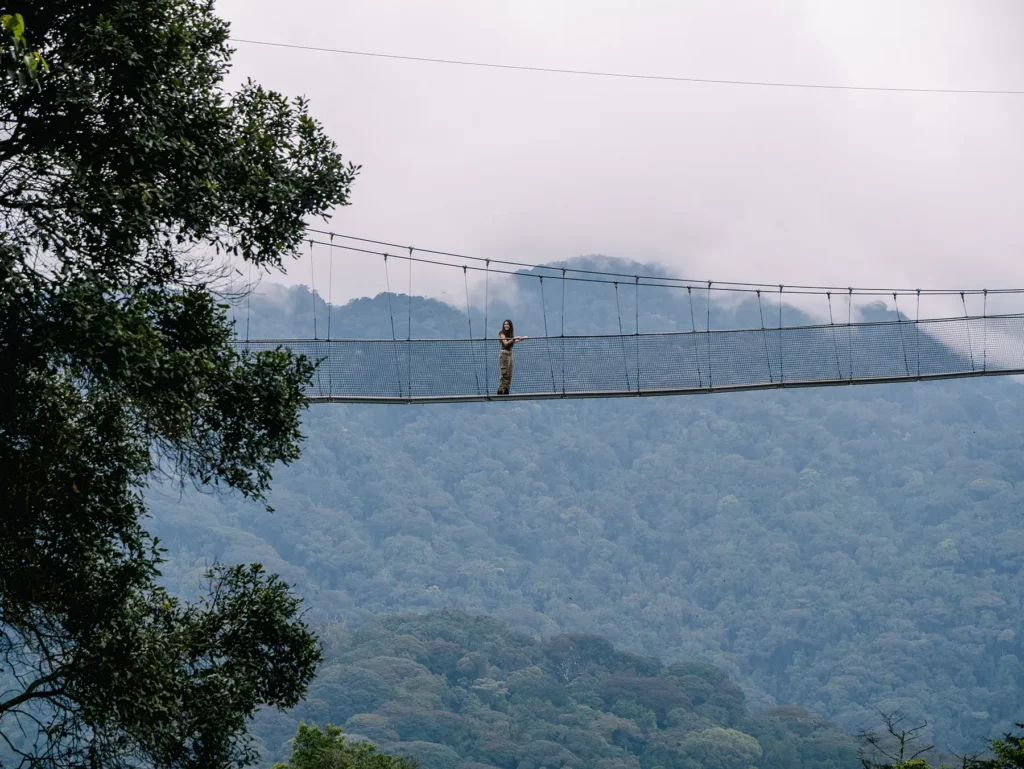
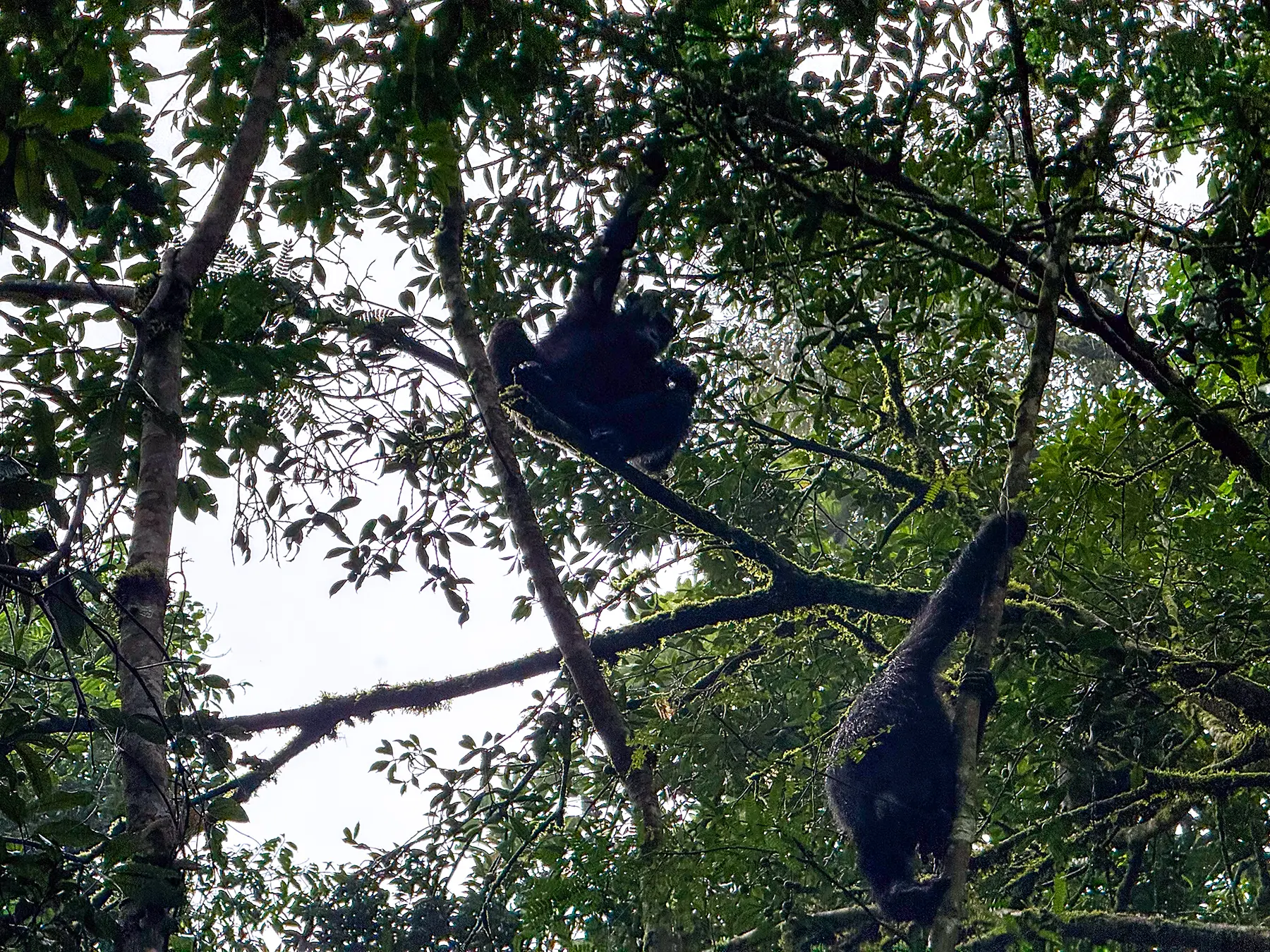
- Nyungwe Forest National Park (1 day): Chimpanzee trekking through one of Africa’s oldest rainforests, a canopy walk suspended 197 feet (60 metres) above the forest floor, and 13 primate species
- Lake Kivu (1 day): A relaxing break between the primate parks, with boat trips to the islands and views across the water to the DRC
- Kigali (1 day): Arrival / departure day exploring the capital, visiting the Genocide Memorial, and sampling Rwandan coffee culture before heading into the parks
If seven days is more time than you can spare, it’s possible to cover two of the key activities such as Volcanoes for gorilla trekking and Akagera for the Big Five or chimp tracking in Nyungwe within 5 days.
For a deeper experience that includes Uganda, a 2-week combined Rwanda and Uganda itinerary adds gorilla trekking in Bwindi Impenetrable Forest, chimpanzee tracking in Kibale, and more traditional game drives in Queen Elizabeth National Park.
My Preference: In my opinion, seven to ten days is the best length of time for a Rwanda itinerary. With at least 7 days in the country, it’s possible to include both Nyungwe Forest for chimpanzee trekking, and Big Five safaris in Akagera of which shorter trips have to skip one. Spending more than one night at each location gives you enough time to really immerse yourself in nature without feeling rushed.
What Does This 7-Day Rwanda Itinerary Look Like?
This 7-day itinerary covers Akagera National Park, Volcanoes National Park, Lake Kivu and Nyungwe Forest National Park in Rwanda, starting and ending in Kigali.
You will spend 2 days on game drives and boat cruises in Akagera, 2 days gorilla and golden monkey trekking in Volcanoes, a day exploring Lake Kivu, and a day chimpanzee trekking in Nyungwe, with Kigali bookending the trip.
This route is based on my own experiences, and is designed to give you the best wildlife encounters while keeping driving times manageable.
Road transfers between parks are scenic, winding through the famous “thousand hills”, with tea plantation views and volcanic backdrops along the way.
Quick Facts
Average driving time per day: 3 hours
Best times of year: June to August (dry season, thinner vegetation, animals near water) or December to February (warm, dry, quieter).
7-Day Rwanda Safari Map
Day-by-Day Breakdown of the Perfect 7-Day Rwanda Safari
Rwanda has so much to offer, seven days will zip by. I have crafted this 7-day safari itinerary to make sure you make the most of every moment!
I have also considered the distance between the parks and driving times in order to come up with the most enjoyable itinerary.
Click any of the days below to jump to my full notes on that day.
- Day 1: Kigali to Akagera National Park
- Day 2: Akagera National Park
- Day 3: Akagera to Volcanoes National Park
- Day 4: Volcanoes National Park
- Day 5: Lake Kivu to Nyungwe Forest
- Day 6: Nyungwe Forest to Kigali
- Day 7: Kigali
You can get quotes from the same local tour companies I use to organise my own trips here: Safaris By Ella
Day 1: Kigali to South Akagera
Drive Time (Excluding Game Drives): 3 hours
You will start your 7 day itinerary with a 3 hour drive to Rwanda’s largest national park for a Big Five safari.
Akagera National Park is 433 square miles (1,122 km²) and is situated on the eastern side of the country adjoining the Tanzanian border.
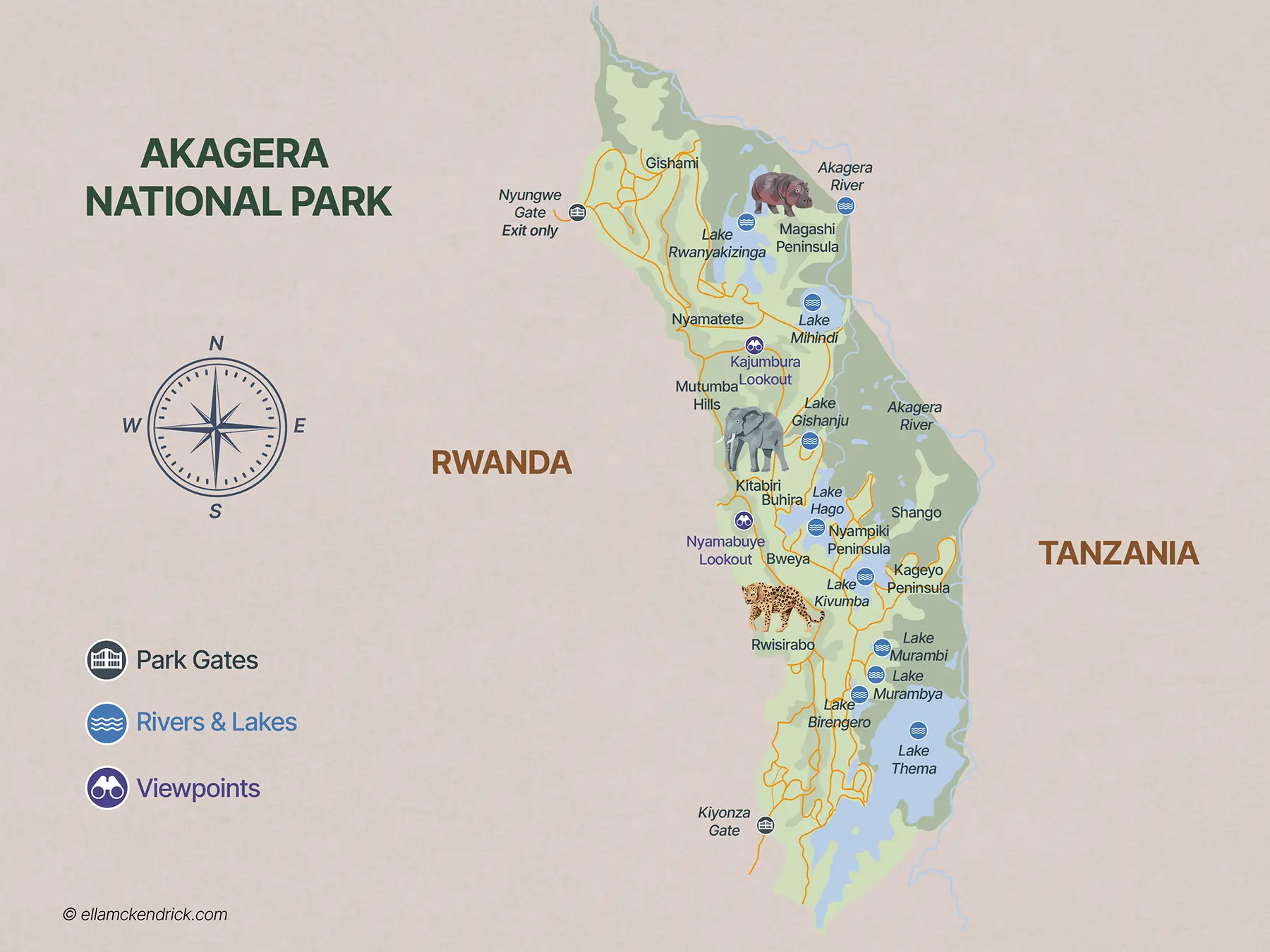
Map of Akagera National Park
Here is a map I made showing the key features of Akagera National Park.
Itinerary
Your safari begins with a roughly 3 hour drive east, from Kigali to Akagera National Park.
The road is quiet and smooth for most of the journey, although the final hour’s stretch before you reach the park is undergoing road resurfacing and can be rather bumpy.
You will enter through the main entrance, Kiyonza South Gate, which is close to the park’s headquarters.
Single-use plastics are banned throughout Rwanda, including at national parks, so leave any plastic bags and bottles at the gate.
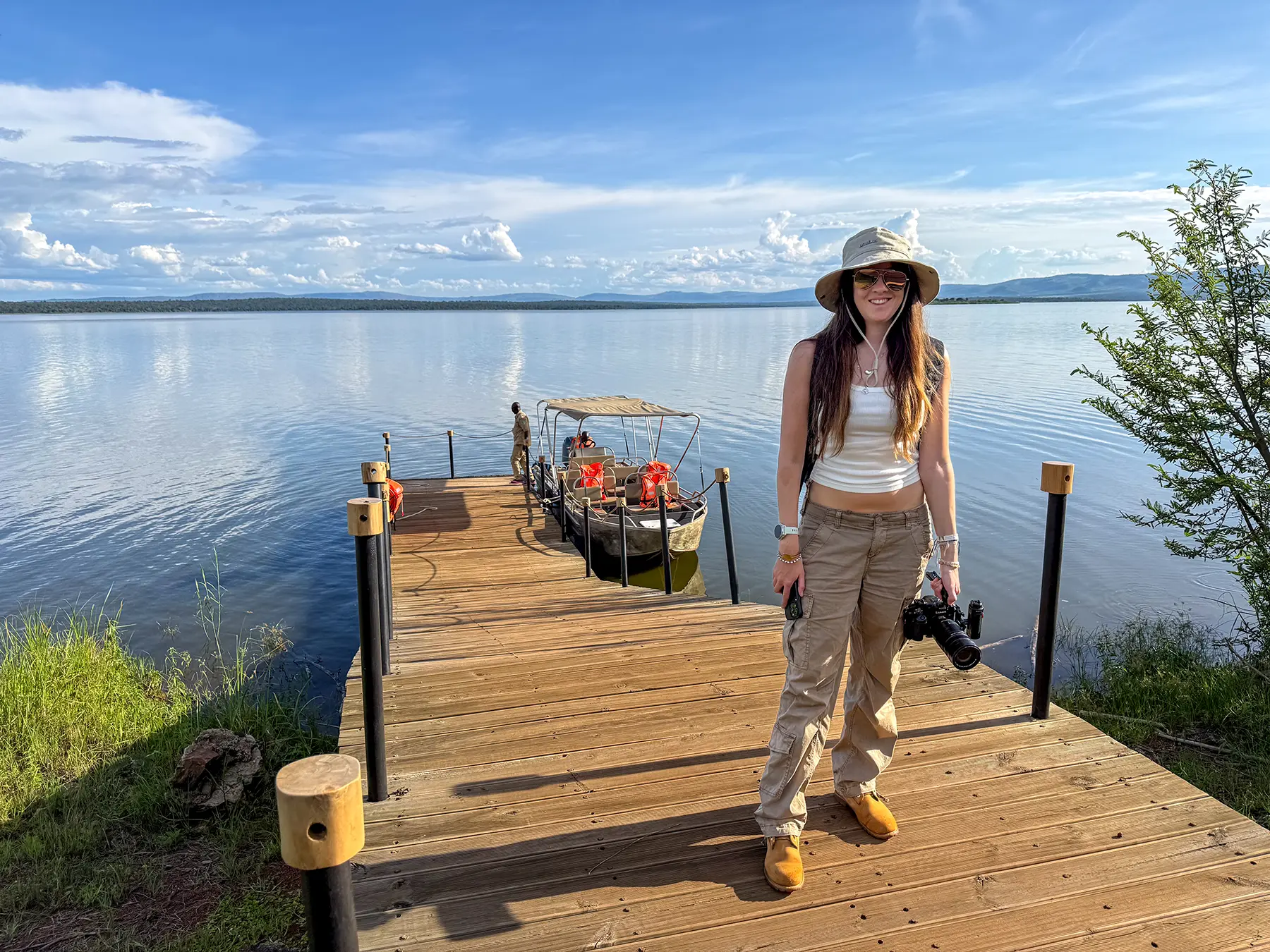
You’ll spend a relaxing afternoon on a sunset boat cruise on Lake Ihema, the largest of 10 lakes within Akagera.
After arriving through Kiyonza South Gate and checking in, you will head to your lodge in the southern sector to drop off your bags before the afternoon boat cruise.
The southern sector of the park is densely forested, with a number of large water sources, including Lake Ihema. This is where you’ll set out on your sunset cruise, which is bound to be a highlight of your trip, even though it’s just the first day!
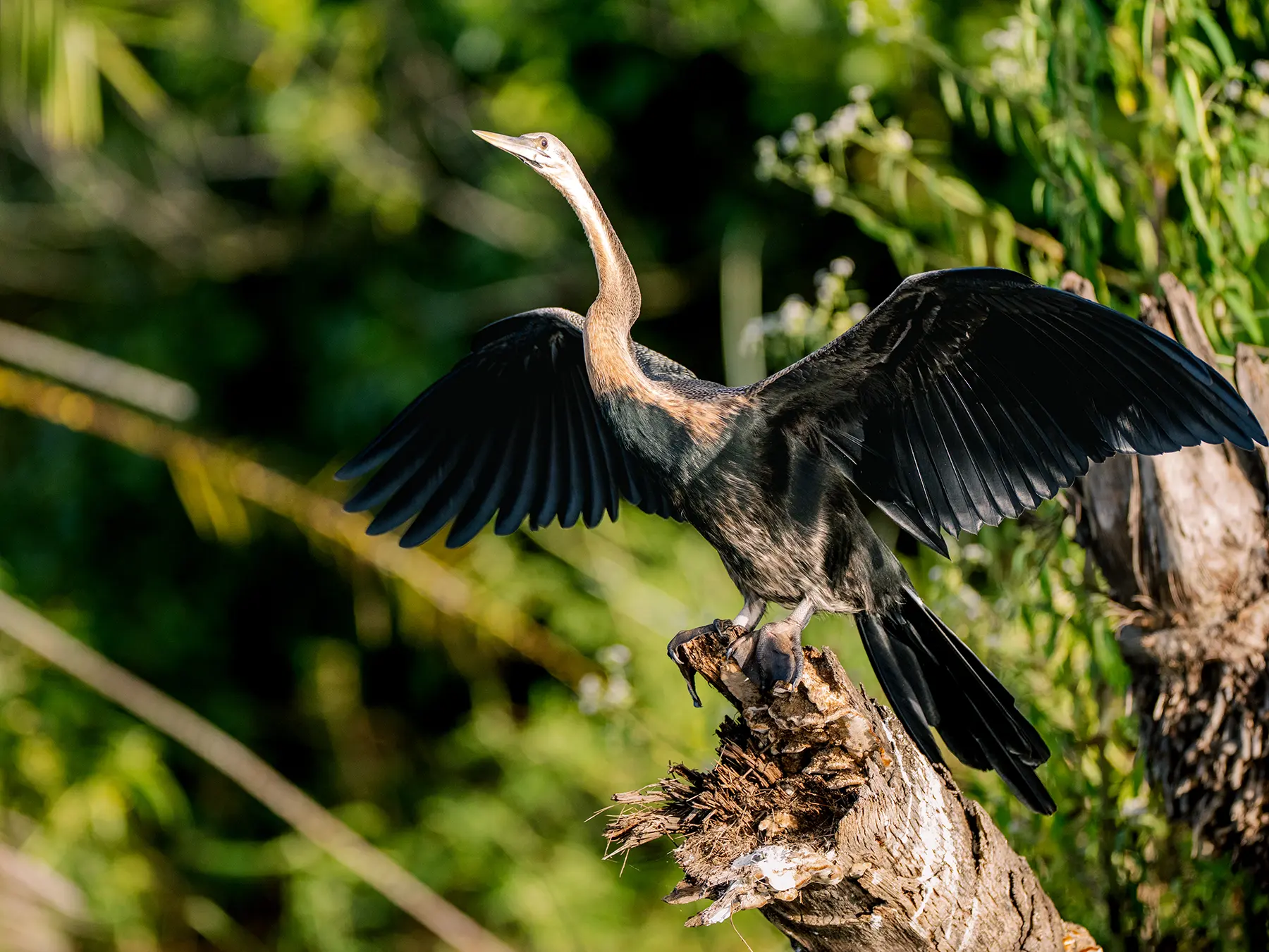
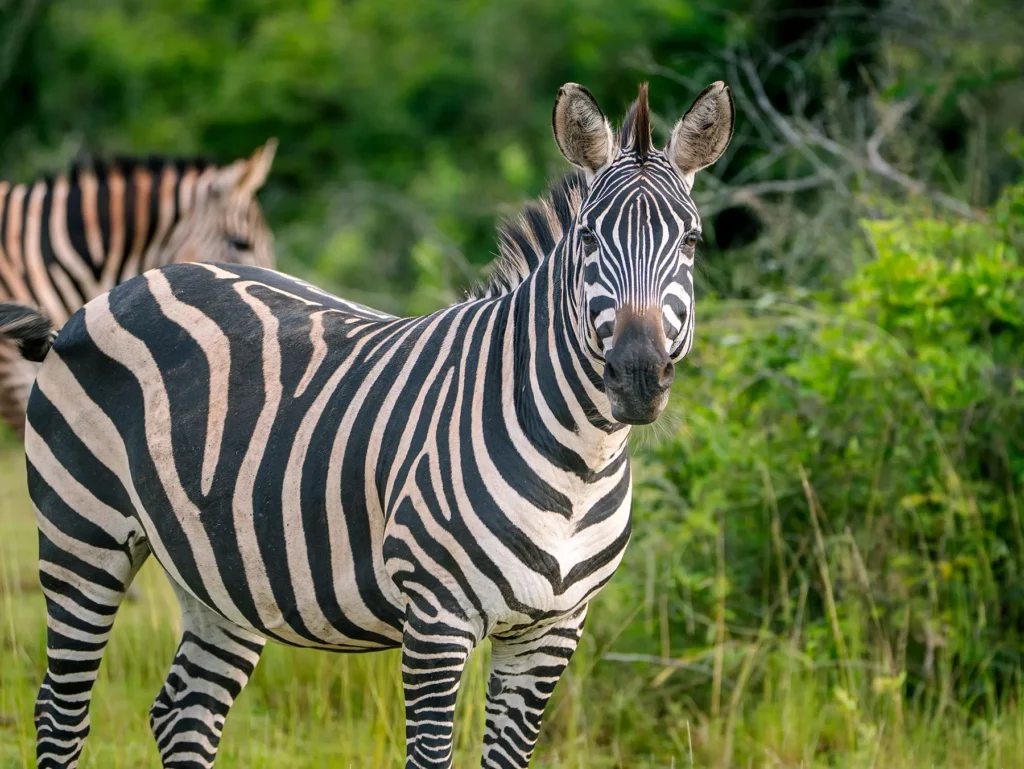
The water is teeming with hippos, crocodiles, enormous monitor lizards and many bird species, including fish eagles, Goliath herons and the rare shoebill stork. The lake shore is also a favourite spot for elephants and buffalos, along with plains species such as zebras, topis, impalas and Maasai giraffes.
A sunset departure is a great idea, not only because of the enchanting play of light on the water, but also because thousands of water birds return to Ile Ihema, an island in the middle of the lake, to roost at night. This is a spectacular display that just adds to the wonder of your first day in this magical country.
About Akagera National Park
Akagera National Park is one of Africa’s greatest conservation success stories.
After the 1994 genocide in Rwanda, many people who had been displaced from their homes settled in the park area and began farming and hunting.
Uncontrolled hunting and poaching, as well as the decimation of natural habitats to create crop lands and pastures for grazing, led to the complete collapse of certain wildlife populations. Lions and rhinos, which had lived in the region in abundance before, became locally extinct.
From 2010 onwards, major restoration efforts began under the management of African Parks. Lions were successfully reintroduced to the park in 2015, and three different species of rhino have been gradually reintroduced since 2017.
Tough conservation measures including anti-poaching patrols and community engagement have led to a gradual increase in wildlife numbers and diversity. Today Akagera is once again home to all of the Big Five: lions, leopards, elephants, buffalos and rhinos.
This fully restored world-class safari destination contains a remarkable variety of habitats, from dense forest in the south to open savannah plains in the north. The park is also one of the best birding destinations in East Africa with over 500 recorded bird species.
What Wildlife Can I See in Akagera National Park?
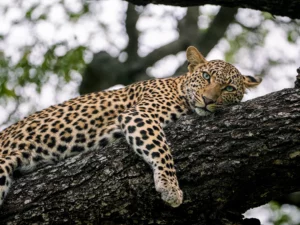
Akagera is home to all of the Big Five, making it the only park in Rwanda where you can see lions, leopards, elephants, buffalos and rhinos in one location.
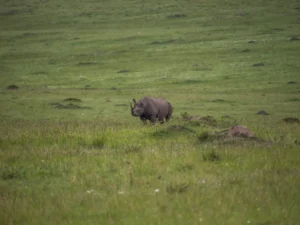
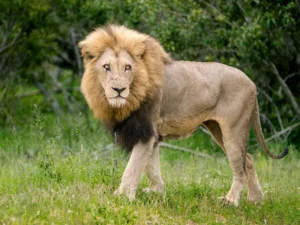
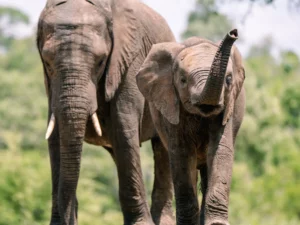
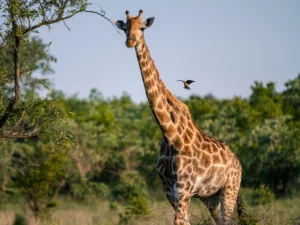
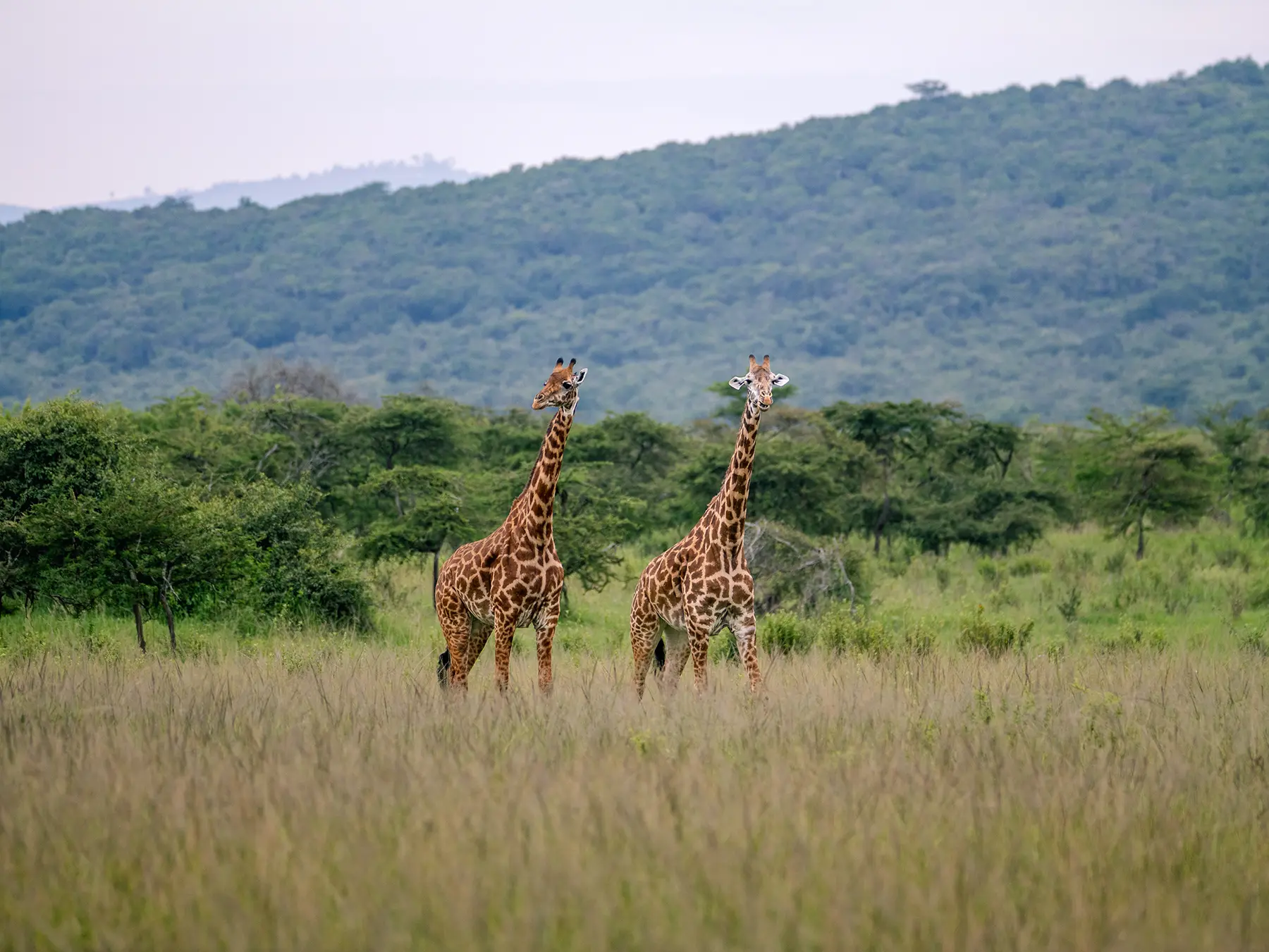
The park also supports a rich diversity of plains game and birdlife, thanks to its varied habitats. There is an abundance of zebras, giraffes, topis, impalas, waterbuck, eland, warthogs, Uganda kob and sitatunga antelopes throughout the park.
Over 500 bird species have been recorded in water-rich Akagera, including majestic Goliath herons, fish eagles, grey crowned-cranes, pelicans, secretary birds, giant kingfishers and the rare shoebill stork.
Lake Ihema positively teems with hippos and has an extremely high concentration of Nile crocodiles, as well as enormous monitor lizards.
Tips for Visiting South Akagera
Here are my top tips for visiting Akagera National Park!
- Single-use plastics are banned in Rwanda. Leave any plastic bags and bottles at the park entrance or transfer liquids into reusable containers before you arrive.
- Book the sunset boat cruise on Lake Ihema rather than the daytime option. The lighting is better for photography, and you will see thousands of water birds returning to roost on Ile Ihema island.
- Numbers of tsetse flies increase as you travel further north through the park. Tsetse flies are attracted to dark colours, so avoid wearing black and navy. Opt for light coloured, loose clothing that covers your arms and legs, and use insect repellent.
- Park fees are approximately $100 per person per day, including vehicle fees.
- If you are driving from the south to the north, the journey takes around five hours. There is a picnic area on the shores of Lake Mihindi with clean bathrooms and a kiosk selling fresh coffee.
Optional Activities
- One of the most rewarding experiences you can have in South Akagera is a behind-the-scenes tour to learn about African Parks and the history of Akagera’s conservation comeback. This tour adapts to live data from rangers on the ground and collared animals.
- Night drives offer the possibility of seeing nocturnal animals out and about, and predators on the hunt.
- There are also guided nature walks and birding safaris, with over 500 bird species recorded in the park.
- For fishing enthusiasts, it’s possible to go on fishing trips on the park’s lakes.
Where to Stay in South Akagera
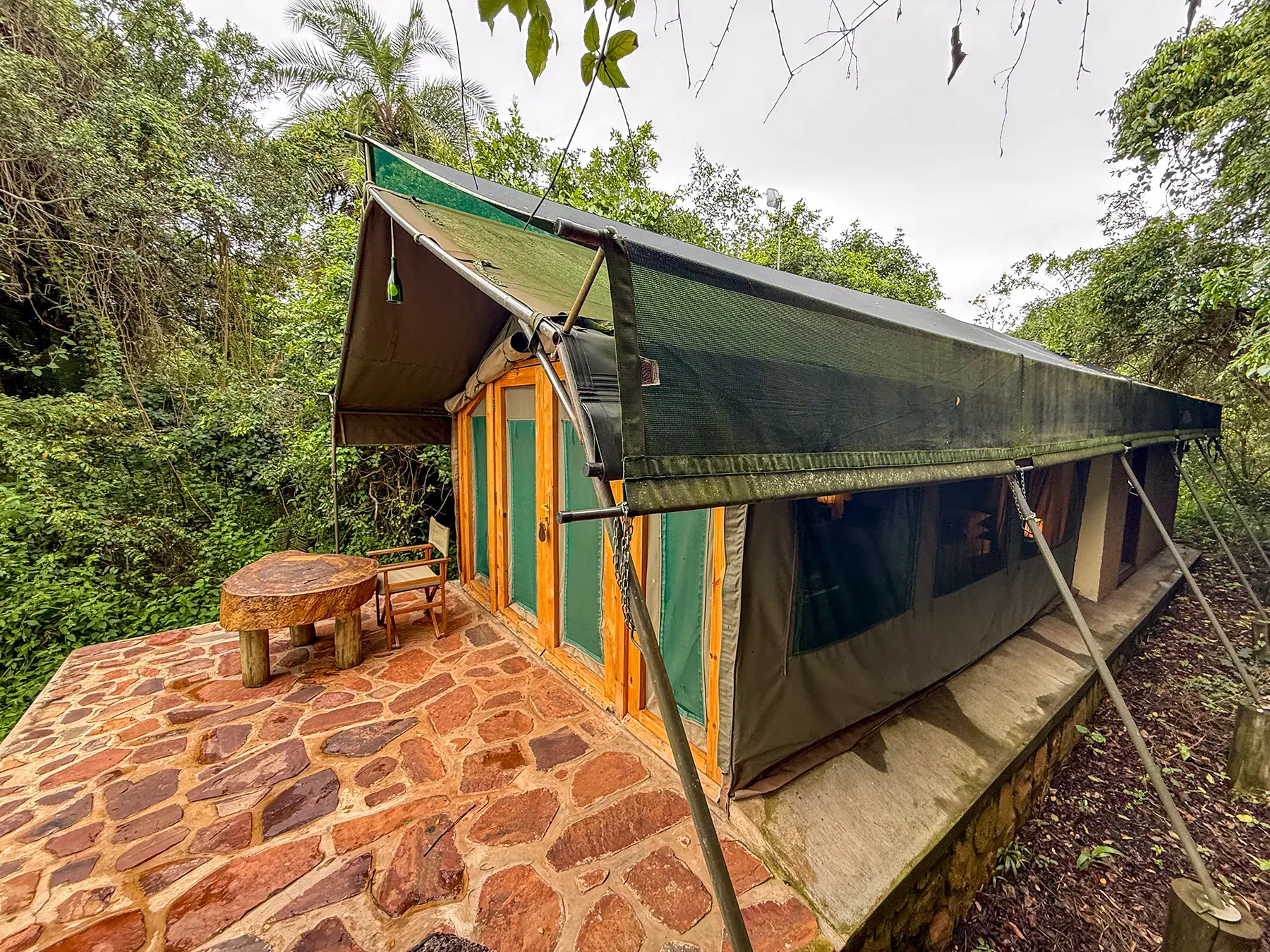
The southern sector of Akagera has two lodges: Ruzizi Tented Lodge is run and managed by African Parks (the company that runs the national park), and is perched right on Lake Ihema. Akagera Game Lodge is a comfortable, bricks-and-mortar property and is located near the park’s headquarters. Both are mid-range options, and more budget-friendly accommodation is available outside the park.
Given that you’ll be arriving and heading off for a boat cruise shortly thereafter, Ruzizi is a great option as it sits directly on the lake.
I stayed at Ruzizi because I love tented camps, and I was really impressed with its location. There’s nothing like falling asleep to the sounds of nature. I drifted off to the calls of reed frogs, the bellowing laughter of hippos and chirping of crickets.
My Experience of South Akagera
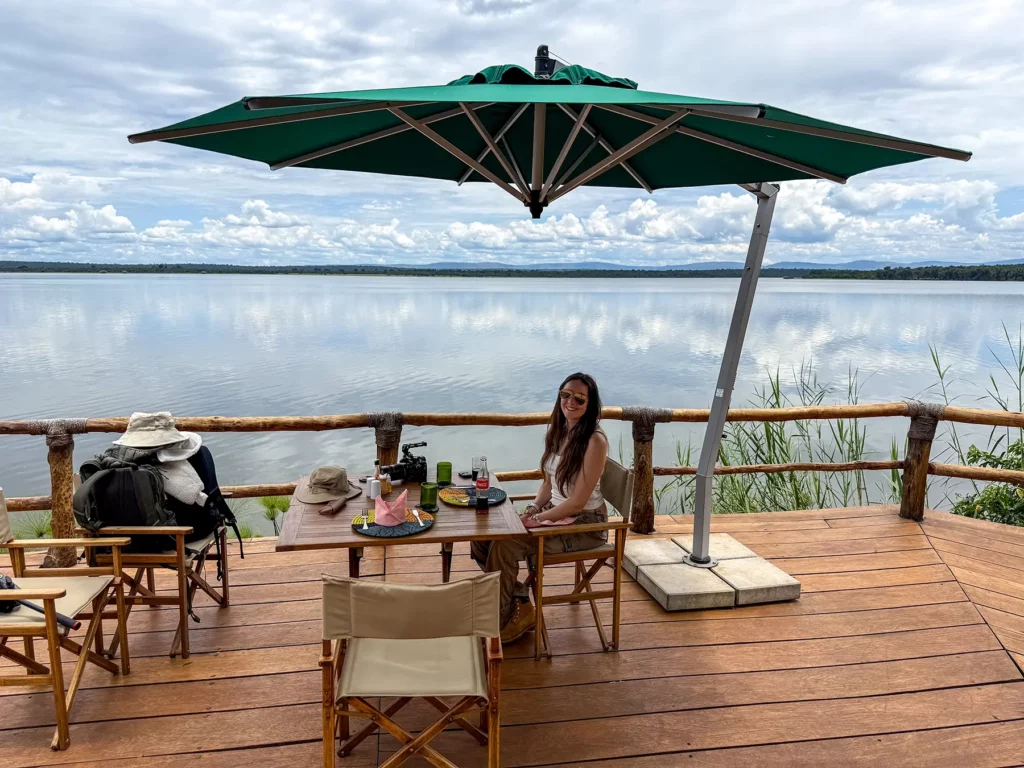
I found the sunset boat cruise on Lake Ihema enchanting! The lake surface was so still it was like a mirror in parts, broken only by the pods of hippos surfacing now and then for a breath of air.
The contrast between the pods of hippos in the water – discreet and even elegant as they flick their ears and swivel their eyes – and the two purposeful hippos I saw marching on the banks between date palms made them seem almost comical. Alongside the hippos, I saw huge numbers of Nile crocodiles basking in the shallows.
I particularly enjoyed the extremely abundant birdlife, which included African fish eagles, Goliath herons, woodland kingfishers, white-faced whistling ducks, spur-winged geese, hadeda ibis, pied kingfishers, African darters, and more!
Day 2: North Akagera
Drive Time (Excluding Game Drives): 5 hours
Your second day on this itinerary is a full day of game drives through Akagera National Park, heading north from the southern sector towards the majestic Kilala Plain in the north.
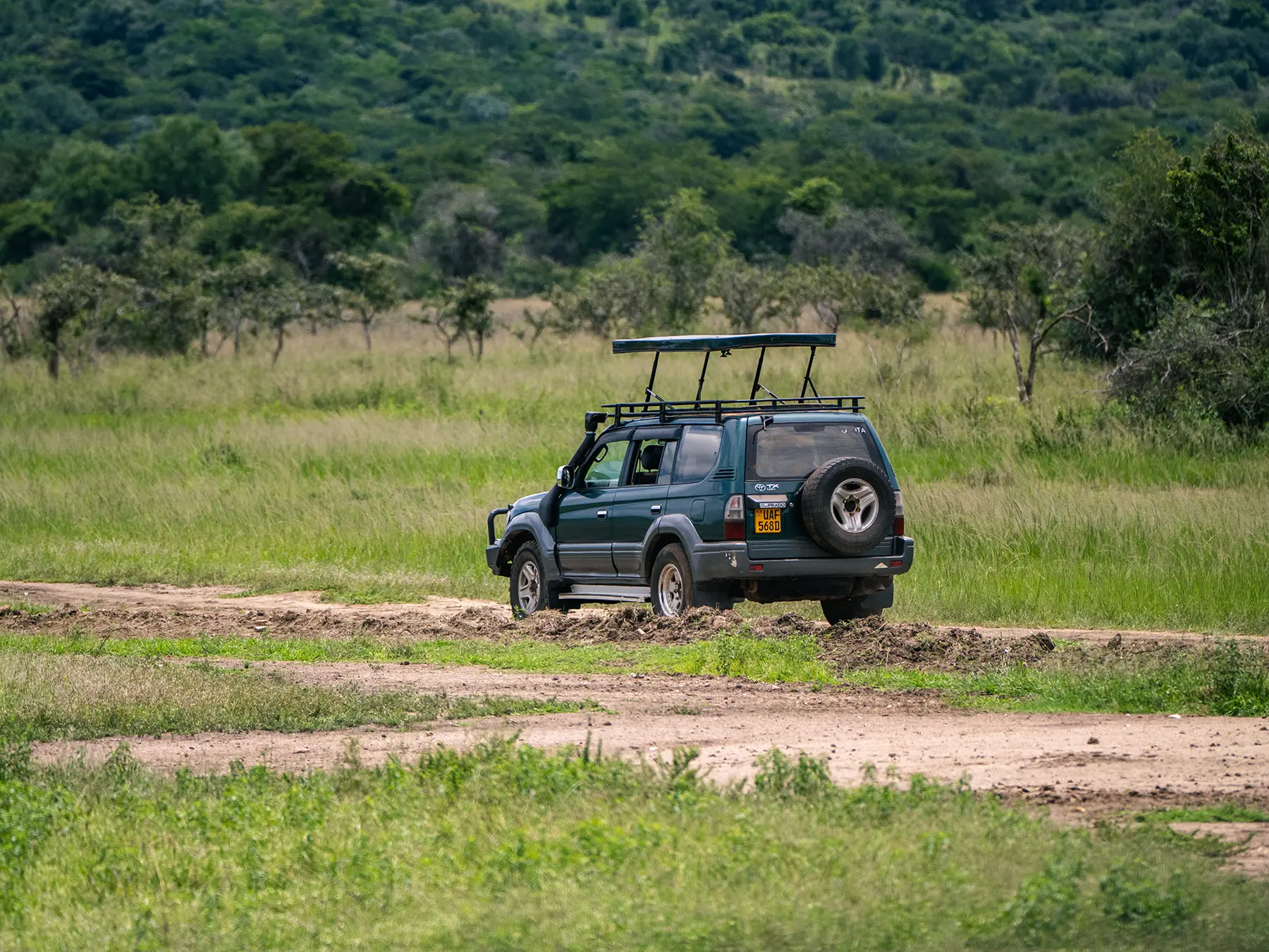
The drive from south to north takes around five hours, with stops for game viewing throughout.
Itinerary
You will finish the day at your lodge in the northern sector, perfectly positioned for an early evening game drive on the plain just as the sun sets.
You will depart from your southern sector lodge after breakfast and begin the drive north through the park.
The southern sector is dense and covered in lush forests, punctuated by open plains that attract game such as zebras, topis, impalas and Maasai giraffes.
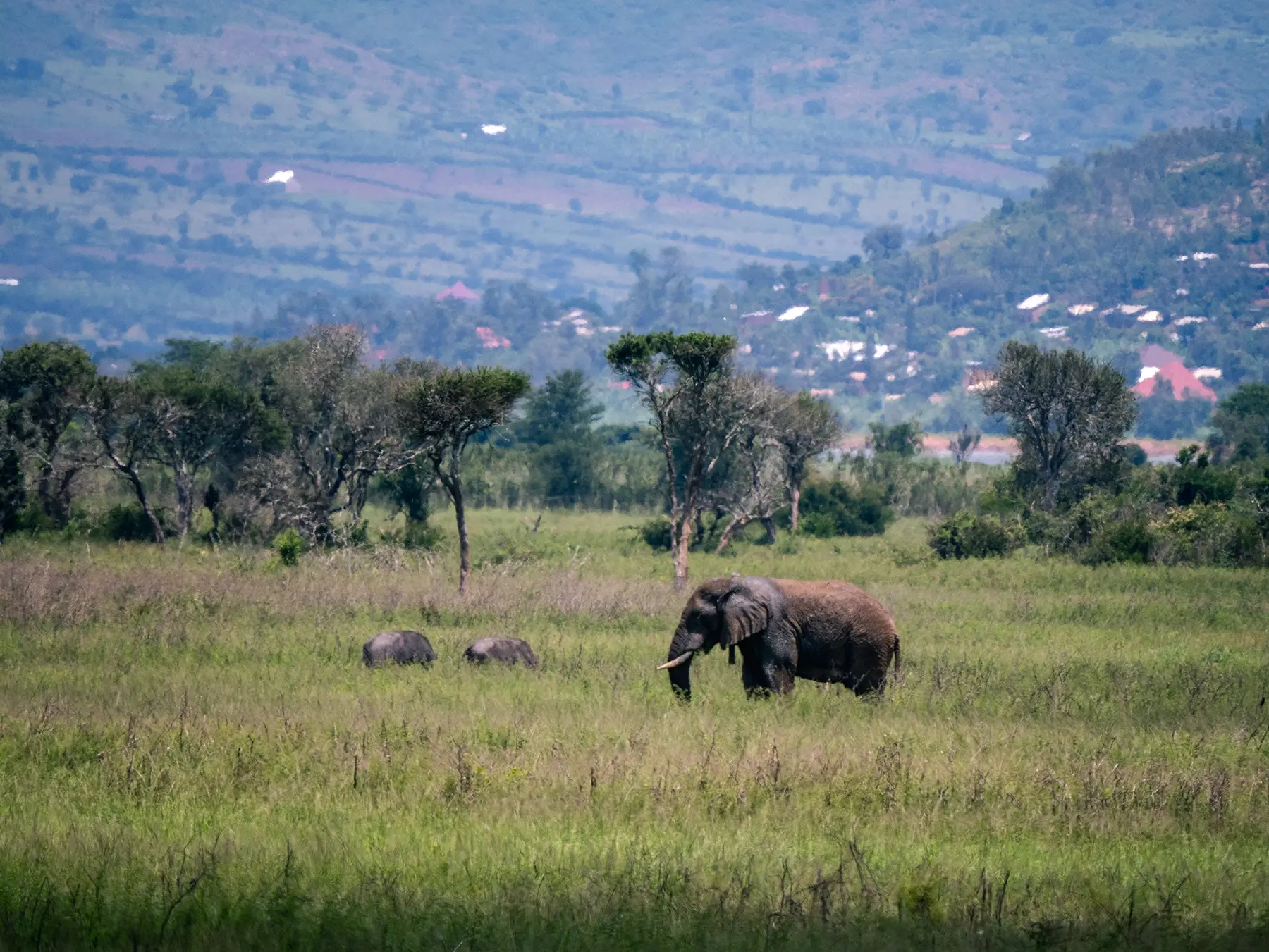
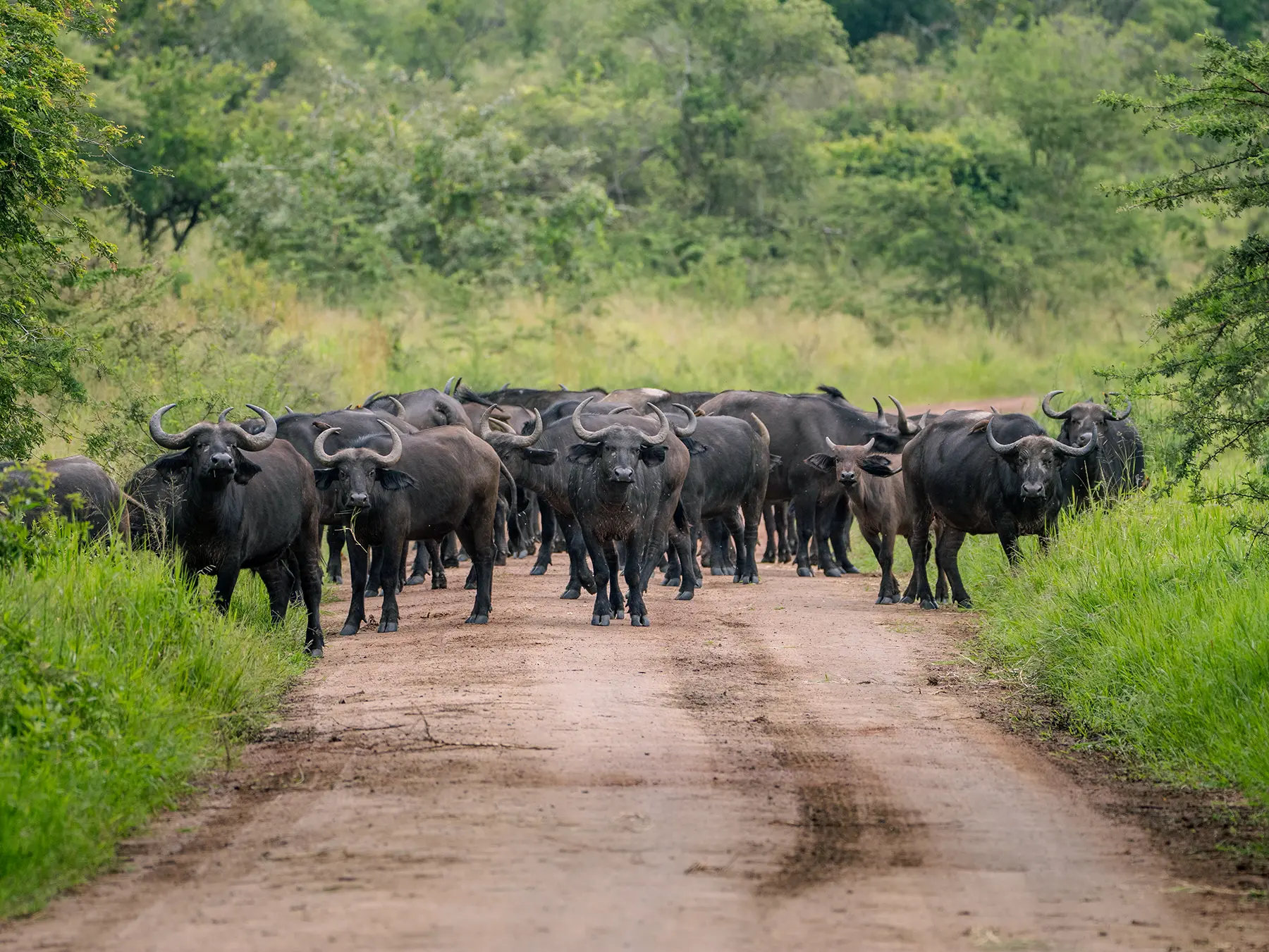
As you head further into the park you may encounter lone bull elephants, herds of buffalos cooling off in muddy puddles, and giraffes feeding on acacias.
The landscape shifts dramatically as you travel, from dense forests in the south to open savannah in the north and and you will notice the numbers of animals increasing too.
Look out for huge buffalo herds crossing the road and young elephants feeding alongside your vehicle. You may also spot huge towers of Maasai giraffes feeding nonchalantly on acacias.
There is a beautiful picnic area on the shores of Lake Mihindi with clean bathrooms and even a kiosk selling fresh coffee.
By late afternoon you will arrive at Kilala Plain in the very north of the park which looks almost like a mini Serengeti, and is the best place in the entire park to see lions and rhinos.
Once you’ve checked in to your lodge, it’s time to head out onto the plain for an early evening game drive.
The plain is just a short drive from Karenge Bush Camp, making it easy to reach in the golden light of late afternoon – ideal for photography and for watching predators as they begin stirring after spending the heat of the day at rest.
Tips for Visiting North Akagera
Here are my top tips for your northward journey through the park:
- Numbers of tsetse flies increase significantly as you travel north, and they are at their worst in wooded areas around the central section of the park. Avoid wearing black and navy blue, as the flies are attracted to dark colours. Wear long, light-coloured, loose clothing and apply insect repellent.
- Stop at the Lake Mihindi picnic area on your drive north for clean bathrooms and a fresh cup of coffee.
- If you are exiting through the northern gate and plan to re-enter, coordinate with the park beforehand as this gate is classed as an exit only and is not always manned.
- The evening game drive on Kilala Plain is an absolute highlight of Akagera. The plain is just minutes from Karenge Bush Camp.
Where to Stay in North Akagera
Tonight you will stay in the northern sector of Akagera National Park. As with the south, there are only two accommodation options within the park in the north.
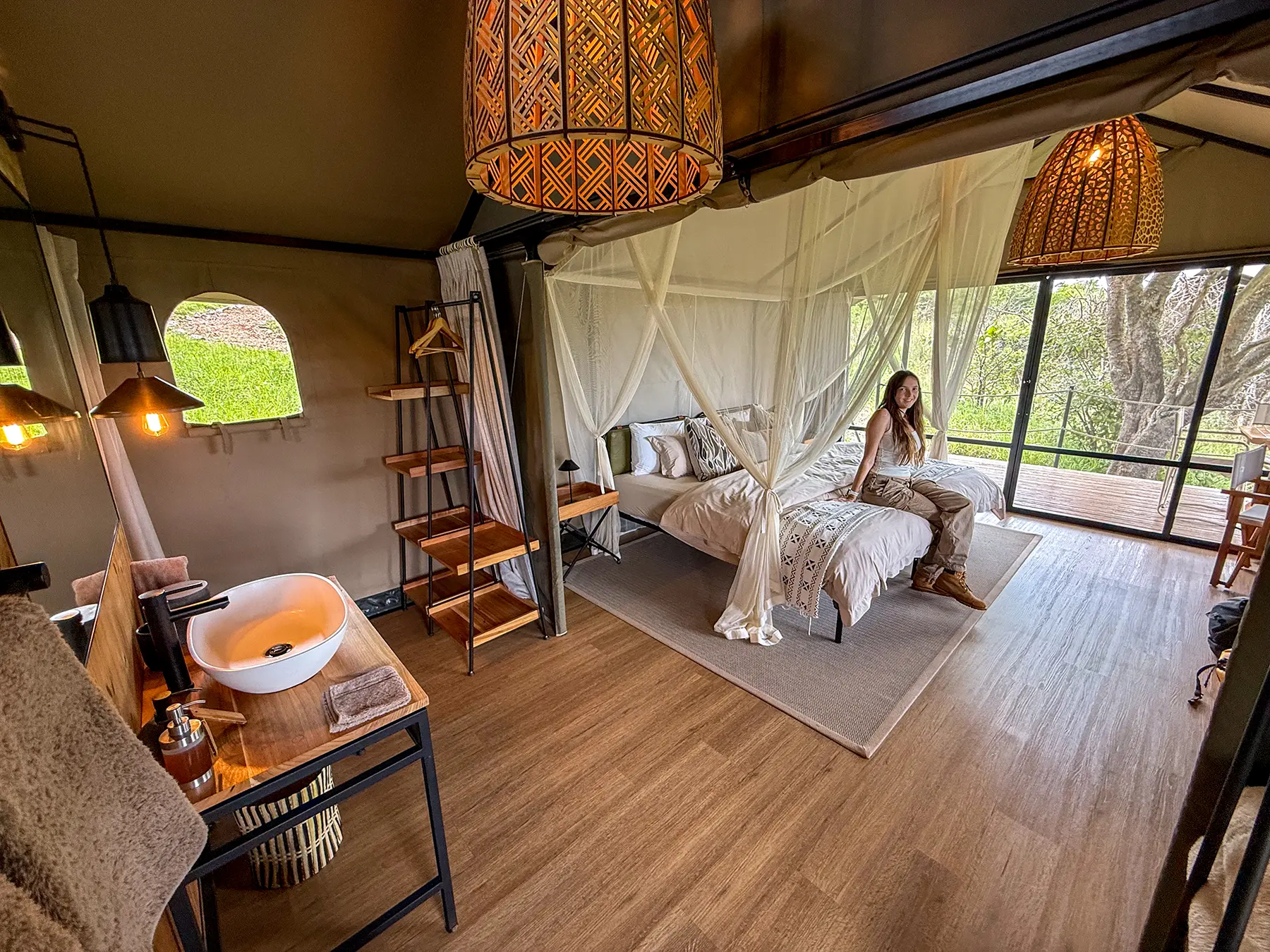
They are Wilderness Magashi Camp, on the shores of Lake Rwanyakizinga, and Karenge Bush Camp. In my opinion, Karenge Bush Camp has the best location of all lodges in Akagera. It’s positioned to overlook Kilala Plain, and you can be on the plain itself within a 10-minute drive.
Karenge Bush Camp underwent extensive renovations in 2024 and now feels extremely comfortable, with spacious rooms, indoor and outdoor showers, hot and cold running water and WiFi throughout. The tented rooms at Karenge are some of the finest tented accommodation in Rwanda.
Wilderness Magashi Camp is also an excellent option, as it’s perched on the shores of Lake Rwanyakizinga and offers a different perspective of the park.
My Experience of North Akagera
What immediately struck me when I began traveling north after spending some time in the south of the park was how noticeably the landscape changed and opened up. Dense forests gave way to open grasslands, perfect for big cat and rhino sightings!
The pinnacle of this transformation is Kilala Plain, which absolutely exceeded my expectations. On arriving on the plain, a mere 10-minute drive from our accommodation, we immediately found three lions, two males and a female, sleeping right in the road.
Nearby we encountered more rhinos than I’ve ever seen before! A group of four rhinos were grazing out in the open, and three more were just a little further down the plain, grazing right next to a sleeping lion. Off on a ridge in the distance there were even more, including a mother and calf.
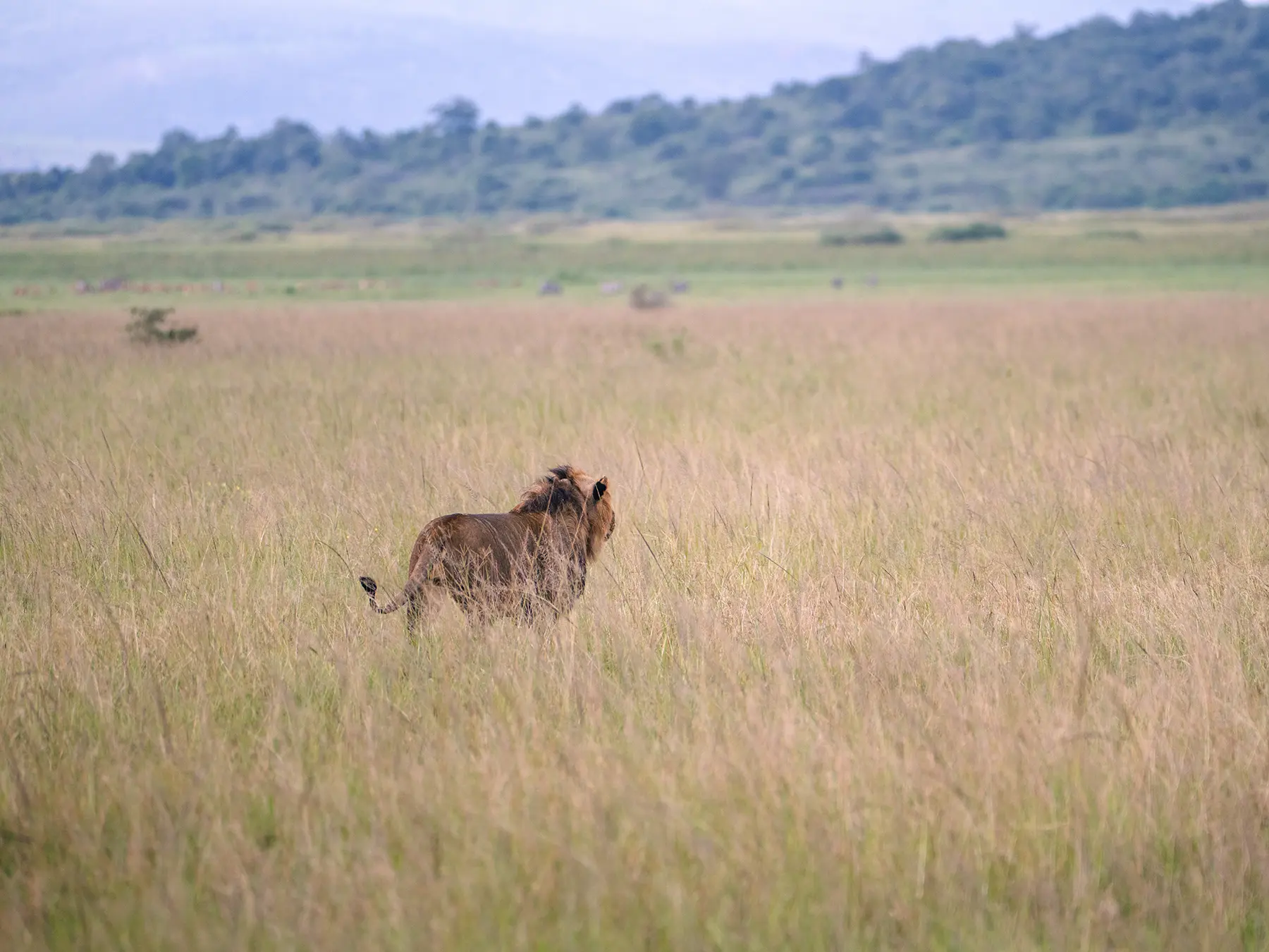
Just before sunset, we encountered one more male lion, stalking around as if he might be interested in hunting some buffalo. He began to roar, as if calling for backup, but his cries went unanswered. Just before darkness fell, the sky turned a brilliant and unforgettable red.
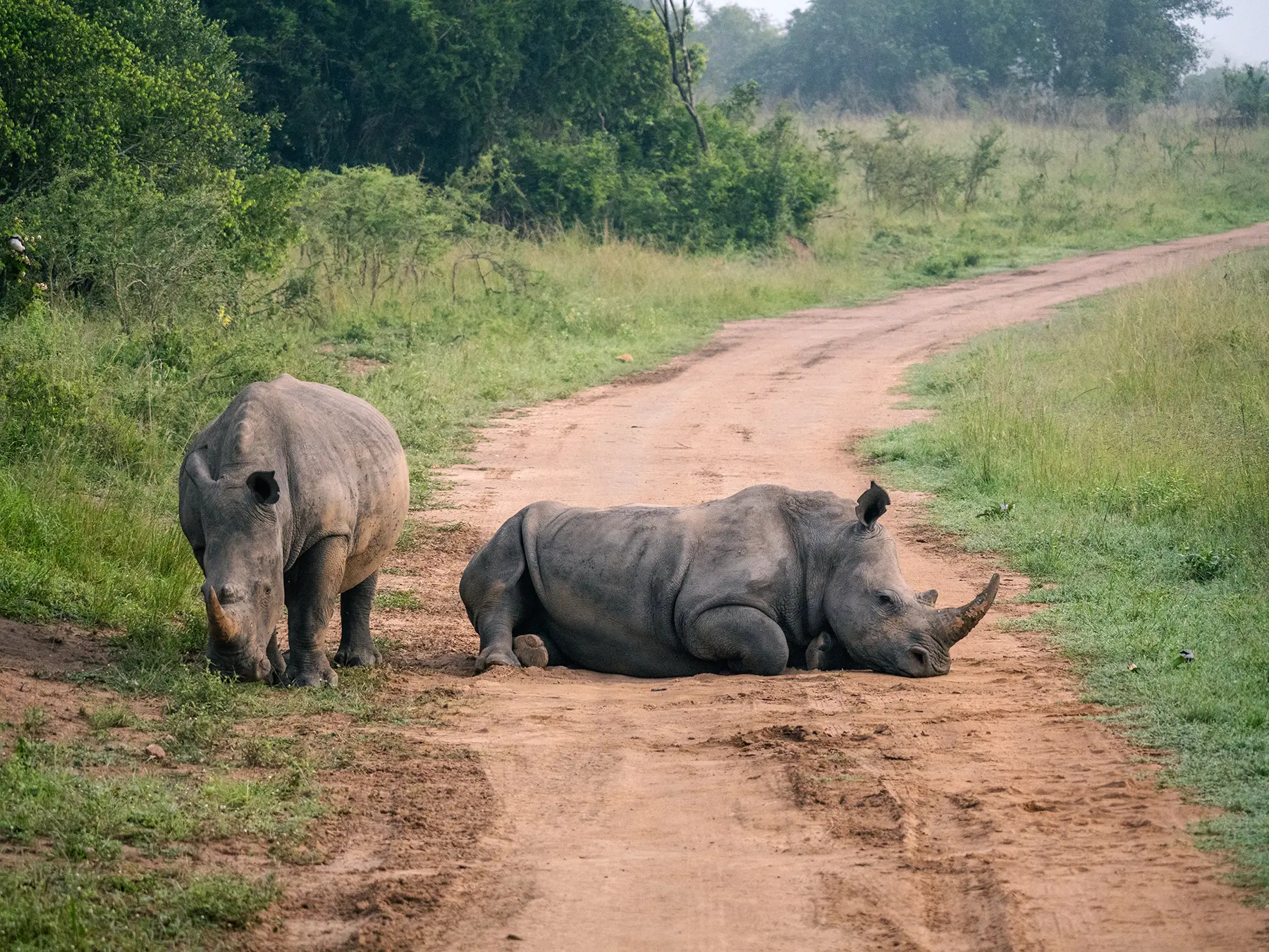
The next morning, we awoke to find the plain enveloped in a thick mist, looking just like the Ngorongoro Crater in Tanzania. We headed out at dawn, and encountered a rhino road block! Two pairs of rhinos were still asleep, right in the road, their heads resting on each other’s backs.
Not wanting to disturb these gentle giants, we tried another route, only to find that one was also blocked by another group of four rhinos huddled together. We couldn’t get into the plain for over an hour, until the rhinos started to move!
Day 3: North Akagera to Volcanoes National Park
Drive Time (Excluding Game Drives): 8 hours
The magic of north Akagera is not over yet – you’ll be up and about early to start the day with a final morning game drive on the wide open Kilala Plain before heading over to Volcanoes National Park.
Itinerary
Wake up early to catch the sunrise over Kilala Plain, and head straight out for a final game drive in the best area in the park for Big Five sightings.
After your morning game drive, exit Akagera through the northern gate.
The drive from north Akagera to Volcanoes takes a full day. It’s roughly 3.5 to 4 hours from the north gate back to Kigali, and then a further 3 hours north to Volcanoes National Park, near the town of Musanze.
The first hour of the drive is on bumpy dirt roads that take you through quaint villages.
Thereafter you’re back onto smooth, tarred roads that gradually begin to wind as you leave the flat savannah behind.
From Kigali, the road north towards Musanze (the gateway town for Volcanoes National Park) is a single-track route that snakes up and down hills. Don’t be surprised if you end up waiting behind a truck at some point: this is a popular route with many cargo trucks, which can slow your progress.
A great halfway stop on the drive from Kigali to Musanze is Sooko Xperiences, a coffee house and restaurant with excellent reviews, clean bathrooms and even a gift shop.
You should arrive at your lodge near Volcanoes National Park in the late afternoon or early evening, giving you time to relax and prepare for the following morning’s trek.
As both gorilla and golden monkey trekking start early in the morning, you need to travel to Volcanoes the day before your activity.
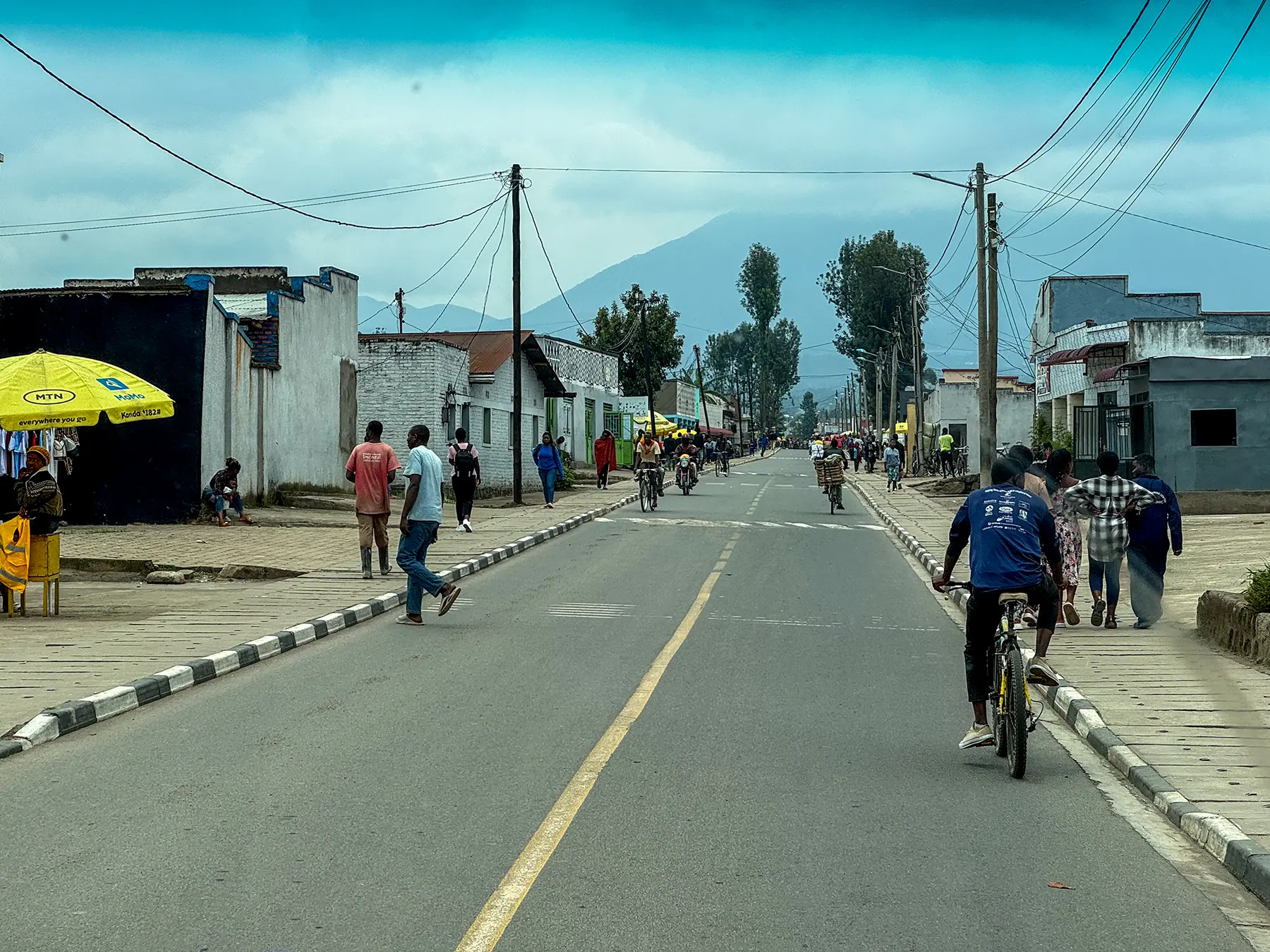
Tips for the Journey to Volcanoes National Park
Here are some tips for the long drive from north Akagera to Volcanoes National Park:
- Coordinate with the park in advance if you plan to exit Akagera through the northern gate, as it is classed as an exit-only gate and is not always manned.
- Stop en route at Sooko Xperiences, a coffee house half way along the Kigali to Musanze route, for snacks, drinks and clean bathrooms.
Where to Stay in Volcanoes National Park
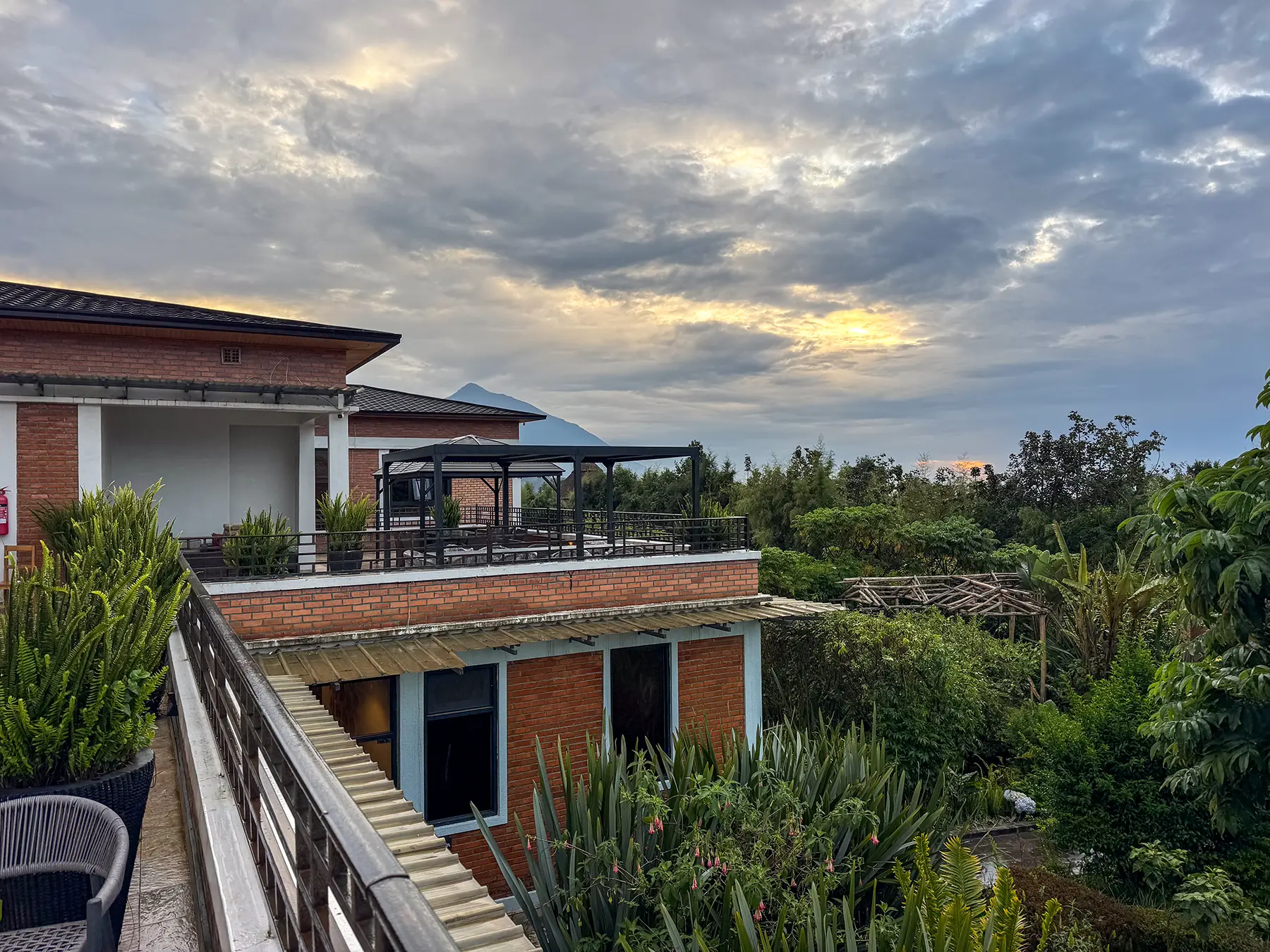
All accommodation near Volcanoes National Park is situated outside the national park itself, within a 30 minute drive of the park’s headquarters. The gateway town of Musanze (formerly known as Ruhengeri) is approximately 2.5 hours from Kigali and serves as the base for trekking expeditions. Accommodation options near Musanze and Volcanoes tend to be pricier than in other parts of Rwanda, particularly for higher-end options.
If you’re on a mid-range budget, Virunga Inn Resort and Spa is a great choice. Luxury options include The One and Only Gorilla’s Nest, Singita Kwitonda, Wilderness Sabyinyo and Wilderness Bisate. All of these properties are positioned to give easy access to the park headquarters, where both gorilla and golden monkey treks depart at 7am sharp.
My Experience of the Journey to Volcanoes National Park
On a drive between Kigali and Musanze at the beginning of the rainy season, we encountered a part of the road that had been washed away by a landslide.
This was less of an impediment than what it sounds like though, because the local community had all come together to try repair the damage.
It seemed everyone from the village was here to help clean up, showing a real sense of community and pride in their village.
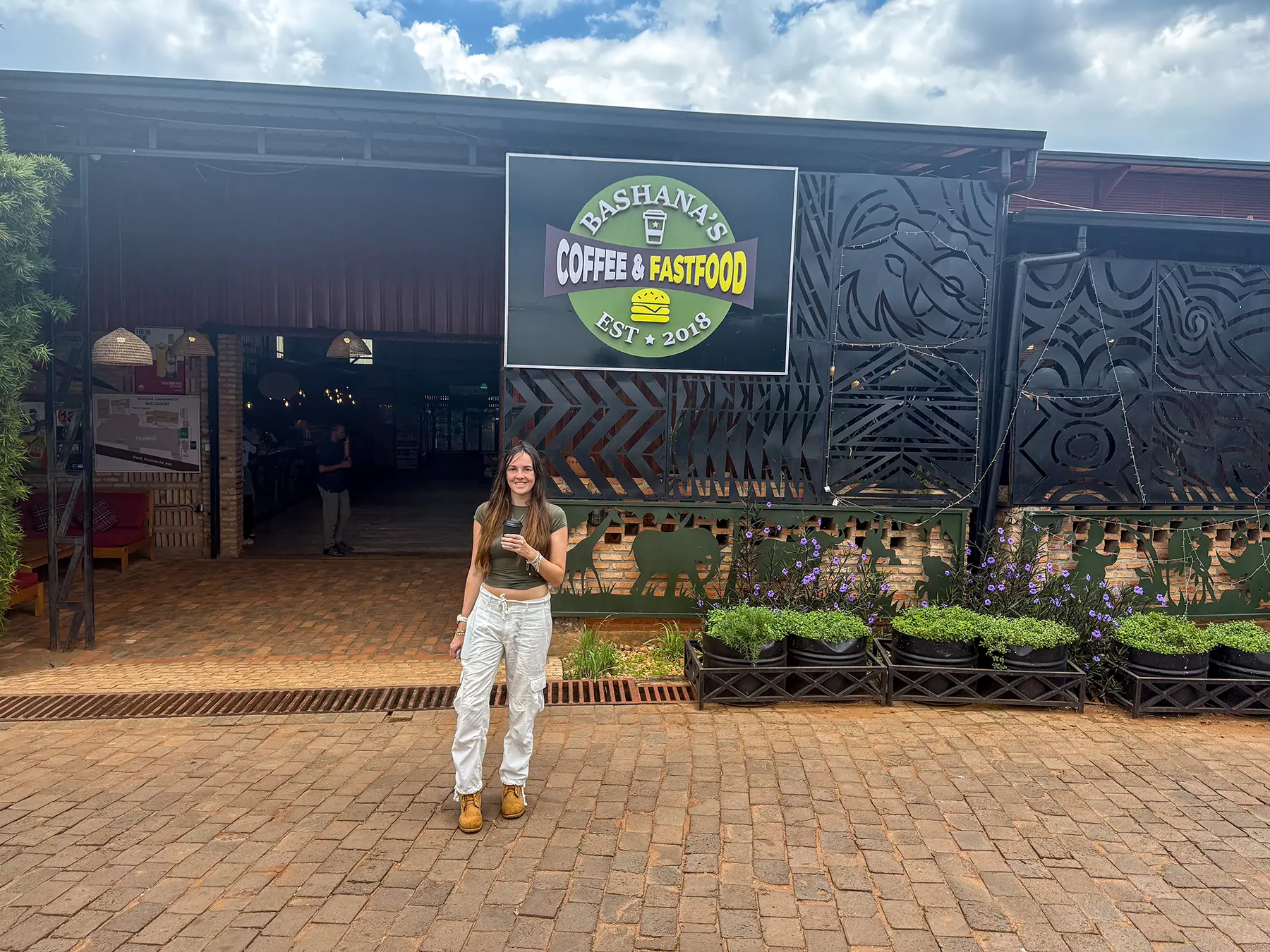
I stopped at Sooko Xperiences on the drive and had a delicious snack and tea. It’s a great coffee house with well-deserved glowing online reviews, clean bathrooms and a gift shop where you can pick up some souvenirs.
Day 4: Volcanoes National Park
Drive Time (Excluding Game Drives): 1 hour (to trek start point and back)
Today is the absolute highlight of your trip: gorilla trekking in Volcanoes National Park.
There are just over 1,000 wild mountain gorillas left in the world, and Volcanoes National Park is home to between 300 and 350 of them, across 12 habituated families available for visits.
You trek in groups of up to 8 visitors, accompanied by a head guide and at least one armed ranger who keeps watch just in case of threatening encounters with forest elephants and buffalos.
Gorilla trekking permits cost $1,500 per person and for peak season travel they should be booked at least 6 – 12 months in advance.
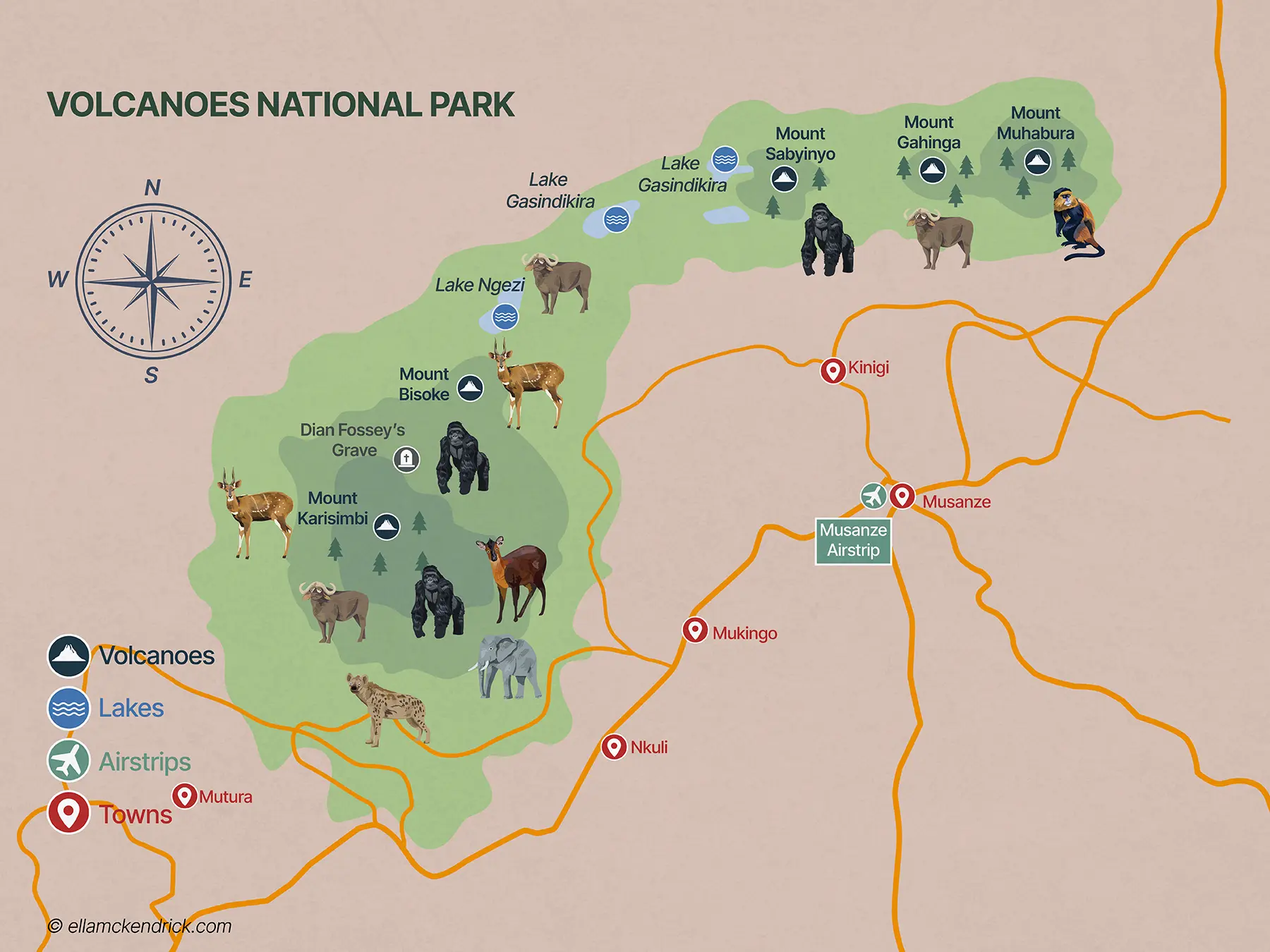
Map of Volcanoes National Park
Here is a map I made showing the key features of Volcanoes National Park. It includes the park headquarters, where all treks begin, the territories of the main gorilla families, and the five volcanoes that give the park its name. The park covers 62 square miles (160 km²) of the Virunga Massif on the Rwandan side of the border.
Itinerary
You will head out to the park’s headquarters for a 7am start, where you’ll receive a briefing. Then you’ll be assigned to one of the 12 habituated gorilla families, based on your fitness level, and then drive to your trek start point. This could be anywhere from 10 minutes to over an hour away.
Starting points tend to be all closer in the wet season whereas in the peak season they they include the further away groups too.
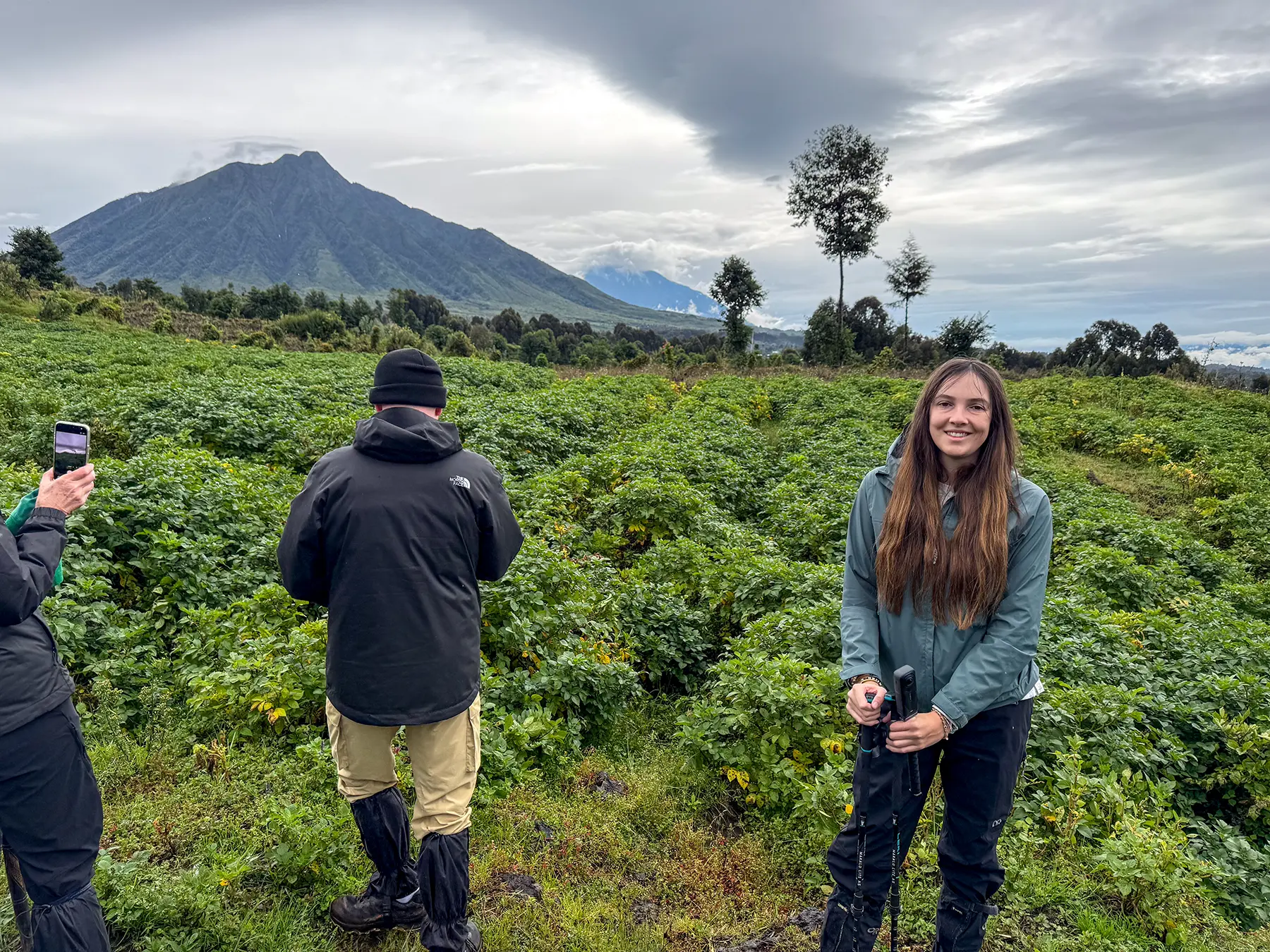
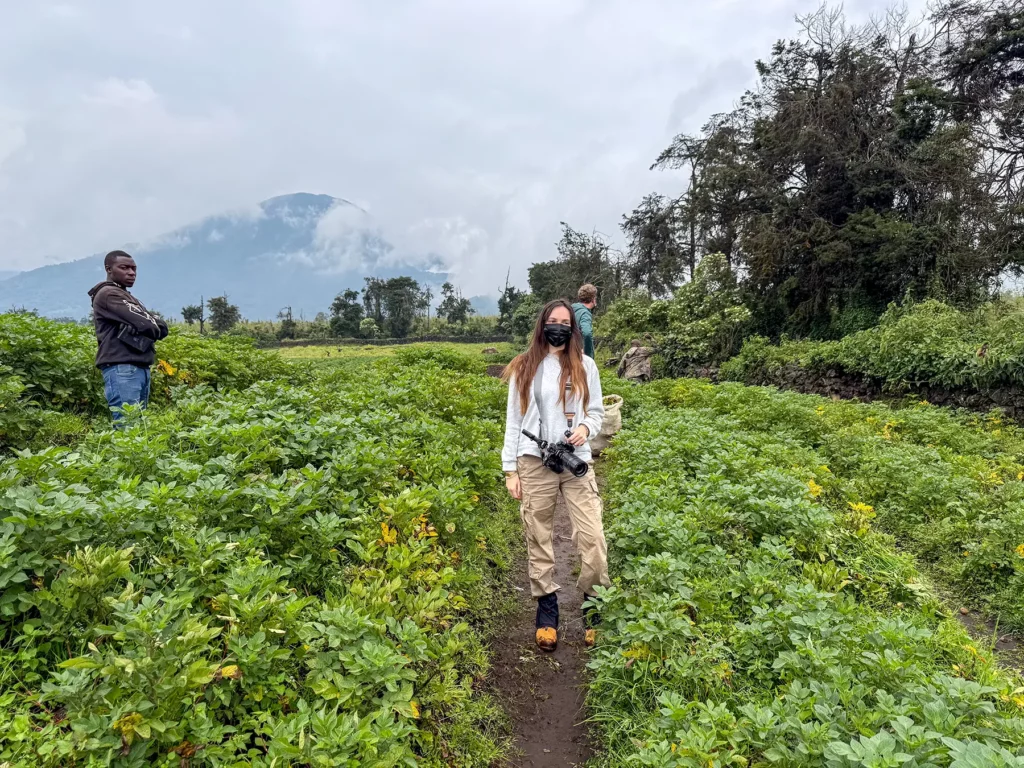
The first section takes you through farmland fields on the lower slopes, which is fairly straightforward. Look up and enjoy your surroundings as you walk – there are 5 volcanoes within the national park and 8 in the greater Virunga Mountains range rising around you.
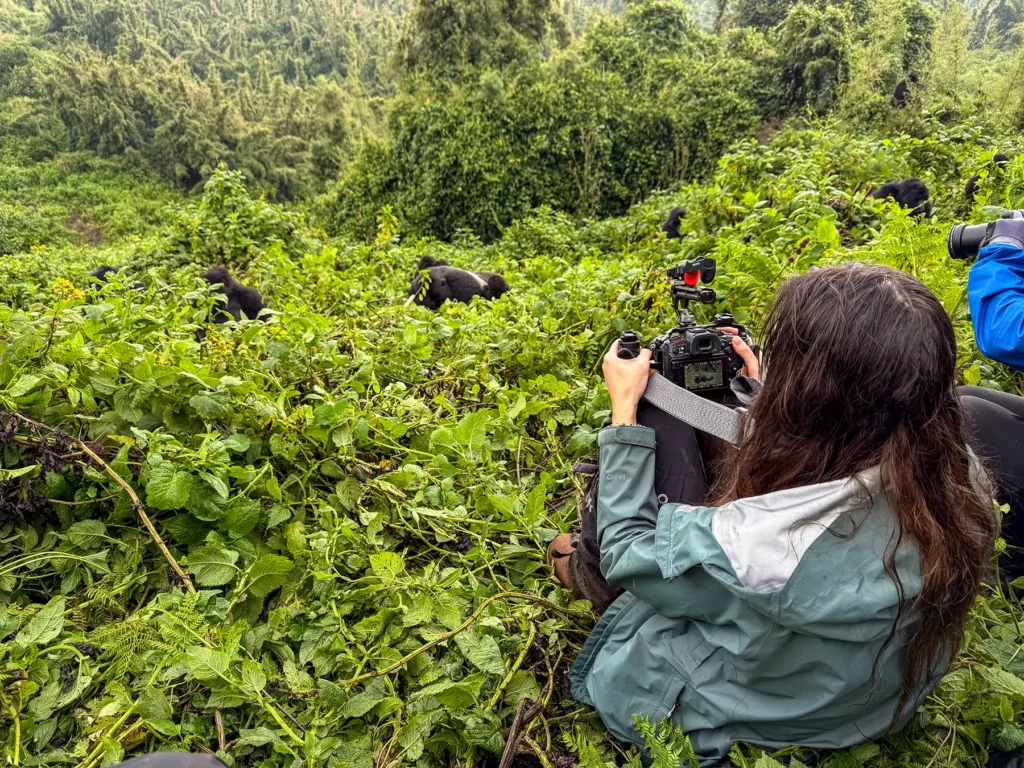
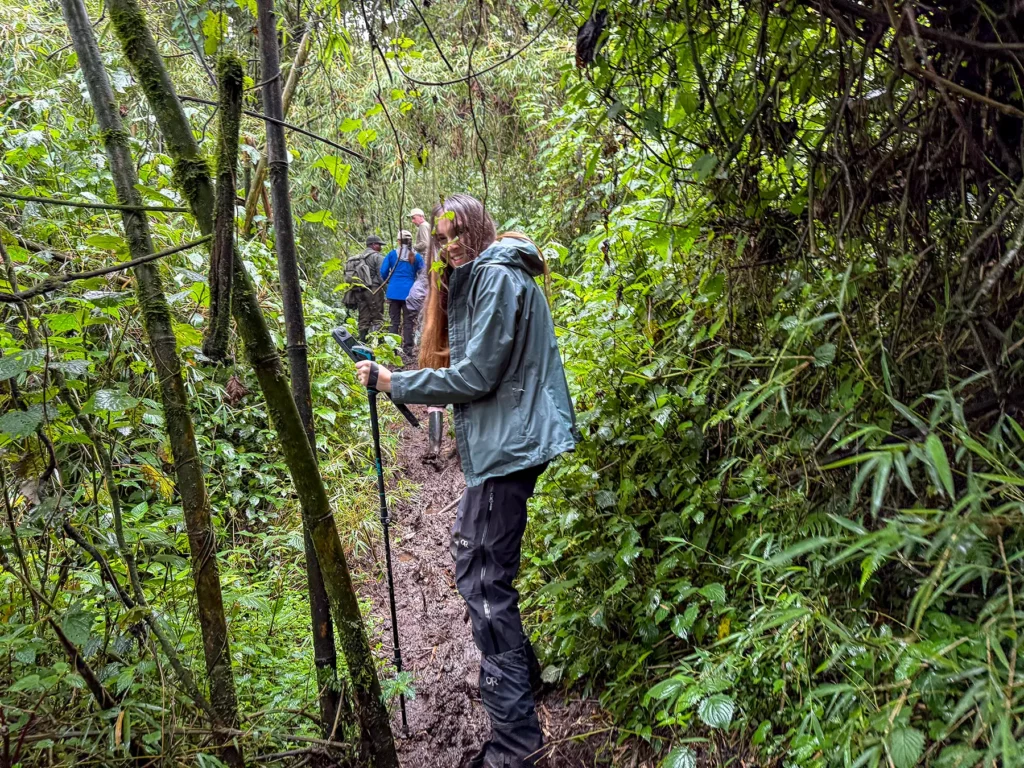
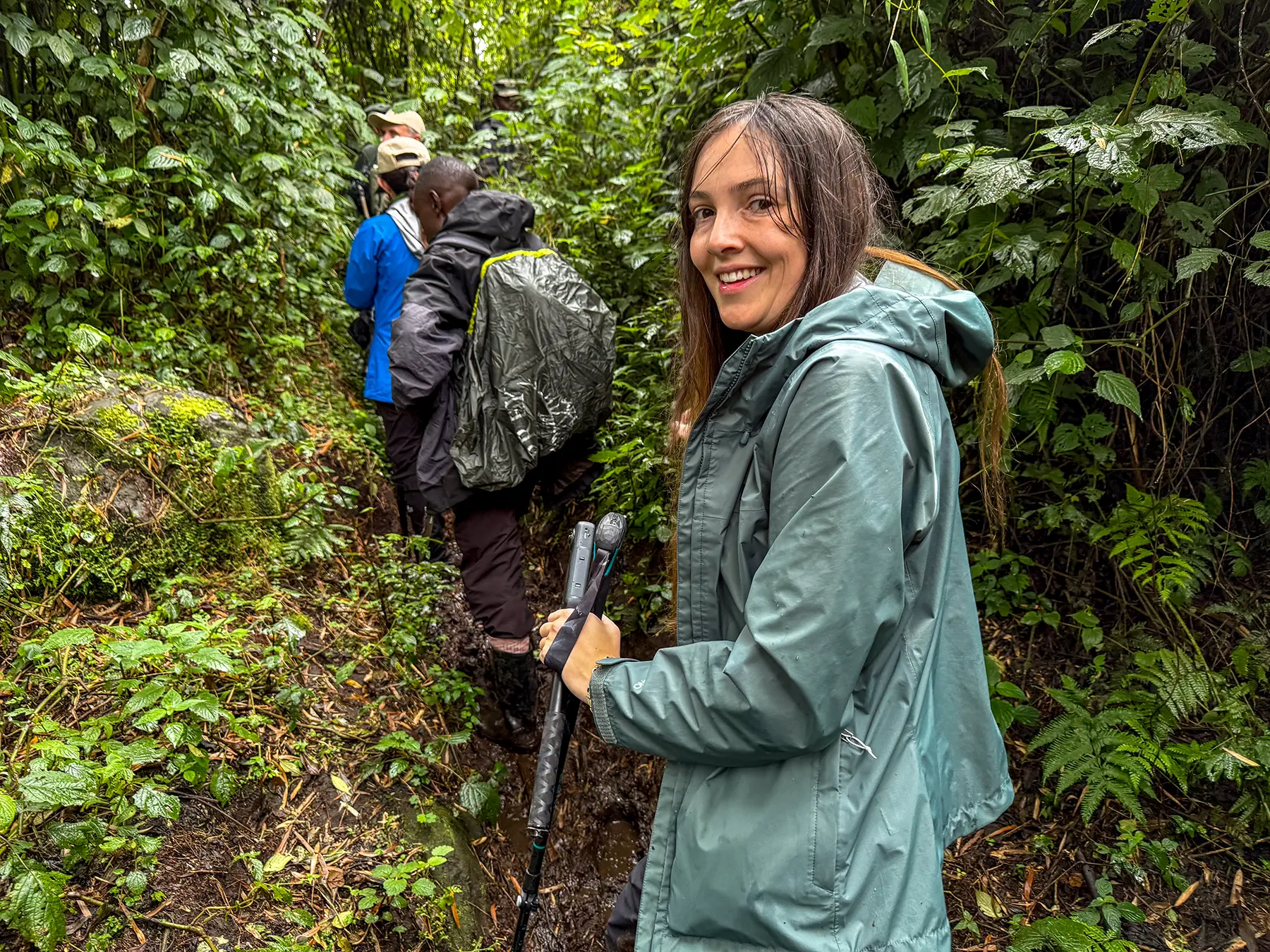
Once you pass through the park boundary, things get noticeably tougher. The hike is steep, slippery and muddy if there has been recent rain, and you will dodge stinging nettles and fire ants while weaving through trees and crouching under low-hanging bushes.
The gorillas can move around, so although your guide will be able to estimate how much further you need to hike, this all depends on whether the gorillas have changed position. Some families are closer and can take under an hour to reach; others require up to 5 hours of trekking.
Once you find the gorillas, you spend one hour observing them in their natural habitat.
Mountain gorillas share about 98% of their genetic material with humans, which means they can catch airborne viruses from humans. In order to prevent this, all visitors are required to wear face masks when encountering the gorillas.
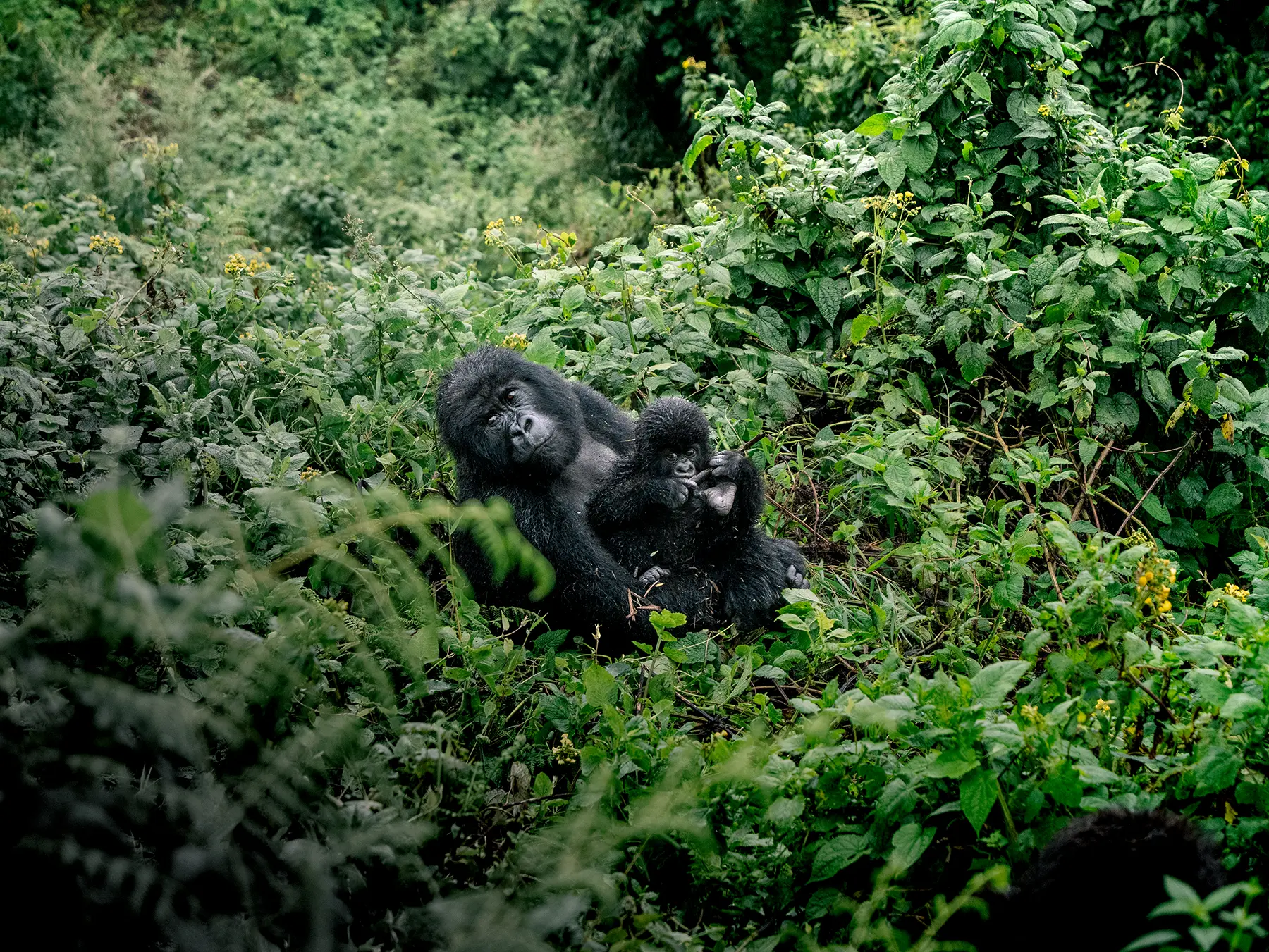
About Volcanoes National Park
Volcanoes National Park is Rwanda’s flagship wildlife reserve. It is part of the Virunga Massif, a mountain range connecting Uganda, Rwanda and the DRC, and covers an area of 62 square miles (160 km²).
The high altitude mountain slopes are steep and densely forested, and mornings are often characterised by a thick blanket of mist hanging over the forest.
Famously, this park is where American primatologist Dian Fossey carried out her groundbreaking research on mountain gorillas. Her advocacy work is widely credited with preventing the total extinction of the species.
The 1988 film Gorillas in the Mist shared her story with the world, and there is a memorial to Fossey in the gorilla graveyard, in the park’s Bisoke District.
The global mountain gorilla population has grown from fewer than 300 when Fossey began her work to over 1,000 today. Although gorillas are still critically endangered, this is one of the most significant wildlife success stories in Africa.
One of the reasons that the rehabilitation of the mountain gorilla population has been so successful is that local communities also benefit from national and international conservation efforts.
10% of the income from all trekking permits goes straight to the local community, plus farmers receive financial compensation for any crop damage caused by the gorillas.
Rwanda also holds an annual Kwita Izina gorilla naming ceremony in September to celebrate new gorilla births.
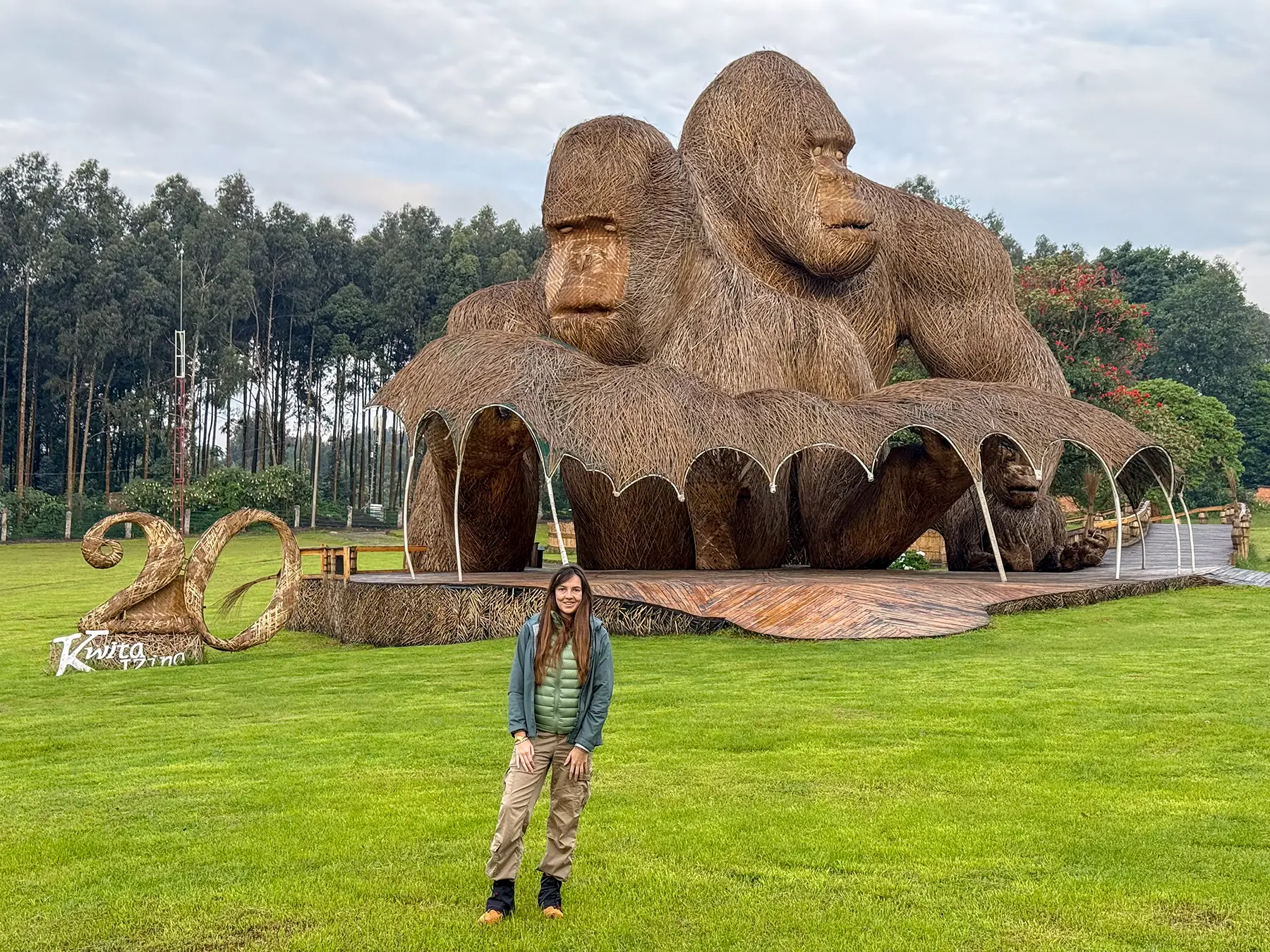
Despite the rugged terrain and rural surrounds, Volcanoes National Park is surprisingly accessible from Kigali.
The park is only a 2.5-hour drive from Kigali, making it an accessible gorilla safari option. The nearest airstrip is Ruhengeri Airport, approximately 30 minutes from the park, with flight times from Kigali averaging around 25 minutes.
What Wildlife Can I See in Volcanoes National Park?
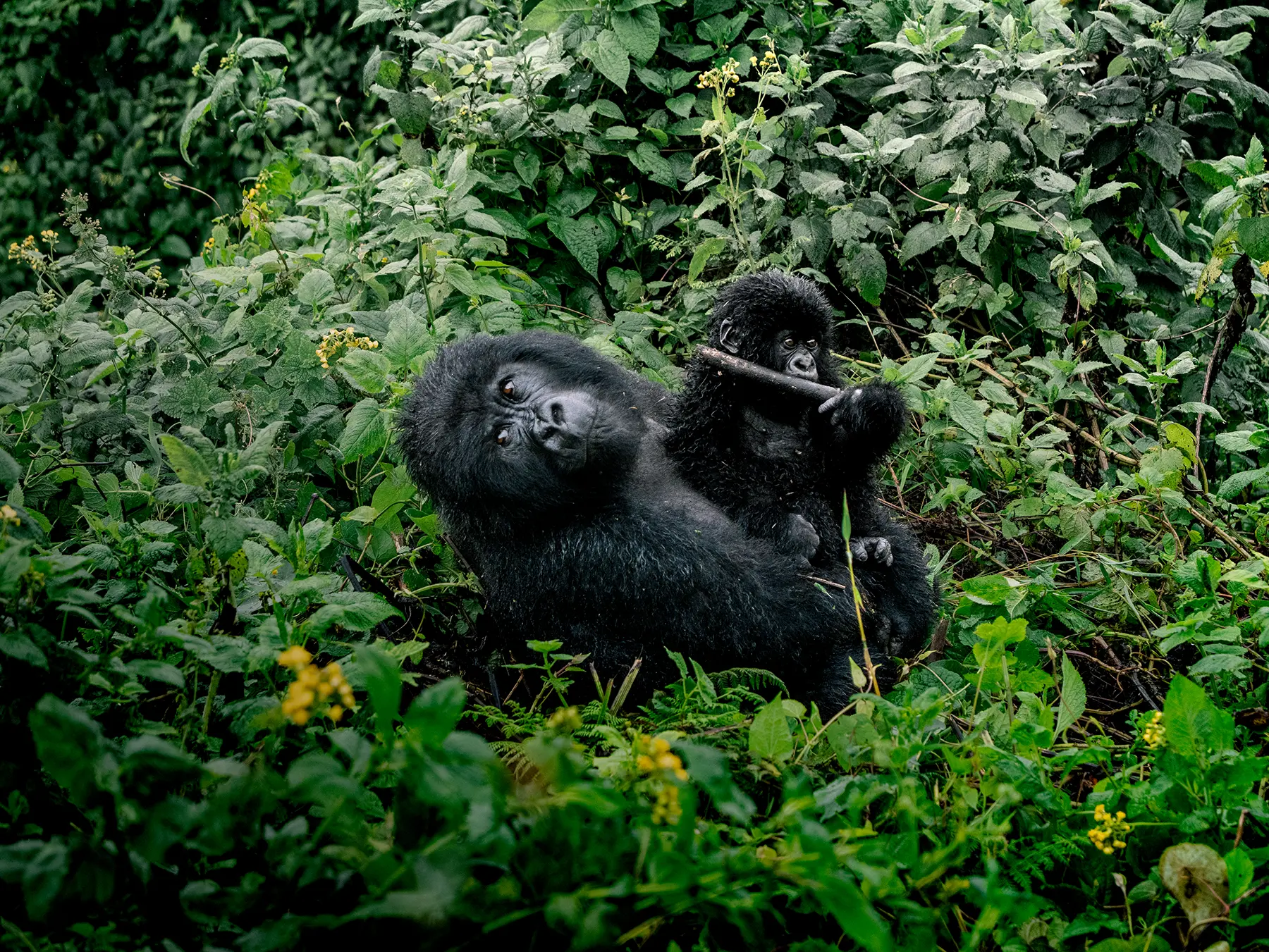
Volcanoes National Park is home to around 300 to 350 critically endangered mountain gorillas, which live in groups across 12 habituated families available for public visits.
There are 6 additional habituated families whose encounters with humans are strictly for research purposes by Karisoke researchers, and they are not available for visiting.
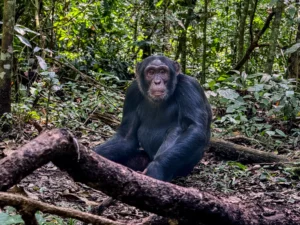
There are a few key differences between endangered mountain gorillas and their far more prolific cousins, the lowland gorilla. There are approximately 318,000 lowland gorillas in the wild, compared to just over 1000 mountain gorillas.
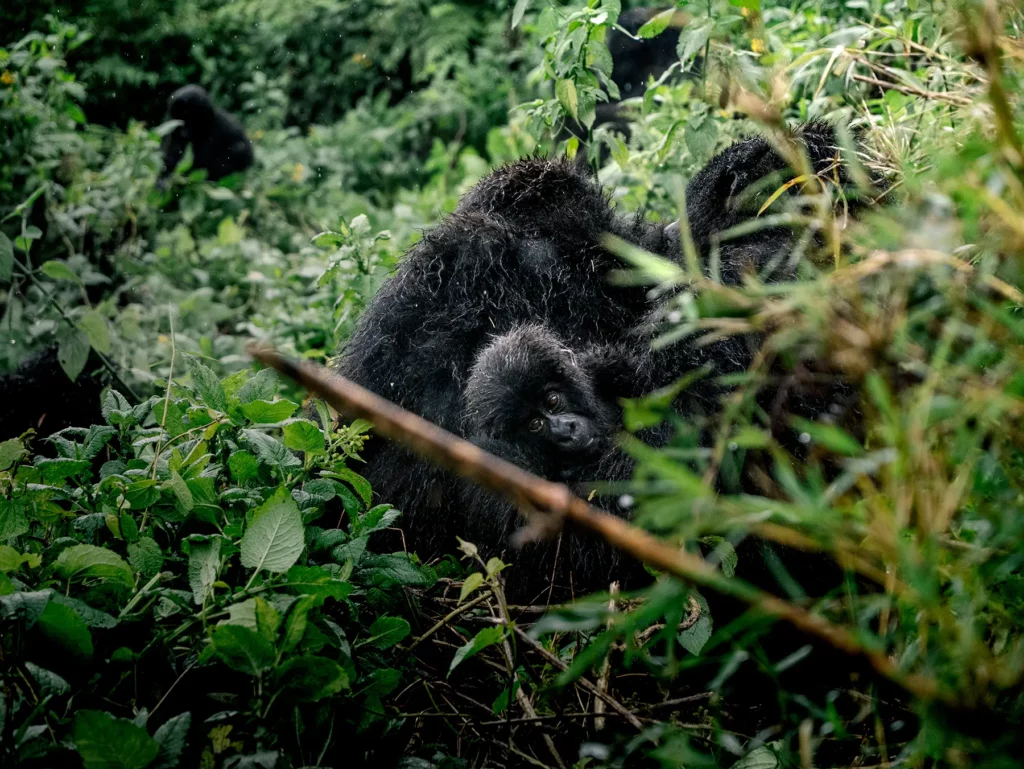
All gorillas live in family groups called troops, consisting of up to 30 members. They spend about 70% of their waking hours eating leaves, and each gorilla has a unique nose print – similar to a human fingerprint!
You can easily identify mountain gorillas by their size and fur – they are significantly larger than lowland gorillas and have darker fur.
Adult males, known as silverbacks for the silvery tone that develops in the fur on their backs, can reach up to 5.9 feet (1.8 metres) in height and weigh up to 441 pounds (200 kg). Despite their imposing size, they are generally placid and cannot survive in captivity.
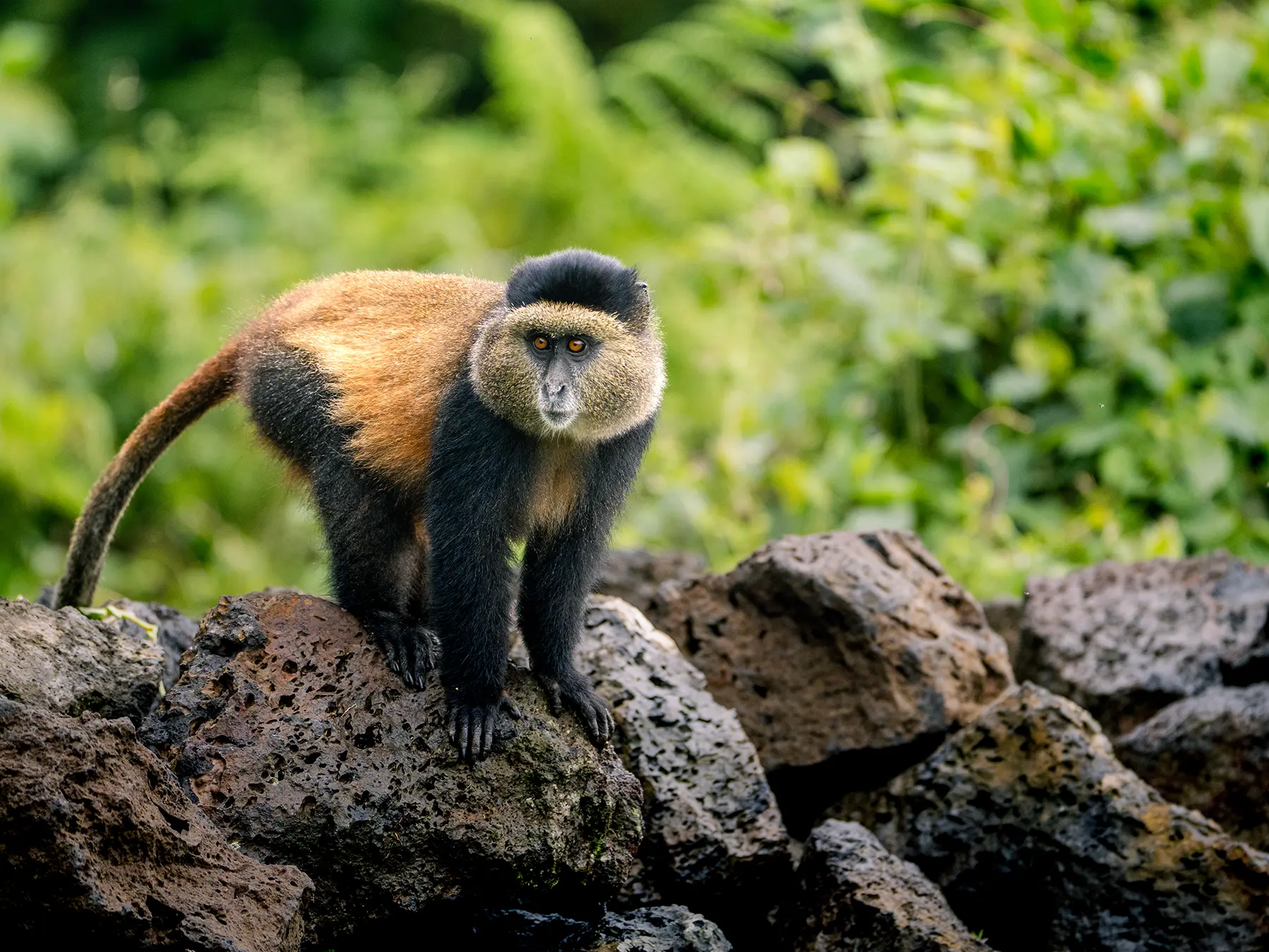
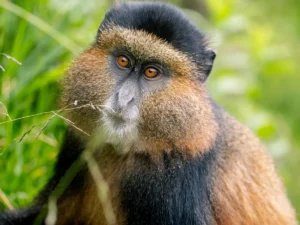
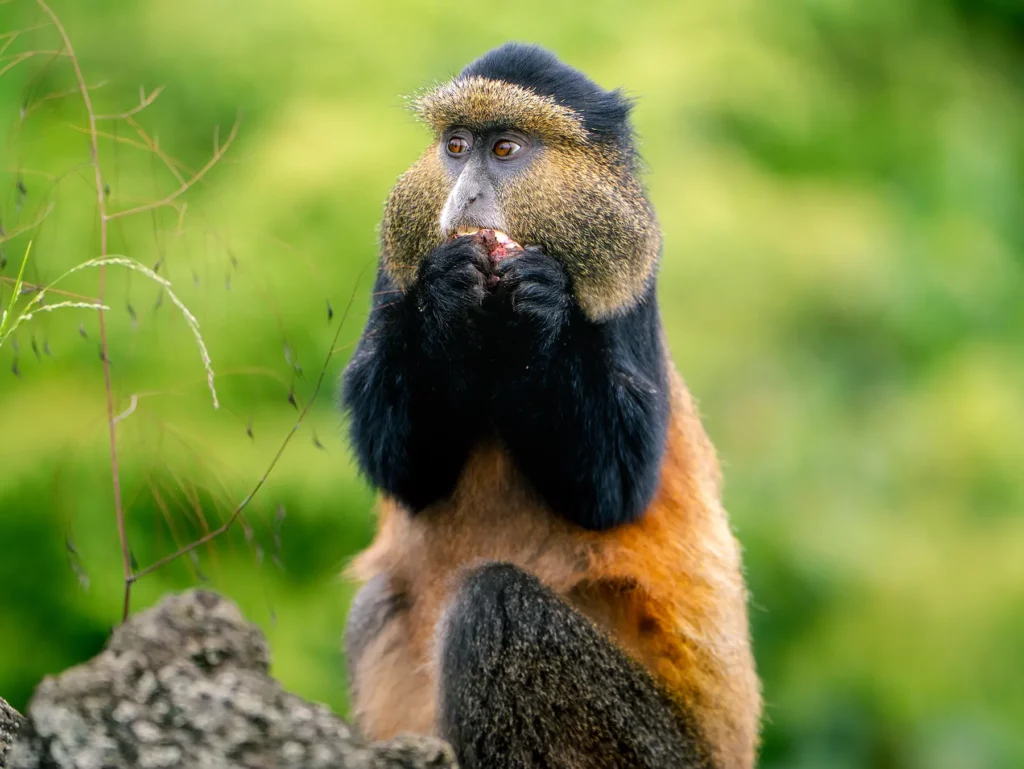
Volcanoes also supports two habituated groups of endangered golden monkeys. These rare and curious creatures live in slightly larger troops, and there are roughly 80 of them in total in the park. Playful and energetic, they are endemic to the volcanic Virunga Mountains and are found nowhere else on earth.
It is estimated that there are 3,000 to 5,000 golden monkeys left in the wild, and the IUCN lists them as endangered.
In addition to primates, Volcanoes is home to buffalos, forest elephants, spotted hyenas, several antelope species and close to 200 bird species.
Tips for Visiting Volcanoes National Park
Here are my top tips for gorilla trekking in Volcanoes National Park!
- Hire a porter to help carry your bags and lend an extra hand on uneven terrain. This costs a minimum of $10 per trek and provides valuable employment for the local community. Our guide informed us that the employment of porters creates an incentive for locals who would otherwise have few job opportunities to support conservation efforts and stay away from poaching.
- Safari ants (dorylus) are endemic to this area and can deliver a powerful bite. You should wear gaiters that go all the way up to your knees or heavy-weight trousers tucked into your hiking boots to keep the ants away from your ankles.
- Always wear long trousers and long sleeves (not only for fire ants but also to protect you from stinging nettles), a waterproof jacket and gardening gloves. Walking poles are provided but you may wish to bring your own for better grip.
- You must wear a face mask at all times when near the gorillas. Mountain gorillas share about 98% of their DNA with humans, meaning we can transmit diseases to them and vice versa.
- Tip your trackers $5 each (there can be 2 to 4 of them), your head guide $10 per person, and your armed ranger $5 per person.
- Gorilla trekking permits cost $1,500 per person; in peak season, book at least 6-12 months in advance.
- You can’t do golden monkey trekking and gorilla trekking on the same day, as both are morning activities with guides. If you want to do both, you’ll need at least two mornings in Volcanoes.
- Gorilla trekking is more challenging than golden monkey trekking, particularly in the high altitude conditions at Volcanoes. If you’re considering a longer itinerary, I would start with golden monkey trekking to allow your body some time to acclimatise to the altitude.
Optional Activities
- Visit Dian Fossey’s Grave in Volcanoes National Park. It’s a challenging hike that will take a full morning. When it’s raining heavily, the hiking route closes altogether.
- Golden monkey trekking ($100 per person) is a great way to warm up for gorilla trekking! It takes around 30 minutes to locate the monkeys, followed by an hour observing them. Groups of up to 14 visitors trek with a dedicated guide.
My Experience of Volcanoes National Park
On my most recent gorilla trekking experience, I was assigned to the Hira gorilla family. This is a particularly special family as they often have twins – something extremely rare for gorillas.
It took us nearly 2 hours of fairly challenging hiking to find the gorillas. The terrain was steep and slippery, and the vegetation was dense in certain areas.
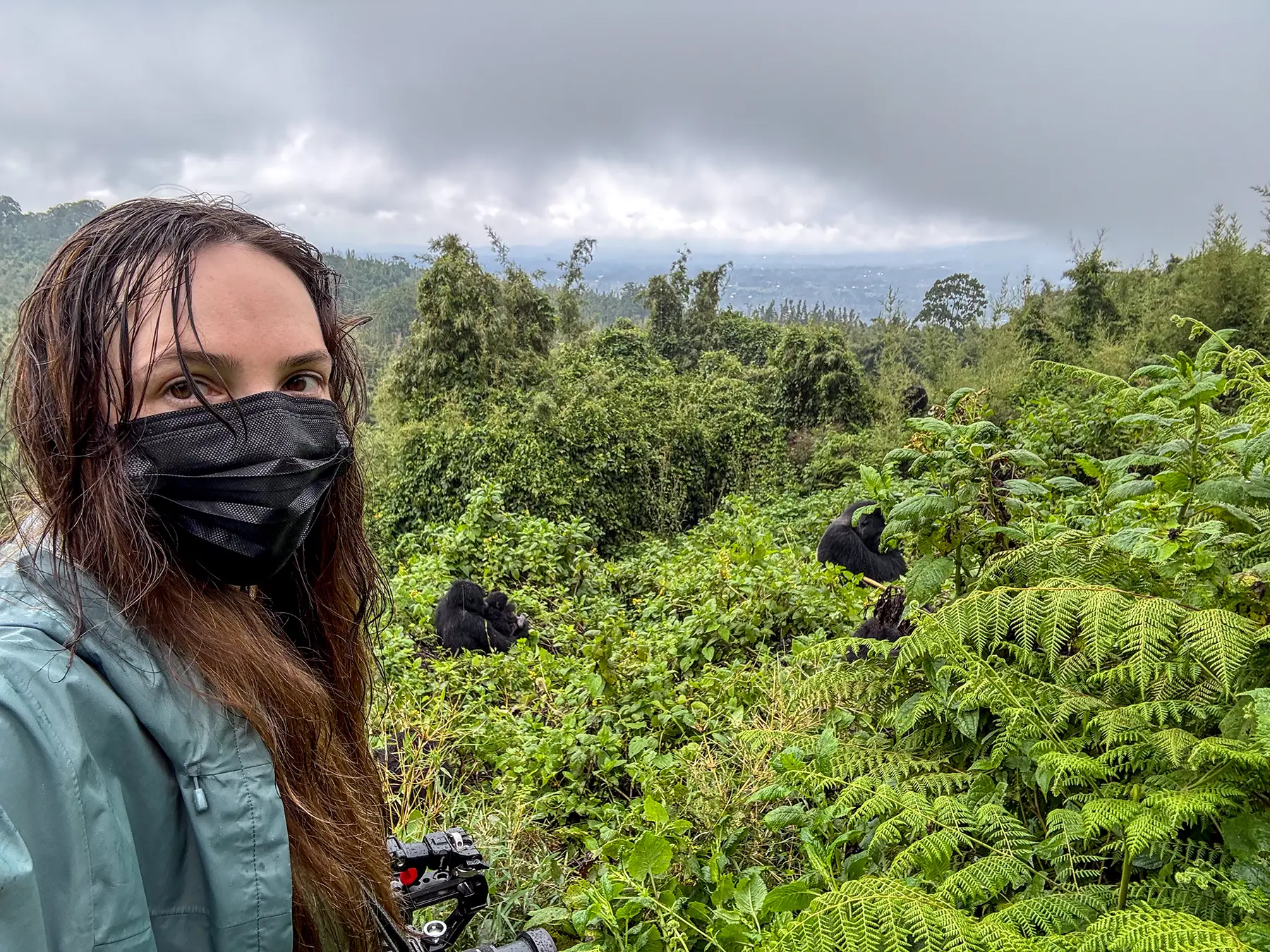
I found that I really needed the porters for support over the rough terrain, and they were really helpful, holding my hand in areas where I couldn’t manage by myself. I honestly do not know how I would have done the trek without them! I stumbled so many times but they always caught me.
When we found the Hira family, we were treated to a truly magical hour in their company. There were adorable baby gorillas everywhere – there had clearly been a baby boom! We also witnessed an extremely rare sight and saw the great silverback of the family mating with a female.
You can watch a video of my experience gorilla trekking in Volcanos National and chimpanzee trekking in Nyungwe National Park below.
Day 5: Lake Kivu
Drive Time (Excluding Game Drives): 6 hours (3 hours Volcanoes to Lake Kivu, 3 hours Lake Kivu to Nyungwe)
Day 5 is a transfer day from Volcanoes National Park to Nyungwe Forest National Park, with a rewarding stop at Lake Kivu roughly halfway.
The drive west takes you through mountain roads with stunning views of tea plantations, vibrant green rice farms nestled in the valleys, and even spectacular views of Goma City in the DRC.
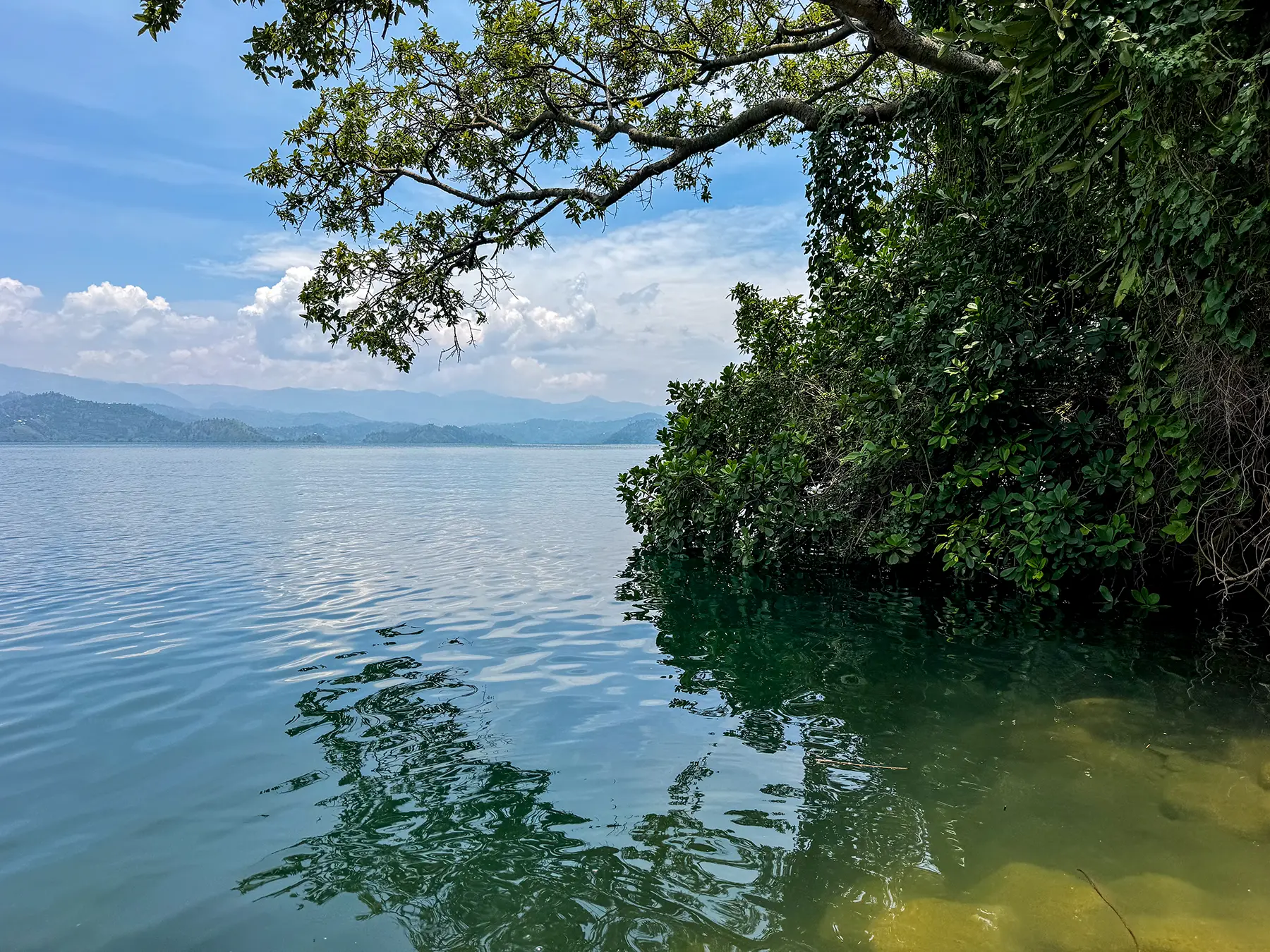
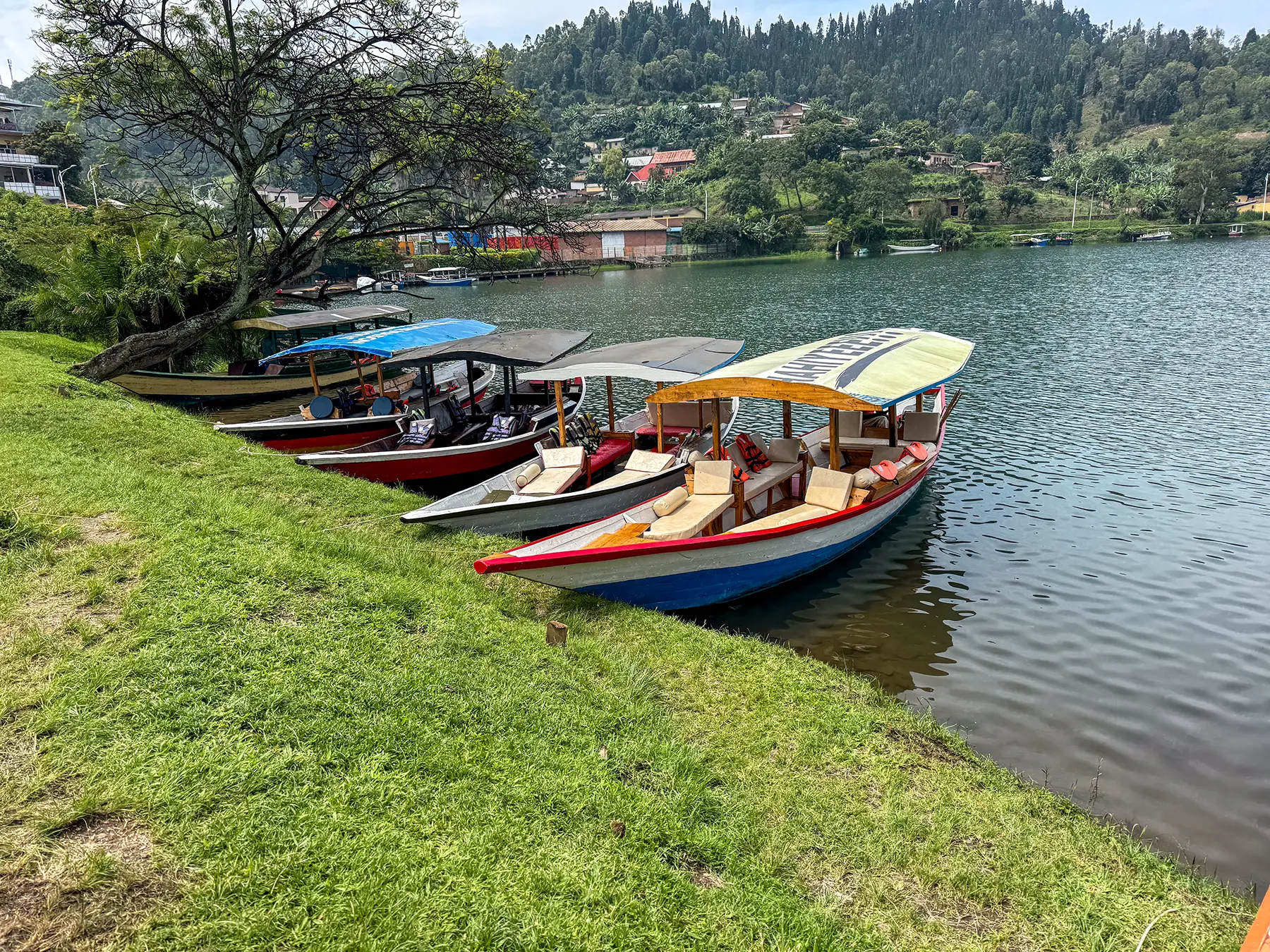
Lake Kivu is one of Africa’s Great Lakes, situated along the border between Rwanda and the DRC, and its scenic shores make it the perfect place to break up the journey with a boat cruise.
Itinerary
The morning begins with the 3 hour drive west from Volcanoes to the shores of Lake Kivu.
I recommend setting off by 7am, so you have time to enjoy the quiet of the roads before they become busier as the day goes on. Compared to the road between Kigali and Volcanoes, this road is notably quieter, with fewer cargo trucks.
You should arrive by late morning, between 10am and 11am, in good time for a boat cruise on the lake.
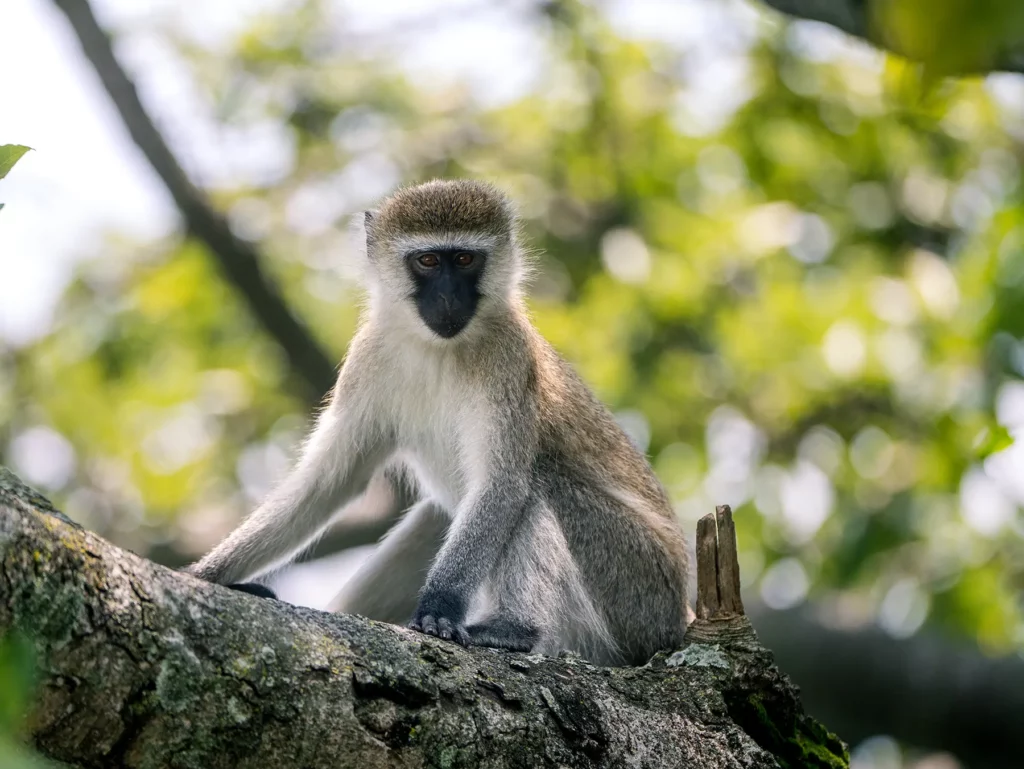
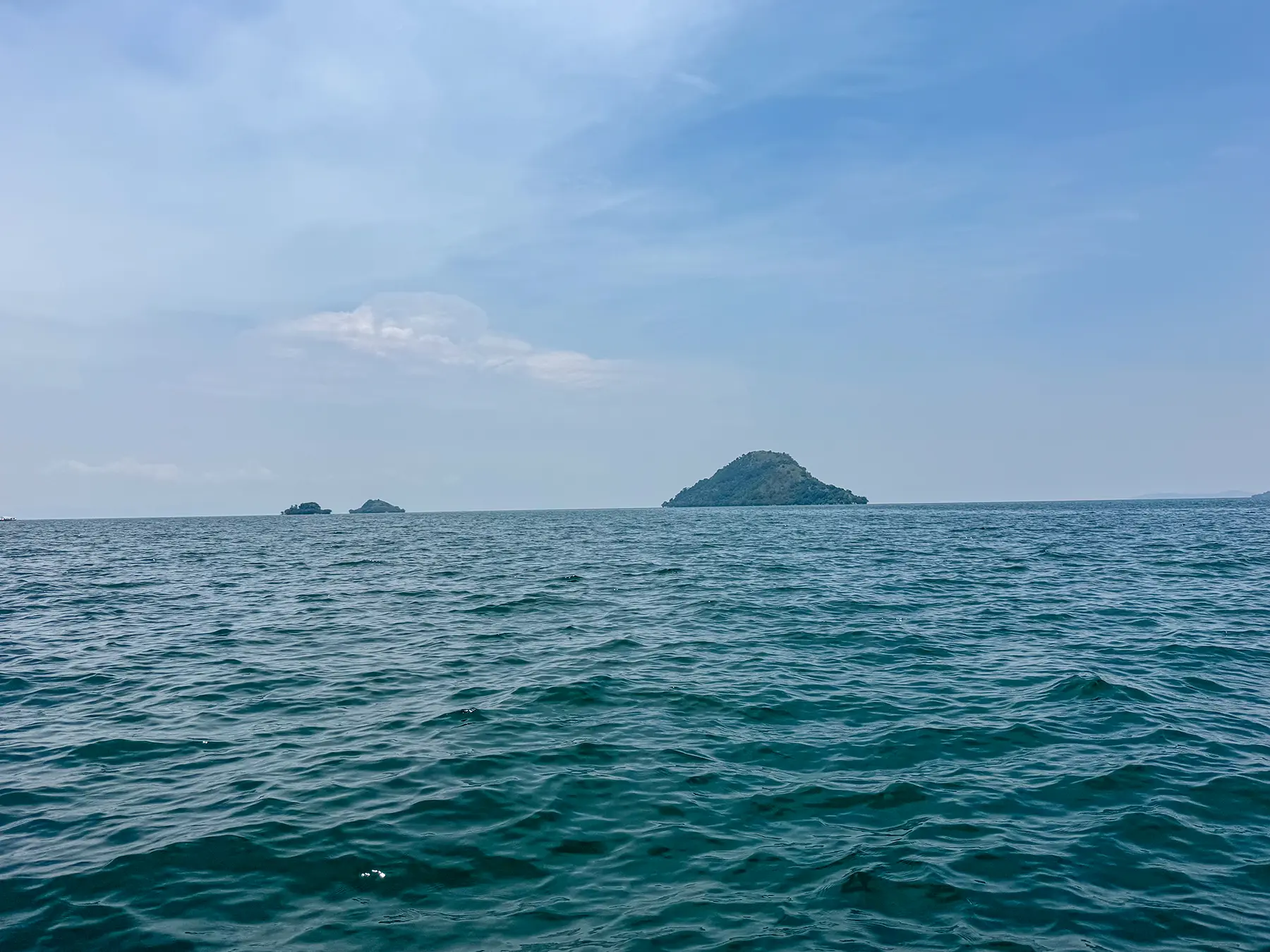
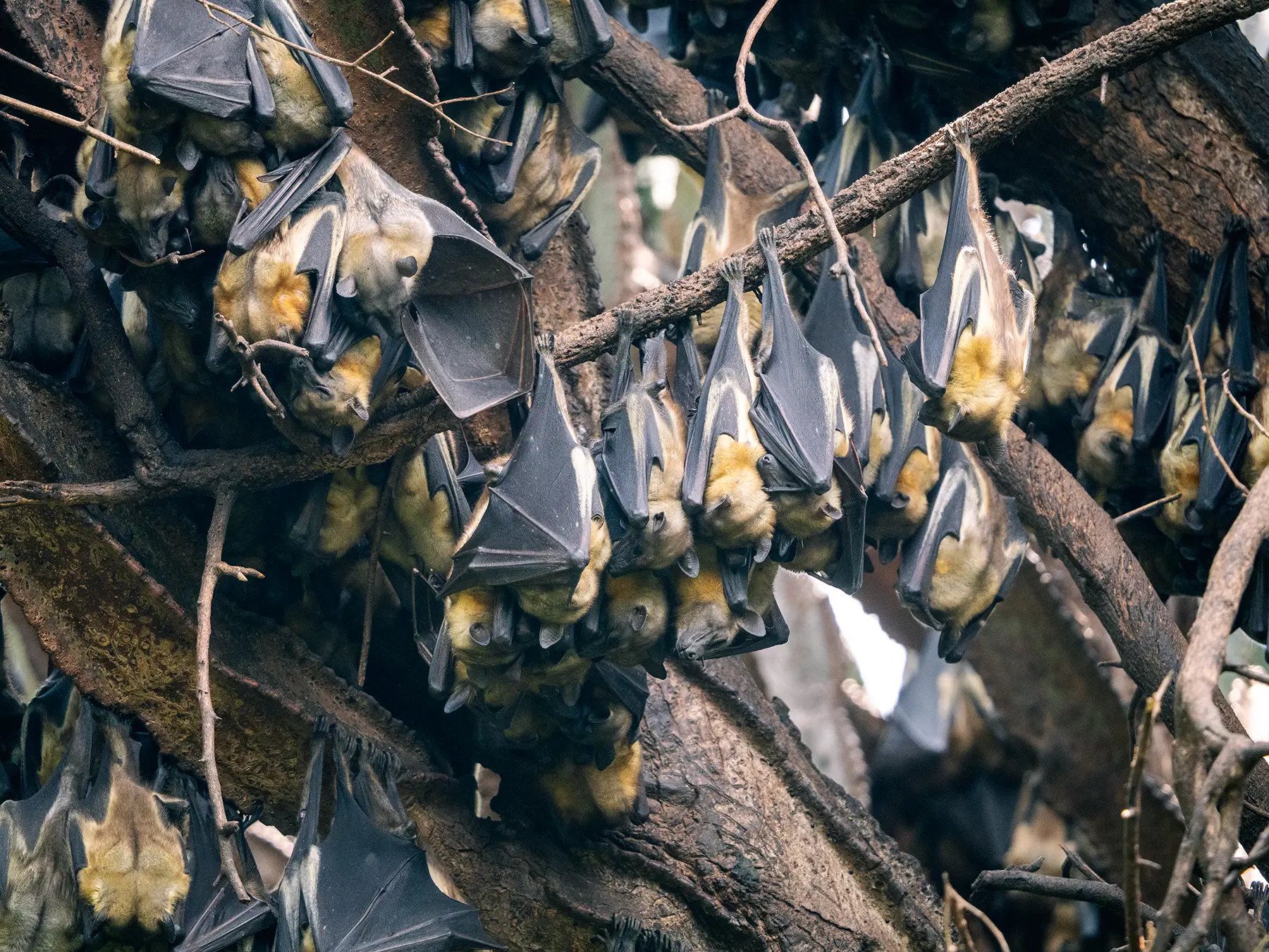
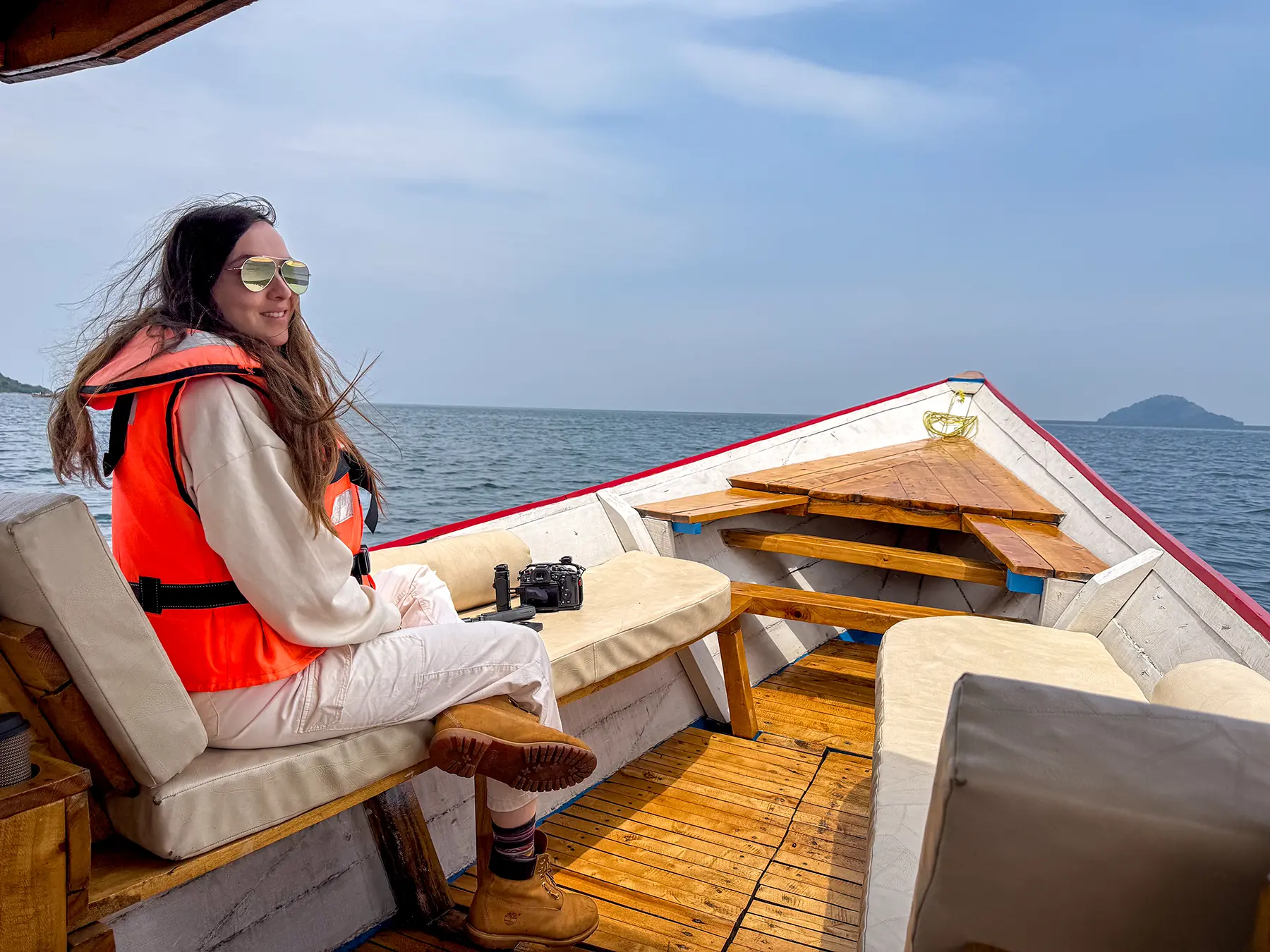
The boat ride takes a couple of hours and takes you to Napoleon Island, famous for its bat colony and panoramic views from the top of the island. It also takes you past Monkey Island, which is home to a troop of vervet monkeys.
To reach Napoleon Island takes approximately 30 minutes. When you dock, you are provided with a walking stick and can begin hiking
It’s a steep climb on uneven terrain so the stick is useful, as are sturdy hiking boots and long trousers. You will be crouching between low canopies, listening to the chirping of thousands of fruit bats as you crawl ever closer; nothing can prepare you for the enormous number of fruit bats roosting in the trees.
After admiring the bats, you will have the opportunity to hike to the top of the island. It’s very rocky and steep so be prepared, especially under the midday heat; don’t forget to bring water.
The views at the top are spectacular and you can see across the lake to other islands. Cows are the other main inhabitant of Napoleon Island, and you may spot a few roaming around. On the return boat journey you’ll pass Monkey Island, home to a large troop of vervet monkeys. Instead of disembarking, you’ll peer between the trees and spot the monkeys from the boat.
After the cruise, it’s time to stop for lunch with a view at one of the many lakeshore hotel restaurants. Thereafter, it’s your 3 hour onward journey south to Nyungwe.
About Lake Kivu
Situated along the border between Rwanda and the DRC, Lake Kivu is one of Africa’s Great Lakes. The lake is renowned for its beauty but also for the significant quantities of methane that are dissolved in its deep waters.
Despite this geological curiosity, the lake’s surface is peaceful and scenic, offering a striking contrast to the mountainous rainforest landscapes you’ll be used to seeing in Rwanda.
Lake Kivu’s water is very clear, and, particularly if you have glorious sunny weather, the surface can be extremely smooth and still. All the islands in Lake Kivu are owned by the state and can’t be developed, so they are uninhabited.
The main attractions for visitors are Napoleon Island, known for its enormous fruit bat colony and panoramic views from the summit, and Monkey Island, so named for its population of cheeky vervet monkeys.
What Wildlife Can I See at Lake Kivu?
From the shore of Monkey Island, you’ll spot vervet monkeys as they navigate the trees along the water’s edge.
You’ll also encounter thousands of fruit bats at Napoleon Island, and you will hear this spectacle chirping away before you even see it.
Monkey Island is also a great spot for birding, with hamerkops at the water’s edge and malachite kingfishers diving down to catch fish before returning to their perches over the water.
Tips for Visiting Lake Kivu
Here are my top tips for visiting Lake Kivu!
- Depart from your accommodation near Volcanoes at 7am to arrive at Lake Kivu by late morning, between 10am and 11am. This will give you plenty of time for the boat cruise before the afternoon drive to Nyungwe.
- Wear sturdy hiking boots and long trousers for the Napoleon Island hike. The climb is steep and uneven, and you will be crouching under low canopies near the bat colony.
- Bring water and sun protection for the hike to the top of Napoleon Island, especially under the midday heat.
- After the boat cruise, stop for lunch at one of the many lakeshore hotels. The views from these hotel restaurants are magnificent!
- Look out for views of Goma City in the DRC during the drive from Volcanoes to Lake Kivu.
Optional Activities at Lake Kivu
- Boat cruise to Napoleon Island and Monkey Island (included in most itineraries, approximately 2 hours).
- Hike to the summit of Napoleon Island for panoramic views across the lake. Note that the climb is steep and rocky, and that you’ll be out under the midday sun.
- Lunch at one of the lakeshore hotels with views over the water before continuing to Nyungwe.
Where to Stay in Nyungwe Forest National Park
You’ll be staying in Nyungwe Forest National Park tonight. Most lodges in Nyungwe are just outside the official park gate near Gisakura Reception Center, to the west of the national park.
This area is surrounded by tea plantations, a contrast to the dense jungle terrain found deeper inside the park.
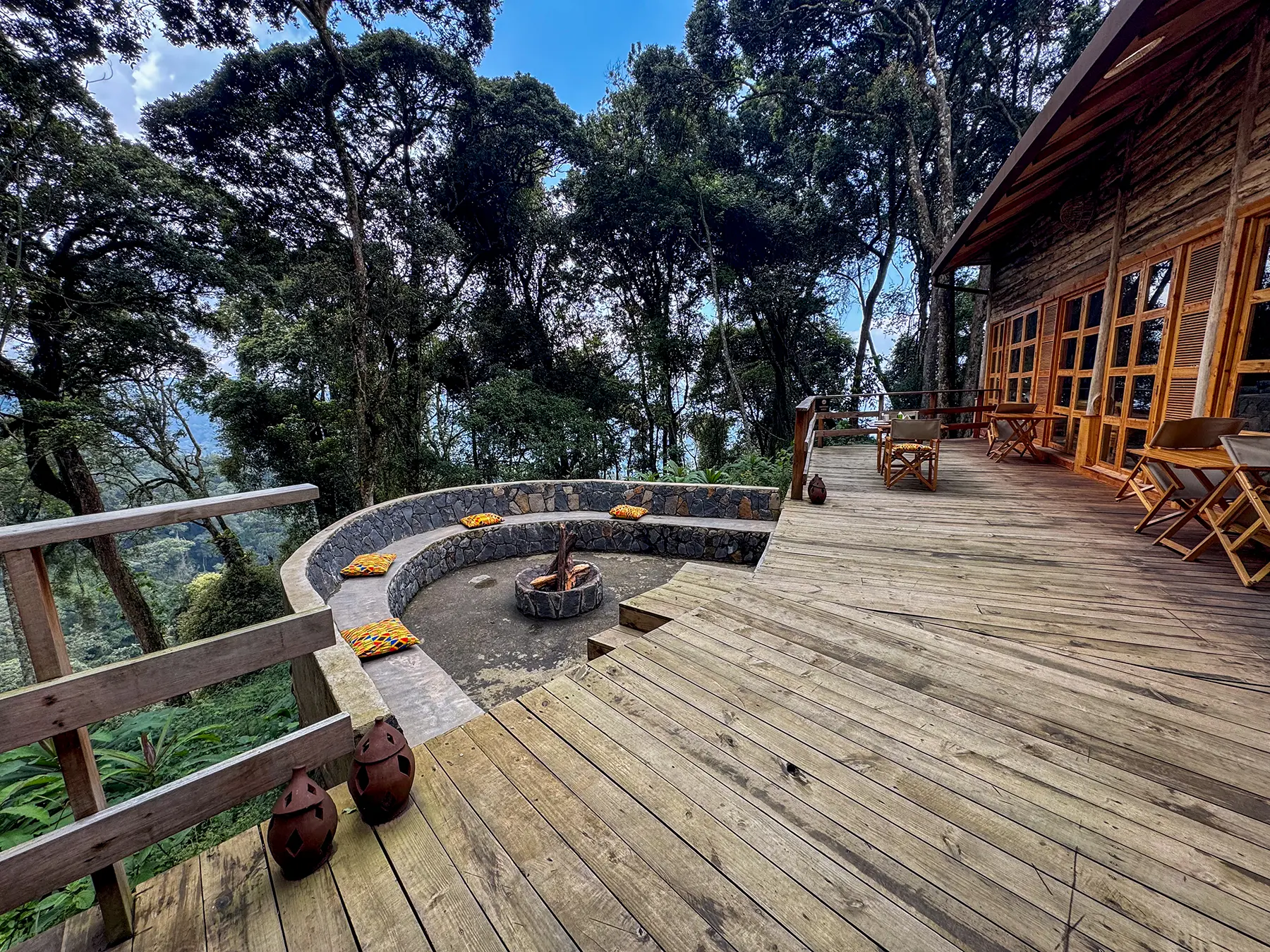
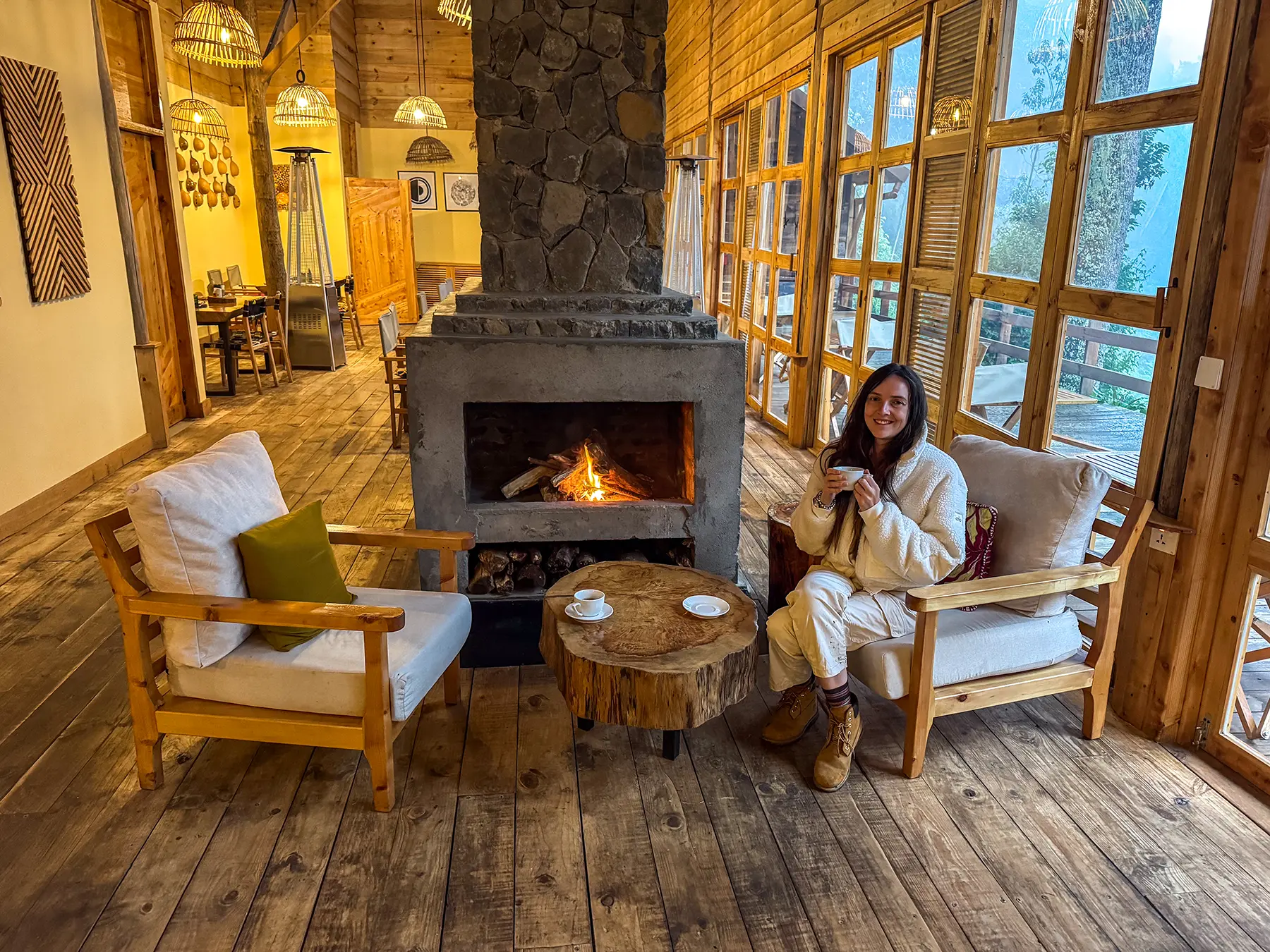
The only lodge actually located within the national park itself is Munazi Lodge, which is owned and operated by African Parks (who also manage the national park). Munazi Lodge is conveniently located just 10 minutes away from the canopy walk and chimpanzee trekking trail start points.
Aside from its convenient location, Munazi also offers the unmatched experience of staying inside the park: nothing beats being surrounded by raw, untouched rain forest.
My Experience of Lake Kivu
I found the boat cruise on Lake Kivu a welcome change of pace after the intensity of gorilla trekking the day before. I was lucky enough to see four individual vervet monkeys on Monkey Island, and one put on a real show by balancing on a tree right over the crystal clear water.
Also at Monkey Island, I saw a pair of hamerkops and, most exciting of all, a malachite kingfisher that dove down to catch a fish before returning to its perch over the water.
The fruit bat colony on Napoleon Island was also incredible; nothing can prepare you for just how many there are, roosting in the trees everywhere you look.
Day 6: Nyungwe Forest National Park
Drive Time (Excluding Game Drives): 5 hours (Nyungwe to Kigali)
Today you’ll experience the magic of Nyungwe!
You’ll start with an early morning chimpanzee encounter followed by the famous Nyungwe canopy walk.
Thereafter, it’s a 5 hour drive to Kigali for your final night.
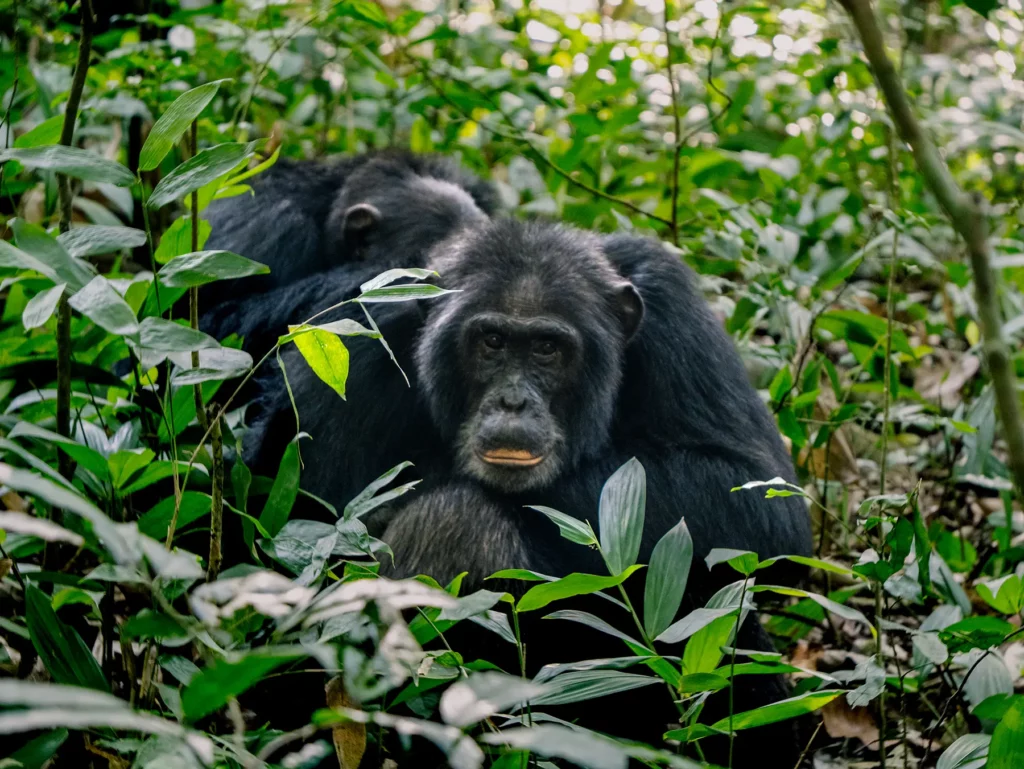
Map of Nyungwe Forest National Park
Here is a map I made showing the key features of Nyungwe Forest National Park.
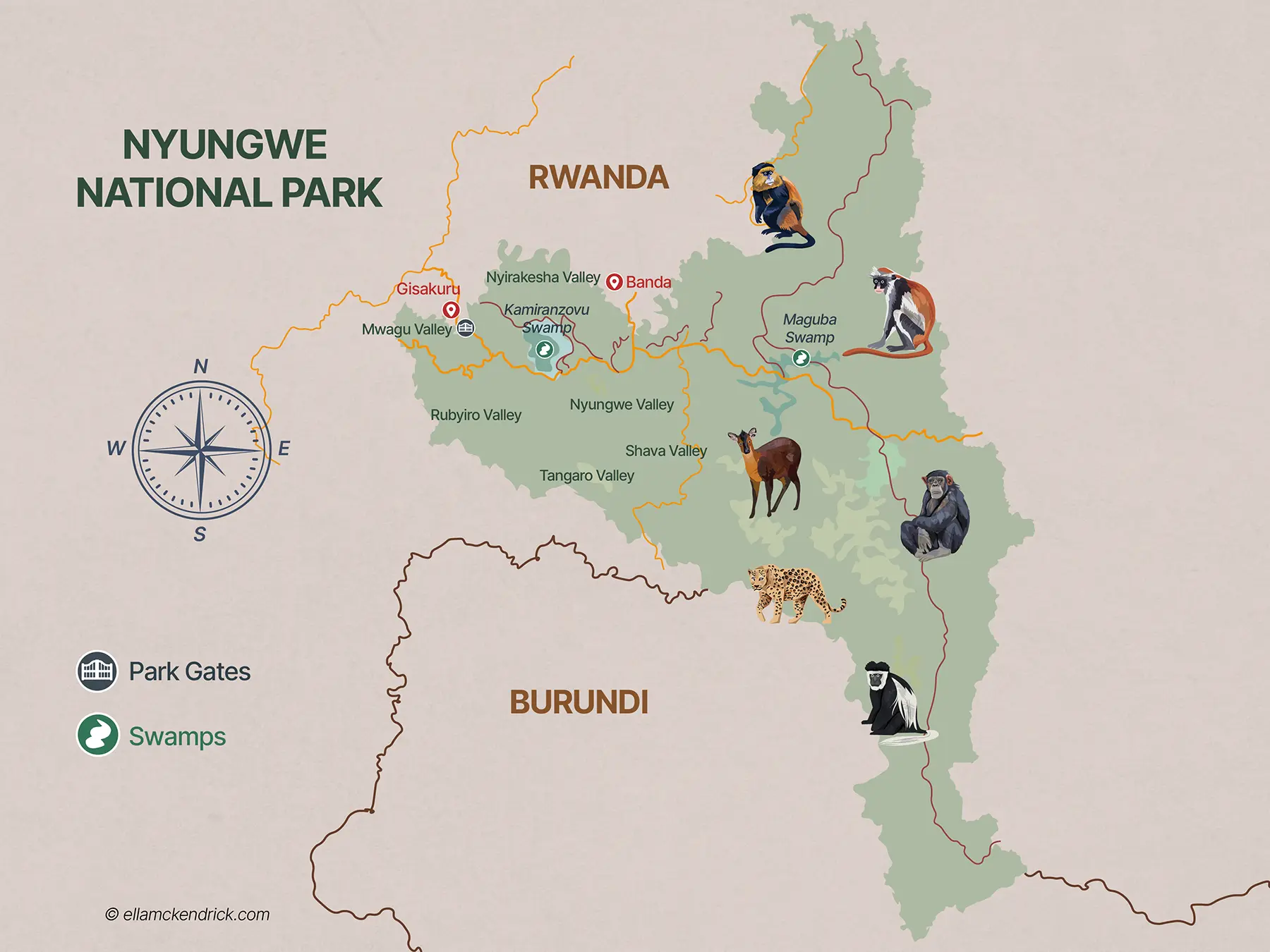
Itinerary
Chimpanzee tracking starts extremely early – your guide will ask you to meet at reception no later than 5am.
From there it’s a 1-hour drive through darkness to the official trek starting point, near Banda Village on the edge of the forest.
The road down to the village is steep, winding, uneven and extremely muddy, and vehicles can get stuck in the mud. This is why your early start is so important!
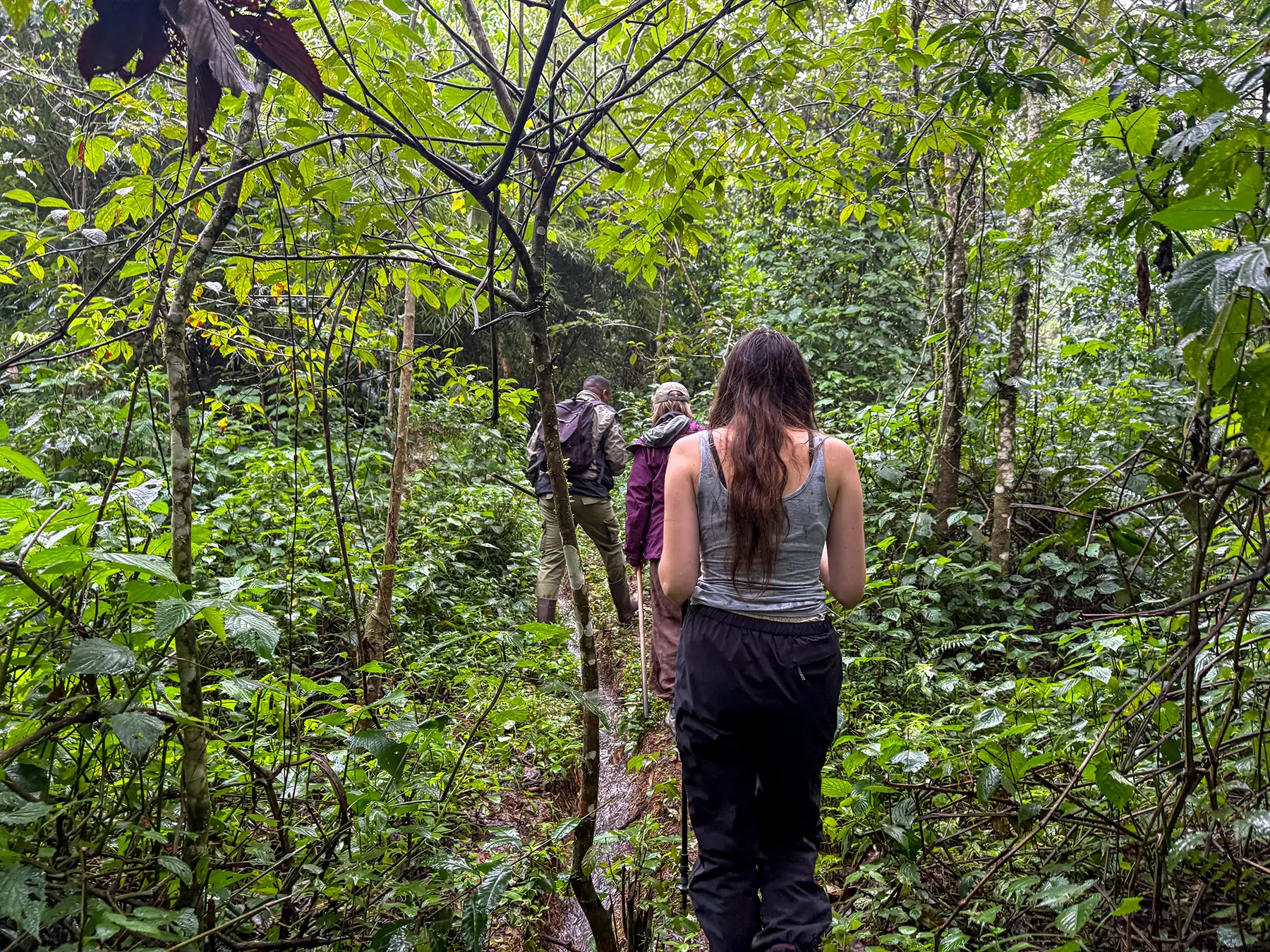
Your trek group will enter the forest to find the chimps, which can be quite elusive. Get ready to navigate dense undergrowth, crawling under and climbing over branches, and crossing rivers without bridges.
The chimps can really lead you on a wild goose chase through the forest!
When you find your chimp troop, you’ll spend an hour observing them, and then it’s time to head back out of the forest. Be prepared for a potentially long return hike to your vehicle. Depending on weather conditions, vehicles may move further up the hill to avoid getting stuck in the mud or blocked by other trucks.
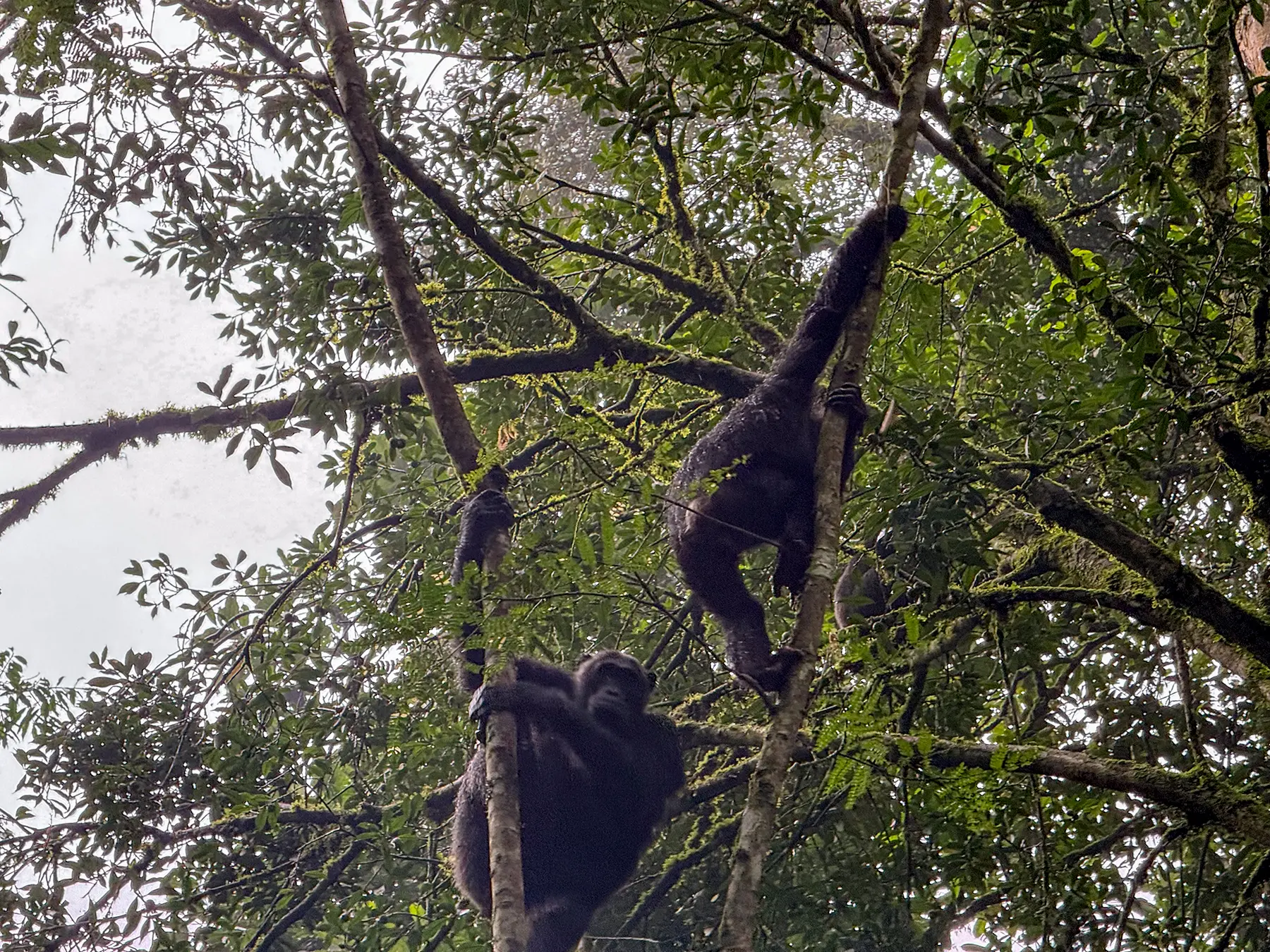
You’ll then make your way to the canopy walk. This is a truly special way to experience the rain forest and takes 1.5 hours, during which you traverse 3 suspended bridges at a height of 197 feet (60 metres) above the ground.
The cost of the canopy walk is $40 per person. Afterwards you’ll return to your lodge, pack up, and begin the 5 hour drive to Kigali.
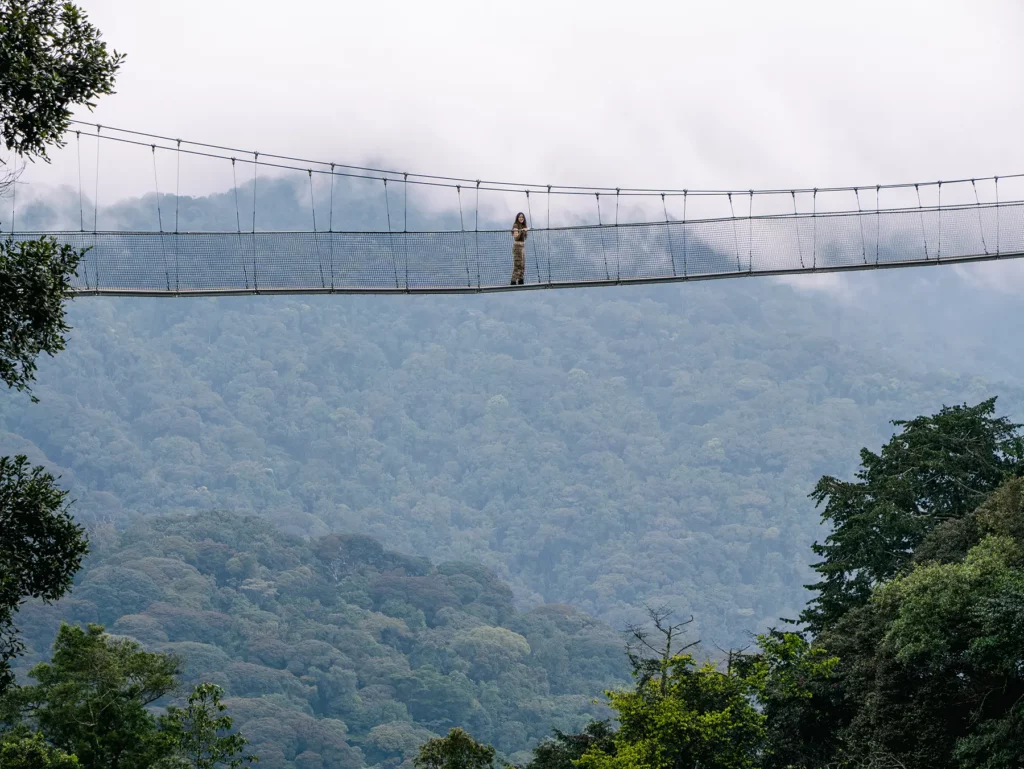
About Nyungwe Forest National Park
Nyungwe Forest National Park covers 393 square miles (1,019 km²) and is one of the oldest rainforests in Africa.
A true biodiversity paradise, it is home to approximately 85 mammal species, including 13 different types of monkeys, and 312 recorded bird species.
As well as wildlife, the forest is known for its sensational natural scenery, particularly its orchids.
There are around 200 species of orchid endemic to the area, which add stunning splashes of colour throughout the lush forest. One of the best ways to see these orchids is from the forest canopy walkway, suspended 197 feet (60 metres) above the ground.
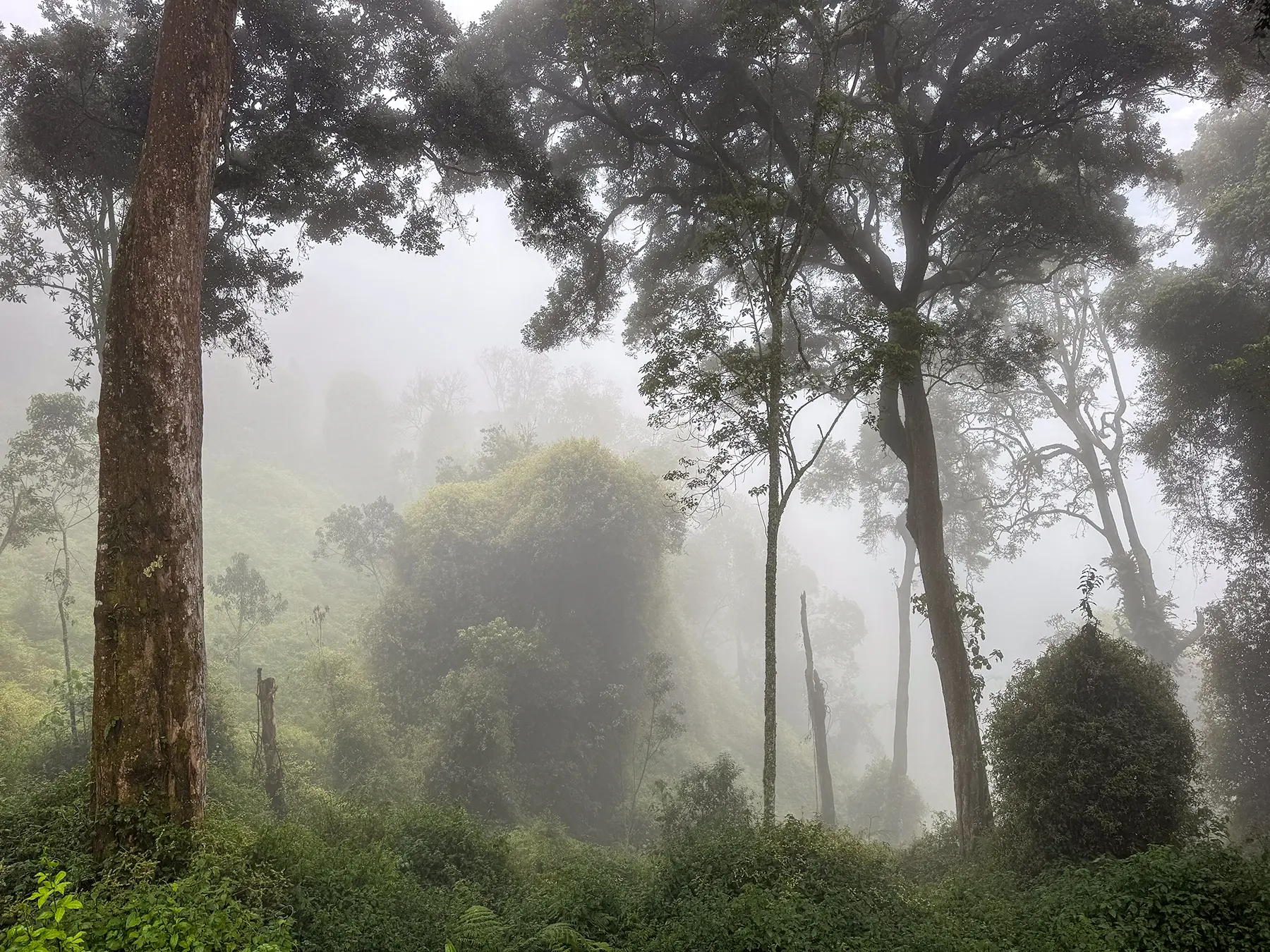
What Wildlife Can I See in Nyungwe Forest National Park?
Nyungwe is home to 13 different primate species, including 3 habituated chimpanzee groups.
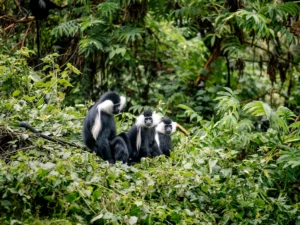
Two of these troops are available for tracking, and one is reserved for research. Wild chimpanzees can live over 50 years and are only found in Africa. They form lifelong bonds with family and troop members.
There are around 380 chimpanzees in Nyungwe, spread out across 3 habituated troops.
Chimpanzees are omnivores, sometimes hunting and preying on smaller monkeys, of which there are many in Nyungwe as well. There are 13 primate species in the reserve, including Angola colobus monkeys, L’Hoest monkeys, grey-cheeked mangabeys, silver monkeys, red-tailed monkeys and olive baboons.
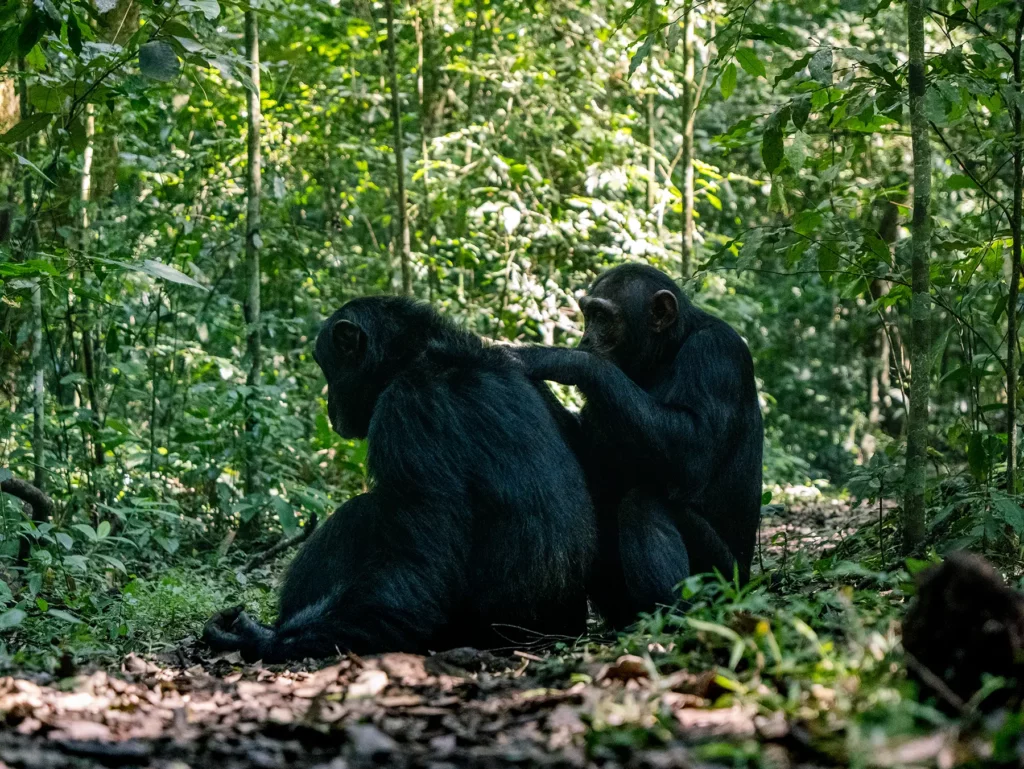
Birders will be in their element in Nyungwe, as there are 312 recorded bird species here, including endemic species. With Narina Trogons, yellow-whiskered greenbuls and Rwenzori turacos among the highlights, this is one of Rwanda’s premium birding destinations.
In addition to birds and primates, you should also look out for tiny, black-fronted duikers and other small antelope species. They can sometimes be spotted walking along the forest roads.
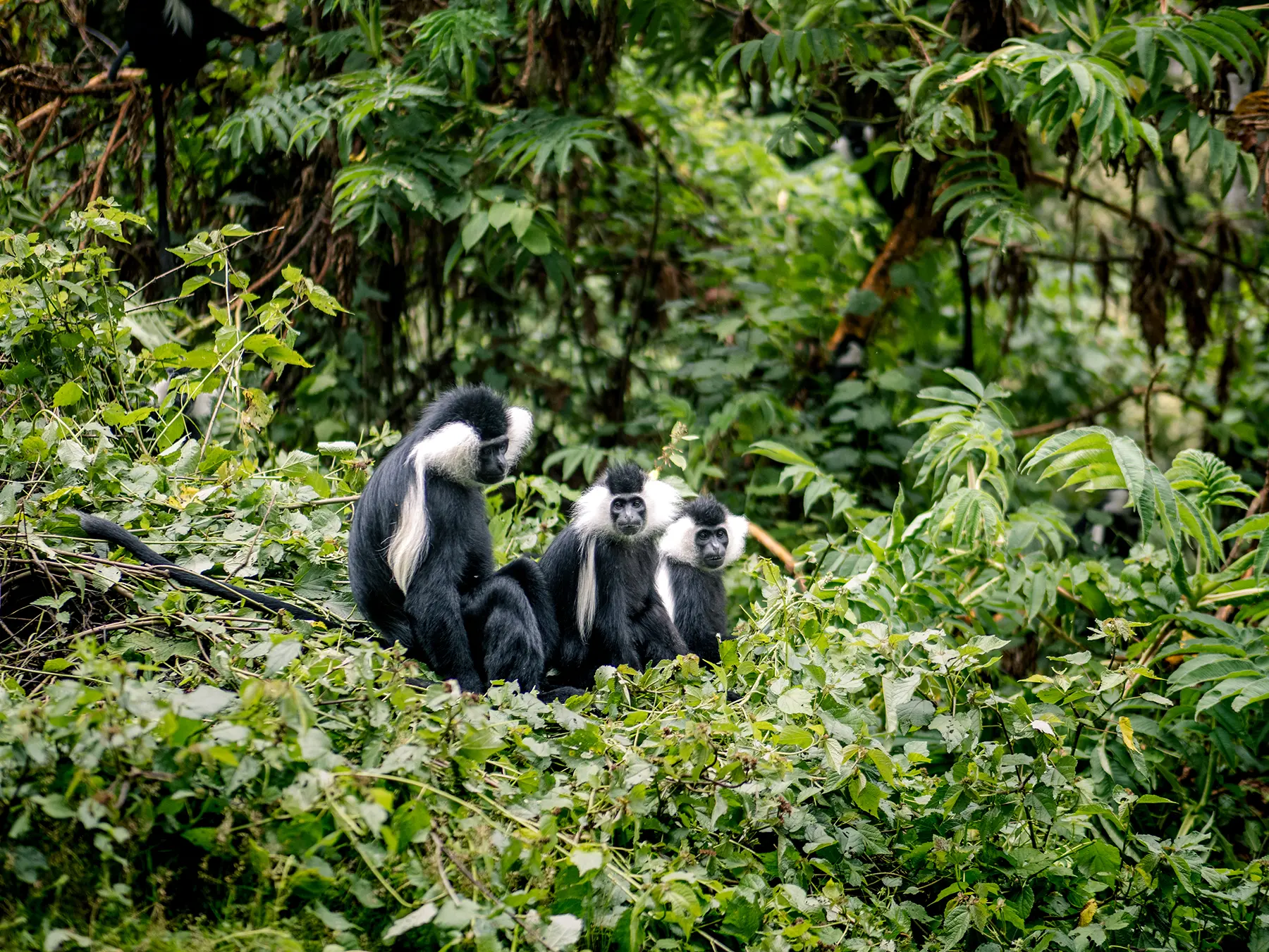
Tips for Visiting Nyungwe Forest National Park
The chimp trek is an exhilarating but demanding experience. Here are some tips to help you make the most of it.
- Chimpanzee tracking costs $150 per person, in addition to a $100 per person per day park fee. It’s possible to save a bit on the park fee if you plan on spending two nights in the park. The discounted 2-night fee is $150.
- Hire a porter (minimum $10 plus tip) for the chimp trek. Porters are an invaluable presence on the uneven, slippery terrain and employing them provides work for the local community. A recommended tip for your head guide is $10, and an additional $5 for each of the 2-4 trackers should be adequate.
- Wear a rain coat (essential in the rainforest), sturdy boots and gaiters to stop debris from getting into your shoes. Long trousers and long sleeves are also essential protection against brambles.
- The canopy walk costs $40 per person and the bridges are 197 feet (60 metres) high and wobbly, so being comfortable with heights is strongly advisable.
- Pack water and snacks for the morning as the chimp trek, return hike and canopy walk together make for a physically demanding morning.
- On the forest roads, look out for silver monkeys perched high in Newtonia trees, as well as Angola colobus troops and L’Hoest’s monkeys.
Optional Activities
- Canopy walks cost $40 per person, take 1.5 hours to complete and traverse 3 bridges suspended over the jungle canopy. The highest is 197 feet (60 metres) above the ground. This can be done after the chimp trek or on a separate day.
- Birding walks through the forest are a great idea. You’ll have the chance to spot Nyungwe’s 312 recorded bird species, including Narina Trogons and Rwenzori turacos.
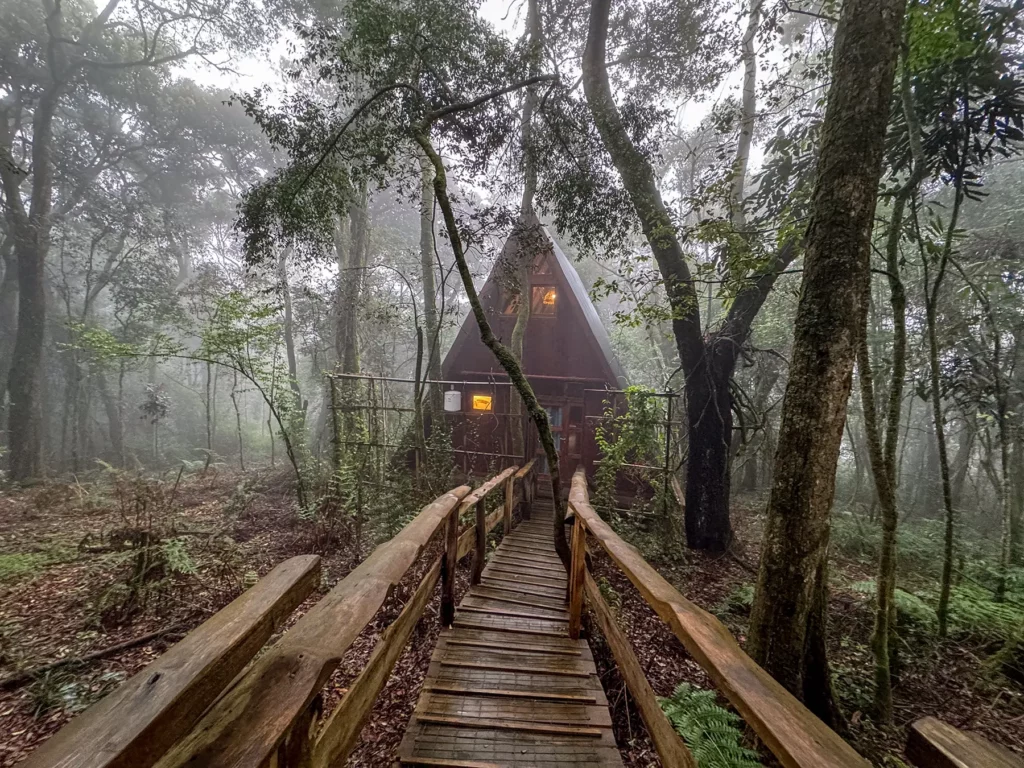
Where to Stay in Kigali
After a 5-hour drive from Nyungwe, you will arrive in Kigali for your final night in Rwanda.
The city centre is the most practical base for a single night stay, as it puts you close to restaurants, the Kigali Genocide Memorial and the airport for your departure the following morning.
Kigali offers a number of international hotels right in the city centre, such as the Radisson, Sheraton, Serena Hotel and the Marriott.
Kigali is not easily walkable, as the main attractions are very spaced out and the city is hilly. You will likely need transport between your hotel and any evening activities.
Booking a taxi through your hotel is the most reliable way to get around, although they are relatively expensive. A transfer from the city centre to the airport costs approximately $45.
Avoid boda-boda motorbike taxis as locals advise they are not safe. There is no Uber service in Kigali.
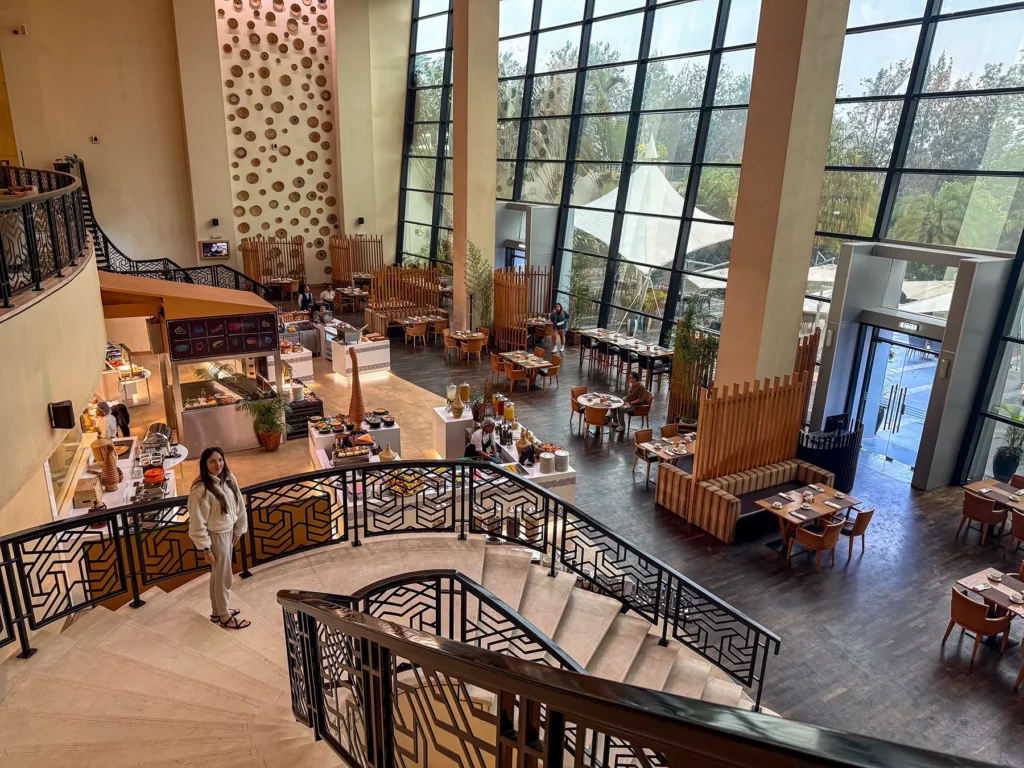
My Experience Visiting Nyungwe Forest National Park
I found chimpanzee tracking one of the most physically challenging experiences of my time in Rwanda.
This was partly because the road down to Banda Village was extremely muddy, and the vehicle in front became stuck in the mud, forcing everyone to get out and start the trek early!
The guide hurried our group through the village, worried we would not reach the chimps still in their nest.
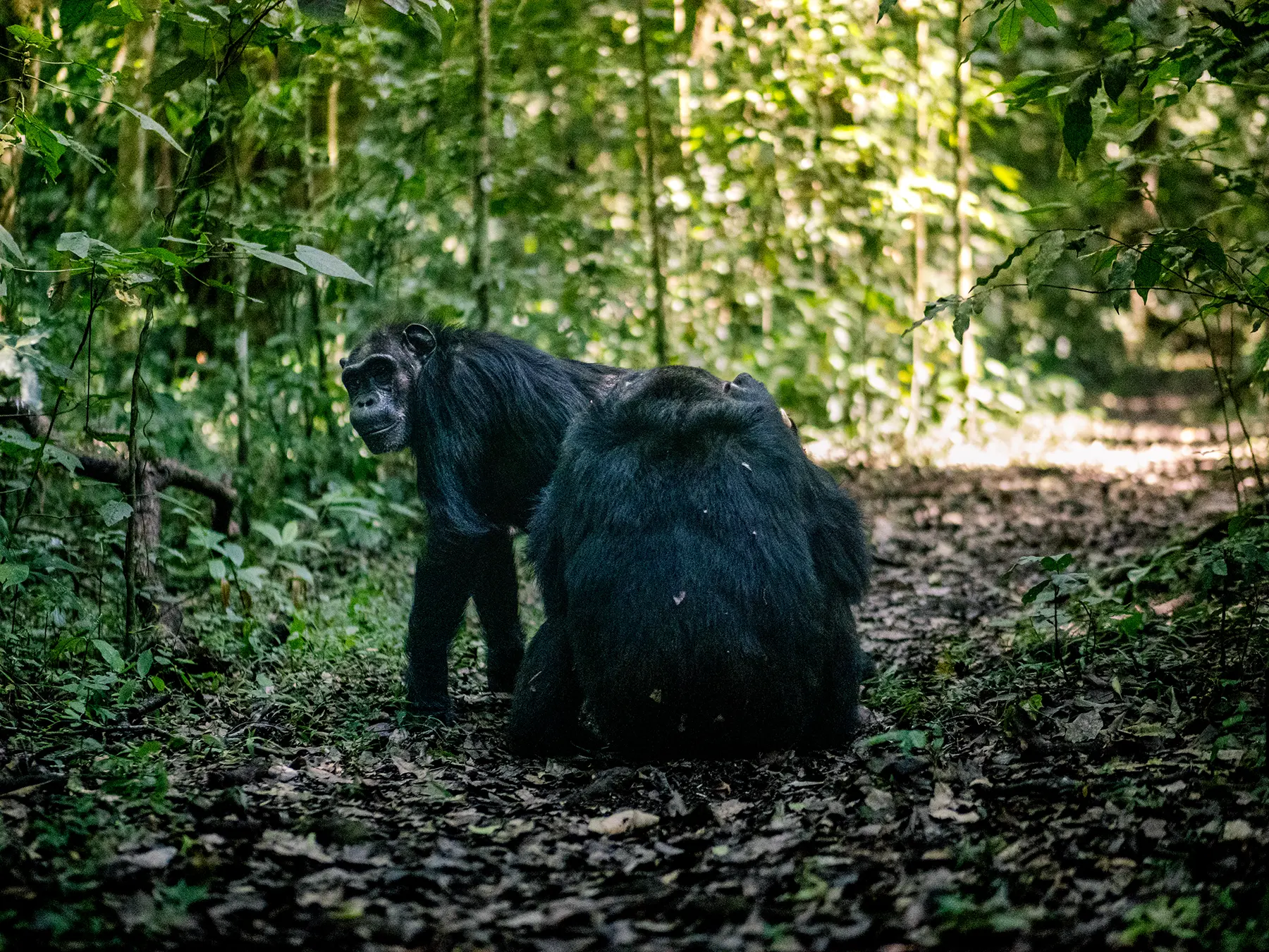
The chimps were already on the move when we found them and they really led us on a wild goose chase through the forest. We crawled through dense undergrowth, caught ourselves on brambles, were slapped in the face with damp leaves and had to cross rivers with no bridges.
It was all worth it, though, for magical moments like seeing one of the chimps standing still out in the open, with his gentle pink face turned towards us.
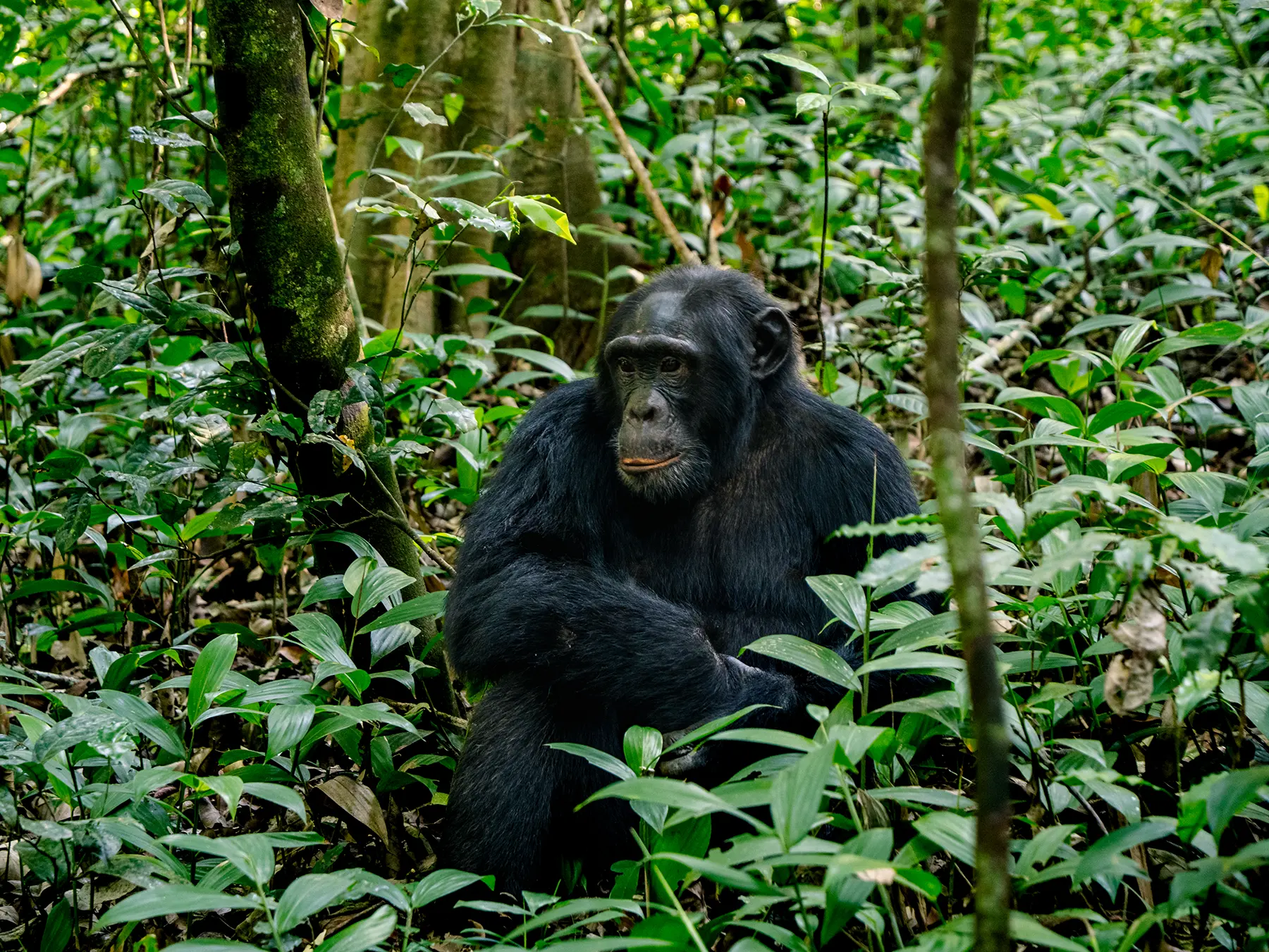
The adventure didn’t end there, and we really had our work cut out for us when it was time to return to our vehicle. The vehicles had driven high up the hill in case it rained and the lower track became impassable, which meant an additional 2 hour hike, all uphill, back to the car.
The canopy walk was relaxing by comparison. I was thrilled to see a Narina Trogon and Yellow-whiskered Greenbul, although they were far too fast to photograph. Rwenzori turacos are large, colourful birds often seen here, though I was not lucky enough to spot one during my visit.
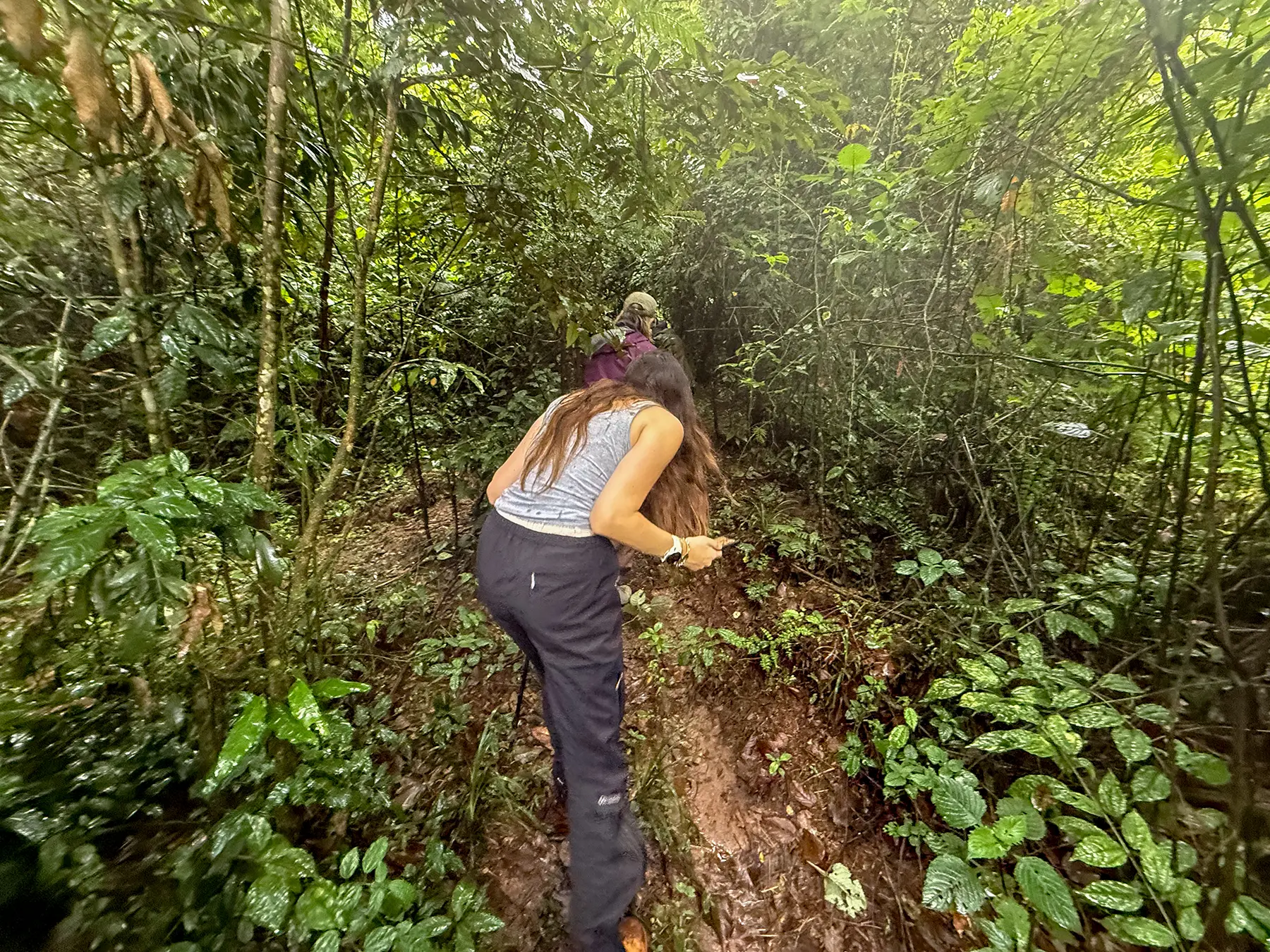
Day 7: Kigali
Drive Time (Excluding Game Drives): Dependent on the activities you choose
You’ll spend your final morning in Rwanda in the fascinating capital, Kigali. This modern, well-organised city has exceptionally clean streets and good infrastructure.
Rwanda is ranked as the safest country in East Africa, so you can explore the city with confidence.
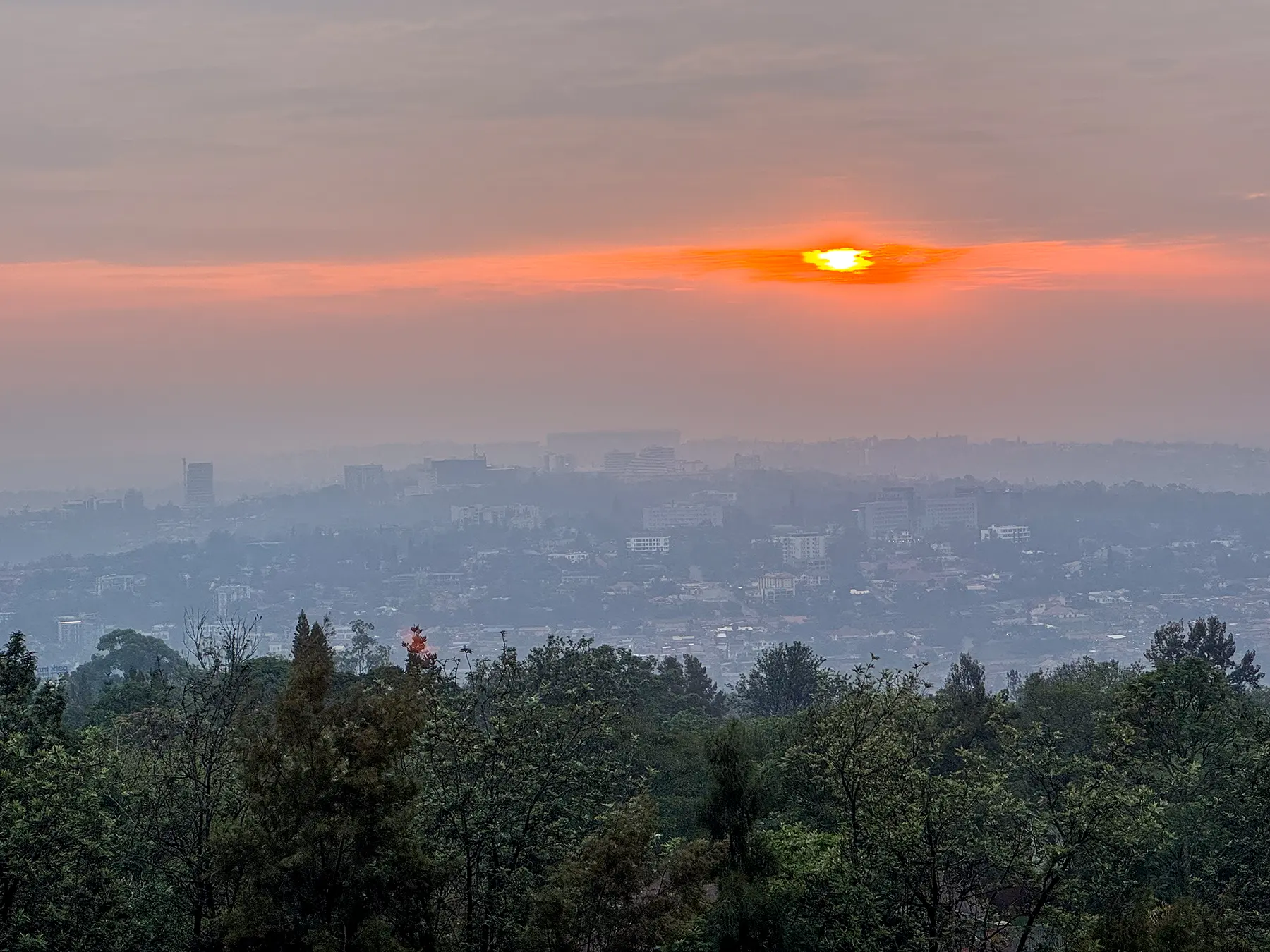
Itinerary
This is your final morning, so your itinerary depends on the time of your flight back home.
If your flight is in the late afternoon or evening, you will have time to visit the Kigali Genocide Memorial (allow 2-3 hours for a thorough visit) and then stop at a coffee house like Question Coffee before heading to the airport.
If you have an early flight, your hotel can arrange an airport transfer to Kigali International Airport.
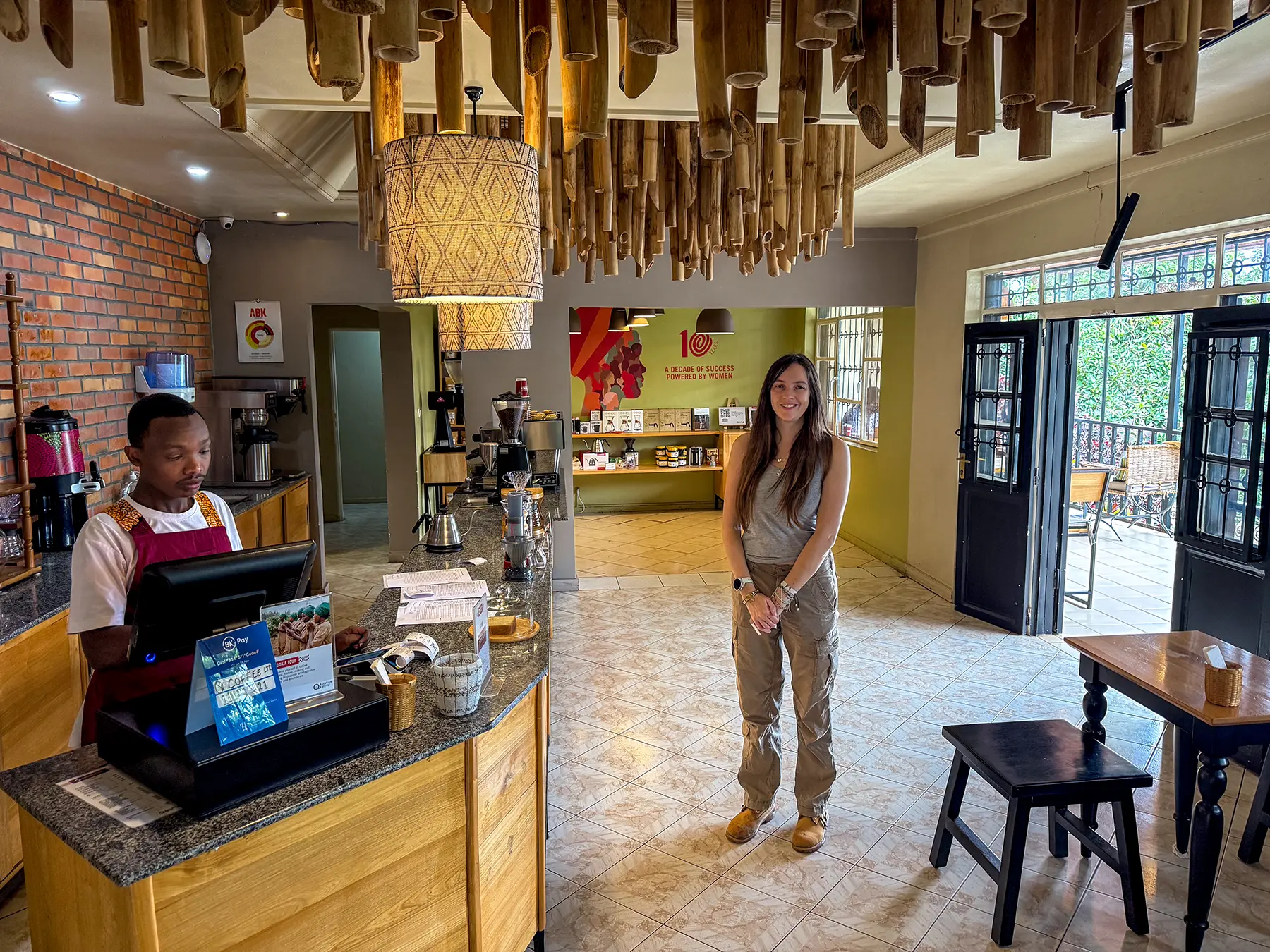
About Kigali
Kigali is a small but dispersed city built across several hills Despite its compact size, the main attractions are spread out around the city, which means it’s not easily walkable.
Rwanda has made a fantastic recovery since the 1994 genocide and is now one of the most stable and safest countries in Africa. The Kigali Genocide Memorial documents the 1994 Rwandan genocide, one of the most devastating events in modern African history.
The genocide had a profound impact on Rwanda’s wildlife and national parks, with displaced people settling in protected areas like Akagera National Park and hunting for survival.
This decimated wildlife populations. However, Rwanda’s recovery has been remarkable, thanks to strong conservation programmes, infrastructural investment in cities and roads, and a thriving tourism industry.
Single-use plastics are banned throughout most of Rwanda, including at national parks, so visitors may be asked to leave plastic items at park entrances. This environmental awareness is reflected throughout Kigali, which is known for its cleanliness and safety.
Things to Do in Kigali
Kigali has a handful of worthwhile activities for visitors with time before a departure flight, including the Genocide Memorial, craft markets and a vibrant restaurant scene.
1. Visit the Kigali Genocide Memorial
The Kigali Genocide Memorial is a must-see in Rwanda, and is the best place to learn about Rwanda’s history. It is an incredibly sobering and powerful museum that most visitors find very moving.
The memorial gives insight into the 1994 genocide and Rwanda’s remarkable recovery afterwards. Seeing it really helps you understand the context behind the extraordinary conservation turnaround that you will have just witnessed throughout this itinerary, from the reintroduction of lions to Akagera to the protection of mountain gorillas in Volcanoes.
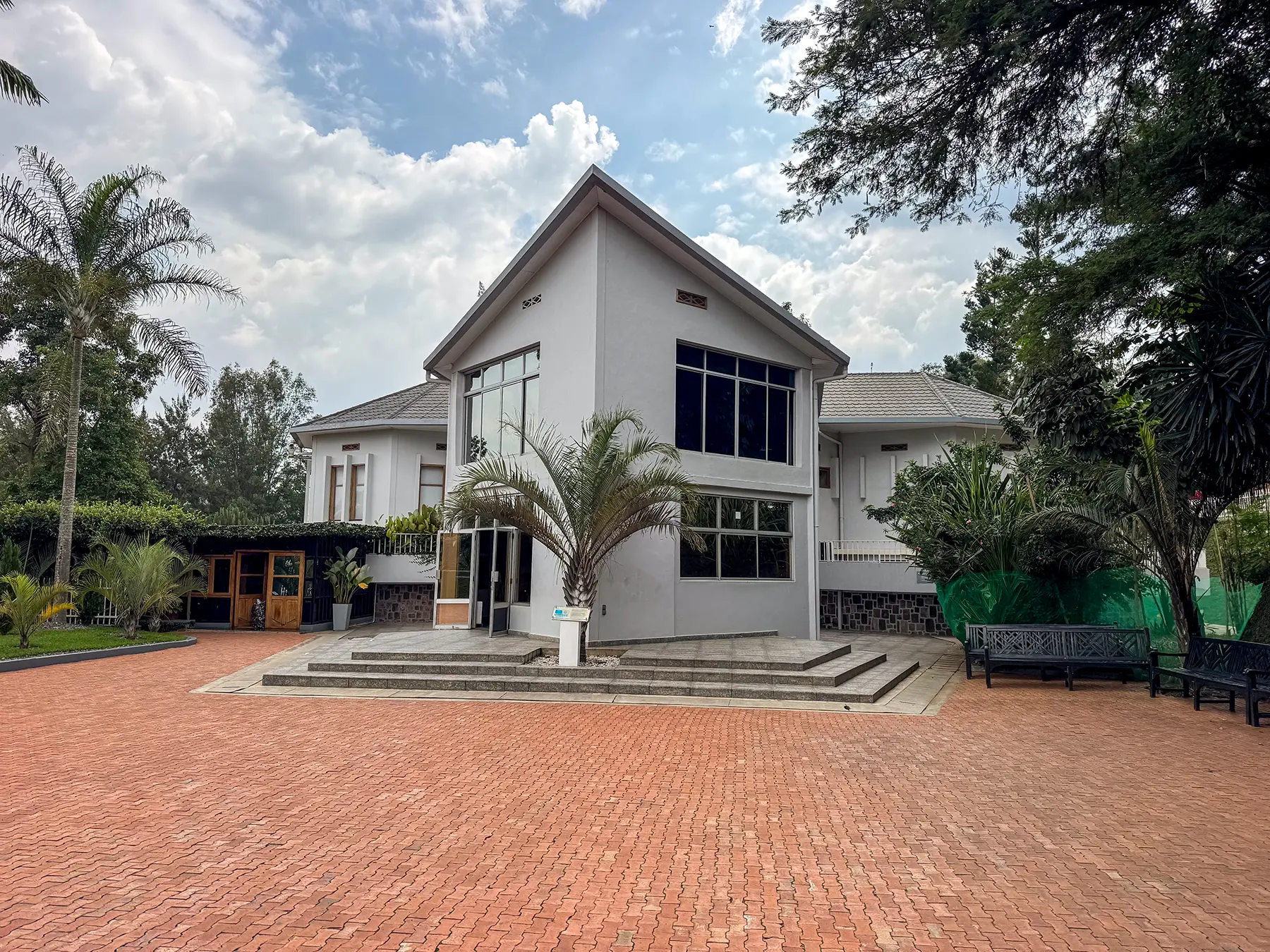
2. Coffee at Question Coffee
Rwanda is renowned for its coffee, and there are many cute coffee houses dotted throughout the city. My favourite is Question Coffee, where the coffee beans are grown by women farmers. A percentage of your purchase goes directly to their cooperative, and the remaining profit is reinvested into professional training and trading programs for women coffee farmers.
3. Dine at Kigali’s Top Restaurants
One of my favourite restaurants in Kigali is Cucina, at the Marriott Hotel. Down the road from the Marriott, you’ll find Nyurah, which specialises in fine-dining and has the best reviews in the city.
4. Browse Kigali’s Craft Markets
Kigali boasts a number of excellent craft markets throughout the city, where you can find locally made souvenirs including woven baskets, fabrics and jewellery.
Tips for Visiting Kigali
Kigali was a lovely way to end my visit to Rwanda. Here are some quick tips to make the most of your time in the city.
- Kigali is not easily walkable as attractions are spread out and the city is hilly. Book a taxi through your hotel for the day.
- The cheapest way to get around is via boda-boda (motorbike taxis) but locals advise that they are unsafe. There is no Uber service in Kigali.
- Hotel taxis are the most reliable option. An airport transfer costs $45 and for day excursions they charge $2.5 per hour waiting time.
- Rwandan Francs (RWF) can be withdrawn from ATMs in Kigali, but USD is widely accepted at tourist destinations throughout Rwanda.
- Single-use plastics are banned in Rwanda, so make sure you have disposed of any plastic packaging before arriving.
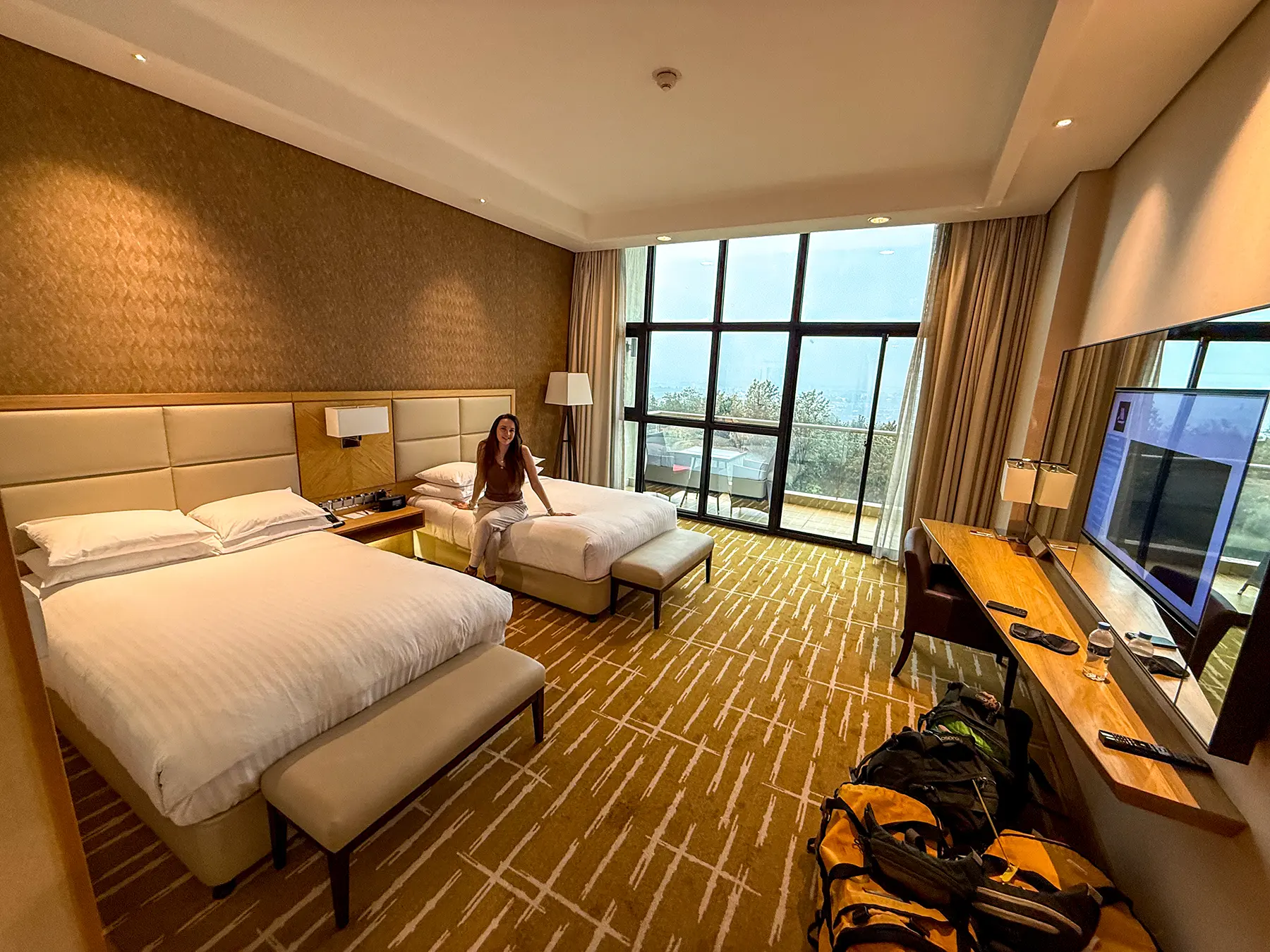
Rwanda Safari FAQs
Click on any of the frequently asked questions below to show the answer.
Is Rwanda safe for safari tourists?
Yes, Rwanda is the safest country in East Africa, with excellent road infrastructure, clean cities and strong governance. The country has made a remarkable recovery since the 1994 genocide and is now one of the most stable nations on the continent. Safari areas including Volcanoes National Park, Akagera and Nyungwe are all well-managed with professional guides and park rangers.
I felt completely safe throughout both of my trips to Rwanda. I witnessed firsthand how communities came together to fix a landslide in the road, with what seemed like the entire village turning out to help, showing real community pride. The cities are clean, the people are welcoming, and the national parks are excellently run.
How much does a Rwanda gorilla trekking permit cost?
A gorilla trekking permit in Rwanda costs $1,500 per person per trek, which is almost double Uganda’s $800 permit. The permit includes one hour with a habituated gorilla family.
Golden monkey trekking is $100 per person and chimpanzee trekking in Nyungwe costs $150 per person plus a $100 per day park fee.
In peak season, permits should be booked at 6-12 months in advance.
I booked my gorilla permit through a local tour operator and they handled the whole process, which saved me a lot of stress. The hour you spend with the gorillas is genuinely priceless and worth every cent of the $1,500 fee. I also did golden monkey trekking the day before and highly recommend it as a warm-up for the gorilla trek.
When is the best time to visit Rwanda for safari?
The best time to visit Rwanda is during the dry season from June to August, when gorilla trekking trails are drier, vegetation is thinner and animals in Akagera congregate around water sources. The short dry season from December to February is also excellent, with warm, dry conditions across the country. The shoulder months of mid-September to mid-December offer quieter parks with generally good weather and lower prices.
My favourite time to travel in this part of the world is the shoulder season in October and November, or June when the parks are quieter. I have also visited during the wetter months and still had incredible wildlife experiences, though the chimp trekking trails in Nyungwe can get extremely muddy.
Do you need vaccinations for a Rwanda safari?
A yellow fever vaccination certificate is required for entry into Rwanda if arriving from a country where yellow fever is endemic. The vaccination must be received at least 10 days before arrival. Additional recommended vaccines include Hepatitis A, Hepatitis B, Tetanus, Typhoid and Rabies. Malaria is present throughout Rwanda, so preventative antimalarial medication should be discussed with a healthcare provider before travel.
I visited my travel clinic about 6 weeks before departure and the appointment was straightforward. I took antimalarials throughout and had no side effects. I would advise booking your travel clinic appointment early as some vaccines require multiple doses spaced out over several weeks.
Can you see the Big Five in Rwanda?
Yes, Akagera National Park is home to all of the Big Five: lions, leopards, elephants, buffalos and rhinos. Lions were reintroduced to the park in 2015 after being wiped out following the 1994 genocide, and three species of rhino have been gradually re-introduced since 2017. Akagera is one of Africa’s greatest conservation success stories, with the wildlife population recovering dramatically under the management of African Parks.
Kilala Plain in northern Akagera exceeded all of my expectations. We found three lions sleeping right in the road and more rhinos than I have ever seen in my life, with groups of four, then three, then another pair scattered across the plain.
Do you need a visa for Rwanda?
Yes, travellers holding USA, UK or European passports need a visa to enter Rwanda. A single-entry Rwanda visa costs $50 and can be applied for online. For travellers also visiting Uganda or Kenya, the East African Tourist Visa costs $100 and grants access to all three countries with multiple entries within 90 days.
I applied for my visa online before travelling and the process was quick and painless. If you plan to combine Rwanda with Uganda (or add Kenya), the East African Tourist Visa is more convenient. St $100, the total cost is the same as two separate $50 visas, but you skip the second application.
Recommended Booking Options For Your 7-Day Rwanda Itinerary
Private Safari
Most popular & best experience – typical prices for this itinerary start from $450 per person per day.
Visit safarisbyella.com for free quotes from trustworthy local tour companies I use to book my own trips.
Is a 7-Day Rwanda Safari Worth It?
A 7-day Rwanda safari is absolutely worth it! You get to experience mountain gorilla trekking on the volcanic slopes of the Virunga Massif, chimpanzee tracking in a UNESCO rainforest, and Big Five game drives in Akagera, all within a compact, safe and well-organised country.
This 7-day itinerary covers 4 distinct ecosystems: the open savannah of Akagera with reintroduced lions and rhinos, the volcanic peaks of Volcanoes National Park where mountain gorillas roam, the tranquil shores of Lake Kivu, and the ancient rainforest of Nyungwe with its habituated chimpanzees and canopy walks. 7 days gives enough time to experience every highlight without rushing, with each destination connected by scenic drives through the famous ‘thousand hills’.
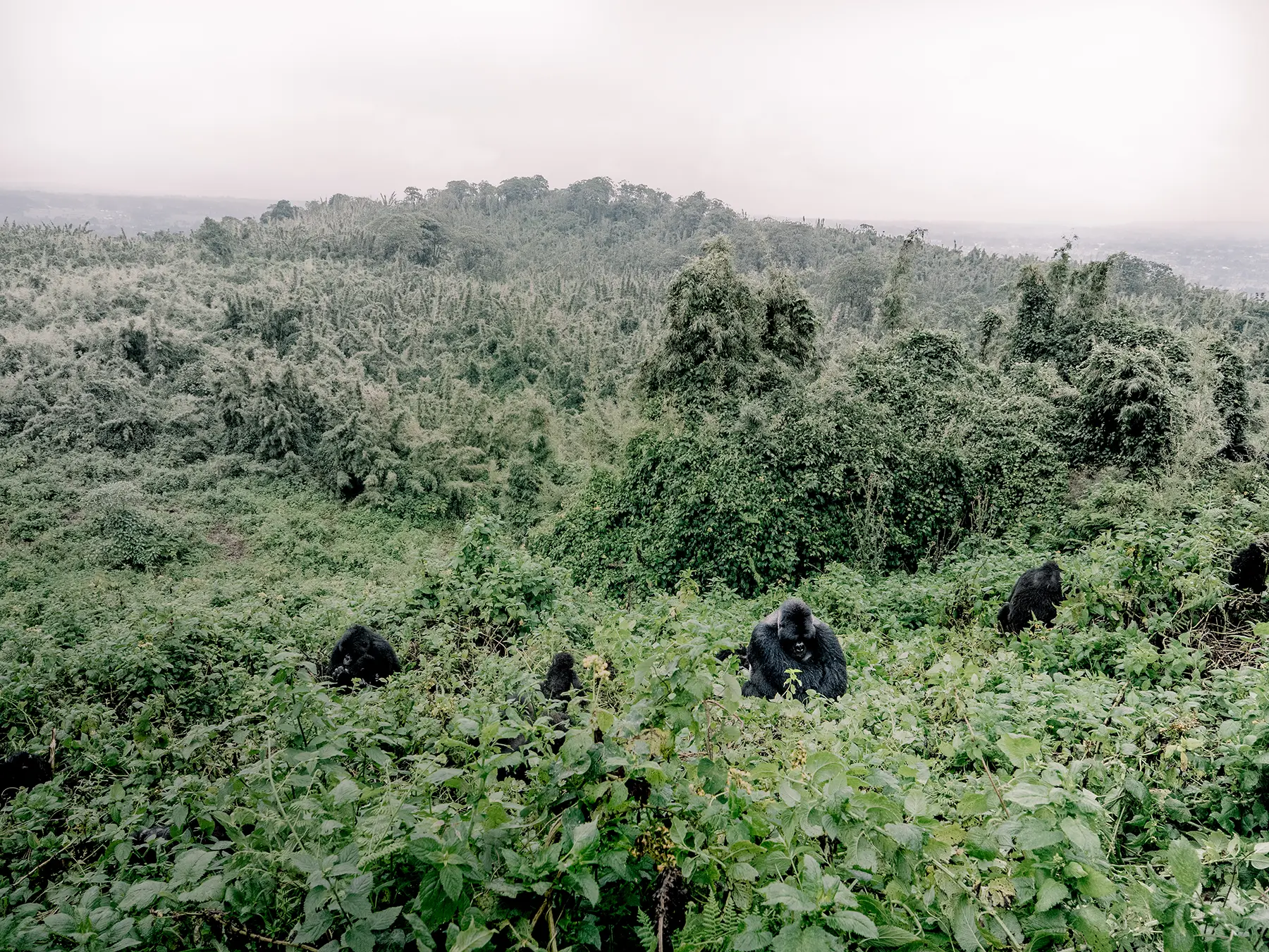
I will never forget the absolute peace of falling asleep at Ruzizi Tented Lodge to the bellowing of hippos and chirping of reed frogs, and I saw more rhinos than I could count on the open plains of Akagera – a real highlight!
But for me, the most unforgettable moment was being assigned to the Hira gorilla family in Volcanoes, a special group known for having twins, and spending an hour watching mothers tenderly cradle their youngsters while a silverback kept guard.
Rwanda is a small country with an enormous amount to offer, and I hope this guide helps you plan your own gorilla and chimp safari. If you have any questions or need help booking your trip, do get in touch.
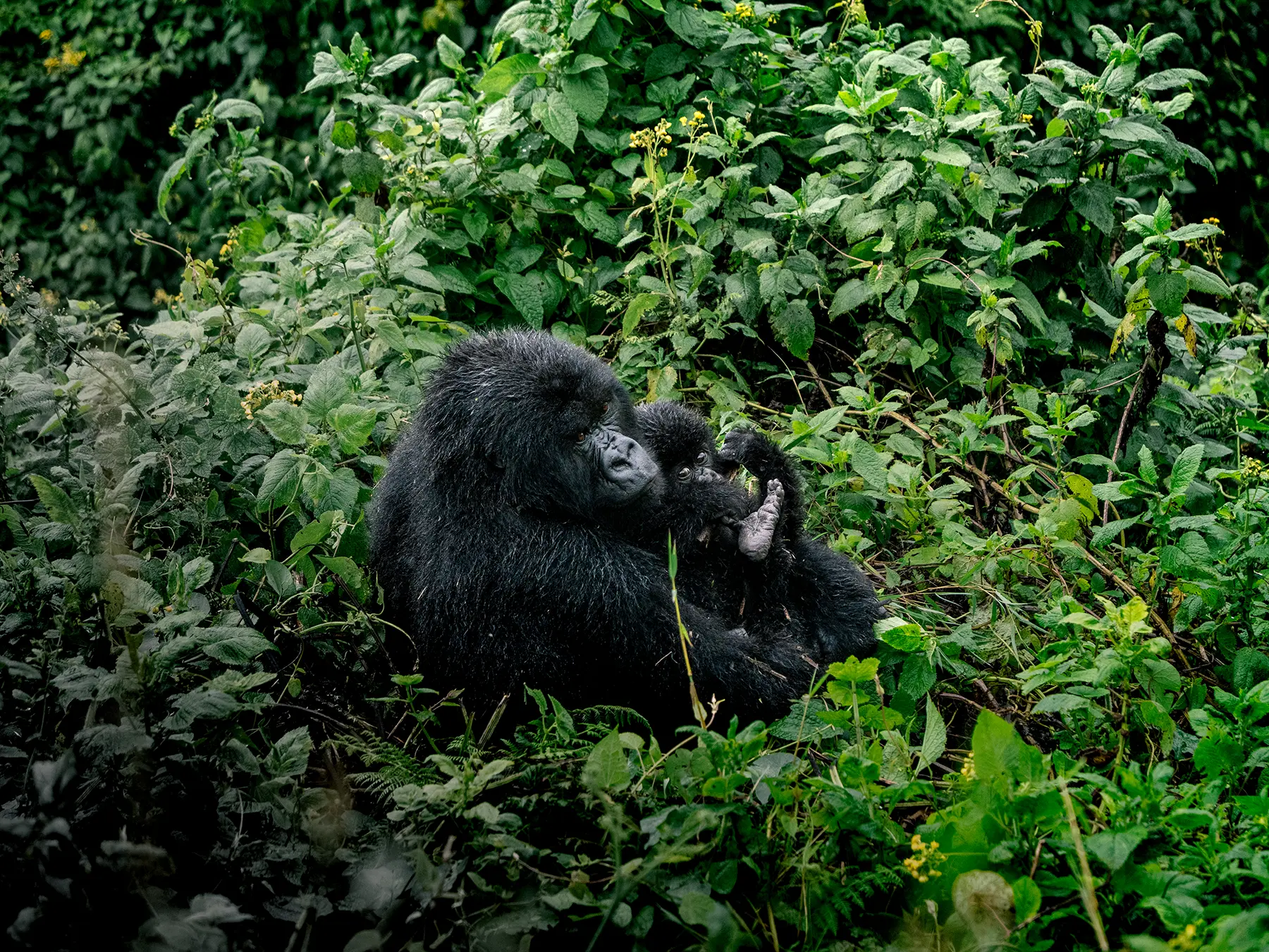
- For a longer itinerary, consider the 2-week Uganda and Rwanda safari itinerary which combines the best of both countries.
Read More East Africa Guides
View guides relating to Tanzania and Kenya below.
Read More Tanzania Guides
For an overview of planning your safari, you can read my Ultimate Tanzania Safari Guide.
Tanzania Itineraries
Recomended itineraries and how to book them.
7-10 Day Tanzania Safari Itinerary & Costs
5-Day Tanzania Safari Itineraries & Costs (6 unique Itineraries)
3-Day Tanzania Safari Itinerary & Costs
2-Week Tanzania & Zanzibar Safari Itinerary & Costs
3-Week Tanzania Safari Itinerary & Costs
10-Day Tanzania Honeymoon Itinerary & Costs
Tanzania and Kenya Itineraries
Multi-country itineraries and how to book them.
10-Day Kenya and Tanzania Safari Itinerary
2-Week Kenya & Tanzania Safari Itinerary
3-Week Kenya & Tanzania Safari Itinerary
Costs & Planning
How to get the most bang for your buck and the best time of year to visit depending on what you want to do and see.
Tanzania Safari Cost – Everything You Need to Know!
The Great Wildebeest Migration Guide
Zanzibar Island – The Complete Guide
National Parks & Reserves
Complete guides to the best and most famous safari reserves, including the wildlife you’ll see, entrance costs and best time to visit.
Comparison With Other Safari Destinations
How to Book Your Safari
Save time and ensure an incredible safari experience by getting quotes from my recommended local safari companies.
Join the rapidly growing tribe of over 1,000 travellers who’ve booked their dream safari using my insider tips and recommendations.
Read More Kenya Guides
For an overview of planning your safari, you can read my Ultimate Kenya Safari Guide.
Kenya Itineraries
Recomended itineraries and how to book them.
7-10-Day Kenya Safari Itinerary
3 Day Kenya Safari Itinerary & Costs
2-Week Kenya Safari Itinerary & Costs
3-Week Kenya Safari Itinerary & Costs
Kenya & Tanzania Itineraries
Multi-country itineraries and how to book them.
10-Day Kenya and Tanzania Safari Itinerary
2-Week Kenya & Tanzania Safari Itinerary
3-Week Kenya & Tanzania Safari Itinerary
Costs & Planning
How to get the most bang for your buck and the best time of year to visit depending on what you want to do and see.
Kenya Safari Costs – Everything you Need to Know
The Great Wildebeest Migration Guide
National Parks & Reserves
Complete guides to the best and most famous safari reserves, including the wildlife you’ll see, entrance costs and best time to visit.
Coming soon.
Comparison With Other Safari Destinations
How to Book Your Safari
Save time and ensure an incredible safari experience by getting quotes from my recommended local safari companies.
Join the rapidly growing tribe of over 1,000 travellers who’ve booked their dream safari using my insider tips and recommendations.