
If you’re planning a safari trip to Tanzania or Kenya, there’s a good chance you’re hoping to witness one of the world’s last great wildlife migrations.
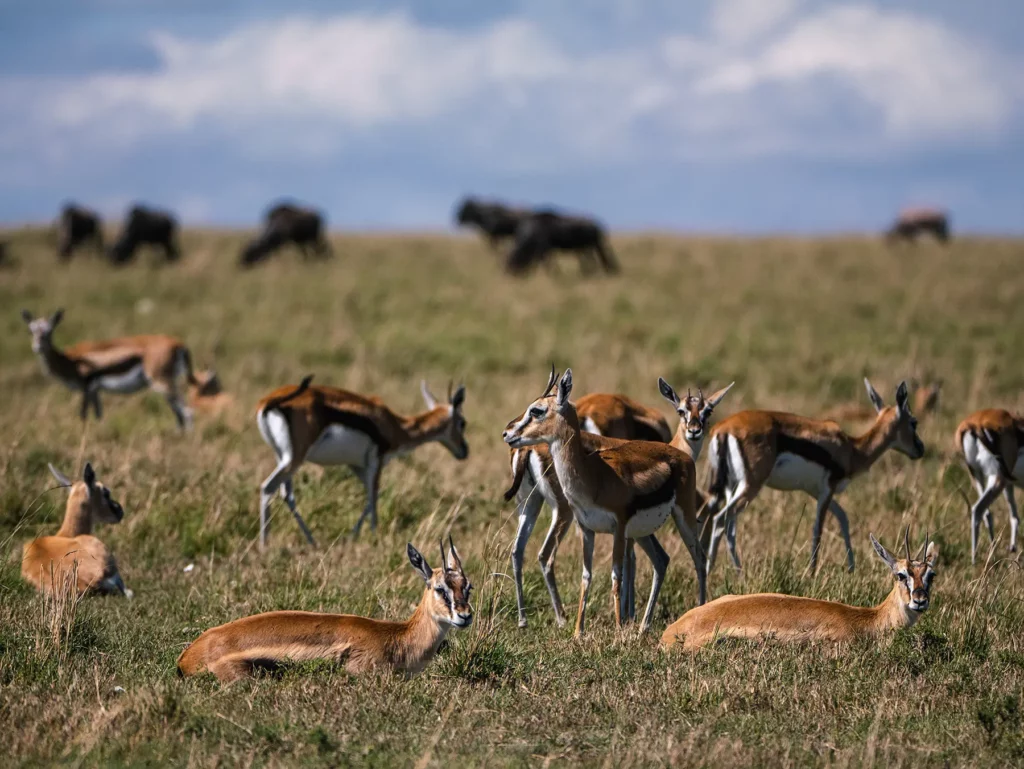
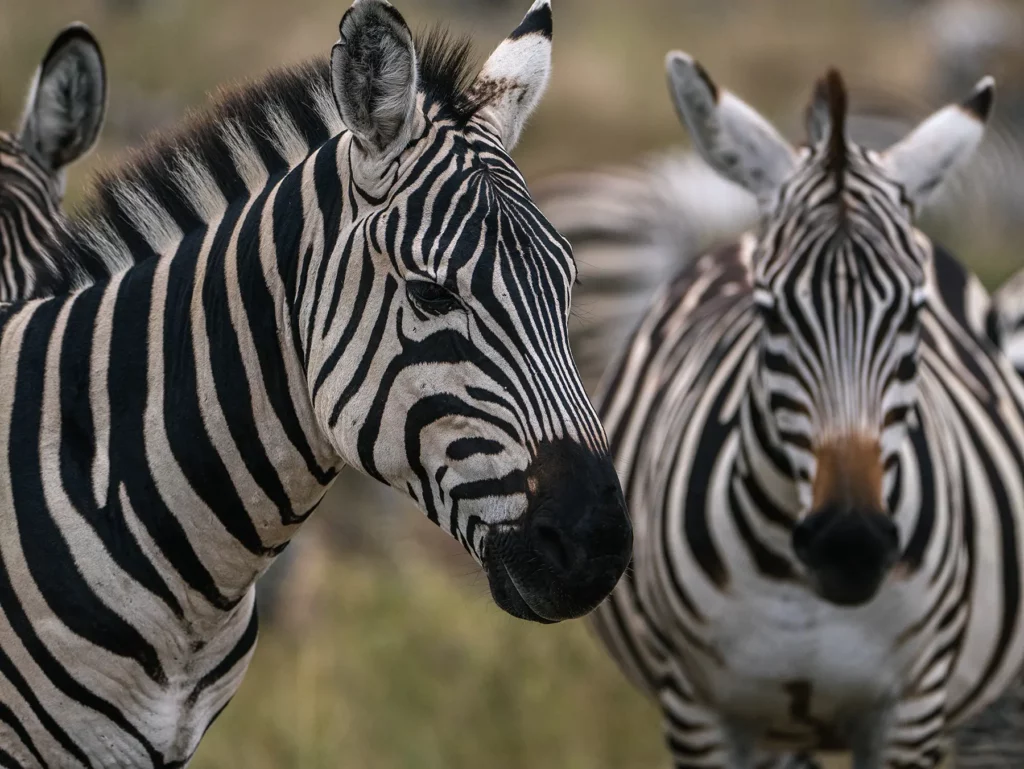
This world-famous, year-long phenomenon sees over 1.5 million wildebeest and hundred of thousands of zebras and gazelles follow their annual loop around the Serengeti Masai-Mara ecosystem.
The huge herds are driven by their pursuit of fresh pastures, culminating in dramatic river crossings where strong currents and giant crocodiles threaten to cut some of their journeys short.
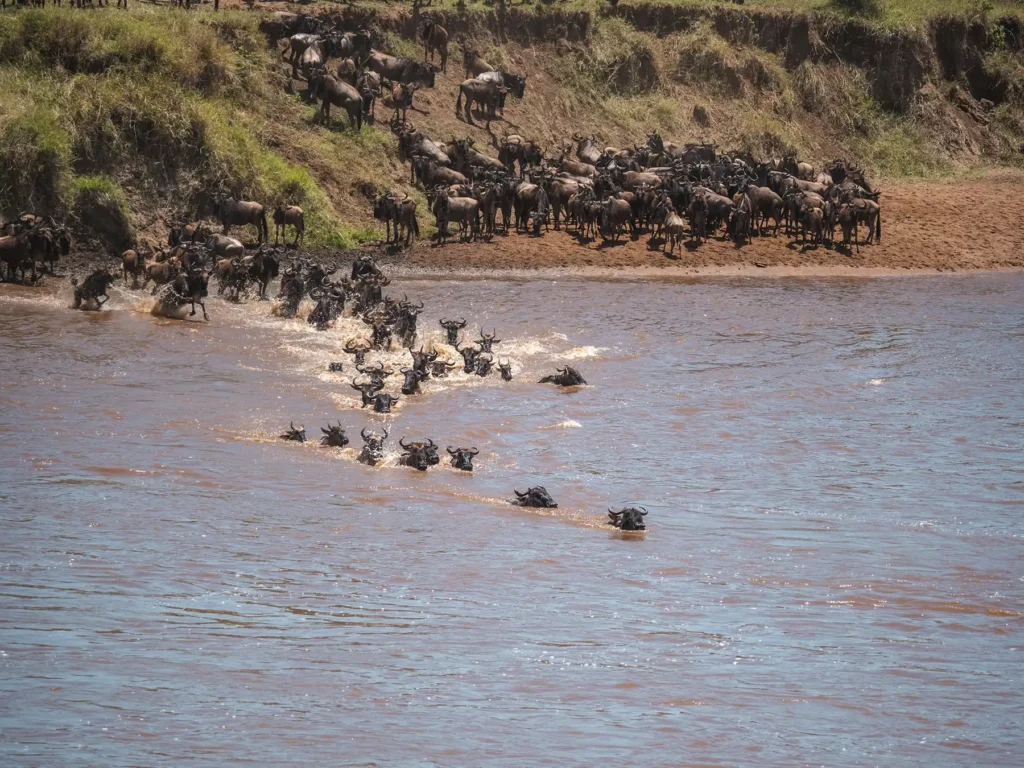
The Great Migration has played a vital role in the Serengeti ecosystem for more than one million years – long before modern man first walked the savannah.
Today, an incredible eighty percent of the world’s wildebeest population lives in the Ngorongoro and Serengeti ecosystems.
Thanks to on-going conservations efforts funded in part by tourism, this incredible journey could continue future generations to witness.
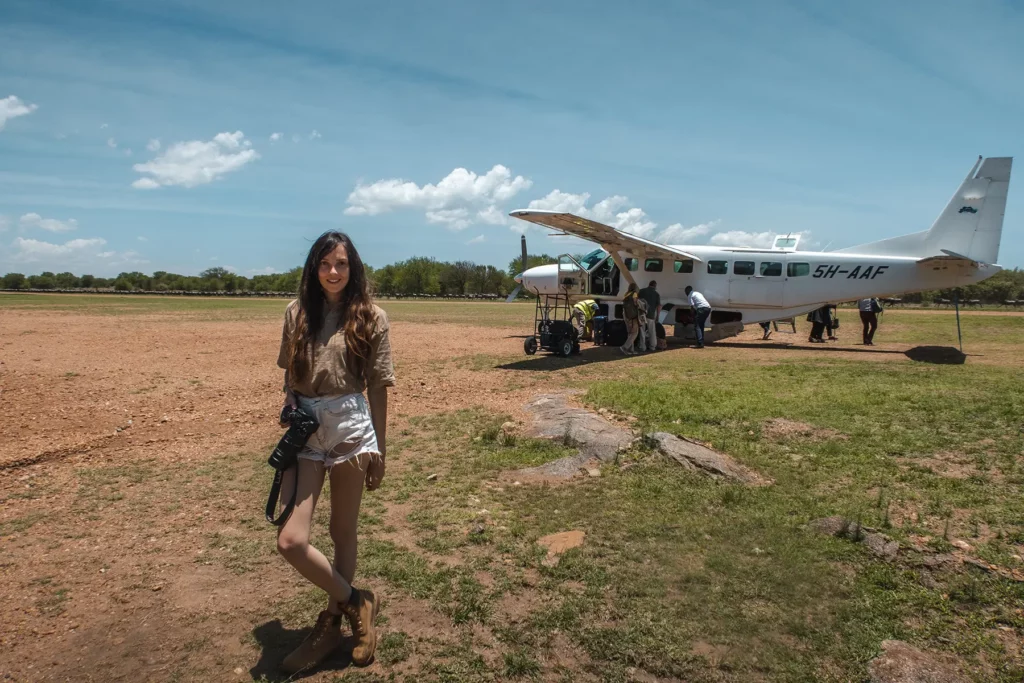
In this post, I’m going to take you through everything you need to know about planning your Great Migration safari adventure.
You’ll learn the best times of year to visit and see the highlights, such as river crossings and the calving season. I’ve even included a month-by-month breakdown to help you decide when to plan your trip. I’ve also included some history so you can impress your guide and other travellers with your knowledge of the migration.
After multiple visits to Kenya and Tanzania, I can’t wait to share my experiences with you. Read on to discover my tips and learn what makes the Great Migration so special.
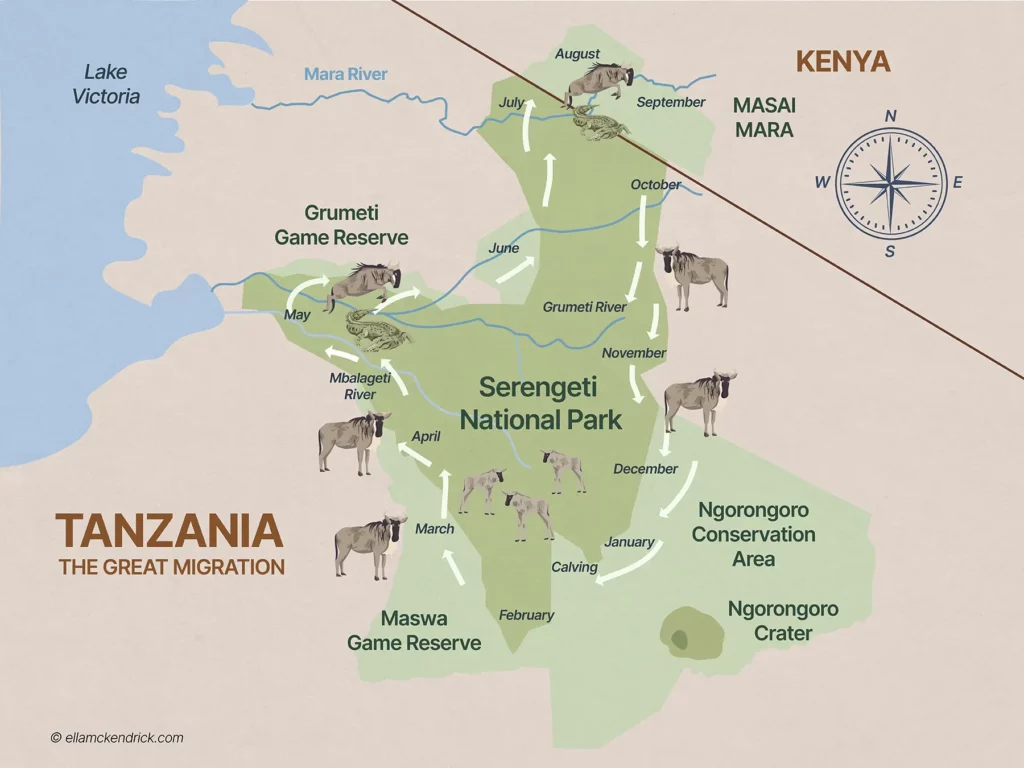
Wildebeest Migration Map
I’ve created a quick visual guide to show the month by month movements of the migration across Tanzania’s Serengeti and Kenya’s Maasai Mara.
Wildebeest Migration Quick Facts
- It’s estimated the migration started over 1.5 million years ago
- Number of animals: over 1.5 million wildebeests, accompanied by hundreds of thousands of zebras and gazelles
- Distance traveled: 800 miles (1,000 km).
- 8,000 wildebeest calves born per day in Jan to early March
- What influences the route: Seasonal rainfall dictates where herds move in search of grazing and water
- Highlights: Mara River Crossing, Grumeti River Crossing, Calving Season
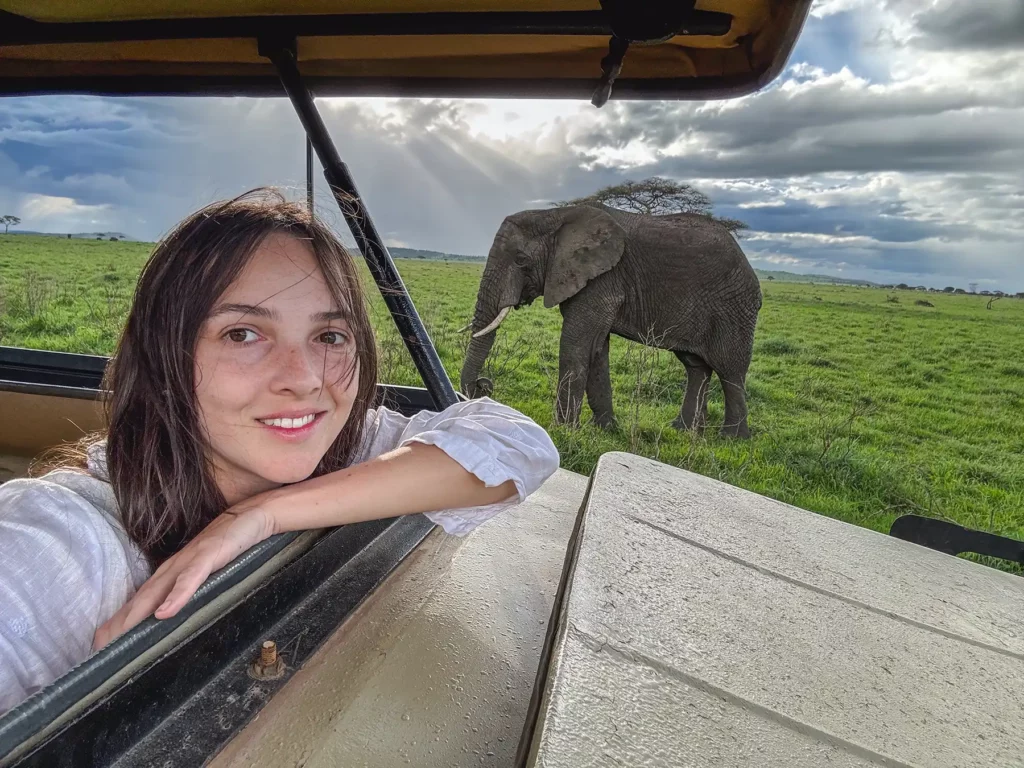
Embark on the Safari of Your Dreams
Save time and ensure an incredible safari experience by getting quotes from my recommended local safari companies
I’m here to make booking your perfect safari quick, easy and risk-free.
Join the rapidly growing tribe of over 1,000 travellers who’ve booked their dream safari using my insider tips and recommendations.
It takes under 60 seconds to fill out the form and in under 48 hours you will receive multiple, no-obligation proposals from my favourite local tour operators with glowing online reviews.
Get your free no-obligation safari quotes and my top safari tips and recommendations
In this Guide
- Best Time to See The Migration
- Location of the Migration
- How Long is the Wildebeest Migration
- History of the Migration
- Modern-Day Threats to the Great Migration
- Is Tanzania Or Kenya Better For The Great Migration?
- The Migrations Vital Role in the Serengeti-Masai Mara Ecosystem
- Highlights of the Wildebeest Migration
- What To Expect, Month By Month
- How to Book a Wildebeest Migration Safari
- How Much Does a Migration Safari Cost?
- Accommodation for the Migration
- Wildebeest Migration Balloon Safaris
- Great Wildebeest Migration Video
- Other Great Wildlife Migrations
- Final Thoughts
- Read More Guides
When is the Best Time to See The Great Wildebeest Migration?
The Great Migration is a year-round phenomenon, yet if you want to witness the migration during its most spectacular moments, you’ll need to be in the right place at the right time.
The pattern of the Wildebeest Migration is reasonably consistent, which makes it possible to predict roughly where the animals will be, and when. However, it’s important to remember that the seasonal rains determine the migration. If weather patterns are unusual, it becomes harder to anticipate when the herds will arrive in particular locations. Sometimes they’re early, sometimes they’re late.
Generally speaking, the best time to visit Tanzania to see the Wildebeest Migration is between July and September. This is the dry season, which makes it easier to travel around the Serengeti National Park and access the herds. This is also when the dramatic Mara River crossing takes place.
Meanwhile, if you’re heading to Kenya, the ultimate time to see the migration is between August and October when the animals arrive in the Maasai Mara.
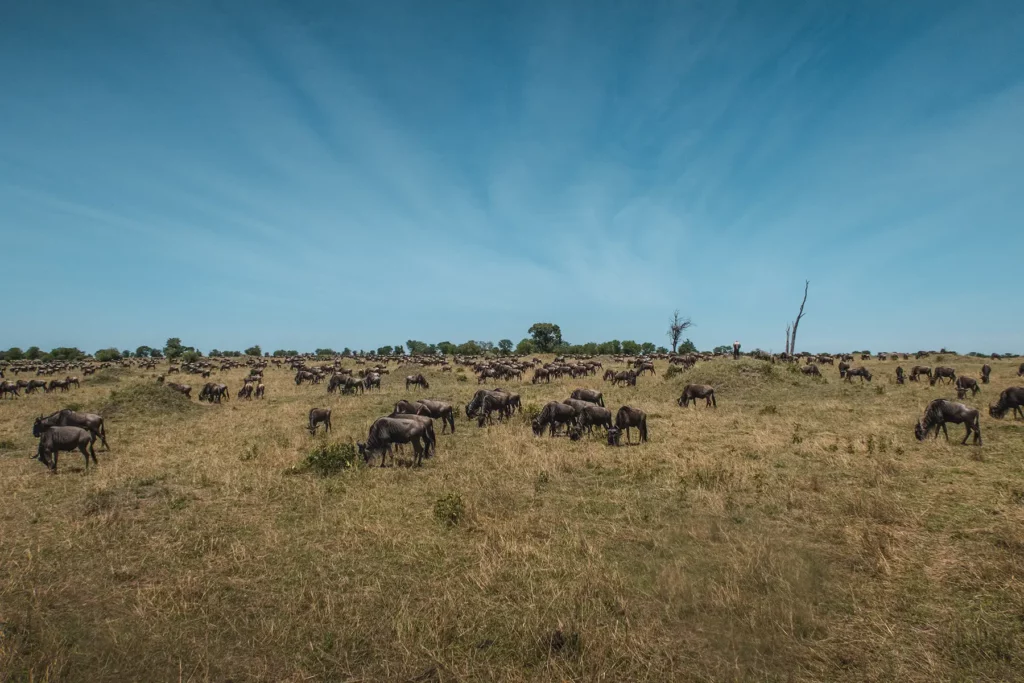
When you book your migration safari, you need to consider what you want to experience, as that will determine both the location and month of your trip. The main events of the migration are the calving, the river crossings, and, of course, seeing the vast herds blanketing the plains for miles around.
In the Great Wildebeest Migration Highlights section below, I’ll discuss the monthly migration cycle to help you decide when to visit.
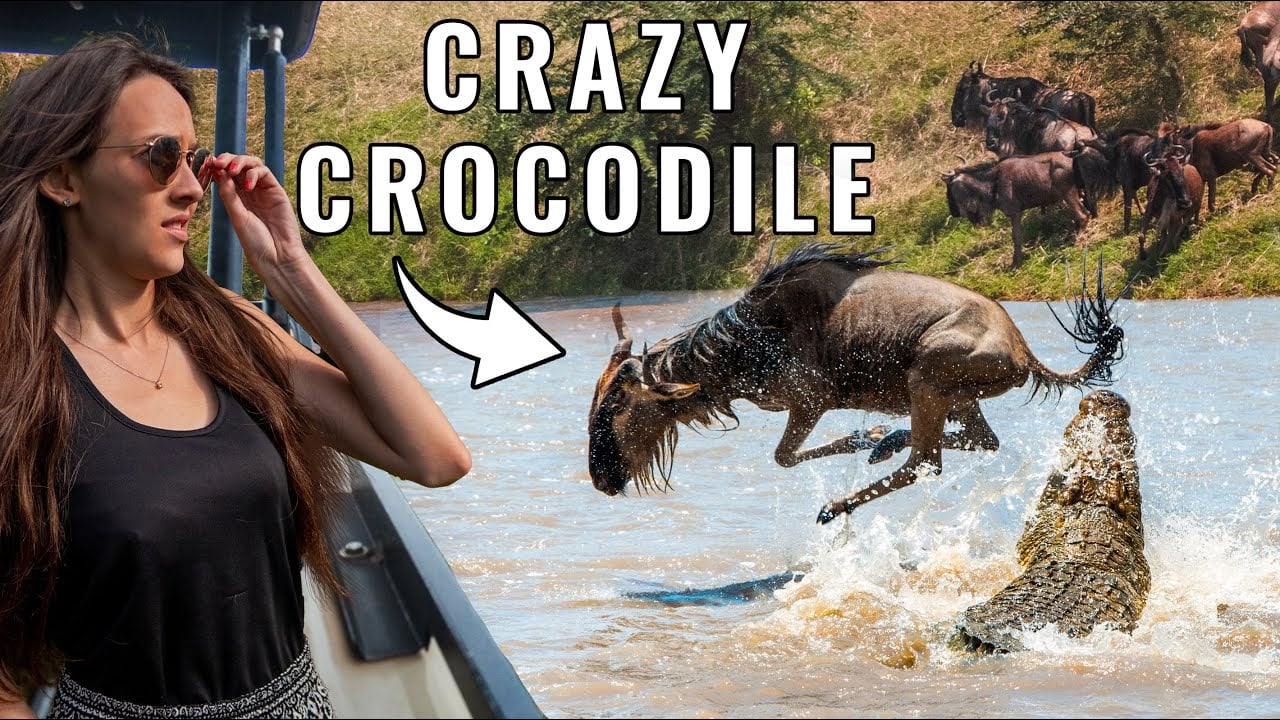
You can see my Mara River crossing safari experience in the video below.
What’s the Location of the Wildebeest Migration?
The Great Wildebeest Migration takes place in both Kenya and Tanzania in East Africa.
The Great Migration is always on the move, taking a vast circular route through Southern Kenya and Northern Tanzania. Herds move in a clockwise direction, as they follow the rains in the constant search for greener pastures and water.
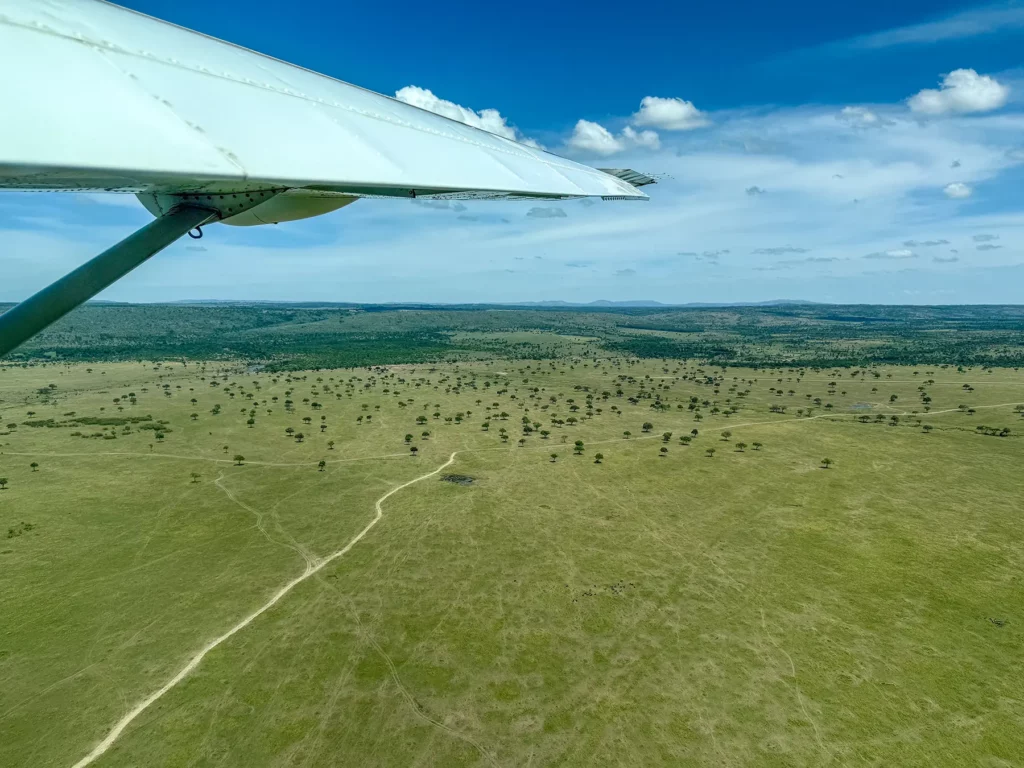
The Wildebeest Migration in Africa is mainly concentrated in the Serengeti National Park in Northern Tanzania and the Maasai Mara National Reserve in southern Kenya.
How Do the Wildebeests Know Where to Go?
We don’t know for sure, especially as the route is always changing slightly according to rainfall patterns. Baby wildebeests learn the approximate route in their first year of life and wildebeest have an incredible ability to detect rain over 50km away, which plays a big role. How they do this, we don’t know for sure.
How Long is the Wildebeest Migration?
The Great Migration route that circles through Kenya and Tanzania is around 800 miles long. It takes the herds a whole year to complete the trek before they start it all over again.
Rather than being all bunched together and arriving in the same place at once, the animals tend to be spread out over a considerable distance during their journey. This means the migration trail is relatively dispersed, so you have a good chance of spotting some action during safaris in Tanzania and Kenya.
What’s the History of the Great Migration?
There are many contradictions, half truths and even falsehoods written about the history of the Great Migration. I’ve spent some time studying the literature and trying to separate the facts from the fiction in order to give you the most accurate account of the timeline of this incredible wildlife spectacle.
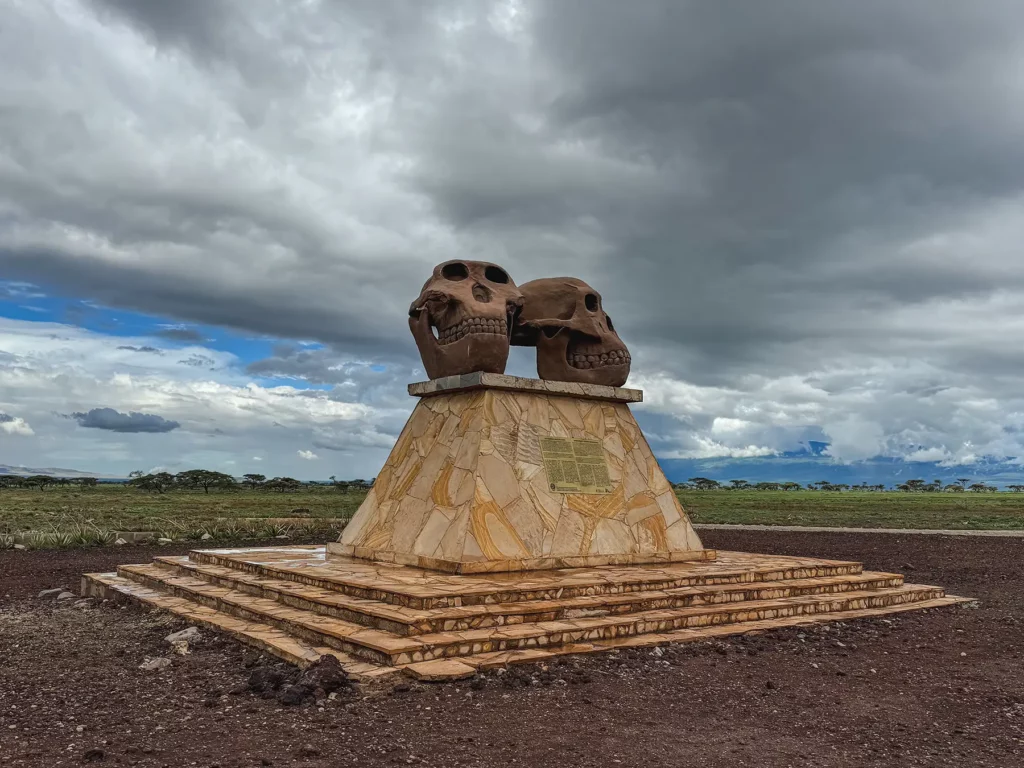
The first part of the story as we know it starts over 1.5 million years ago where fossils found near Olduvai Gorge (known as the cradle of mankind) in the Serengeti, tells us that species closely related to modern wildebeests roamed the Serengeti ecosystem at that time.
The large number of bones from adult male wildebeests suggest early hominins (our ancestors) may have been systematically hunting these animals.
Due to the seasonal availability of resources in the Serengeti ecosystem, it’s very likely wildebeests of the past followed a similar migratory route to their successors.
A key part of the great migration is the calving season on the fertile Ndutu plains of Southern Serengeti. The fertile nature of the soil in the Ndutu plains gives the grasses extra nutrients needed for the mothers to produce rich milk and for the babies to consume in the first weeks of their lives.
The nutrient-rich soils and grasses of Ndutu are largely a result of the Ngorongoro Volcano’s erupting and collapsing on itself approximately 2 – 3 millions years ago to form the now famous Ngongoro Crater (one of the top safari locations in Tanzania).
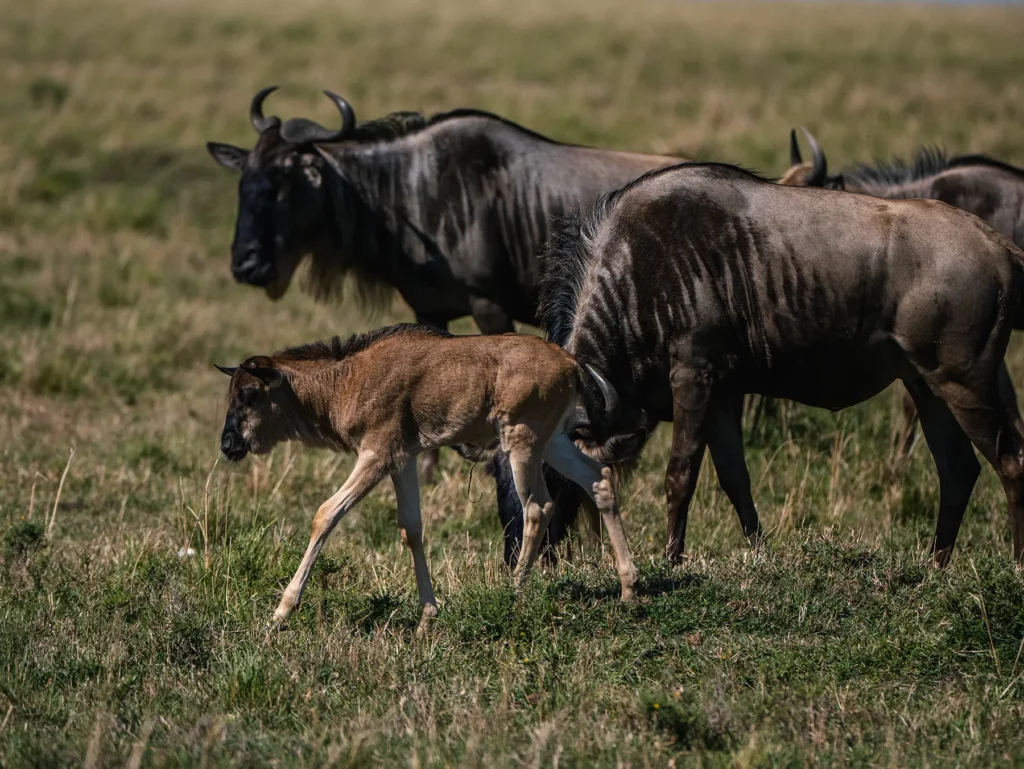
Therefore we can imagine that this may have been the start of the current path of the Great Migration as the collapse made this area notably more mineral rich than other parts of the Serengeti.
Whilst we don’t know the scale of the migration back then it’s estimated at more than 2 million individuals, at least 25% bigger than the migration of today.

The first formal documentation of the Great Migration came in a book called Serengeti Shall Not Die which was written by Bernhard Grzimek and his son, Michael around 1960.
The book and related film played a pivotal role in bringing attention to the Serengeti’s Great Migration and helping to protect the ecosystem for future generations to enjoy.
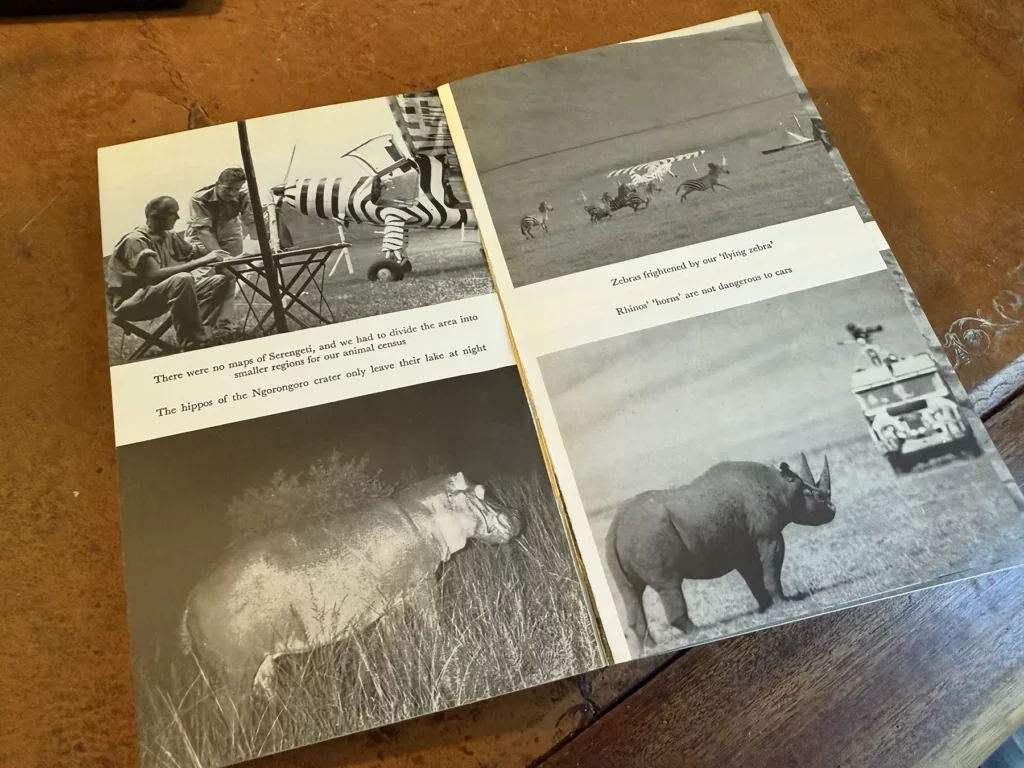
Bernhard and Michael Grzimek came up with a new idea of using a light aircraft to count the numbers of wildebeests by dividing the Serengeti up into counting blocks. In 1958 they counted just shy of 100,000 wildebeests.
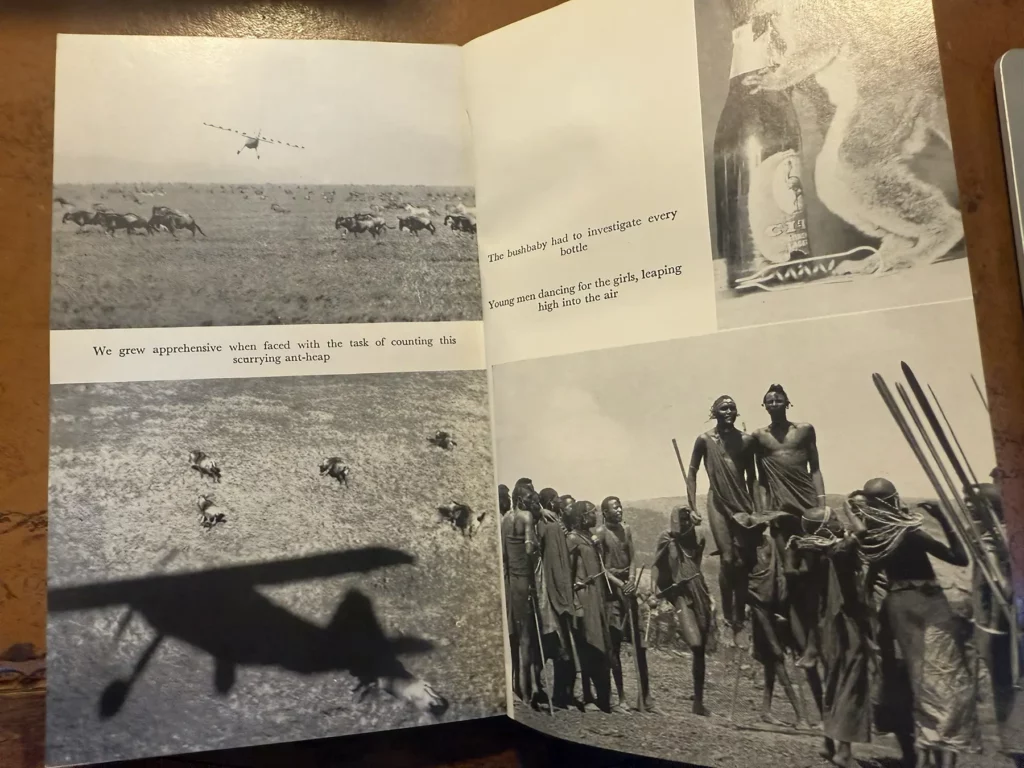
The number they of wildebeests they counted was a staggering 90% less than the 2 million estimated in the past. What had decimated the huge herds?
The answer is a disease called rinderpest, which came to Africa around 1900 from Italy via Ethiopia. The disease decimated both wildlife and domestic stock such as the pastoralist Maasai’s cow herds.
Wildebeest’s numbers dropped around 30,000 in the 1940s as they kept getting infected by the surrounding cattle. Zebras were unaffected by the disease and so their numbers stayed stable.
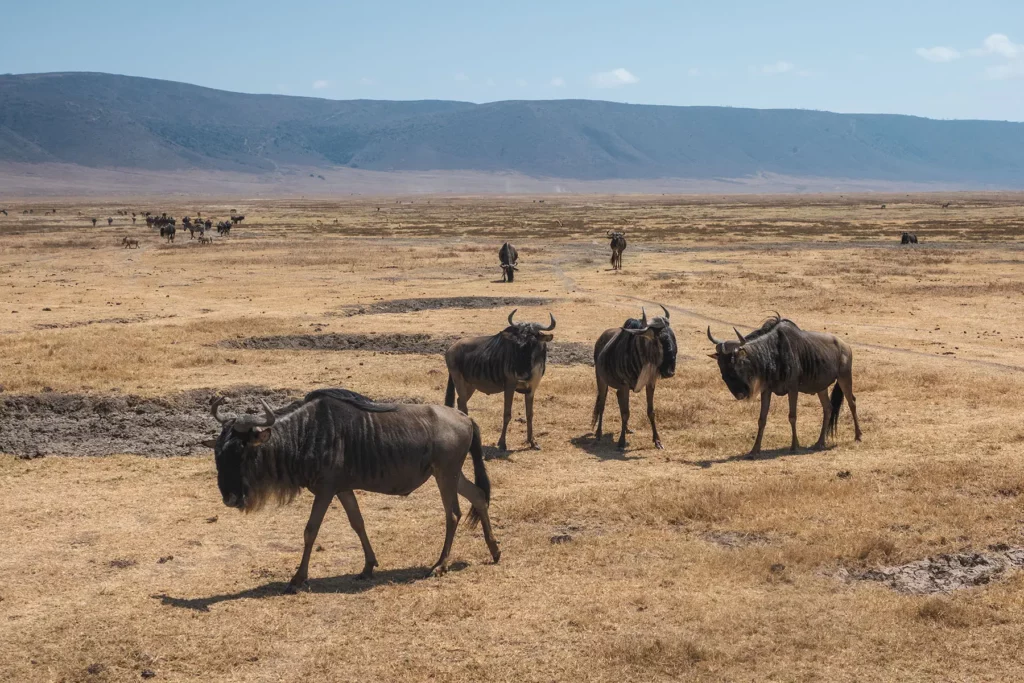
In the early 1950s, now a shadow of its former self, the Great Migration changed its route to migrating East from the plains to the West and back again in the rainy season.
Thankfully in 1950 a vaccination campaign in the cattle was able to successfully eliminate rinderpest from the area. No longer being killed off by the virus, the wildebeest numbers began to recover. By the 70’s, the population stabilised at around 1.3 – 1.5 million individuals.
Fascinatingly as the number once again grew and the herds had to search for new land to feed, the wildebeests seemed to remember the original routes of their ancestors and return to their old migration routes extending into the Masai Mara in Kenya.
Further research on the wildebeests in the Serengeti has been conducted by a prominent biologist and wildebeest expert, Dr Richard Despard Estes. Dr Estes completed his thesis on the wildebeest of the Ngorongoro Crater and spent the following 40 years doing field work in Africa to further our understanding of mammals and particularly wildebeests. Much of this work is summarised in his book The Gnu’s World (published in 2014).
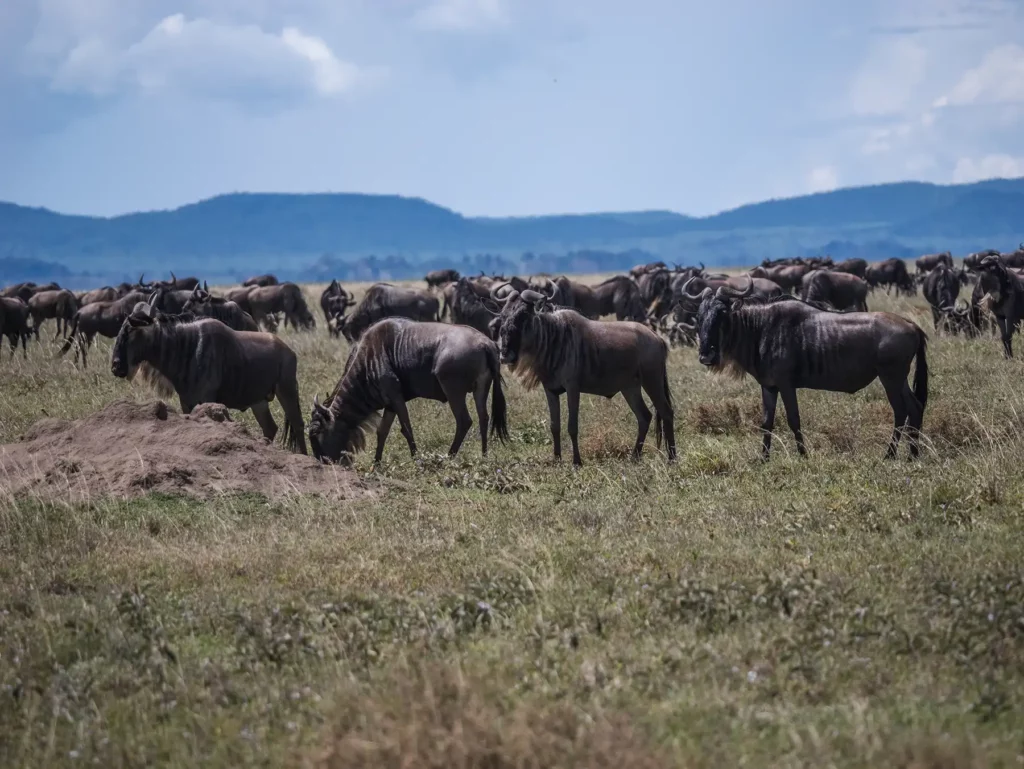
Did you know? Wildebeest Have No Social Structure
The only social structure wildebeests have is the mother-calf bond. They don’t have families, herds or any hierarchy. They are all free agents who may join other herds and may lead or follow.
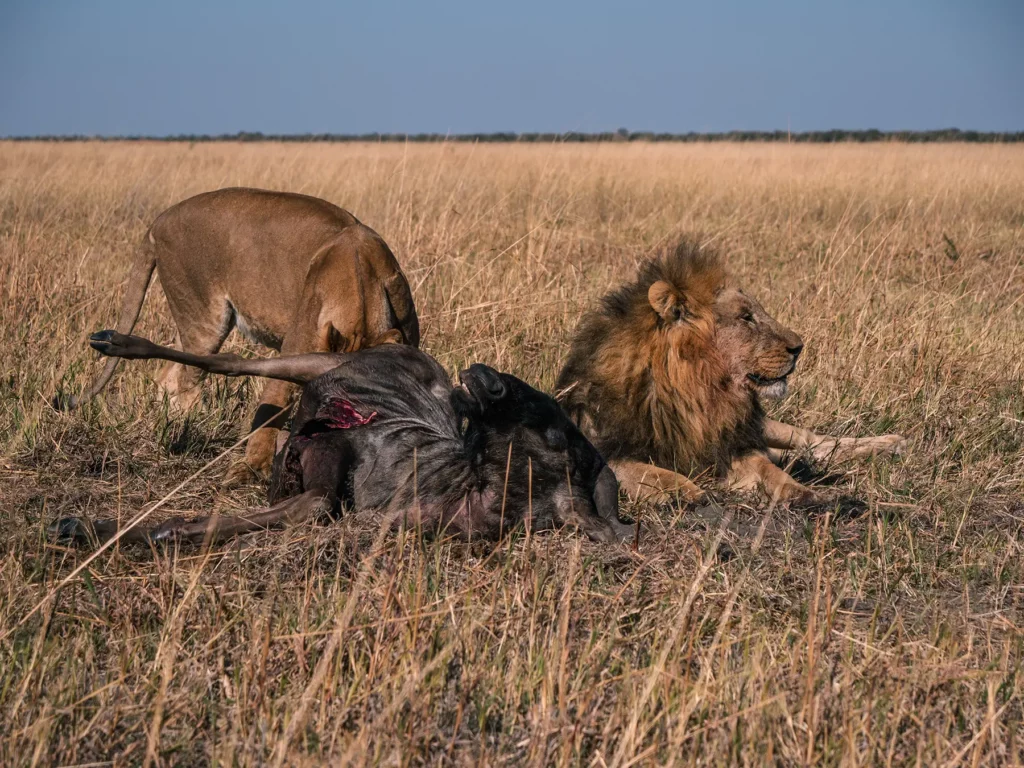
This has benefits of strengthening the gene pool as individuals are always mixing. Another advantage is that since there are no leaders there is no point of weakness for predators. One wildebeest might start moving and tens of thousands might follow them, if they are killed by predators, it has no effect on the migration and any other wildebeest can opt to take the lead.
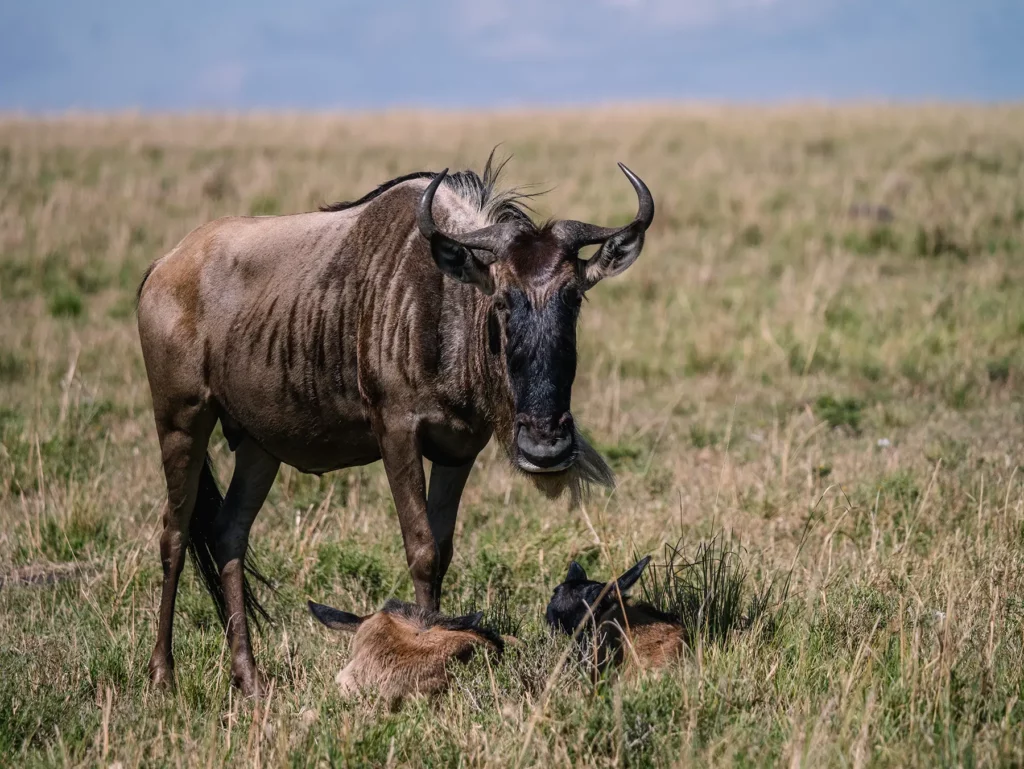
Modern-Day Threats to the Great Migration
A 2024 United Nations Report found that 44% of the world’s migratory species are declining.
Key threats to the Great Wildebeest Migration mirror those of other migrating wildlife.
Factors include climate change affecting the availability of water and food sources, habitat loss as a result of expansion of agricultural land and related fencing and barriers blocking migration routes and, poaching with an estimated 40,000 wildebeests poached for meat each year.
As a result of funds from tourism in Tanzania and Kenya, there is funding for conservation efforts including habitat restoration and anti-poaching measures to help ensure the great wildebeest migration can be witnessed by generations to come.
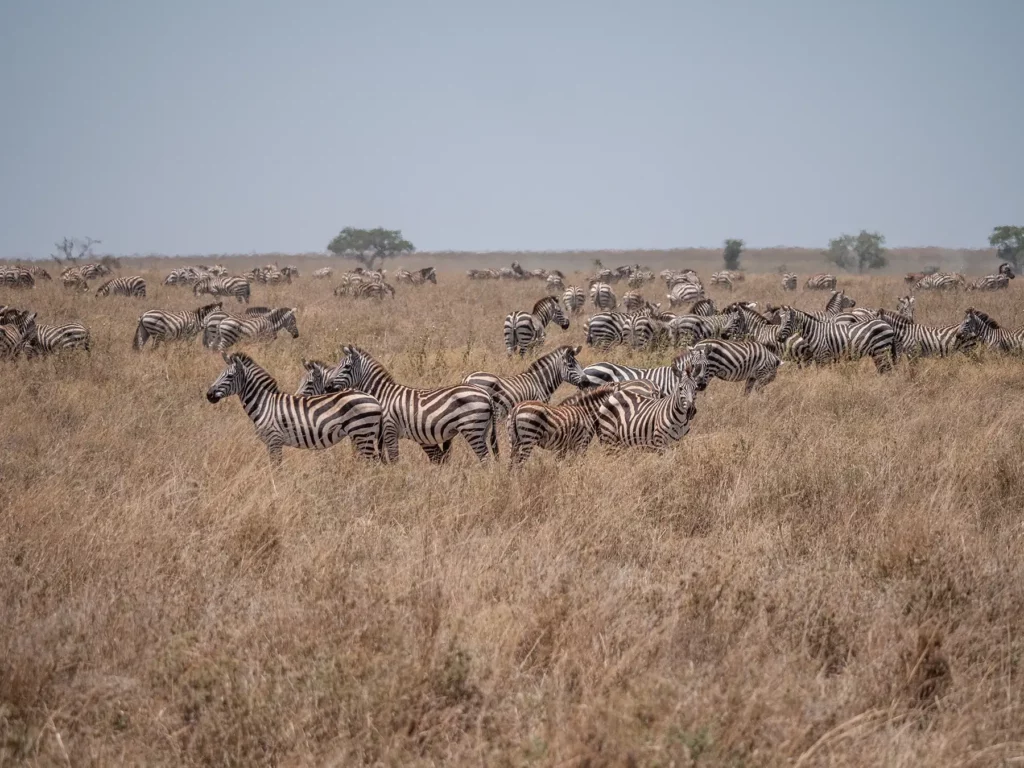
Much has been done over the last 50 years to ensure the wildebeests can continue their traditional migration route uninterrupted.
However, these measures cannot be taken for granted as during the Covid pandemic poaching increased as restricted tourism meant lower budgets for anti-poaching initiatives.

Is Tanzania Or Kenya Better For The Great Migration?
Both countries can provide you with opportunities to witness the famous migration. However, Tanzania has the edge in many respects. Firstly, the wildebeests can be seen in Tanzania throughout pretty much the entirety of the year whilst in contrast they only be seen in Kenya between mid-July and mid-October. Between mid-July and mid-October you can still encounter some herds in Tanzania as individuals tend to cross the Mara River back and forth several times.
Additionally, two of the three key events in the migration can only be witnessed in Tanzania. Between January and March you can witness the calving season in Southern Serengeti. 8,000 baby wildebeests are born on average each day and watching them take their first steps is a truly magical moment. Then around May and June, the herds cross the Grumeti River in Serengeti’s Western Corridor. Whilst the crossing may not be as dramatic as the Mara River crossing, it still provides a lot of action with hungry crocodiles lying wait beneath the waves.
The highlight of the migration is undoubtably the Mara River crossing. This can be seen between mid-July and mid-October from either Tanzania or Kenya. The experience however differs from country to country. I’ll delve into the pros and cons of each below.
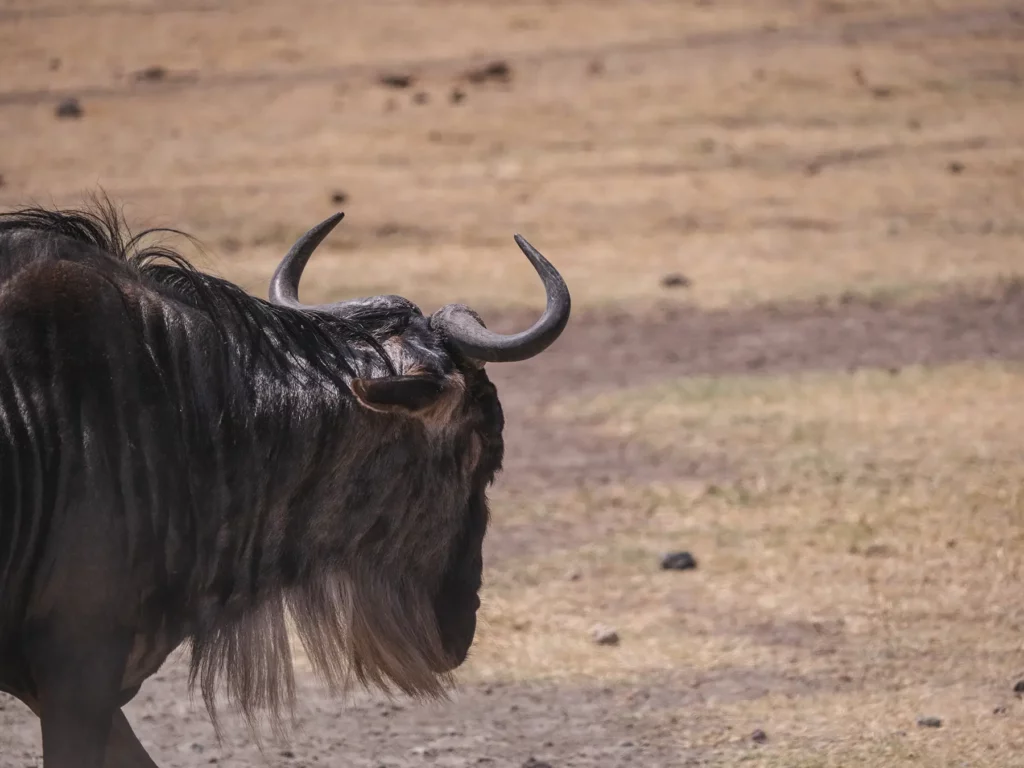
Tanzania is superior than Kenya for witnessing the crossing if you favour beating the crowds. The Masai Mara gets extremely busy during this time and you can expect to see dozens of vehicles lined up along the riverbank. Whilst the Serengeti is still undoubtably busy, its remoteness makes it slightly more exclusive.
Another benefit of choosing to view the Mara River crossing in Tanzania over Kenya is the park fees. Serengeti costs $70 + 18% tax per person per day to visit whilst the Maasai Mara costs $200 + 18% tax per person per day. Tanzania however also has the addition of a $60 + 18% tax concession fee if you spend the night there. Despite the concession fee, Serengeti is still slightly cheaper.
The main benefit of visiting Kenya over Tanzania to see the Mara River crossing is accessibility. The Maasai Mara is considerably smaller than the Serengeti and is closer to Nairobi (the nearest city) than Serengeti is to Arusha (nearest city). Travelling to the Maasai Mara takes 6 hours by road compared to around 10 hours from Arusha to Northern Serengeti. Furthermore, because of the Maasai Mara’s small size, you can stay outside the park and benefit from lower lodge rates.
Whilst both are extremely good locations for seeing the migration, Tanzania is ever so slightly better for the reasons listed above.
Did You Know?
Wildebeests are extremely efficient. They use the same energy per km/mile whether they walk or run which is good when their resources are far apart.
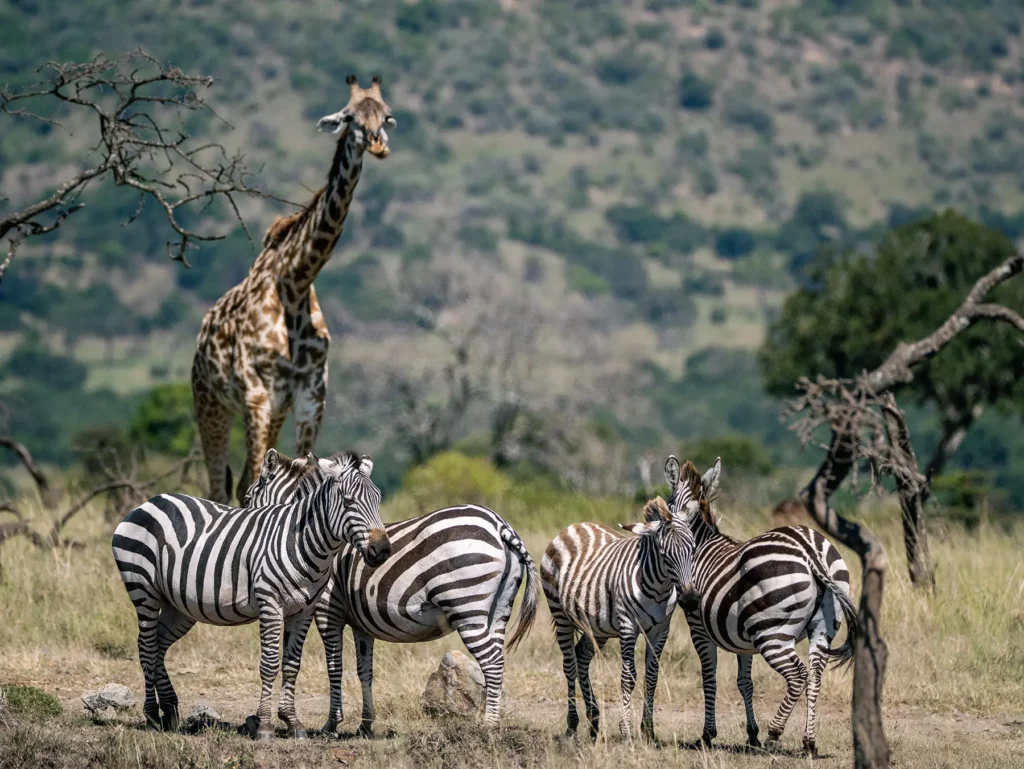
The Great Migrations Vital Role in the Serengeti-Masai Mara Ecosystem
Wildebeests are one of the most important parts of the Serengeti ecosystem. Whilst there is much we are yet to learn about the workings of the ecosystem, we know they’re an essential component.
Wildebeests are the gardeners of the Serengeti fertilising the plains with over 400 tones of dung daily! That’s $1.9 million USD (£1.5 million GBP) of dung annually at current dung prices.
As they graze on the grasses along with the zebras and gazelles this encourages the grass to produce new growth.
As they move the eating and trampling of the grasses prevents hot figures which can destroy trees and other vital habitats.
The wildebeest are an essential source of food for the thousands of predators who rely on the migration to sustain themselves and their young. What’s left by the predators will then be absorbed into the soil, acting as a nutritious fertiliser to ensure healthy grass growth in future and providing the wildebeests and other herbivores with future food to sustain themselves.
Great Wildebeest Migration Highlights
Aside from seeing the vast wildebeest herds stretching across the plains as far as the eye can see, there are two key spectacles during the migration; multiple river crossings and calving season.
River crossings bring plenty of dramatic action, whilst the calving season is the perfect time to see newborns and related big cat action.
In this section, I’ll highlight what you can expect from both.
You can jump to any of the about sections below.
Rivers Crossings
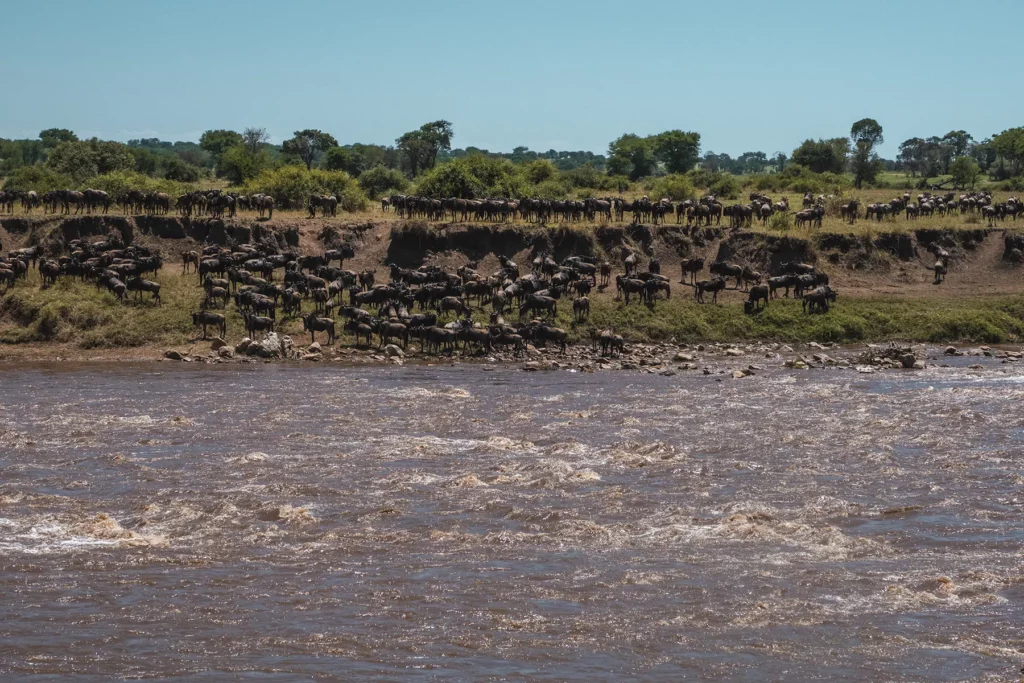
The famous river crossings are one of the highlights of any migration safari.
Quick Facts
- River crossings happen when rivers block the route of the great migration
- The Migration crosses the Grumeti River and the Mara River
- River crossings usually happen between mid-May to October however, exact times vary with the timing of the rains
- The Mara River crossing is usually more spectacular but also busier
- Sometimes the herds will wait for up to 5 hours on the banks of the river before the first one dares to cross and the rest will follow
- Crocodiles waiting in the water adds to the drama
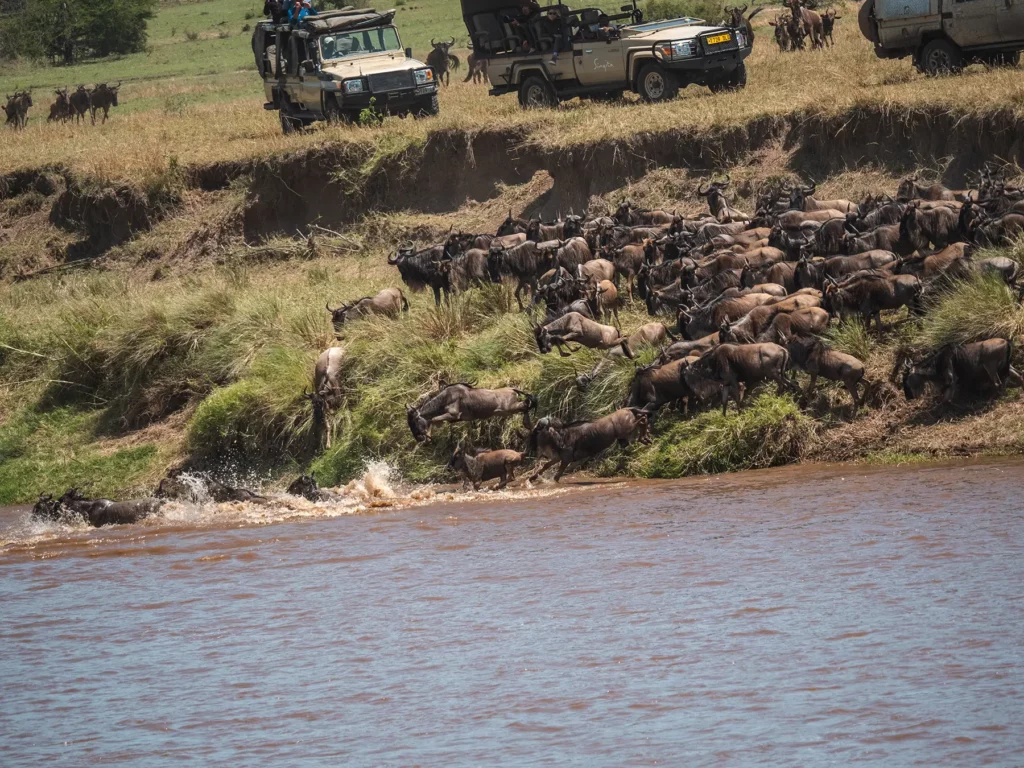
River crossings are the most perilous part of the Wildebeest Migration, and seeing the herds hurling themselves down the steep riverbanks before attempting to swim through the crocodile-infested gauntlet below is quite a sight. It’s chaotic, dramatic, and often heart-wrenching to watch, but seeing the survivors surging up the opposite bank always gives me a huge sense of satisfaction.
River crossings are often included on your safari itinerary depending on the time of year you visit. Two major rivers dissect the route of the Great Migration: the Mara River between Tanzania and Kenya and the Grumeti River in Tanzania.
Here’s what to expect in each location:
Mara River Crossing
The Mara River flows through the Masai Mara National Reserve in southern Kenya and the Kogatende Region in northern Tanzania. It’s one of the area’s primary water sources and a magnet for animals, particularly during the dry season.
Mara River Crossing Quick Facts
- Crossings take place mid-July to mid-October
- The Mara River crossings can be viewed from the Kogatende in the Serengeti (Tanzania) or Masai Mara (Kenya) side. Both offer great viewing.
- Masai Mara now has nearly 3 x higher park fees vs Serengeti but is closer to Nairobi Airport (around 6 hours drive).
- Kogatende in Northern Serengeti is a 10+ hour drive from Kilimanjaro Airport but you can break it up over multiple days visiting Ngorongoro Crater and Central Serengeti on the way.
- You can fly direct to airstrips in Kogatende in the Serengeti or Masai Mara which take around 1 hour and cost roughly £300 each way.
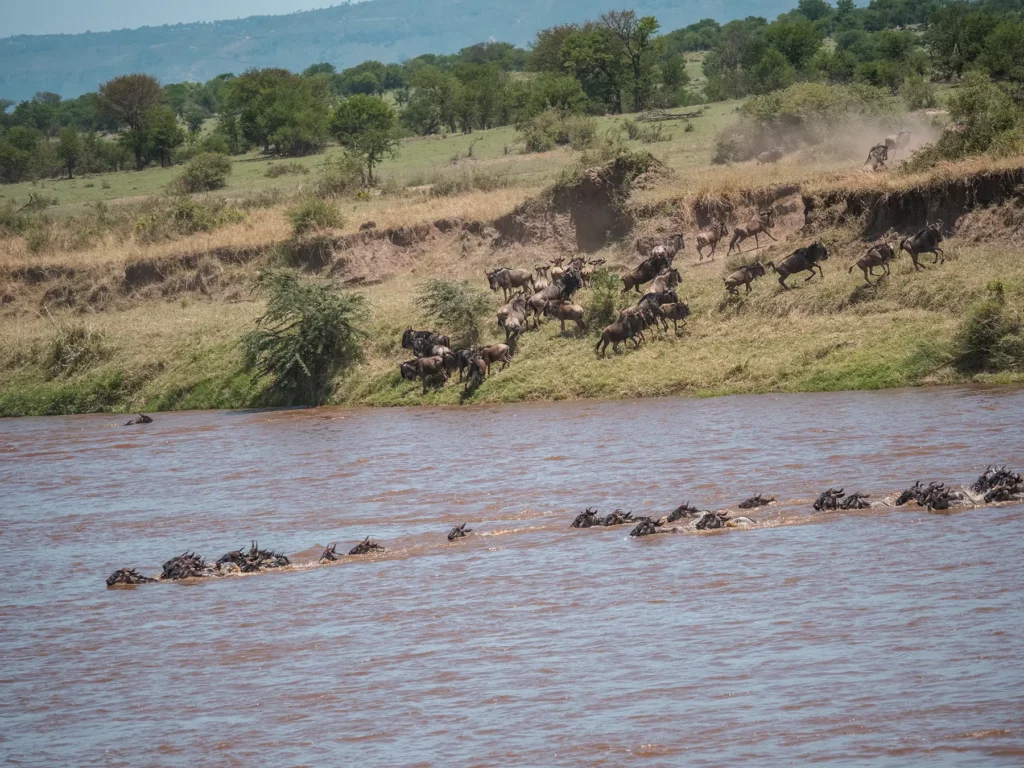
Lying directly in the path of the mega-herds of wildebeests, the Mara River is also the site of the most famous crossing on the Great Migration route. This is probably the one you’ll have seen in nature programmes and TV documentaries, where panicked herds of wildebeest fling themselves into the churning waters. I can tell you, it’s even better in real life!
The river winds through the reserve, so wildebeests often have to cross it several times. While this isn’t always good news for the animals, who have to brave the dangerous waters again and again, it’s great for you; multiple river crossings mean numerous chances to witness one.
Mara River crossings can be seen between July and October in the Masai Mara and Northern Serengeti. However, it’s important to note that the timings and locations of river crossings are unpredictable. Not even the wildebeests know when or where they’re going to take the plunge, so witnessing a crossing isn’t guaranteed.
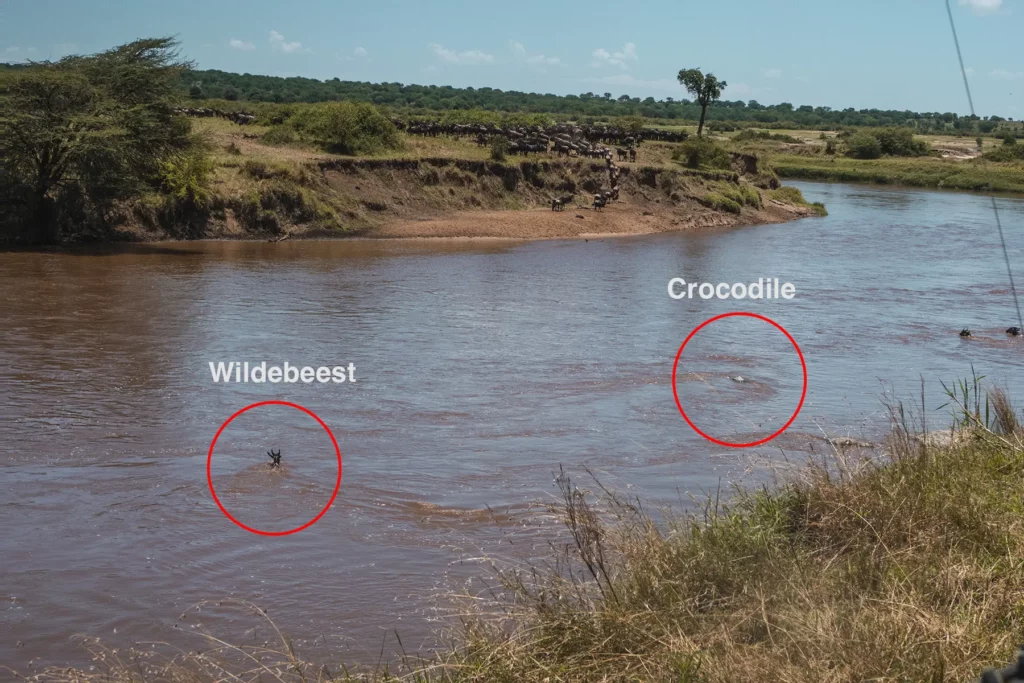
Due to the unpredictability of nature, It’s best to consider seeing this spectacle as a bonus rather than having it as the focus of your trip. The longer you’re out on safari, the higher your chances of seeing a river crossing, so book as many days in the area as possible.
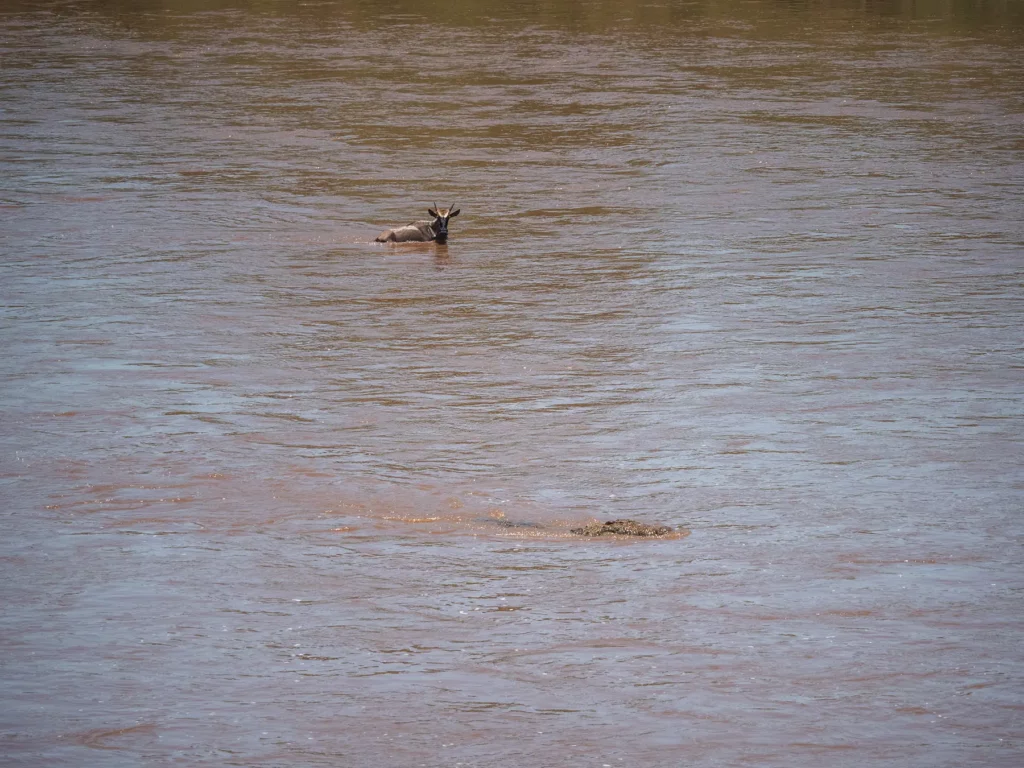
During my visit to the Serengeti in late September, I was able to see wildebeest crossing the river back into the Serengeti from the Masai Mara. The wildebeest typically spend hours milling around on the banks of the river before deciding to cross, however, I was incredibly lucky and they started crossing within about 5 minutes of arriving.

It was a hugely emotional moment when the wildebeest began to cross. The wildebeest leapt down the banks and swam through the river, battling the strong currents, but all made it to the other side.
However, further up the river, the current was stronger, and crocodiles were lying in wait. This crossing was more dramatic, and one of the weaker wildebeests struggled to get up the bank on the other side.
After tiring himself out, he was finally dragged into the water by a waiting crocodile. It was an incredible sight to witness and this is a key part of nature which helps ensure the survival of the fittest to strengthen the gene pool.
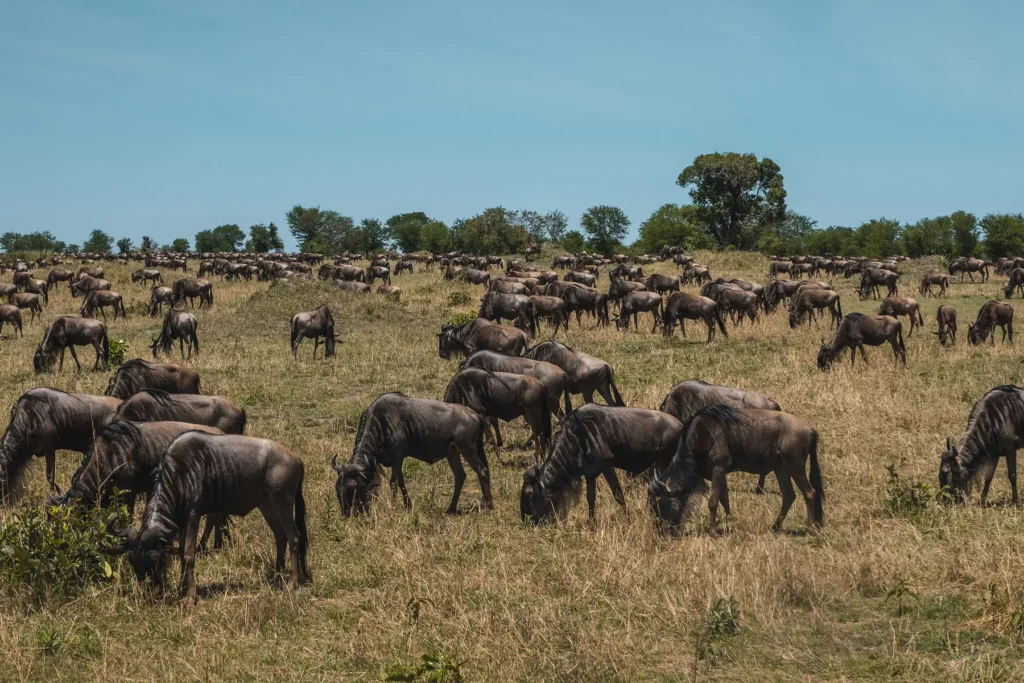
Grumeti River Crossing
Located over in the remote Western Corridor of the Serengeti in Tanzania, the Grumeti River is the first major crossing for the wildebeests on their trek north.
Grumeti River Crossing Quick Facts
- Occurs in the Western Corridor of the Serengeti (Tanzania) around May–June.
- Driving time from Kilimanjaro International Airport in Arusha is around 9 hours via the Serengeti’s Ndabaka Gate, which is the fastest route to the Grumeti River.
- Break up the drive by visiting other reserves as well as Central Serengeti which is is around 3-5 hours from Grumei River.
- Flying from Arusha directly to nearby airstrips takes about 1 hour and costs roughly £300 each way.
- Generally less crowded and smaller-scale than the Mara River crossing.
- Fewer wildebeests tend to cross at once compared to the Mara River crossing.
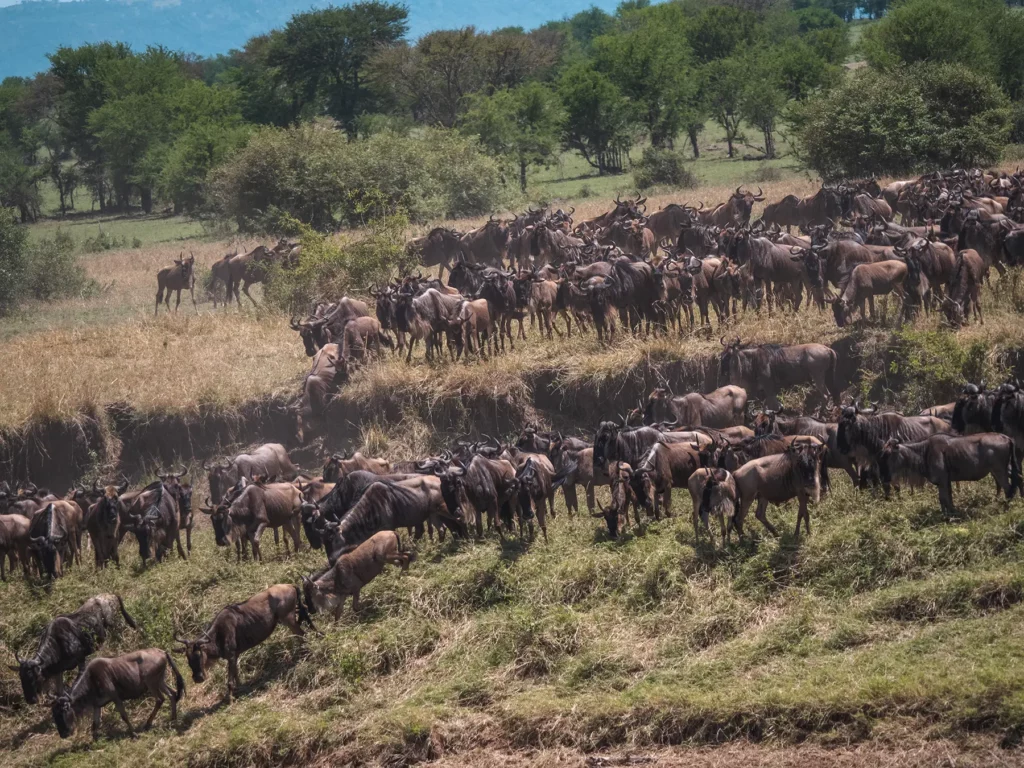
The Grumeti River crossing is on a smaller scale than the Mara River crossing. This is because the Grumeti River site is actually a series of pools and smaller channels, whereas the Mara River is a full-on deep-water crossing. Yet this doesn’t lessen the drama, and thrilling scenes have unfolded along the Grumeti, too.
Mara River crossings also tend to attract more tourists than the Grumeti ones, so you’ll probably enjoy a much quieter experience at the latter. This also means you’ll have a better chance of bagging the best vantage points for watching the action take place.
The best time to see the Grumeti River crossing is between May and June. However, there is usually a two-week window, dectated by the timings of the rains, so sightings aren’t guaranteed.
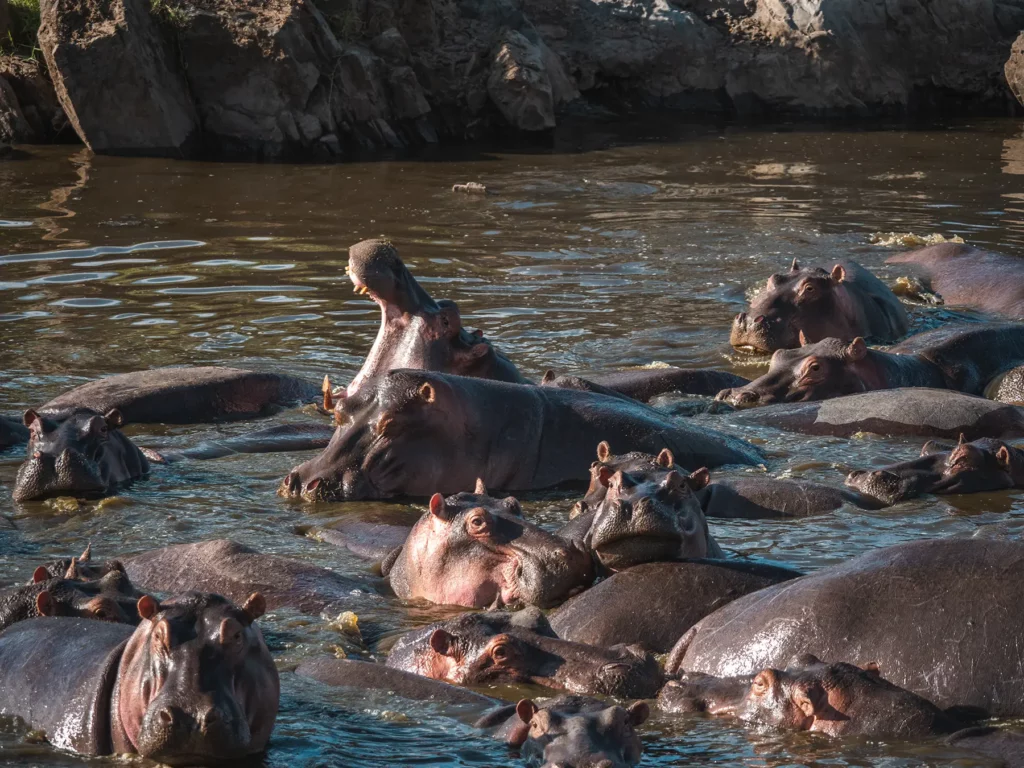
Great Migration Calving Season
The calving season is one of the greatest spectacles during the annual Wildebeest Migration cycle.
Great Migration Calving Season Quick Facts
- Takes place in January and February
- Occurs around the Ndutu plains is Southern Serengeti
- 8,000 wildebeests born each day
- Over half a million calves are born over the period
- Vulnerable prey attracts lots of big cats with the first and last babies most at risk
- Synchronised birthing helps survival rates as big cats are overwhelmed by the numbers
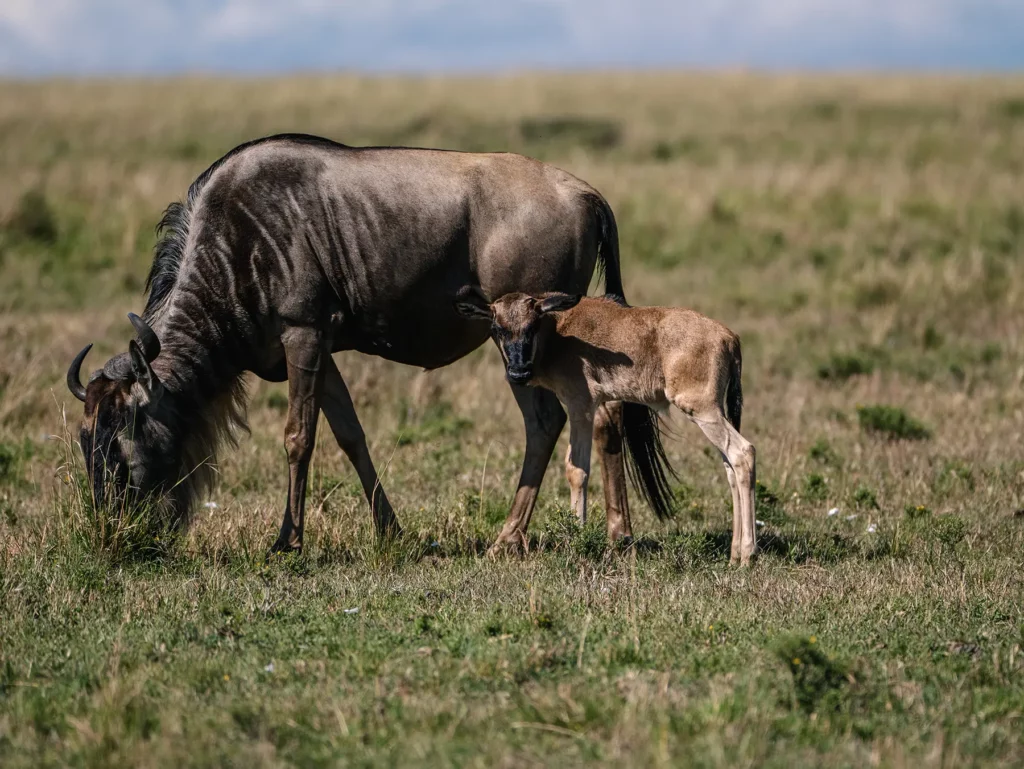
- Newborns are on their feet in under 5 minutes
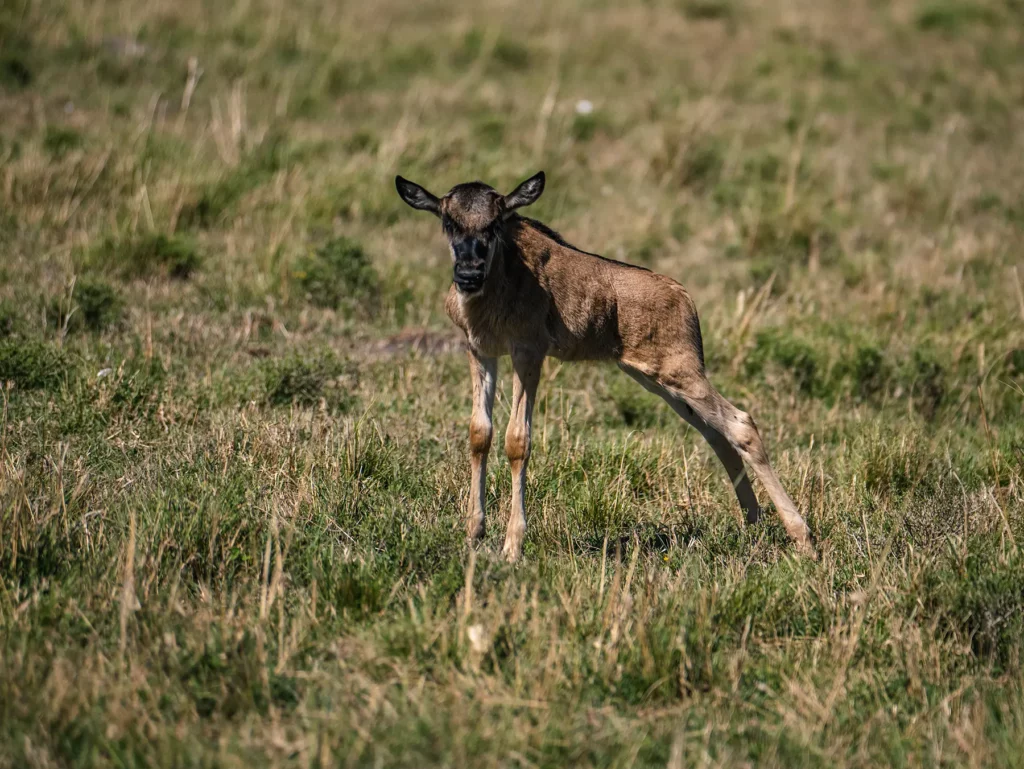
Birthing takes place on the grasslands in the Southern Serengeti region and extends into the Ngorongoro Conservation Area. For the best experience, head to the Ndutu Plains, where most of the calving occurs.
Migratory herds begin arriving in Ndutu at the end of December, with the main calving months being January, February and early March.
Around 8,000 wildebeests are born here each day according to a count performed by one of the world’s most prominent wildebeest expert, the biologist Dr Richard Estes. The calving period dramatically increases the herd size by over half a million individuals.
The animals remain until April, grazing on the sweet grasses before continuing their journey north.
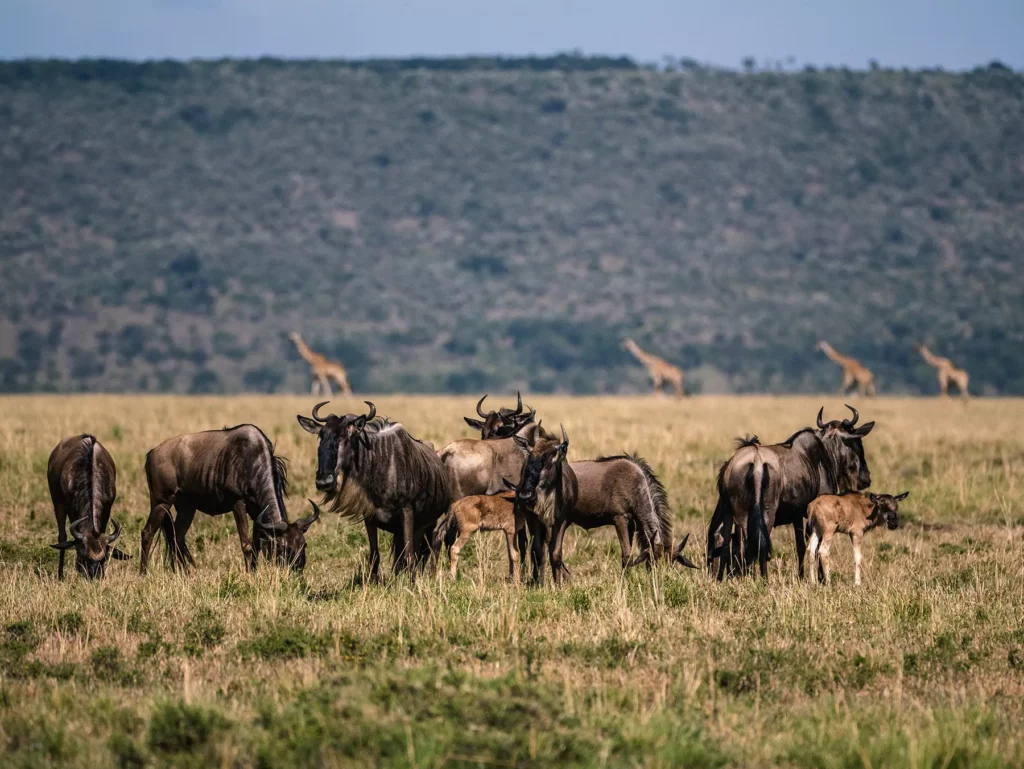
Wildebeests, zebras and gazelles choose the Ndutu Plains for calving as the grasses here are exceptionally rich, thanks to the Ngorongoro Crater area’s volcanic past. Ash from historic eruptions fertilised the plains of Ndutu, providing healthy soils for vegetation to grow which provides essential nutrients for birthing mothers.
The short rains in November and December ensure that the savannahs of the Southern Serengeti and Ndutu are lush, providing essential nutrition to grazers, young and old. This area offers the ideal nursery, with soft, young shoots for the newborns to feast on.
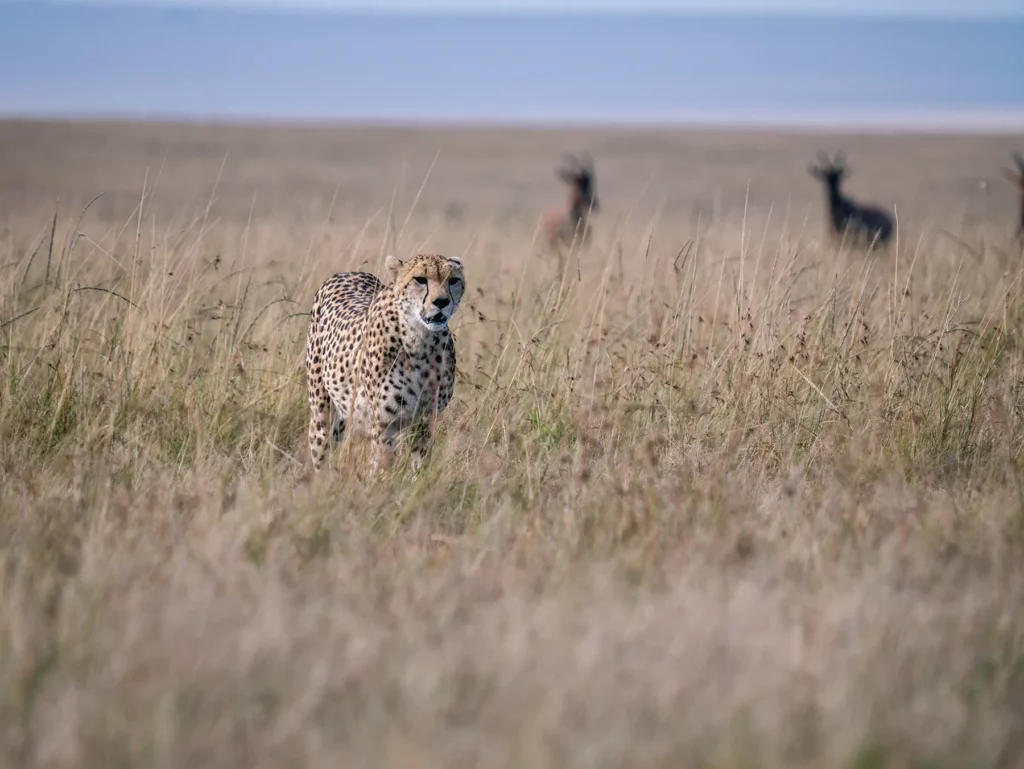
Calving season is also a great time to see big cat activity. The presence of so many vulnerable newborns means that opportunistic predators are active at this time of year.
The wildebeests have evolved to have synchronised birthing as so many babies being born at the same time overwhelms the predators giving the newborns safety in numbers. A large proportion of the births happen in 1 – 2 weeks.
The babies who are born at the start and end of the period are most at risk as they stand out and are picked off by predators such as hyenas, lions, leopards and cheetahs.
Newborn calves have to be fast to survive and many are on their feet in 5 minutes of being born, suckling milk after 10 minutes and able to run with their mothers after 15 minutes.
Another reason mothers choose Ndutu to give birth here is because the short grasses ensure that predators can’t sneak up on the wildebeests without being spotted.
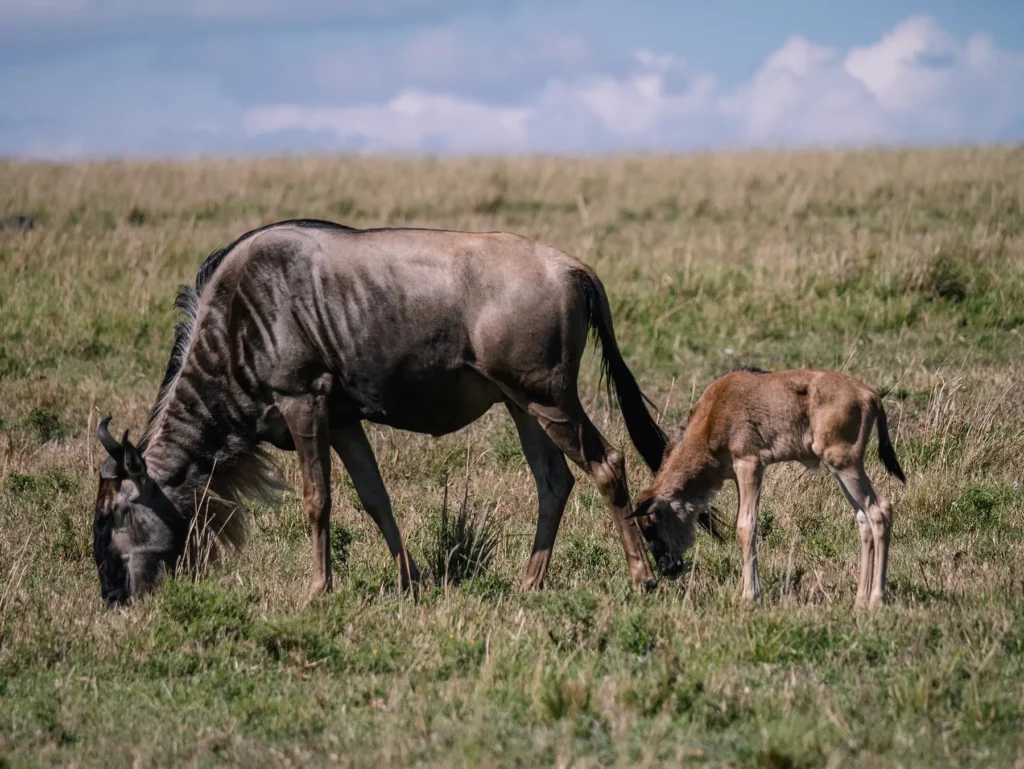
Month by Month: The Great Wildebeest Migration
If you want to witness the Wildebeest Migration, it’s important to know that it’s in different places throughout the year.
Whilst there’s no guarantee that the herds will be in a particular area at a specific time, there is a reasonably predictable annual cycle, which is determined by seasonal rain patterns.
Here’s what to expect as the Great Migration moves through Kenya and Tanzania throughout the year:
The Migration in January
Location: Ndutu and Salei Plains (Southern Serengeti & Ngorongoro Conservation Area)
Key Event: Calving
Following the ‘short rains’ in November and December, the wildebeests gather on the plains of Ndutu and Salei between the Serengeti National Park and the northern Ngorongoro Conservation Area.
The grass is nutrient rich and lush, providing the ideal grazing grounds for the mega-herds filled with heavily pregnant females.
January is a great time to catch a few early calvings, although most births tent to occur in February.
Predators are on the prowl as they anticipate the upcoming abundance of vulnerable prey.
It’s usually warm and dry in January, which is ideal for a safari. However, thunderstorms can occur this time of year, so you might want to pack a rain jacket.
The Migration in February
Location: Ndutu and Salei Plains (Southern Serengeti & Ngorongoro Conservation Area)
Key Event: Calving
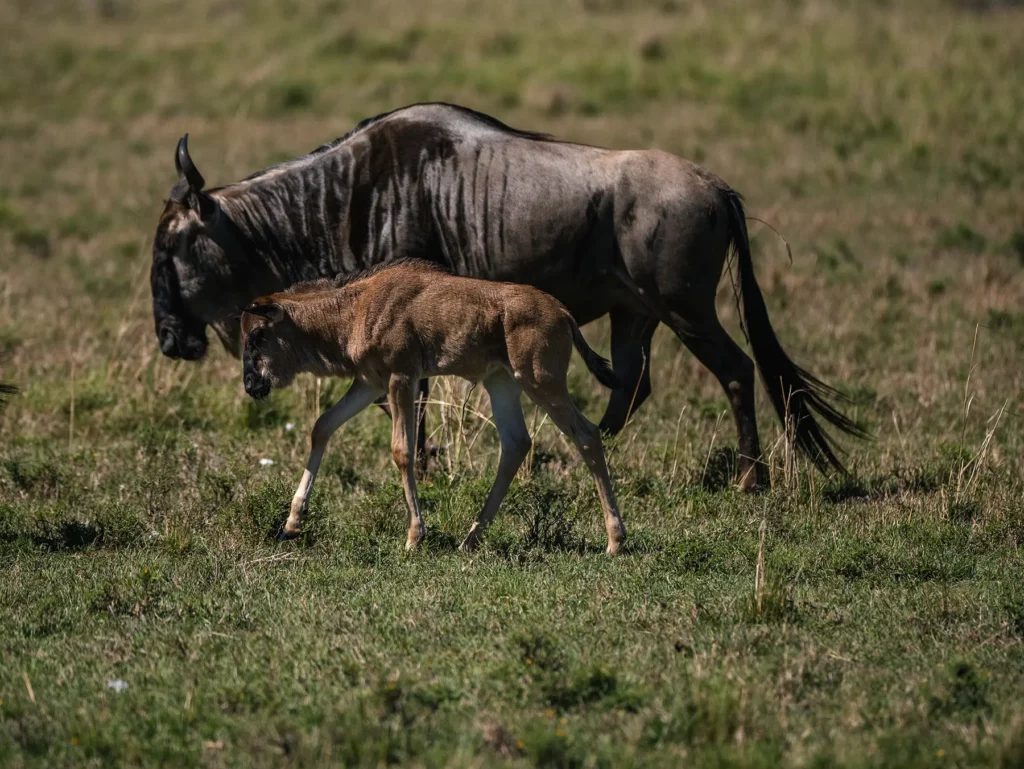
February is when most of the calving takes place on the plains of Ndutu, so this is one of the best months in the migration viewing calendar. You can also see calving on the Salei and also Kusini Plains in the Ngorongoro Conservation Area.
During this period up to 8,000 wildebeest and zebra calves are born each day.
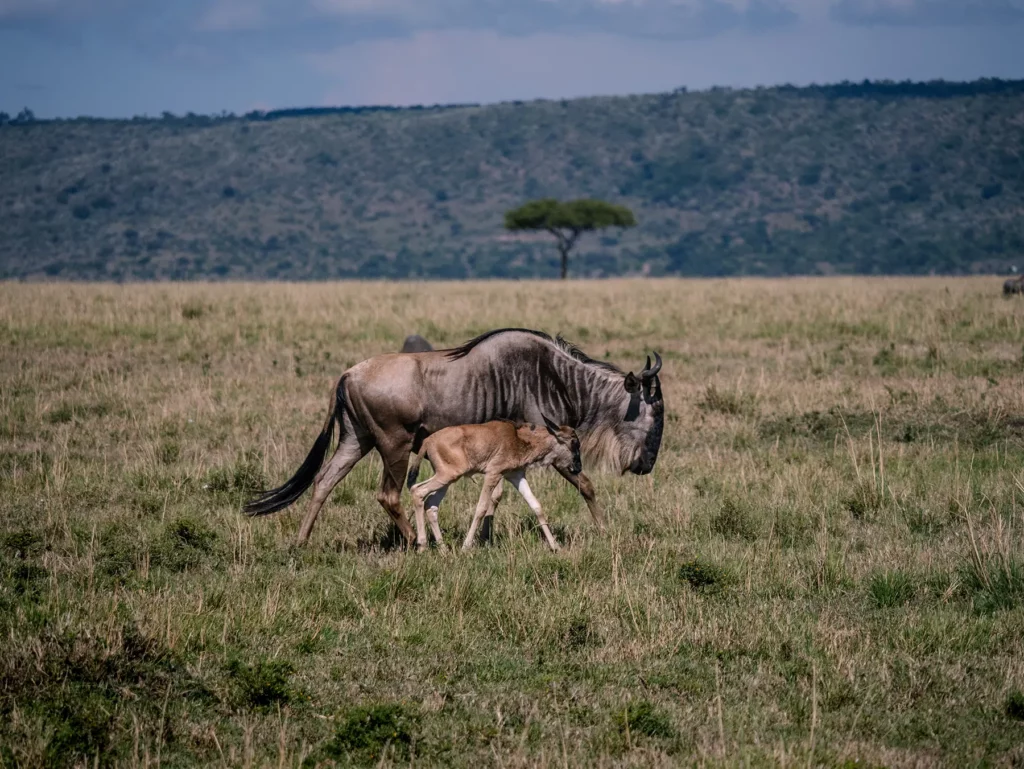
Most births occur over a 2–3 week period, during which time around half a million wildebeests are born. So, if you want to see newborns tottering about the savannahs, this is your chance! Calves are usually on their feet in only 5 minutes after being born and running with their mothers after 15-20 minutes!
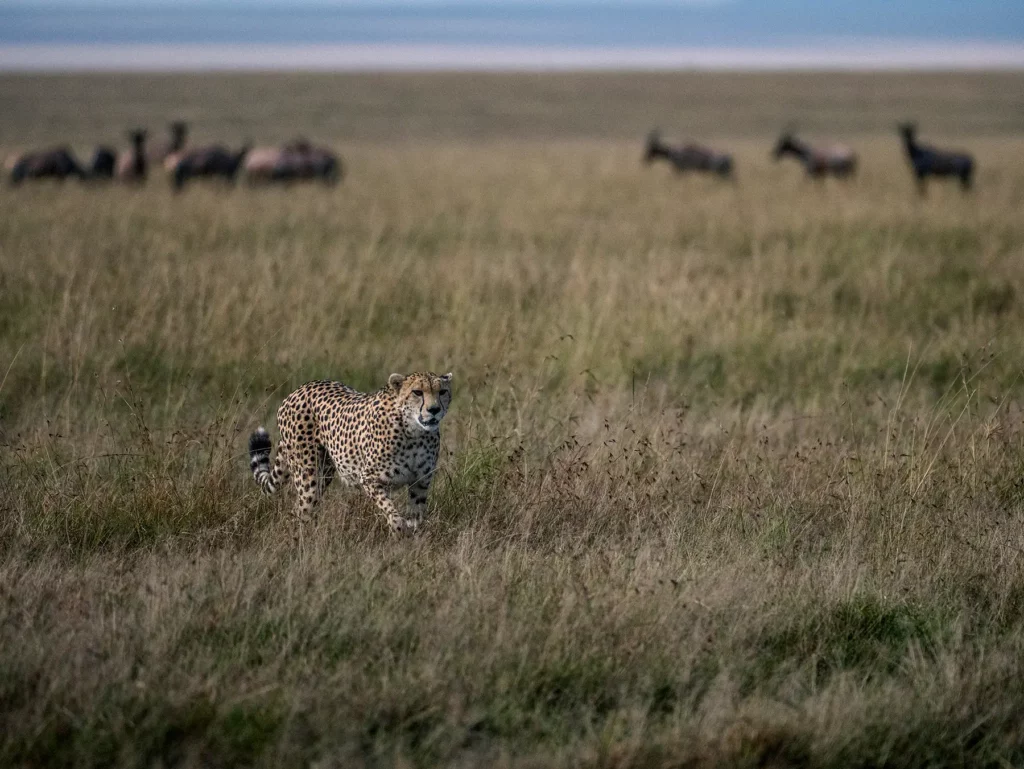
This is a great month to see predators in action. Lions, cheetahs, leopards, and hyenas are constantly on the prowl for their next meal. Pickings are easy, as the young calves are still finding their feet.
The only real defence the wildebeests have is their synchronous birthing which means there are such huge numbers of calves coming into the world at the same time that the predators get overwhelmed and can only eat a small percentage of the newborns.
The Migration in March
Key Event: Calving
Location: Ndutu and surrounding areas (Southern Serengeti)
In March, the animals gradually disperse across the plains of the Southern Serengeti in preparation for their onward journey north. The last of the calves are being born, so you might still see a few newborns if you visit at this time.
The wildebeests usually hang around until the end of March to make the most of the grazing and to wait until their calves are strong enough to travel. Sometimes, the herds linger in the Ndutu region (including the Maswa Game Reserve) until early April if the feeding is good.
March heralds the start of the ‘long rains’, which usually last through until late May. You will probably experience localised storms and heavier downpours towards the end of the month.
The Migration in April
Key Event: Grazing and Rutting
Location: Seronera and Moru Kopjes (Central Serengeti)
April is the last month that the the last of the Great Migration will be in the Ndutu areas, making the most of the nutrient-rich grasses.
However, by now, the bulk of the herd have usually left on its journey north through the Seronera region of central Serengeti.
As the herds trek through the Central Serengeti, they’re not in a hurry and will be continually grazing. They are preparing themselves for the next phase which is the hazardous Grumeti River crossing.
April to May is also the start of the breeding season in the Western and Central Serengeti, so you might also catch some rutting action.
The biologist, Dr Richard Estes studied the wildebeest’s rutting behaviour in the 1960’s. Richard furthered the theory that male wildebeests make rumbling noises in the rutting season and these sounds are clearly very appealing for the females who are triggered to go into oestrus (their eggs are released) as a result of the male’s love calls.
The main wet season in the Serengeti is in full swing, although safaris are still possible. Terrain may become more challenging to navigate, but it doesn’t rain all day. There’s often a lot of cloud cover at this time of year.
The Migration in May
Location: Grumeti Game Reserve (Western Serengeti)
Key Event: Rutting
In May, the wildebeests, zebras and gazelles begin their trek north in earnest. This can start at any point between April and June. The herds move through the Seronera region towards the Western Corridor.
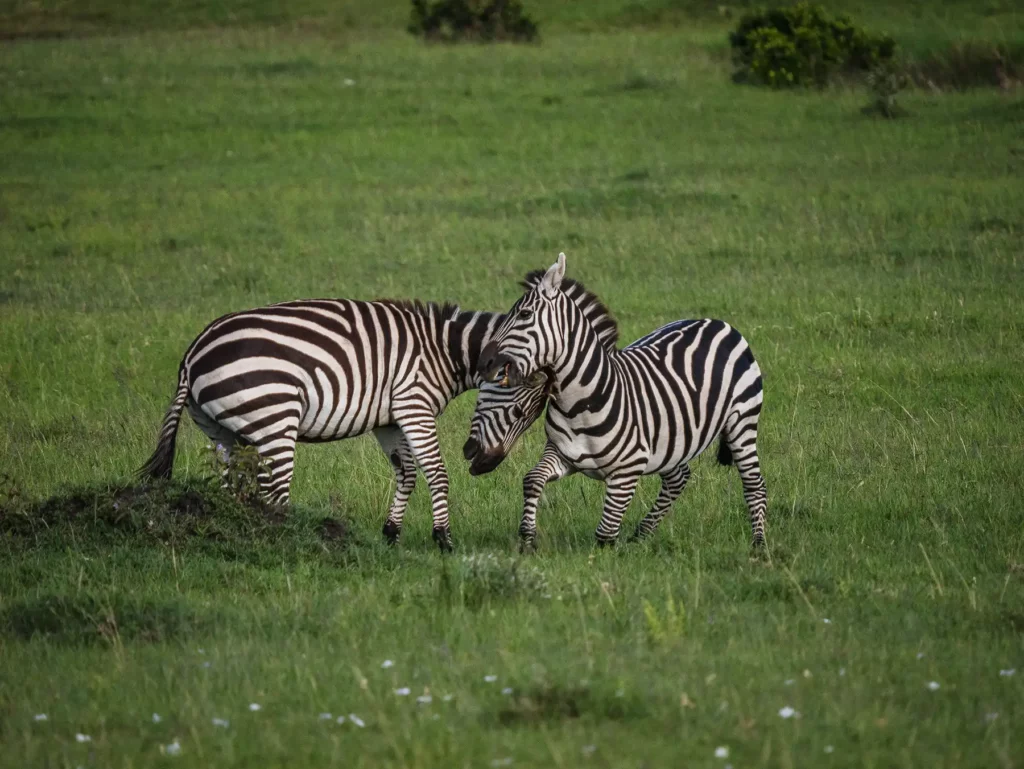
April and May are the primary rutting season, and breeding occurs while the herds are on the move. Vast numbers of animals can be spotted in the Moru Kopjes in the middle of the park, making it an excellent place for iconic migration photos.
This is the last month of the ‘long rains’ in the Serengeti, with a few lingering thunderstorms adding an extra touch of drama to the landscapes. Towards the end of May, the rains come to an end, leaving the ground dry and forcing the animals further north to richer grazing grounds.
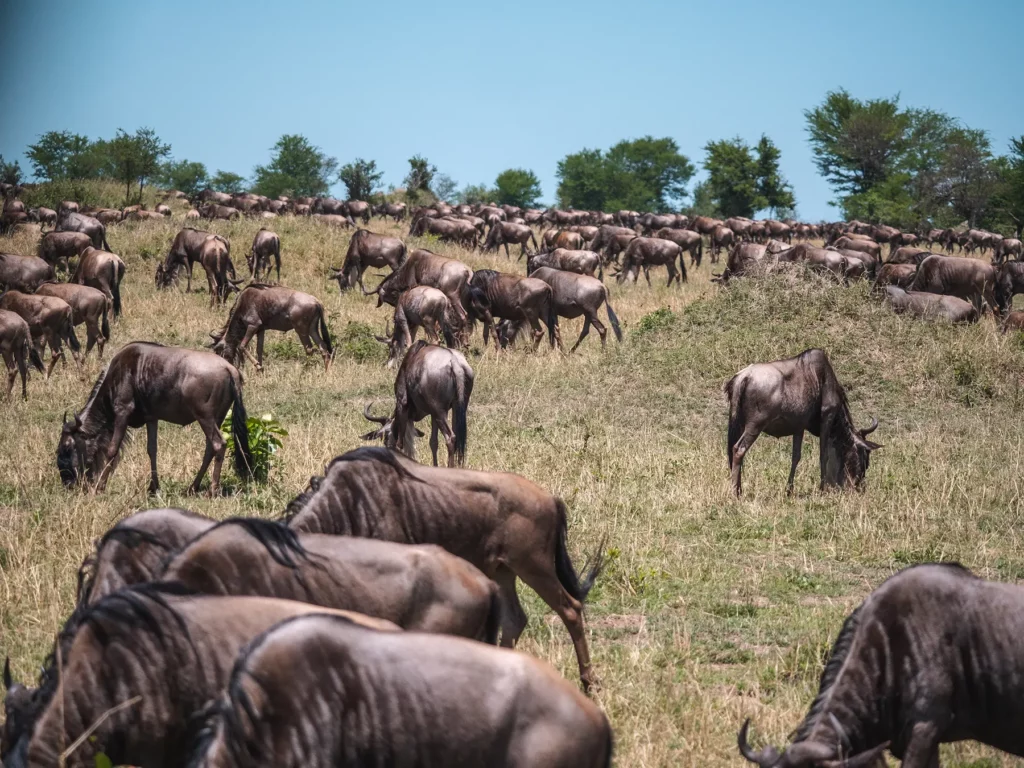
The Migration in June
Location: Grumeti River (Western Serengeti)
Key Event: Grumeti River Crossings
June sees the herds journeying north through the Western Corridor of the Serengeti and into the Grumeti Reserve. Rutting season is winding down by this time.
In order to continue their journey the herds must cross the crocodile-infested Grumeti River. Whilst the banks are less steep and the water less deep than the Mara River crossing in the North of the Serengeti, the Grumeti River crossing is still a spectacular event to watch.
Due to its remote location on the Western Corridor of the Serengeti, it’s less well known and tourist numbers tend to be around 50% lower compared the the better know Mare River crossings.
June marks the start of the dry season in the Serengeti, with warm days and cool nights lasting until September.
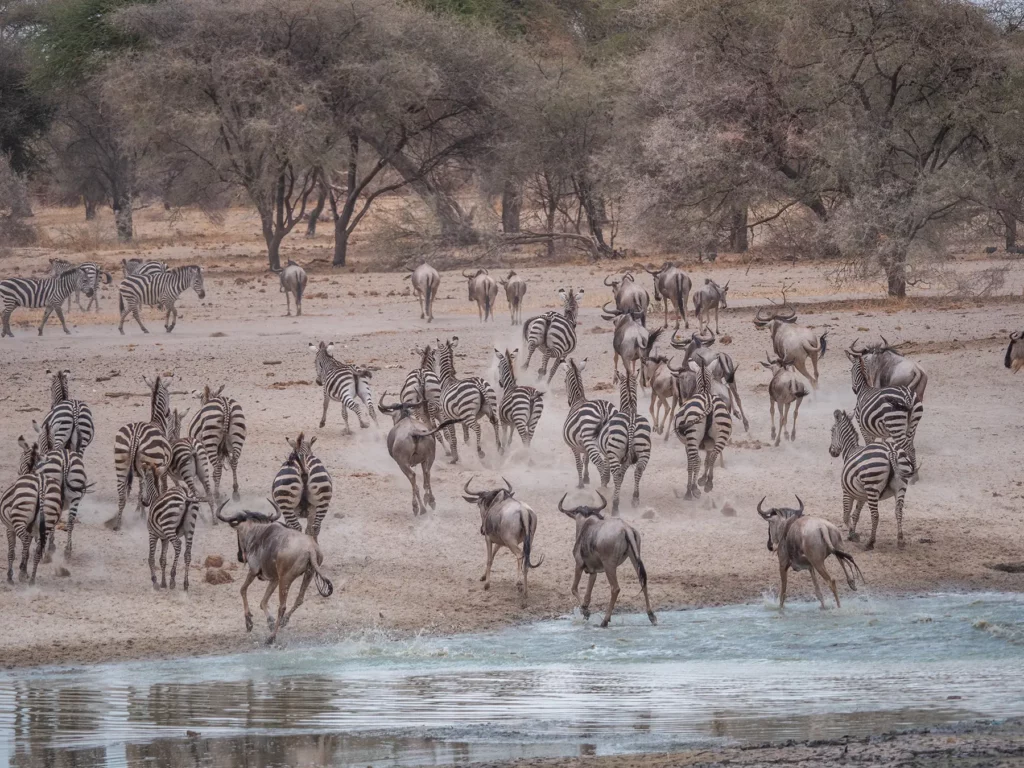
The Migration in July
Location: Kogatende and the Mara River (Northern Serengeti)
Key Event: Mara River Crossings
In July and August, the herds continue moving north, with the frontrunners arriving in the Kogatende area of the Northern Serengeti at the beginning of July. The animals are now spread out between the Grumeti Reserve, the Western Corridor and Kogatende.
The next major obstacle for the herds is the Mara River crossing. This is one of the most dramatic moments on the entire migration route and is perfect if you want to photograph the wildebeests taking on the steep banks, deep flowing water and hungry crocodiles. The animals usually begin to cross from late July into August.
Since the Mara River crossing is such a famous spectacle, and the dry weather remains perfect for safaris, Northern Serengeti and the Masai Mara are at their peak busyness in July and August.
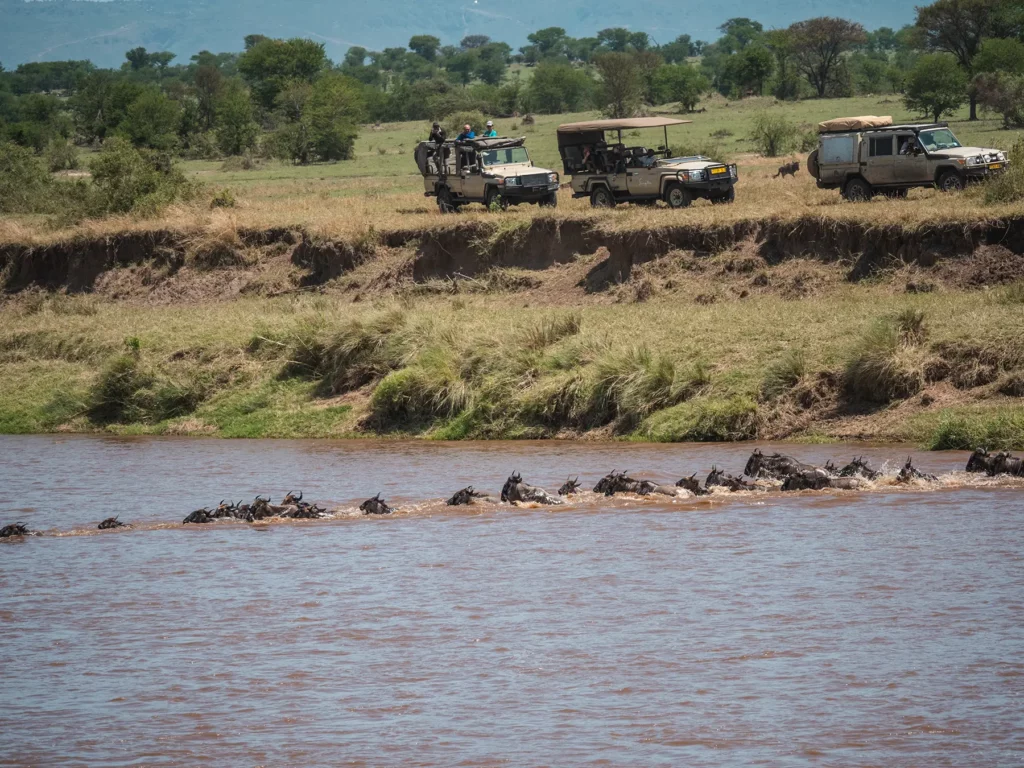
The Migration in August
Location: Mara River, Masai Mara (Kenya) and Kogatende (Northern Serengeti)
Key Event: Mara River Crossings
After crossing the Mara River, the main herds of the Great Migration move into the Masai Mara National Reserve in Kenya.
This is the peak dry season in the Masai Mara, which means glorious sunny weather and prime animal viewing conditions. As a result, the park will be busy with many other safari vehicles.
Down in Tanzania, stragglers can still be seen in the Northern Serengeti. Indeed, huge numbers of animals have often been spotted on the Nyamalumbwa Plains and around the Lamai Wedge.
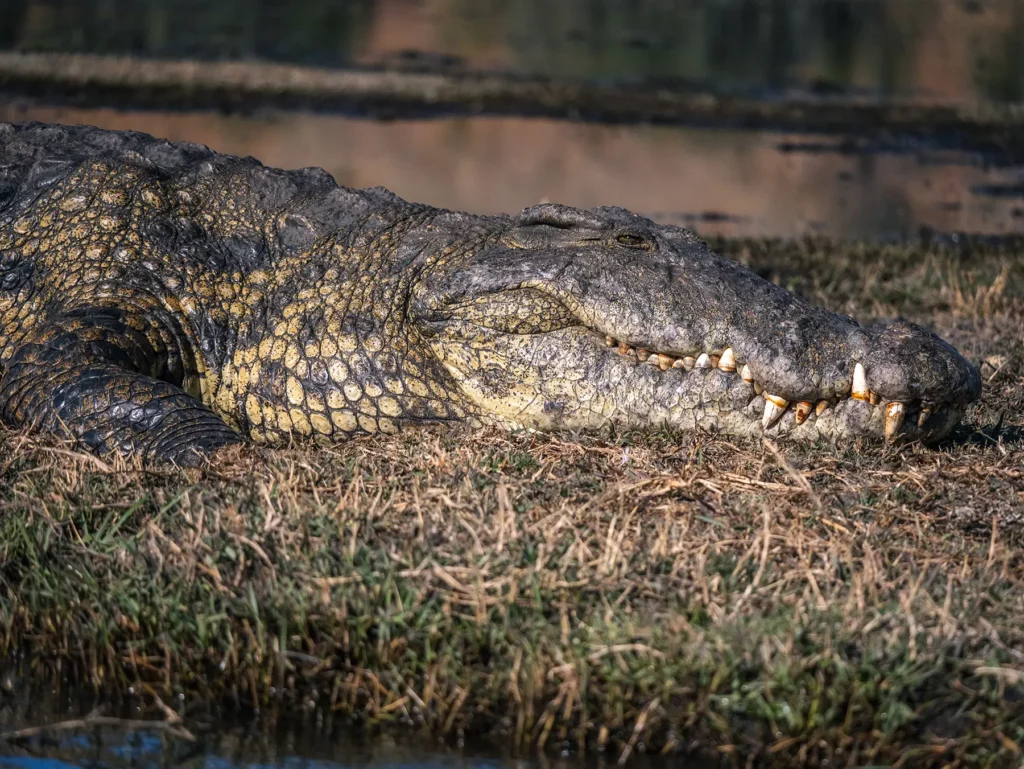
The Migration in September
Location: Mara River, Masai Mara (Kenya) and Kogatende (Northern Serengeti)
Key Event: Mara River Crossings
In September, there are still a few animals in the Northern Serengeti, but the main herds remain in the Masai Mara, with some still crossing the Mara River. This is the northernmost limit of the trek, and the animals linger here as long as the grazing remains nutritious.
If seeing the plains packed full of wildebeests, zebras, and gazelles is your main focus, then September is an excellent month to go on safari in the Masai Mara. There’s also plenty of predator activity, and you may even see a lion or cheetah hunt.
Although some rain is possible, the Masai Mara is still dry and warm. Early morning game drives can be cold, so wear layers.
In Northern Serengeti you can often catch the first of the wildebeests crossing back over the Mara river from the Masai Mara in mid to late September.
The Migration in October
Location: Kogatende and the Mara River (Northern Serengeti)
Key Event: Mara River Crossings
In October, the herds continue to cross the Mara River from the Masai Mara to Northern Serengeti. They spread out south into the Loliondo and Lobo Valley regions of the Northern Serengeti in Tanzania.
Late September through into October can be a great time to see the Great migration rivers crossing outside of the peak June / July period. I had a great experience seeing the river Mara crossing late September.
The Migration in November
Location: Eastern and Central Serengeti
Key Event: Grazing and Moving
You can typically still find the odd wildebeest herd crossing back over the Mara River from the Masai Mara into northern Serengeti until mid-November.
During November, the herds move south through Loliondo, along the eastern edge of the Serengeti. The central plains are fertile once again, providing essential grazing grounds for the herds.
However, the wildebeests don’t stay in one place for long, as they know they need to keep moving to reach the calving grounds at precisely the right moment. So, towards the end of the month, the Great Migration continues its journey to the plains of the southern Serengeti.
The ‘short rains’ begin in November and continue into December. It doesn’t rain all day, and the weather rarely affects your Serengeti safari experience.
The Migration in December
Location: Ndutu and Salei Plains (Southern Serengeti & Ngorongoro Conservation Area)
Key Event: Preparation for Calving
By December, the main herds have reached the Ndutu plains in the southern Serengeti and the northern parts of the Ngorongoro Conservation Area.
Wildebeests, zebras and gazelles spread out over the savannahs, feeding on the lush grasses in preparation for calving.
They choose this location as the grass is very nutrient rich due to past volcanic activity and perfect for nursing mothers. It’s also short which gives them better visibility of any nearby predators.
This is the final month of the ‘short’ rains, so if you visit in December, expect regional showers and some storms. However, the weather shouldn’t detract from your experience.
How Do You Book Your Great Wildebeest Migration Safari?
Without a doubt, the easiest and best value-for-money way to arrange your Great Wildebeest Migration safari is by booking through a trusted local tour operator.
A local tour operator will arrange your accommodation, reserve permits, game drives, and inter-reserve transfers, usually at significantly lower prices than international agents.
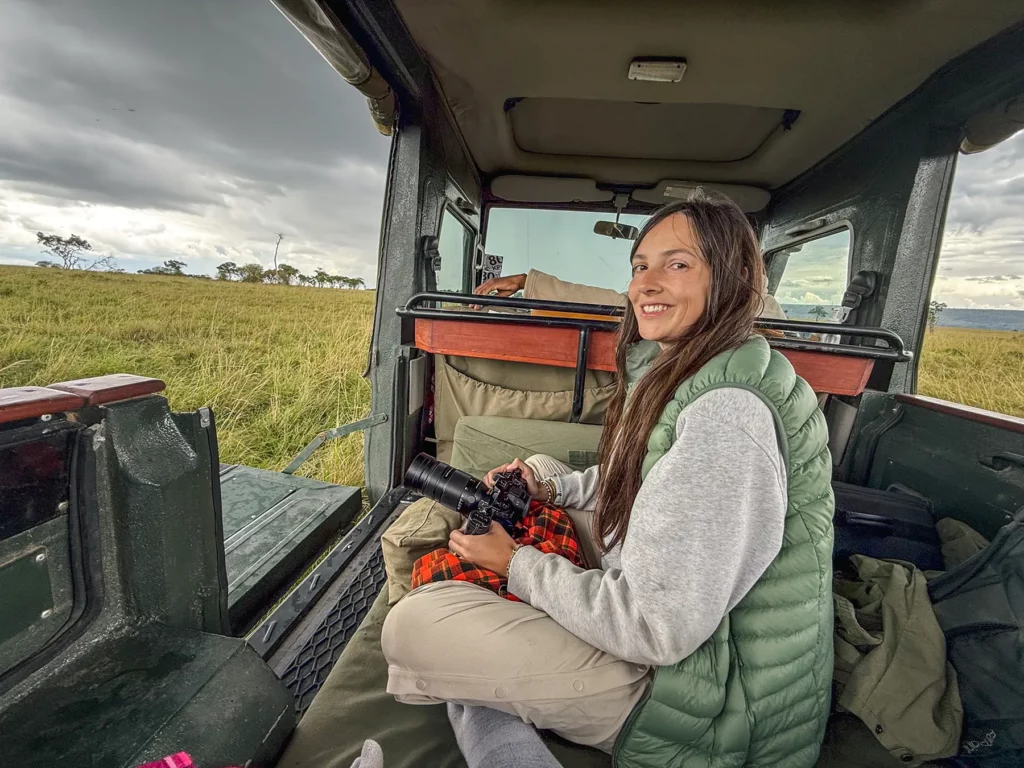
I’ve booked my own wildebeest migration safaris in Kenya and Tanzania, for various stages of the migration, with local tour operators, and I’ve always been really happy with my experiences.
Even when I occasionally opt for fly-in safaris, I still rely on local tour operators for these bookings, as well as for game drives and other arrangements, as they handle everything including airport transfers.
Other popular options for booking your safari include using an international travel agent or arranging everything yourself and self-driving. However, I find local tour operators the best value and knowledgeable route to a great safari.
You can get quotes from the same local tour companies I use to organise my own trips here: Safaris By Ella
Here is a summary of the three main ways to book a wildebeest migration safari in Kenya and Tanzania, each with different trade-offs on cost, flexibility, and experience.
Booking Options at a Glance
| Option | Cost | Flexibility | Best For |
|---|---|---|---|
| Local Tour Operator | $$ | High | Most travellers, best value and experience and those wanting to maximise wildlife sightings |
| Self-Drive | $ | Extremely High | Experienced drivers who are comfortable with gravel roads and good at wildlife tracking and spotting |
| International Agent | $$$ | Medium | Those wanting International flights and safari in one package and are happy to pay up to 40% more than a local tour operator |
Why I Recommend a Local Tour Operator for Kenya and Tanzania
A local tour operator handles everything from the moment you land: accommodation across all your parks and reserves, transfers between each location, park entry permits, game drives with expert guides, and knowledge of where the wildlife is right now.
Having tested all booking methods, this is how I book all my safaris these days.
Take it from me, I’ve tried all three of the different methods before!
On one of my Tanzania safaris, my local tour operator managed to get me all the way from Central Serengeti to the Mara River crossing at the perfect moment as the wildebeests started to cross. We then moved to another crossing point and saw a dramatic scene with a crocodile eating a wildebeest which is quite rare to witness. My guides on the ground knowledge really paid off as this was quite a feat.
The cost of booking through a local safari company is fairly comparable to booking everything yourself, because local operators get preferential accommodation rates which largely balance out their mark-up.
The benefits you get from spending that bit extra are immense. You don’t need to stress about researching where to stay and booking everything individually. Everything is taken care of and you only have one point of contact when you have any questions.
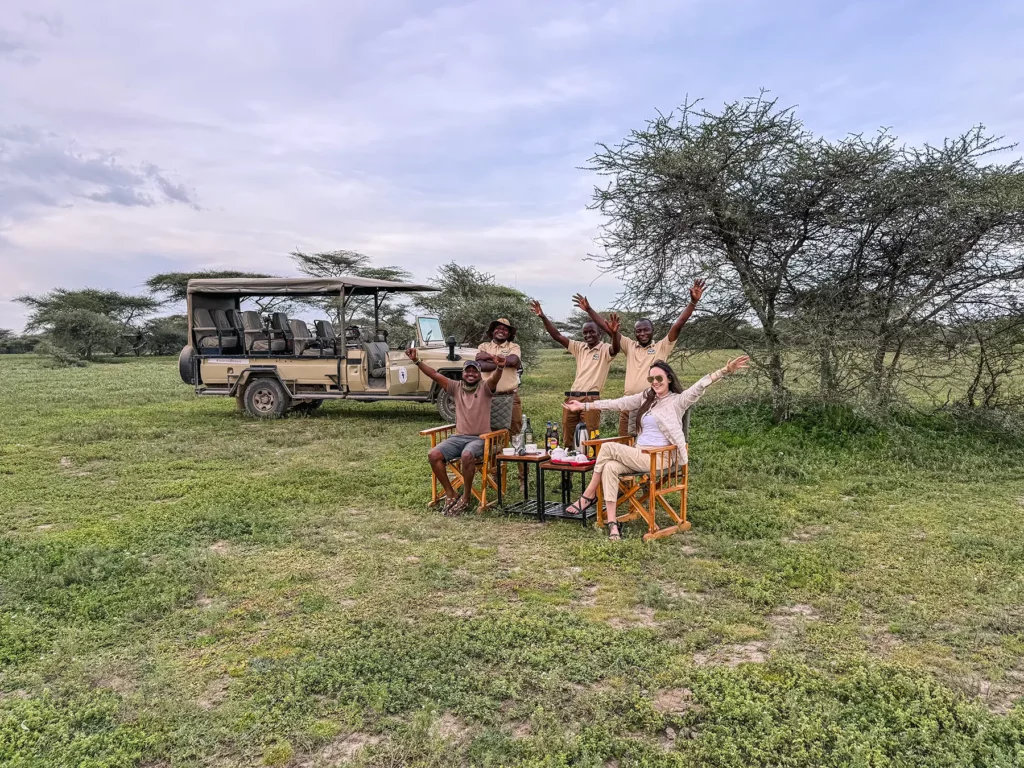
What a Local Operator Gives You
- The best local tour operators provide end-to-end service, managing everything from arranging park permits to booking accommodations according to your specifications. They employ excellent local guides with regional expertise and arrange high-spec vehicles, fuel, and even meals throughout your safari.
- As local tour operators have so much experience booking safaris, you will end up with a far more optimised itinerary and hotel recommendations than if you were to self-drive or book directly with hotels.
- Booking through local operators often costs about the same as arranging everything yourself. Thanks to their often longstanding and carefully managed relationships with the best lodges and camps, they secure preferential rates and can often still get rooms when hotels appear fully booked online. You’ll get all this value all whilst saving many hours of research, coordination and stress.
- Some accommodations reserve rooms exclusively for local operators, potentially making it possible for you to secure accommodation even when online platforms show full availability.
- Many of my recommended operators own their own high-specification lodges and tented camps which gives exclusive access to their properties at great rates.
- As a matter of course, local providers make sure they have up-to-date information on recent wildlife sightings.
- Another huge advantage is your guide’s access to a radio network of fellow professionals. This communication web significantly increases your chances of good wildlife sightings, which means less time driving aimlessly and more time ticking off your bucket list species.
- Having experienced both self-drive and professionally organised safaris, I can assure you that letting experts handle the administration makes the whole trip so much more relaxing and gives better wildlife sightings.
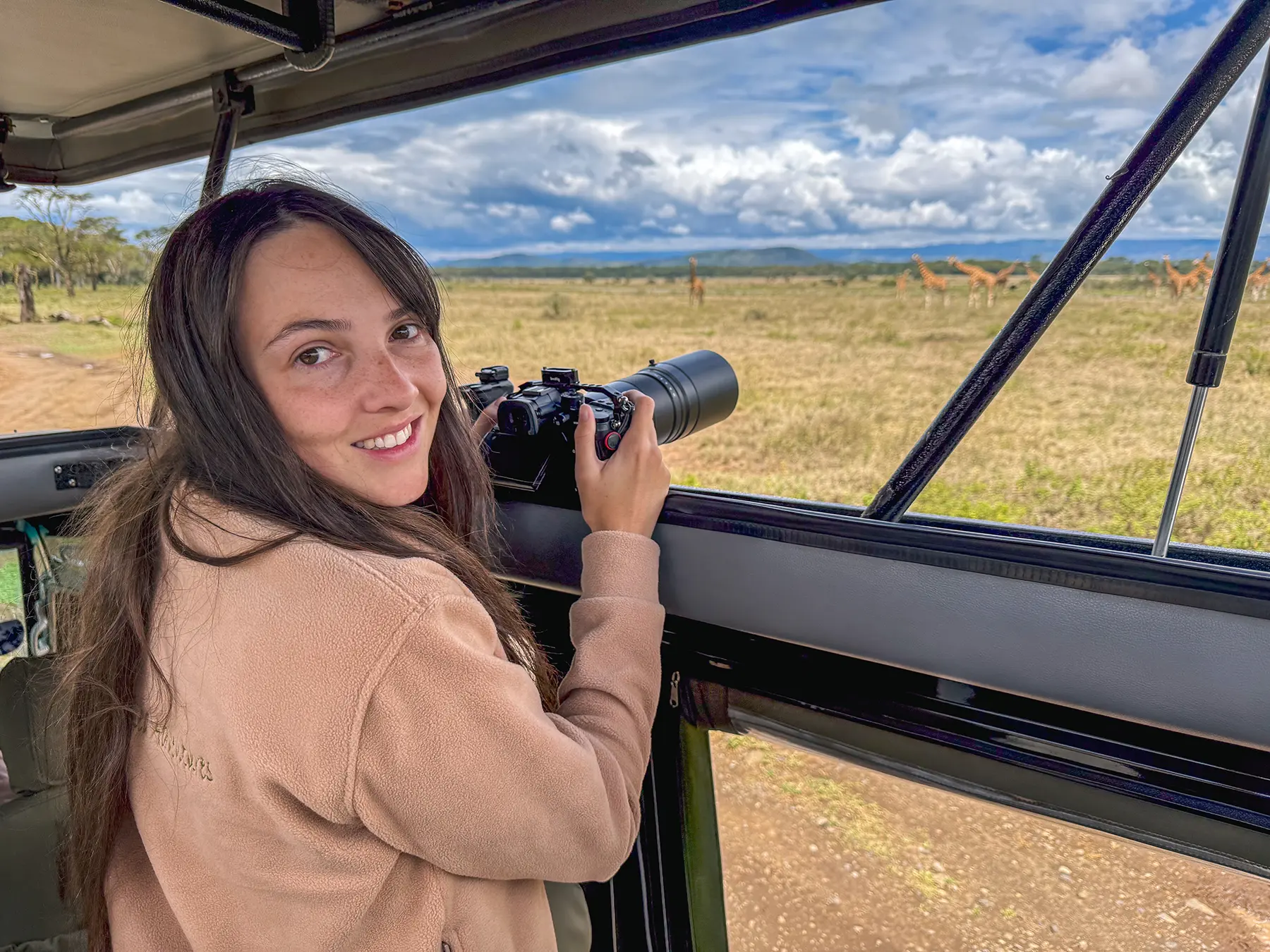
What to Watch Out For
- Tour operators can vary in quality, and the lowest price doesn’t necessarily mean the best value.
- Really cheap packages may mean lower-quality lodgings or less experienced guides, which can impact your safari enjoyment.
- Usually, local tour operators won’t book your international flights for you.
- There are sometimes fewer assurances against cancellation or delays than if you were to book with an international agent. However, this is can be mitigated (see my top tip under ‘Financial Protection When Booking Direct’ below!).
Great Wildebeest Migration Booking Tips
Kenya and Tanzania’s safari system has some important characteristics that affect how you should book.
- August and early September is the most reliable time for the Mara River crossing as it’s bang in the middle of the period.
- If you want to have a slightly less crowded experience, September, especially the second half is quieter. October is quietest of all but it’s less reliable in terms of witnessing the herds crossing the river.
Financial Protection When Booking Direct
When booking with a local agent, you can take steps to give similar financial protection as if you were booking with an international agent. Paying by credit card or debit card often gives you purchase protection (in the UK it’s called Section 75), good travel insurance covers trip interruptions, and choosing a recommended local safari company that takes balance payment closer to your trip date minimises risk.
My Preference: I always book through local tour operators for all my safaris, including fly-in safaris. I’ve tried all three methods before, and I’ve consistently found local tour operators to deliver the highest level of expertise and the best value for money.
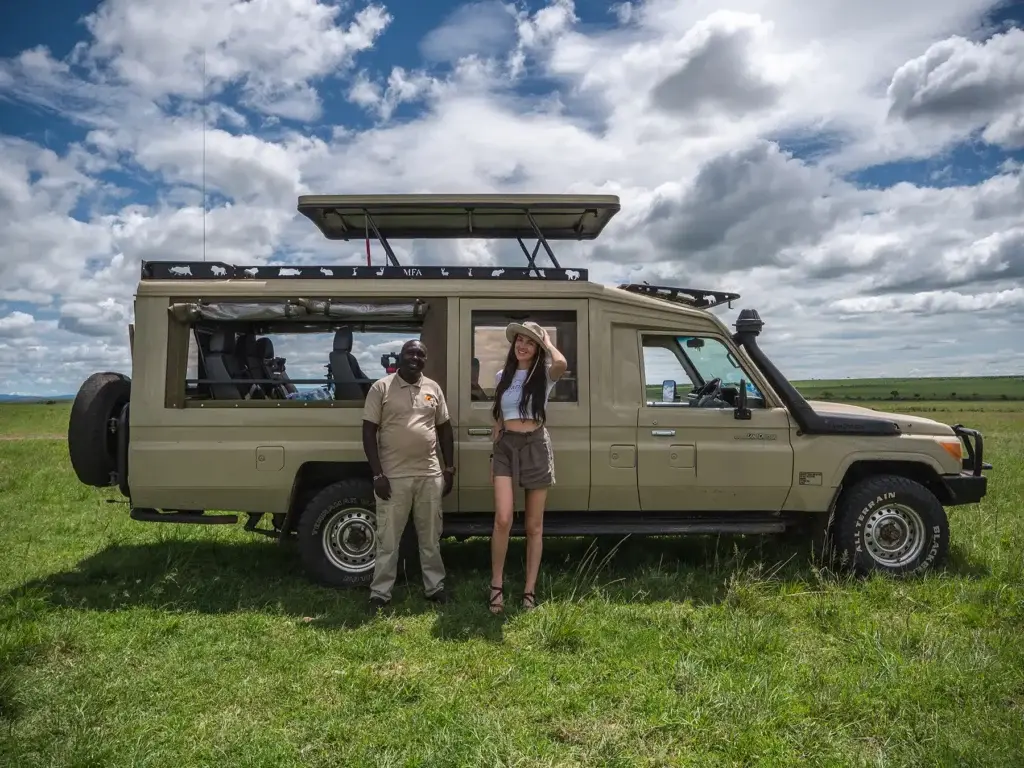
You can get quotes from the same local tour companies I use to organise my own trips here: Safaris By Ella
Recommended Booking Options For Your Wildebeest Migration Safari Itinerary
Private Safari
Most popular & best experience – typical prices for this itinerary start from $350 per person per day.
Visit safarisbyella.com for free quotes from trustworthy local tour companies I use to book my own trips.
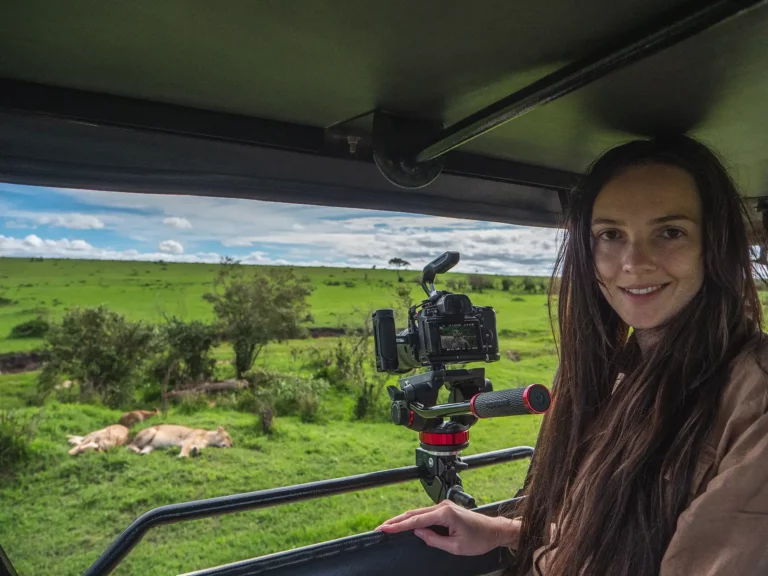
Group (Shared) Safari – Usually Camping
Good for budget or solo travellers – from $200 per person per day.
My recommended tour operators only provide private safaris, however, I’ve listed the best and most similar group options for this itinerary, on SafariBookings below.
Click the link below to request quotes for the group safari options on the SafariBookings website.
5-Day Group Camping Tanzania Wildebeest Migration Safari
6-Day Group Budget Camping Tanzania Wildebeest Migration Safari
6-Day Group Lodges Tanzania Wildebeest Migration Safari
View All My Recommended Group Options Following a Similar Itinerary
How to Book with the Best Local Safari Companies
- Comparison sites which provide multiple quotes from verified suppliers such as Safaris By Ella
Join the rapidly growing tribe of over 1,000 travellers who’ve booked their dream safari using my insider tips and recommendations.
Should You Choose a Private or Group Kenya and Tanzania Safari?
A private safari is the best choice for most travellers visiting Kenya and Tanzania to See the Great Wildebeest Migration.
Private safaris give you full control over your schedule, your route through the parks, and how long you spend at each wildlife sighting. I always book private safaris as I’ve found they offer the best possible experience for your money.
Private vs Group at a Glance
| Private Safari | Group Safari | |
|---|---|---|
| Cost per day | From $300 per person | From $200 per person |
| Flexibility | Full control of schedule and route as well as how long to spend at sightings | Fixed times, pre-planned routes and prime viewing time can be lost collecting other guests |
| Vehicle | Dedicated vehicle and guide | Shared with 6-8 other travellers |
| Best for | Couples, families, photography enthusiasts | Solo travellers on a budget |
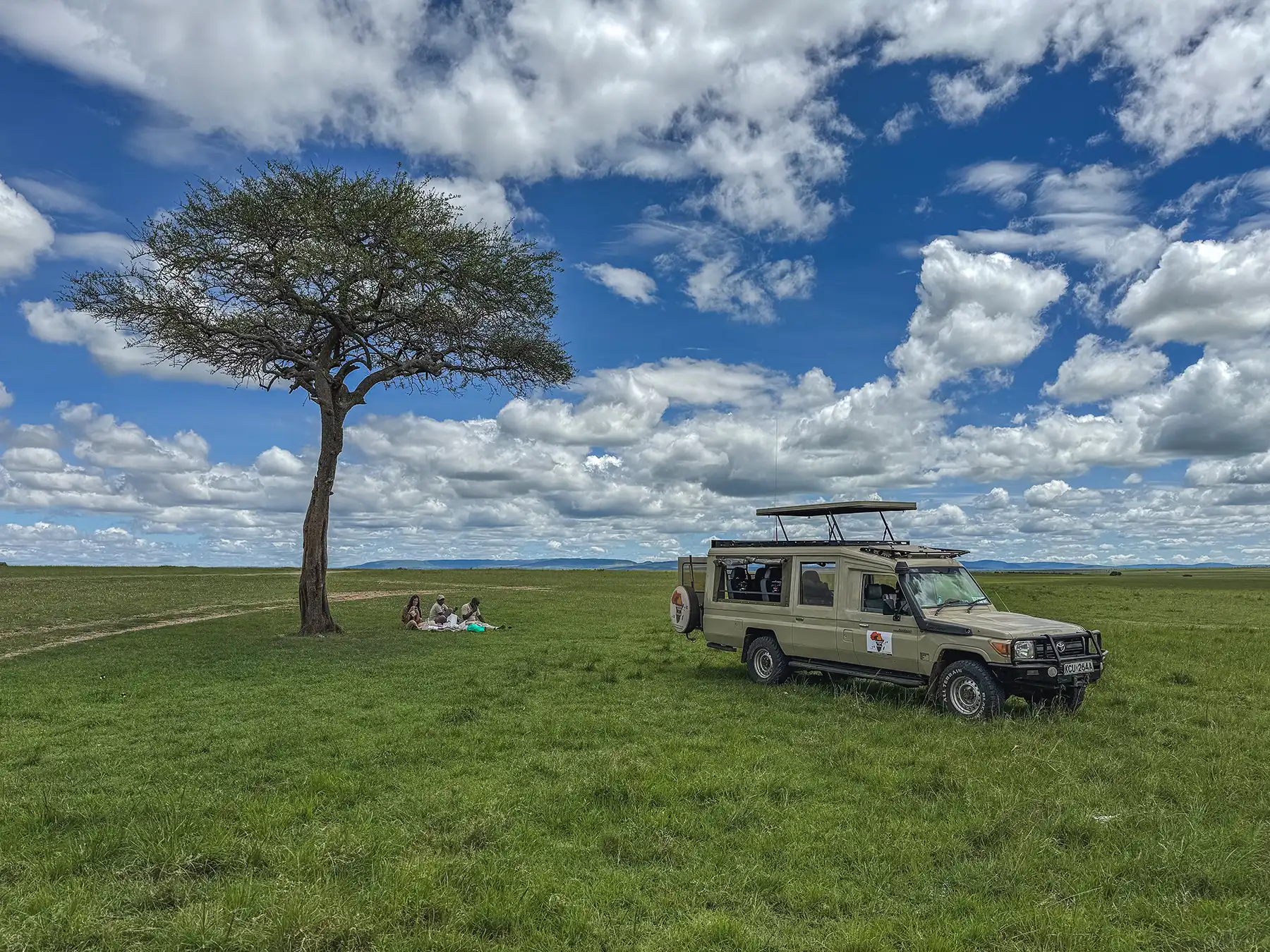
In both Kenya and Tanzania, one of the most important advantages of private safaris is that you won’t waste time collecting and dropping off other passengers at their lodges before and after game drives. This means that you’ll be able to spend more time in the bush focusing on wildlife.
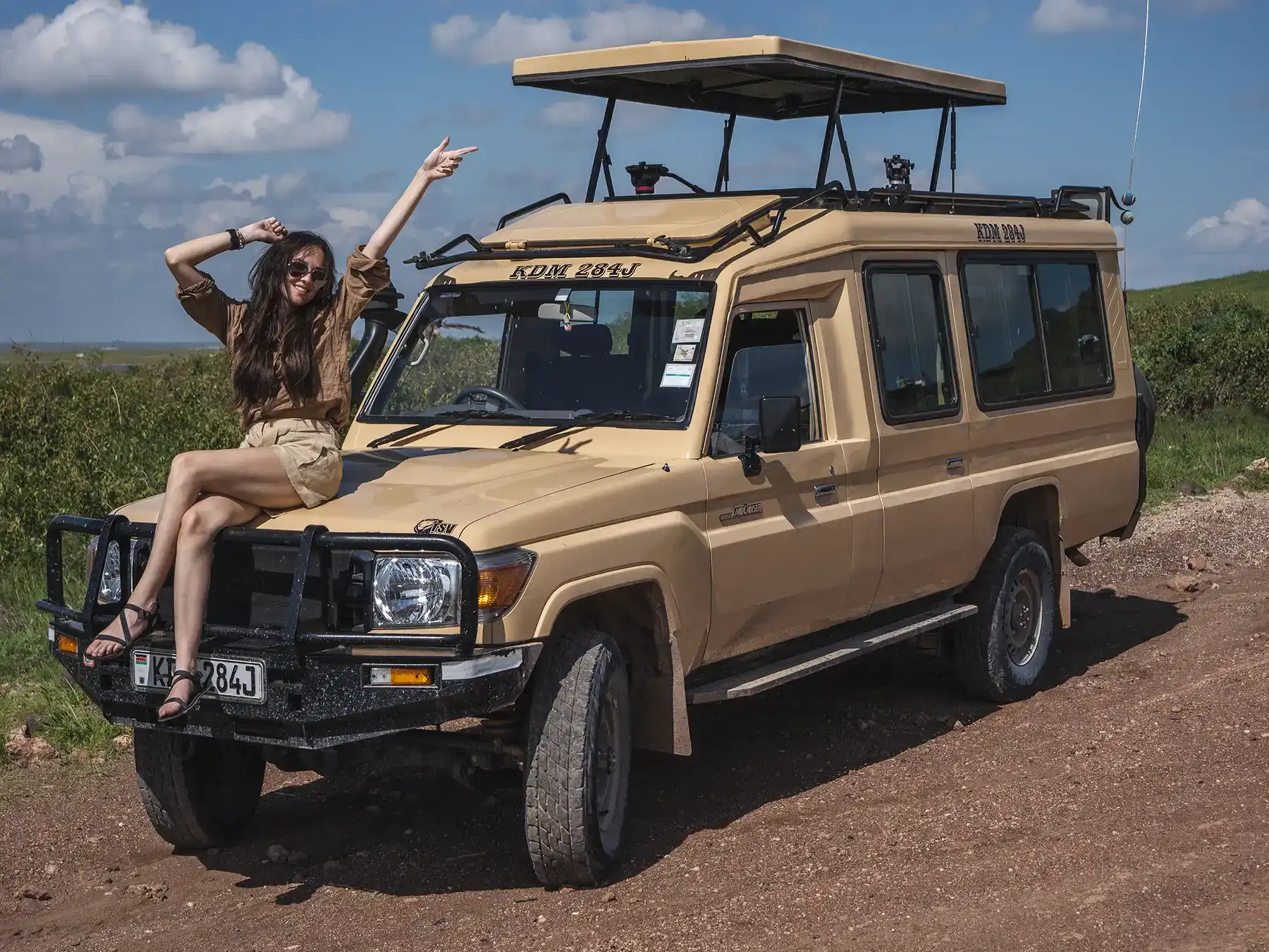
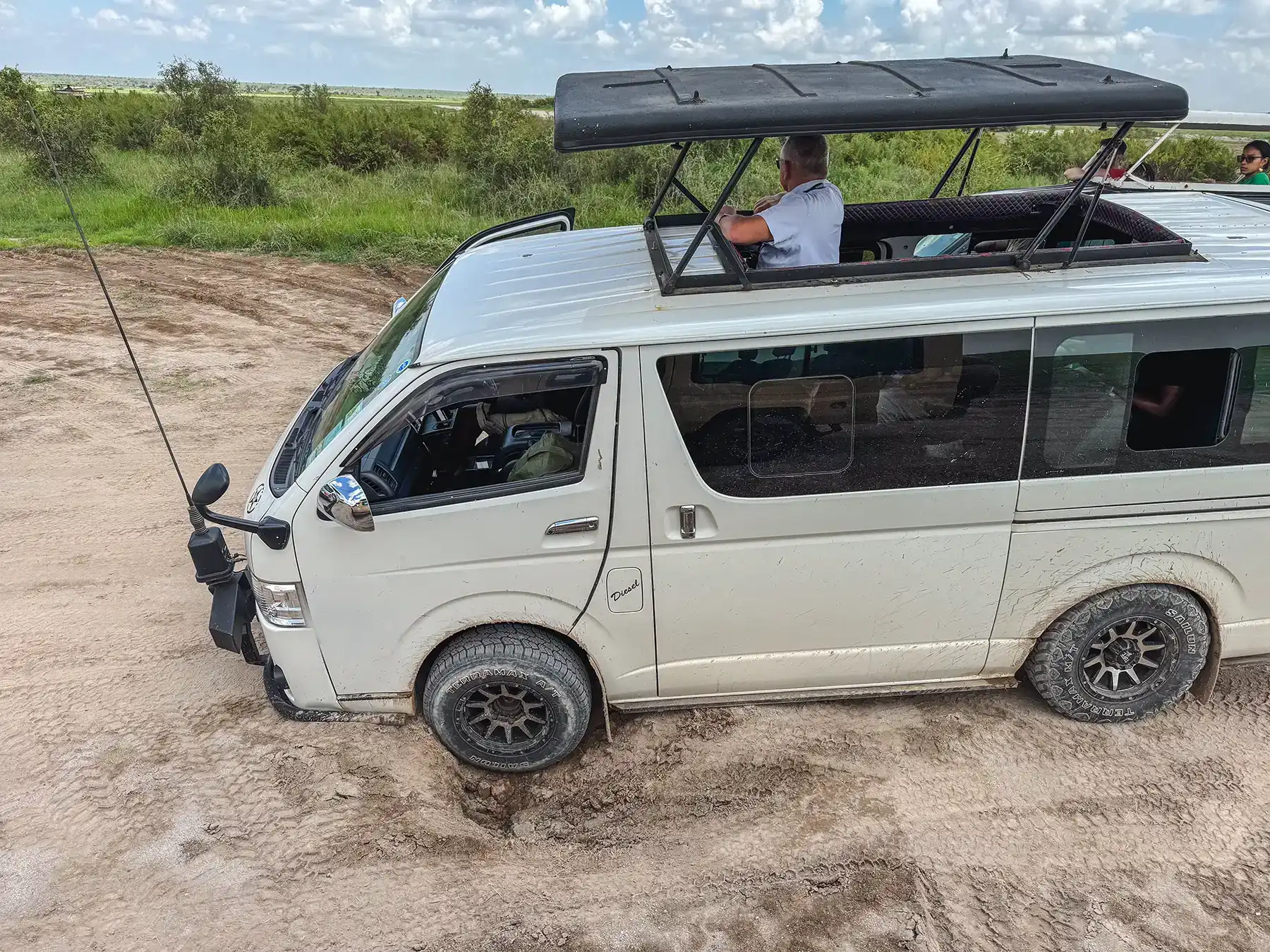
In Kenya, group safaris are often conducted in minivans rather than Land Cruisers. These are less comfortable, have smaller windows and are prone to getting stuck on difficult roads, especially in wetter conditions. On a private safari, you will be in a Landcruiser or similar vehicle specially designed for game viewing.
Another little known but very important fact to consider is that many safari companies actually keep their most knowledgeable guides for private safaris.
If you look at the numbers, you’ll see that a private safari is actually much better value for money than a group safari. The price difference between a group and private safari in Kenya is around $100 per person per day.
For couples or small groups, splitting the private vehicle cost reduces this difference, and ultimately makes it only marginally more expensive than a group tour. Add to this that you’ll have a dramatically better experience, and it’s clear that a private safari is the way to go.
My Recommendation
I always recommend a private safari for Kenya and Tanzania, if your budget allows, as private safaris almost always provide a more enjoyable and fulfilling experience and better value for money.
The freedom to customise your itinerary on the go is something a group safari simply cannot offer. For instance, on a private safari you can choose to race off to see the Great Migration if they start crossing the river without having to get approval from everyone else in your group.
In my opinion, the only scenario in which a group safari makes sense is for solo travellers on a tight budget.
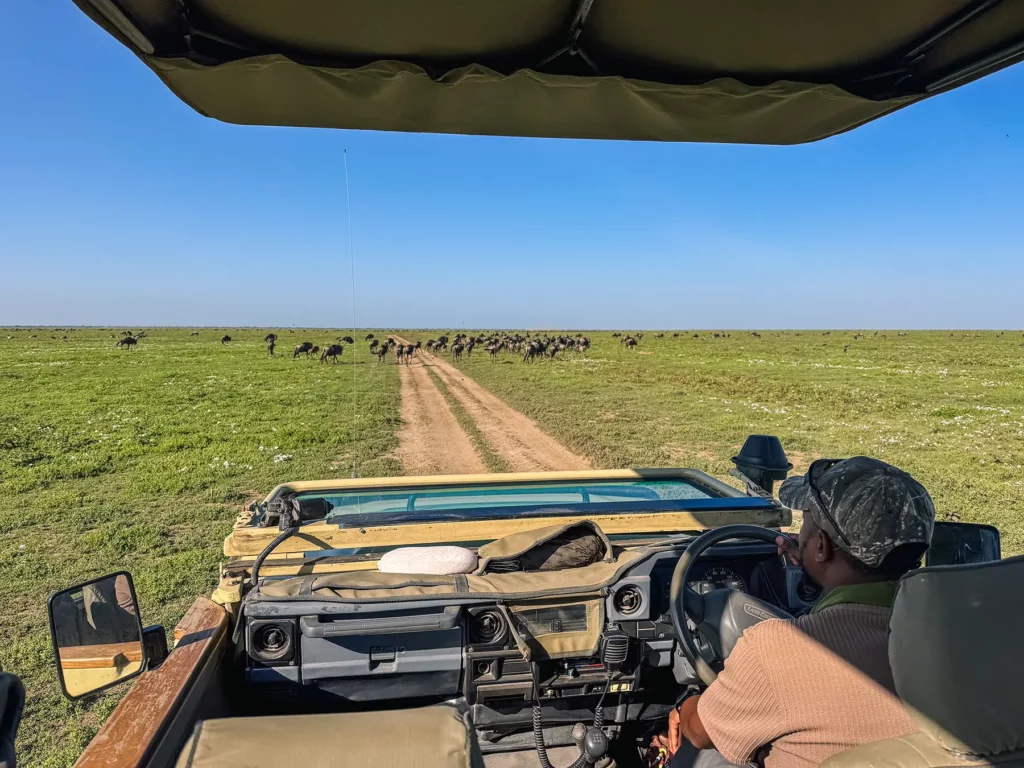
How Much Does a Migration Safari Cost?
There are a number of factors which will affect the cost of your migration safari including accommodation level, mode of internal transport to the park (road or air) and which country you choose.
Generally migration-focused safaris are more expensive per day than typical safaris as they involve spending most / all of your time in either or both Kenya’s most expensive park (Masai Mara) and one of Tanzania’s most expensive parks (Serengeti).
By contrast a typical safari would usually spend time in a number of different parks including lower-cost ones which would bring down the average cost per day.
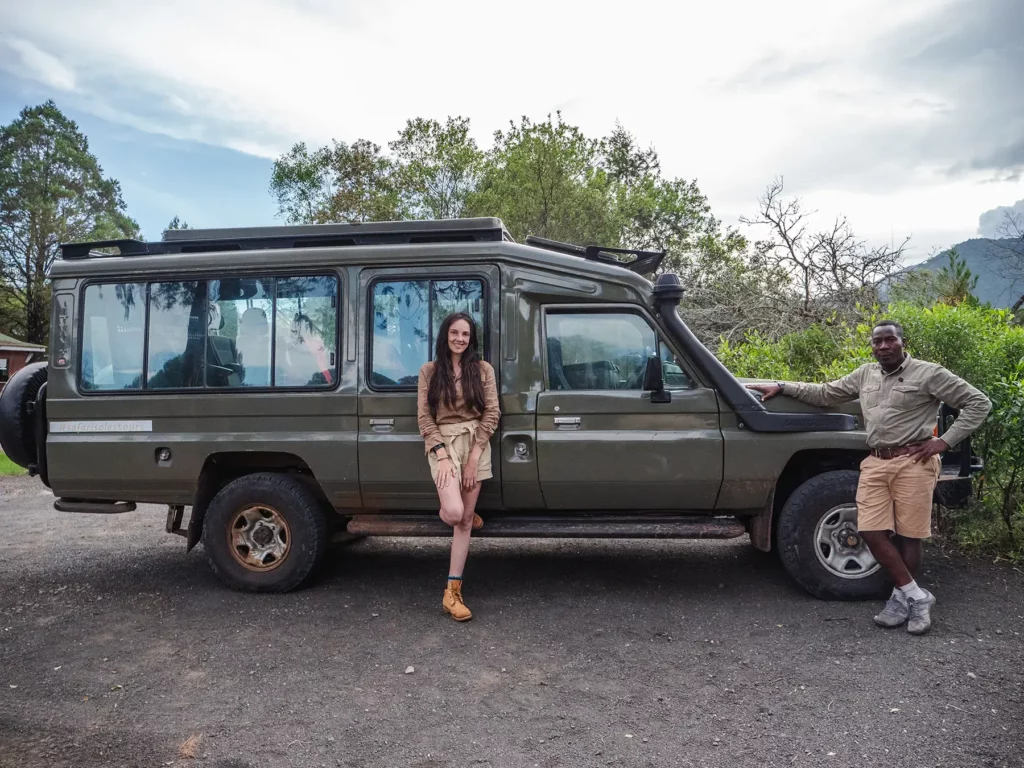
If you want a more in-depth cost breakdown, you can check out my up-to-date guide to Tanzania safari costs and Kenya safari costs.
Whilst Kenya safaris (visiting multiple parks) are normally slightly cheaper than Tanzania safaris, this is not the case for safaris which only focus on the migration. The reason being for a migration specific safari in Kenya you’d spend your time in the Masai Mara, which after a recent price increase in park fees, is almost three times the price of the Serengeti.
However, many safaris will include seeing the migration as part of a normal safari and visiting other parks.
Typical safari costs are shown below for Tanzania which include the Migration but cover other parks as well.
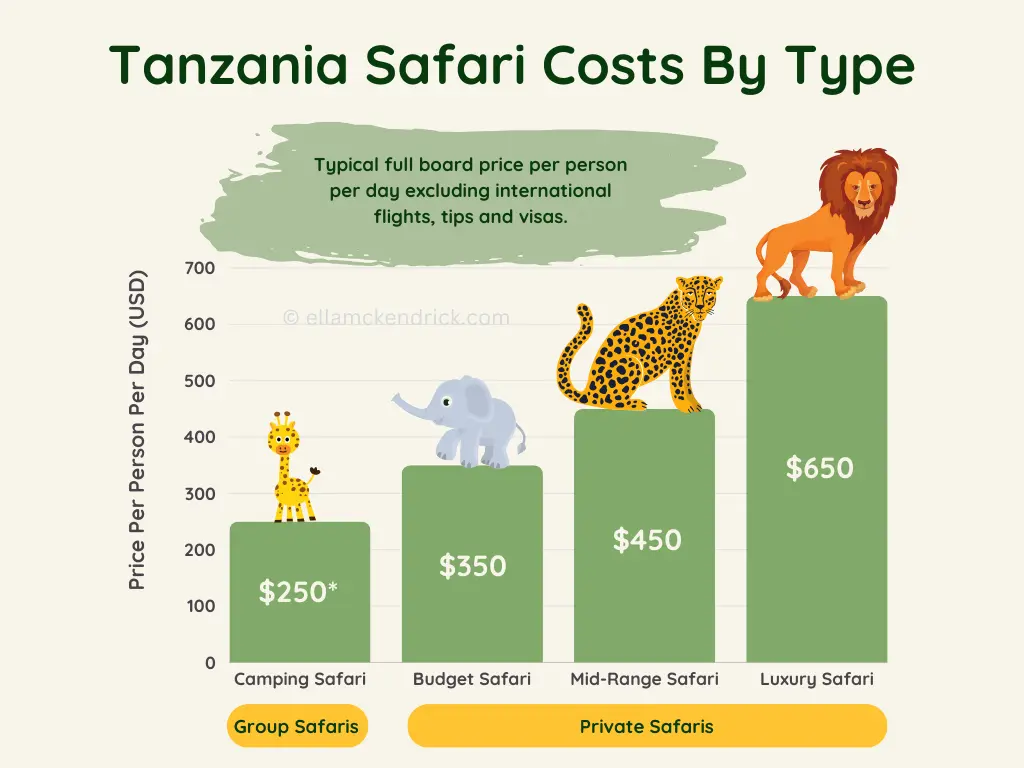
Private migration focused safari cost which stay in the Serengeti cost from around $400 per person per day. This includes hotels, park fees, all meals, transfers and all activities. On the luxury end, you could spend up to $750+ per day, whereas mid-range will set you back around $650 each day.
The costs above are for booking through a local operator, and will be more expensive if you book through an overseas travel agent.
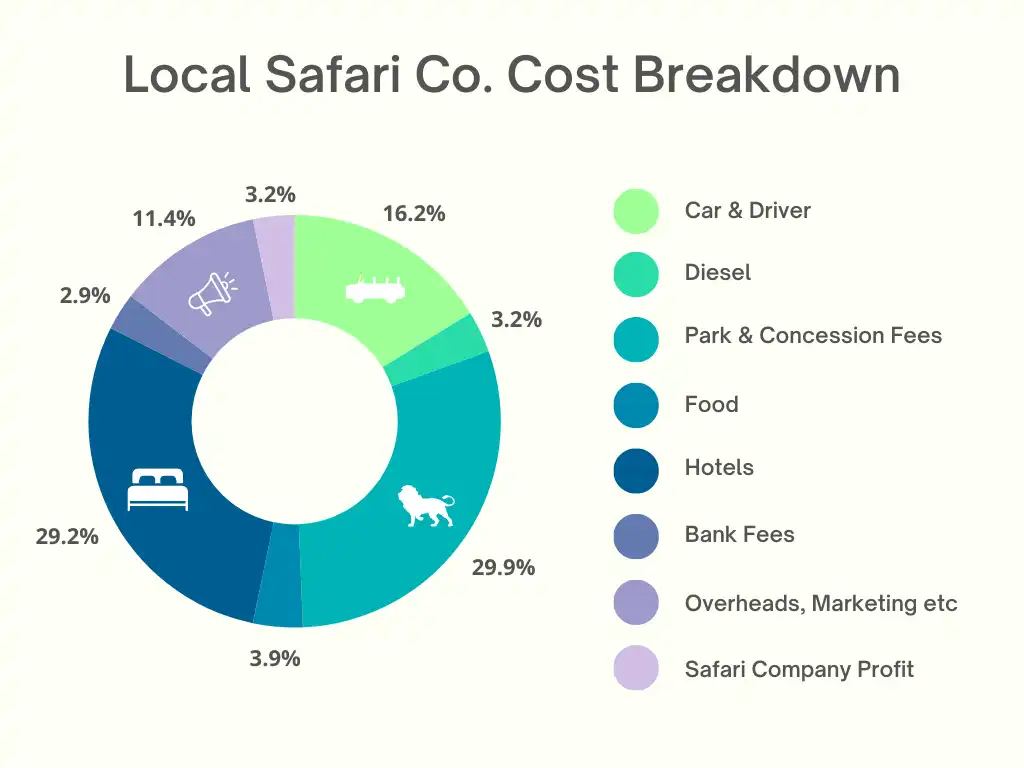
Below I’ve included a chart which breaks down where the money goes for a safari of 2 people.
Wildebeest Migration Accommodation
There’s plenty of choice when it comes to accommodation on your migration safari, but it’s important to know the pros and cons of the different options. Think about your travel style, what you want to experience, and, of course, your budget. All these factors will help you decide which type of accommodation is best for you.
Below, I’ll outline the four main accommodation types
You can jump to any of the about sections below.
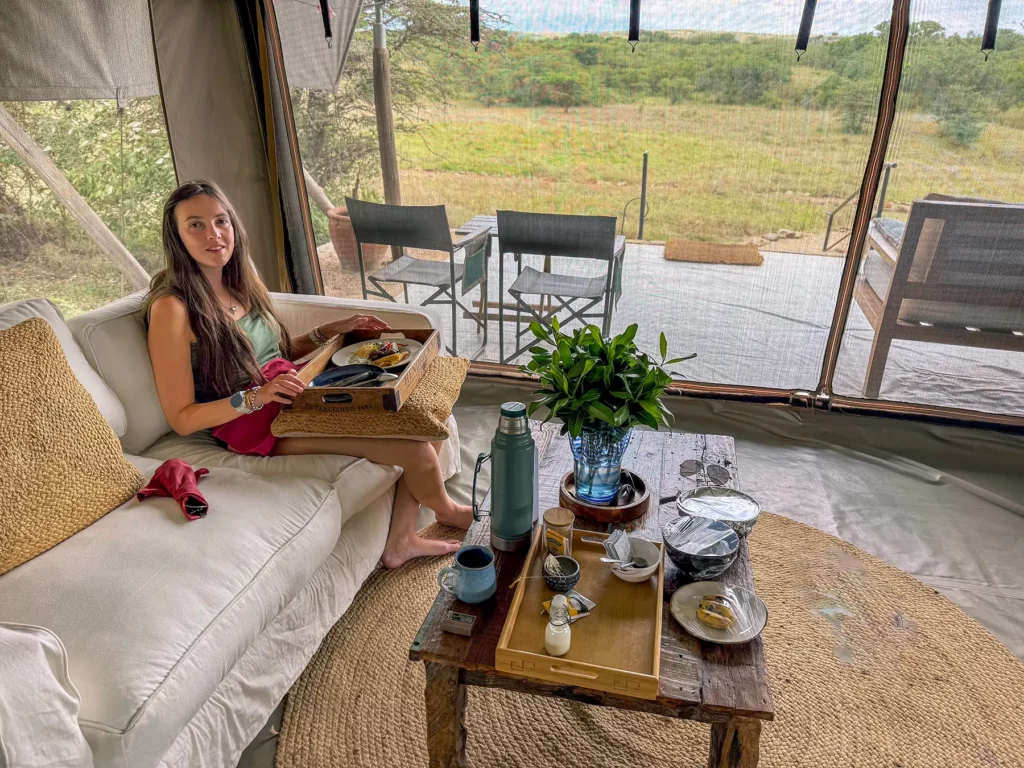
Migration Camps
Migration camps are temporary camps that are erected to follow the path of the migration. These are typically found in the Ndutu region in Southern Serengeti and Kogatende in Northern Serengeti.
A migration camp will be active for three of four months, when the wildebeests are passing through before being dismantled and moved to the other location.
As these are temporary structures they often have canvas floors rather than wooden ones and showers are often bucket showers rather than plumbed ones. They still however have all the creature comforts of a tented camp including large comfortable beds, en suite bathrooms including flushing toilets, desks, outdoor seating areas and more.

You’ll also feel far more immersed in the wilderness than you would if you booked a permanent lodge or camp. The stargazing is often superb, too, with no light pollution to spoil the night skies. If you want to feel like a true pioneer, then a migration safari is the way to go.
I think migration camps are an excellent option for seeing the migration. If you don’t mind sleeping in the bush with minimal facilities, want to be close to nature, and feel ready for an adventure, then there’s no better way of enjoying a safari.
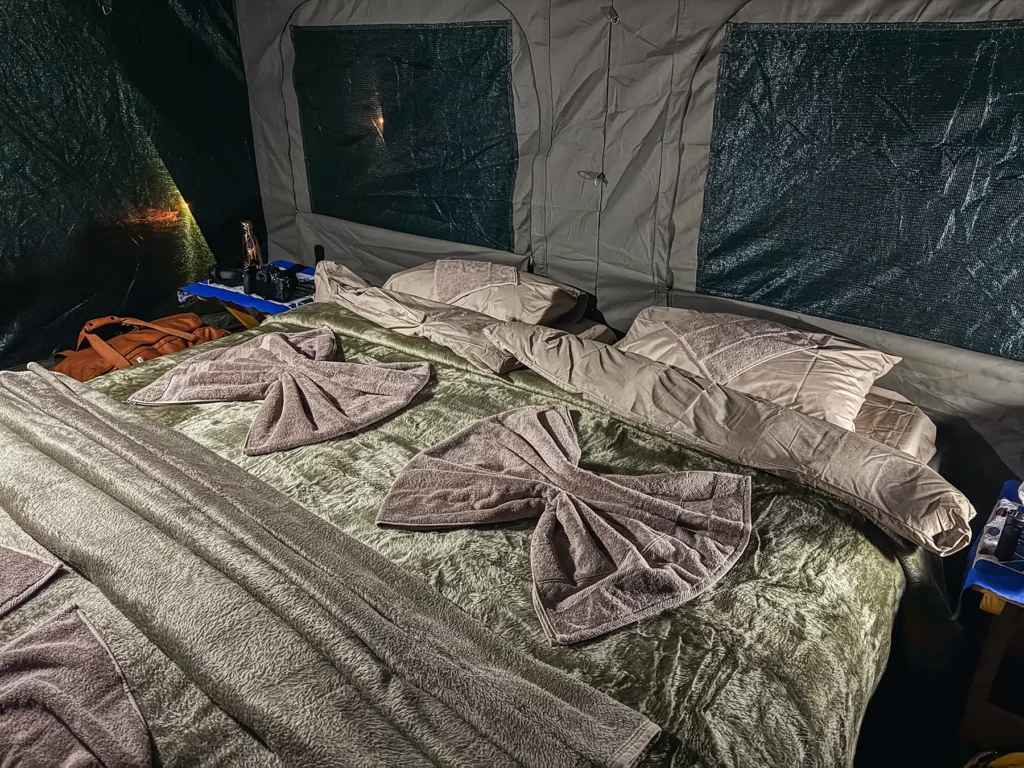
Semi-Permanent Tented Camps
If you want to sleep under canvas but fancy a more comfortable experience, then choose a semi-permanent tented camp. These operate in the same way as lodges with similar services and facilities but have a slightly wilder feel. Many tented camps are unfenced, with nature all around; you’ll feel immersed in the wild landscapes, so the safari doesn’t stop once you’ve arrived back at your accommodation.
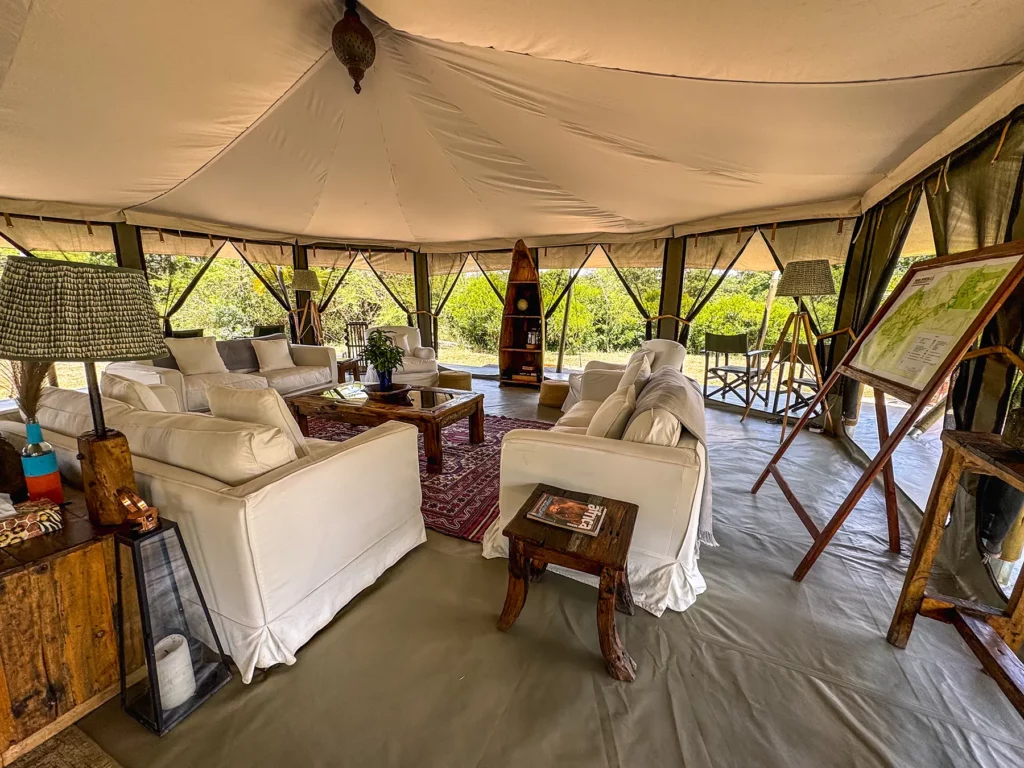
There are several different types of tented camps, ranging from rustic budget to full-on luxury. Some are very traditional and have a ‘back-to-nature’ sort of vibe, whilst others pull out all the stops with swimming pools and even butlers.
Accommodation will be in tents, albeit ones that are usually bigger and more luxurious compared to migration camps. Many have en suite bathrooms with hot running water and flushing toilets and private decks.
Some of the most expensive boutique safari accommodation is often in the form of Semi-Permanent Tented Camps comprising around 5 tents and a communal mess tent.
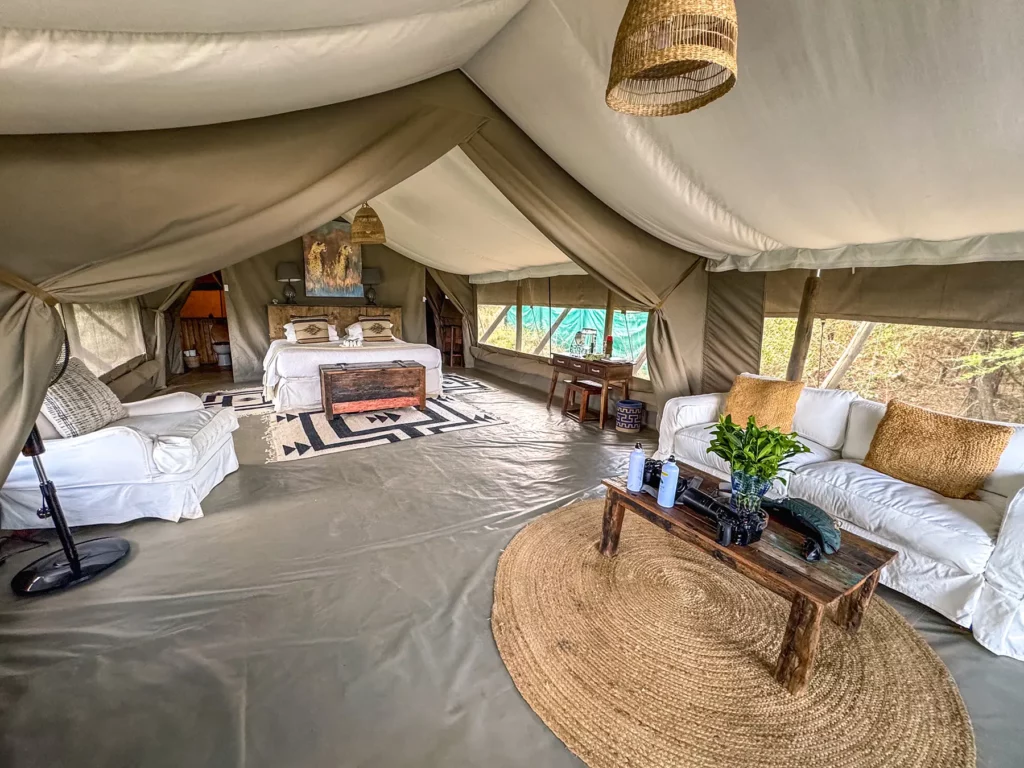
Lodges
Lodges are like a hotel out in the bush and typically built of more solid materials compared to tented camps which are often primarily made of canvas.
Lodges and tented camps at various luxury levels are usually comparable in price.
When it comes to lodges you’ll almost always have flushing toilets, hot water showers, bathtubs, electric charging points, and often Wi-Fi. Some places even have private plunge pools, gyms and spas. There will usually be a central lounge, bar area, dining rooms, and terraces for alfresco lunches.
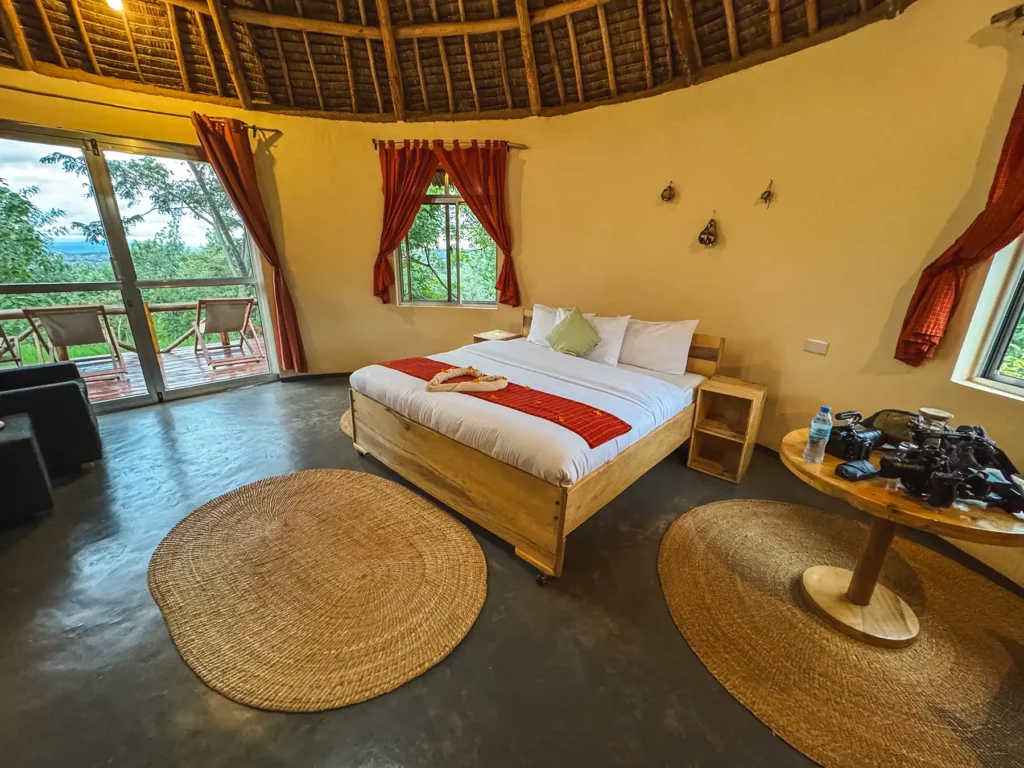
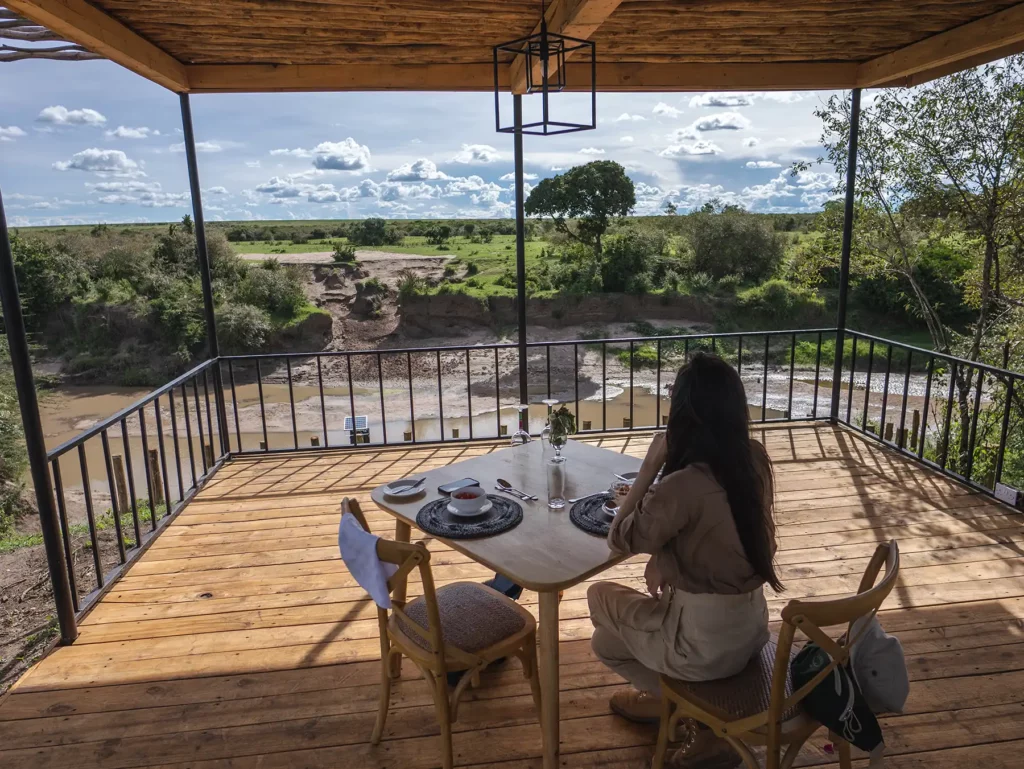
One of the downsides of basing yourself at a permanent lodge or camp is the access to the migrating herds. The animals are constantly on the move, and by being stuck in one location, you could face long drives each day just to find the best places to view the herds. Staying in a lodge can also feel a little less wild than if you were in a camp, although lodges do vary when it comes to landscape immersion and views.
Basic Camping
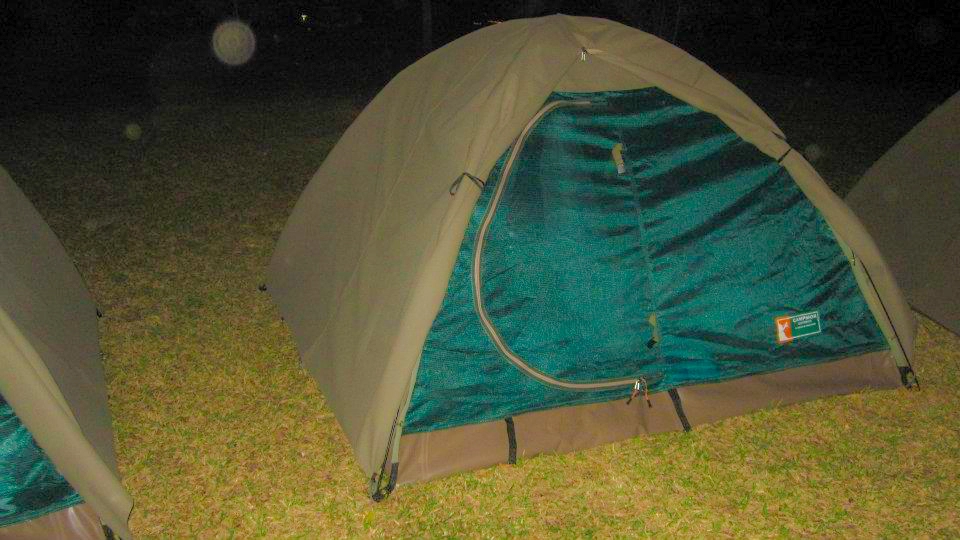
If you’re travelling on a tight budget and don’t mind roughing it a bit, then basic camping is an option.
There are several basic campsites in both the Serengeti and the Masai Mara, so you have a lot of choices in terms of location. Public campsites don’t usually require a reservation, whereas private sites often need to be pre-booked, especially in peak migration season.
The standards of camp sites in the national parks are usually quite low and they are not always very well maintained.
Most sites have basic facilities like a toilet block, showers, and a washing-up area, but it’s best to check this beforehand, as standards vary.
Wildebeest Migration Balloon Safaris
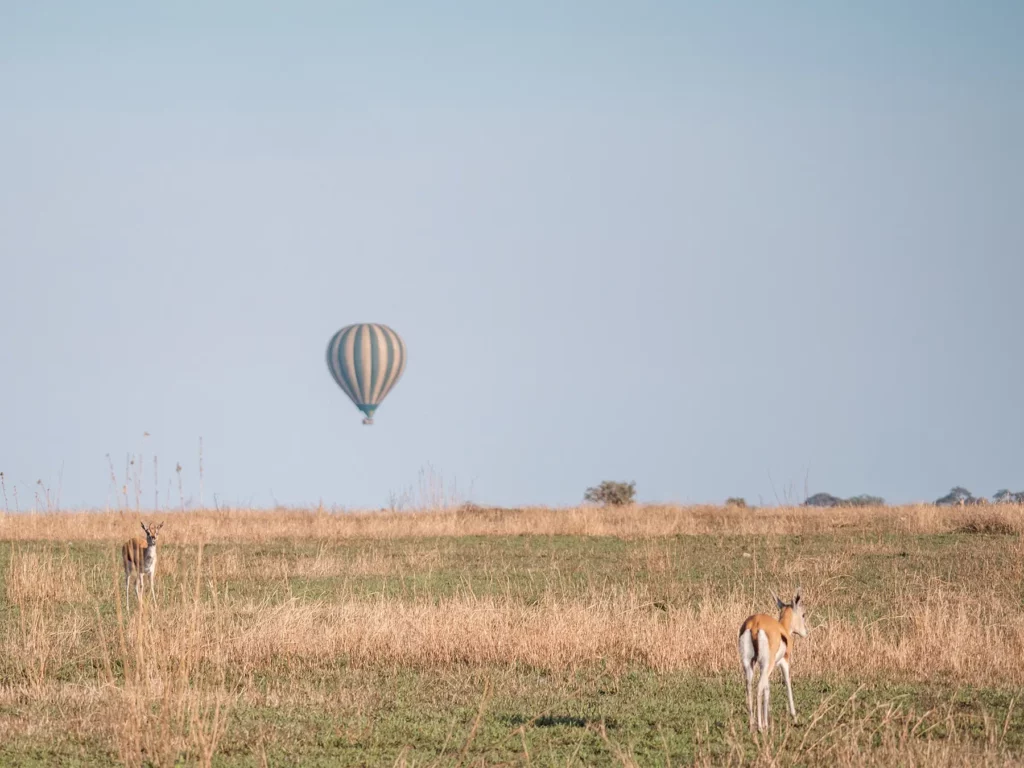
One of the best ways to appreciate how vast the wildebeest herds are is to take to the skies. Balloon safaris are offered in both Kenya and Tanzania as an add-on to your safari experience. Flights usually occur in the early morning, so you’ll catch the sunrise as you glide silently over the plains.
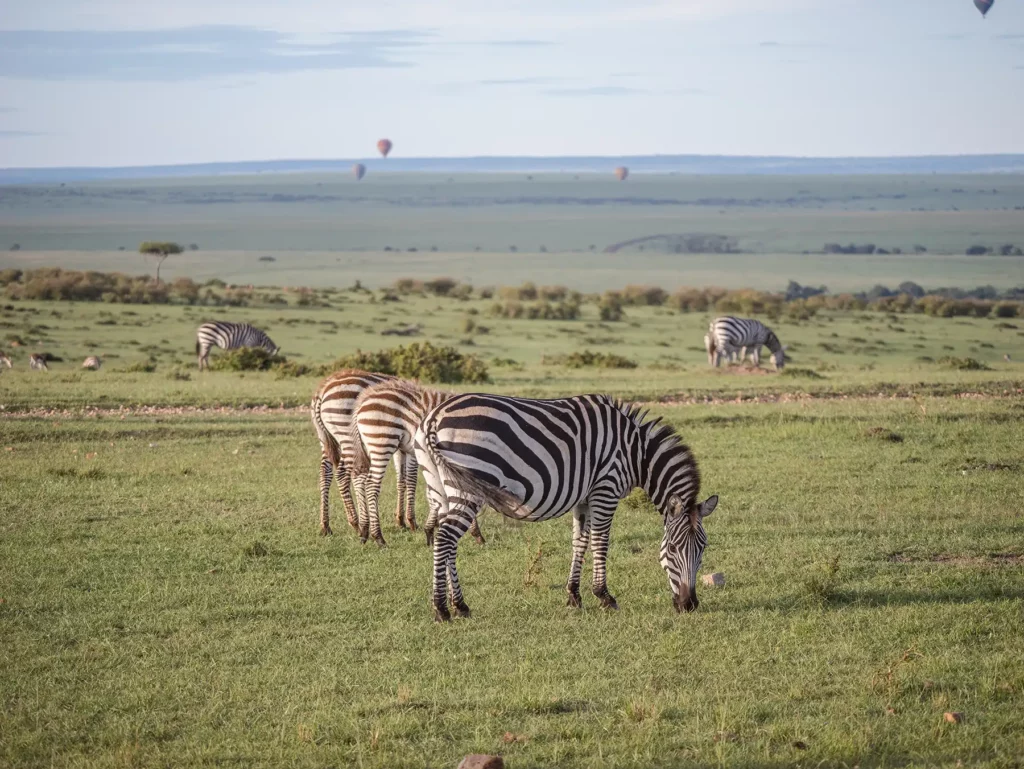
It’s an incredible experience to see the migration from above. The animals will be spread out across the savannahs, often as far as the horizon. You might spot some predators lying in wait around the edge of the herds, waiting for their chance to pounce. From your place in the basket, you’ll enjoy uninterrupted views of the national parks, with their plains, forests and rivers all looking tiny from high above.
After descending back down to earth, you’ll be treated to a celebratory bush breakfast out on the plains, often with a glass of fizz to toast your flight.
Hot air ballon safaris normally cost around $500 per person.
Flights are weather-dependent, so be patient if they’re cancelled, as this is for your safety.
Great Wildebeest Migration Video
Other Great Wildlife Migrations
The Great Migration in East Africa isn’t the only mass movement of animals in the world. In fact, it’s neither the biggest nor the longest. It is, however, arguably the most spectacular!
There have been countless different land mammal migrations throughout history, although, unfortunately, many have been heavily impacted by human development and climate change.
However, there are a couple of great wildlife migrations that still take place today and are worthy of a mention: the zebra migration in Botswana, and the antelope migration in South Sudan.
You can jump to any of the about sections below.
Great Nile Migration in South Sudan
How Does Tanzania’s Great Migration Compare with Other Wildlife Migrations?
Botswana Zebra Migration
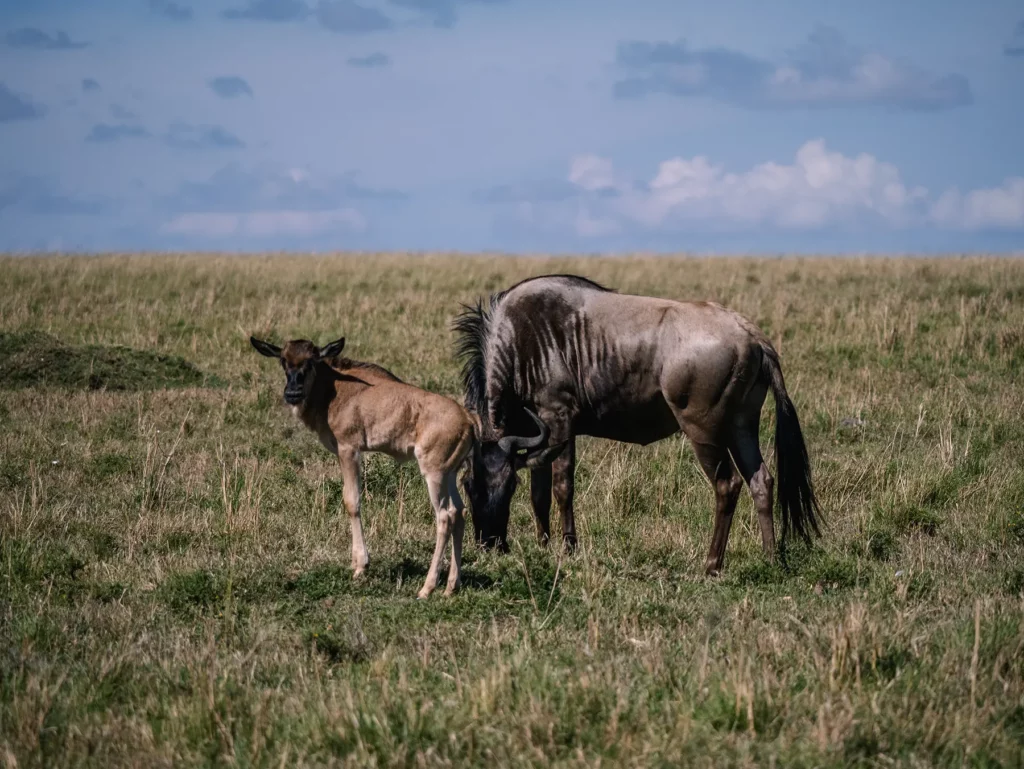
Did you know that Botswana is home to the longest migration in Africa? This huge journey of zebras is known as the ‘Secret Migration’ because, until recently, not much was known about it.
The zebras pass through many regions inaccessible to humans, which is why their movements have remained a mystery for so long.
The zebras travel around 620 miles every year along a relatively linear path. You can see the spectacle during safaris in Botswana if you know where to look.
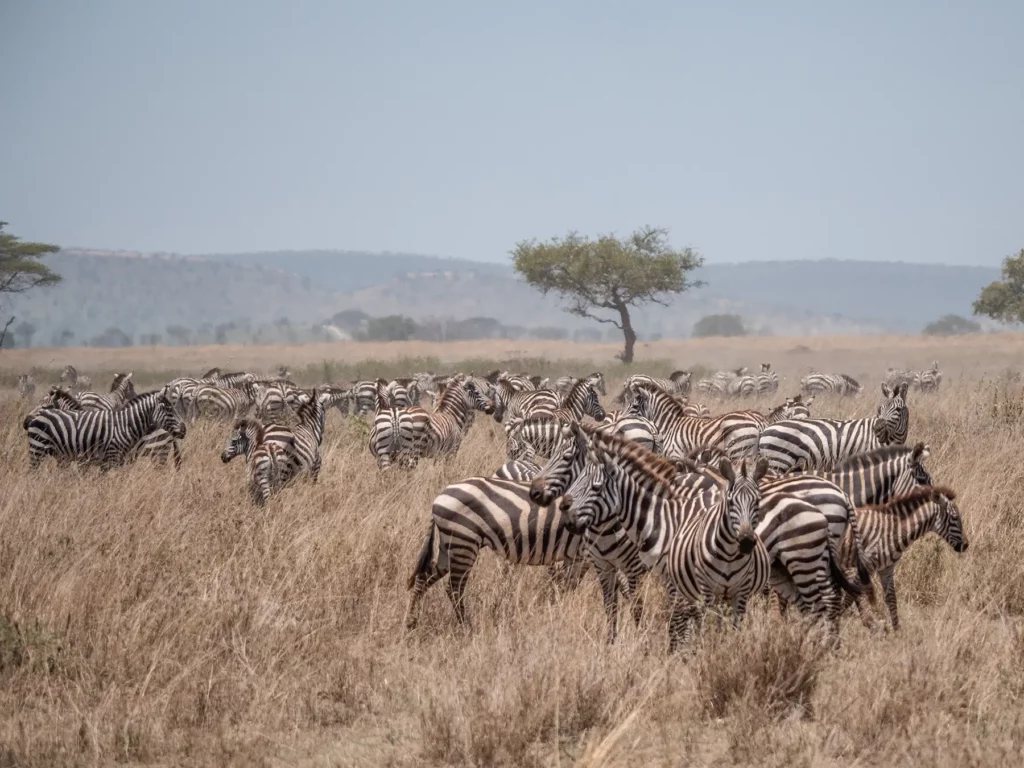
The zebra migration begins on the Chobe River floodplains, where the animals remain during the dry season between July and October.
In November, the animals began travelling south to the Nxai Pan National Park in the Makgadikgadi area. They walk in a straight line, with some stopping for a short period at the Seloko Plains on the way. This part of the journey usually takes up to three weeks.
Research suggests that the zebras remain in Nxai Pan for about 80 days between December and February. Then, they return to Chobe National Park in March, arriving between April and July.
Great Nile Migration in South Sudan
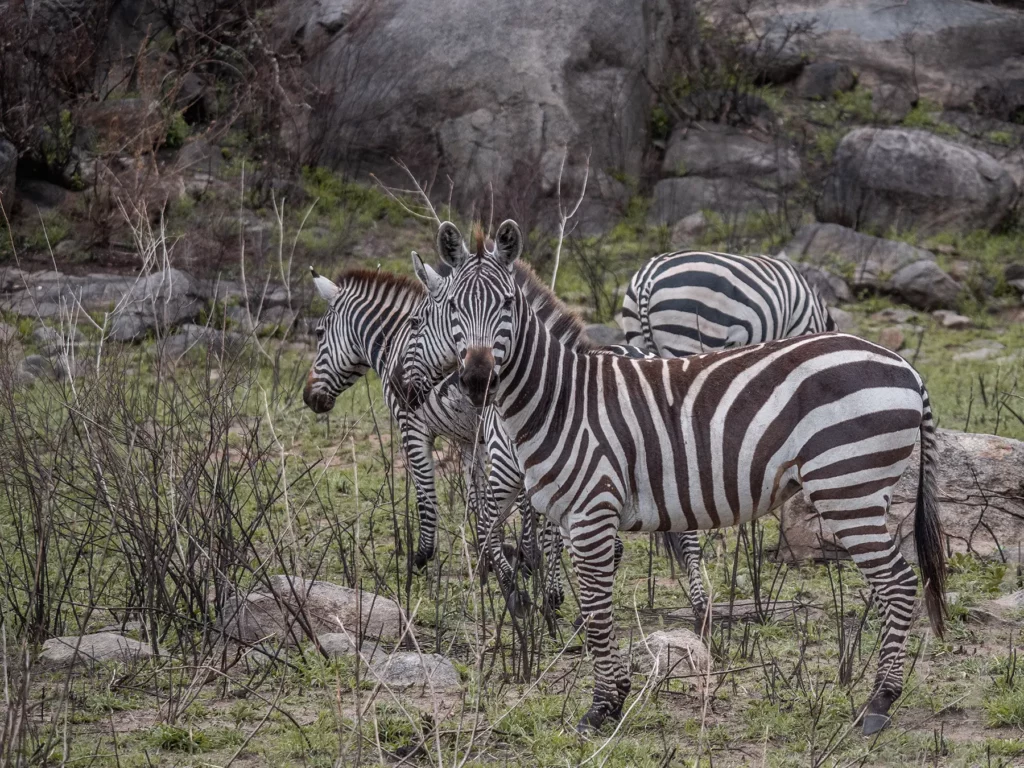
The world’s largest migration of land mammals occurs in South Sudan.
Known as the Great Nile Migration, the sheer scale of this mass movement of antelope has only recently been confirmed.
The search for better grazing conditions is thought to be the catalyst for the migration, with animals travelling around 1,250 miles each year.
Around 6 million individuals, including white-eared kobs, gazelles, reedbucks and tiangs, make their way across the Boma Badingilo Jonglei Landscape in the southeastern part of South Sudan along the White Nile.
The animals eventually end up in Ethiopia’s Gambela Region before returning to South Sudan once again.
There’s still a lot to learn about this migration, and threats from illegal hunting make its future uncertain. It’s difficult to protect animals that roam over such a large region, and there are few rangers available to patrol these areas.
How Does Tanzania’s Great Migration Compare with Other Wildlife Migrations?
The below table shows the key mammal wildlife migrations by number of animals.
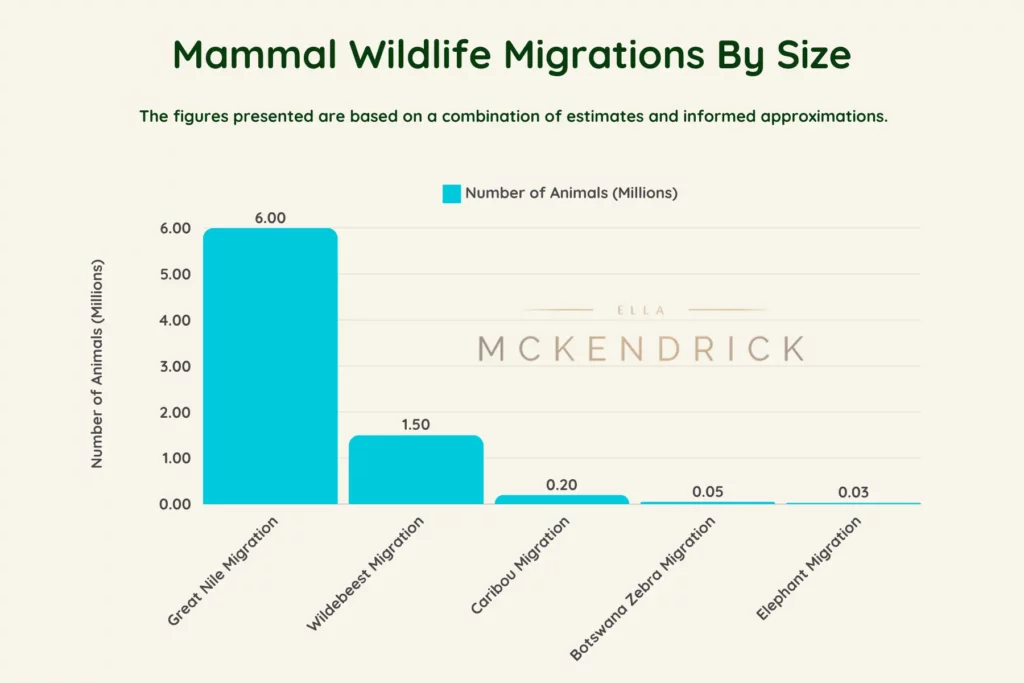
Here is more information on these migrations. You can also read more about some of these in my section about other migrations.
| Migration Name | Location | Main Animal(s) | Number of Animals | Length of Migration | Months of Migration |
|---|---|---|---|---|---|
| Great Nile Migration | South Sudan | White-Eared Kob, Mongalla Gazelle, Tiang | 6 million | ~1,200 miles (~1,900 km) | 3 |
| Great Wildebeest Migration | Serengeti, Tanzania; Maasai Mara, Kenya | Wildebeest, Zebras, Gazelles | 1.5 million | ~800 miles (~1,000 km) | 12 |
| Caribou Migration | Arctic tundra, North America | Caribou | 200,000 | ~1,200 miles (~1,900 km) | 4 |
| Elephant Migration | Botswana and Zimbabwe | African Elephants | 50,000 | ~50 miles (~80 km) | 3 |
| Botswana Zebra Migration | Botswana | Zebras | 30,000 | ~300 miles (~500 km) | 4 |
Final Thoughts on the Wildebeest Migration
I’ve enjoyed many incredible safaris and wildlife encounters in different countries across Africa, but there’s one experience that will always stand head and shoulders above the rest – seeing the Great Migration.
Witnessing these enormous herds as they moved across the plains and rivers was a phenomenal sight and definitely one that surpassed all my expectations.
The Great Migration is probably the most iconic safari experience you can have. Nothing prepares you for the enormous numbers of animals that come together to create this extraordinary show – wildlife photography has never been so easy!
Yes, travelling to Kenya and Tanzania during the migration season can be more expensive, but seeing the world’s greatest wildlife spectacle is worth the higher cost.
Witnessing the migration has undoubtedly been one of my all-time favourite safari experiences, and I highly recommend including it in your itinerary if you can.
Read More Tanzania Guides
For an overview of planning your safari, you can read my Ultimate Tanzania Safari Guide.
Tanzania Itineraries
Recomended itineraries and how to book them.
7-10 Day Tanzania Safari Itinerary & Costs
5-Day Tanzania Safari Itineraries & Costs (6 unique Itineraries)
3-Day Tanzania Safari Itinerary & Costs
2-Week Tanzania & Zanzibar Safari Itinerary & Costs
3-Week Tanzania Safari Itinerary & Costs
10-Day Tanzania Honeymoon Itinerary & Costs
Tanzania and Kenya Itineraries
Multi-country itineraries and how to book them.
10-Day Kenya and Tanzania Safari Itinerary
2-Week Kenya & Tanzania Safari Itinerary
3-Week Kenya & Tanzania Safari Itinerary
Costs & Planning
How to get the most bang for your buck and the best time of year to visit depending on what you want to do and see.
Tanzania Safari Cost – Everything You Need to Know!
The Great Wildebeest Migration Guide
Zanzibar Island – The Complete Guide
National Parks & Reserves
Complete guides to the best and most famous safari reserves, including the wildlife you’ll see, entrance costs and best time to visit.
Comparison With Other Safari Destinations
How to Book Your Safari
Save time and ensure an incredible safari experience by getting quotes from my recommended local safari companies.
Join the rapidly growing tribe of over 1,000 travellers who’ve booked their dream safari using my insider tips and recommendations.
Read More Kenya Guides
For an overview of planning your safari, you can read my Ultimate Kenya Safari Guide.
Kenya Itineraries
Recomended itineraries and how to book them.
7-10-Day Kenya Safari Itinerary
3 Day Kenya Safari Itinerary & Costs
2-Week Kenya Safari Itinerary & Costs
3-Week Kenya Safari Itinerary & Costs
Kenya & Tanzania Itineraries
Multi-country itineraries and how to book them.
10-Day Kenya and Tanzania Safari Itinerary
2-Week Kenya & Tanzania Safari Itinerary
3-Week Kenya & Tanzania Safari Itinerary
Costs & Planning
How to get the most bang for your buck and the best time of year to visit depending on what you want to do and see.
Kenya Safari Costs – Everything you Need to Know
The Great Wildebeest Migration Guide
National Parks & Reserves
Complete guides to the best and most famous safari reserves, including the wildlife you’ll see, entrance costs and best time to visit.
Coming soon.
Comparison With Other Safari Destinations
How to Book Your Safari
Save time and ensure an incredible safari experience by getting quotes from my recommended local safari companies.
Join the rapidly growing tribe of over 1,000 travellers who’ve booked their dream safari using my insider tips and recommendations.
Thanks for the detailed breakdown of the Great Wildebeest Migration — your month-by-month guide really helped clarify the route and highlights! Would love to experience it firsthand someday with Wildebeest Sightings.
Hi Ella,
I really liked your well documented guide, would be great if you provided names of some of the lodges you recommend, I do understand that is part of the “free Quote” process from your link.