
Known as the Land of a Thousand Hills, Rwanda packs mountain gorillas, wild chimpanzees and a full Big Five savannah into a country that you can drive across in a single day! This small landlocked country really packs a big safari punch.
And whilst it may not be as well known as Kenya or neighbouring Tanzania for safari, Rwanda truly deserves to be explored in depth. So many people visit purely for gorillas and skip over all the other incredible things that Rwanda has to offer. They have no idea just how much they’re missing out on.
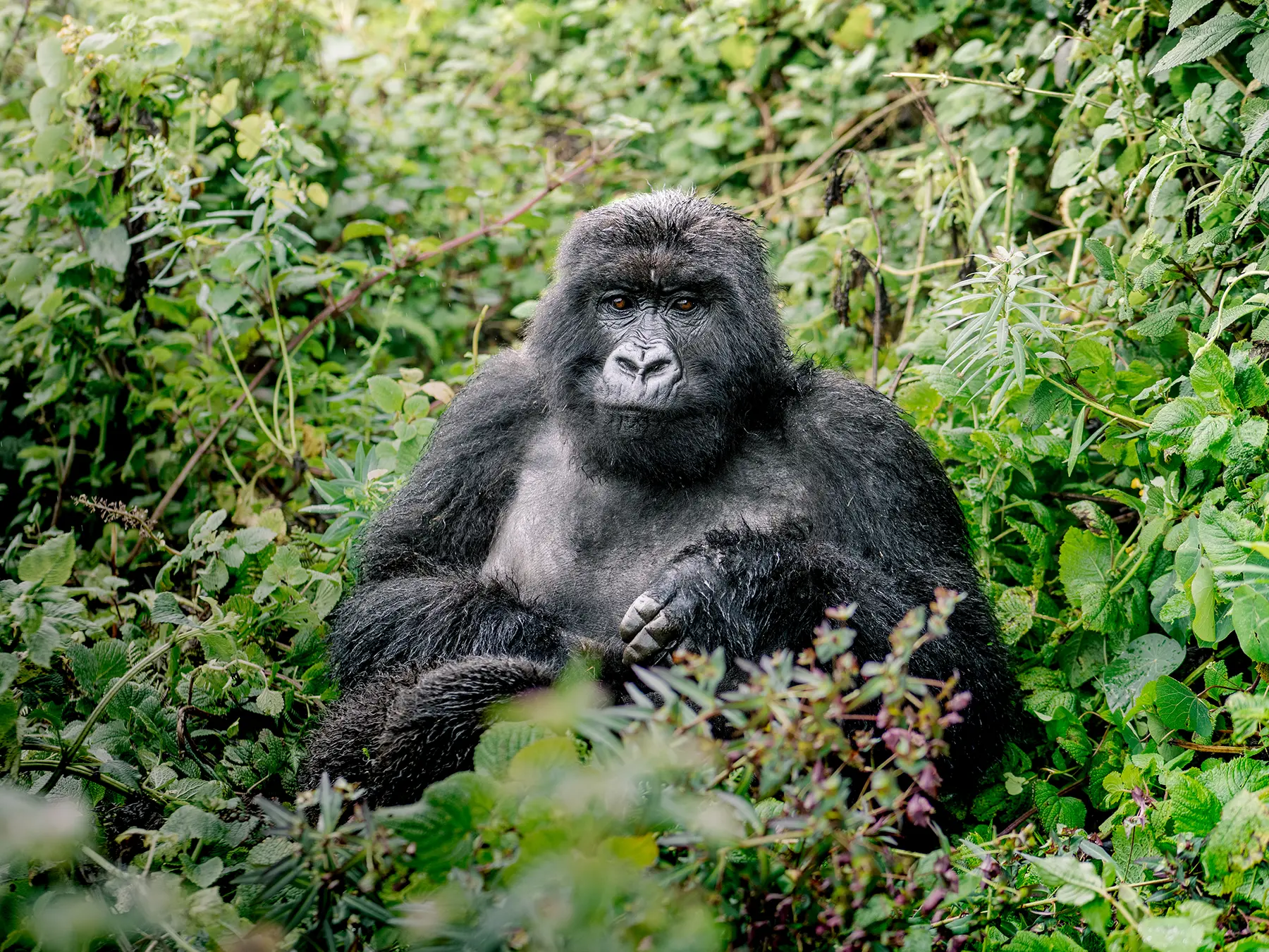
As well as housing a growing population of mountain gorillas within Volcanoes National Park, Rwanda has Nyungwe Forest, one of the best places in the world to see chimpanzees, and Akagera National Park has a healthy population of the famous Big Five (lion, elephant, rhino, buffalo and leopard).
I managed to spot four of the Big Five in Akagera, including more rhinos than I could count! Akagera is hands down the best destination I’ve ever visited for rhinos.
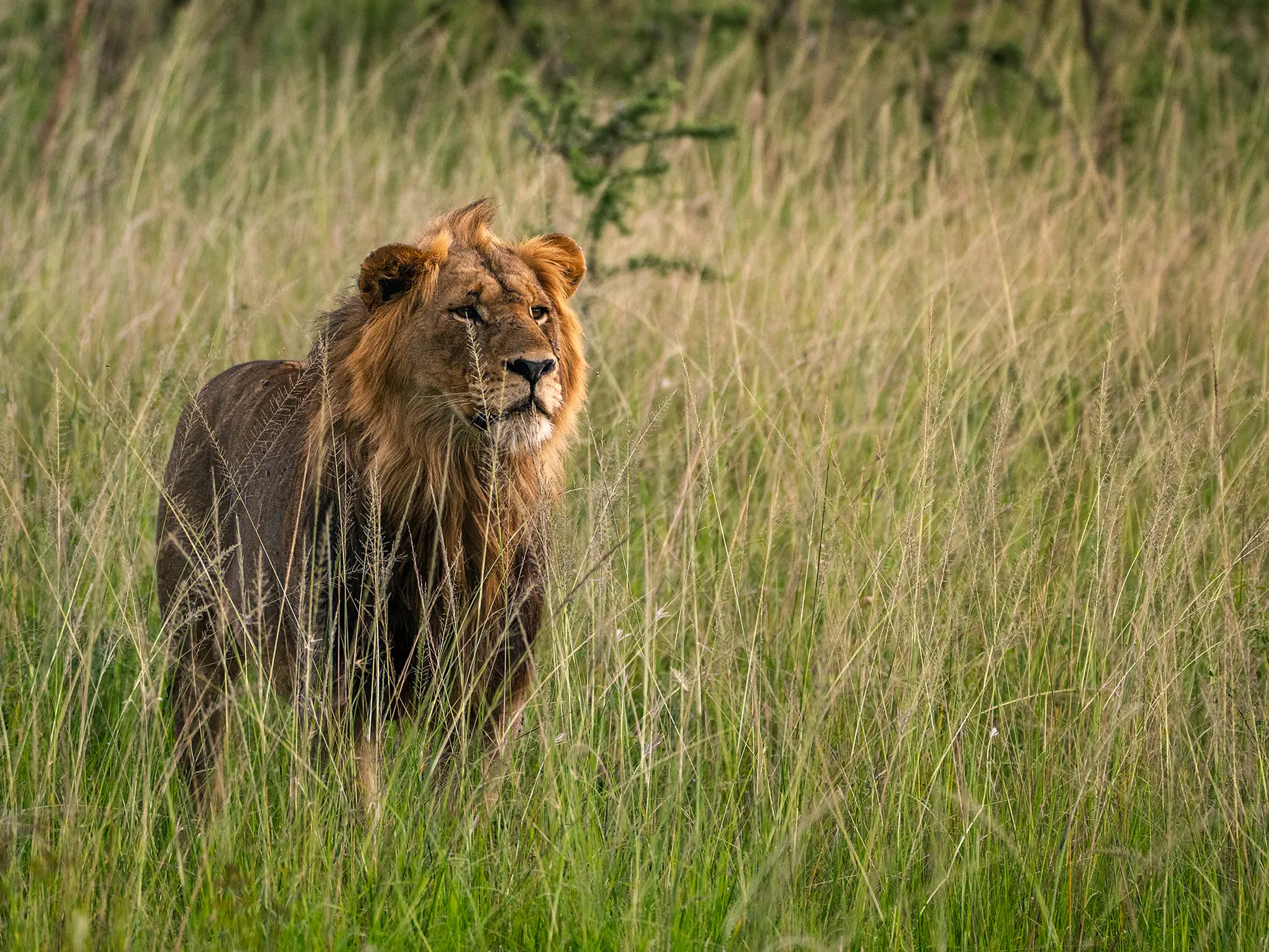
Ten days allows you to see Rwanda’s highlights at a comfortable pace. You’ll spend several nights in Akagera National Park, patiently searching for the Big Five, time in Nyungwe Forest where you can go chimpanzee trekking, a couple of hours spent on the waters of Lake Kivu, and of course some time in Volcanoes National Park where you will track both golden monkeys and mountain gorillas.
For a shorter version of this itinerary see my 7-day Rwanda itinerary which has a very similar itinerary in less days.
If you have longer take a look at my 2-week Rwanda safari itinerary or if you want to add neighbouring Uganda, a 2-week Uganda and Rwanda safari itinerary covers both countries.
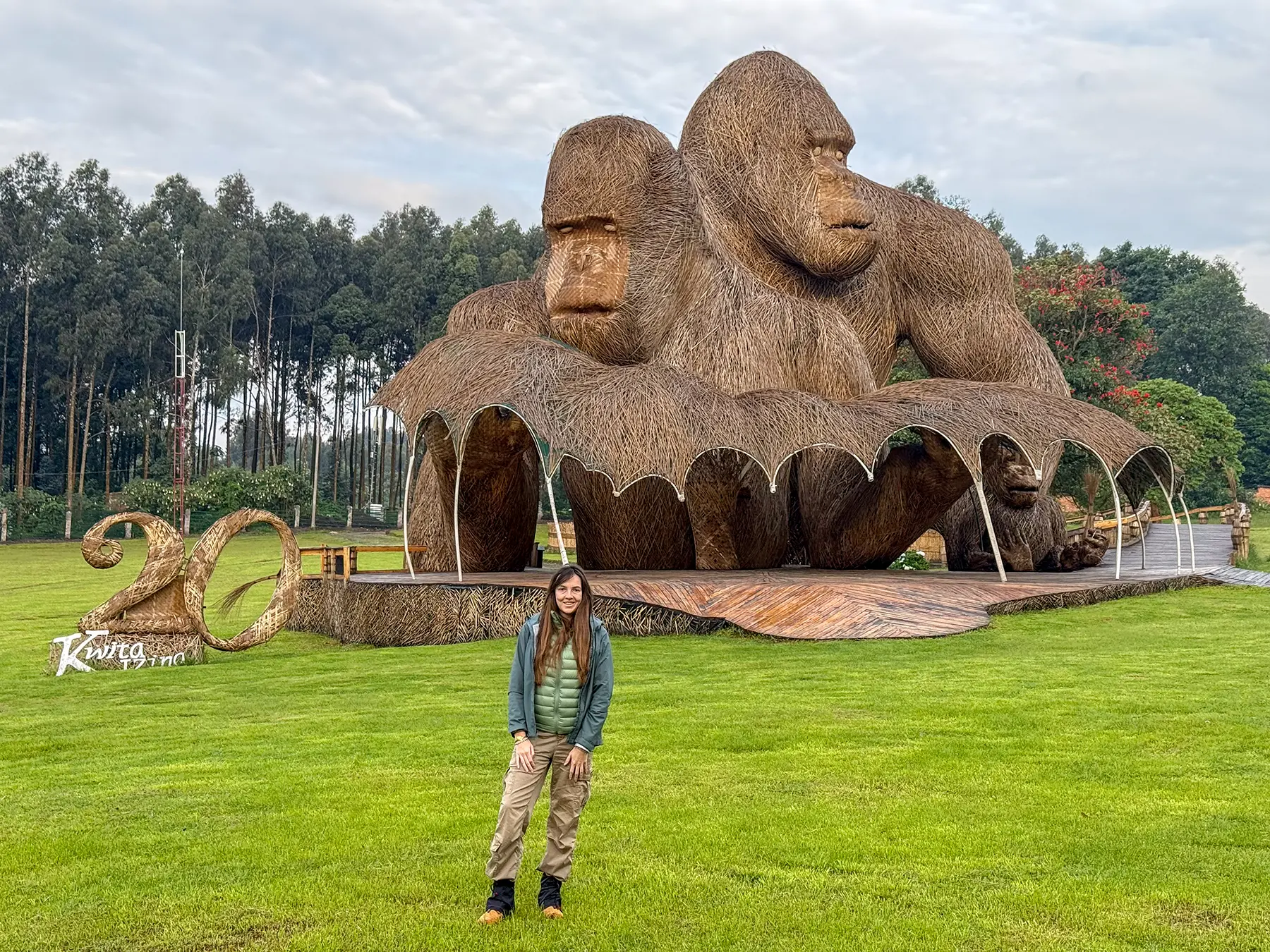
After visiting Rwanda twice, I’ve perfected this 10-Day Rwanda itinerary to show you all of what Rwanda has to offer as well as giving you the most ‘bang for your buck’.
I’m going to give you an idea of how much it will cost, the best time to visit and how to find the best safari tour company.
As I walk you through the itinerary, I’ll share tips, tricks and how to avoid some of the mistakes I’ve made.
I’ve also spoken at length with my favourite Rwanda guides as well as conducting copious amounts of additional research to ensure you receive everything you need to know to have the ultimate 10-Day Rwanda safari.
It’s easy to focus only on the fun stuff when planning the trip of a lifetime, but I’ll make sure your itinerary includes the practicalities too, like allowing time to navigate rough roads or building in moments to relax. These details often make all the difference.
Key Takeaways
- Trip Duration: 10 days
- Budget Range: $6,250-$9,650 per person
- Best Time to Visit: June to August and December to February (the dry seasons); my favourite time of year to visit is the shoulder season in October and November
- Key Destinations: Kigali, Akagera, Volcanoes NP, Lake Kivu, Nyungwe
- Wildlife Highlights: Mountain gorillas, chimpanzees, golden monkeys, Big Five
- Average Drive Time: 2.8 hours daily, 8 hours maximum
- Difficulty Level: Moderate (high-altitude primate trekking)
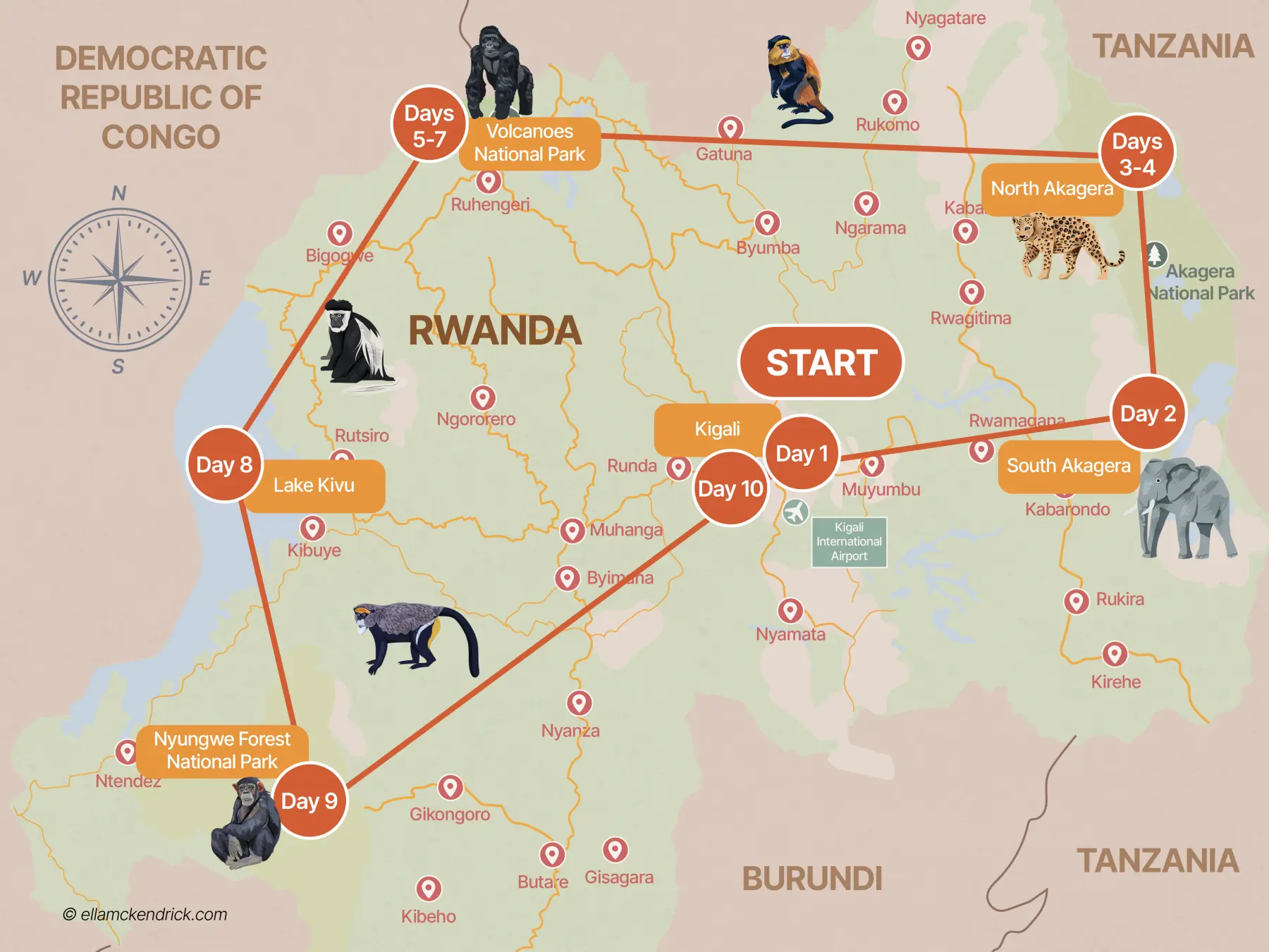
Rwanda 10-Day Safari Itinerary Map
Below is the route map for my recommended 10-Day Rwanda itinerary. We’ll cover this itinerary in detail in this guide.
Embark on the Safari of Your Dreams
Save time and ensure an incredible safari experience by getting quotes from my recommended local safari companies
I’m here to make booking your perfect safari quick, easy and risk-free.
Join the rapidly growing tribe of over 1,000 travellers who’ve booked their dream safari using my insider tips and recommendations.

It takes under 60 seconds to fill out the form and in under 48 hours you will receive multiple, no-obligation proposals from my favourite local tour operators with glowing online reviews.
Get your free no-obligation safari quotes and my top safari tips and recommendations
In This Guide
- What Does This 10-Day Rwanda Itinerary Look Like?
- Highlights of This Itinerary
- How Do You Book a 10-Day Rwanda Safari?
- Should You Choose a Private or Group Rwanda Safari?
- How Much Does a 10-Day Rwanda Safari Cost?
- When Is the Best Time to Visit Rwanda?
- How Many Days Do You Need for a Rwanda Safari?
- Rwanda Safari FAQs
- Is a 10-Day Rwanda Safari Worth It?
What Does This 10-Day Rwanda Itinerary Look Like?
Starting and ending in Kigali, this 10-day itinerary takes in Akagera National Park, Volcanoes National Park, Lake Kivu and Nyungwe Forest National Park. You’ll have three days of game drives plus a boat cruise in Akagera, as well as three nights at Volcanoes for golden monkey and gorilla trekking, and a morning for chimpanzee tracking in Nyungwe.
I’ve designed this trip around my own visit to Rwanda, which brought me to the same places. Your first trek will be a golden monkey trek on day six, followed by a gorilla trek the next morning.
Transfers between parks are all by road, with the drive time forming part of the overall experience. You really never know what you’ll see along the way – one of my most memorable experiences was seeing what seemed to be a whole village come out to help clear a landslide from the road in an incredible display of community spirit.
Quick Facts
Total drive time (excluding game drives): 28 hours over 10 days, averaging 2.8 hours per day. The 8-hour trip from Akagera to Volcanoes on day five is the longest single-day drive by far.
Best times of year: June to August and December to February (the dry seasons); my favourite time of year to visit is the shoulder season in October and November.
10-Day Rwanda Safari Map
Day-by-Day Breakdown of the Perfect 10-Day Rwanda Safari
Rwanda has so much to offer that ten days will zip by. I have crafted this 10-day safari itinerary to make sure you make the most of every moment!
I have also considered the distance between the parks and driving times in order to come up with the most enjoyable itinerary.
You can get quotes from the same local tour companies I use to organise my own trips here: Safaris By Ella
Click any of the days below to jump to my full notes on that day.
Day 1: Kigali
Drive time (excluding game drives): Depends on your selected activities
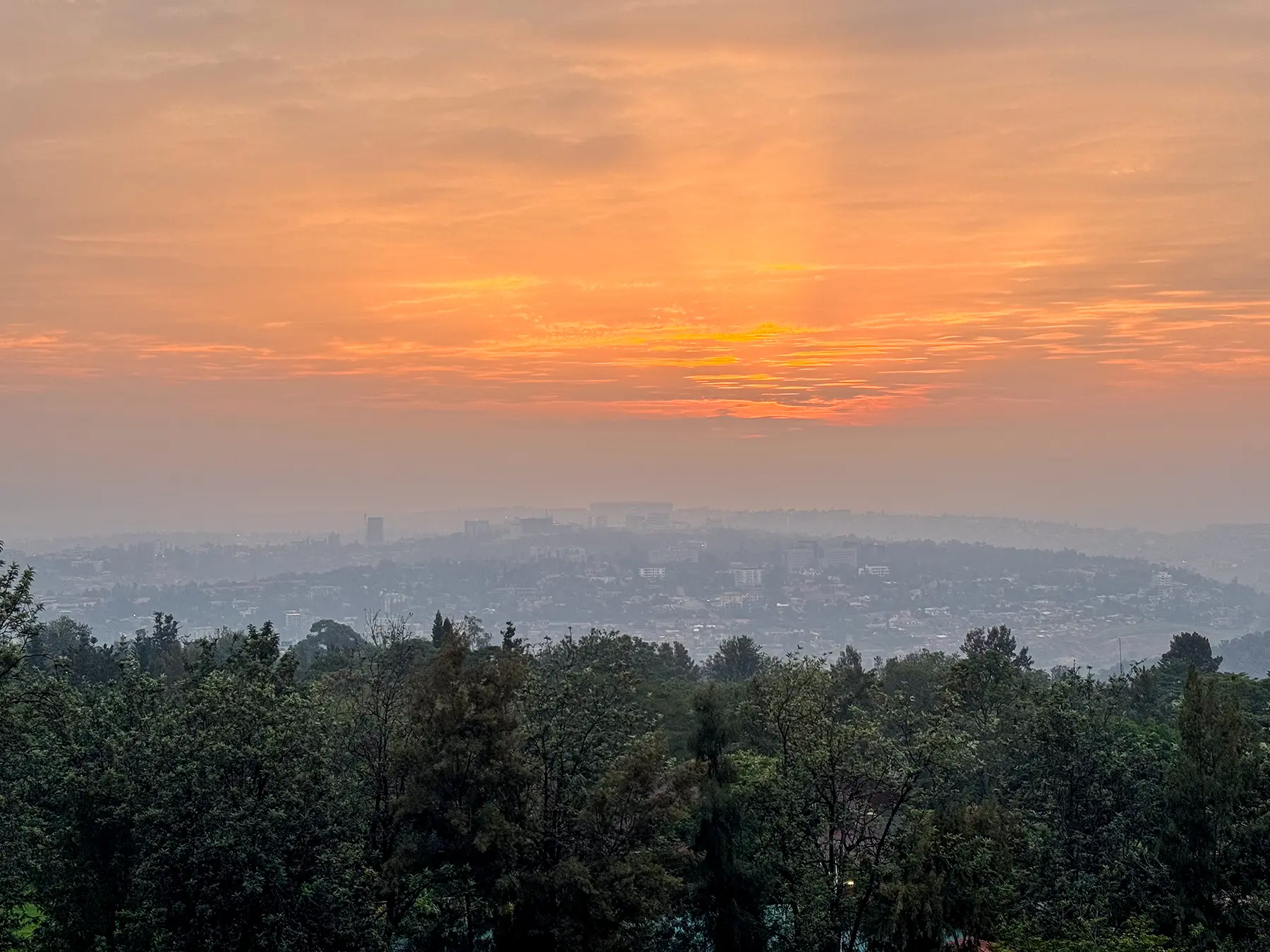
Welcome to Rwanda! Almost every Rwandan safari starts and ends here in the country’s compact capital city of Kigali. With its excellent reputation as one of Africa’s safest cities and its clean, well-organised streets, the city is well worth exploring.
With no fixed schedule this afternoon, you’re free to have a look around and get an impression of the place before your safari begins in earnest.
Itinerary
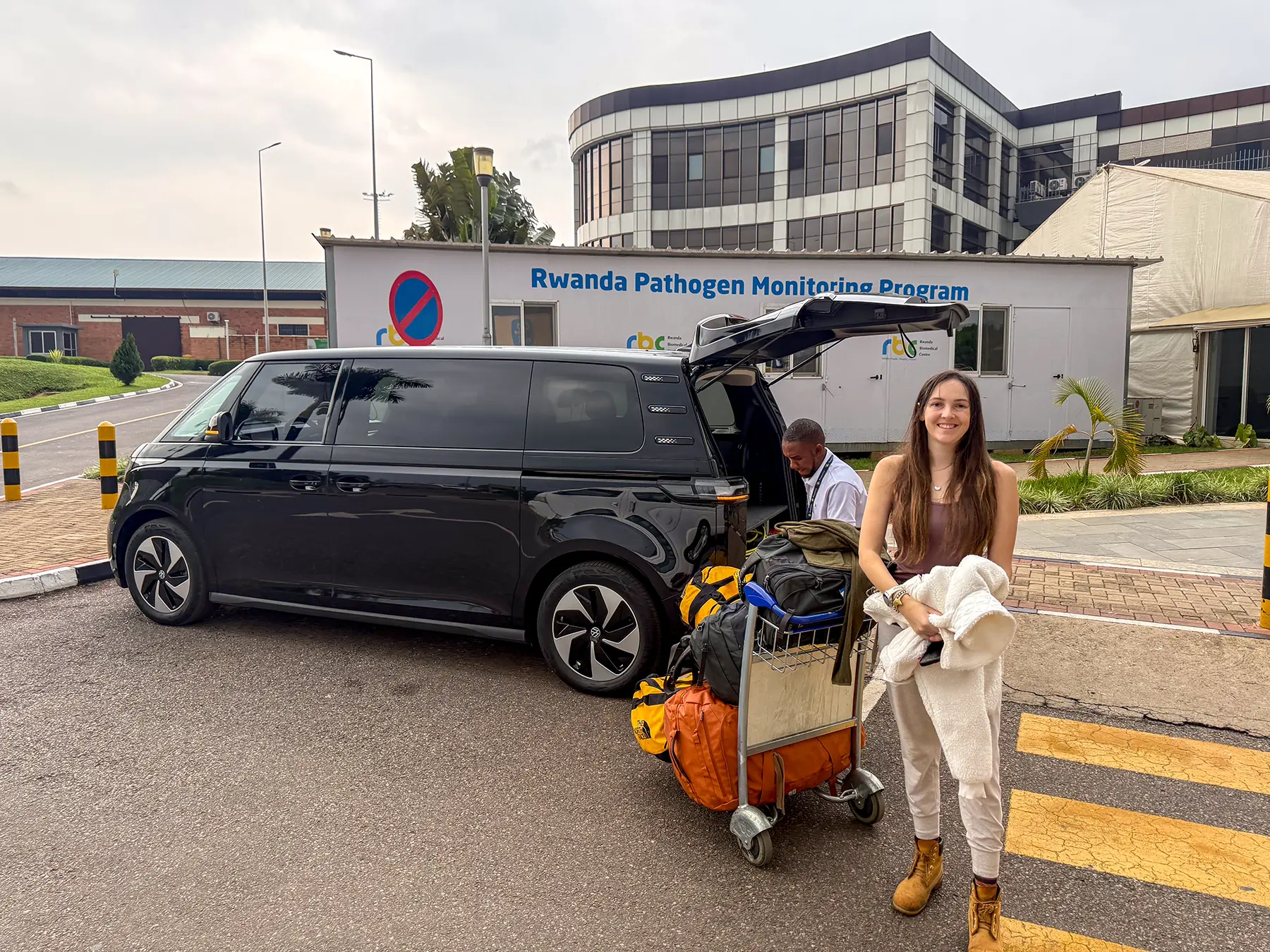
After touching down at Kigali International Airport, Rwanda’s main international gateway, you’ll first make your way to the city centre. I’d recommend booking a taxi through your hotel as the most reliable option; an airport transfer should cost about $45.
After dropping off your bags, you’ll set out to see the sights, starting at the Kigali Genocide Memorial. This is the city’s most important site and offers an excellent insight into Rwanda’s history before you leave for the parks.
You might also take in some of Kigali’s wonderful craft markets before taking some time out to savour a cup of fantastic Rwandan coffee at one of the numerous charming coffee houses around the city. Later, you can grab some dinner at one of the local eateries before returning to your hotel for your first night in Kigali.
About Kigali
Kigali is a small but fairly hilly city whose main attractions are fairly spread out, meaning it isn’t very walkable despite its compact size. I would therefore recommend hiring a taxi to get around.
If you’re going to see just one thing in the city, make sure it’s the Kigali Genocide Memorial. Documenting the devastating 1994 genocide that has left a lasting mark on the entire African continent, the memorial explores the causes and consequences of this tragic event and examines the wider issue of genocide throughout the world.
In the wake of the violence, large numbers of displaced people fled to protected wildlife areas such as Akagera National Park, clearing land for farming and hunting wildlife for survival. The effects were far-reaching, ravaging wildlife populations. Yet Rwanda has made a remarkable recovery thanks to effective conservation programmes, solid investment in infrastructure and urban centres and a burgeoning tourism sector.
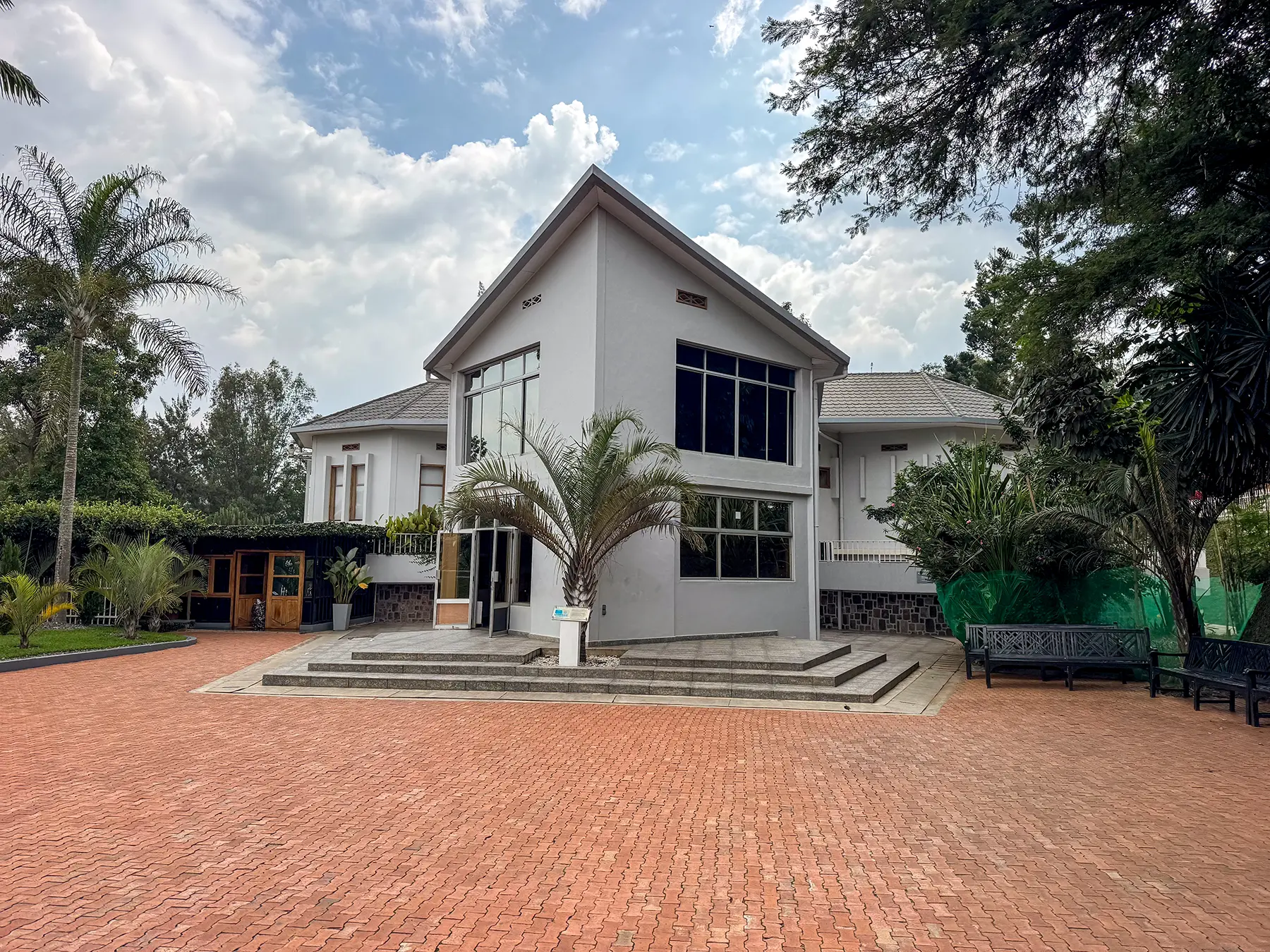
Environmental awareness is strong throughout the country, to the extent that single-use plastics are banned almost everywhere. As a result, you might be asked to leave any plastic items at park entrances. Kigali is a shining example of this environmental conscience, with strikingly clean, safe streets throughout.
Things to Do in Kigali
As well as the Genocide Memorial, Kigali boasts some great craft markets as well as a handful of museums and a lively restaurant scene.
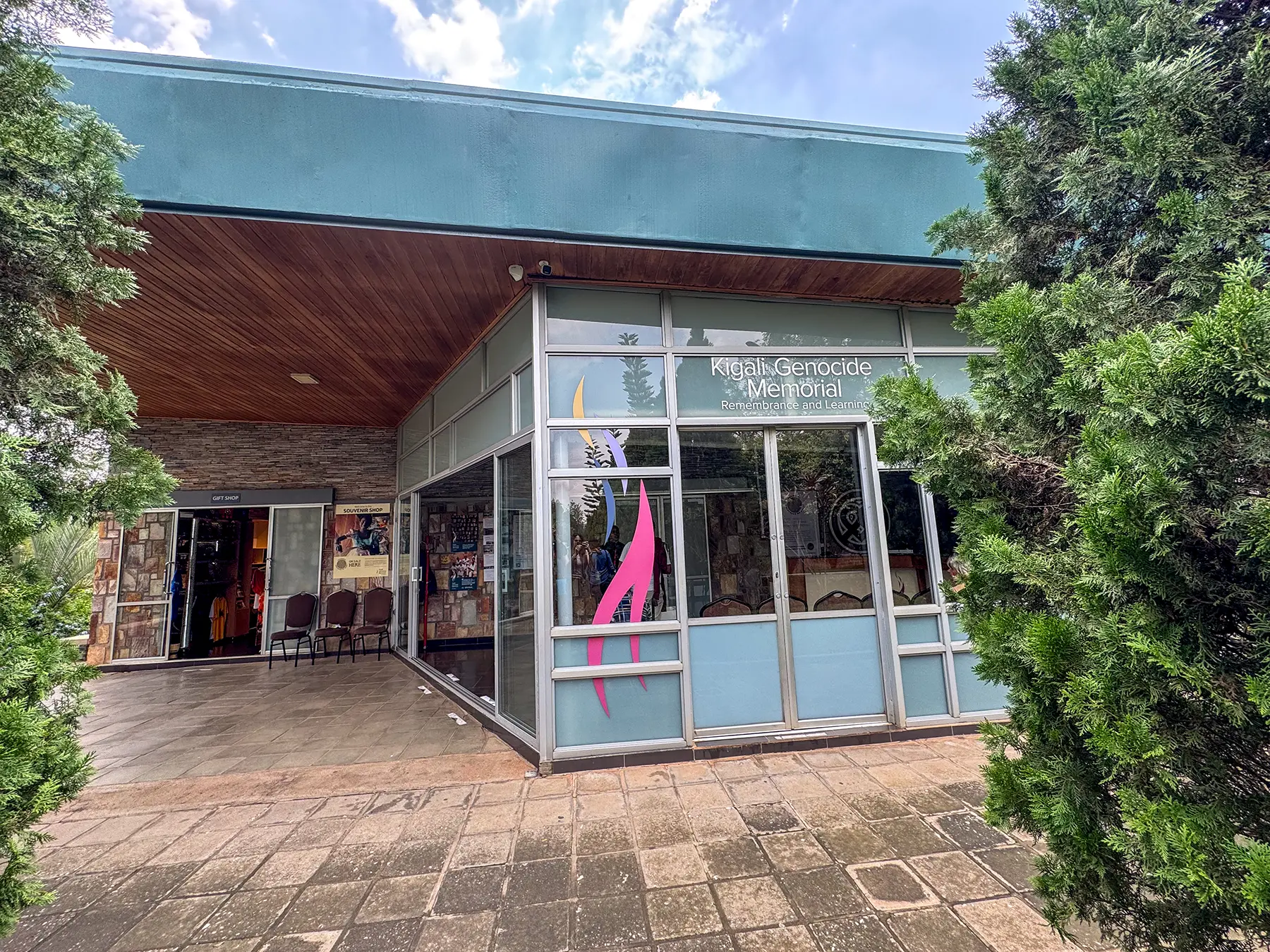
1. Visit the Kigali Genocide Memorial
For me, the Kigali Genocide Memorial is a must-see for anyone visiting Rwanda. While it’s not the easiest experience, visiting this museum is a profound and deeply moving experience that you will never forget.
Offering a window into the causes and effects of the 1994 genocide, the museum also sheds some light on Rwanda’s amazing recovery after the tragedy.
I feel this really gives you an understanding of the remarkable conservation efforts the country has undertaken and the successes they have brought before you go on to see them firsthand as you complete your itinerary. From the reintroduction of lions to Akagera to the safeguarding of mountain gorillas in Volcanoes, the fruits of these efforts are all around as you explore the country.
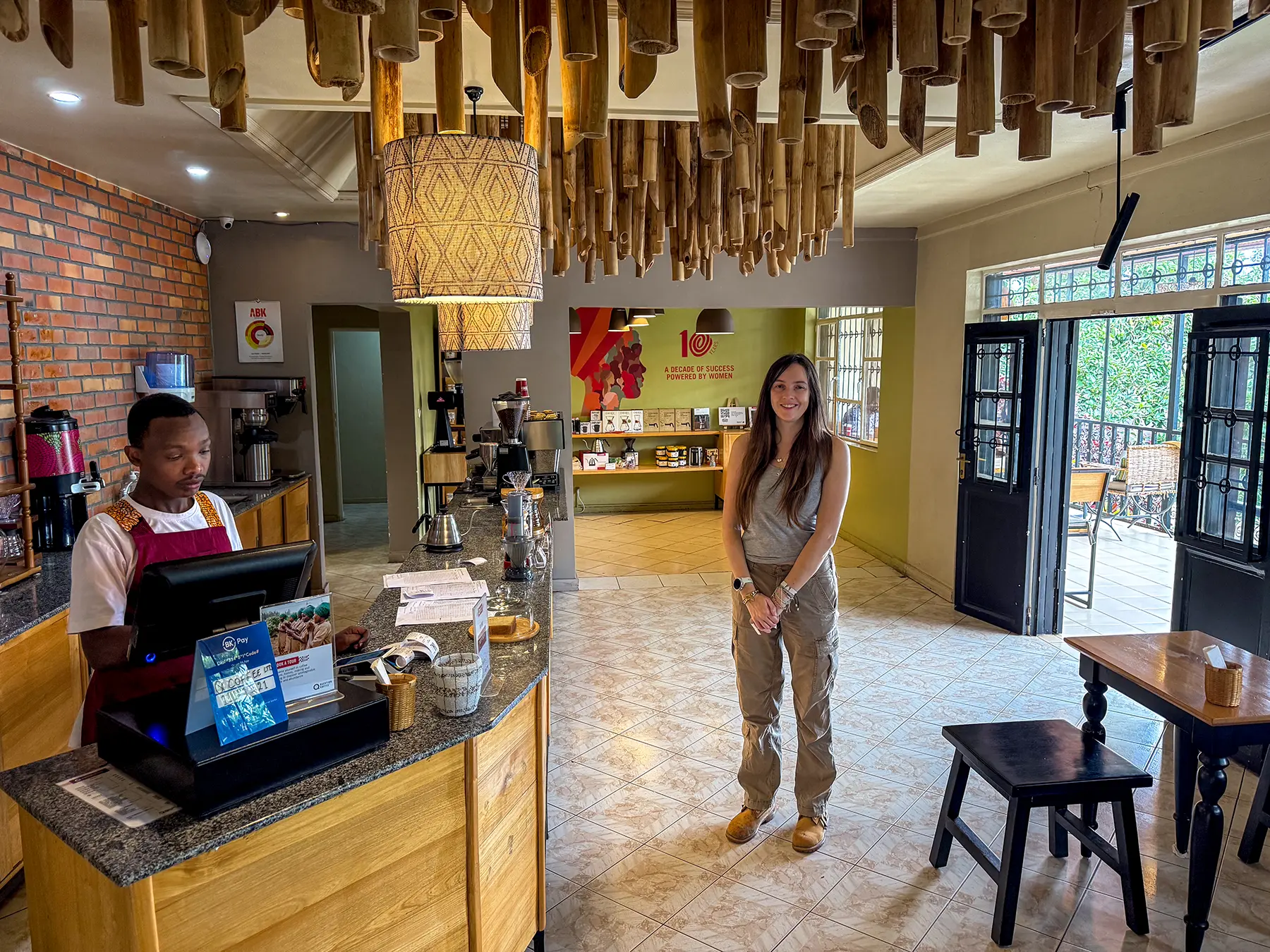
2. Coffee at Question Coffee
Rwanda has a reputation for excellent coffee, and Kigali is full of quaint little coffee houses just itching to introduce you to it! My top pick would be Question Coffee, which uses coffee beans grown by women farmers and sets aside a percentage of each purchase to support their cooperative. Any further profit is channelled into professional training and trading programs for women coffee farmers.
3. Dine at Kigali’s top restaurants
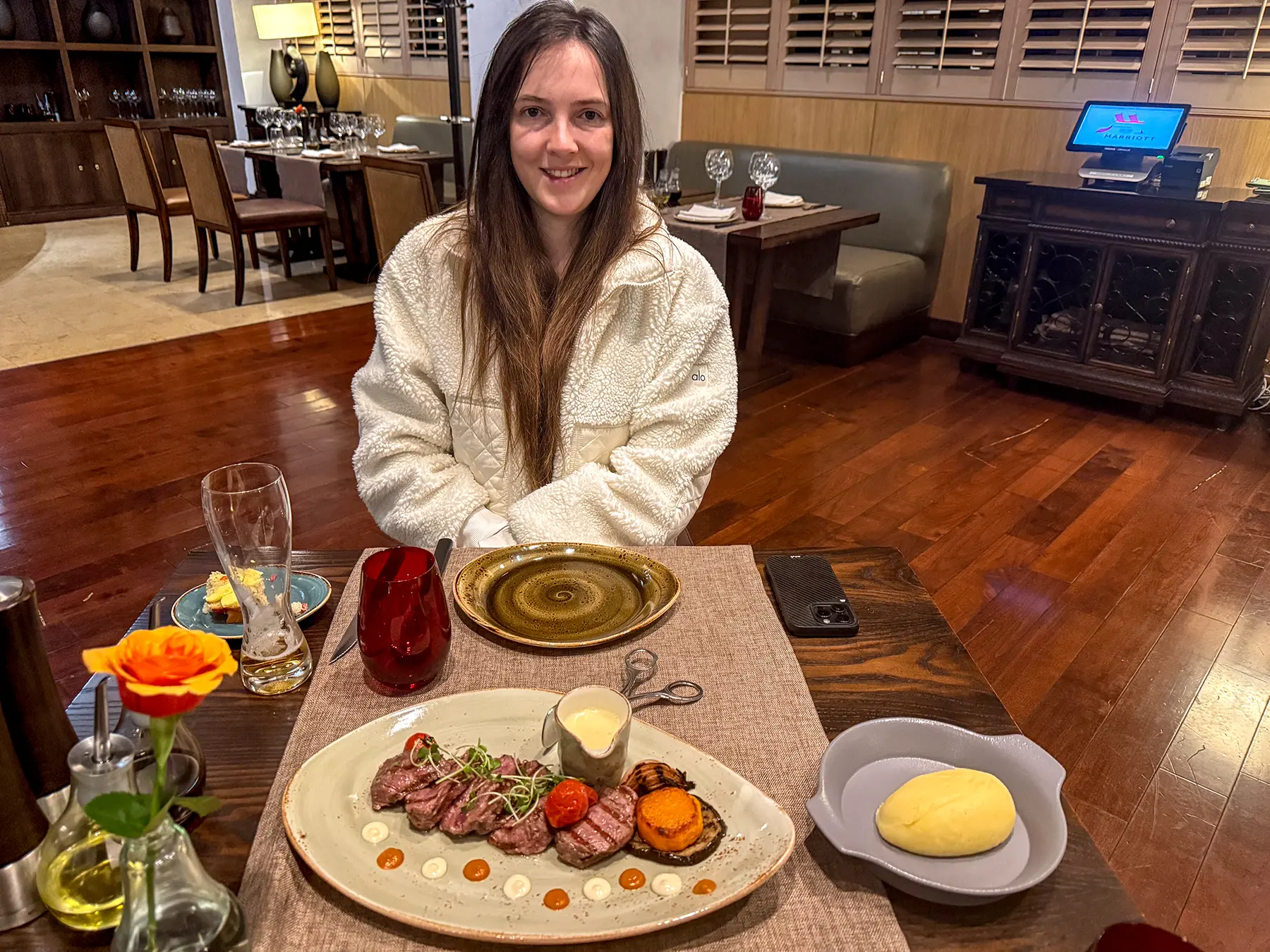
Kigali boasts a number of fantastic restaurants such as Cucina, at the Marriott Hotel, one of my personal favourites. The popular Nyurah specialises in fine dining and is located just down the road from the Marriott, consistently enjoying rave reviews.
4. Browse Kigali’s craft markets
There are a number of wonderful craft markets in the city where you can pick up some unique, locally made souvenirs such as woven baskets, fabrics and jewellery.
Tips for Visiting Kigali
A stop in Kigali is a nice, relaxing way to start your Rwanda trip. Here are some of my top tips to help you enjoy your time in the capital.
- With attractions located fairly far apart and lots of hills to negotiate, Kigali is not that easy to walk around. Reserve a taxi through your hotel to get you around for the day.
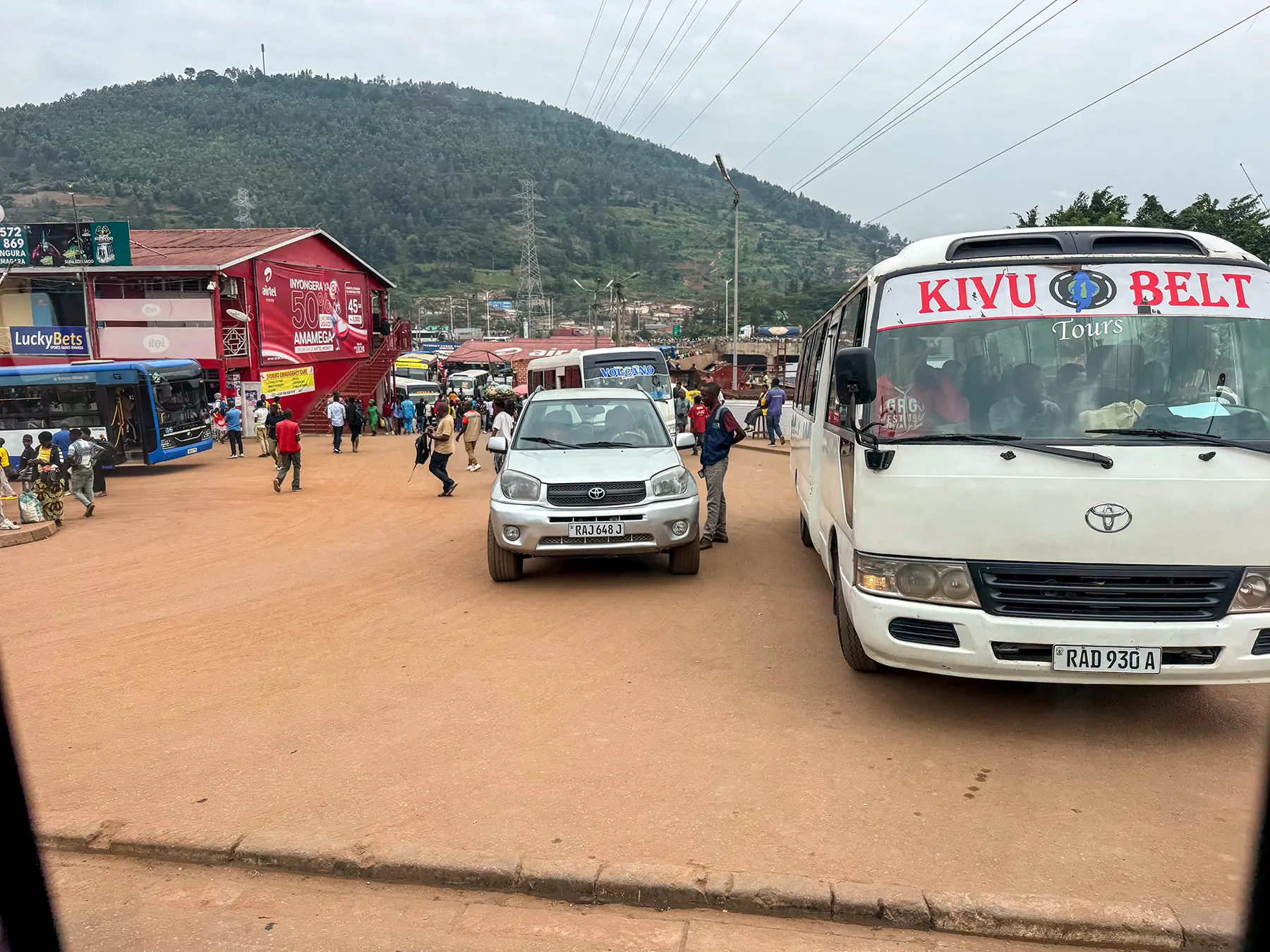
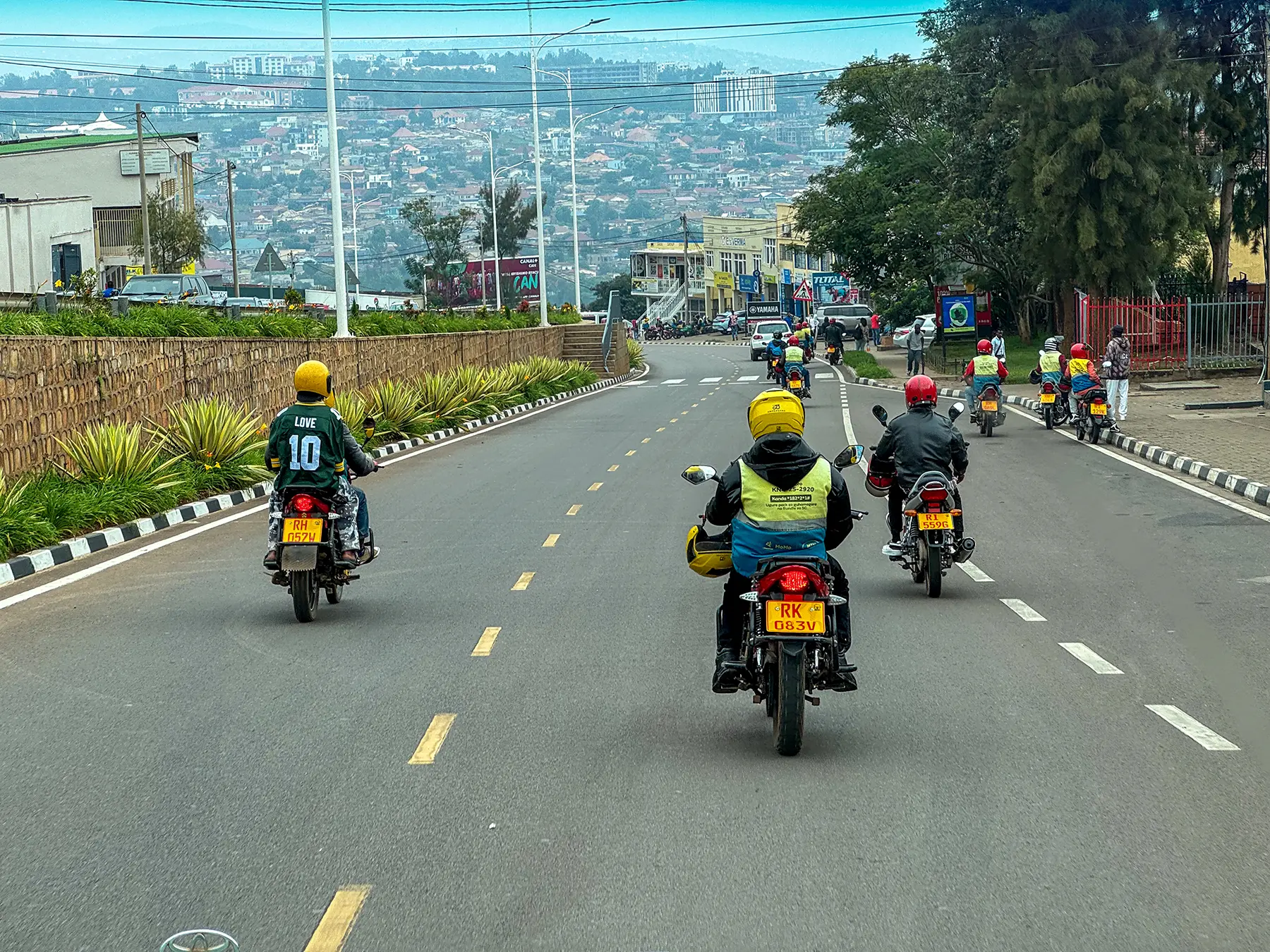
- Although boda-boda motorbike taxis are cheap, you should avoid them as locals consider them unsafe. Uber does not operate in Kigali.
- Hotel taxis are the most reliable way to get around. Airport transfers are usually priced at around $45, and taxis can be reserved for day excursions, charging $2.50 per hour of waiting time.
- Although you can get Rwandan francs (RWF) from the ATMs in Kigali, USD is generally accepted at tourist destinations throughout Rwanda.
- Dispose of any plastic packaging before arrival, as single-use plastics are banned in Rwanda.
Where to Stay in Kigali
As you’ll only be staying one night here before moving on and then another single night at the end of your trip, the city centre is the best place to base yourself. That way, you’re close to restaurants and attractions as well as the airport.
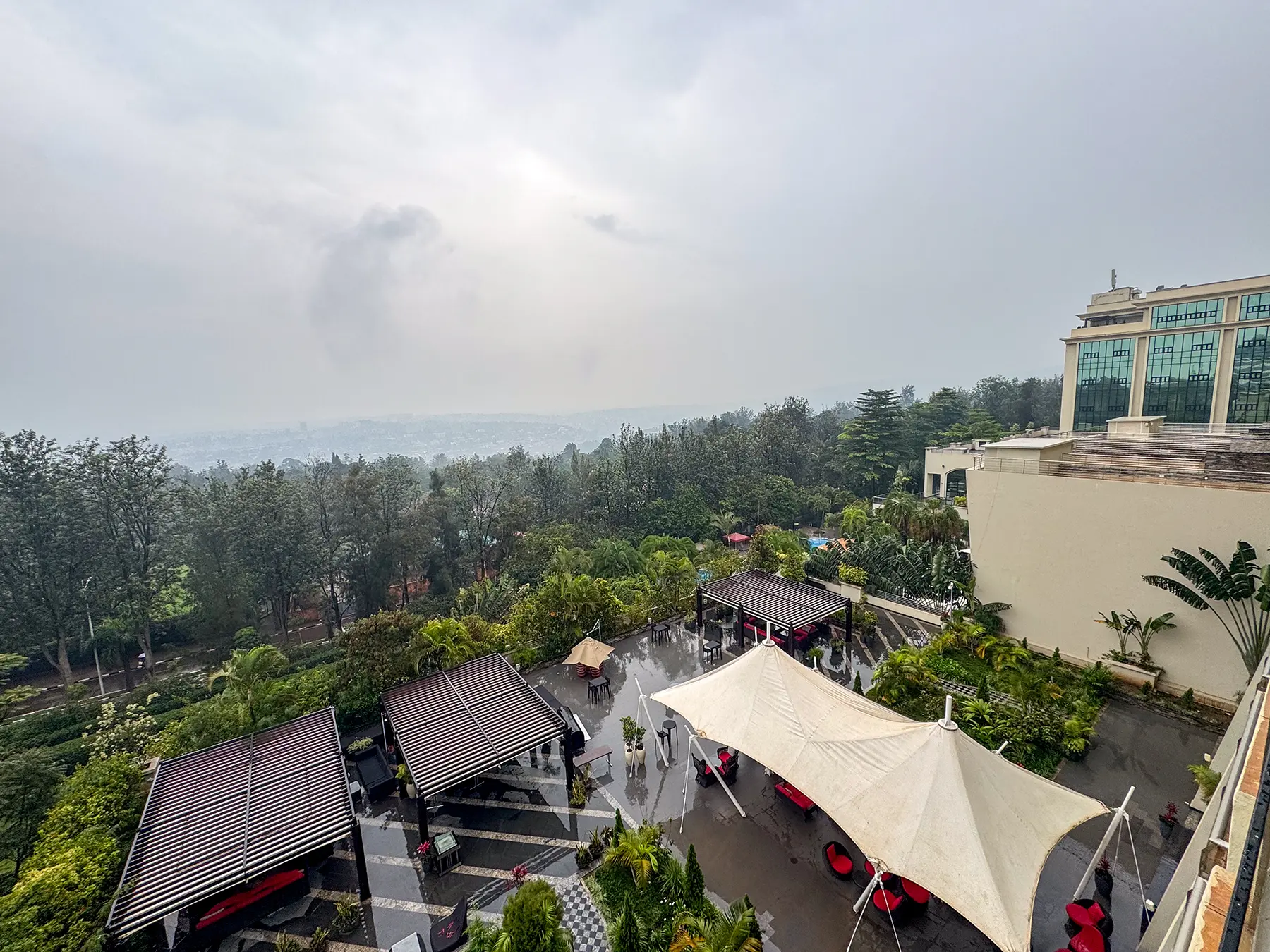
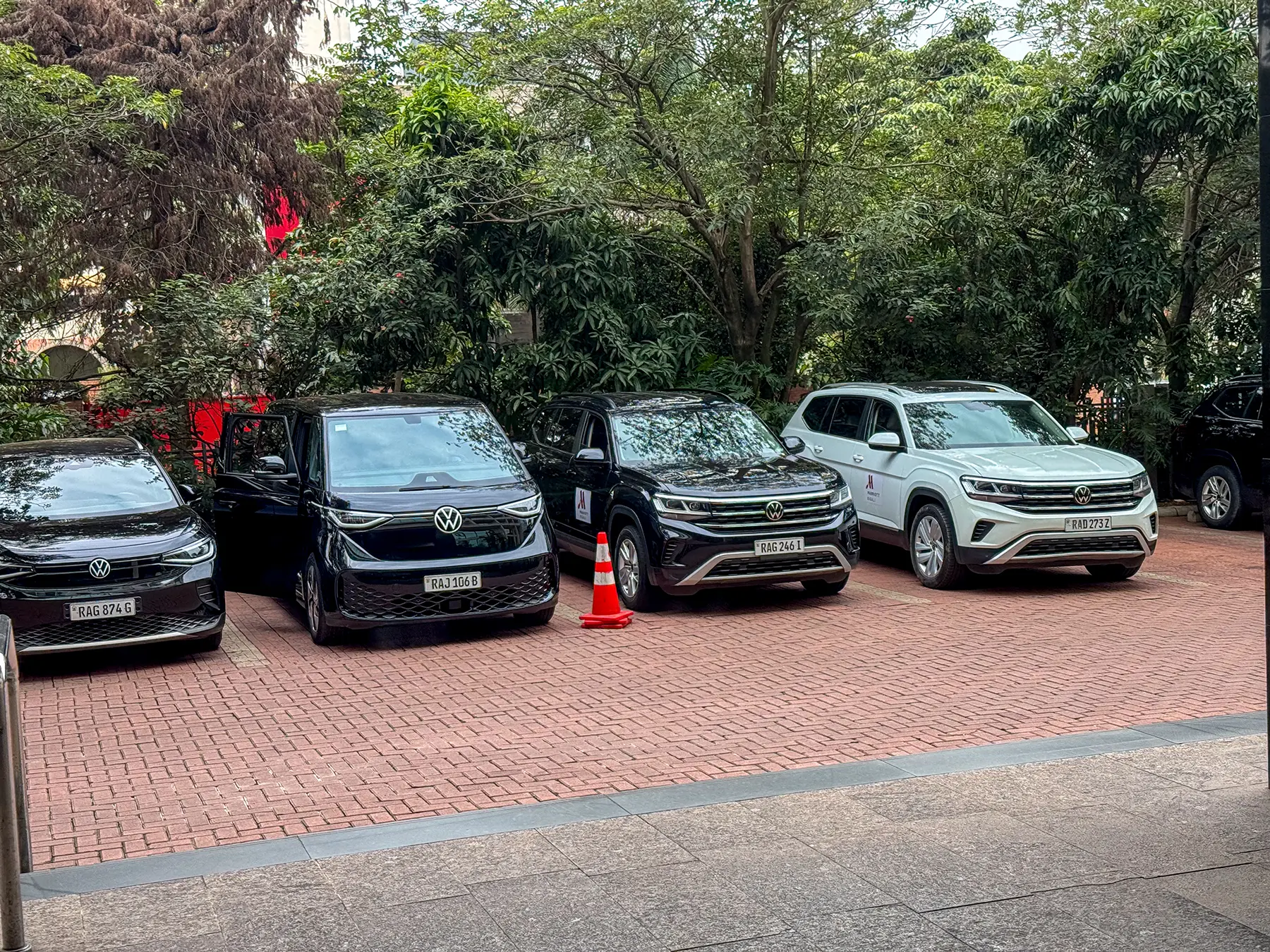
The city centre has several international hotels including the Radisson, Sheraton, Serena Hotel and the Marriott.
As Kigali is hilly and the attractions are relatively far apart, you’ll probably need to arrange transport from your hotel to any evening activities you have planned. The most reliable option is to book a taxi through your hotel, though this can be fairly pricey with airport transfers costing about $45.
Don’t use boda-boda motorbike taxis as locals consider them unsafe. Unfortunately, Kigali also has no Uber service.
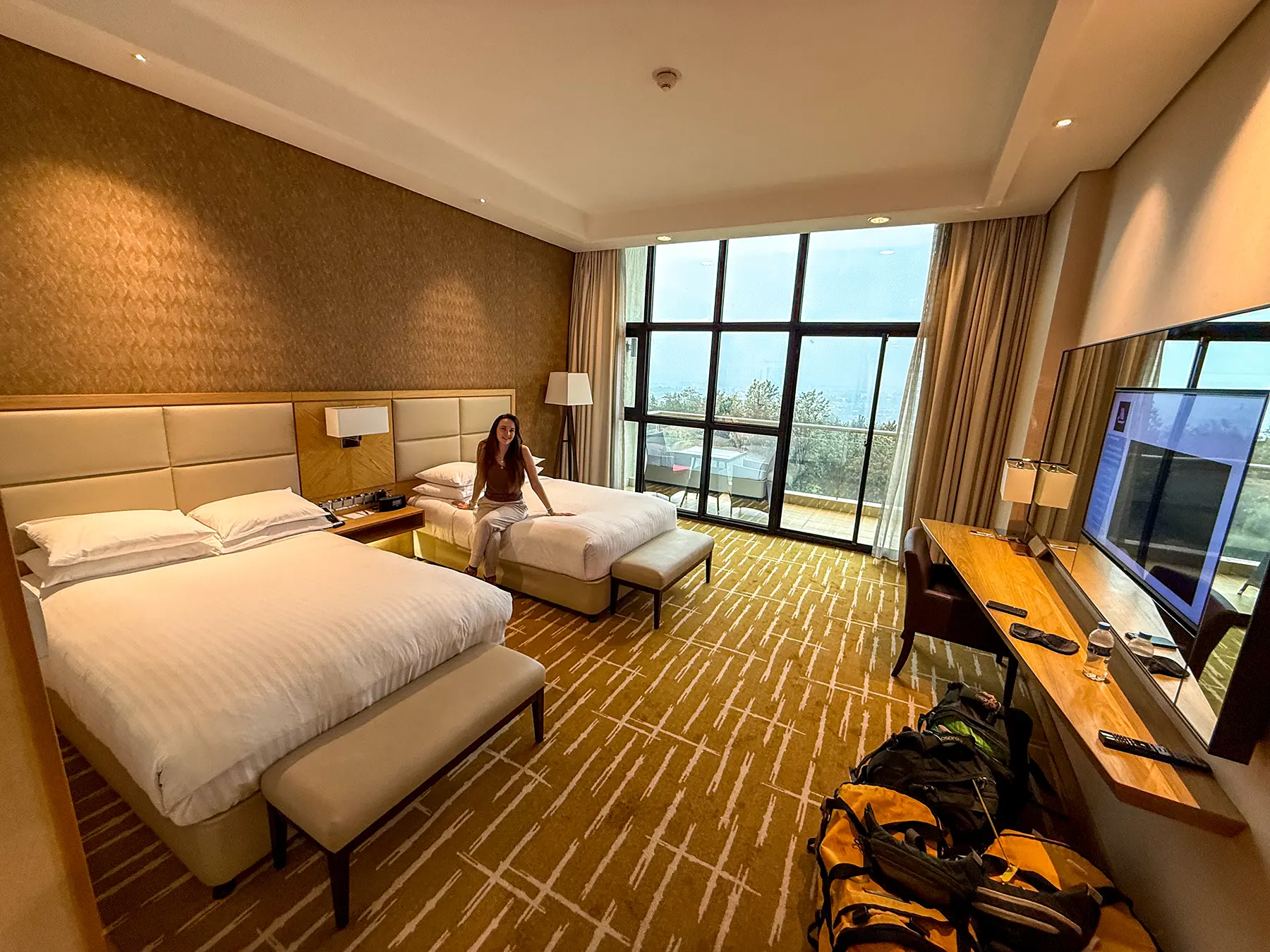
My Experience Visiting Kigali
I had a great time in Kigali! I loved the friendly, quiet feel to the city and it really did seem very safe.
Although the staff at my hotel said you could even walk around at night without worrying, I didn’t test that one out. While I admired their pride in their city, that’s something I would never recommend while in Africa.
As the city is so spread out, I ended up hiring a private driver for the afternoon to get from place to place. It worked out really well and honestly wasn’t super expensive either.
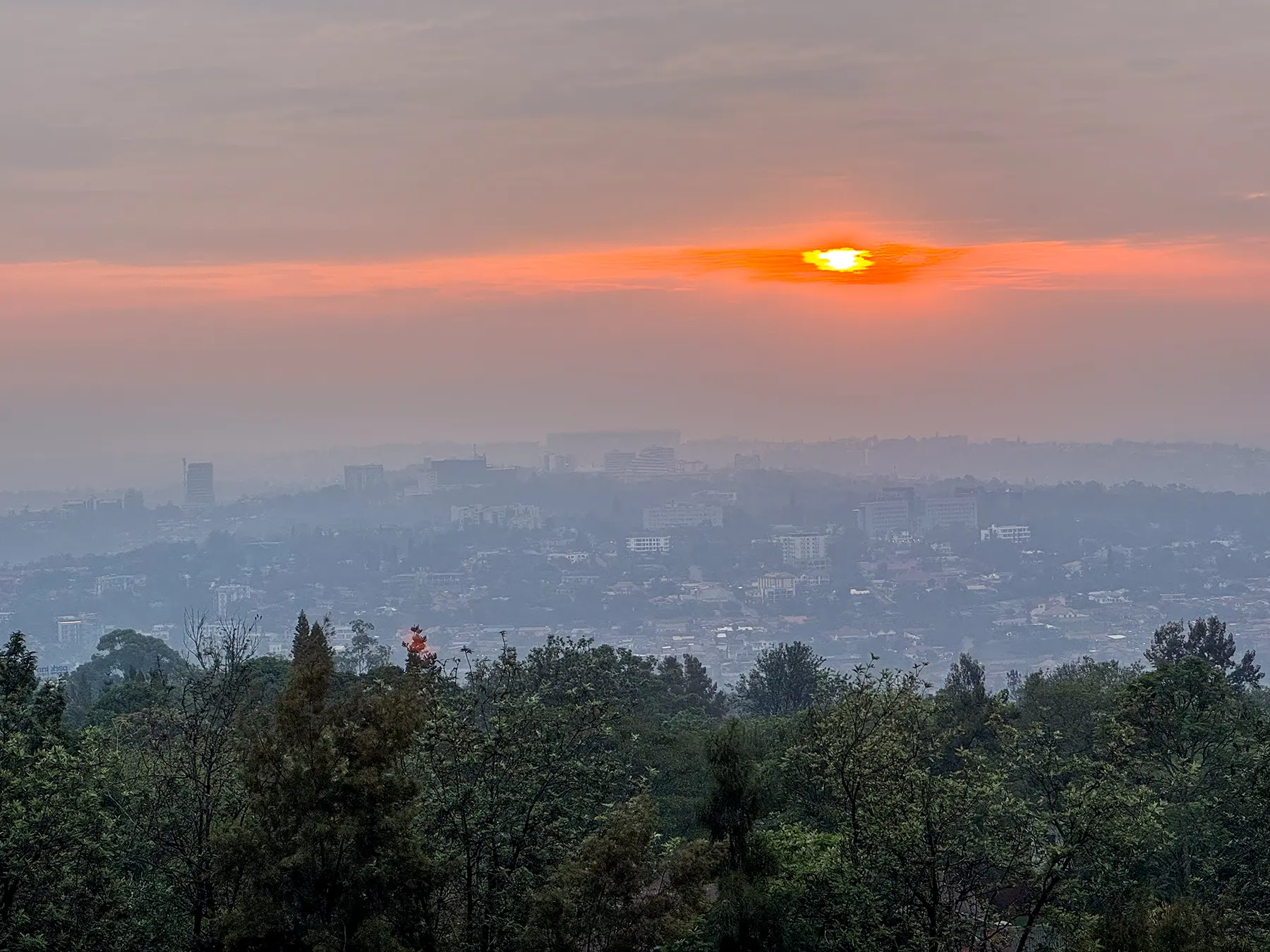
Hoping to gain a better understanding of Rwanda’s history, I visited the Genocide Memorial during my time in Kigali. I found it an intense and difficult experience, but also extremely rewarding.
Like many visitors, I was moved to tears by my visit and left with many questions to ponder. I would recommend visiting the Genocide Memorial without hesitation, heavy though it was.
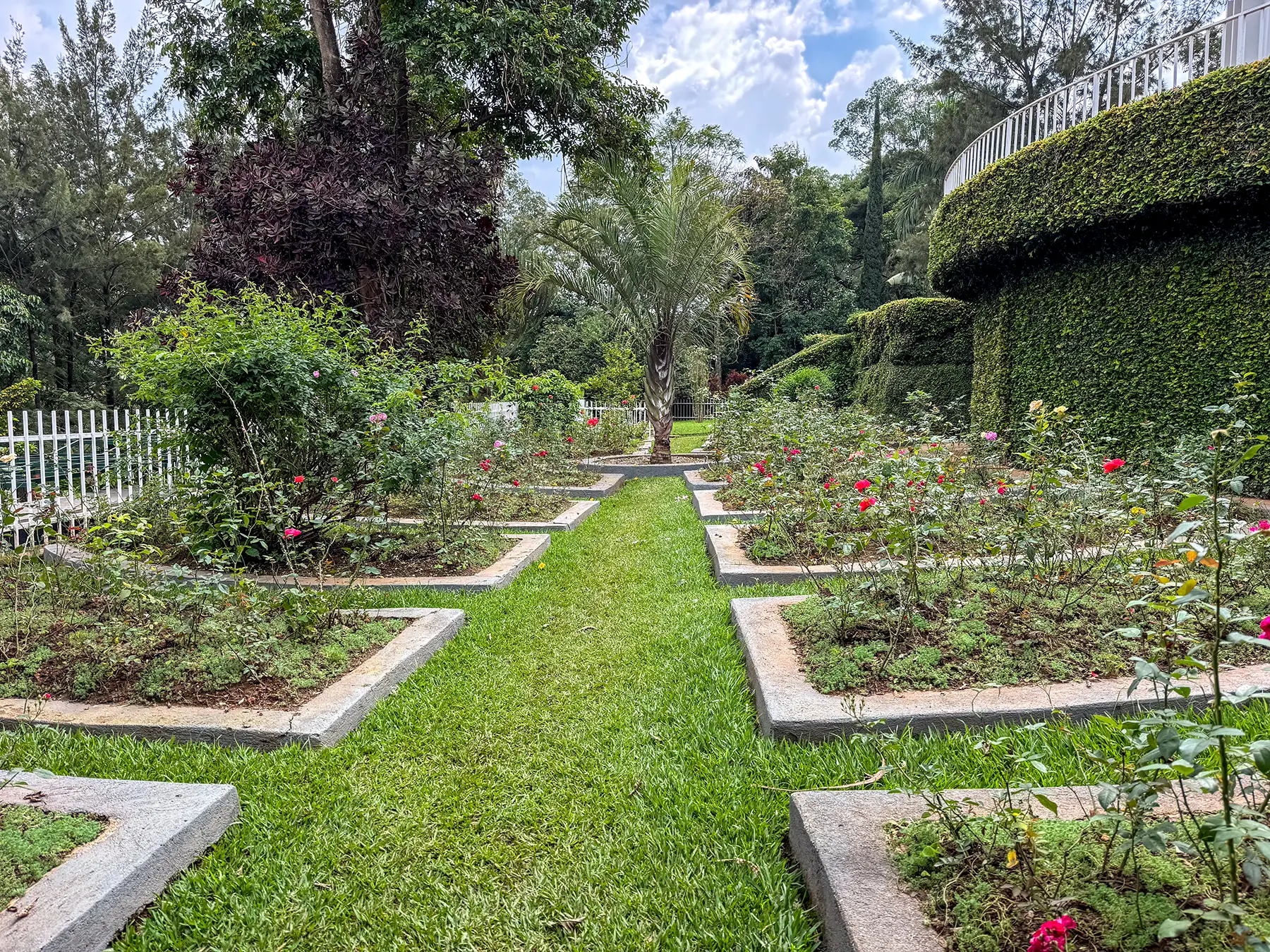
I think the highlight of my time in the city was enjoying a delicious cup of Rwandan coffee at Question Coffee. There are lots of great coffee houses in the city, but I especially love the relaxed, friendly atmosphere there.
Day 2: South Akagera
Drive time (excluding game drives): 3 hours
Characterised by dense forest, lakes and swamps that draw elephants and Cape buffalo to the water, South Akagera is the gateway into Rwanda’s flagship national park. Today, you’ll leave the city behind as you drive east to the park, enjoying a late afternoon boat safari on Lake Ihema on arrival.
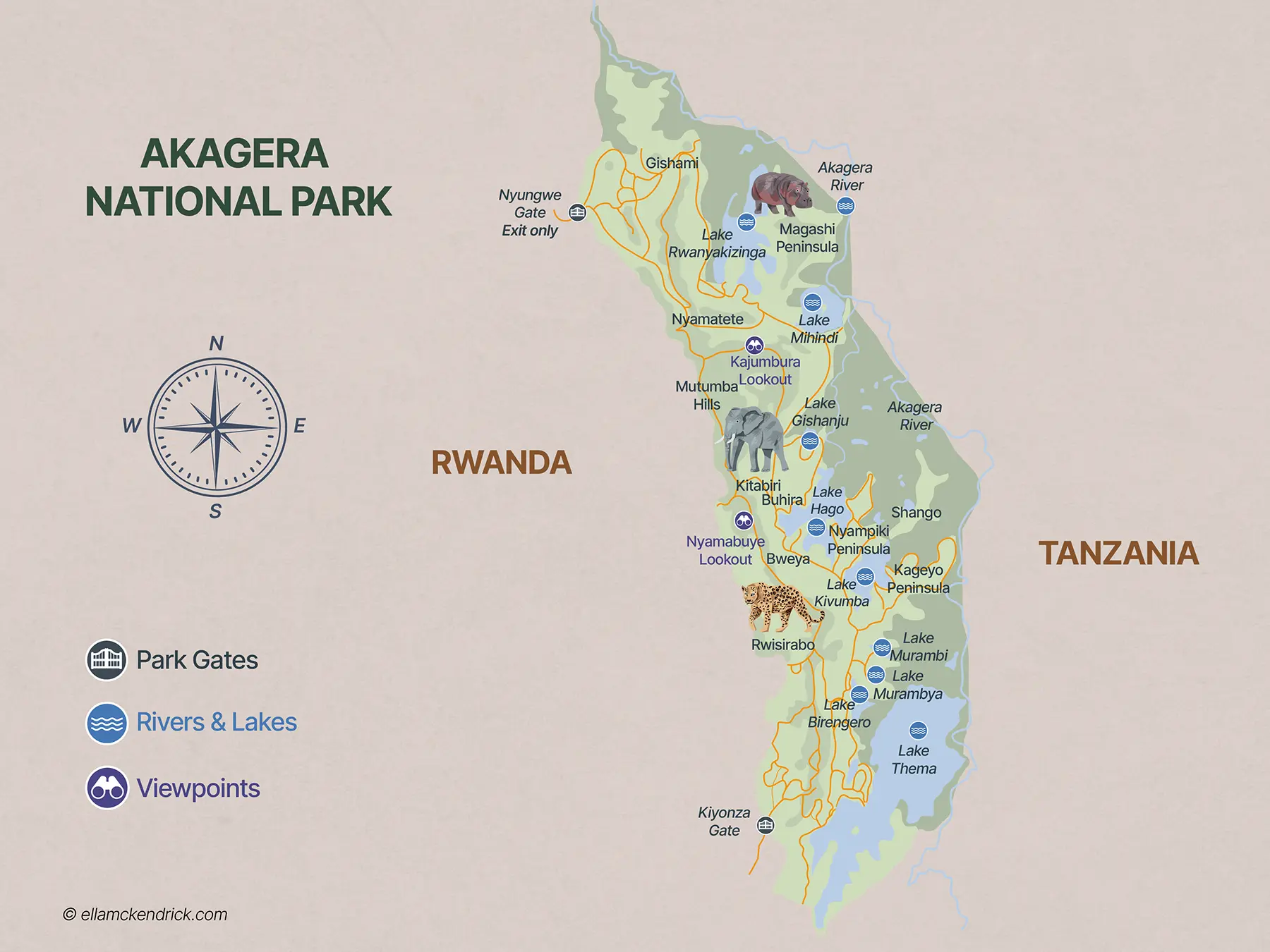
Map of Akagera National Park
This map I created highlights the main features of Akagera National Park.
Itinerary
This morning, you’ll depart Kigali after breakfast and make the roughly three-hour drive east to Akagera National Park. Once there, you’ll enter the park via Kiyonza South Gate, located near the park headquarters. With a smooth, relatively quiet road most of the way, the journey is a pleasant one, though the final hour or so can be a little bumpy due to ongoing road resurfacing works.
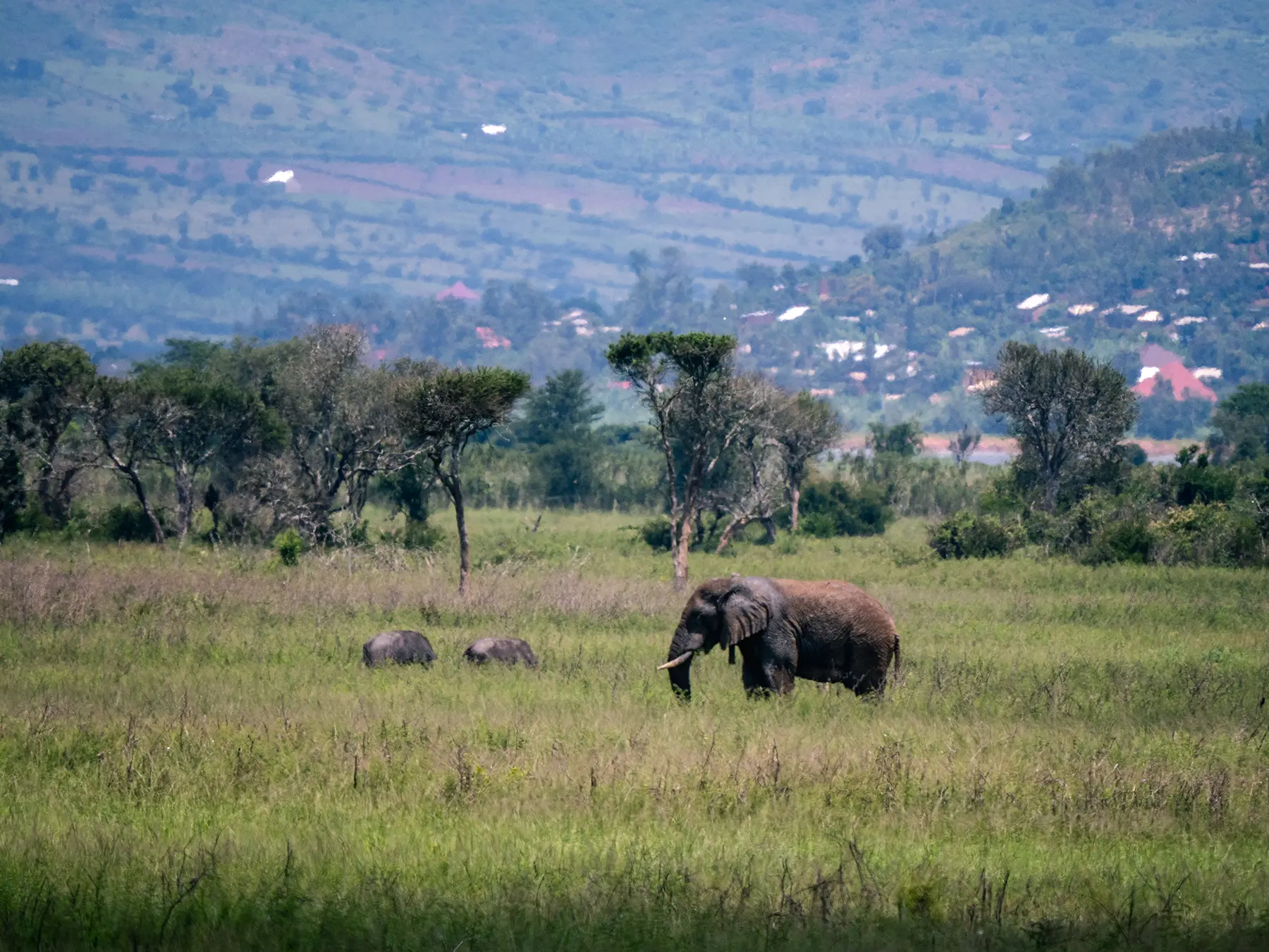
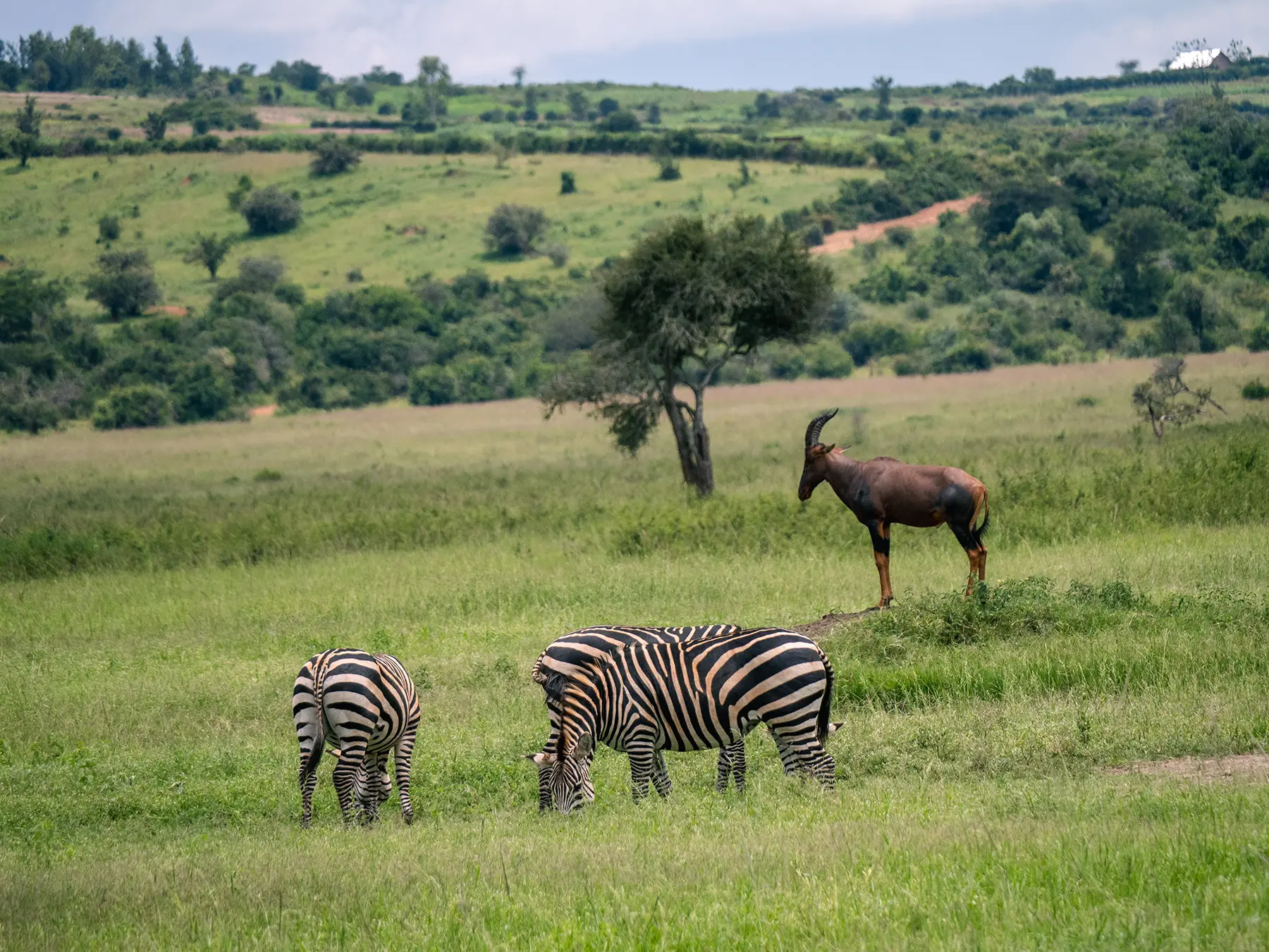
The southern sector of Akagera is covered in thick forest and dense vegetation, interspersed with patches of open savannah where game such as zebras, topis, impalas and Maasai giraffes graze. Elephants and Cape buffalo tend to congregate at the numerous water sources in this corner of the park, including Lake Ihema, the largest of the park’s 10 lakes.
Your itinerary for this afternoon is a boat safari on Lake Ihema. Located in the eastern extreme of the park along the border with Tanzania, the lake is packed with hippos, crocodiles and gigantic monitor lizards. It’s also a haven for birders, offering a chance to spot the rare shoebill stork, Goliath heron and fish eagles from the water.
About Akagera National Park
Akagera National Park is the very embodiment of conservation success.
The park was severely impacted in the years following the 1994 Rwandan genocide, as people displaced by the violence fled there to settle and began to farm and hunt.
Large-scale destruction of natural habitats for agriculture coupled with uncontrolled hunting and poaching devastated numerous wildlife populations, with the region’s previously thriving lion and rhino populations virtually wiped out.
Under the auspices of African Parks, major restoration initiatives were launched from 2010 to enormous success. Previously declared locally extinct, lions were successfully returned to the park in 2015, while two rhino species, black and white, have been reintroduced since 2017.
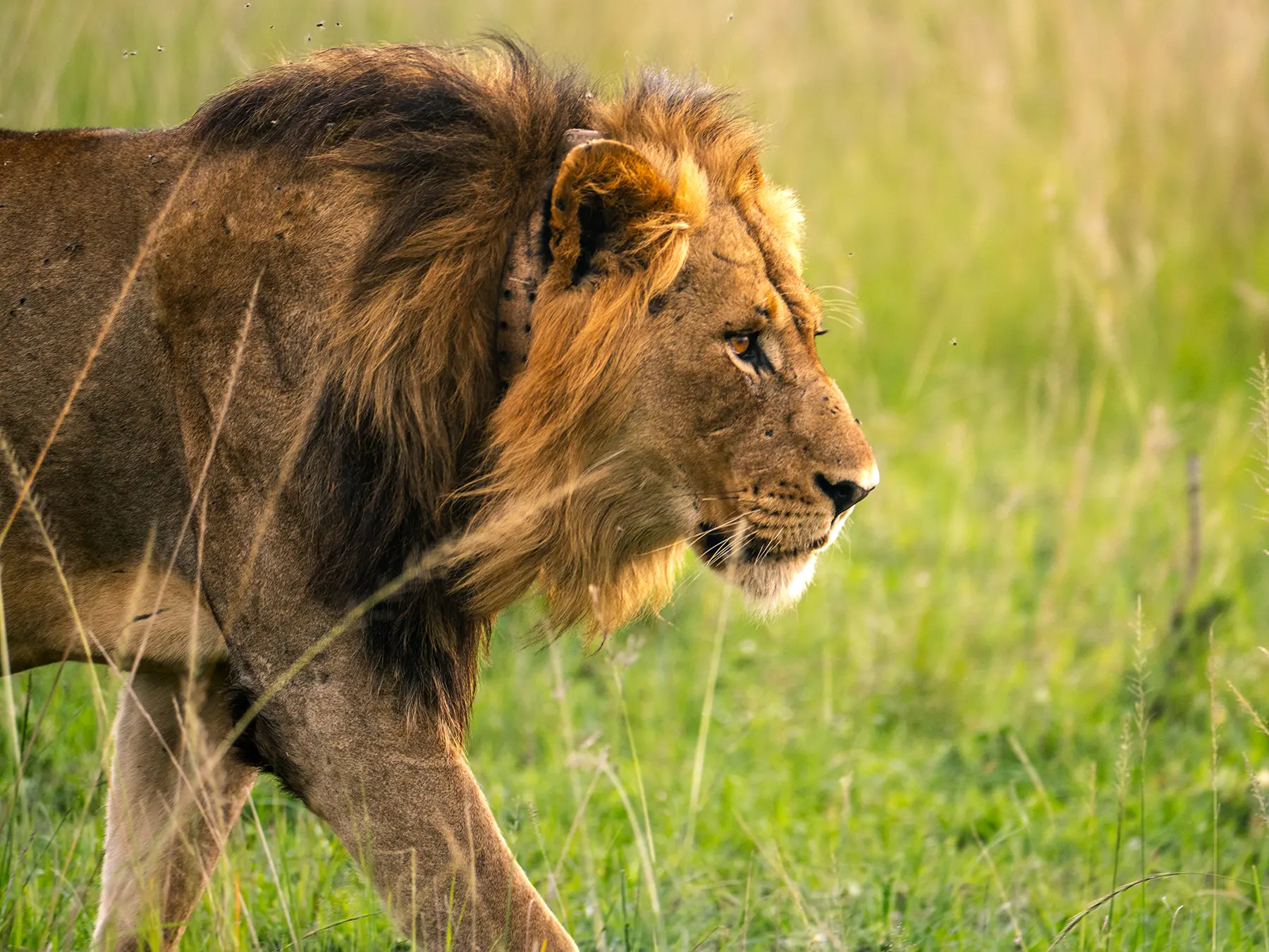
Stringent conservation measures such as anti-poaching patrols and strong community engagement have brought about a gradual recovery in wildlife numbers and diversity so that Akagera is now home to all of the Big Five again: lions, leopards, elephants, buffalos and rhinos.
The exceptional safari destination boasts an incredible variety of habitats, with lush forests to the south and vast plains in the north. What’s more, it offers outstanding birding, with more than 500 bird species recorded within its boundaries.
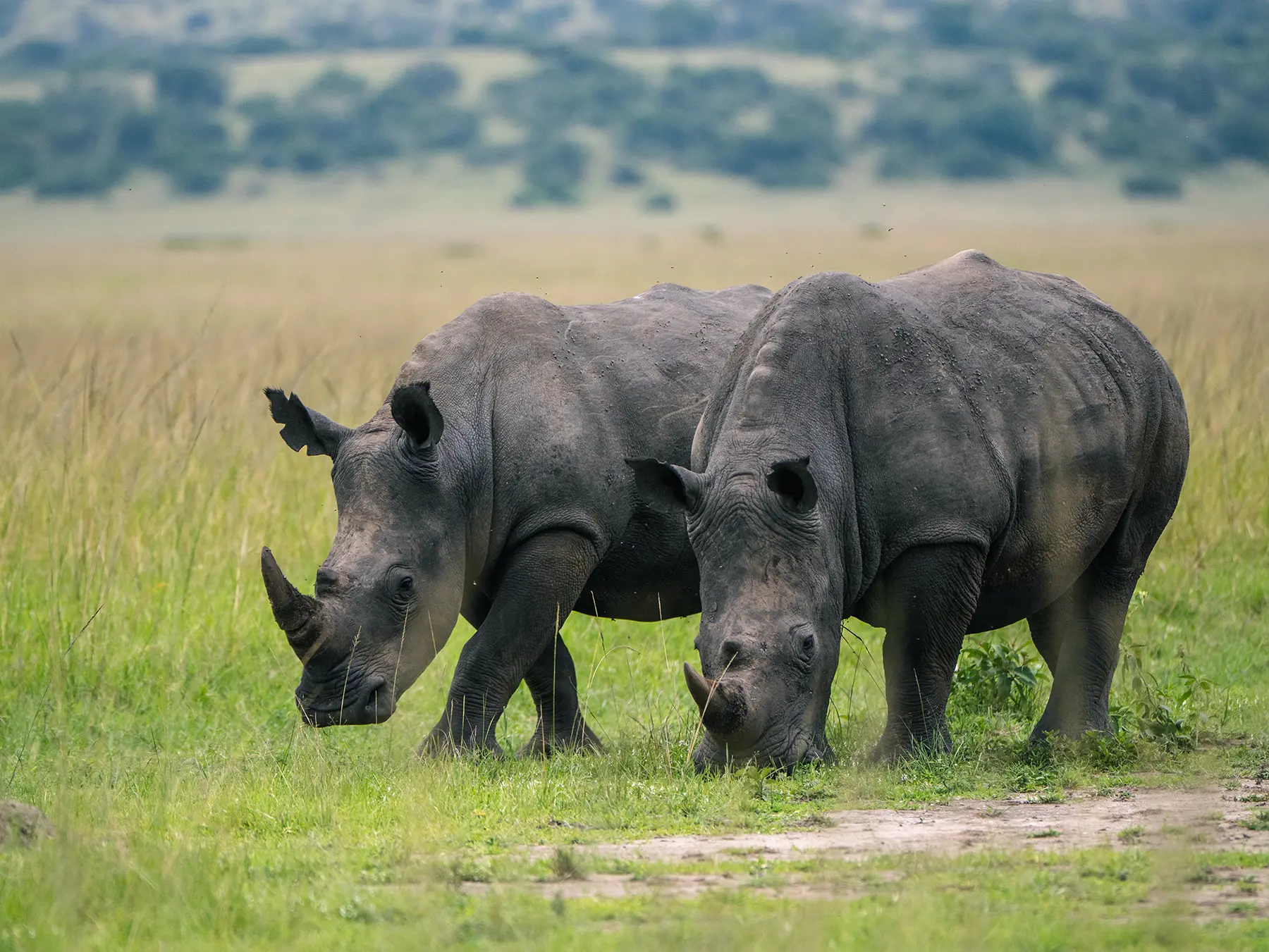
What Wildlife Can I See in Akagera National Park?
Housing all of the Big Five, Akagera is the only park in Rwanda where you have a chance of spotting lions, leopards, elephants, buffalos and rhinos in a single location.
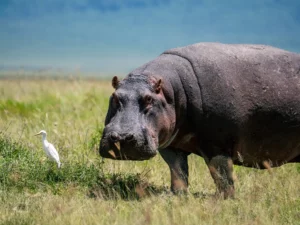
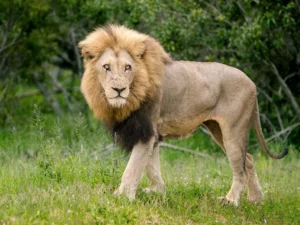
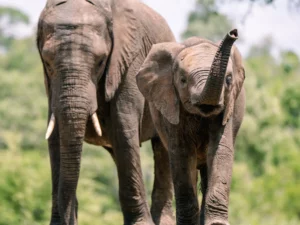
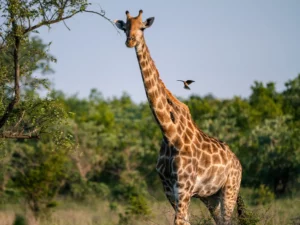
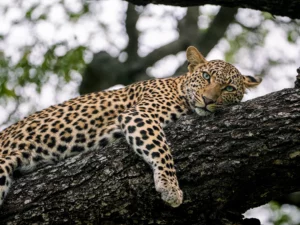
But the reserve also has so much more to offer, with its diverse habitats harbouring a wide variety of plains game and bird species. Zebras, giraffes, topis, impalas, waterbuck, eland, warthogs, Uganda kob and sitatunga antelopes are abundant throughout the park.
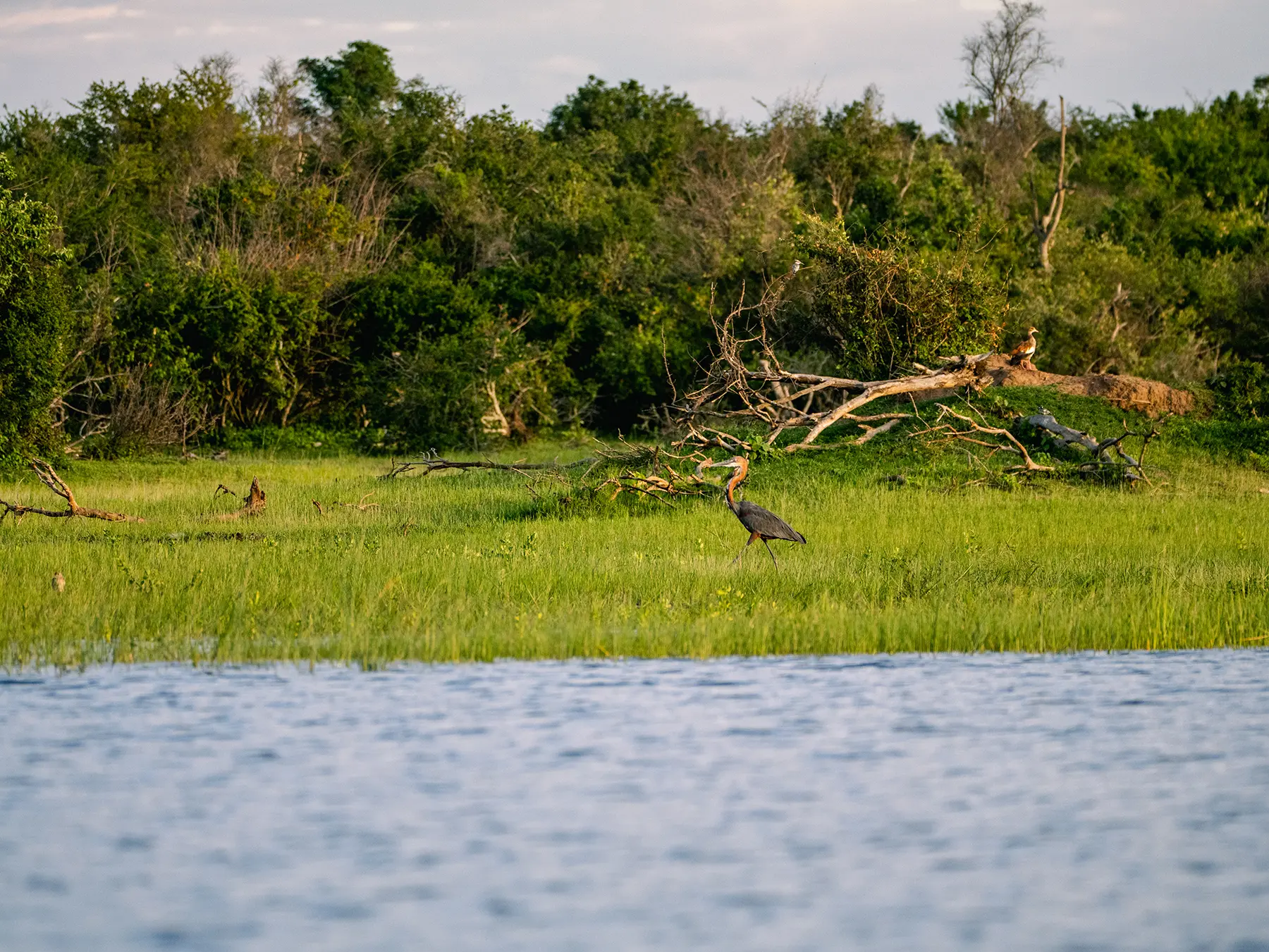
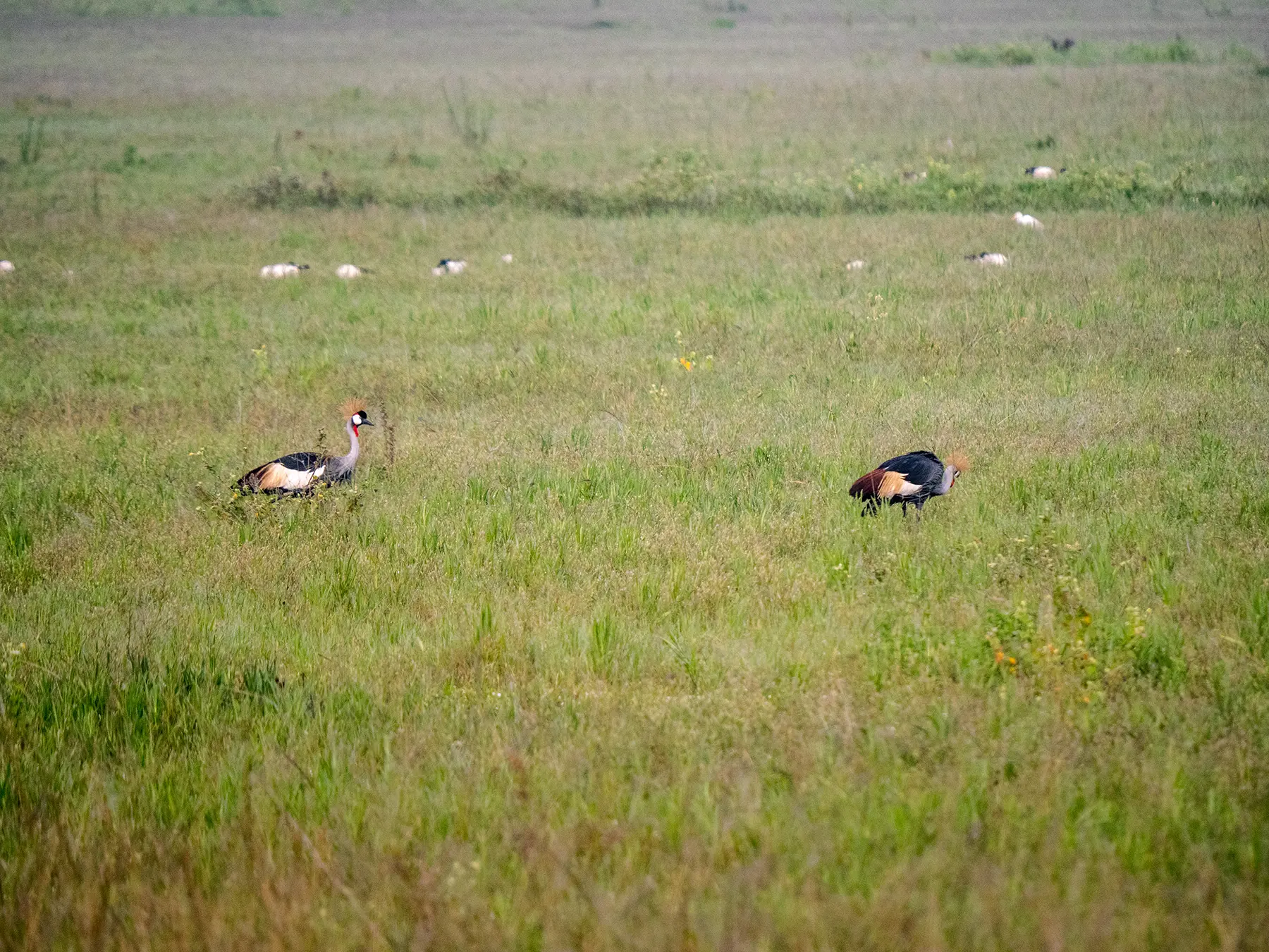
Thanks to its multiple water sources, Akagera also houses more than 500 bird species including imposing Goliath herons, fish eagles, grey crowned-cranes, pelicans, secretary birds, giant kingfishers and the elusive shoebill stork.
Meanwhile, Lake Ihema is chock-full of hippos and Nile crocodiles, as well as gigantic monitor lizards.
Tips for Visiting Akagera National Park
Here are some tips for your visit to Akagera National Park!
- Leave plastic bags and bottles at the park entrance or pour liquids into reusable containers before you arrive, as single-use plastics are banned in Rwanda.
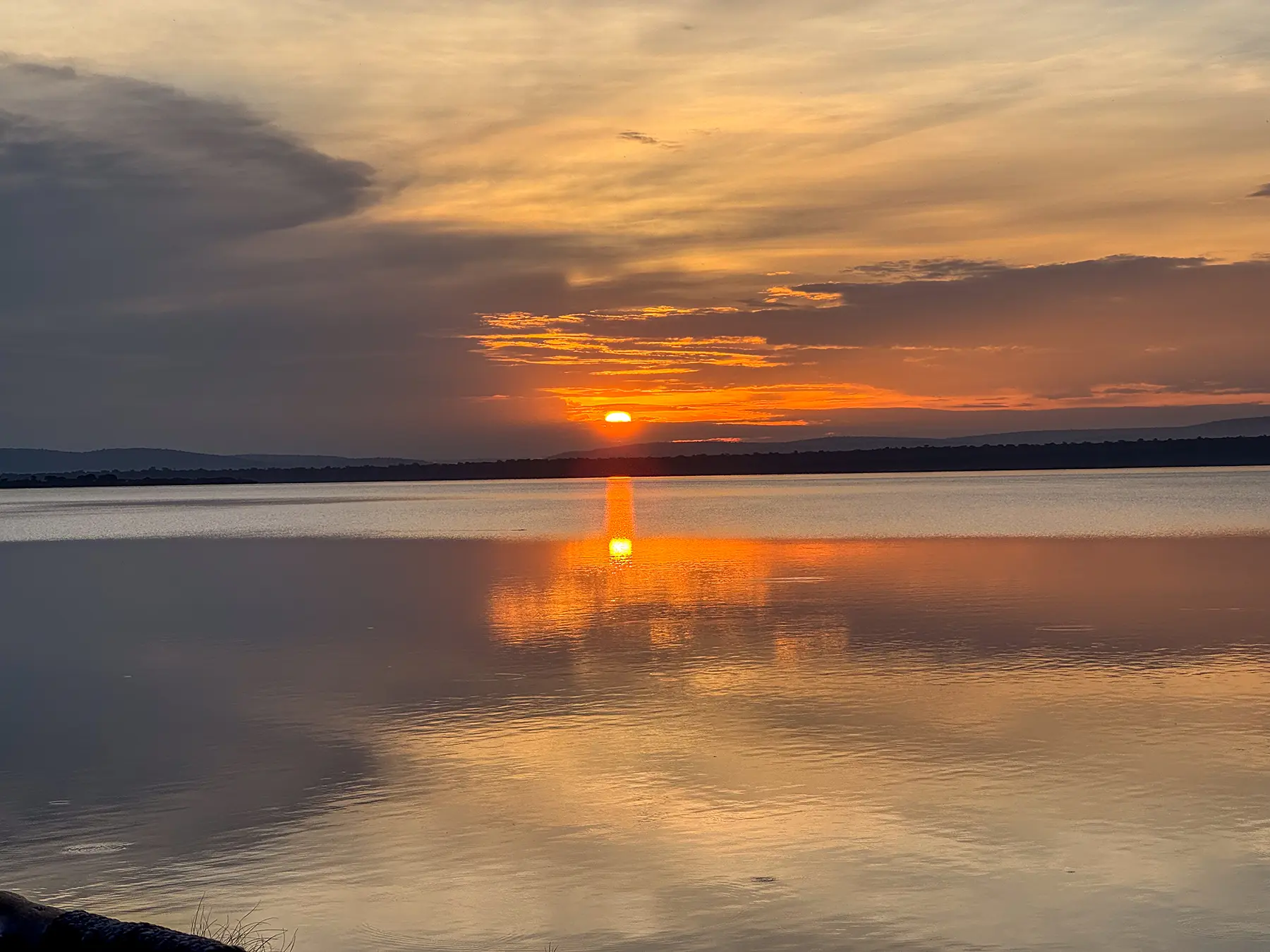
- Opt for the sunset boat cruise on Lake Ihema instead of the daytime option. Not only will you be spoiled with a fabulous sunset, but the lighting is also much better for photography and you’ll get to see the water birds returning to Ile Ihema island in their thousands to roost.
- As you move north through the park, the tsetse fly population increases. Avoid wearing black and navy as tsetse flies are attracted to dark colours. Instead, choose loose, light-coloured clothes that cover your arms and legs, and don’t forget your bug spray!
- Park fees are about $100 per person per day, including vehicle fees.
- Driving from the south to the north of the park takes about five hours. There’s a lovely picnic area on the shores of Lake Mihindi with clean bathrooms and a kiosk selling good coffee – the perfect place to break your journey.
Optional Activities
- I highly recommend doing a behind-the-scenes tour in South Akagera. This rewarding experience tells visitors about African Parks and the history behind Akagera’s conservation comeback. The tour adapts to live data from rangers on the ground and collared animals.
- Booking a night drive is a great way to see nocturnal animals and maybe even spot predators on the prowl.
- You can also opt for a guided nature walk or birding safari for an opportunity to see some of the park’s over 500 avian species.
- If you’re into fishing, you can book a fishing trip on one of Akagera’s lakes.
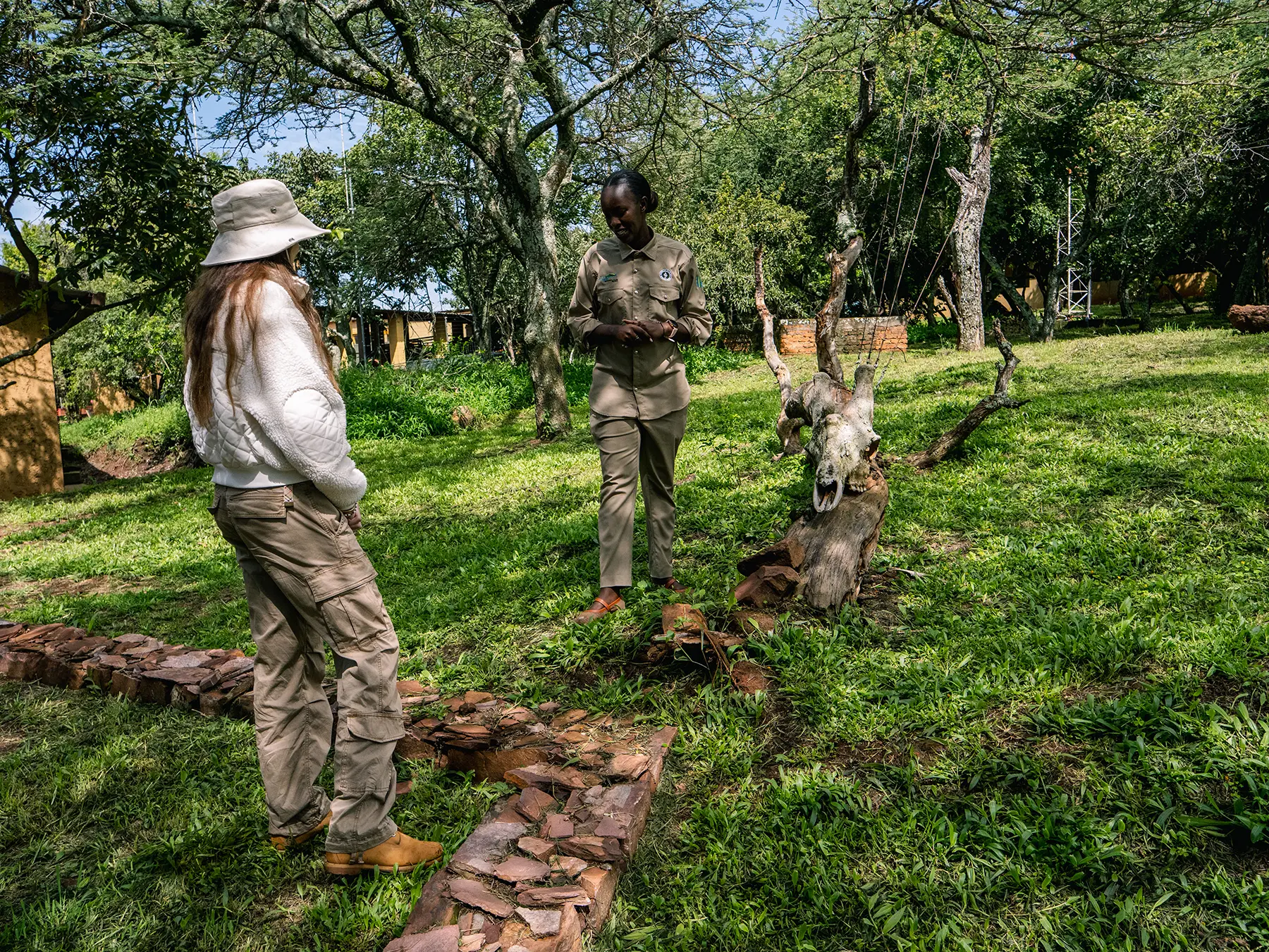
Where to Stay in South Akagera
If you’re planning on staying inside the park, there are two lodges to choose from in Akagera’s southern sector, both of them mid-range.
Managed by African Parks, which also runs the park itself, Ruzizi Tented Lodge is located directly on Lake Ihema. Akagera Game Lodge is a comfortable, brick-and-mortar property near the park headquarters. You’ll find more budget-friendly options outside the park.
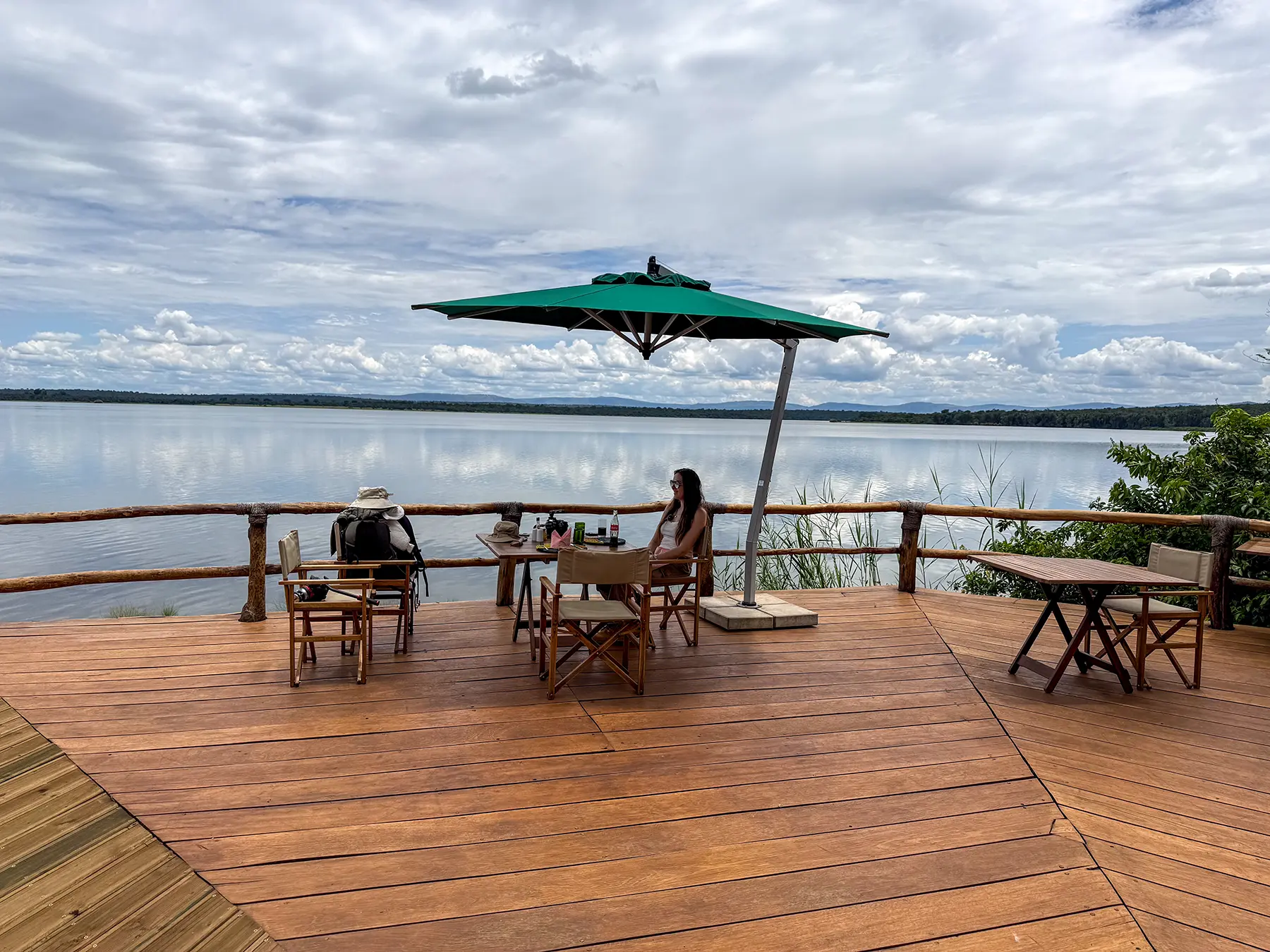
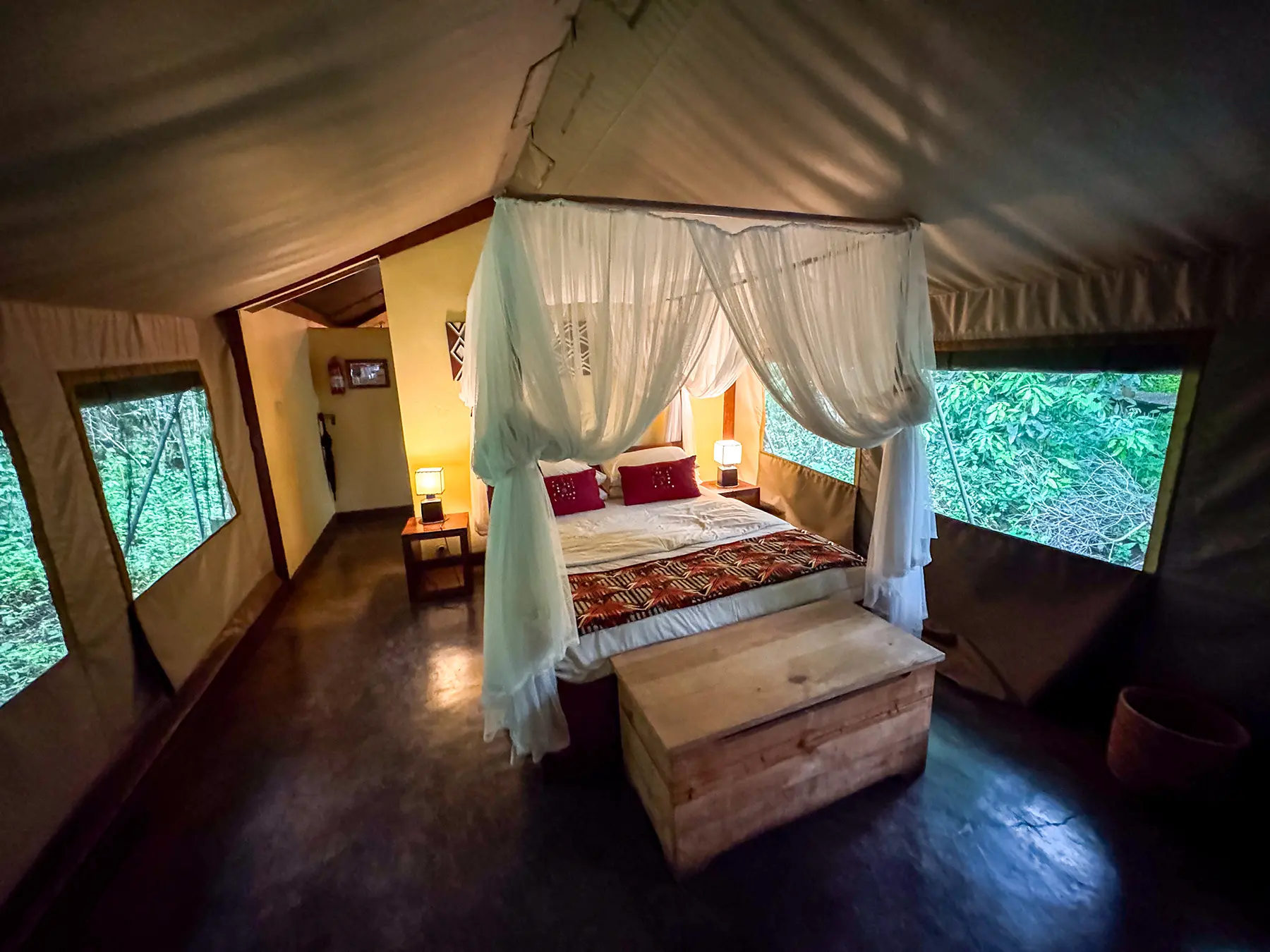
I’d recommend staying at Ruzizi on the lake so that you don’t have far to go for your boat cruise once you arrive. That is where I stayed myself, as I really like tented camps.
I found the location superb, with the sounds of nature all around. It’s hard to beat the feeling of drifting off to sleep to the sounds of reed frogs, hippos and crickets!
My Experience of South Akagera
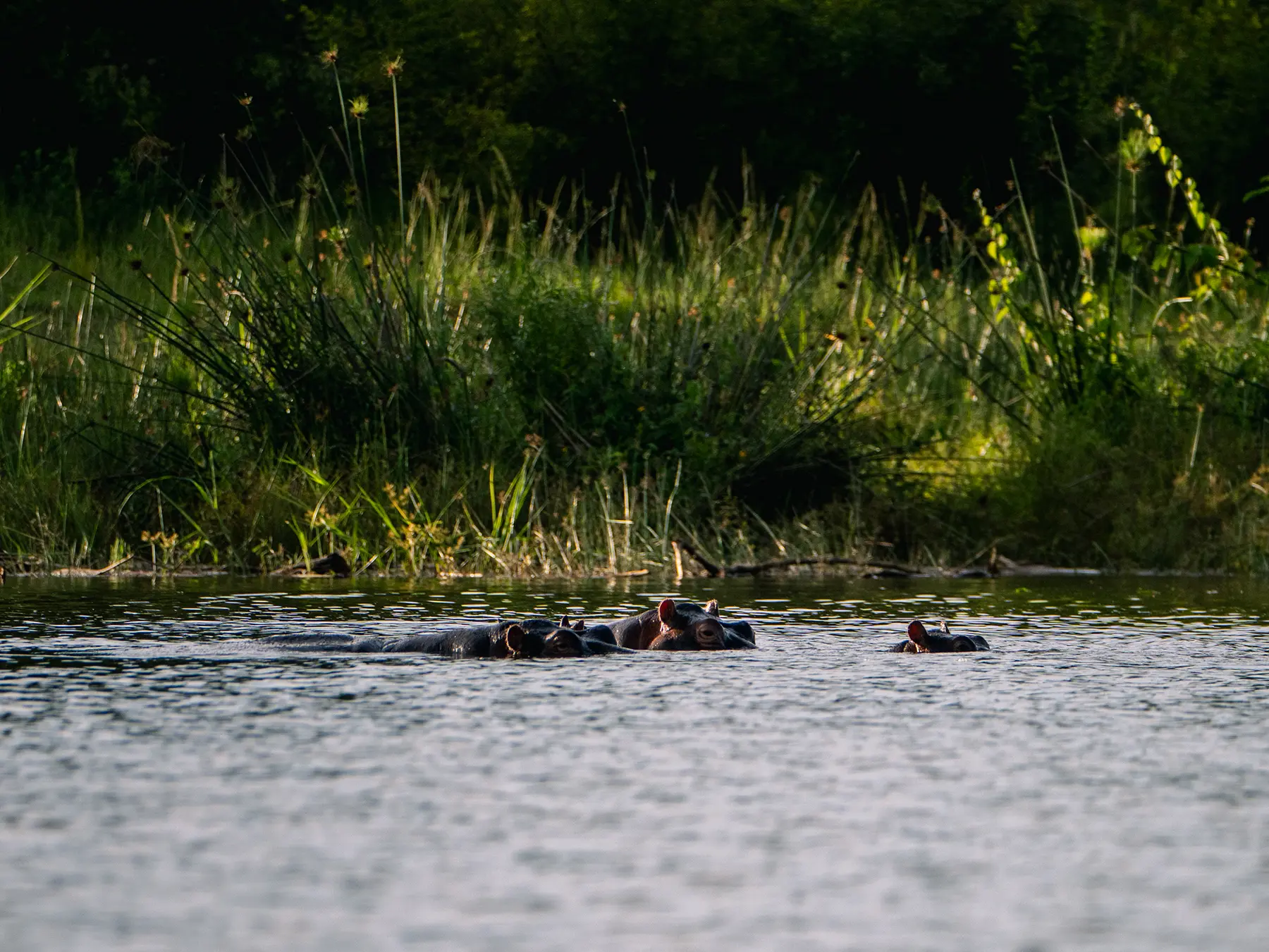
The sunset boat cruise on Lake Ihema was such a magical experience for me! I could hardly believe how calm the water was, its mirror-like surface disturbed only when the odd hippo rose to the surface for air.
I also loved seeing the difference between the elegant hippos gliding through the water and the two hippos I spotted plodding along the banks among the date palms. Unlike their swimming counterparts, they appeared almost comical as they marched along. I also spotted lots of Nile crocodiles wallowing in the shallows.
On the cruise, I was especially taken with the proliferation of birds all around, among them African fish eagles, Goliath herons, woodland kingfishers, white-faced whistling ducks, spur-winged geese, hadeda ibis, pied kingfishers, African darters, and many more! Seeing the water birds flock back to roost on the island was a particular highlight.
Day 3: South Akagera to North Akagera
Drive time (excluding game drives): 5 hours
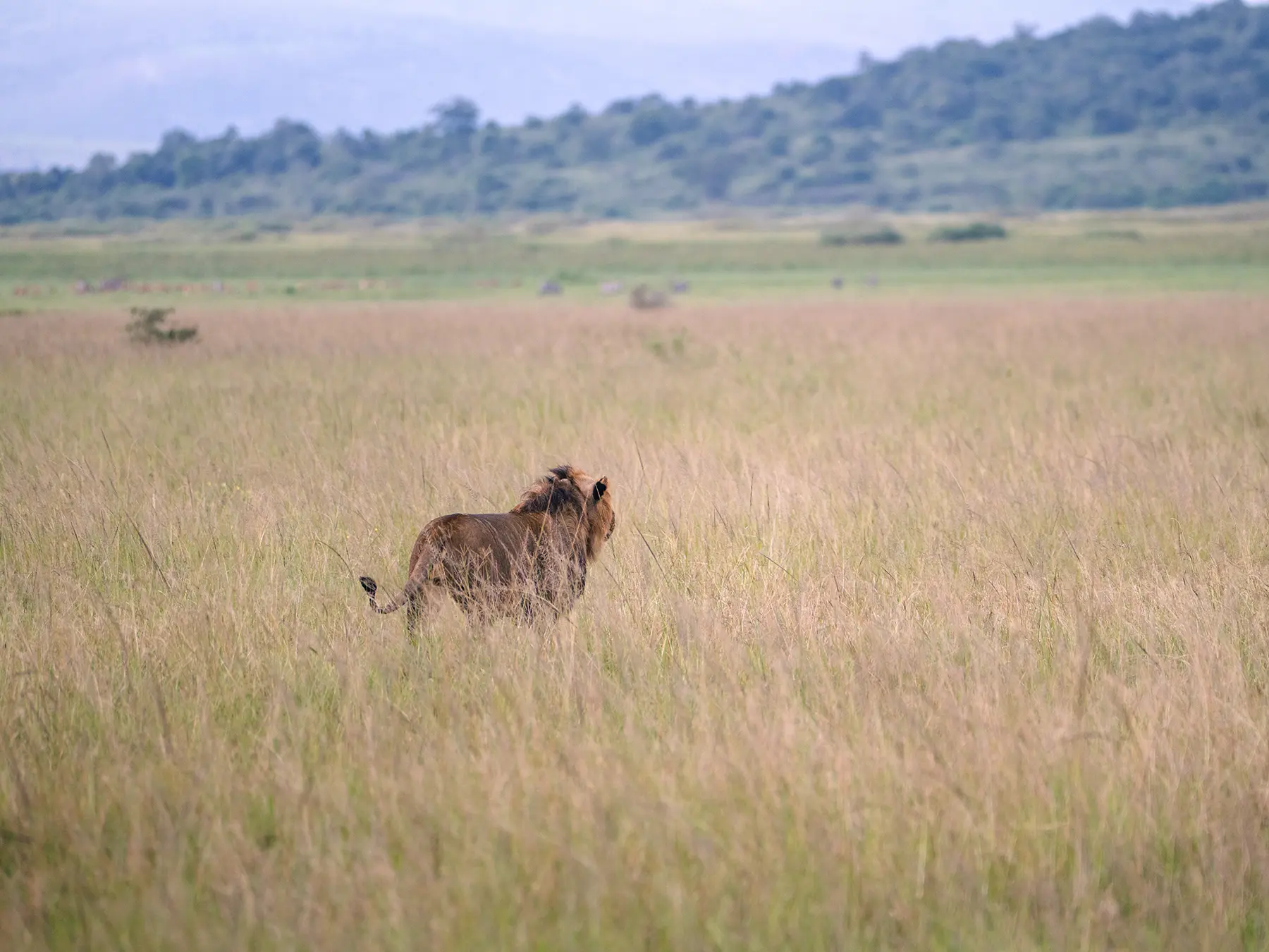
Today, you’ll leave behind the dense forests of the south and drive north to the wilder, savannah-rich sector of Akagera. Your drive north is part of today’s game drive, and you’ll notice wildlife numbers increasing as you go. Once there, you’ll finish your afternoon on Kilala Plain, a hotspot that offers unbeatable lion and rhino sightings.
Itinerary
Your day starts with an early game drive in Akagera’s southern sector before heading north. While the dense forests of the south mean big cat and white rhino sightings are unlikely, the numerous water sources they contain draw large numbers of elephants and buffalo.
Zebras, topis, impalas and Maasai giraffes are also common on the small swathes of grassland that break up the vegetation. Waterbuck and warthogs are also visible around the wetlands.
Leopards are a rare sight anywhere in the park, but tend to prefer the dense cover available in the south. The problem is that the cover is too good, and so you’re more likely to hear a leopard here than see it. But you never know!
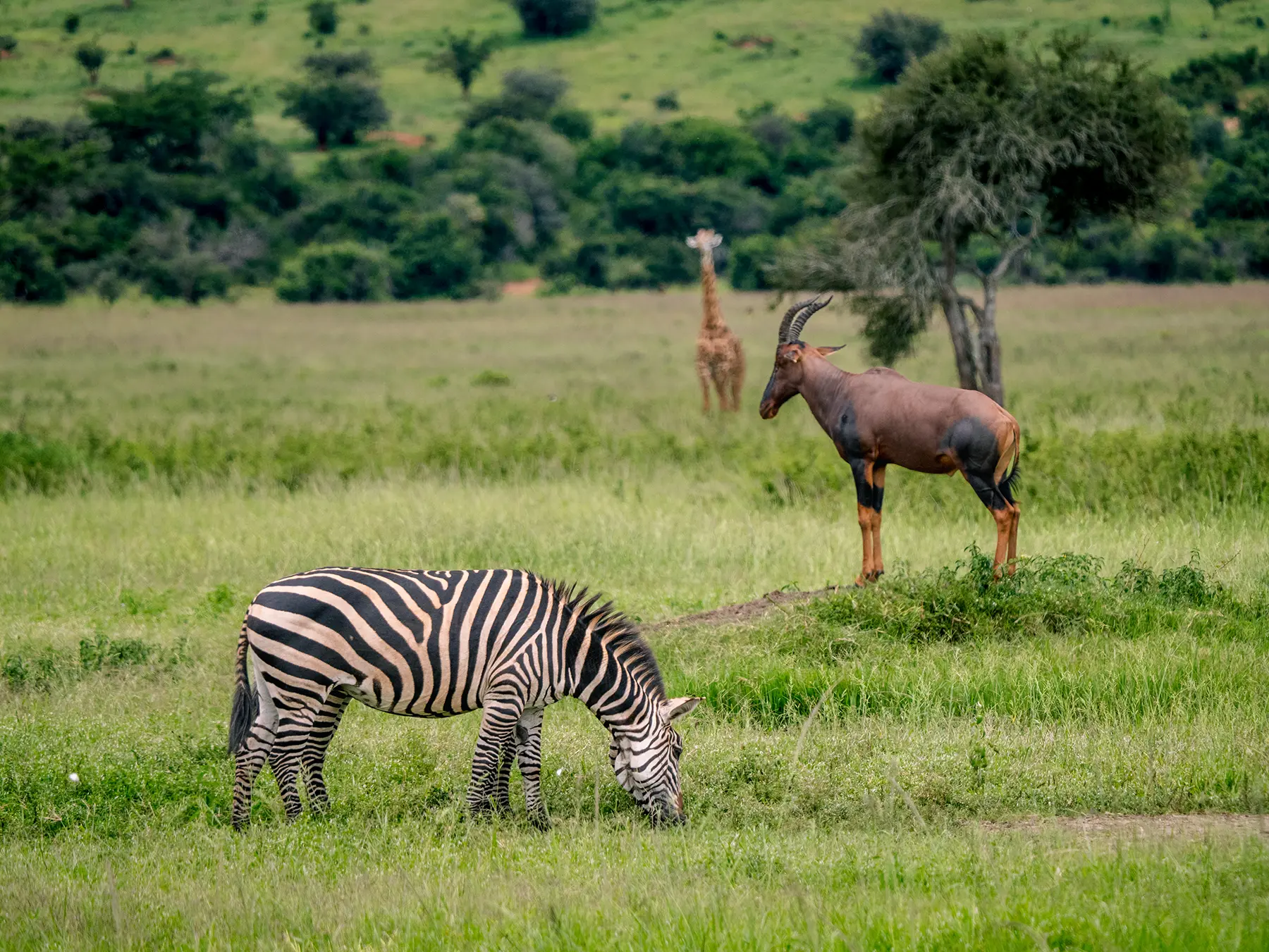
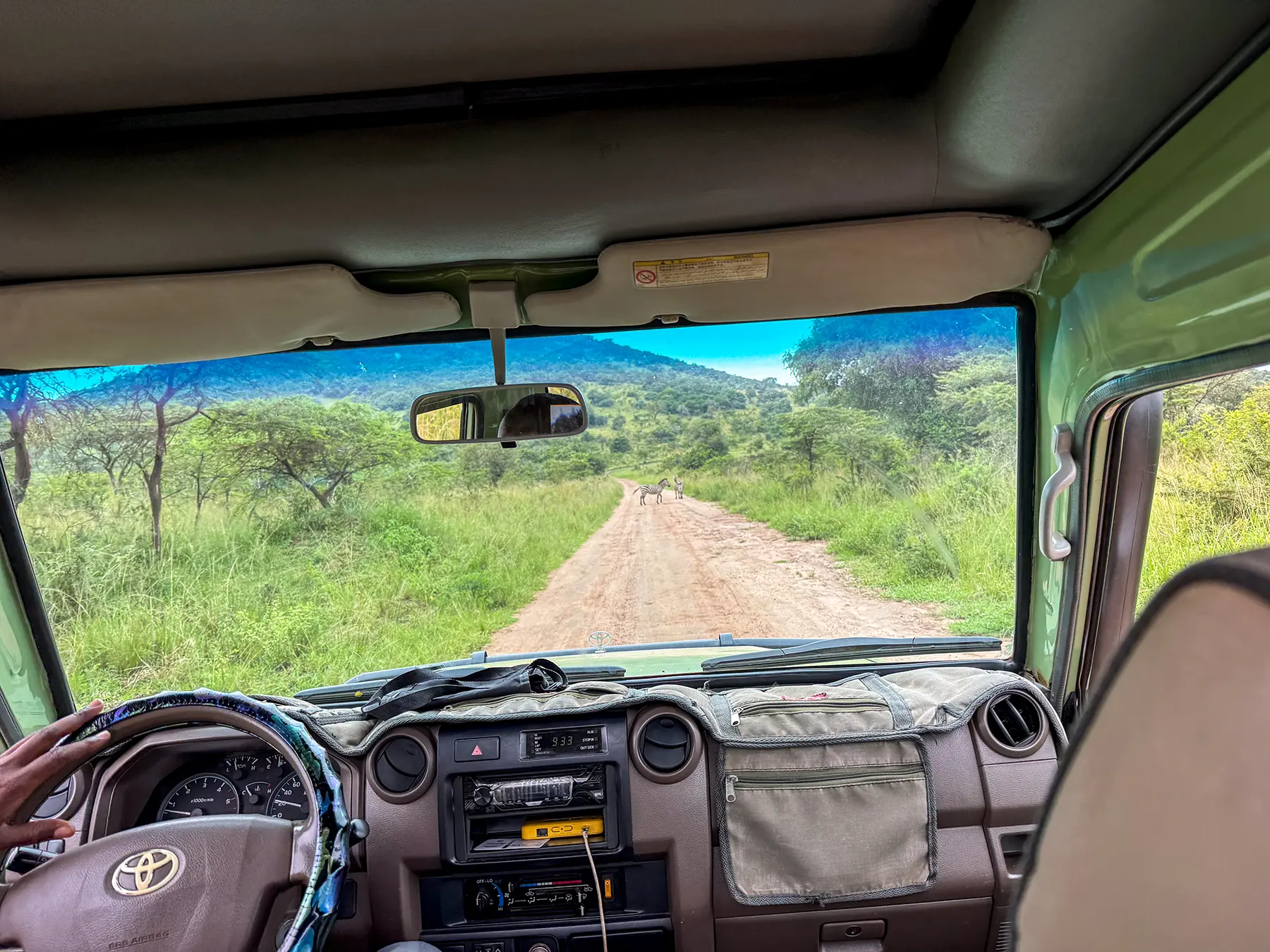
At about five hours, the drive from here to the northern sector of the park is a hefty one, but it’s a game drive rather than a road transfer. As you move further north, you can see the dense forests give way to vast plains, with wildlife numbers increasing visibly.
A pleasant picnic area on Lake Mihindi is the perfect place to break your journey, with well-maintained bathrooms and a kiosk selling good coffee.
Once you arrive in the north, the dense forests have vanished, replaced by wide open grassland as far as the eye can see. You’ll spend the rest of the afternoon on the amazing Kilala Plain, which occupies most of the top end of the park. Here, late afternoon and early evening drives offer unforgettable sightings as you track predators emerging from their afternoon naps.
Where to Stay in North Akagera
You’ll be staying in Akagera’s northern sector tonight, and just as in the south, there are just two lodges to choose from within the park itself.
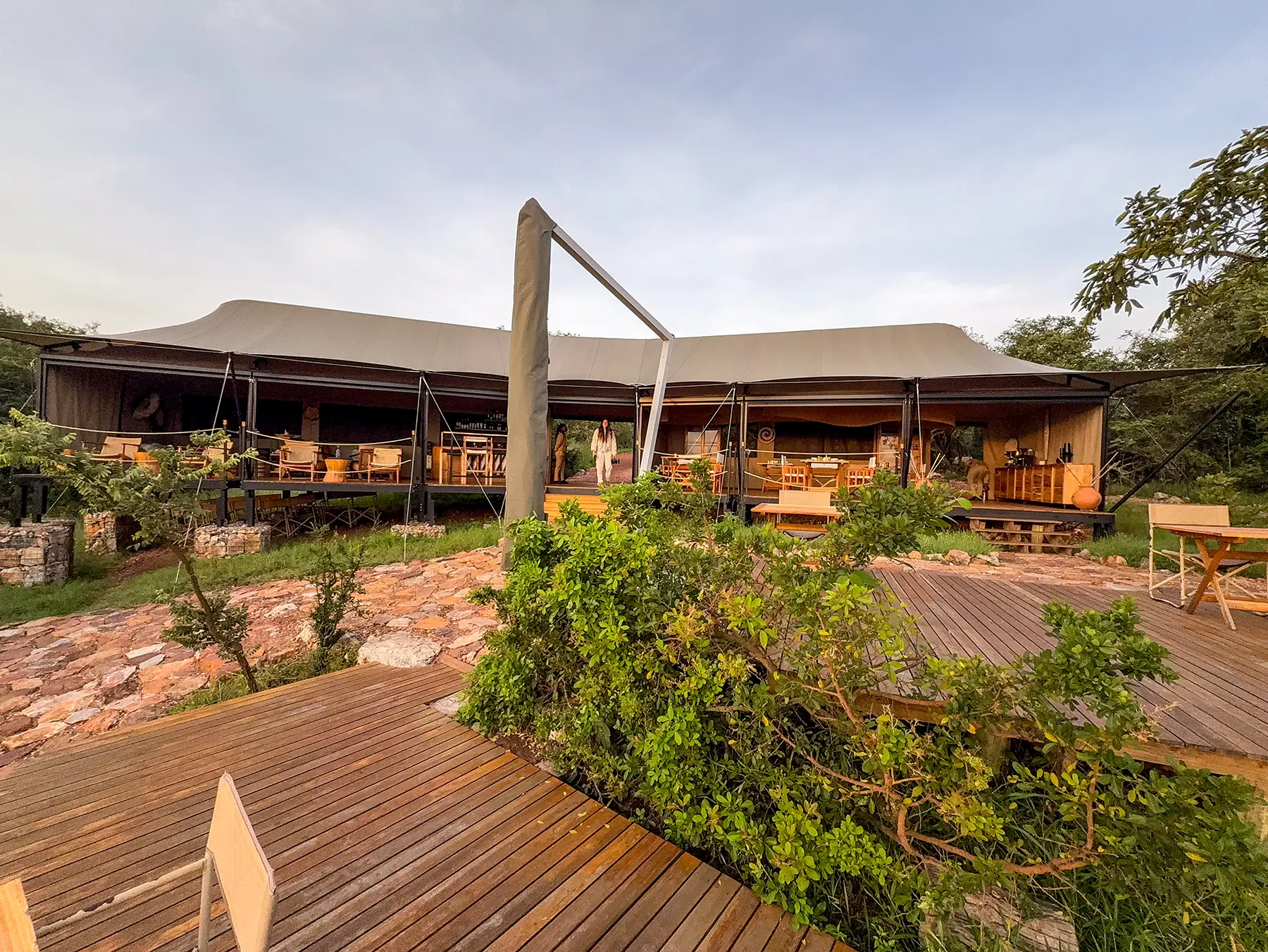
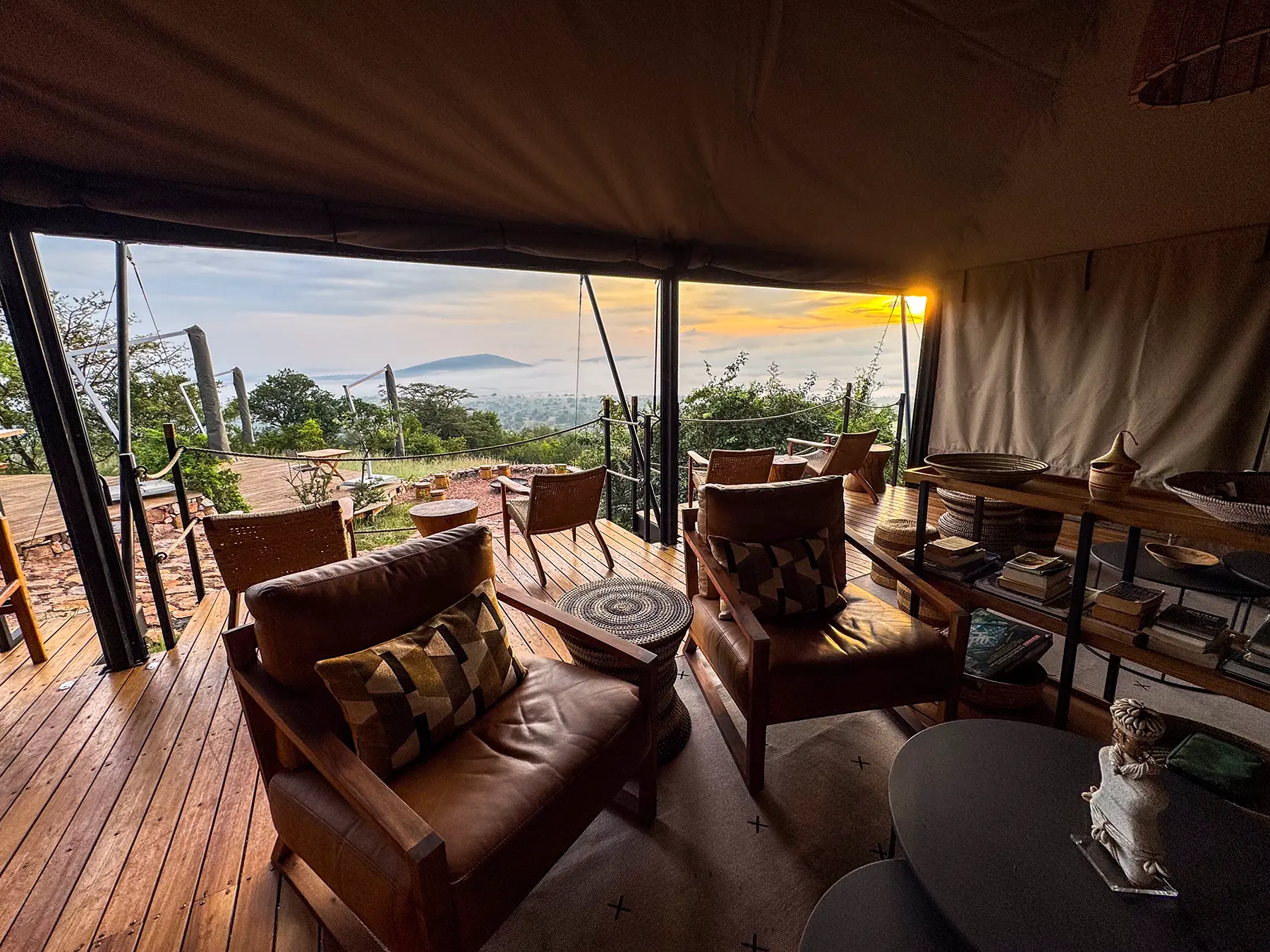
These are Wilderness Magashi Camp, perched right on Lake Rwanyakizinga, and Karenge Bush Camp. For me, Karenge boasts the best situation of all of Akagera’s lodges, directly overlooking Kilala Plain and a mere 10-minute drive from it.
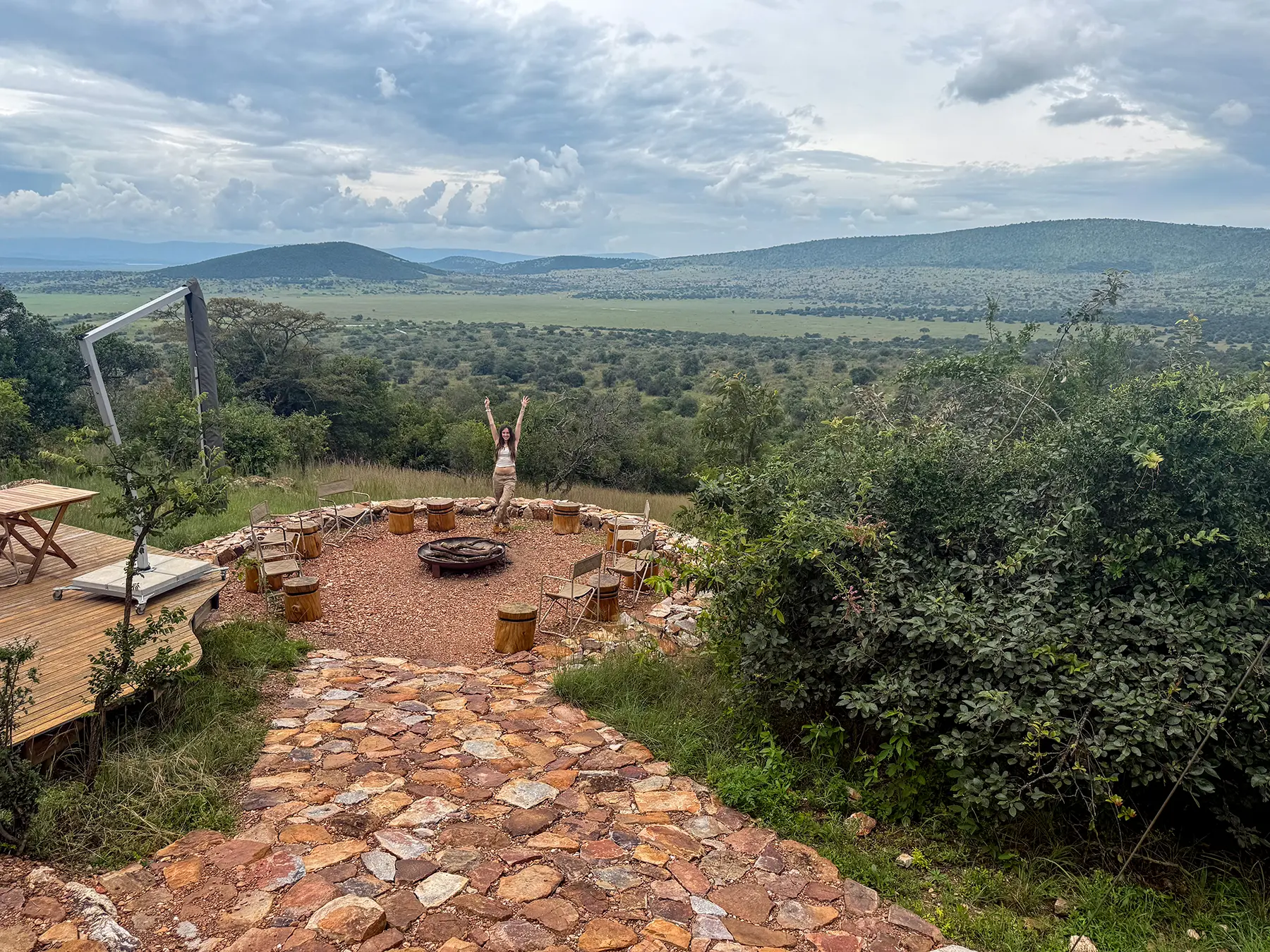
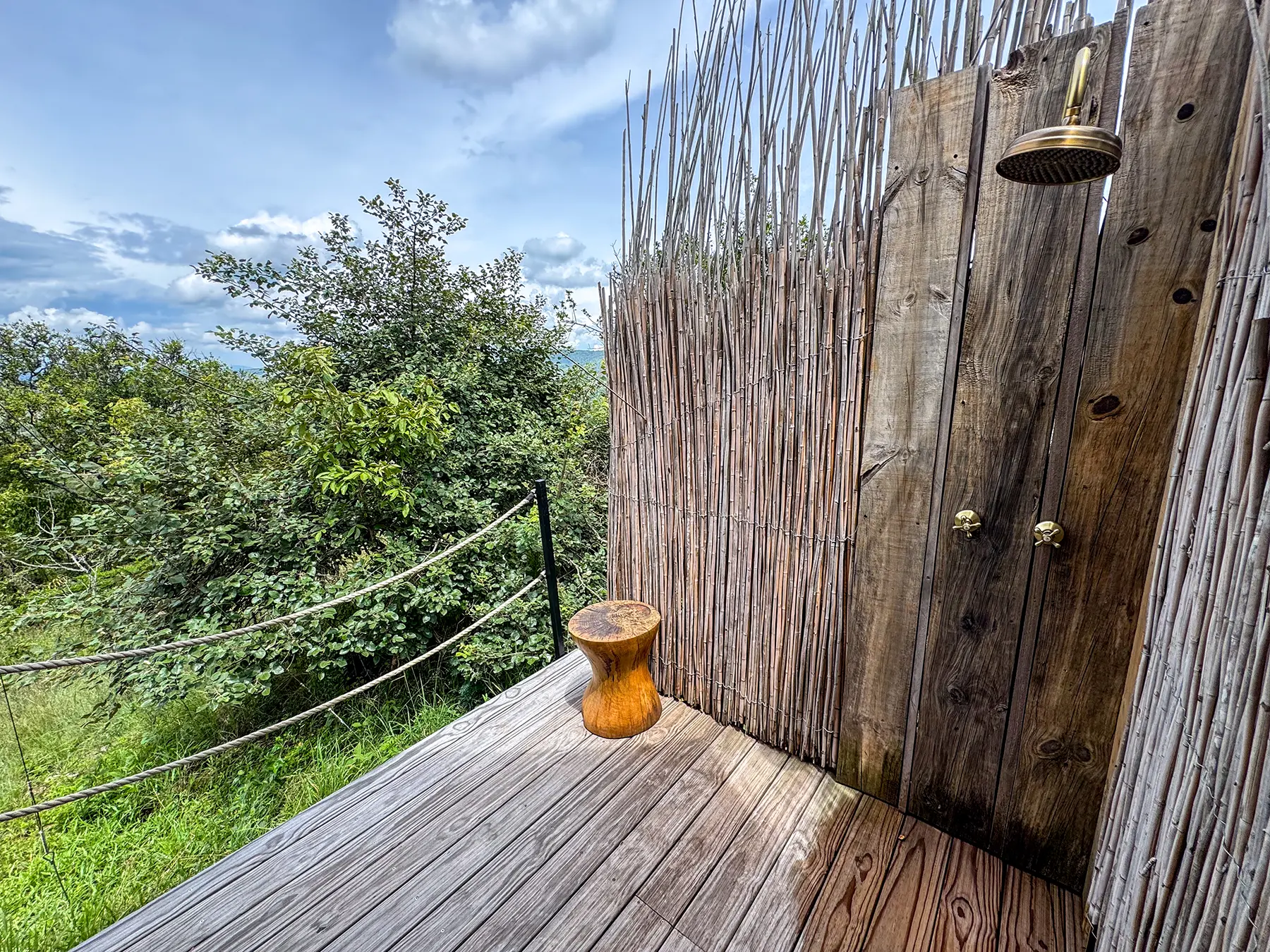
Following major renovations in 2024, Karenge is now very comfortable, with large, airy rooms, indoor and outdoor showers, hot and cold running water and WiFi throughout. I find the tented rooms there excellent – among the best tented accommodation in the country.
Wilderness Magashi Camp is also a fantastic option, located on the edge of Lake Rwanyakizinga for a contrasting view of the park.
My Experience of North Akagera
As I travelled to Akagera’s northern sector, the transformation in the landscape was astonishing, with dense forest melting away and vast expanses of grassland opening up before me – ideal for spotting big cats and rhinos! There was also a tangible increase in the volume of wildlife around, and I began to anticipate some great sightings.
When we arrived on the striking Kilala Plain, my expectations were immediately exceeded. Just 10 minutes into our game drive, we encountered three lions – two males and a female – asleep right on the road!
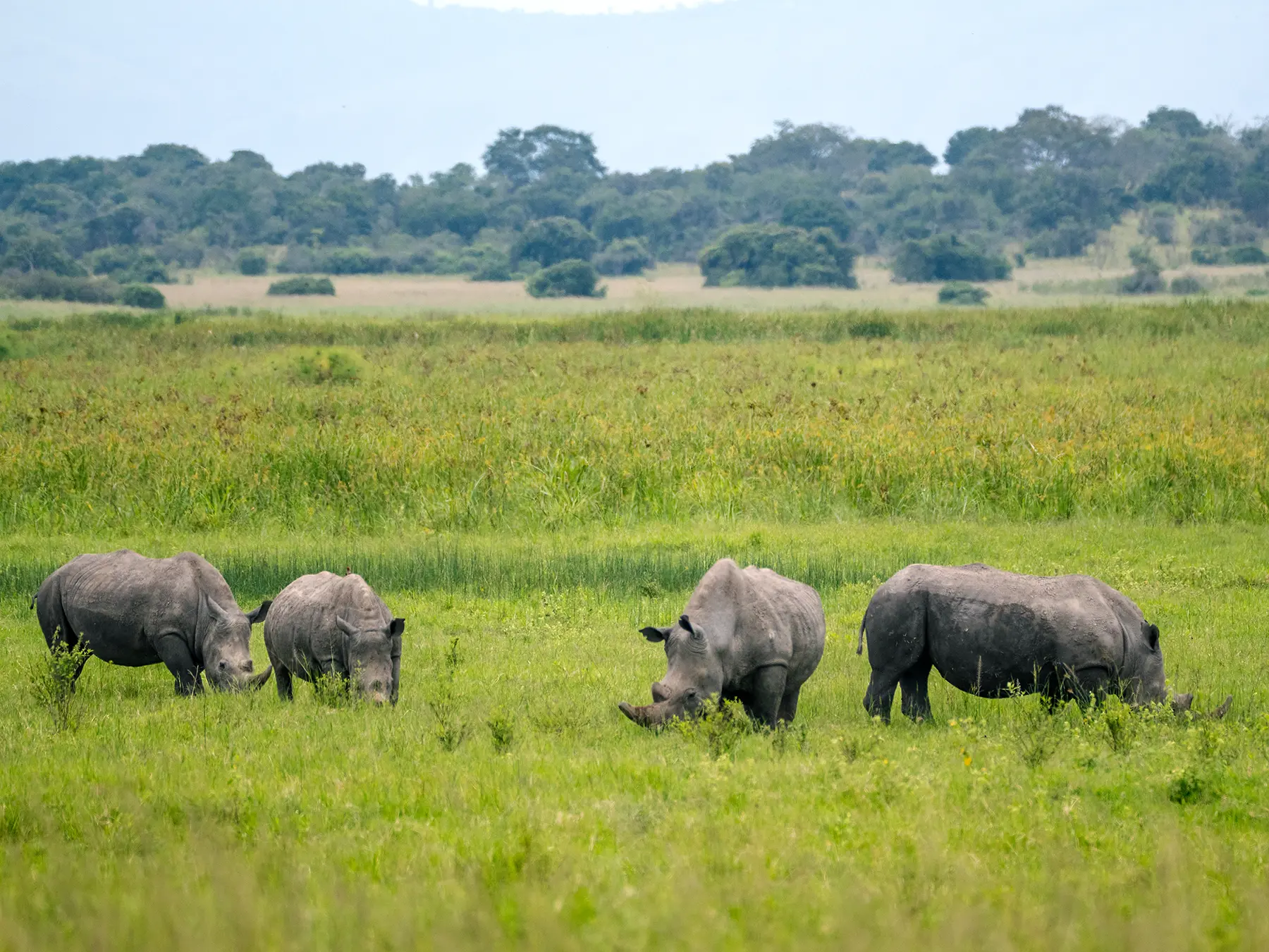
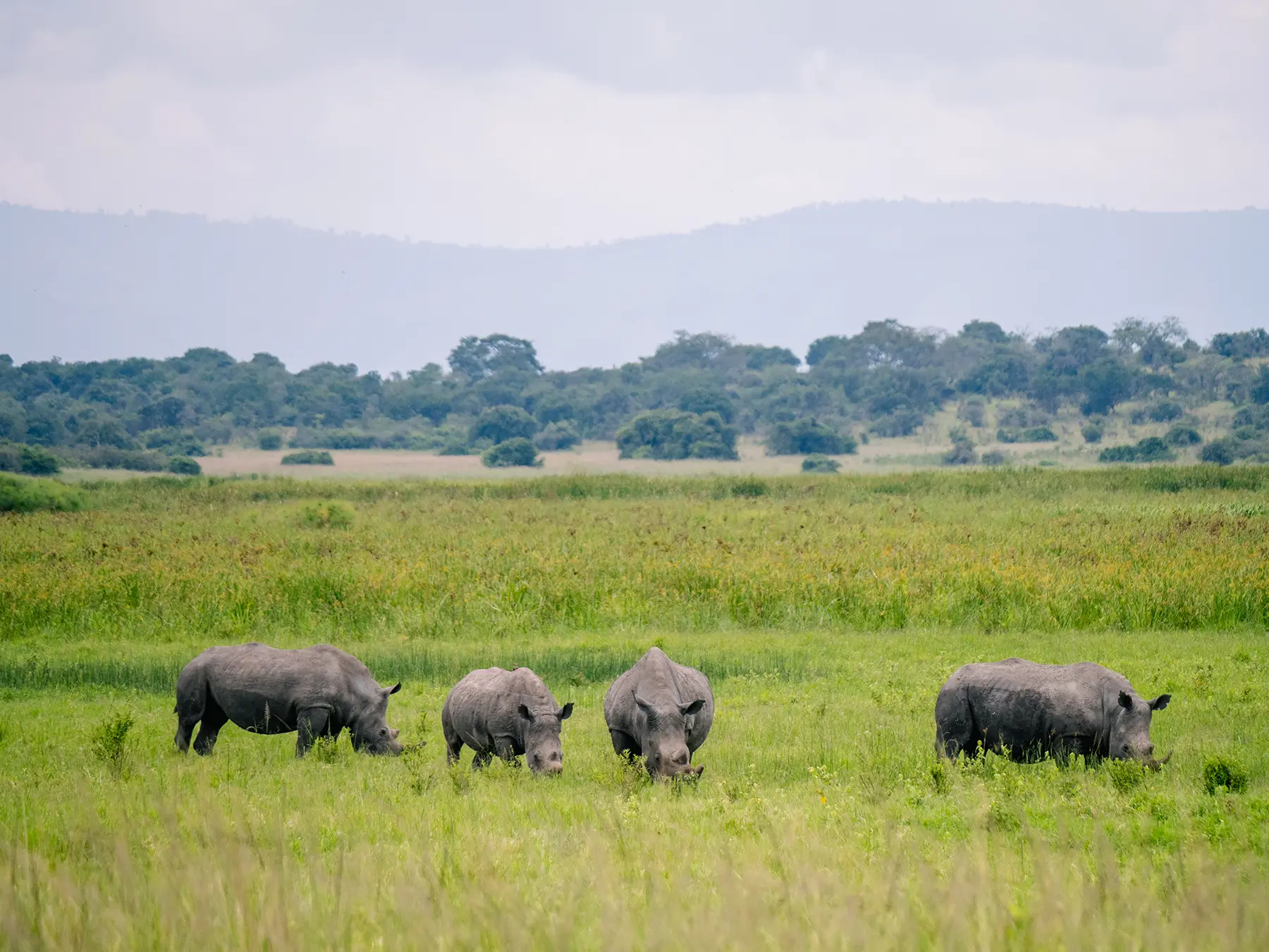
Near these, we found more rhinos than I’d ever seen before! First, we spotted a group of four grazing in the open, and then we saw another three a little further off on the plain.
If that wasn’t incredible enough, these three were grazing nonchalantly right next to a dozing lion! We then noticed even more rhinos on a ridge some distance off, including a mother and calf.
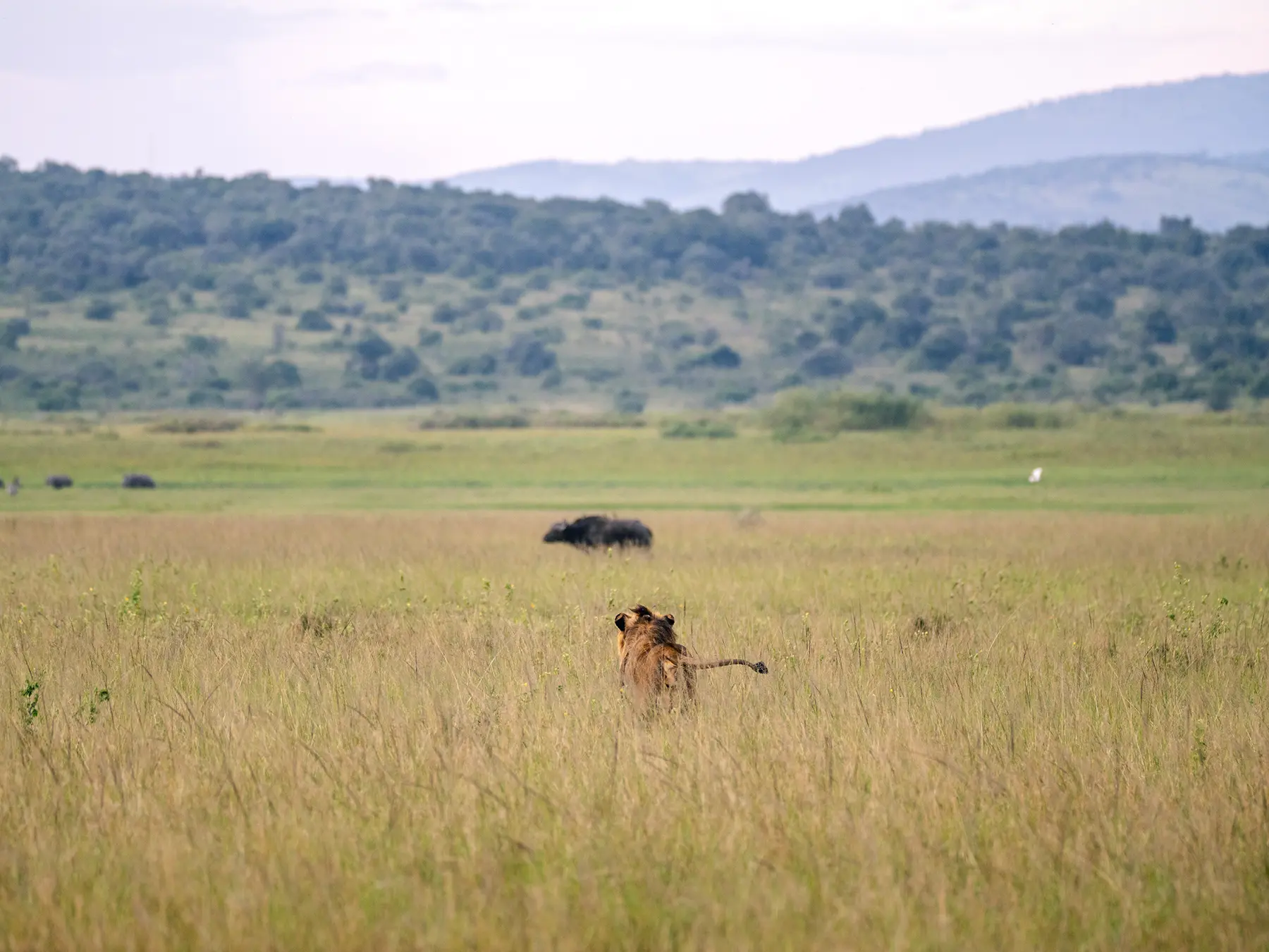
Later on, as the sun was nearing the horizon, we came across another male lion who looked like he was about to start hunting some buffalo. As if showing off for us or maybe summoning help, he started roaring, but there was no answer. The crowning glory was the incredible sunset that evening, when the sky went a stunning, brilliant red.
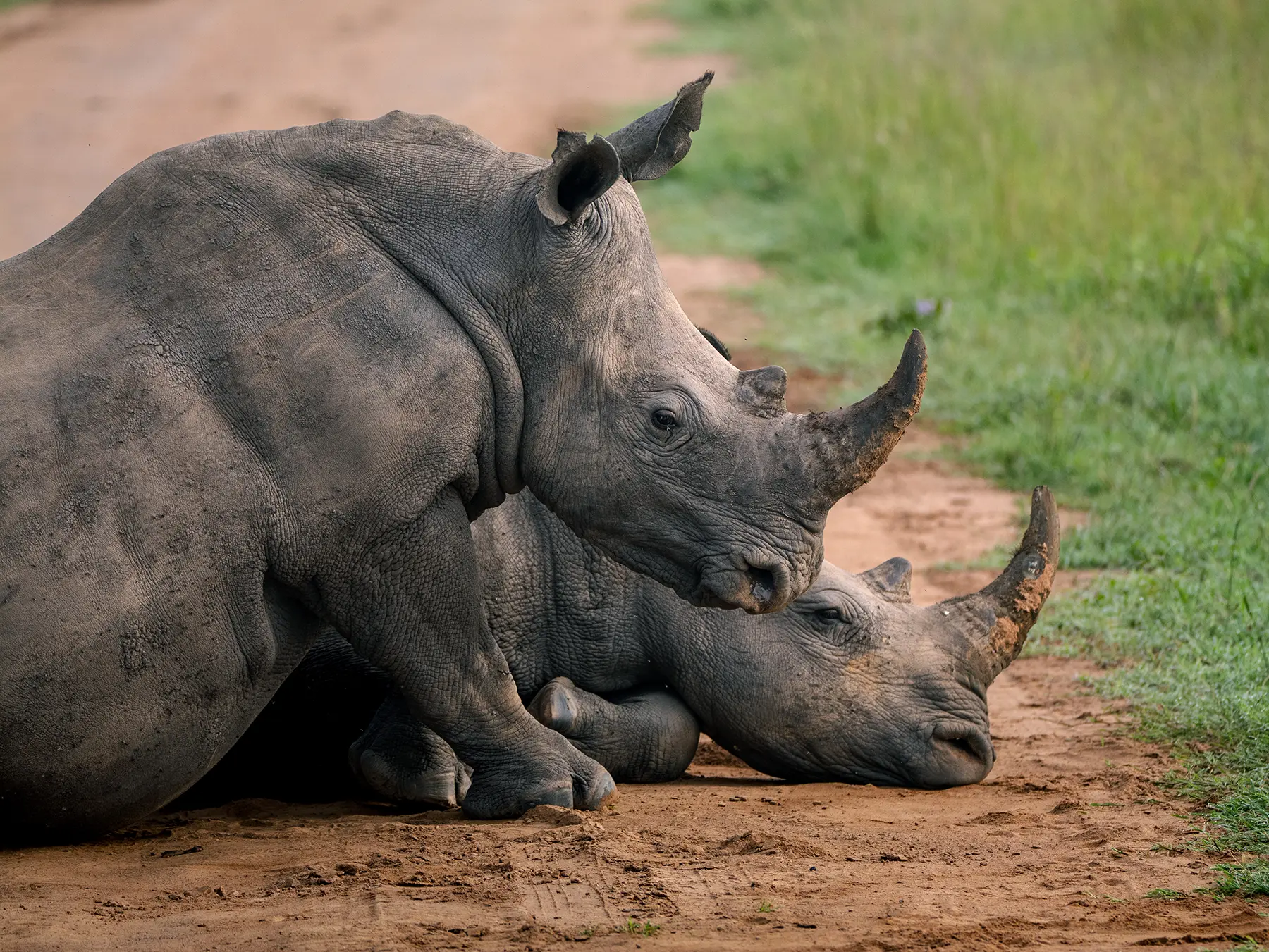
Next morning, the plain was blanketed in mist, reminding me of the Ngorongoro Crater in Tanzania. As we set out at dawn, we ran into a rather unusual road block – two pairs of sleeping rhinos in the middle of the road, resting their heads on each other’s backs.
Reluctant to disturb them, we switched route, only to find ourselves blocked by another rhino foursome! In the end, we had to wait over an hour until they started moving before we could get to the plain!
Day 4: North Akagera
Drive time (excluding game drives): 0 hours
Filling the entire top of Akagera, Kilala Plain is a vast savannah that resembles a mini-Serengeti and offers unparalleled lion and rhino sightings. You’ll be able to spend the entire day here, with morning and late afternoon game drives and no transfers planned.
Itinerary
As the dawn lightens the sky, you find yourself rolling out onto Kilala Plain for your morning game drive. As the savannah opens all around you, it’s easy to see why this is the best place in Akagera for lion and rhino sightings.
The vast plain draws rhinos to graze in the open, where they are a lot easier to spot than in the dense forests of the southern sector. Big cats come to hunt the plentiful plains game, making for some thrilling encounters.
Following the successful reintroduction of lions in 2015 and rhinos from 2017, Akagera is now home to the Big Five once more. They say that on a good day, you can see all five of them here on Kilala without needing to change position, but in my experience, leopards can be pretty elusive.
Towards the middle of the day, it’s time to return to camp and get a bite to eat, followed by a rest ahead of your second game drive. This is a great time to fit in some birding – with over 500 recorded species, Akagera is among East Africa’s premier birding destinations, and you can see many of them from within the confines of the camp!
Keep your eyes peeled for Goliath heron, fish eagles, grey crowned-cranes, pelicans and the unique shoebill stork. The exquisite lilac-breasted roller is another common sight, its brilliant plumage making it a favourite with photographers.
Before long, you’re heading out again for your afternoon drive. This is the ideal time to go out, with predators just starting to wake from their afternoon naps and preparing to go on the hunt.
As well as lions and rhinos, the plain and its surroundings are busy with myriad game animals such as hyenas, giraffes, zebras, warthogs, eland, waterbuck, reddish-coloured topis and Uganda kob.
Where to Stay in North Akagera
As you’re staying in Akagera’s northern sector again tonight, you’ll be spending the night in the same accommodation as last night – no need to pack and no long drives to complete! See Day 3 for details of the accommodation options in the north of Akagera.
Day 5: North Akagera to Volcanoes National Park
Drive time (excluding game drives): 8 hours
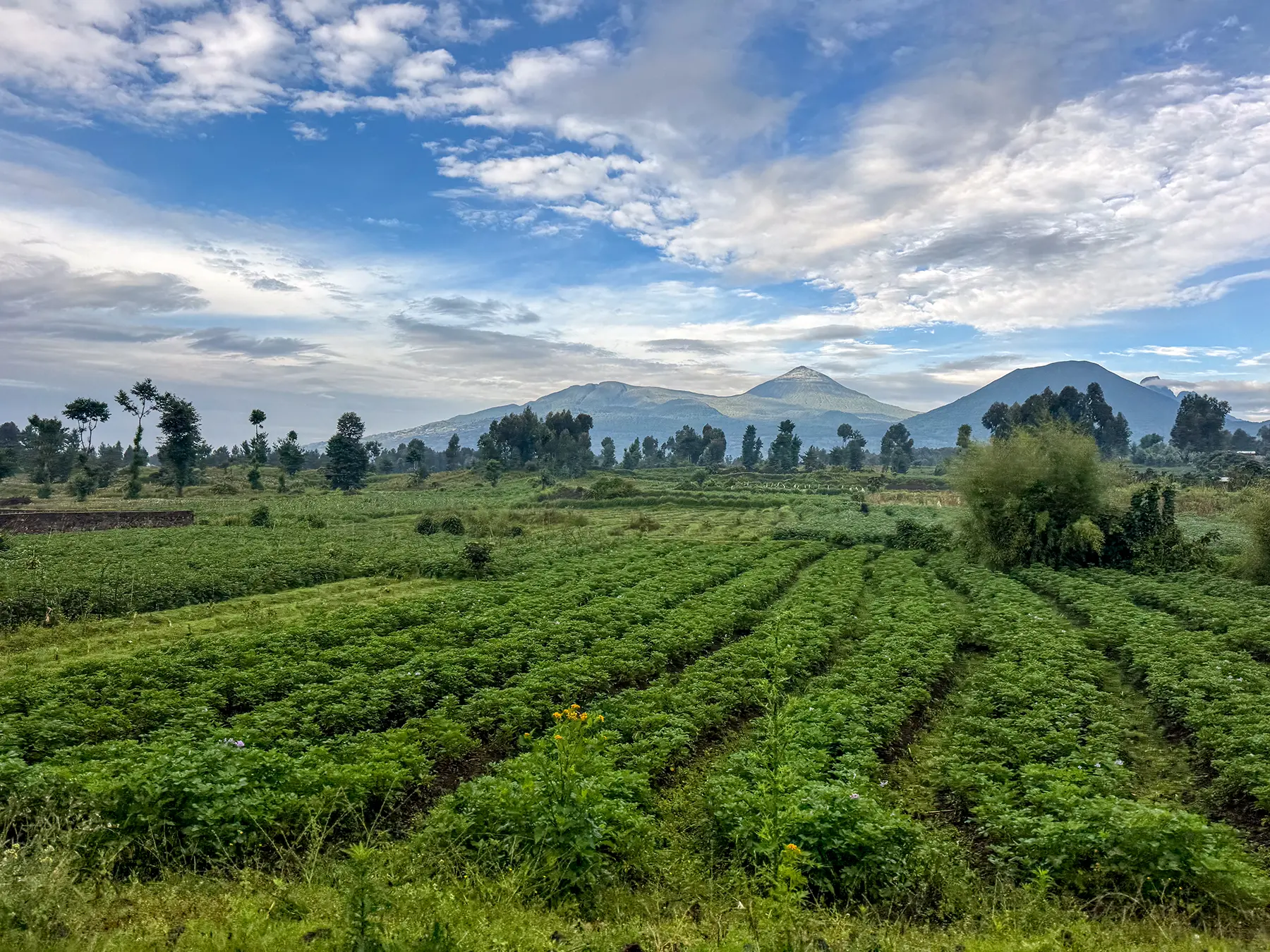
Today, you have time for a final morning game drive on Kilala Plain before embarking on the long drive across the country to the volcanic northwest region.
Itinerary
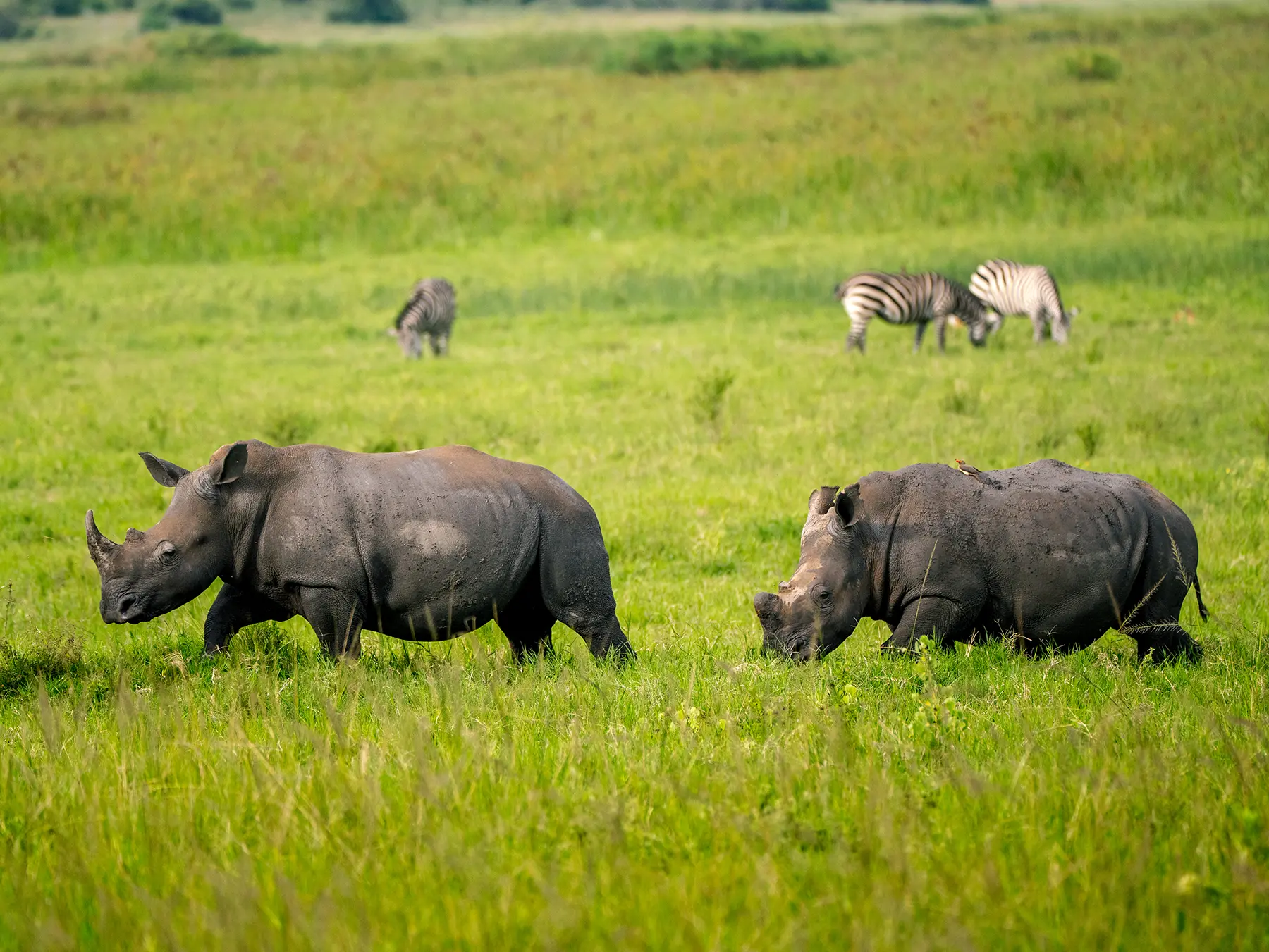
This morning, you have time for one last game drive on Kilala Plain before leaving, so make the most of your time and keep an eye out for lions, rhinos, zebra, giraffes, impala and antelope as you cross the rolling savanna.
My own experience is that Kilala is the gift that keeps on giving, and I have no doubt you will be spoiled with equally incredible sightings, even during these last few hours.
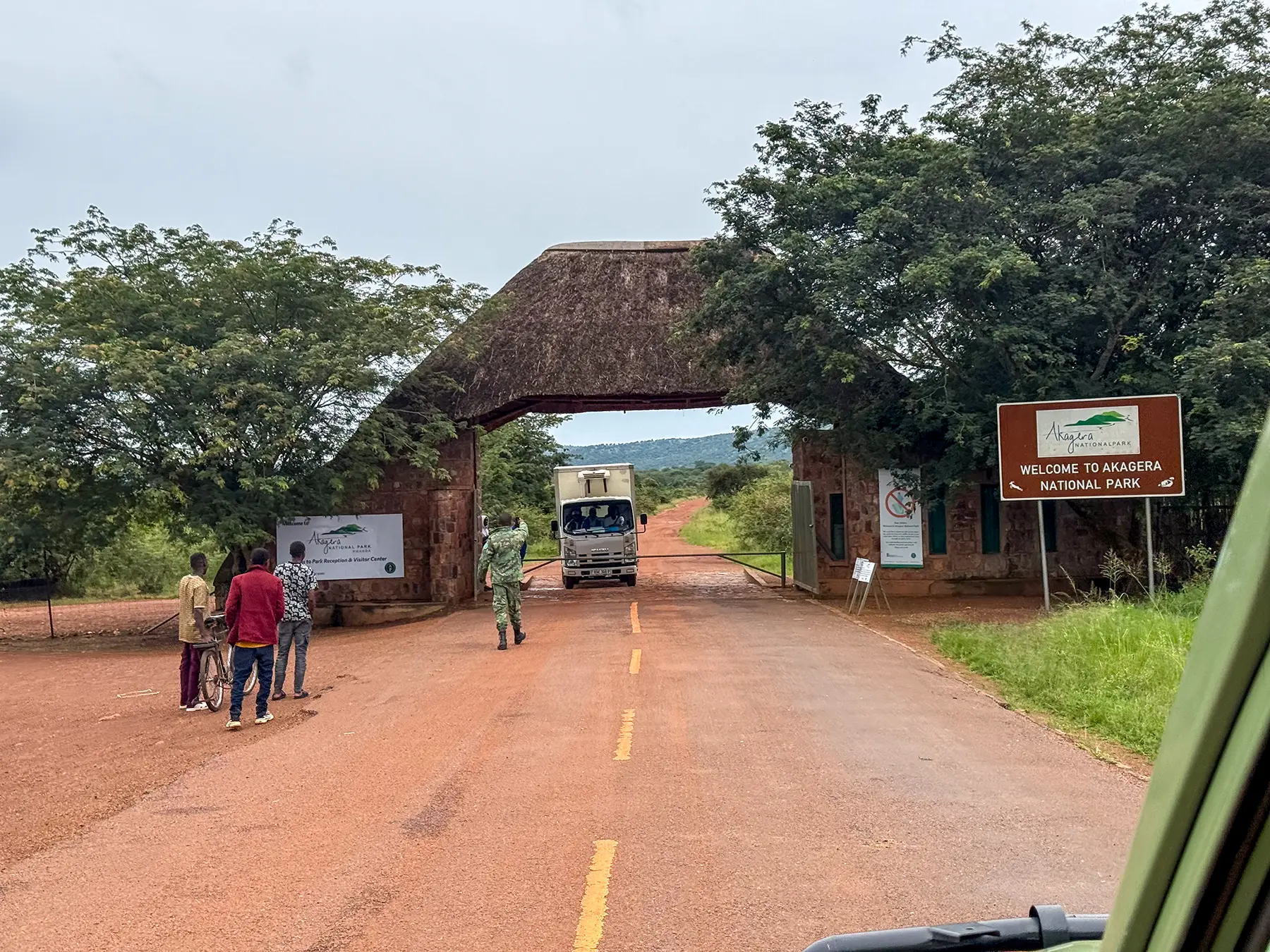
Then it’s time to take your leave of Akagera, exiting through the exit-only northern gate as you turn back towards Kigali.
The journey from the exit gate to Kigali takes about 3.5 to 4 hours, the first of which is spent on rough dirt roads that lead through cute little villages before transitioning to smooth, tarred roads that wind their way gently away from the plains.
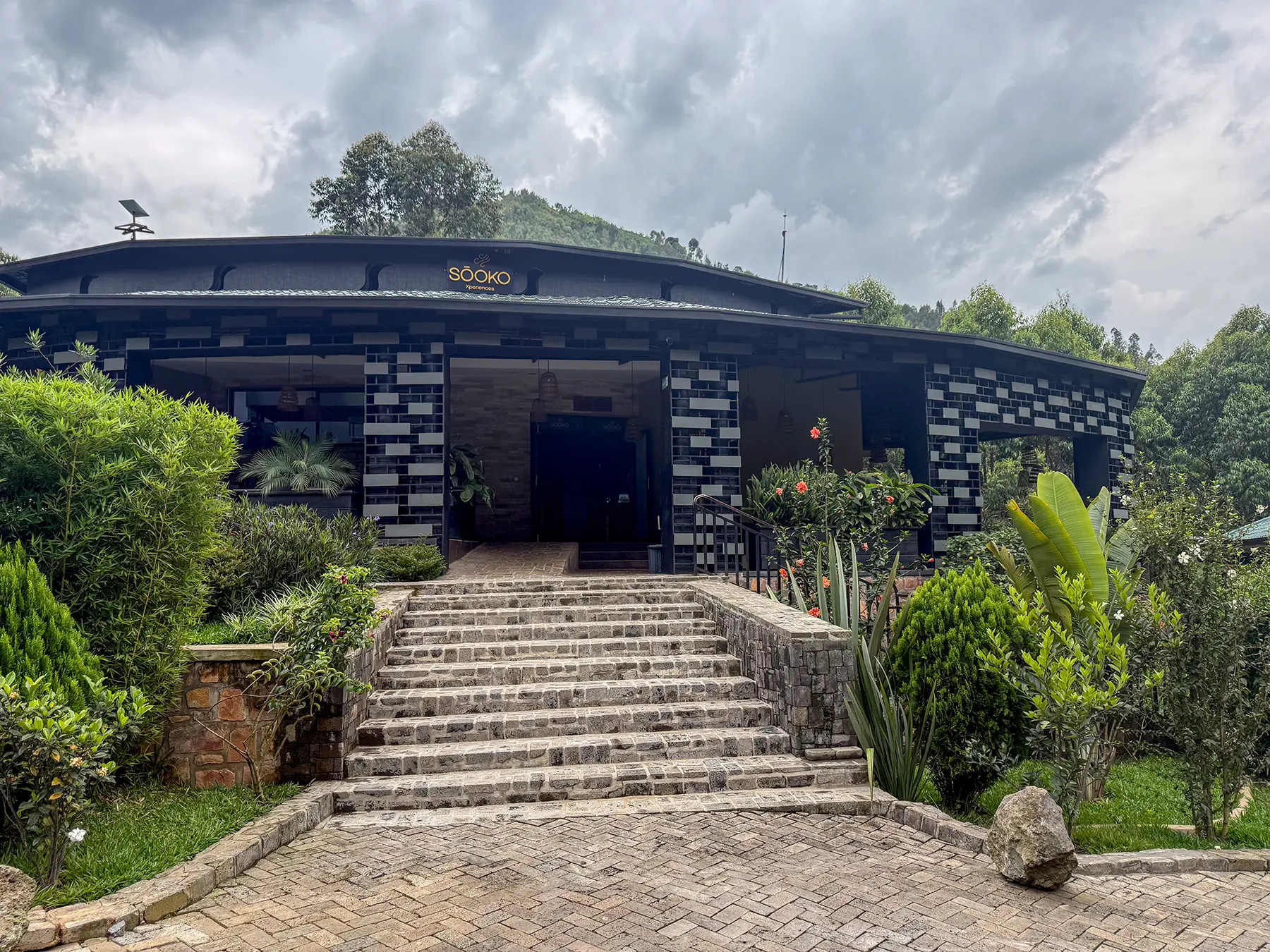
Once you’re through Kigali and heading north, you’ll find a great coffee house and restaurant called Sooko Xperiences, which makes a fantastic rest stop as it’s about halfway between Kigali and Musanze. Sooko has numerous rave reviews online, highlighting its excellent coffees, teas and food as well as the beautiful views.
On the road once more, the final leg of your drive will bring you up into highlands as you approach Musanze. Situated around 2.5 hours from Kigali, it is the gateway city to Volcanoes National Park. Be aware that this single-track, hilly stretch of road is a popular route for cargo trucks, so you could end up stuck behind slow-moving traffic, which will extend your drive time.
Tips for Your Journey to Volcanoes National Park
I’ve put together some handy hints for the long drive from north Akagera to Volcanoes National Park:
- If planning to leave Akagera through its northern gate, you should contact park staff in advance, since the gate is not always manned.
- Make a pit stop at the lovely Sooko Xperiences coffee house about halfway between Kigali and Musanze for snacks, drinks and well-kept bathrooms.
Where to Stay in Volcanoes National Park
There are no lodges inside Volcanoes National Park itself; instead, all accommodation is located outside the park but within a 30-minute drive of the park headquarters. Musanze is generally used as the base for trekking expeditions. Please note that accommodation near Musanze and Volcanoes tends to cost more than in other areas of Rwanda, particularly for higher-end lodges.
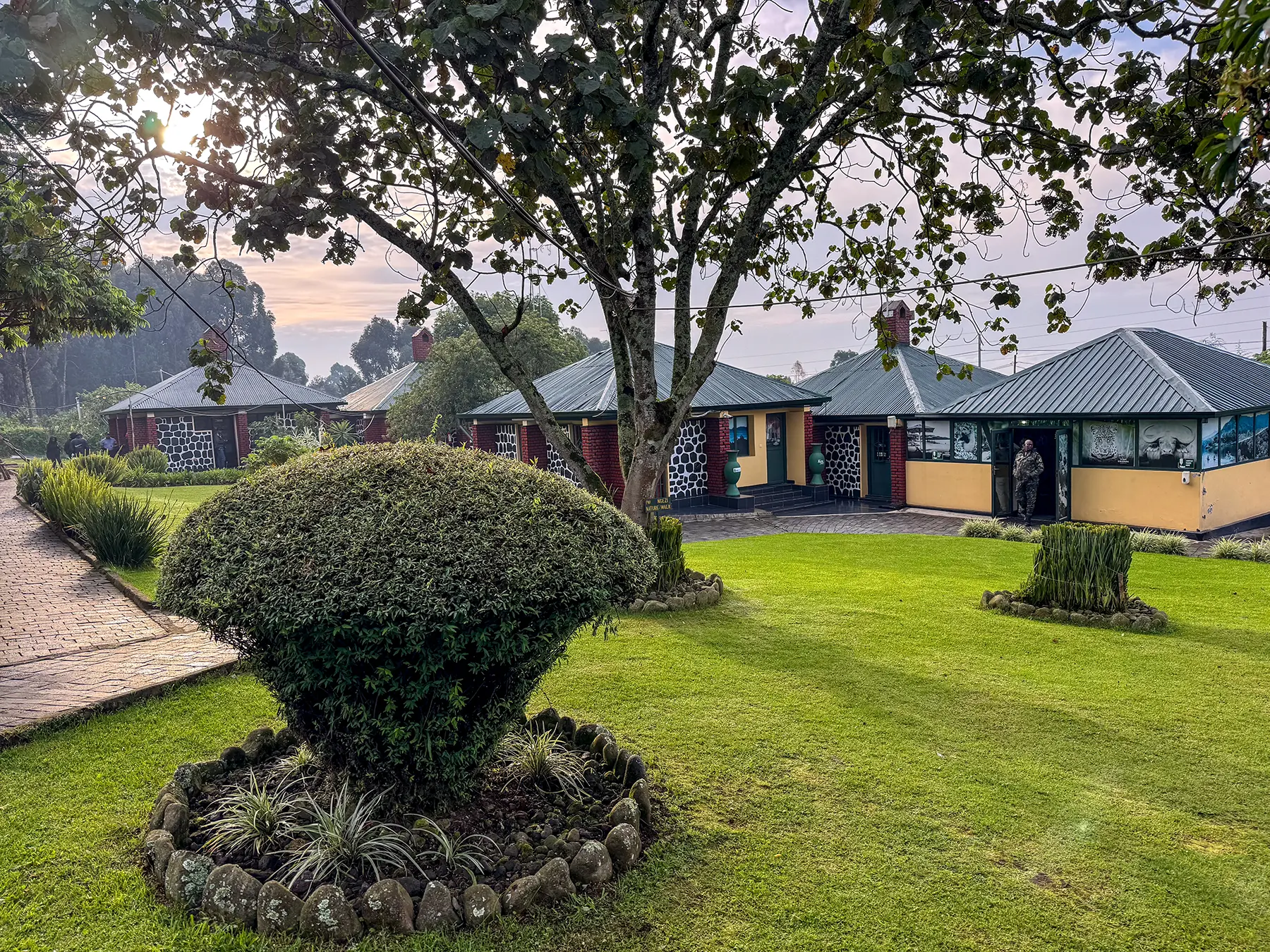
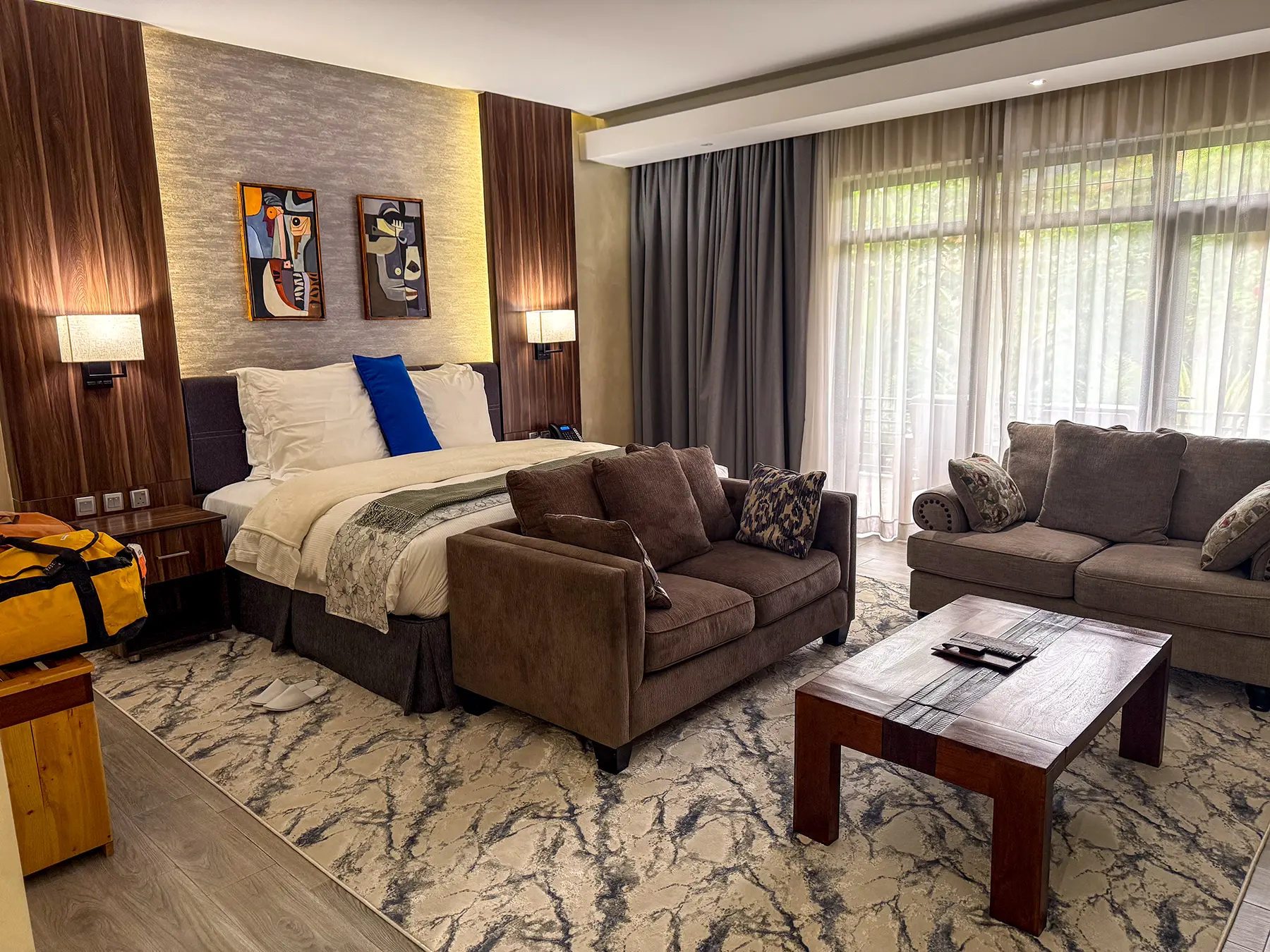
Virunga Inn Resort and Spa is a great option if your budget is mid-range. However, if you prefer to splurge a little for a touch of luxury, you can also choose from high-end options like The One and Only Gorilla’s Nest, Singita Kwitonda, Wilderness Sabyinyo and Wilderness Bisate.
Each of these properties enjoys easy access to the park headquarters, which is convenient as both gorilla and golden monkey treks depart from here at 7am sharp.
My Experience of the Journey to Volcanoes National Park
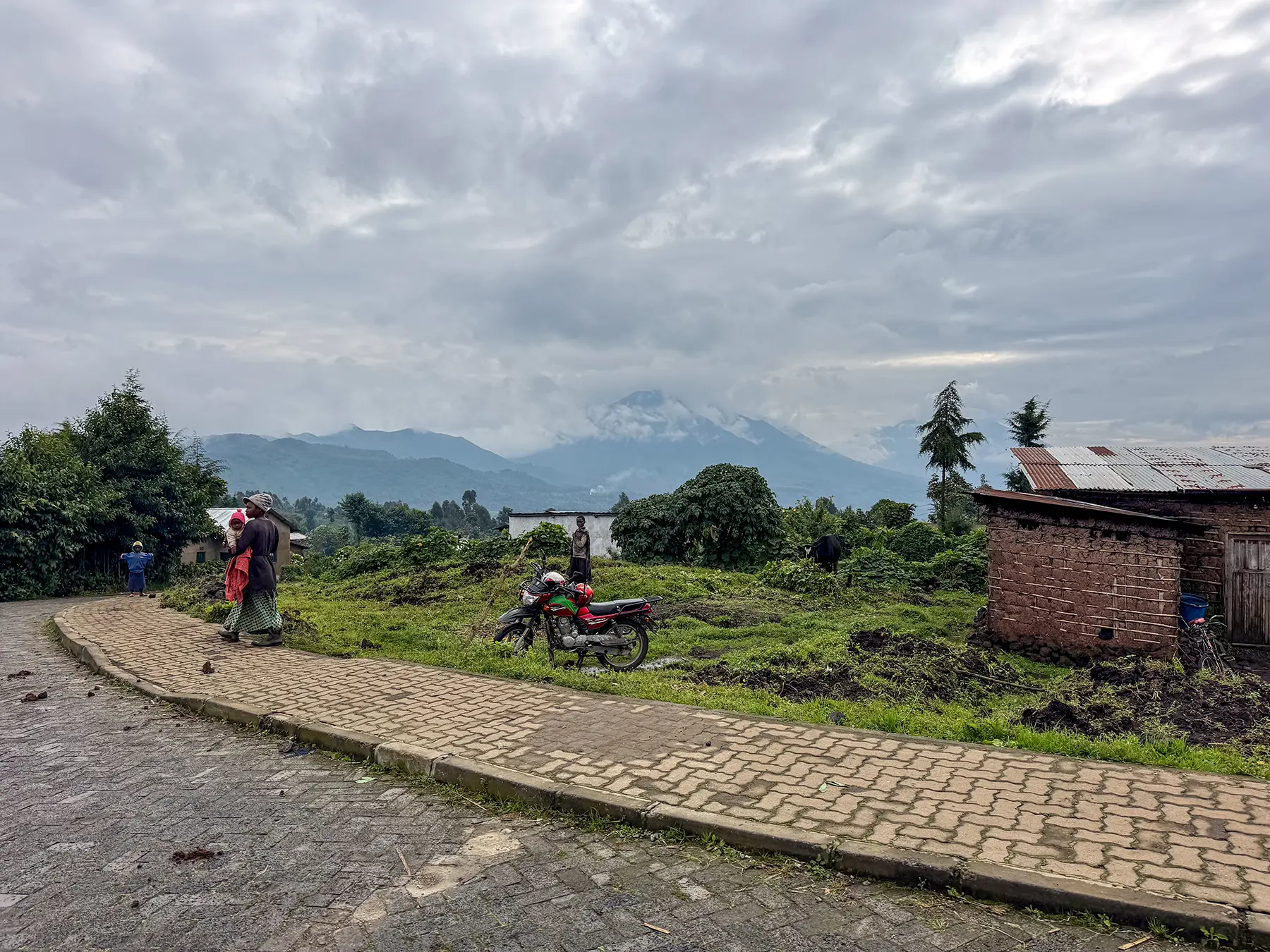
The most memorable part of my drive between Kigali and Musanze at the beginning of the rainy season was when we happened upon a section of road that had been washed away due to a landslide. That might sound like a disaster, but in fact the local community had all turned out to clear the debris and make the road passable.
I was so touched by the strong community spirit that had brought what seemed like the entire village out to clean up!
Later on, I stopped at Sooko Xperiences for a delicious snack and a welcome cup of tea. This wonderful coffee house really deserves its glowing online reviews, with fab food and drinks, clean bathrooms and even a gift shop selling great souvenirs.
Day 6: Volcanoes National Park
Drive time (excluding game drives): 0 hours
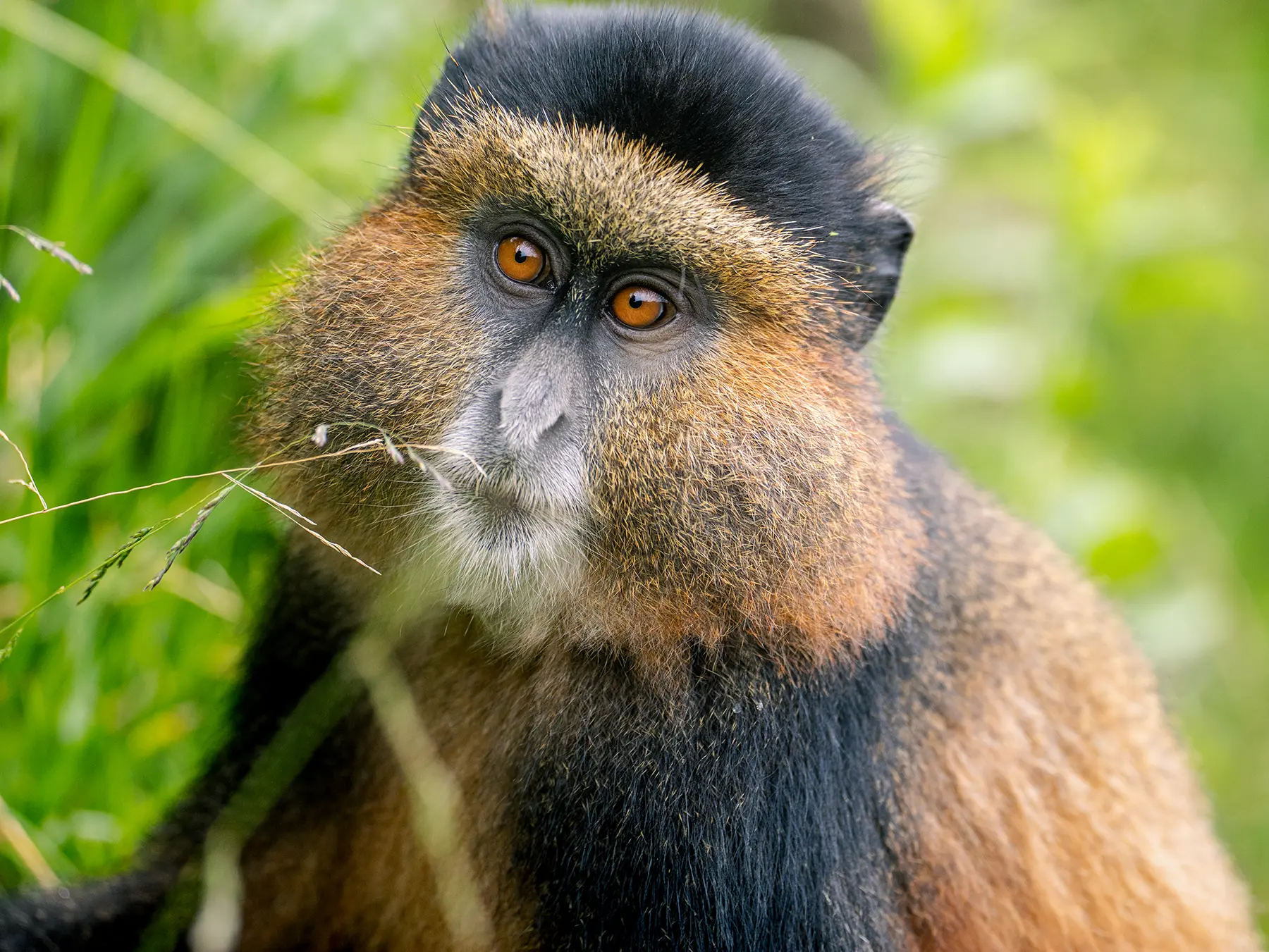
The volcanic Virunga Massif is one of only two places on earth you’ll find golden monkeys in the wild, with Volcanoes National Park protecting the part of the massif within Rwanda’s borders.
Today, you’ll be trekking in search of these unique primates. This is the easier of the two treks in Volcanoes, helping you prepare for tomorrow’s more strenuous expedition. Once you get back down, the afternoon is yours to do what you like.
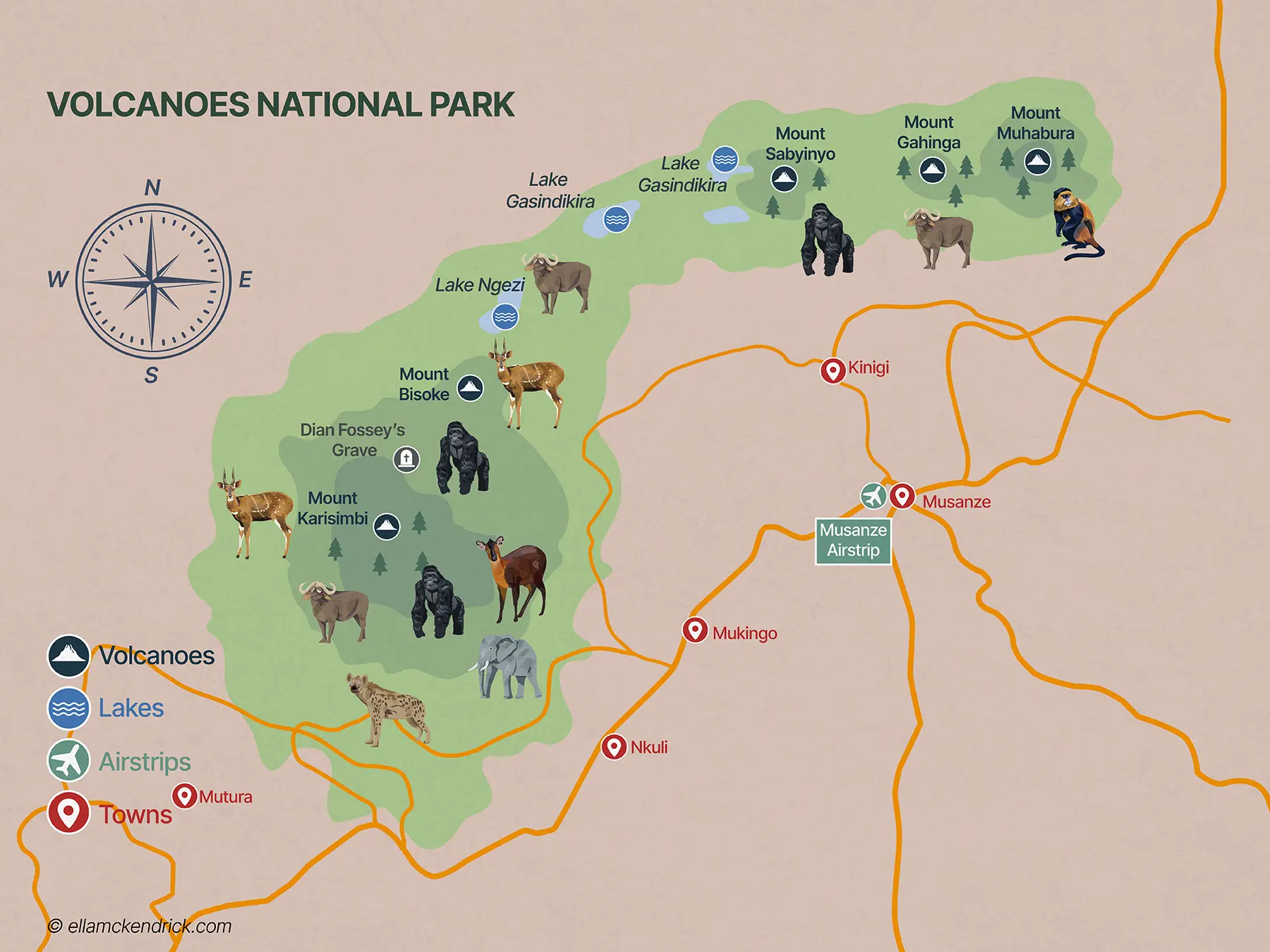
Map of Volcanoes National Park
This map I made highlights the key features of Volcanoes National Park, including the park headquarters as the starting point for all treks, the territories of the main gorilla families, and the five volcanoes from which the park gets its name. The park occupies an area of 62 square miles (160 km²) of the Virunga Massif on the Rwandan side of the border.
Itinerary
Today’s outing starts at 7am sharp at the park headquarters, where you meet your guide, get assigned to your group and are given a briefing. Then it’s back to the car to drive to the trek starting point, which can be anywhere between 10 minutes and an hour away. Treks are carried out in groups of up to 14, accompanied by a lead guide.
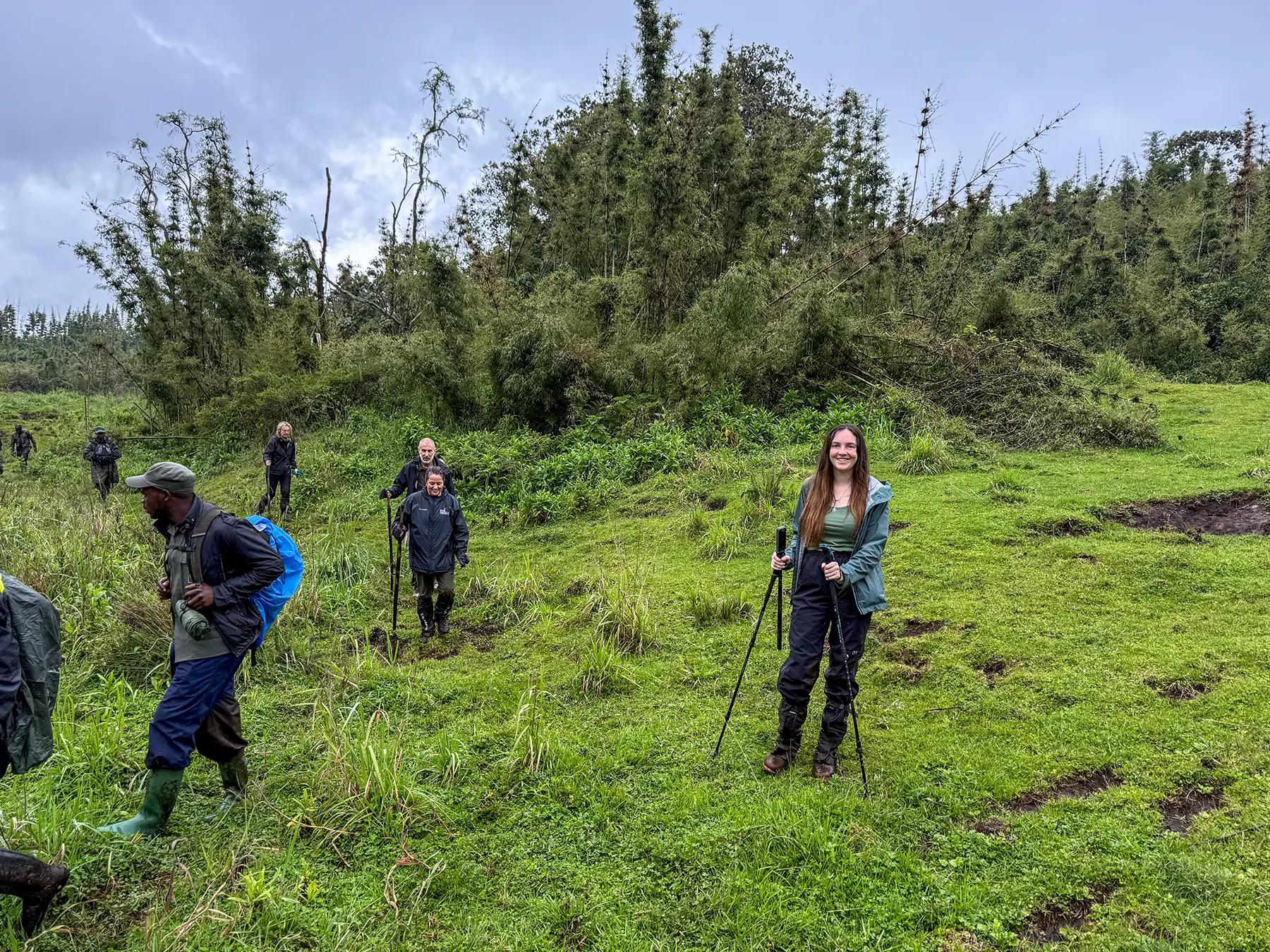
As golden monkeys tend to inhabit the dense bamboo forests on the lower volcanic slopes instead of the higher altitudes beloved by the gorillas, this trek is usually less demanding than the gorilla trek.
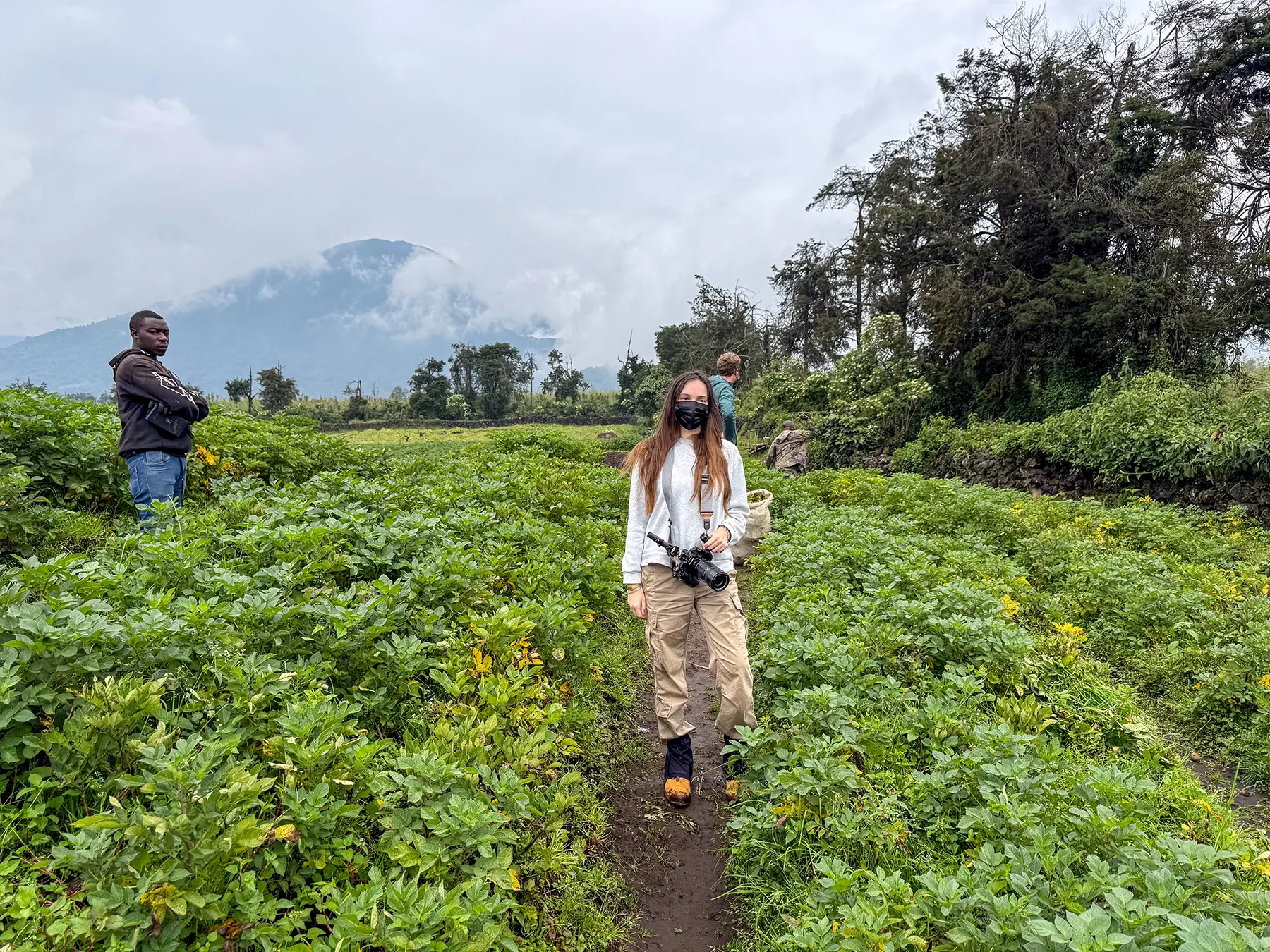
Locating the monkeys takes about 30 minutes; you’ll often find them along the edges of potato fields as they love potatoes! Afterwards, you get to spend an hour watching these cheeky, mischievous creatures as they jump between branches and chase one another among the bamboo.
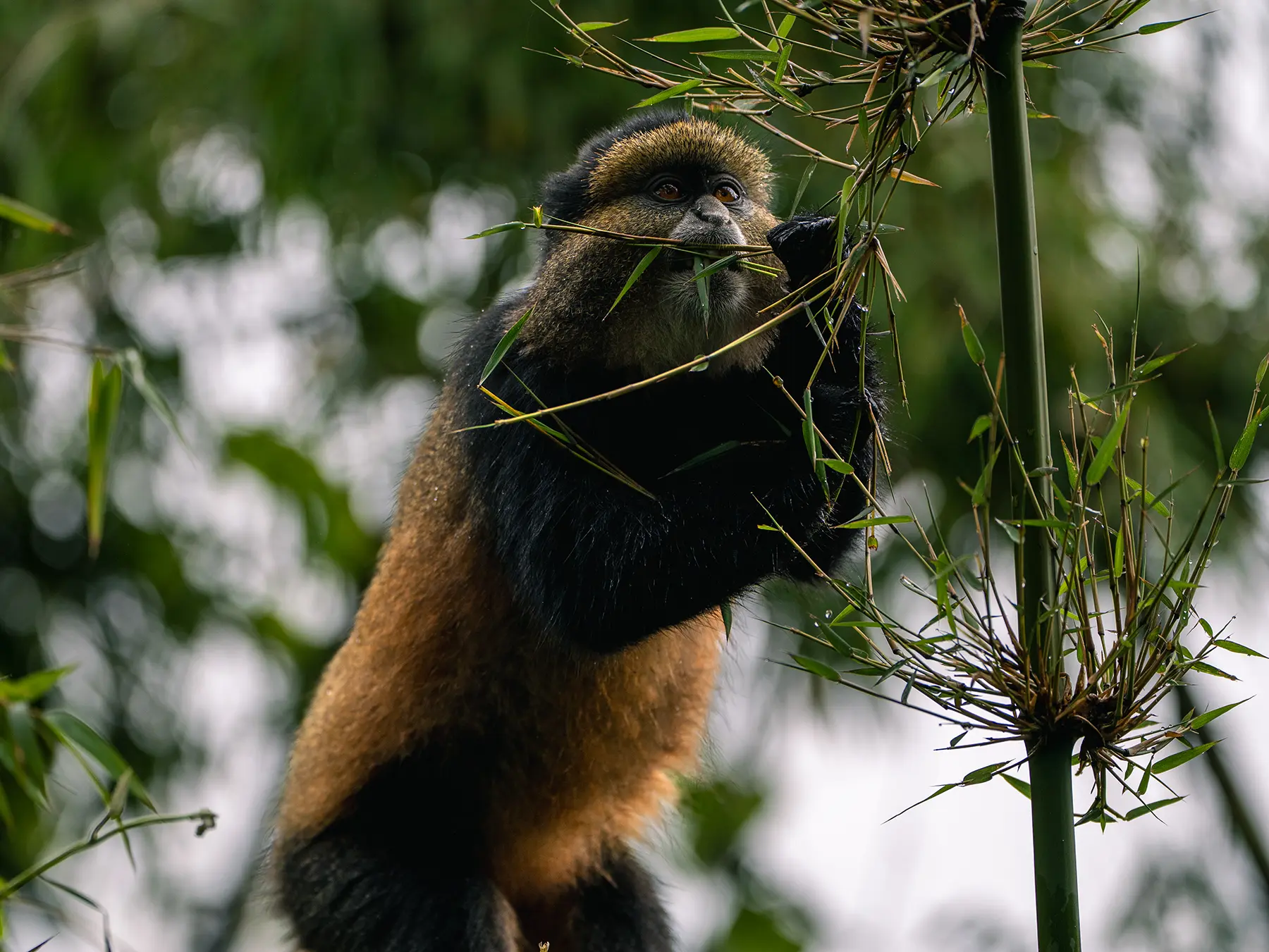
You should be aware that you’ll need to wear a face mask for the duration of the hour you spend with the monkeys, as their DNA is so close to our own that it’s possible for us to give them diseases and vice versa.
Planning this trek ahead of the gorilla trek is a conscious choice, as the easier trek gives your body a chance to adjust to the altitude so you’re better able for the more demanding hike tomorrow. Arriving back at the lodge in the early afternoon, you have the rest of the day to spend as you choose.
About Volcanoes National Park
Rwanda’s flagship wildlife reserve, Volcanoes National Park forms part of the Virunga Massif, which links Uganda, Rwanda and the DRC. The park spans a total of 62 square miles (160 km²).
At this considerable altitude, mornings often begin with a thick covering of mist, adding a touch of magic to the dense forests that populate the steep mountain slopes.
The park is perhaps best known as the place where renowned American primatologist Dian Fossey performed her pioneering research on mountain gorillas. Indeed, she is widely considered to have saved the species from total extinction thanks to her tireless advocacy work. Fossey’s story is immortalised in the 1988 film Gorillas in the Mist, and a memorial to her can be found in the gorilla graveyard, situated in the Bisoke District.
From under 300 when Fossey began her research, the global mountain gorilla population has now reached over 1,000. While mountain gorillas remain critically endangered, this recovery is extremely encouraging as one of Africa’s most significant wildlife success stories.
This achievement is due in part to the fact that national and international conservation work benefits local communities. For example, 10% of trekking permit income is channelled directly into the local community, and farmers are compensated financially if their crops are damaged by gorillas.
September marks the annual Kwita Izina gorilla-naming ceremony, a joyous gathering attended by tens of thousands of people when new gorilla births are celebrated.
Despite its rural setting and rough terrain, Volcanoes National Park is actually pretty easy to access from Kigali. The park is just 2.5 hours from the capital by car, making it easily accessible to potential trekkers. Ruhengeri Airport, the nearest airstrip, is about 30 minutes from the park, with flights from Kigali taking around 25 minutes.
What Wildlife Can I See When Golden Monkey Trekking?
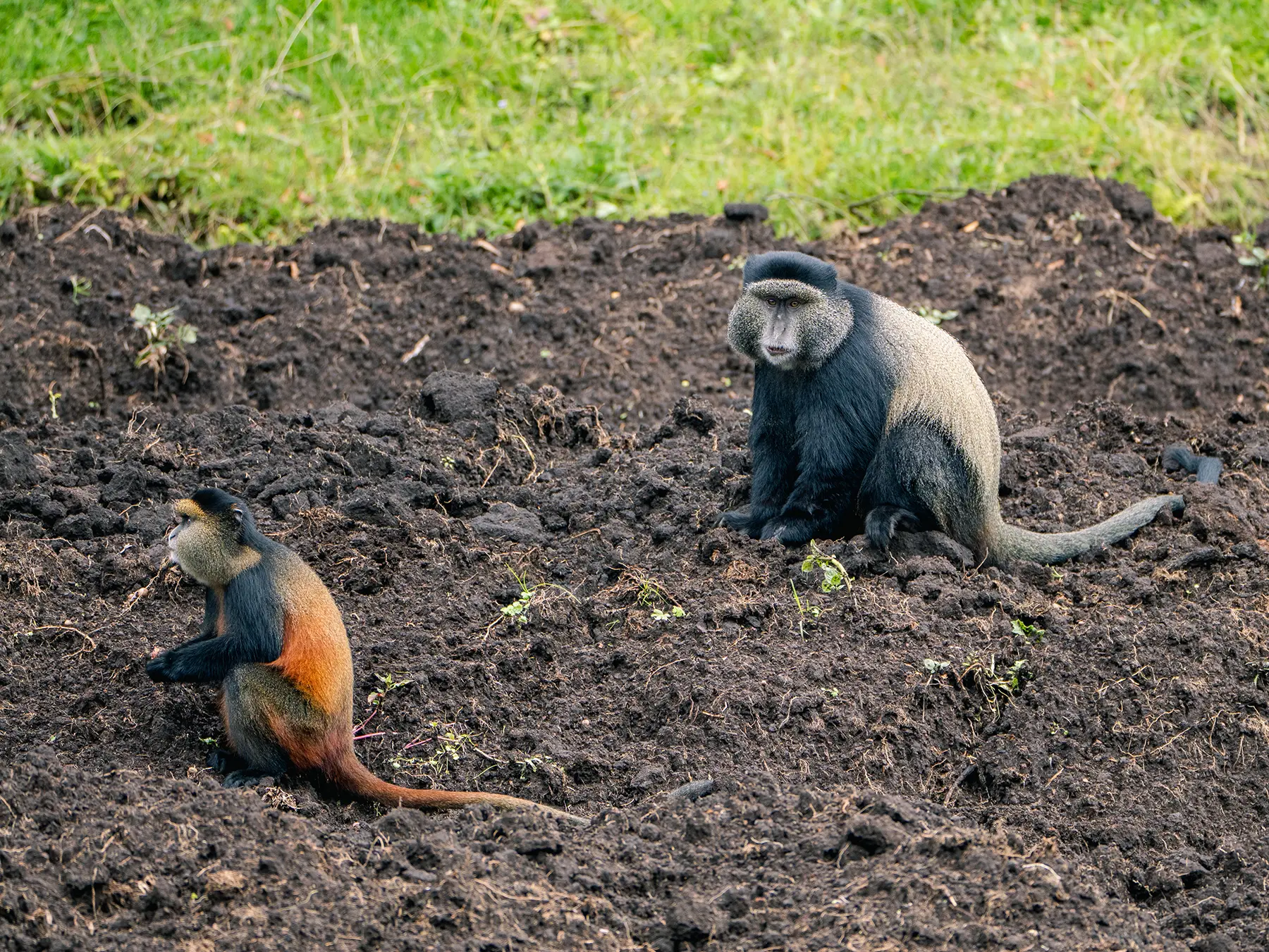
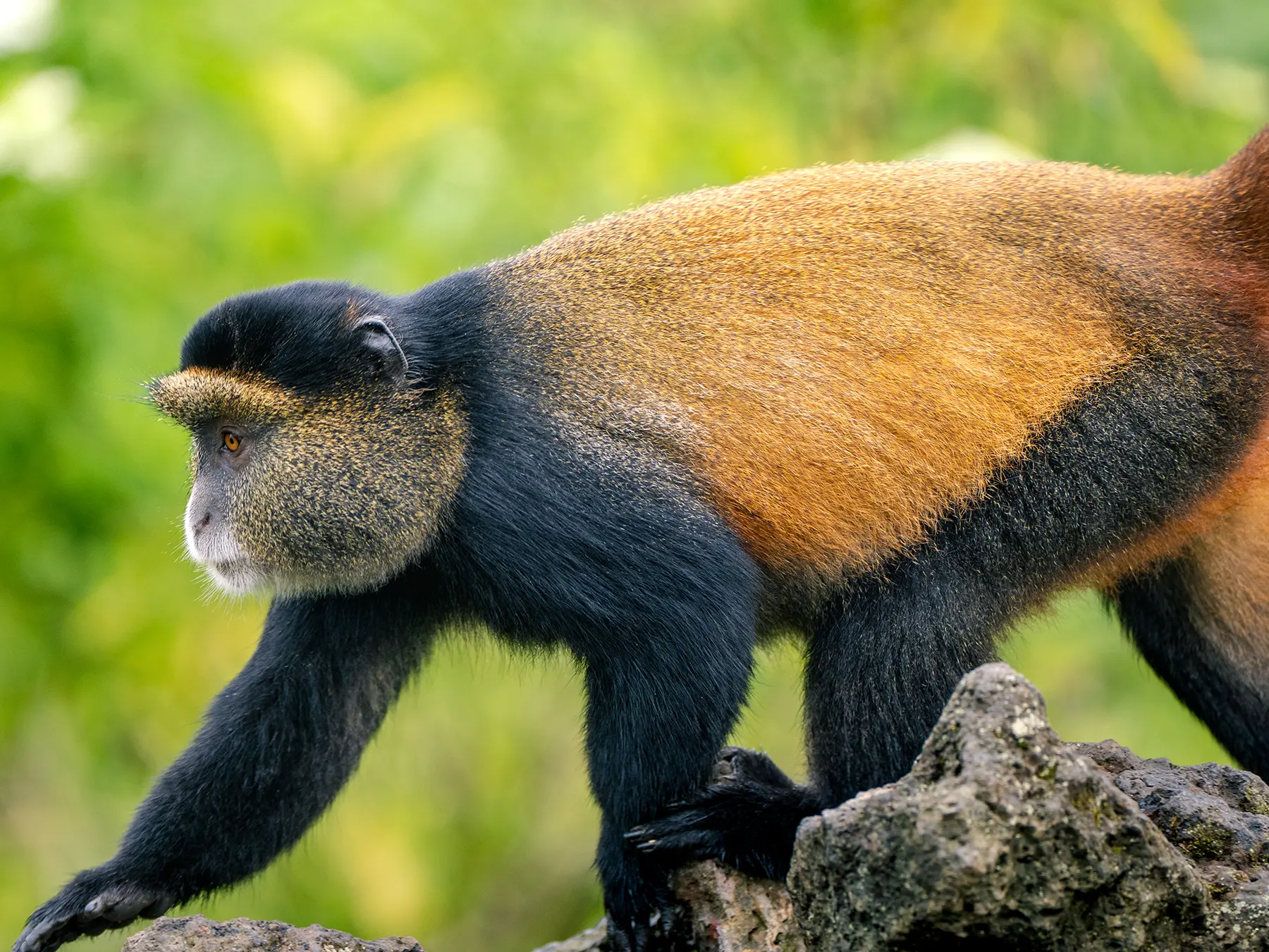
First and foremost, as you may have guessed, you’ll see golden monkeys unless something goes horribly wrong! Volcanoes is actually home to two habituated groups of these endangered primates, with about 80 in total inhabiting the park. Playful and inquisitive, golden monkeys tend to live in large troops and are found almost exclusively in the volcanic Virunga region.
With a 2017 to 2018 survey estimating only about 4,600 golden monkeys in Volcanoes National Park, the species is listed as endangered by the IUCN.
As well as primates, Volcanoes also houses buffalo, forest elephants, spotted hyenas, several antelope species and nearly 200 bird species. While birds are frequently sighted, you will rarely spot other animal species when golden monkey trekking.
Golden Monkey Trekking Tips
Here are my insider tips for your golden monkey trek in Volcanoes National Park!
- Face masks are mandatory at all times when you’re close to the monkeys to prevent the transmission of diseases.
- In terms of tipping, I’d recommend $5 each for your trackers (there can be 2 to 4 of them), $10 per person for your head guide and $5 per person for your armed ranger.
- Golden monkey trekking permits should be booked 3-6 months ahead in peak season, costing $100 per person.
- As both golden monkey trekking and gorilla trekking are guided morning activities, it’s not possible to do both in one day. If you plan on doing both, you will need to be in Volcanoes for a minimum of two mornings.
Where to Stay in Volcanoes National Park
You’ll be spending your second night near Volcanoes National Park in the same accommodation you slept in yesterday – no need to pack anything or drive anywhere. For details of the accommodation available near the park, see Day 5.
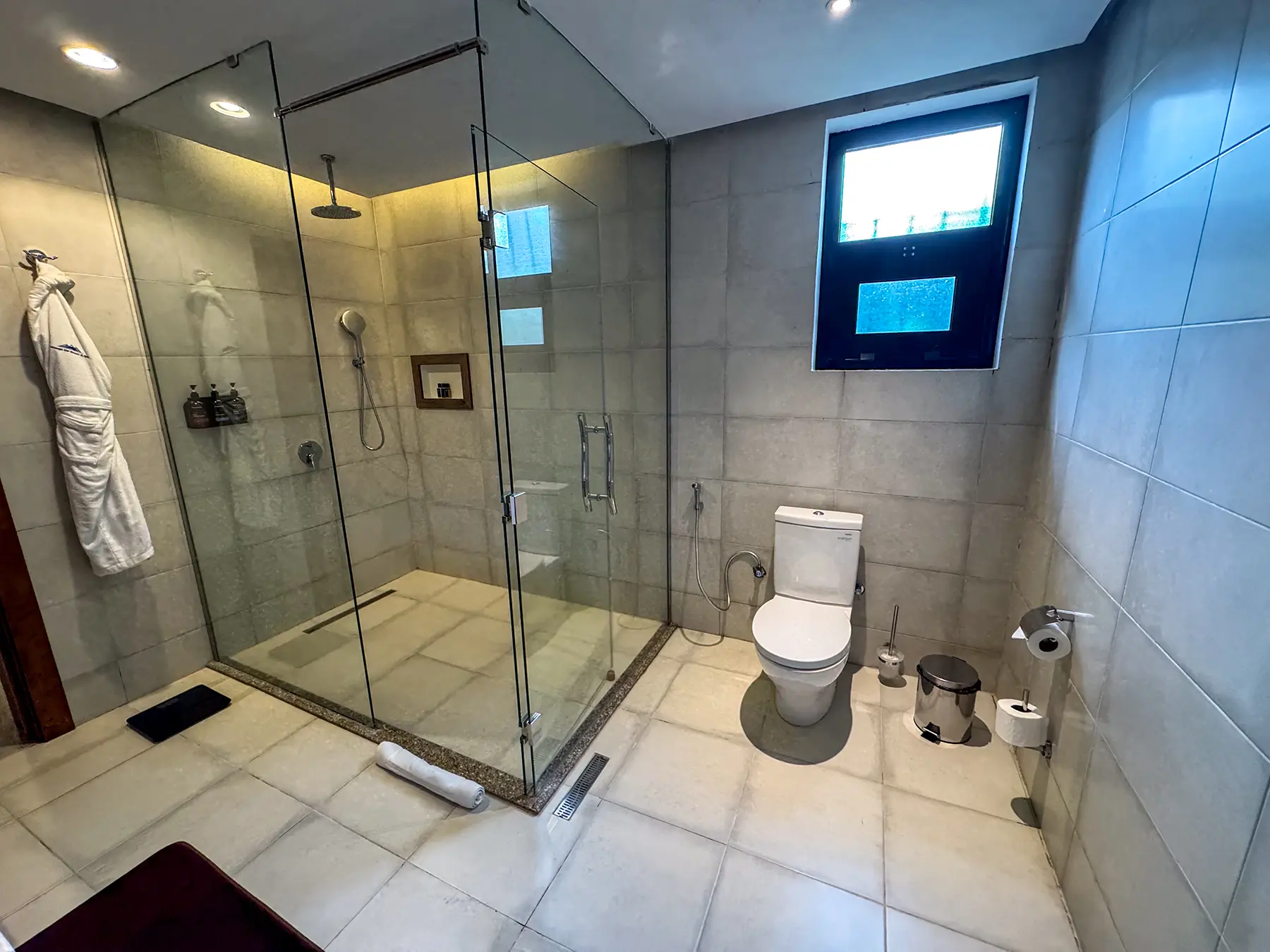
As I mentioned above, all of the lodges and camps here are outside the confines of the park but within 30 minutes of park headquarters. With both golden monkey and gorilla treks departing from those headquarters at 7am sharp, it’s important to leave yourself sufficient time to arrive punctually.
My Experience of Golden Monkey Trekking
I found that golden monkey trekking was a fantastic way to get accustomed to the high altitude at Volcanoes National Park ahead of the more demanding gorilla trek the next day. Our hike was easy and short, taking under 30 minutes and winding through potato farms along the way.
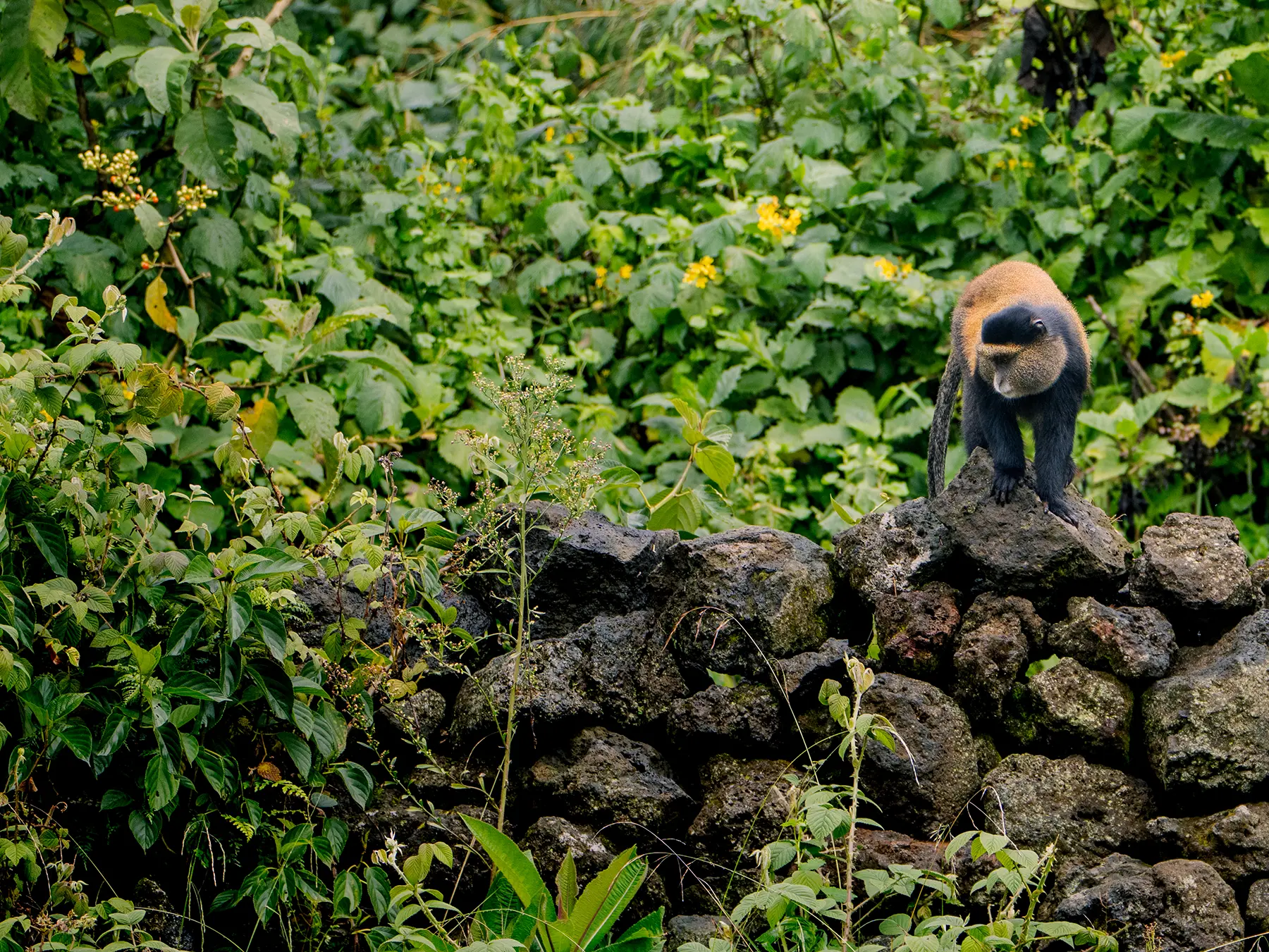
When we caught up with the golden monkeys, they were sitting on the wall separating the national park from the farms, often hopping across to swipe a few potatoes. Although there were plenty of leftover potatoes from previous harvests that the monkeys were welcome to, they did treat themselves to some forbidden ones as well!
I had a great time on my golden monkey trek. The monkeys themselves are the cutest things, with chubby little cheeks and brilliant, reddish-orange fur. Their personalities are also really adorable – mischievous and playful, so you can’t help but smile at their antics.
Day 7: Volcanoes National Park
Drive time (excluding game drives): 0 hours
Numbering between 300 and 350 in total, Volcanoes National Park’s resident mountain gorillas live in family groups dotted around the wooded slopes of the Virunga Mountains. Today marks the culmination of your Rwanda trip, and hopefully yesterday’s easier trek has left you well prepared for this more extensive, hillier climb.
Itinerary
Meeting at the park headquarters at 7 am again this morning, you are assigned to your group and meet your guide before your briefing, then it’s back to the car to drive to the starting point. Depending on the season and your assigned family, this could be anywhere between 10 minutes and an hour away.
Every family has its own separate territory and some are closer to the road than others, meaning that some families can be reached in less than an hour while others can take up to 5 hours to locate.
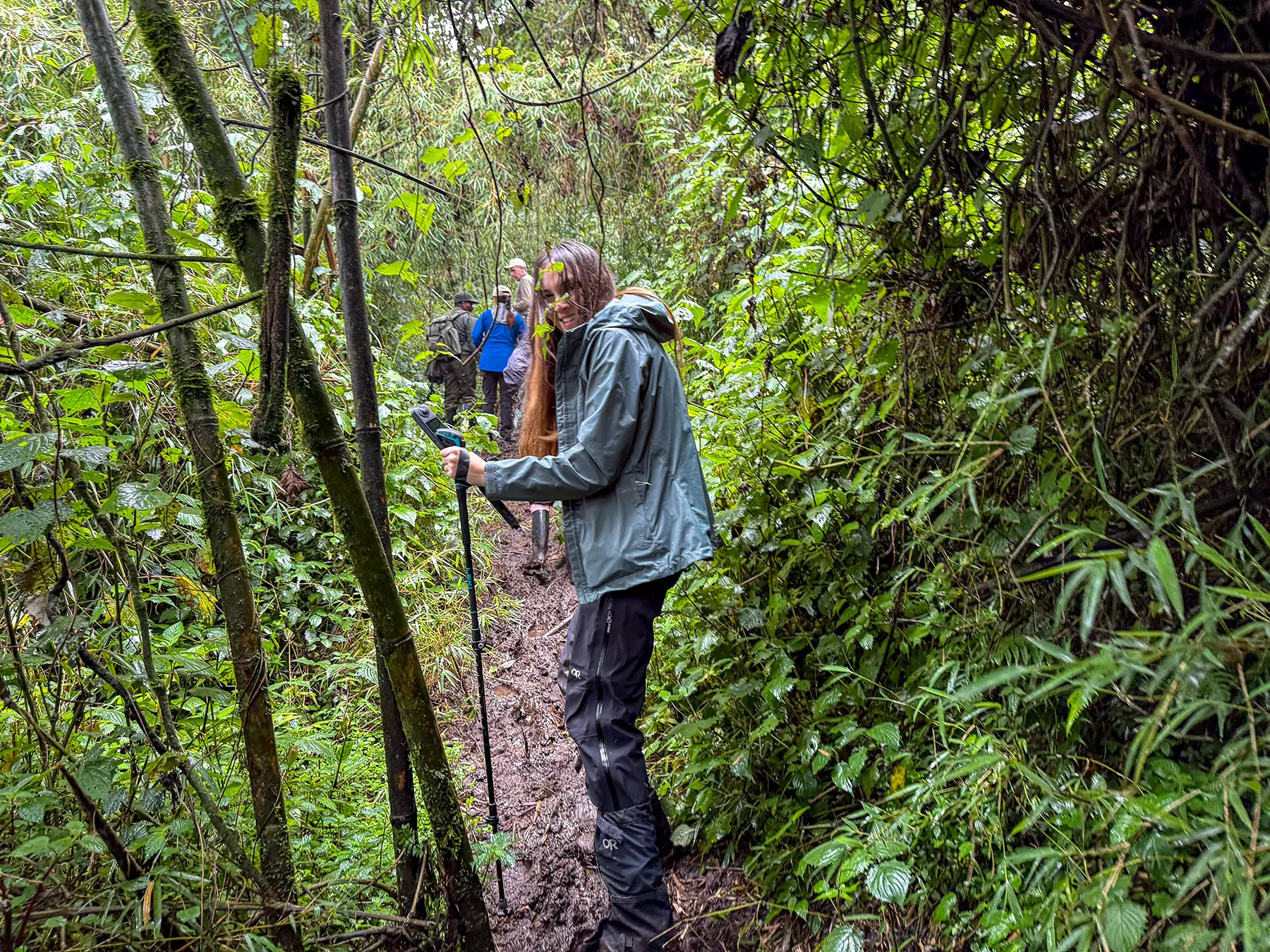
In some cases, you could be asked about the length of trek you’d prefer, but honestly I find the group you’re assigned to is usually based on how young and fit you appear. Along the trail, you’ll hike in a group of up to 8 visitors, accompanied by a head guide and at least one armed ranger, who is tasked with watching for forest elephants and buffalo.
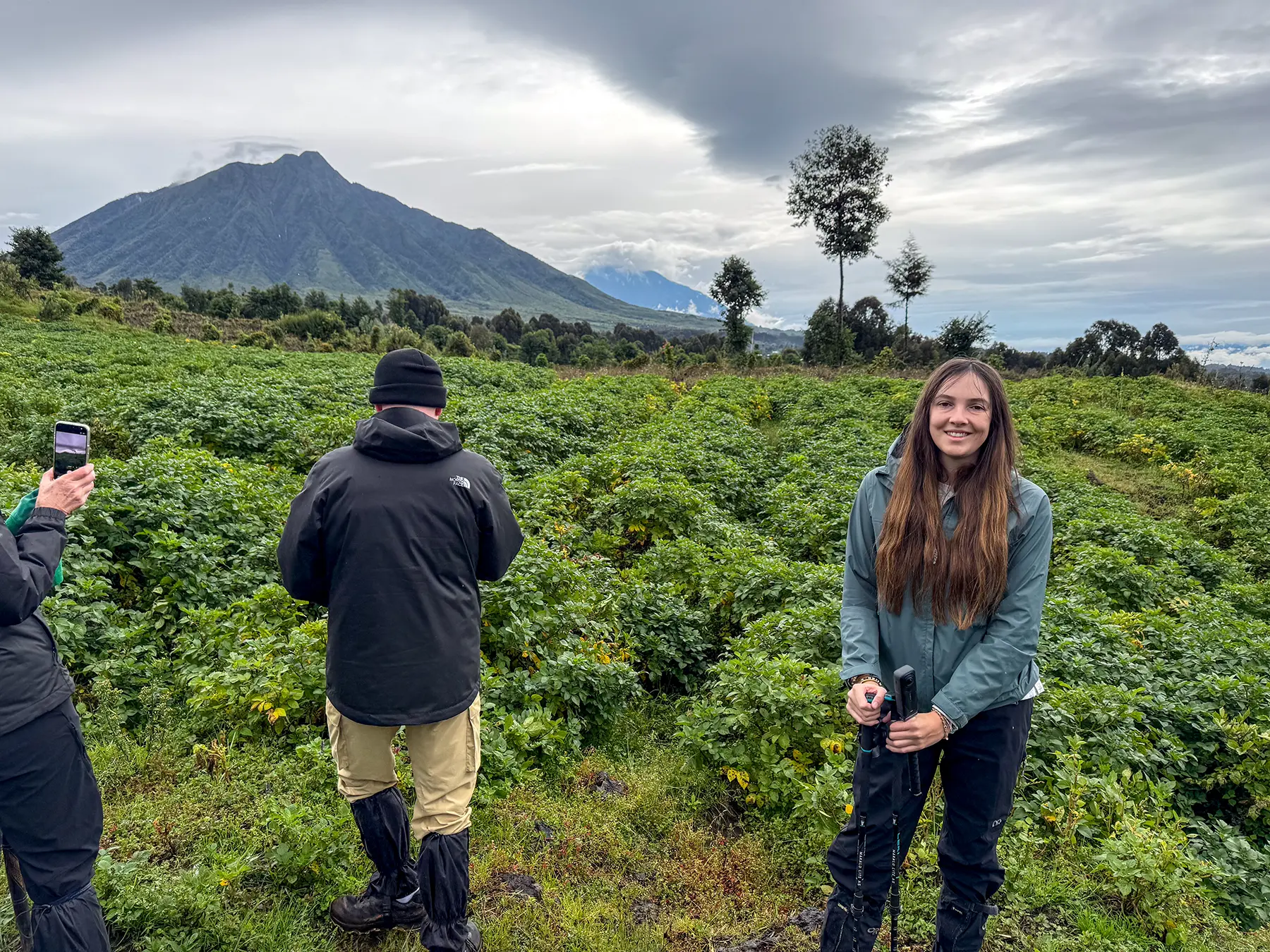
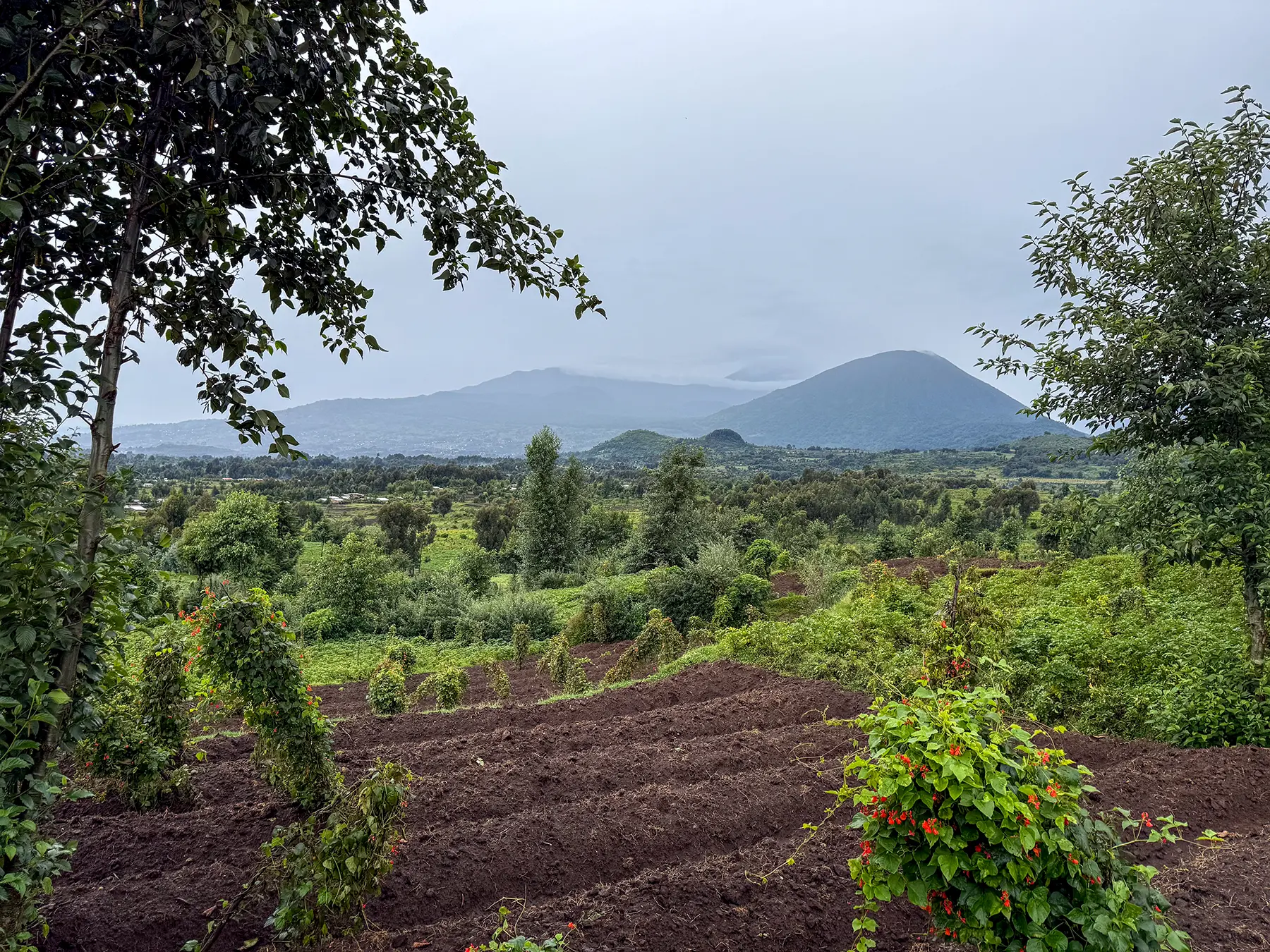
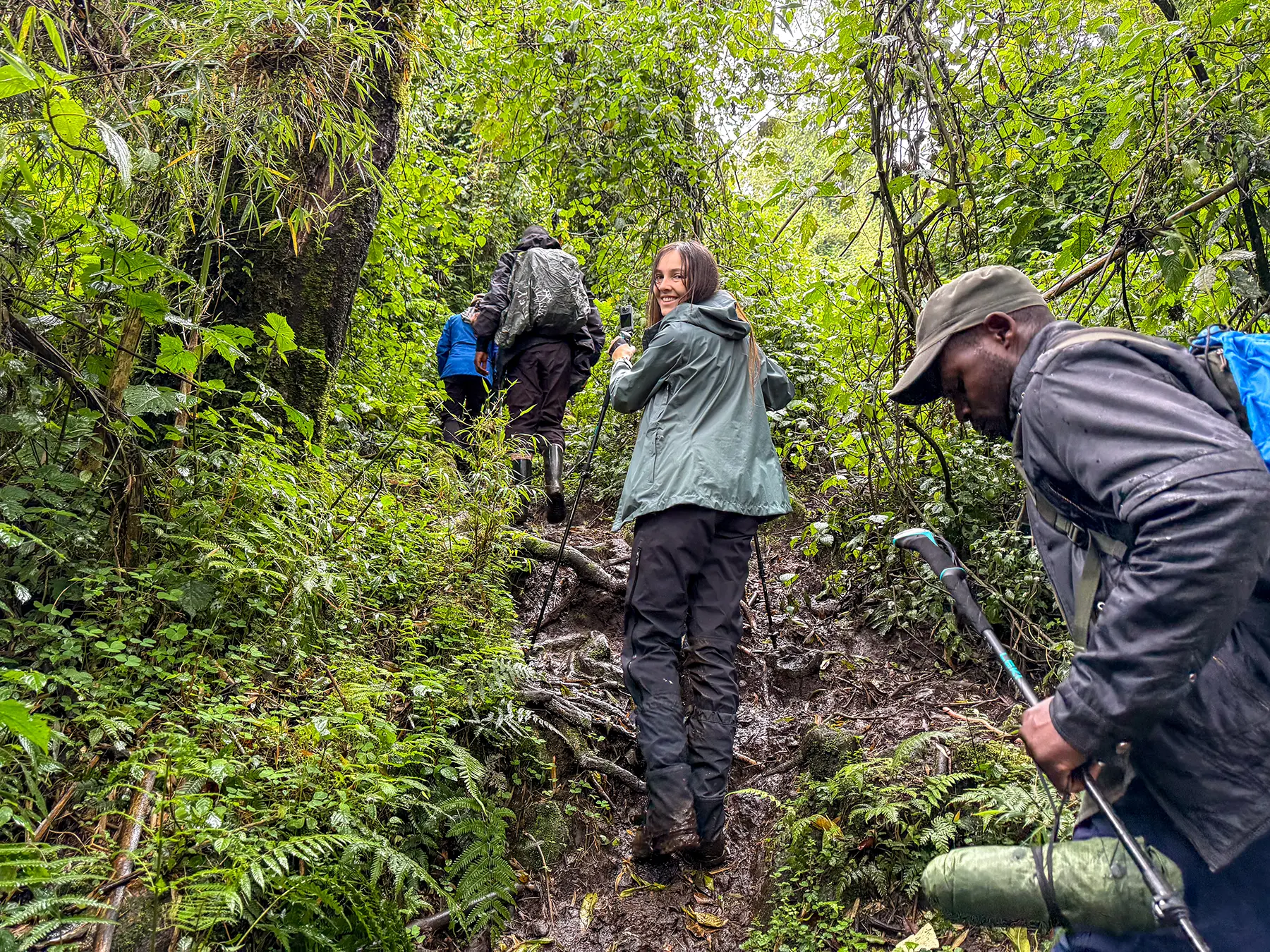
The trek starts out fairly easily, leading you through cultivated farmland with incredible views of the park’s five volcanoes and the eight that make up the greater Virunga range. After crossing the park boundary, things get a lot more challenging. The trails here are steeper and can be slippery or muddy if it has rained recently.
What’s more, you’ll need to avoid stinging nettles and fire ants as you thread your way through trees and creep under low-hanging bushes. If you’ve had the foresight to hire a porter, this is the point at which you’ll thank your lucky stars as they carry your bags and offer a supporting hand on the trickier terrain.
Although your guide can offer a rough idea of how much further you have to go, it’s not an exact science, as the gorillas move as they feed and can move further off or come closer as you continue to scale the slopes.
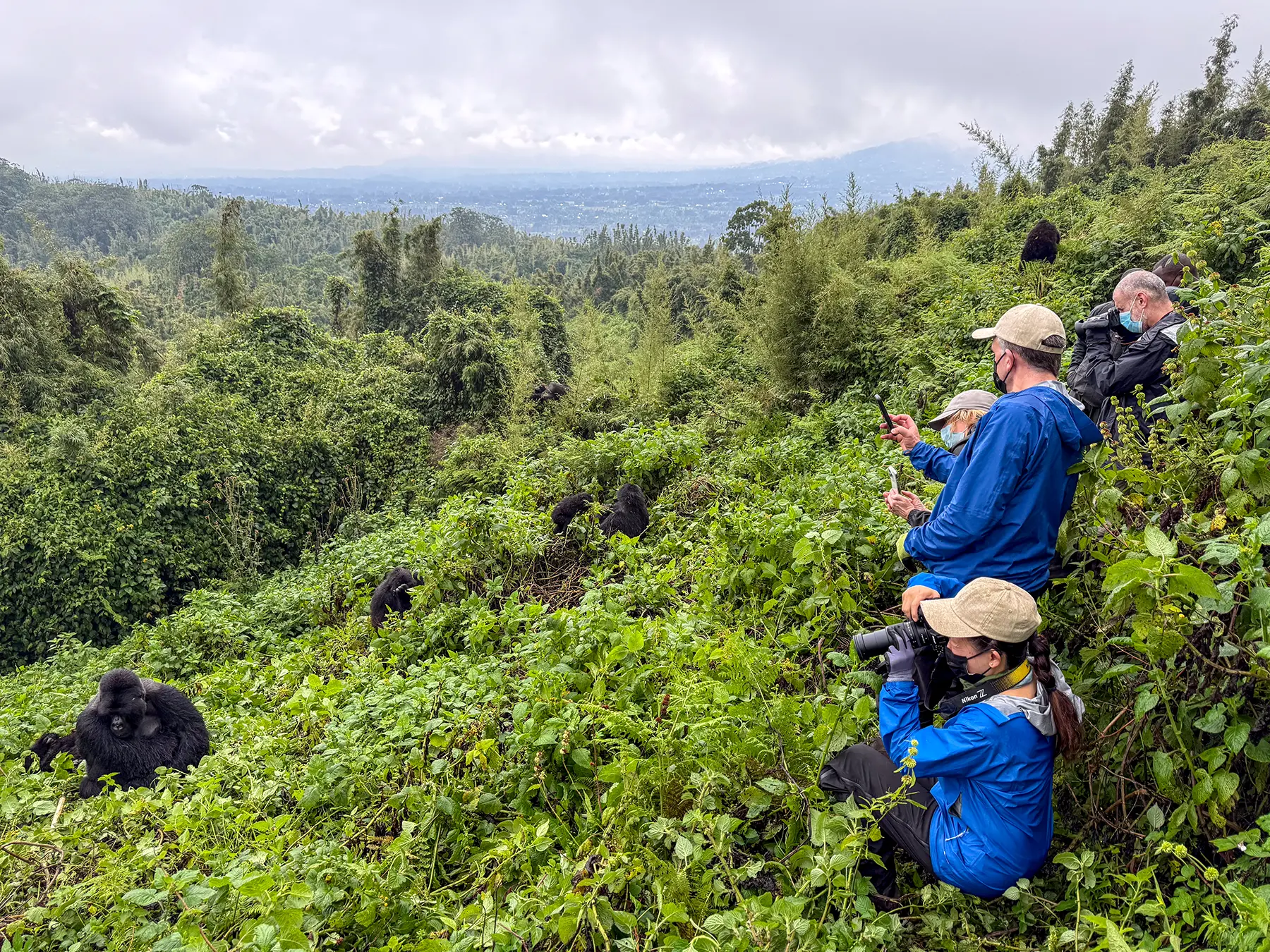
Once you catch up with them, you must wear a face mask at all times, since our DNA is so close to theirs that disease can be spread in both directions. After a fascinating hour observing the gorilla family, you’ll make the return trip, arriving at your lodge by afternoon with no fixed plans for the remainder of the day.
What Wildlife Can I See When Gorilla Trekking?
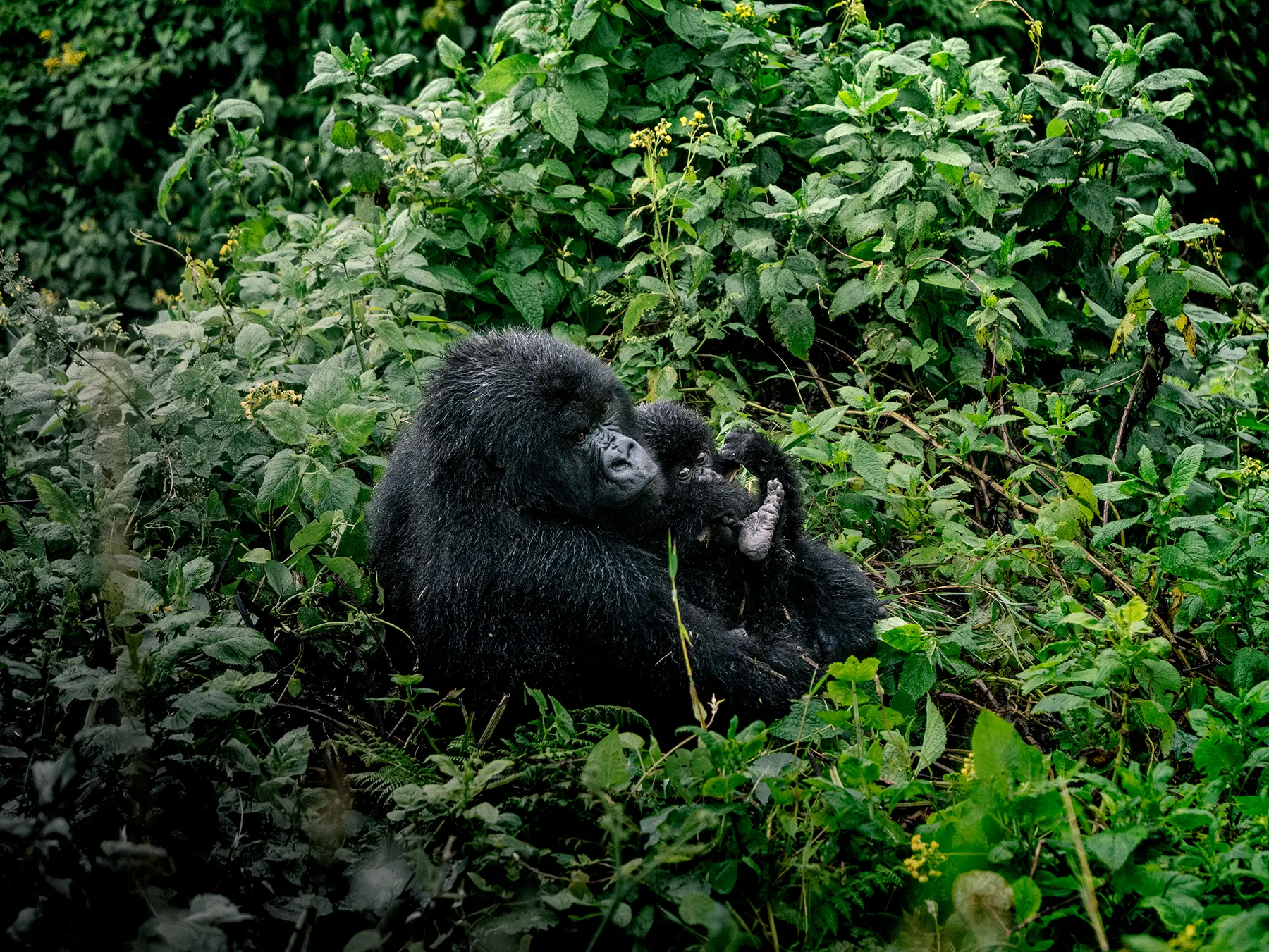
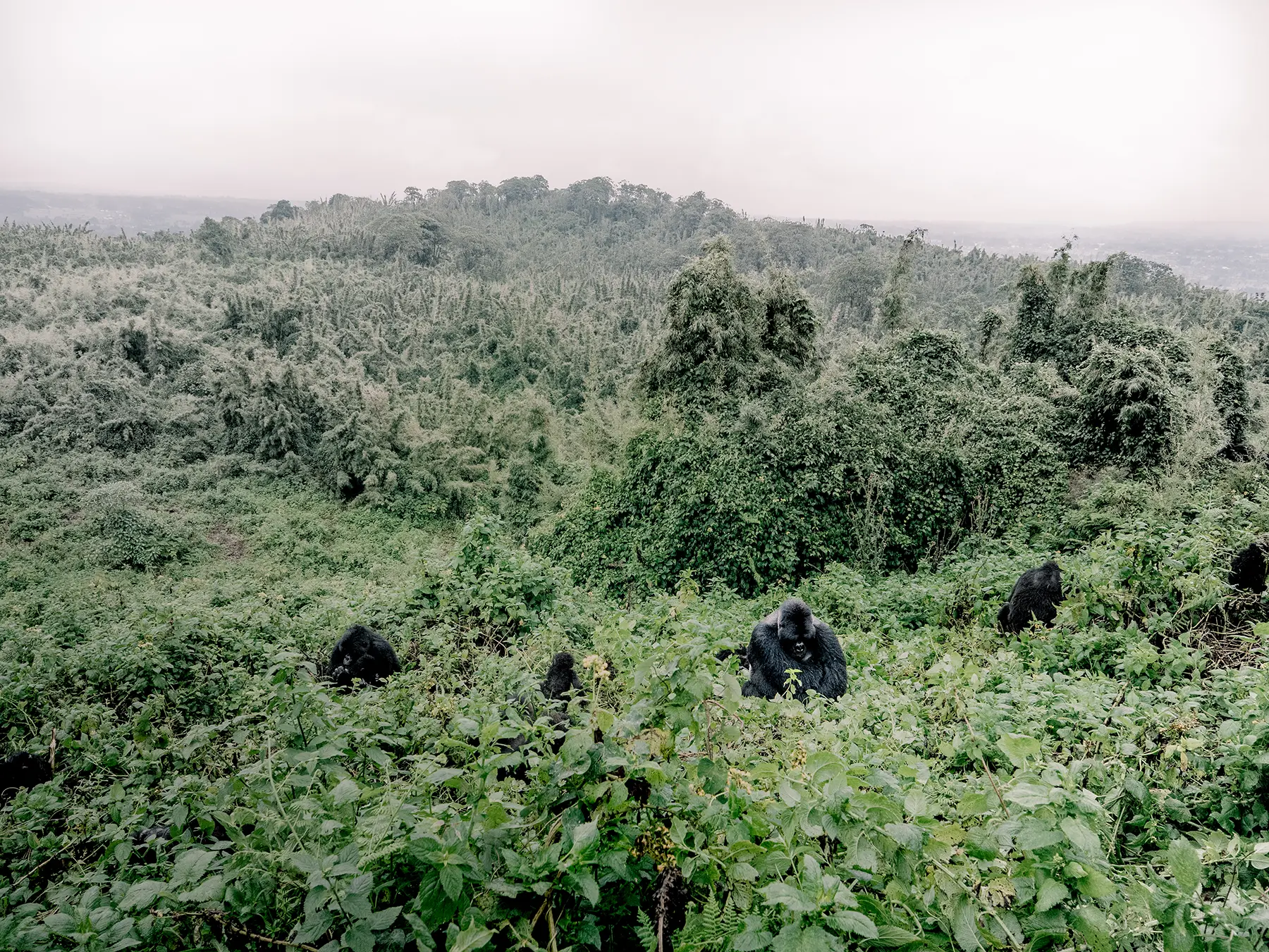
Some 300 to 350 critically endangered mountain gorillas call Volcanoes National Park home, living in groups across 12 habituated families that are open to public visitors.
The park also houses 6 additional habituated families, but these are reserved strictly for research purposes by Karisoke researchers and as such are not available for visiting.
Endangered mountain gorillas differ from their more abundant cousins, the lowland gorilla, in a few key respects. In terms of numbers, there are about 318,000 lowland gorillas in the wild compared to a little over 1,000 mountain gorillas.
Similarities first: all gorillas live in family groups or troops, with up to 30 members. They all spend about 70% of their active hours eating leaves, and every gorilla has a unique nose print, a bit like a human fingerprint!
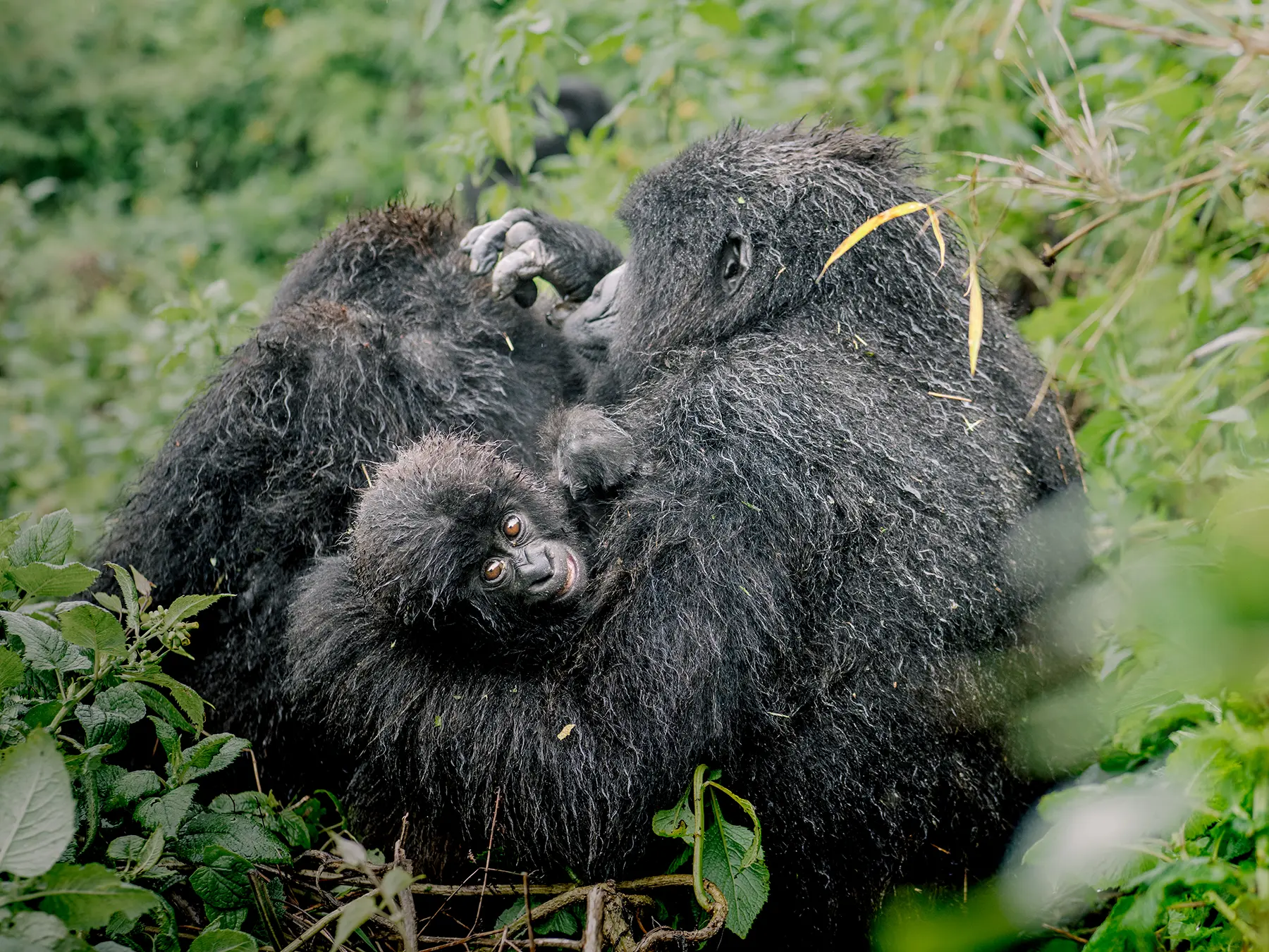
Now for the differences! Mountain gorillas are easy to distinguish from lowland gorillas as they are significantly larger than lowland gorillas and have darker fur.
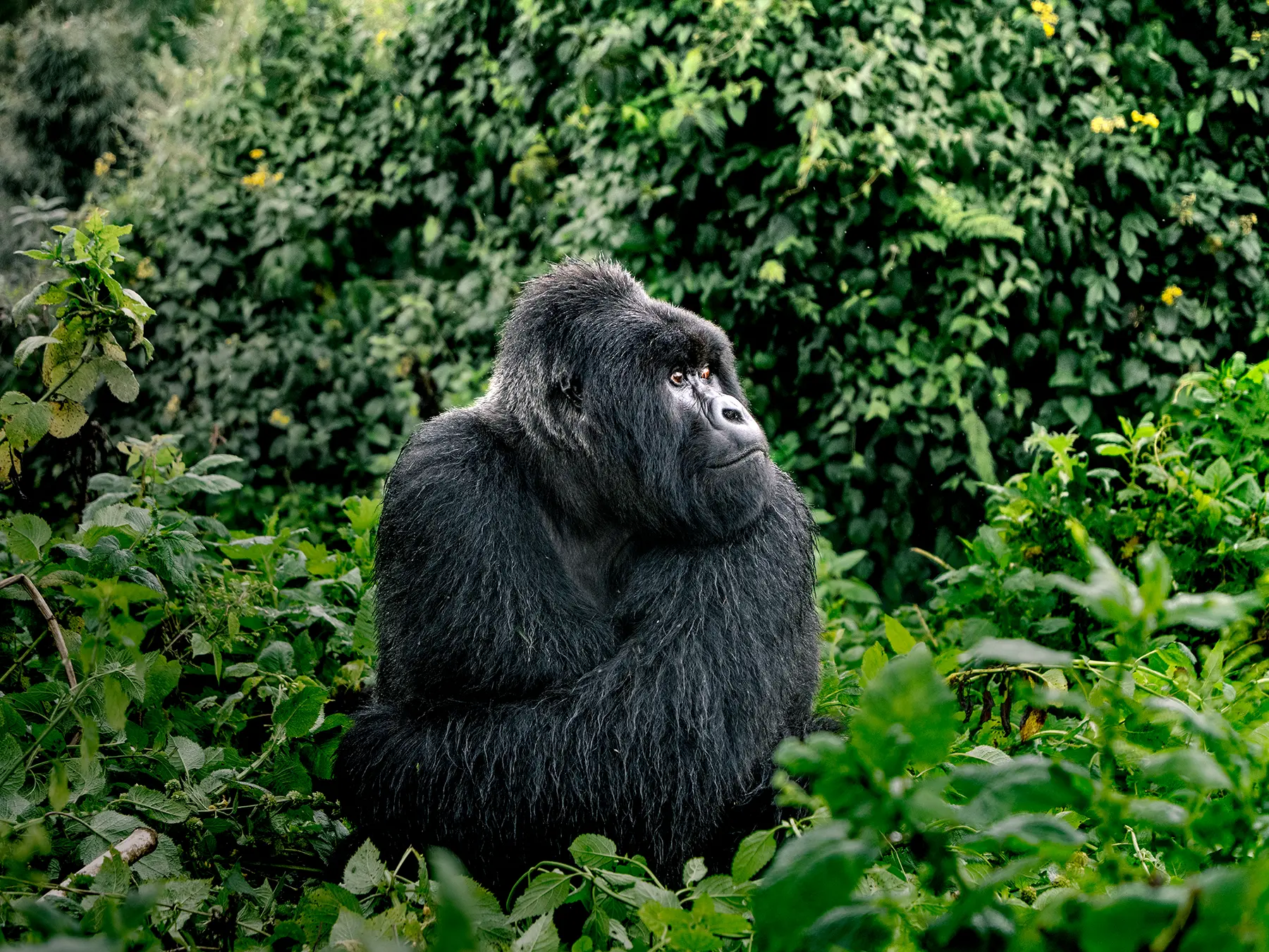
Adult males are known as silverbacks due to the silvery fur they develop on their backs as they mature. A fully grown male can reach a height of up to 5.9 feet (1.8 metres) and can weigh as much as 441 pounds (200 kg). Notwithstanding their impressive dimensions, though, they are usually very peaceful and can’t survive in captivity.
Gorilla Trekking Tips
Here are a few top tips for gorilla trekking in Volcanoes National Park!
- Hire a porter to assist with your bags and support you as needed on difficult terrain. Subject to a minimum fee of $10 per trek, this service is a valuable source of employment for the local community. Our guide explained to us that porter jobs are very desirable and encourage locals to support conservation initiatives in the region and avoid poaching, and they offer job opportunities that are otherwise rare.
- The endemic safari ants (Dorylus) found in this area have a painful bite. Be sure to wear knee-length gaiters or heavyweight trousers tucked into hiking boots to protect your ankles!
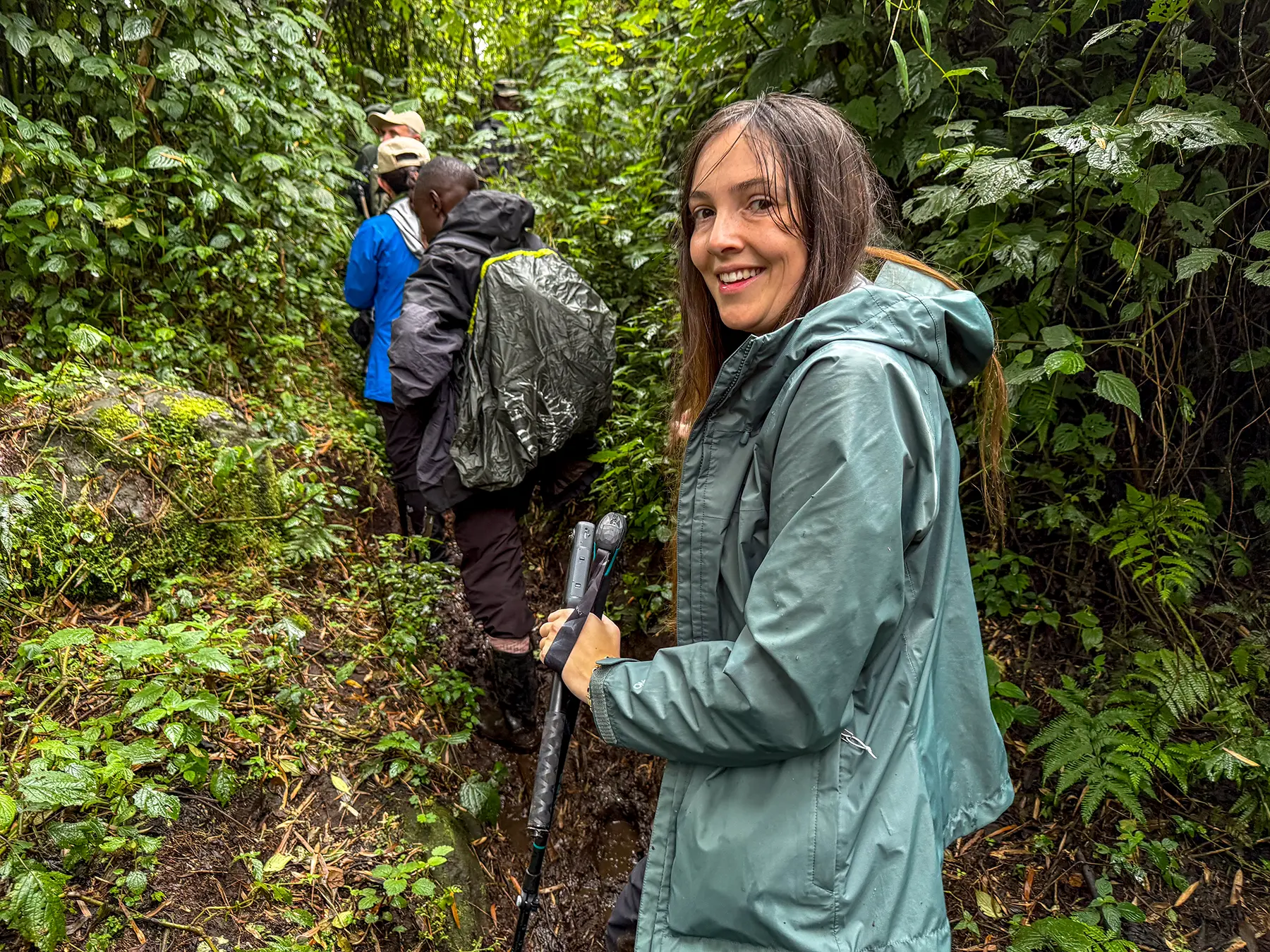
- Make sure you wear long trousers and long sleeves (not just for fire ants but also to protect you from stinging nettles) as well as a waterproof jacket and gardening gloves. While walking poles are supplied, you might prefer to bring your own for better grip.
- Face masks are non-negotiable at all times while close to the gorillas. Since we share over 98% of our DNA with Africa’s great apes, including mountain gorillas, it is possible for us to transmit diseases to one another.
- In terms of tips, I’d recommend $5 each for your trackers (there can be 2 to 4 of them), $10 per person for your head guide and $5 per person for your armed ranger.
- During peak season, you’ll need to book your gorilla trekking permit no less than 6-12 months ahead at a price of $1,500 per person.
- Gorilla trekking is more physically demanding than golden monkey trekking, especially in the high altitudes of Volcanoes. If you’re planning a longer itinerary, I recommend doing a golden monkey trek first so that your body can get used to the altitude.
Where to Stay in Volcanoes National Park
For your third and final night at Volcanoes, you’ll be staying in the same accommodation you’ve been in since Day 5. For details of the full range of accommodation available around the park, see Day 5.
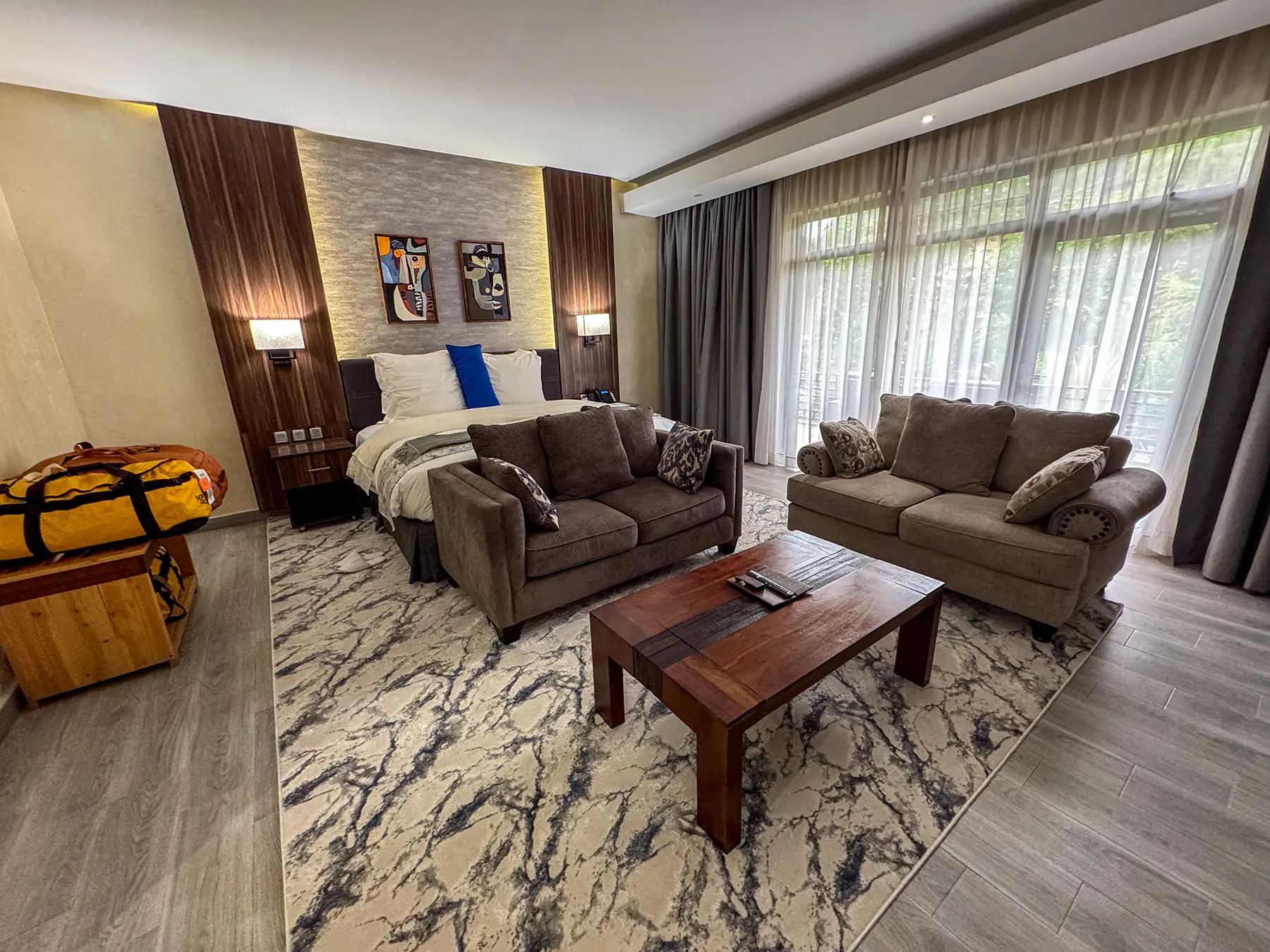
With all lodges located outside the park but within a 30-minute drive of park headquarters, it’s just a short hop back to your lodgings after the trek. Then, it’s off with the hiking boots (which is honestly on a par with prising off a pair of heels after a night’s dancing!) for a quiet, relaxing last evening in the Virunga region.
My Experience of Gorilla Trekking in Volcanoes National Park
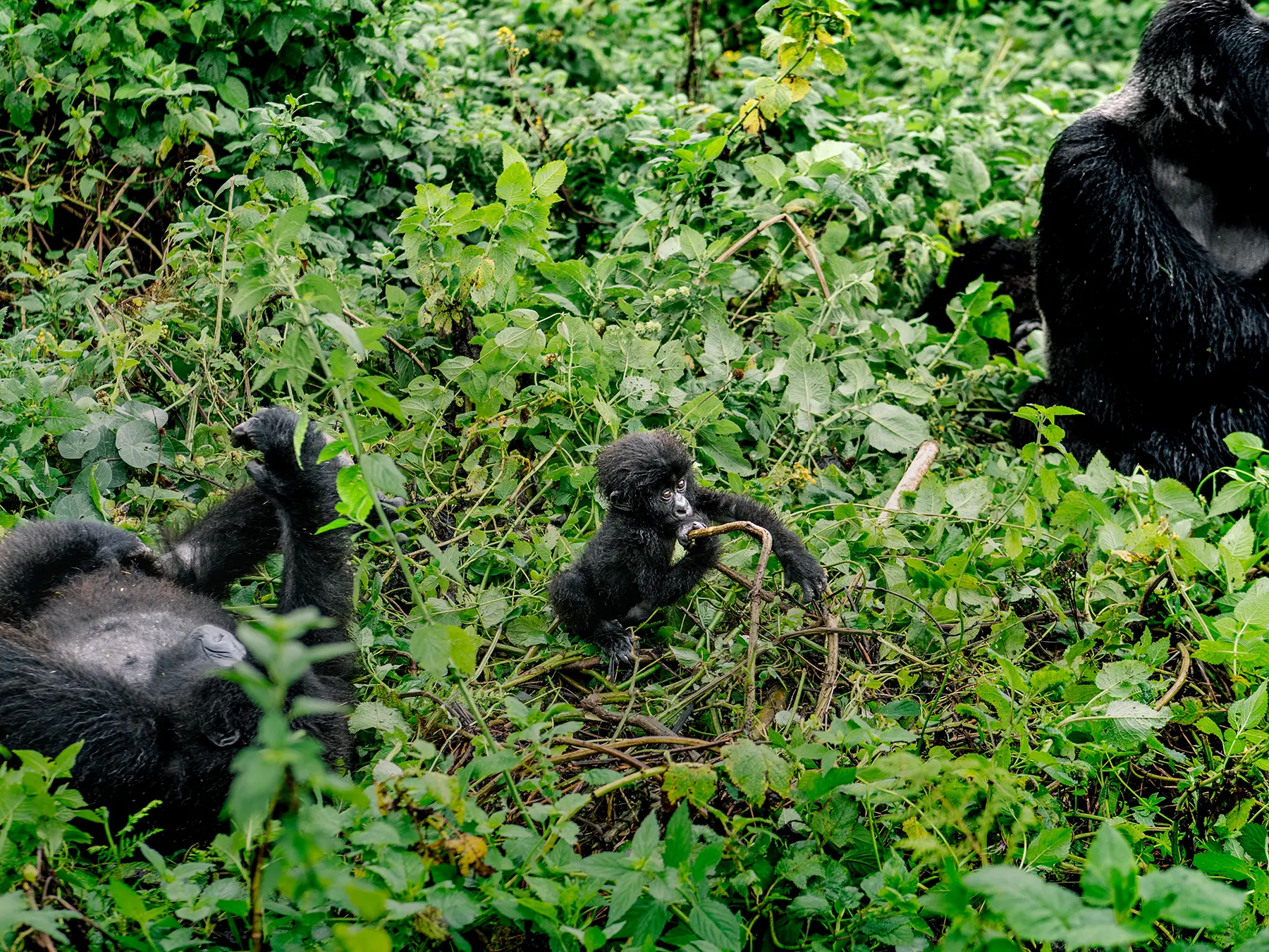
During my most recent gorilla trek, I was assigned to the Hirwa gorilla family to my utter delight! The Hirwa family is particularly special as its members often have twins, which is very rare in gorillas.
The hike to the gorillas took nearly 2 hours amid some pretty challenging conditions, with steep, slippery slopes and patches of extremely dense vegetation.
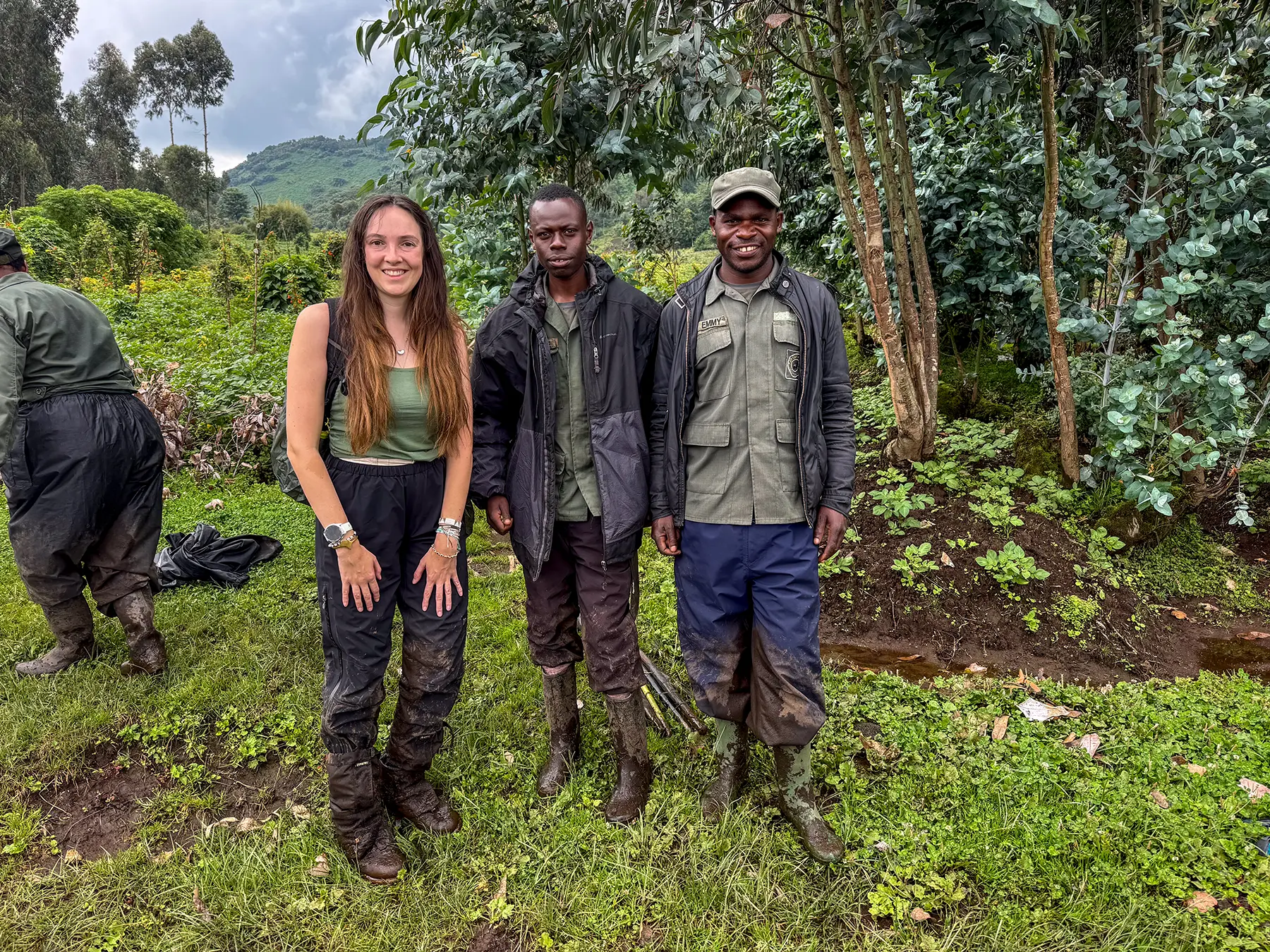
This was my porter’s time to shine, and shine they did! I was so grateful for their help and they really proved invaluable, holding my hand along the sections that I simply couldn’t manage alone while also carrying my bags. I doubt I’d have managed without them, really – I almost fell countless times but they were always there to save me.
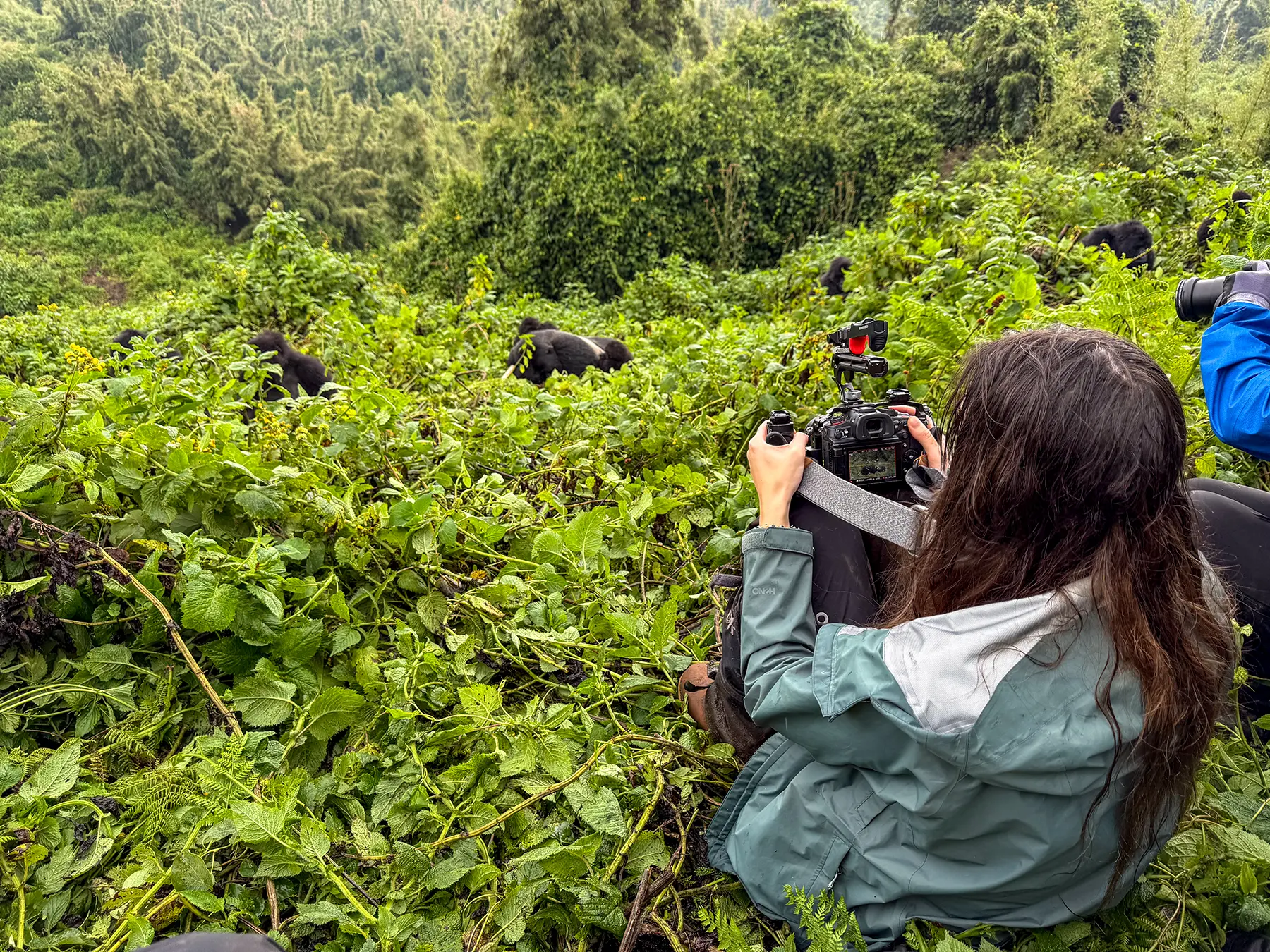
Once we located the Hirwa family, we had an incredible hour with them. Everywhere we looked, we saw gorgeous little baby gorillas – there must have been something in the water! We were also treated to a very rare sighting of the great silverback mating with a female.
Day 8: Lake Kivu
Drive time (excluding game drives): 6 hours
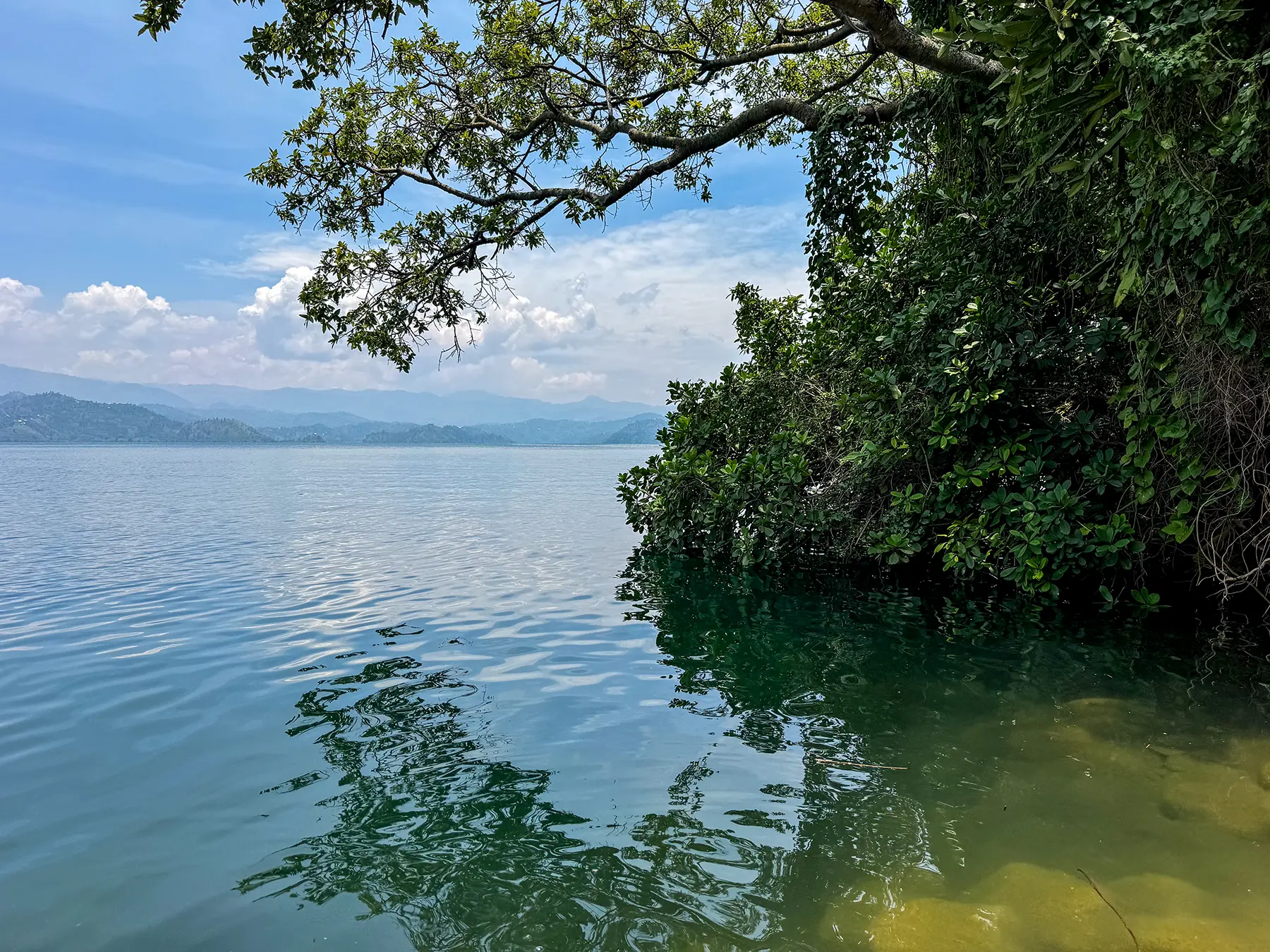
One of Africa’s Great Lakes, Lake Kivu lies along the border between Rwanda and the DRC. Its calm, clear waters offer a dramatic contrast to the green, mountainous landscapes you’ve navigated up until now. Today will be a long travel day, but you’ll be breaking the journey with a tranquil lake cruise before continuing on to the rainforest at Nyungwe.
Itinerary
With a lengthy drive ahead on roads that get busier as the day goes on, you’ll be getting off to an early start today, departing your accommodation near Volcanoes National Park at 7am. This stretch of road is quieter than the road linking Kigali and Volcanoes, however, with few cargo trucks.
Lake Kivu marks roughly the halfway point between Volcanoes National Park and Nyungwe, so you should arrive between 10am and 11am or so.
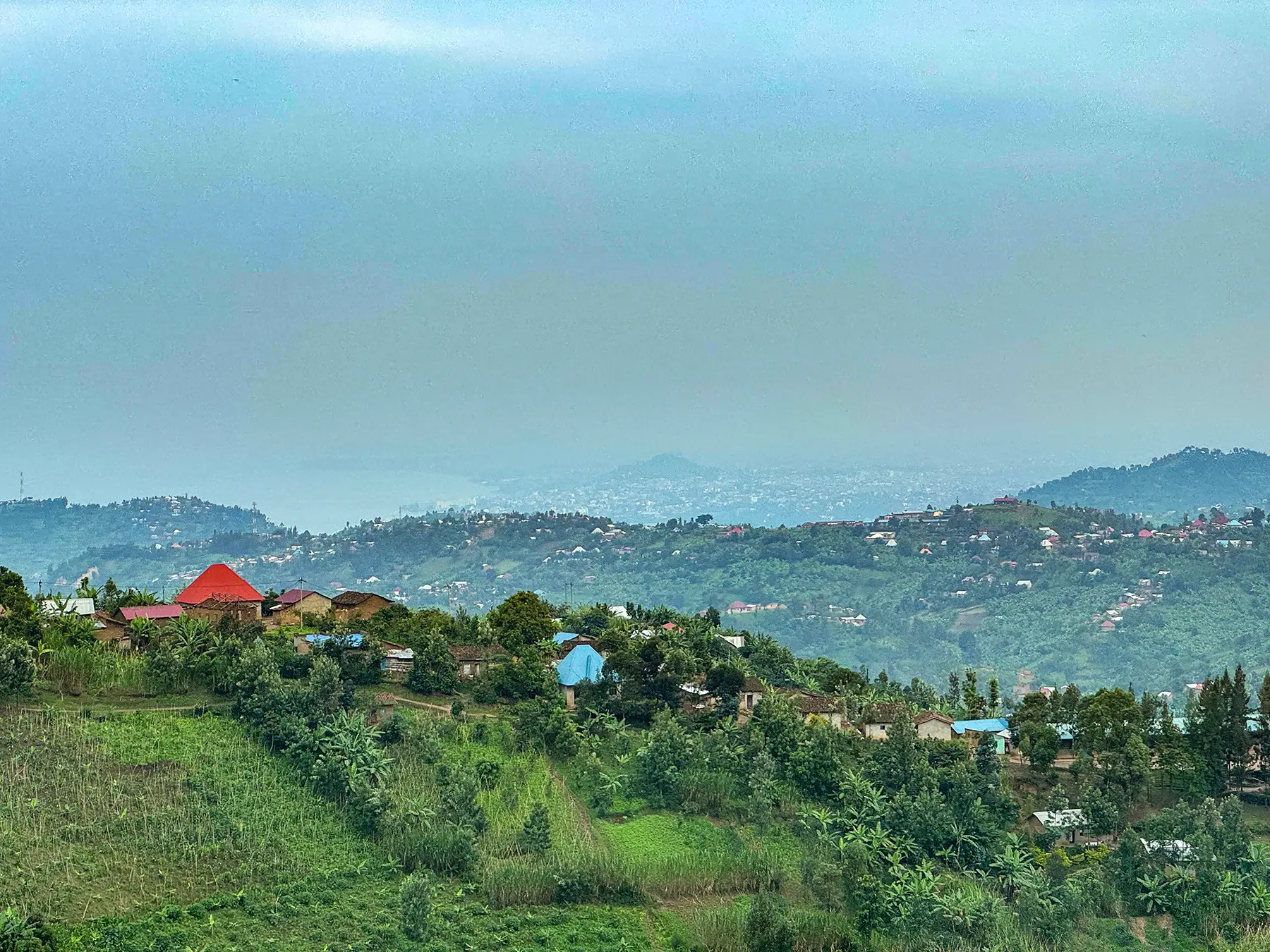
This route is one of the most scenic drives in Rwanda, meandering around lofty mountains and offering breathtaking views as you pass quaint tea plantations and vibrant rice farms amid the valleys. There’s even one section where you can enjoy views right across to Goma city in the DRC.
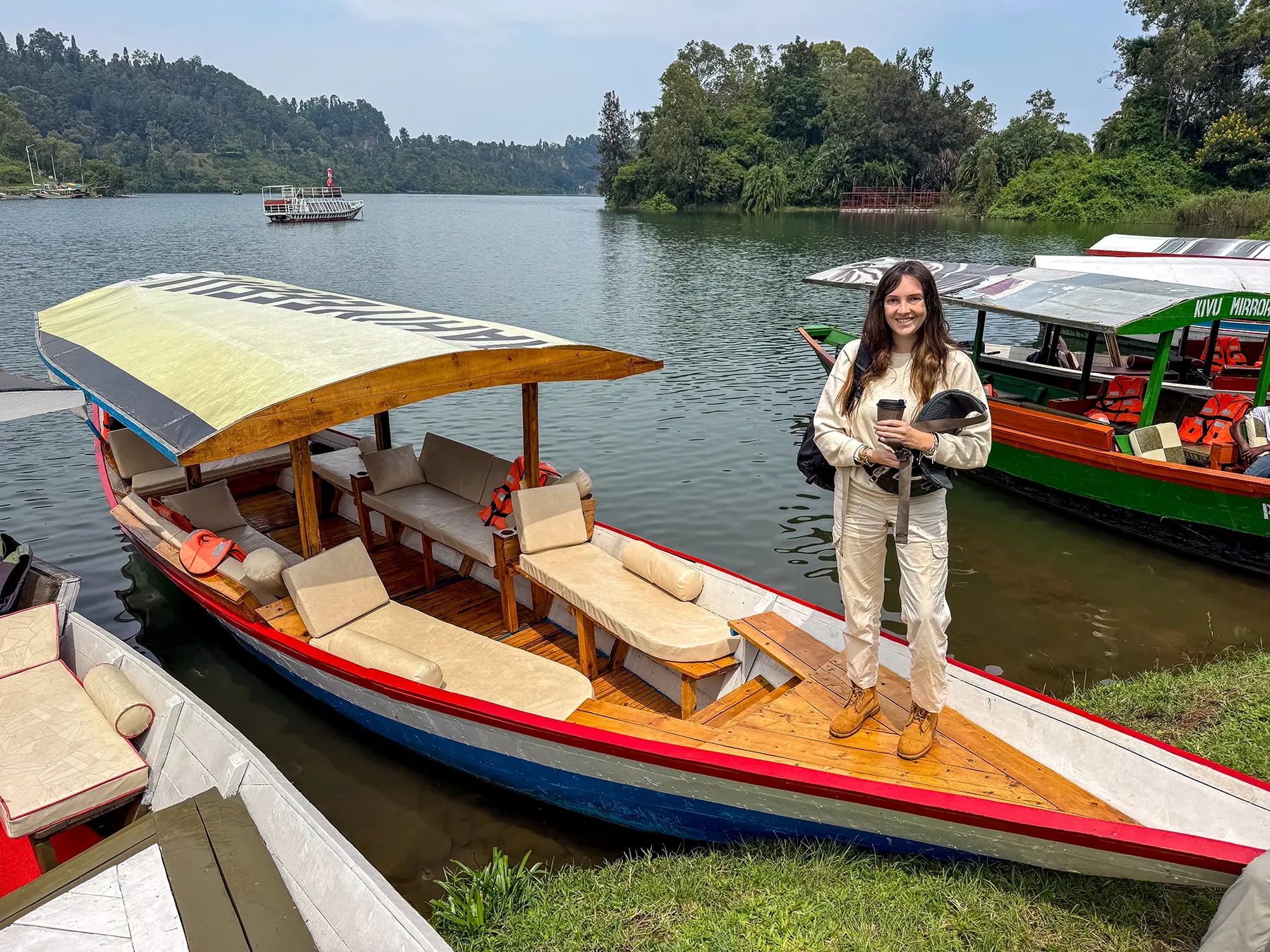
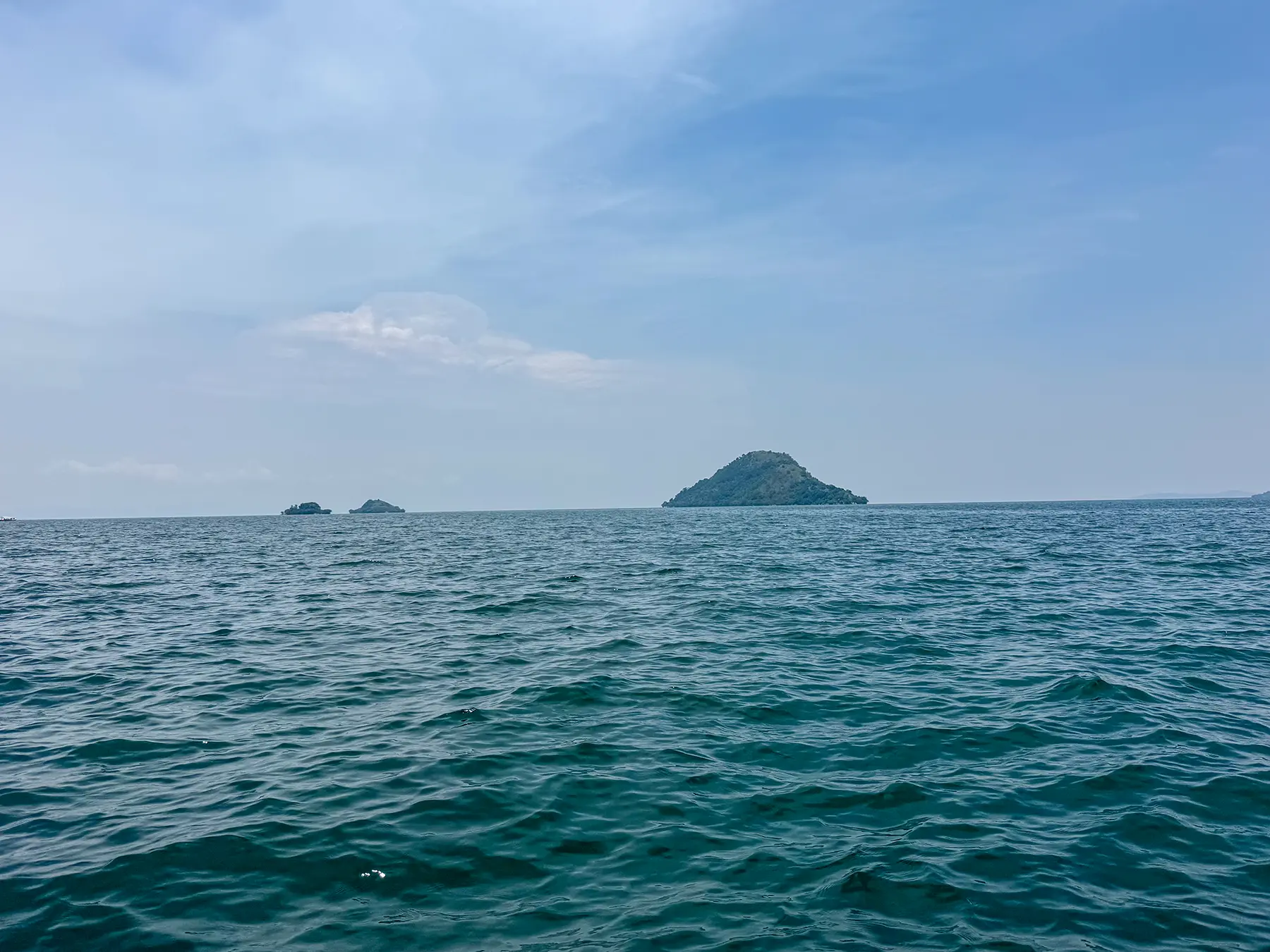
When you reach the lake, you’ll be boarding a boat for a tranquil couple of hours on the water. After landing on Napoleon Island to visit its bat colony and take in the panoramic views from the peak, you’ll pass by Monkey Island with its namesake vervet monkeys on the return leg.
Once ashore, you have time to enjoy a spot of lunch at one of the numerous lakeside hotels here, taking in the stunning scenery as you eat. You’ll then drive the remaining three hours to your lodge in Nyungwe, arriving in the late afternoon.
About Lake Kivu
Lake Kivu is one of Africa’s Great Lakes and is located along the border between Rwanda and the DRC. Renowned for its beauty, the lake is also, and perhaps more unusually, known for the large quantities of methane dissolved in its deep waters.
Nonetheless, the waters of the lake are calm and clear, contrasting beautifully with the mountainous rainforest landscapes that are so emblematic of Rwanda.
The state owns all the islands in Lake Kivu and development is strictly prohibited, ensuring they remain uninhabited and untouched so that nature can thrive.
Here, the main sights to see include Napoleon Island, with its huge fruit bat colony and panoramic summit views, and Monkey Island, which takes its name from its impish vervet monkey population.
What Wildlife Can I See at Lake Kivu?
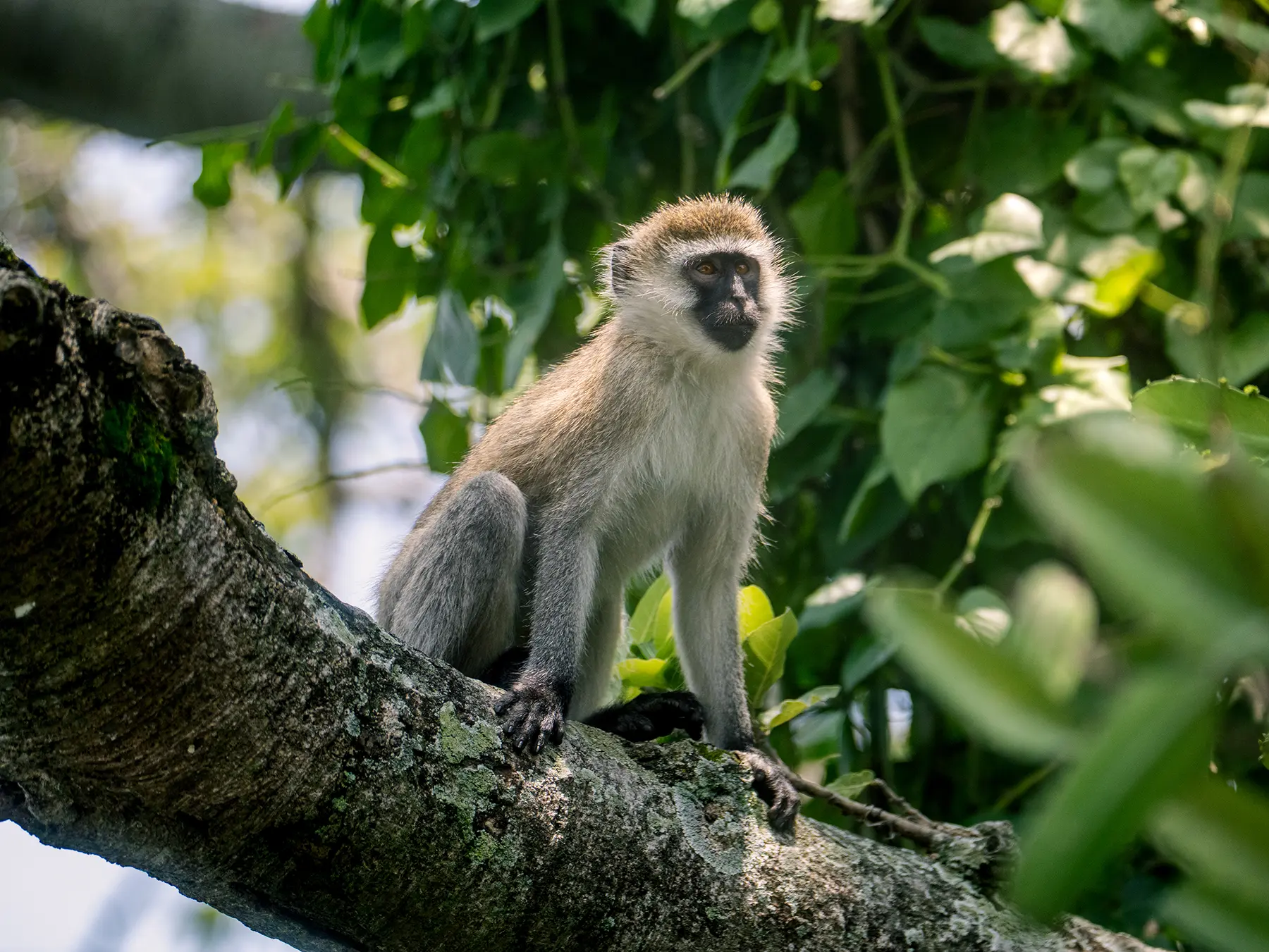
While your cruise won’t be stopping at Monkey Island, you’ll still be able to see its vervet monkeys making their way through the trees along the water’s edge as you pass by.
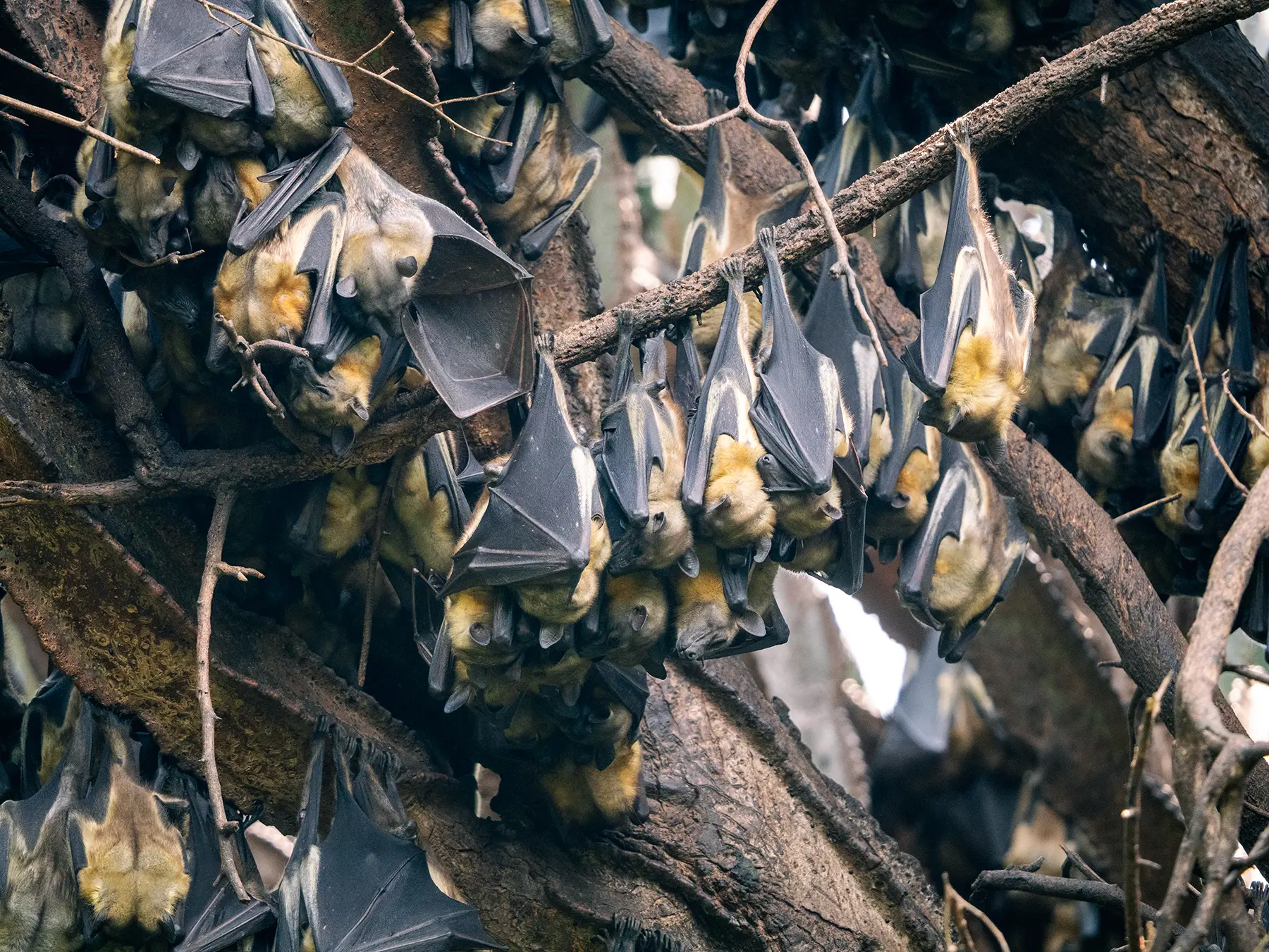
On Napoleon Island, you will see an unbelievable number of fruit bats, hearing their chirping long before you spot them.
Birders will also delight in the variety of birds on view on Monkey Island, with hamerkops at the water’s edge and malachite kingfishers showing off their impressive diving skills as they snatch fish before perching back over the water.
Tips for Visiting Lake Kivu
These are my top tips for visiting Lake Kivu!
- Make sure you wear sturdy hiking boots and long trousers while hiking on Napoleon Island. The terrain is steep and uneven, and as you approach the bat colony, you’ll need to duck under low canopies.
- The heat can be pretty intense while hiking on Napoleon Island, so be sure to bring your water and sun protection.
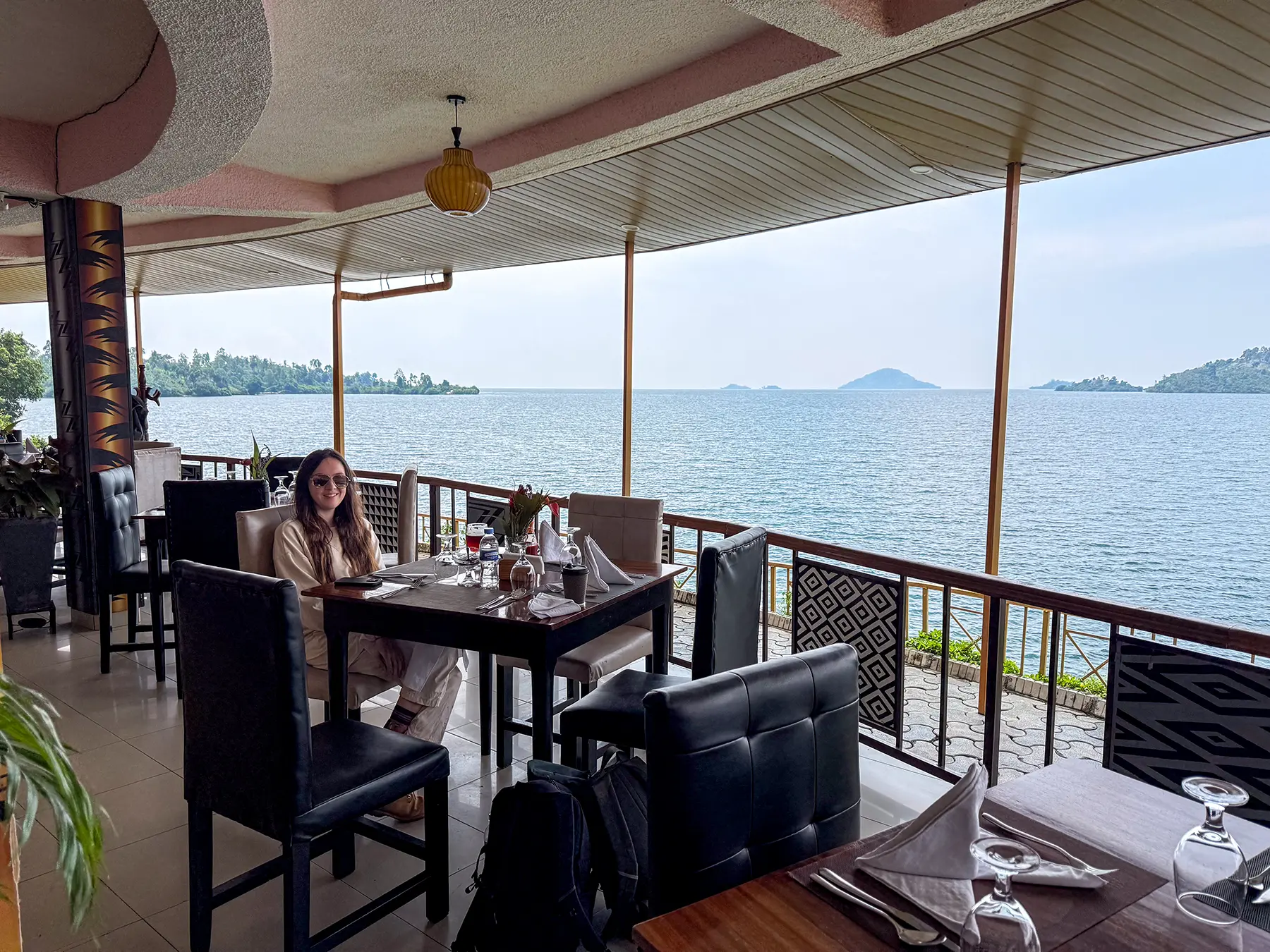
- Stop at one of the numerous lakeside hotels after your boat cruise and treat yourself to a tasty lunch as you take in the amazing views.
Optional Activities at Lake Kivu
- Boat cruise to Napoleon Island and Monkey Island (included in most itineraries, approximately 2 hours).
- Climb to the top of Napoleon Island for scenic views across the lake. Please be aware that this is a steep, uneven climb and you’ll be out in full sun.
- Enjoy a tasty lunch at a lakeshore hotel with panoramic views over the water before driving on to Nyungwe.
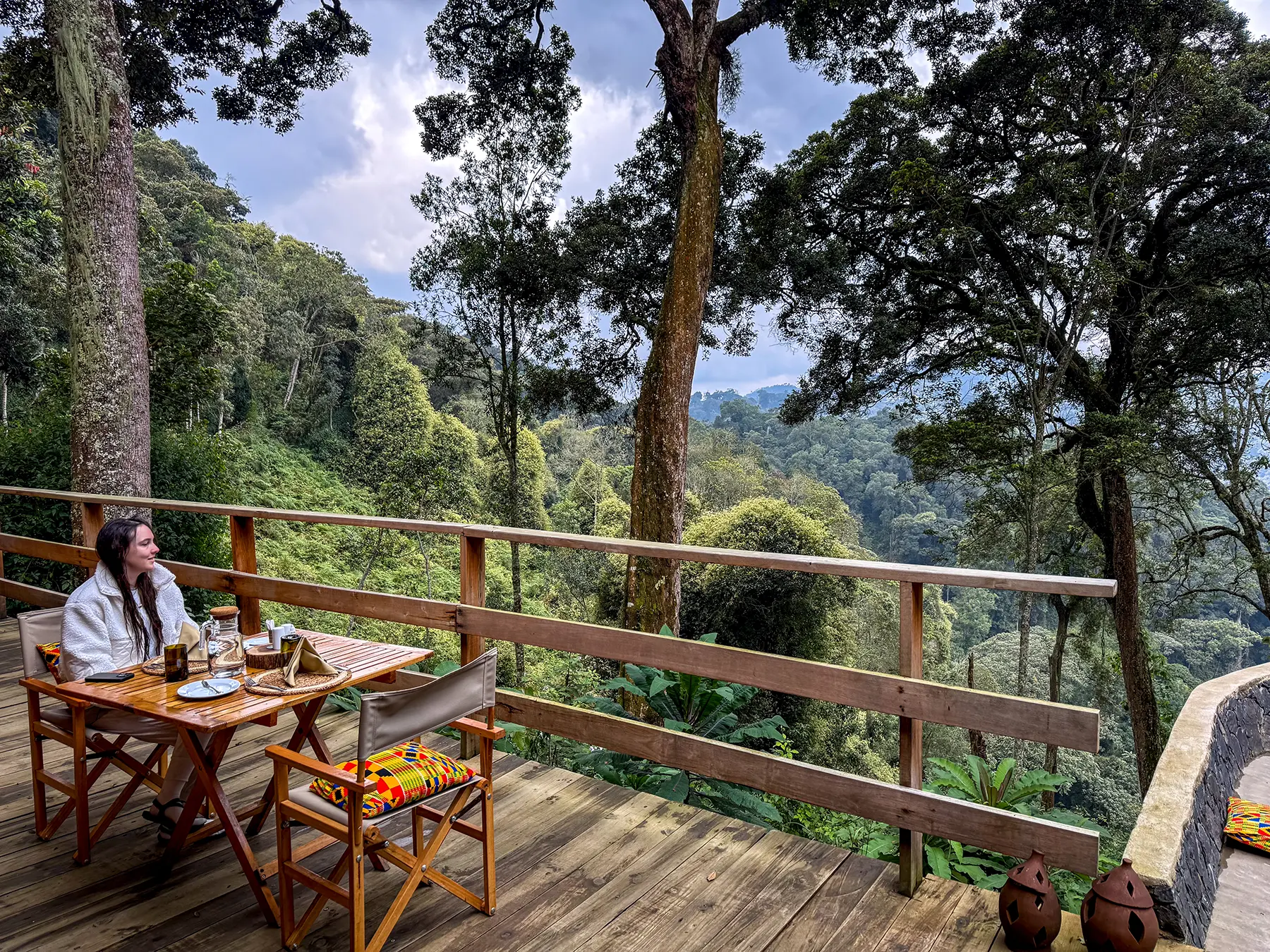
Where to Stay in Nyungwe Forest National Park
The majority of the lodges at Nyungwe are situated to the west of the park, just outside the official park gate near Gisakura Reception Center.
This area is encircled by tea plantations that contrast strongly with the thick jungle vegetation deeper within the park.
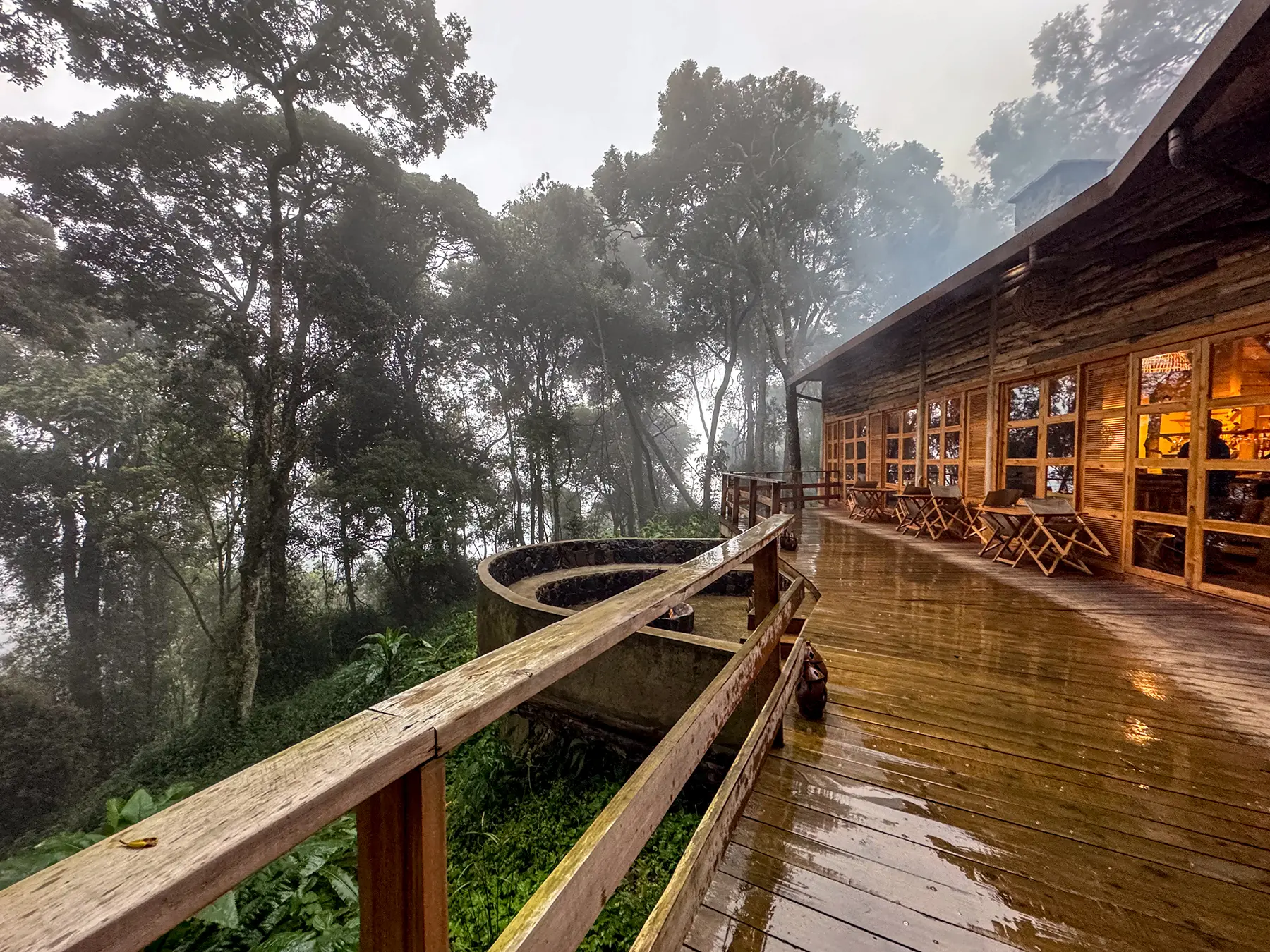
There’s only one lodge inside the national park and that is Munazi Lodge, owned and operated by African Parks (who also manage the national park). Munazi is a mere 10 minutes from the canopy walk and the chimpanzee trekking trail starting points.
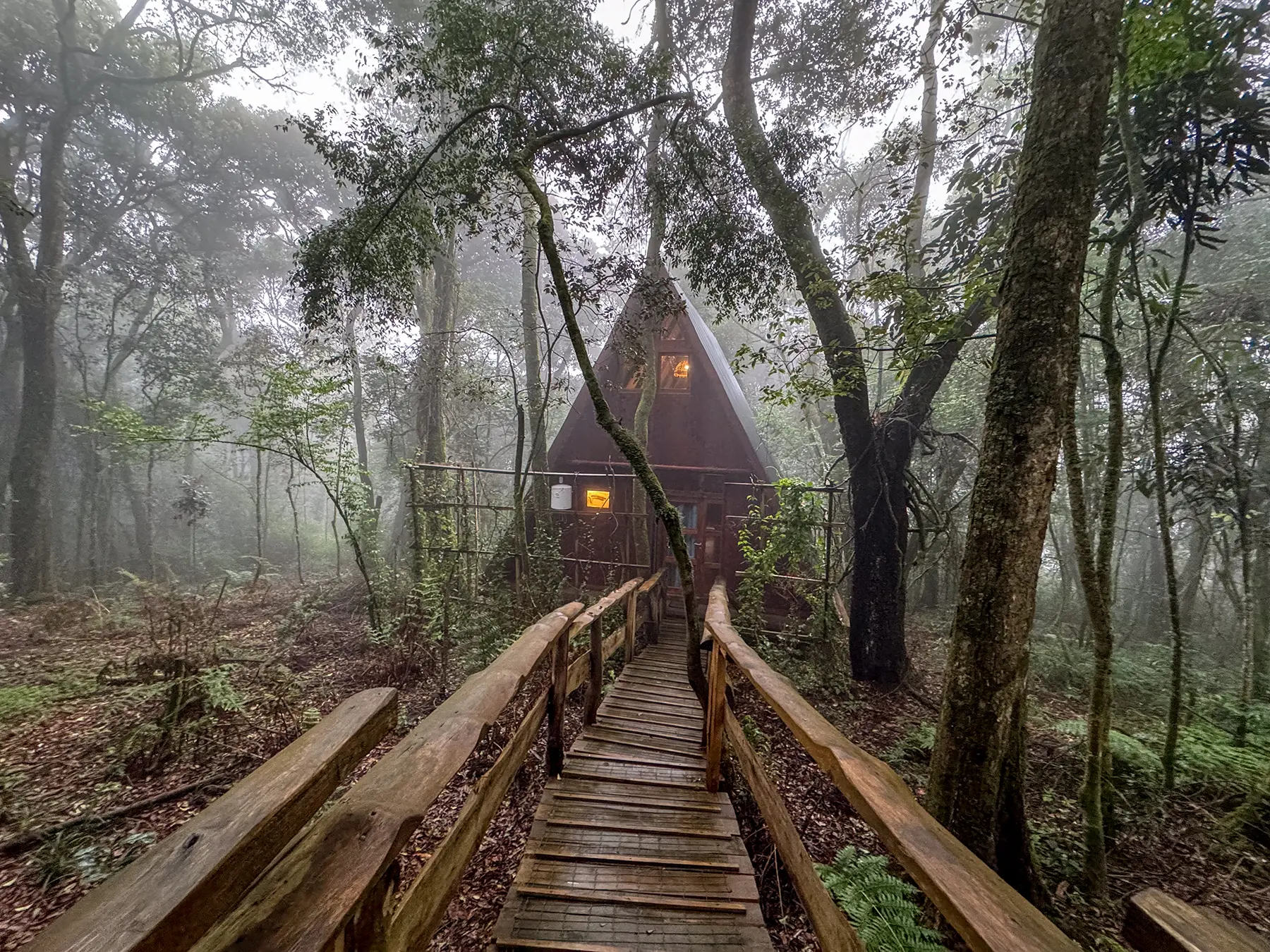
In addition to its handy location, Munazi offers guests the unique experience of staying inside the park. There is nothing to equal the feeling of being surrounded by unspoilt rainforest on all sides!
My Experience of Lake Kivu
For me, the boat cruise on Lake Kivu offered a welcome opportunity to take things a little easier following the challenging gorilla trek the day before. I actually spotted four individual vervet monkeys on Monkey Island, one of which pulled out all the stops and balanced precariously on a branch hanging right out over the clear sparkling water!
I also saw two hamerkops and, better still, a malachite kingfisher that did a dramatic dive down to snatch up a fish before flying back to its perch over the water.
I also found the fruit bat colony on Napoleon Island amazing. I was totally unprepared for the sheer number of bats I would see – there were thousands upon thousands of them roosting in the trees on all sides!
Day 9: Nyungwe Forest National Park
Drive time (excluding game drives): 5 hours
One of Africa’s most ancient rainforests, Nyungwe is Rwanda’s leading chimpanzee trekking destination. This morning, you’ll be up well before daybreak as you track a habituated chimp troop on foot before traversing the forest canopy on a suspended walkway. Finally, you’ll make the long afternoon drive back to Kigali for your final night in Rwanda.
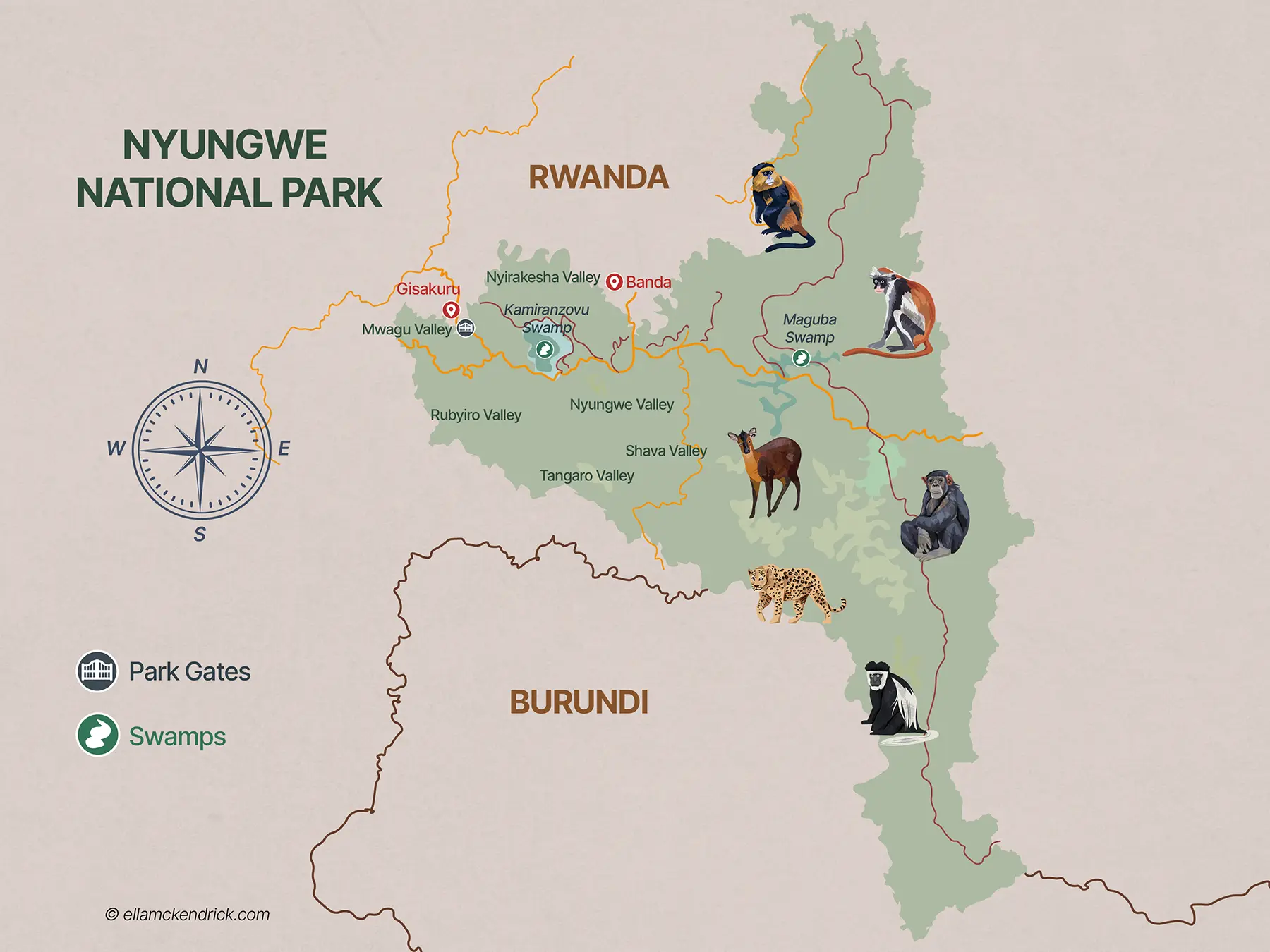
Map of Nyungwe Forest National Park
This map I made shows the key features of Nyungwe Forest National Park.
Itinerary
The early bird may get the worm, but you’ll need to be up earlier than both for this morning’s chimpanzee tracking experience, as you’ll be meeting your guide at reception by 5 am!
Happily, the park office is just 10 minutes away. There, you’ll be assigned a guide and a chimp group before driving an hour or so to the official starting point near Banda Village on the outskirts of the forest.
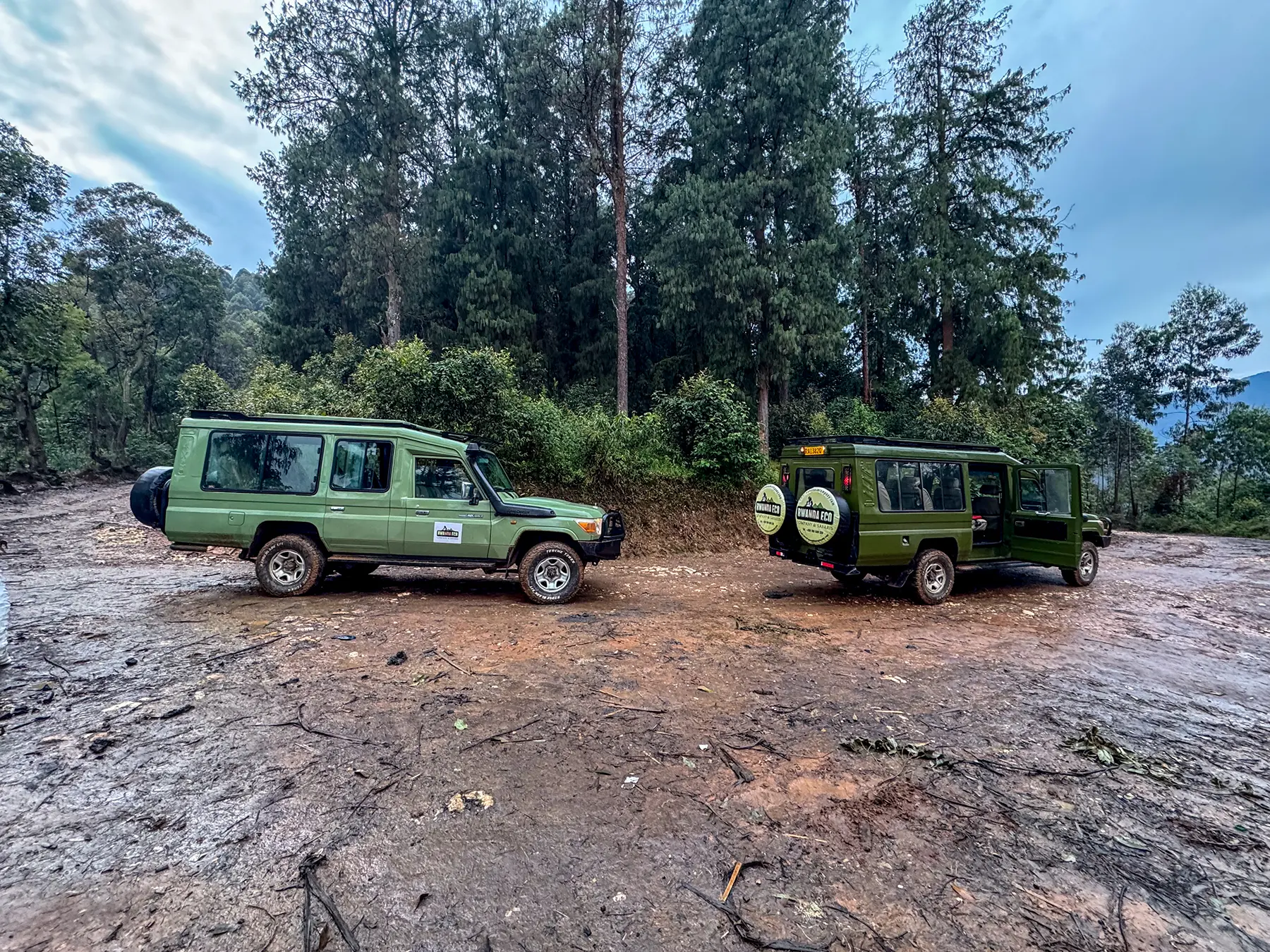
The steep, serpentine road that leads down to the village is fairly rough and very muddy, and vehicles get stuck on it pretty regularly, which is why the early start is so important.
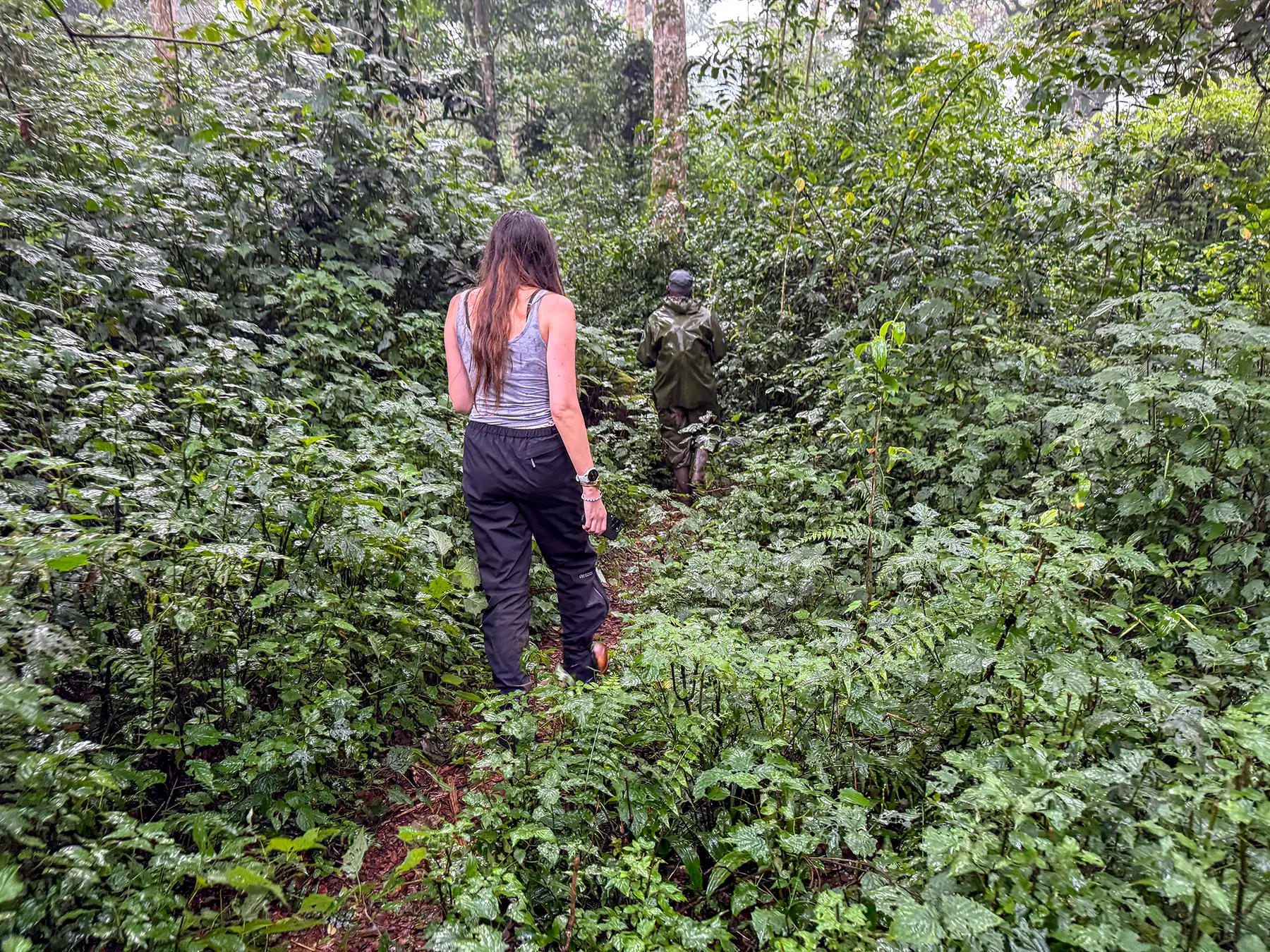
From here, you’ll enter the forest on foot with your group on a boot camp-like experience that will have you crawling through thick bush, snagging yourself on thorns and enjoying the odd slap in the face with wet leaves for good measure. Rivers with no bridges are no obstacle, with both guides and porters manoeuvring branches to help you cross.
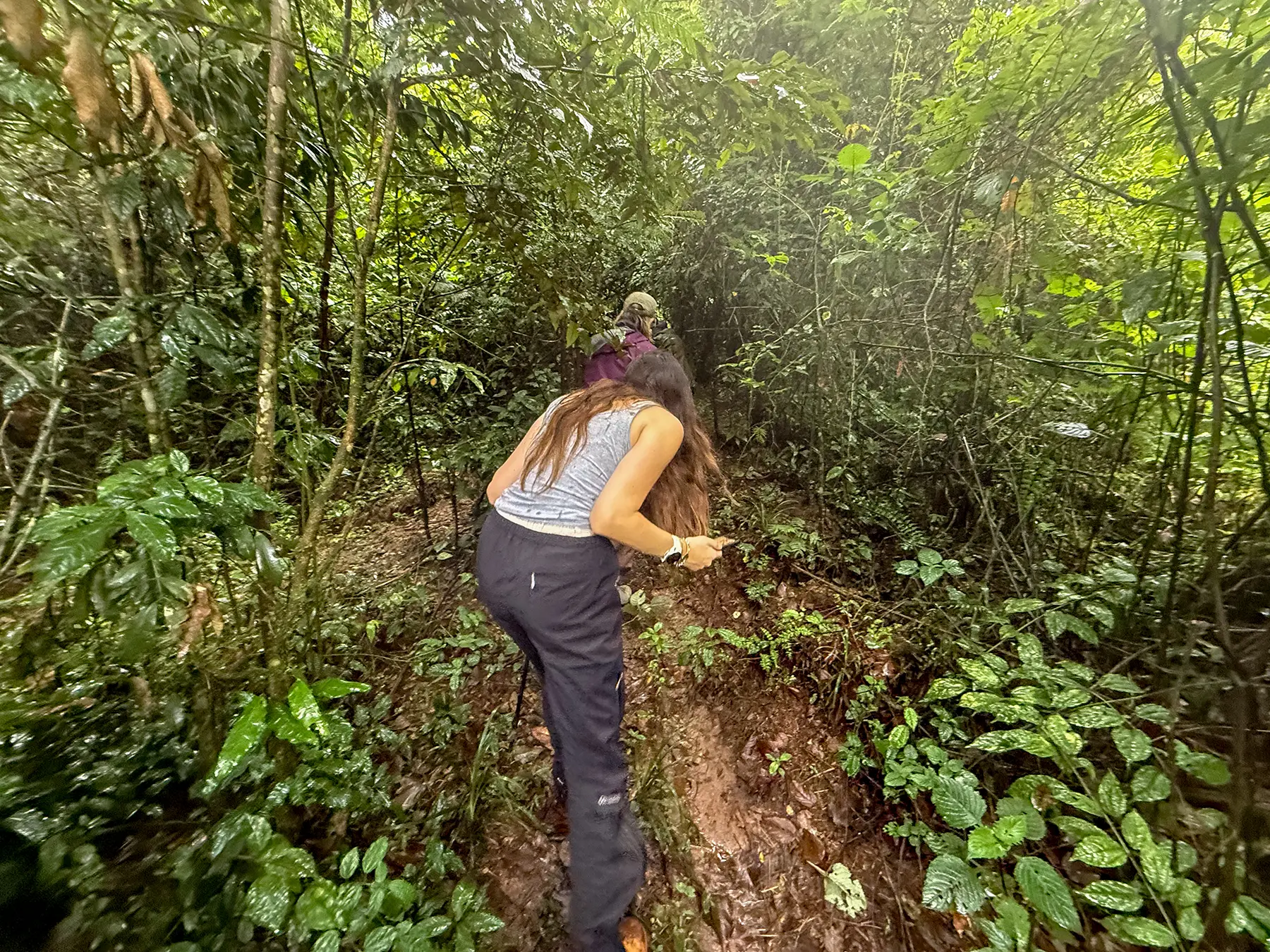
It may sound odd, but making your way back to your vehicle can often be the toughest part of this experience! Drivers frequently bring the vehicles high up the hill in case the lower track becomes impassable due to rain. While necessary, this can easily extend your return trek by up to two hours – all of it uphill.
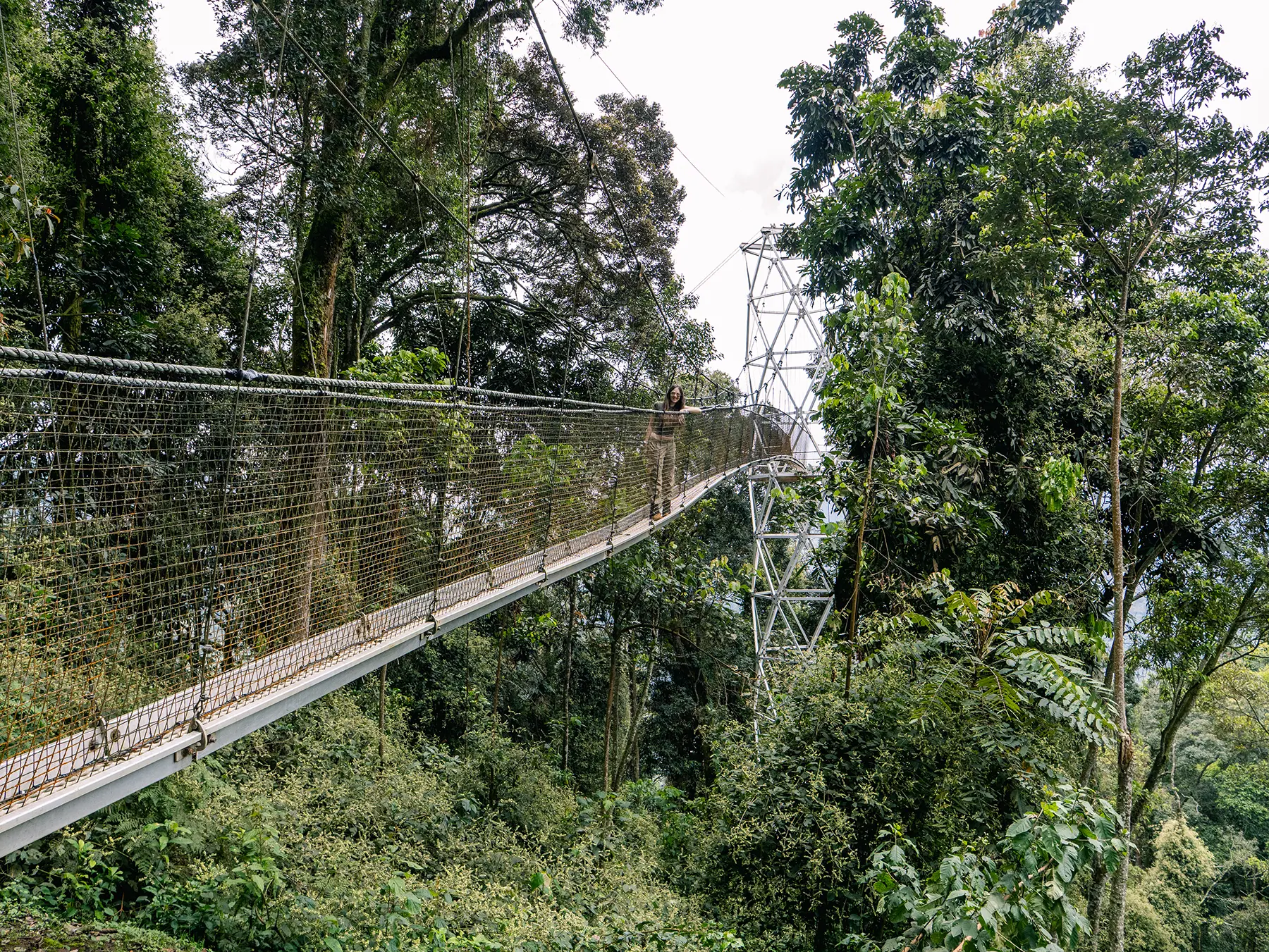
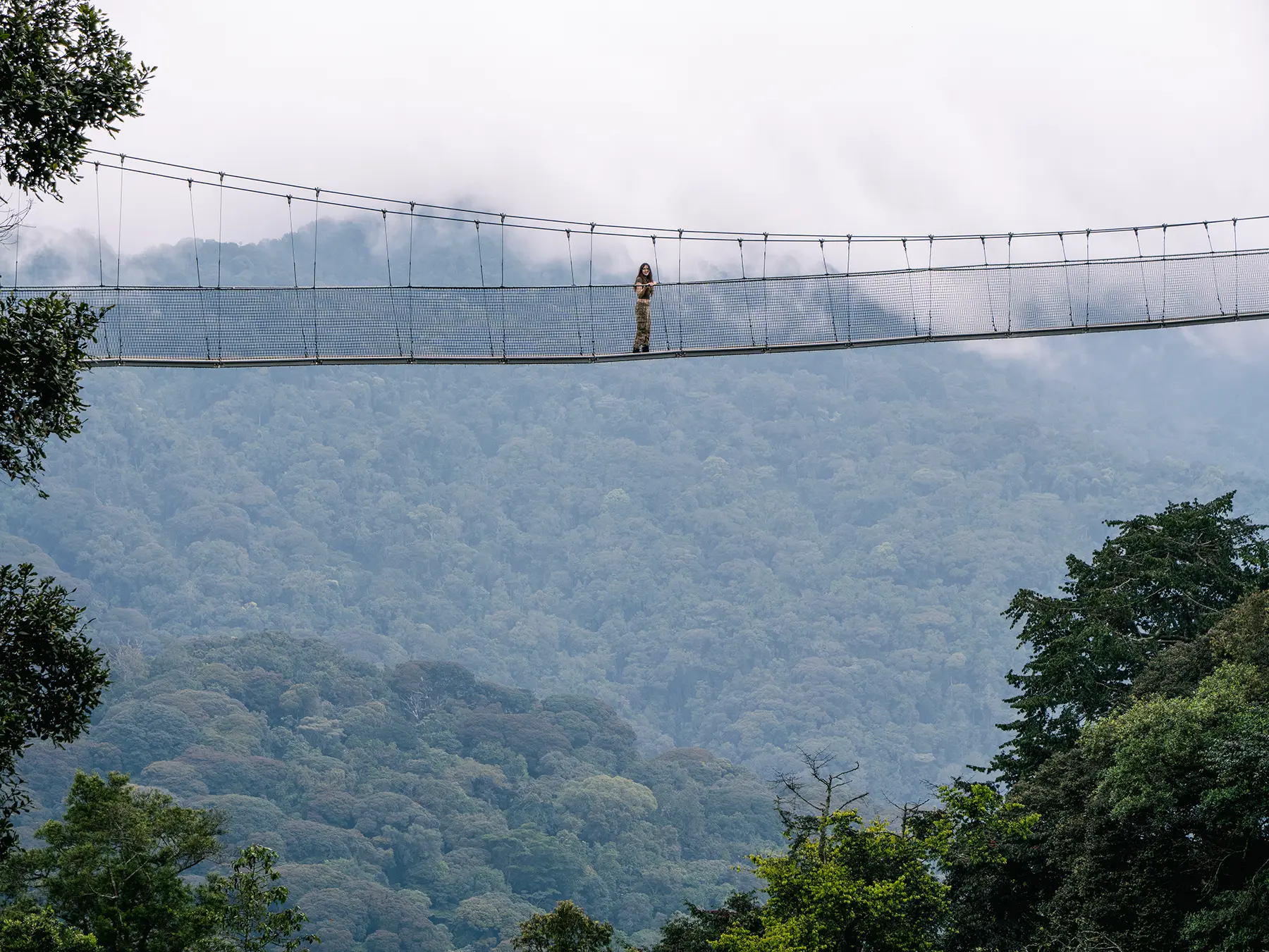
Once back at the vehicle, it’s time to head to the canopy walk, suspended 197 feet (60 metres) above the forest floor. Taking about 1.5 hours to complete, it includes a number of uphill and downhill sections and will lead you across 3 suspended bridges over the jungle.
Finally, it’s time to head back to your lodge and pack your bags before starting the 5-hour drive northeast to Kigali. You’ll reach the city in time for dinner ahead of your final night in Rwanda.
If you’d prefer to shorten the journey to Kigali, you could consider flying instead. Kamembe Airport is not far from Nyungwe and has regular 40-minute scheduled flights to Kigali.
About Nyungwe Forest National Park
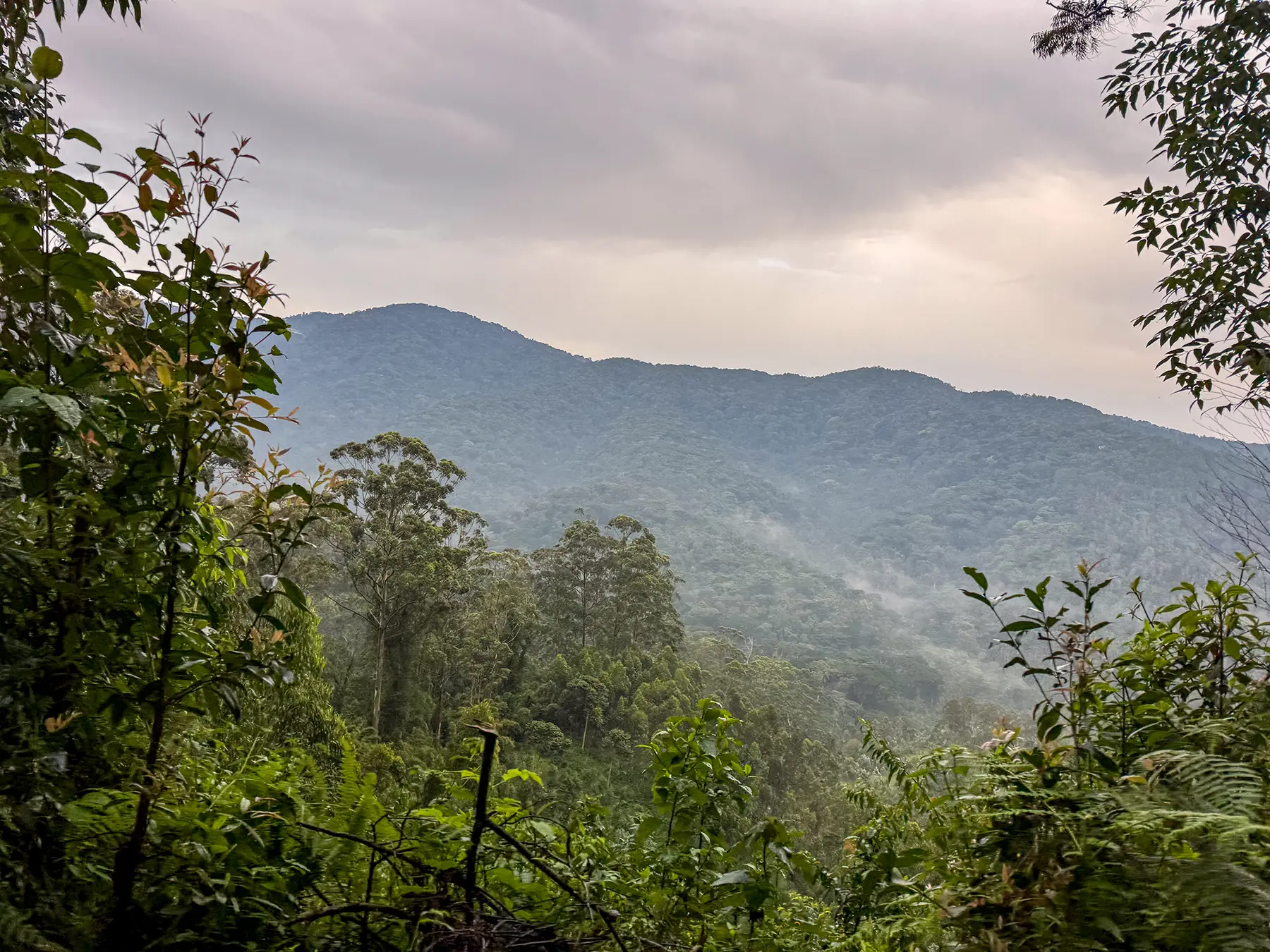
Spanning some 393 square miles (1,019 km²), Nyungwe Forest National Park is among Africa’s most ancient rainforests.
This biodiversity haven houses approximately 85 mammal species, including 13 different types of monkeys, plus 312 recorded bird species.
In addition to its wildlife, the forest is renowned for its exquisite natural scenery, especially its orchids. Unbelievably, the forest harbours around 200 endemic orchid species, their colours contrasting beautifully against the luxuriant greenery. The canopy walkway, suspended some 197 feet (60 metres) above the forest floor, offers a superb vantage point from which to admire these gorgeous flowers.
What Wildlife Can I See in Nyungwe Forest National Park?
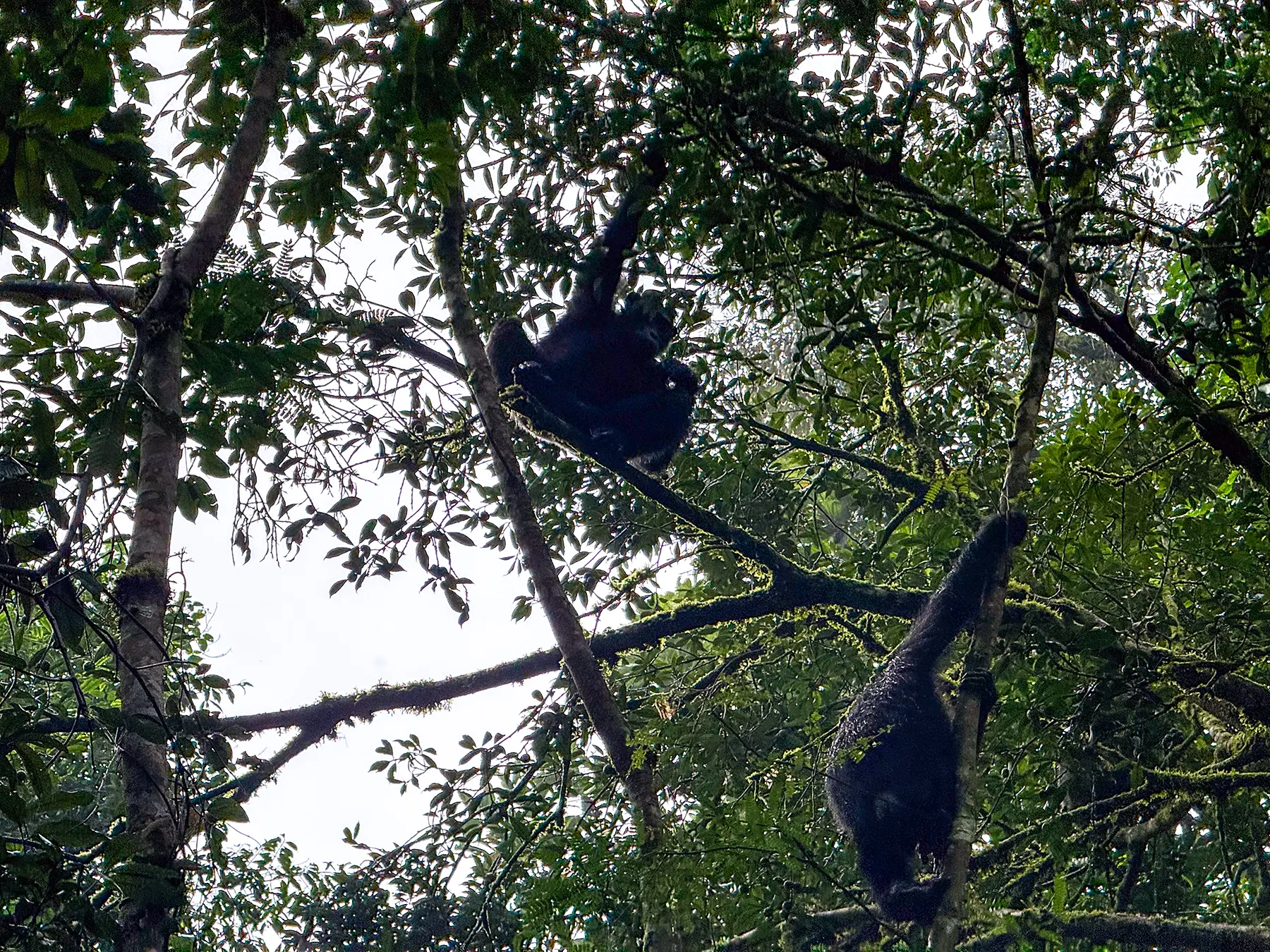
First and foremost, Nyungwe is a primate paradise that supports 13 different species, among them three habituated chimpanzee groups numbering around 380 chimpanzees in total. Two of these troops are available for tracking, with the remaining one reserved for research only.
Chimpanzees can survive for up to 50 years in the wild and are found exclusively in Africa. These amazing creatures form close and lifelong bonds with family and troop members.
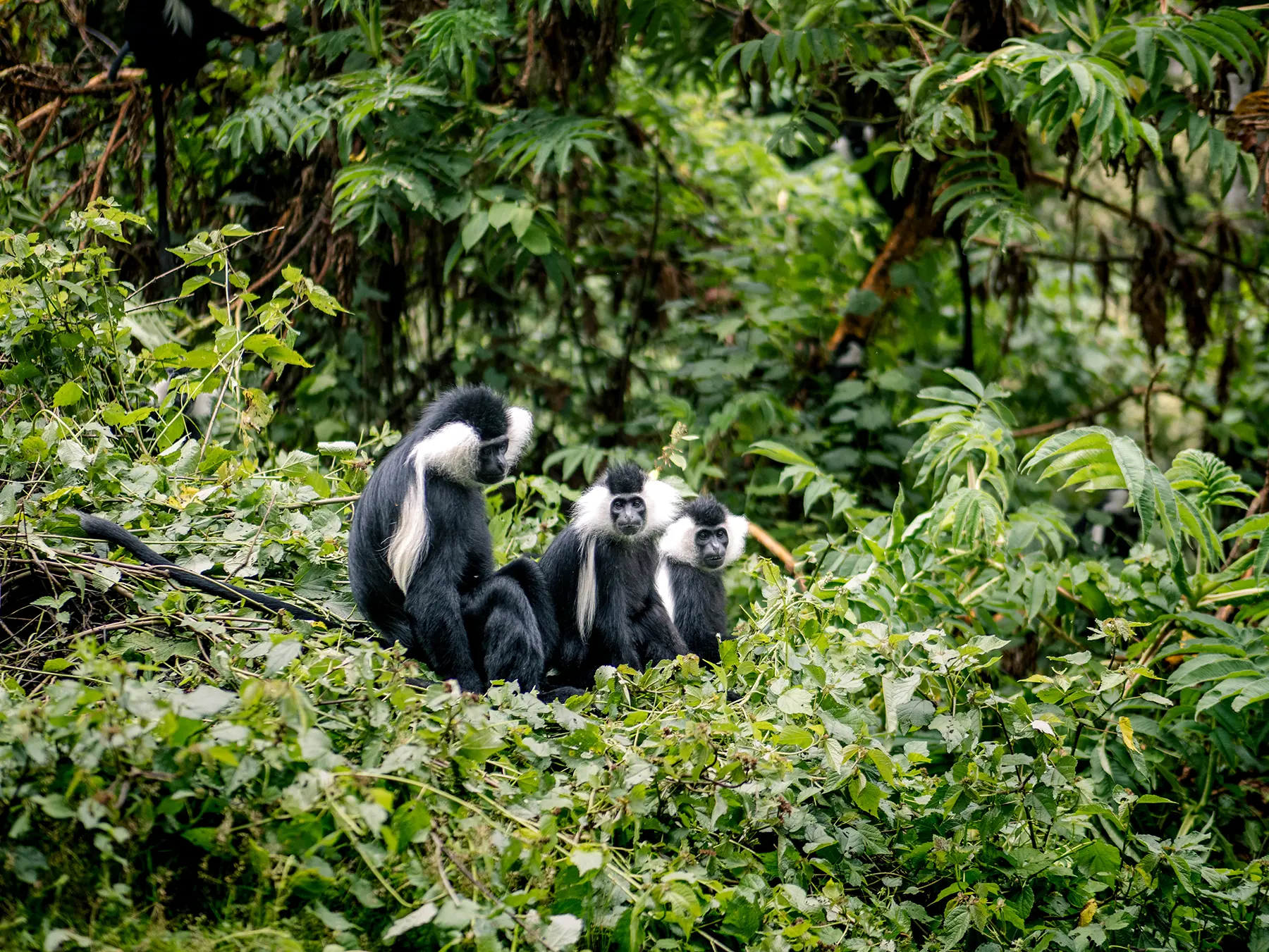
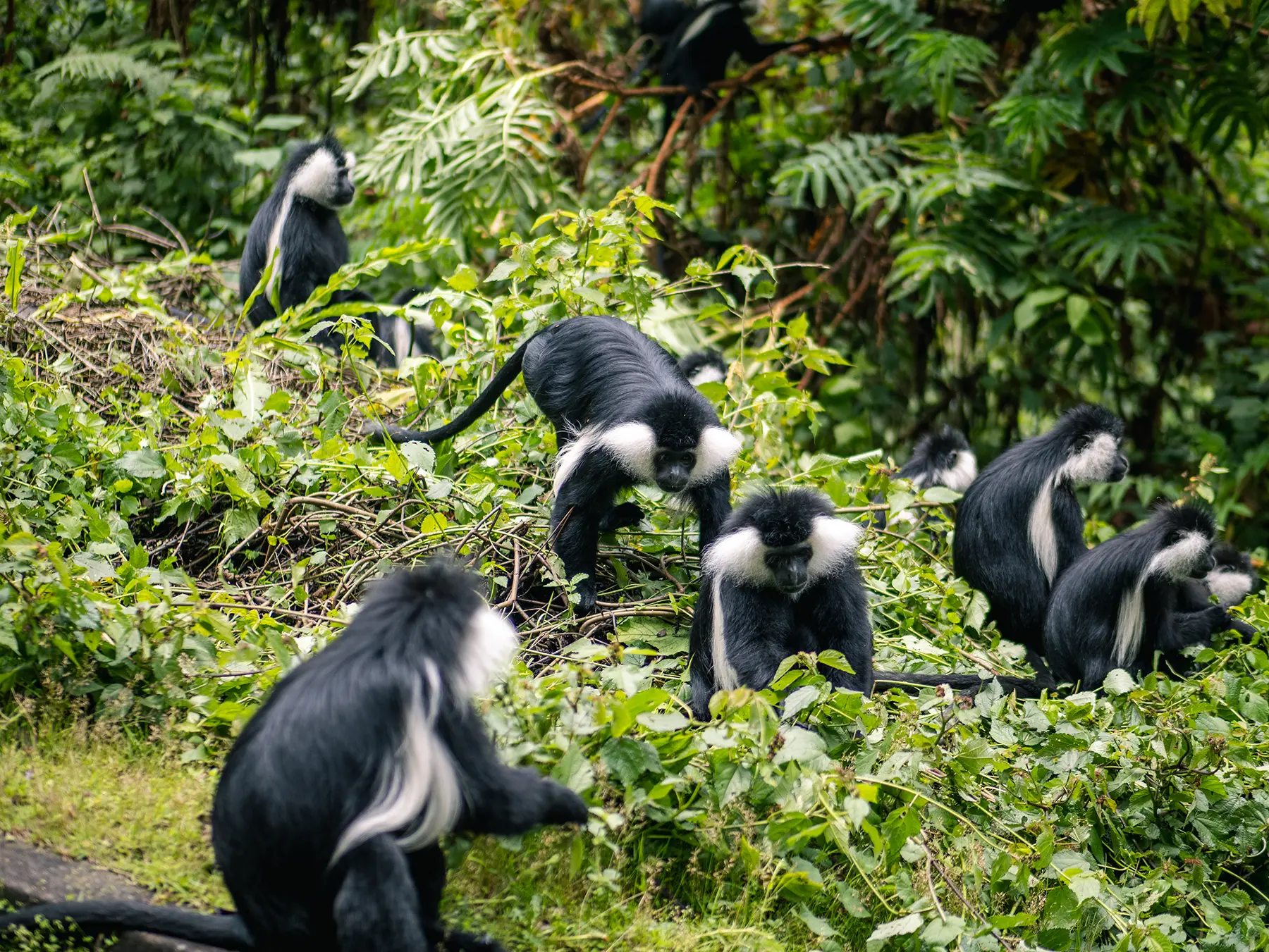
Chimps are omnivores, eating mainly plants but sometimes hunting and preying on smaller monkeys, which are present in abundance in Nyungwe. The reserve’s 13 primate species include Angola colobus monkeys, L’Hoest’s monkeys, grey-cheeked mangabeys, silver monkeys, red-tailed monkeys and olive baboons.
But Nyungwe is also ideal for birders, boasting some 312 documented bird species. Offering highlights such as Narina Trogons, yellow-whiskered greenbuls and Rwenzori turacos, the park ranks among Rwanda’s top birding destinations.
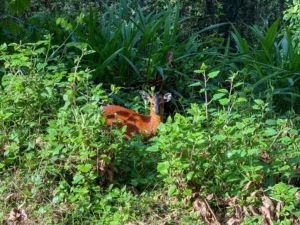
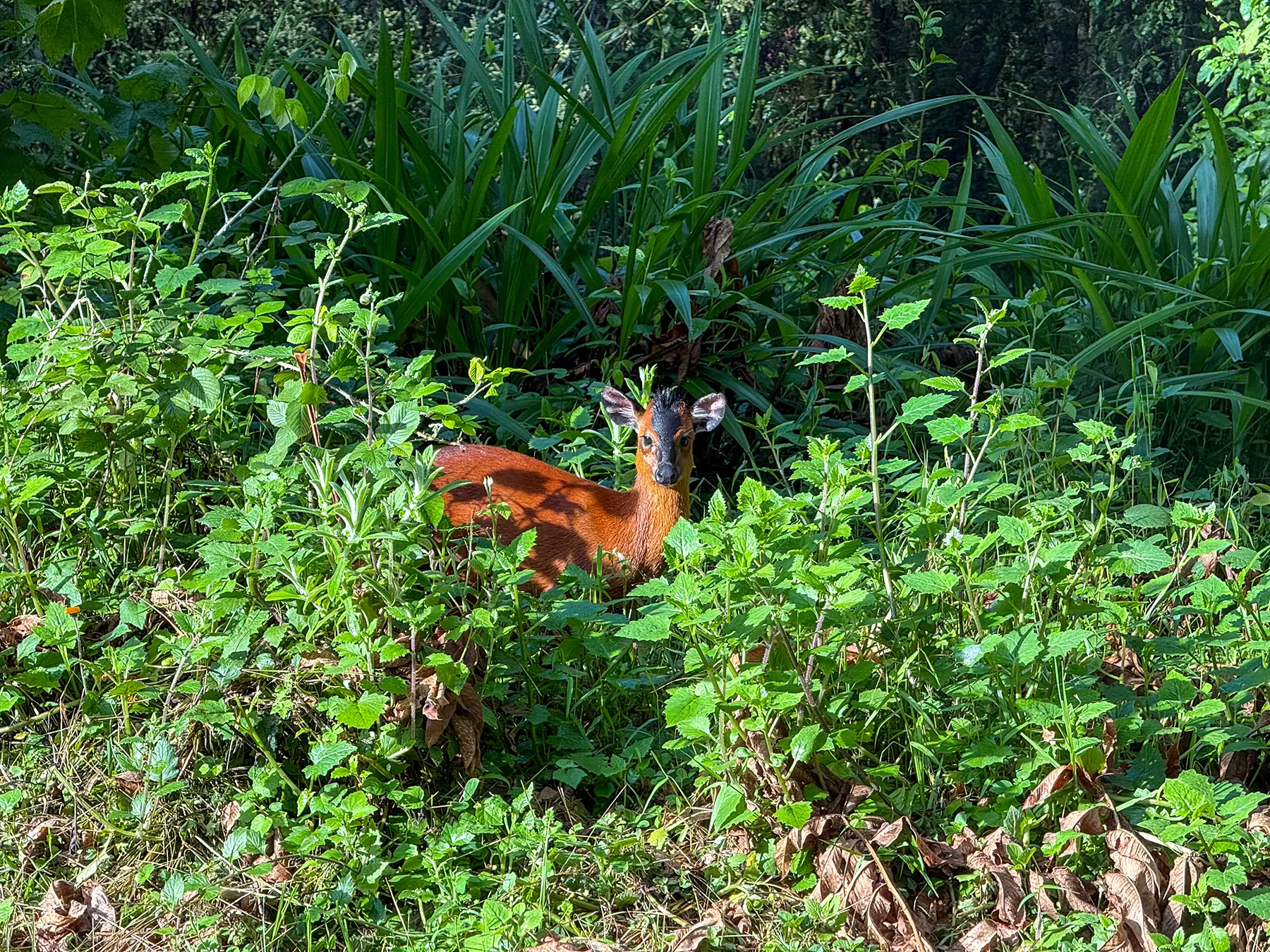
As well as birds and primates, Nyungwe houses tiny black-fronted duikers and a number of other small antelope species. These are sometimes observed walking along the forest roads.
Tips for Visiting Nyungwe Forest National Park
Chimp trekking is an unforgettable but challenging experience. Here are some helpful hints to help you enjoy it to the fullest:
- Chimpanzee tracking is priced at $150 per person plus a $100 per person per day park fee. If you’re planning on spending two nights in the park, however, you can take advantage of a discounted 2-night park fee of $150 to save a little money.
- Hire a porter (minimum $10 plus tip) to help you on the chimp trek. Porters are a priceless source of support as you negotiate the slippery, rough terrain, and hiring them helps provide employment for local communities.
- Regarding tips, I recommend $10 for your head guide plus $5 for each of the 2-4 trackers.
- Dress appropriately: a raincoat is essential, as are sturdy boots and gaiters to keep debris out of your shoes. Don’t forget to wear long trousers and long sleeves, too, as this will protect you from thorns.
- The canopy walk is not for the faint of heart: the bridges are 197 feet (60 metres) high and can be very wobbly, so if you hate heights, you may want to save yourself the $40 fee and sit this one out.
- Be sure to bring plenty of water and snacks for your morning as the combination of chimp trek, return hike and canopy walk is physically very demanding. We wouldn’t like you when you’re hangry!
- Keep an eye out for silver monkeys perched high in Newtonia trees along forest roads, and look out for Angola colobus troops and L’Hoest’s monkeys as well.
Optional Activities
- The 1.5-hour canopy walk costs $40 per person and will bring you across three bridges suspended up to 197 feet (60 metres) above the ground. You can either do this in the afternoon after your chimp trek or on a different day.
- If you like birds, I recommend booking a birding walk through the forest for an opportunity to see some of the 312 avian species that call Nyungwe home, including Narina Trogons and Rwenzori turacos.
Where to Stay in Kigali
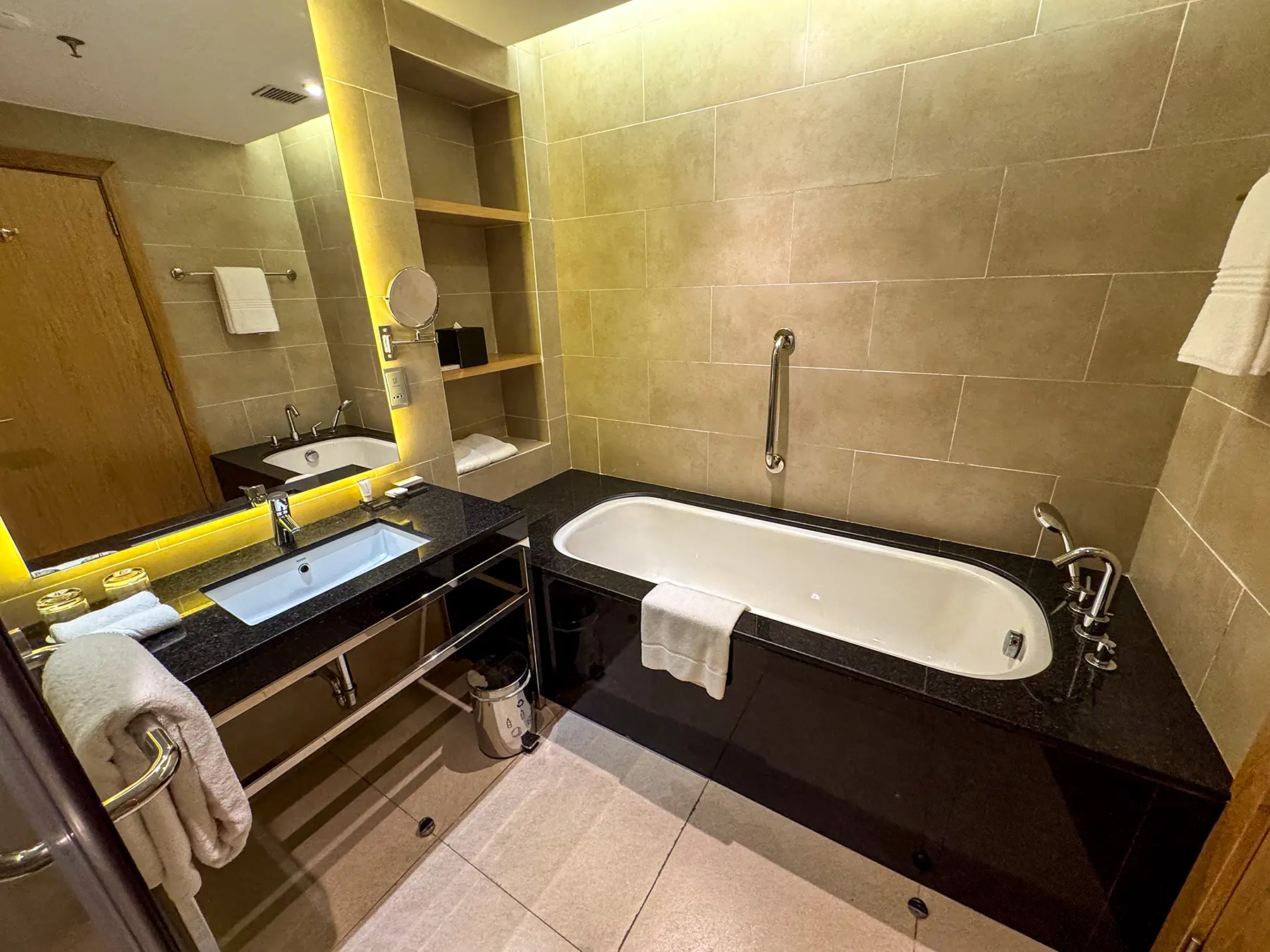
You should reach Kigali late in the afternoon after the 5-hour transfer from Nyungwe. I’d say the city centre is the best place to base yourself for this last night of your trip, as you’re close to restaurants and attractions like the Kigali Genocide Memorial as well as the airport for your flight home the following afternoon. For details of the city centre hotels, see Day 1.
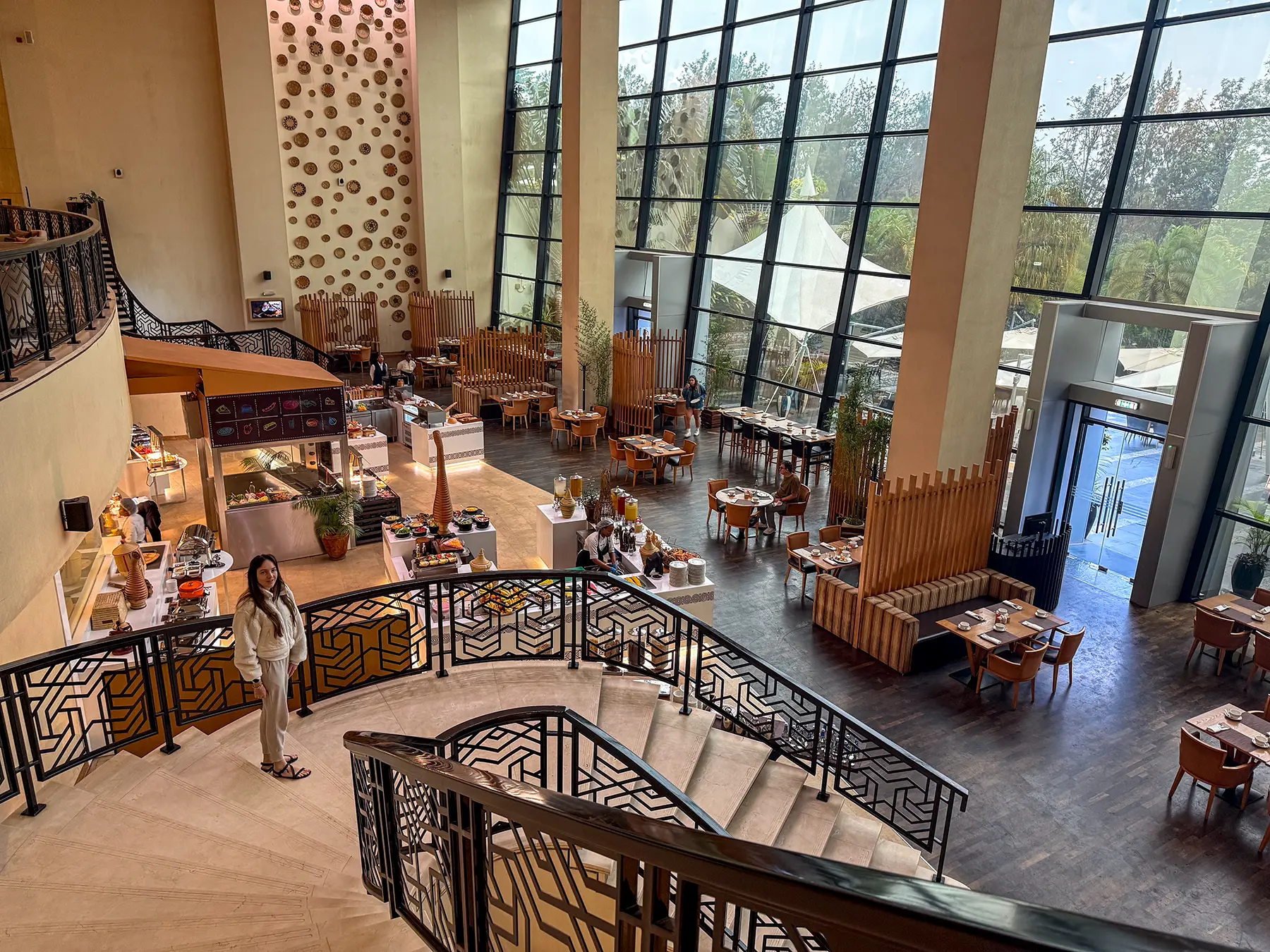
As before, booking a taxi through your hotel is the most reliable way to get around the city this last night. You should also set aside about $45 for your taxi to the airport tomorrow.
My Experience Visiting Nyungwe Forest National Park
Chimpanzee tracking was definitely one of the toughest activities I enjoyed in Rwanda. This was due in part to the extremely muddy conditions on the road down to Banda Village, which left one vehicle stuck in the mud and forced us all to get out and start our trek ahead of time!
The guide also rushed us through the village, determined to make sure we didn’t get there too late to find the chimps in their nest. And his fears were not unfounded – by the time we located them, the chimps were already on the move, and boy did they make us work for our time observing them!
They led us a merry dance through thick undergrowth and brambles, while we snagged ourselves on thorns and dodged slaps in the face from wet leaves, not to mention fording rivers with no bridges.
In the end, though, it was more than worth the pain. Our perseverance was rewarded with some truly magical sights, such as a moment when one of the chimps stood still right out in the open with his soft, pink face turned towards us.
If we were looking forward to an easier time of it on the return leg, we couldn’t have been more wrong. With the vehicles parked high up on the hill for fear of getting stuck on an impassable track below, we faced an additional 2-hour hike – uphill all the way. I can still feel that burn!
By comparison, the canopy walk was a relaxing experience, treating me to sightings of a Narina Trogon and Yellow-whiskered Greenbul, although I wasn’t quick enough to snap a photo as they zoomed past. Although the large, colourful Rwenzori turacos are a relatively common sight here, I didn’t see any during my visit. Next time!
Day 10: Kigali
Drive time (excluding game drives): 1 hour
The clean, orderly Rwandan capital of Kigali is a fascinating final stop on your safari journey, with cultural attractions, restaurants and charming craft markets spread across its numerous hills.
You can spend this morning exploring the city one final time before making your way to the airport for your flight home this afternoon. Following an intense nine days of gorillas, chimpanzees and game drives, a few hours in this quiet city is the perfect, relaxing way to round off your Rwanda trip.
Itinerary
On this last morning of your trip, you are free to explore Kigali at your own pace. Why not stop by one of the many cute little coffee houses for a cup of excellent Rwandan coffee? Again, I have to recommend Question Coffee, with its strong support for women coffee farmers and delicious coffee.
This is also the perfect time to stop by one of Kigali’s craft markets and buy some locally made souvenirs to bring home. There are many fantastic options, including hand-woven baskets and locally made jewellery and ornaments.
Remember, it can be quite difficult to get from one attraction to another in this hilly city, so I recommend booking a taxi for the entire morning through your hotel. For a small fee of $2.50 per hour, a hotel taxi will wait for you while you explore Kigali.
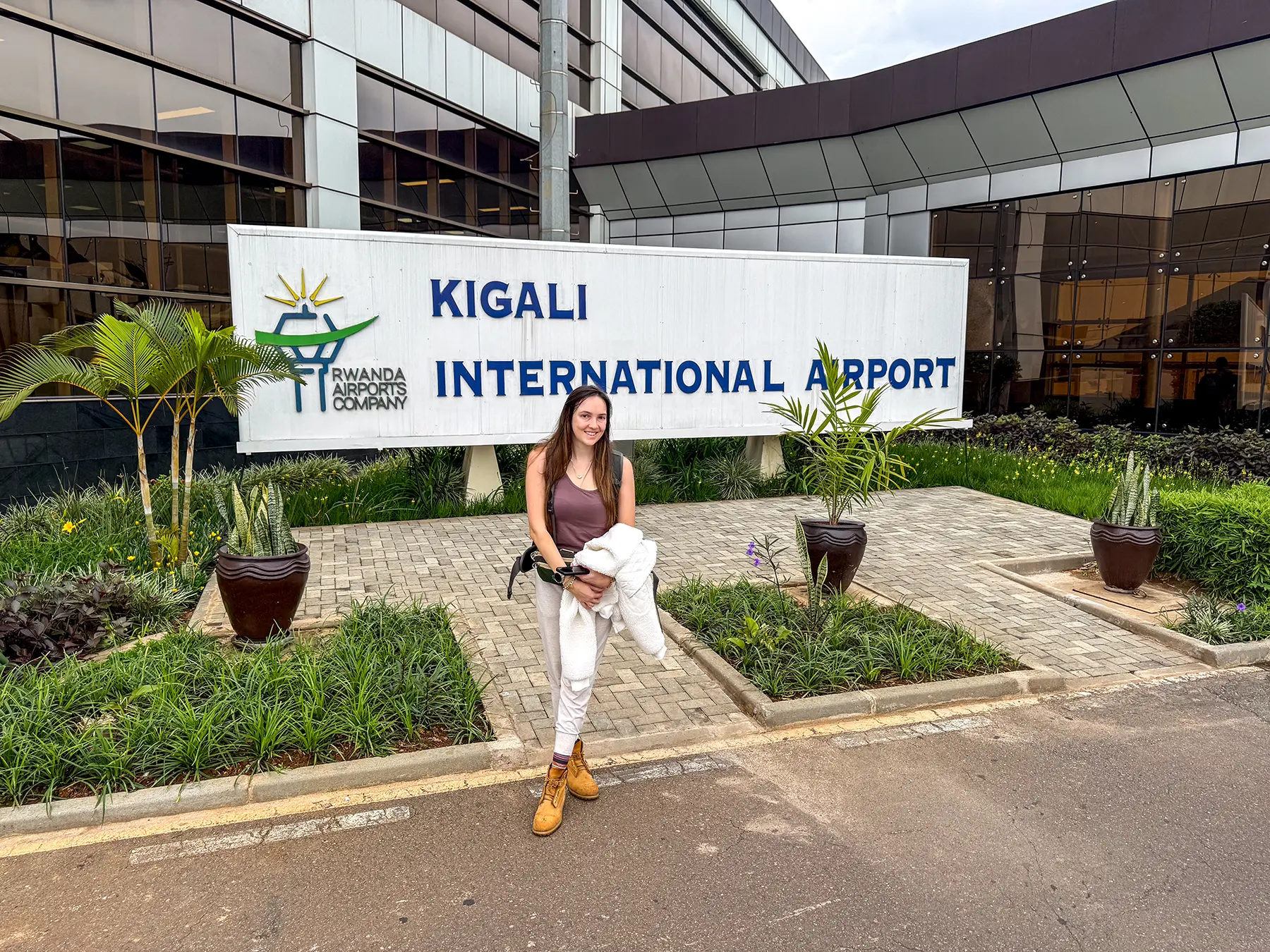
You should be sure to give yourself a full hour to get to Kigali International Airport for your afternoon flight, and set aside around $45 to cover your transfer from the city centre. With direct flights to London, Brussels, Amsterdam, Doha, Dubai and a number of African hubs, Kigali International Airport is Rwanda’s main international gateway, with most trips starting and ending here.
Hard as it may be to believe, your Rwanda safari has come to an end. Now all that remains to be done is check in, drop off your bags and board your flight home to dream about your next safari. Where will it take you?
Highlights of This Itinerary
One of Africa’s most diverse safari destinations, Rwanda boasts a lush, green landscape with rolling hills and stunning volcanic mountains, ancient rainforests and calm, blue lakes. What’s more, its excellent road infrastructure and proud reputation as one of the safest countries on the continent make it much easier for visitors to explore the many beauties of this land.
With a remarkable 9% of Rwanda’s land reserved for wildlife and conservation and 4 national parks to discover, it’s clear that this East African nation treasures its wildlife and wants to share it with the whole world.
From mountain gorilla trekking in Volcanoes National Park or chimpanzee tracking in the untouched rainforest of Nyungwe to Big Five safaris on the rolling savannahs of Akagera National Park, this compact country has so much to offer visitors.
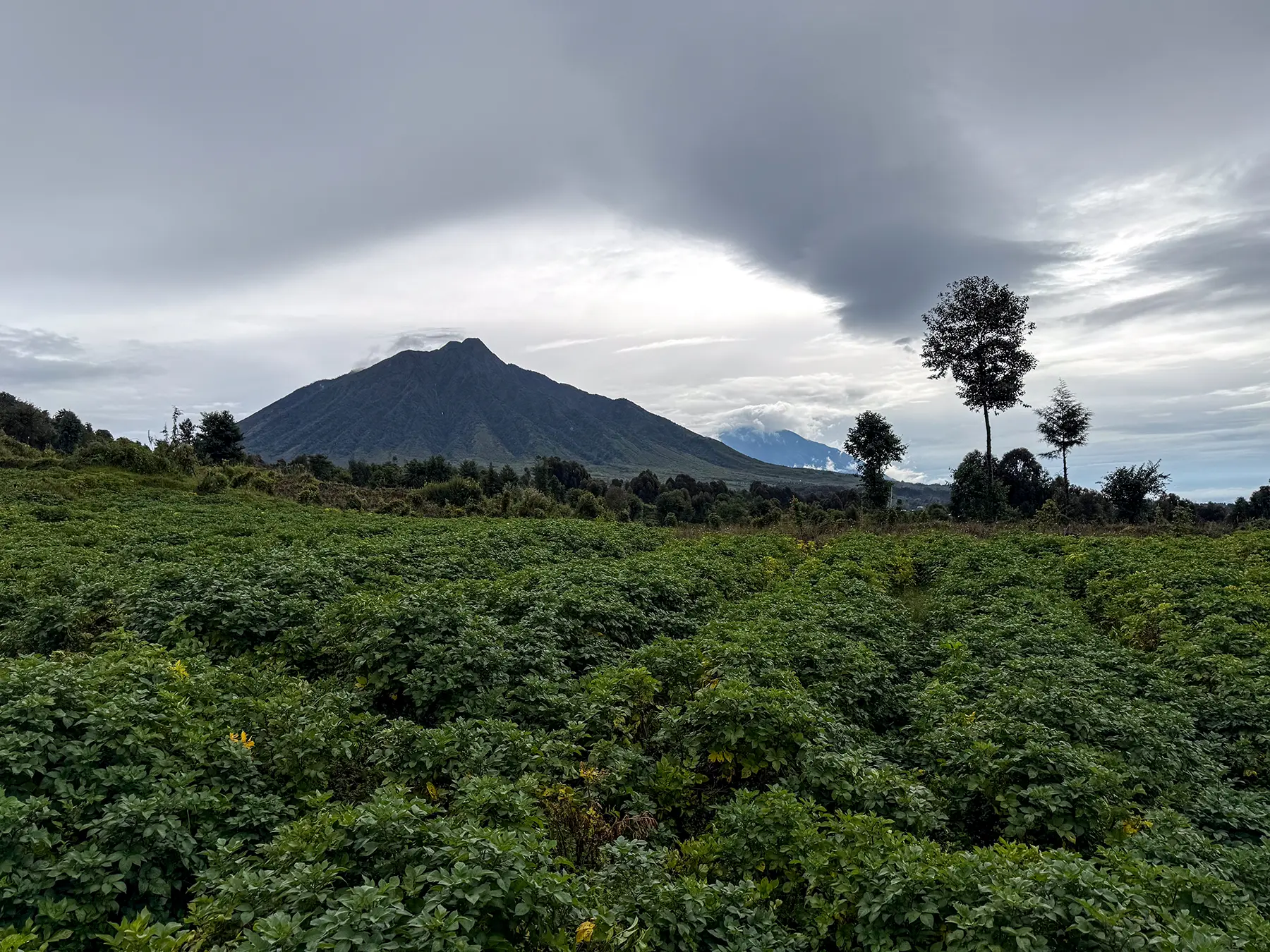
Thanks to its small size and excellent road network, a 10-day safari in Rwanda will give you ample time to experience primates, plains game and spectacular predator sightings in a single bite-sized loop.
Below, we’ll take a closer look at the unique elements that make Rwanda stand out.
Click the links below to find out more about each feature.
Easy Access via Kigali
While many African safari destinations can be rather remote, Rwanda’s parks enjoy outstanding road connections, making them much more accessible to visitors. What’s more, the country’s excellent tarred roads ensure much smoother driving than the often rough tracks in neighbouring Uganda, plus its compact size means you don’t need to spend nearly as long on the road to get from one reserve to the next.
The main gateway to Rwanda, Kigali International Airport sits at the centre of the country and is served by direct flights from London, Brussels, Amsterdam, Doha, Dubai and a number of African hubs. Although there are no direct flights from the US, travellers can fly non-stop to one of these African hubs from large international airports such as New York, Atlanta or Washington and continue on to Kigali from there.
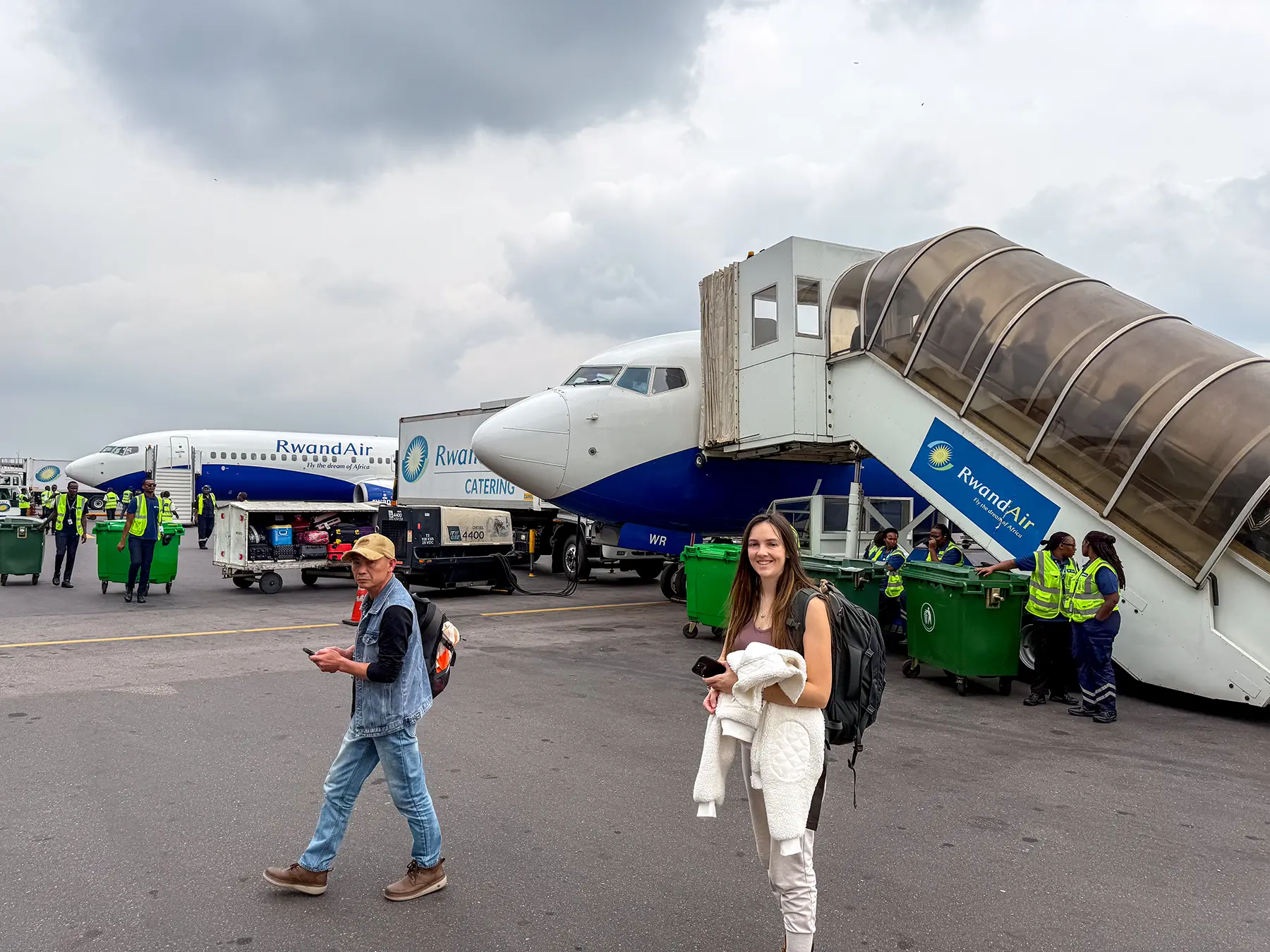
Once you touch down on the landing strip, it’s a mere 2.5-hour drive on smooth, well-kept roads to the nearest reserve, Volcanoes National Park, where world-class gorilla trekking awaits.
Boasting clean, orderly urban centres, strong governance and a superb road infrastructure, Rwanda is widely considered East Africa’s safest country.
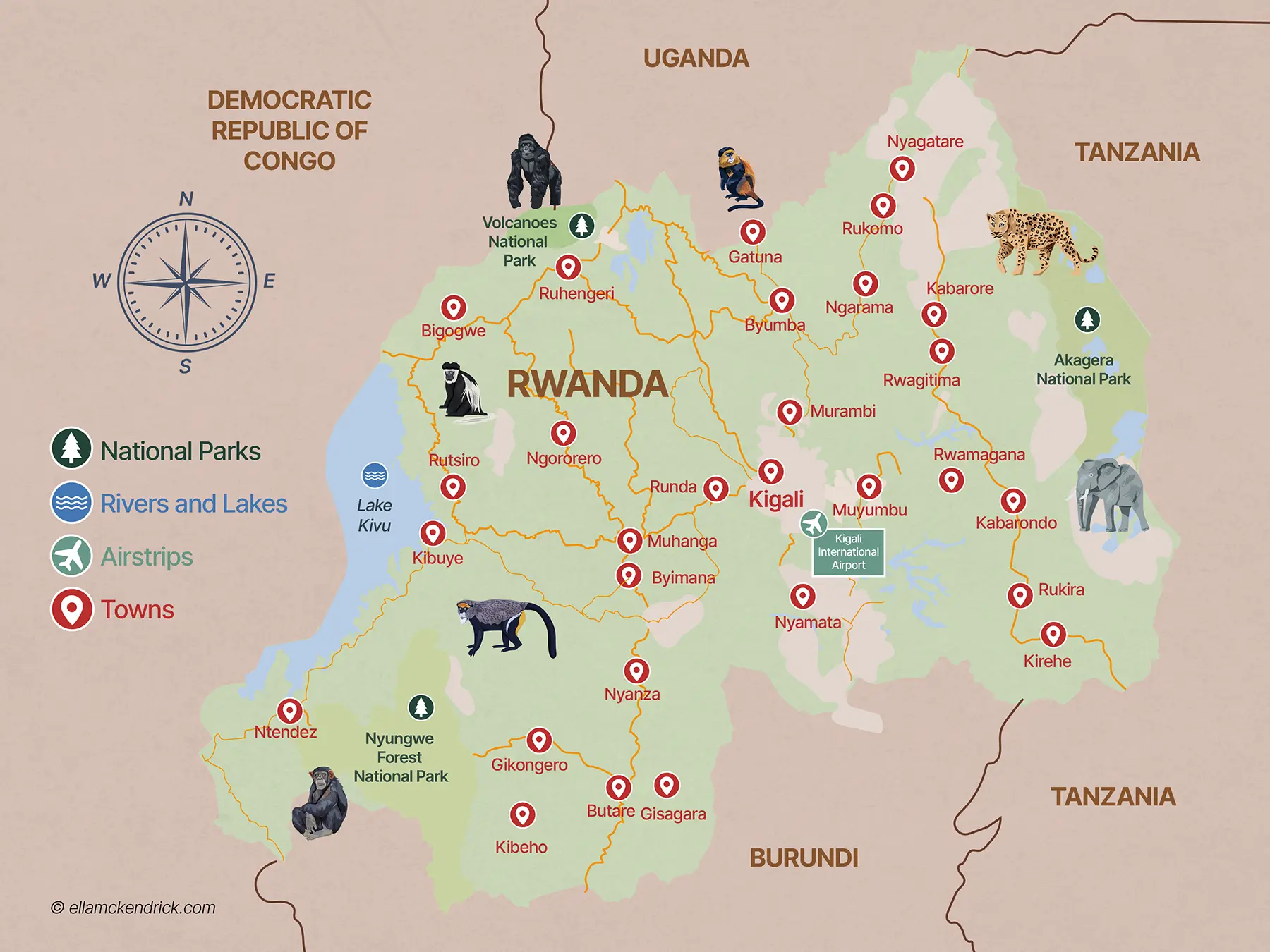
Here is a map I made showing the safari highlights of Rwanda.
World-Class Primate Viewing
Home to mountain gorillas, chimpanzees and golden monkeys to name but a few, Rwanda is widely acknowledged to be one of the world’s premier destinations for encountering primates in their natural habitats. In fact, along with Uganda and the Democratic Republic of Congo, it’s one of just three countries in the world where you can observe mountain gorillas in the wild.
The jewel in Rwanda’s safari crown, Volcanoes National Park delivers all you could wish for when it comes to gorilla trekking: luxuriant rainforests, rugged mountain paths, and, naturally, critically endangered mountain gorillas.
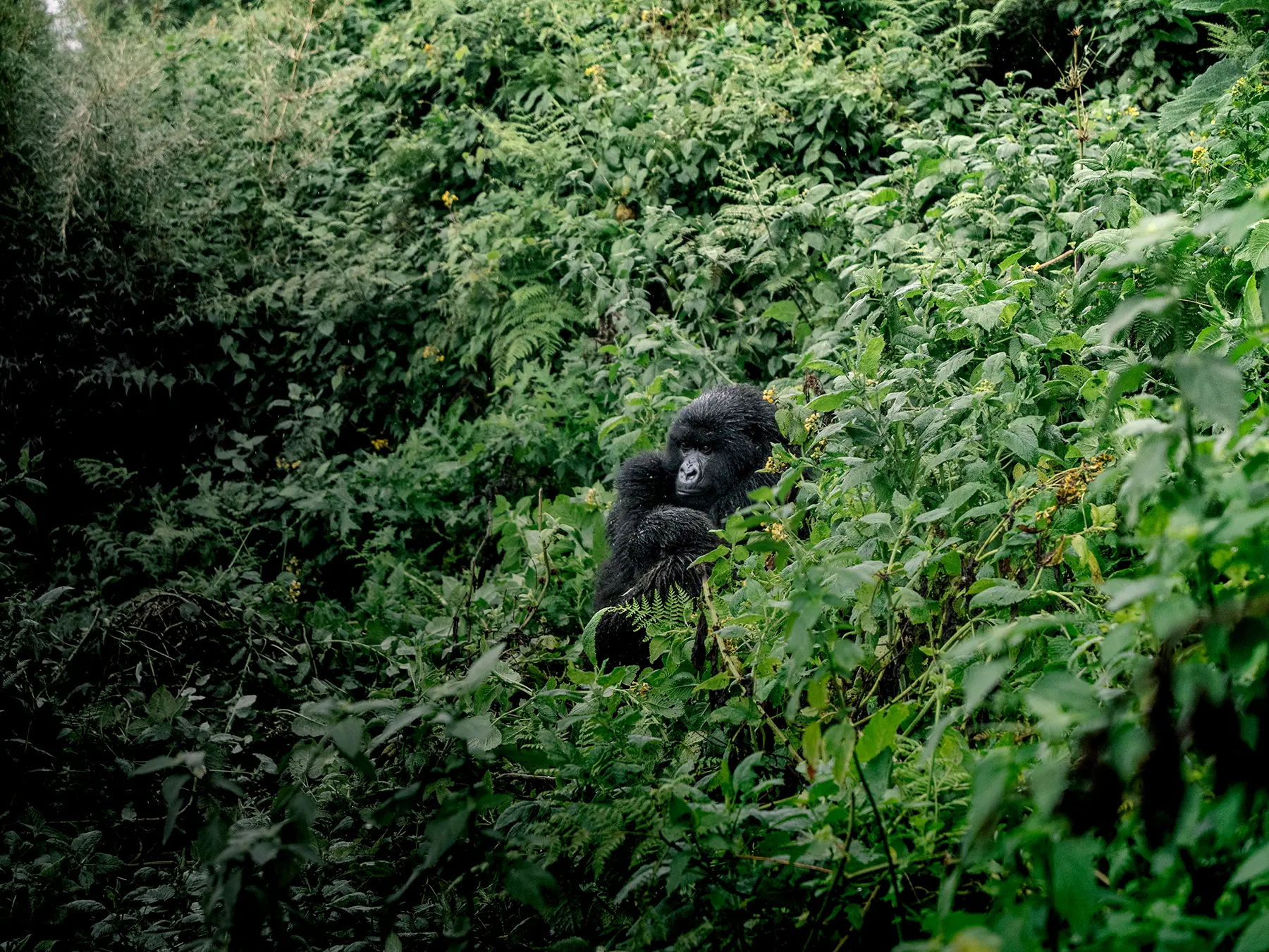
Covering some 62 square miles (160 km²), this UNESCO Biosphere Reserve forms part of the Virunga Massif, a chain of volcanic mountains that trace the borders separating Rwanda, Uganda and the DRC. This region is Africa’s primary mountain gorilla habitat, with Volcanoes housing some 300-350 individuals across 12 habituated families open to visitors, with a further 6 kept for research.
The current world population of wild mountain gorillas is just over 1,000. These are distributed across two distinct populations:
- Virunga Massif – including Volcanoes National Park (Rwanda), Mgahinga Gorilla National Park (Uganda) and Virunga National Park (DRC).
- Bwindi Impenetrable Forest – often called the Bwindi-Sarambwe ecosystem as it includes Uganda’s Bwindi Impenetrable National Park and the small neighbouring Sarambwe Nature Reserve in DRC.
| Population | Gorillas | Location |
|---|---|---|
| Virunga Massif | 604 | Rwanda, Uganda, DRC |
| Bwindi-Sarambwe | 459 | Uganda, DRC |
| TOTAL GLOBAL | 1,063 |
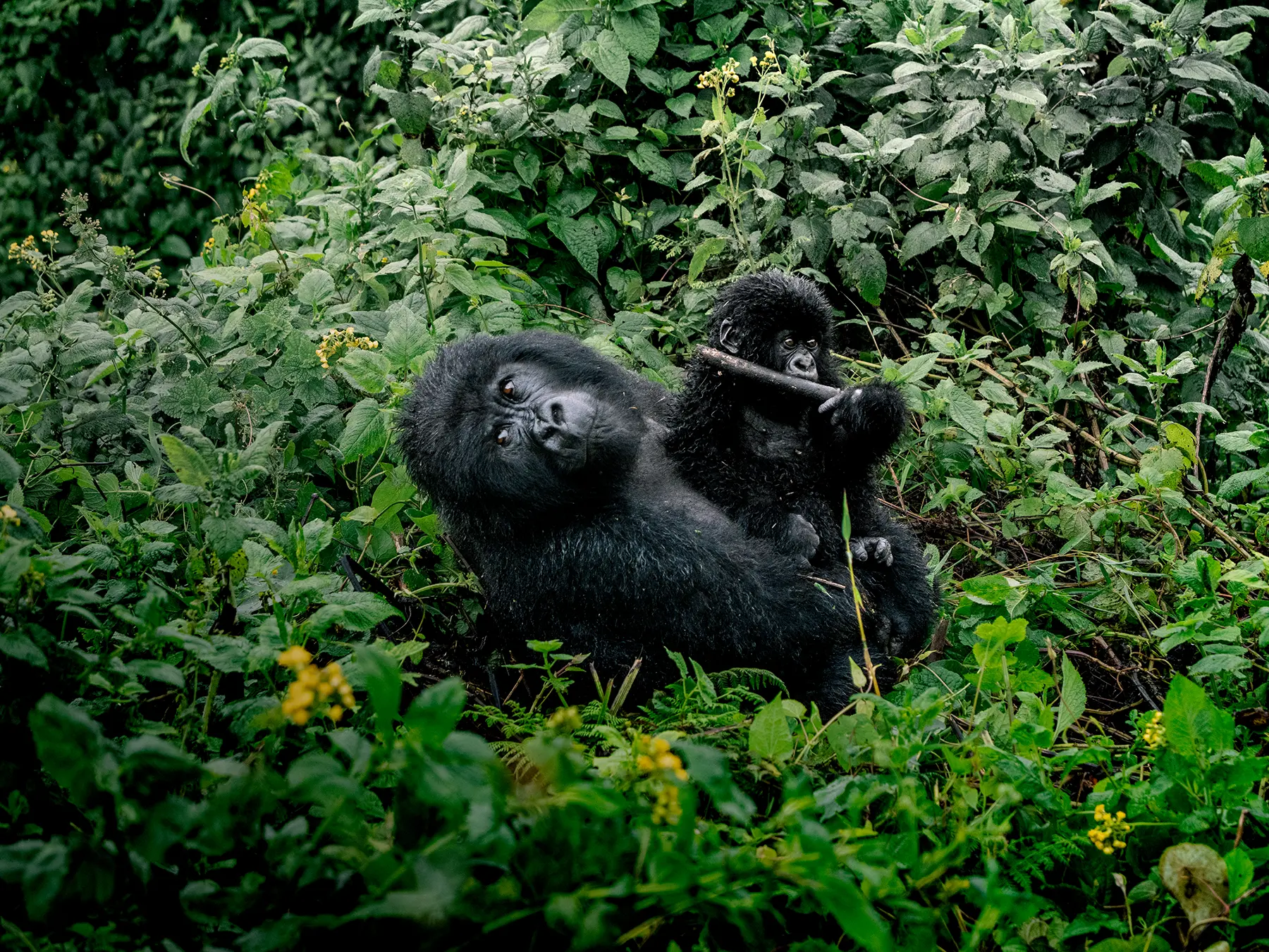
During my last gorilla trekking experience, we ended up hiking for almost 2 hours before we finally caught up with the Hirwa family, but it was so worth it! The hour we spent observing them was one of the most unforgettable of my entire life.
We saw a number of mothers holding the cutest little babies, who squirmed in their mothers’ arms as if eager to join the bigger ones playing nearby. These more active youngsters were as energetic and mischievous as toddlers – taking care of them was a full-time job!
I couldn’t believe my luck when we then observed a great silverback mating with a female, which is an extremely rare thing to witness. It was a magical experience from start to finish, and one I’ll always treasure.
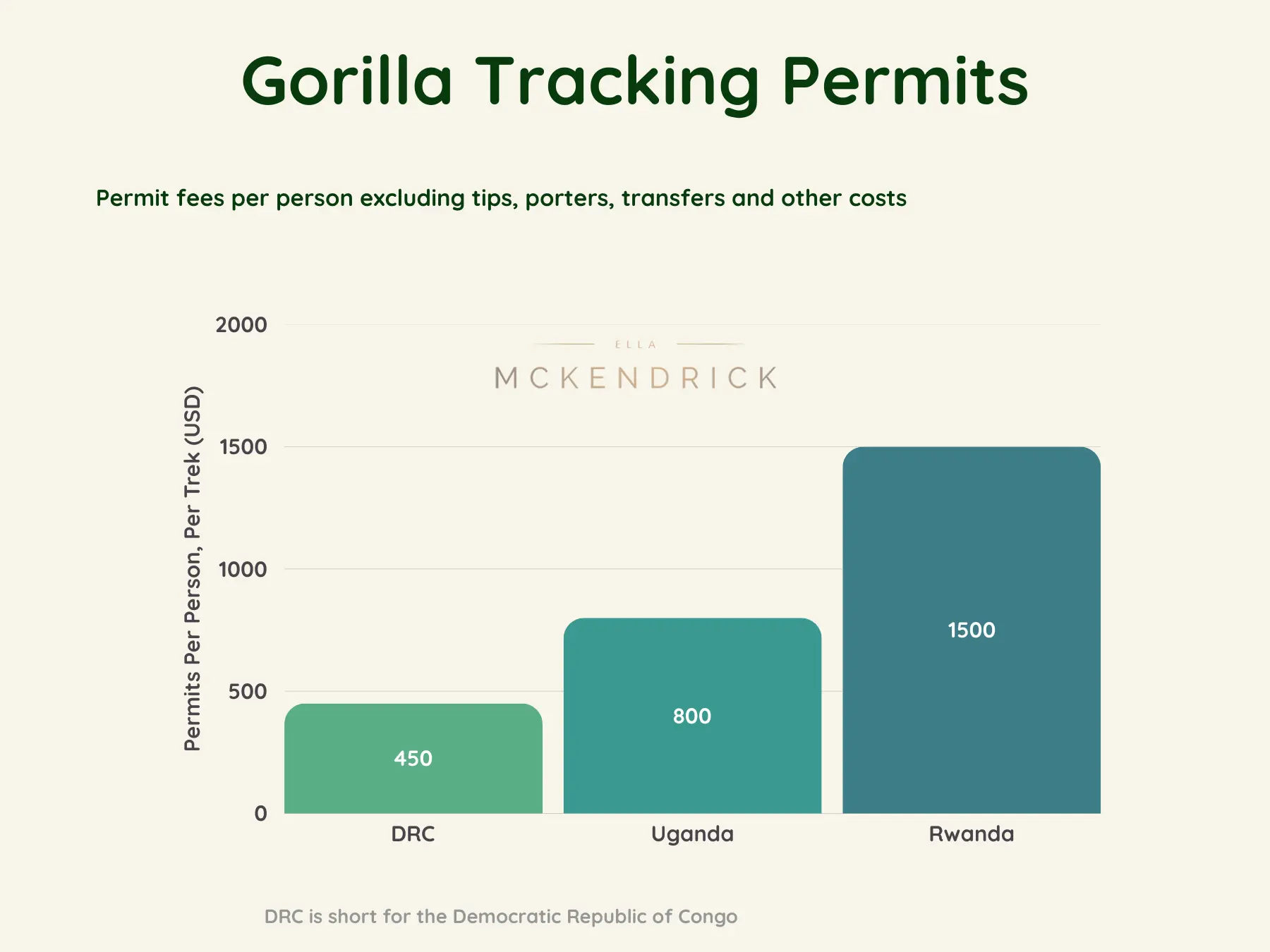
I’ve included a handy chart below with details of gorilla tracking permits by destination.
As well as gorillas, Rwanda offers excellent chimpanzee trekking in Nyungwe Forest National Park.
Declared a UNESCO World Heritage Site in 2023, the park houses one of the most ancient rainforests on the continent and measures 393 square miles (1,019 km²) in total. In addition to its habituated chimpanzee families, Nyungwe is home to 13 different monkey species as well as a large number of other mammals and birds.
And if that isn’t enough primate viewing, you can also see endangered golden monkeys in the volcanic Virunga Mountains lying between Rwanda, Uganda and DR Congo – the only location on earth they can be found in the wild.
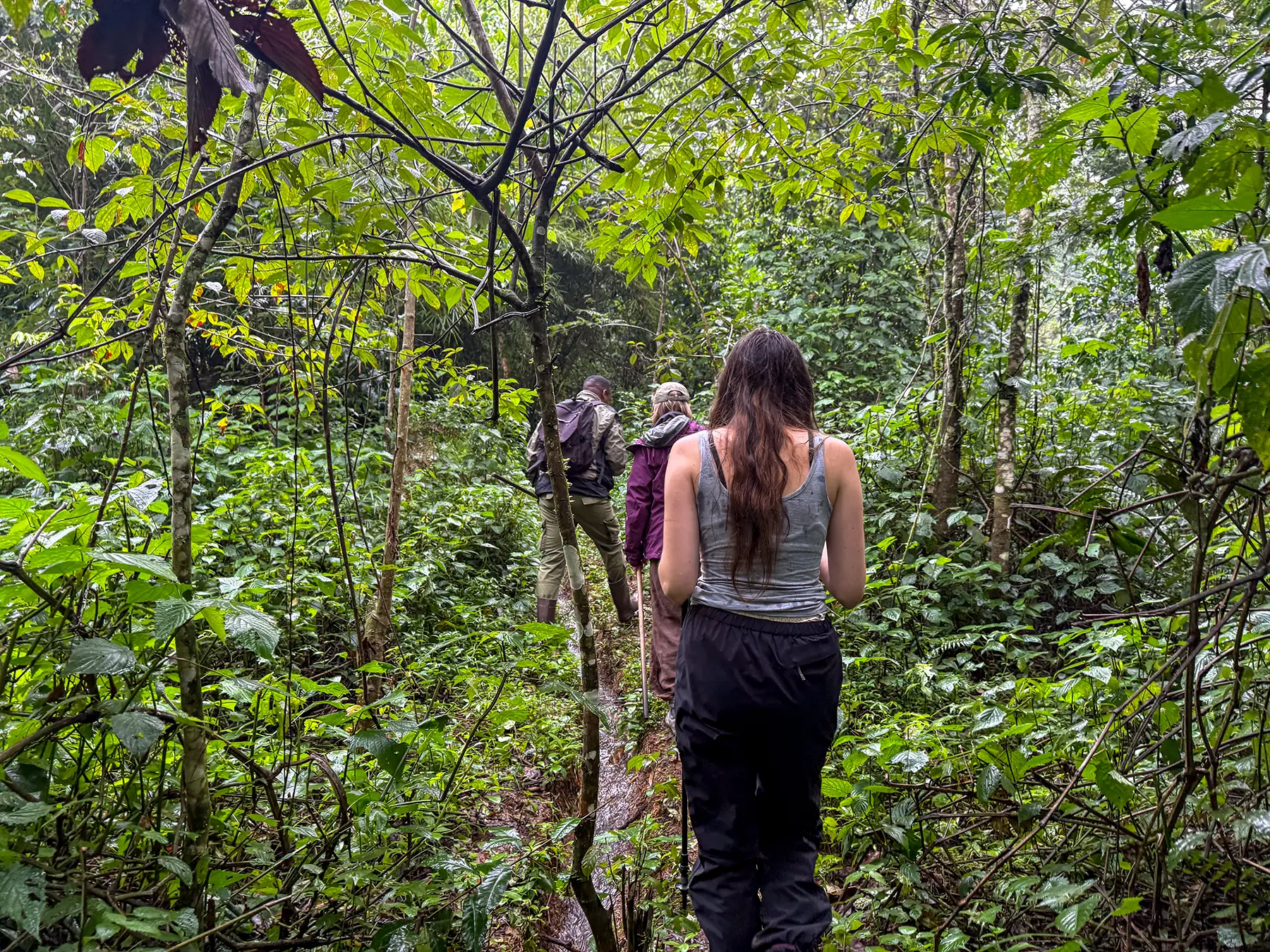
A Compact Country With Everything Within Reach
As safari destinations go, Rwanda is pretty tiny and even a week will give you ample time to visit each of its main parks without rushing. For example, Volcanoes is a 2.5-hour drive north of Kigali, while the southern gateway town of Musanze is situated right beside the park.
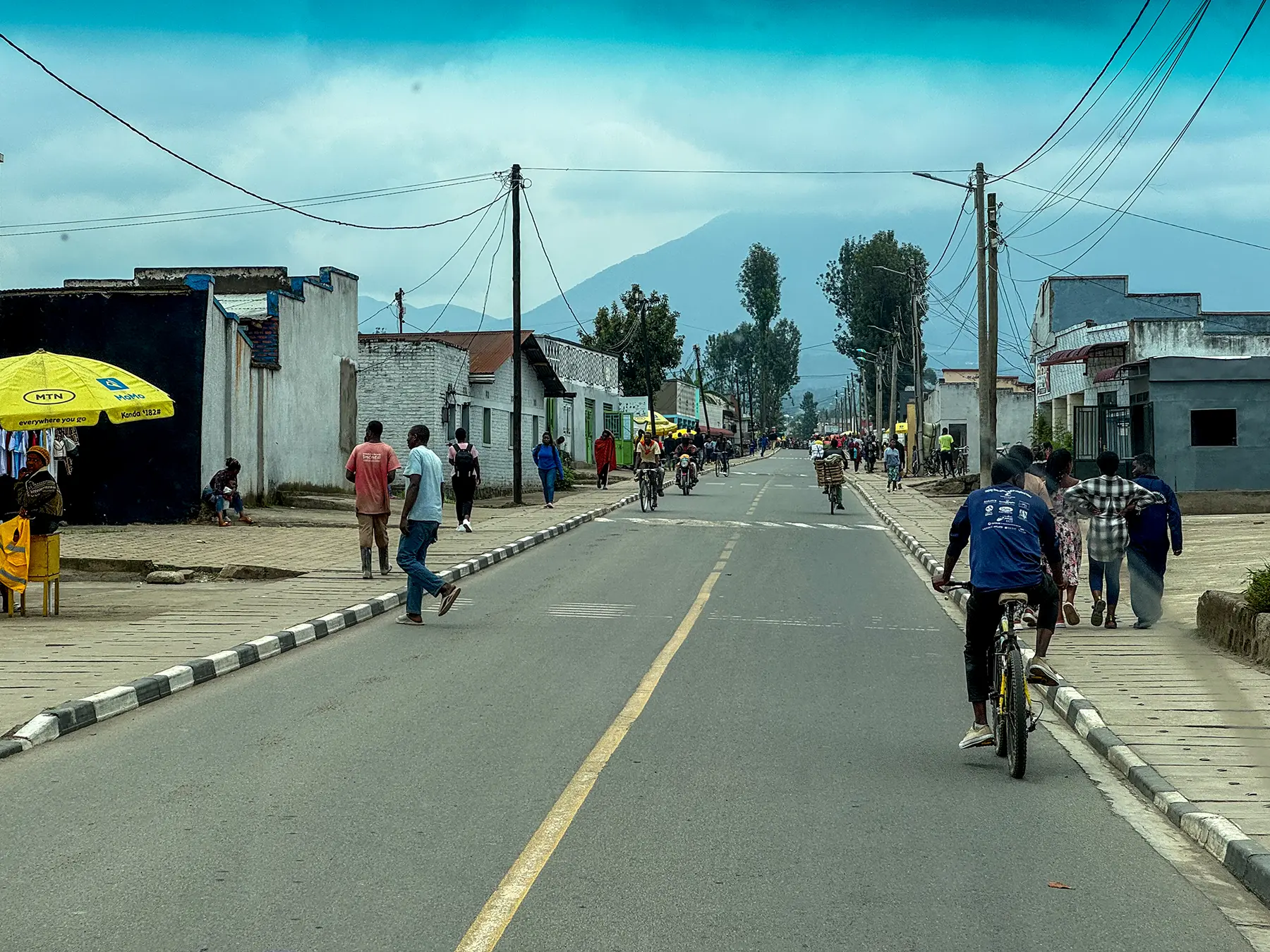
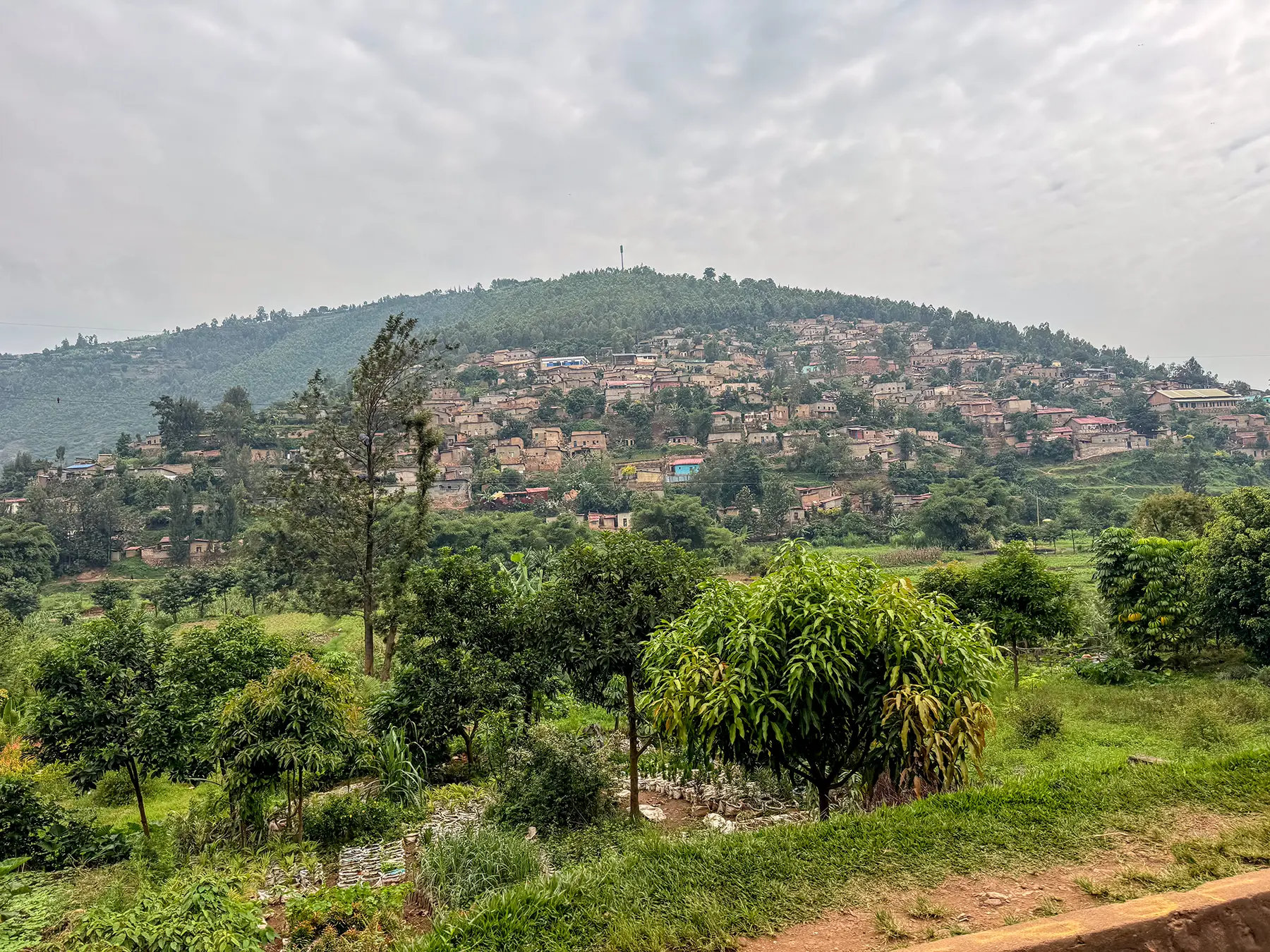
Thanks to Rwanda’s smooth, well-maintained roads and spectacular scenery, the comparatively little time you spend driving between parks is truly enjoyable. As you drive through its undulating green landscapes, passing terraced highlands and tea plantations nestled amid stunning rainforests and mountains, it’s easy to see why Rwanda is nicknamed the ‘land of a thousand hills’.
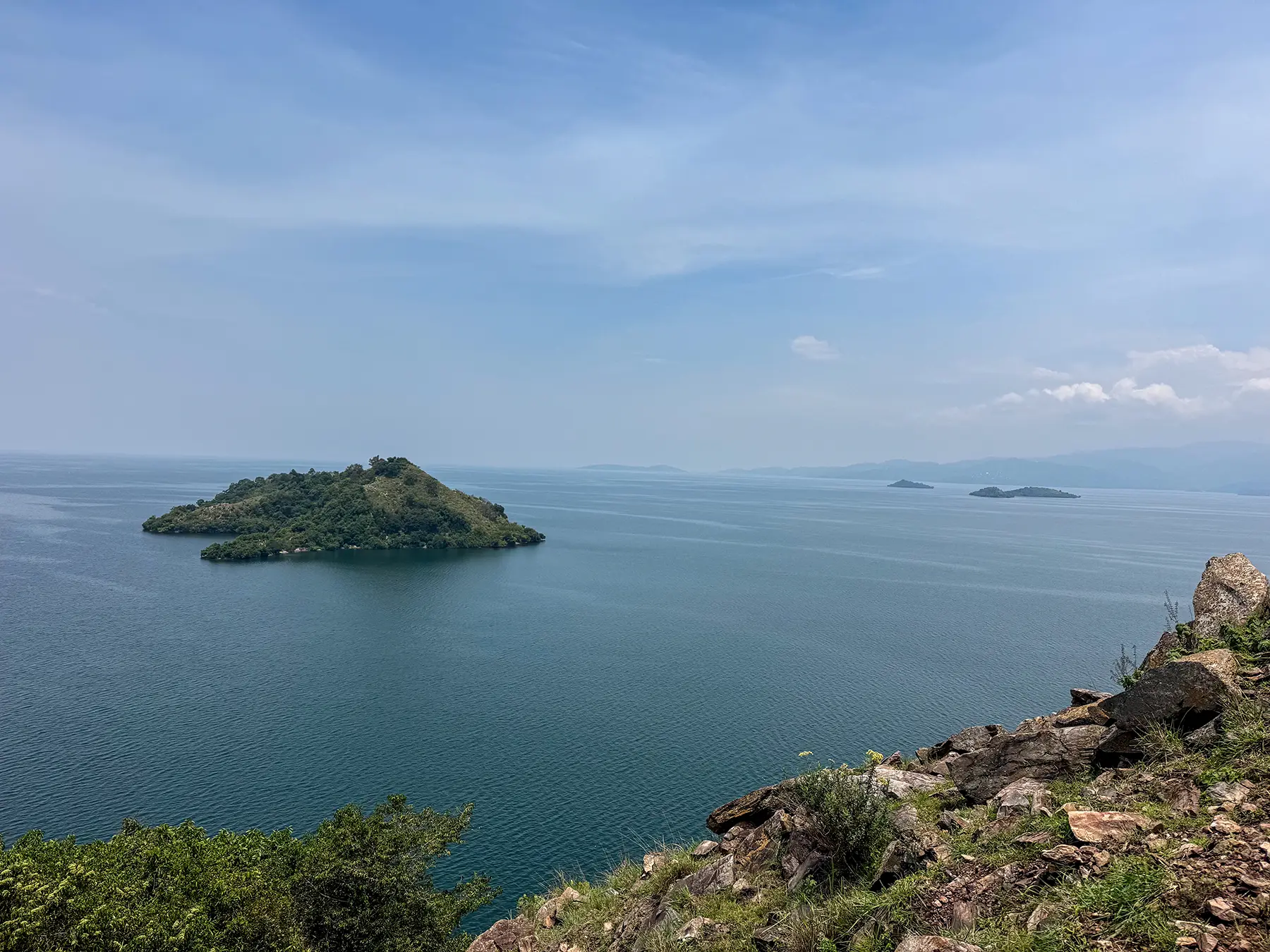
The exquisite Lake Kivu is a fantastic spot to break up the lengthier journey from Volcanoes to Nyungwe into two pleasant halves.
Having been to both countries, I found the drives were a lot shorter and smoother in Rwanda than those in next-door Uganda, but prices in Rwanda were quite a bit higher.
All of the Big Five
Rwanda’s rhino population was almost entirely eliminated in the 1990s and early 2000s as a result of extensive poaching. Similarly, lions were officially declared extinct in 2000 after years of hunting and habitat destruction in the wake of the 1994 Rwandan Genocide.
Today, however, all of the Big Five can be found in Rwanda’s Akagera National Park following the successful reintroduction of lions to the park in 2015 and rhinos from 2017.
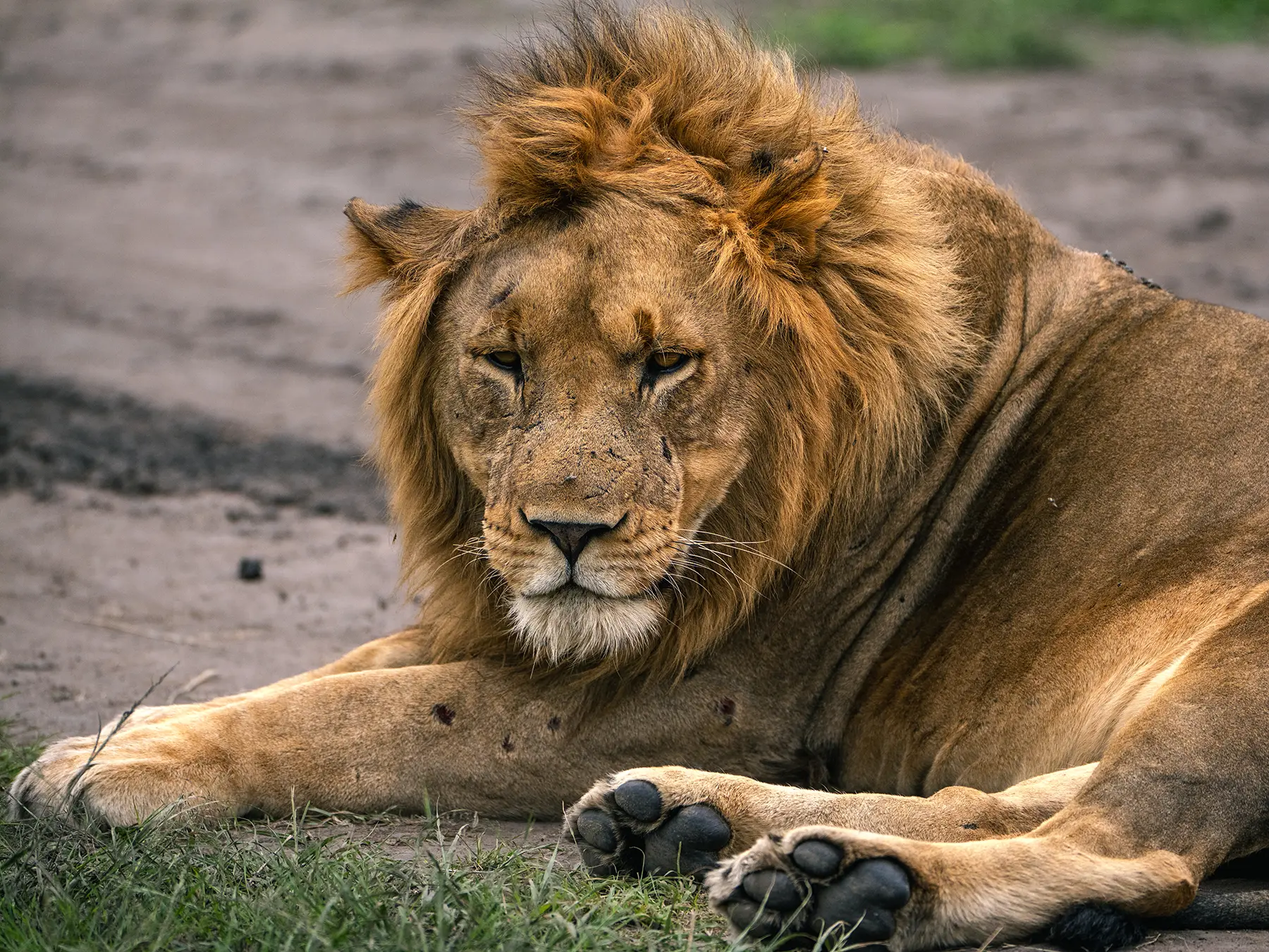
This huge achievement is testament to Rwanda’s herculean efforts in the area of wildlife conservation and restoration as part of its remarkable recovery and ranks among Africa’s greatest conservation success stories.
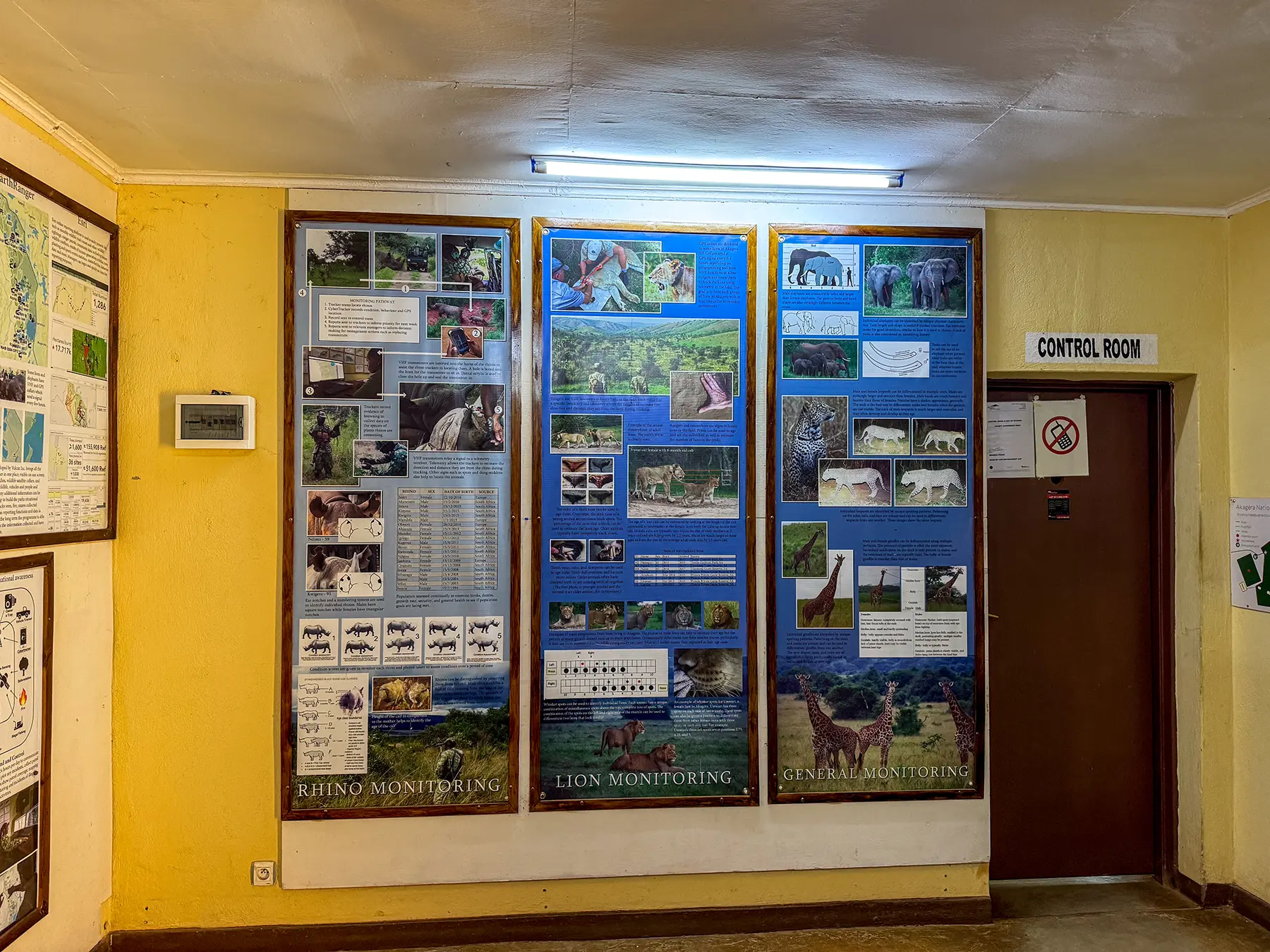
While visiting Akagera National Park, I was treated to some spectacular lion and rhino sightings on Kilala Plain, which totally exceeded all of my expectations.
Almost as soon as we set out on our game drive, we encountered three lions, two males and a female, just having a snooze in the middle of the road!
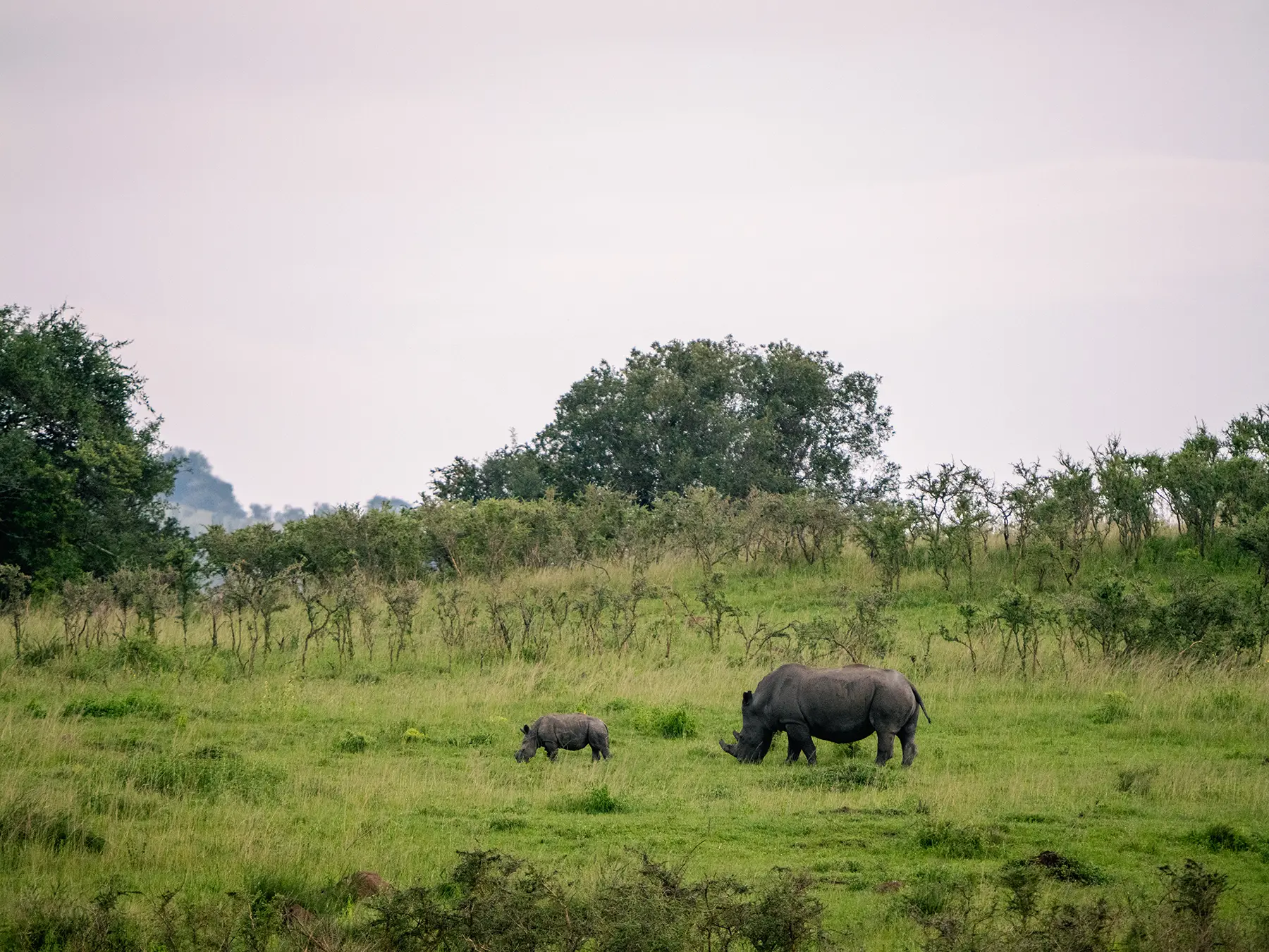
Then, we saw an incredible four rhinos nearby, grazing out in the open, including a mother and calf. After that I spotted three more a little further along the plain! They were grazing placidly beside a sleeping lion, neither animal seeming too bothered about the other’s proximity.
I had never seen so many rhinos before, and it was absolutely amazing! It almost seemed as though they’d gathered on purpose to showcase the success of Akagera’s conservation efforts.
Pros of Safaris in Rwanda
- Volcanoes National Park offers especially convenient, pleasant gorilla trekking, with less challenging conditions and easier access via road.
- Volcanoes National Park is so easy to get to as it’s located a convenient 2.5-hour drive from Kigali International Airport.
- Rwanda is a great country for visitors as it’s one of East Africa’s safest countries and has a fantastic network of well-kept roads as well as clean cities and strong local administration.
- The Virunga region is the only place on earth you can find the endangered golden monkey in the wild, and golden monkey trekking in the Virunga Mountains is a wonderful experience you simply can’t enjoy anywhere else.
- You can see all of the Big Five (lions, leopards, rhinos, buffalos and elephants) in Akagera National Park, and I had some of my most memorable lion and rhino sightings on Kilala Plain.
Cons of Safaris in Rwanda
- Gorilla trekking permits are very steeply priced: $1,500 per person compared to $800 in Uganda. This can make your safari a lot pricier, especially if you plan to do more than one trek.
- Accommodation also costs more in Rwanda than Uganda. Prices start at $60-$120 per night for budget options, with luxury accommodation near Volcanoes National Park often charging over $1,500 per night.
In the next section, we’ll look at the best way to book your Rwanda safari.
How Do You Book a 10-Day Rwanda Safari?
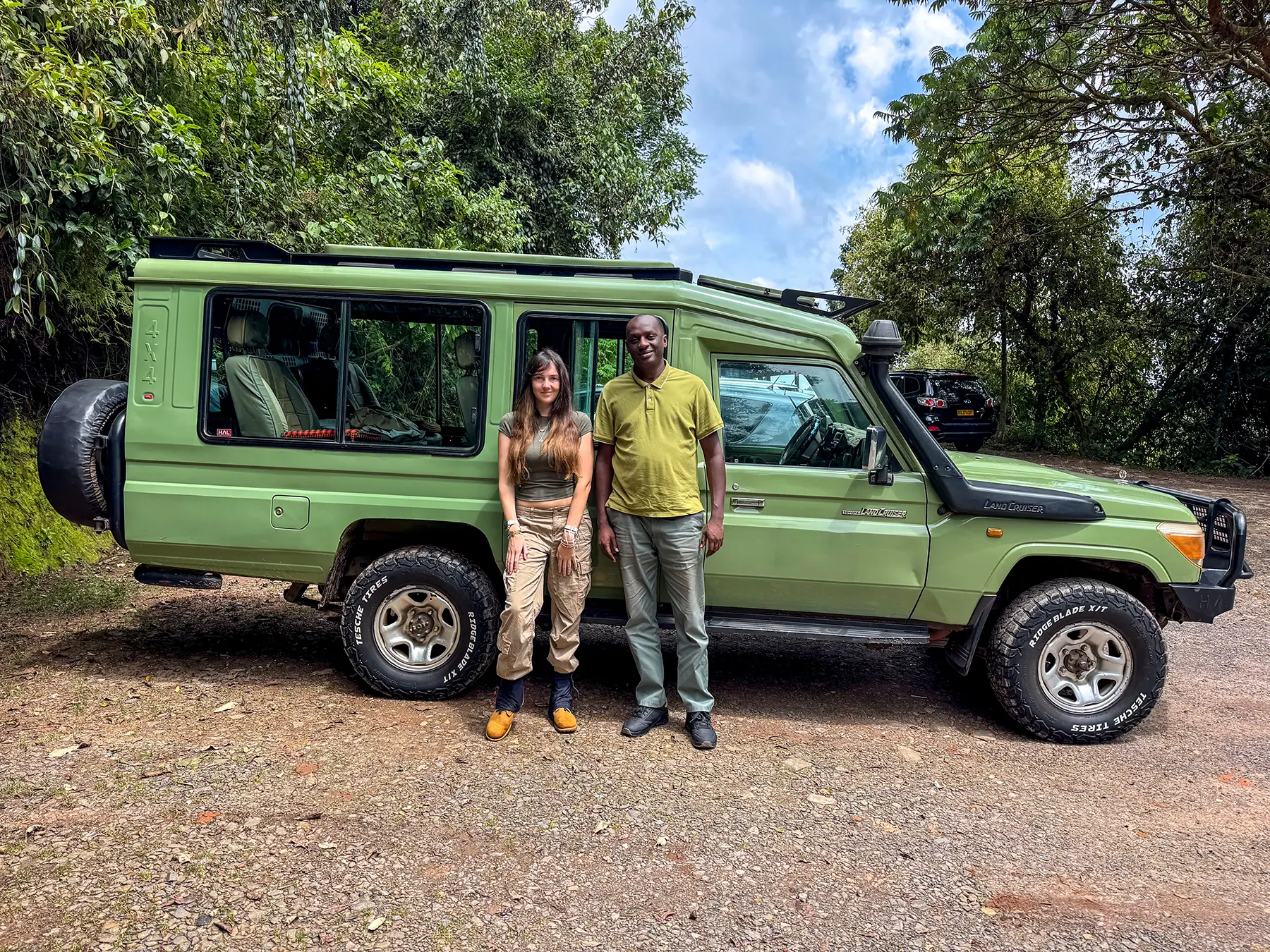
For me, there’s one clear winner when it comes to booking your 10-day safari in Rwanda, and that’s to go through a reputable local tour operator. I used this option for my own Rwanda trips and they have always been great, offering the best value for money as well as being the most convenient way to book.
If you prefer, though, you could always book via an international travel agent (at a markup of 30-170% compared to booking locally) or you can self-drive, making all of the arrangements yourself.
Below, we’ll have a look at all three options from the perspective of pricing, flexibility and overall experience.
You can get quotes from the same local tour companies I use to organise my own trips here: Safaris By Ella
Booking Options at a Glance
| Option | Cost | Flexibility | Best for |
|---|---|---|---|
| Local tour operator | $$ | High | Most travellers, best value and experience, maximising wildlife sightings |
| Self-drive | $ | Extremely high | Seasoned drivers who are comfortable on gravel roads and good at wildlife tracking and spotting |
| International agent | $$$ | Medium | Travellers happy to pay 30-170% more than with a local tour operator for a package that includes both international flights and safari. |
Why I Recommend a Local Tour Operator for Rwanda
I’ve tried all three ways of booking a safari and for me, there’s no contest – local operators are unquestionably the best!
Not only do they have unrivalled on-the-ground knowledge of the locality and its wildlife, they’ll also take care of everything except your international flights. That includes your trekking permits (mountain gorillas, golden monkeys, and chimpanzees), game drives, a dedicated driver-guide, lodge or camp accommodation, airport transfers, transfers between parks, and even your park entry fees.
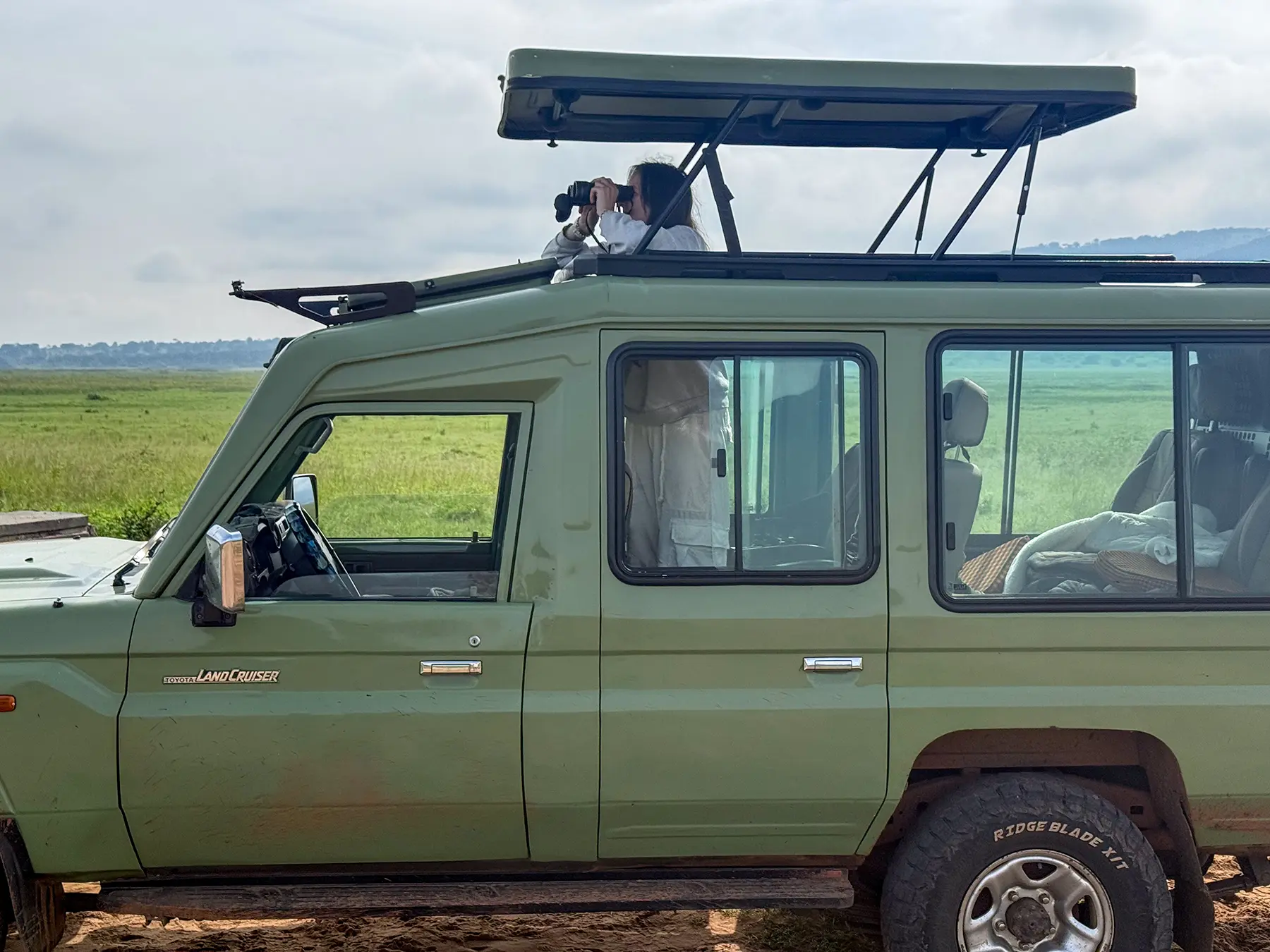
For my first few trips, I booked directly or via hotels, but quickly realised that this entailed a huge amount of legwork, from checking lodge reviews and following up on confirmations to researching which gate was best for accessing each park.
If you book your Rwanda safari with a reputable local operator, they take all this hassle off your hands – you just get up in time for your 7 am pickup at the hotel, the driver brings you to the briefing hut on time and your adventure unfolds.
You might think this sounds like a pricey service, but in reality, there isn’t much difference in price between self-booking and booking with a local operator. This is because local agents can access preferential lodge rates and many also have their own safari vehicle fleet.
What’s more, because your local operator will select the perfect lodge for each section of the parks you visit, your itinerary will be far superior, with less driving time and more time for wildlife sightings. And thanks to their strong relationships with lodges in the area, they’re often able to snap you up a room even when a lodge appears booked up online.
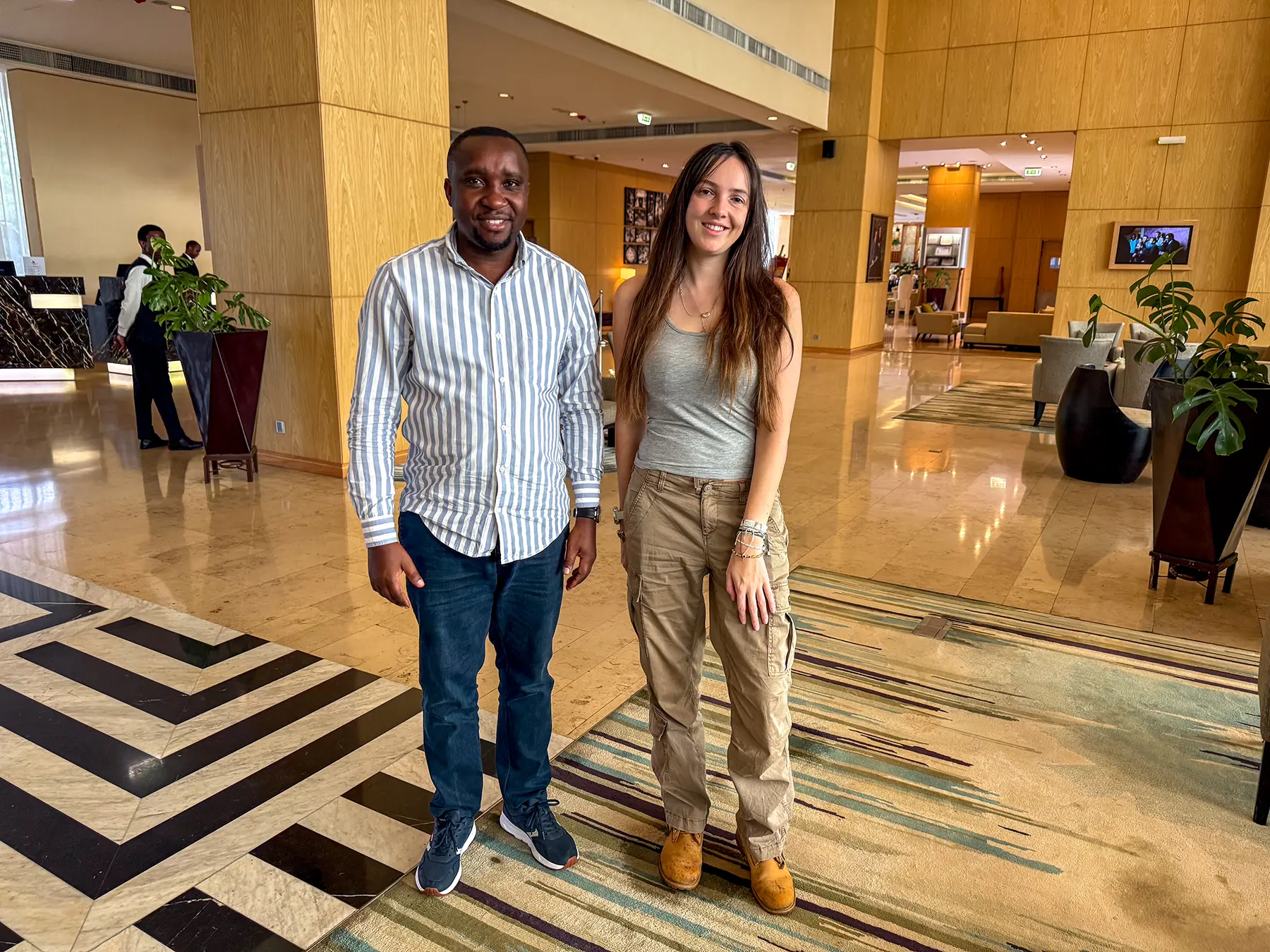
What a Local Operator Gives You
- A comprehensive service, sorting everything from park permits to accommodation based on your requirements.
- Unmatched know-how thanks to extensive knowledge of the terrain, wildlife movements and tracking techniques as well as strong relationships with other providers.
- Access to a radio network of fellow professionals, sharing information to boost your chances of excellent sightings.
- Peace of mind: I’ve been on self-managed safaris and safaris arranged by local operators, and letting the experts sort everything makes for a much more relaxing experience.
- Excellent accommodation bookings – sometimes even when lodges appear sold out online.
What to Watch Out For
- We all love a bargain, but when it comes to booking a safari, the cheapest option is not necessarily the best. Standards can differ across operators, and significantly cheaper prices may sometimes entail poorer accommodation, less knowledgeable guides and cheaper parks, which can detract from your overall safari experience.
- Local operators generally don’t organise international flights, so you’ll need to book these separately.
Rwanda Booking Tips
Rwanda differs from other safari destinations in a few respects, which are worth considering when booking your trip.
- Gorilla permits: Gorilla permits sell out quickly – I’d recommend booking yours 6-12 months in advance if travelling during peak season (June-August and December-February) to avoid disappointment.
- Lodge proximity: When visiting Volcanoes National Park, I’d advise staying close to the park headquarters as gorilla treks leave from here at 7 am and the single-track road can get busy. Neither your group nor the gorillas will wait for you if you get stuck in traffic!
- Protective clothing: Waterproof gaiters are recommended for both gorilla and chimp trekking. While many upscale hotels provide these, you should check ahead with your tour operator so you know whether you need to bring your own.
- Single operator for border crossings: If your trip will take you to both Uganda and Rwanda, you can book a combined Uganda and Rwanda trip, including the border crossing, via a single Kigali- or Kampala-based operator. This makes the whole process a lot easier.
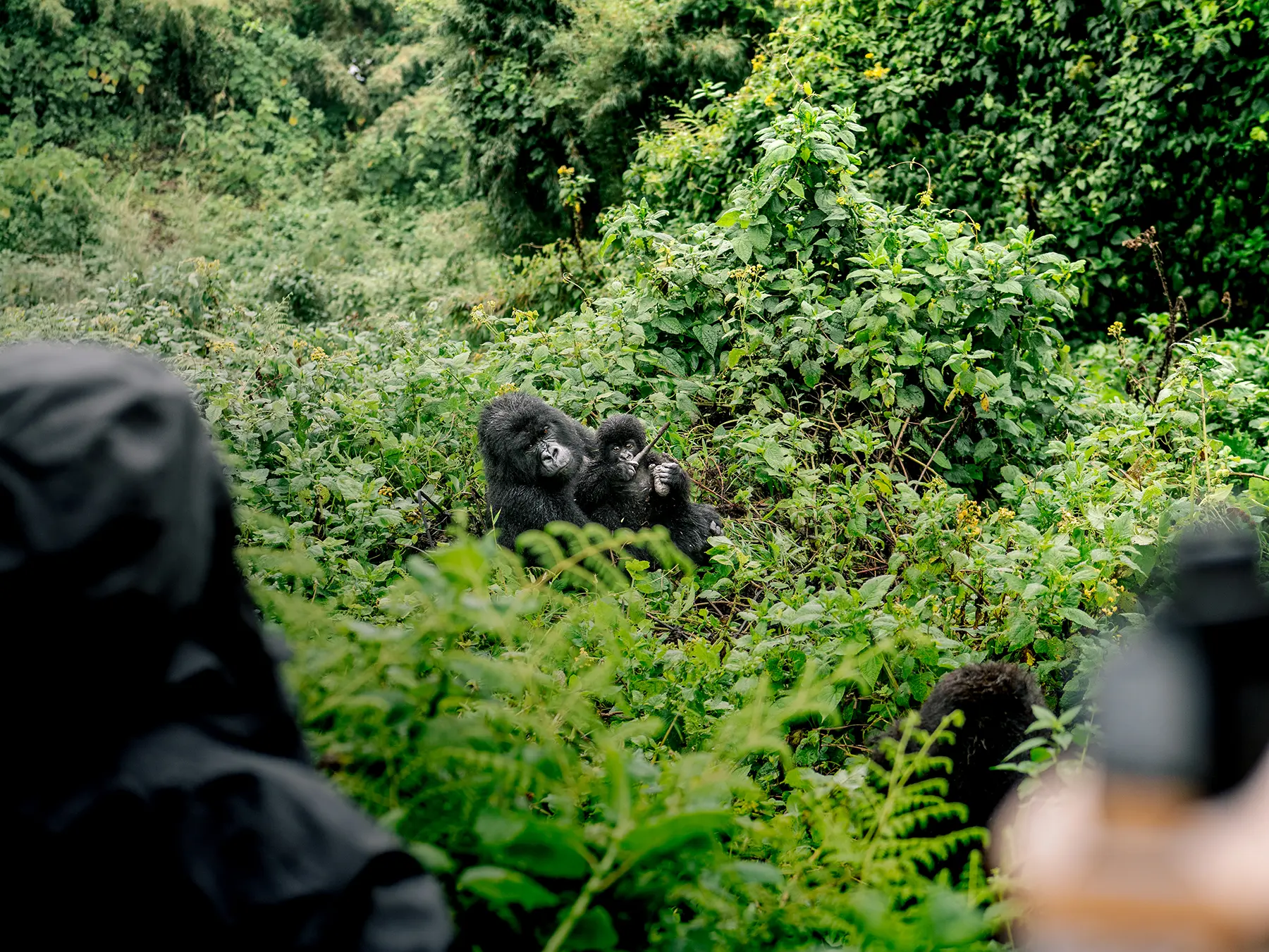
Financial Protection When Booking Direct With a Local Tour Operator
One reason people might consider booking with an international travel agent is for the reassurance that their payment is protected during the process. However, you can enjoy a similar level of protection when booking with a local operator with just a few simple steps.
Card payments typically offer purchase protection (in the UK, paying the operator directly by credit card gives you Section 75 protection on bookings over £100 and up to £30,000; debit cards only have chargeback, which is weaker and time-limited), while a decent travel insurance policy will cover you in the event of any interruption to your trip.
To further minimise risk, I’d also advise booking with a recommended local safari company that will only charge the balance of your payment closer to the date of your trip.
Recommended Booking Options For Your 10-Day Rwanda Itinerary
Private Safari
Most popular & best experience – typical prices for this itinerary start from $450 per person per day.
Visit safarisbyella.com for free quotes from trustworthy local tour companies I use to book my own trips.
How to Book with the Best Local Safari Companies
- Comparison sites which provide multiple quotes from verified suppliers such as Safaris By Ella
Join the rapidly growing tribe of over 1,000 travellers who’ve booked their dream safari using my insider tips and recommendations.
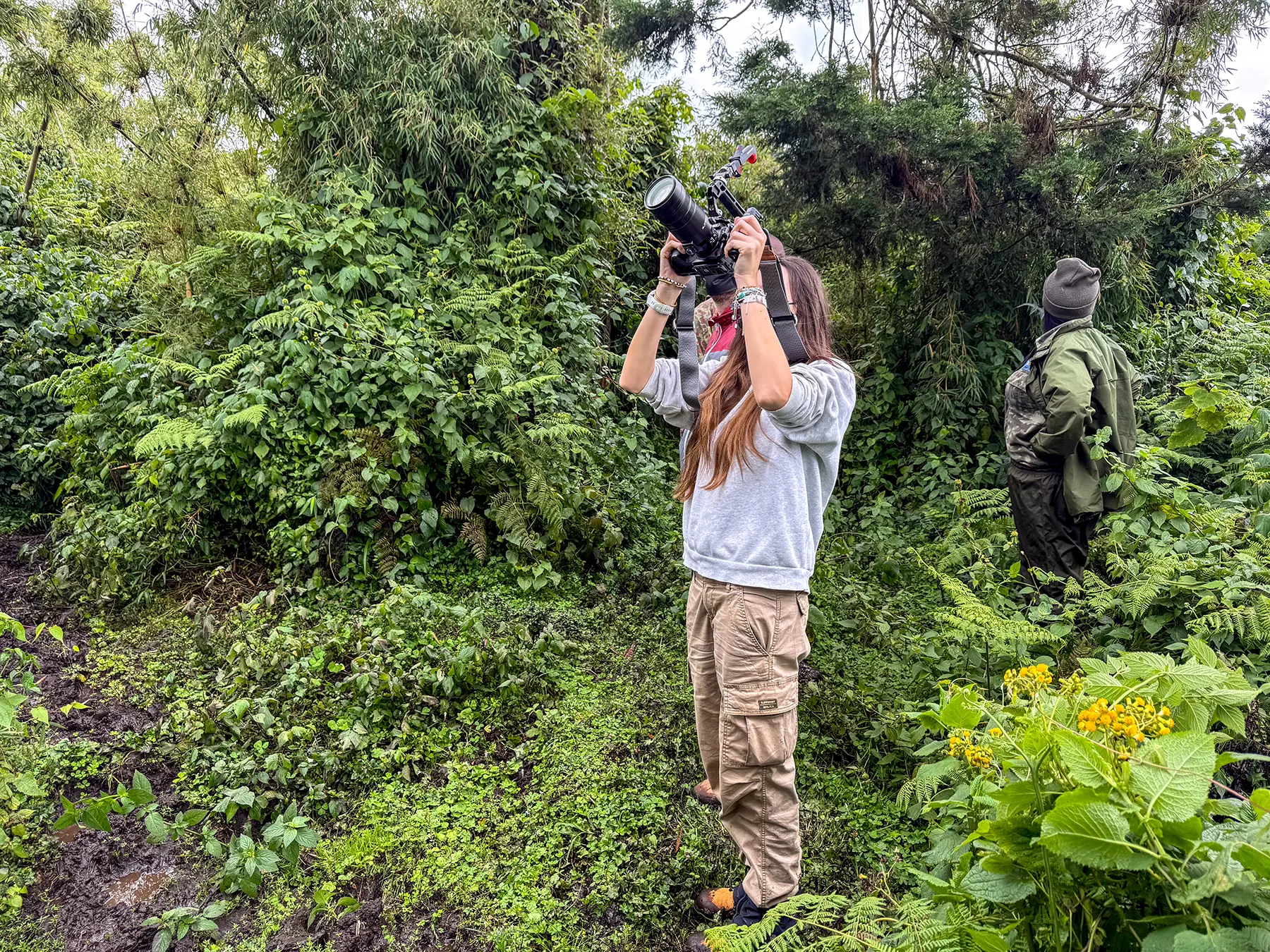
Recommended Booking Options For Your 10-Day Rwanda Itinerary
Safari with local tour operator
Most popular & best experience – typical prices for this itinerary start from $450 per person per day.
Visit safarisbyella.com for free quotes from trustworthy local tour companies I use to book my own trips.
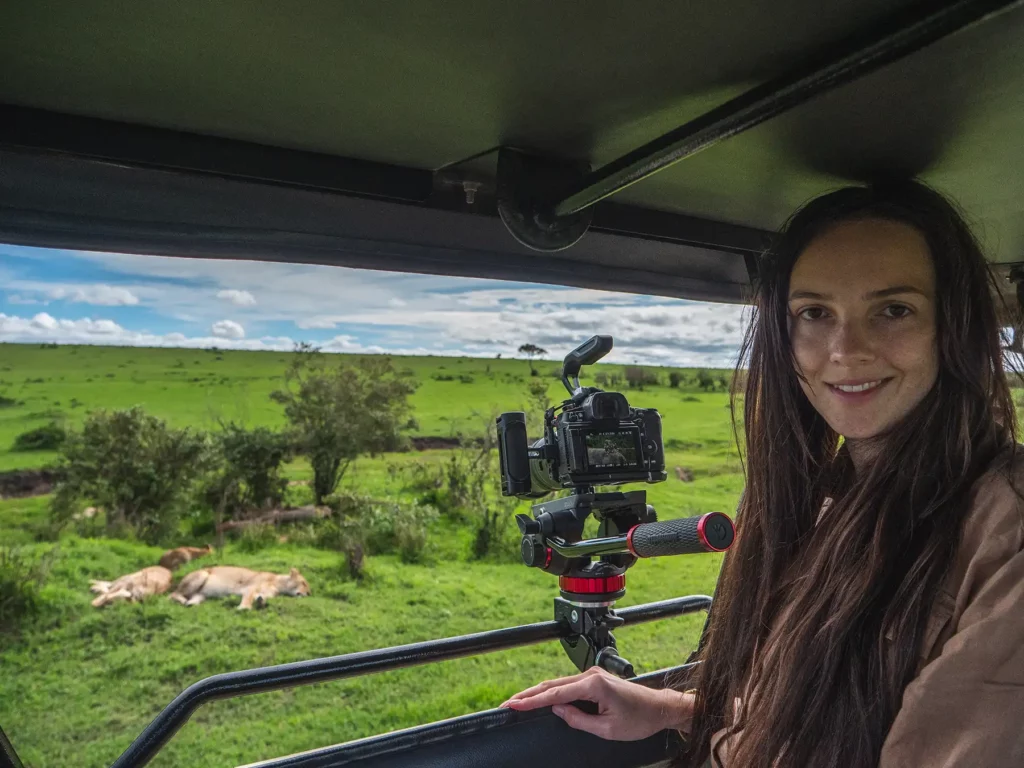
Should You Choose a Private or Group Rwanda Safari?
In my experience, private safaris are the best option for most safari-goers in Rwanda as they give you excellent control over your schedule, game drive route and the length of time you can spend at each wildlife sighting. I feel a group safari, where you share a vehicle with other travellers, really only makes sense for solo travellers visiting Rwanda on a limited budget.
My own priorities are freedom and ensuring an optimal photography experience, and that is why I always book private safaris when I go to Rwanda.
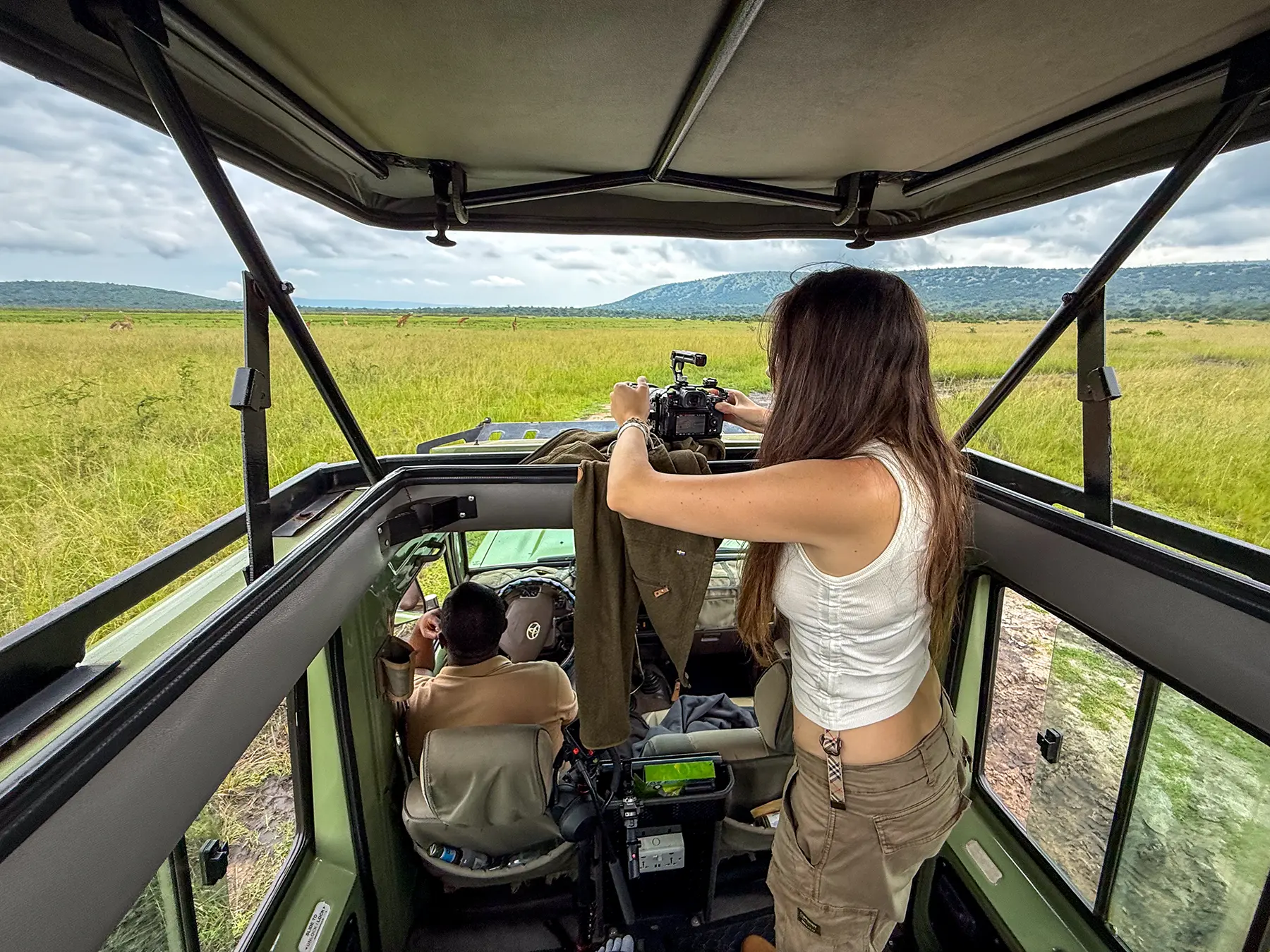
In addition to the advantages I’ve already mentioned, your guide on a private safari is dedicated entirely to you, so they’ll focus on the sightings you most want to prioritise. Equally importantly, they won’t have to waste valuable safari time on pick-ups or drop-offs as they would for a group safari, allowing you to maximise sightings at sunrise and sunset, when wildlife are most active.
Private vs Group at a Glance
| Private safari | Group safari | |
|---|---|---|
| Cost per day | $450-600 per person | $300 per person |
| Flexibility | Total control of schedule and route | Fixed times, pre-planned routes |
| Vehicle | Dedicated Land Cruiser and guide | Shared with 6-8 other travellers |
| Best for | Couples, families, photography enthusiasts | Solo travellers on a budget |
The place in Rwanda where I found the distinction between private and group safaris mattered most was Akagera. Here, being in a private vehicle meant we could spend longer at our incredible lion and rhino sightings on Kilala Plain and also allowed us to dictate which sightings we wanted to focus on.
Conversely, the walking element of a gorilla or chimpanzee trek is always a group activity with 6-8 people regardless of what type of safari you’ve booked. However, you’ll still notice a difference in terms of the transfers, the game drives and your schedule flexibility between treks.
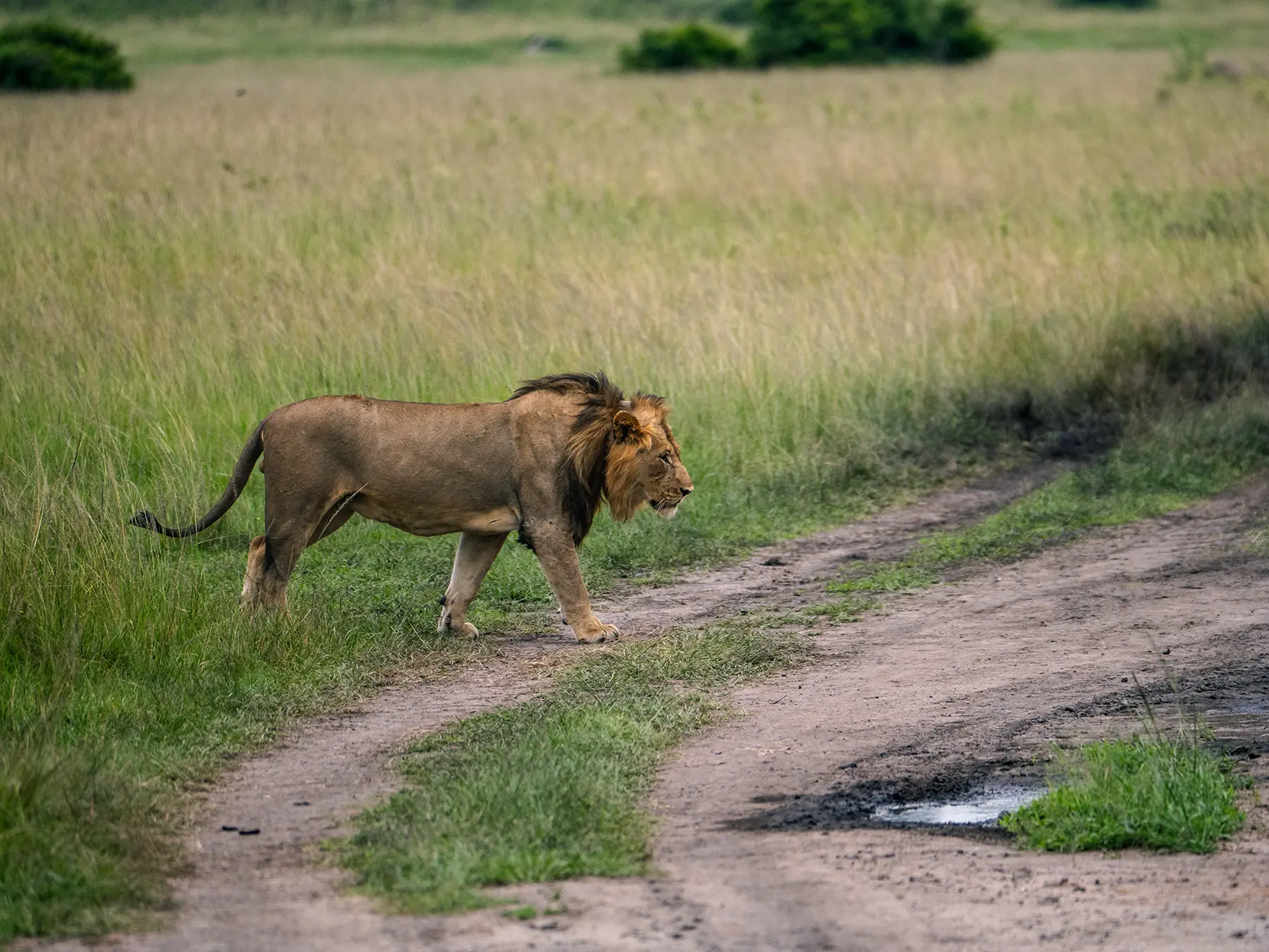
Many people assume that a private safari is dramatically more expensive than a group one, but the price difference actually isn’t that great, especially for a group of two or more. Pricing for a private Rwanda safari with budget accommodation and a dedicated Land Cruiser starts at $450 per person per day compared to around $300 for the group equivalent.
As the cost of a private vehicle is split among the occupants, travelling as a couple or a small family or friend group can narrow the price gap considerably. When you consider this and also take into account the improved experience a private safari offers, going private can be excellent value for the majority of travellers.
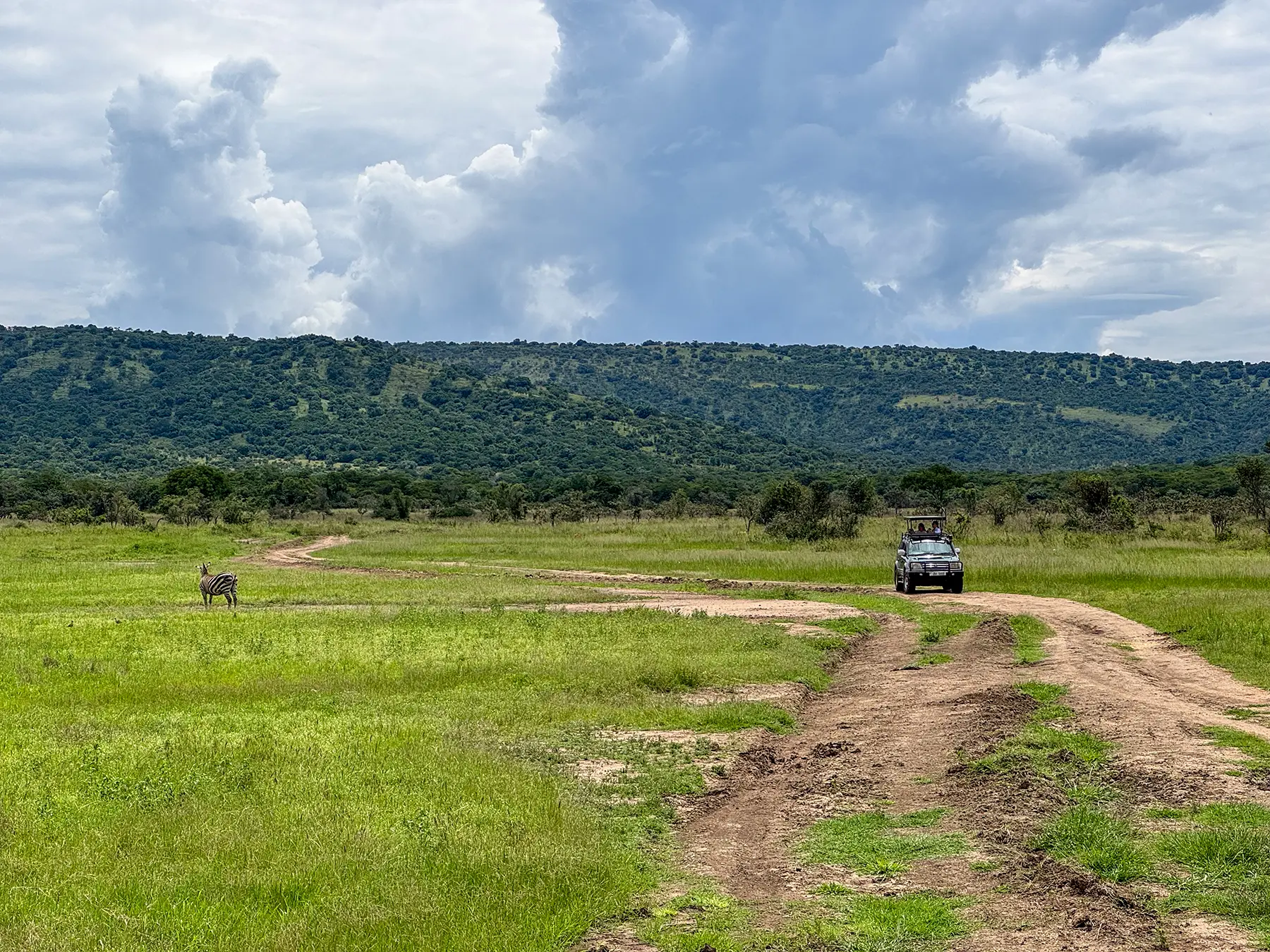
My Recommendation
If your budget allows, I always recommend a private safari. I prefer to limit numbers to 3-4 people when travelling with others, as this means we can enjoy outstanding comfort and flexibility.
More importantly, when there are only 3-4 people in the vehicle, everyone can move around sufficiently at each sighting to ensure a clear view and the best possible photographs. I’m also careful to request an open-sided Land Cruiser, as these are amazing for photography and also help you feel so close to the wildlife!
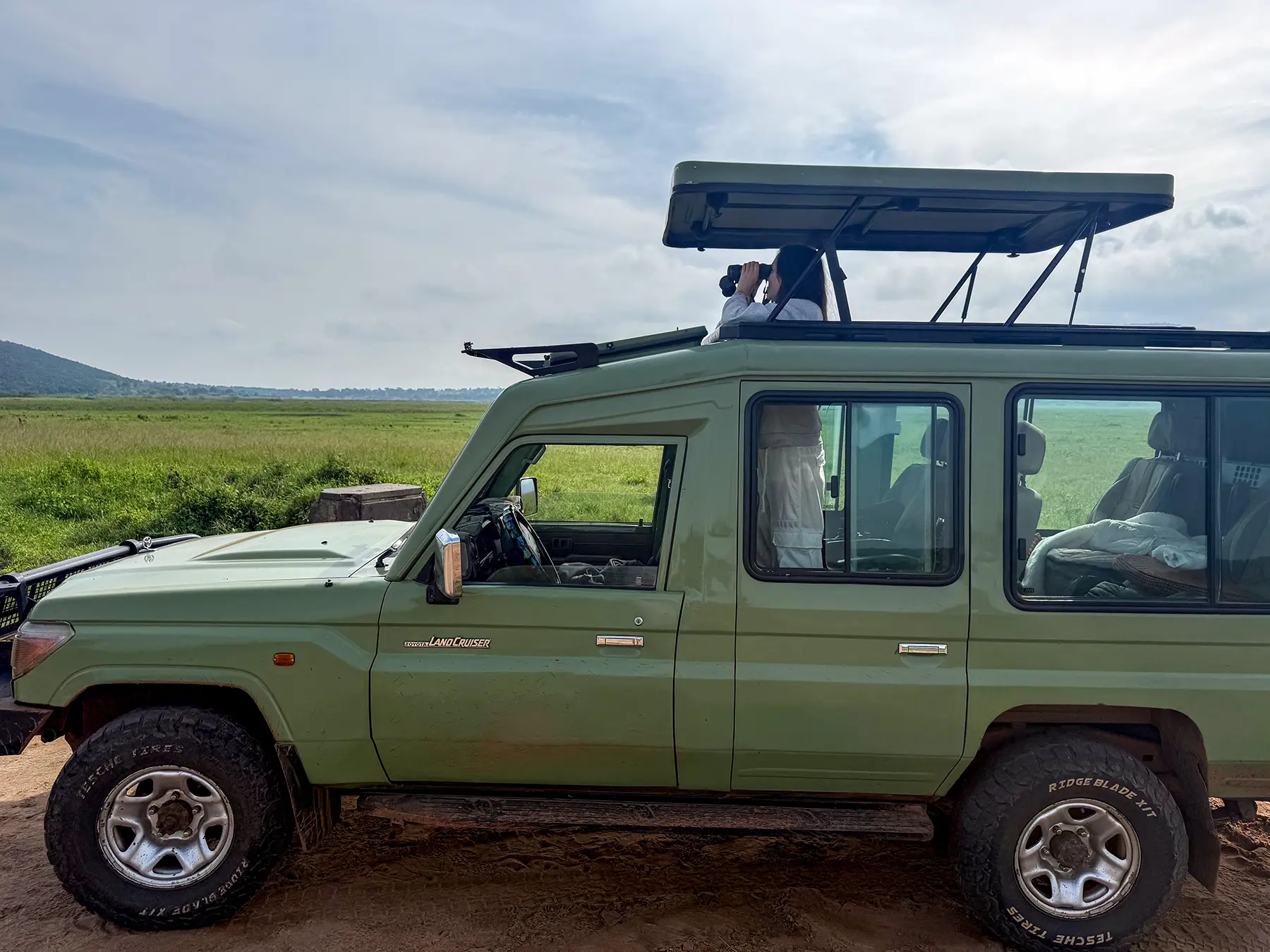
How Much Does a 10-Day Rwanda Safari Cost?
Prices for a private 10-day Rwanda safari generally start at $6,250 per person total for budget accommodation, $7,150 for mid-range and $9,650 for luxury. This includes accommodation, food, transport, park fees, gorilla, golden monkey and chimp trekking permits and game drives.
Breaking this down to the daily average, a private safari in Rwanda costs from $450 per person per day before trekking permits. Starting at about $300 per day, shared group safaris are a little cheaper.
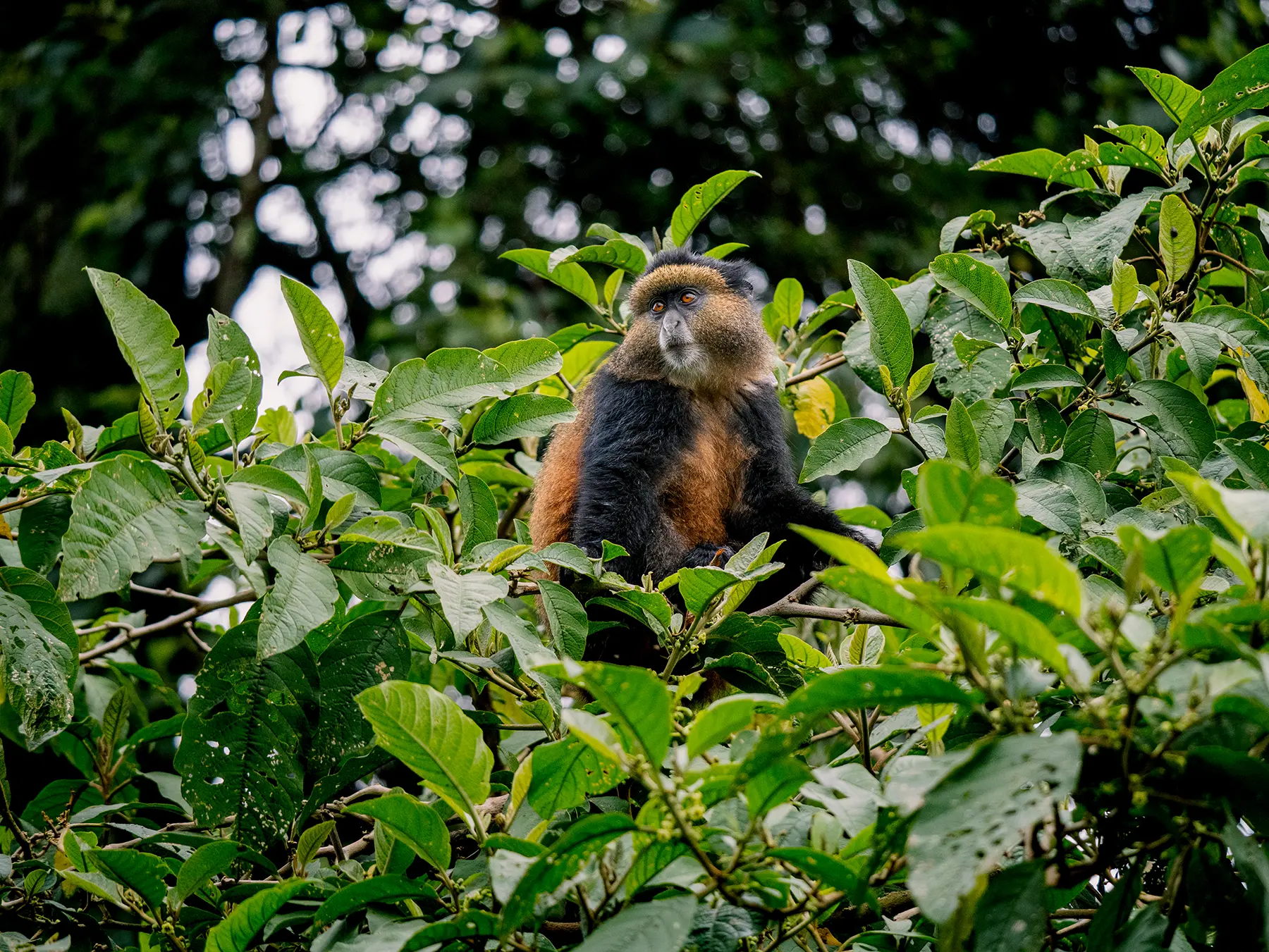
By far the biggest single line item is your gorilla permit, which will set you back $1,500 per person per trek.
Surprising as it may seem, the average cost per day is usually lower for a 10-day Rwanda trip than for a 3-day gorilla-only trip. The reason for this is that the days you spend on safari offset the significantly more expensive trekking days. Similarly, expanding your itinerary to a 14-day Uganda and Rwanda trip will lower the daily average even further.
Below is a handy chart detailing typical Rwanda safari prices based on luxury level.
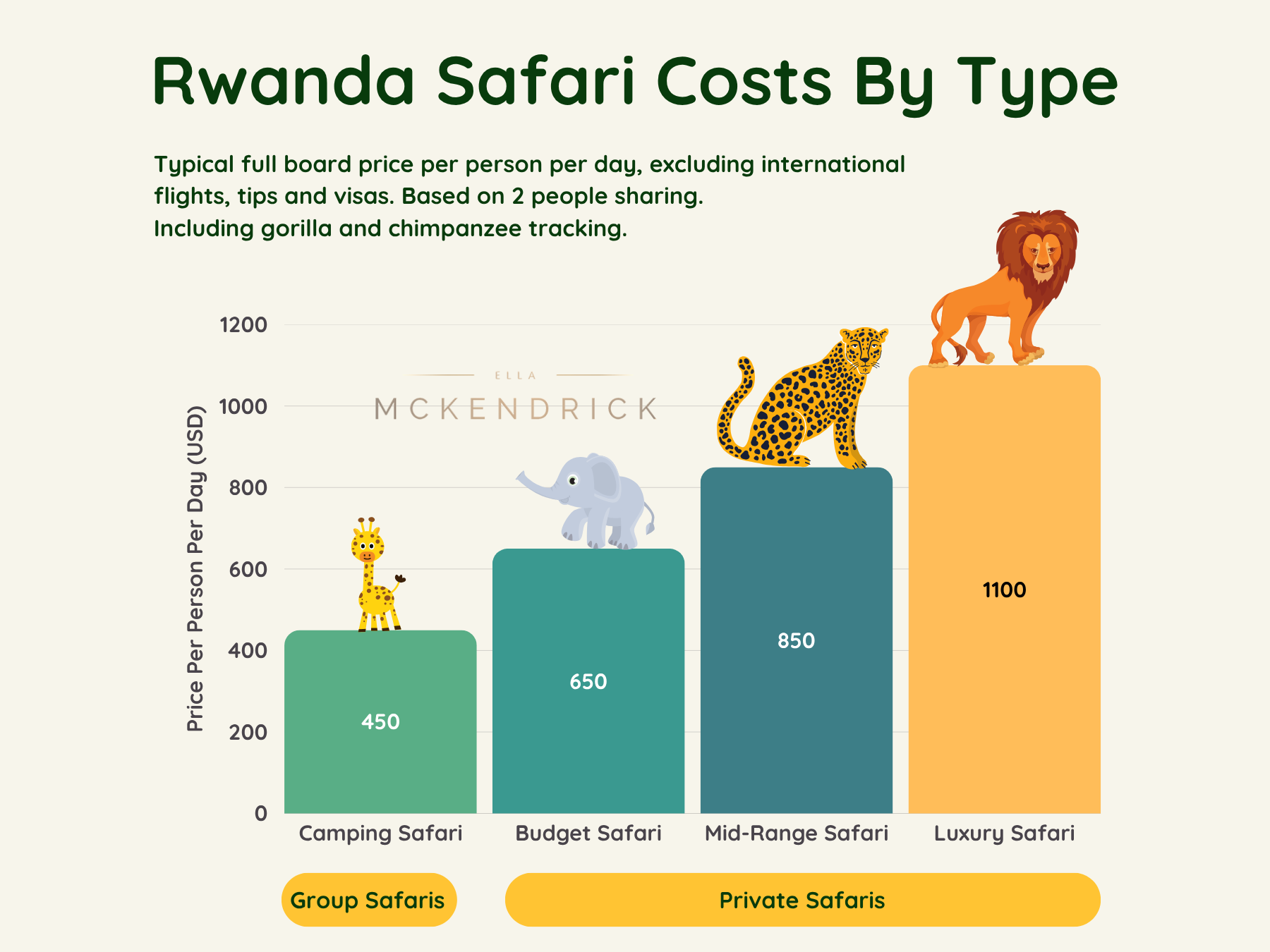
Safari Prices Typically Include
- National park fees
- Gorilla or chimp trekking permits
- Lodge and tented camp accommodation
- Full-board meals (breakfast, lunch and dinner)
- Drinks at most lodges (soft and alcoholic)
- Transport and vehicle
- English-speaking driver guide
- Game drives, boat cruises and walking activities
Safari Prices Typically Do Not Include
- International flights
- Tips and gratuities for trackers, guides and porters
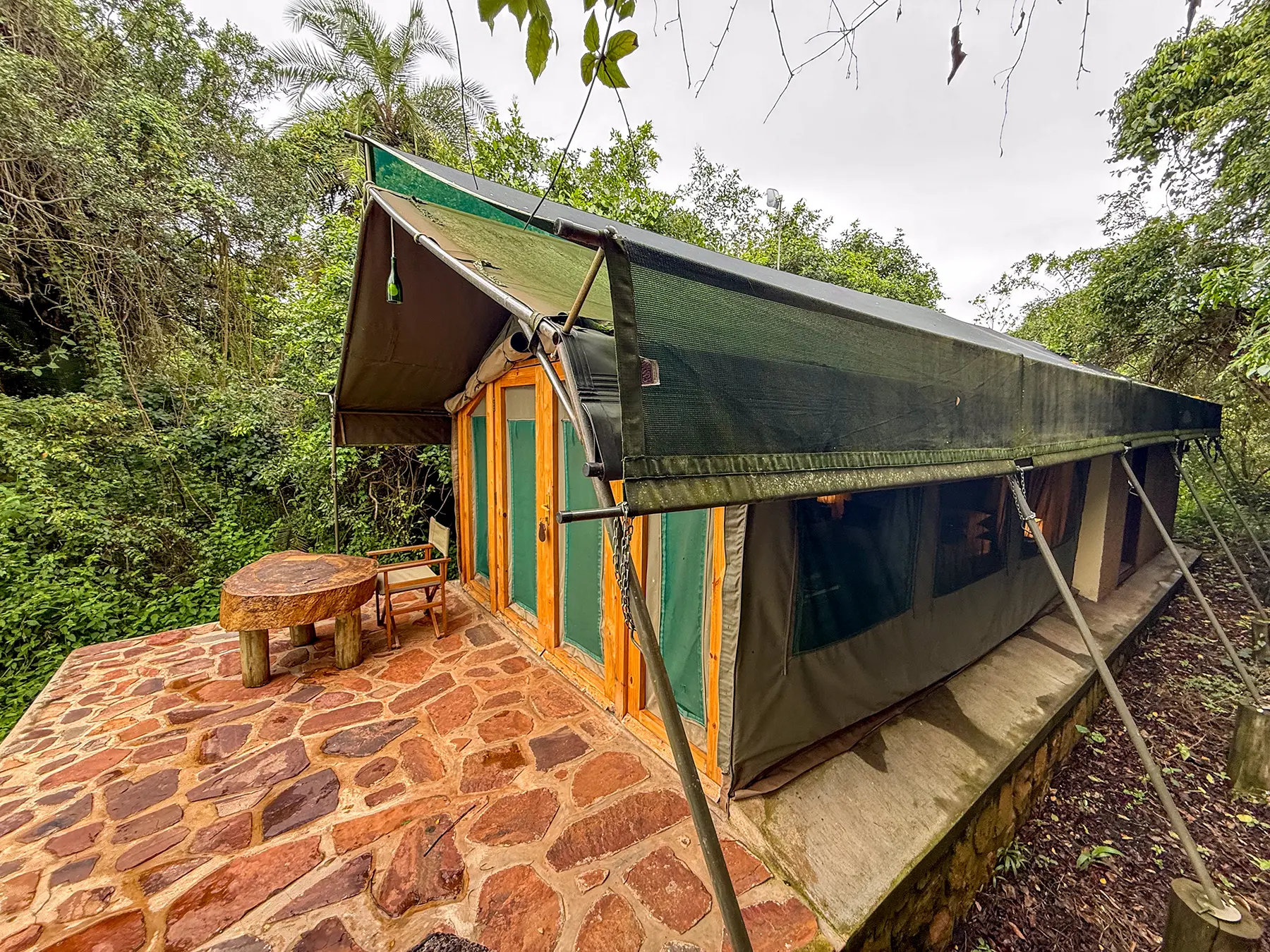
How Do Rwanda Safari Costs Compare to Other African Safaris?
Rwanda safari costs are generally higher than in Uganda. In particular, gorilla trekking permits cost almost twice as much in Rwanda as they do in Uganda ($1,500 vs $800), while accommodation is also slightly costlier across all tiers.
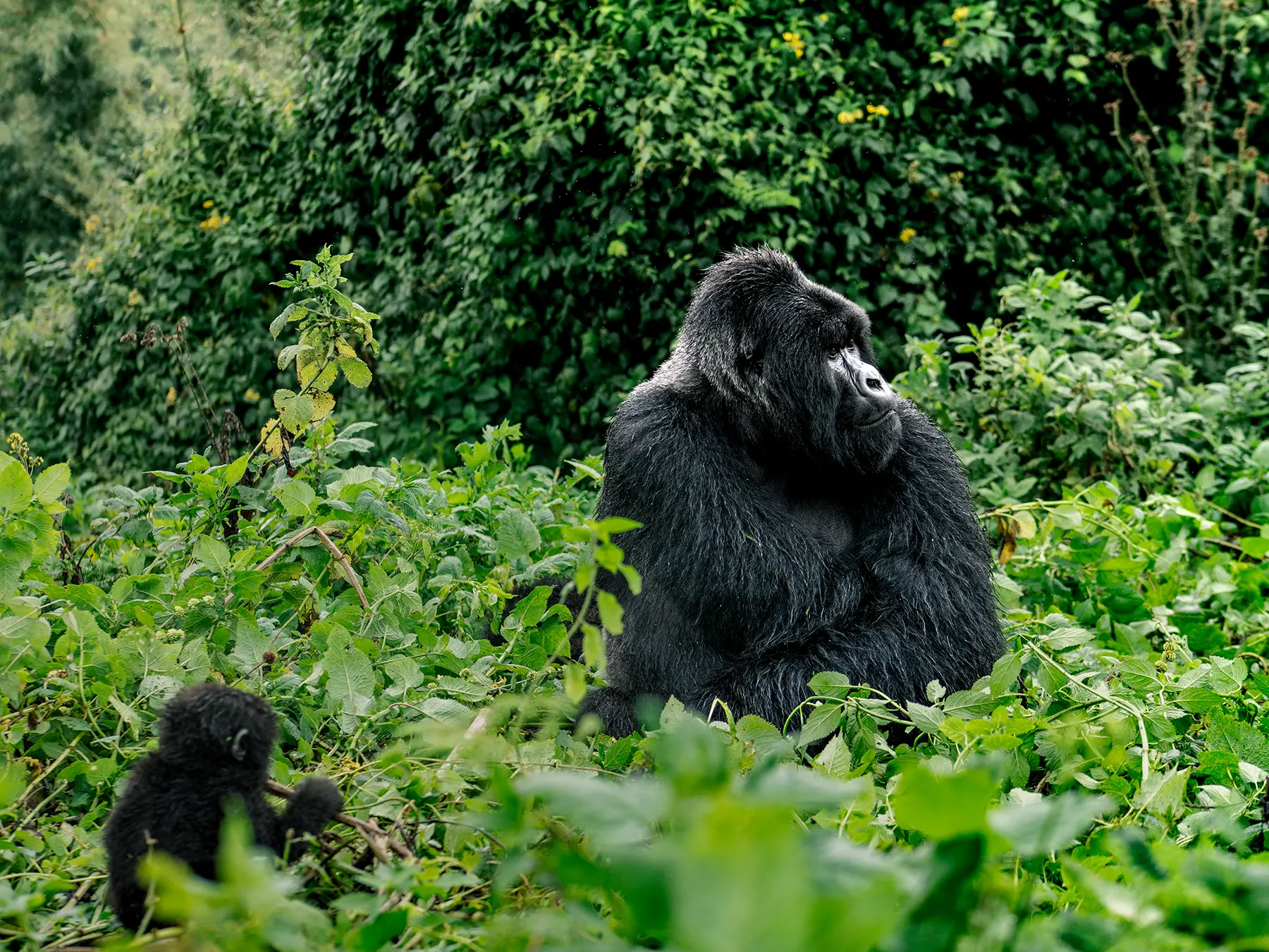
The total trip cost will also be higher than a comparable trip in Kenya and Tanzania, mainly due to the price of the gorilla and chimp trekking permits. For example, a Kenya private safari, which focuses on game drives in reserves, will cost approximately $300 per person per day.
While park fees in Rwanda are lower than those in Kenya and Tanzania, this doesn’t compensate for the higher cost of the trekking permits and accommodation.
You can see how costs compare across popular African safari destinations below:
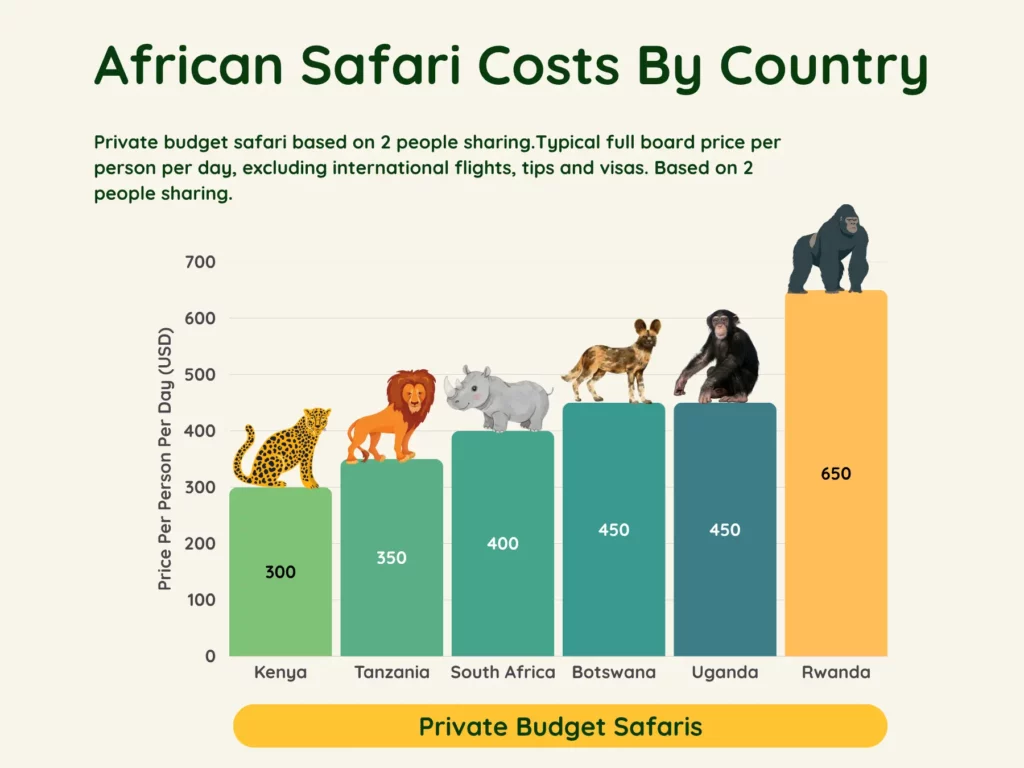
| Destination | Private Budget Safari Cost PP/Day |
|---|---|
| Kenya | 300 USD |
| Tanzania | 350 USD |
| South Africa | 400 USD |
| Botswana | 450 USD |
| Uganda | 450 USD |
| Rwanda | 650 USD |
Breakdown of Rwanda Safari Costs
Now, let’s take a more detailed look at the overall cost of a locally booked Rwanda safari.
Some 40% of the total cost of a budget safari covers permits and park fees, including gorilla tracking fees of $1,500 per person per trek.
Then, a further 23% goes towards the safari vehicle and your professional driver guide, who will bring you from one location to another as well as taking you out on safari in the parks and ensuring you get to enjoy great wildlife sightings.
Your accommodation and meals will account for about 15% of the cost of a private budget safari, but this figure increases for a mid-range or luxury safari and can even exceed 50%.
The other 22% is for bank fees, administrative expenses such as operational costs and the tour operator’s overheads plus insurance and profit for providing the service.
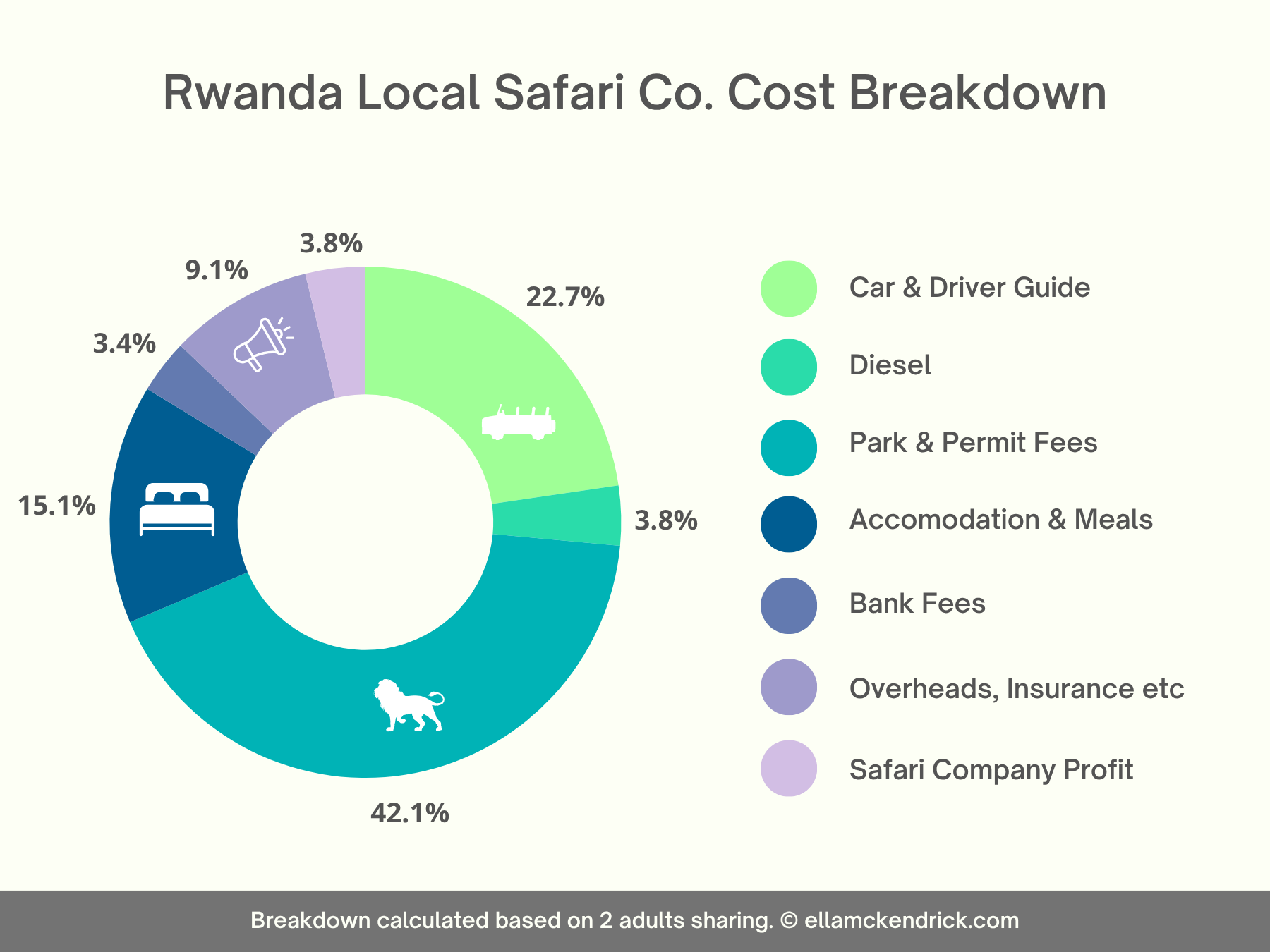
Factors Impacting Rwanda Safari Costs
The type of accommodation you choose is probably the biggest driver of cost for a Rwanda safari. Unsurprisingly, if you opt for high-end accommodation, you’ll end up paying much more than you would if staying in budget or mid-range lodges.
How you book will also affect the cost of your trip though: be prepared to shell out 30-170% more if you book via an international agent rather than a local tour operator.
I’ve already mentioned how costly gorilla and chimpanzee trekking permits are in Rwanda, so naturally, the number of days you spend gorilla and chimpanzee trekking will affect the average daily cost. With park fees substantially lower than trekking permit costs, spending more days in the parks will reduce the daily average.
That said, although the cost is significant, permit fees directly fund conservation efforts, helping to safeguard the fewer than 1,100 mountain gorillas left in the wild.
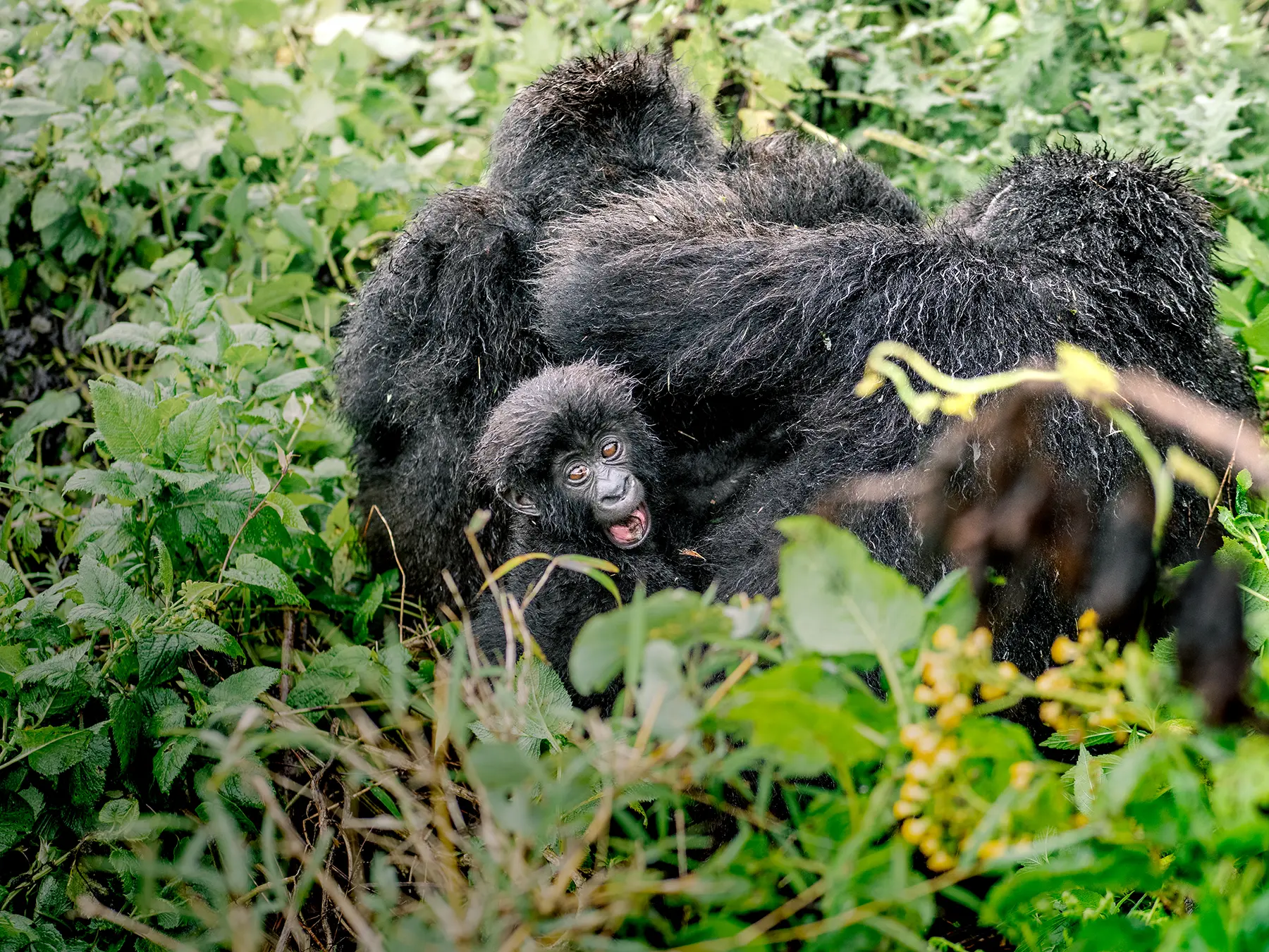
Below, we’ll examine the main factors affecting how much you pay for your safari.
Click the links below to jump to each section.
How You Book Your Safari
The way you book your Rwanda safari can affect your safari cost by up to 170%. Booking via an international travel agent or directly with your hotel is the costliest method.
An international travel agent will apply a markup of 30%-170% for what is essentially the same trip, as they generally subcontract the whole thing to a local tour operator and charge you extra for the privilege. Dealing directly with a local tour operator is usually a lot more cost-efficient and largely ensures the same experience.
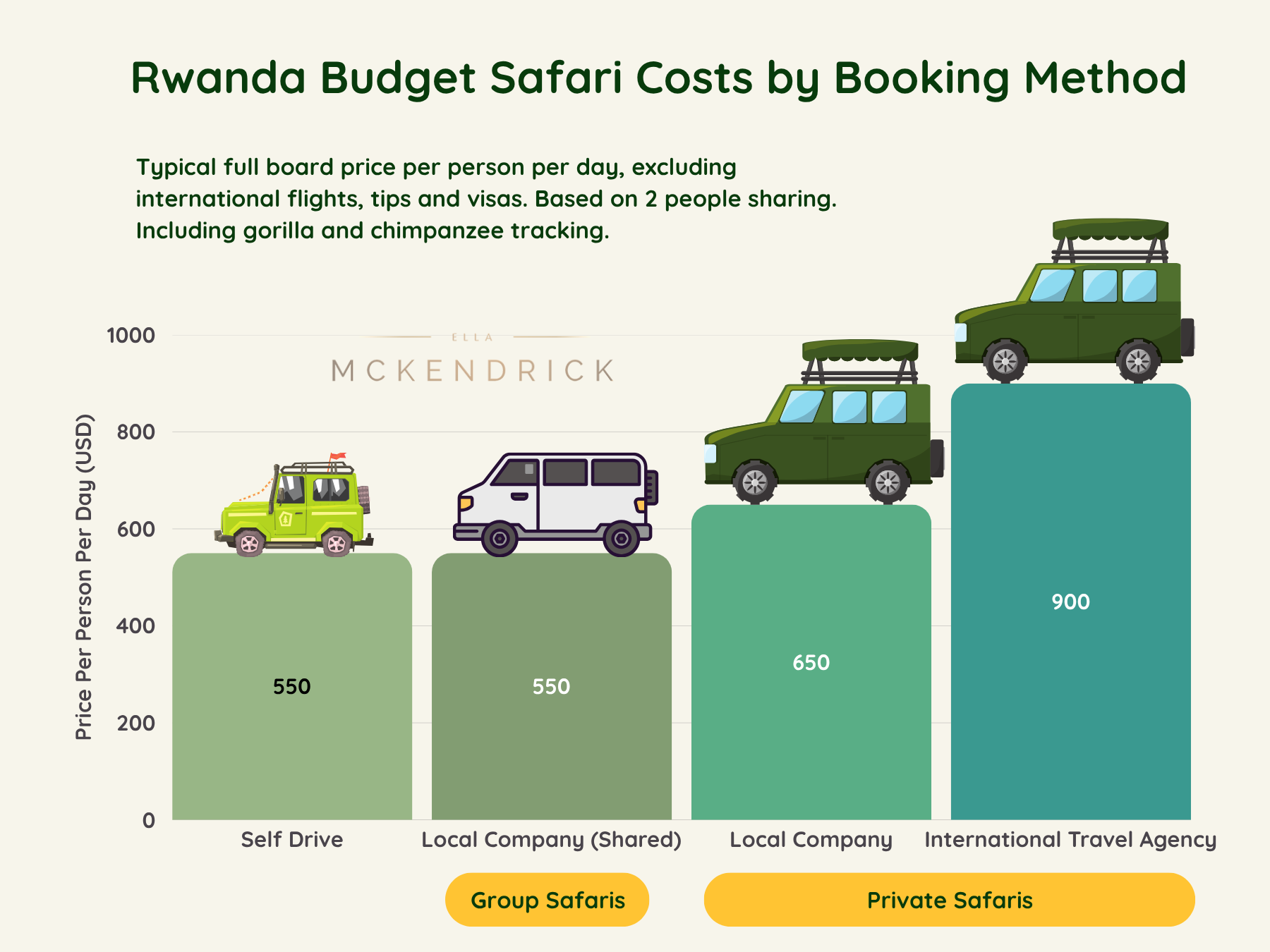
My Preference: For me, booking with a local tour operator is the way to go, as they strike the perfect balance between value and quality while taking on all the stress of sorting permits, lodges and transport.
While I do sometimes choose to fly between parks on my trips, I still book these via local tour operators in addition to game drives and other elements. In my experience, the local knowledge they have is utterly priceless.
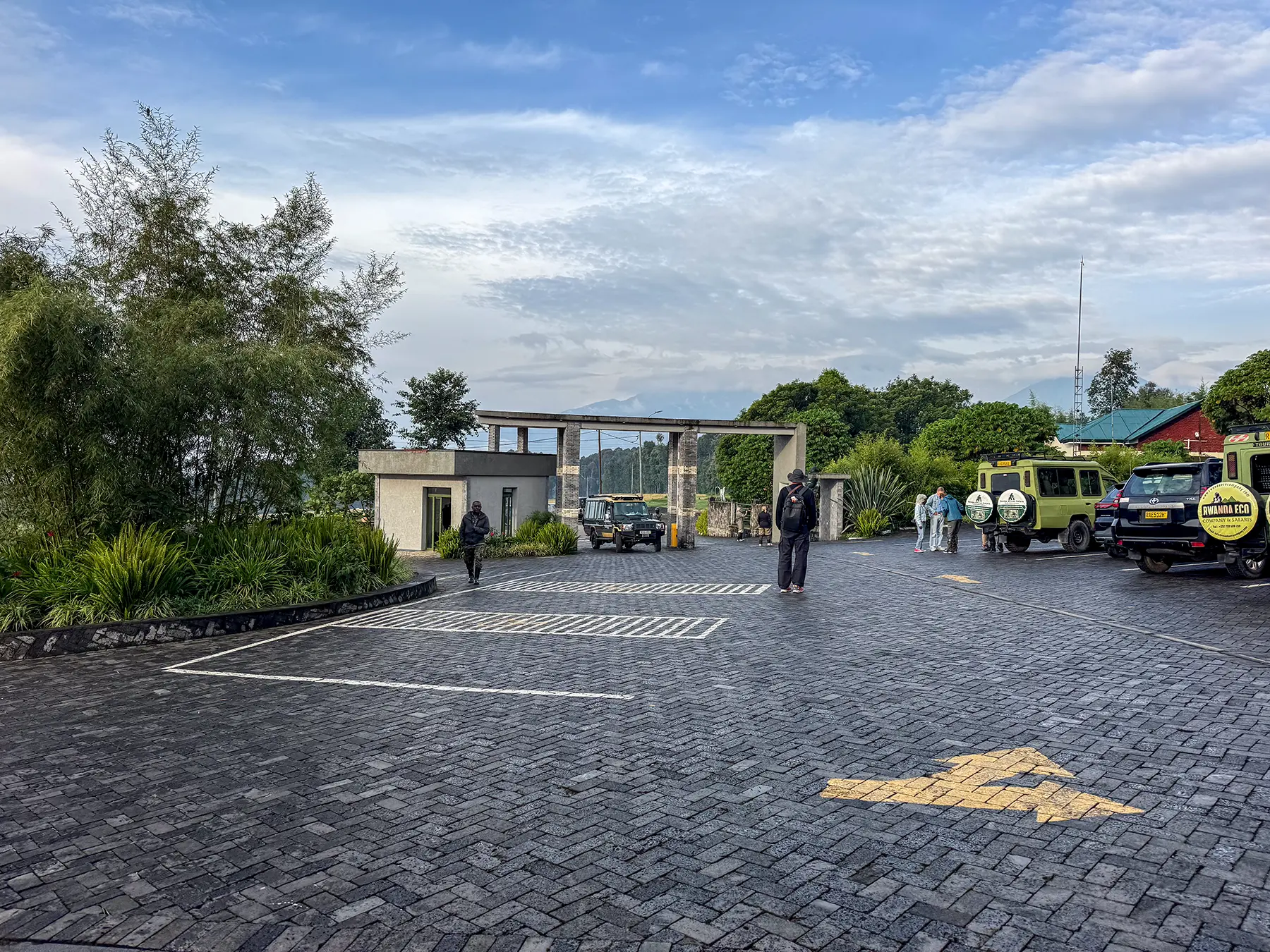
Accommodation
Accommodation costs in Rwanda can be anywhere from $60 to $3,000+ per person per night, so the accommodation you choose will clearly have a significant impact on the overall cost of your safari. Mid-range accommodation offers the best blend of comfort and cost for the majority of travellers.
Since you’ll be spending most of your time on game drives or treks, you’ll hardly have much time at your hotel or lodge to take advantage of any special features, so it’s not worth breaking the bank for them.
Accommodation Prices in Rwanda (Peak Season)
| Accommodation level & location | Price per person per night |
|---|---|
| Budget near Volcanoes NP | $60-$150 |
| Mid-range near Volcanoes NP | $250-$500 |
| Luxury near Volcanoes NP | $800-$1,500+ |
| Ultra-Luxury inside Akagera (Magashi) | $1,500-$3,000+ |
My preference: I usually opt for a mix of accommodation types on my trips. I sometimes like to treat myself to a luxury lodge at the start or end of my trip or for a rest day following a long drive, but otherwise, mid-range accommodation is perfect for most of the trip.
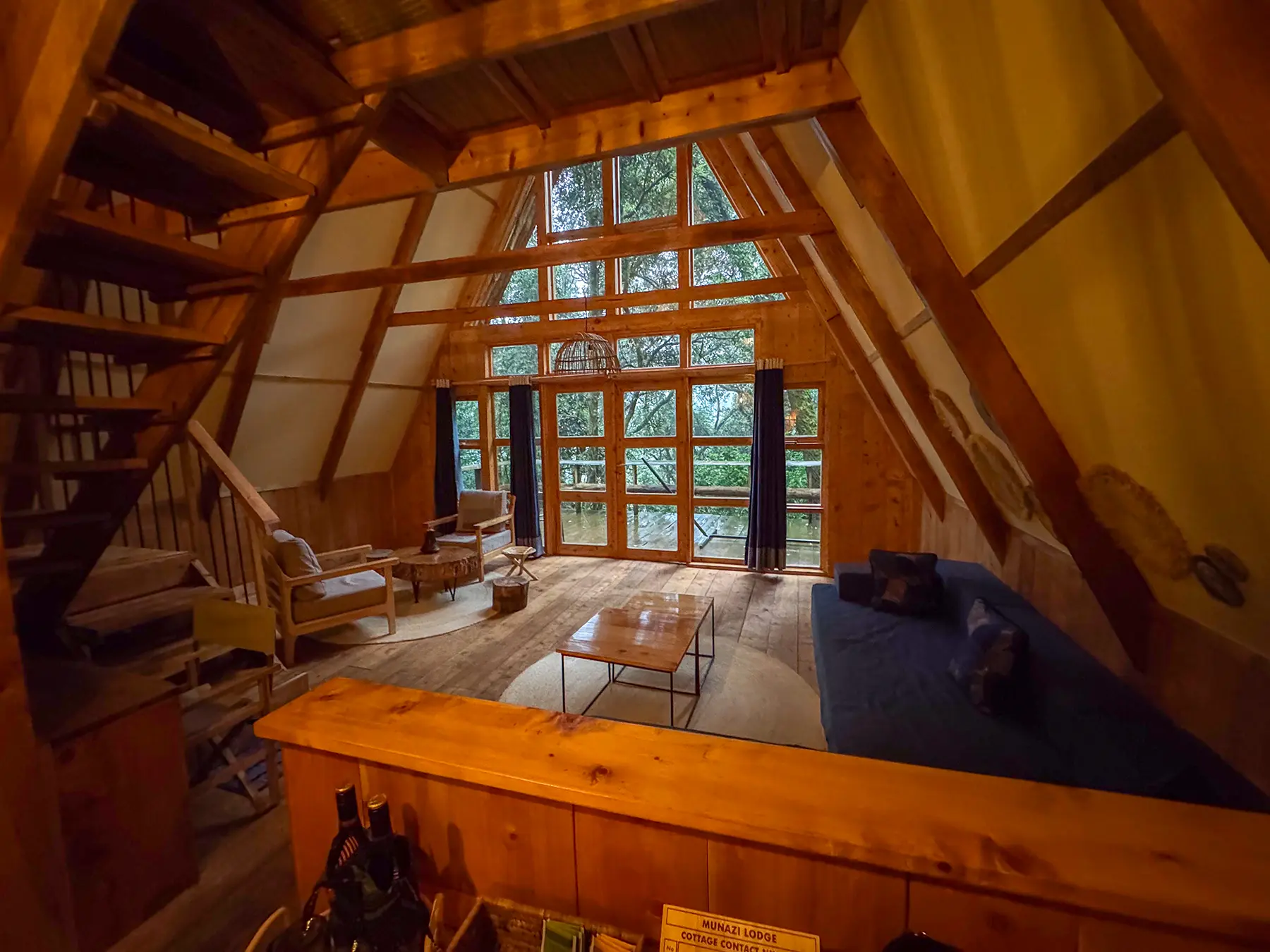
Time of Year
The most expensive time to visit Rwanda is peak season, which runs from June to August and December to February.
While many lodges offer discounts of up to 30% during the long rainy season (March-May), the wet weather can make game viewing and trekking conditions challenging.
Gorilla permits cost the same no matter what time of year you go, but availability changes seasonally. If you go during peak season, you must book 6-12 months in advance.
My preference: For me, the shoulder season (October-November) is the best time to visit Rwanda, as it has the best blend of weather, wildlife and value for money.
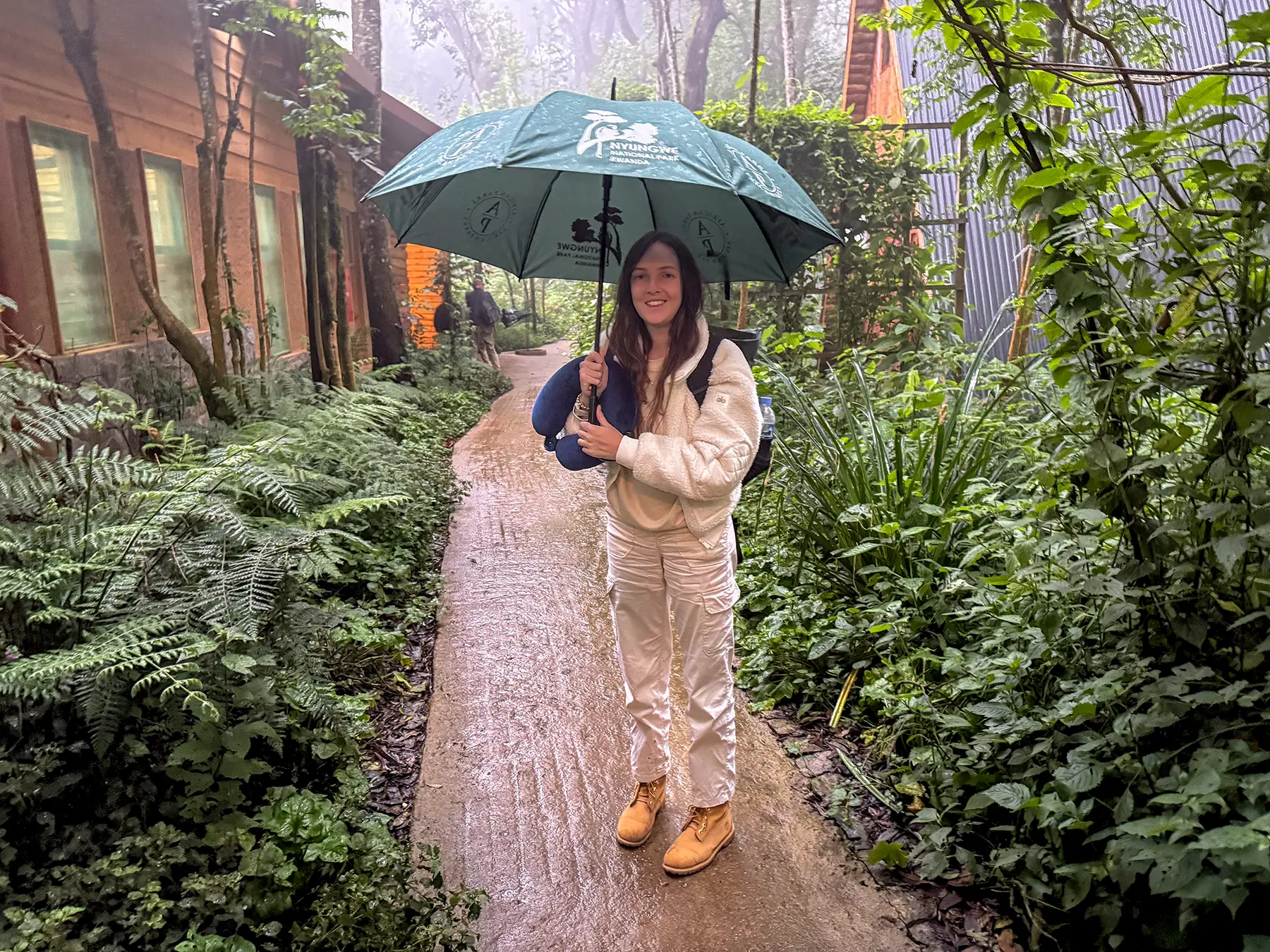
How Many Days You Spend Gorilla and Chimpanzee Trekking
With park and trekking permit fees making up the lion’s share of your overall safari cost (30-40%) for budget and mid-range safaris and no seasonal discounts to be had, the number of days you spend primate trekking has a real impact on the total price of your trip.
You’ll pay $1,500 per trek for gorilla trekking and $150 for chimp trekking in Rwanda, but this significant cost is offset to some extent by the relatively low park fees in other wildlife reserves such as Akagera (around $100 per person per day). This means your average daily spend will be less on a longer safari trip with fewer days primate trekking.
My preference: I spent two days gorilla trekking in Uganda but opted for just one in Rwanda due to the higher cost. Although doing two treks in a row maximises sightings, it can be pretty tiring.
Because it’s such an amazing experience, I’d probably opt for two treks next time, but would add a rest day in between.
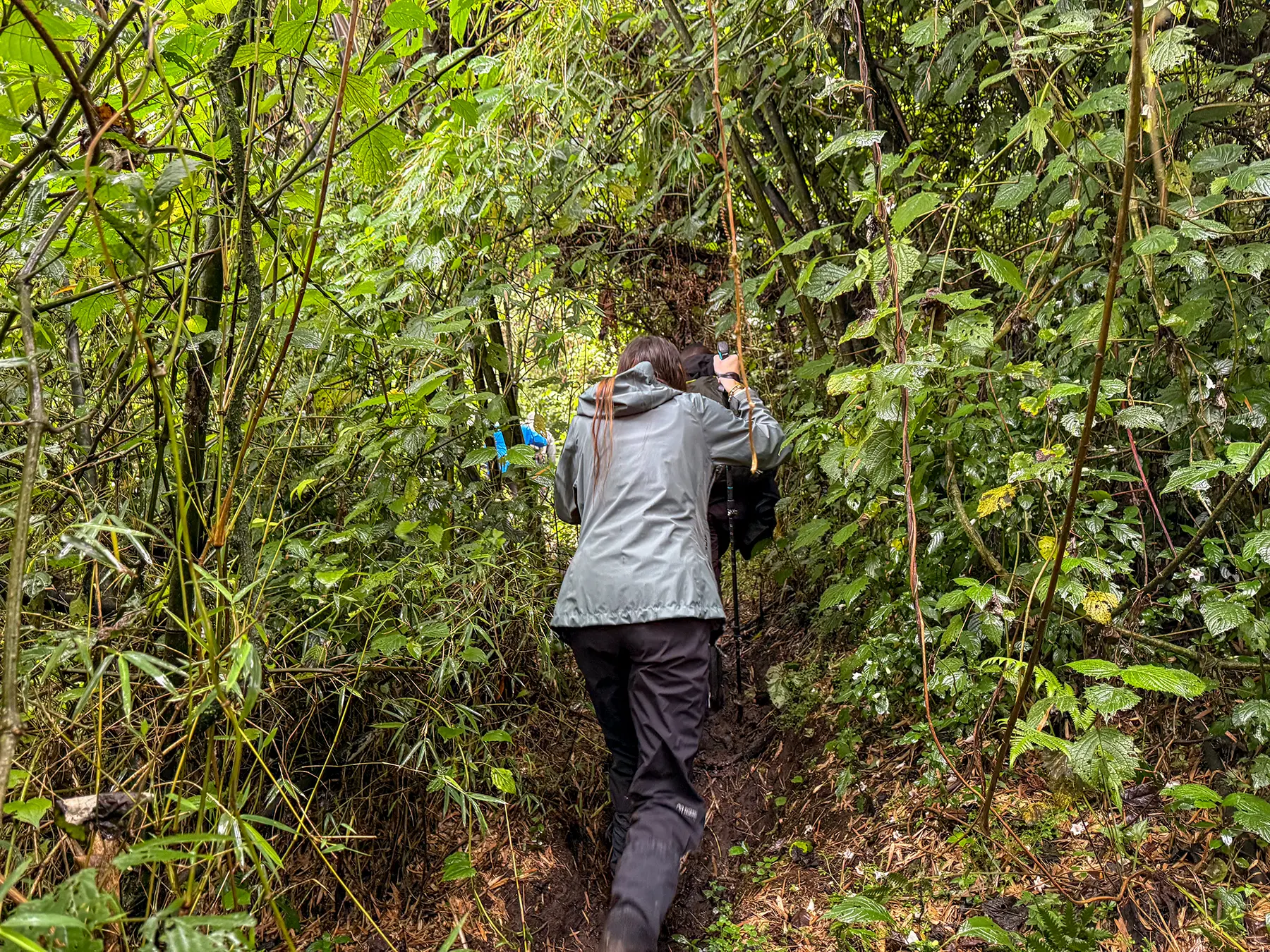
Transport Between Parks (Road/Air)
RwandAir’s scheduled flight from Kigali to Kamembe, for Nyungwe, has return fares from about $170, while transfers to Volcanoes and Akagera are by private helicopter charter, from about $1,700 to $2,400 per aircraft.
Flying can save you several hours of driving. For example, it takes about 8 hours to drive from Akagera in the east to Volcanoes National Park in the northwest, but there is an option to fly the Nyungwe leg.
The scheduled flight from Kigali to Kamembe Airport near Nyungwe takes 40 minutes, followed by a 1 to 2 hour road transfer to the park.
Driving from one park to another generally doesn’t cost any extra as your driver and car have to make the trip anyway to meet you and provide your transfers and safaris.
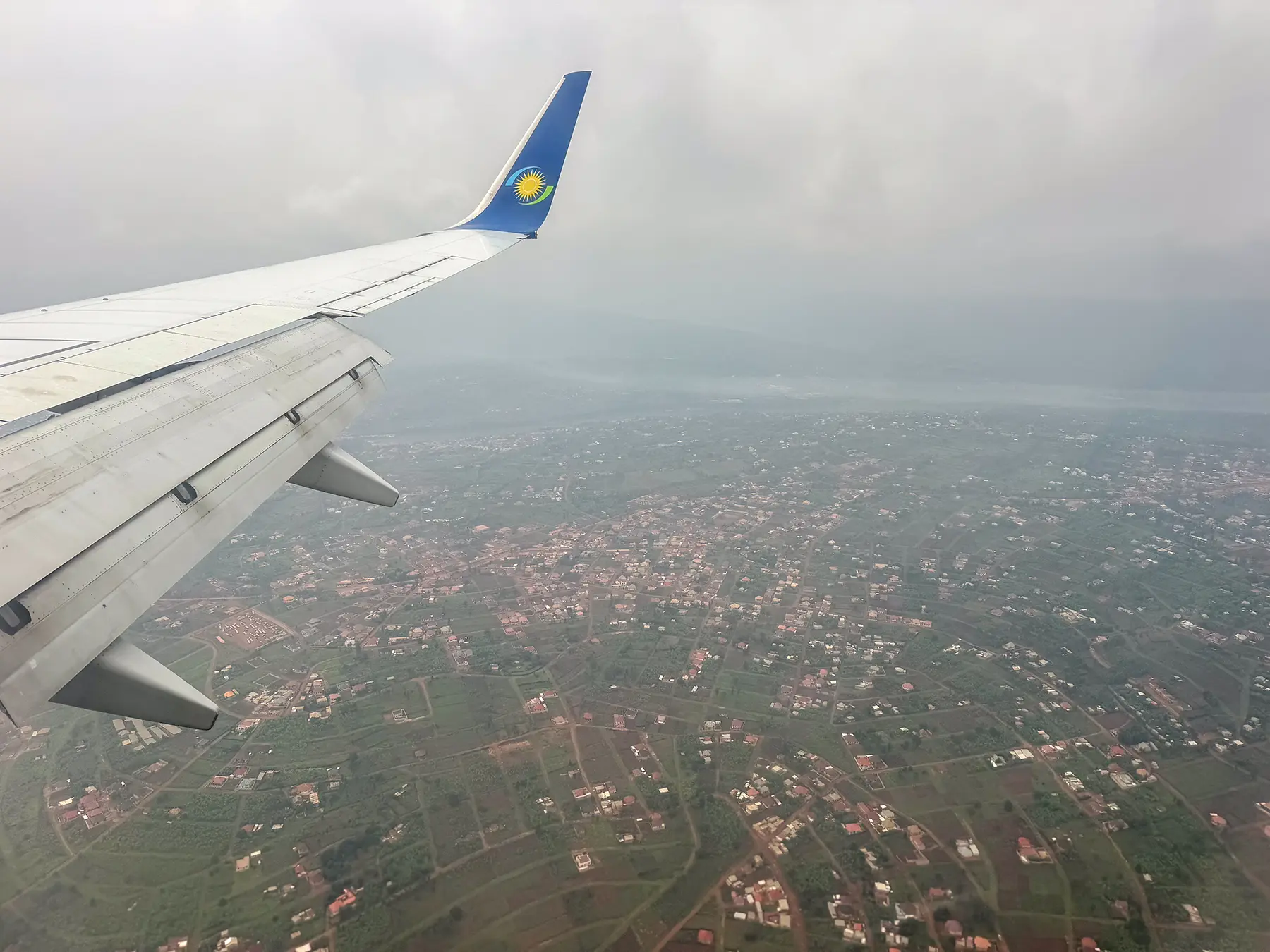
My preference: I usually prefer to drive as it means I can see more of the landscape plus we can stop en route if we have any wildlife sighting. But if the drive time is more than 6 hours and there’s a flight available, I would typically choose to fly instead.
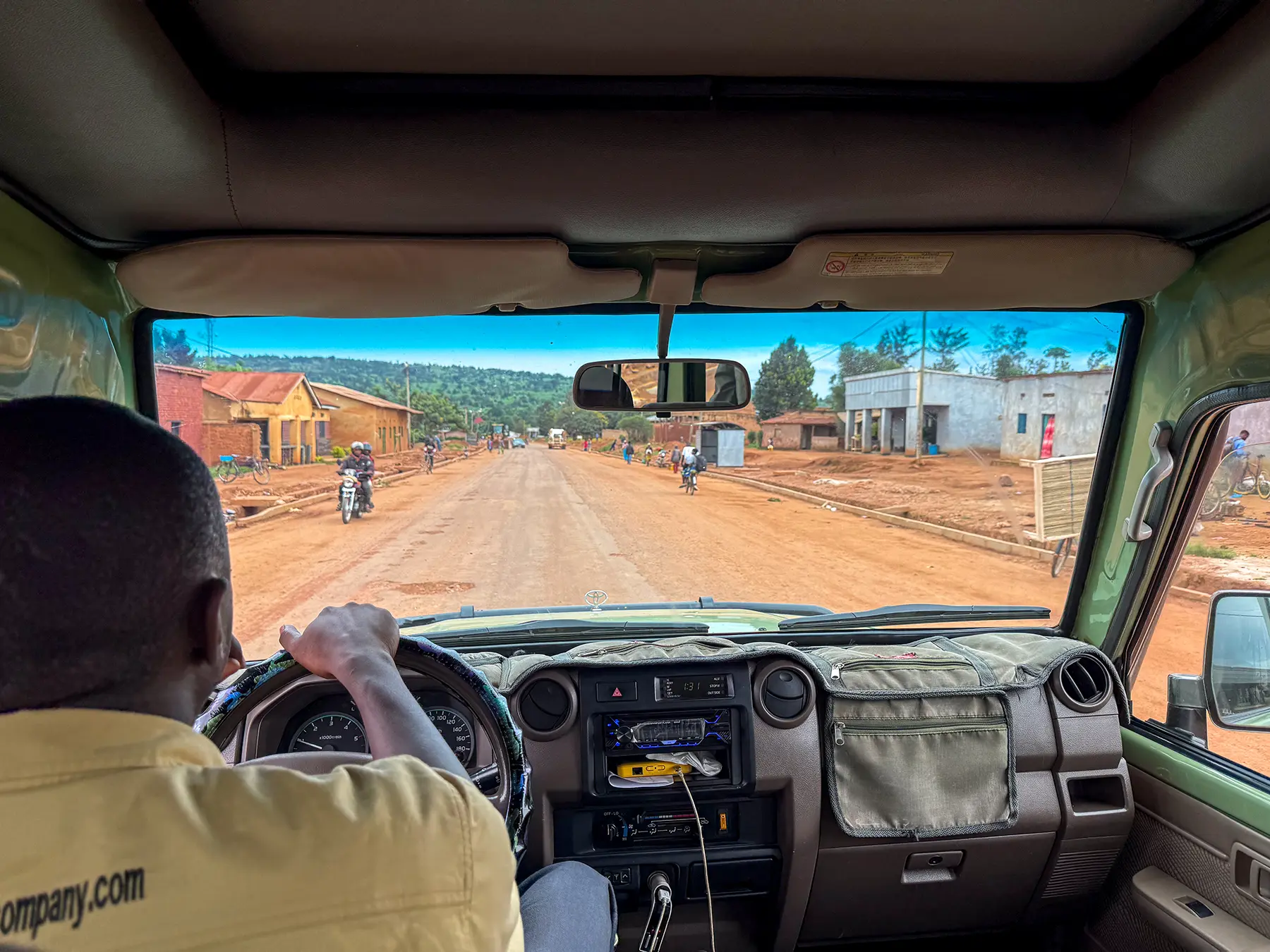
Group Size
Since the biggest cost factor – the gorilla tracking permit – is paid per person, group size does not impact the cost of a safari in Rwanda to the same extent as it might in other destinations such as Kenya.
Nevertheless, the size of your travel group will still affect your accommodation, since anyone travelling solo will have to pay a supplement for a private room. Travelling alone also impacts your fixed safari costs such as safari vehicle and driver guide, as you aren’t splitting these with anyone.
It follows, then, that a bigger group will bring down the total per-person cost. That said, you should be aware that most safari vehicles can only accommodate 6-7 people comfortably. What’s more, traveling as part of a larger group can decrease your flexibility.
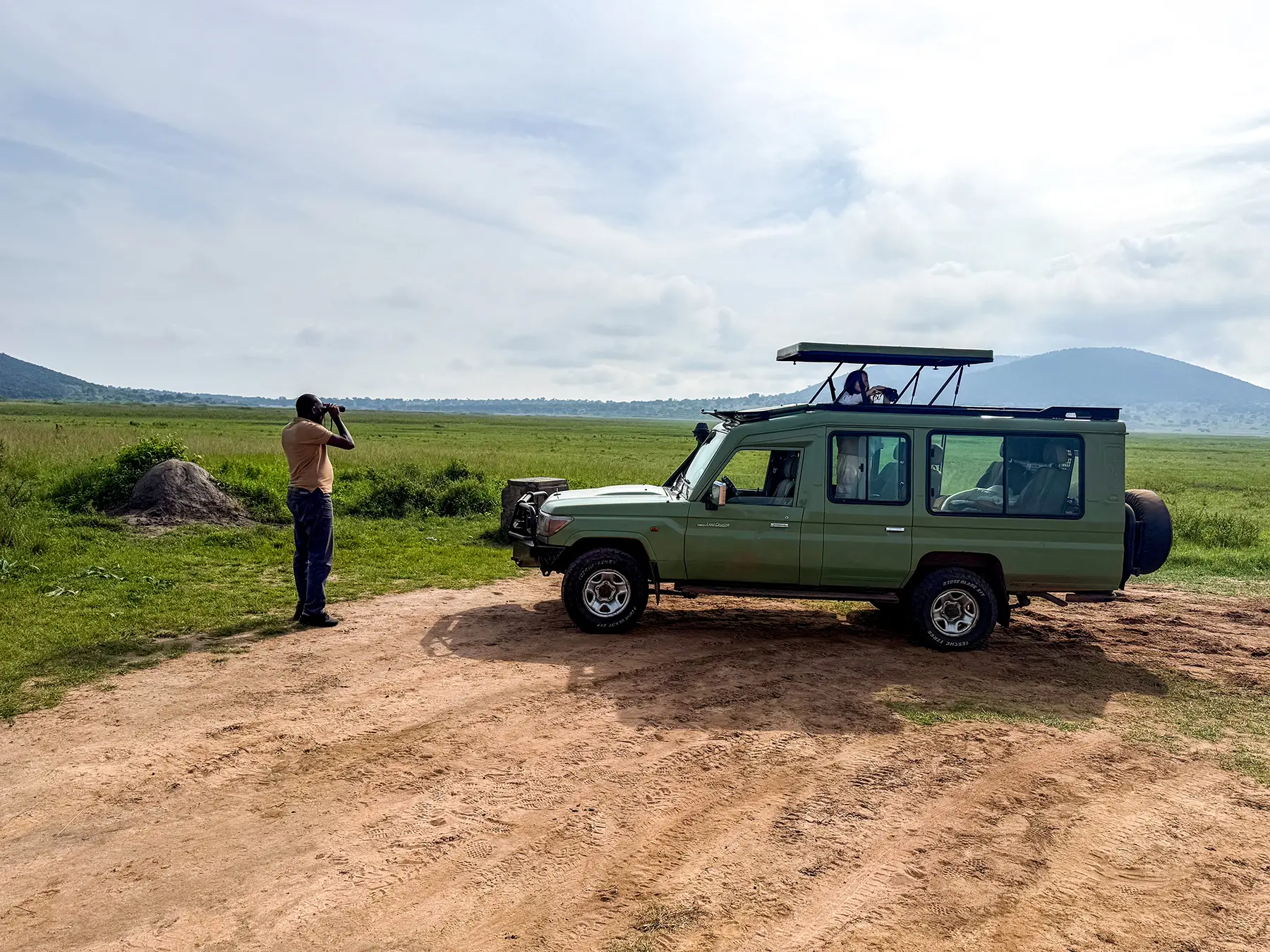
Private safaris offer especially good value for couples and small families, as the cost of your vehicle and guide isn’t much more than a group rate.
My preference: I prefer to stick with a small group so we can move around comfortably for clear views and great photos during wildlife sightings. I usually wouldn’t be comfortable with more than 3 or 4 people including myself as a result.
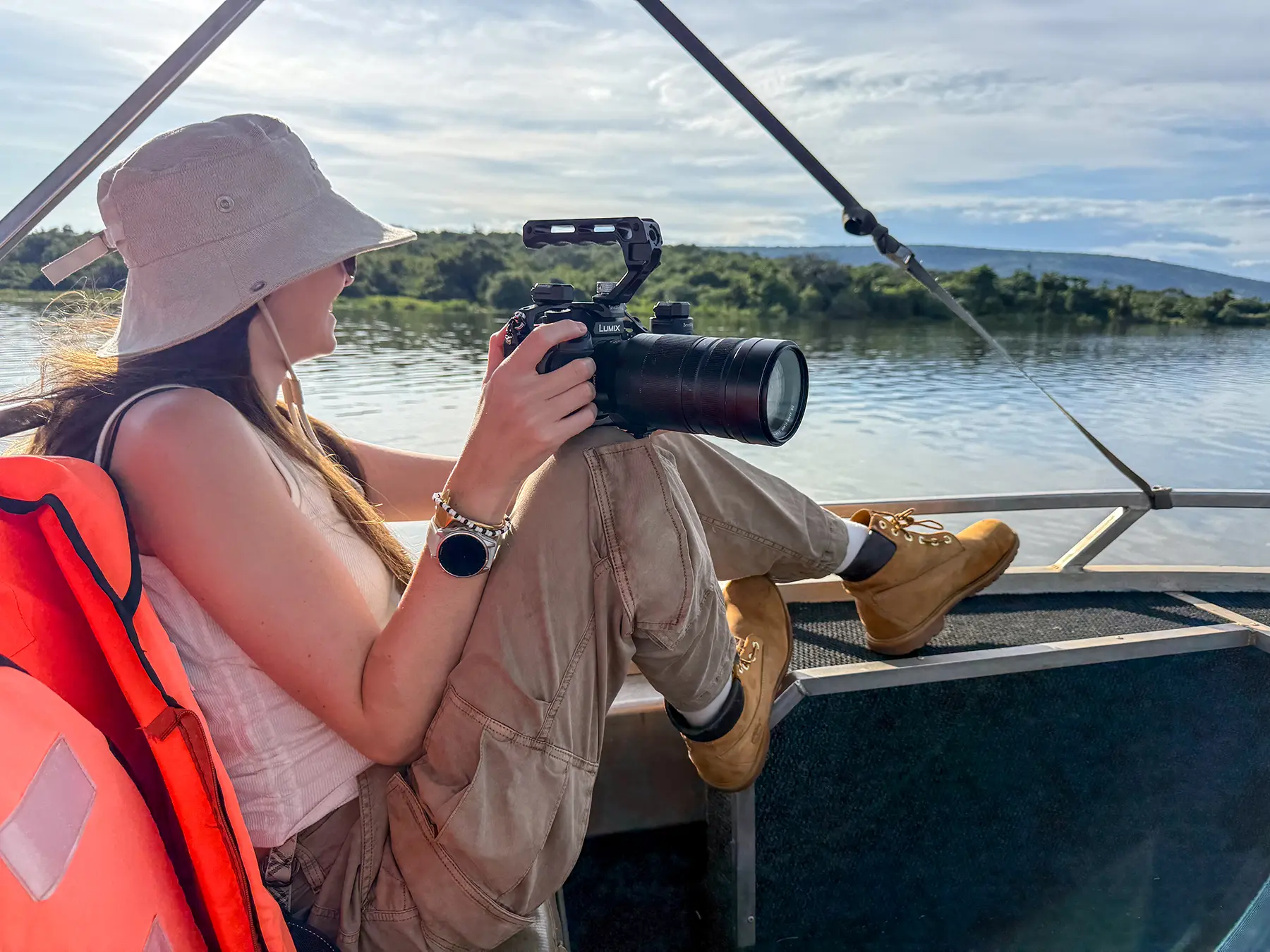
When Is the Best Time to Visit Rwanda?
Whether you’re hoping to go primate trekking or enjoy a more traditional Big Five safari, the dry seasons (June to August and December to February) are usually considered the best time to visit Rwanda. Drier conditions during these periods ensure that trails are less challenging, while thinner vegetation and limited water sources make it easier to see the wildlife in Akagera.
Having visited the country during the rainy season, I’ve experienced for myself how difficult wet weather can make things. I remember one particular chimp tracking experience in a rather soggy Nyungwe during the long rains where I had to slog an extra 2 hours uphill to get to my safari vehicle because a truck had gotten waterlogged and blocked the main road.
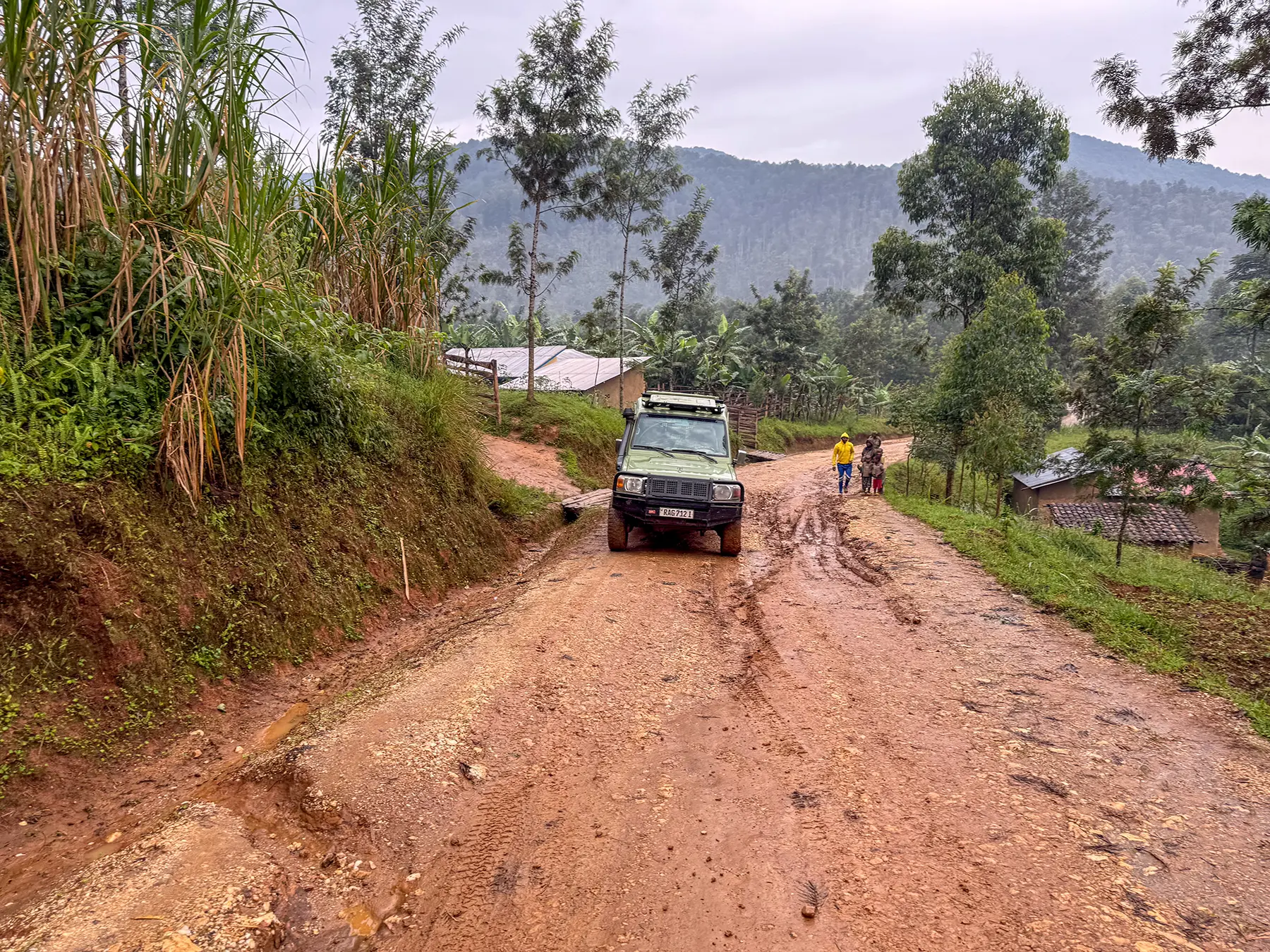
Chimpanzee and gorilla trekking is physically demanding enough without adding barely passable trails, so I’d recommend booking your trip between June and August for optimum dry hiking conditions if you’re focusing on primates. However, as this is peak season, you will need to reserve your permits a good 6-12 months in advance.
Alternatively, if you plan to combine gorilla trekking and game drives at Akagera, the shoulder periods of October, early November and late December are a great time to go, with pleasant weather and quieter parks for a more intimate experience.
My preference: For me, the shoulder season in October and November is the best time to travel to Rwanda. I love that the parks and the gorilla trekking trails in Volcanoes are quieter while the weather is still usually good. Another plus is that you can make decent savings on accommodation as it’s not peak season.
Be aware that there’s a chance of rain during this period, though, and that can make the trails a bit harder to navigate. However, I quite enjoy the adventure a little mud brings (within reason!), and I feel it adds to the experience! After all, how else will you find out if those hiking boots really are waterproof?!
My preferences may not necessarily be the same as yours, though, so I’ve included a summary of the considerations and advantages for each time of year below so you can decide what time of year works best for you.
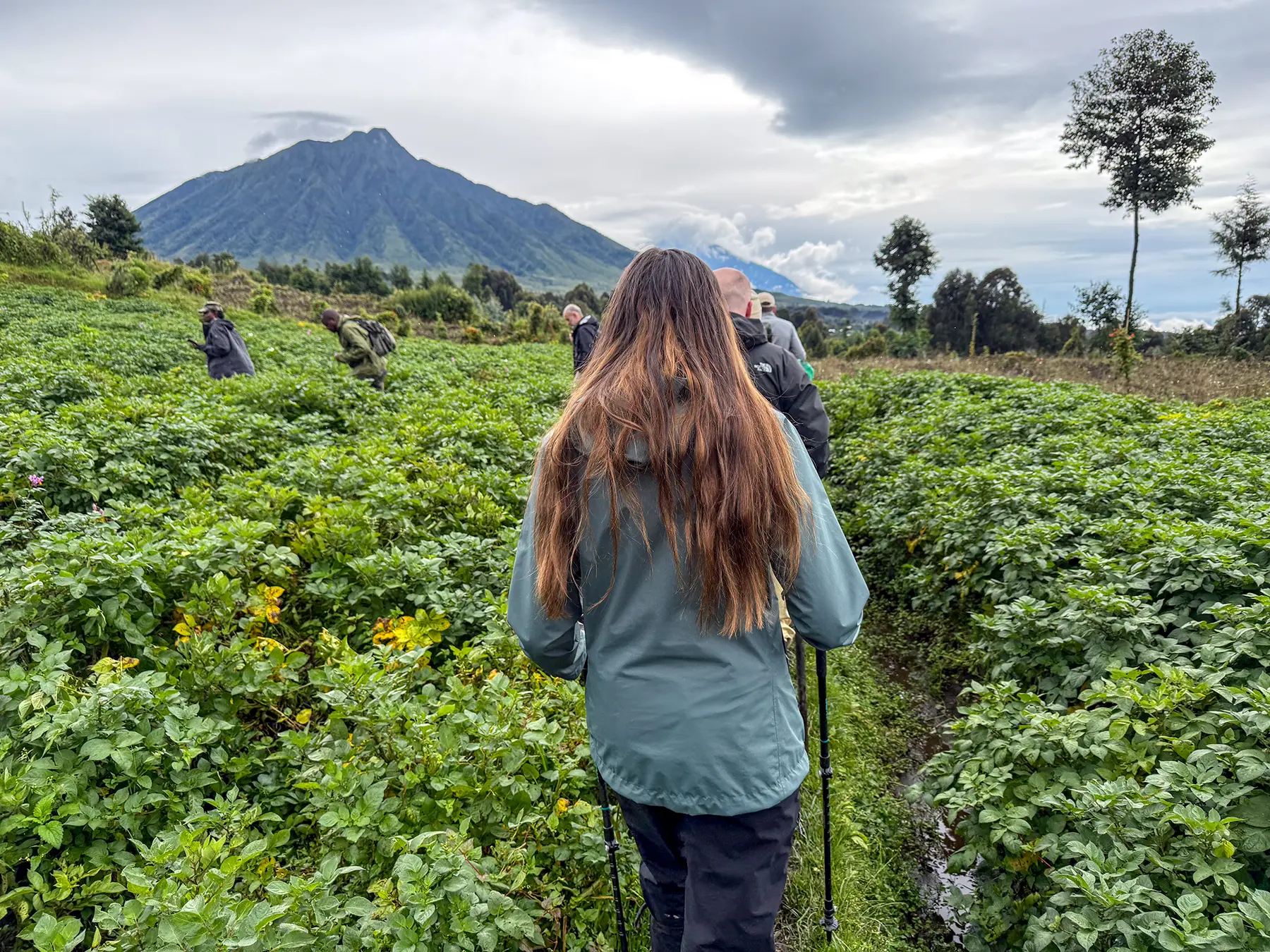
The Important Role of the Rains
Like the majority of East and Central African safari destinations, Rwanda is strongly affected by the rains in East Africa. That is because they determine when wildlife migrate and even when they have their young. As you might expect, the rains arrive at a different time each year.
Click the links below to skip to the section that interests you.
The Short Dry Season (Mid-December-February)
The Long Rainy Season (March-May)
The Long Dry Season (June-Mid-October)
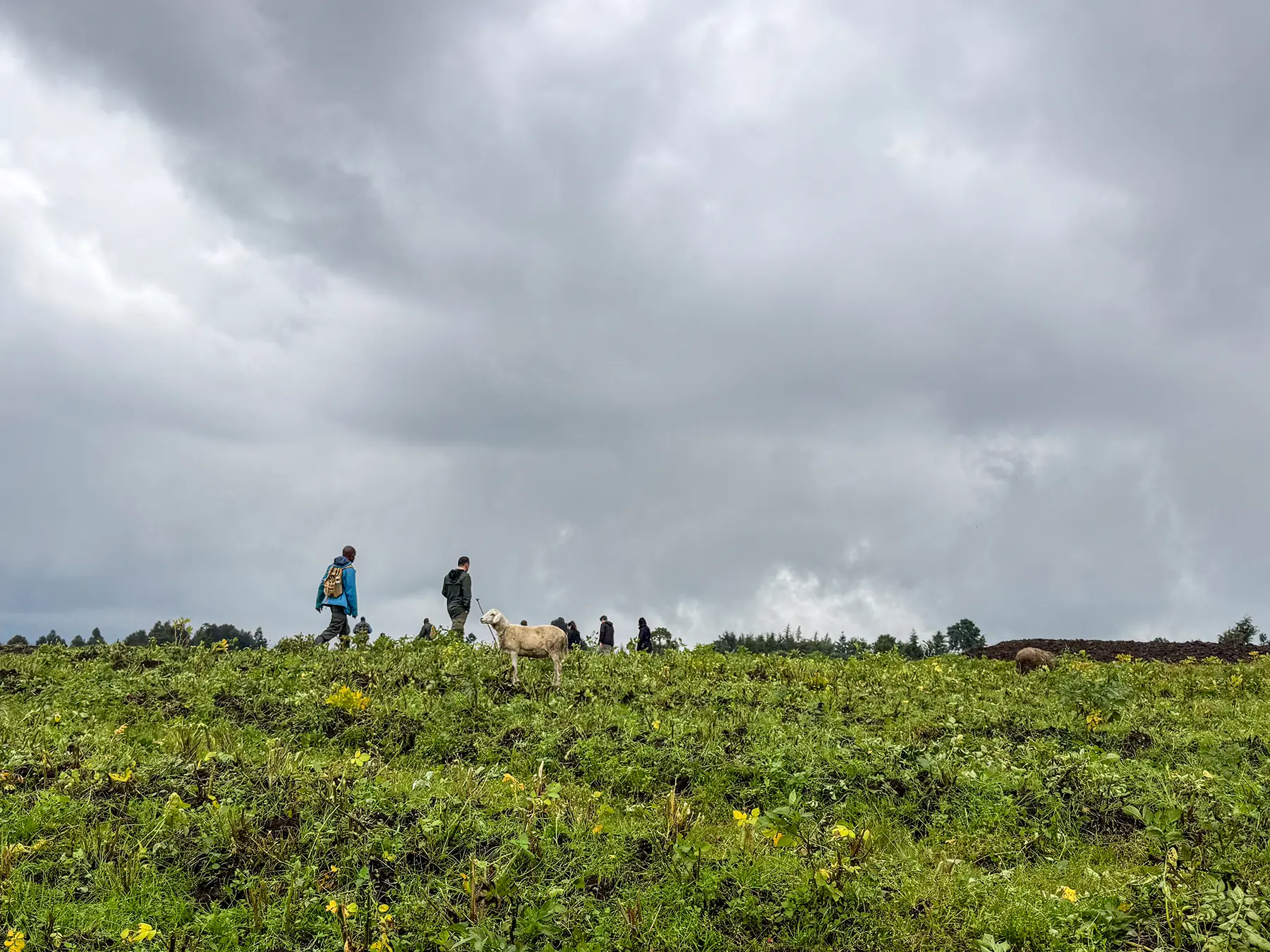
The Short Dry Season (Mid-December-February)
The short dry season strikes the ideal balance between quieter parks and pleasant weather, making it a good choice for travellers who aren’t fazed by a slight chance of rain or warmer temperatures.
Rwanda is at its hottest during this season and the sunny weather brings dry trails and plentiful wildlife in Akagera. As the gorillas tend to seek out higher ground for cooler conditions, your treks will take you to higher elevations, which can be challenging.
My experience visiting in the short dry season: On my visit to next-door Uganda during the short dry season, I was struck by how luxuriant the vegetation was compared to Kenya and Tanzania despite the lack of rainfall.
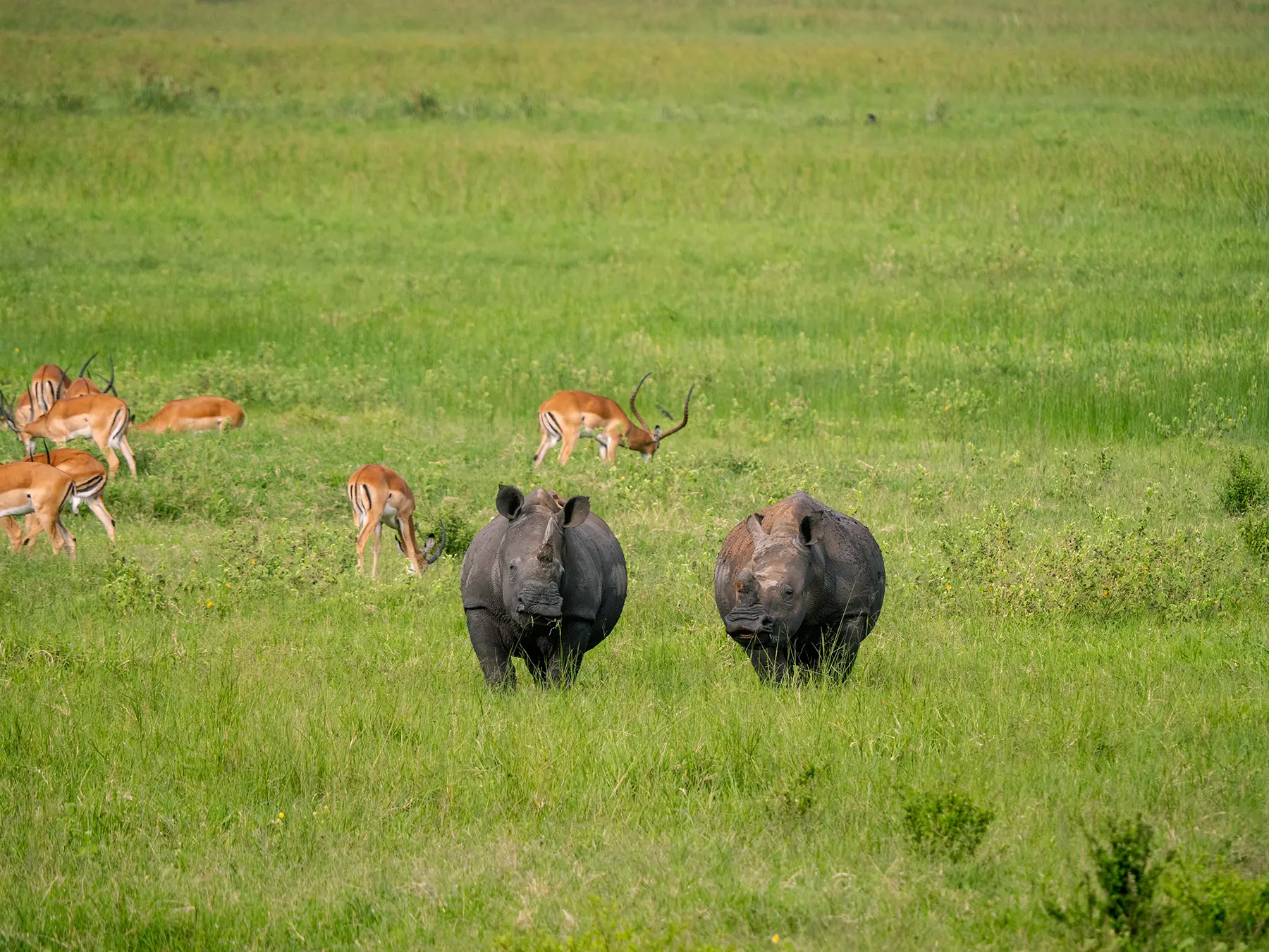
Quick Facts
Prices: Peak season, highest prices
Weather: Hottest season with sunny, dry conditions and sporadic rainfall, daytime temperatures 75-91°F (24-33°C)
Wildlife: Plentiful at Akagera. Gorillas in Volcanoes National Park seek out higher ground, so treks and the drives to the starting points can be longer
Birding: Local species plus northern hemisphere migrants. Main breeding and nesting season
Unique features: Calving season with abundant young animals across the parks
Reasons to Visit in the Short Dry Season
- Excellent gorilla trekking
- Easier to locate wildlife
- Fewer mosquitoes
- Lots of baby animals
- Main breeding and nesting season for birds
- Migrant northern hemisphere birds present
Considerations When Visiting in the Short Dry Season
- Hottest season
- Busy parks and lodges
- Gorilla permits sell out quickly – book well ahead
- Gorillas on higher ground, making for longer, more difficult treks
- Longer drives to gorilla trekking start point
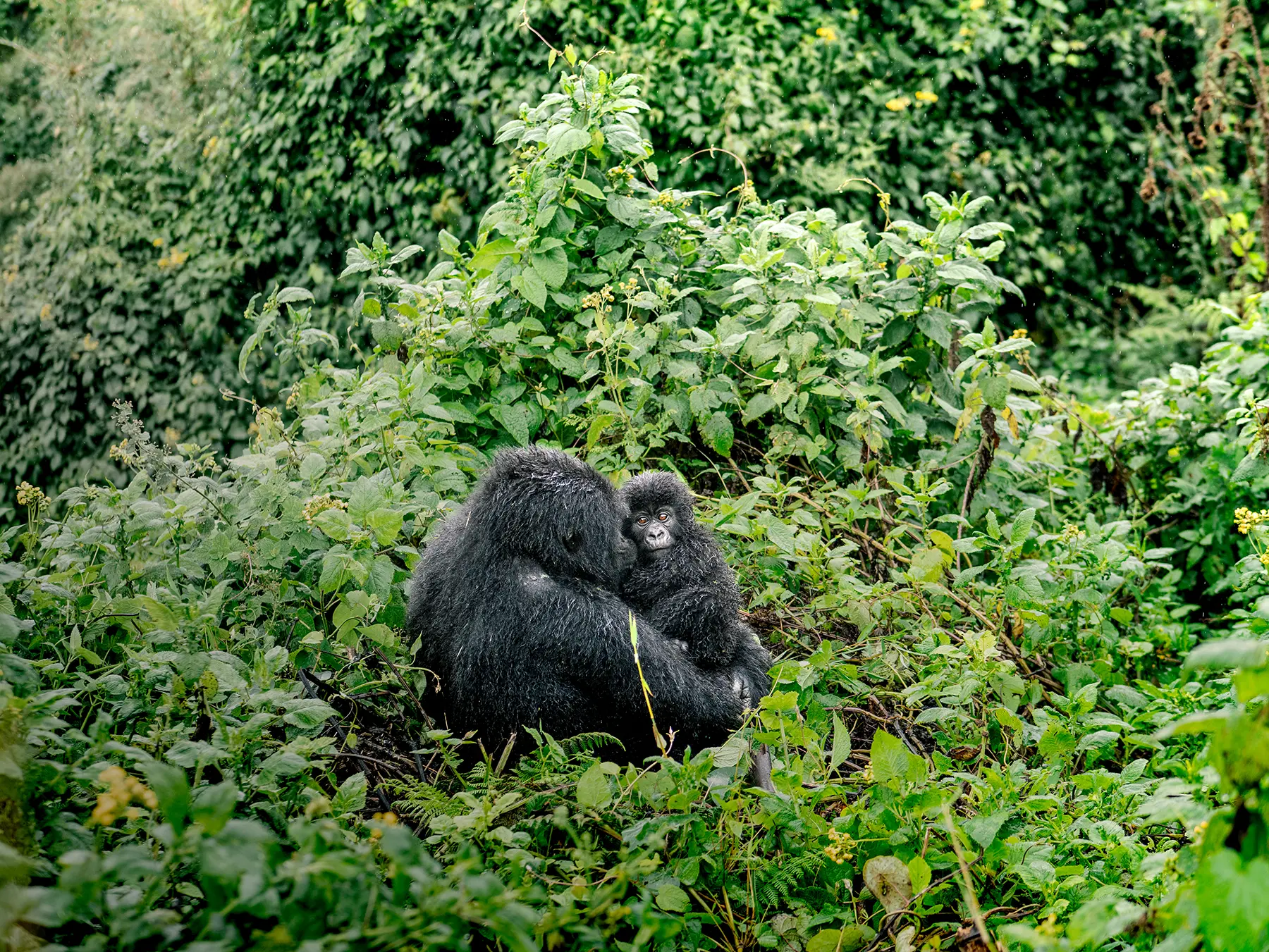
The Long Rainy Season (March-May)
The long rainy season is great for more intrepid travellers who take heavy rain and muddy trails in stride in return for discounted prices and quiet parks.
As this is Rwanda’s low season, visitor numbers are at a minimum, with significant savings to be had on accommodation. Conditions are wet but not overly cold, with daytime temperatures of 61-82°F (16-28°C).
With only the closest gorilla families visited on gorilla tracks due to lower visitor numbers, gorilla treks will be shorter, as will the drives to the starting points.
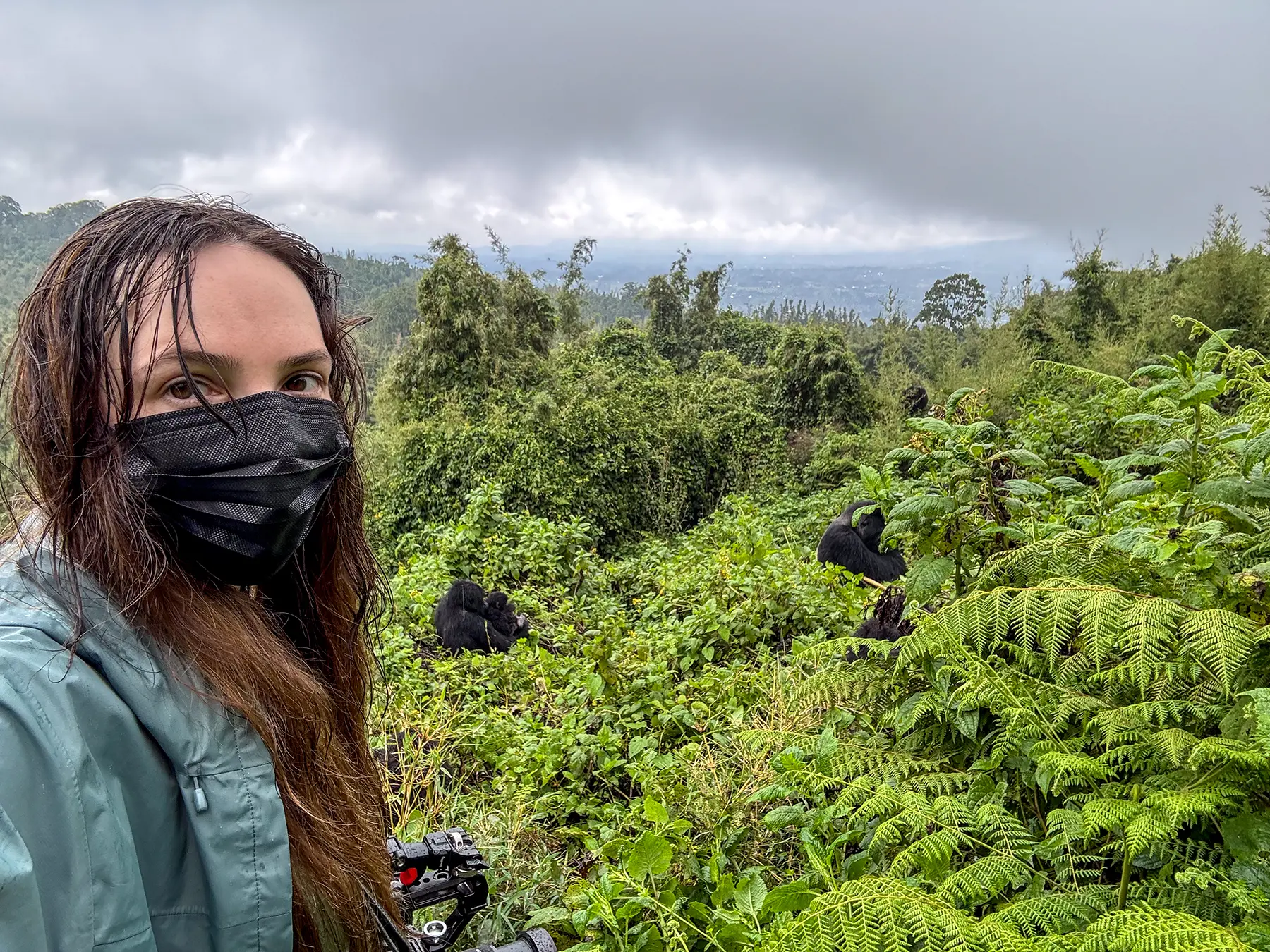
My experience visiting in the long rainy season: When I went to Rwanda at the start of the long rainy season, a truck got stuck in the mud ahead of our vehicle and we had to detour around it. Then on the way back, we had to take a 2-hour uphill detour to get back to our vehicle as the road was blocked.
Conditions were incredibly muddy on the gorilla trek itself, so I’d advise you to bring two trekking poles – your legs will thank you!
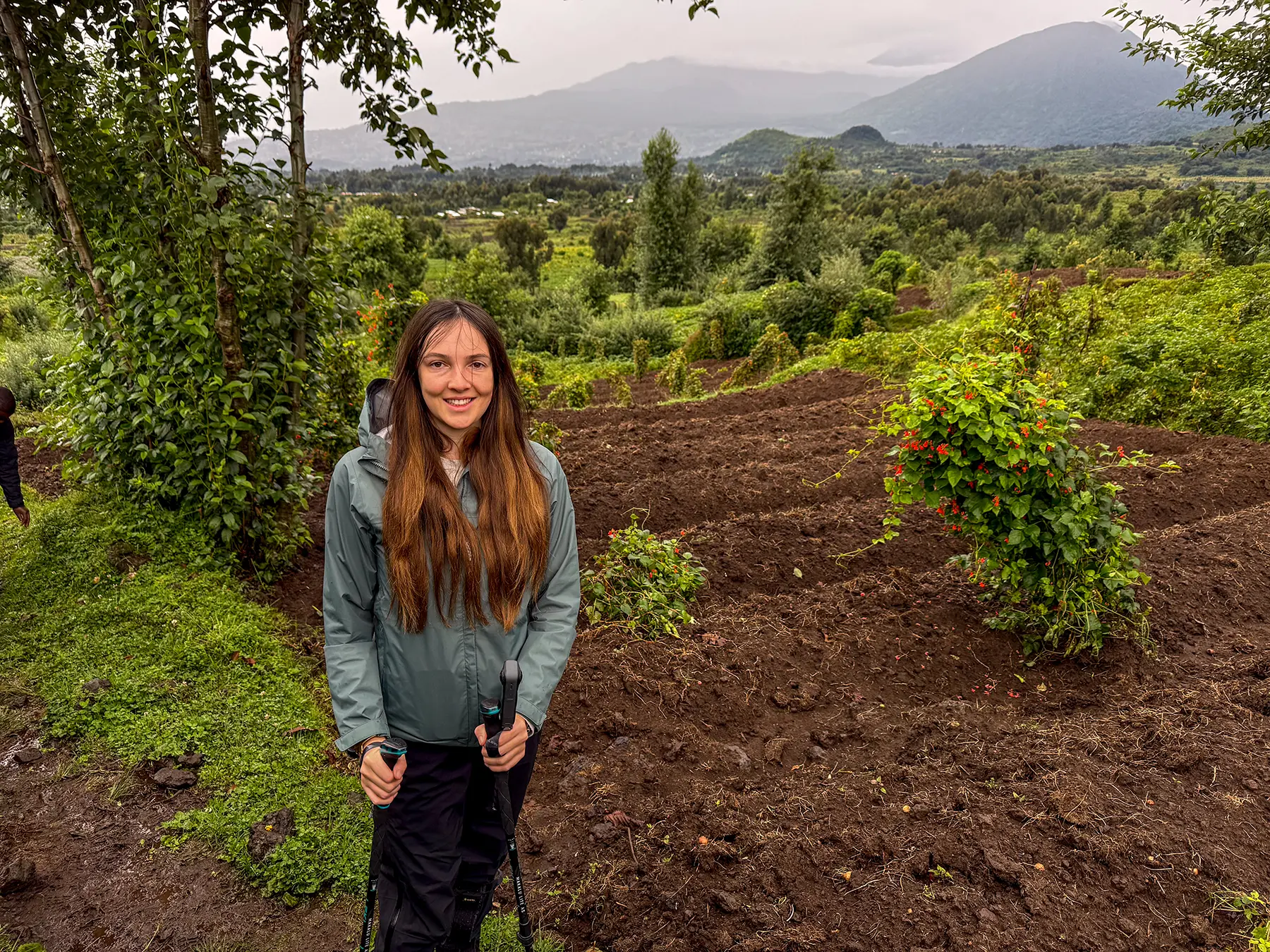
Quick Facts
Prices: Lowest prices with discounted accommodation
Weather: Wet with daytime temperatures of 61-82°F (16-28°C), colder at higher elevations
Wildlife: Plentiful, but thick vegetation and rain can make viewing a challenge
Birding: Abundant native and migrant species, but dense foliage can block viewing
Unique features: Lush verdant landscapes speckled with wildflowers
Reasons to Visit in the Long Rainy Season
- Parks are quietest
- Permits easily available
- Shorter gorilla tracks (and shorter drives to start point)
- Best accommodation prices
- Lush green vegetation with wildflowers
- Migrant bird species still present
- Cool highland daytime temperatures
Considerations When Visiting in the Long Rainy Season
- Heavy rain with potential flooding
- Some lodges may close
- Muddy trails
- Viewing is challenging due to dense vegetation
- More mosquitoes
- Some attractions close (e.g. the hike to Dian Fossey’s grave closes in wet weather)
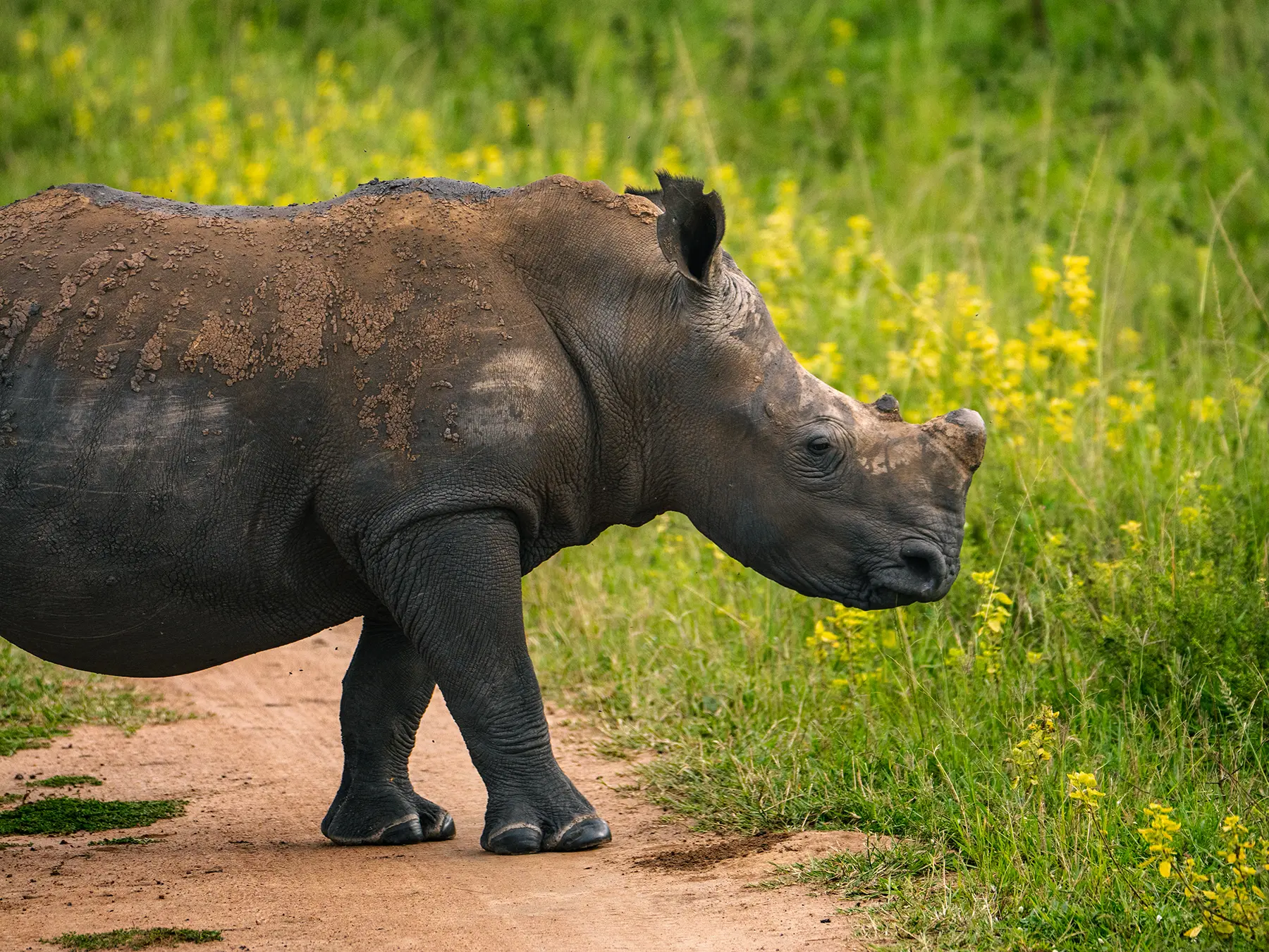
The Long Dry Season (June-Mid-October)
This is the most popular season to visit Rwanda, when gorilla trekking trails are at their driest and firmest underfoot.
Due to the popularity of this season, accommodation is at a premium and gorilla permits sell out months in advance.
My experience visiting in the long dry season: I haven’t yet travelled to Rwanda in the long dry season, having visited most recently at the start of the rains in early March. However, I’ve been to the parks during shoulder season and found that gorilla and chimp tracking was much easier in less muddy conditions.
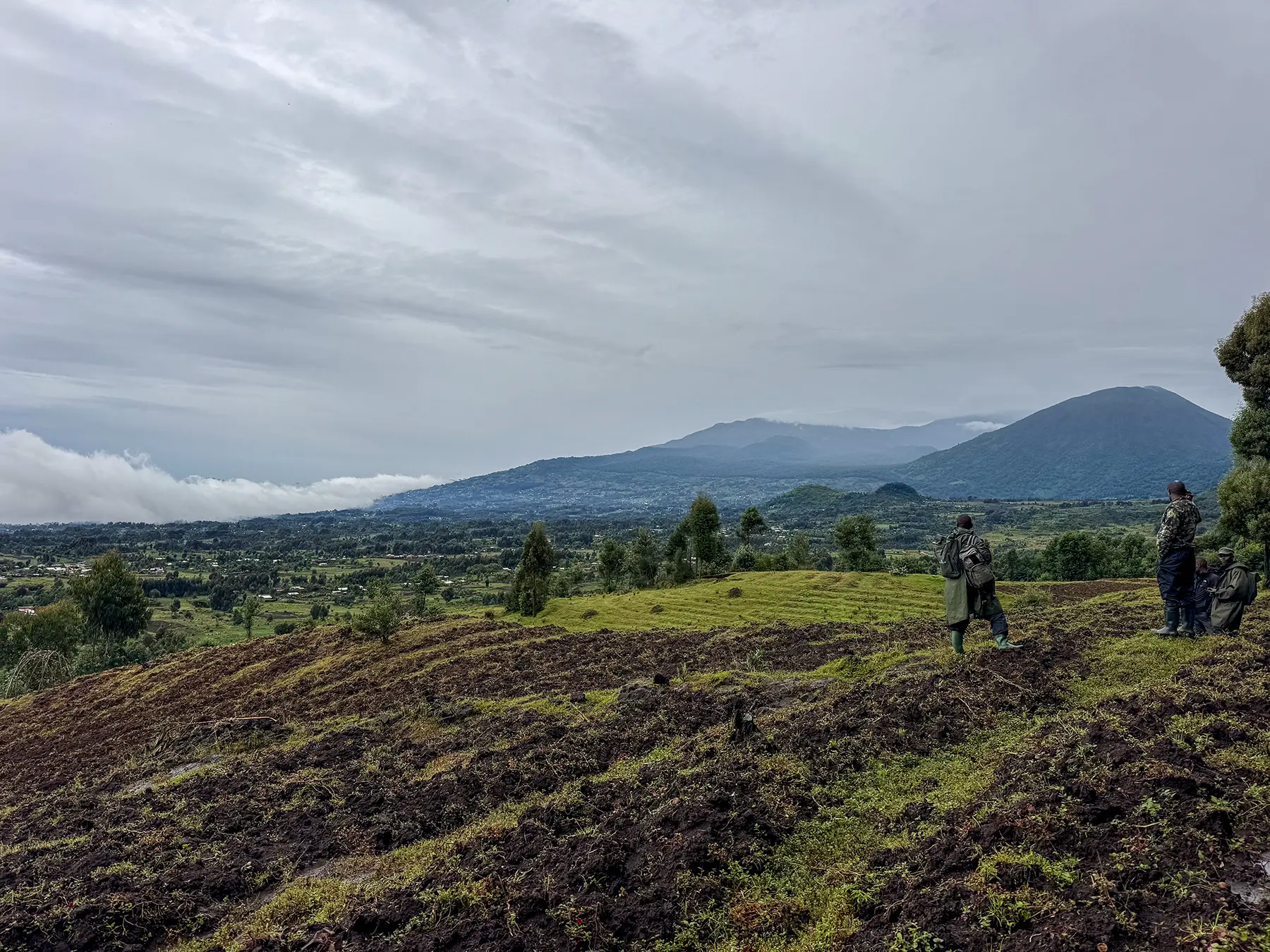
Quick Facts
Prices: Peak tourist season, premium prices
Weather: Warm, mostly dry days with cooler temperatures in mountain areas. Daytime temperatures 64-82°F (18-28°C)
Wildlife: Plentiful, with animals gathering around water sources in Akagera
Birding: Excellent – diverse species present.
Unique features: Good gorilla trekking conditions with dry, firm trails. Kwita Izina gorilla-naming ceremony in early September at Volcanoes
Reasons to Visit in the Long Dry Season
- Pleasant weather conditions
- Excellent gorilla trekking conditions
- Animals gather at water sources
- Dry trails for trekking
- Excellent birding with diverse species present
- Cooler nights at higher elevations
Considerations When Visiting in the Long Dry Season
- High tourist season with peak prices
- Busy parks and lodges
- Gorilla permits sell out months ahead
- Mountain areas can be colder at night
- Gorillas at higher elevations – longer, more challenging treks
- Longer drives to gorilla trekking start point
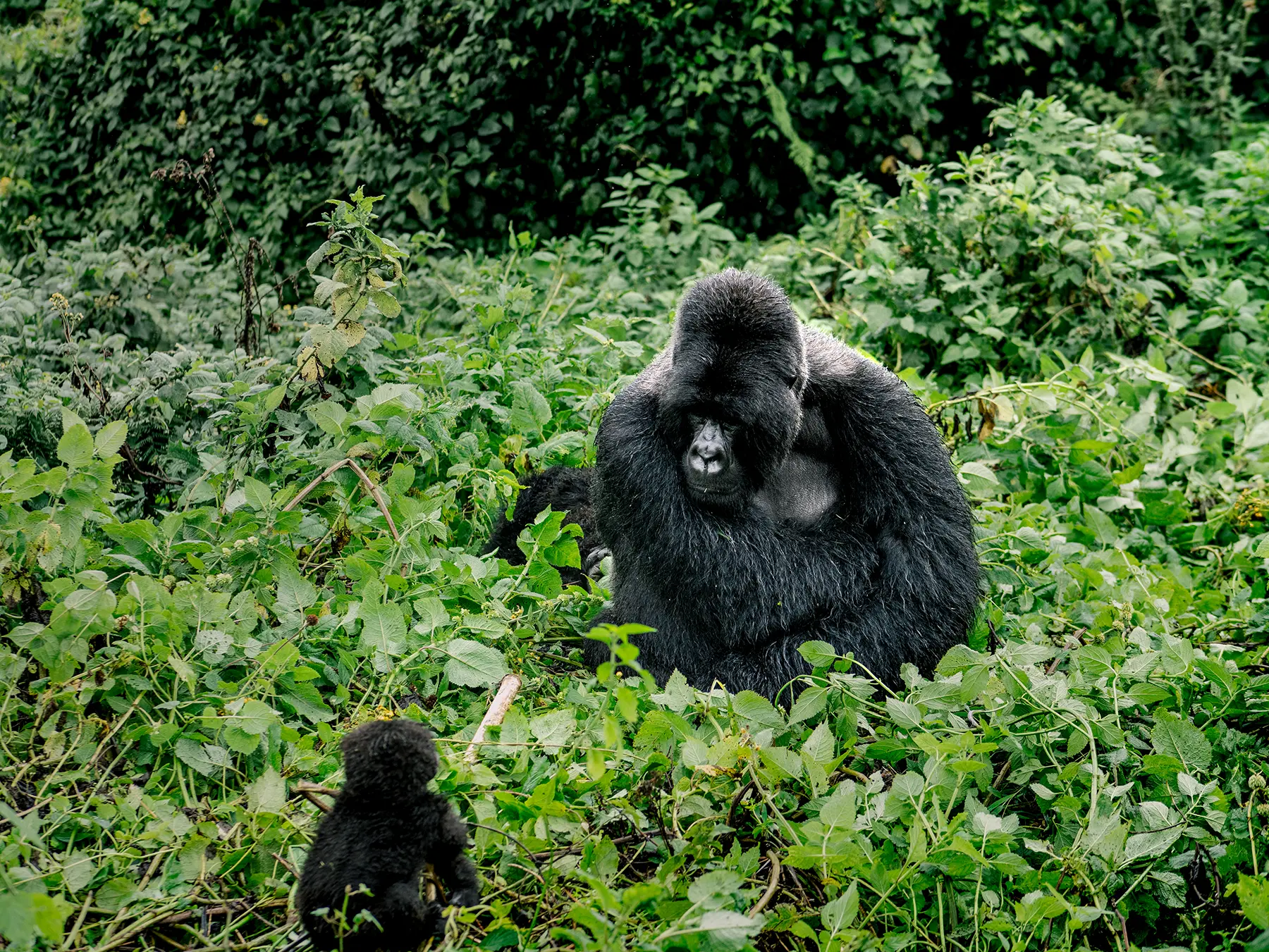
The Light Rainy Season (Mid-October-Mid-December)
The light rainy season hits all the right notes for anyone seeking pleasant weather, smaller crowds and good value for money.
This season is ideal for anyone in search of quieter parks with largely pleasant weather. With lodges and parks less crowded, you’ll enjoy a more intimate experience, plus it’s easier to book a gorilla permit due to lower demand.
My experience visiting in the light rainy season: For me, October and November are the perfect months to visit Rwanda because the weather is usually nice, but parks and activities aren’t as busy as in peak season.
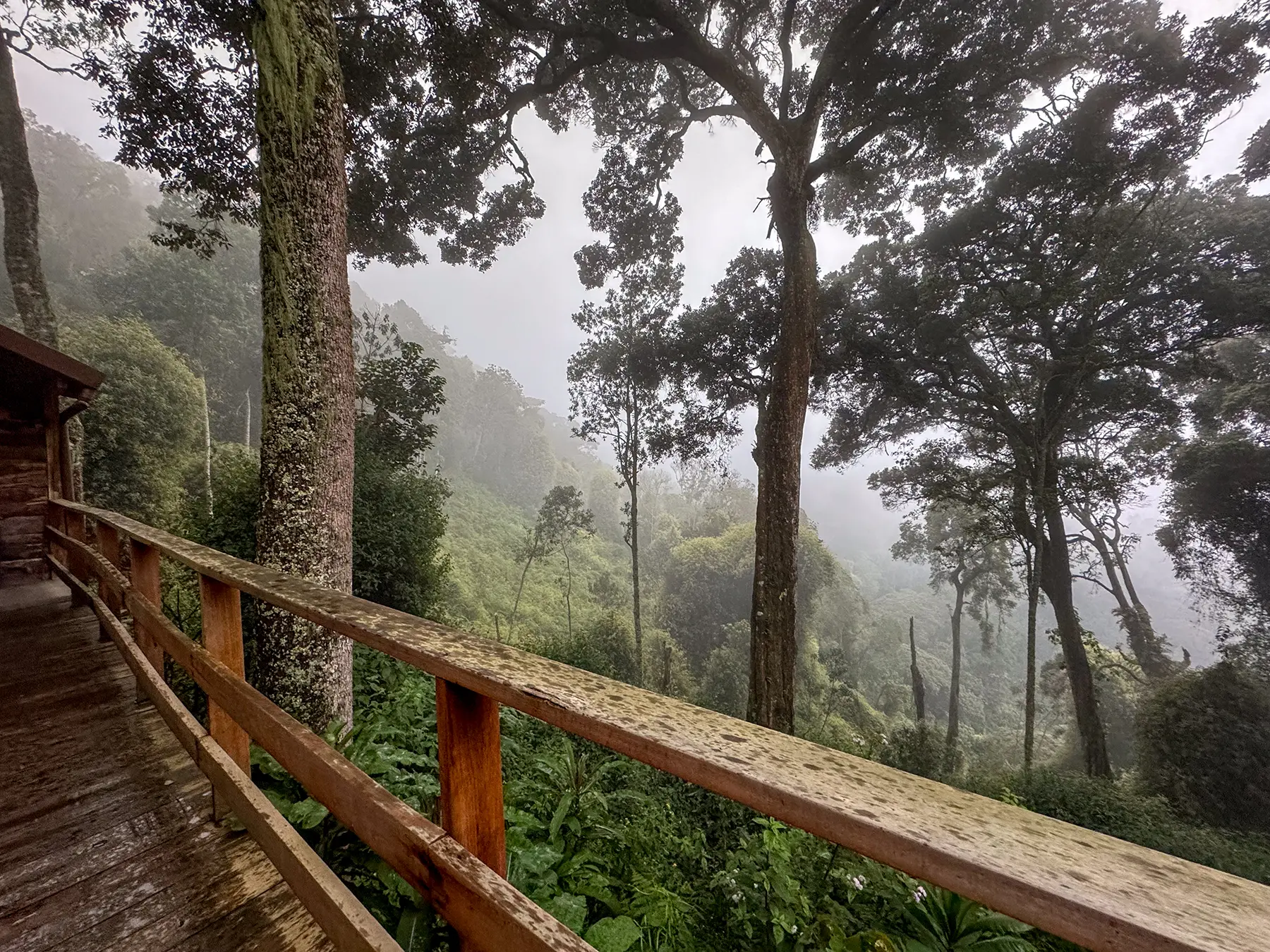
Quick Facts
Prices: Lower than peak seasons
Weather: Rainfall usually light, though heavier downpours are possible. Daytime temperatures 61-84°F (16-29°C)
Wildlife: Plentiful but more scattered. Gorillas in Volcanoes National Park move to lower altitudes
Birding: Mating and nesting season with colourful plumage on display. Migrant species arriving
Reasons to Visit in the Light Rainy Season
- Quieter parks and lodges
- Better gorilla permit availability
- Shorter gorilla treks possible
- Bird mating and nesting season
- Lower prices than peak seasons
Considerations When Visiting in the Light Rainy Season
- Trails sometimes wet and slippery
- Occasional heavy rains can impact activities
- Increased mosquito numbers
- Wildlife more scattered than in dry seasons
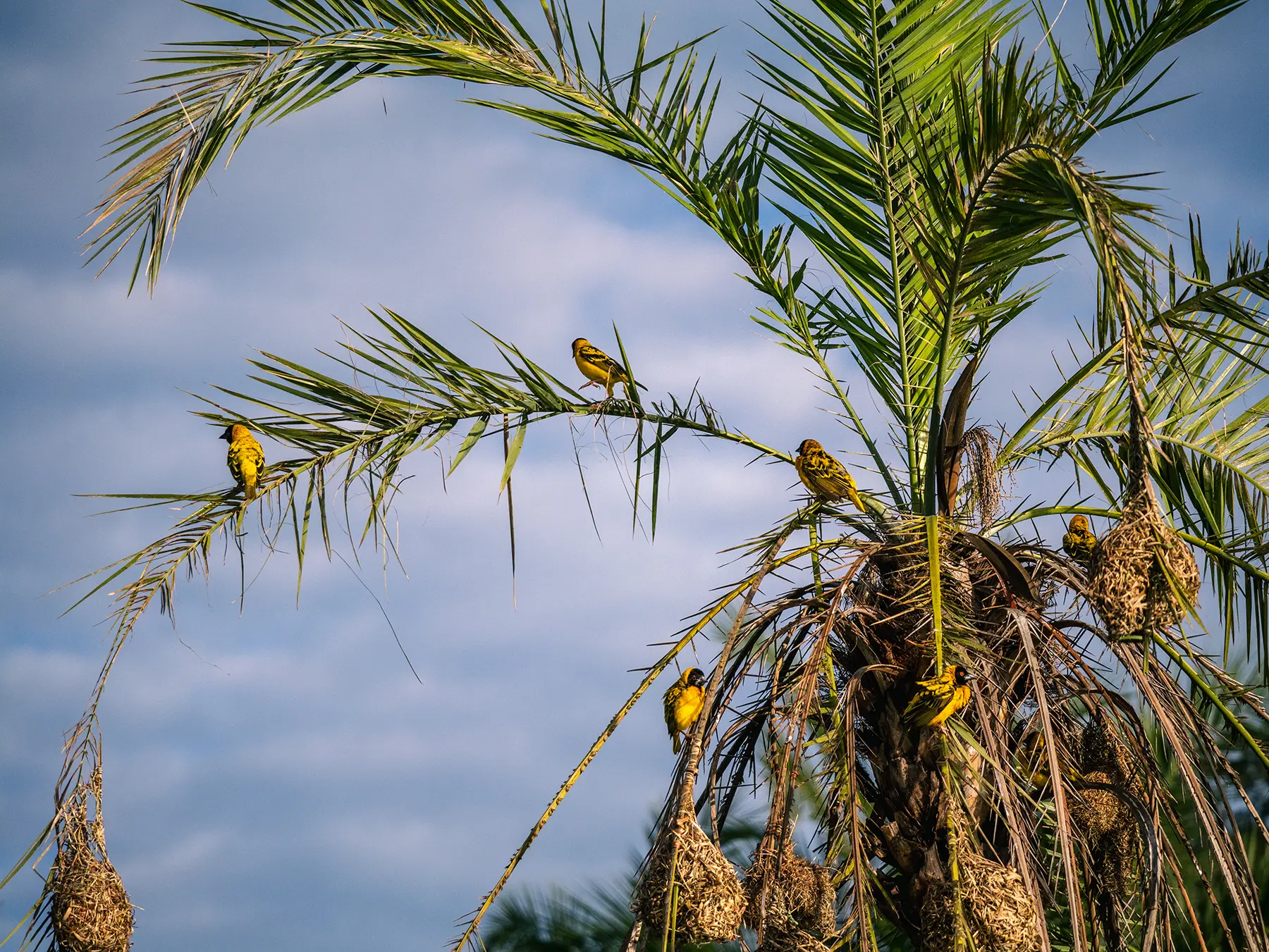
How Many Days Do You Need for a Rwanda Safari?
If you want to take in gorilla and chimp trekking as well as Big Five game viewing, I’d say ten days is perfect for a safari in Rwanda. This gives you time to see four different ecosystems: the vast plains of Akagera, the volcanic Virunga Mountains, a tranquil boat trip on Lake Kivu and the ancient rainforest of Nyungwe.
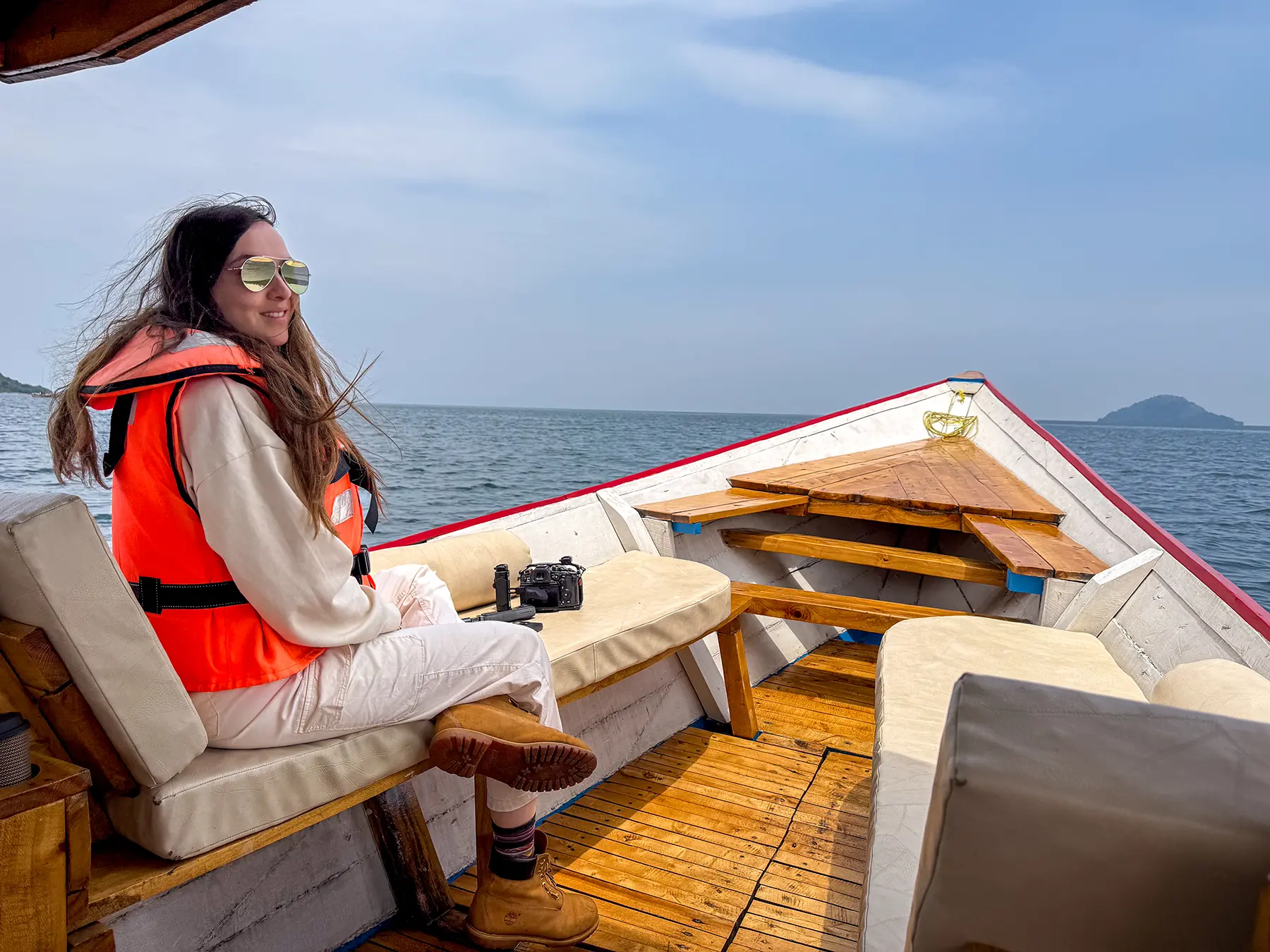
What 10 Days in Rwanda Gets You
- Kigali (2 days): Explore the Rwandan capital on your arrival and departure days, taking in the Genocide Memorial and experiencing Rwandan coffee culture before travelling to the parks
- Akagera National Park (3 days): Big Five game drives in the southern and northern sectors, lion and rhino sightings on Kilala Plain, boat cruise on Lake Ihema
- Volcanoes National Park (3 days): Gorilla trekking with a full hour observing a habituated gorilla family, golden monkey trekking in the bamboo forests, and views across the Virunga chain of volcanic peaks
- Lake Kivu (1 day): A restful break between primate parks, including boat trips to the islands and views across the water to the DRC
- Nyungwe Forest National Park (1 day): Chimpanzee trekking in one of Africa’s most ancient rainforests, a breathtaking canopy walk 197 feet (60 metres) above the forest floor, and 13 primate species
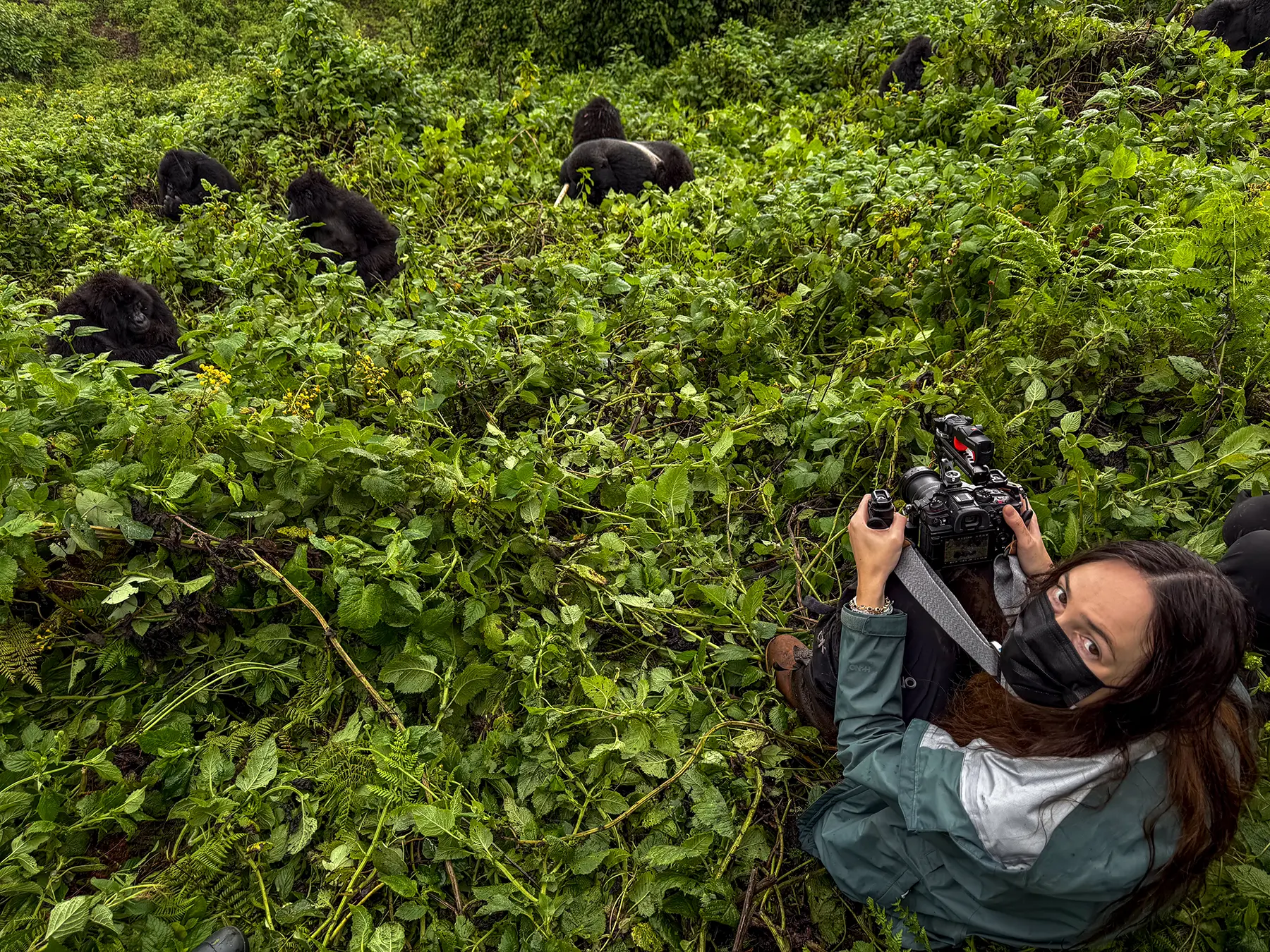
If you can’t spare ten days, five days is sufficient to cover two of the key activities such as gorilla trekking in Volcanoes and Big Five game drives in Akagera or chimp tracking in Nyungwe.
On the other hand, if time isn’t an issue, a 2-week combined Rwanda and Uganda itinerary will give you a more in-depth experience covering two neighbouring countries, adding gorilla trekking in Bwindi Impenetrable Forest, chimpanzee tracking in Kibale, and more traditional game drives in Queen Elizabeth National Park.
My preference: For me, seven to ten days is ideal for a safari in Rwanda. If you have at least a full week, you’ll have time for both chimpanzee trekking in Nyungwe Forest and Big Five safaris in Akagera, whereas you’d have to forgo one or the other on a shorter trip.
I especially love being able to spend more than one night at each location, as you can take the time to truly immerse yourself in nature.
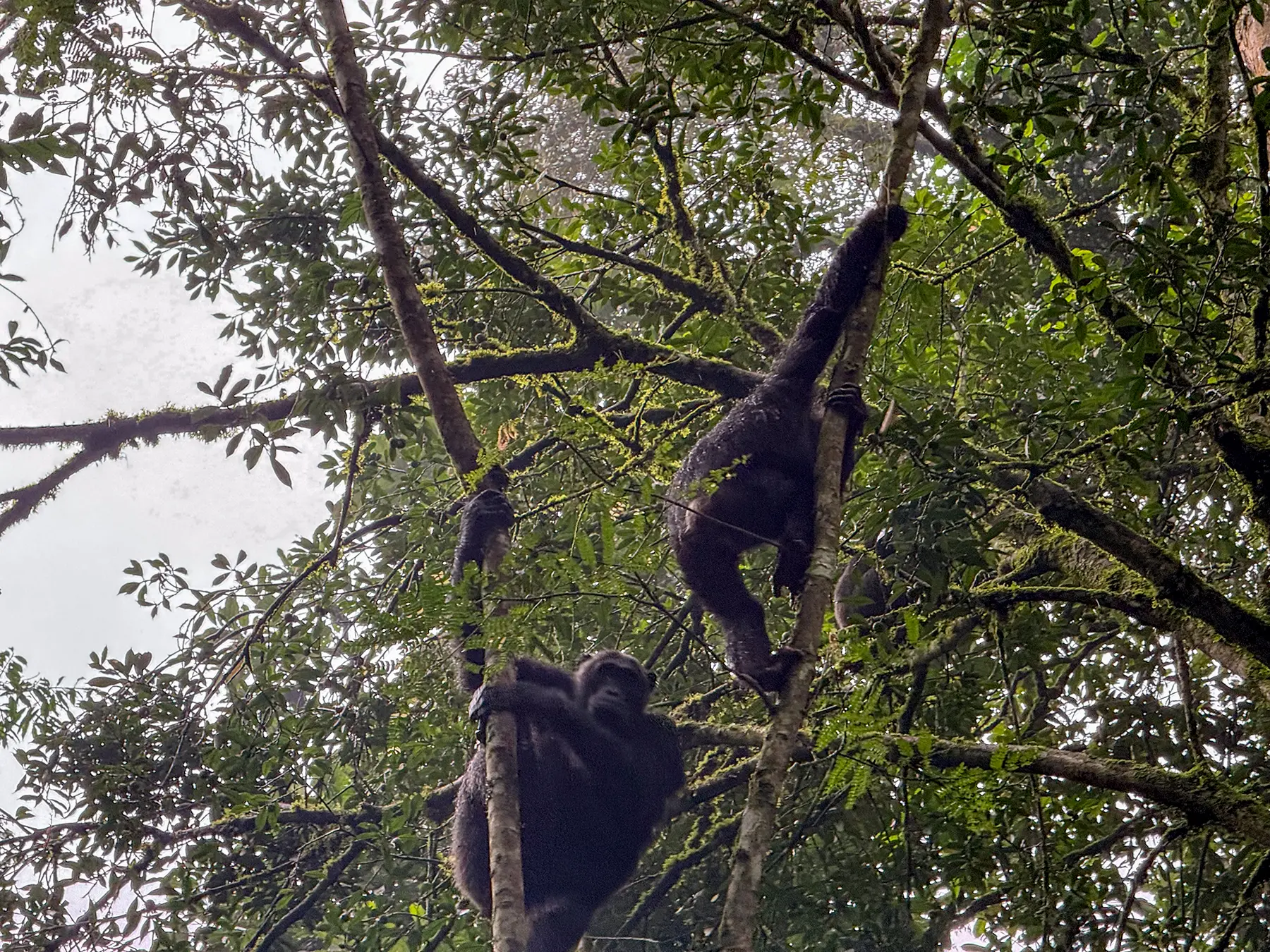
Rwanda Safari FAQs
Click on any of the frequently asked questions below to display the answer.
Is Rwanda safe for safari tourists?
Yes, Rwanda is actually ranked the safest country in East Africa, boasting excellent road infrastructure, well-maintained cities and strong governance. Having made an astonishing recovery after the 1994 genocide, the country is now one of the most stable nations on the continent. Safari areas such as Volcanoes National Park, Akagera and Nyungwe are all well managed with excellent, professional guides and park rangers.
Both times I visited Rwanda I felt totally safe. Hotel staff in Kigali also spoke with pride about how safe the city was.
In addition, I saw first-hand how a whole village community came together to clean up after a landslide blocked a nearby road in a wonderful demonstration of community spirit. Rwanda’s cities are clean, its people warm and welcoming and its national parks are extremely well run.
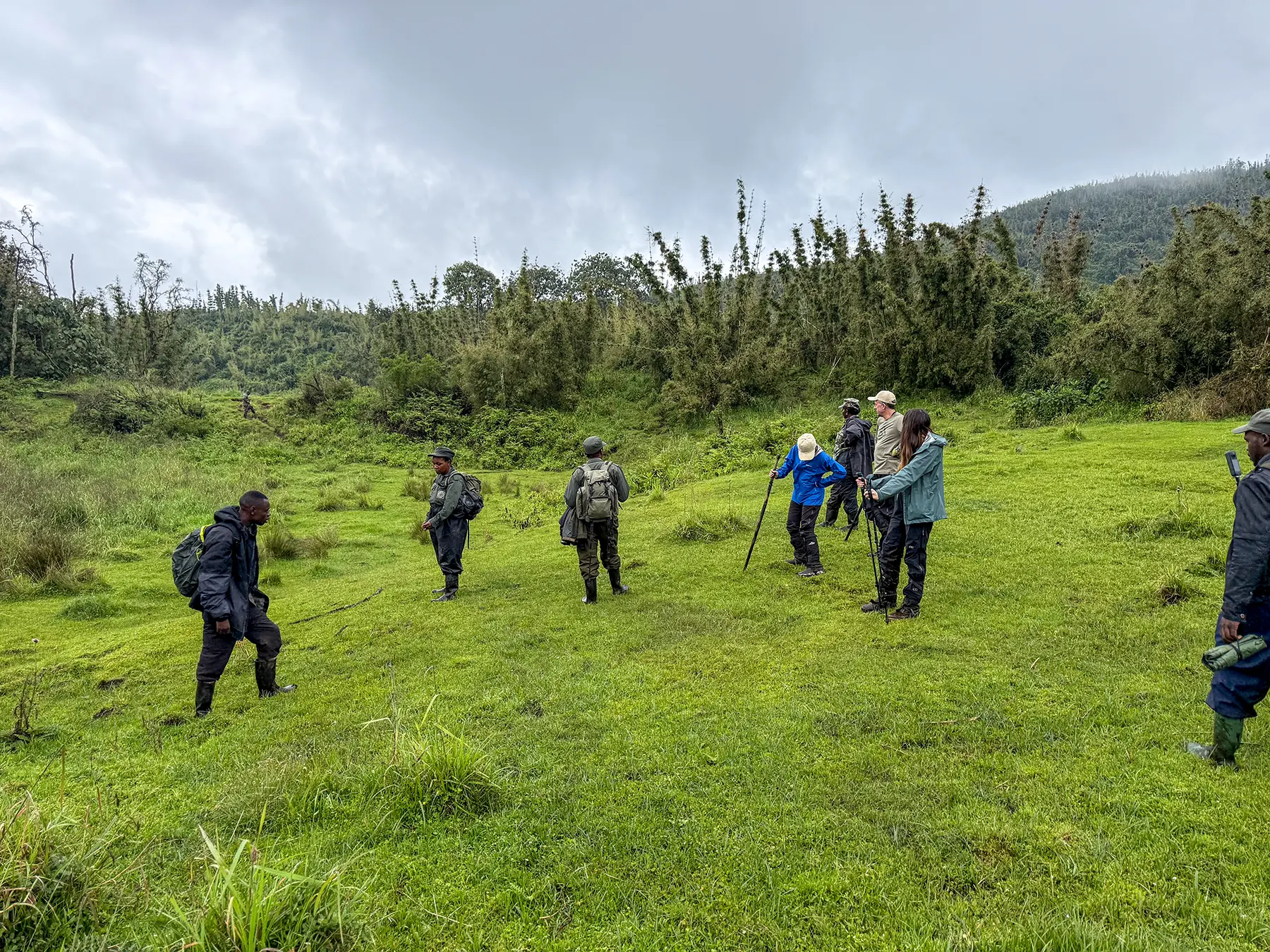
How much does a Rwanda gorilla trekking permit cost?
Gorilla trekking permits are fairly pricey at $1,500 per person per trek – almost twice the price in Uganda ($800). This includes a full hour with a habituated gorilla family.
By comparison, golden monkey trekking costs $100 per person and chimpanzee trekking in Nyungwe is priced at $150 per person plus a $100 per day park fee.
Since permits sell out quickly in peak season, you should book a minimum of 6-12 months in advance.
I found that booking my gorilla permit via a local tour operator took away all the stress, as the operator handled the entire process. While it is an expensive experience, I must say that the hour you get to spend with the gorillas truly is worth every cent of the $1,500 fee.
I also did a golden monkey trek the day before my gorilla trek and would strongly recommend it as a fantastic warm-up for the gorilla trek as well as an enjoyable experience in its own right.
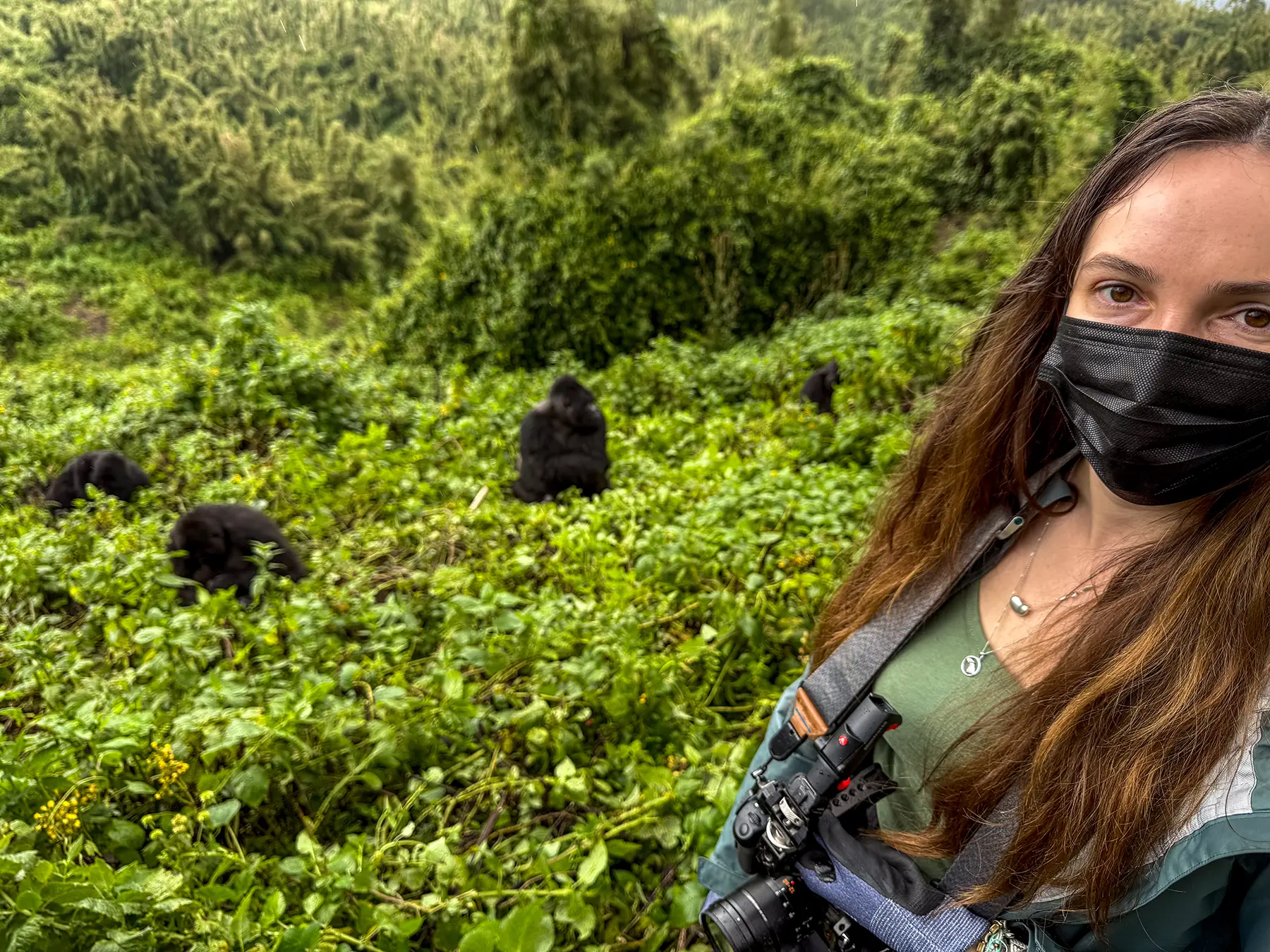
When is the best time to visit Rwanda for safari?
I’d say the best time to go is during the dry season from June to August, as gorilla trekking trails are drier, vegetation is sparser and the wildlife in Akagera will be drawn to water sources, making their movements more predictable.
That said, the short dry season (December-February) is also excellent, with warm, dry conditions across the country. Furthermore, the shoulder months of mid-September to mid-December offer a great balance of quieter parks, largely good weather and cheaper prices.
My personal favourite time to visit this corner of the world is either the shoulder season in October and November or June when the parks are quieter. I’ve also gone during the wetter months and enjoyed some amazing wildlife encounters, but it’s worth noting that the chimp trekking trails in Nyungwe can get extremely muddy during these times.
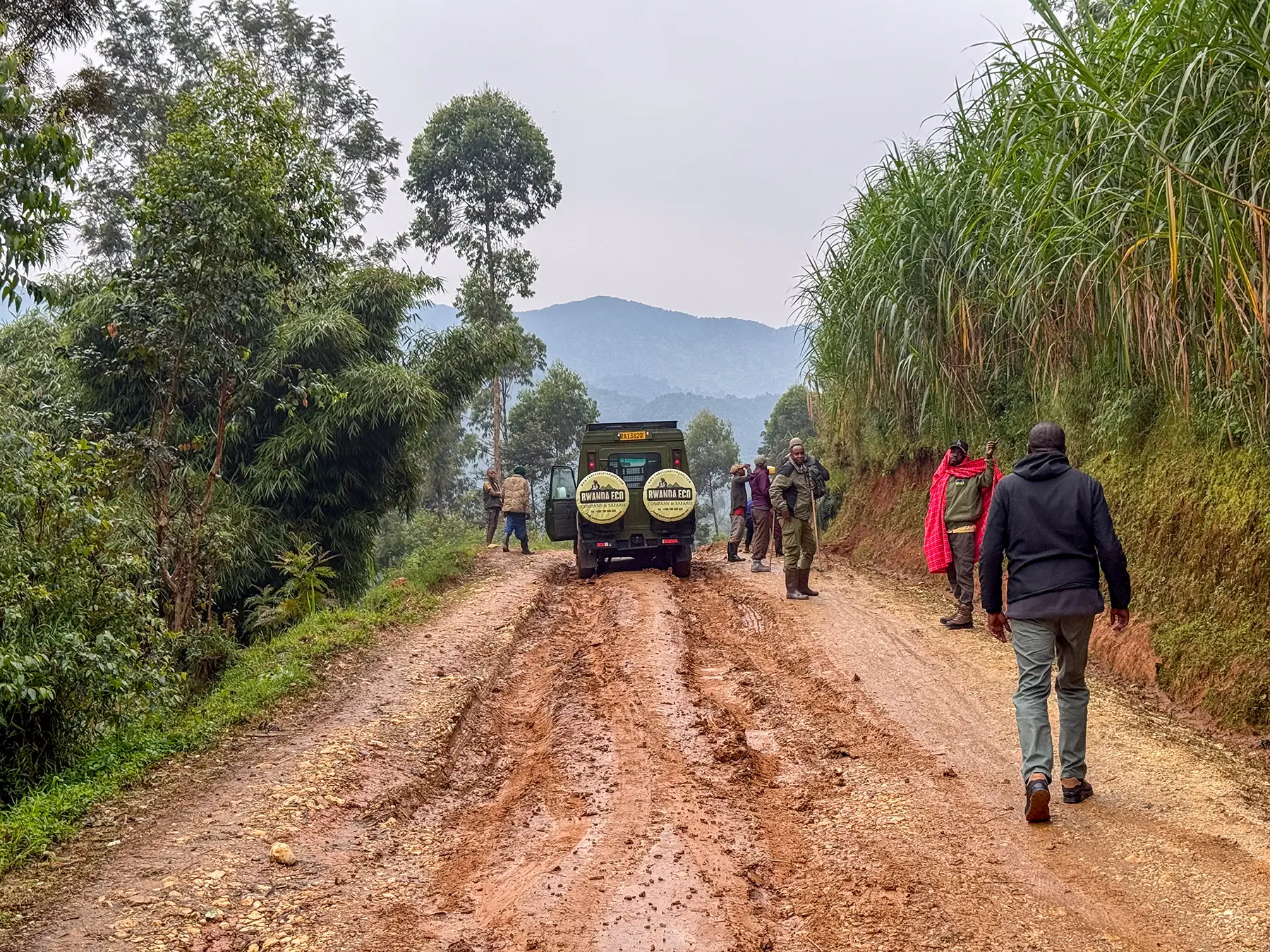
Do you need vaccinations for a Rwanda safari?
If arriving from a country where yellow fever is endemic, you will need a yellow fever vaccination certificate to enter Rwanda. You must have received the vaccination 10 days or more prior to arrival.
Other recommended vaccines include hepatitis A, hepatitis B, tetanus, typhoid and rabies. As malaria occurs all over Rwanda, you should also discuss preventative antimalarial medication with a healthcare provider before travelling.
I attended my travel clinic about 6 weeks before I went and everything was very straightforward. I took antimalarials throughout my trip and didn’t experience any side effects. I recommend booking your travel clinic appointment early as some vaccines involve multiple doses spaced out over several weeks.
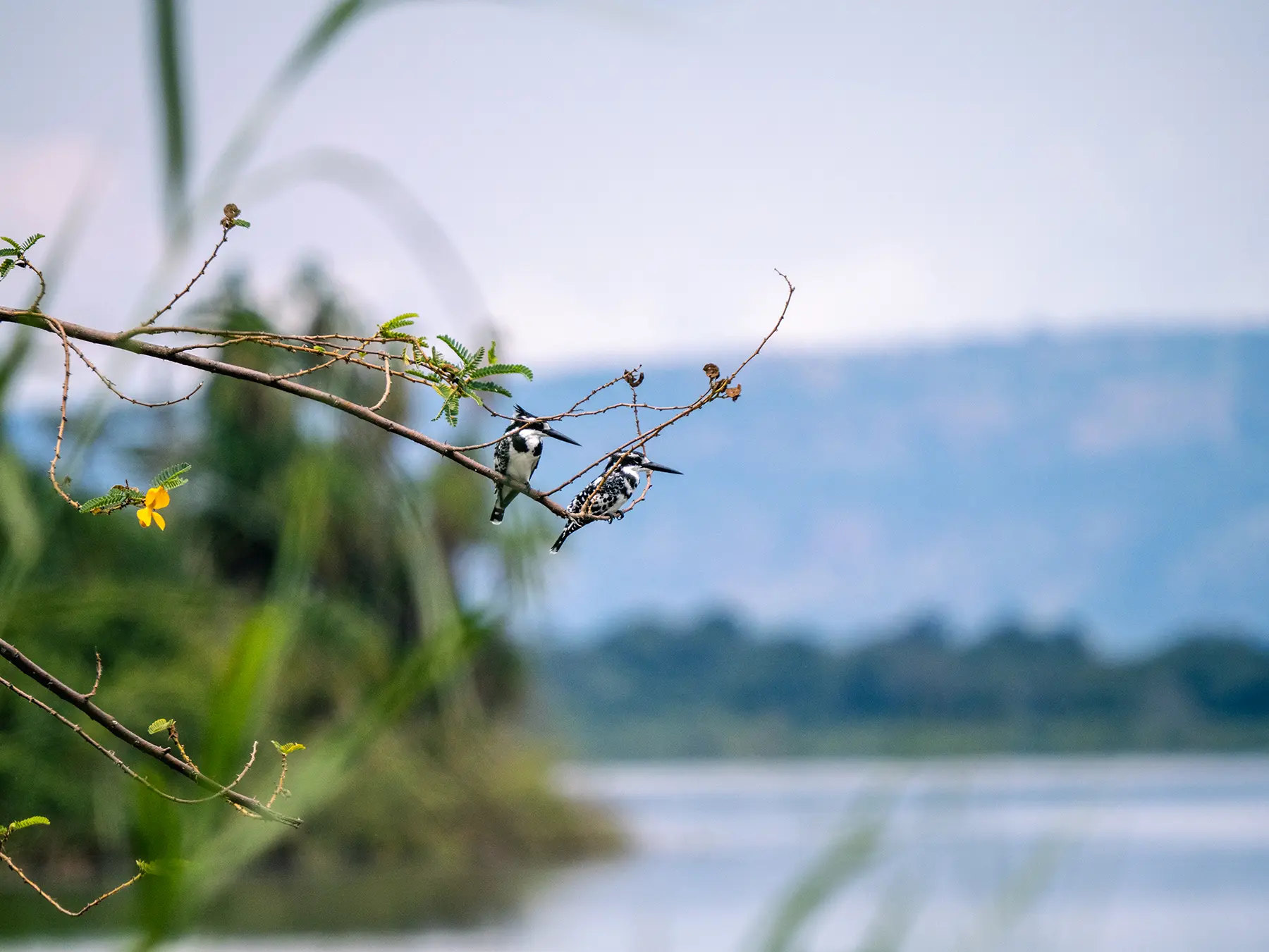
Can you see the Big Five in Rwanda?
Yes, Akagera National Park houses all of the Big Five: lions, leopards, elephants, buffalo and rhinos. Following their local extinction in the wake of the 1994 genocide, lions were reintroduced to the park in 2015 and two species of rhino, black and white, have been gradually reintroduced since 2017.
These achievements have made Akagera one of Africa’s greatest conservation success stories, with incredible wildlife population recoveries occurring under the management of African Parks.
Kilala Plain in northern Akagera smashed all of my expectations. Almost immediately after setting out on our first game drive, we discovered three lions just having a snooze in the middle of the road, plus more rhinos than I have ever seen in my life, spotting groups of four, then three, then another pair scattered across the plain.
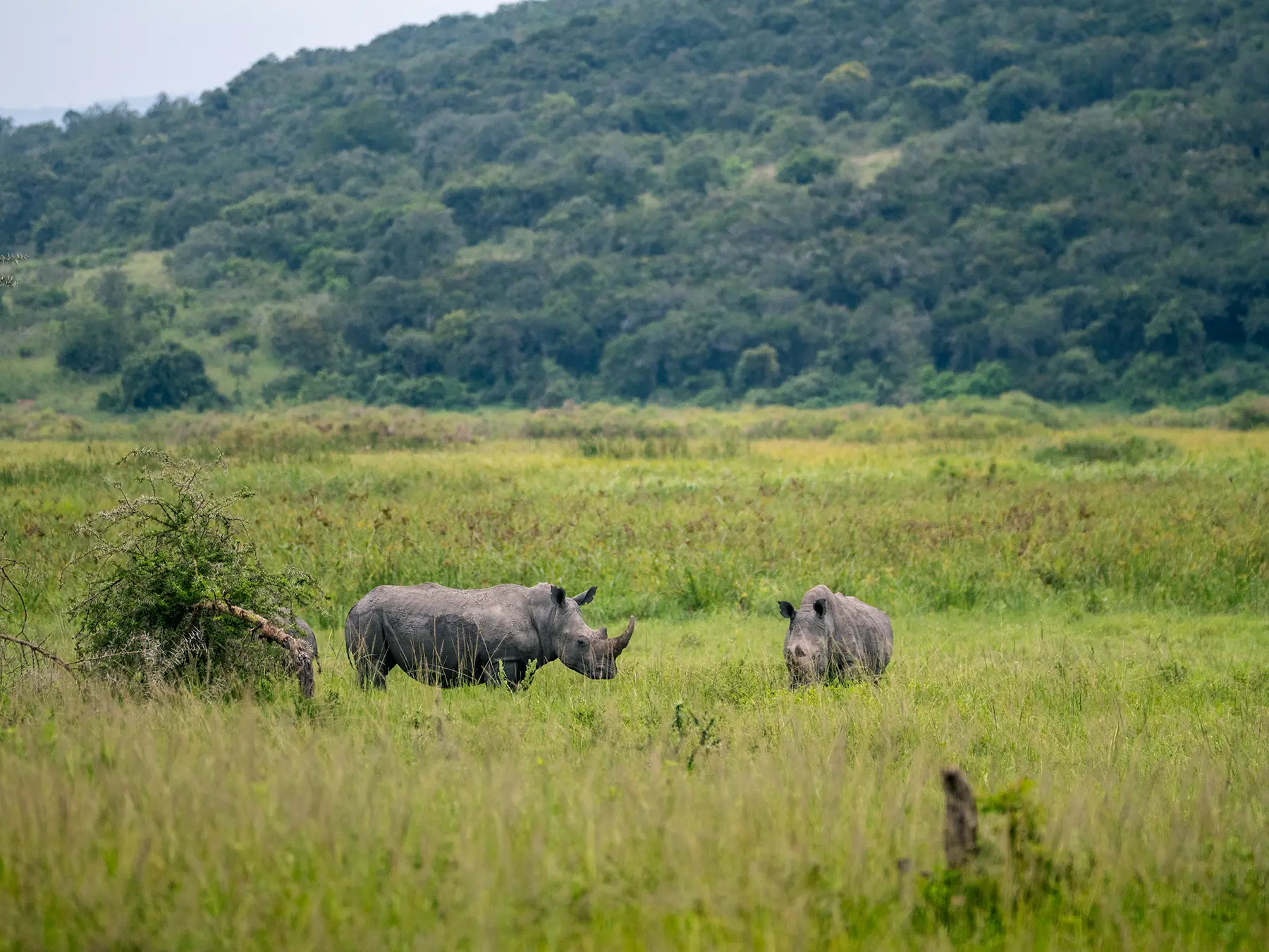
Do you need a visa for Rwanda?
Yes, but what you pay depends on your passport. US and most European passport holders pay $50 for a single-entry visa, which you can apply for online before you travel. UK passport holders get a free 30-day visa on arrival, because Rwanda waives the fee for citizens of Commonwealth, African Union and Francophonie countries, which also covers some European passports such as France.
If you also plan on visiting Uganda or Kenya, you should opt for the East African Tourist Visa. Costing $100, it allows multiple entries to all three countries over a 90-day period.
I applied for my visa online before my trip and the process went very smoothly. The East African Tourist Visa is very convenient if you’re going to combine Rwanda with Uganda (or add Kenya). If you would otherwise pay for both visas, it costs the same as two separate $50 visas and allows you to skip the second application.
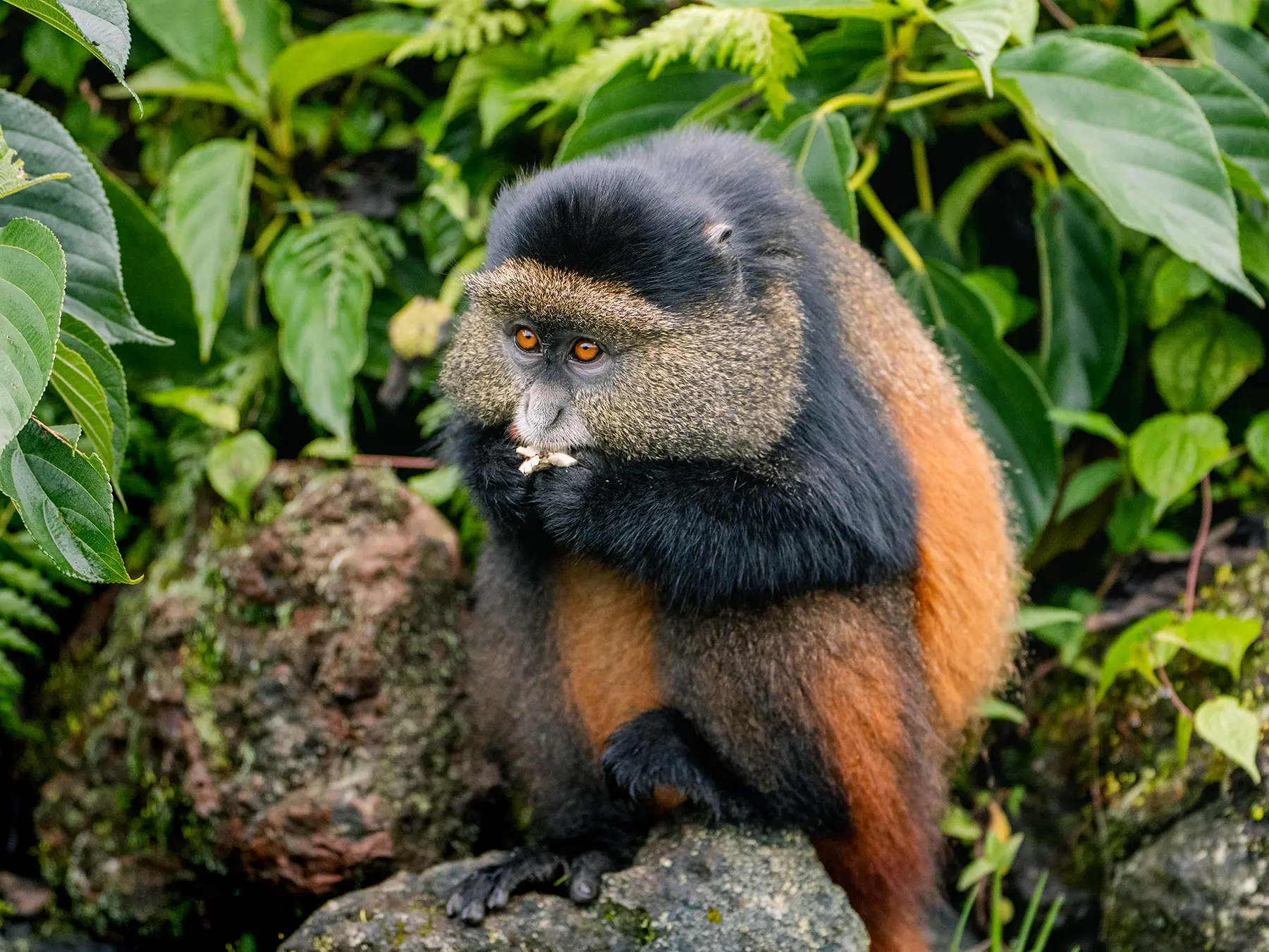
Recommended Booking Options For Your 10-Day Rwanda Itinerary
Private Safari
Most popular & best experience – typical prices for this itinerary start from $450 per person per day.
Visit safarisbyella.com for free quotes from trustworthy local tour companies I use to book my own trips.
Recommended Booking Options For Your 10-Day Rwanda Itinerary
Private Safari
Most popular & best experience – typical prices for this itinerary start from $450 per person per day.
Visit safarisbyella.com for free quotes from trustworthy local tour companies I use to book my own trips.
Is a 10-Day Rwanda Safari Worth It?
Absolutely. Ten days is ample time to enjoy mountain gorilla and golden monkey treks at Volcanoes, track chimpanzees in Nyungwe, take in three days of Big Five game drives in Akagera and still break your journey on Lake Kivu. All this will cost about $6,250 per person for a private safari with budget accommodation.
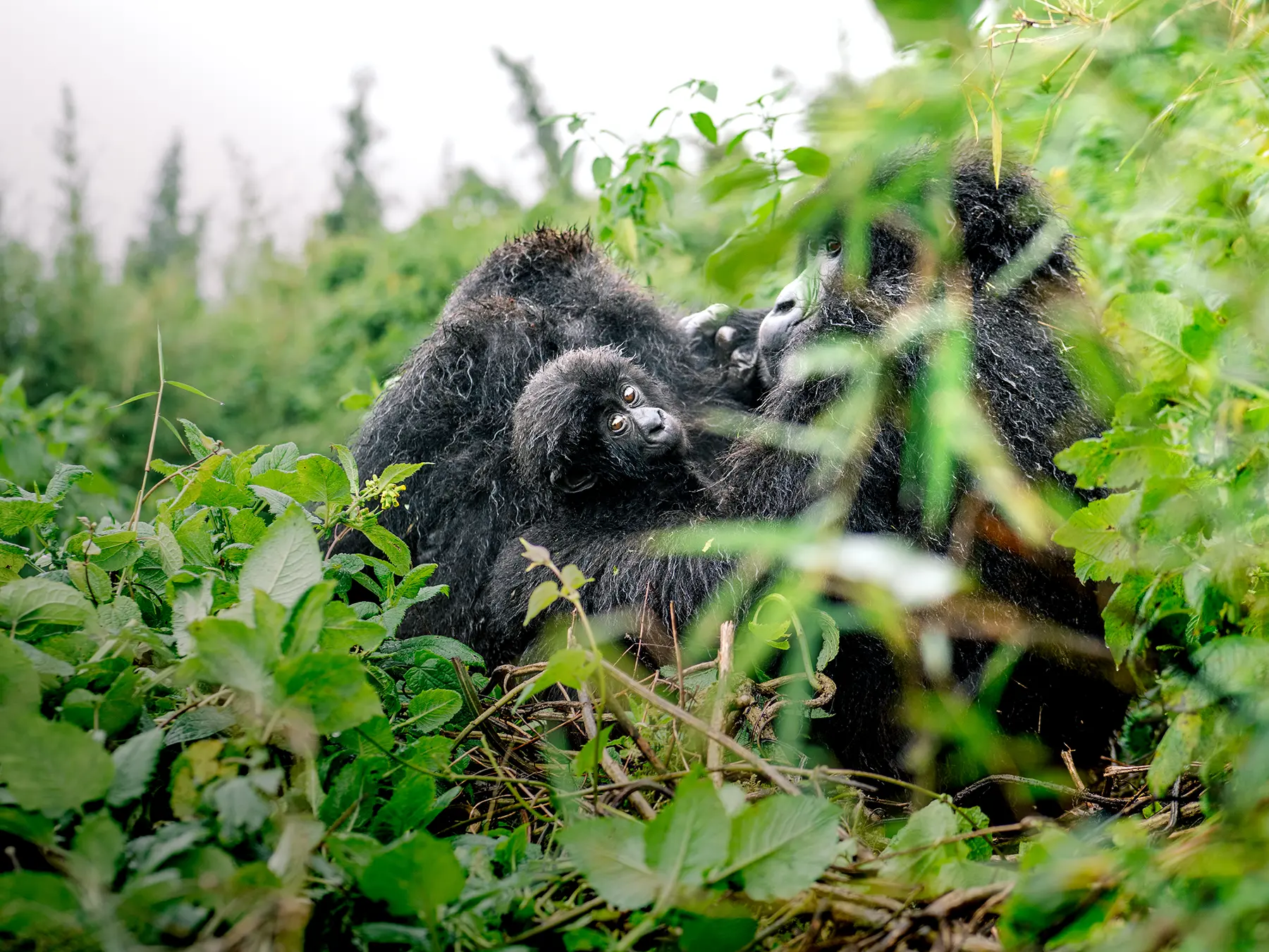
Ten days is ideal because it leaves you room to breathe. With three days in Akagera, you won’t have to choose between the forests in the south and the savannahs in the north, but can explore both instead. In addition, having three nights at Volcanoes means you can enjoy both a golden monkey trek and a gorilla trek.
This itinerary also deliberately puts the golden monkey trek ahead of the more challenging gorilla trekking so that your body can adjust to the significant altitude at Volcanoes before you tackle a steeper hike.
Similarly, the stop at Lake Kivu is a conscious choice, breaking up what would otherwise be a fairly gruelling 6-hour drive from Volcanoes to Nyungwe and gifting you two hours of relaxation on the water to rest between two challenging treks.
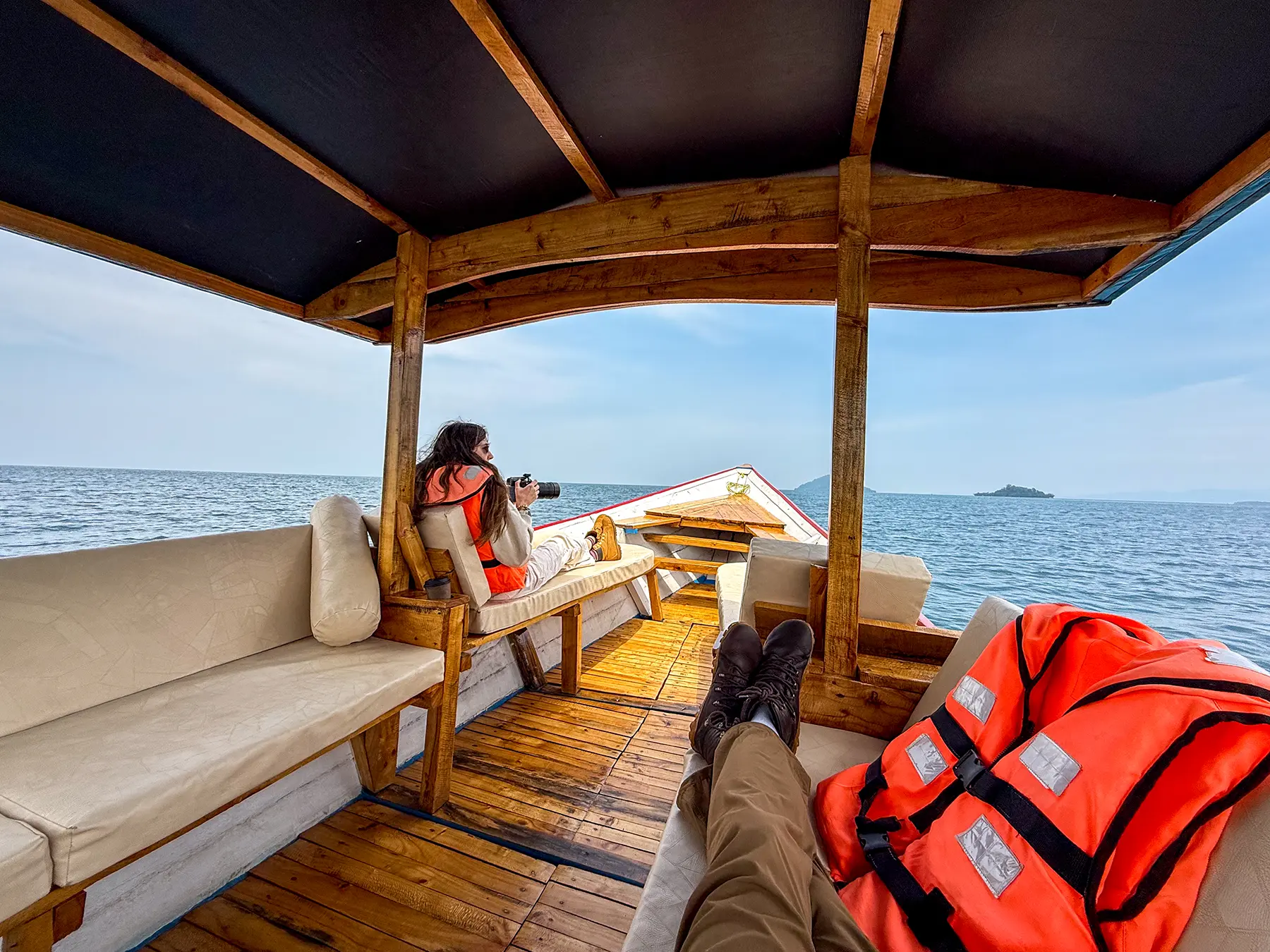
While the golden monkeys often take a back seat to the more popular chimps and mountain gorillas, it’s worth recalling how rare they really are – found nowhere else on earth outside of the volcanic Virunga Mountains. With a 2017 to 2018 survey estimating only about 4,600 in Volcanoes National Park, these adorable creatures are also endangered, and observing them in their natural habitat is a rare privilege.
From the unforgettable first moments of that initial game drive, watching a solitary bull elephant silhouetted against the brightening sky on a plain in southern Akagera and cruising on the tranquil waters of Lake Kivu to that utterly spine-tingling hour with the Hirwa gorilla family that marked the high point of my trip, Rwanda has given me so many memories to cherish forever.
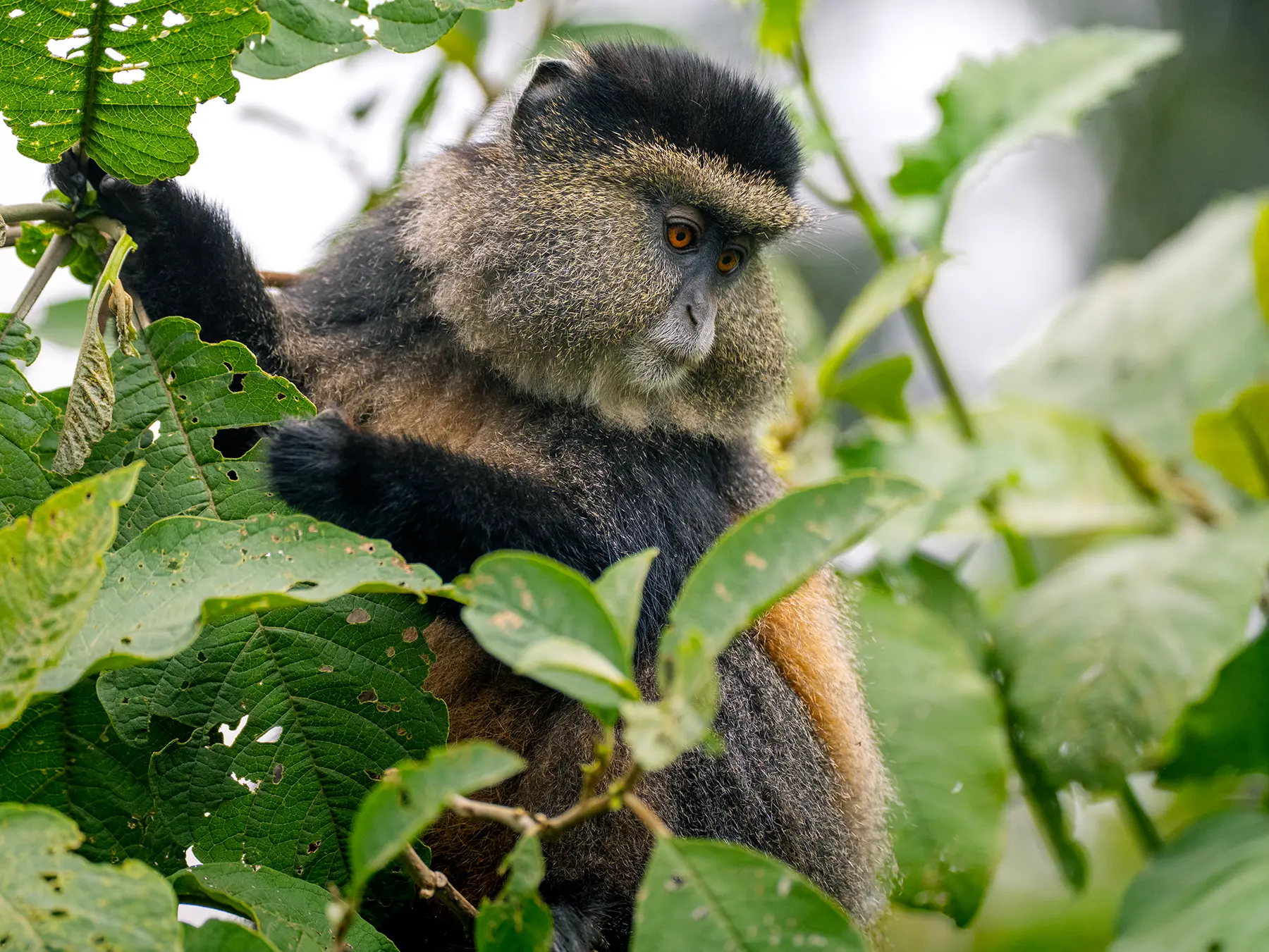
I have curated this itinerary with the utmost care in the hope that you can experience the same magic as I did on my visits to this beautiful country. Please don’t hesitate to reach out if you have any questions at all – I will be delighted to help you plan your trip of a lifetime to the wonderful “land of a thousand hills”!
Read More Rwanda Guides
South Africa Itineraries
Recommended itineraries and how to book them.
7-Day Rwanda Gorilla Trekking & Safari Itinerary & Costs
10-Day Rwanda Gorilla Trekking & Safari Itinerary & Costs
2-Week Rwanda Gorilla Trekking & Safari Itinerary & Costs
Costs & Planning
How to get the most bang for your buck and the best time of year to visit depending on what you want to do and see.
Coming soon.
National Parks & Reserves
Complete guides to the best and most famous safari reserves, including the wildlife you’ll see, entrance costs and best time to visit.
Coming soon.
How to Book Your Safari
Save time and ensure an incredible safari experience by getting quotes from my recommended local safari companies.
Join the rapidly growing tribe of over 1,000 travellers who’ve booked their dream safari using my insider tips and recommendations.