
Botswana safari itineraries of 3 days can work well with the right focused itinerary and you can maximise time on safari by flying in and out of the region you are exploring.
In my experience, getting that one location right is crucial, and the right choice will vary depending on what you want to do and see.
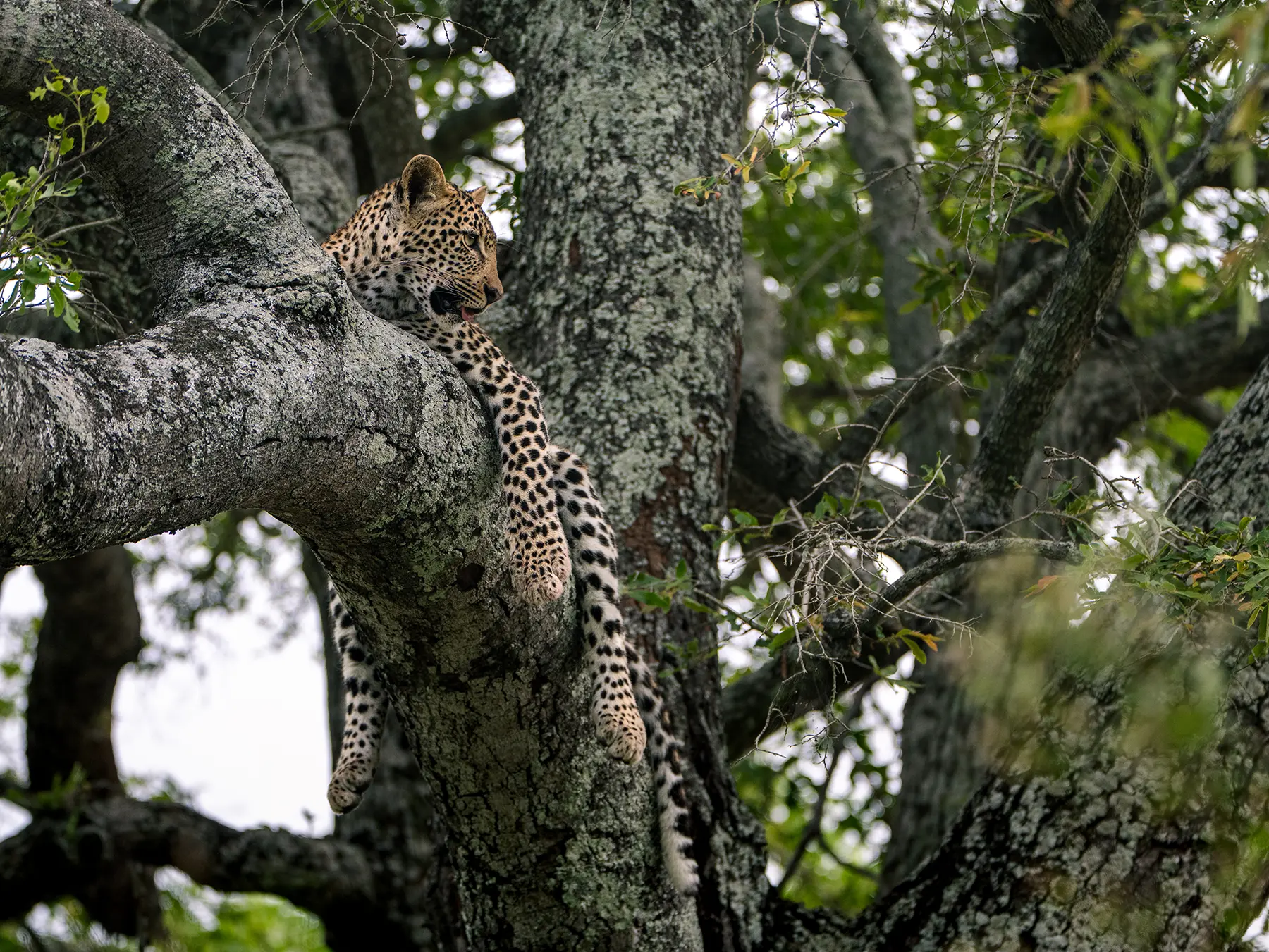
After spending 4 weeks on safari in one of Africa’s most exclusive safari destinations, I’m here to help you get this just right!
With almost 40% of the country protected for wildlife and home to Africa’s largest elephant population and one of the best places to see the endangered African wild dogs, there’s a lot of options when it comes to which part to see in 3 days.
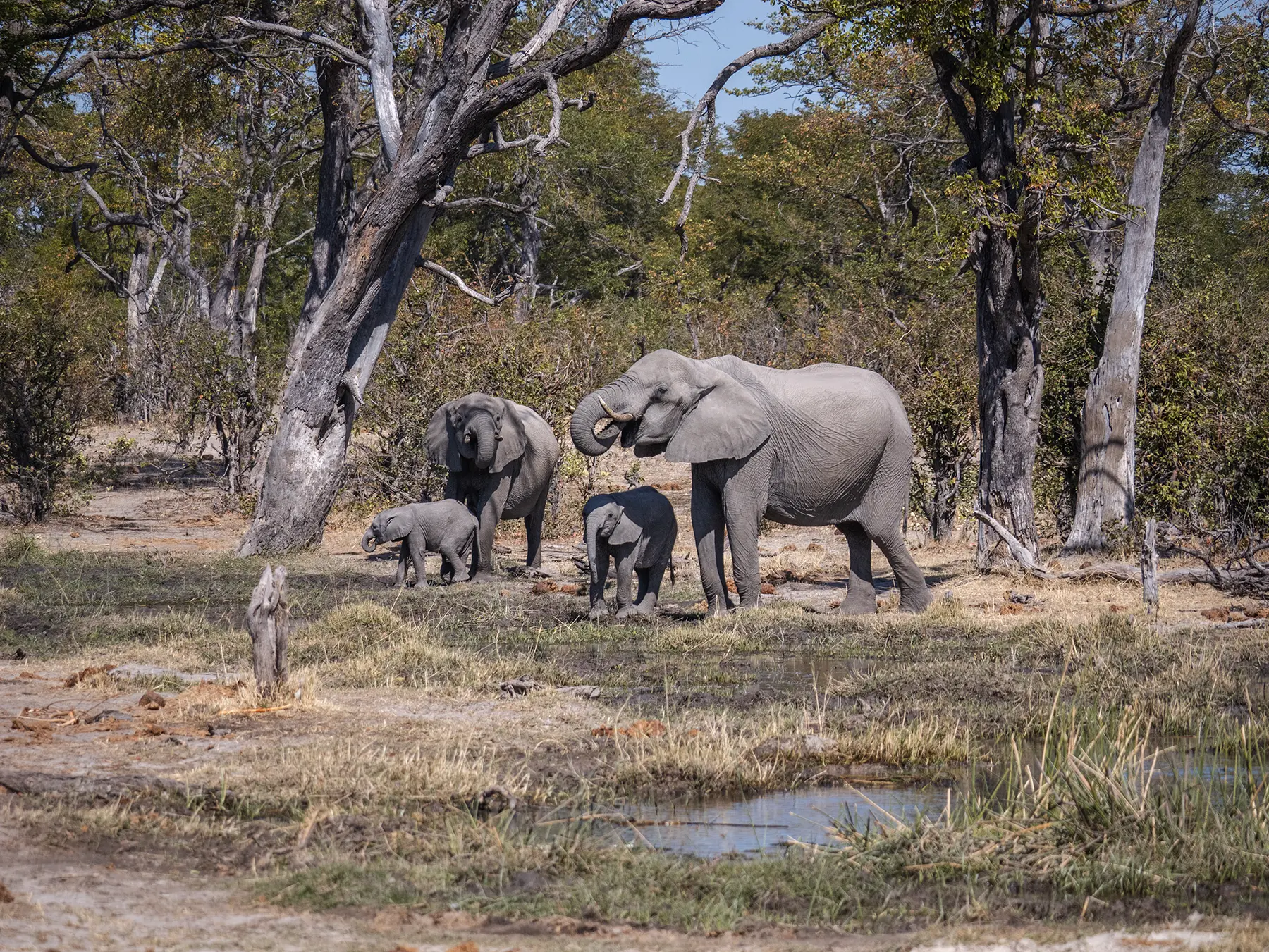
To help you decide, I’ve put together five different three-day Botswana itineraries, each focused on a single region, so you can match your trip to the wildlife you most want to see.
Each route showcases a different side of Botswana, from the waterways of the Okavango Delta and Chobe to the deserts of the Central Kalahari and Makgadikgadi, with one route crossing into Zimbabwe for Victoria Falls.
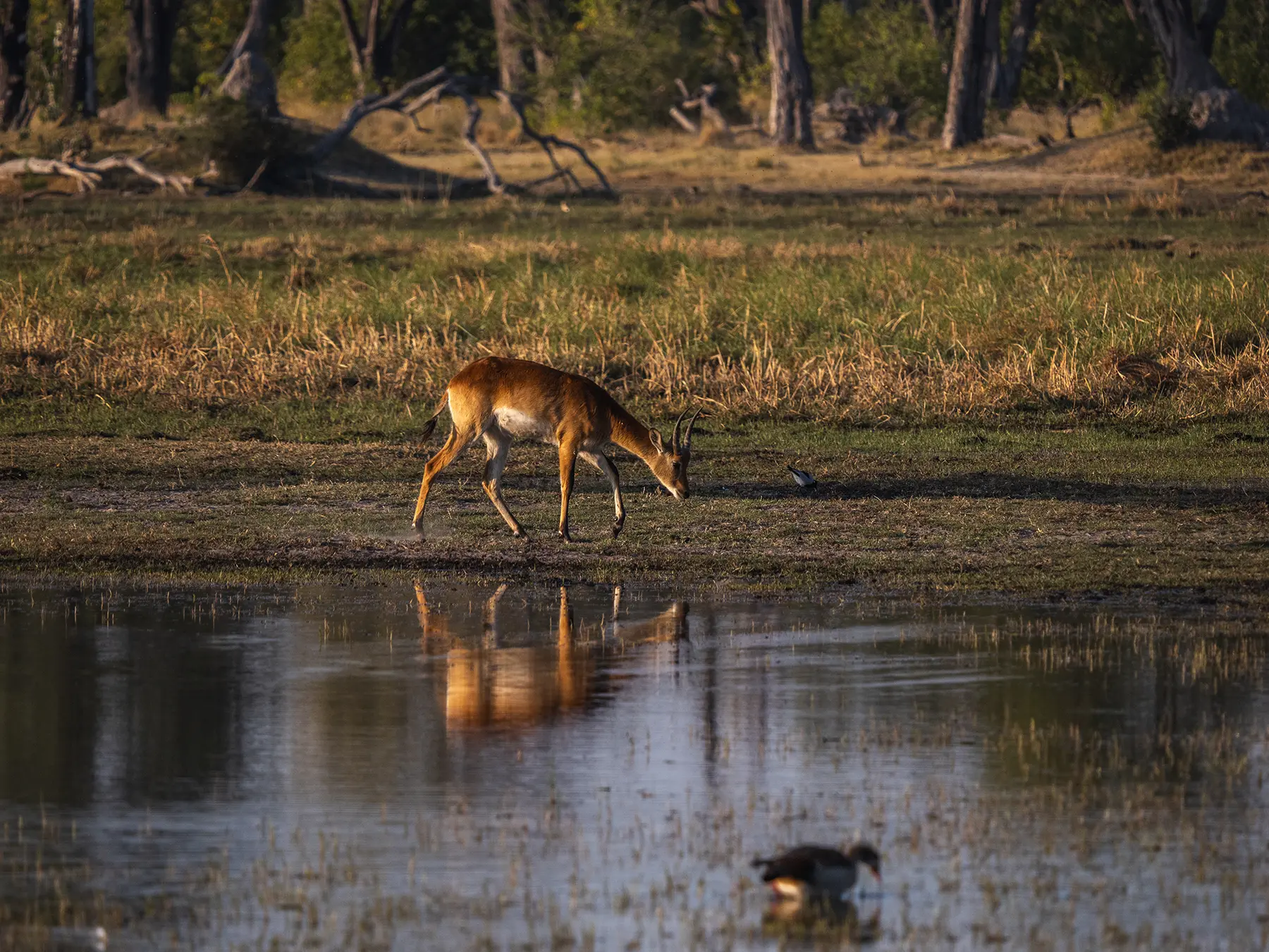
If you have the time, you can also take a look at my slightly longer 5-day Botswana itinerary which allows two locations or 7 days which allows three.
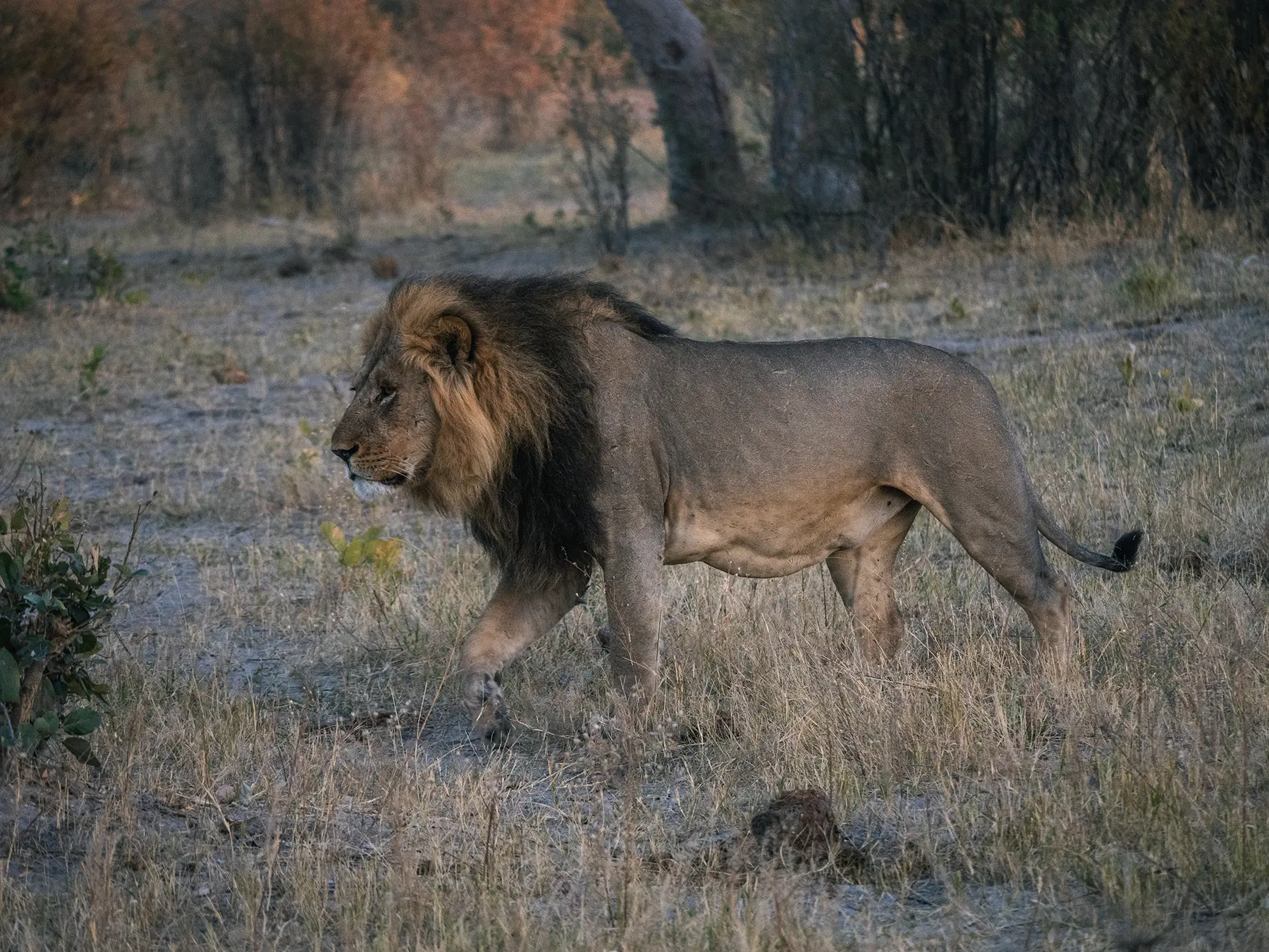
After visiting Botswana myself, I’ve put together these 3-day Botswana itineraries to show you all of what Botswana has to offer as well as giving you the most ‘bang for your buck’.
I’m going to give you an idea of how much it will cost, the best time to visit and how to find the best safari tour company.
As I walk you through each itinerary, I’ll share tips, tricks and how to avoid some of the mistakes I’ve made.
I’ve also spoken at length with my favourite Botswana guides as well as conducting copious amounts of additional research to ensure you receive everything you need to know to have the ultimate Botswana safari.
It’s easy to focus only on the fun stuff when planning the trip of a lifetime, but I’ll make sure your itinerary includes the practicalities too, like allowing time to navigate rough roads or building in moments to relax. These details often make all the difference.
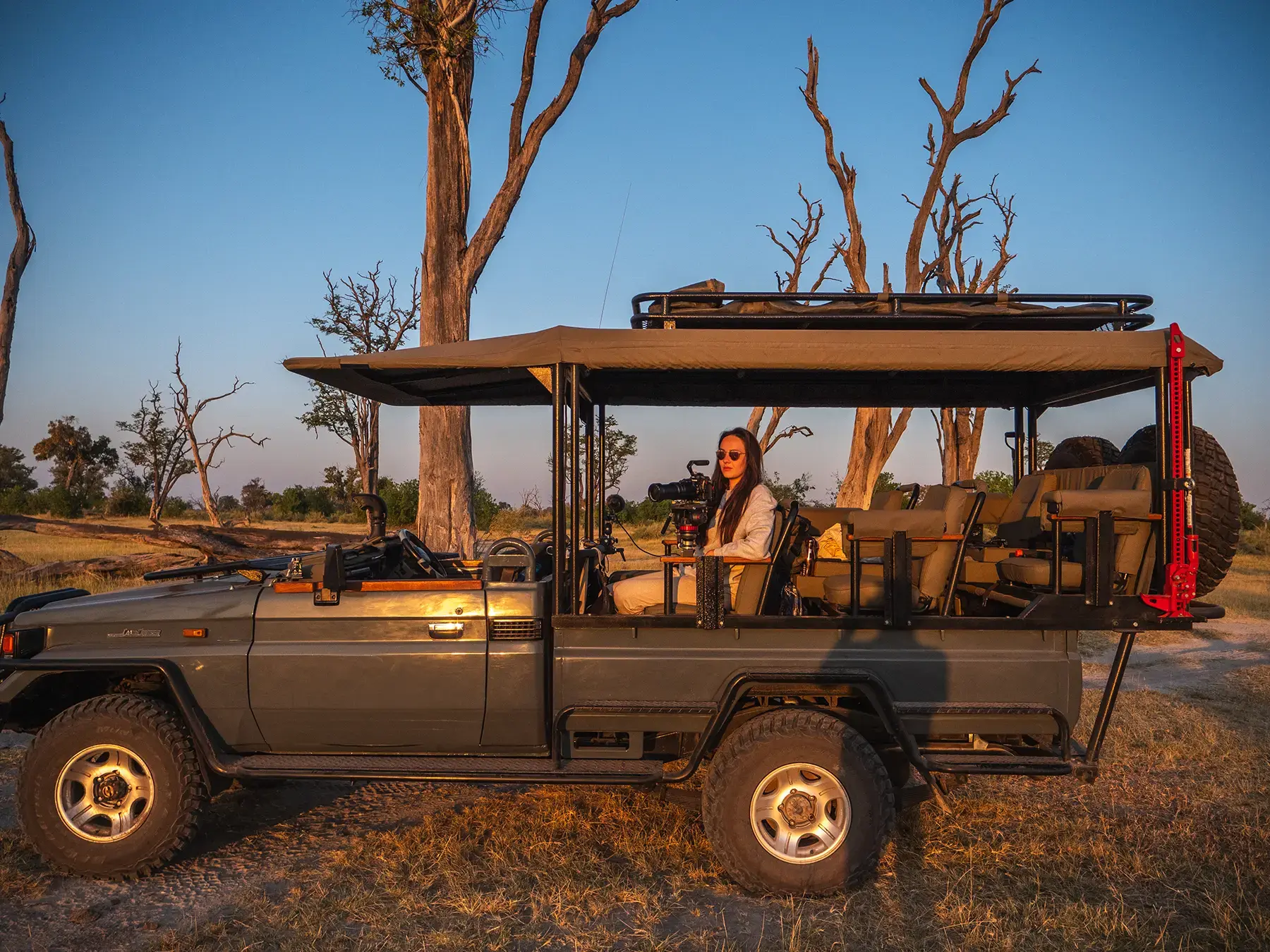
Key Takeaways
- Trip Duration: 3 days per itinerary, with five to choose from
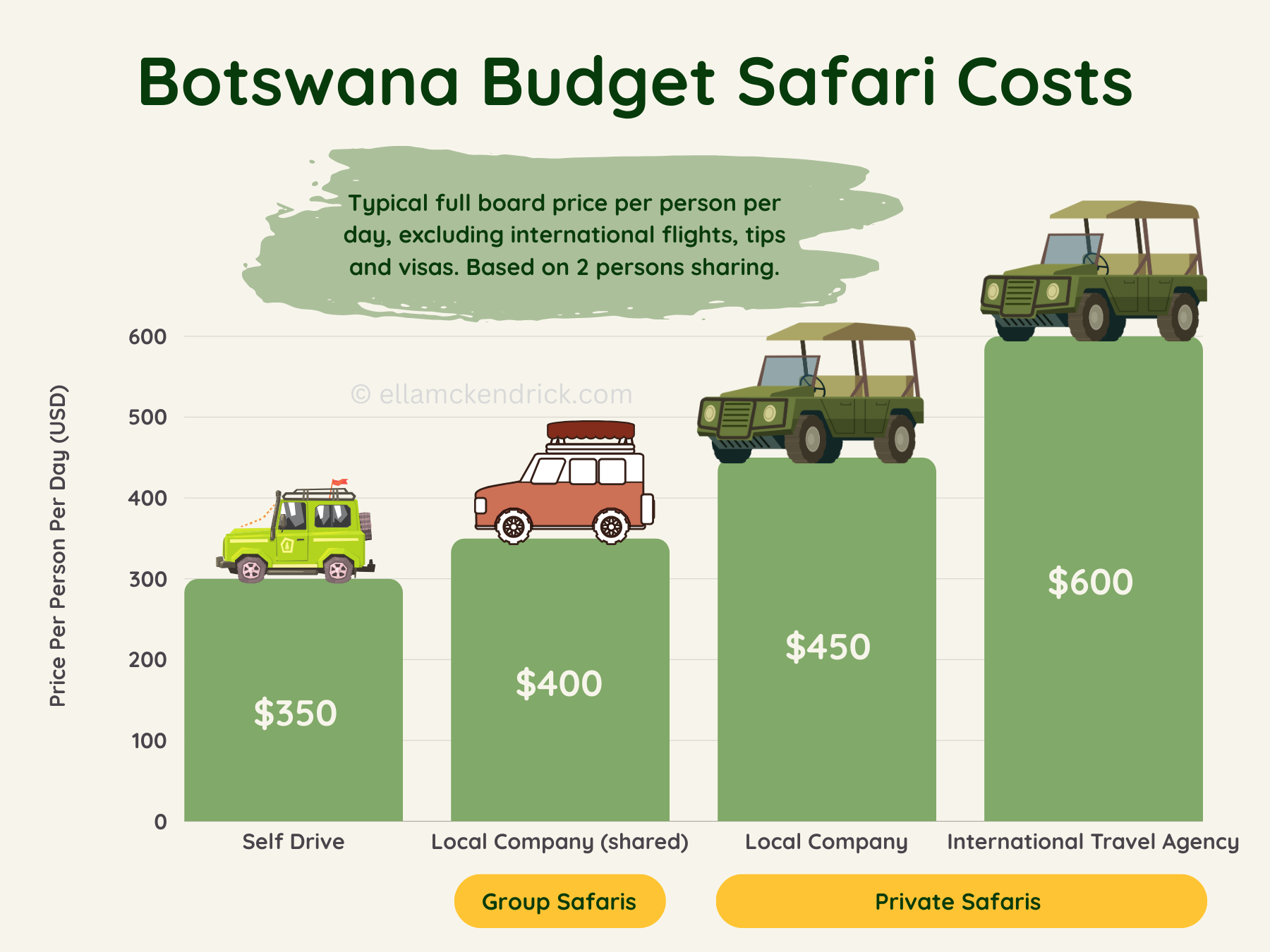
- Budget Range: From $350 to $450 per person per day
- Best Time to Visit: On paper July to October (dry season), but in reality any time other than January and February.
- Key Destinations: Okavango Delta, Chobe, Central Kalahari, Makgadikgadi, Victoria Falls
- Wildlife Highlights: Big Five, elephants, wild dogs, cheetah
- Average Drive Time: around 4 hours by road between parks
- Difficulty Level: Easy to moderate, suitable for most fitness levels
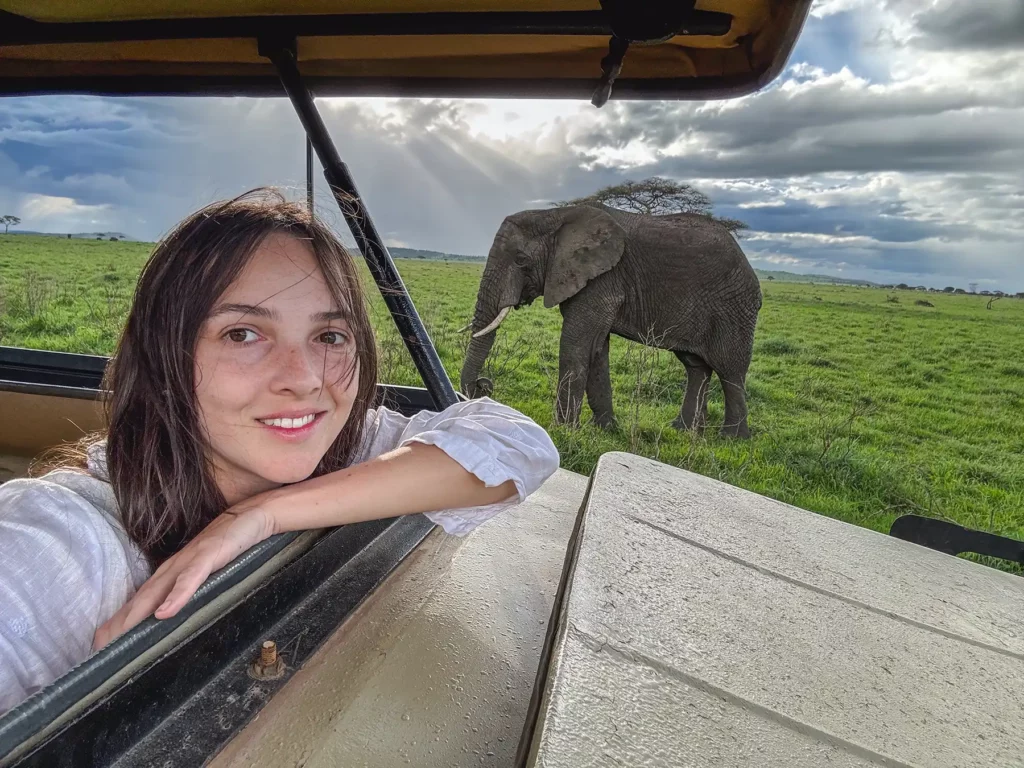
Embark on the Safari of Your Dreams
Save time and ensure an incredible safari experience by getting quotes from my recommended local safari companies
I’m here to make booking your perfect safari quick, easy and risk-free.
Join the rapidly growing tribe of over 1,000 travellers who’ve booked their dream safari using my insider tips and recommendations.

It takes under 60 seconds to fill out the form and in under 48 hours you will receive multiple, no-obligation proposals from my favourite local tour operators with glowing online reviews.
Get your free no-obligation safari quotes and my top safari tips and recommendations
In This Guide
- 7 Reasons to Go on Safari in Botswana
- How Do You Book a 3-Day Botswana Safari?
- Should You Choose a Private or Group Botswana Safari?
- How Much Does a 3-Day Botswana Safari Cost?
- When Is the Best Time to Visit Botswana?
- How Long Should You Spend on a Botswana Safari?
- My Top Five 3-Day Botswana Safari Itineraries
- Botswana Safari FAQs
- Final Thoughts – Is a 3-Day Botswana Safari Worth It?
7 Reasons to Go on Safari in Botswana
Of the many places I’ve been on safari in Africa, Botswana is one of my absolute favourites. It’s a place where you can just lose yourself in nature and disconnect completely for total relaxation – one of the few destinations that feels like a different world.
While wildlife experiences in Botswana are rather expensive compared to other African countries, in my experience they deliver true value for money.
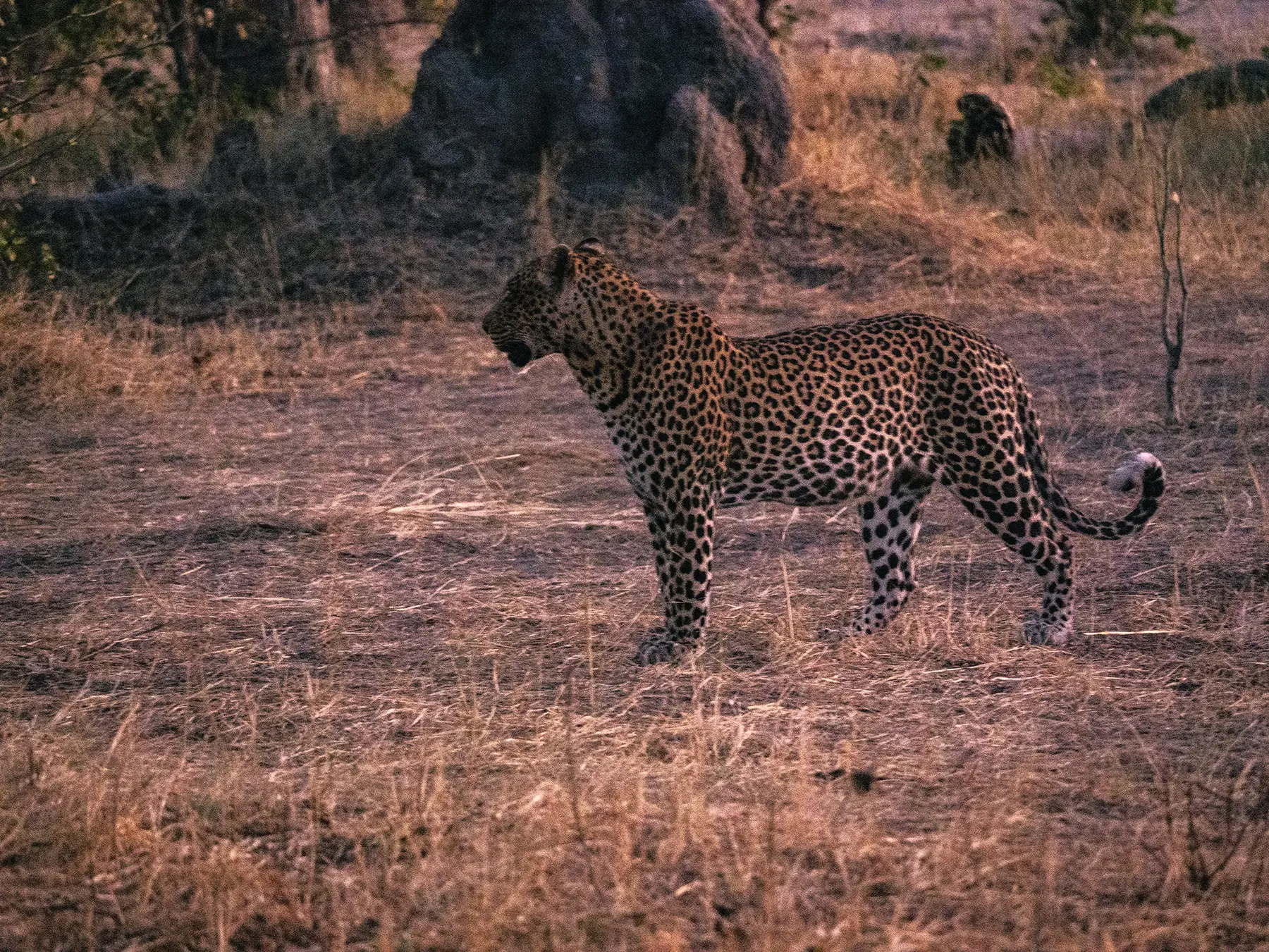
Below, we’ll look at the main reasons to choose Botswana for your safari. Before that, however, here’s an overview of the pros and cons of going on safari in this incredible country.
Pros of Safaris in Botswana
- Parks are quieter, meaning you’re often the only vehicle at a sighting.
- Excellent guides.
- Roughly 40% of the country is dedicated wilderness, with no fences between reserves.
- One of the top destinations for sightings of the critically endangered African wild dog.
- Unspoilt ecosystem protected by visitor number limits and eco-friendly lodges.
- Huge population of over 100,000 elephants – about 25% of the global population!
- Incredibly diverse and striking scenery, from the Kalahari desert to the Okavango Delta with its multiple waterways.
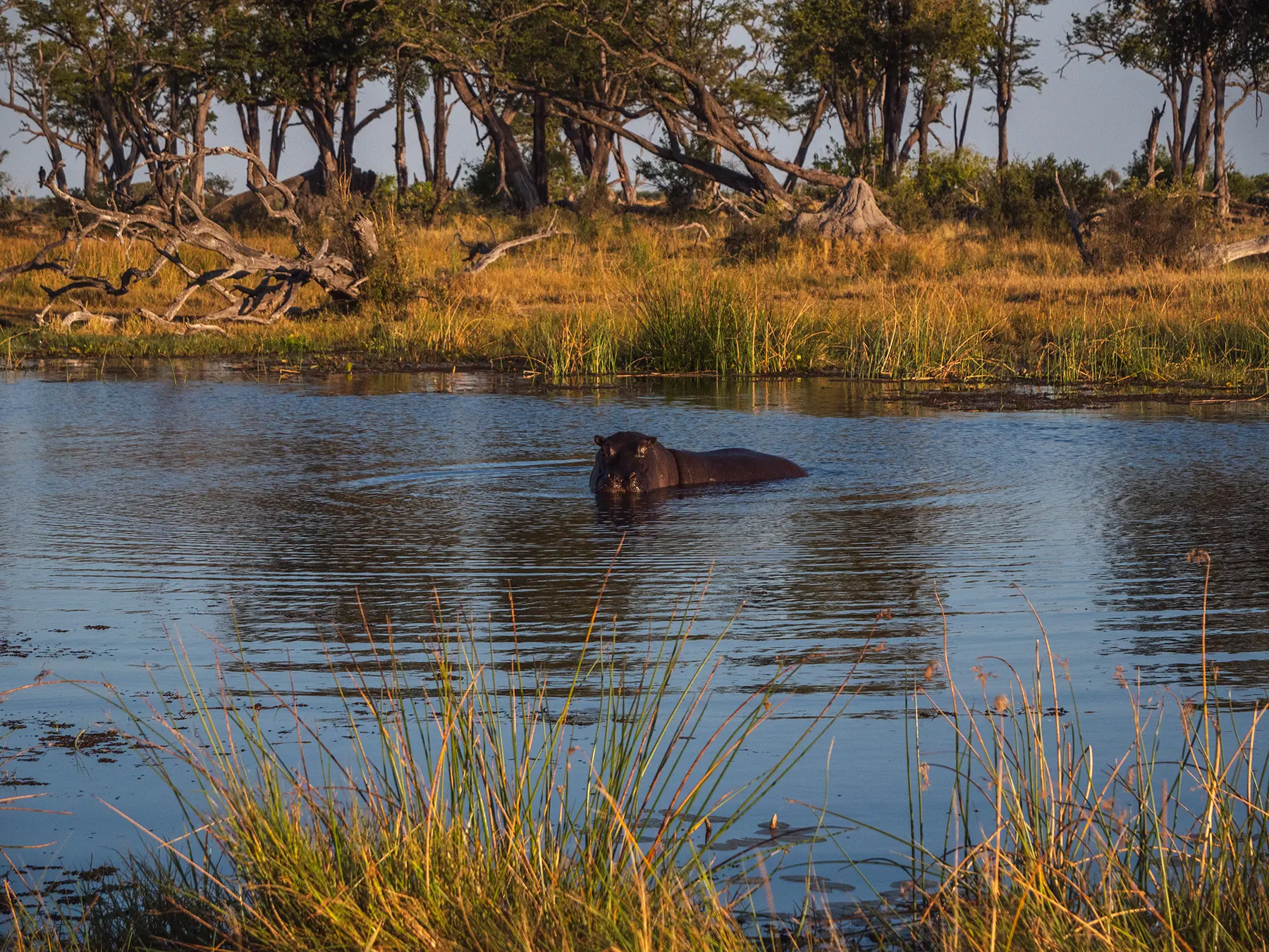
Cons of Safaris in Botswana
- Lodge rates are among the highest on the continent.
- Safari costs, e.g. guides, exceed those in Kenya and Tanzania.
- While parks are quieter, the smaller number of vehicles means less radio communication about sightings, meaning you’re much more dependent on your guide’s skills.
- Self-drive is more difficult than in South Africa or Namibia – you’ll need considerable 4×4 experience plus all the necessary equipment, skills and knowledge to be totally self-sufficient.
- Not as reliable for Big Five sightings due to low rhino numbers throughout most of the country as a result of poaching. During my 11-day safari, I saw four of the Big Five but no rhinos.
- Phone signal and internet can be limited or even unavailable due to the remote nature of the parks. During an 11-day luxury mobile safari, I didn’t have either.
If you’d like to get a real feel for Botswana, you can watch the video of my experience below, or simply jump ahead to check out my 3-day Botswana itineraries if you prefer.
1. Low-Impact Tourism for Quiet Parks and Pristine Landscapes
The most striking aspect of Botswana for me is how incredibly quiet the country’s wildlife reserves are compared to other African safari destinations. For example, one morning we drove around Moremi Game Reserve and only encountered one other vehicle the whole time – and that was in June, which is the busy season!
This absence of other vehicles meant that sightings felt personal and unique. Rather than engine noise or other people chattering in nearby vehicles, we were able to immerse ourselves in birdsong and the rustle of the wind in the bushes. We felt as though we were part of the wilderness, not spectators observing it.
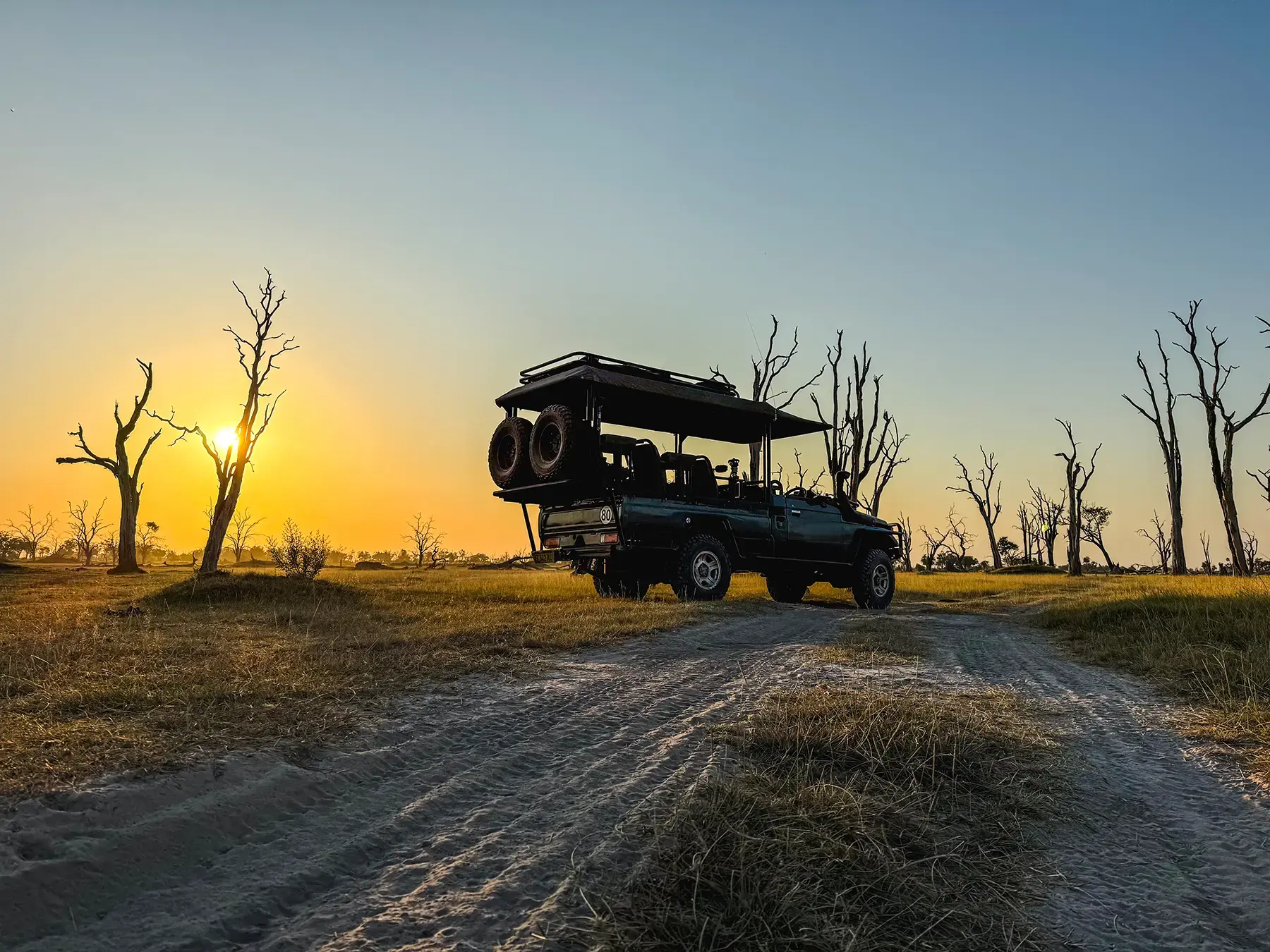
In Botswana, tourism is based on a ‘low numbers, high value‘ model, where parks and lodges have fewer visitors than in other African destinations but guests tend to spend more during their stay. This protects the country’s wildlife and ecosystem while still ensuring that parks can cover their operating costs.
The only real downside is that it makes the country more exclusive, preventing those with more limited budgets from experiencing Botswana’s beauty.
While this tourism approach is certainly unusual, the reason behind it is compelling: my guide explained that Botswana’s highly vulnerable ecosystem would be destroyed if visitor numbers weren’t restricted. For example, larger vehicle numbers would damage the fragile soil and vegetation of the unique Okavango Delta. The country’s tourism model prevents such damage while also offering visitors a more peaceful, personal experience.
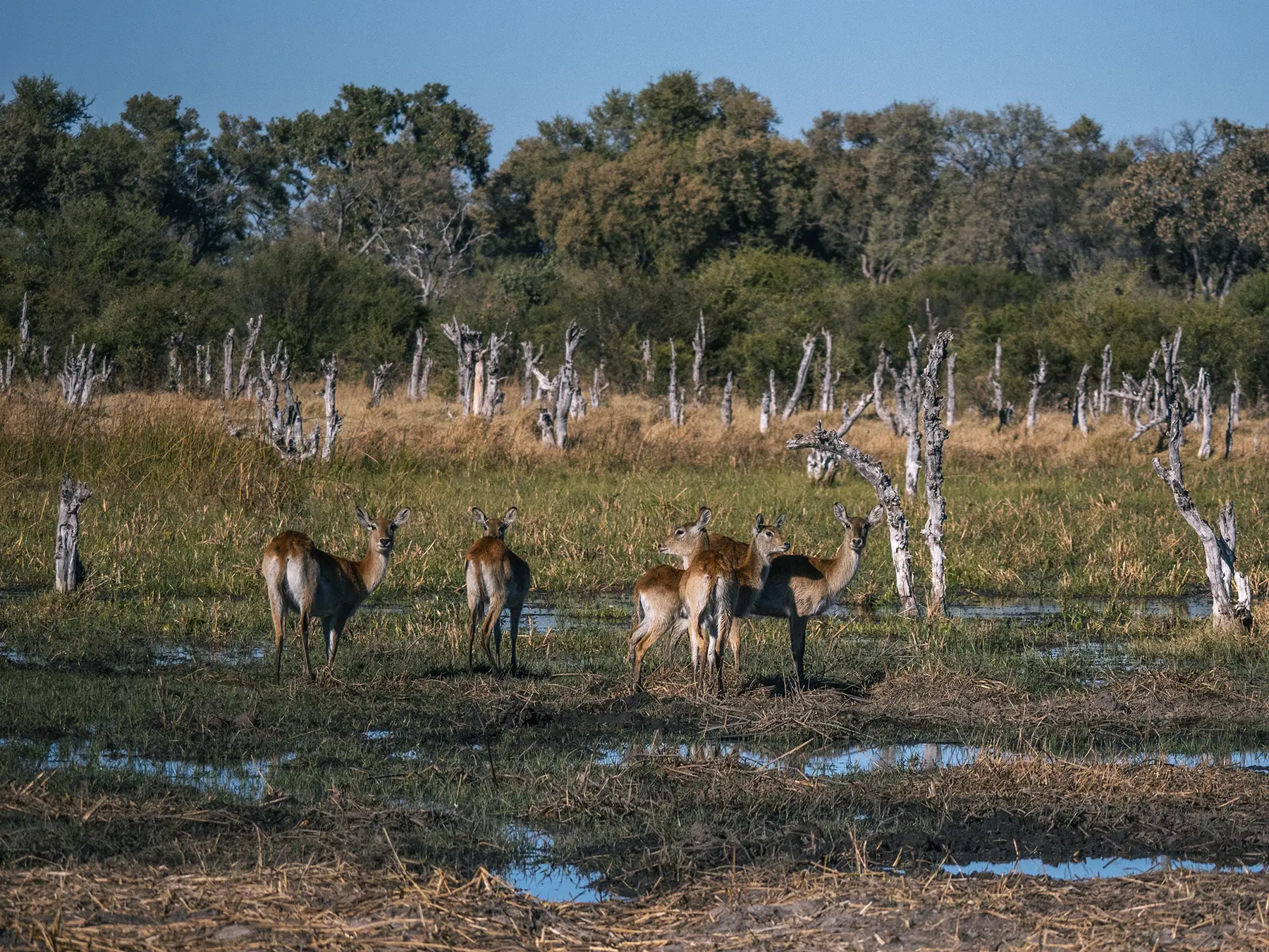
2. One of the World’s Top Destinations for African Wild Dog Sightings
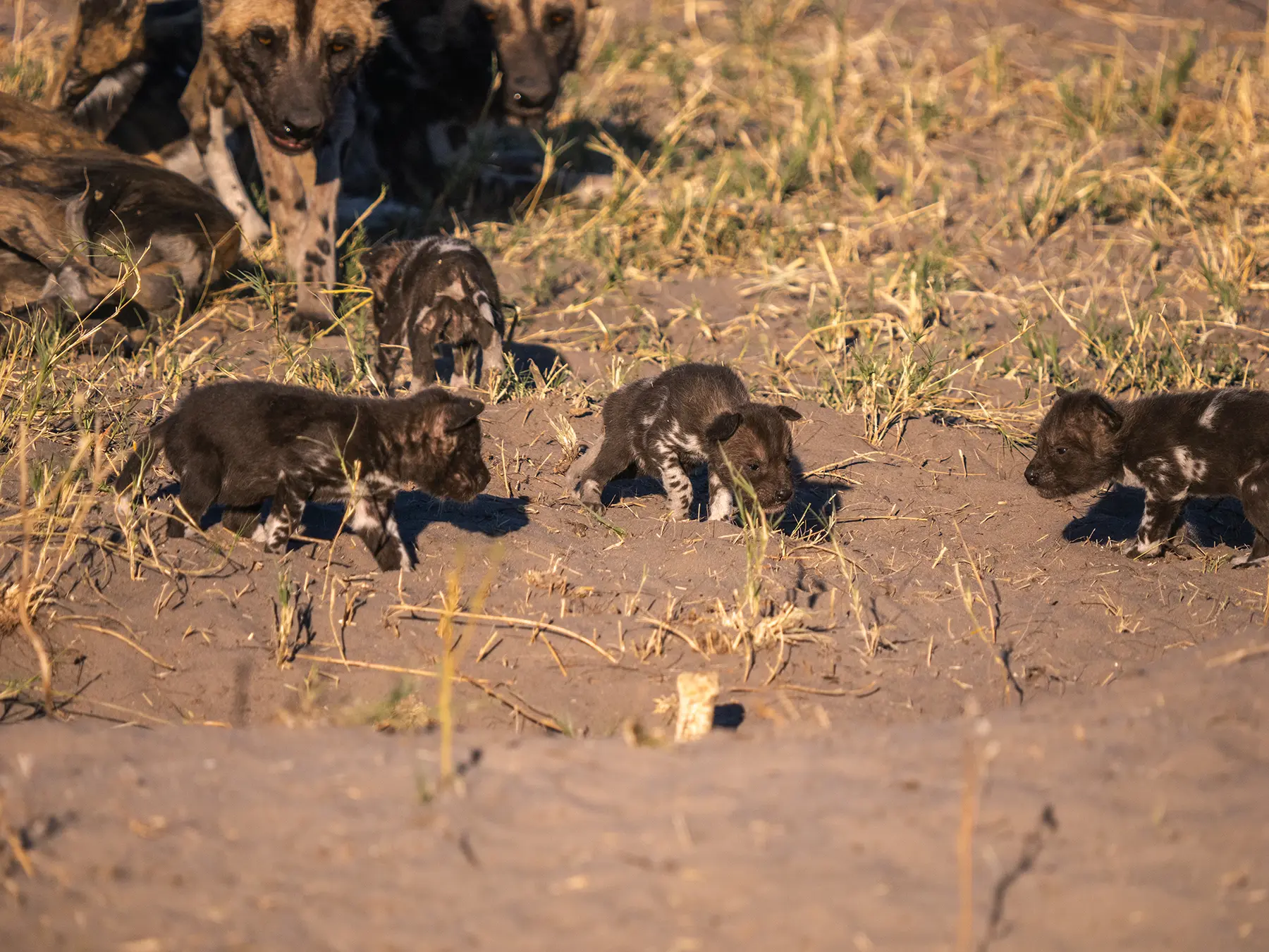
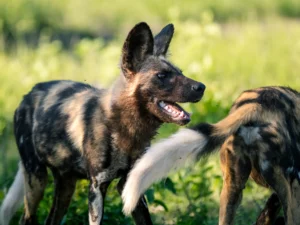
With a remaining global population of fewer than 2,000, the critically endangered African wild dog is a rare sight on any safari, and seeing an entire pack of them dashing through the bush is an unforgettable experience.
My own first sighting of this endangered predator was in Botswana, where I was lucky enough to see the pack’s alpha female returning to her den, greeted by eight teeny puppies bouncing excitedly about, still unsteady on their legs. It was an incredible experience, and one I relive in my memory time and time again.
Once a common sight in virtually all of Africa’s main national parks and reserves, African wild dogs originally thrived across the entire continent. Unfortunately, however, habitat loss, poaching and disease have since decimated their numbers. Nowadays, they are found in just a handful of locations, with Botswana, South Africa and Zambia offering the most reliable sightings.
3. Africa’s Highest Elephant Concentration
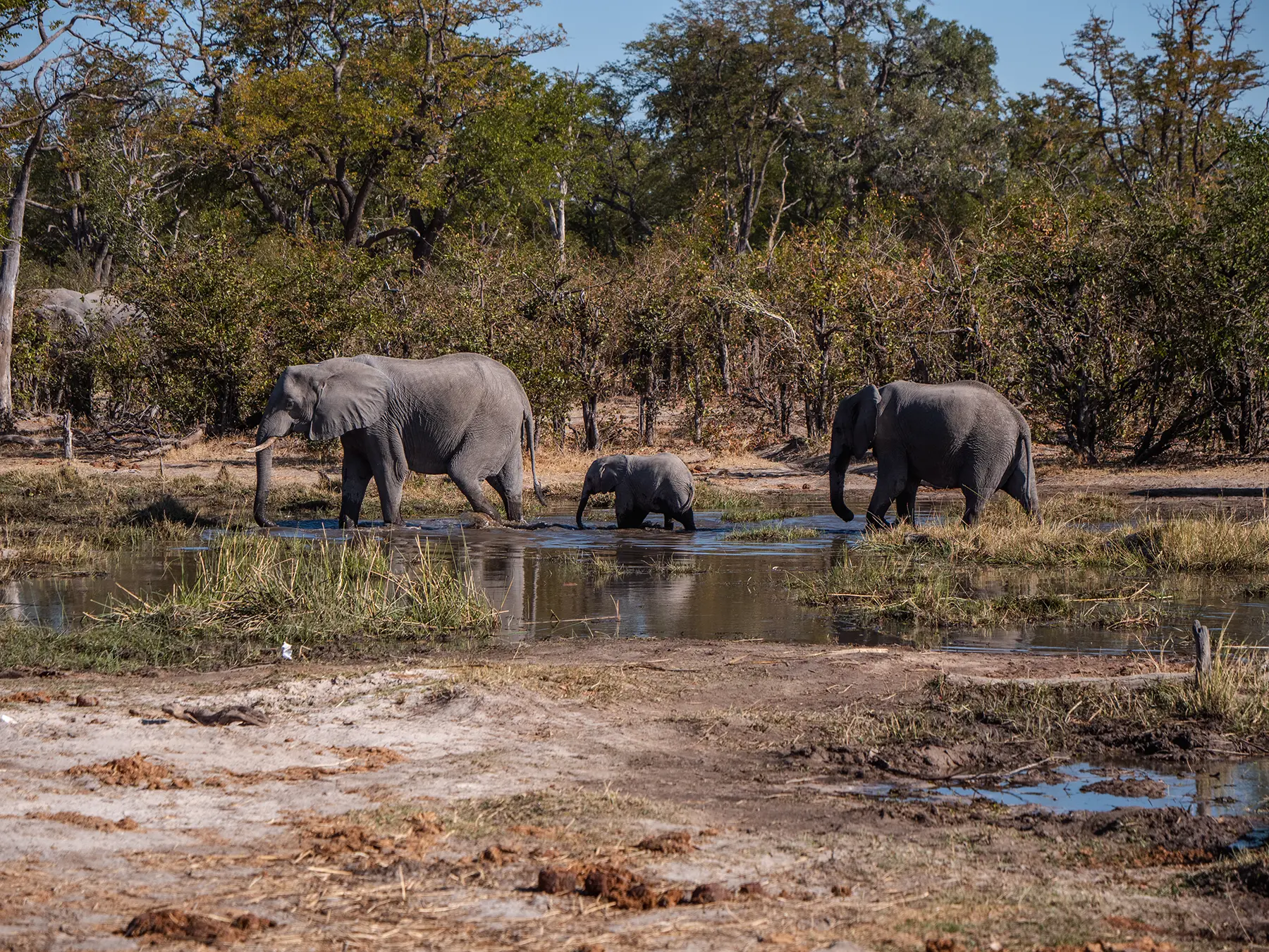
Above all animals, Botswana is known especially for its elephants, with in excess of 100,000 wandering its vast plains. To put it in perspective, that equates to 25% of the world’s African elephant population!
Unsurprisingly, then, Botswana is a haven for elephant lovers! With water plentiful in the north in particular, the country is a paradise for these majestic creatures, so much so that in many cases you’ll find it almost impossible to avoid a sighting on your game drive.
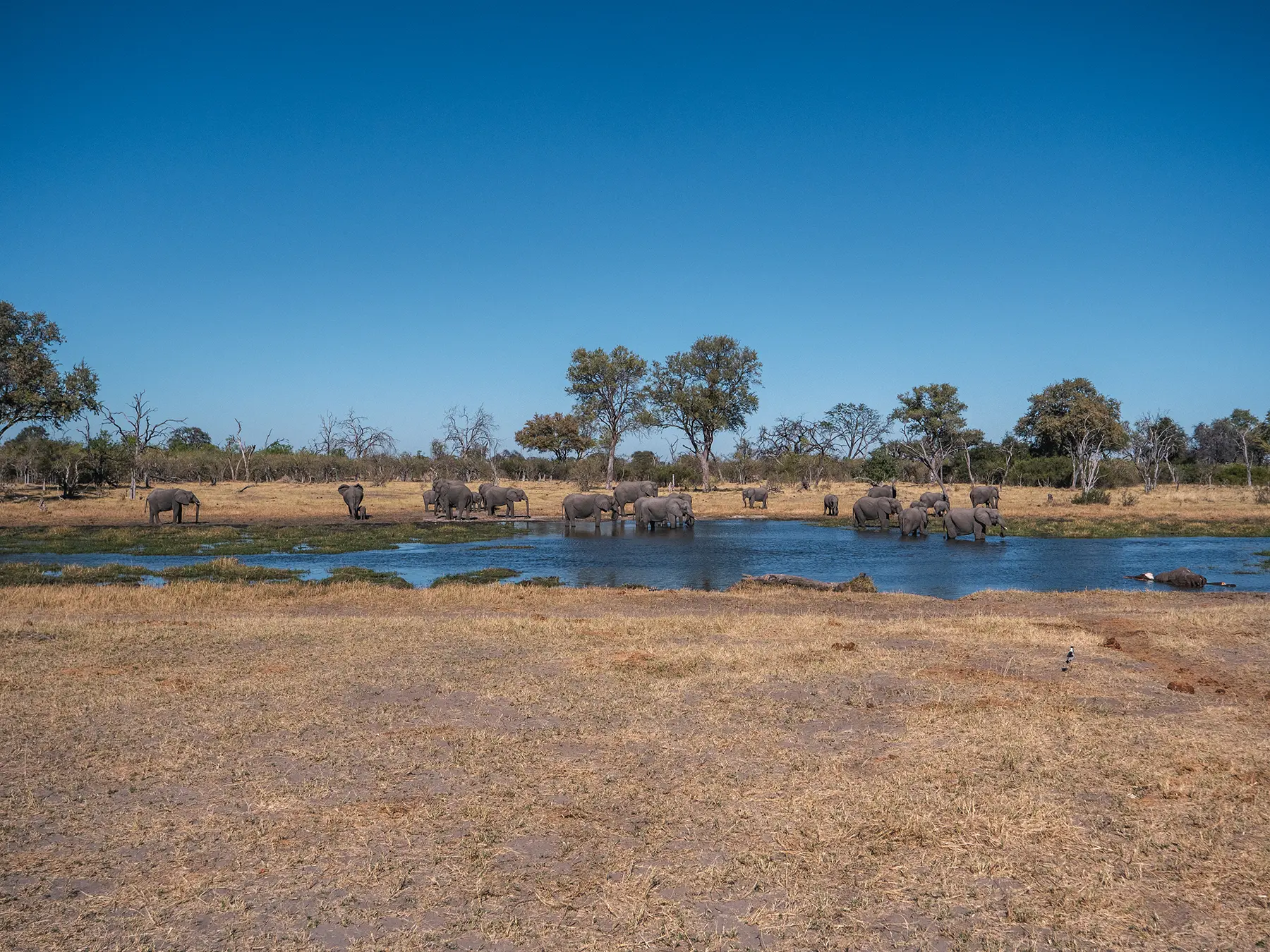
Botswana gifted me some of my best ever elephant sightings. I think my favourite one was when we’d stopped for lunch by a tranquil little tributary, with no animals in sight. Gradually, elephants started arriving at the waterside less than 330 feet (100 metres) from us, their numbers growing until there were 11 enjoying the water close by!
4. Unique Landscapes Including the Okavango Delta
The world’s largest inland delta, the Okavango Delta is an unforgettable sight. Here, an abundance of life-giving water from the highlands of Angola spreads out into the arid Kalahari Desert, supporting a jaw-dropping density of wildlife.
Incredible though it is, however, the Okavango Delta isn’t Botswana’s only astonishing landscape. Further south is the vast Kalahari Desert, which is every bit as striking.
During the dry season, it is the dusty, scorched wilderness you might expect, the horizon constantly shimmering in the blistering heat haze. Yet amid the dry terrain are a number of unique sights, such as the Makgadikgadi Pans, the world’s largest salt pans.
Even more unexpected is the transformation the desert undergoes in the green season, though. The rainfall this season brings calls forth bright green grass and striking yellow flowers that bathe the dry, dusty expanse in colour.
5. Exceptional Predator Sightings
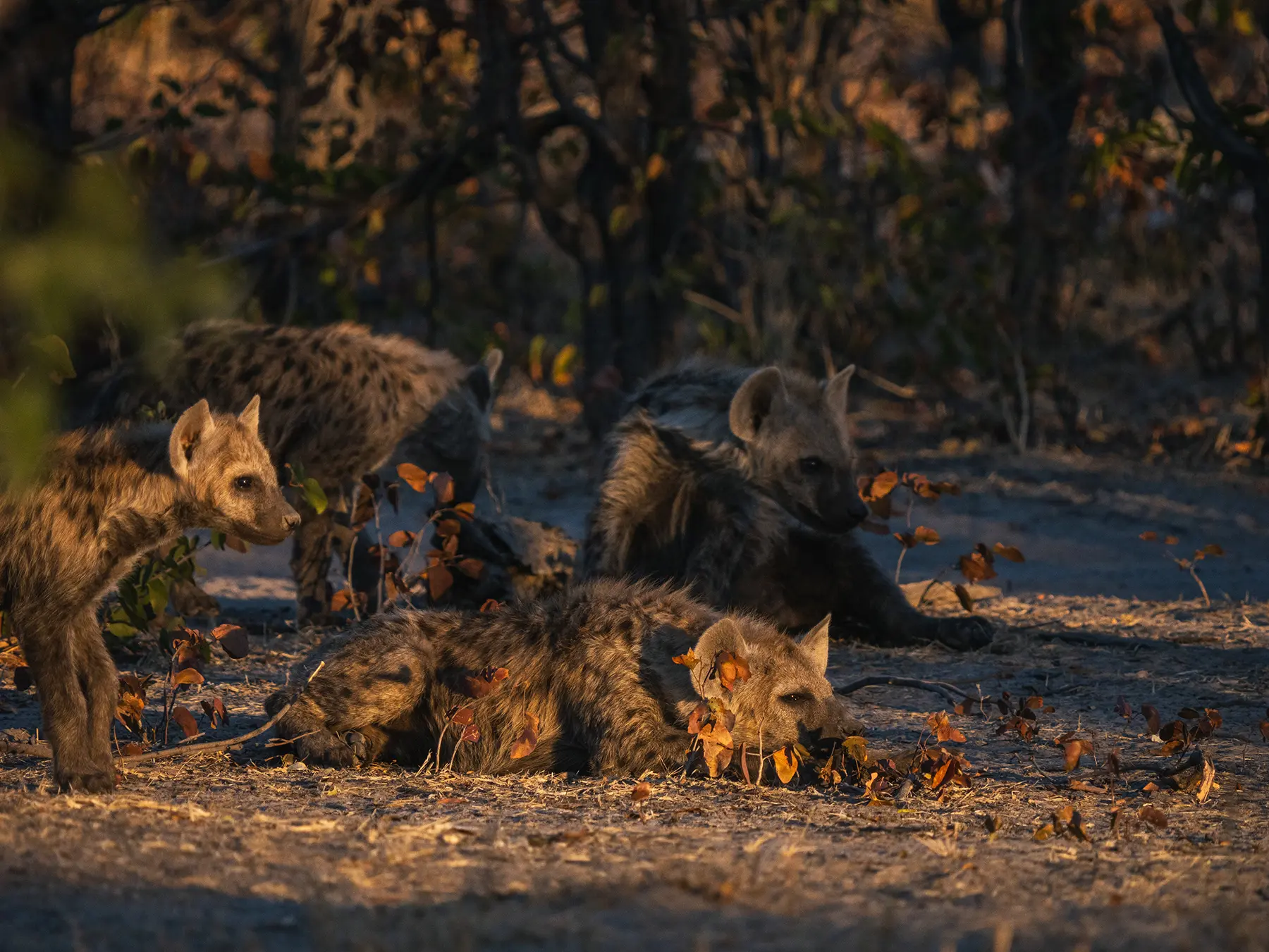
Botswana is known for its outstanding and frequent predator sightings, particularly in reserves such as the Okavango Delta and Chobe National Park in the north of the country. Both locations are home to lions, leopards, cheetahs, hyenas and rare African wild dogs, to name but a few.
While the country delivers amazing big cat viewing, cheetahs are quite rare and Botswana definitely isn’t the best destination in Africa for anyone hoping to see them. If they’re high on your safari wishlist, I’d advise heading to Kenya or Tanzania instead for a more rewarding experience.
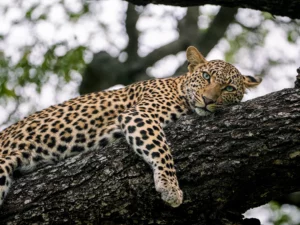
If, however, you’re hoping to spot lions and leopards, you’re in the right place! I enjoyed some unforgettable sightings in Botswana, including watching a massive male leopard devouring a freshly killed warthog in the fork of a leadwood tree. We observed him for hours in fascination and captured some fantastic photos.
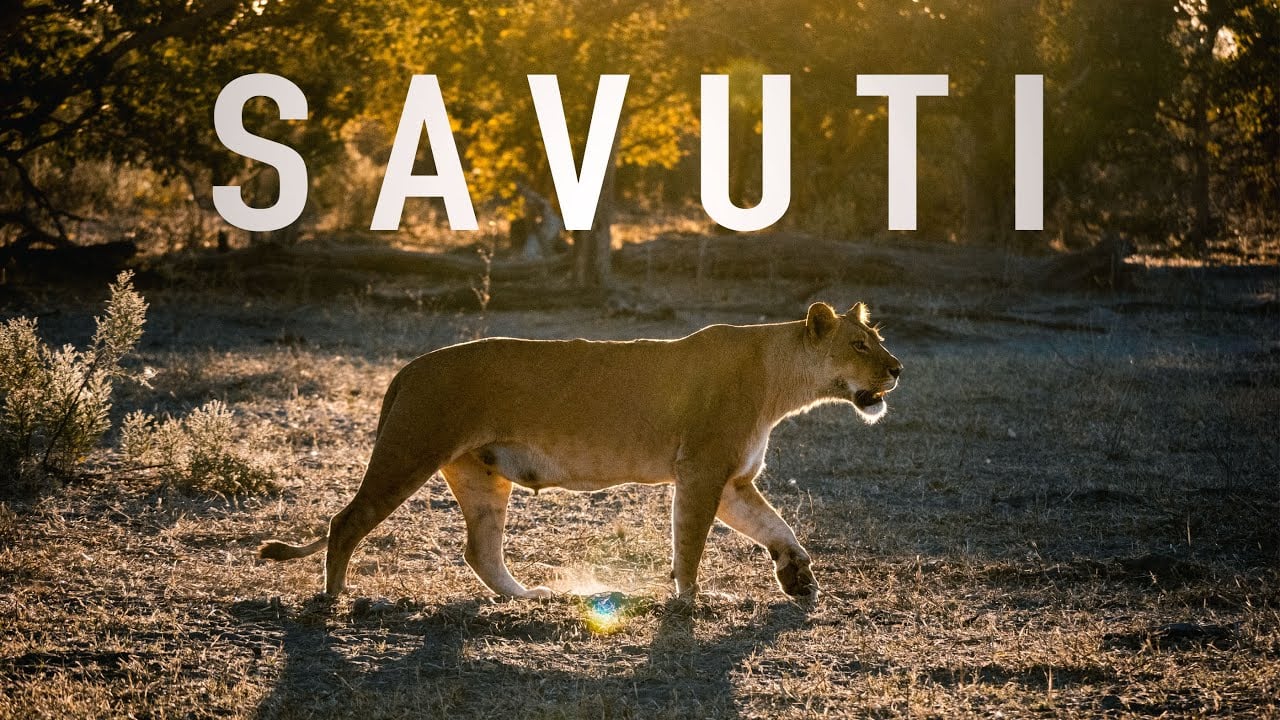
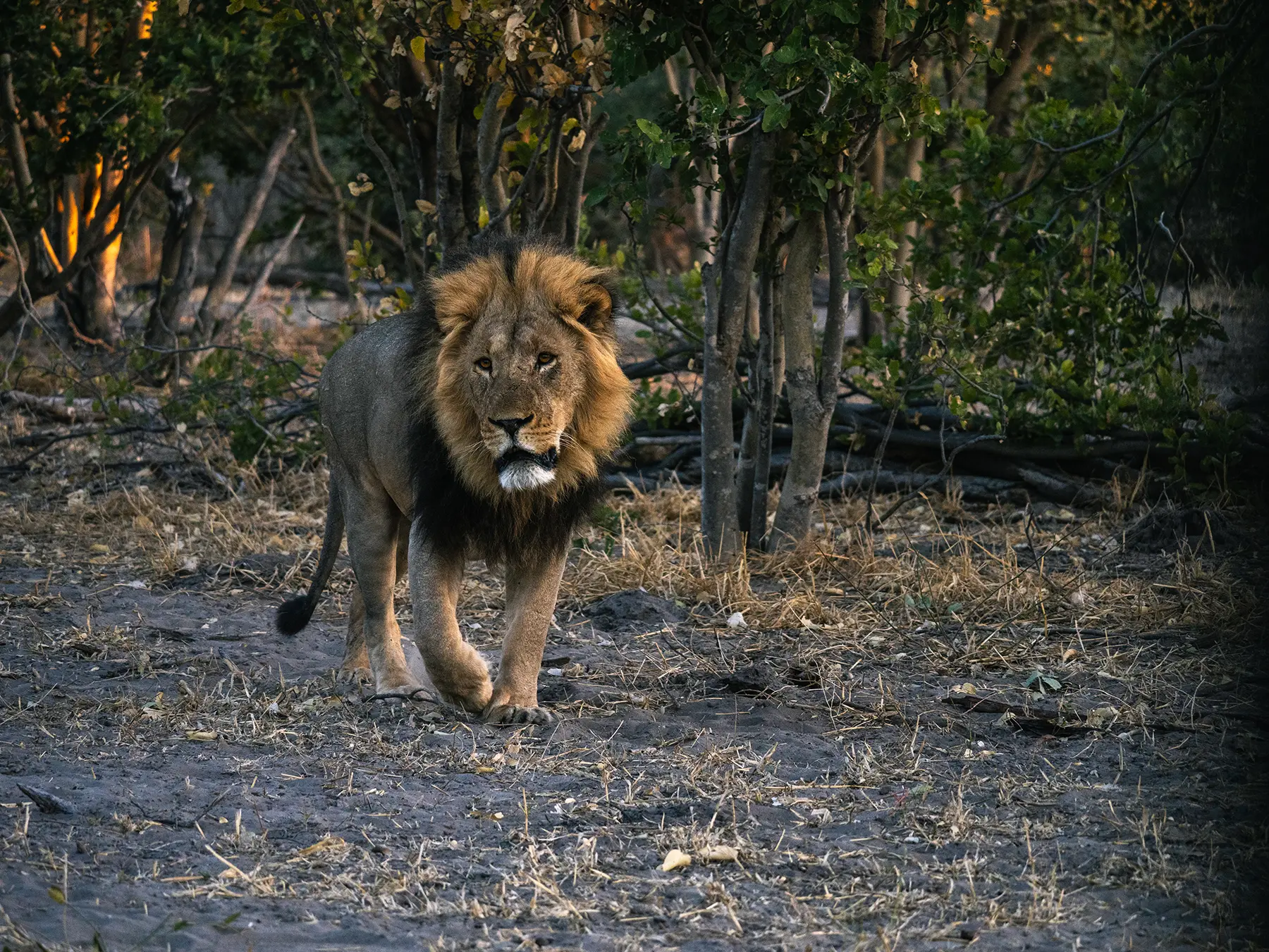
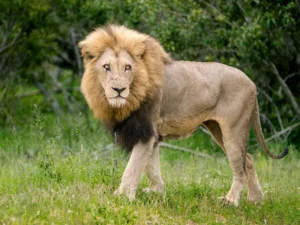
We were also spoilt with some outstanding lion sightings on our safari in Botswana. Of the regions I visited, Savuti in Chobe National Park had the highest lion density – even better than the Okavango Delta! During our time in Savuti, there wasn’t a day when we didn’t spot a lion.
Perhaps the most memorable sighting for me was tracking an enormous male prowling through his territory in the chill dawn light, his breath coming in clouds as he roared into the wilderness.
6. The Zebra Migration
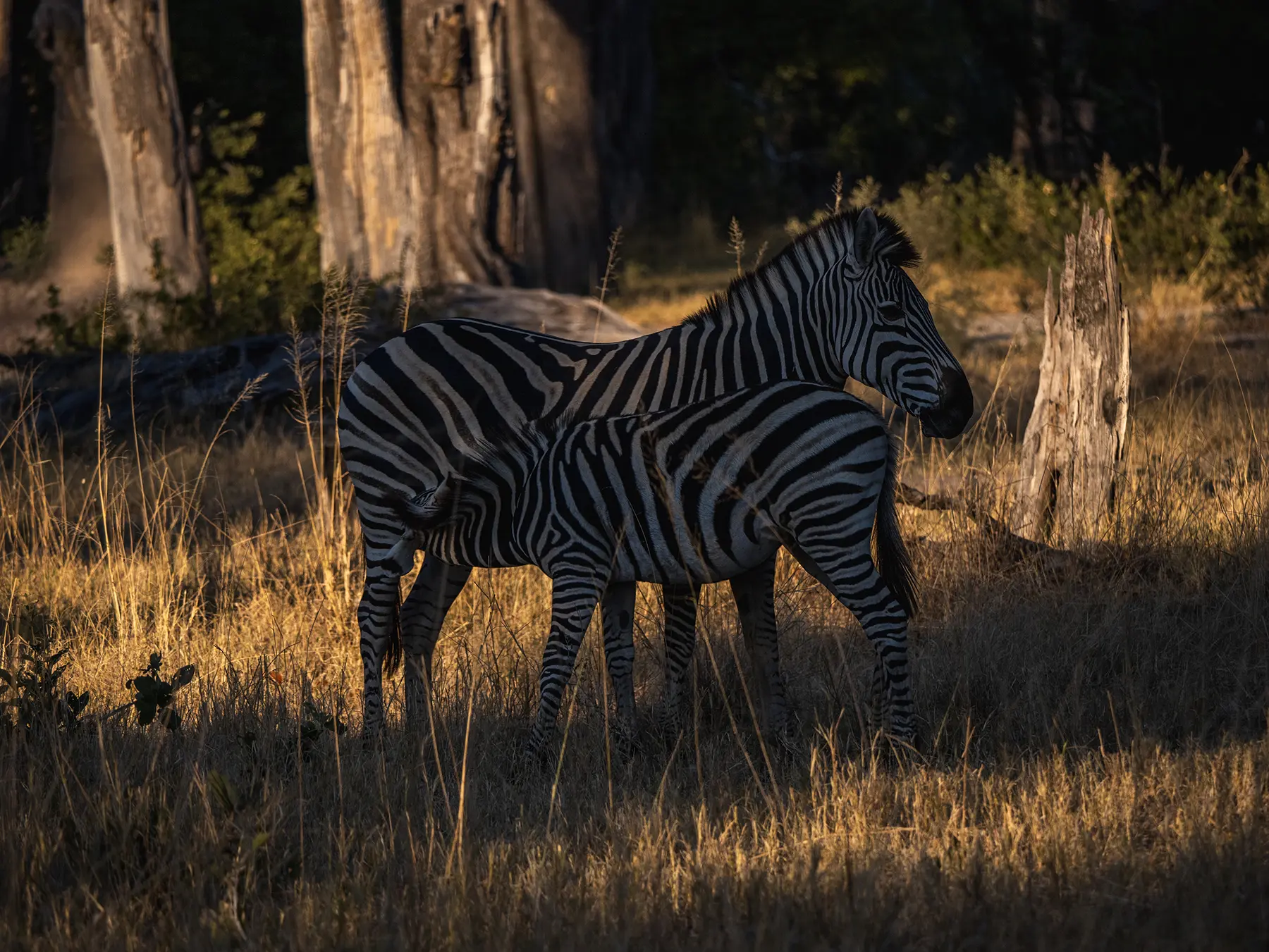
Each year, about 20,000 zebras migrate over 174 miles (280 kilometres) as they travel from the Kalahari Desert to the Okavango Delta. It’s Africa’s longest land mammal migration and yet there’s a good chance you’ve never heard of it!
As they make this epic journey, the zebras move north from Makgadikgadi National Park until they reach the wetlands of the distant Moremi Game Reserve in the Okavango Delta. Here they remain for the dry season, amply supplied with water as the waterways flood.
When the rains arrive in the south, bringing a burst of lush growth to Makgadikgadi National Park, it’s time for them to travel south once again.
The zebra migration takes place between June and October in the Okavango Delta, while November marks the start of the green season in Makgadikgadi National Park, ending in April.
7. Some of Africa’s Best Safari Guides
In my experience, the standard of guide in Southern Africa, including Botswana, is extremely high and generally superior to East Africa. This is partly because with such strict limitations on visitor numbers, Botswana has fewer guides, meaning each guide can be trained to a high standard.
Conversely, East Africa’s tourism numbers are rising year on year, and so, too, is demand for guides. With such pressure to meet this growing need, it’s not surprising that standards can suffer. This is further compounded by the heavy dependence on radio networks in the region, which has supplanted guide skills such as reading spoors and listening to alarm calls.
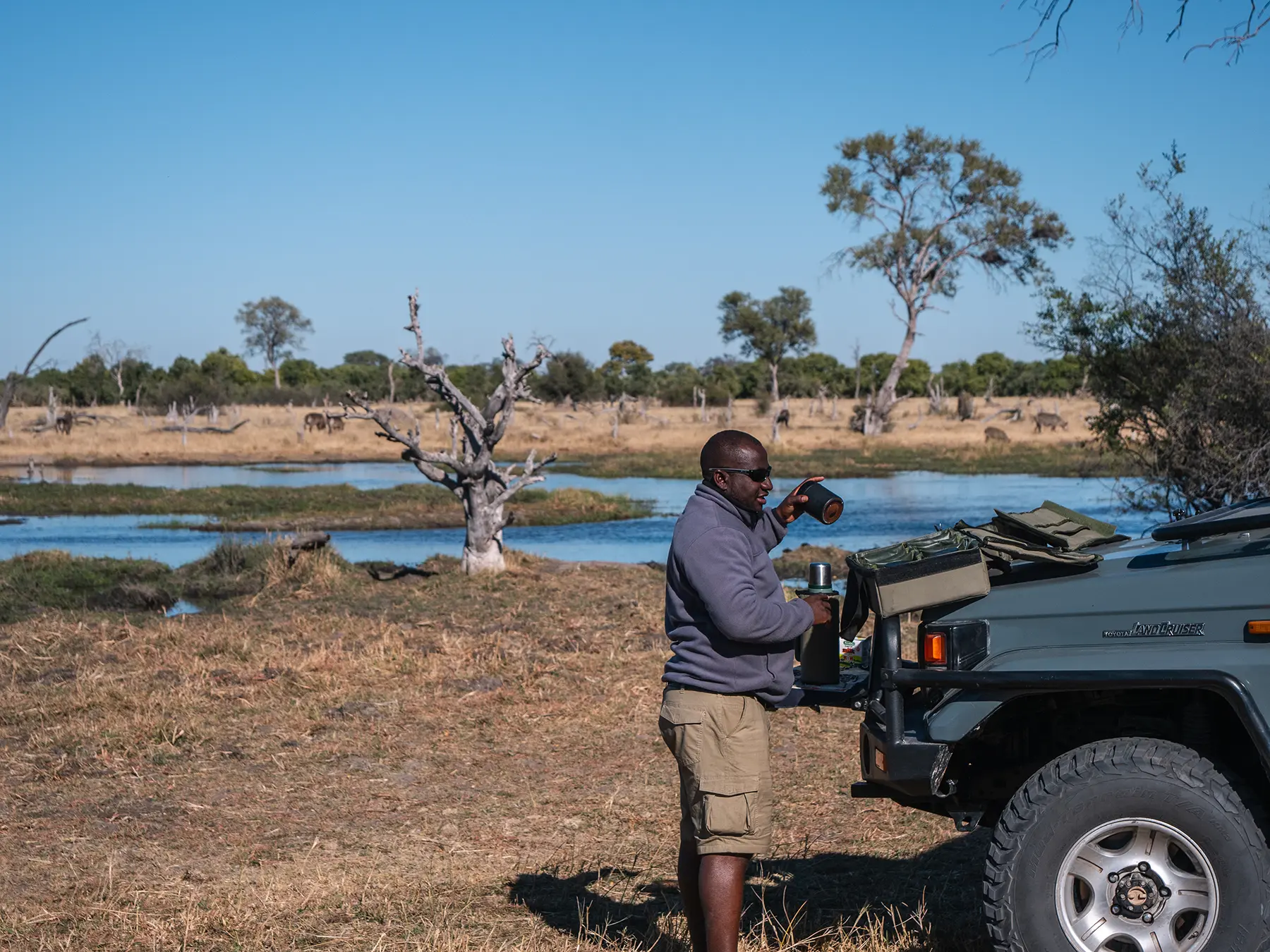
My initial experience with safari guides in East Africa, while positive, enabled me to properly appreciate the quality of the guides I encountered in Botswana. My guide taught me such a lot about Botswana’s plant life, and his unbelievable bird knowledge gave me a new appreciation of our feathered friends, sparking a keen interest in birds that has only grown since then.
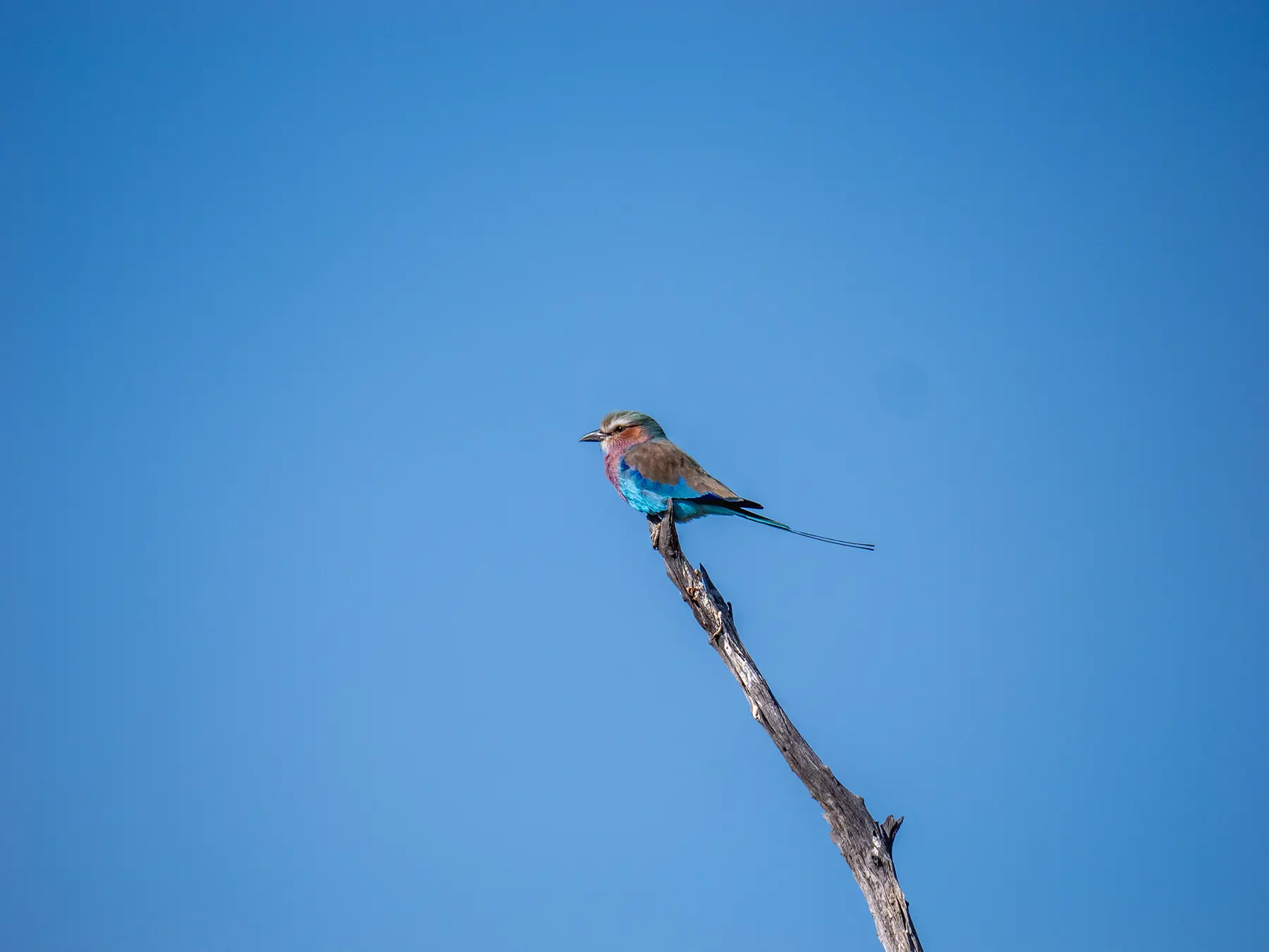
That said, just because the quality of guides in Botswana is generally high doesn’t mean you’ll automatically have a good guide. As with any safari, it’s crucial to research tour operators carefully, drawing on reviews and personal recommendations to select the best one for you.
Important though it is, researching tour operators can be a time-consuming process. That’s why I’ve put together a shortlist of my own trusted tour operators, with whom I’ve had outstanding experiences.
You can get in touch with them here and they’ll happily provide you with a free, no-obligation quote. What’s more, I will be on hand personally to support you throughout the process, whether it be with practical insider tips and advice, answering your questions or simply checking in to see how it’s going.
How Do You Book a 3-Day Botswana Safari?
There are several options when it comes to organising your safari in Botswana, but I feel that booking with a reputable local tour operator is the clear winner as both the easiest and best-value route. I booked my own Botswana safari that way and was delighted with the result.
Local operators will sort accommodation, permits, game drives and transfers between camps at a lower price than international travel agents. If you prefer, though, you could go via an international agent, opt for a fly-in safari arranged through your hotel or self-drive and book each element of your trip separately.
You can get quotes from the same local tour companies I use to organise my own trips here: Safaris By Ella
The table below provides an overview of the three main booking options for a Botswana safari, rated by cost, flexibility and experience.
Booking Options at a Glance
| Option | Cost | Flexibility | Best for |
|---|---|---|---|
| Local tour operator | $$ | High | Most travellers, best value |
| Self-drive | $ | Extremely High | Seasoned drivers who are used to gravel roads and skilled at spotting wildlife |
| International agent | $$$ | Medium | Travellers who want to book flights and safari in a single package and don’t mind paying 30-50% more than when booking with a local operator |
A word of caution for any aspiring self-drivers out there: self-driving in Botswana is not for the faint of heart. Realistically, I would only consider it if you’re highly experienced in off-road driving and on a very limited budget.
The terrain is difficult in general, and areas such as Moremi Game Reserve and Chobe National Park are particularly hard going, especially in the rainy season.
Most camps and private concessions in the country can only be accessed via light aircraft and aren’t open to self-drivers. Accommodation is also extremely limited – the only option is basic camping, which involves setting up and taking down your tent each time between long, challenging drives.
As for international agents, the only reason I can see for booking with them is that they will also arrange your international flights, while local operators will not. For all the other elements of the trip, they simply subcontract to the local companies you’d be able to book with directly and apply markups of 30-50% for the privilege, making booking locally a bit of a no-brainer.
Why I Recommend a Local Tour Operator for Botswana
When you book with a local tour operator, they take care of everything from the moment you touch down in Maun or Kasane: accommodation in your preferred park or reserve, light aircraft and road transfers between camps, park permits and game drives with expert guides.
I’ve experienced self-booked safaris and safaris booked via a local operator and in my experience, being able to simply relax and leave the arrangements in the capable hands of a local professional is invaluable. It is now the only way I will book a safari in Botswana.
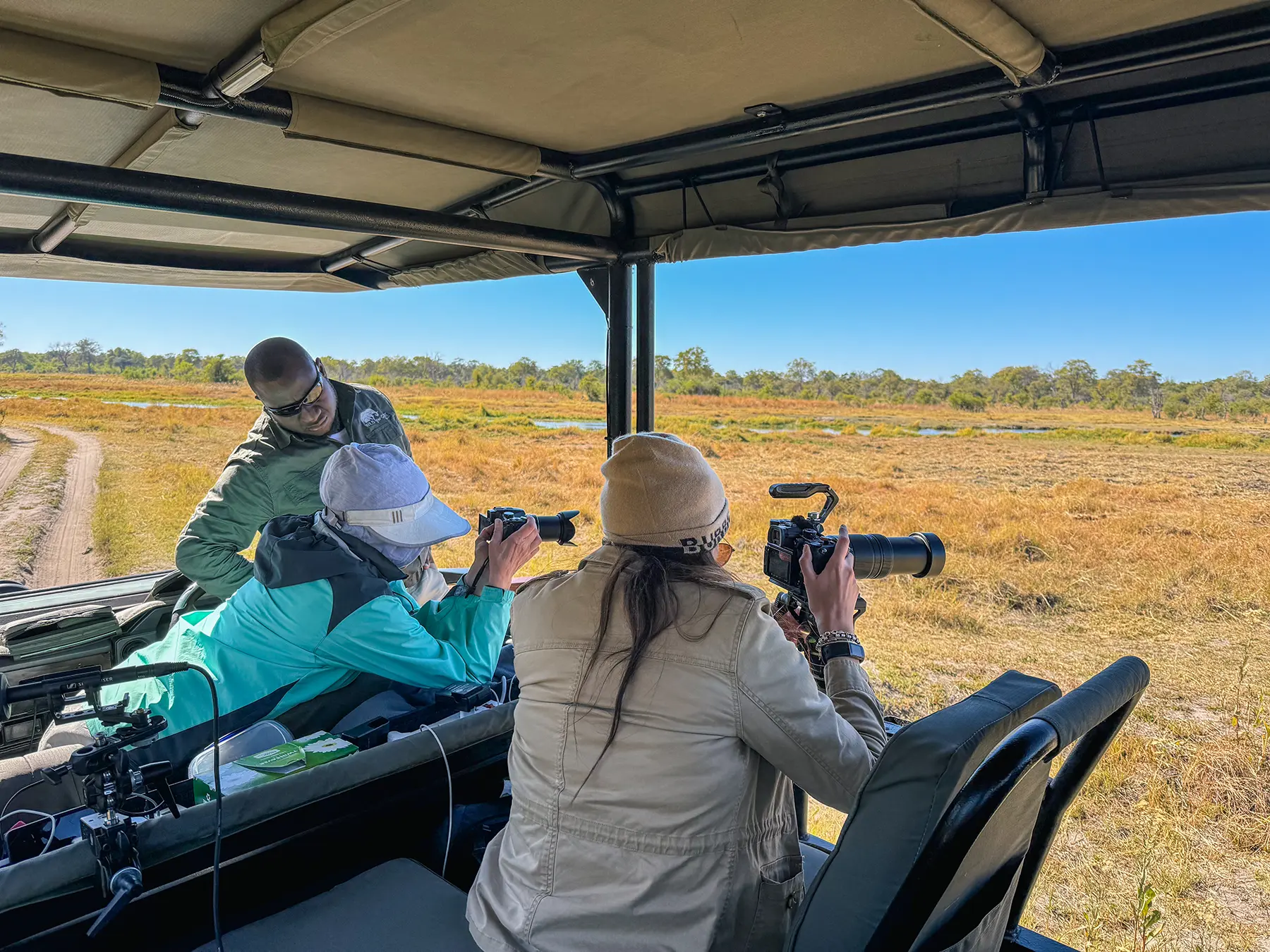
While self-booking might seem an easy way to save a little money, there’s actually little difference in cost between making your own arrangements and booking with a local safari company. This is because local operators have solid relationships with camps and lodges, enabling them to access preferential rates and even snap up rooms when a lodge seems fully booked online.
What’s more, they know which camps are offering the best value right now.
It may work out marginally more expensive to book via a local operator, but the benefits of doing so more than make up for it. You save so much time and effort that would otherwise be spent researching lodges and booking every single component individually. Instead, everything is sorted for you and you have a single point of contact to help with any questions that arise.
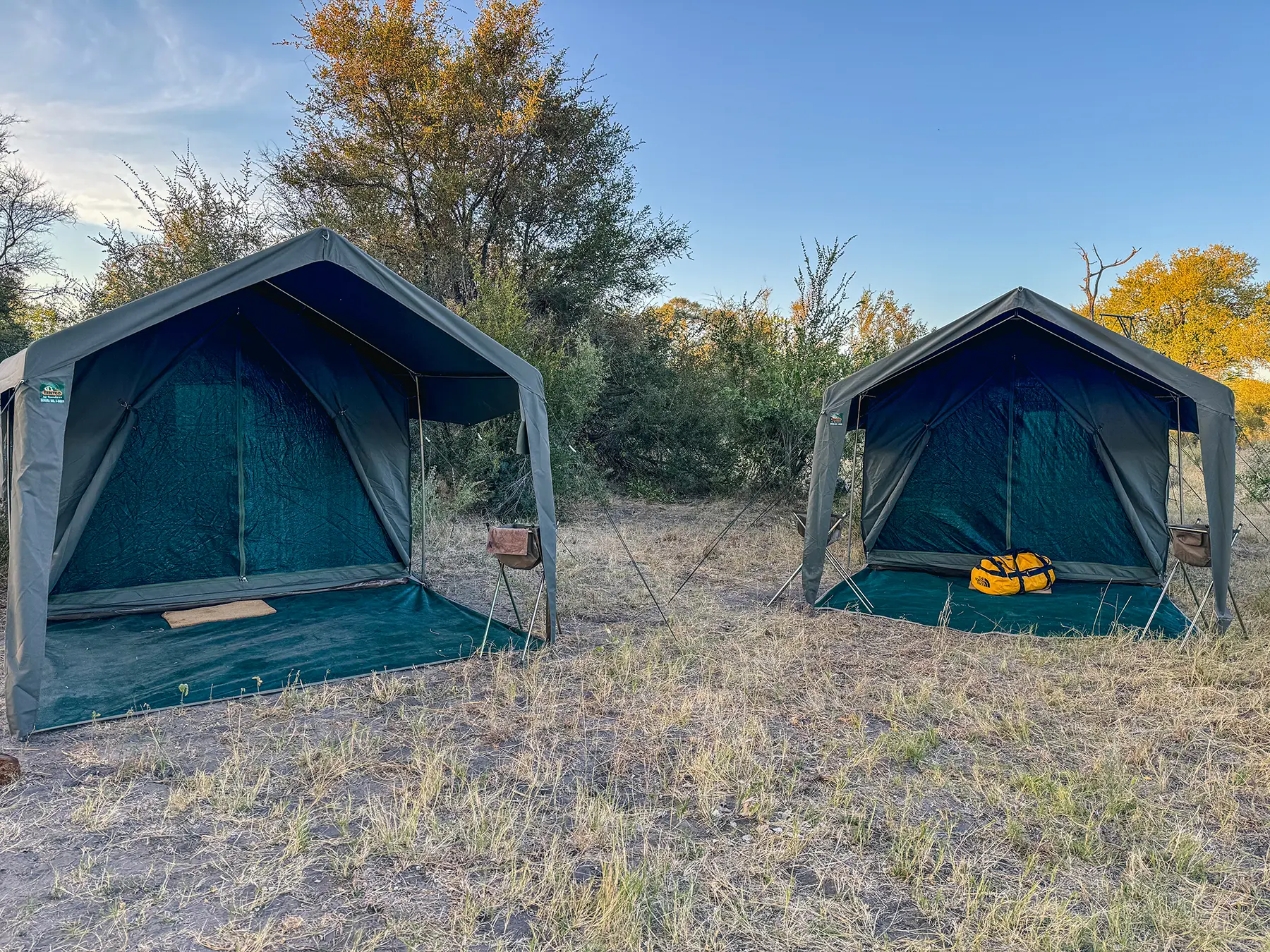
Nevertheless, I would strongly recommend vetting operators thoroughly before booking. Keep an eye out for positive reviews, paying special attention to feedback on guide and vehicle quality. Beware of extraordinarily low prices – if it seems too good to be true, it probably is!
Having been through the whole process several times, I’d love to help you choose the operator that’s best for you. That’s why I’ve set up the Safaris By Ella website where you can check out the local tour operators I’ve personally booked safaris with.
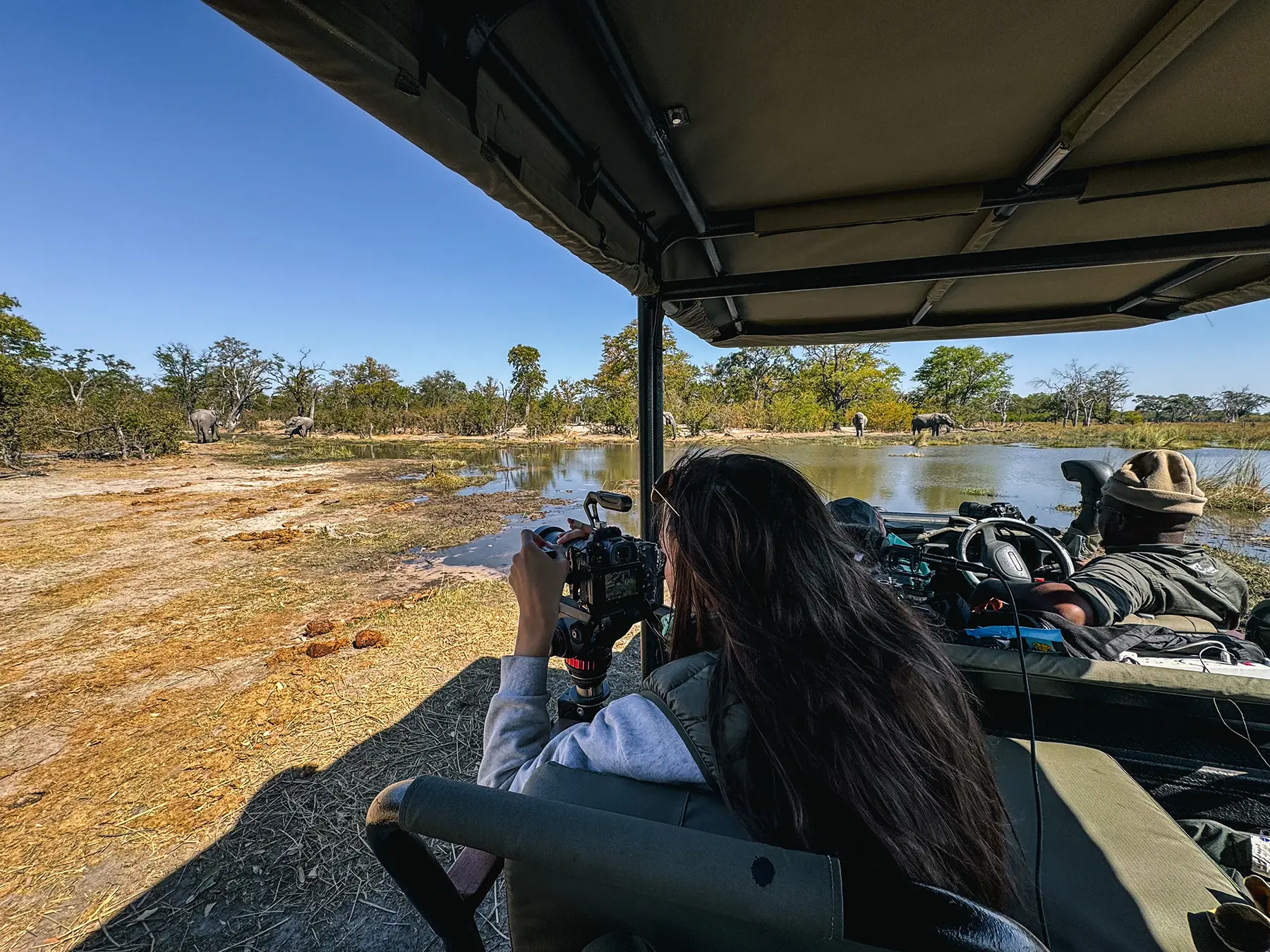
What a Local Operator Gives You
- Price includes accommodation, permits, transport, transfers, meals and drinks.
- Preferential camp rates, often as cheap as booking direct, and sometimes securing accommodation that’s listed as fully booked online.
- Unbeatable local expertise and wildlife tracking skills, with the latest information on recent sightings.
- Access to a radio network that acts as a safety net and boosts your chances of a sighting.
- An enhanced itinerary and camps that offer proximity to wildlife and minimise travel time.
What to Watch Out For
- Standards can vary considerably among operators, and the lowest price may reflect poorer-quality accommodation and less seasoned guides.
- Very low prices can be a red flag and may conceal hidden costs that will arise during your trip.
- You’ll need to book your own international flights, as local operators usually do not book these.
Embark on the Safari of Your Dreams
Save time and ensure an incredible safari experience by getting quotes from my recommended local safari companies
I’m here to make booking your perfect safari quick, easy and risk-free.
Join the rapidly growing tribe of over 1,000 travellers who’ve booked their dream safari using my insider tips and recommendations.
It takes under 60 seconds to fill out the form and in under 48 hours you will receive multiple, no-obligation proposals from my favourite local tour operators with glowing online reviews.
Get your free no-obligation safari quotes and my top safari tips and recommendations
How to Book with the Best Local Safari Companies
- Comparison sites which provide multiple quotes from verified suppliers such as Safaris By Ella
Join the rapidly growing tribe of over 1,000 travellers who’ve booked their dream safari using my insider tips and recommendations.
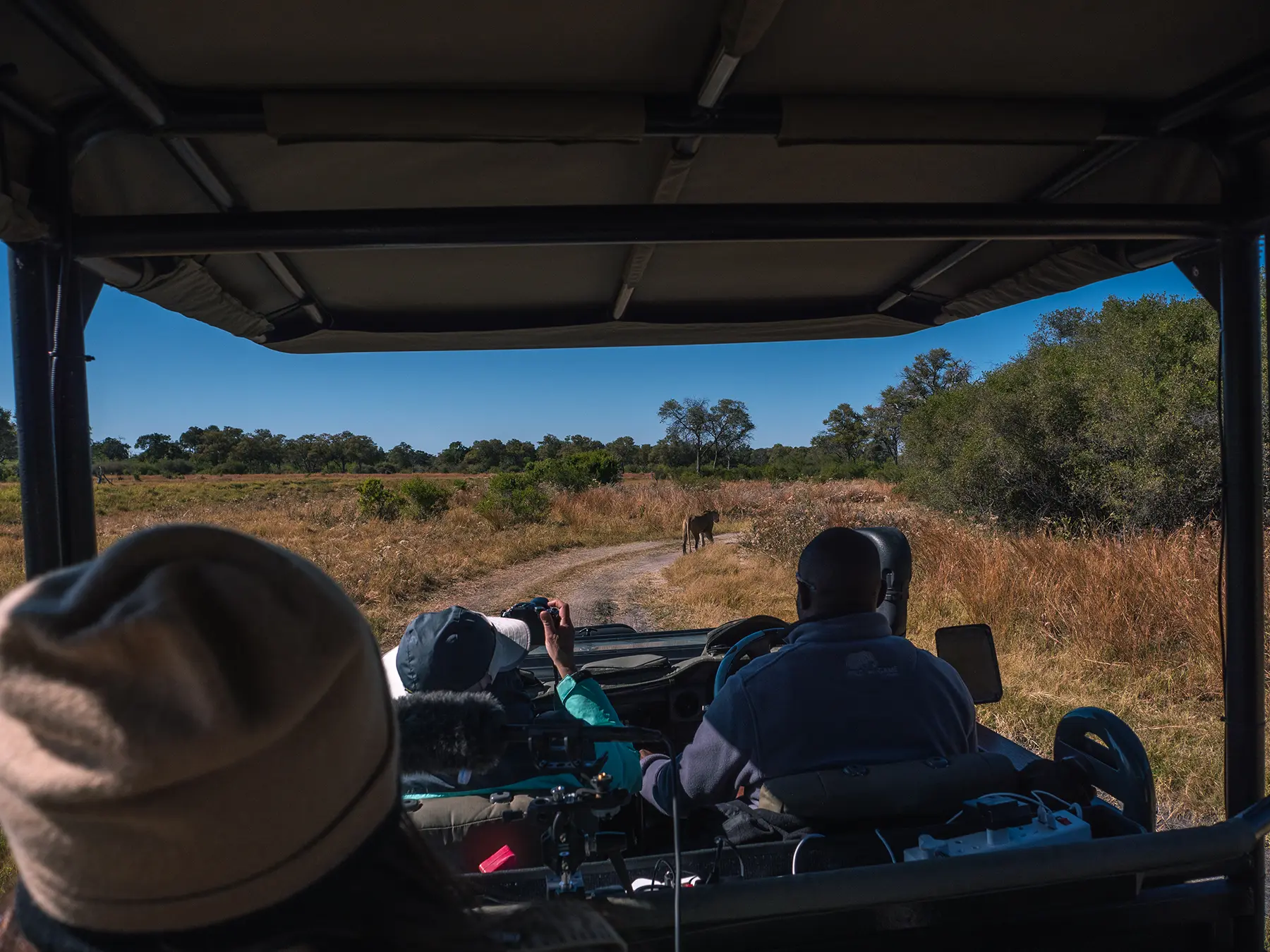
Botswana Booking Tips
- Most camps are fly-in: The majority of camps and private concessions in Botswana are accessed via light aircraft, with your operator coordinating the fly-in schedule between camps. Light aircraft allow soft bags only, so check baggage restrictions carefully before you travel.
- Self-drive is only for the highly experienced: The only travellers who should really consider self-driving are those with considerable off-road experience who are content with basic camping; most safari-goers will be much happier paying the moderate additional cost for a guided safari.
- Budget realistically: Botswana is one of the pricier African safari destinations, with the highest entry-level prices on the continent. Set expectations well ahead of your trip and work with your operator to make your money go as far as possible.
- Private vs shared vehicles: Fly-in hotel-run safaris usually involve sharing a game-drive vehicle with other guests. If you’d prefer a private vehicle, inform your operator and be prepared to pay a premium.
Financial Protection When Booking Direct With a Local Tour Operator
A safari is a significant expense, so you will be reassured to know there are things you can do to ensure a similar level of financial protection to booking via an international agent.
Credit or debit card payments are often covered by purchase protection (Section 75 in the UK), taking out a decent travel insurance policy will protect you in the event of trip interruption and booking with a trusted local safari company that will only charge the balance of the payment as your trip gets close will reduce risk.
Recommended Booking Options For Your 3 Day Botswana Safari Itinerary Itinerary
Safari with local tour operator
Most popular & best experience – typical prices for this itinerary start from $450 per person per day.
Visit safarisbyella.com for free quotes from trustworthy local tour companies I use to book my own trips.
Should You Choose a Private or Group Botswana Safari?
For most travellers going to Botswana, a private safari is the ideal option as it gives you total say over your schedule, your route through the parks and how long you spend at each wildlife sighting. While it’s more expensive than a shared safari, it is absolutely worth it if your budget permits.
Private vs. Group at a Glance
| Private safari | Group shared safari | |
|---|---|---|
| Cost per day | From around $450 per person | From around $350 per person |
| Flexibility | Full control of schedule and route | Fixed times and pre-planned routes |
| Vehicle | Dedicated, higher-spec vehicle and a more experienced guide | Shared, no guarantee you’ll get the best seat |
| Best for | Couples, families and photographers | Solo travellers on a tight budget |
The best thing about a private safari in Botswana is that everything can be tailored to your preferences, from the time you head out on a drive to where you go and the sightings you want to focus on, plus how long you spend at each. The guides also tend to be more experienced and the vehicles are usually superior, plus you can even choose the meals you’ll be served.
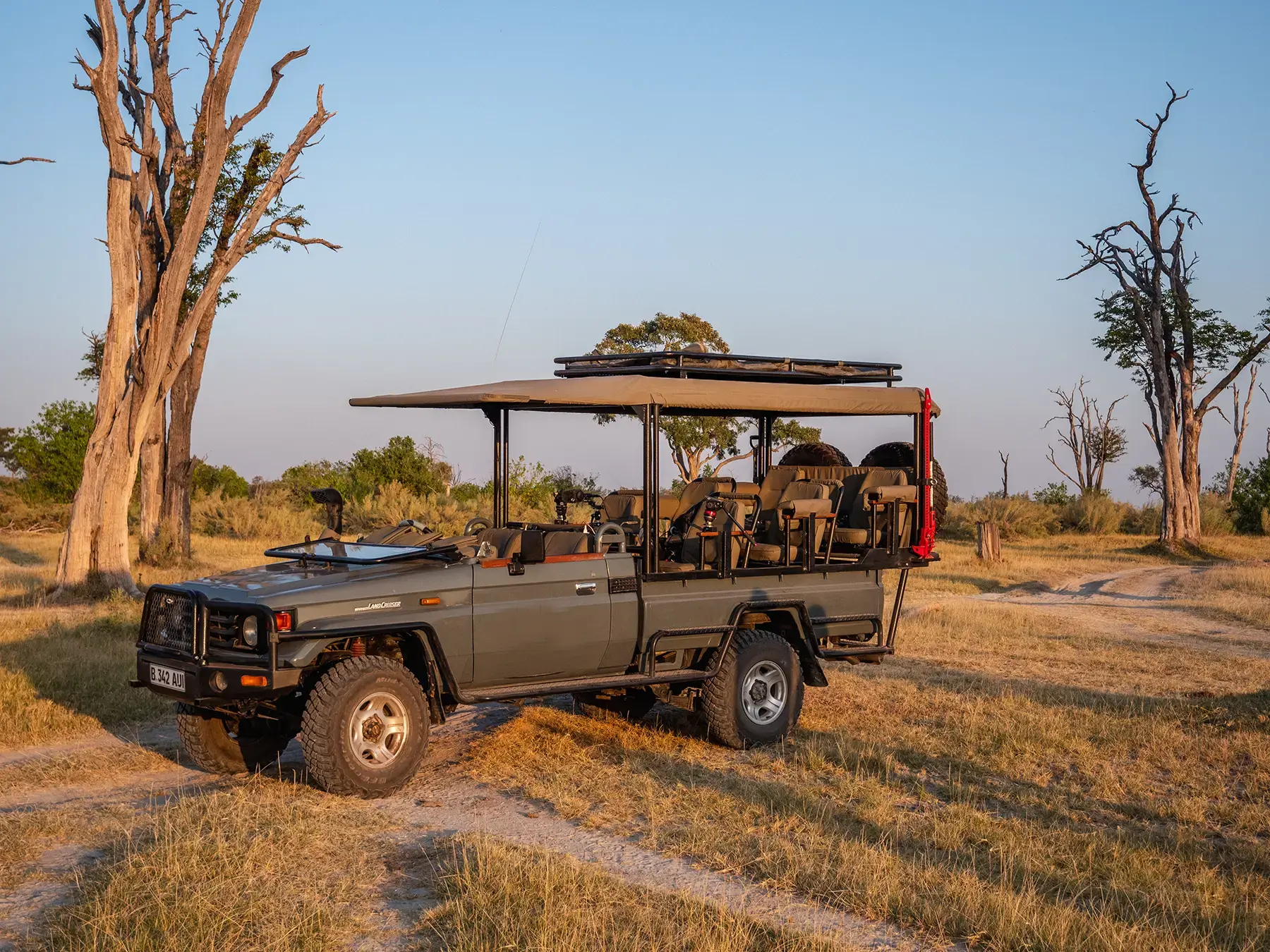
Times and routes are pre-determined for group shared safaris, meaning you cannot dictate which sightings you prioritise or how long you spend at them. The other thing is that vehicles often have to collect guests from different camps before a drive and drop them back after, which eats into what are arguably the best drive times – early morning and late evening, when predators are particularly active.
Group shared safaris do make Botswana more accessible for solo travellers, offering savings of around 20% compared to private safaris. For couples or families splitting the cost of a private vehicle though, the difference in price isn’t huge, and going private makes for a far better experience.
My Recommendation
Book a private safari if your budget allows. Having the flexibility to spend longer at a particularly memorable sighting or change your route to work around the weather is absolutely worth it, especially on a 3-day Botswana safari when your time is already limited.
Group shared safaris are only really worthwhile for solo travellers on limited budgets who are keen to meet others. Some group safaris add an extra middle row of seats to accommodate larger groups, which leaves passengers in that middle row with limited visibility, so I would avoid a shared safari as part of a large group.
How Much Does a 3-Day Botswana Safari Cost?
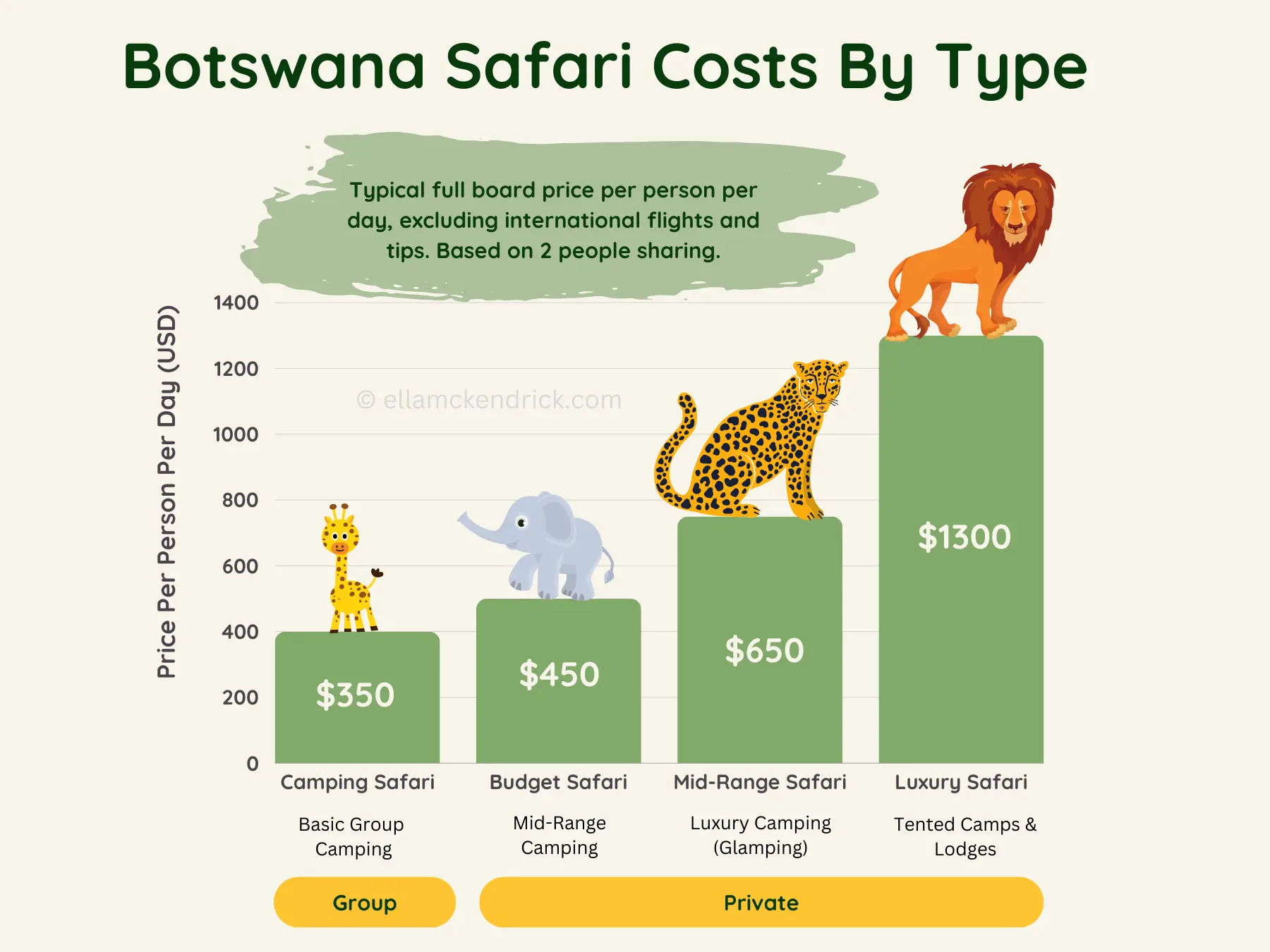
Private safaris in Botswana start at around $450 per person per day, with group camping safaris coming in at around $350 per person per day. Botswana’s high-value, low-impact tourism model makes it a costlier destination than Kenya or Tanzania, but the strict limits on visitor numbers mean this is offset by quieter parks.
I’ve put together the handy chart below so you can check typical prices for Botswana safaris by luxury level.
Safari Prices Typically Include
- Park and reserve fees
- Game drives and activities
- Accommodation
- Full-board meals
- Drinks (often including alcoholic beverages)
- Transport and transfers
- Driver guide
Safari Prices Typically Do Not Include
- International flights
- Tips and gratuities
- Special add-on experiences (e.g. photography, walking or helicopter safaris)
How Do Botswana Safari Costs Compare to Other African Safaris?
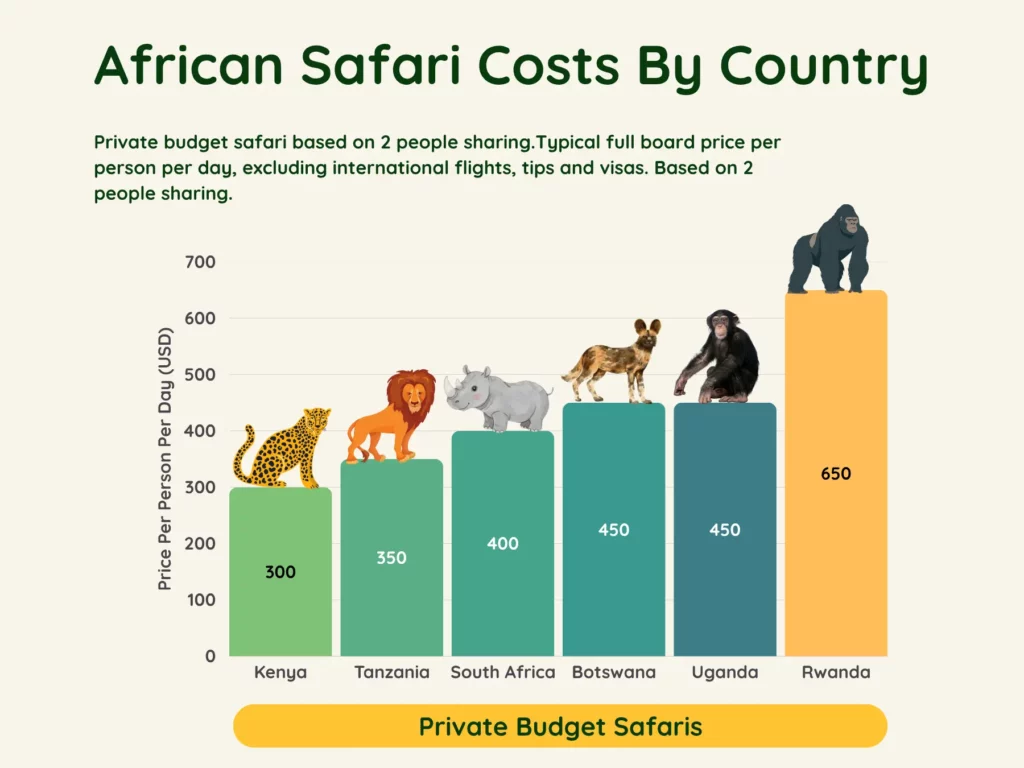
With private safari prices starting at around $450 per person per day compared to about $300 per person per day in Kenya and $350 in Tanzania, Botswana is one of the more expensive safari destinations in Africa. But in return, you get quiet parks and a high-value, low-impact safari experience you won’t find elsewhere.
You can see how costs compare across popular African safari destinations below:
| Destination | Private Budget Safari Cost PP/Day |
|---|---|
| Kenya | 300 USD |
| Tanzania | 350 USD |
| South Africa | 400 USD |
| Botswana | 450 USD |
| Uganda | 450 USD |
| Rwanda | 650 USD |
Botswana Safari Cost Breakdown
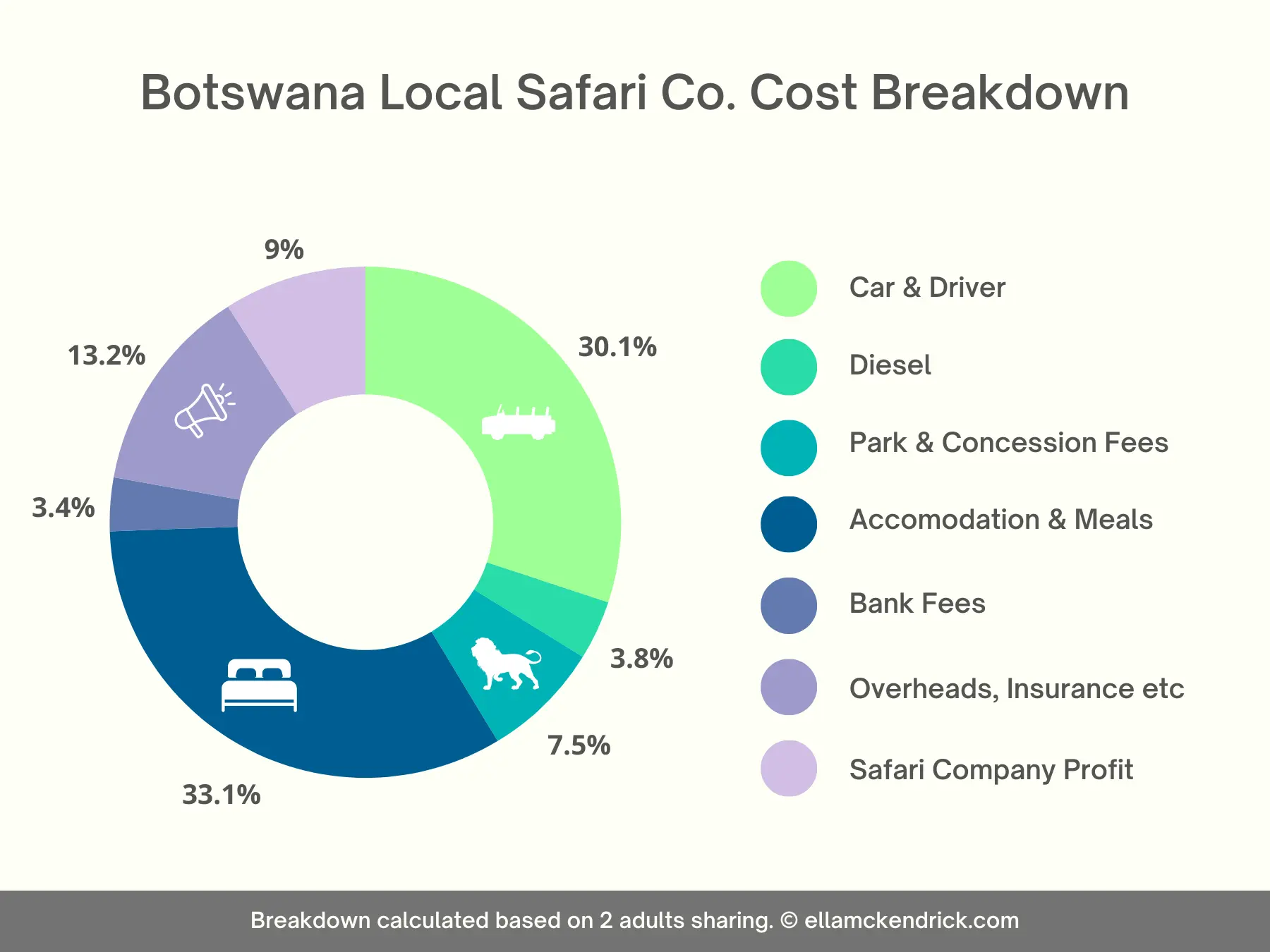
You have an idea of the total cost of a safari in Botswana, but now let’s look at the detail so you can see where exactly your money goes.
Unsurprisingly, most of the money is paid to the camps, covering accommodation, meals, drinks and game drives. A small proportion ($10 to $40 per adult per day) pays for park and reserve fees, while the margin charged by the local operator is around 15-20%. The rest pays for transfers and insurance.
Factors Impacting Botswana Safari Costs
The total price you pay depends on your accommodation level, the parks you take in, how you book, when you travel, the transfer types you opt for and how many people you travel with. Let’s have a look at each of these in more detail.
Jump to more information on each factor using the links below.
Accommodation Level
The luxury level you opt for is the greatest cost driver for any safari. Prices start at $450 per person per day for a budget private safari, rise to about $650 per person per day for mid-range glamping, and run anywhere between $800 and $7,000 per person per day for a luxury lodge.
It’s important to be aware that accommodation can also vary significantly by region. For example, luxury accommodation can cost roughly $500 per night on the Chobe Riverfront near Kasane and as high as $7,000 per night in Moremi, Khwai and Savuti.
Parks You Visit
It may seem surprising, but park fees in Botswana are actually pretty low compared to East Africa. That said, they do vary: Central Kalahari is $10 per adult, Makgadikgadi Pans $14, Moremi $20, Kgalagadi Transfrontier Park $27 and Chobe National Park $40. There are no entrance fees for Khwai Community Area – you just have to pay camping fees.
Finally, accommodation and transfers cost more for remote parks like the Central Kalahari. So as you can see, the parks you choose to visit impact the total cost of your trip.
How You Book
As I said at the beginning of this section, the margin for local operators is usually about 15-20%. Unbelievably, international travel agents add anywhere from 30% to 50% more than a local operator for the same experience, and usually outsource to the very same local operators to organise the safari anyway! So I can safely say that booking locally almost always delivers the best bang for your buck.
When You Go
Safari prices are highest during the peak dry season months (July to October), while visitors can make off-season savings of up to 40% during the green season (November to April). The shoulder months, falling outside of these seasons, also offer lower rates, with reductions of about 20% on peak prices. Clearly, then, travelling during non-peak season can secure substantial savings for those lucky enough to have the flexibility.
Transport Between Parks
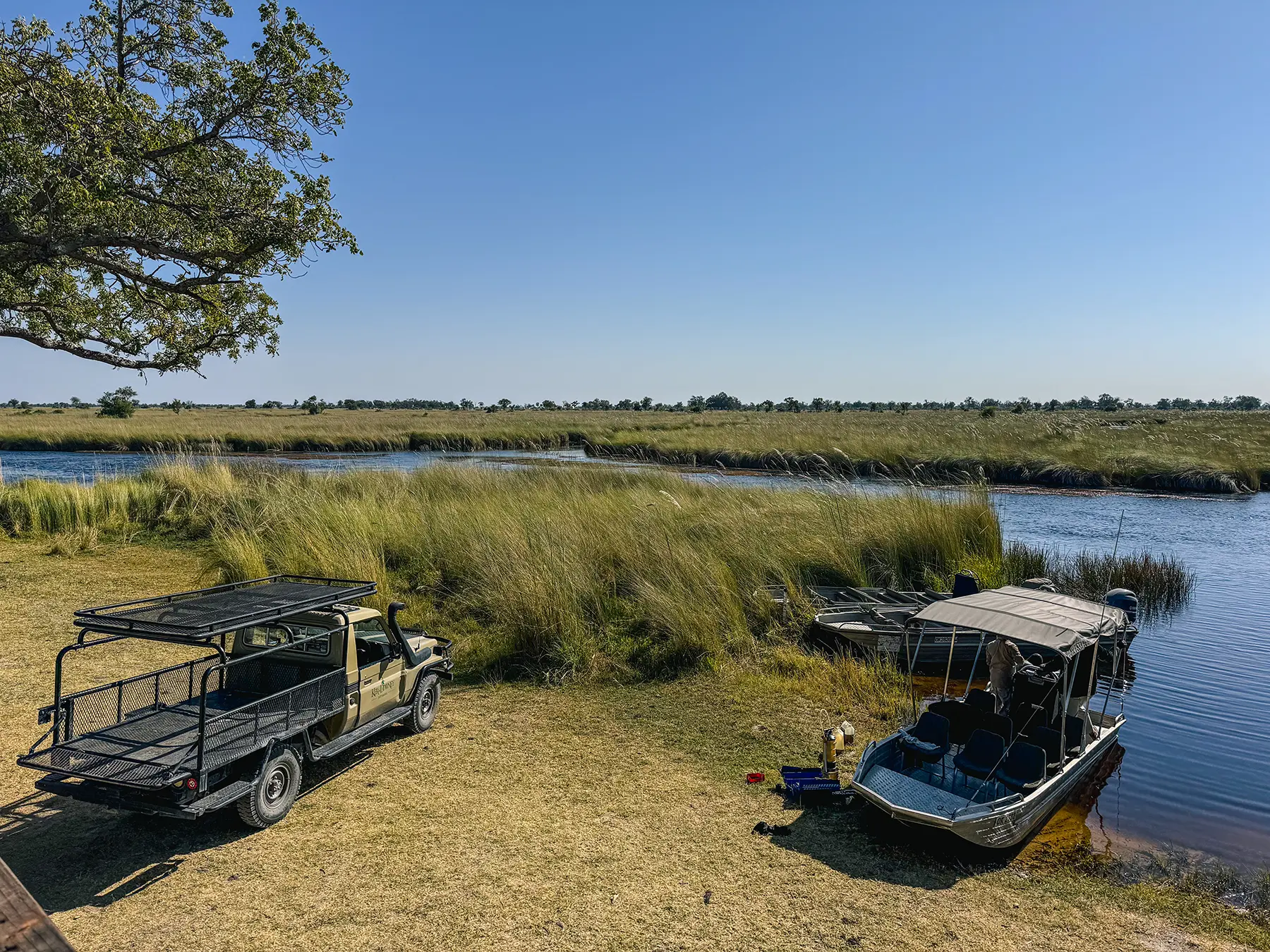
Travelling by light aircraft is the most common way to travel between Botswana’s camps, with many remote concessions exclusively accessible by air. Although flying is more expensive than driving between camps, it cuts down dramatically on travel time and also allows you to reach areas that simply can’t be accessed by road.
Your operator will work with you to find the right blend of air and road transfers to suit your budget and itinerary.
Group Size
The daily cost of your safari vehicle and driver guide runs to about $350-400 and is split among everyone in the vehicle.
This means, for example, that a solo traveller will pay the entire $350, while a group of two will pay around $175 each, three about $117 each and four roughly $88 each. The biggest saving comes from going from one traveller to two, so solo travellers face the steepest per-person costs.
Special Interest Safaris
If you want an experience that goes beyond the standard safari, there are lots of fantastic options out there – but of course, they come at an additional cost.
Expect to pay an extra $75-150 per person per day for birding safaris, $75-200 for photography safaris (including modified vehicles and fewer passengers), and $150-200 for walking safaris. A panoramic 45-minute helicopter ride over the Okavango Delta will set you back about $300 per person, while horse-riding safaris start at around $700 per person per day.
When Is the Best Time to Visit Botswana?
Botswana is a great destination almost all year round, though I’d avoid visiting in the wettest months (January and February).
The general consensus is that the very best time to go is in peak dry season (July to October) as there is little rain, thinner vegetation for better wildlife sightings and, of course, the yearly flooding of the Okavango Delta along with the spectacular transformation it brings.
My own opinion, though, is that peak season isn’t necessarily always the best time to travel to Botswana.
Visitor numbers and prices in the parks and lodges are naturally at their highest during this time, with rates up by 40% in some lodges. What’s more, the most popular places book out months ahead, so even just securing accommodation can be a hassle.
I’ve ranked each month of the year for safari in Botswana as Excellent, Good, OK, or Poor, based on typical game viewing and weather conditions.
And if you’d like to know even more, check out my ultimate guide on the best time to visit Botswana (coming soon)!
My preference: Honestly, I think Botswana is fantastic any time of year except for January and February, when the weather is at its wettest.
Everyone’s preferences are different, though, so keep reading to find out the advantages and disadvantages of each season so you can find the time that works best for you.
Click the links below to jump to a detailed section on each season.
The Dry Season (May-October)
Regarded as the best season overall for wildlife sightings and weather, the dry season is the most popular time to visit Botswana, but also entails higher rates and busier parks and camps.
Dry conditions during this period mean sparser vegetation, making wildlife easier to see, plus the shortage of water means their movements are more predictable as they naturally congregate at the few remaining waterholes (the Okavango Delta being the only exception).
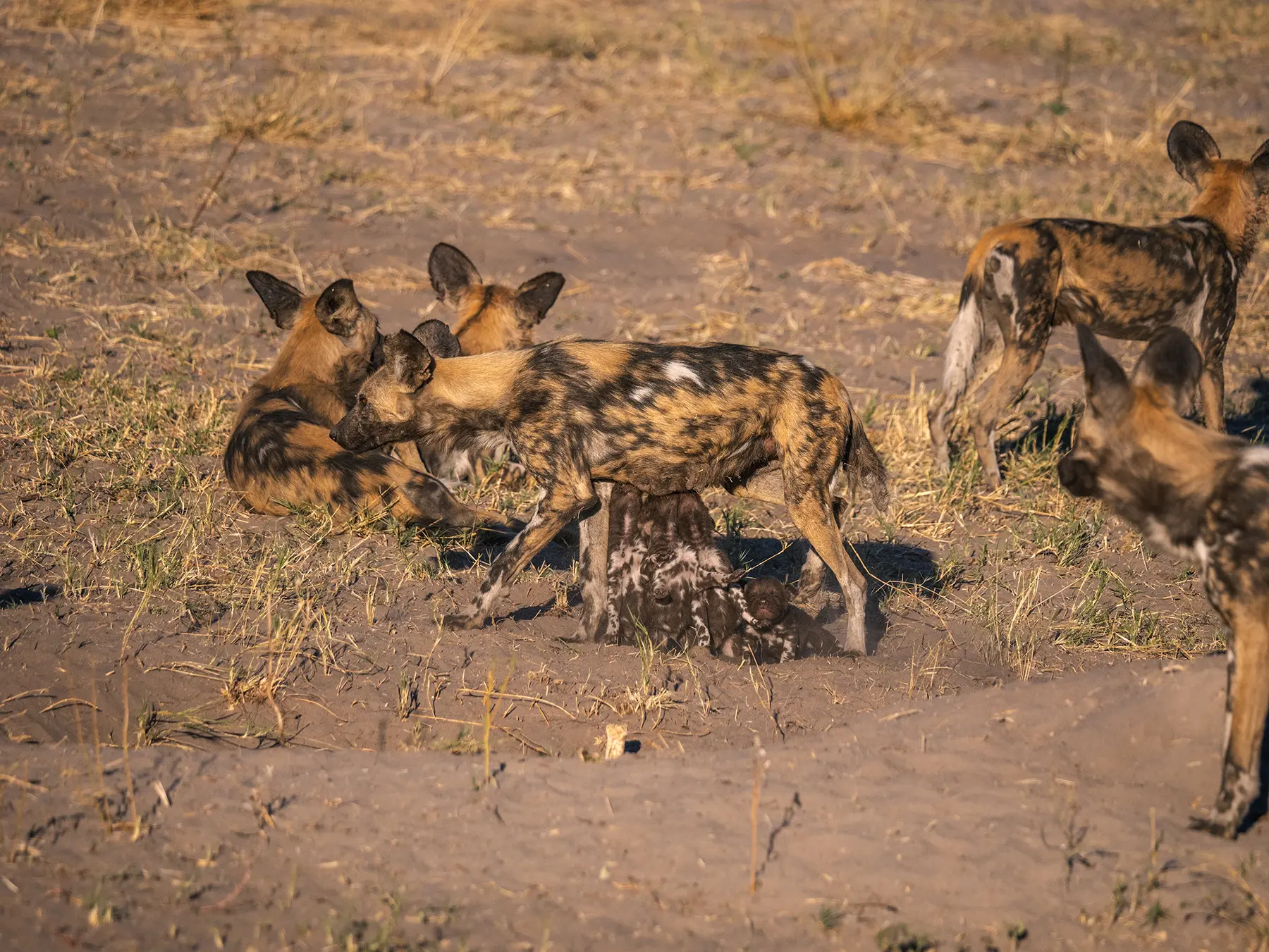
This time of year also coincides with wild dog denning season, offering much better chances of sighting these rare predators, while the annual flooding of the Okavango Delta in mid-June bathes it in a dazzling array of blue and green that’s at its most striking between mid-June and September.
Quick Facts
Prices: Busiest period with accommodation prices at their peak.
Weather: The driest season, with little rain and thin vegetation. Temperatures are moderate through most of the season, around 77°F (25°C) by day in July, though October is very hot and can reach 100°F (38°C). Early mornings can be chilly (around 43°F (6°C)), especially in open safari vehicles.
Wildlife: More predictable wildlife movements as animals gather at watering holes and along the Chobe River. Visibility is excellent thanks to the brown, sparse vegetation.
Birding: Not the best season for birding but still good, with resident species present but fewer migratory species than in the green season.
Unique features: The flooded Okavango Delta is spectacular to look at and ideal for boating safaris. With wild dog denning season in full swing, you have a better chance of spotting these elusive predators.
Pros of the Dry Season
- Good wildlife viewing, predictable wildlife movement
- Sparse vegetation offers excellent visibility
- Wild dog denning season (May-August)
- Pleasant daytime temperatures
- Roads accessible thanks to dry conditions
- Okavango Delta at its most beautiful
Cons of the Dry Season
- Accommodation prices at their peak
- Morning game drives in open vehicles can be cold
- Dry, thin vegetation means less striking photos
- Busiest season for parks and lodges
The Green Season (November-April)
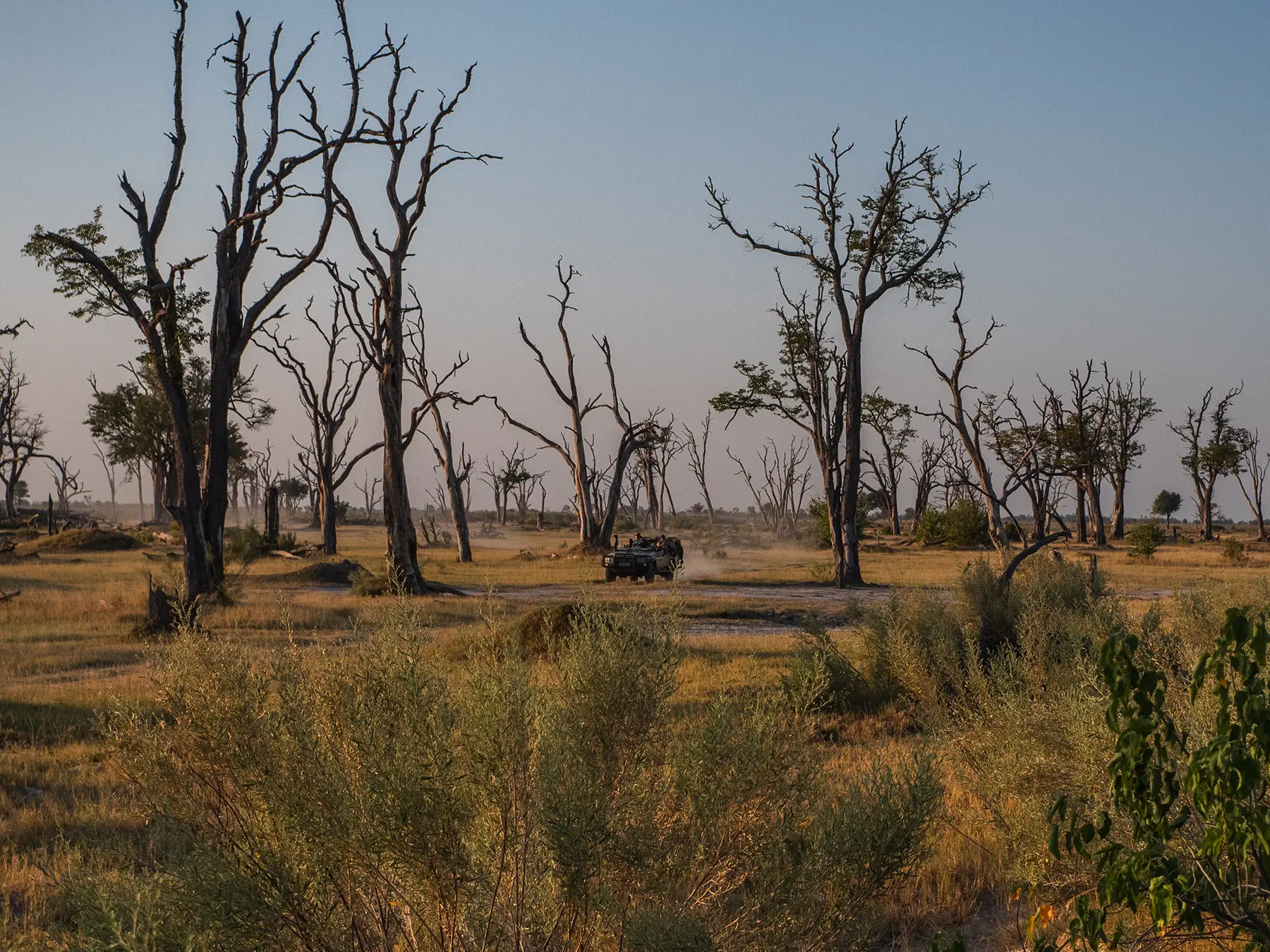
With lower prices and quieter parks and lodges, the green season is ideal for travellers who prefer to avoid crowds and save a little on accommodation costs. This is also an especially good season for birding enthusiasts, with both resident and migratory species present in large numbers.
November usually brings the rains to Botswana, transforming the sparse, brown landscapes with an explosion of lush green growth.
The weather is still pleasant during this period, and it rarely rains all day. With showers usually occurring mainly in the evenings, you’ll still be able to enjoy pleasant game drives, with the possible exception of January and February, when precipitation is heaviest and can negatively impact your visit.
As Botswana’s vegetation comes to life, baby animals are born in their thousands and migratory bird species begin to arrive, making for wonderful sightings.
Quick Facts
Prices: Much more competitive, with savings of up to 40% on high-season lodge prices.
Weather: You will likely see some rain during this season, particularly if you go in January or February. Conditions are warm and humid, with temperatures of between 64°F (18°C) and 95°F (35°C).
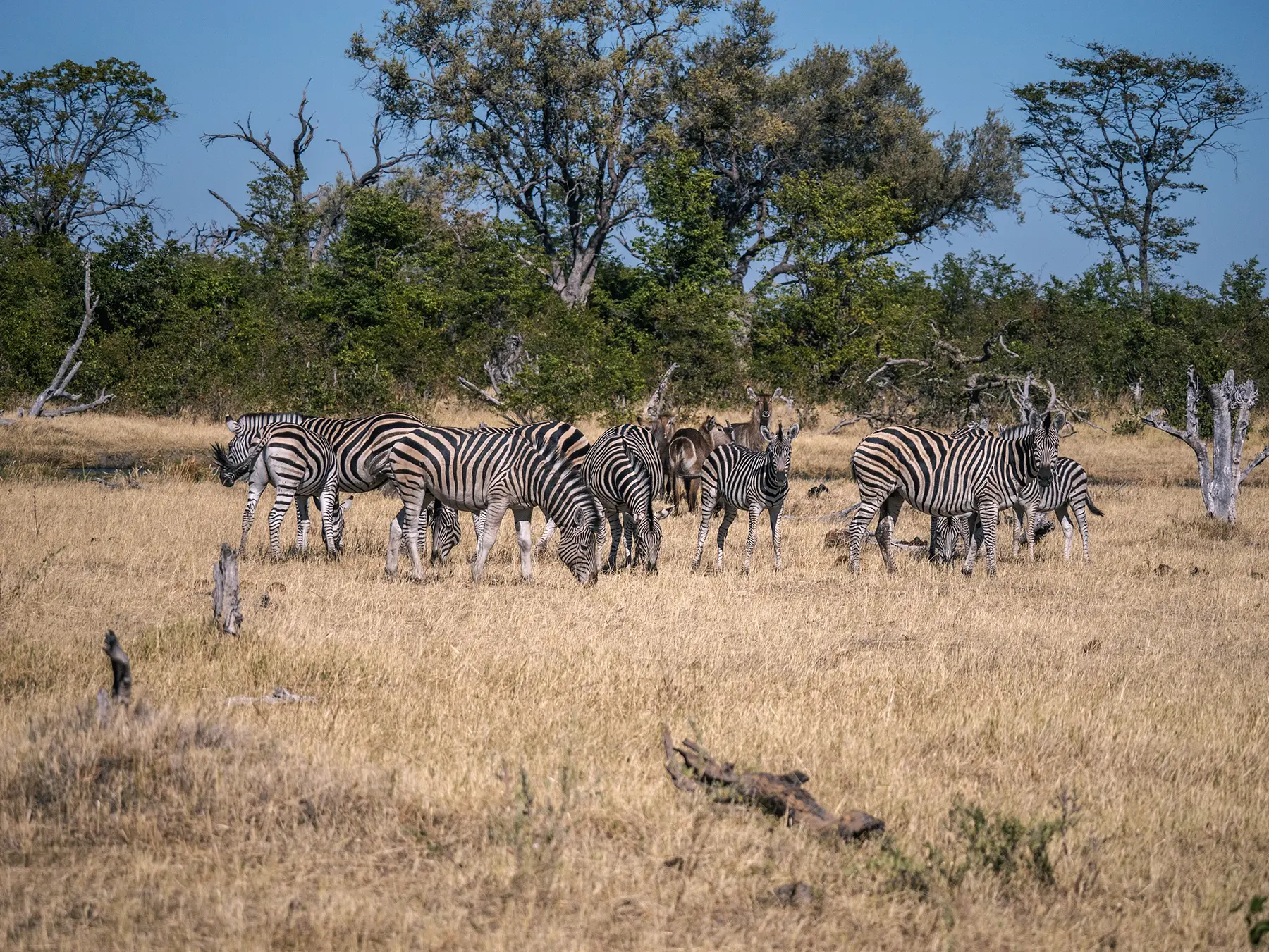
Wildlife: The fresh green vegetation adds a gorgeous splash of colour to the landscape, but can make wildlife sightings a little more challenging. However, there’s still plenty to see, including the spectacular zebra migration at Nxai Pan National Park as well as newborn animals and the predator action they attract.
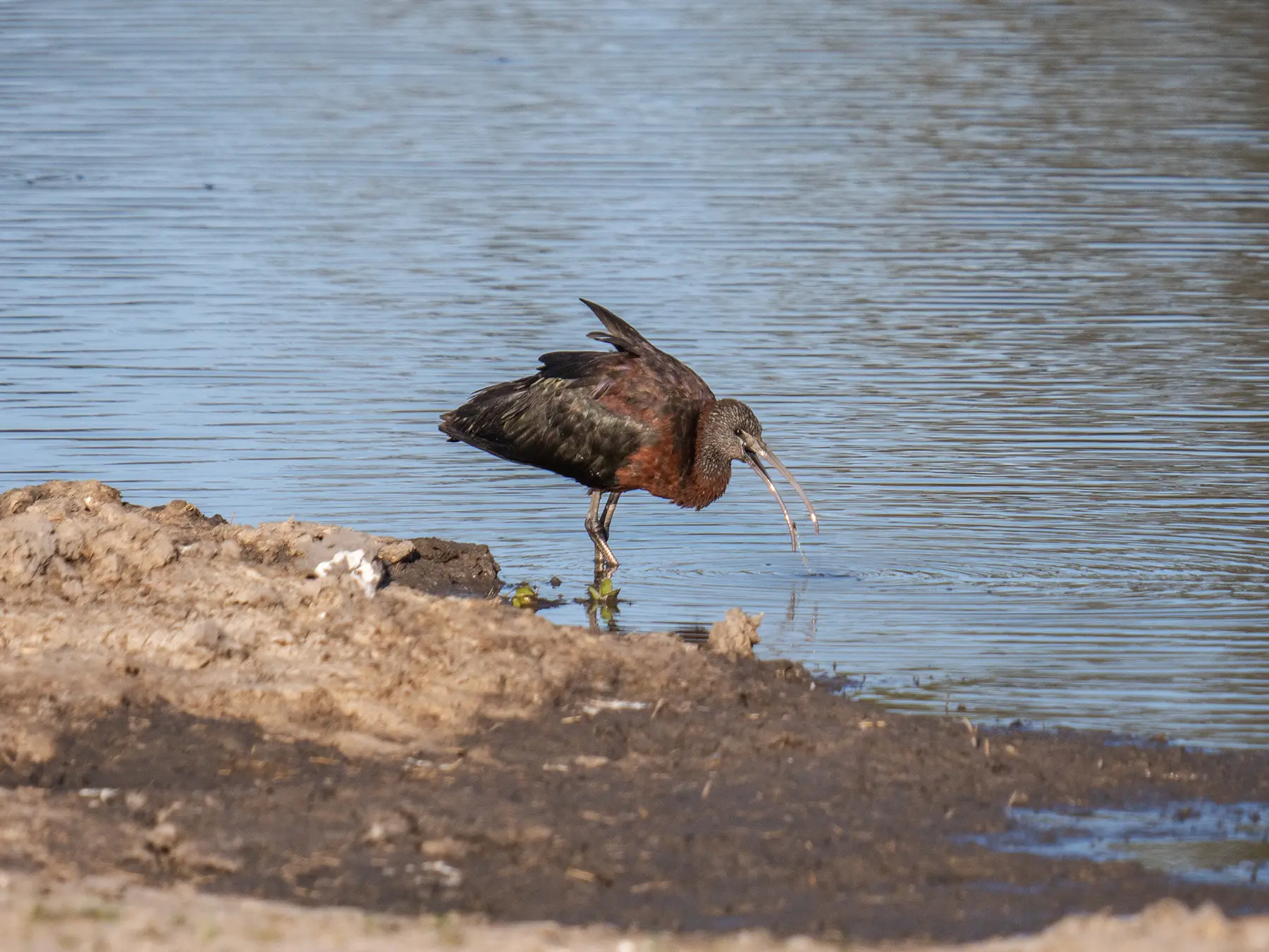
Birding: This is the best time of the year for birding, with migratory species arriving between November and March. More than 600 species are present across the Okavango Delta, Chobe and Kalahari.
Unique features: Lush vegetation and dramatic skies make for striking photographs, and the zebra migration is an unforgettable sight. The Kalahari Desert is also spectacular during this period.
Pros of the Green Season
- Lodge prices up to 40% lower
- Unbeatable birding, 600+ species present
- Huge numbers of baby animals plus the related predator action for fantastic sightings
- Incredible photography conditions thanks to striking green backdrops and stormy skies
- Quieter camps and lodges
Cons of the Green Season
- Limited accommodation, with some lodges closing
- Wet conditions can render roads impassable
- Lower delta water levels make mokoro trips less accessible
- Heavy vegetation can make wildlife sightings challenging
- Very wet conditions may impact your planned safari activities, especially in January and February
How Long Should You Spend on a Botswana Safari?
I would say three days is sufficient time to explore a region of Botswana like the Okavango Delta, Chobe, the Central Kalahari or the Makgadikgadi Pans in detail.
This page contains a number of 3-day self-contained itineraries, each dedicated to one specific area.
Of course, if you have the extra time and budget, I would recommend allowing yourself at least 7 days to take in two or maybe three regions. A 10-day trip will be enough to cover the highlights of the country, while if you want to explore Botswana in depth, I would advise taking 3 weeks.
What Three Days in Botswana Gets You
A three-day trip is enough to enjoy one of the following:
- Moremi Game Reserve, Okavango Delta safari: Classic game viewing in the Okavango Delta, combining land game drives with water activities such as mokoro trips through the channels.
- Savuti and Chobe Riverfront, Chobe safari: Dramatic predator action, large lion prides and huge numbers of elephants, topped off with a boat cruise on the Chobe River.
- Chobe and Victoria Falls safari: Large elephant herds on the Chobe Riverfront plus a visit to one of the natural wonders of the world.
- Central Kalahari Game Reserve safari: Vast, remote desert wilderness, black-maned lions and the zebra migration in the green season.
- Makgadikgadi Pans safari: Amazing salt pans, habituated meerkats and the seasonal zebra migration.
- 5-Day Botswana Safari Itinerary: A trip focusing on the Okavango Delta that gives you a little extra settling-in time.
- 7-Day Botswana Safari Itinerary: Pairs the Okavango Delta with a second region.
- 10-Day Botswana Safari Itinerary: My personal favourite route taking in the Delta, Khwai and Chobe.
- 3-Week Botswana Safari Itinerary: An itinerary that gives you an in-depth exploration of the entire country, including the Central Kalahari, Makgadikgadi and Nxai Pan.
My preference: I feel that ten days is the perfect length for a safari in Botswana. This gives you ample time to see the Okavango Delta, Khwai and Chobe at your leisure without having to rush from one camp to another. That said, if you can manage three weeks you can visit the Central Kalahari, Makgadikgadi and Nxai Pan as well for a rounded experience of the entire country. But don’t worry if you don’t have time for a longer trip: a focused 3-day trip to a single region like the Okavango Delta will still deliver a wonderful experience, and you can always go back another time to visit other areas.
My Top Five 3-Day Botswana Safari Itineraries
Drawing on my own personal experience as well as copious amounts of in-depth research, I have curated what I feel are five perfect 3-day safaris in Botswana, which you will find below. In putting together these itineraries, I have taken into account both the driving times and the distances between parks to make each as enjoyable as possible.
Simply click the links below to jump to each itinerary.
3-Day Okavango Delta Botswana Safari Itinerary
This itinerary centres around Moremi Game Reserve in the Okavango Delta, incorporating light aircraft transfers and game drives that are virtually guaranteed to offer spectacular sightings, from gigantic elephant herds to the leopards for which Moremi is famed.
3-Day Chobe Botswana Safari Itinerary
Based in one of Botswana’s top big cat regions, this trip will take you from the predator-rich Savuti to the Chobe Riverfront with its iconic elephants. You’ll also have a strong chance of spotting the elusive African wild dog.
3-Day Chobe and Victoria Falls Botswana Safari Itinerary
This itinerary starts with two leisurely nights on the elephant-lined Chobe Riverfront before making the short hop across the border to Zimbabwe’s dramatic Victoria Falls for an unforgettable finish.
3-Day Central Kalahari Botswana Safari Itinerary
Immerse yourself in the remote desert landscape of the Central Kalahari Game Reserve, opting for short light aircraft transfers to maximise your game drive time and boost your chances of sighting black-maned lions and cheetahs.
3-Day Makgadikgadi Pans Botswana Safari Itinerary
Starting at the gateway town of Maun, you’ll explore the world’s largest salt pans and enjoy seasonal spectacles such as the zebra migration, flamingo flocks, lions along the Boteti River and stargazing in the desert.
Option 1
3-Day Okavango Delta Safari Itinerary Overview
One of my favourite regions of Botswana, the Moremi Game Reserve is the focal point for this 3-day Okavango Delta safari.
This itinerary is based on my personal experiences here and includes light aircraft transfers to eliminate long drives and maximise game drive time. Although it covers just three days, it virtually guarantees incredible sightings, from elephant herds to Moremi’s renowned leopards.
Quick Facts
Total drive time (excluding game drives): Around 7 hours in total, averaging just over 2 hours per day. The longest single transfer is 3 to 4 hours (Day 1 and Day 3), or a 30 to 45 minute light-aircraft flight.
Best times of year: On paper July to October (dry season), but in reality any time other than January and February.
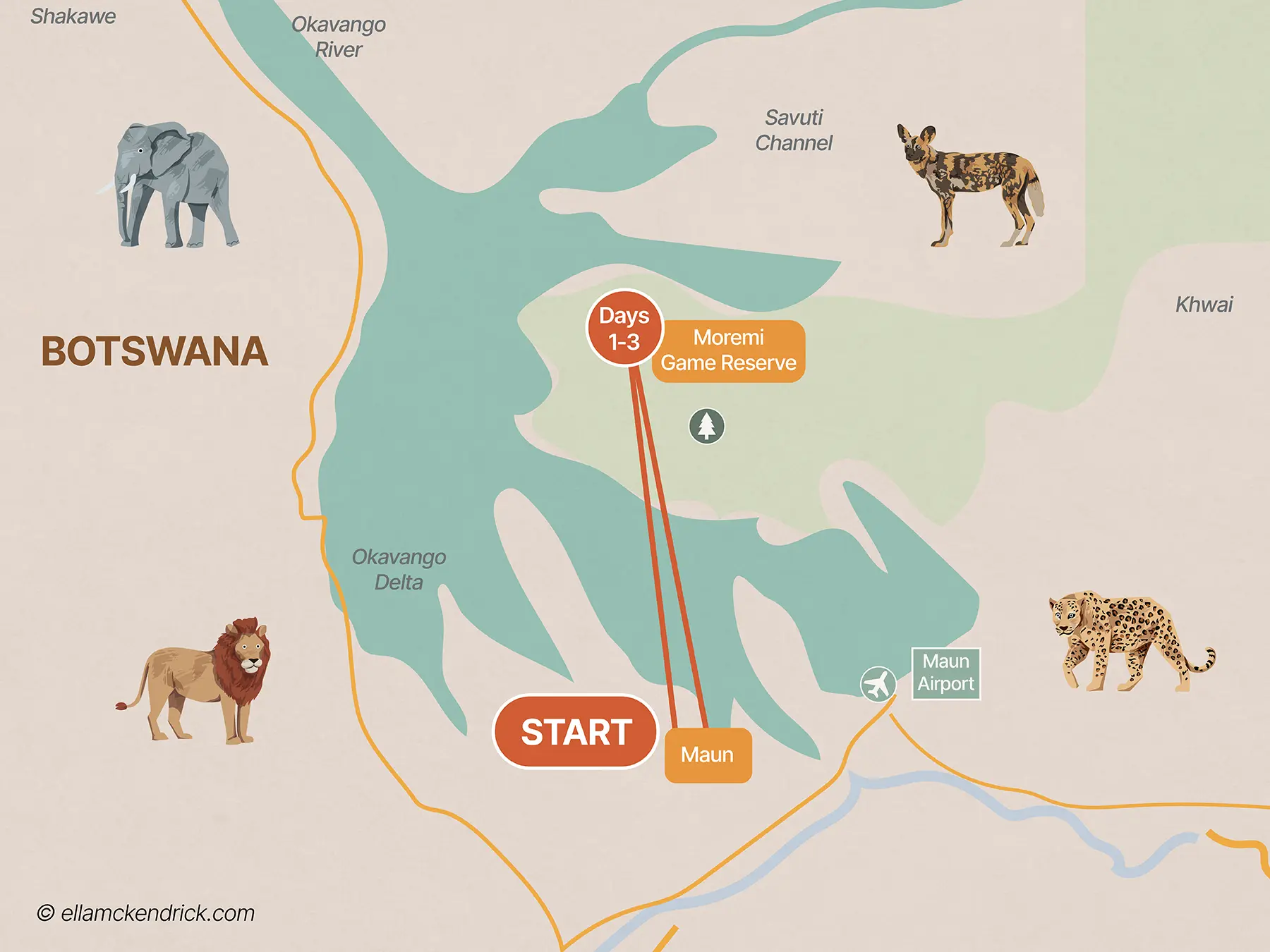
3-Day Okavango Delta Safari Map
Day-by-Day Breakdown of the Perfect 3-Day Okavango Delta Safari
The Okavango Delta has so much to offer that three days will zip by, so I’ve crafted this itinerary to make sure you make the most of every moment!
I have also considered the distance between Maun and Moremi Game Reserve and the driving times in order to come up with the most enjoyable itinerary.
You can get quotes from the same local tour companies I use to organise my own trips here: Safaris By Ella
Click any of the days below to jump to my full notes on that day.
Day 1: Maun to Moremi Game Reserve
Drive time (excluding game drives): 3-4 hours
Today you’ll be leaving gateway town Maun behind and setting your sights on the untouched Okavango Delta, at the heart of which is the renowned Moremi Game Reserve. After an early start, you’ll arrive at this outstanding wildlife area in time to embark on your first afternoon game drive for the perfect first look at this unique tapestry of rich green grassland and riverine forests, threaded throughout with glistening lagoons.
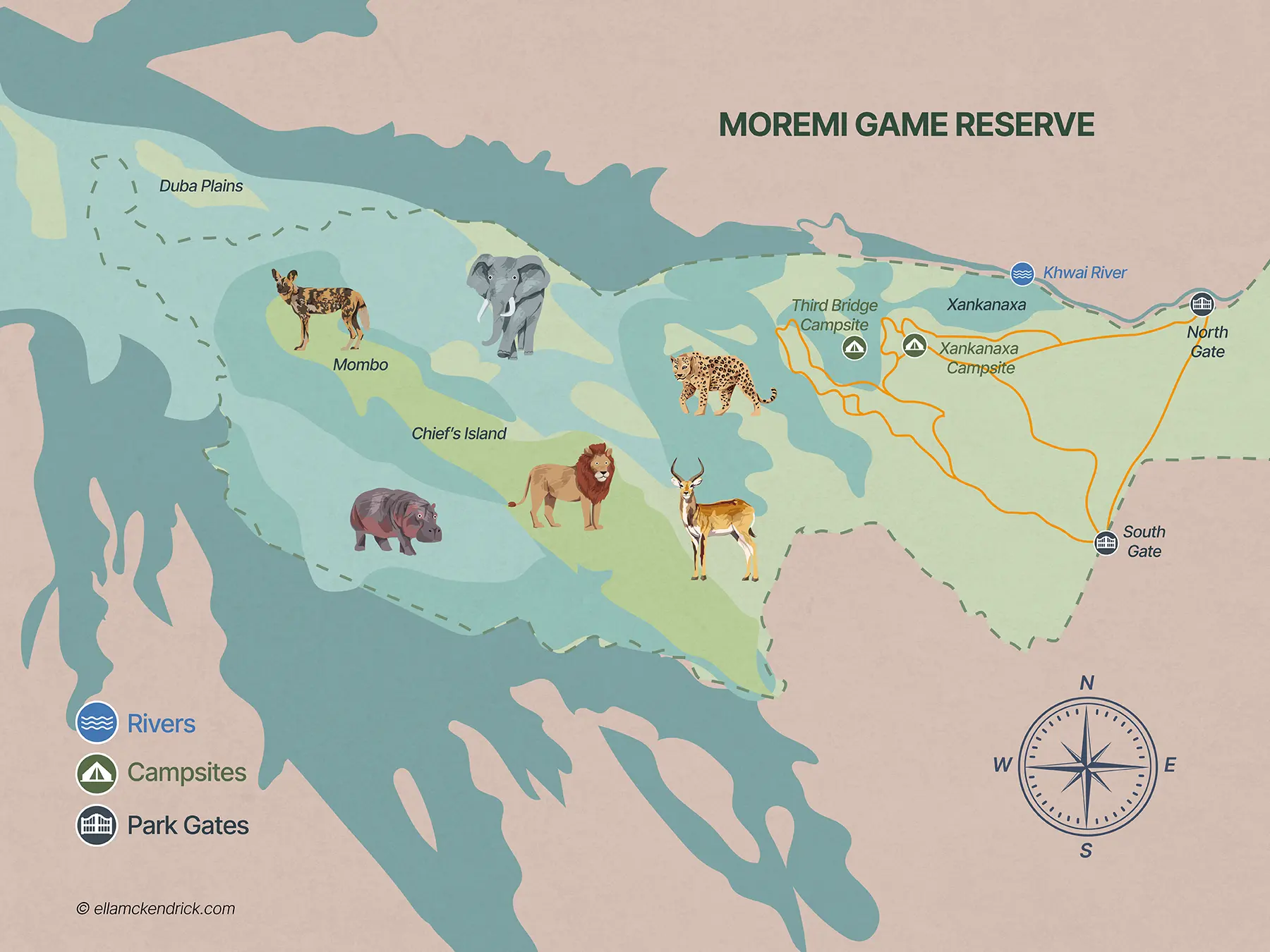
Map of Moremi Game Reserve
Here is a map I made showing the key features of Moremi Game Reserve.
Itinerary
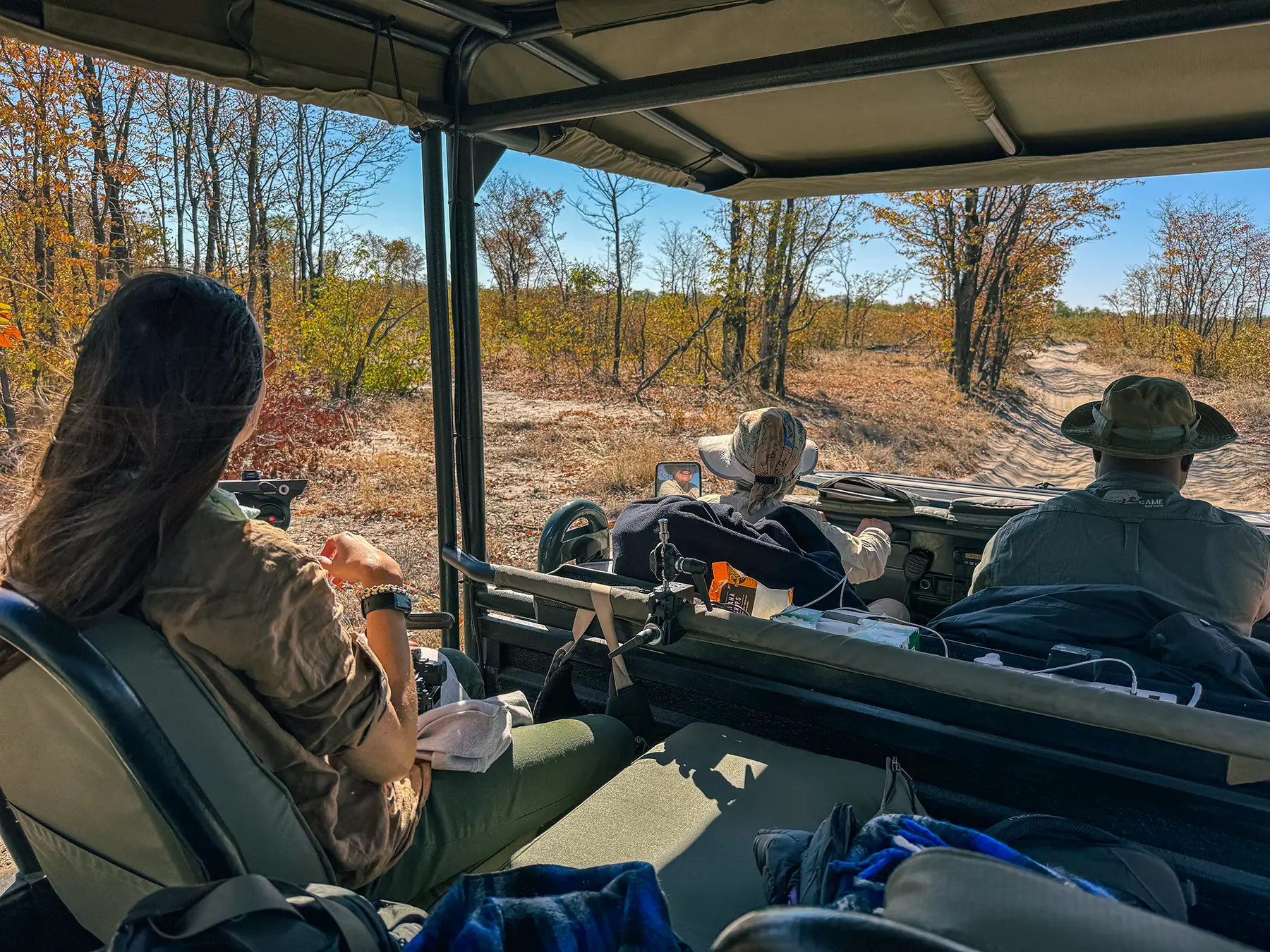
Departing Maun this morning, you’ll make your way to Moremi Game Reserve by road (3-4 hours) or light aircraft (30-45 minutes). If driving, be prepared for a rather rough ride as the 95-mile (153 km) route transitions from smooth tar to a sandy, ridged track through mopane forests.
However, after you’ve passed the cattle fence separating livestock from wildlife, your journey becomes more of a game drive, and with a bit of luck you’ll enjoy some great bonus sightings along the way. If you decide on an air transfer, your lodge or operator will pick you up at your camp’s airstrip, most often Xakanaxa in the centre of the reserve or Khwai near the North Gate.
On arrival, it’s straight to your lodge for a spot of lunch, the short trip acting as a mini game drive that gives you a taste of what’s to come. Alternatively, if you’ve booked a mobile safari, you’ll drive straight out into the bush and find a good spot to enjoy a picnic lunch.
Then comes the highlight of the day: your afternoon game drive. As you traverse the reserve, you’ll see the placid waters of the Okavango Delta to the west, the blue skies reflected in their mirror-like surface. Elephants, lions and leopards roam in the expanses of mopane woodland and vast stretches of grassland, waiting to be discovered.
You’ll be surprised at how the time flies as you keep your eyes peeled for wildlife – all too soon, you’ll be headed back to your lodge or mobile camp for dinner.
About Moremi Game Reserve
The oldest protected area in the Okavango Delta, Moremi Game Reserve is one of Botswana’s most picturesque reserves. Occupying about a third of the Delta, it takes its name from Chief Moremi III of the Batawana people and his wife Elizabeth Pulane Moremi, who led the drive to protect these lands as a wildlife sanctuary in 1963.
The reserve’s landscape is a blend of open grasslands, dense mopane woodland and acacia forest, crisscrossed by miles and miles of rivers, lagoons, islands and azure waterways.
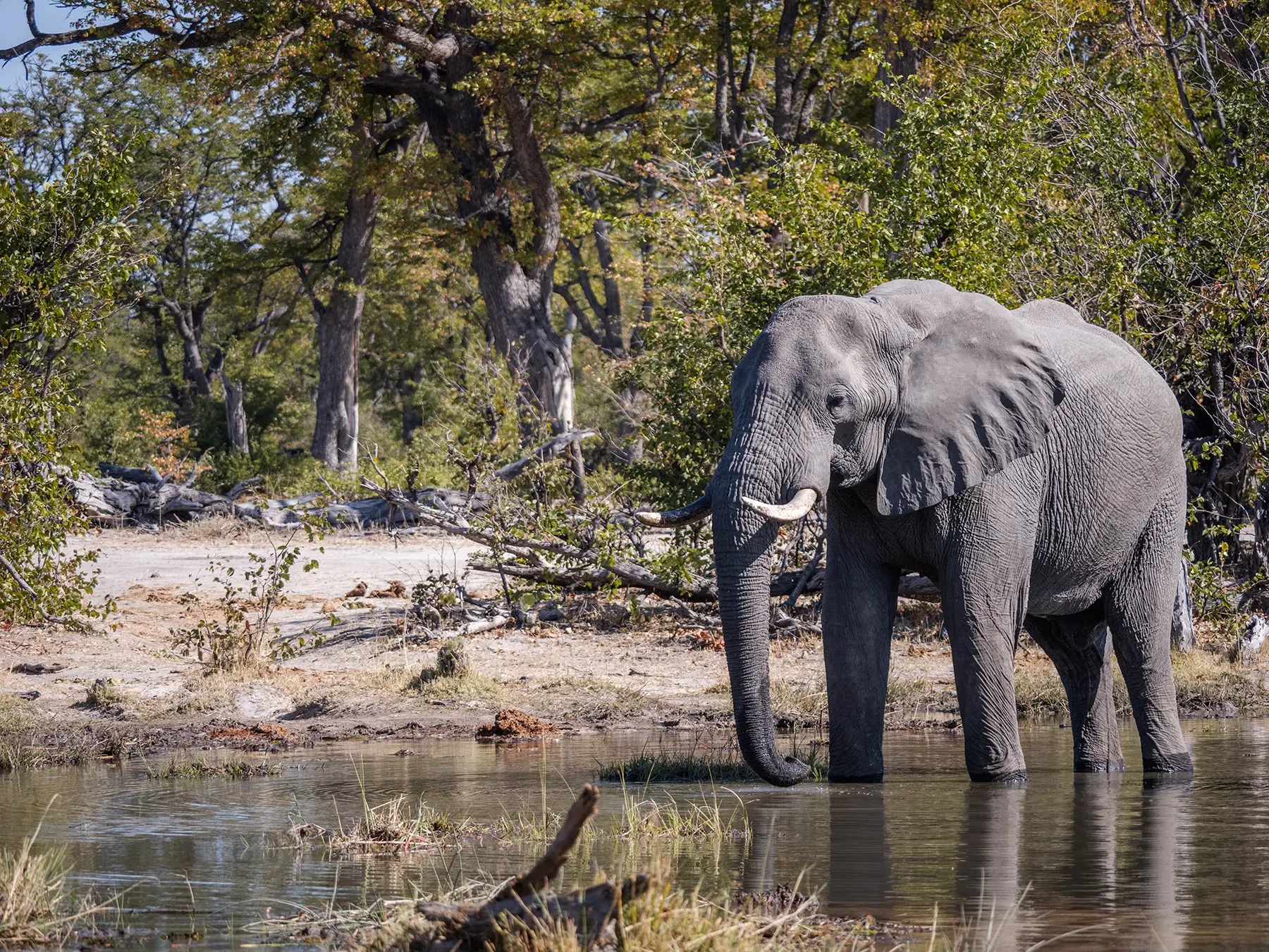
What Wildlife Can I See at Moremi Game Reserve?
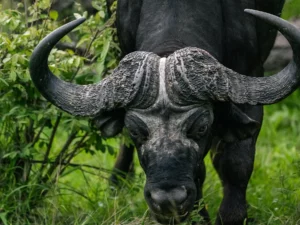
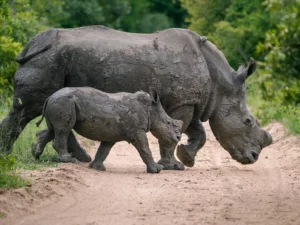
Thanks to the diversity of its habitats, Moremi is home to an incredible variety of wildlife. You can see all of the Big Five here, though rhinos can only be found on Chief’s Island – a safe haven from poachers.
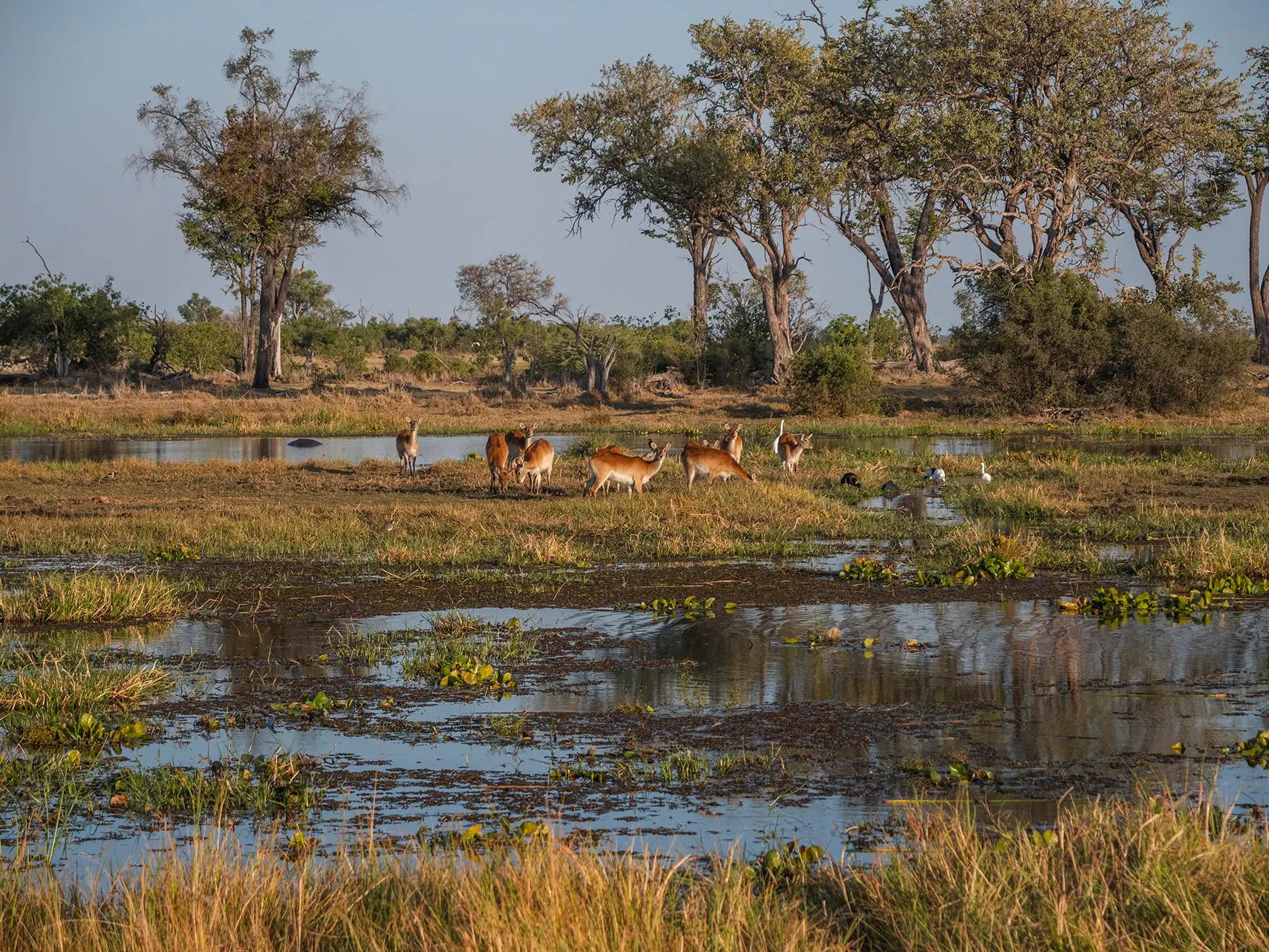
The reserve’s myriad waterways are inhabited by elephants, buffalo, giraffe, zebra, wildebeest and many species of antelope including the rare red lechwe.
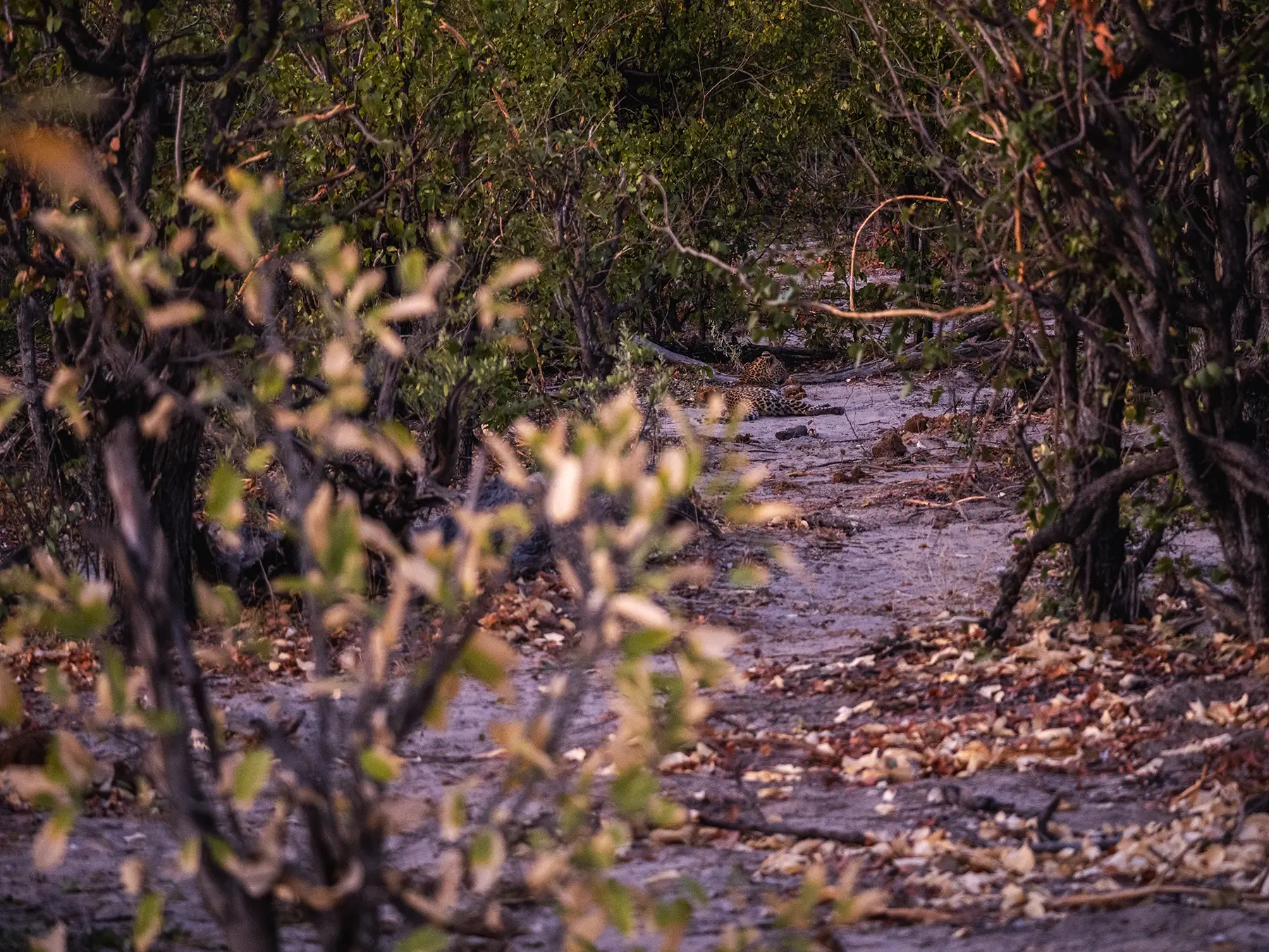
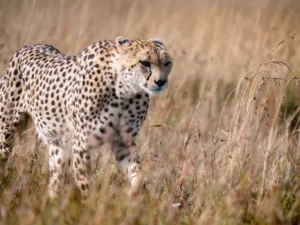
Moremi also boasts large numbers of predators, among them lions, leopards, cheetahs, hyenas, jackals and the rare African wild dog, and is especially renowned for leopard sightings in its mopane forests. Birders will also delight in the incredible variety of species to be found along the shores of the delta, including fish eagles, kingfishers, skimmers and hundreds of others besides.
Tips for Your Journey to Moremi
- If you’ve opted for an air transfer, be aware that the light bush aircraft have strict luggage allowances (33-44 lb / 15-20 kg, soft bags only), so leave that kitchen sink behind! Your lodge or operator will pick you up at your camp’s airstrip.
- If you’re driving to Moremi by road, I’d recommend leaving Maun as early as possible (between 7am and 8am) so you can maximise your safari time on this first day.
- As is common in Botswana, the roads and bush tracks to Moremi can be pretty rugged, so be prepared for a rough ride in places.
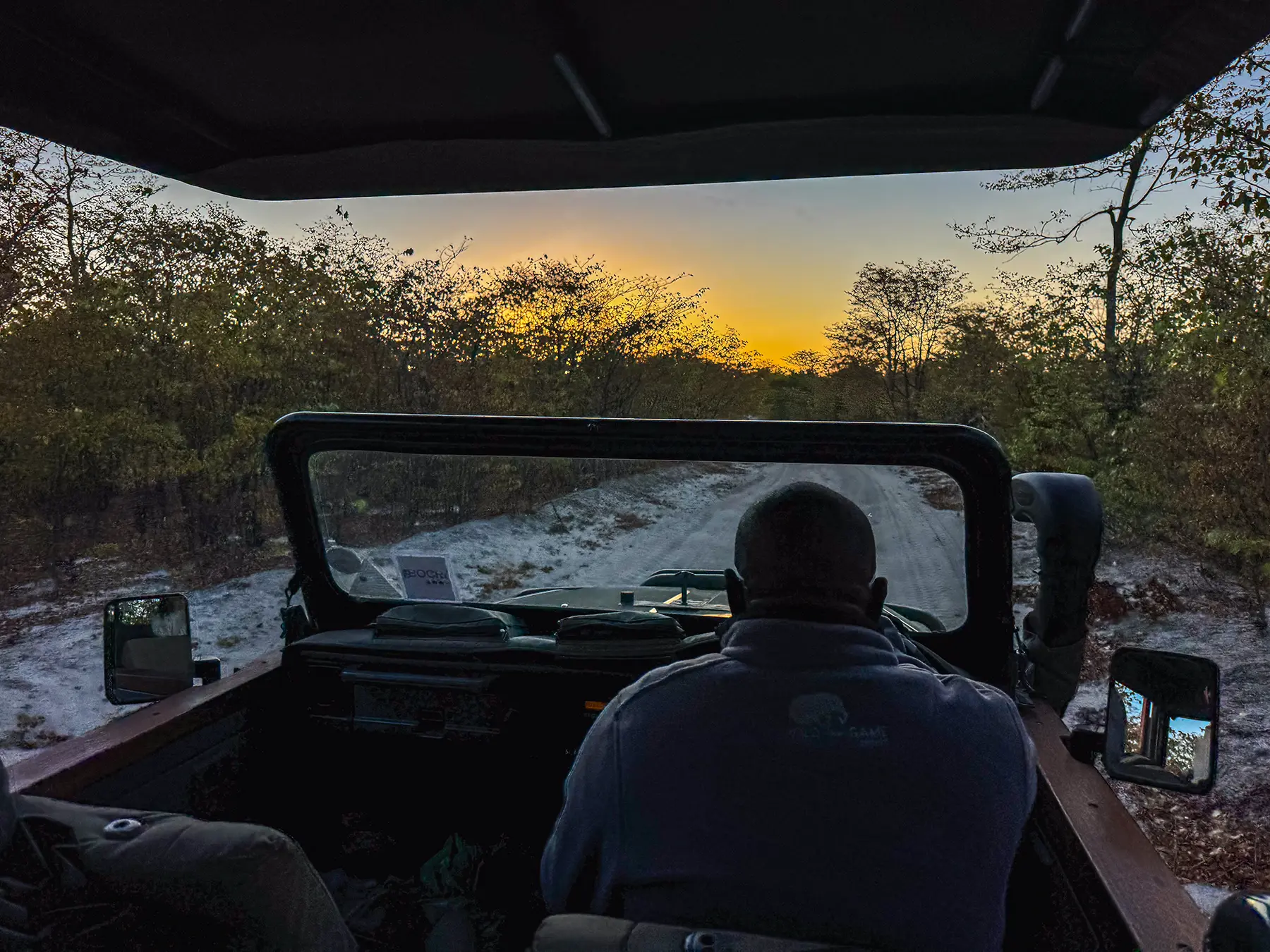
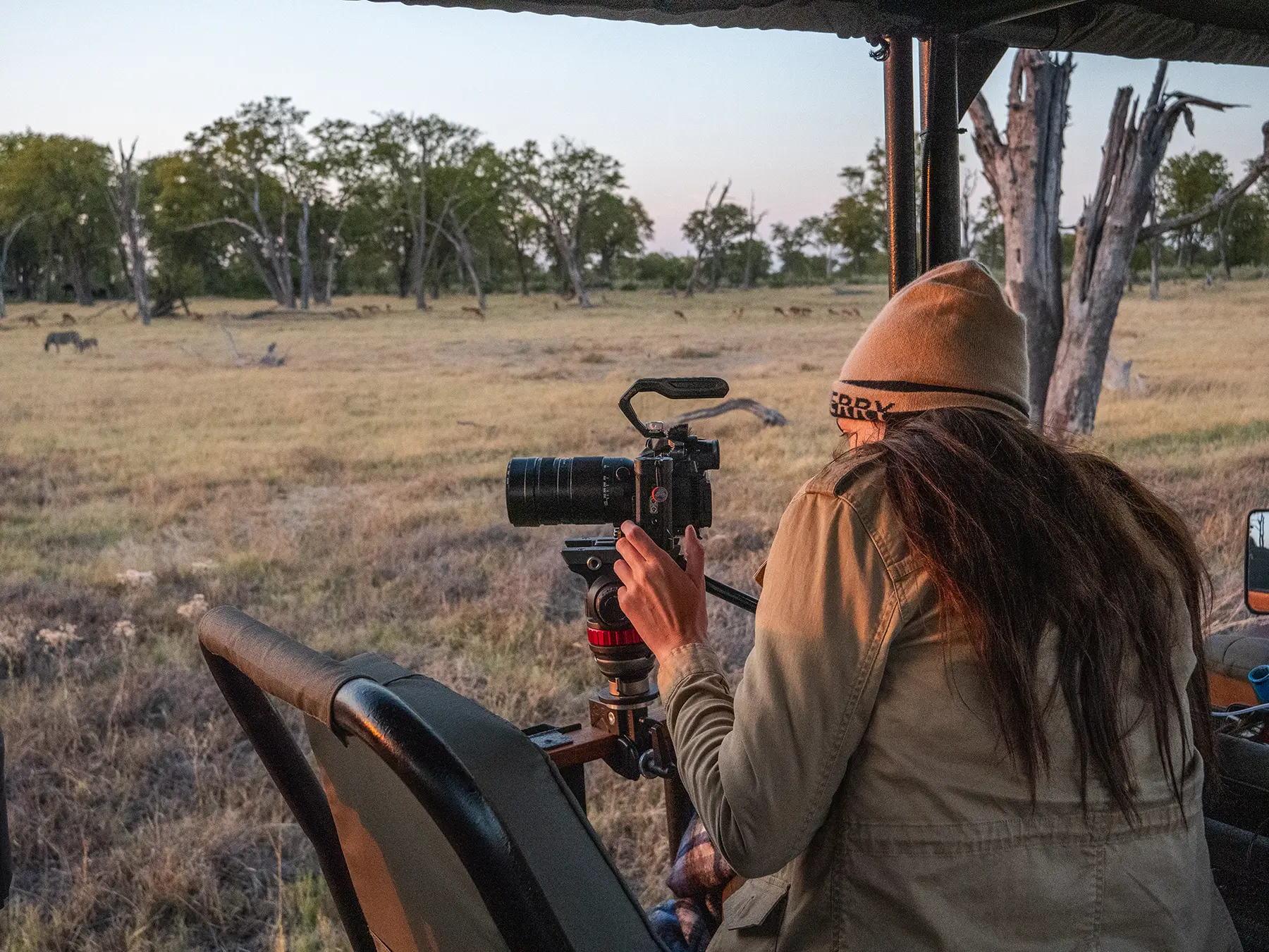
- The other thing to bear in mind about the drive is that you’ll be making it in an open vehicle and largely on main roads, so it’s going to be gusty! Wrap up warmly so you don’t get cold, and if you have long hair, be sure to wear a hat or tie it up unless you want to spend the afternoon detangling it. A pair of glasses or sunglasses will shield your eyes from the wind, and I also recommend wearing a windbreaker jacket.
Where to Stay in Moremi Game Reserve
Moremi is so vast that it makes more sense to stay somewhere within the reserve. The park’s lodges all fall into the high-end category, including a number that rank among the most opulent on the continent, and you can even stay on Chief’s Island itself. However, the prices reflect this level of luxury, and lodge accommodation is a costly commodity.
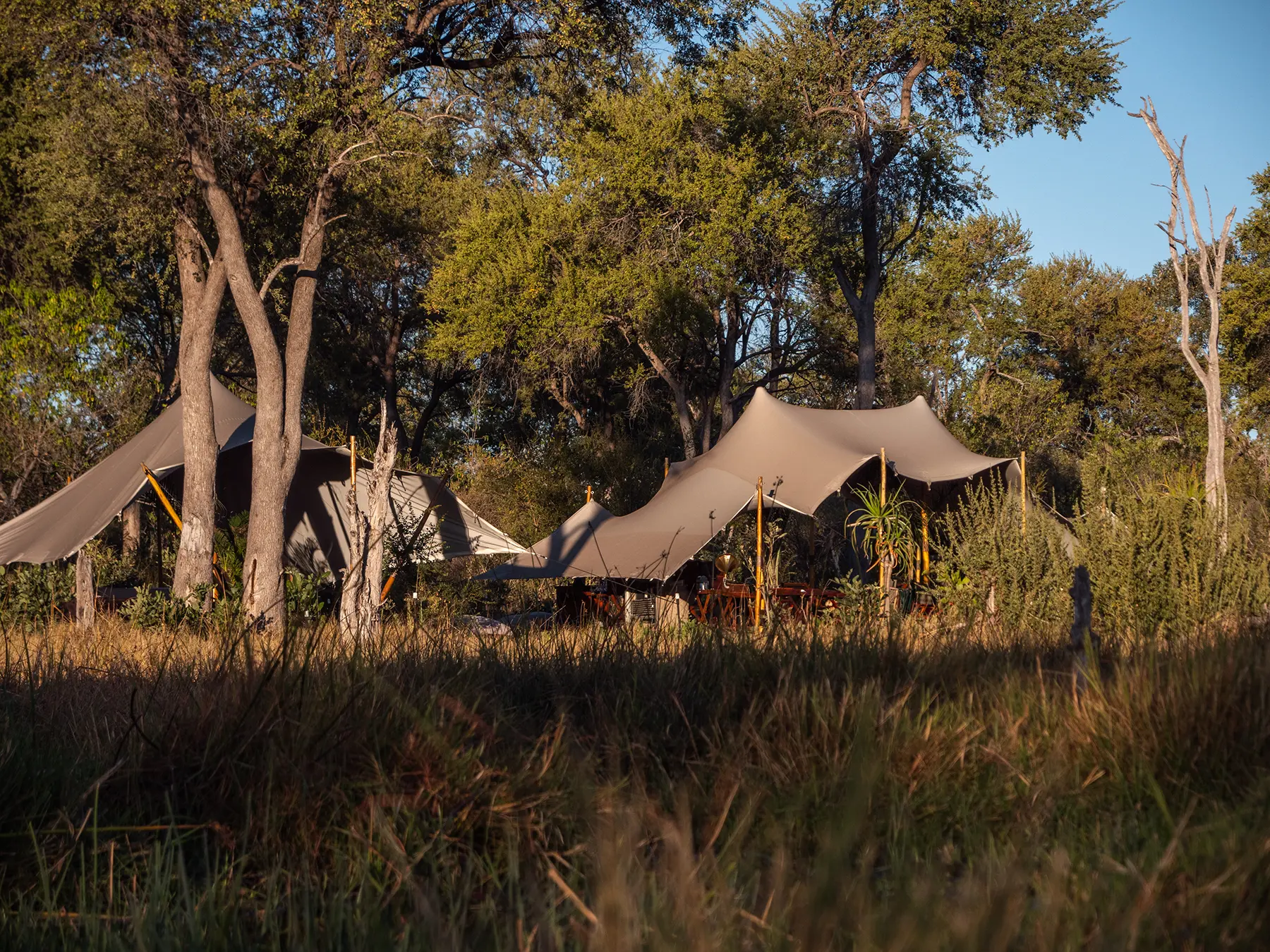
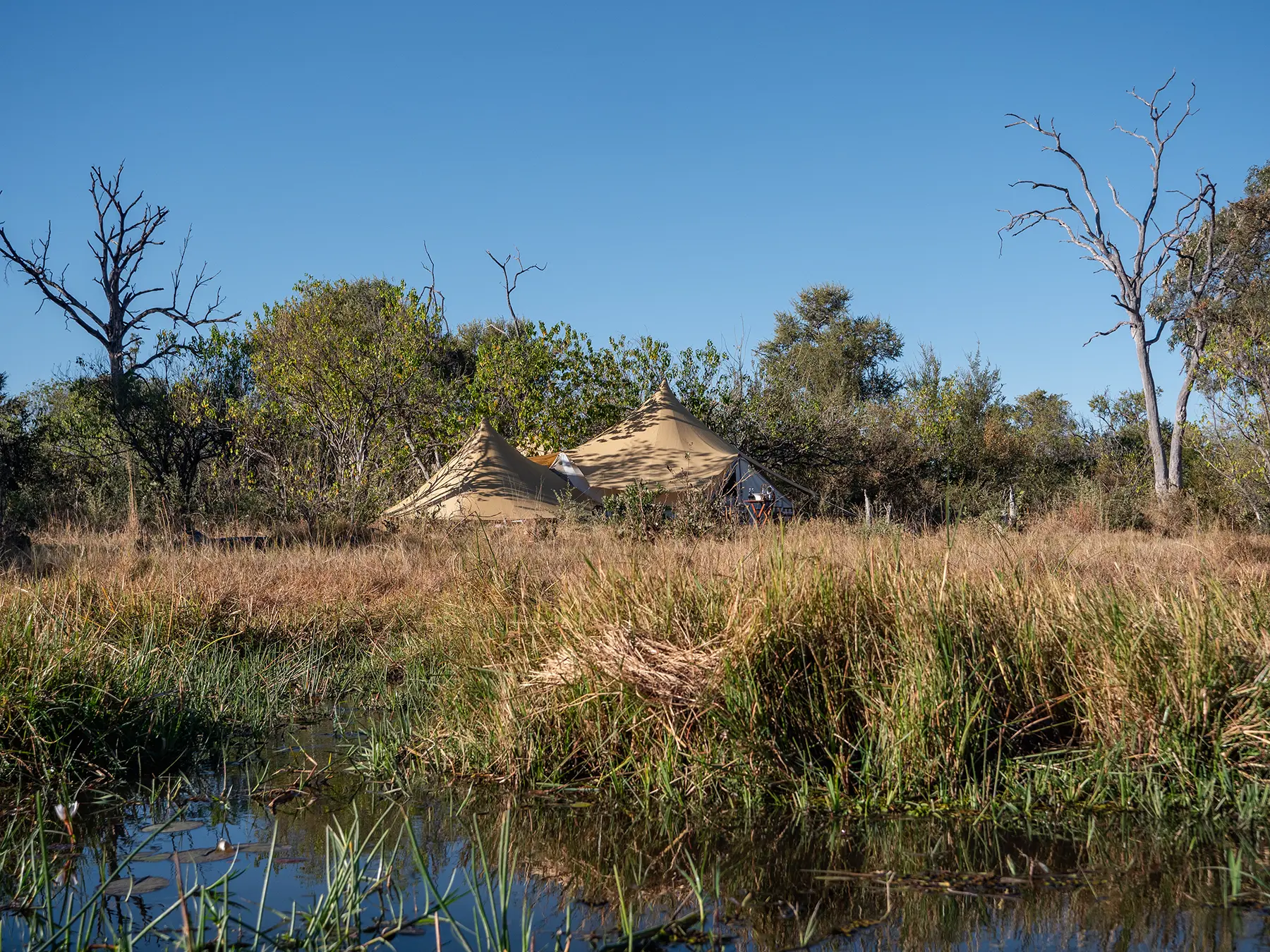
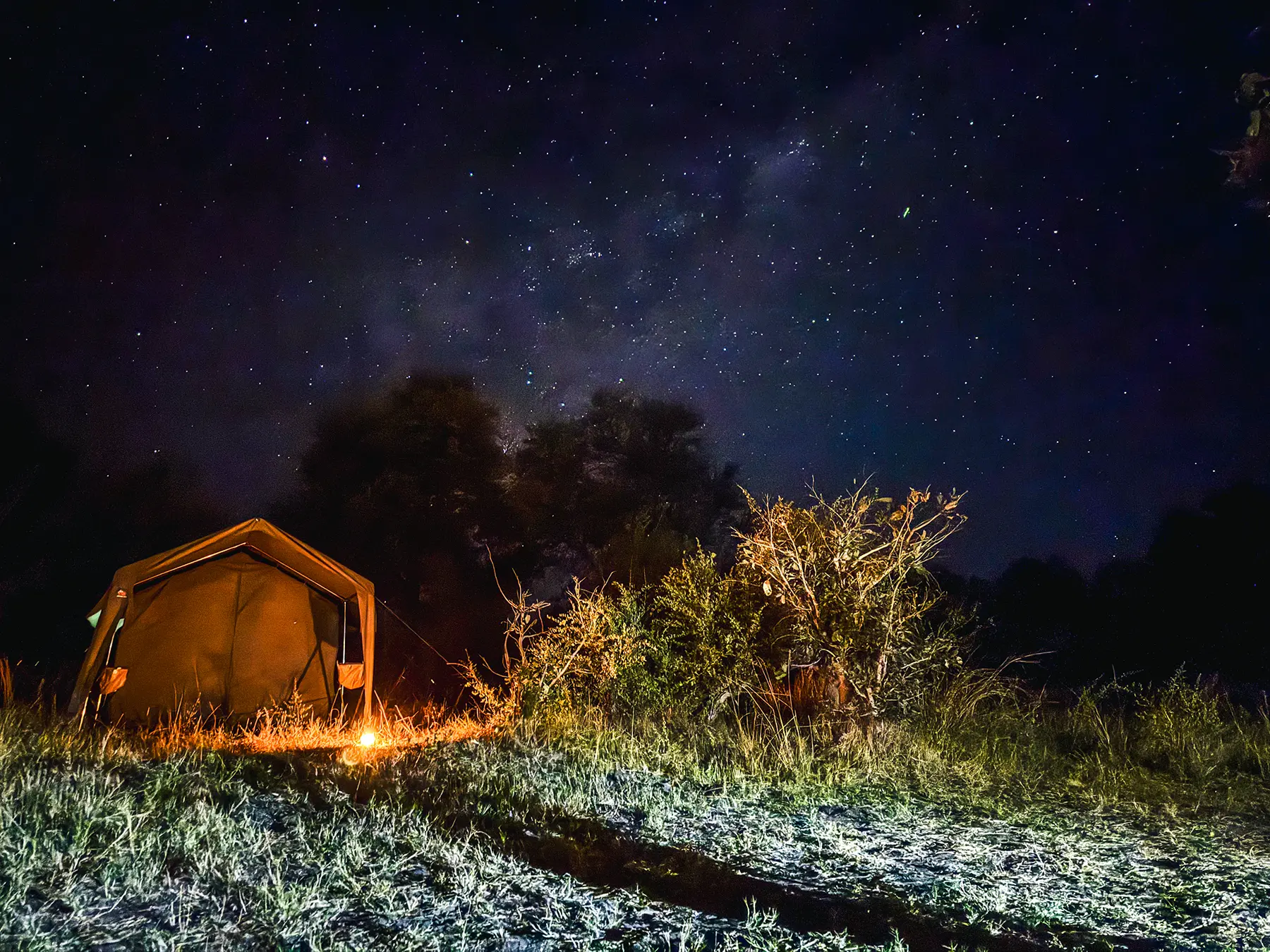
Mobile camping is a more budget-friendly option, and by far the most popular with visitors. And while the term ‘camping’ might call to mind images of cramped, clammy tents and rumpled sleeping bags, you can rest assured that camping here is a vastly different experience!
The roomy, comfortable tents you sleep in are equipped with real beds and private bathrooms, and meals, which are served in a dedicated dining tent, are prepared by your own private chef. That beats a tin of beans any day!
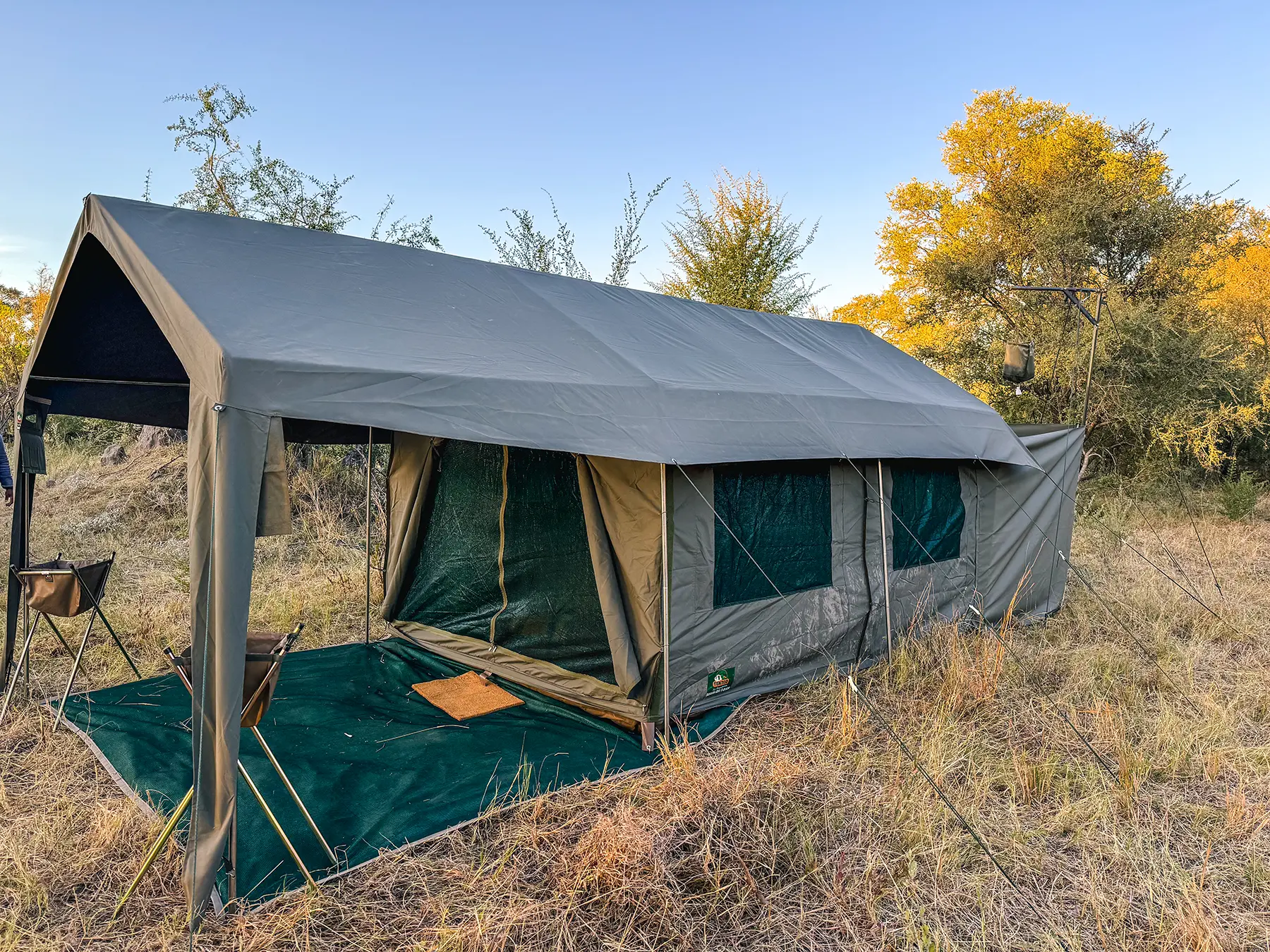
My Experience of the Journey to Moremi
I opted to drive to Moremi, and I loved the scenery along the way. While the rutted road through the mopane forest certainly put our suspension to the test, we were soon distracted from the bumping by the wildlife that appeared after we passed the cattle fence.
For me, the high point was when a breeding elephant herd crossed the road right ahead of us. What an amazing way to start our visit to the Okavango Delta!
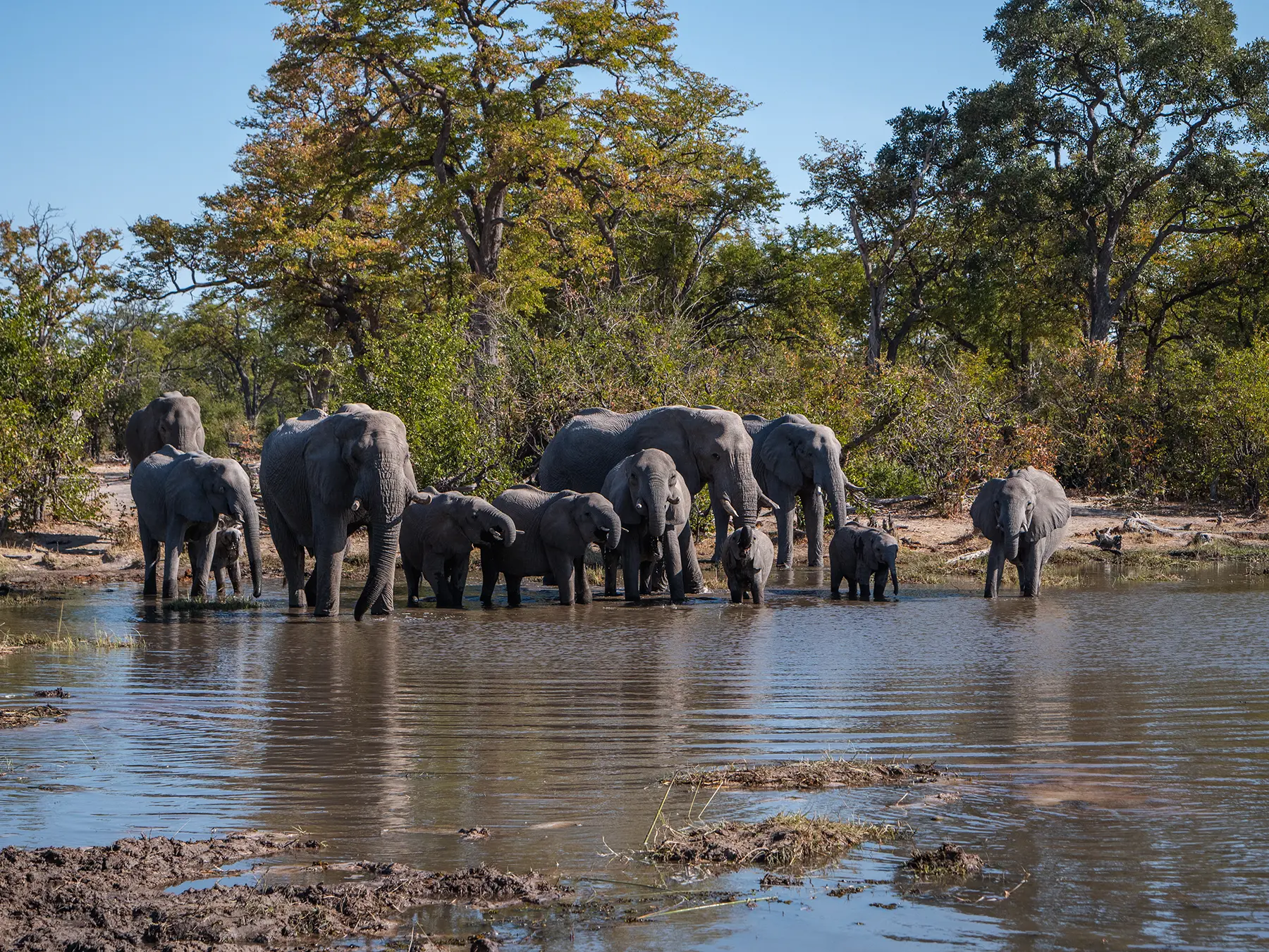
Day 2: Moremi Game Reserve
With no lengthy transfers, you can devote this entire day to exploring the exquisite Moremi Game Reserve. The slower pace will enable you to drink in the beauties of one of Botswana’s most scenic reserves, from its lush grasslands and mopane woods to its serpentine waterways, keeping an eye out for its famous leopards as you go.
In the dry season, you can even glide through the delta in a traditional mokoro for a truly unique experience.
Itinerary
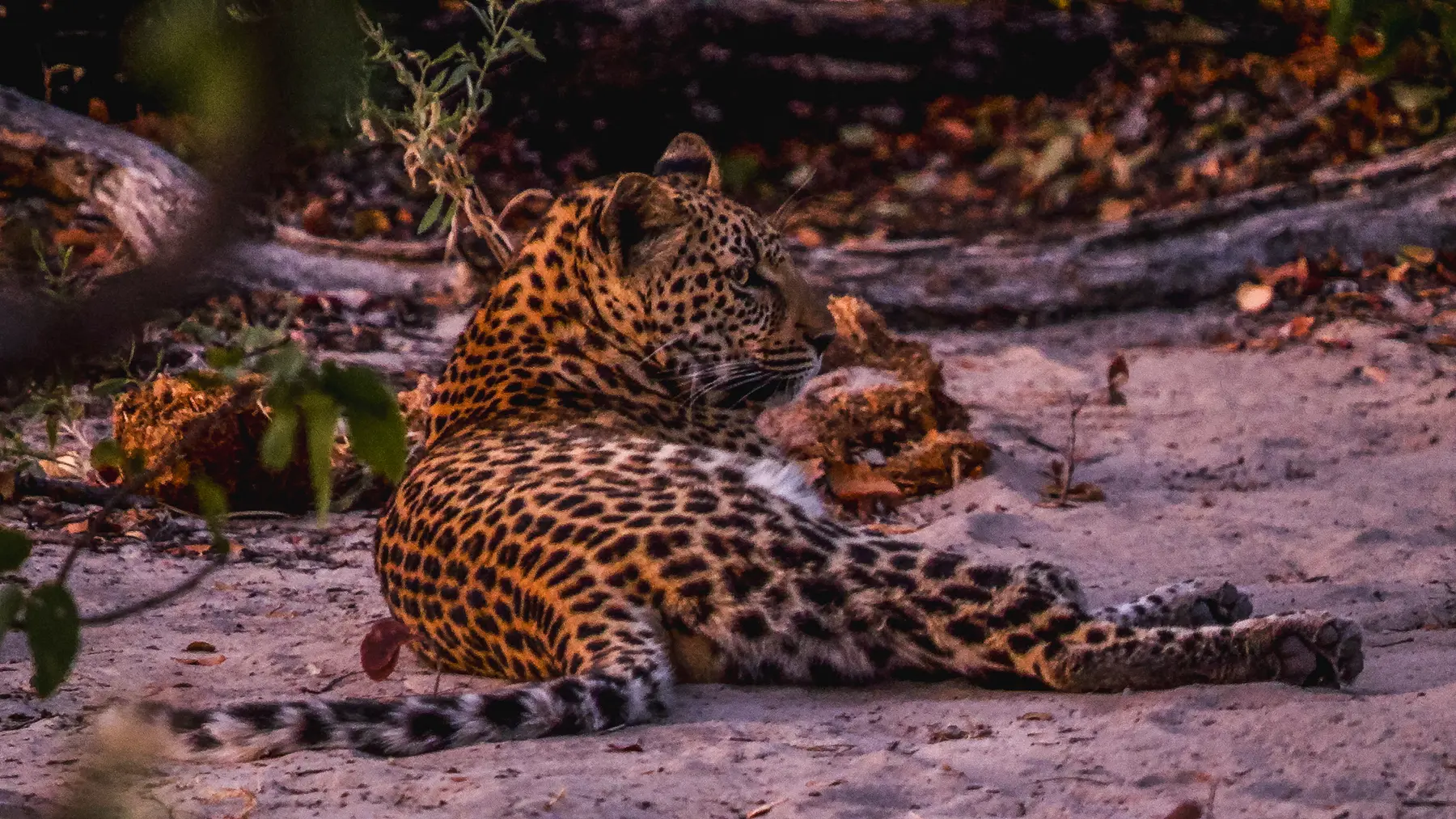
Today, you’ll leave at dawn for your first morning game drive at Moremi. This is the time when predators are most active, with lions, leopards, hyenas and cheetahs still on the prowl after a night’s hunting. You might even spot an elusive African wild dog if you’re lucky.
As the golden rays of the rising sun dapple the grasslands, keep an eye out for zebra, impala and the rare red lechwe along the water.
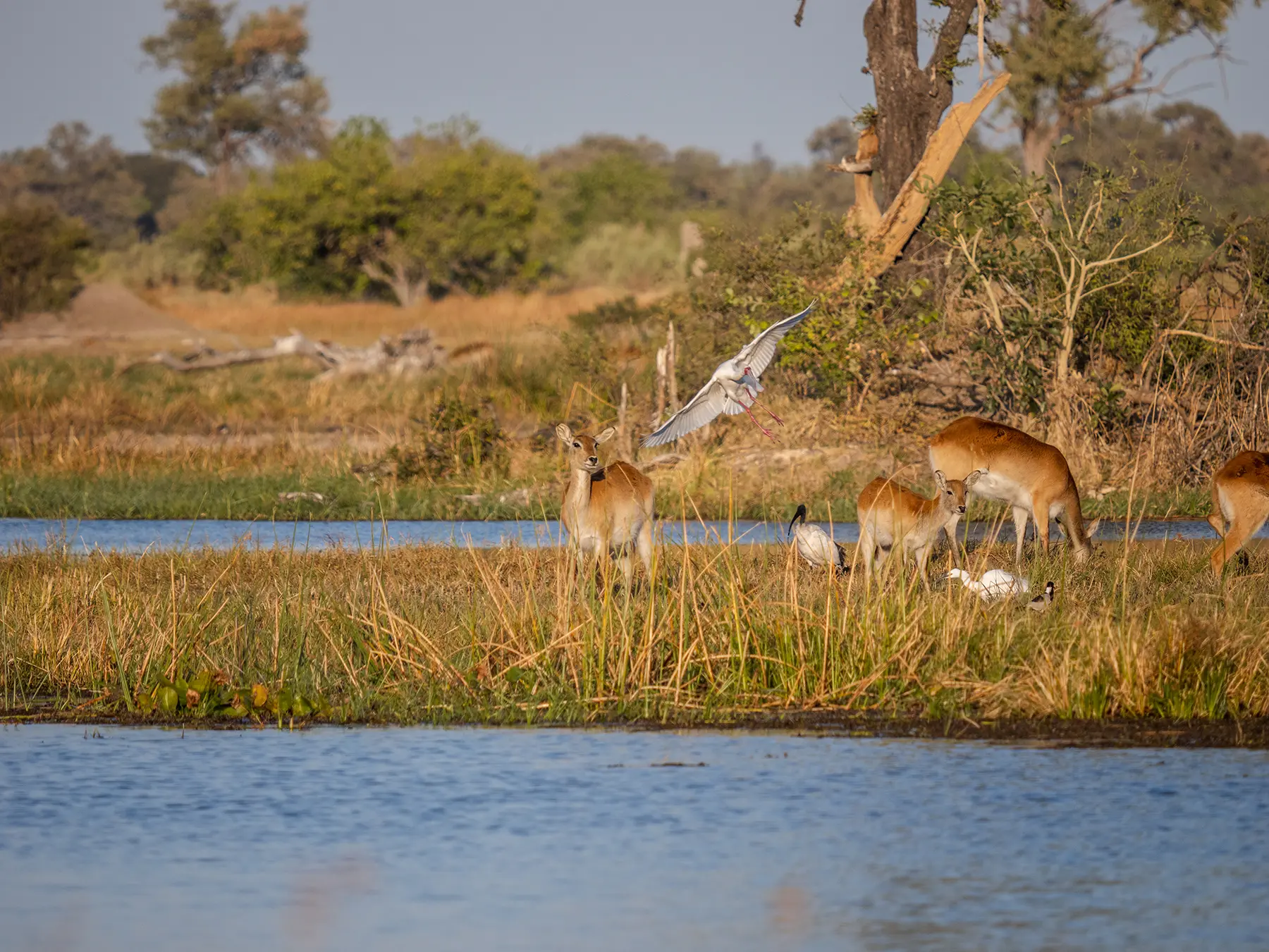
Having returned to camp for the hot midday period, you’ll then head out on another drive in the late afternoon. As the afternoon ticks on, predators and prey begin to wake from their rest, many seeking out the waterholes. Keep an eye out for the Moremi leopards in the mopane woodland, where they are often spotted.
This is the golden hour when the rays of the setting sun bathe everything in a warm light that produces the most incredible photos. Then, as the sky turns red, you’ll enjoy a sundowner before heading back to camp for dinner.
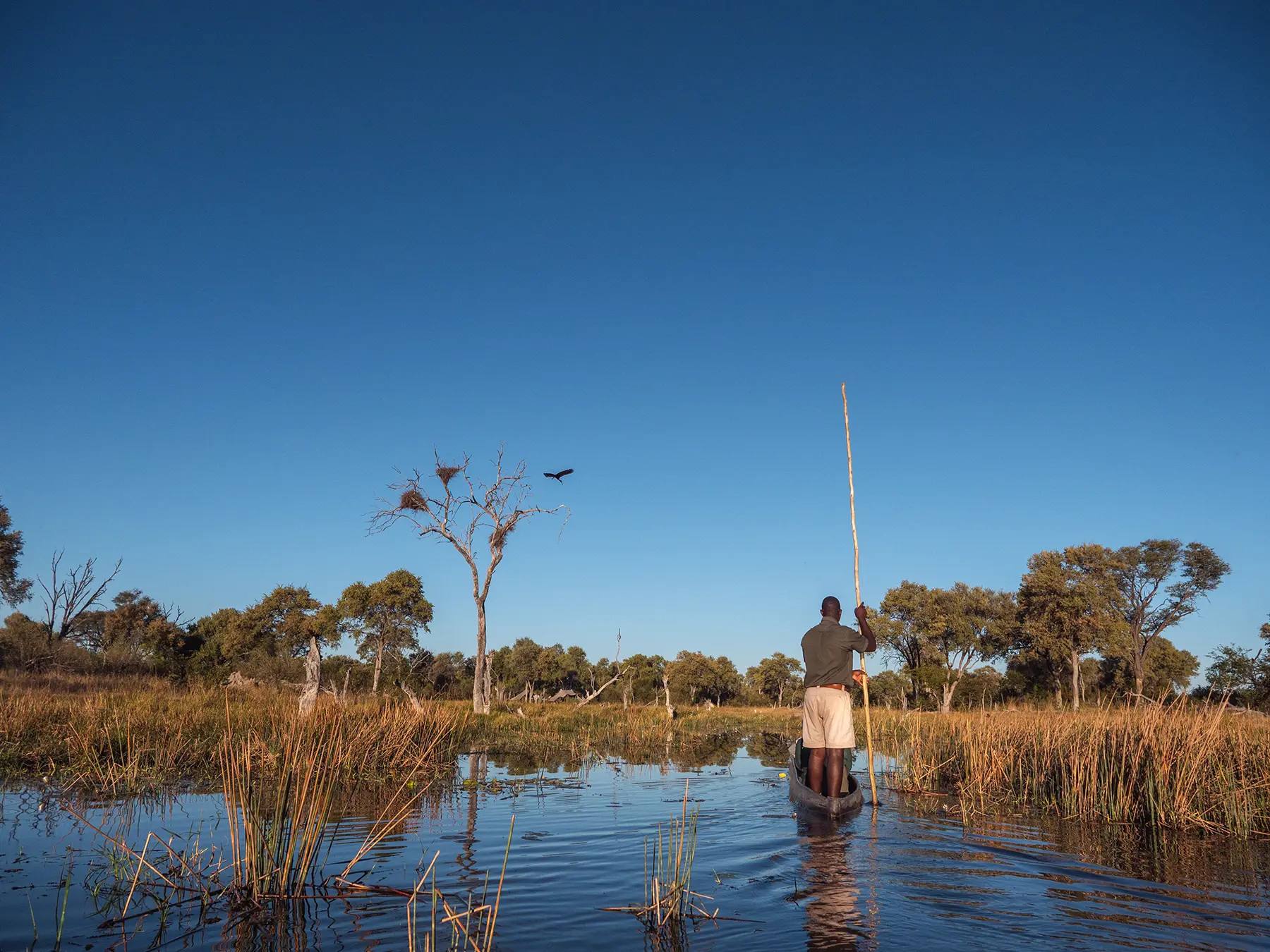
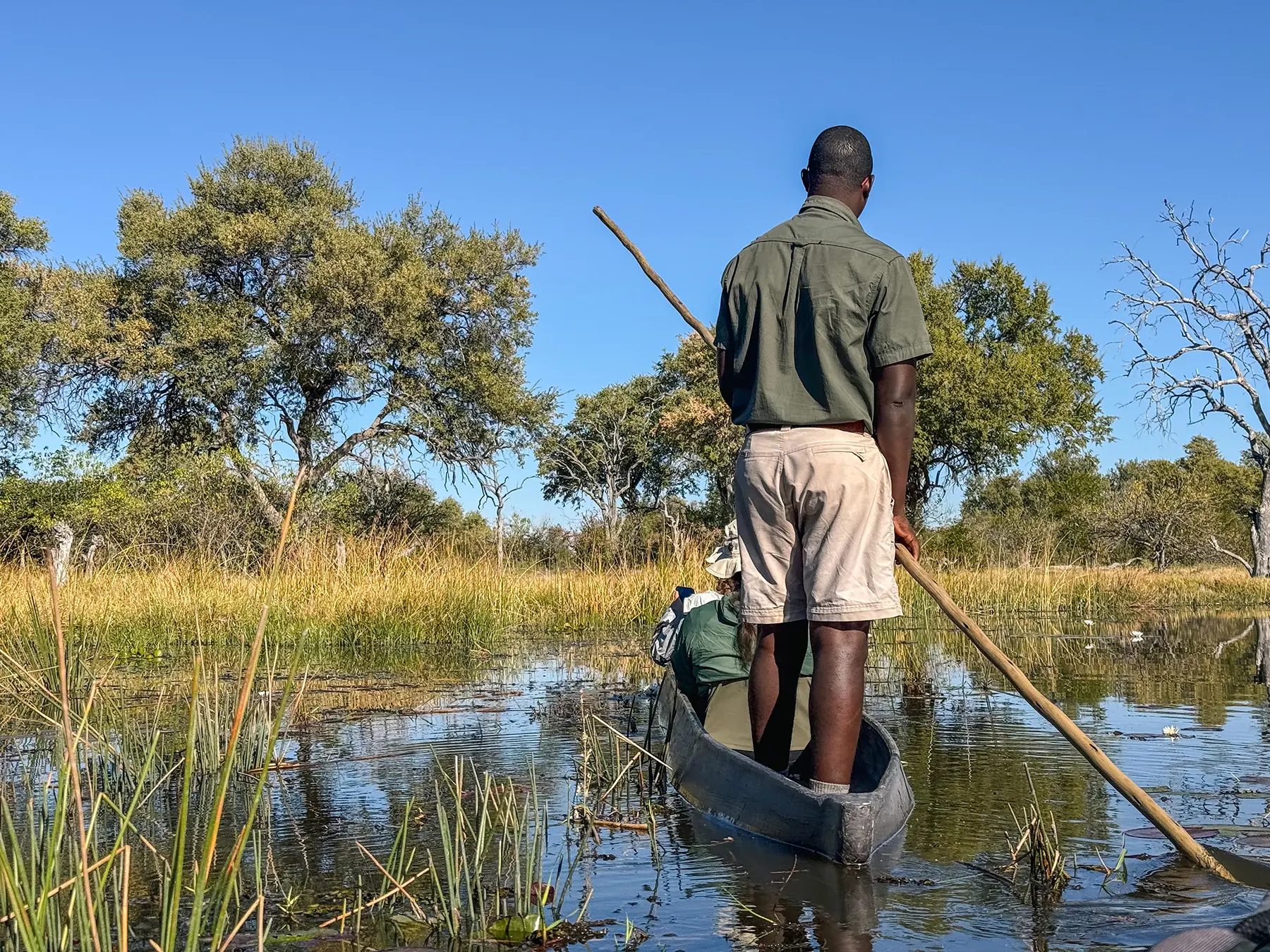
If you visit during the dry season, you can opt to substitute a mokoro trip for one of your game drives. Slipping along the waterways of the delta with a local poler as elephants and waterbirds move through the reeds is such a tranquil experience that I would thoroughly recommend it.
Tips for Visiting Moremi Game Reserve
- As most lodges and camps are unfenced, wildlife can roam freely, which means you shouldn’t walk around after dark alone. The team members will gladly accompany you anywhere you need to go.
- Temperatures fluctuate massively, ranging from 41°F (5°C) at night to 86°F (30°C) during the day in the dry season. Mornings, nights and evenings are seriously chilly, especially in an open safari vehicle, so make sure you bring layers.
- I usually bring a scarf, gloves, beanie hat and even a neck warmer which I can pull up over my nose if needed. My usual clothing would be a vest top with a shirt on top, followed by a fleece or sweater and then a down jacket or gilet, all covered with a thin windbreaker – and I still often feel the chill! Many mobile safari companies provide blankets and hot water bottles, which is fantastic, but do make sure you layer up.
Where to Stay in Moremi Game Reserve
You’ll spend tonight at the same lodge or campsite as last night.
My Experience of Moremi Game Reserve
Of all the safari destinations I’ve seen, Moremi is undeniably among the most beautiful. The pattern of the red morning sunlight shining through the massive rain trees onto the impala and zebra passing below was stunning, and I was overwhelmed by the sheer variety of waterbird species we spotted in the channels of the delta.
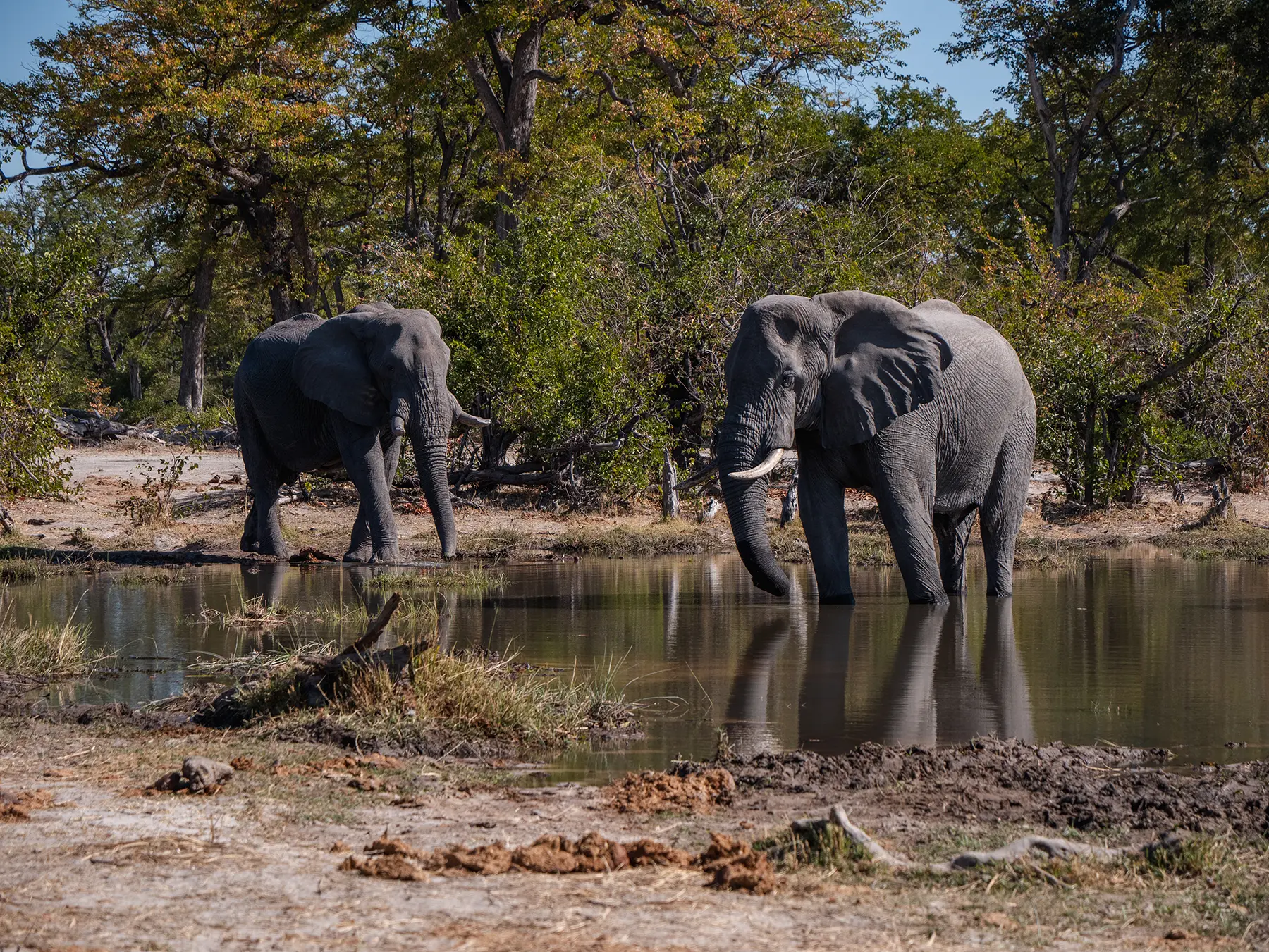
During our visit, we saw giraffes, leopards and even rare red lechwe, as well as countless elephants. My most memorable encounter was during a picnic lunch by the banks of a tributary, when no fewer than eleven bull elephants waded into the water one after the other and started drinking just a few metres away.
Day 3: Maun
Drive time (excluding game drives): Around 3 to 4 hours by road or 30 to 45 minutes by light aircraft
Hard as it is to believe, today is the last day of your Okavango Delta adventure. You’ll have time for a last morning game drive before leaving Moremi Game Reserve and heading back to the mellow little town of Maun, where it all began.
Itinerary
This morning offers a last chance to explore the Delta as you head out for your final game drive. Take this opportunity to drink in the beauty of the waterways glistening in the morning sun amid the brilliant greens of the floodplain.
This is a great time to marvel at Moremi’s host of bird species and try to spot a few more predators on the move before the day gets too hot.
Once you’ve returned and had some breakfast, it’s time to leave for Maun. The transfer takes about three to four hours by road, but you could opt to fly instead. The light aircraft flight takes just 30-45 minutes, offering wonderful panoramic views of the Delta as you go.
Once back in Maun, you can enjoy a last night in the town or simply catch a direct connection to your flight home.
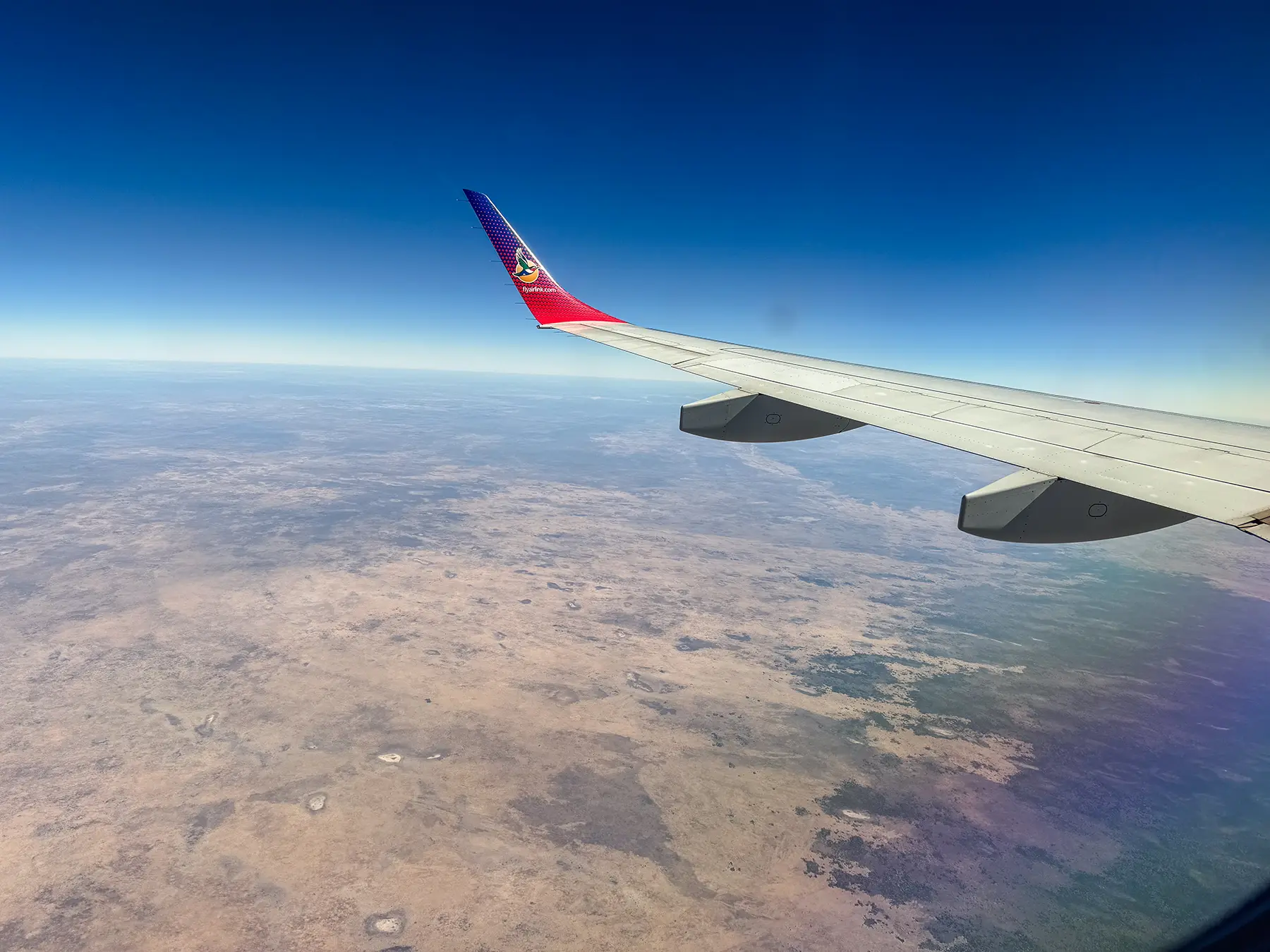
About Maun
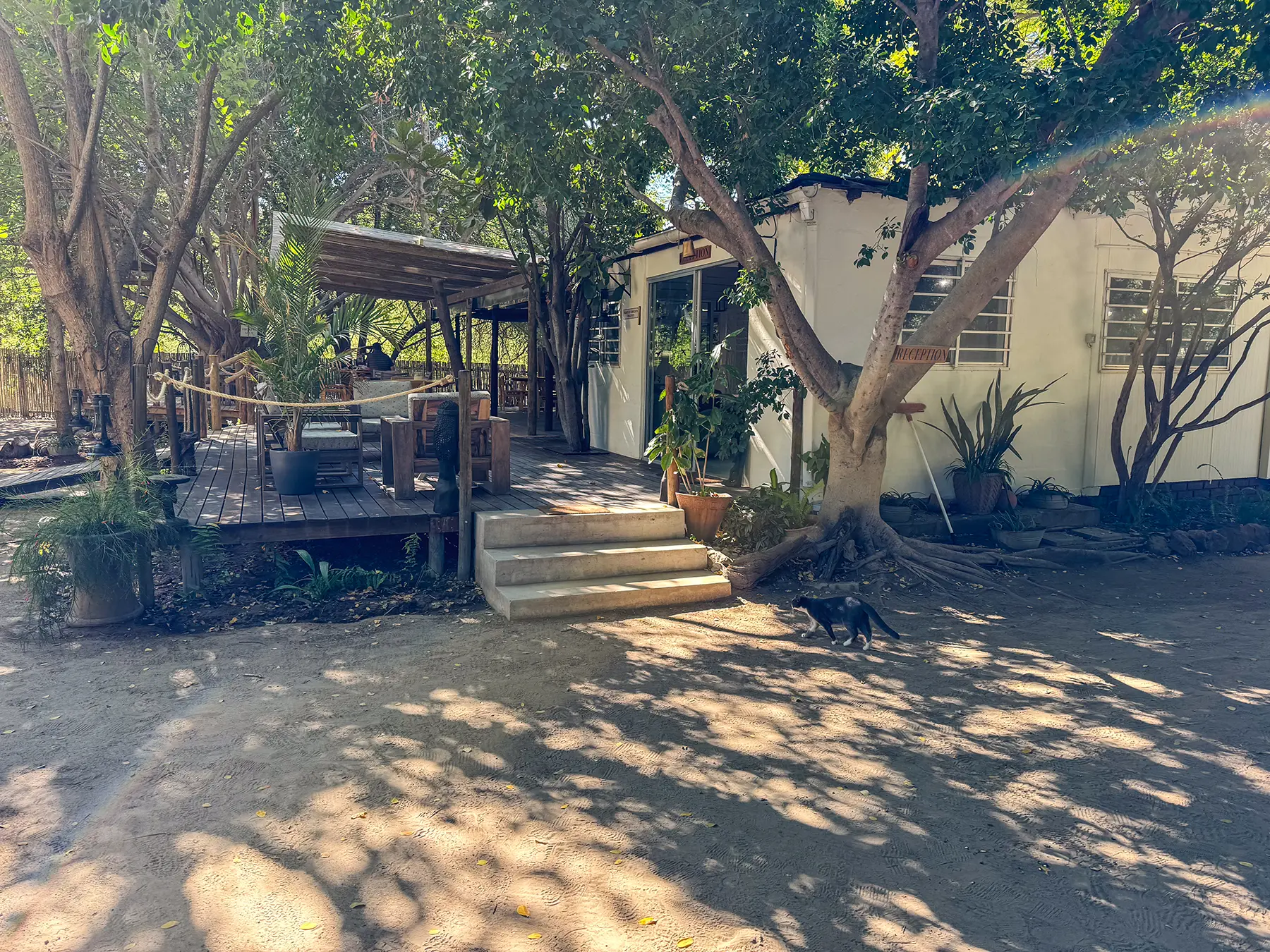
Spanning both banks of the Thamalakane River on the edge of the Okavango Delta, the sleepy little town of Maun is the starting point for most safaris in Botswana, with an airport just 15 minutes from the centre. As a result, many safari operators and airlines have headquartered themselves there, making it the country’s tourism capital.
With the rise of tourism in Botswana, the town has seen significant growth since the 1980s, but it’s still a fairly small place with just a few restaurants to be found in its colourful streets.
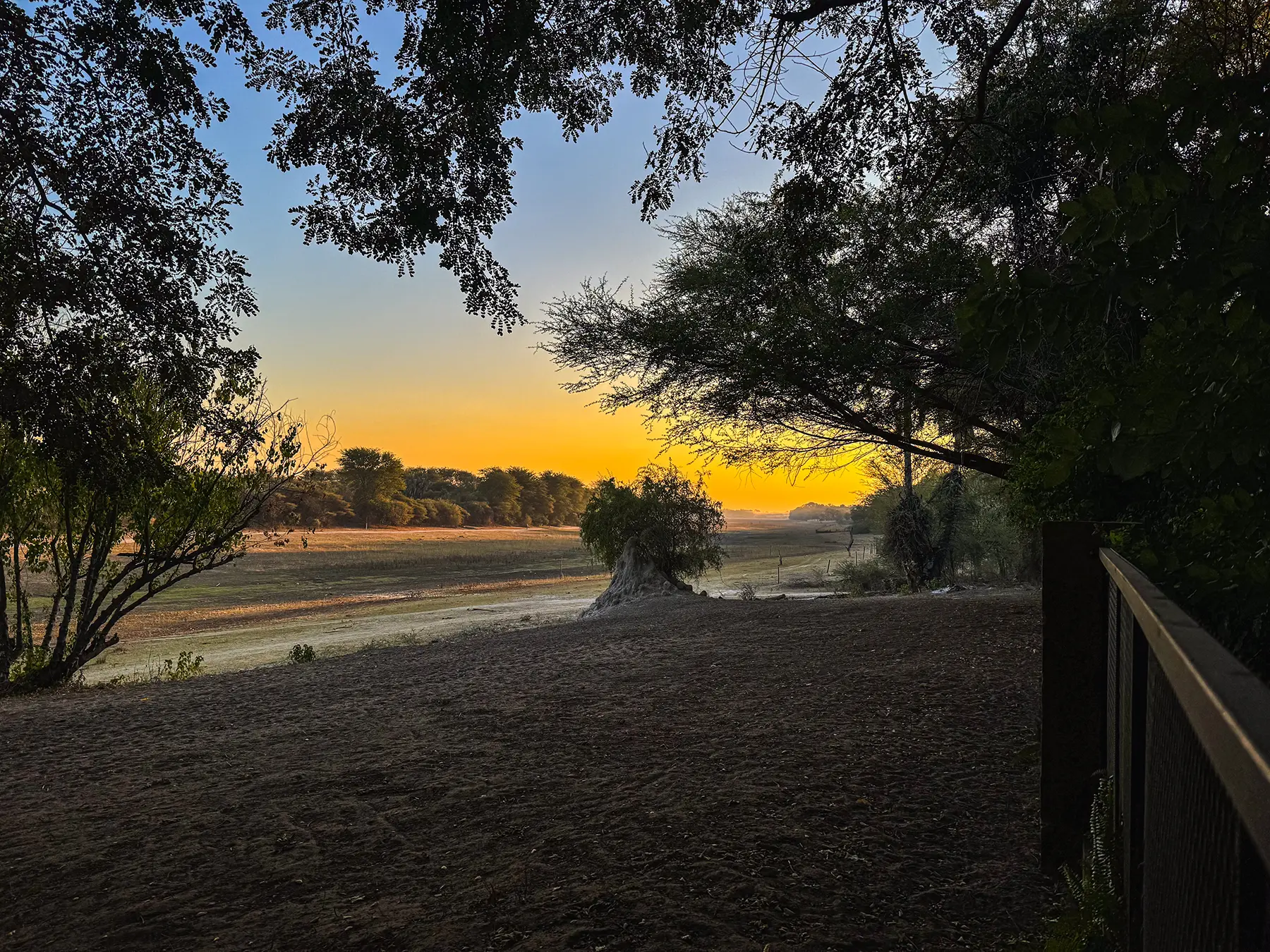
Things to Do in Maun
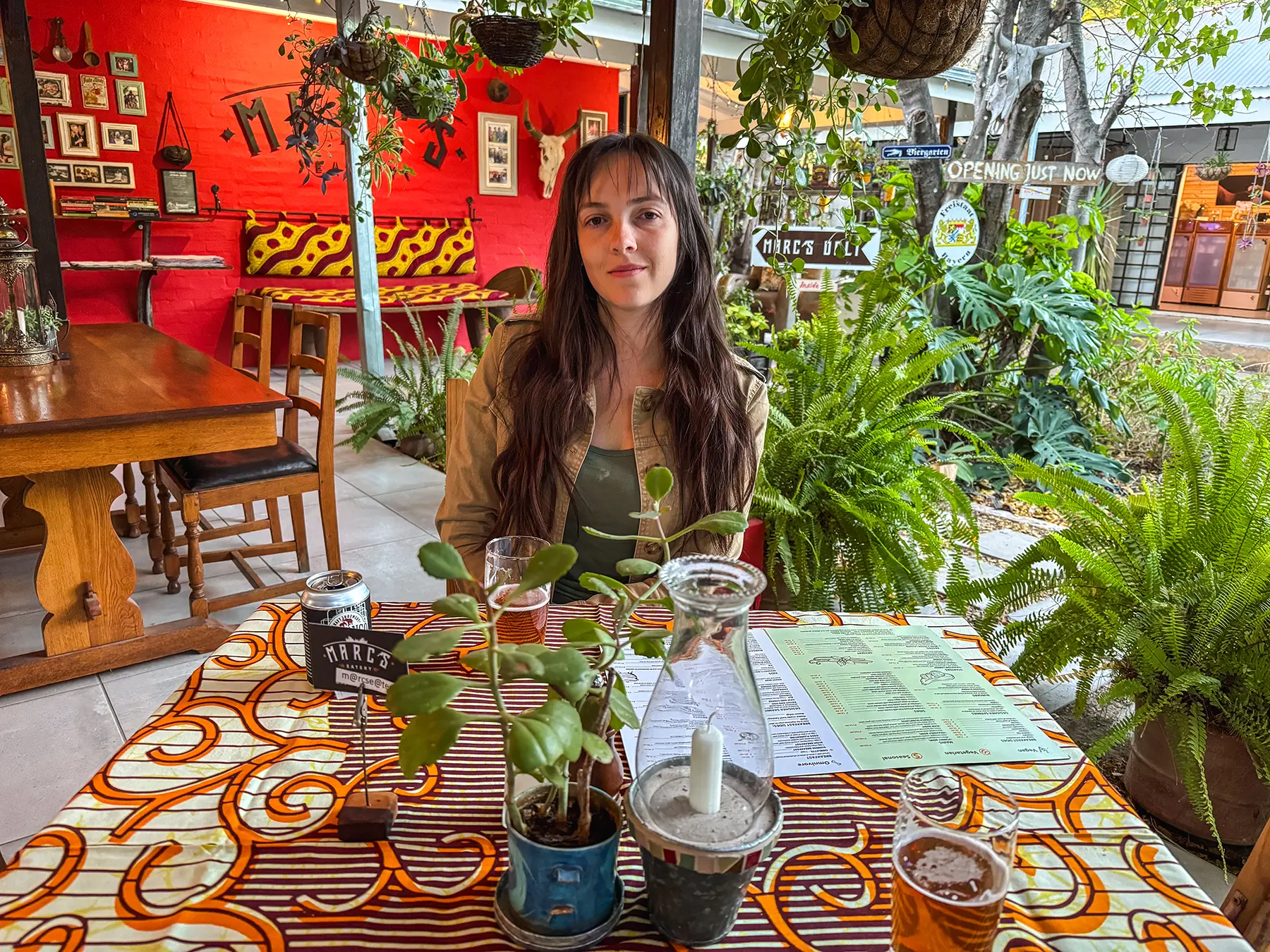
- Grab a bite at Marc’s Eatery. Serving fresh, home-cooked fare in a leafy garden setting on the outskirts of town, Marc’s is my favourite place for dinner in Maun bar none. This relaxing oasis has a great international menu including artisanal specialities from the local market, with global music and eclectic furniture that add to the warm, inviting atmosphere. They even have a deli with takeaway sandwiches and cakes if you fancy a picnic lunch!
- Chill for a while at The Duck Cafe and pick up some souvenirs. If you’re feeling peckish but also want to do some shopping, head for the family-run Duck Café and Bar. Conveniently located just across the road from the airport, the café serves fantastic coffee along with a range of delicious homemade dishes, and you’re sure to enjoy browsing their whimsical collection of gifts and crafts – all locally made. And if you’re not all shopped out, you’ll find a fab little souvenir shop across the road with fixed prices, so no haggling. It has gorgeous hand-carved animals as well as books about Botswana and some helpful maps. I found it was the best place in Maun for souvenirs.
- Visit the Nhabe Museum. Housing a wonderful collection of artefacts and other treasures, the Nhabe Museum sits in a historic colonial building close to the airport, making it an ideal activity for your first day, time allowing. The fascinating exhibits will teach you about the tribal heritage of Ngamiland and the cultural and natural history of the Okavango Delta and you can even try out some art and basket weaving activities designed by local creatives. The museum also has a gift shop where you can buy some local souvenirs.
- Take a helicopter flight. Choose from a scenic tour of the Delta (around 45 minutes) or a longer flight that includes a stop for some champagne or a lodge meal on a remote island. A helicopter flight presents the opportunity to view rarely seen parts of the Delta that can’t be accessed by land. Look out for elephants, buffalo and lechwe as you pass over the silver and green patchwork of the floodplains.
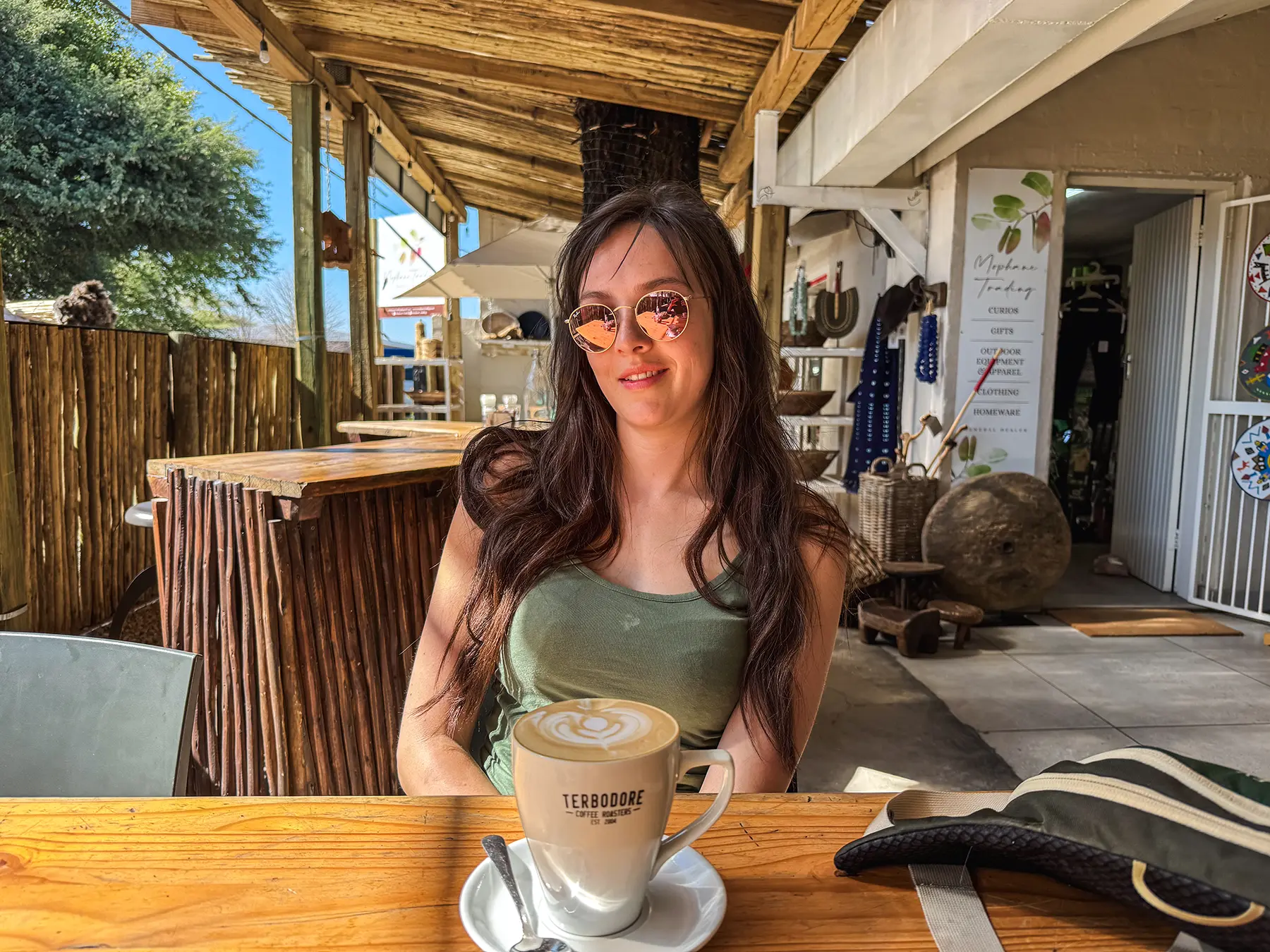
Tips for Visiting Maun
- Although Maun is small, it’s not the most compact of towns, so be aware that your accommodation may not be within walking distance of the airport if you’re not staying in the centre.
- You can ask your accommodation to organise a transfer. This is what I did, and prices were always reasonable (e.g. my ride from the airport cost $7). Alternatively, private taxis are relatively cheap and can be hailed on the street, or you could also opt for a shared taxi.
- As with all travel, you should take sensible precautions for your own safety. Don’t have valuables on display in public and avoid walking around at night or in secluded places. Crime is not a huge issue in Maun, but there are some pickpockets about, so it’s better to be safe than sorry.
- It’s easy to forget that although Maun is a town, the wildlife is still all around. Avoid walking too close to the water, especially at night, as there are crocodiles in the river.
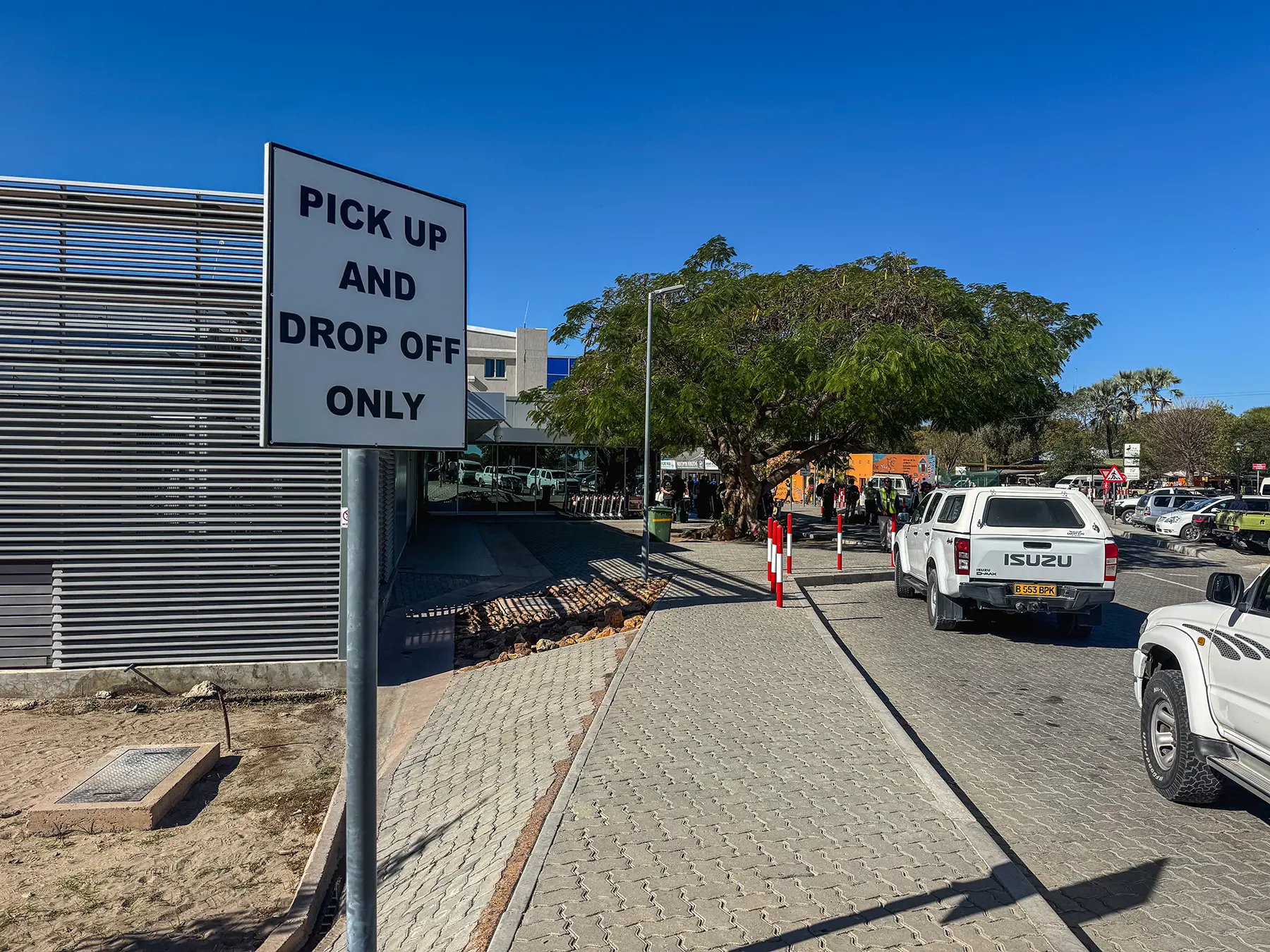
Where to Stay in Maun
Maun has a number of pleasant lodges and guest houses where you can spend a comfortable night before embarking on your safari. Most of these are close to the lovely Thamalakane River, including The Waterfront and Maun Studios.
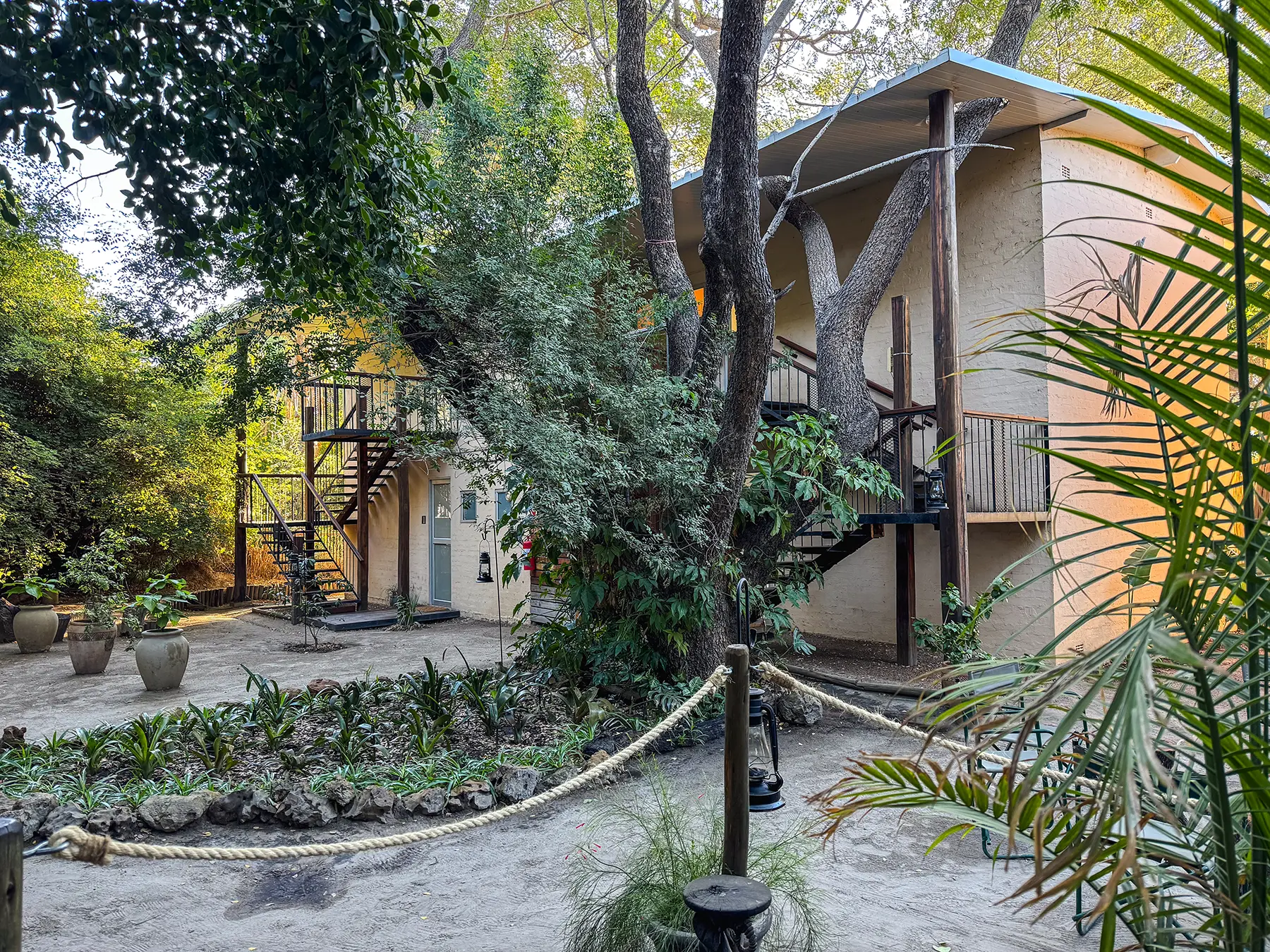
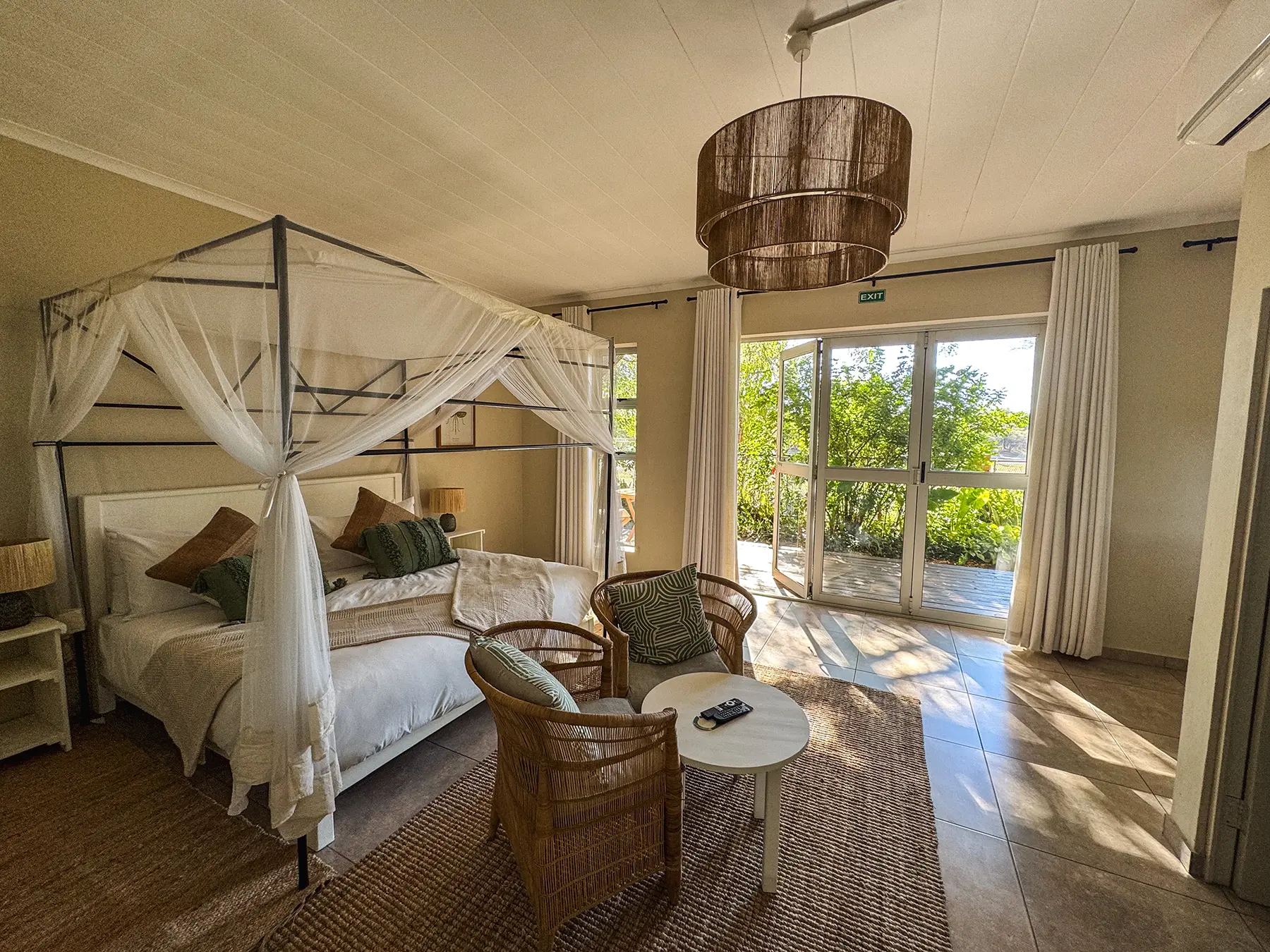
With clean, modern rooms and friendly staff, The Waterfront is my favourite place to stay in the town. Sitting right on the banks of the river, this hotel is a mere 15-minute drive from the airport and the town centre, and a tasty breakfast is included with your stay.
My Experience of Maun
Maun is a quiet little town where the pace of life is slower than in other towns in Africa. The roads are calmer, with little traffic and a less unpredictable style of driving, and you might even meet a few donkeys or goats while out and about!
As it’s such a sprawling town, it can be a bit hard to find your way around (I remember getting hopelessly lost at one point on a fairly deserted road), so it’s helpful to save the number for a local taxi driver and just call them when you’d like to go somewhere. Uber doesn’t operate in Maun, so local taxis will be your best friends!
I used a driver who was recommended by my lodge and found him great – always so friendly and close at hand when I needed a ride.
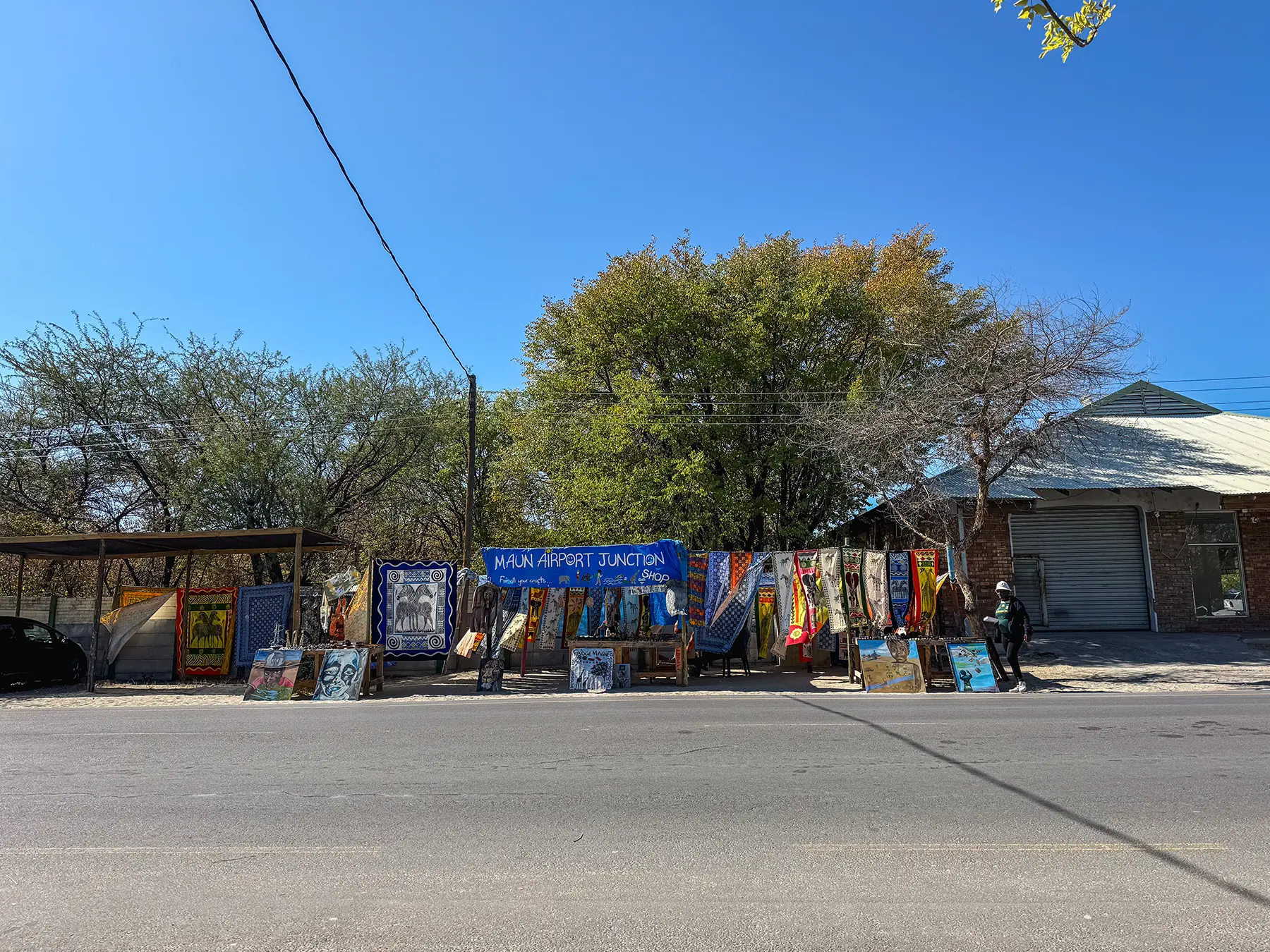
I loved the easygoing feel of Maun and I always felt totally safe there. People were so welcoming and I wasn’t hassled once on the street. The town has a lot of expats, and you’ll see many of them working at tables in the various cafes.
My one criticism would be that the town doesn’t really have many places to eat, so I ended up going to the same places each day (lunch at The Duck and dinner at Marc’s Eatery, both with the best reviews in town) and the familiar faces I saw each time told me I wasn’t the only one.
I remember one evening in particular when our taxi driver was acting almost like a shuttle between the lodges and Marc’s, dropping passengers off at one only to collect others and bring them back to the other!
I found that there wasn’t a whole heap to do in Maun, so I would say that spending one night there ahead of your safari is plenty.
Option 2
3-Day Chobe Safari Itinerary Overview
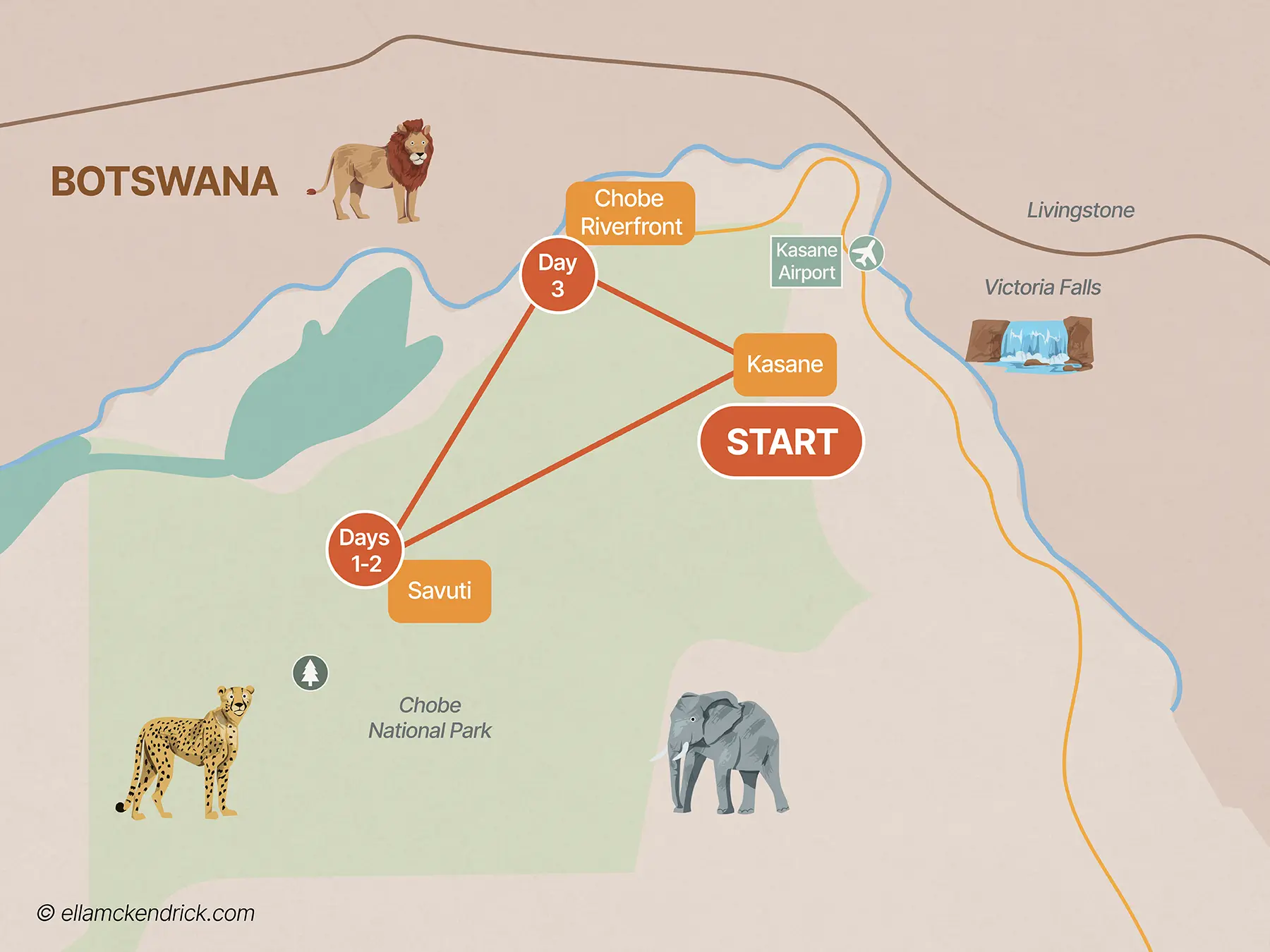
This three-day itinerary will bring you to my favourite part of Botswana, which stretches from Savuti, with its massive predator populations, to the Chobe Riverfront, an elephant haven in Chobe National Park.
I’ve focused on keeping transfers short for this trip, and designed it to help you experience the wild beauty of Botswana, where about 40% of the land is dedicated to conservation. With group camping safaris priced from $350 per person per day, this safari is also intended to be affordable.
In addition, Savuti is one of the best places in Botswana to find wild dogs, which were my top priority during my own visit.
Quick Facts
Total drive time (excluding game drives): Around 8 hours, at an average of just under 3 hours a day. The longest single transfer takes 4 hours or so (days 1 and 3), or a 45 minute light-aircraft flight.
Best times of year: On paper July to October (dry season), but in reality any time other than January and February.
3-Day Chobe Safari Map
Day-by-Day Breakdown of the Perfect 3-Day Chobe Safari
Chobe packs a lot into a short trip and three days will zip by, so I’ve crafted this itinerary to make sure you make the most of every moment!
I have also considered the distance between Savuti and the Chobe Riverfront, and the driving times, in order to come up with the most enjoyable itinerary.
You can get quotes from the same local tour companies I use to organise my own trips here: Safaris By Ella
Click any of the days below to jump to my full notes on that day.
Day 1: Kasane to Savuti, Chobe National Park
Drive time (excluding game drives): At least 4 hours
You’ll begin your Chobe safari by journeying from gateway town Kasane into the unspoilt western outskirts of Savuti. In the afternoon, you’ll get your first proper taste of the park on your first game drive.
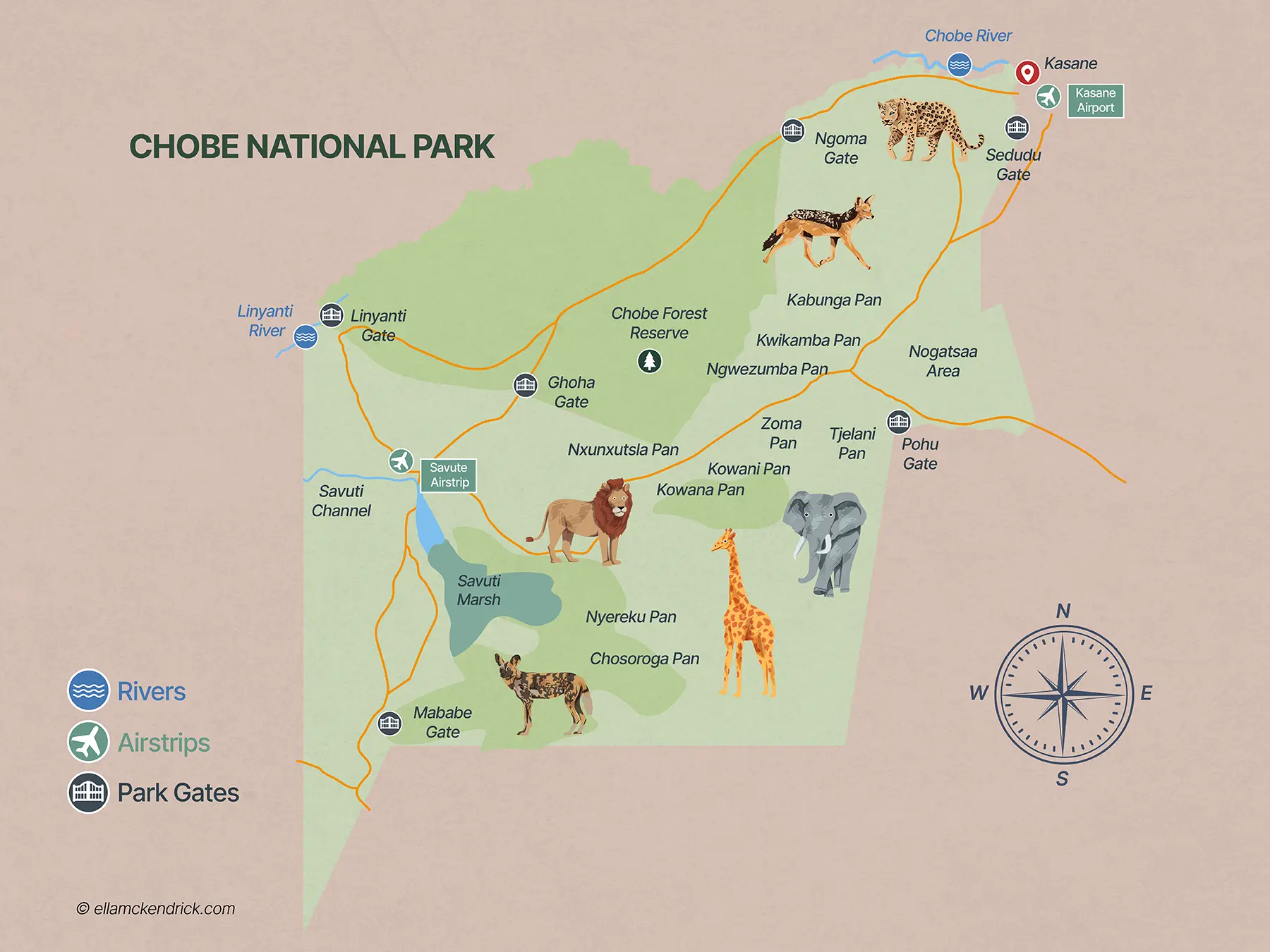
Map of Savuti, Chobe National Park
I’ve made the map below to show the key features of Savuti, Chobe National Park.
Itinerary
This morning, you’ll leave Kasane and head south-west for Savuti, some 110 miles (175 km) away. Driving will take at least four hours, but you can also take a 45-minute flight if you prefer.
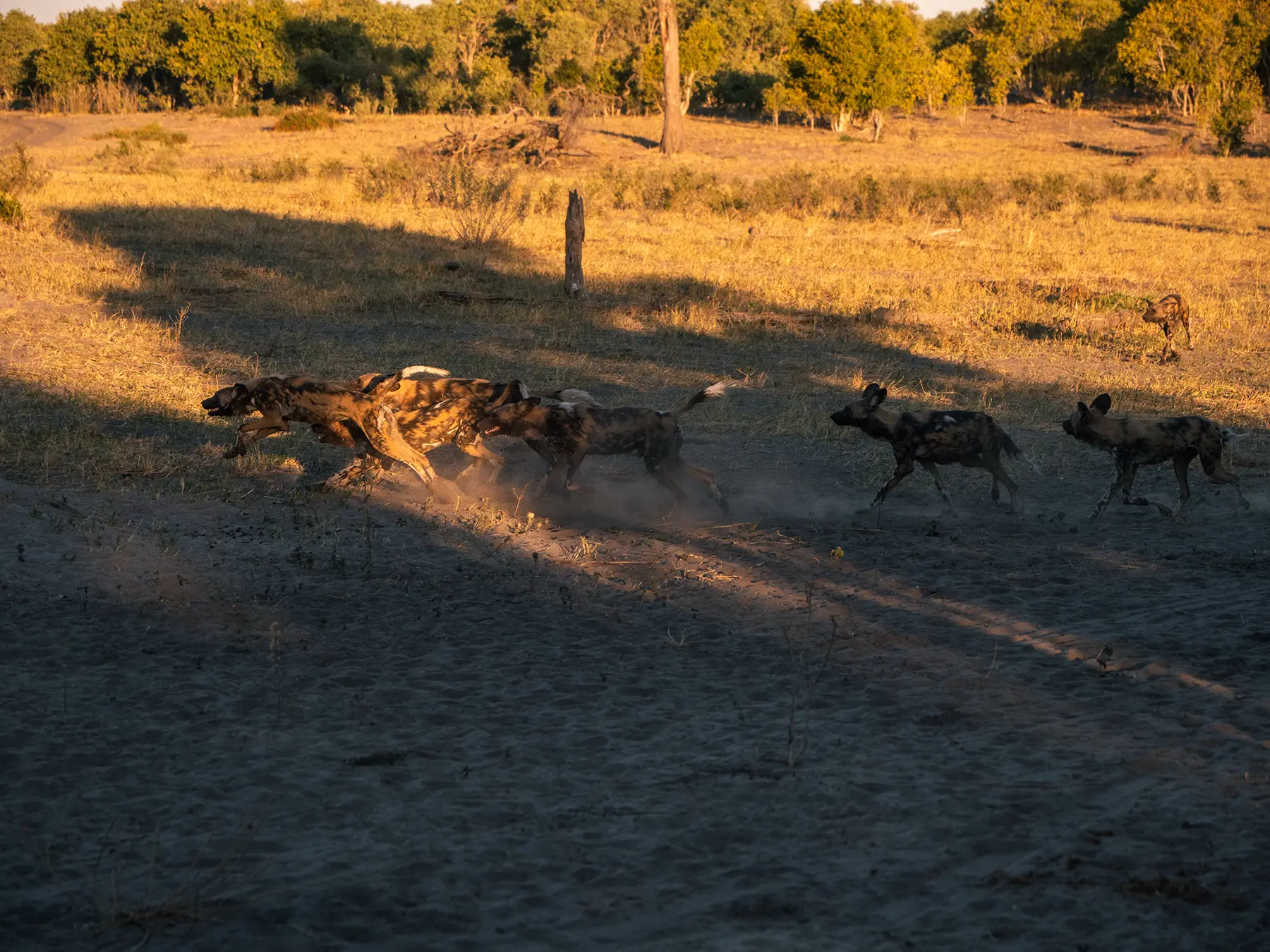
On arrival, you’ll have a short time to settle in before embarking on your first game drive of Savuti, a reserve famed for its African wild dogs and lions.
About Savuti
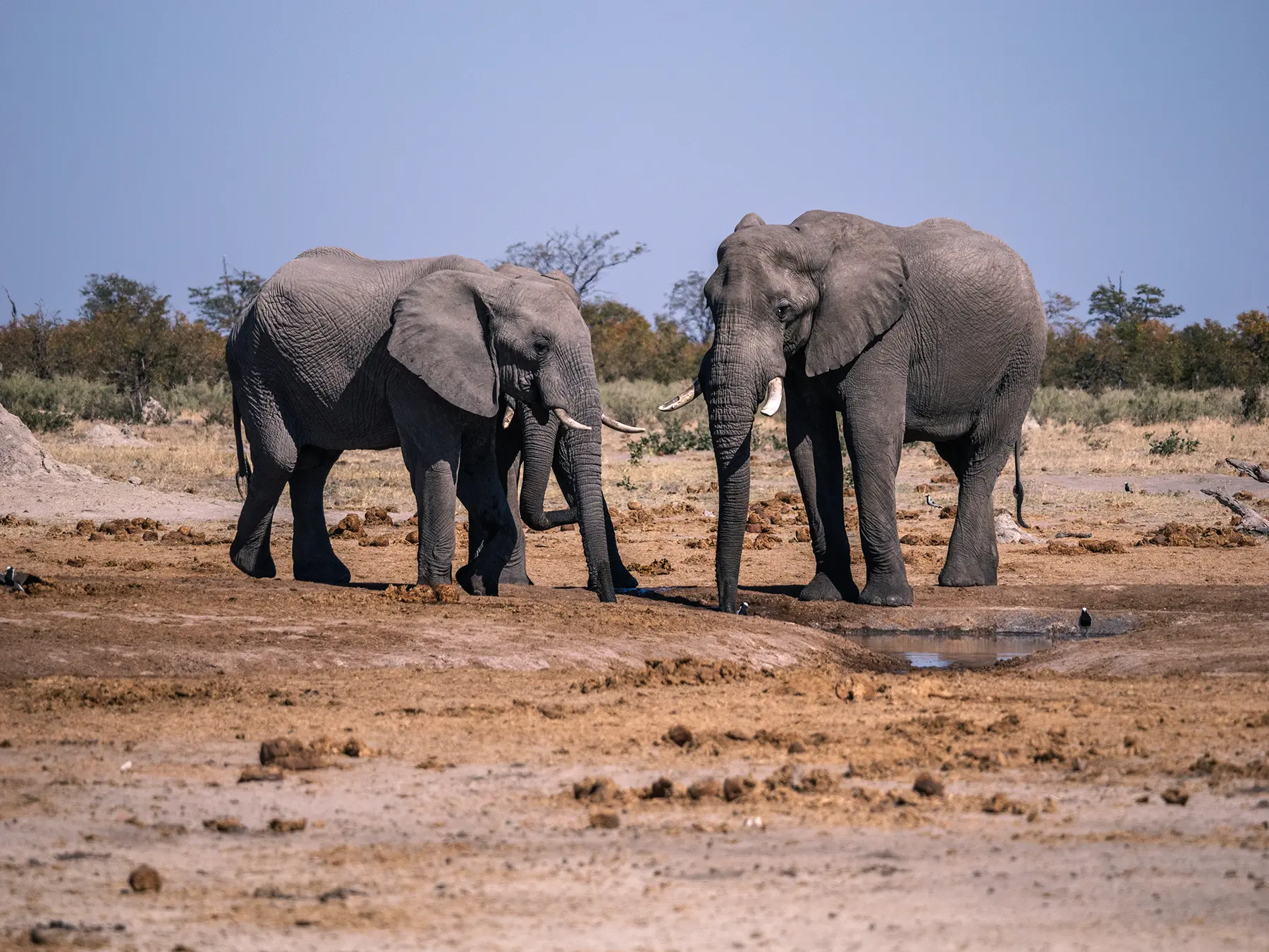
Forming part of the western flank of Chobe National Park, Savuti boasts one of the densest wildlife concentrations in Botswana, and the wider park holds one of the largest elephant populations in Africa, with an estimated 15,400 elephants recorded in the 2018 aerial survey.
But the region is best known for its predator populations, in particular its fearless lions that are among a very small number that dare to hunt elephants, teaming up to bring down juveniles.
Once a huge lake before it was drained by tectonic activity, the mysterious Savuti Channel has a huge impact on life in the region. The hundreds of tree skeletons that stand along its banks bear witness to its unpredictability, with water levels fluctuating from a rushing flow to years of drought.
With considerably fewer visitors than Chobe Riverfront, Savuti offers a more exclusive safari experience.
What Wildlife Can I See in Savuti?
As I’ve mentioned, Savuti is synonymous with predators, with a strong chance of lion, leopard and African wild dog sightings. Cheetahs are rarer, but are still sometimes seen here.
If you’re looking for the Big Five, four of them can be found in Savuti (rhino are sadly absent). But the reserve also houses large numbers of almost all of Africa’s multitude of wildlife species.
When the zebra and wildebeest herds make their annual journey to graze on its savannahs, Savuti is utterly transformed. This is the best time to spot lions, leopards, cheetahs, hyenas and wild dogs, while plains game include buffalo, giraffe, roan, puku and tsessebe, Africa’s fastest antelope.
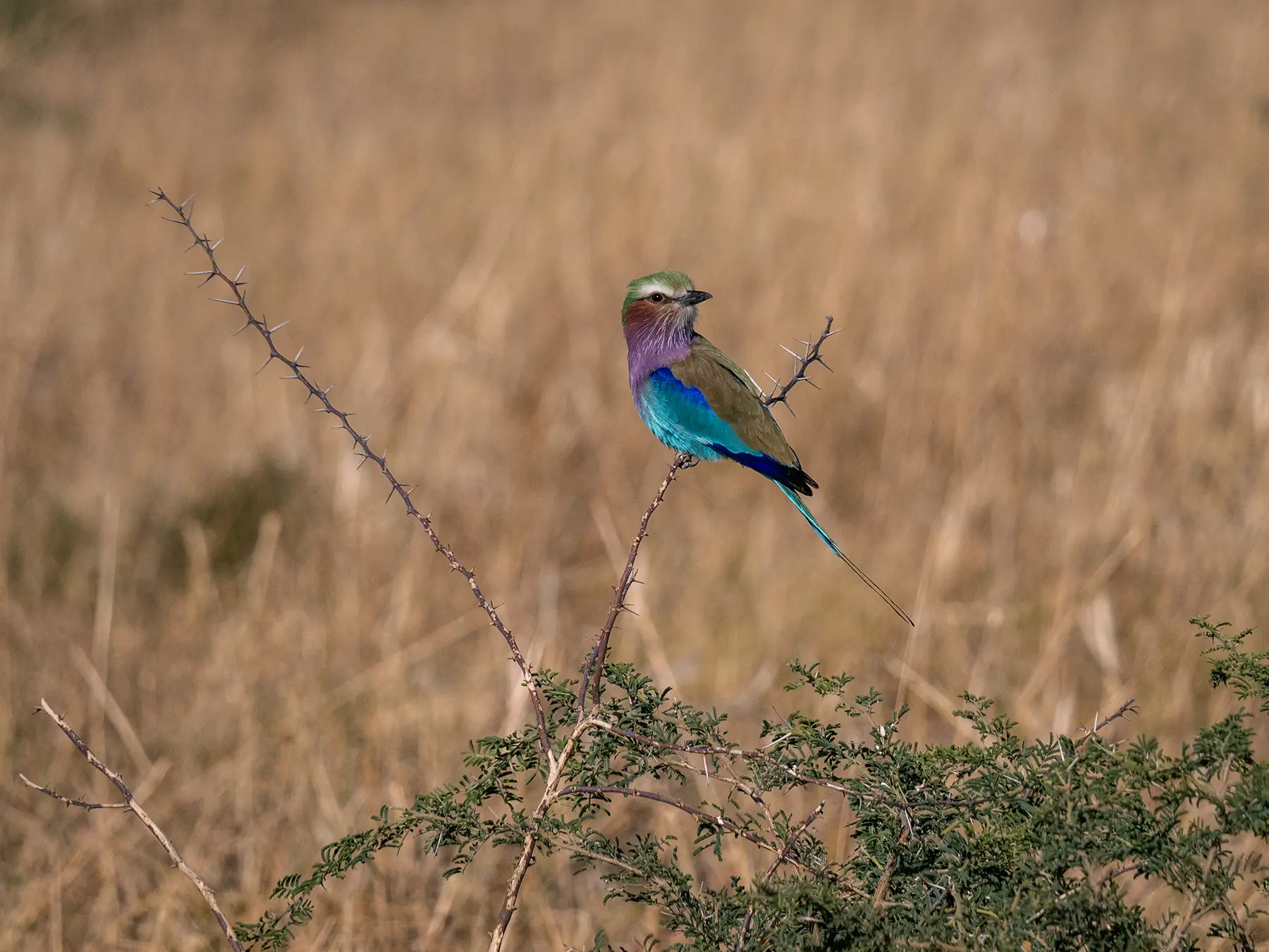
The reserve is also home to more than 450 bird species, including fish eagles, secretary birds and ground hornbills as well as huge flocks of quelea that fill the skies in April.
Tips for Your Journey to Savuti
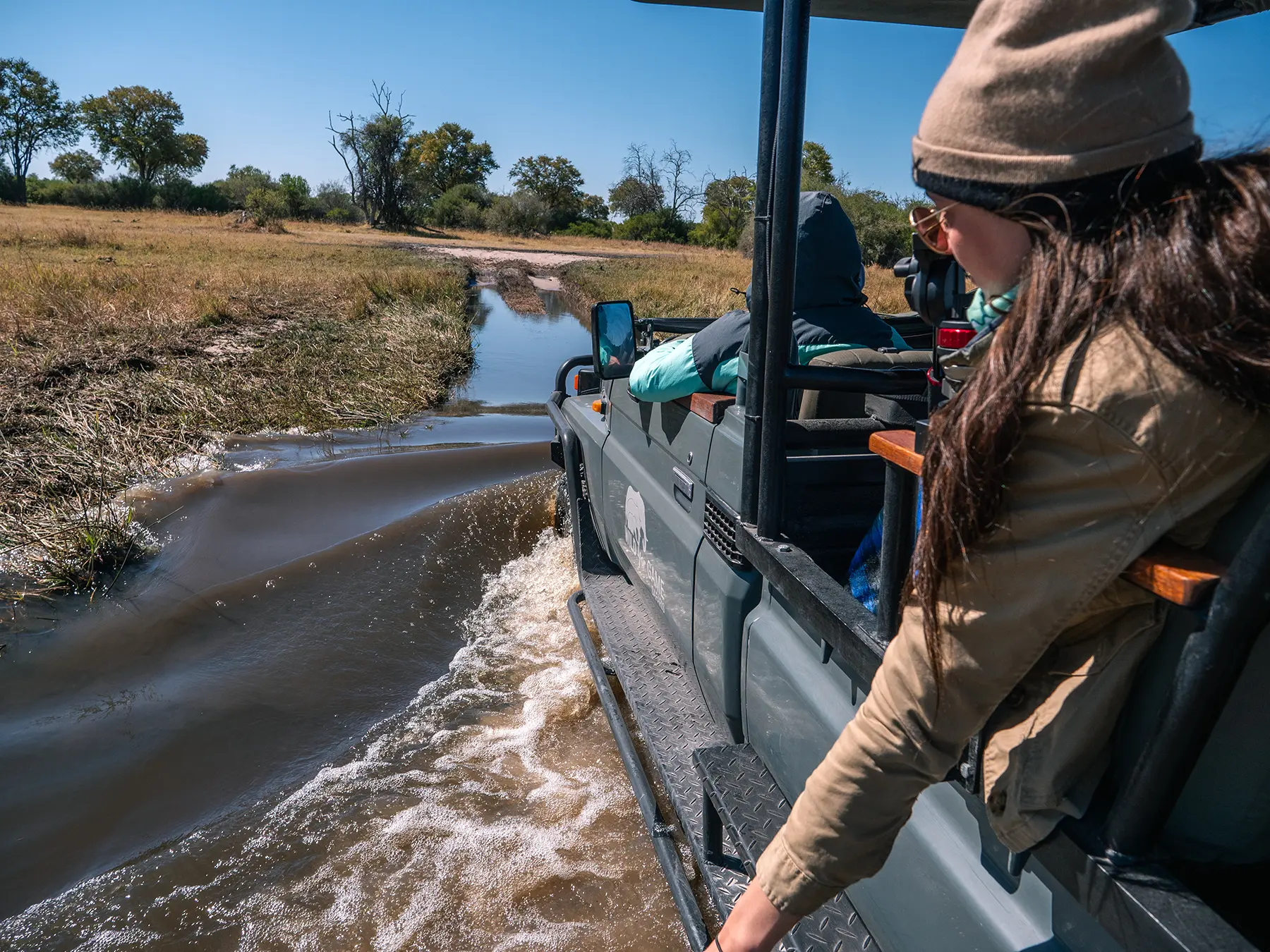
The 110-mile (175 km) trip from Kasane to Savuti takes at least 4 hours by road or 45 minutes by light aircraft.
- Be warned that it’s a long, rough drive and you’ll be bouncing about in your seat for much of it. It can also take longer in the wet season if roads are muddy or flooded.
- Since the earlier stretches in particular aren’t the most picturesque and there’s no internet along the way, be sure to download some music or audiobooks to help pass the time. A neck pillow is also great for getting some rest along the smoother patches.
Where to Stay in Savuti
If you fancy a touch of luxury, you’ll find a number of high-end lodges in the Savuti region.
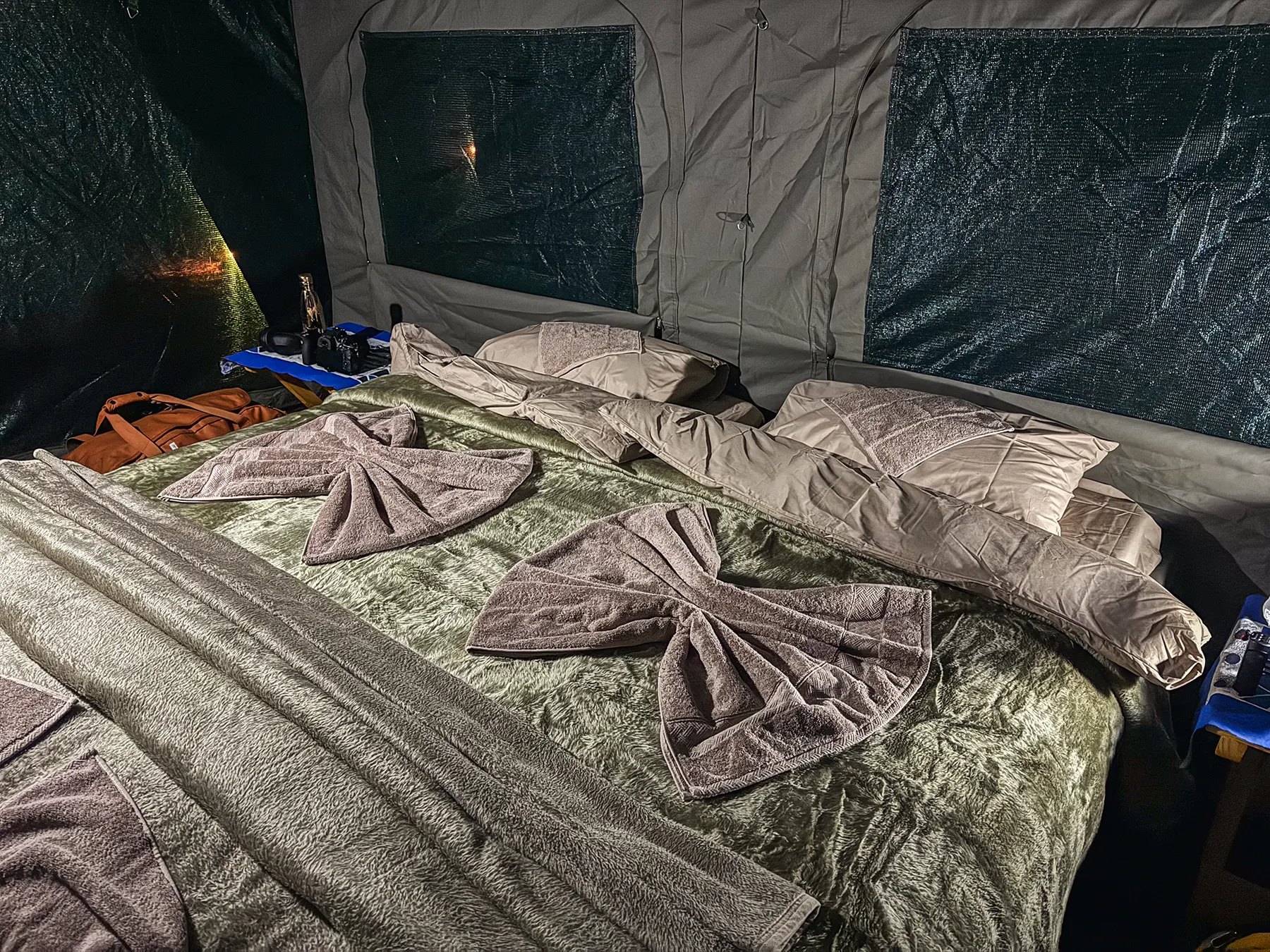
Mobile camping is a more budget-friendly option, and by far the most popular with visitors. And while the term ‘camping’ might call to mind images of cramped, clammy tents and rumpled sleeping bags, you can rest assured that camping here is a vastly different experience!
The roomy, comfortable tents you sleep in are equipped with real beds and private bathrooms, and meals, which are served in a dedicated dining tent, are prepared by your own private chef. That beats a tin of beans any day!
Day 2: Savuti
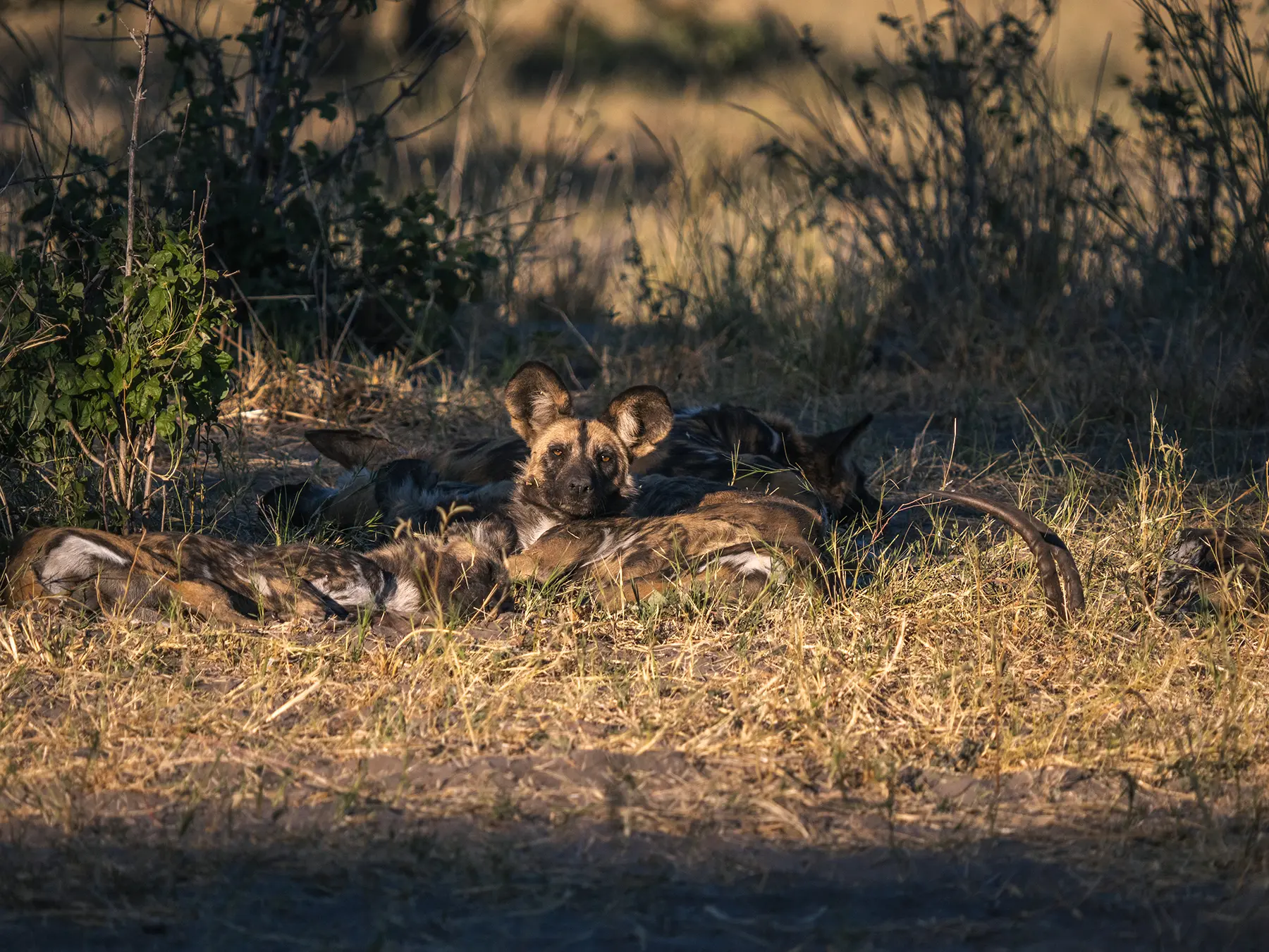
You’ll spend the whole of Day 2 exploring Savuti, which is much quieter than Chobe Riverfront despite its dense wildlife concentrations. As the only driving you’ll be doing is on your game drives, you can devote all your time to looking out for the region’s renowned predators, from the lions that prowl the marsh to the wild dogs that frequent the Savuti Channel.
Itinerary
Today, you get to spend all your time discovering Savuti, with two game drives to look forward to. At dawn, you’ll head out on an early morning drive while predators are at their most active, scanning the marsh and the sun-baked Savuti Channel for lions, leopards and wild dogs.
Then it’s back to camp for a spot of brunch followed by a rest during the hottest part of the day before leaving for your late afternoon game drive, which will continue into evening. This is a great time for photographs as the warm rays of the setting sun set everything aglow.
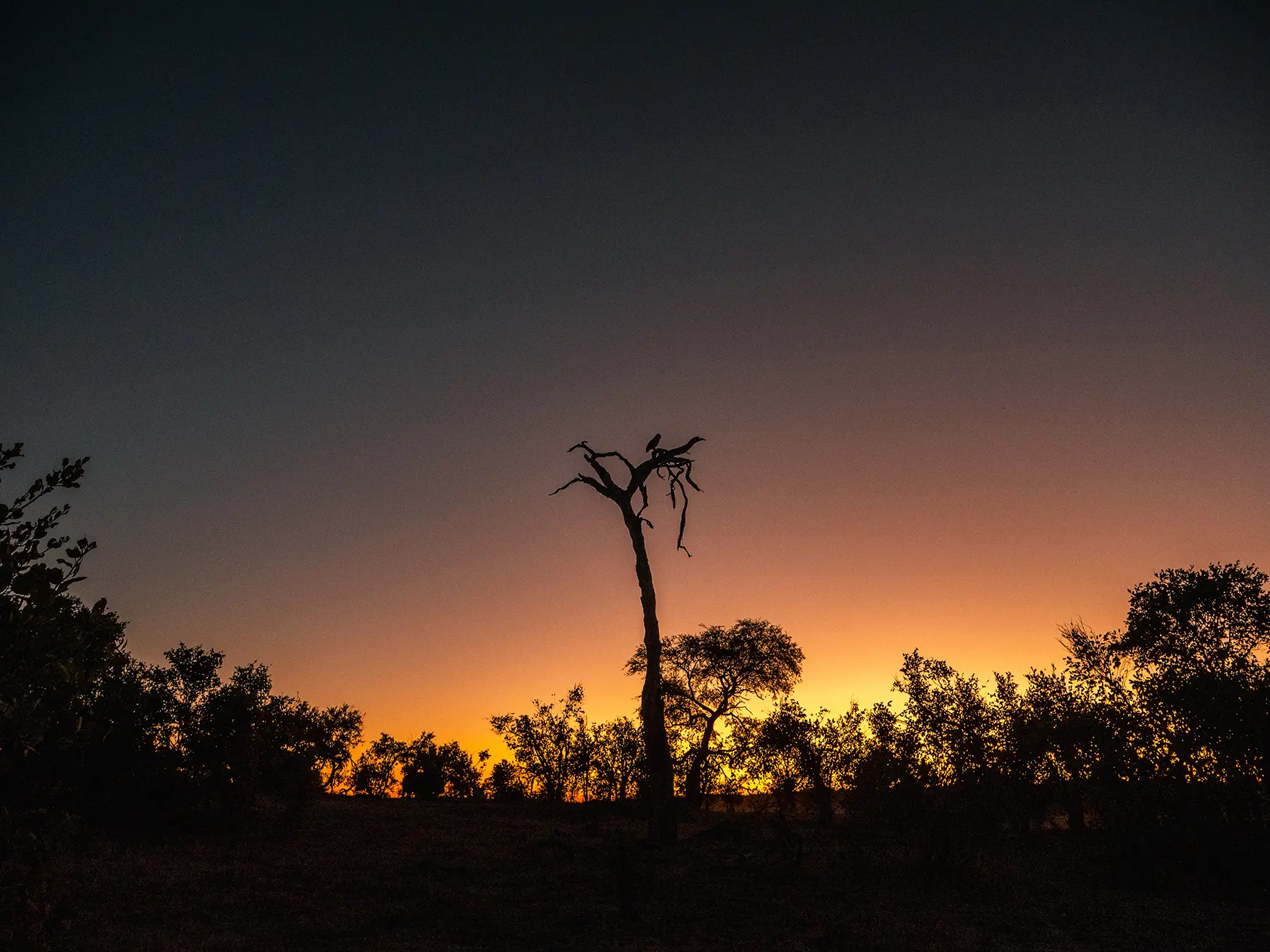
Later in the evening, the nocturnal animals begin to emerge and the plains are filled with the cries of the hyenas. As the stars begin to appear above, you’ll make your way back to camp for dinner.
Tips for Visiting Savuti
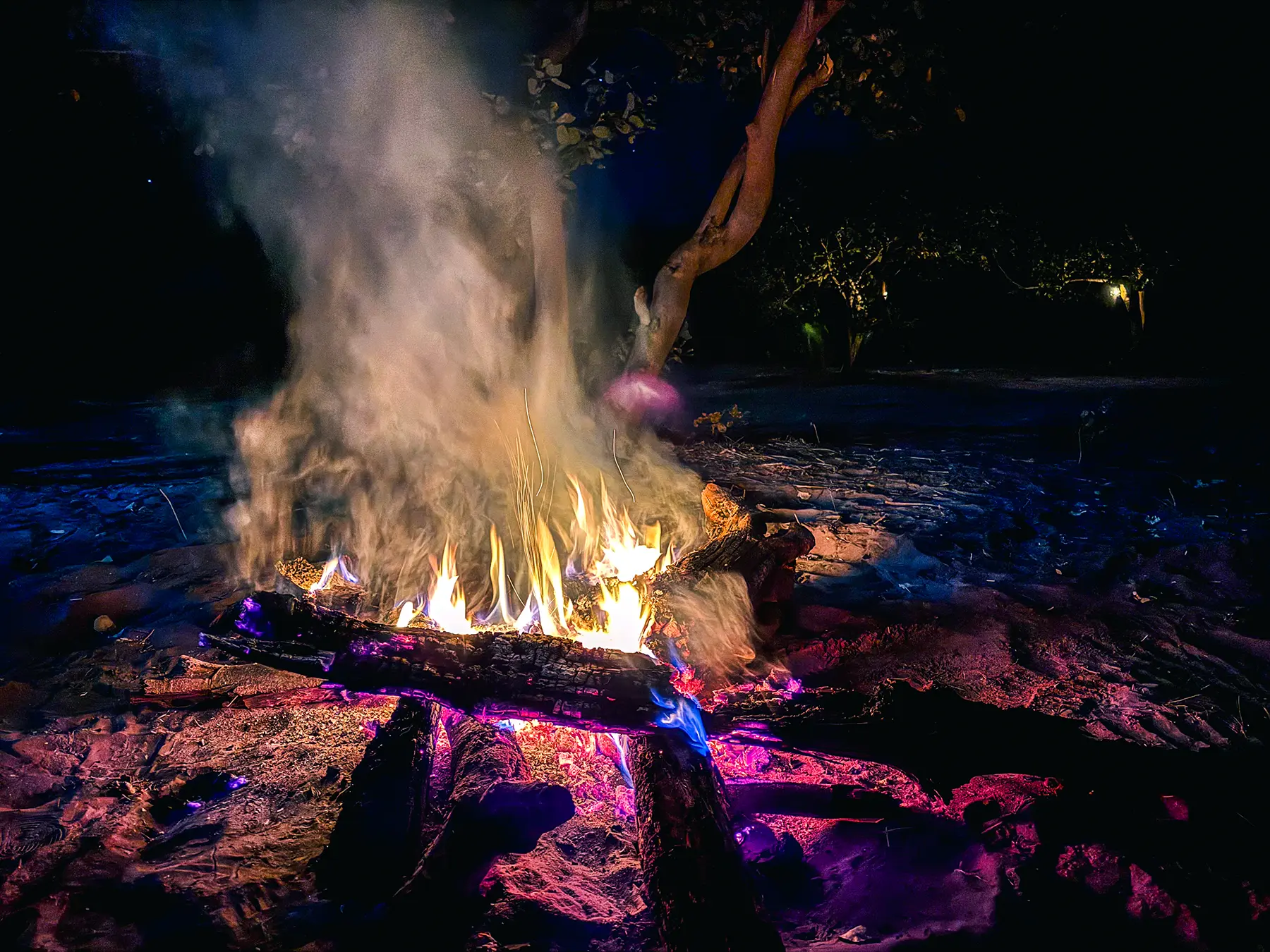
- Nights in Savuti are cold, so be sure to bring some warm clothing to wear in the evenings, especially if you’re camping. While many camps provide blankets and hot water bottles in particularly cold conditions, I would strongly recommend bringing a warm pair of pyjamas so you can stay snug. Temperatures vary significantly during the day, and mornings are often pretty brisk, so layers are advisable.
- As most camps and lodges in Savuti are unfenced, wildlife can wander freely, so you shouldn’t! Don’t walk around alone after dark – if you need to go anywhere, a team member will be happy to guide you safely on your way.
- Because the wider Chobe area is in a malaria zone, taking antimalarial medication is recommended. Consult your healthcare provider before you go to find out which type will work best for you. You should also be sure to bring insect repellent to keep mosquitoes at bay.
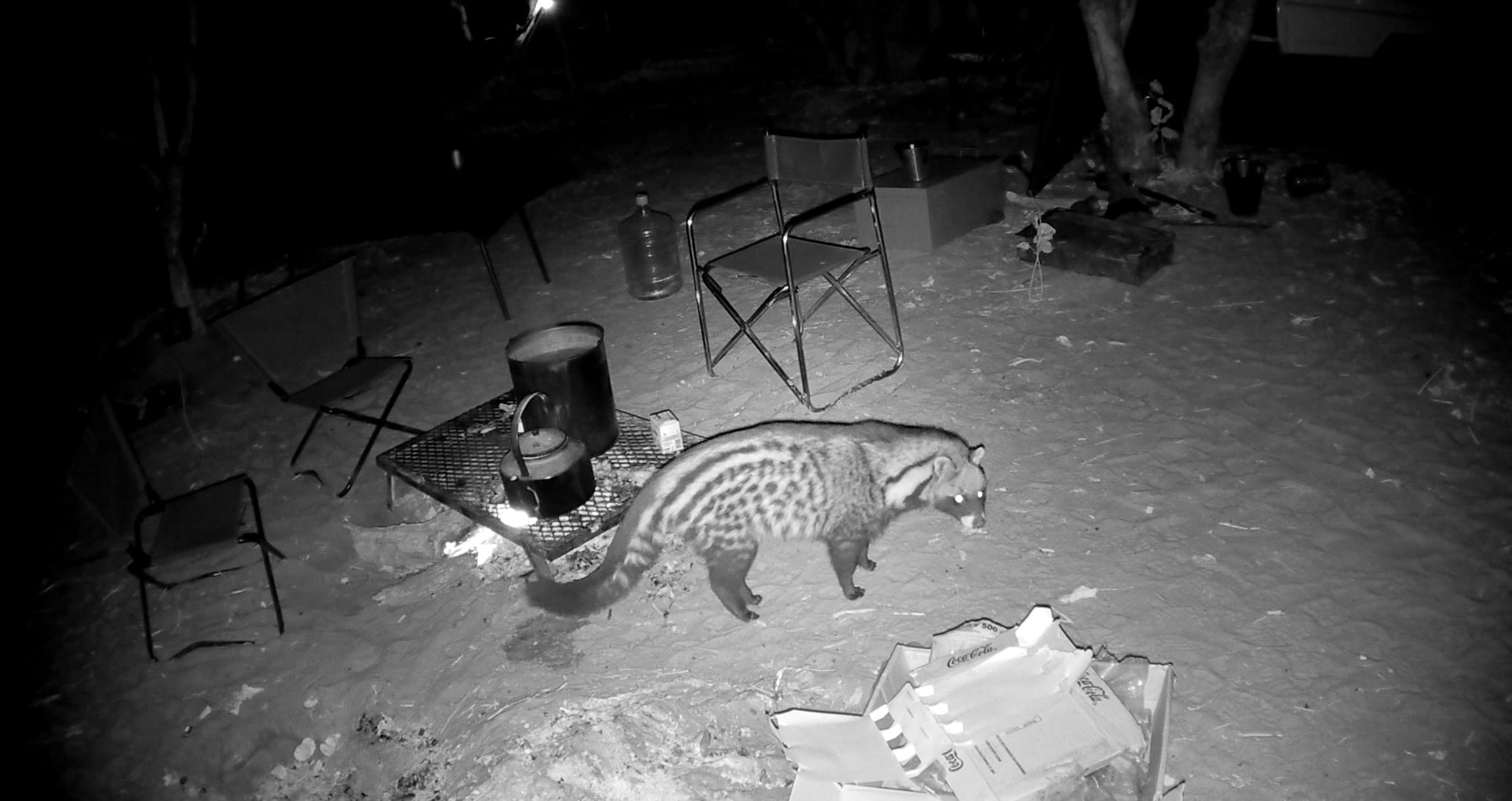
- Finally, here’s a tip for anyone interested in photography, nocturnal wildlife or both! During my visit, I set up a trail camera to see what sorts of animals came to visit at night. The idea really paid off – the camera captured a hyena, an African civet and a couple of honey badgers. I was delighted I had done it and would highly recommend it if you’d like to see what kind of visitors pass through your camp at night. Just remember to place it where the hyenas can’t get at it – they love to chew!
Where to Stay in Savuti
If you fancy a touch of luxury, you’ll find a number of high-end lodges in the Savuti region.
Mobile camping is a more budget-friendly option, and by far the most popular with visitors. And while the term ‘camping’ might call to mind images of cramped, clammy tents and rumpled sleeping bags, you can rest assured that camping here is a vastly different experience!
The roomy, comfortable tents you sleep in are equipped with real beds and private bathrooms, and meals, which are served in a dedicated dining tent, are prepared by your own private chef. That beats a tin of beans any day!
My Experience of Savuti
For years, the iconic Serengeti was indisputably my favourite safari destination of all the places I’d visited, but then I went to Savuti, and it blew all my expectations out of the water. It almost feels mean to say that out loud after Serengeti was my number one for so long – I still love you too, Serengeti!
I find that the sightings you experience on a given safari really shape how you feel about it, and Savuti has given me some of the most incredible encounters of my life.
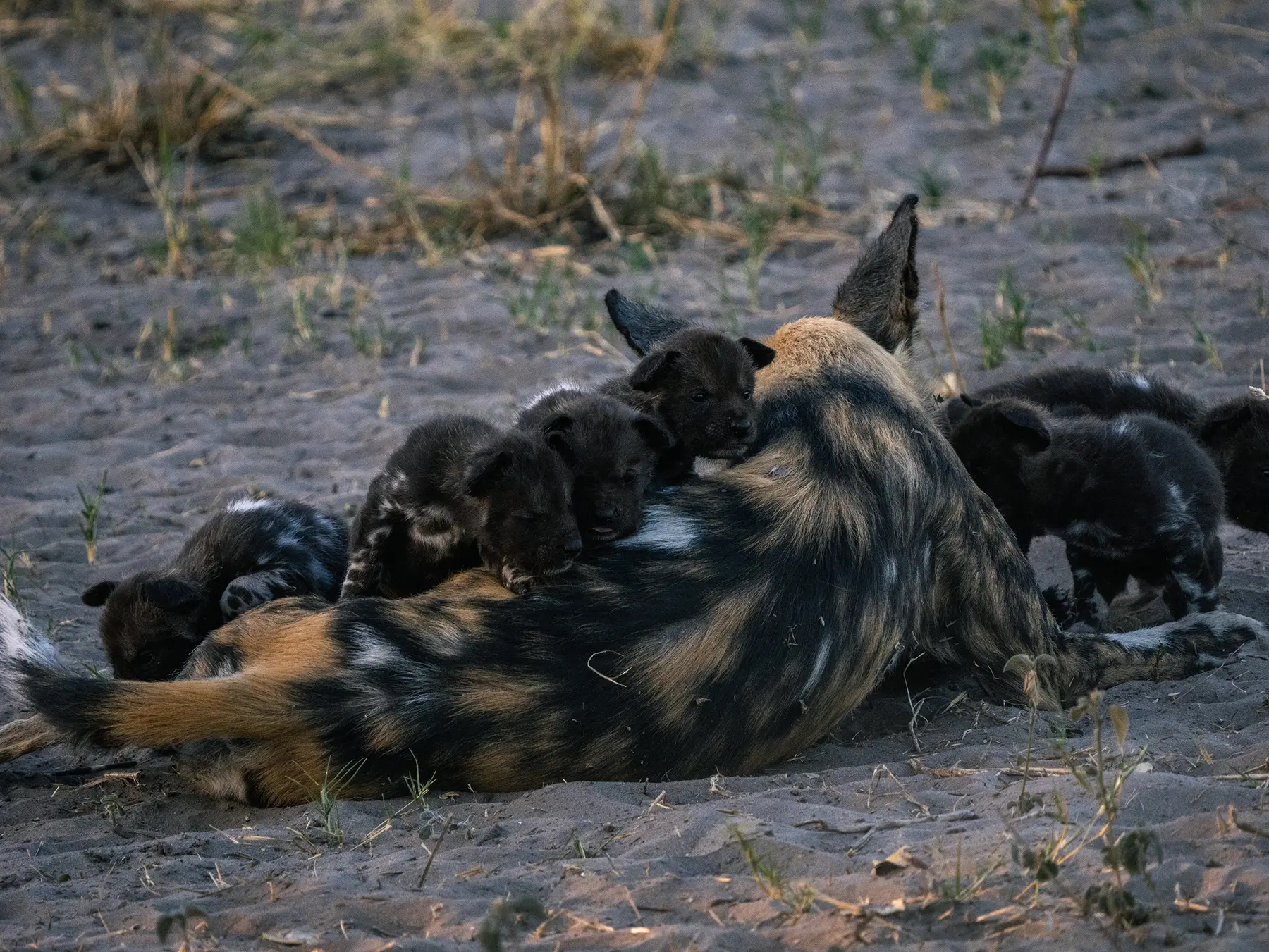
For starters, it was where I first saw an African wild dog – and what a special sighting it was! Happy as we would have been just to glimpse one of these rare predators, we were instead lucky enough to stop at an occupied den on our first evening in Savuti.
I’ll never forget watching the dogs greeting each other and playing together. Then, when we thought it couldn’t get any better, the alpha female’s pups wandered out unsteadily for some of their mother’s milk. Their fat little legs and round, full tummies were so cute!
We returned to the den every evening of our stay in Savuti, and were never disappointed. We even got to see the pack on the hunt, trying to bring down an elephant calf before the larger elephants chased them away.
My visit to Savuti also gifted me some unbelievable lion sightings. The region has two main prides, the Northern Pride, which lives near the camps and lodges, and the Marsh Pride, which (unsurprisingly) lives in the marsh.
Every night as we slept, we’d hear the roars of the Northern Pride, waking to find them just a short way away every morning.
I remember one morning seeing a lioness from the pride drinking from the waterhole before feeding on an elephant carcass. Later that same day, we encountered the entire pride feeding on a different elephant carcass.
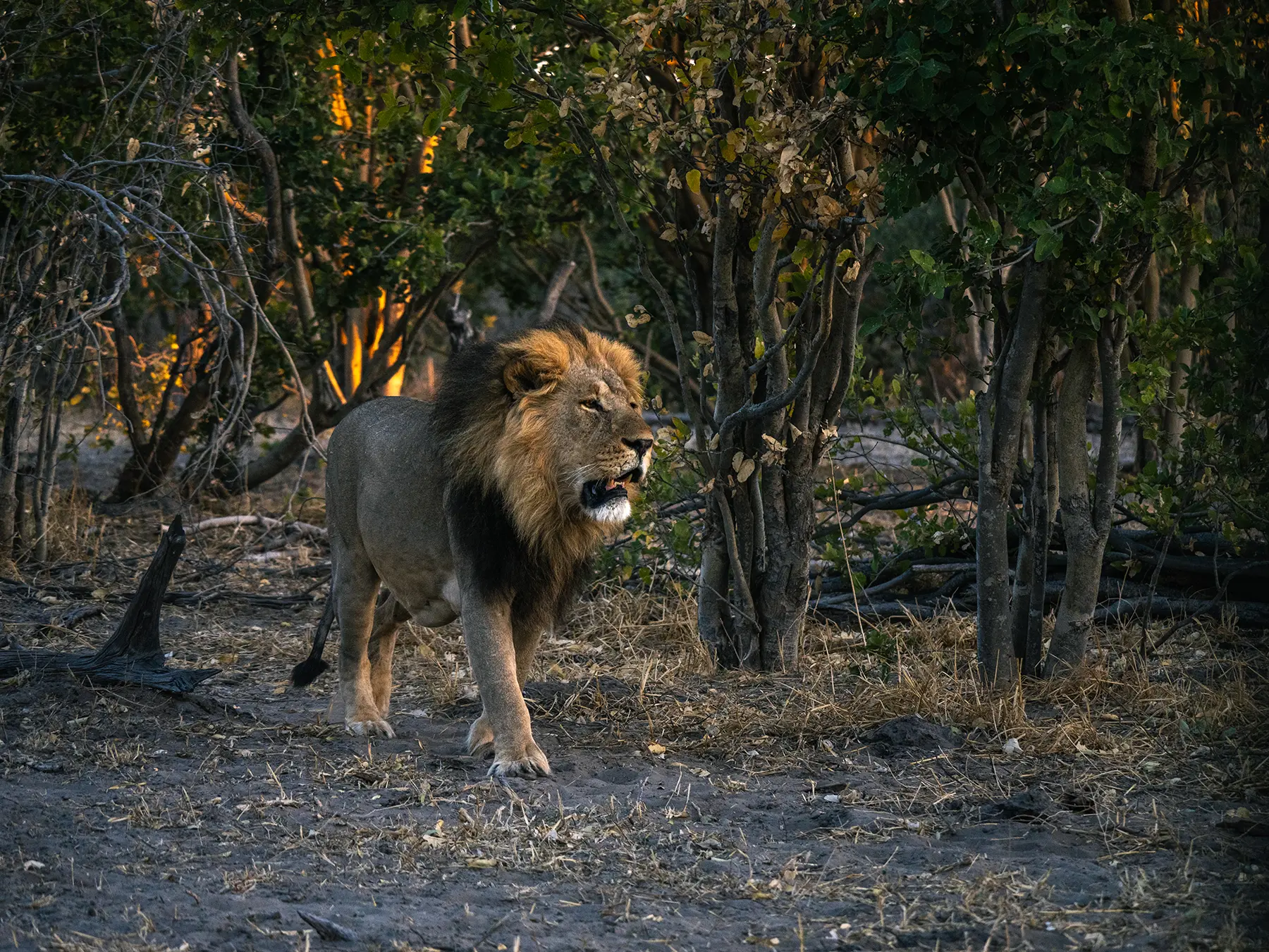
But for me, the most amazing sighting was when we spotted Waziba, a male from the pride, patrolling and marking his territory and roaring as the sun rose behind him. What a memory!
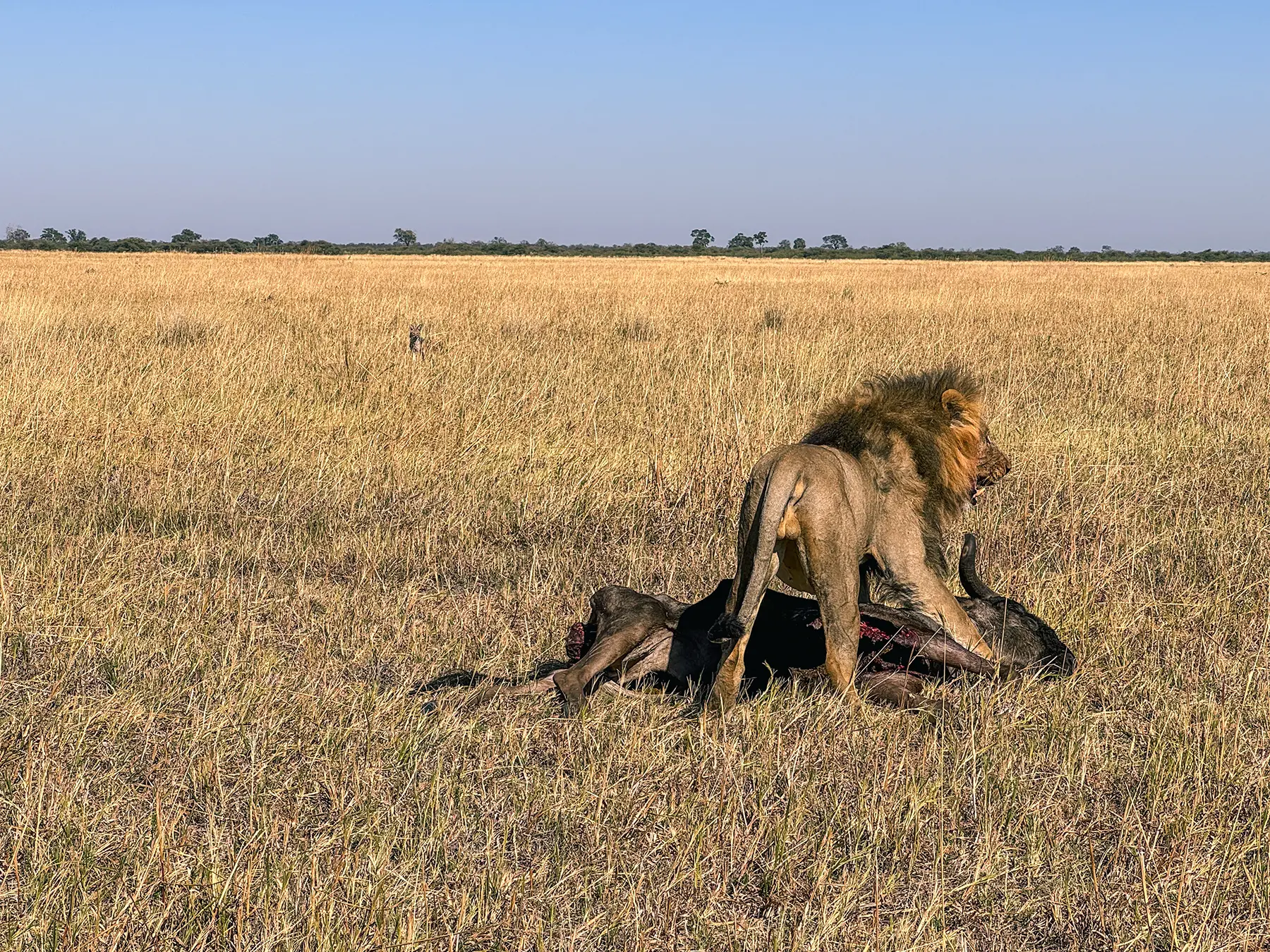
The Marsh Pride also made an appearance during our visit, when we caught up with them after they’d killed two wildebeest. Gaam, one of the males, guarded one of the kills while another male, Tsunami, and a female devoured the other.
Day 3: Chobe Riverfront, Chobe National Park
Drive time (excluding game drives): 4 hours
Today, you’ll be leaving behind the marshes of Savuti and setting your sights on the lush Chobe Riverfront. As the busiest and easiest-to-access section of Chobe National Park, the riverfront draws some of the continent’s densest elephant concentrations to its banks. The final part of your safari will be spent aboard a boat as you watch the wildlife approach you for a change.
Map of Chobe Riverfront, Chobe National Park
The map below shows the key features of Chobe Riverfront, Chobe National Park.
Itinerary
This morning, you’ll enjoy an early breakfast before bidding Savuti goodbye as you start the four-hour drive to Kasane, a riverside town to the northeast where Botswana meets Zambia, Zimbabwe and Namibia.
Winding through some of the most scenic parts of the park, the journey is a game drive in itself, packed with sightings along the way. However, if you’d prefer to save time, you can opt for a short scheduled flight instead.
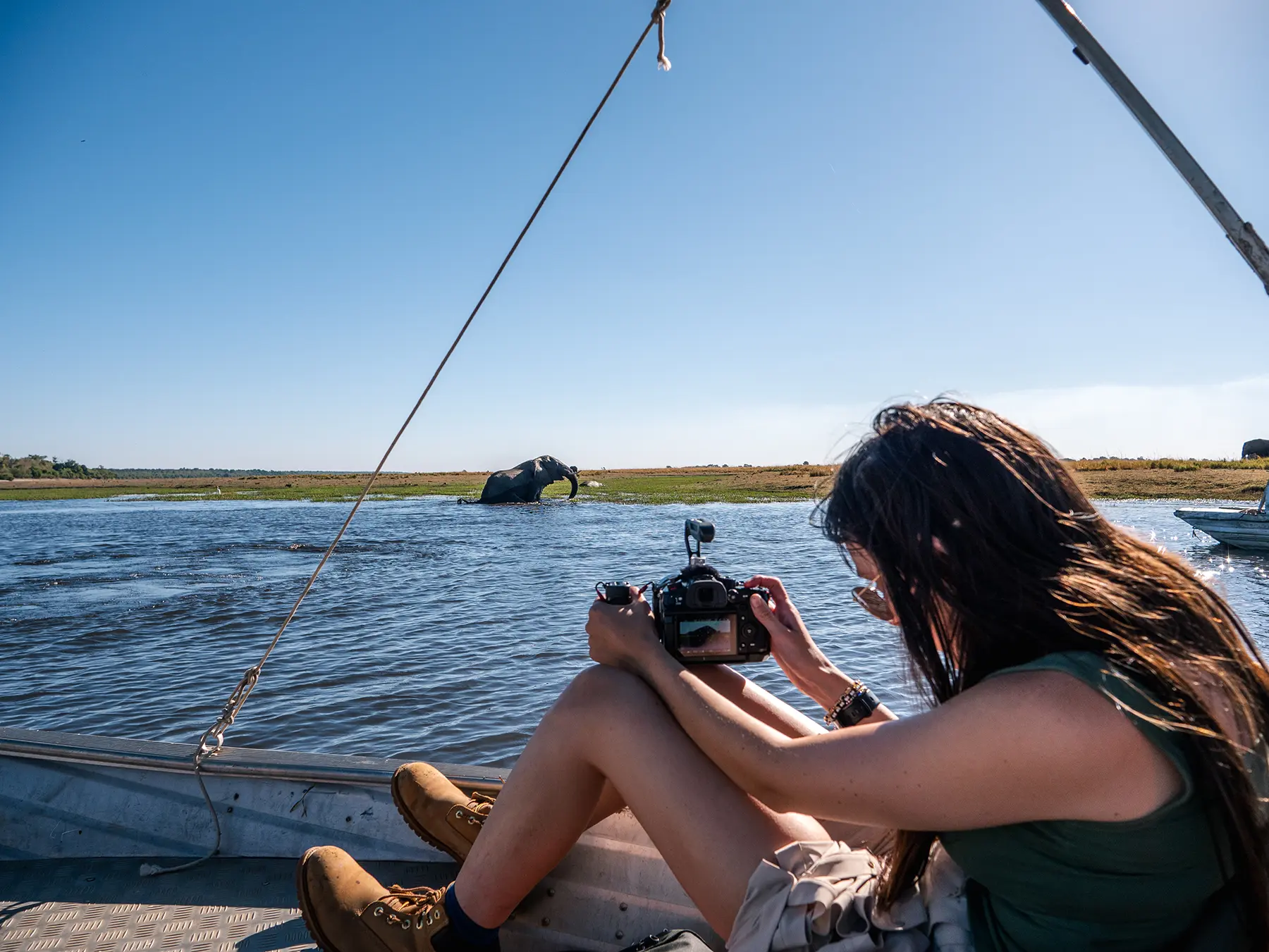
On arrival, it’s off to a restaurant in Kasane for some lunch before you take to the water. After days of bouncing along dusty tracks in a 4×4, a sunset cruise along the renowned Chobe Riverfront offers a deliciously laid-back change of pace, and the open sides of the boat will ensure unobstructed views wherever you look.
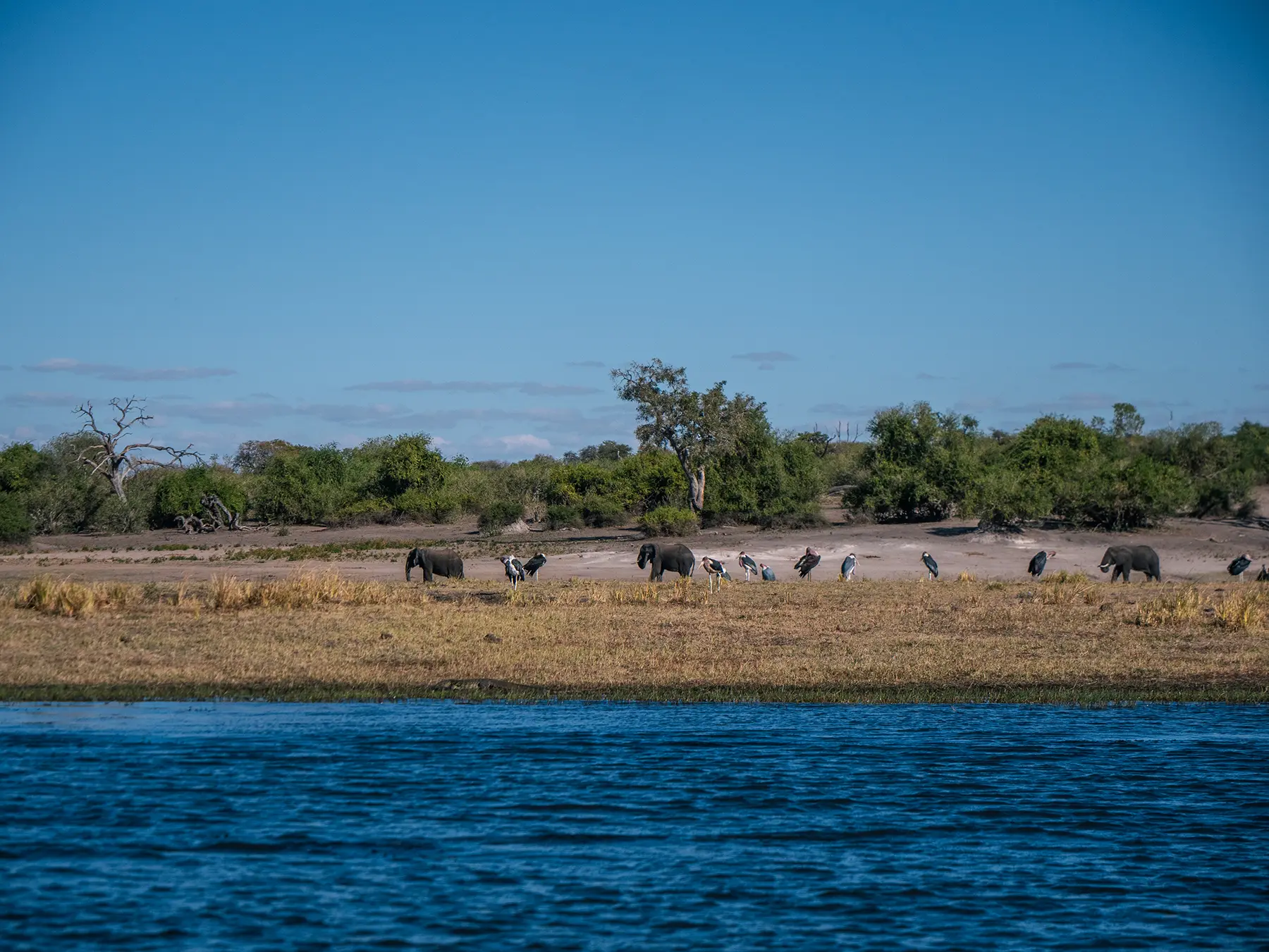
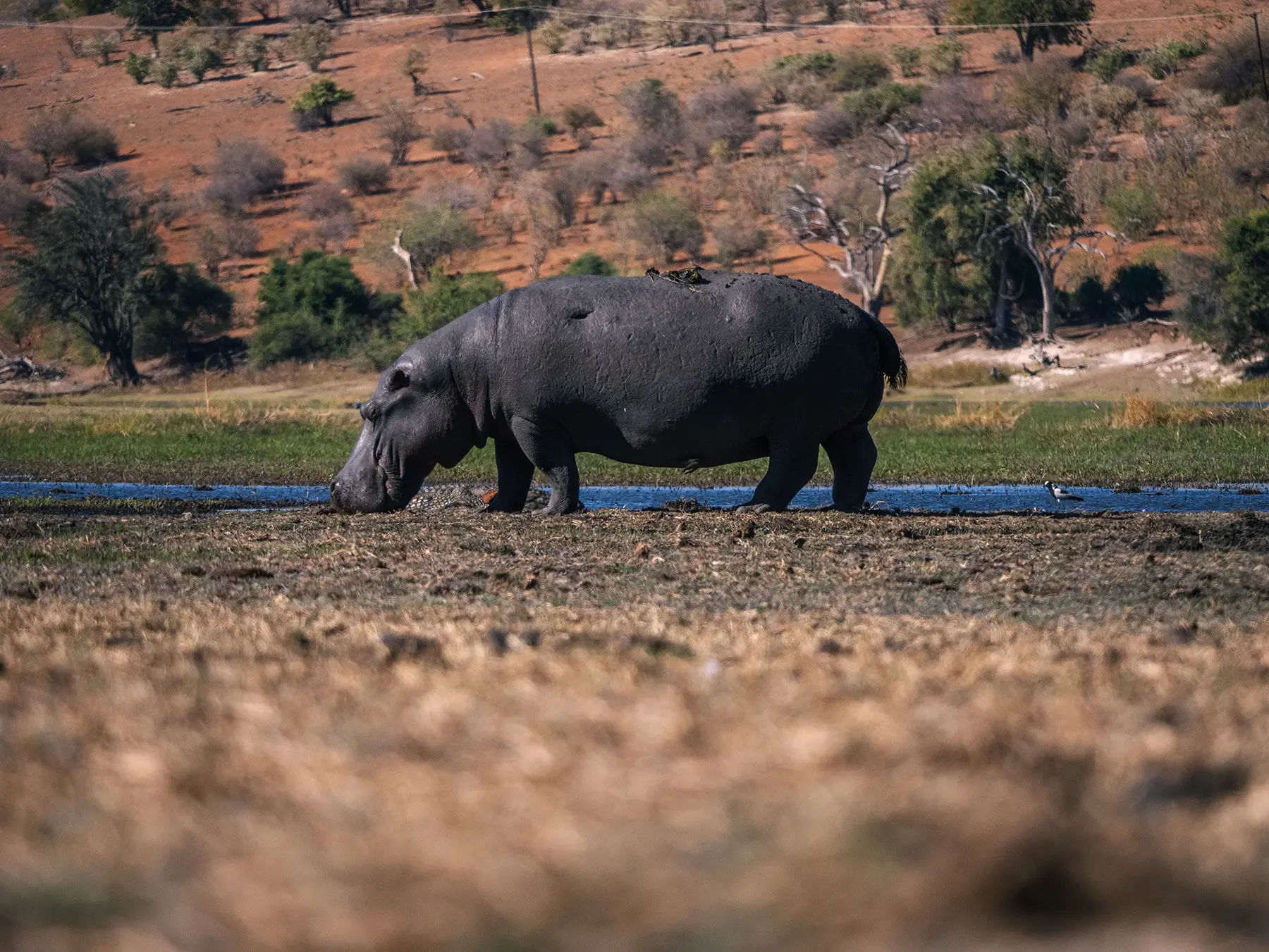
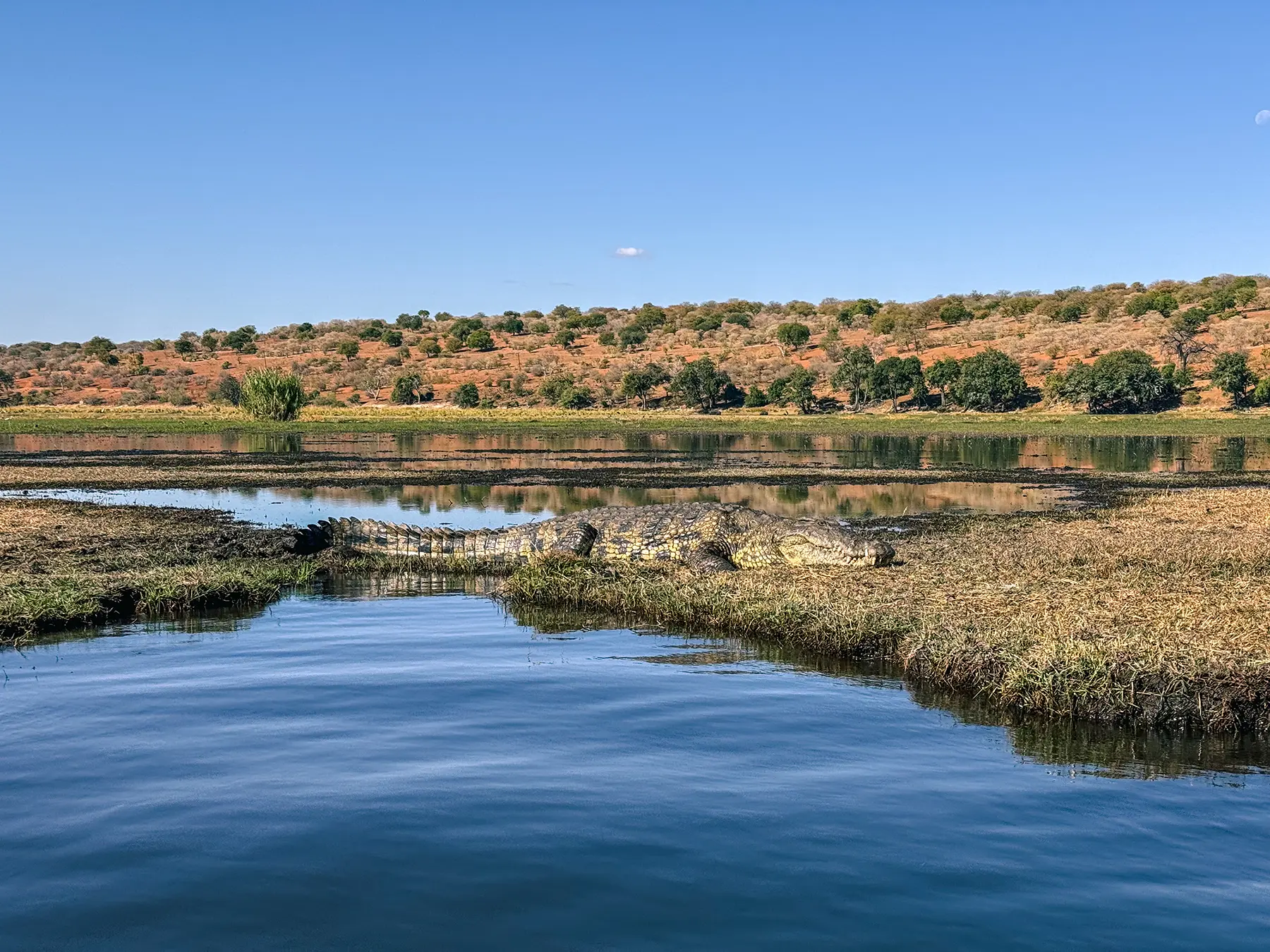
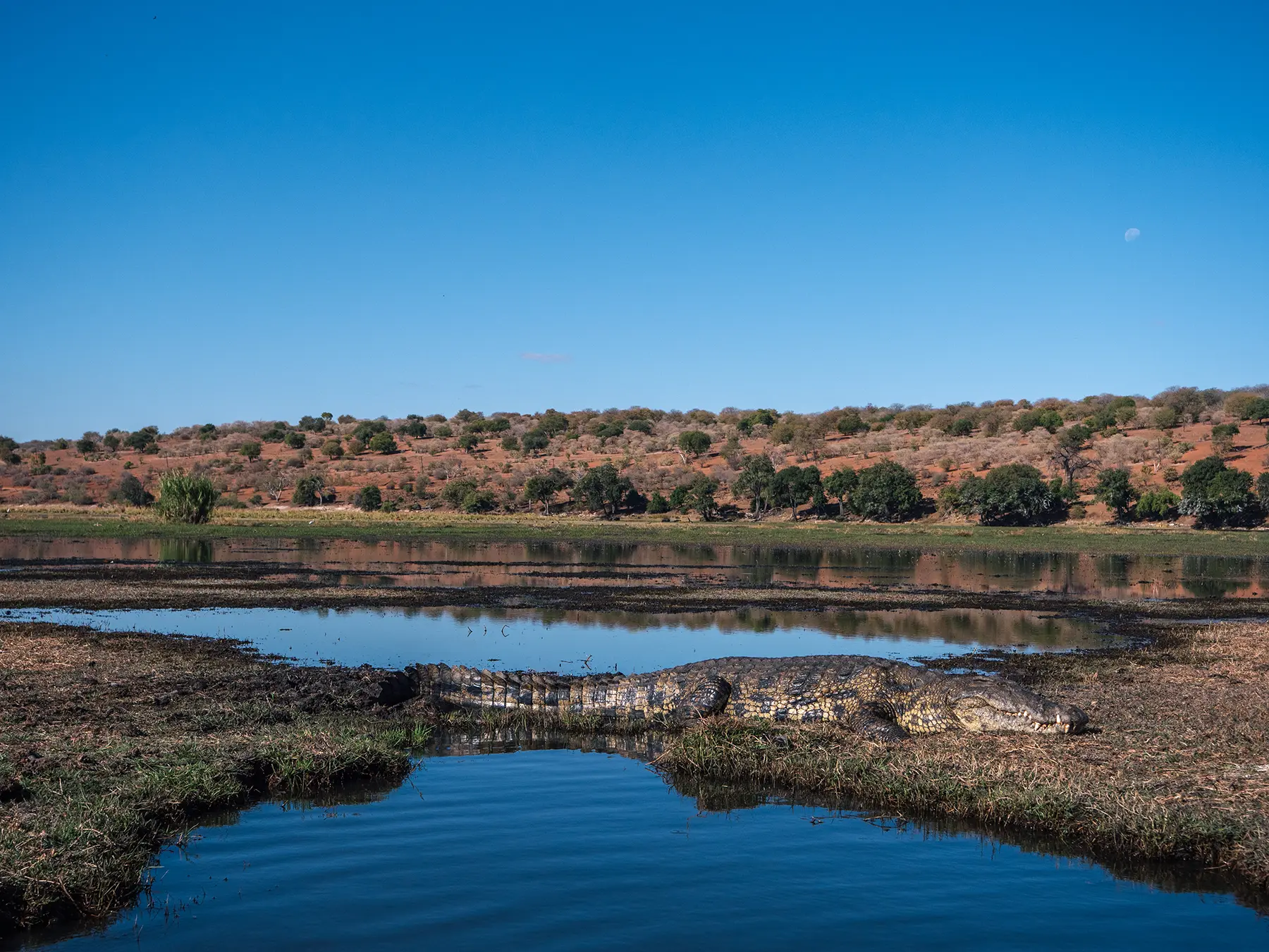
As you glide along, passing places you’d never reach by road, keep an eye out for elephants splashing about in the shallows or enjoying a refreshing drink. Some even swim over to graze on the islands! There are also hippos cooling off in the water and crocodiles basking in the mud of the banks, all totally undaunted by the boats drifting by.
About Chobe Riverfront
Located at the point where the Chobe and Zambezi Rivers converge, Chobe Riverfront is the most accessible section of Chobe National Park. It is a bustling waterway with a constant stream of cruise boats and tourists, its banks lined with hotels and lodges.
The boat cruises all start in Kasane town, situated in Botswana’s northeastern corner near the borders with Zambia, Zimbabwe and Namibia, and within a convenient distance of Victoria Falls.
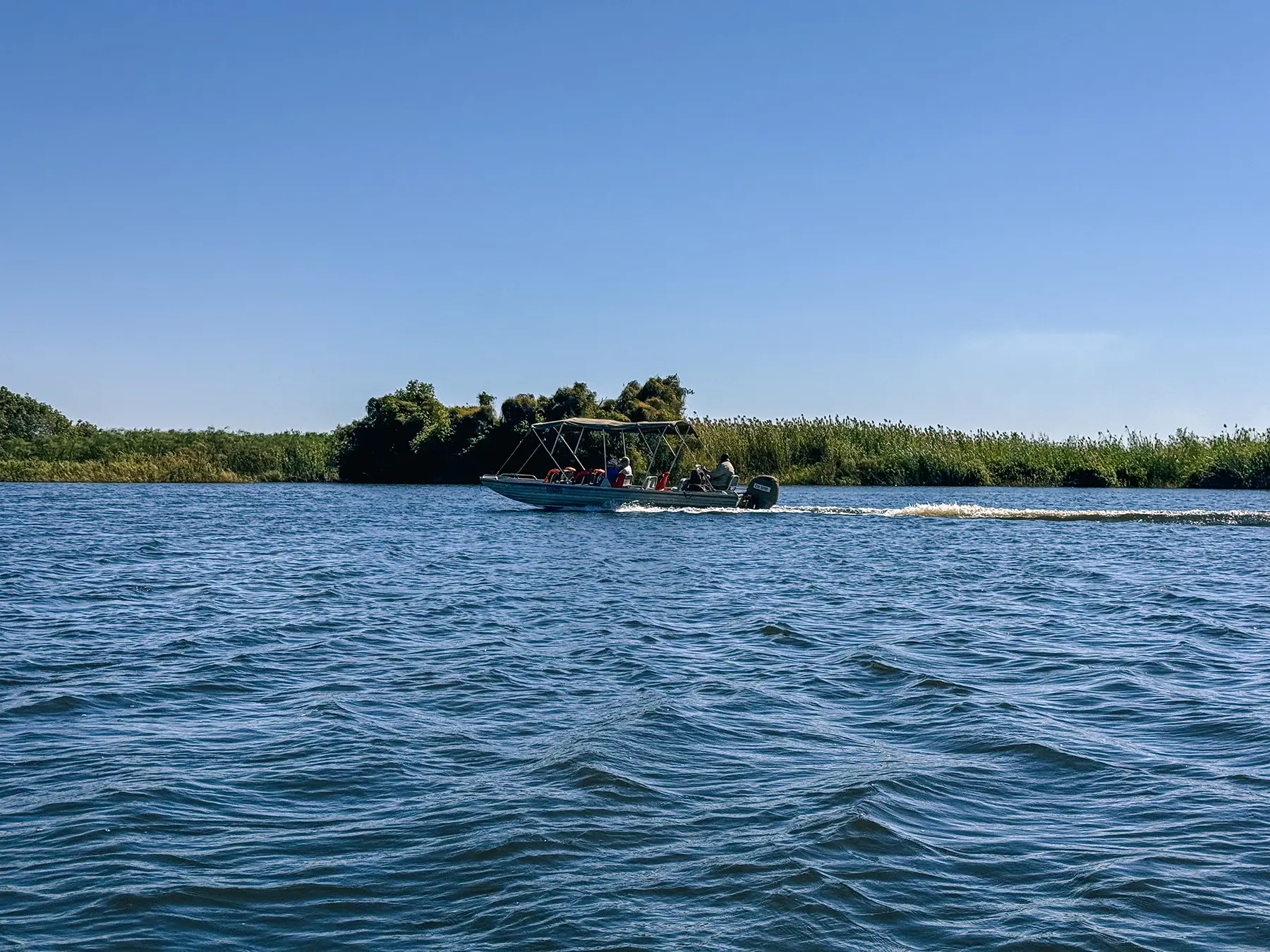
A boat safari is a really enjoyable alternative to a game drive, with fantastic photo opportunities and sightings you’d probably never experience in a 4×4.
The afternoon is probably the best time to go, as that is when the elephants tend to head to the water for a swim or a play. Make sure your camera battery is fully charged and ready to go, as you’re bound to see some amazing sights!
In addition to the river cruises, Kasane has plenty to help you pass a few interesting days, from tigerfish fishing to the historic Baobab Tree Prison, a hollowed-out tree that once housed up to 14 prisoners in times past. And if all that driving has left you feeling a bit achey, you can also head to Kasane Hot Springs for a soak.
What Wildlife Can I See at Chobe Riverfront?
As you might expect, game viewing at Chobe Riverfront is largely from the water. I don’t think I was fully prepared for how utterly superb it would be, though!
From your open-sided boat, you’ll see an enormous variety of species drinking from the river at the shoreline, with elephant herds splashing in the shallows or even swimming across to the islands to graze. In the muddy shallows, you’ll see hippos wallowing and crocodiles lounging in the heat of the late afternoon sun.
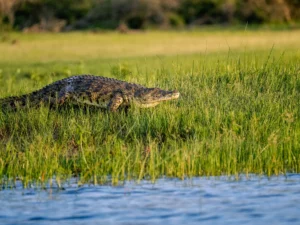
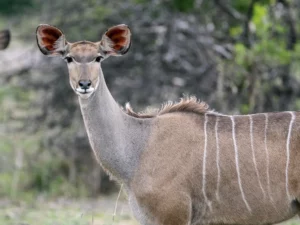
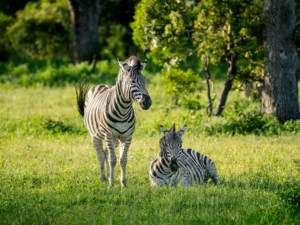
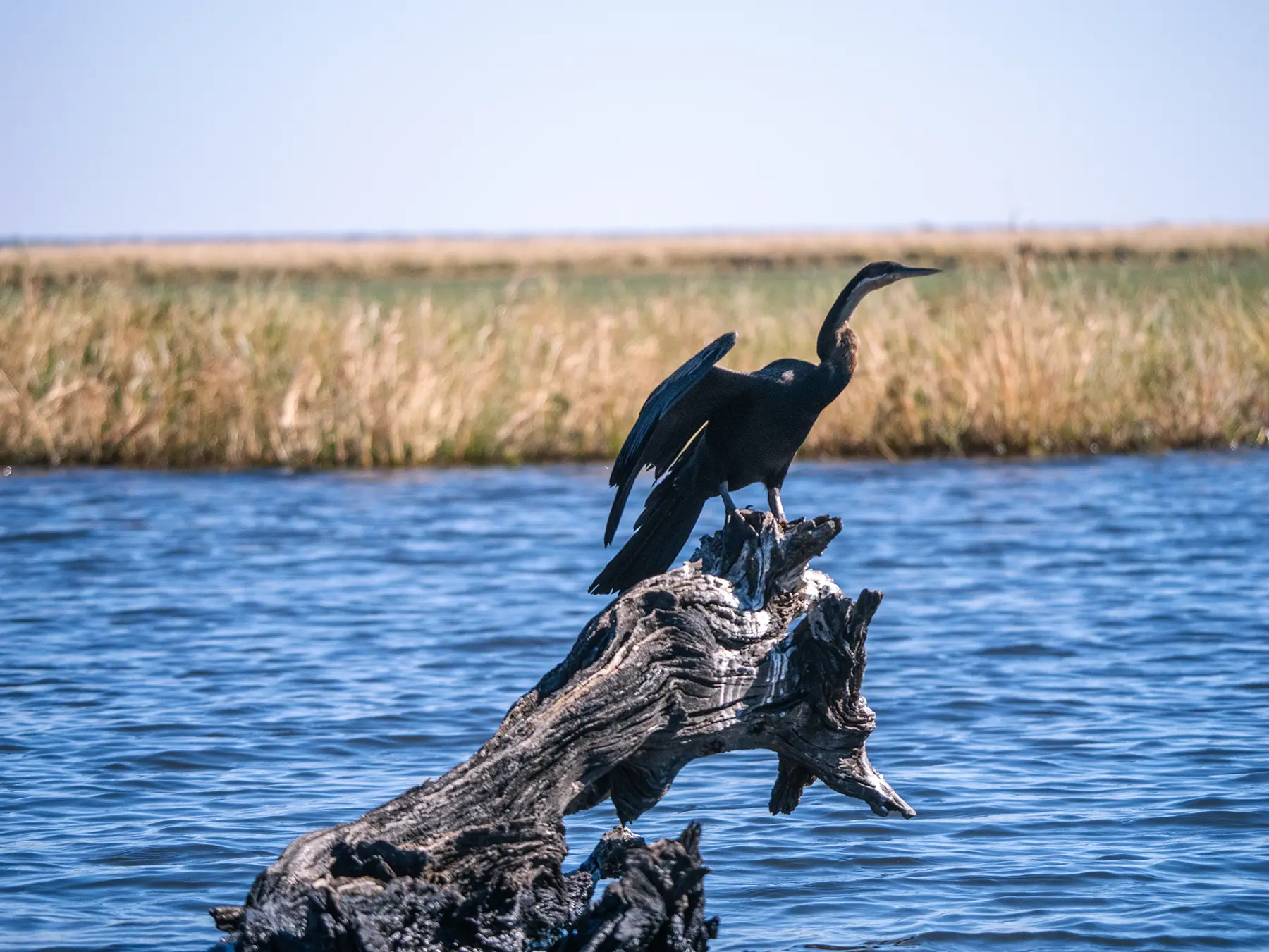
The riverfront is also packed with all kinds of waterbirds, such as cormorants, egrets and numerous species of herons. But it’s also a haven for birds of prey, especially African fish eagles.
Tips for Visiting Chobe Riverfront
- Take some binoculars! The riverfront has unbelievable birdwatching throughout the day, and you’ll frequently see species such as bee-eaters, storks, oxpeckers and hornbills. Your guide will allow you to borrow their binoculars, but it’s better to have your own so you don’t miss anything.
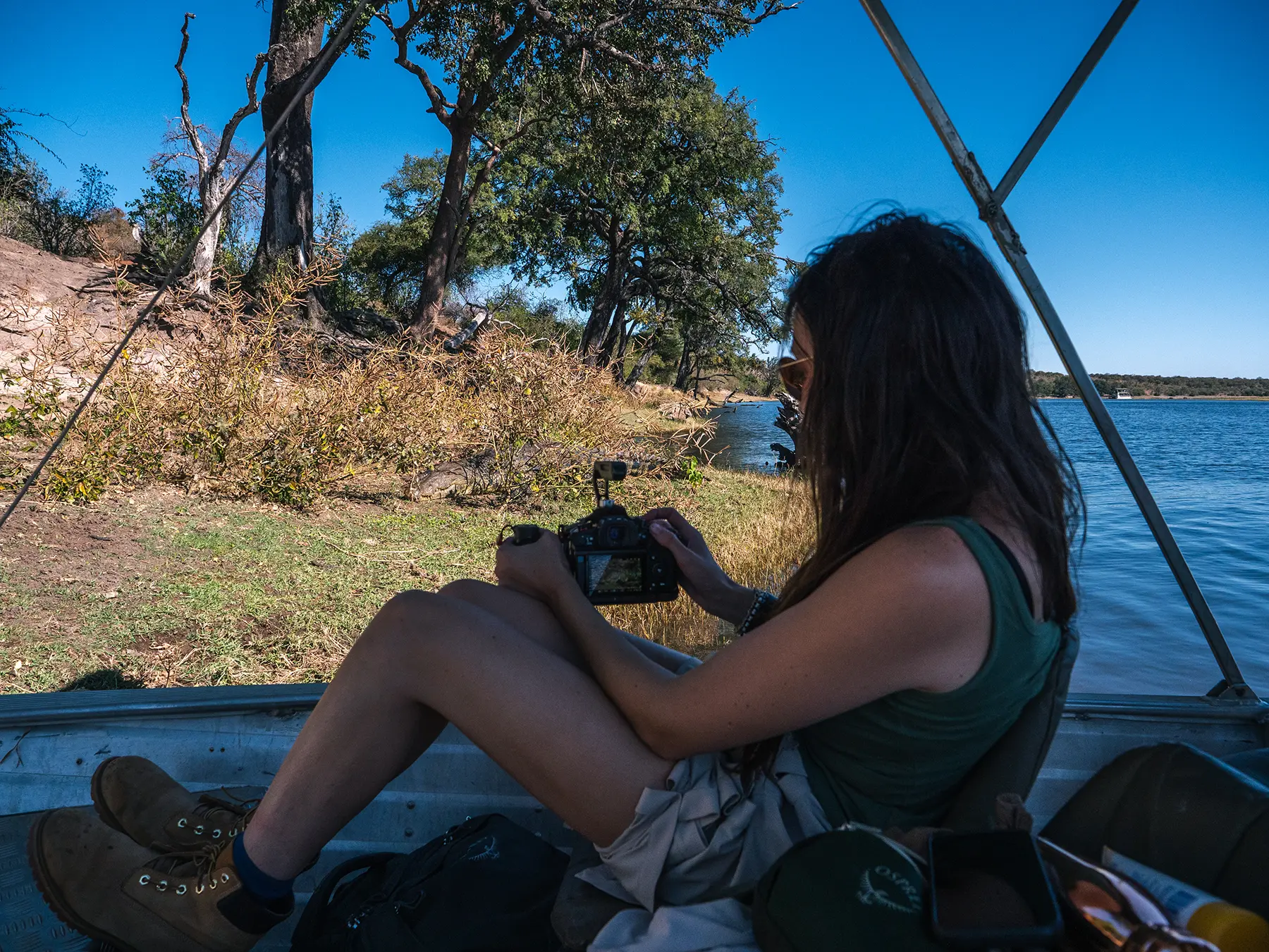
- In the words of the 90s classic: wear sunscreen! Boat cruises usually take about 3 hours, so you’ll be on the water for quite some time. Although there’s usually a canopy that offers some shelter from the sun, you should slap on sunscreen and wear a hat or cap just to be safe.
- Hydrate! While many operators provide drinks on board, it’s worth checking if this is the case and bringing some water if necessary. You may also like to pack some snacks if you’ve had a light lunch.
- Avoid dangling your arms out of the boat as the water has crocodiles in it.
Where to Stay at Chobe Riverfront
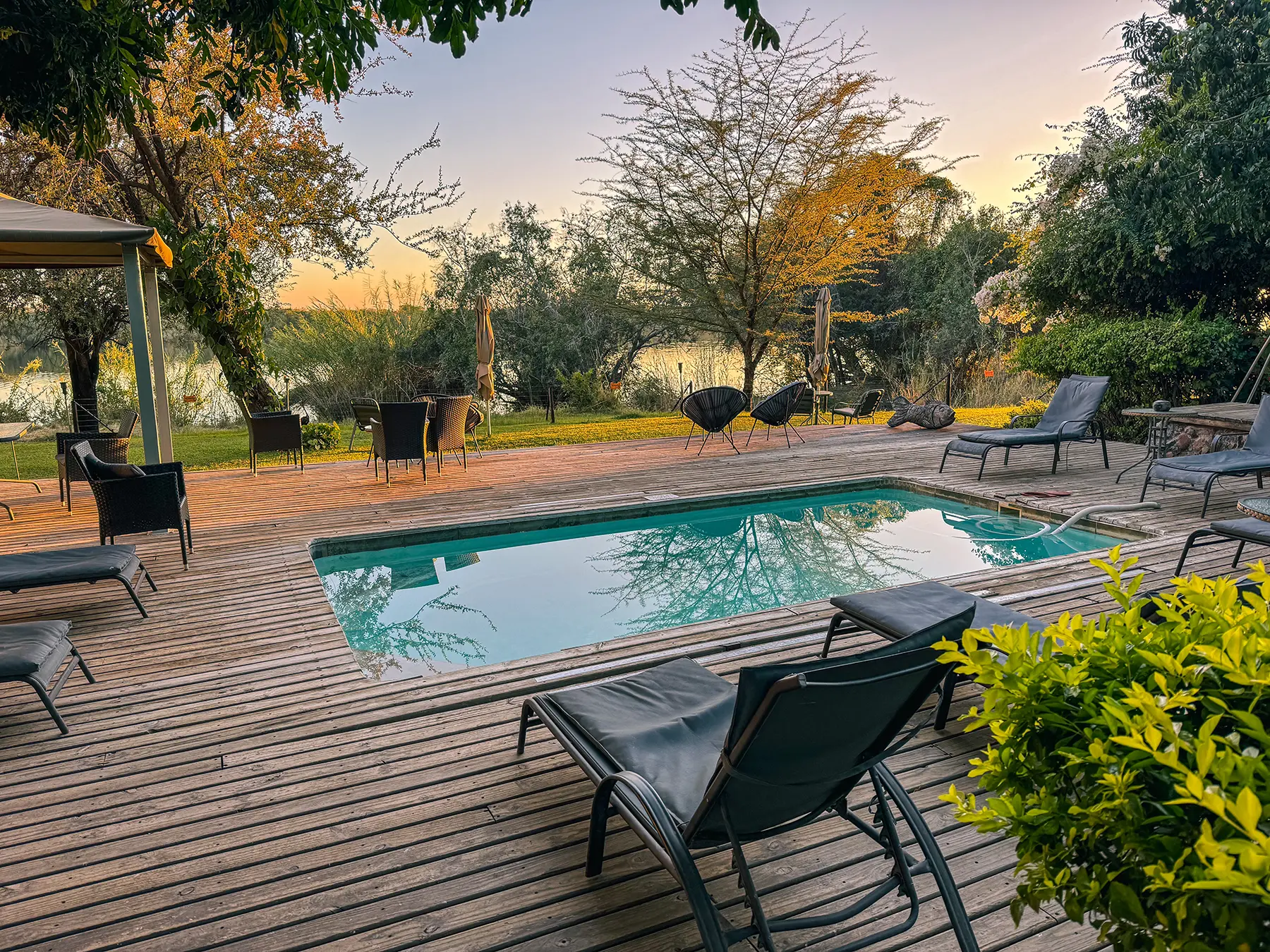
Kasane has any amount of lodges and guest houses, so there’s plenty of choice. I especially like the 4-star River View Lodge, perched on the riverbank and offering magnificent views and stunning sunsets from its sundeck and pool.
My Experience of Chobe Riverfront
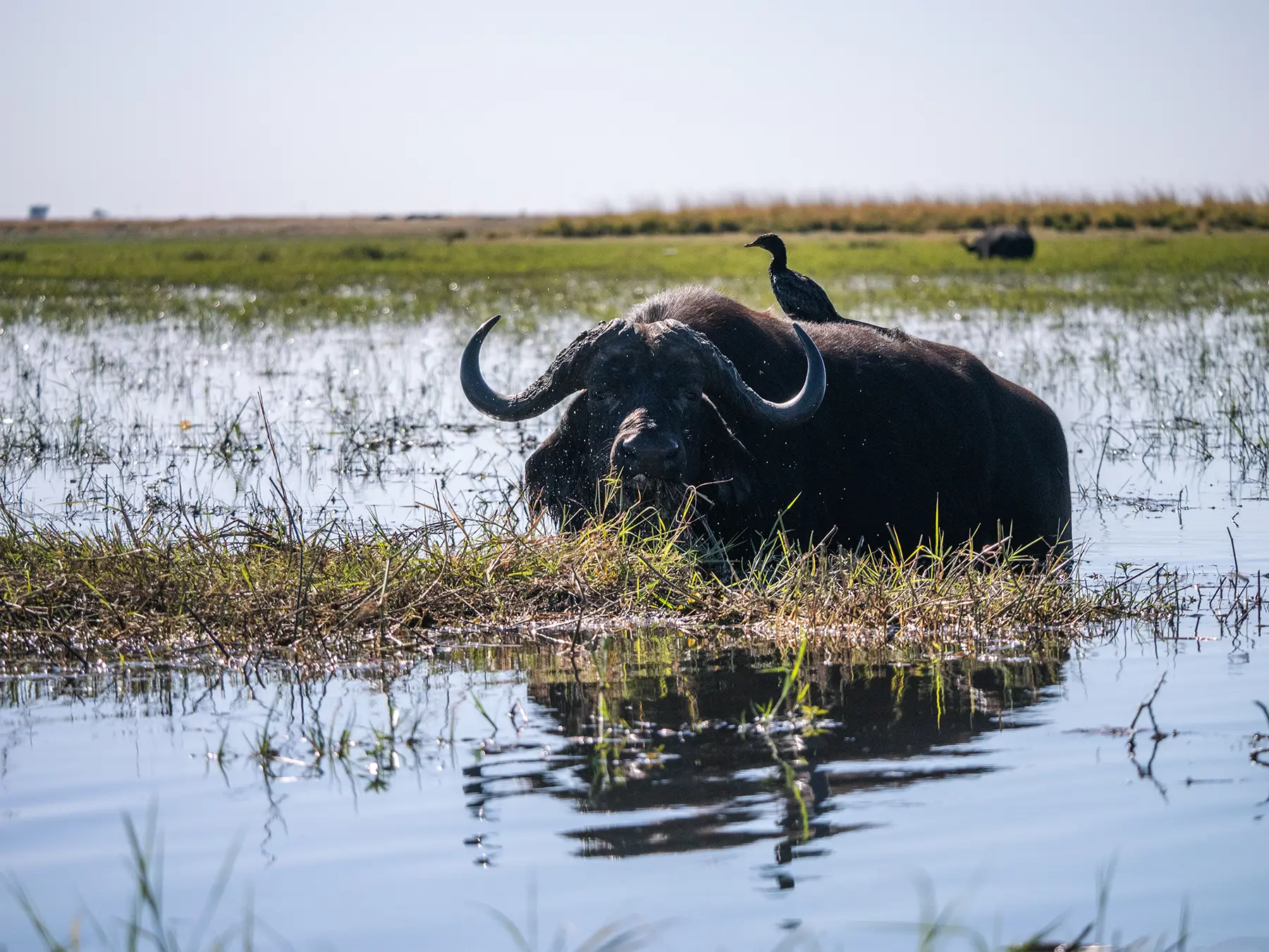
For me, an afternoon river boat cruise was a wonderful end to my safari in Botswana. The calm waters made for such a smooth, relaxing ride and at the same time, I saw an amazing variety of animals, including some male buffalos alongside water birds such as herons and cormorants, and the biggest crocodiles I’ve ever clapped eyes on!
We got pretty close to a number of massive crocs basking in the sunshine, and I was astonished at how relaxed they were around us. There were also water monitor lizards and hippos, but for me, the icing on the cake was when a whole elephant family crossed the river just ahead of us.
It was fairly warm on the boat, so I found that shorts and a vest top were all I needed to wear – plus a generous layer of high-factor sunscreen so I didn’t burn!
Option 3
3-Day Chobe and Victoria Falls Safari Itinerary Overview
I put together this 3-day safari to deliver a more relaxing experience while taking in two unforgettable highlights: Botswana’s elephant-lined Chobe Riverfront and, just across the border in Zimbabwe, the spectacular Victoria Falls.
After two leisurely nights at the Chobe Riverfront, you’ll head to the Falls for a dramatic conclusion. If you have more time to spare, check out my 7-day Botswana safari itinerary.
Quick Facts
Total drive time (excluding game drives): Around 1 hour overall, or an average of about 20 minutes per day. Longest single transfer about 1 hour (Day 3, including the border crossing).
Best times of year: For the Chobe Riverfront, on paper July to October (dry season), but in reality any time other than January and February. At Victoria Falls, the water is at its most dramatic just after the rainy season, while Devil’s Pool is usually only open from mid-August to mid-January.
3-Day Chobe and Victoria Falls Safari Map

Day-by-Day Breakdown of the Perfect 3-Day Chobe and Victoria Falls Safari
There is so much to pack in around the Chobe Riverfront and Victoria Falls, and three days will zip by, so I’ve crafted this itinerary to make sure you make the most of every moment!
I have also considered the short border transfer and driving times in order to come up with the most enjoyable itinerary.
You can get quotes from the same local tour companies I use to organise my own trips here: Safaris By Ella
Click any of the days below to jump to my full notes on that day.
Days 1-2: Chobe Riverfront
Drive time (excluding game drives): 0 hours
You’ll start your trip with two leisurely nights in Kasane on the Chobe Riverfront. This is the most accessible area of Chobe National Park and marks the point where the Chobe and Zambezi Rivers meet.
As you don’t need to worry about lengthy transfers, you can dedicate the entirety of these two days to discovering the myriad species that live along the riverfront with several game drives and a river boat cruise.
Map of Chobe Riverfront, Chobe National Park
The map below shows the key features of Chobe Riverfront, Chobe National Park.
Itinerary
Day 1: As Kasane is a mere five minutes from Chobe National Park, you can really maximise your game drive time today. You’ll set out early on your morning drive to maximise your chances of spotting predators still out and about after a night’s hunting.
In the stillness of the dawn, the golden fingers of sunlight stretch across the landscape and the symphony of the savannah begins to swell. These cooler hours are the most active time for prey and predators alike as they head to the water for a drink or seek out a final meal before retiring to sleep through the early afternoon heat.
Keep an eye out for Chobe’s famous elephant herds along with huge herds of buffalo, lions, leopards, giraffes, antelope and a plethora of bird species including African fish eagle, storks, herons, kingfishers, egrets, hornbills and vultures.
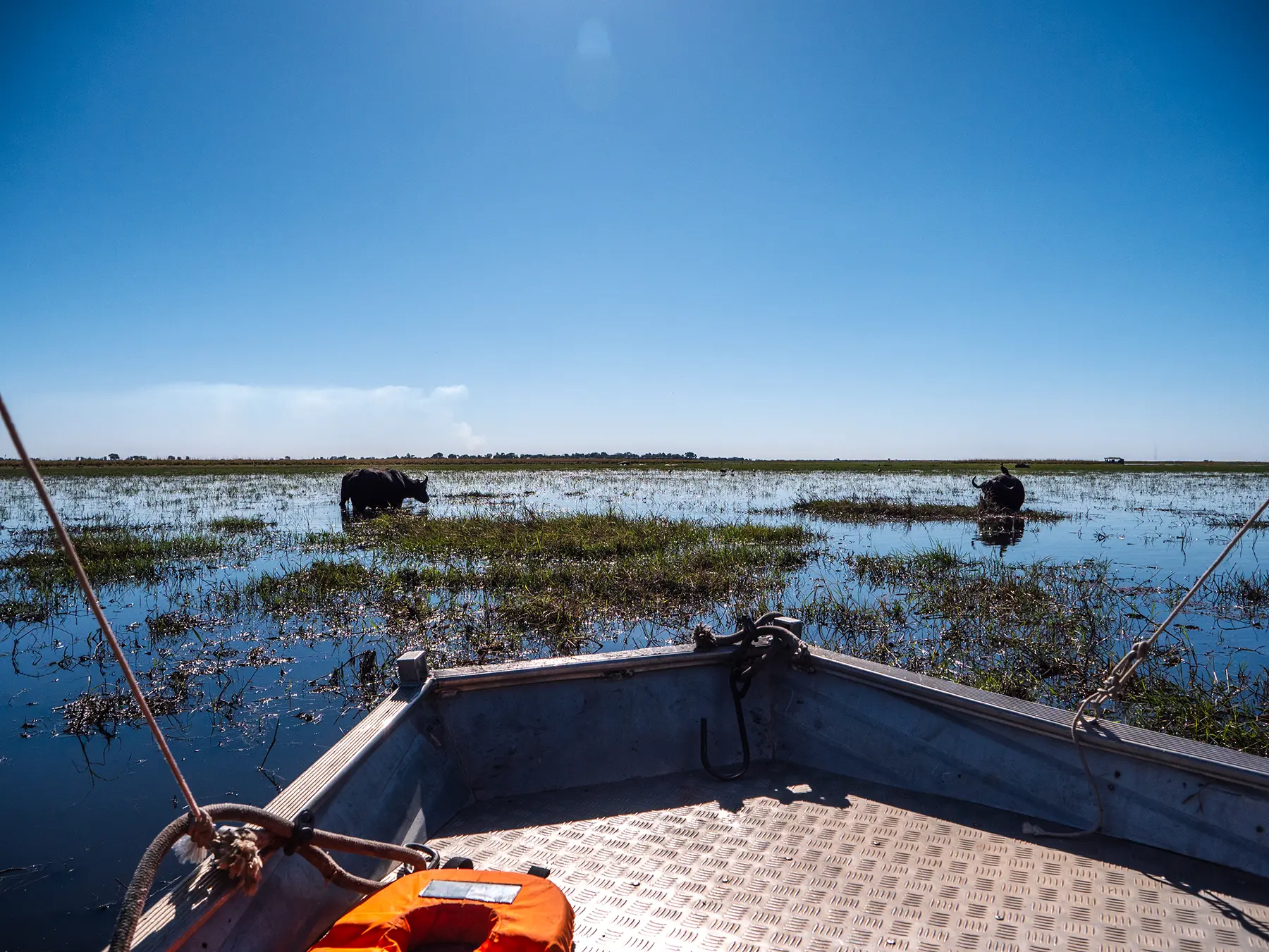
After returning for a refreshing lunch, it’s time for your afternoon game drive. Watch out for rarer species – with a bit of luck, you might spot the elusive puku or red lechwe antelope. If your drive takes you close to the river, you should see hippos and crocodiles along the banks, while the plains are teeming with grazers such as zebra and wildebeest.
Your guide will be able to tell you all about the habits of the park’s resident wildlife as well as offering fascinating insights into the flora all around.
As your game drive draws to a close, the sinking sun bathes your surroundings in a red glow that, combined with the lengthening shadows, makes for incredibly dramatic photos. You might even see some nocturnal species such as civets, porcupines, bushbabies and owls before leaving the park to savour a tasty dinner.
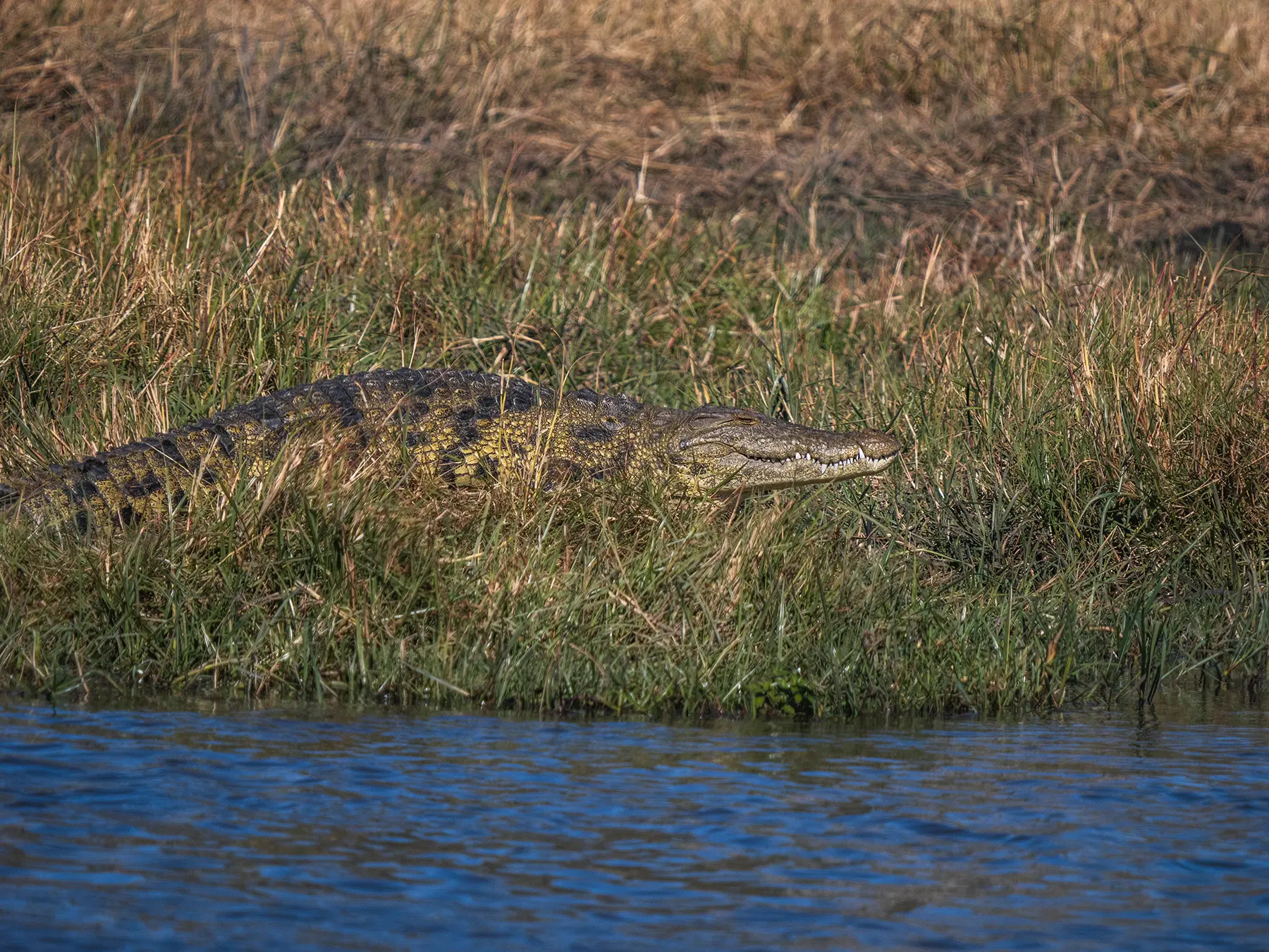
Day 2: You’ll rise early again today for your second morning game drive, keeping your eyes peeled for predators returning from the hunt and birds waking to greet the day. After a tasty lunch at the lodge, it’s time to embark on an afternoon boat cruise.
Drifting calmly along the water, you’ll find that the wildlife comes to you for a change, as elephants make their way to the water to slake their thirst and crocodiles wallow lazily in the mud of the riverbanks. Look out for hippos enjoying a cooling dip in the shallows as well as buffalo and impala, not to mention the countless waterbird species that thrive along the waterside.
The sunset views are unforgettable on the river, and the silhouettes of the elephants against the soft, golden light will amaze you. With the muted sounds of the birdlife and the gentle lapping of the water against your boat, you’ll find yourself utterly relaxed as your cruise draws to a close.
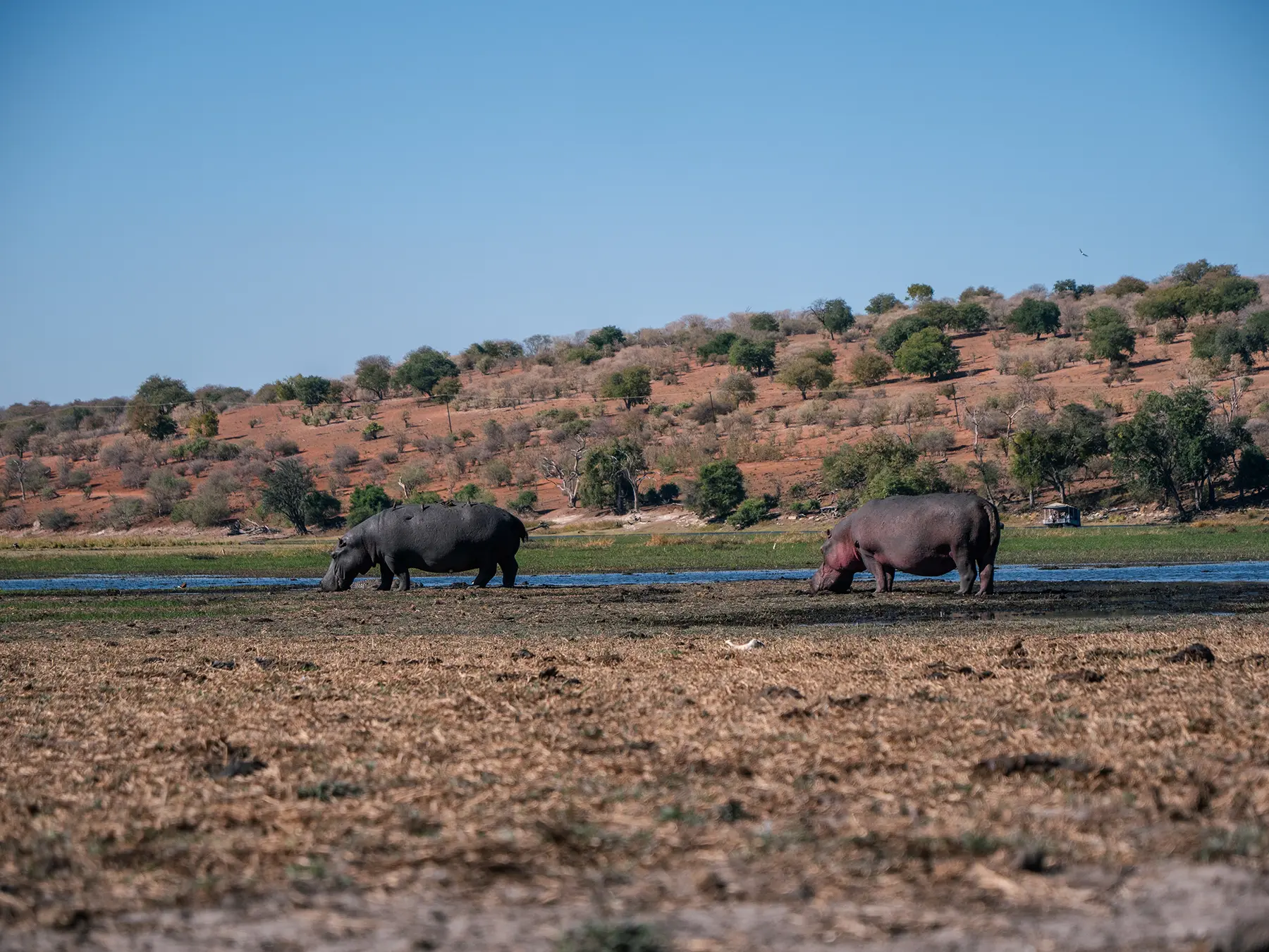
About Chobe Riverfront
Located at the point where the Chobe and Zambezi Rivers converge, Chobe Riverfront is the most accessible section of Chobe National Park. It is a bustling waterway with a constant stream of cruise boats and tourists, its banks lined with hotels and lodges.
The boat cruises all start in Kasane town, situated in Botswana’s northeastern corner near the borders with Zambia, Zimbabwe and Namibia, and within a convenient distance of Victoria Falls.
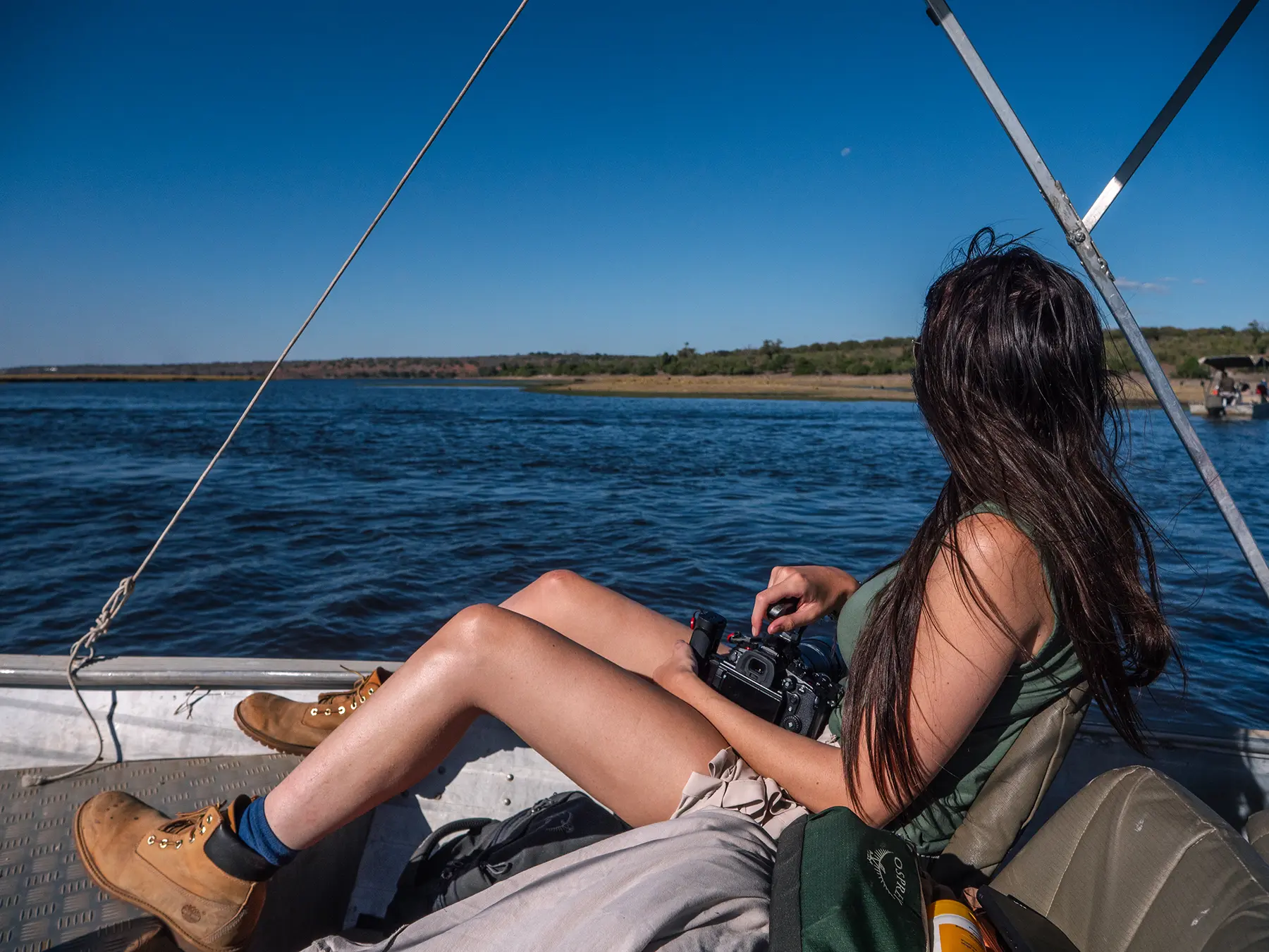
A boat safari is a really enjoyable alternative to a game drive, with fantastic photo opportunities and sightings you’d probably never experience in a 4×4.
Afternoon is probably the best time to go, as that is when the elephants tend to head to the water for a swim or a play. Make sure your camera battery is fully charged and ready to go, as you’re bound to see some amazing sights!
In addition to the river cruises and traditional game drives in Chobe National Park, Kasane has plenty to help you pass a few interesting days, from tigerfish fishing to the historic Baobab Tree Prison, a hollowed-out tree that once housed up to 14 prisoners in times past. And if all that driving has left you feeling a bit achey, you can also head to Kasane Hot Springs for a soak.
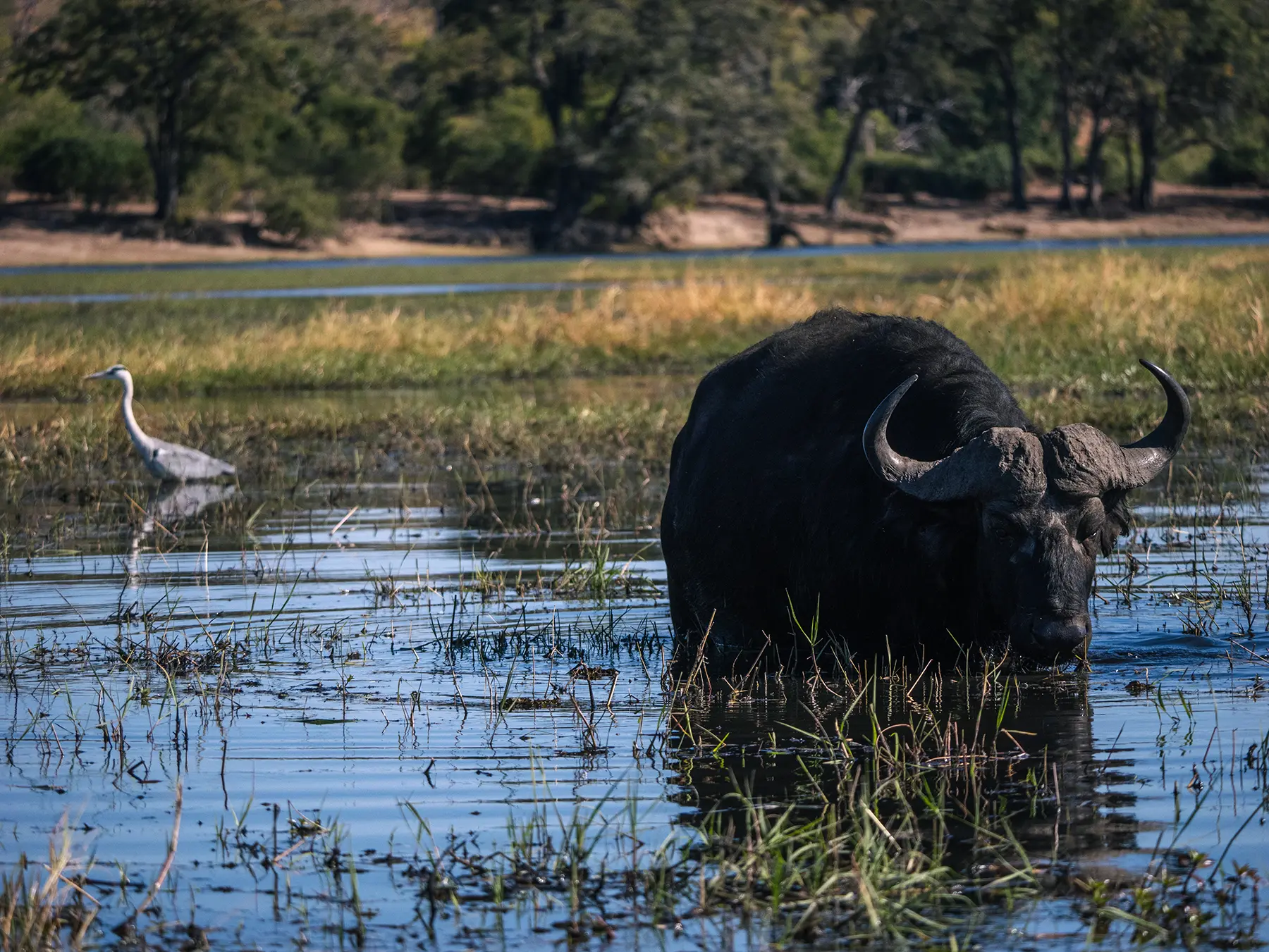
What Wildlife Can I See at Chobe Riverfront?
I loved the diversity of the game viewing experience here, with sightings not only from the water on Chobe Riverfront but also on traditional game drives in Chobe National Park.
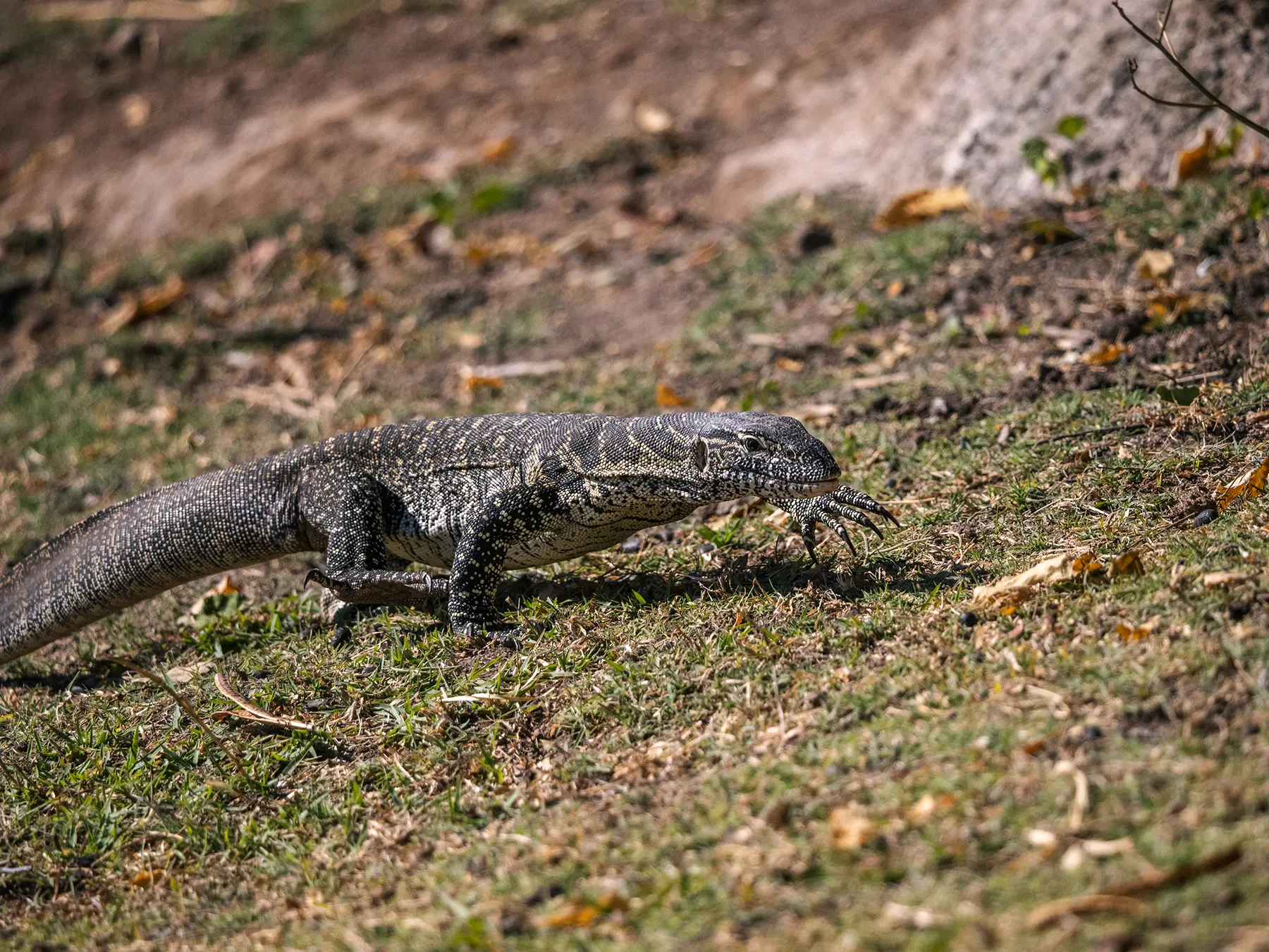
For this piece, though, I’ll focus on the wildlife you can see along Chobe Riverfront. The open-sided river cruise boats have great visibility, and you’ll see lots of wildlife along the shoreline, from herds of hippos wallowing near the shore to huge crocodiles sunbathing along the banks.
With one of the world’s densest dry-season elephant concentrations, though, the riverfront’s real stars are these huge beasts. As you glide along, you’ll see herds of them splashing about in the shallows, quenching their thirst with the cool water or even swimming to the islands to graze.
For the birders among us, the riverfront is an absolute delight, with scores of resident species to see including cormorants, egrets and numerous heron species. Look out for birds of prey as well, particularly African fish eagles.
Tips for Visiting Chobe Riverfront
- Take some binoculars! The riverfront has unbelievable birdwatching throughout the day, and you’ll frequently see species such as bee-eaters, storks, oxpeckers and hornbills. Your guide will allow you to borrow their binoculars, but it’s better to have your own so you don’t miss anything.
- In the words of the 90s classic: wear sunscreen! Boat cruises usually take about 3 hours, so you’ll be on the water for quite some time. Although there’s usually a canopy that offers some shelter from the sun, you should slap on sunscreen and wear a hat or cap just to be safe.
- Hydrate! While many operators provide drinks on board, it’s worth checking if this is the case and bringing some water if necessary. You may also like to pack some snacks if you’ve had a light lunch.
- Avoid dangling your arms out of the boat as the water has crocodiles in it.
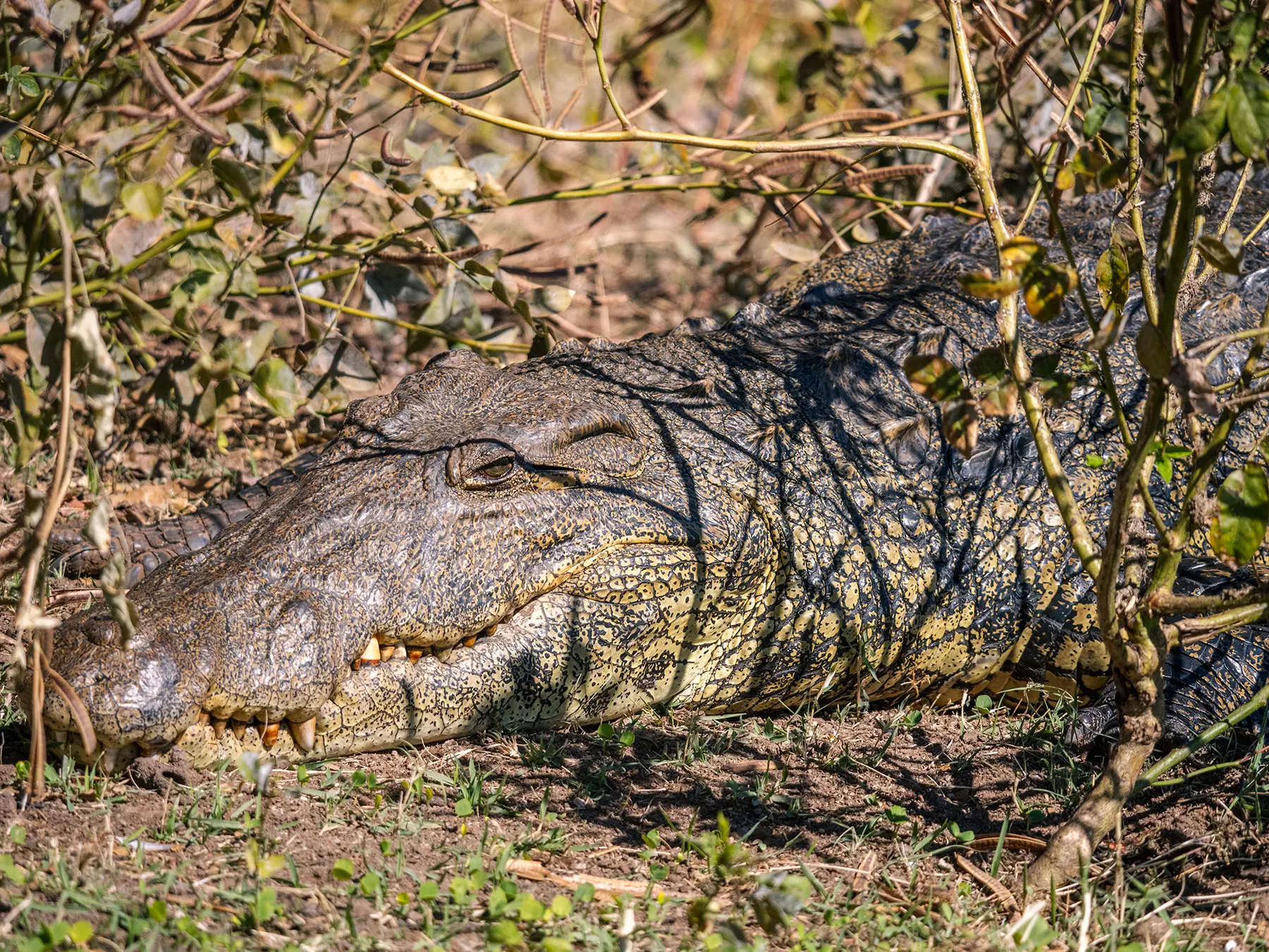
Where to Stay at Chobe Riverfront
Kasane has any number of lodges and guest houses, so there’s plenty of choice. I especially like the 4-star River View Lodge, perched on the riverbank and offering magnificent views and stunning sunsets from its sundeck and pool.
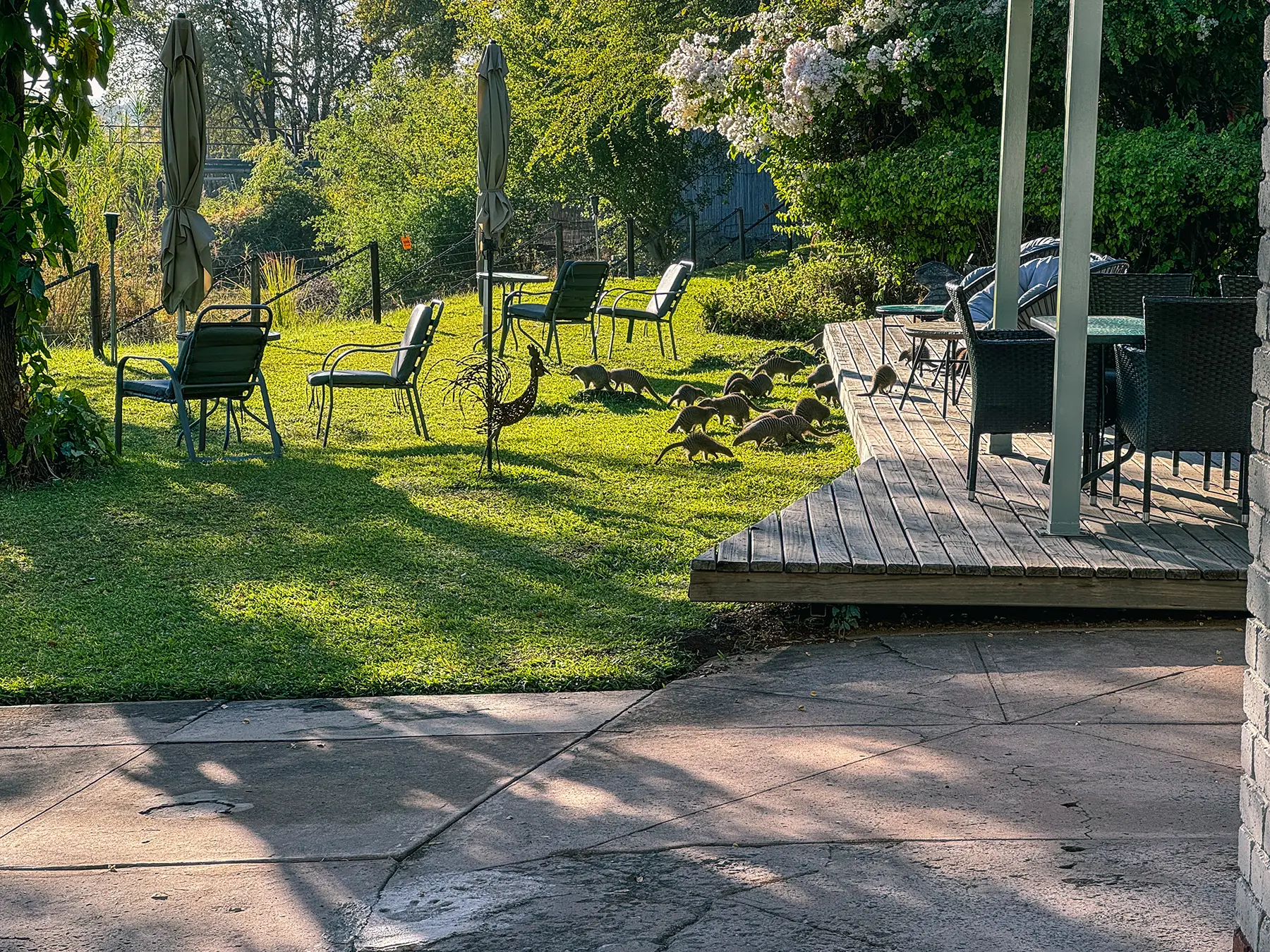
My Experience of Chobe Riverfront
For me, an afternoon river boat cruise was a wonderful end to my safari in Botswana. The calm waters made for such a smooth, relaxing ride and at the same time, I saw an amazing variety of animals, including some male buffalos alongside water birds such as herons and cormorants, and the biggest crocodiles I’ve ever clapped eyes on!
We got pretty close to a number of massive crocs basking in the sunshine, and I was astonished at how relaxed they were around us. There were also water monitor lizards and hippos, but for me, the icing on the cake was when a whole elephant family crossed the river just ahead of us.
It was fairly warm on the boat, so I found that shorts and a vest top were all I needed to wear – plus a generous layer of high-factor sunscreen so I didn’t burn!
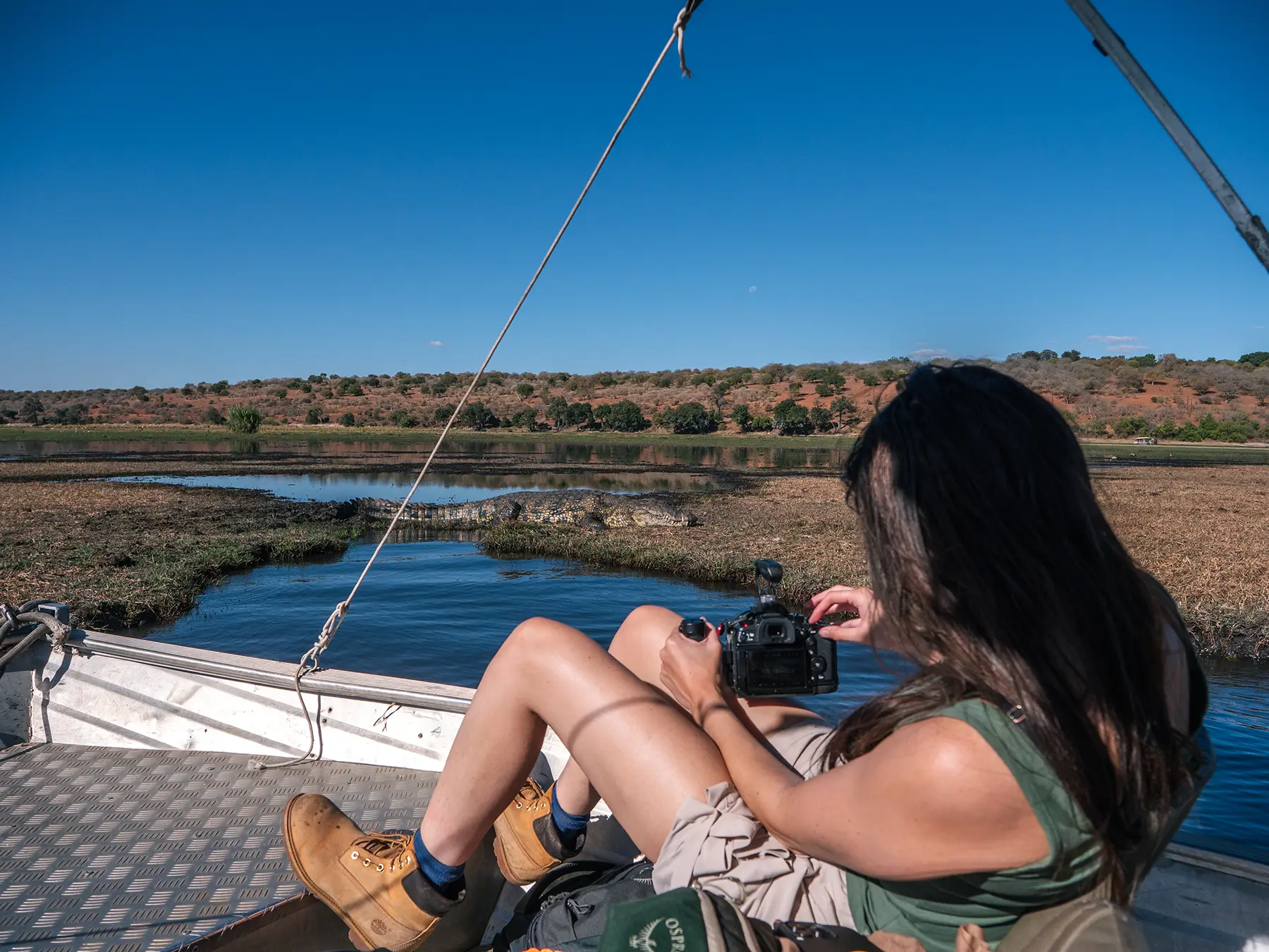
Day 3: Kasane to Victoria Falls
Drive time (excluding game drives): 1 hour including border crossing
Today, you’ll be leaving Botswana and crossing into Zimbabwe to see the world-famous Victoria Falls. One of the Seven Natural Wonders of the World, the Falls are known locally as Mosi-oa-Tunya, a name that means “the smoke that thunders”. After a quick and easy border crossing, you’ll spend the afternoon walking the view points of this iconic landmark before turning in for the night.
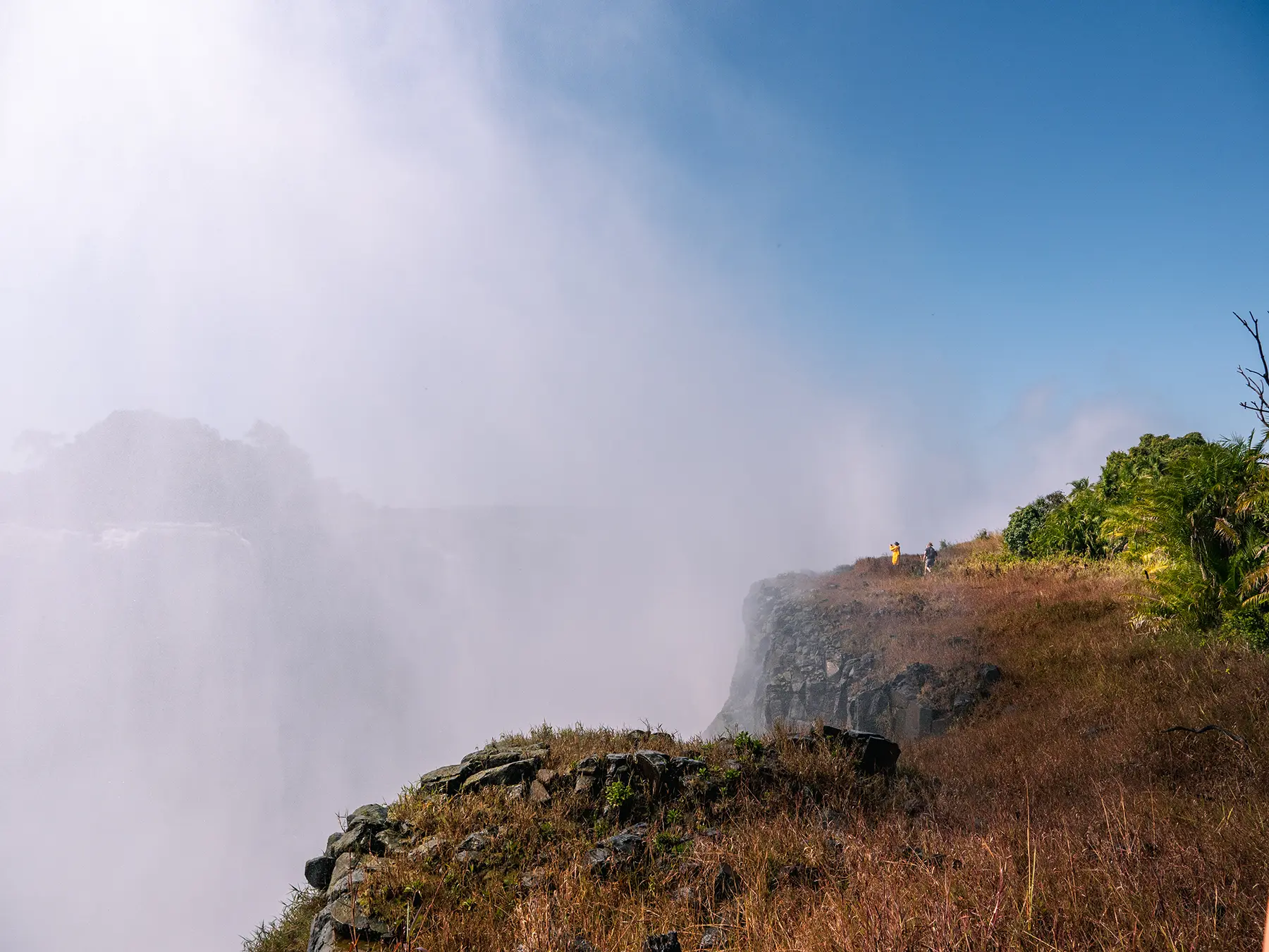
Itinerary
This morning, you’ll breakfast at your lodge in Kasane and then head over the border into Zimbabwe to see Victoria Falls. This trip can take about an hour altogether depending on how long you’re waiting at the border, so I’d recommend getting there early to beat the queues as these tend to get longer as the day goes on.
Once you arrive, you’ll pay for your visa (US $30 to $55 for single entry depending on your nationality). Be sure to let the border officials know if you’d also like to see the Falls from the Zambian side, as you need to be able to re-enter Zimbabwe afterwards.
Alternatively, you could purchase the KAZA Univisa, priced at around US$50, which covers multiple crossings between Zimbabwe and Zambia for up to 30 days. Be sure to have cash with you as the card machine is sometimes out of action.
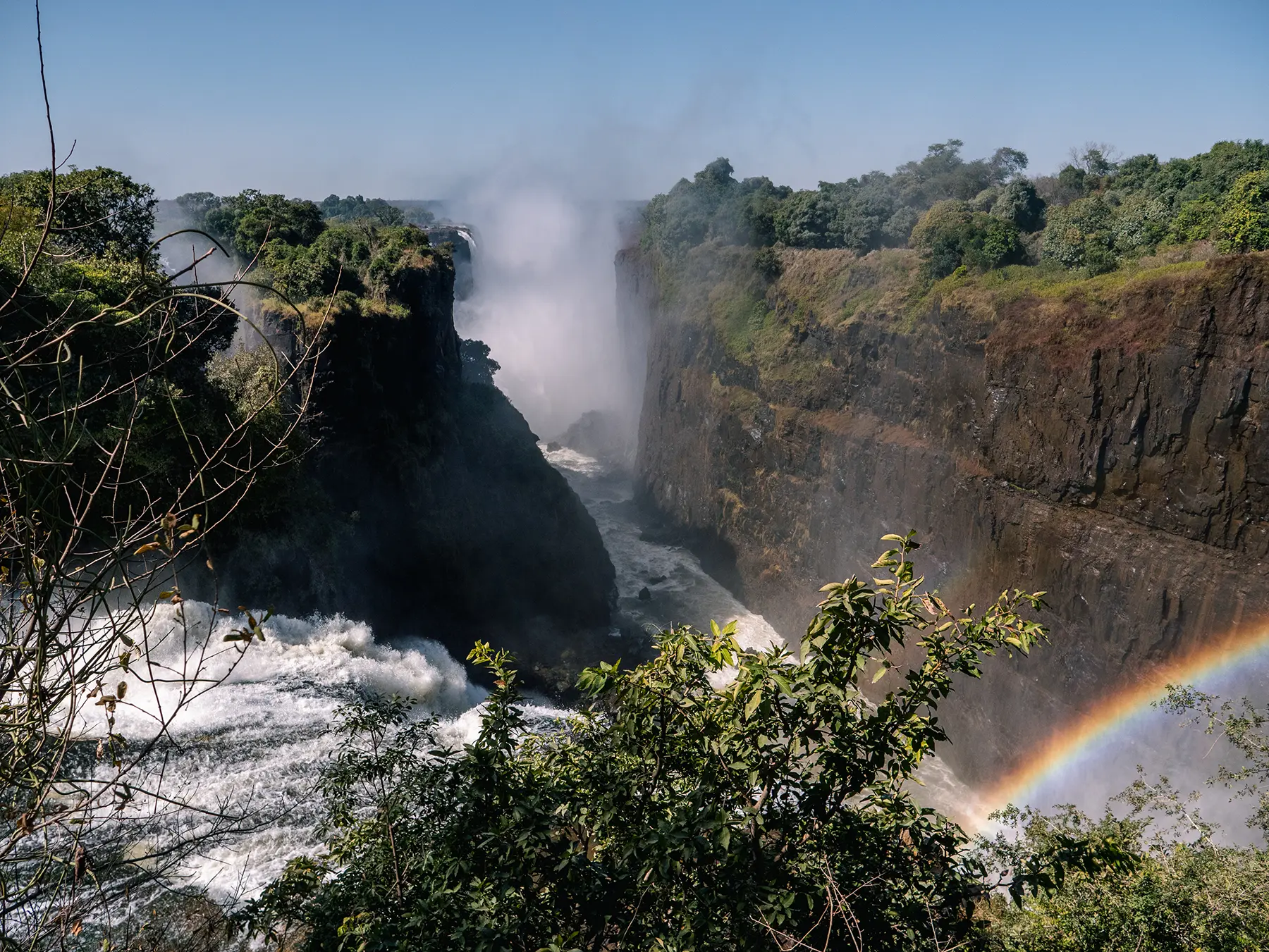
It takes just ten minutes to reach the border from Kasane, and after you’ve passed through border control, Victoria Falls is a pleasant 50-minute drive through picturesque mopane forests. Keep an eye out for wildlife as you go; I spotted a few elephants beside the road when I made this trip.
When you get there, you can spend the afternoon viewing the Falls from the various viewpoints before travelling on to your accommodation for the night in Victoria Falls town or across the Zambian border in Livingstone.
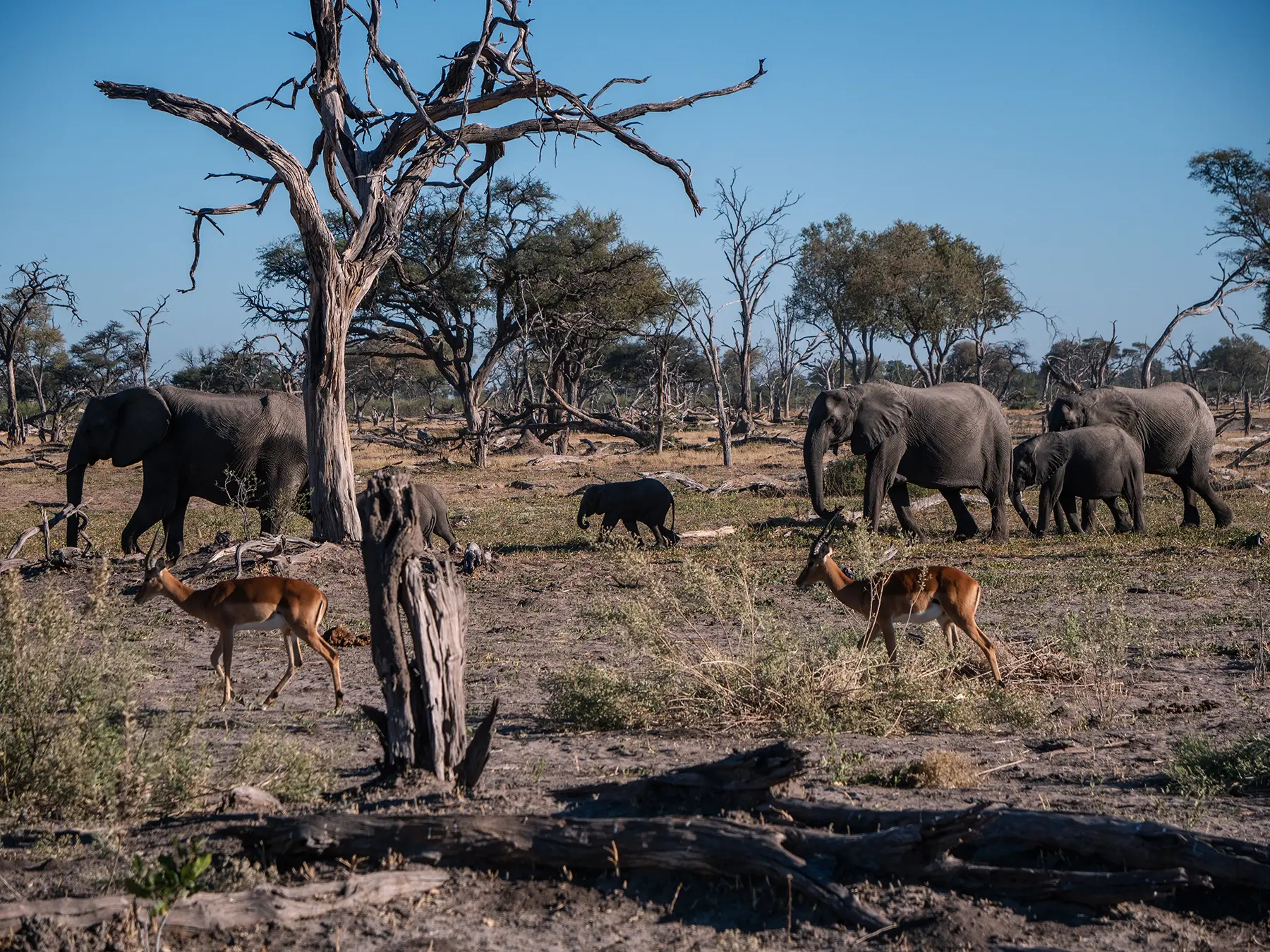
About Victoria Falls
Spanning the Zambezi River on the border between Zimbabwe and Zambia, Victoria Falls is locally named Mosi-oa-Tunya (“the smoke that thunders”), and as you approach this Wonder of the World, it’s easy to see why.
After the peak rains, some 500 million litres of water per minute cascade over a 1.1-mile (1.7 km) rock shelf, forming a wall of water some 354 feet (108 metres) tall. The spray this creates rises to a height of over 1,300 feet (400 metres) and can be seen up to 25 miles (40 kilometres) away, while the deafening roar of the water is audible at the same distance.
Missionary David Livingstone first documented the Falls in 1855.
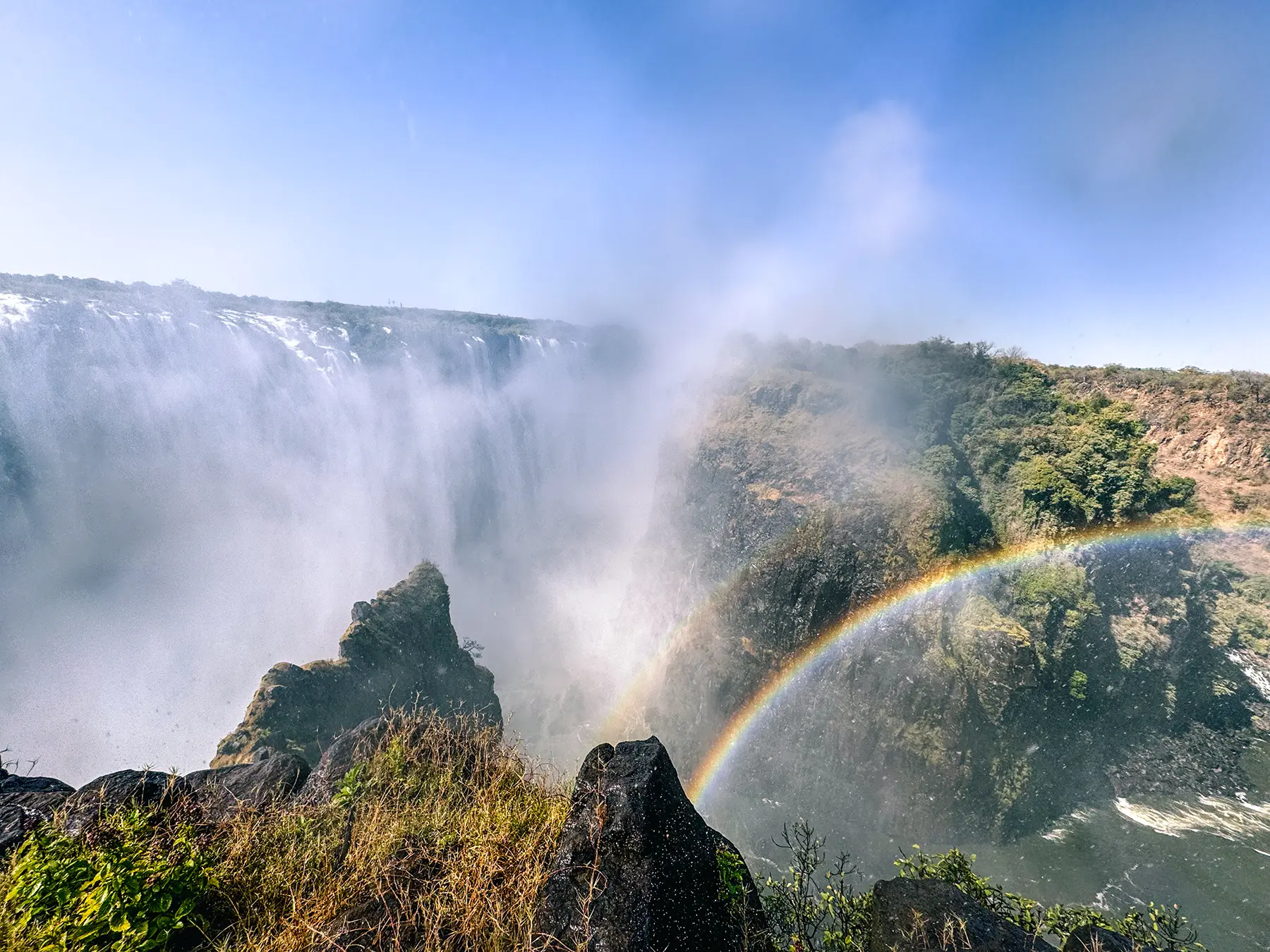
Tips for Visiting Victoria Falls
- If you’re planning to see the Falls from both the Zimbabwean and Zambian sides, I’d recommend purchasing the multiple-entry US$50 KAZA Univisa pass, which is valid for up to 30 days.
- Be sure to have cash with you as the card machine was on the blink when I visited.
- Be prepared to get wet. Really, really wet! Bring a poncho or waterproof coat and a towel as well if you can.
- Similarly, make sure you have a waterproof bag to protect your camera and phone.
- As the trails you’ll be walking may be wet and slippery, comfortable hiking shoes are a must. The heat can be intense as well, so don’t forget your sunscreen and a hat.
- If you only have time to view the Falls from one side, don’t worry; the views from the Zimbabwean side are incredible, plus you can save a few dollars on the entry fee for the Zambian side.
- Devil’s Pool is usually only open between mid-August and mid-January when water levels are lower, as it’s unsafe when the Falls are full.
- If you don’t mind skipping Devil’s Pool, the period just after the rainy season is when the Falls are at their fullest and most dramatic. This is the best time to see the sun and mist form exquisite rainbows across the gorge.
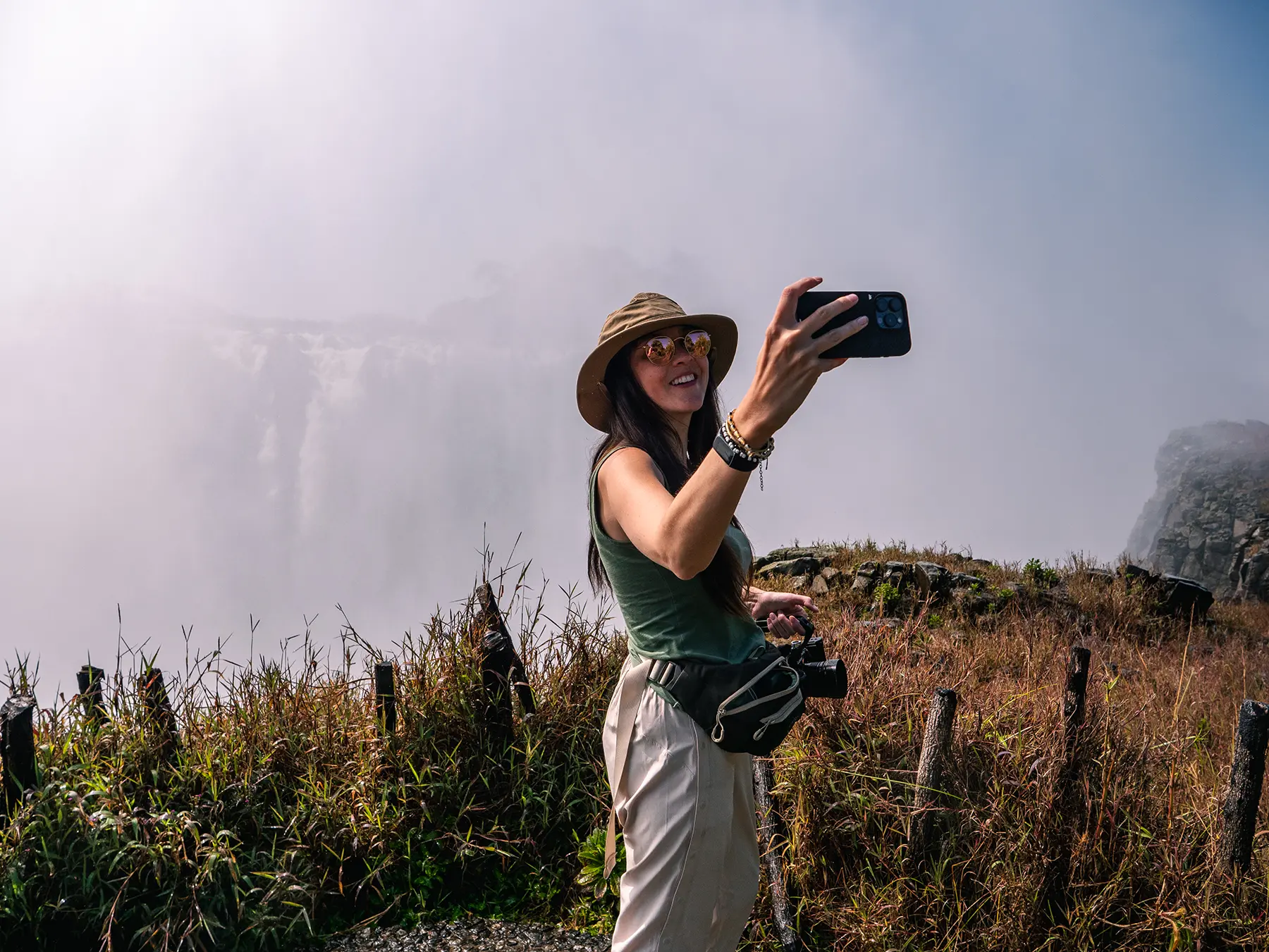
Optional Activities
- Walk the rainforest viewpoints and follow the hiking trails to iconic spots including Devil’s Cataract, Rainbow Falls, Horseshoe Falls and the Victoria Falls Bridge. You’ll need at least 3 hours to do them justice.
- The Knife Edge Bridge on the Zambian side offers stunning views of one of the gorge’s deepest points.
- Book a helicopter flight for unparalleled panoramic views of the Falls.
- If water levels are low, take a dip at the edge of Devil’s Pool on the Zambian side.
- For the real adrenaline junkies out there, you can also do a bungee jump!
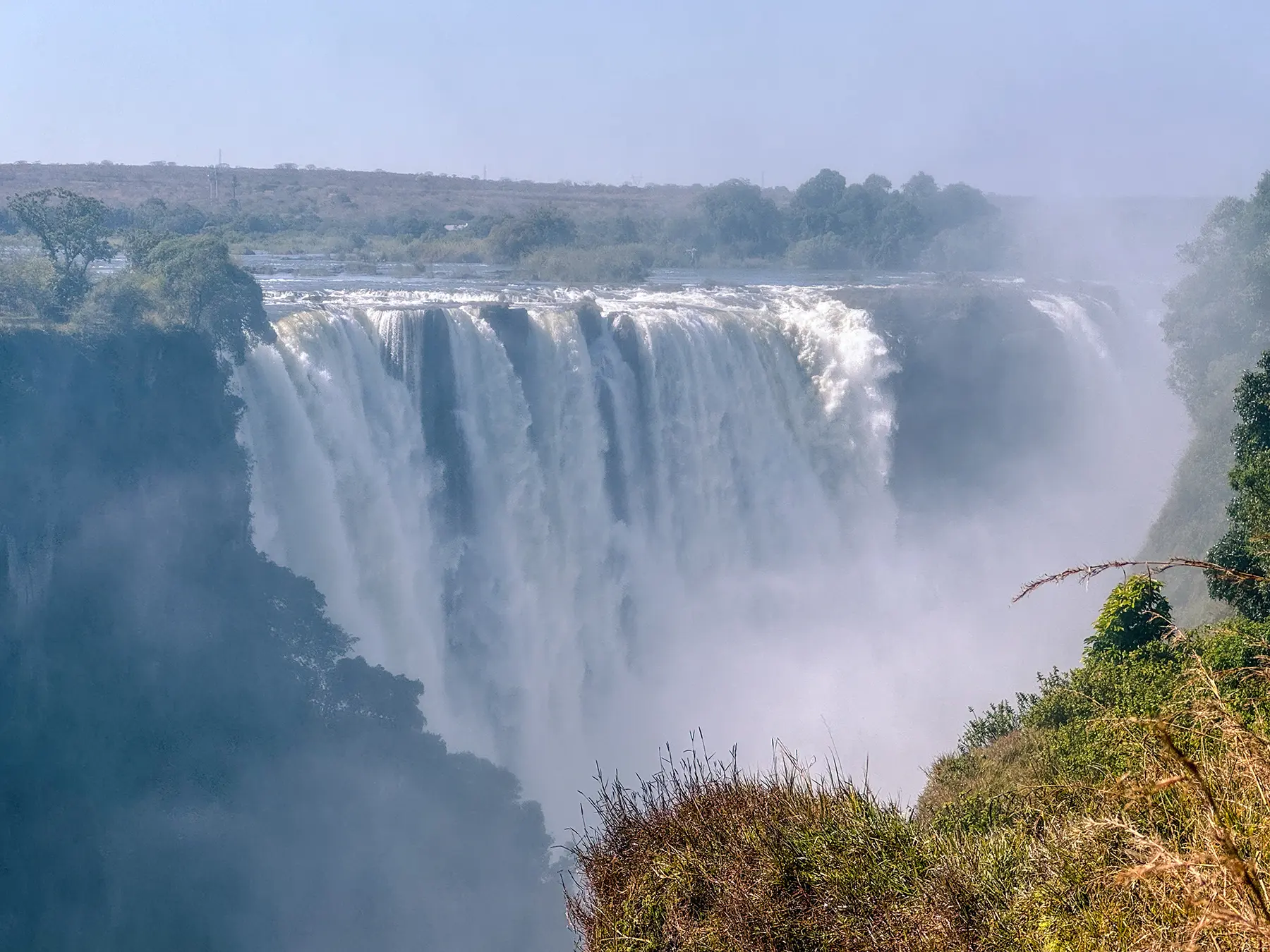
Where to Stay at Victoria Falls
There’s no shortage of accommodation nearby, with numerous lodges around the Falls in Victoria Falls town on the Zimbabwean side and a large selection in Livingstone on the Zambian side to boot. Both towns have international airports, so they are equally convenient in terms of your onward journey.
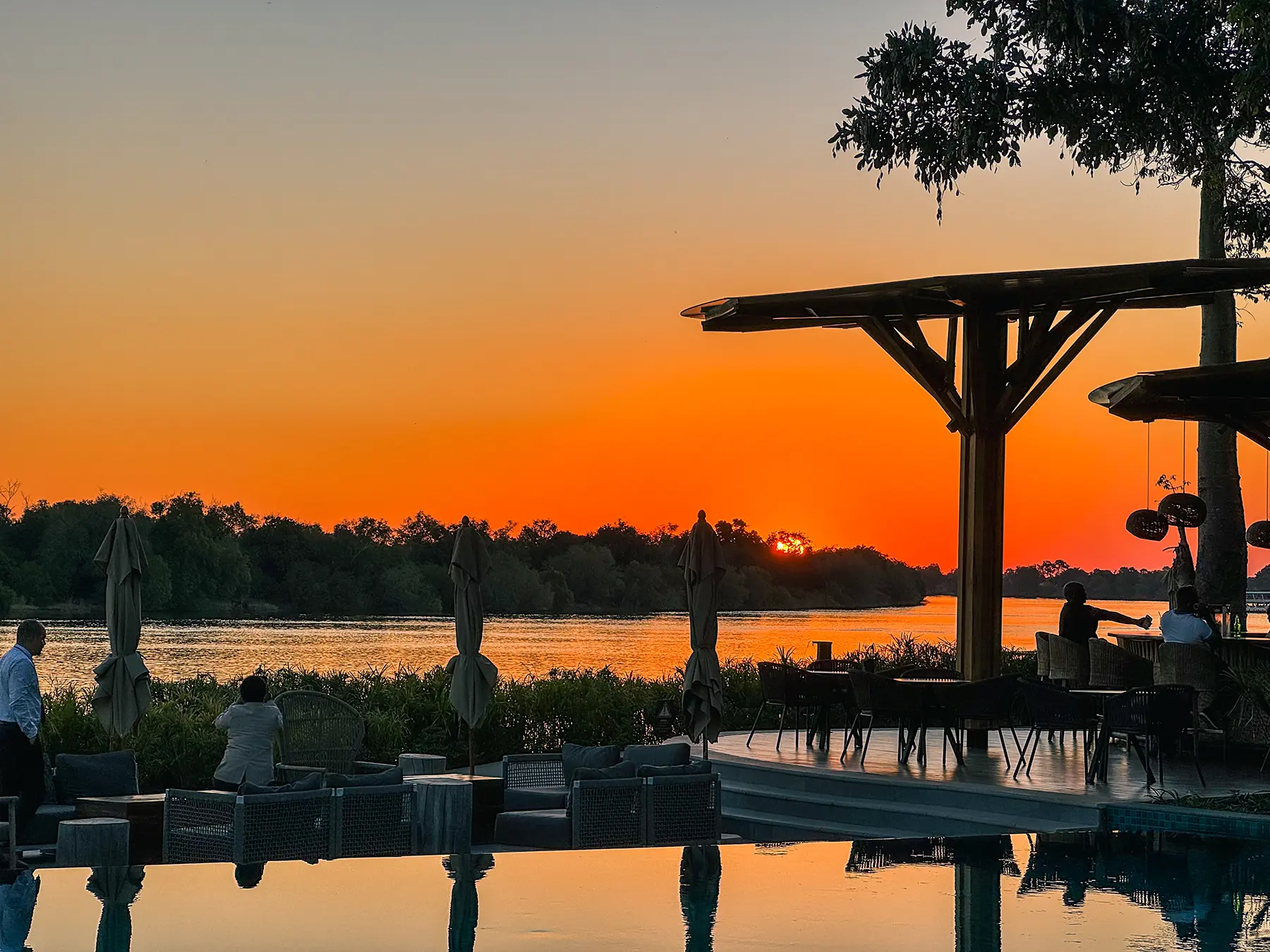
My Experience of Victoria Falls
Once I knew I’d be travelling to Kasane in Botswana, tacking on a trip to Victoria Falls was a no-brainer! I decided to add it at the end of my three-week trip, booking two nights’ accommodation in Livingstone, Zambia for after.
However, I probably should have researched the details a little better; if I had, I’d have realised that Zimbabwe was the best place to see the Falls from, and that coming from Botswana, I’d first have to cross into Zimbabwe rather than Zambia. In fact, I later learned that the border crossing between Botswana and Zambia is supposed to be a lengthy, painstaking process.
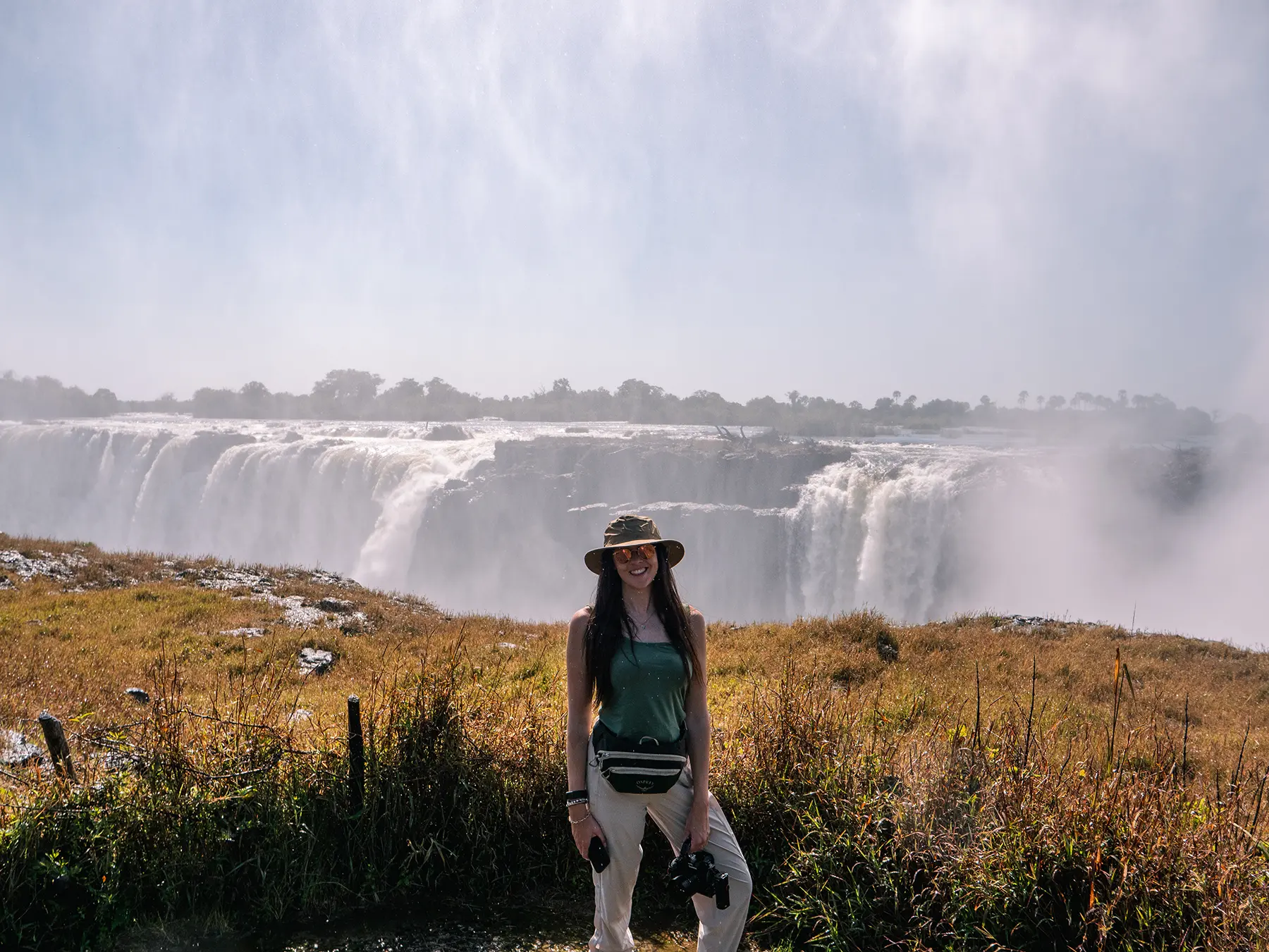
So when my tour operator told me we’d be seeing Victoria Falls from the Zimbabwean side and purchasing a visa on arrival at the Botswana-Zimbabwe border, I was a little worried because I usually like to sort my visas in advance.
But as it turned out, it was actually one of my easiest ever African border crossings. It did take a little longer than I’d have liked, but that was because I landed after a vehicle of 20 guests (that’s why I recommend arriving early to beat the queues) and in the end, I was sorted in under an hour.
The only blip was when the officials told me I had to pay cash for my visa despite apparently accepting card payments – but as I was prepared and had cash to hand, this was easily resolved.
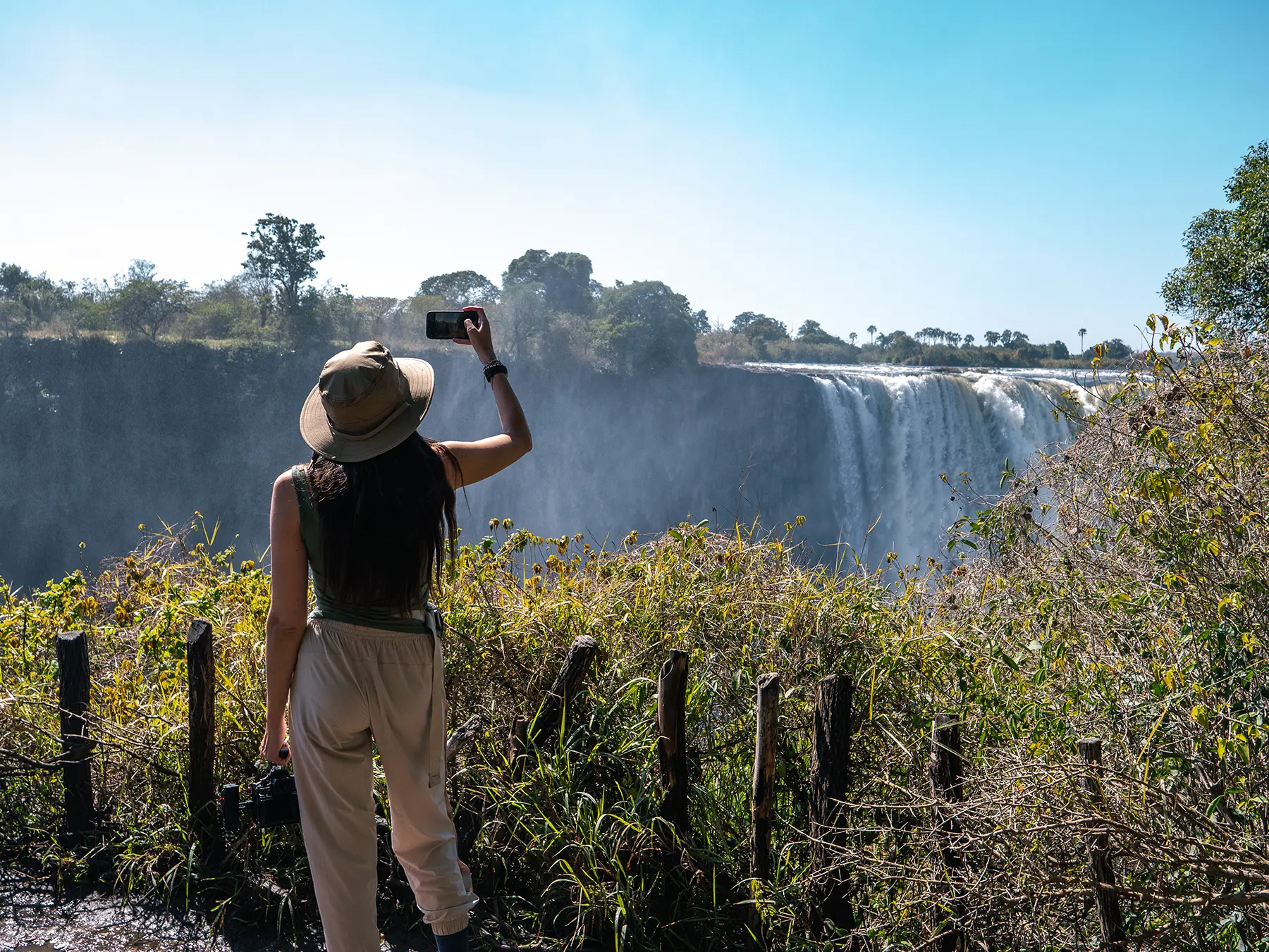
Once across the border, we enjoyed a short, pleasant drive to Victoria Falls, admiring the beautiful scenery and even spotting an elephant family along the way. We passed through Victoria Falls town and I was struck by how pretty it was. If I hadn’t already booked accommodation in Livingstone, I’d have loved to have spent some more time there.
And then we’d arrived! My tour operator pulled into a large car park opposite the national park and I walked down to the entrance.
I’d booked this outing with a tour operator so I’d have a transfer to the Falls, but hadn’t opted to include a guide, and I really didn’t feel I missed out as there are so many helpful information boards all over the park. I paid my $50 entrance fee (by card!!) and then headed into the park.
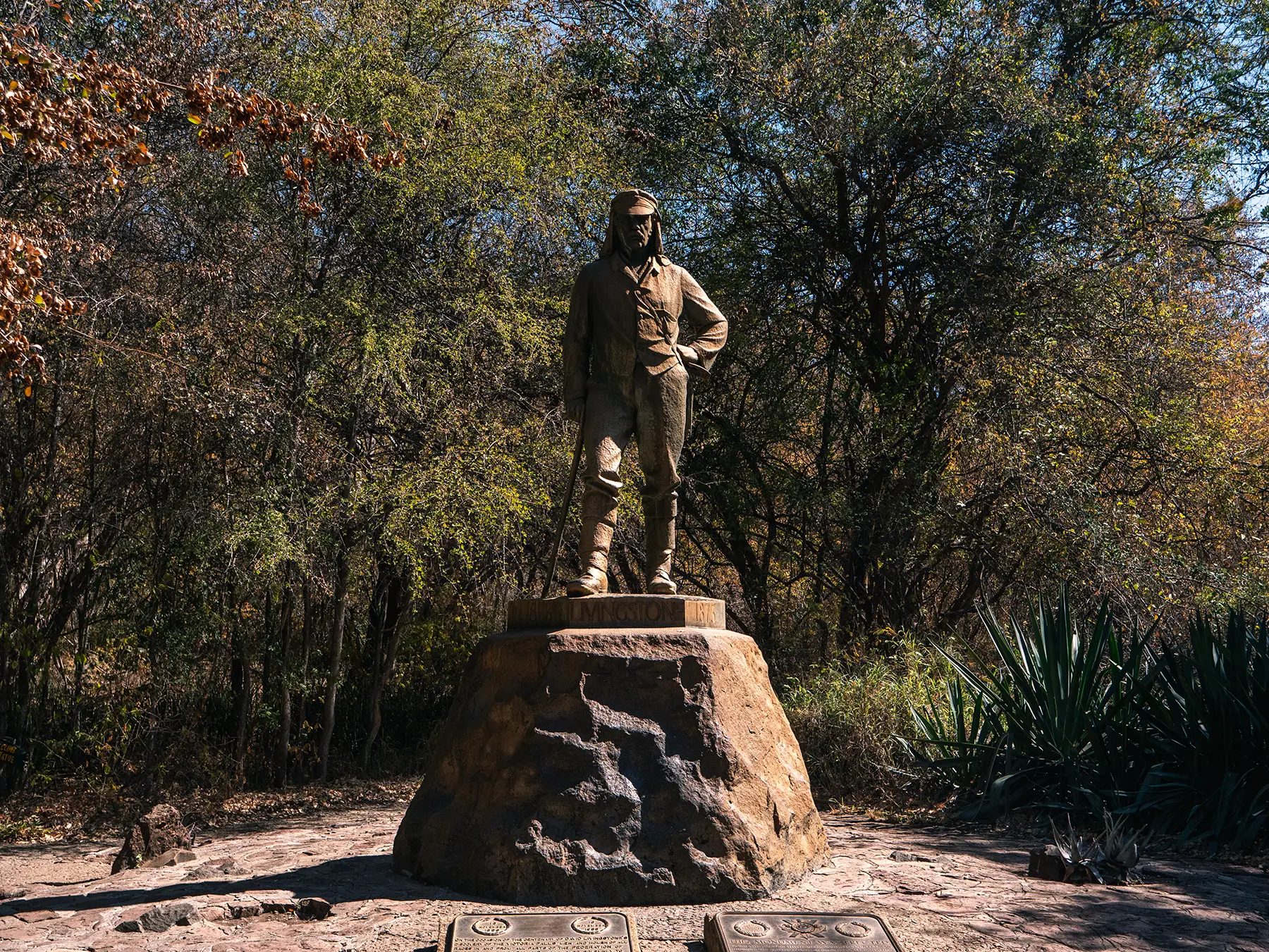
It takes about 3 hours to cover all the viewpoints if you allow yourself ample time to just take it all in. That’s what I did, and it was time well spent!
I genuinely cannot find the words to convey how incredible it was to see Victoria Falls for the first time. You’ll just have to go and see it for yourself!
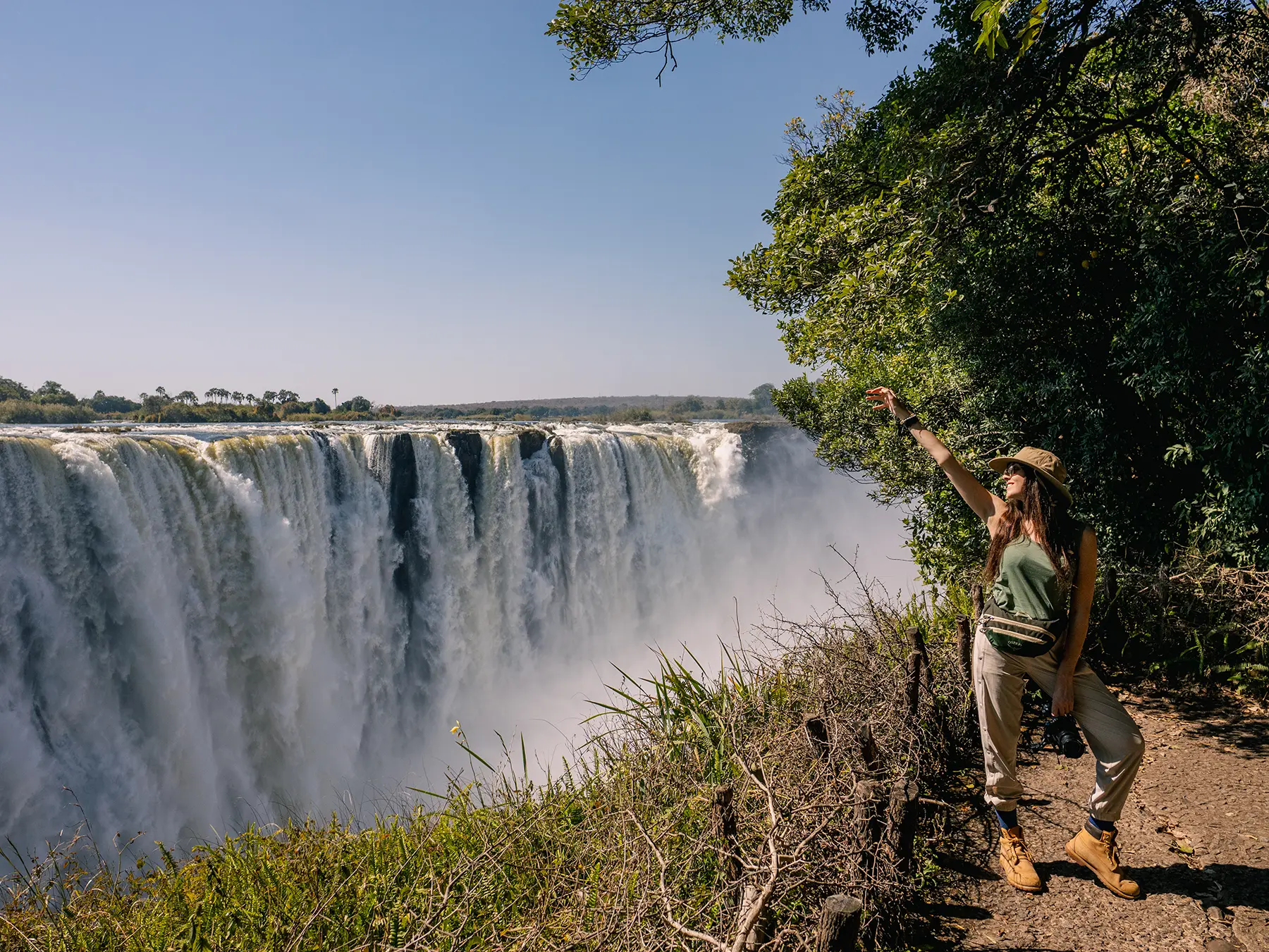
The only thing I’d have done differently would be putting my poncho on far sooner. There’s significant spray from viewpoint 13 or thereabouts, and you’ll be soaked to the skin by the time you get to number 14 unless you’re wearing something waterproof, as I duly discovered.
This is no exaggeration – it felt like I was in the shower! Be sure to bring a waterproof bag if you have a DSLR camera as I cannot emphasise enough just how wet things get.
After soaking up the incredible views of the Falls from each and every viewpoint on the Zimbabwean side (and soaking up a significant portion of the Falls themselves!), I crossed the border into Zambia. By this point, though, I was pretty tired and wringing wet so I opted to skip the 3-hour walk and $20 entrance fee to view the Falls from this side.
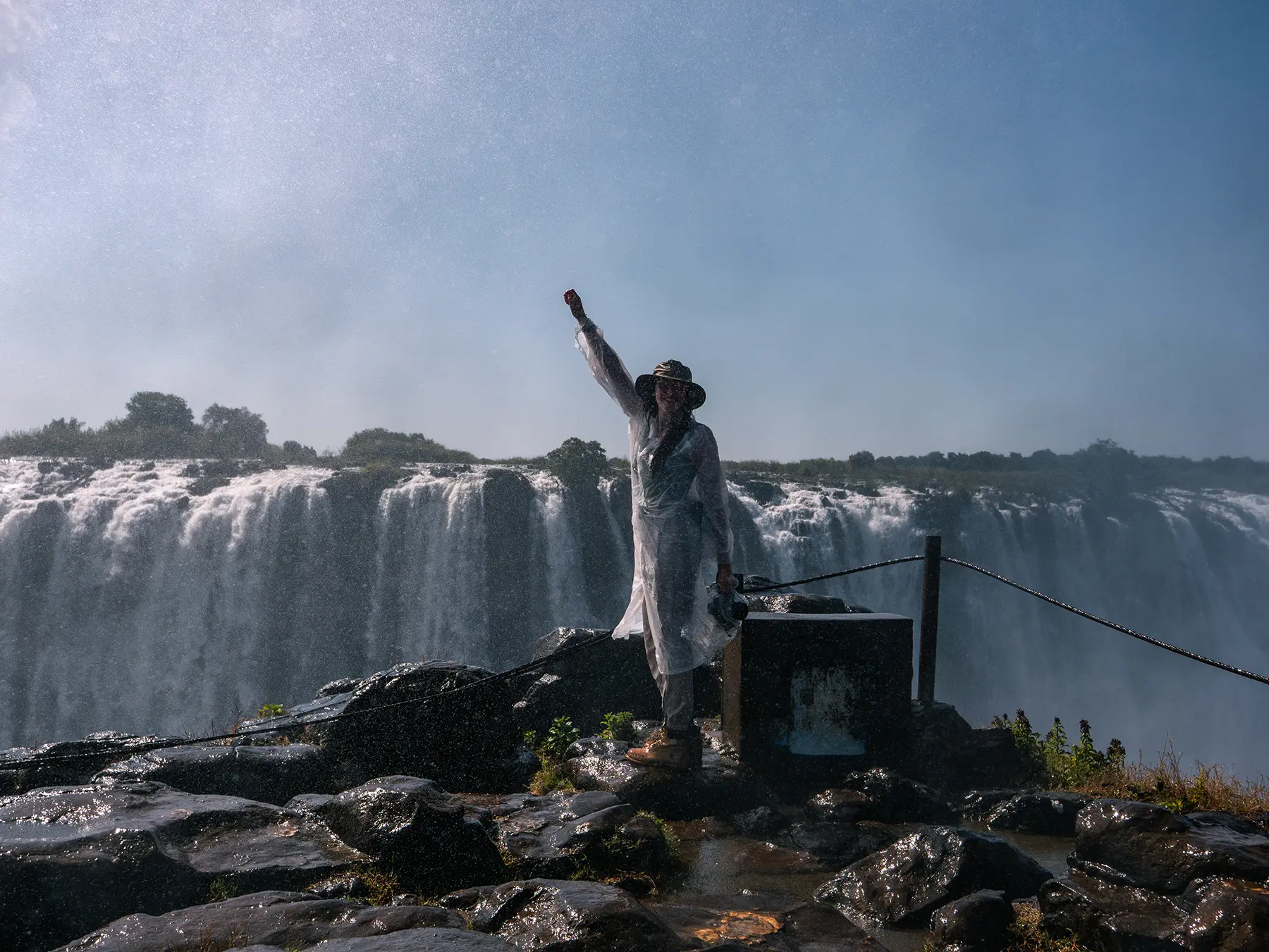
Option 4
3-Day Central Kalahari Safari Itinerary Overview
The remote Central Kalahari Game Reserve is one of my favourite places in Botswana and forms the focus of this 3-day safari itinerary.
I’ve based this trip on my own experiences here, opting for air transfers to maximise game drive time. Three days might seem very short, but even within this time, you stand an excellent chance of some amazing encounters, from black-maned lions to cheetahs.
Quick Facts
Total drive time (excluding game drives): Around 10 hours by road in total, an average of just over 3 hours per day. The longest single transfer is about 5 hours (Days 1 and 3), though this itinerary flies both legs in 30 to 45 minutes.
Best times of year: December to April, when the rains turn the desert green and fill the pans, drawing large numbers of animals and birds, though the dry season also offers good game viewing.
3-Day Central Kalahari Safari Map
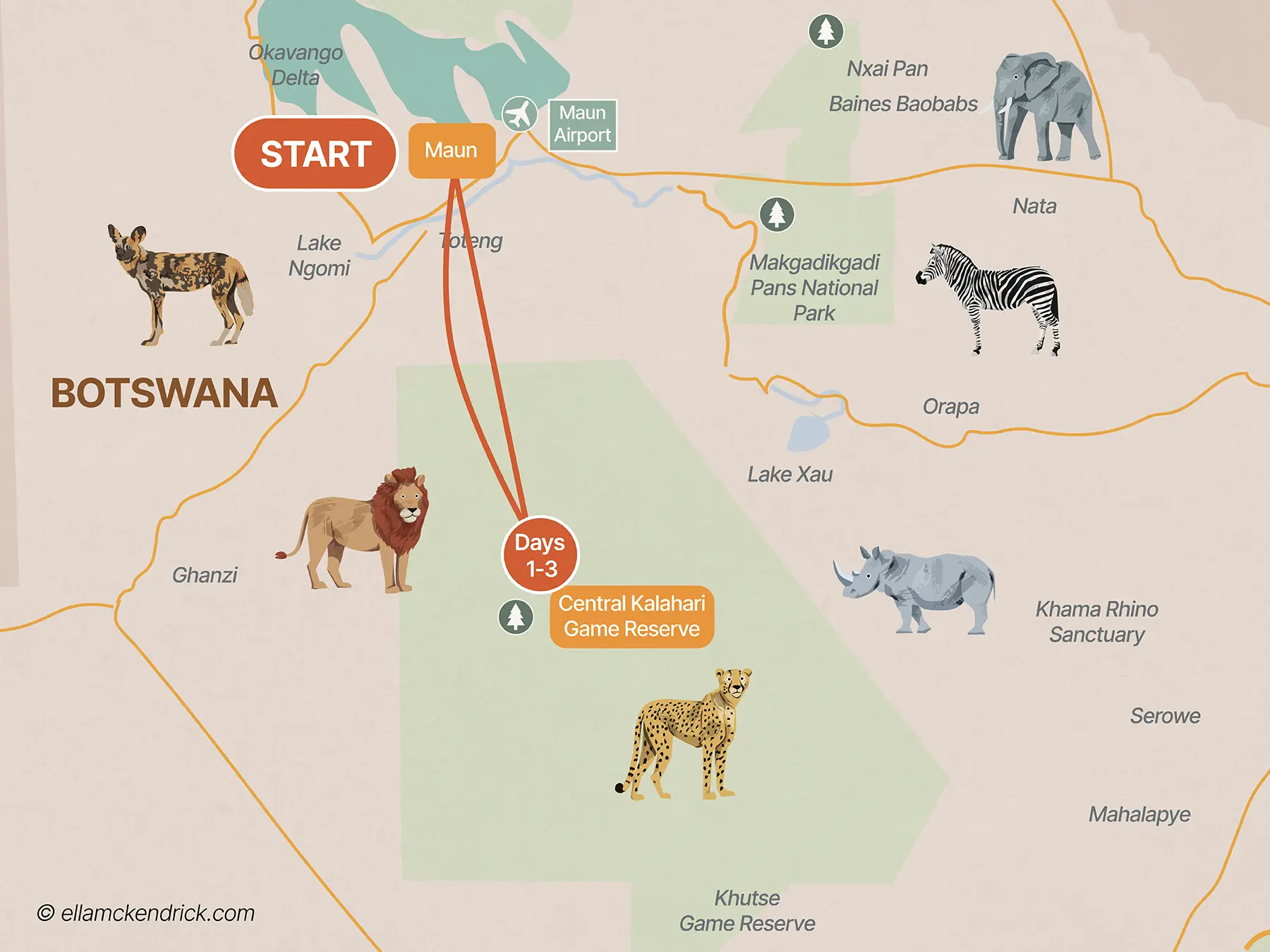
Day-by-Day Breakdown of the Perfect 3-Day Central Kalahari Safari
The Central Kalahari has so much to offer that three days will zip by, so I’ve crafted this itinerary to make sure you make the most of every moment!
I have also considered the distance between Maun and the Central Kalahari Game Reserve and the driving times in order to come up with the most enjoyable itinerary.
You can get quotes from the same local tour companies I use to organise my own trips here: Safaris By Ella
Click any of the days below to jump to my full notes on that day.
Day 1: Maun to Central Kalahari Game Reserve
Drive time (excluding game drives): 5 hours
Today, you’ll be departing Maun and travelling deep into the Central Kalahari Game Reserve. One of the remotest safari destinations in the world, the Central Kalahari is the largest reserve in Southern Africa. Your transfer will get you there in time for your first afternoon game drive, a first glance at the wild, open expanses of a desert that supports more life than you’d ever suspect.
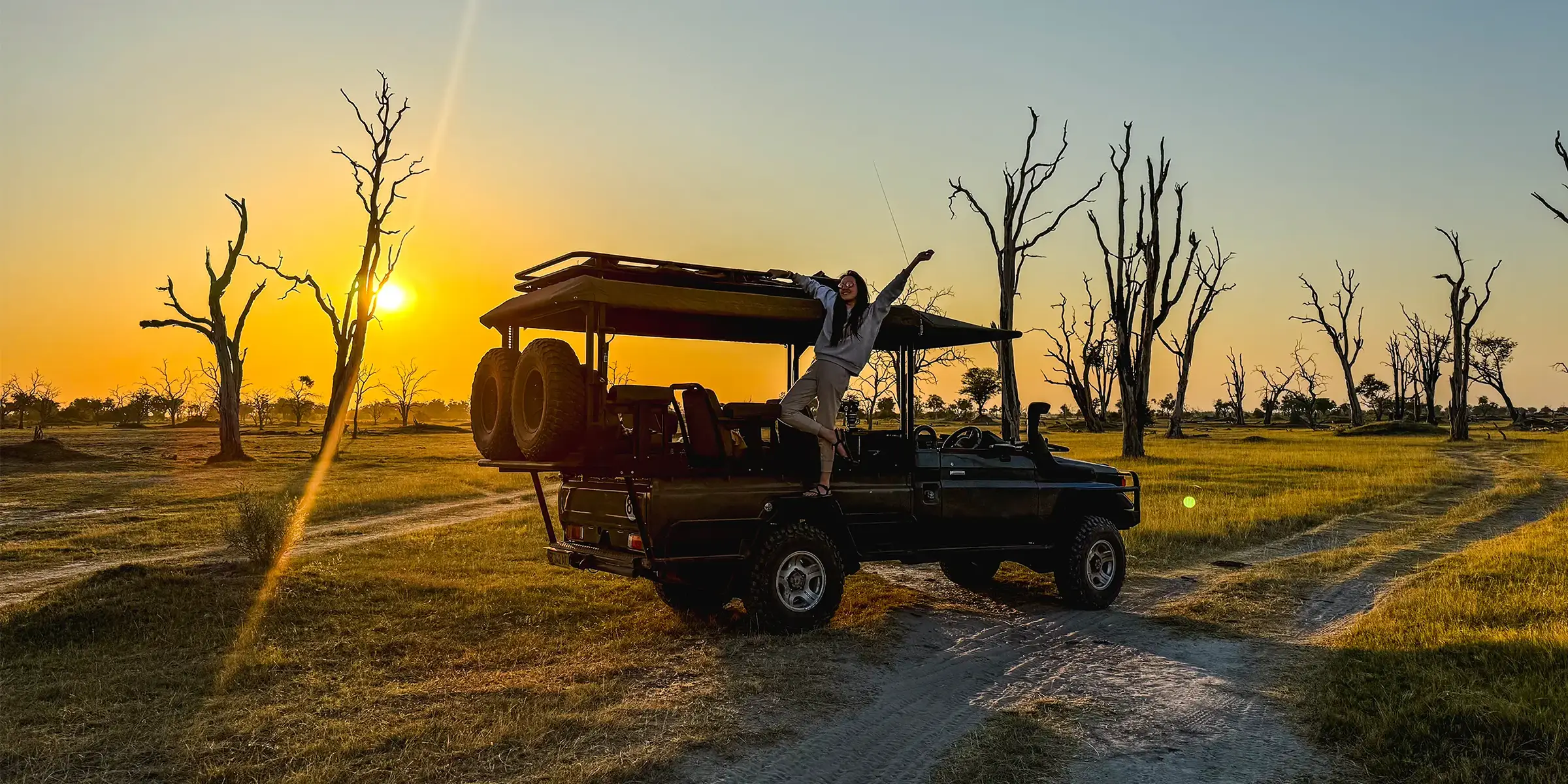
Itinerary
This morning sees you leave Maun behind as you head south towards the Central Kalahari Game Reserve. The 125-mile (200 km) distance takes about five hours to cover, so you could be forgiven for swapping the bumpy tracks for a smooth light aircraft hop that takes a mere 30 to 45 minutes.
Don’t worry though. If you decide to drive, you’ll be picked up early so you get to the reserve in time for lunch and an afternoon game drive.
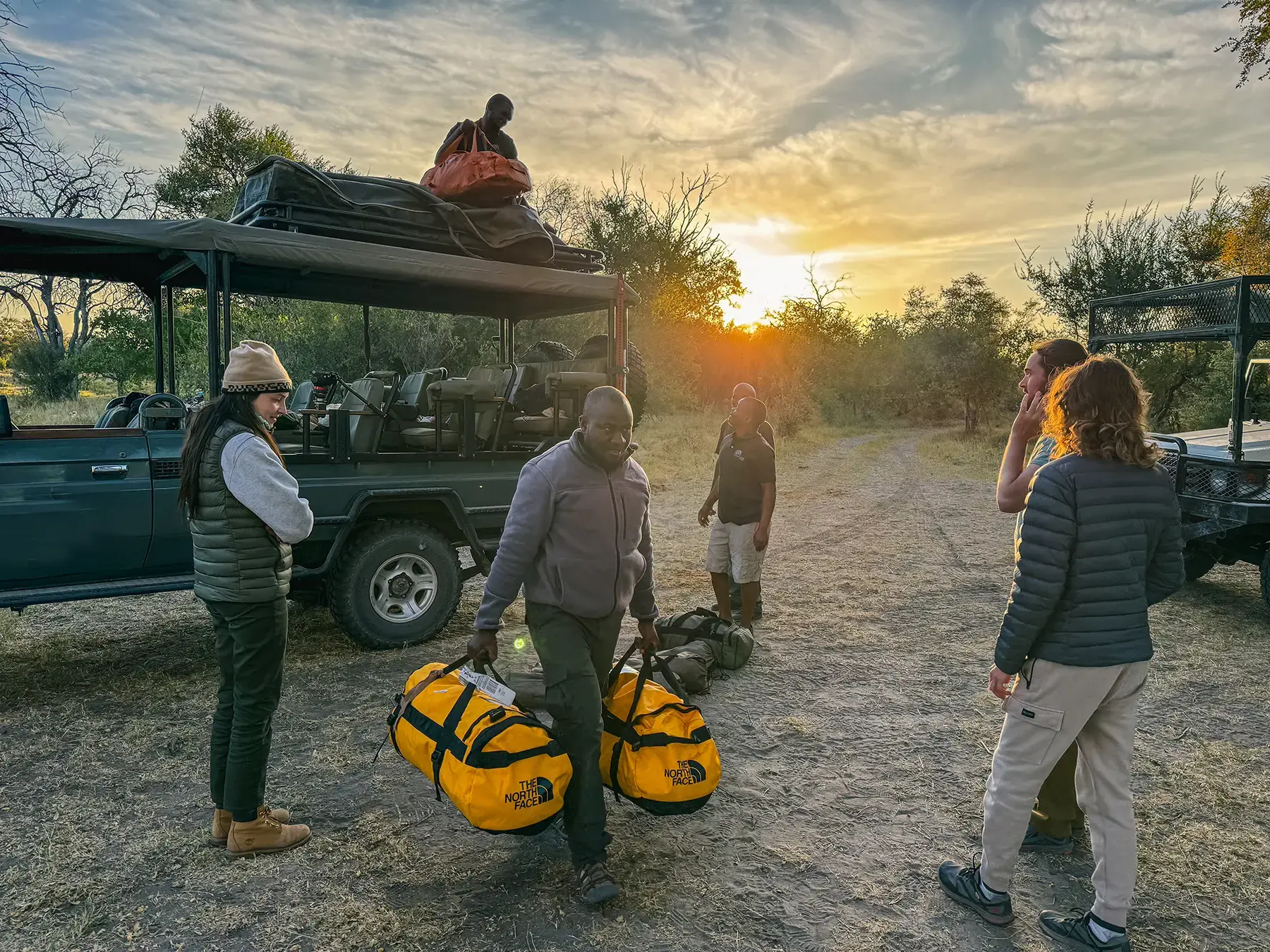
After settling in, you’ll hop into an open 4×4 and head out on your first game drive as the heat of the day starts to subside. Central Kalahari is renowned for its black-maned lions, and its endless, flat terrain makes it ideal for cheetahs on the hunt, so keep a careful watch on the plains as you go.
A few hours later, it’s already time to head back to camp and dine under an inky sky jewelled with an impossible multitude of stars.
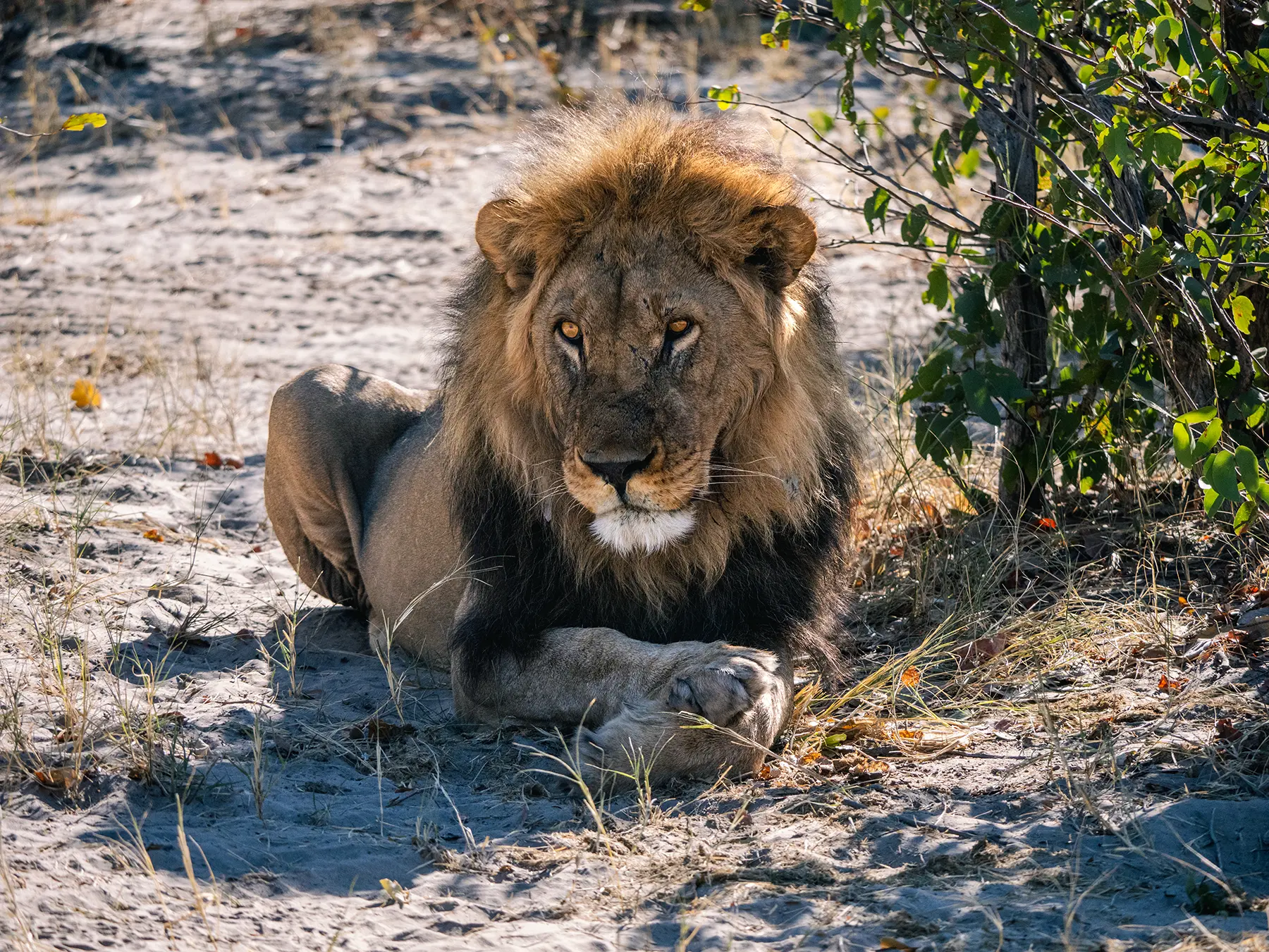
About Central Kalahari Game Reserve
Covering an area twice as large as Wales, the Central Kalahari Game Reserve is the largest reserve in Southern Africa and the second largest in the world. Situated in one of the most remote areas on the planet, the reserve is characterised by a unique, semi-arid landscape with vast, flat savannah and ancient salt pans.
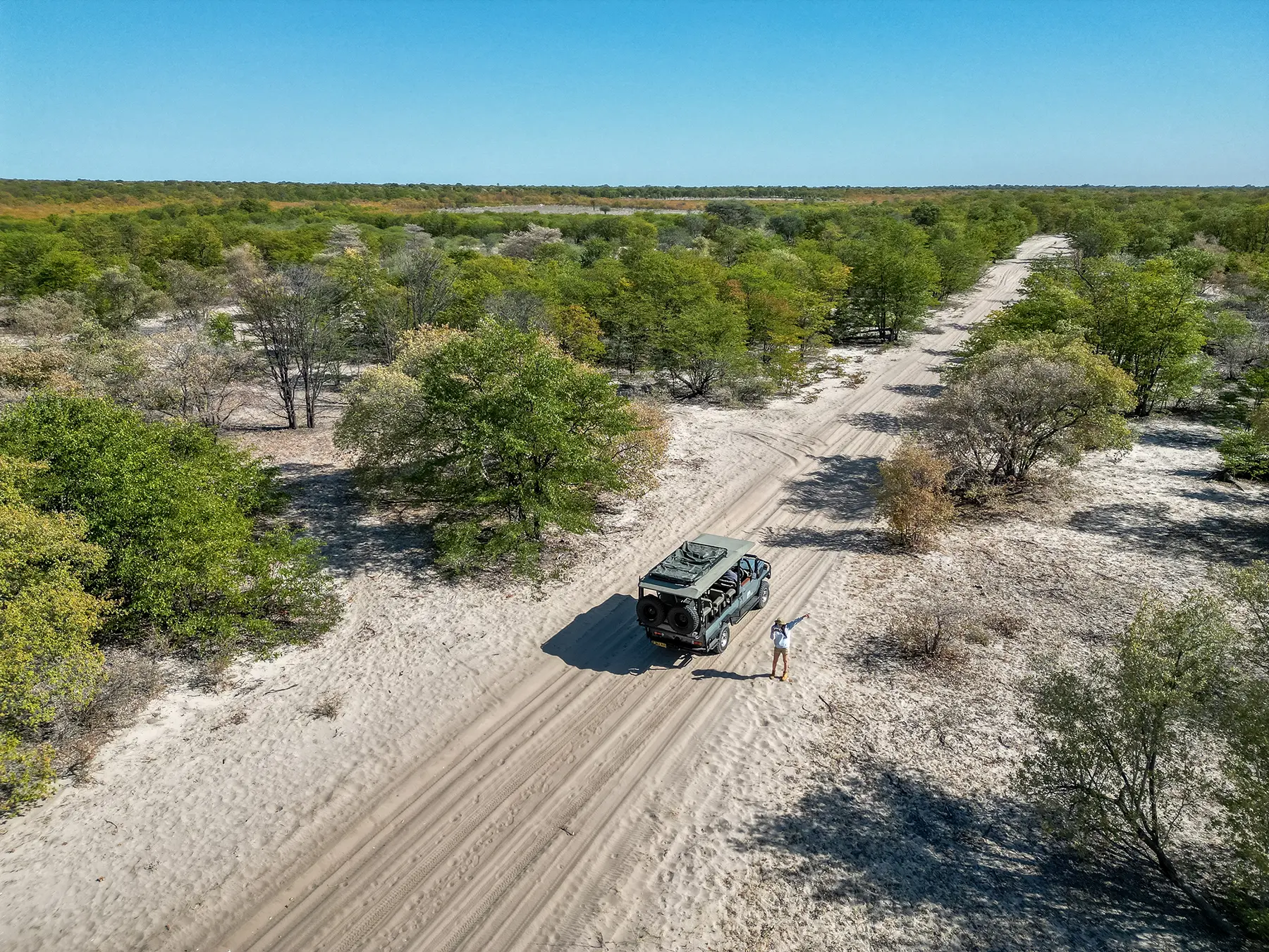
Grazing is at its best in the northern regions of the reserve, and since this area also contains more waterholes than others, it is frequented by large numbers of predators, plains game and bird species.
Nestled in the far north-eastern corner, Deception Valley is famed for its dense predator population as well as its remarkable ancient salt pan filled with blue clay that appears to shimmer like water from a distance.
From November on, as the wet season takes hold, the desert becomes almost unrecognisable as lush green grasses cover the dusty plains and the salt pans fill with water, attracting hordes of animals and birds.
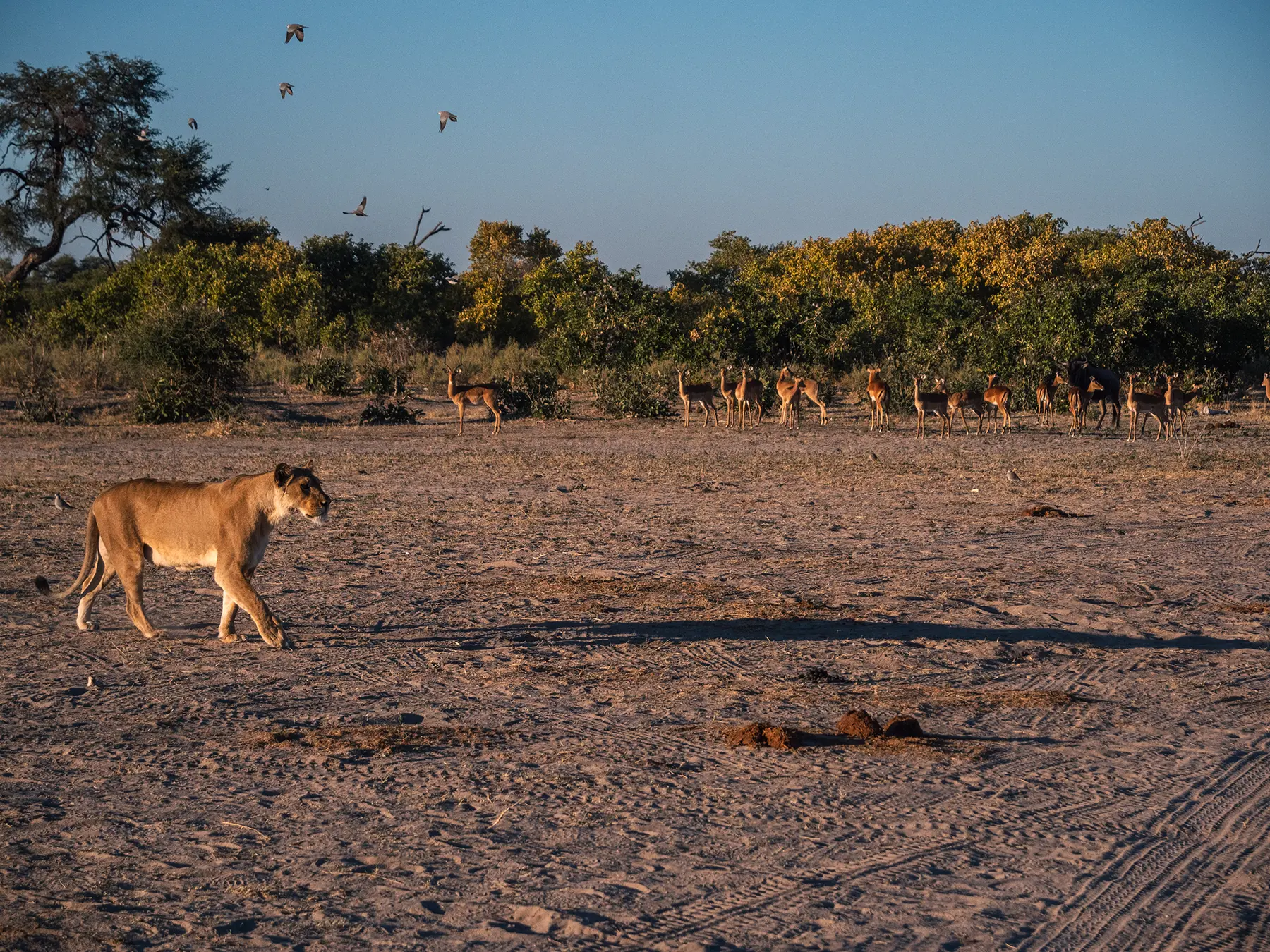
What Wildlife Can I See in Central Kalahari Game Reserve?
Desert in name but not by nature, the reserve is packed with resilient wildlife that have adapted to the harsh conditions here. Apex predators include the renowned black-maned lions as well as leopards, cheetahs, brown and spotted hyenas and wild dogs. There are also large numbers of herbivores such as gemsbok, wildebeest, springbok and other antelope.
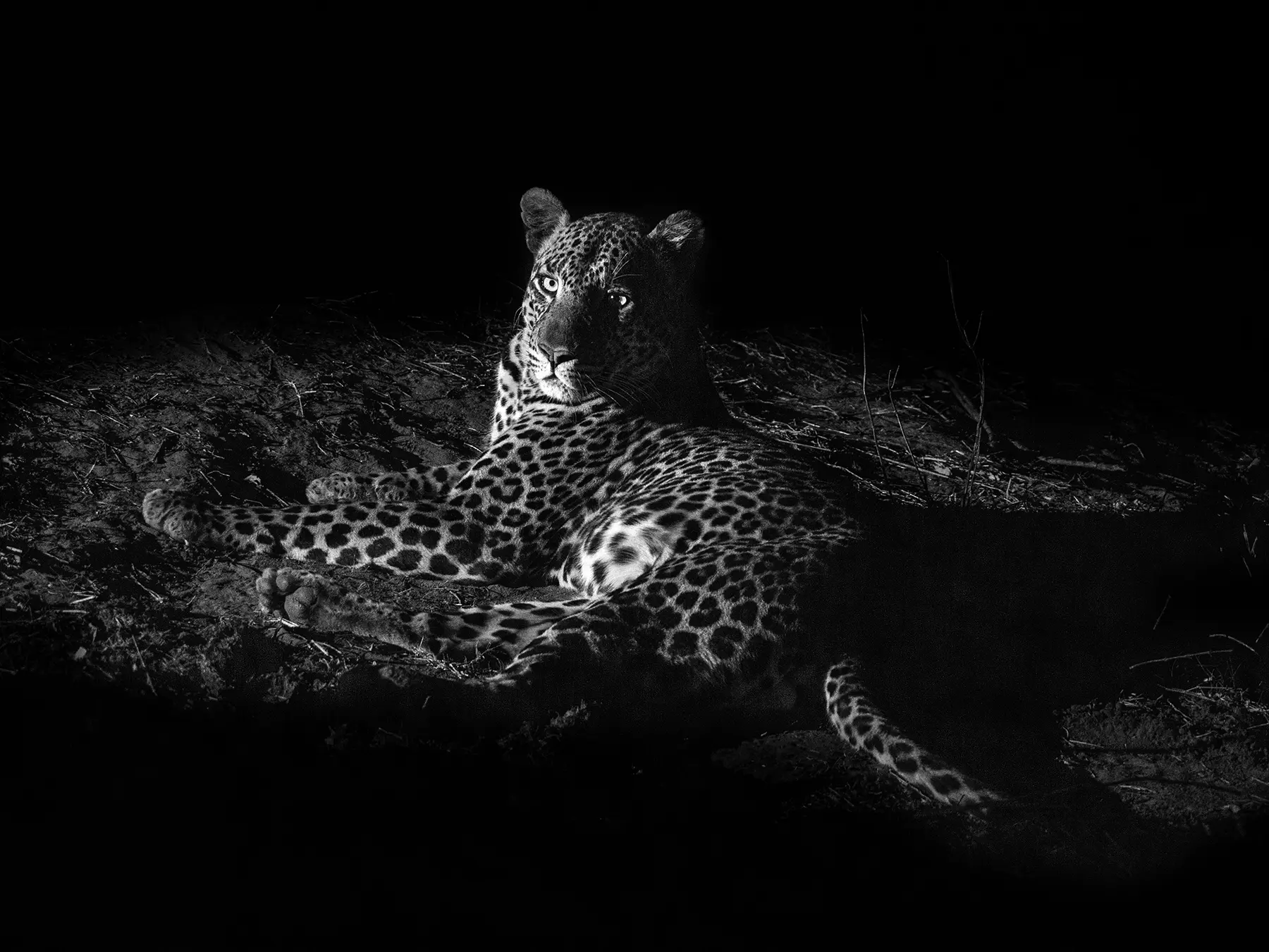
Birds also flock to the waterholes in their thousands, among them ostriches and kori bustards, while flocks of flamingos descend on the salt pans once the rains have filled them. Unlike most of Botswana, the Central Kalahari is at its best in the green summer months from December to April, when the rains transform the desert into lush grassland and draw thousands of animals and birds.
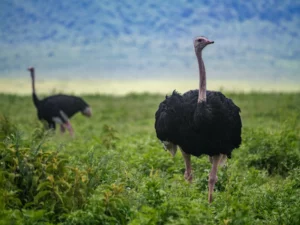
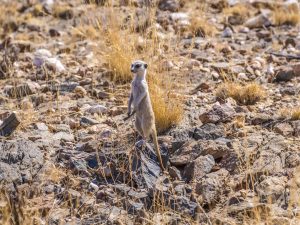
Tips for Your Journey to Central Kalahari
The 125-mile (200 km) journey south from Maun to Central Kalahari Game Reserve takes about 5 hours by car or 30-45 minutes by plane.
- You’ll be picked up early if you drive to make sure you get to the reserve in time for lunch and an afternoon game drive.
- If you’re planning on using the drive time to sleep, be sure to pack a neck pillow as the roads are pretty rough.
- No matter the season, nights here are extremely cold, so bring lots of warm layers.
- The reserve has no electricity or internet, so ensure your electronics are fully charged and download music or reading material before you go. You should also bring spare batteries for your camera.
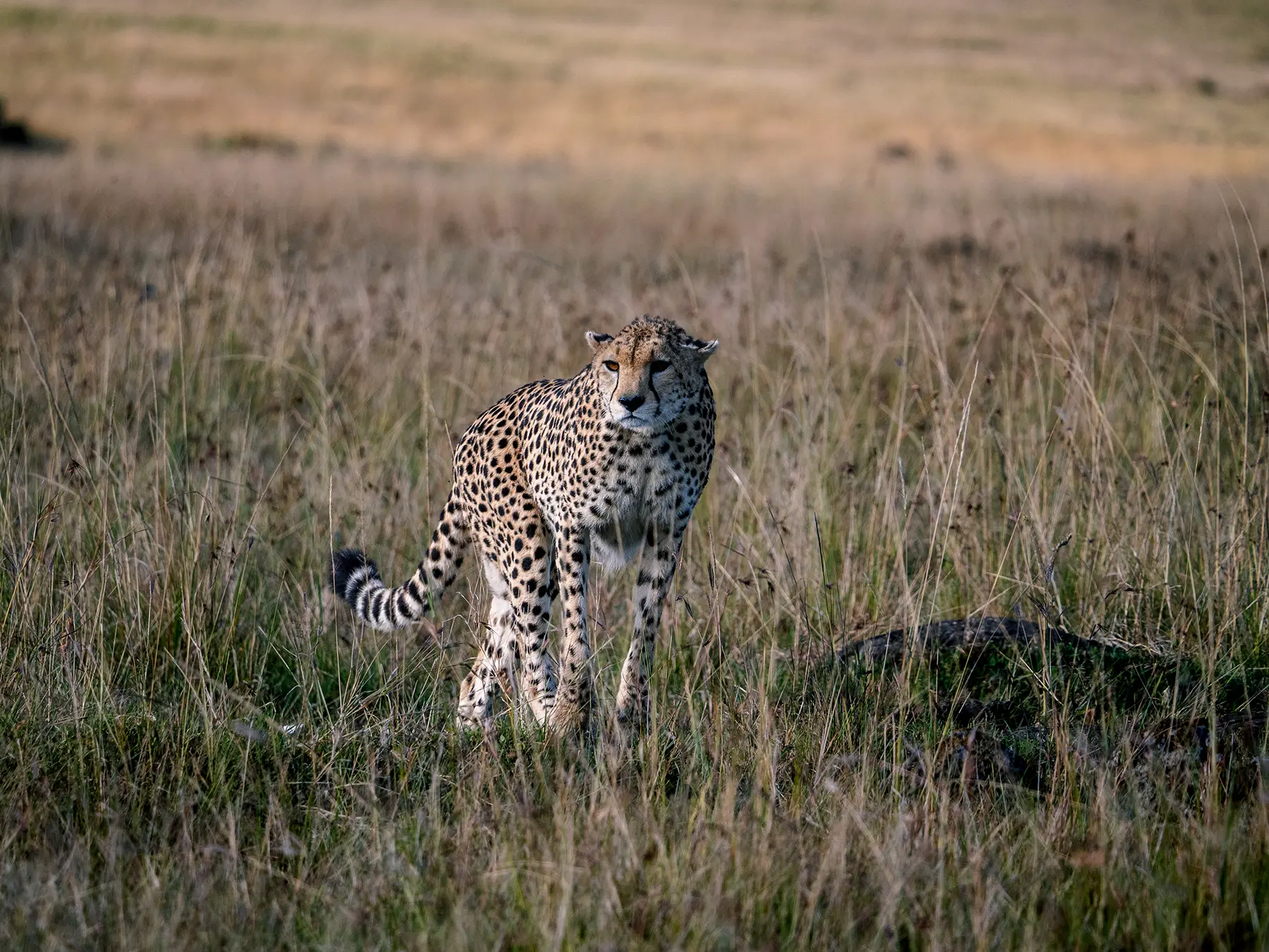
Where to Stay in Central Kalahari Game Reserve
The reserve offers a range of accommodation, from lodges and tented camps to mobile camping. While mobile camping is the most popular option, no matter which you opt for, you’ll be staying inside the reserve close to the prime viewing areas.
The sheer size of the reserve may make it necessary for your operator to move you from one section to another on different nights so you get to see as much of the reserve as possible without depending on lengthy drives.
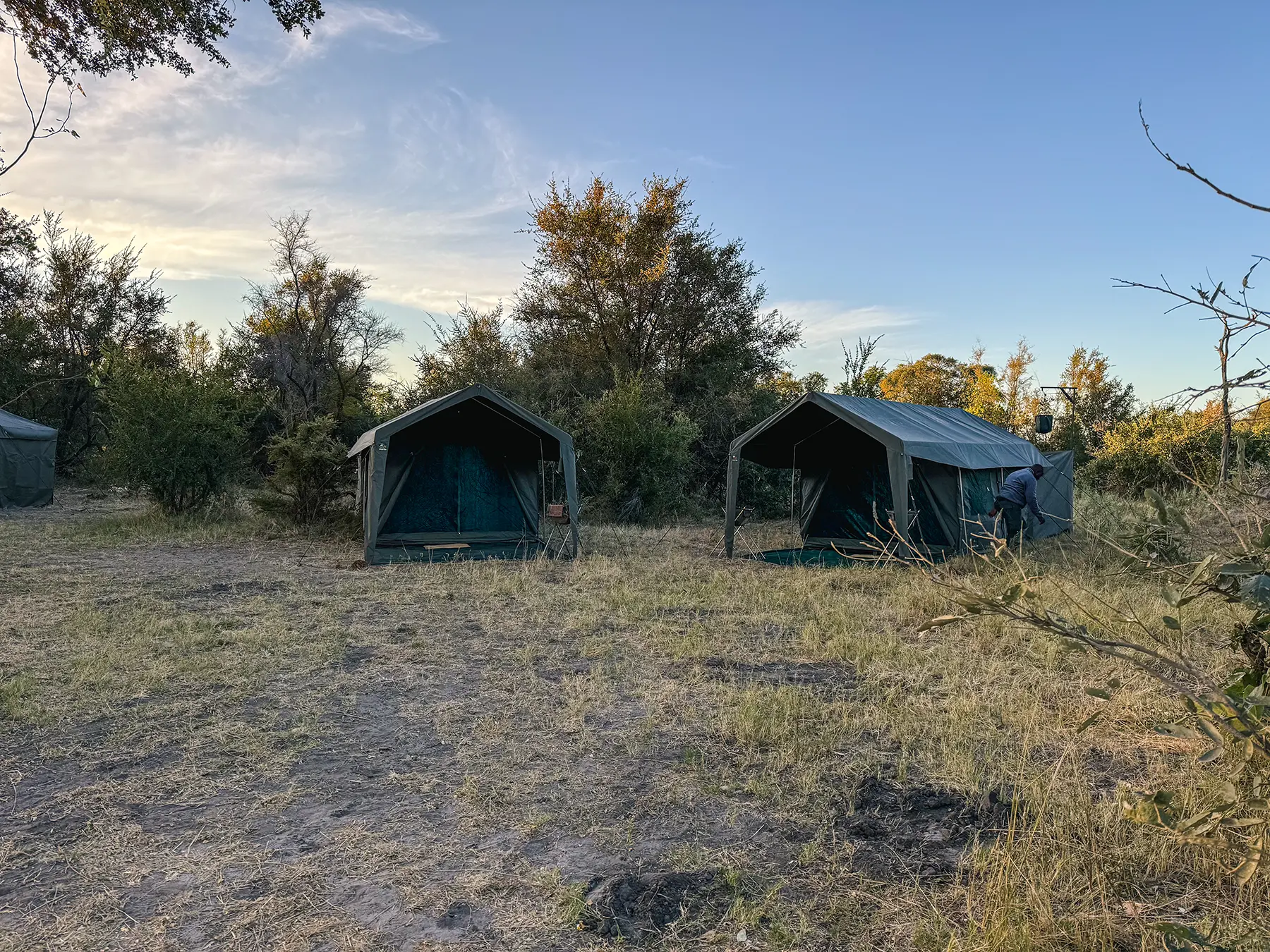
Day 2: Central Kalahari Game Reserve
You can devote your entire day today to exploring the vast Central Kalahari Game Reserve and getting a true feel for how wild and remote it really is. You’ll have ample time to drive across its endless grasslands and extraordinary salt pans as you scan the horizon for the famous black-maned Kalahari lions that live here and the cheetahs that hunt on the plains.
On your afternoon drive, you’ll make for Deception Valley in the north-east, where stunning salt landscapes and predator sightings await.
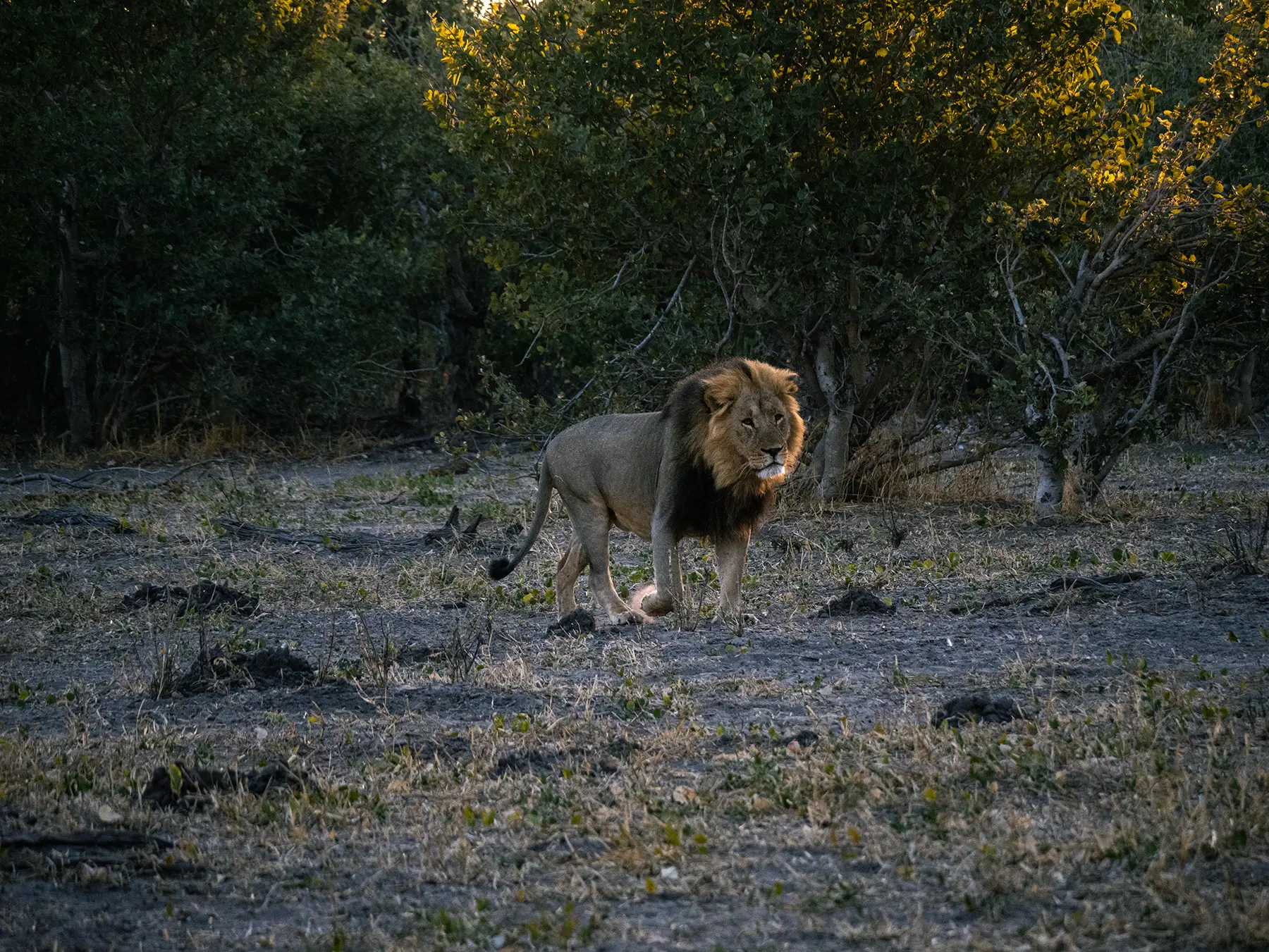
Itinerary
With no marathon transfers to eat into your game drive time, Day 2 at Central Kalahari is reserved entirely for exploration.
You’ll be up early and driving across the vast, level grasslands while the sky is just starting to lighten in the hope of seeing the black-maned Kalahari lions and fleet-footed cheetahs at their most active. As the low sun illuminates the plains, the silhouettes of gemsbok, springbok and wildebeest emerge, the animals too intent on grazing to worry about the predators watching from a distance.
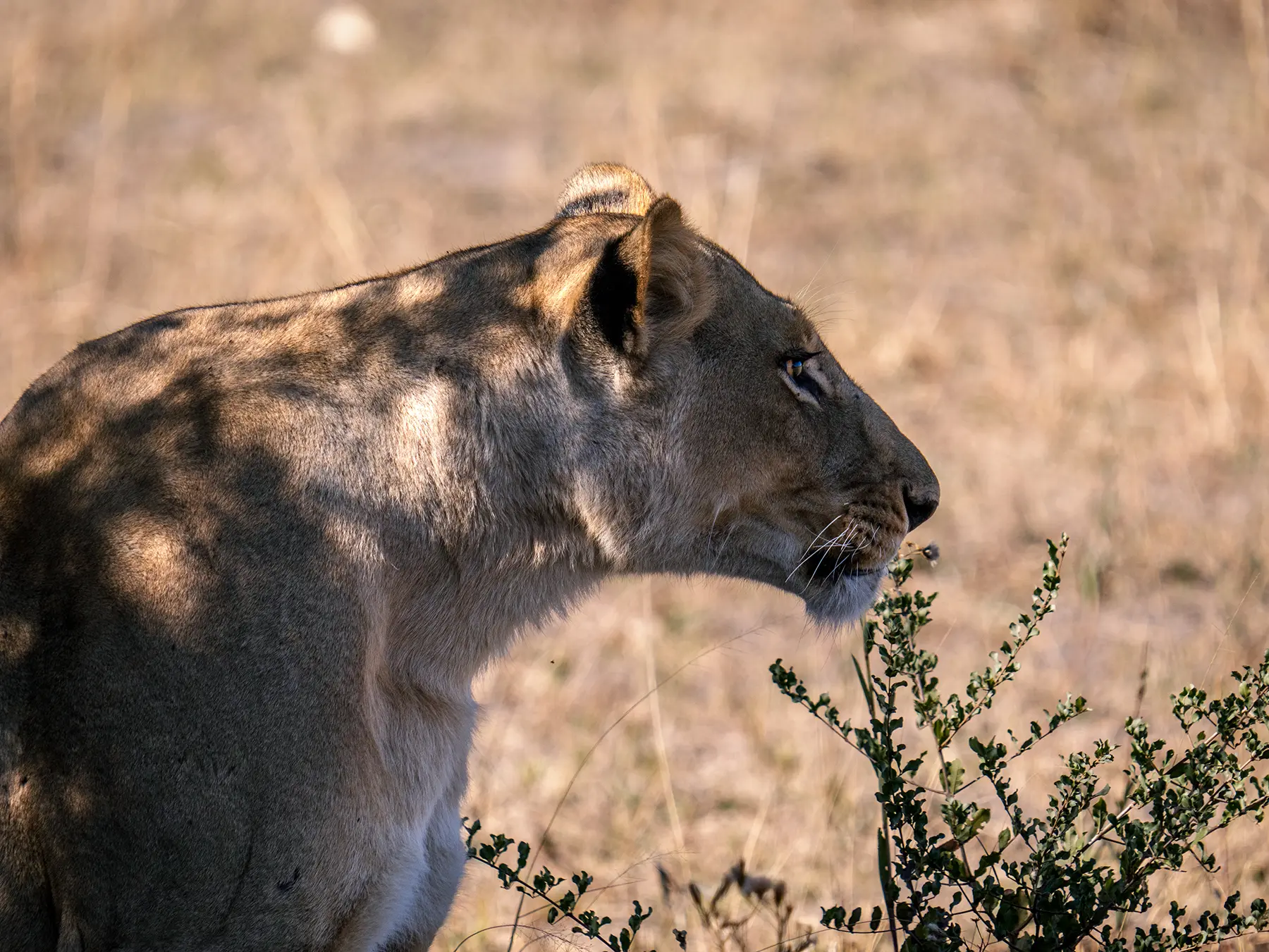
As the heat intensifies, it’s time to return to camp for some lunch and some downtime before you leave again in the late afternoon for a second game drive.
This time, you’ll be heading for Deception Valley in the north-east, an area well known for its high predator density. Encircled by red grass and lined with a unique blue clay that looks exactly like water from a distance, the ancient salt pan here is a real highlight that looks spectacular in photos.
Finally, you’ll end off the day with a sundowner underneath one of the most breathtaking skies you’ll ever see. With no light pollution for hundreds of miles around, the stars are visible in unbelievable numbers here, truly unforgettable.
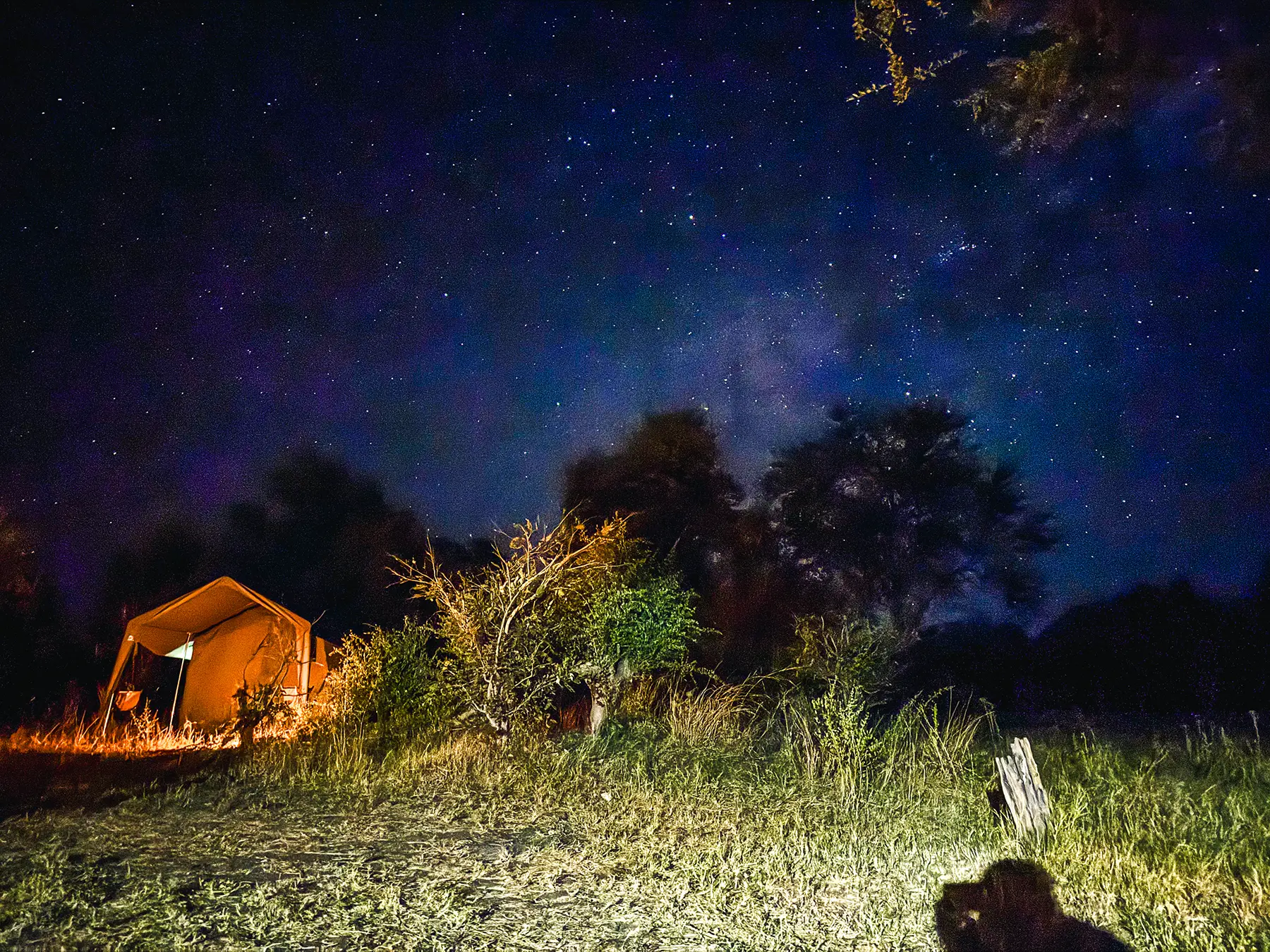
Tips for Visiting Central Kalahari Game Reserve
- Don’t miss out on seeing Deception Valley and Piper’s Pan; both boast stunning landscapes and huge game densities.
- Be careful when out and about in general and avoid walking alone after dark; with no fences to keep them out, wild animals (including lions and hyenas!) can often wander through the camps at night.
- Wear neutral colours that don’t stand out, and don’t forget to wear high-factor sunblock and a wide-brimmed hat on open 4×4 game drives to protect you from the intense sunshine.
- While mosquitoes aren’t as problematic here as in the northern marshes, you should still apply insect repellent, especially at night.
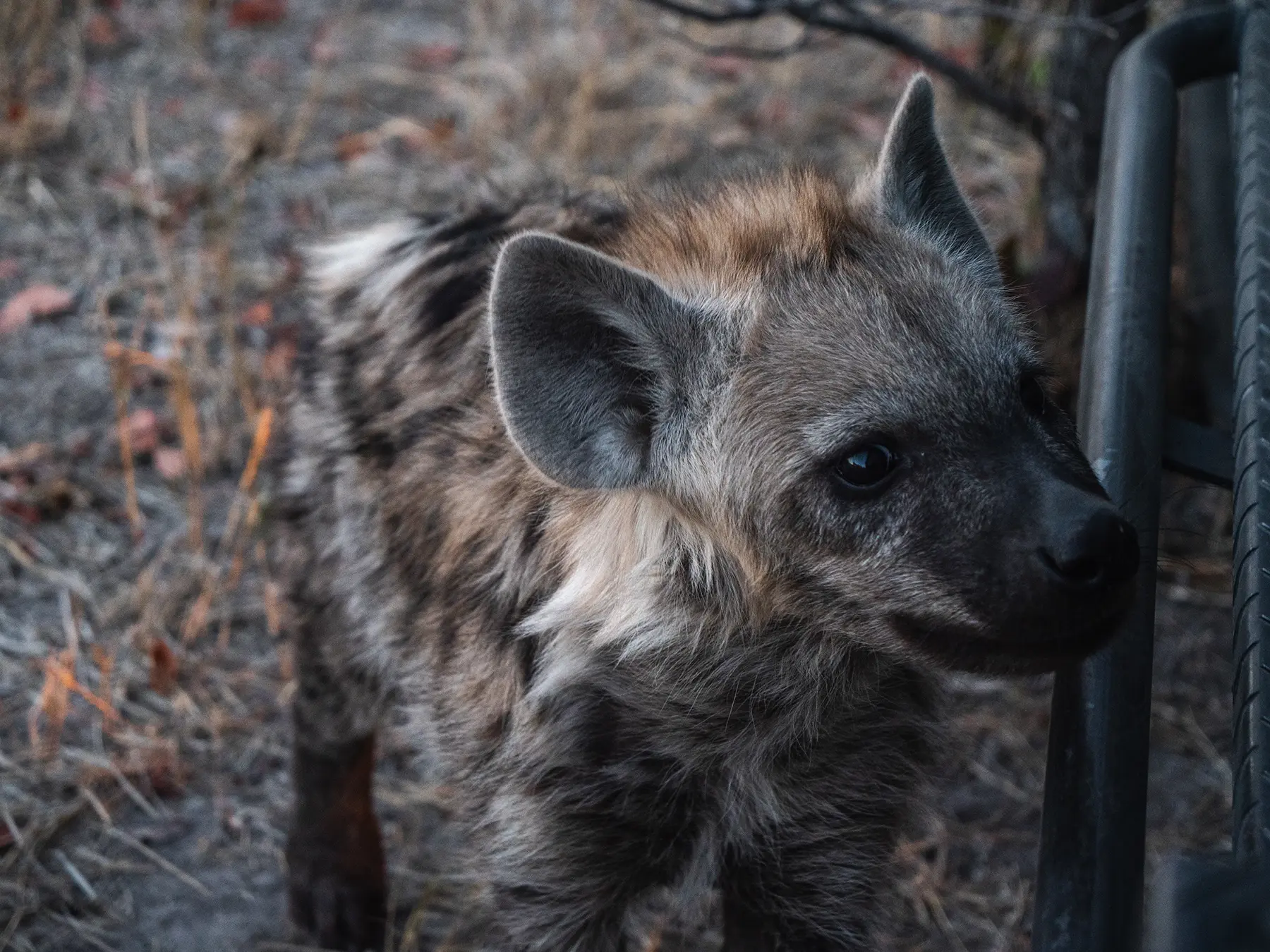
Where to Stay in Central Kalahari Game Reserve
The reserve offers a range of accommodation, from lodges and tented camps to mobile camping. While mobile camping is the most popular option, no matter which you opt for, you’ll be staying inside the reserve close to the prime viewing areas.
The sheer size of the reserve may make it necessary for your operator to move you from one section to another on different nights so you get to see as much of the reserve as possible without depending on lengthy drives.
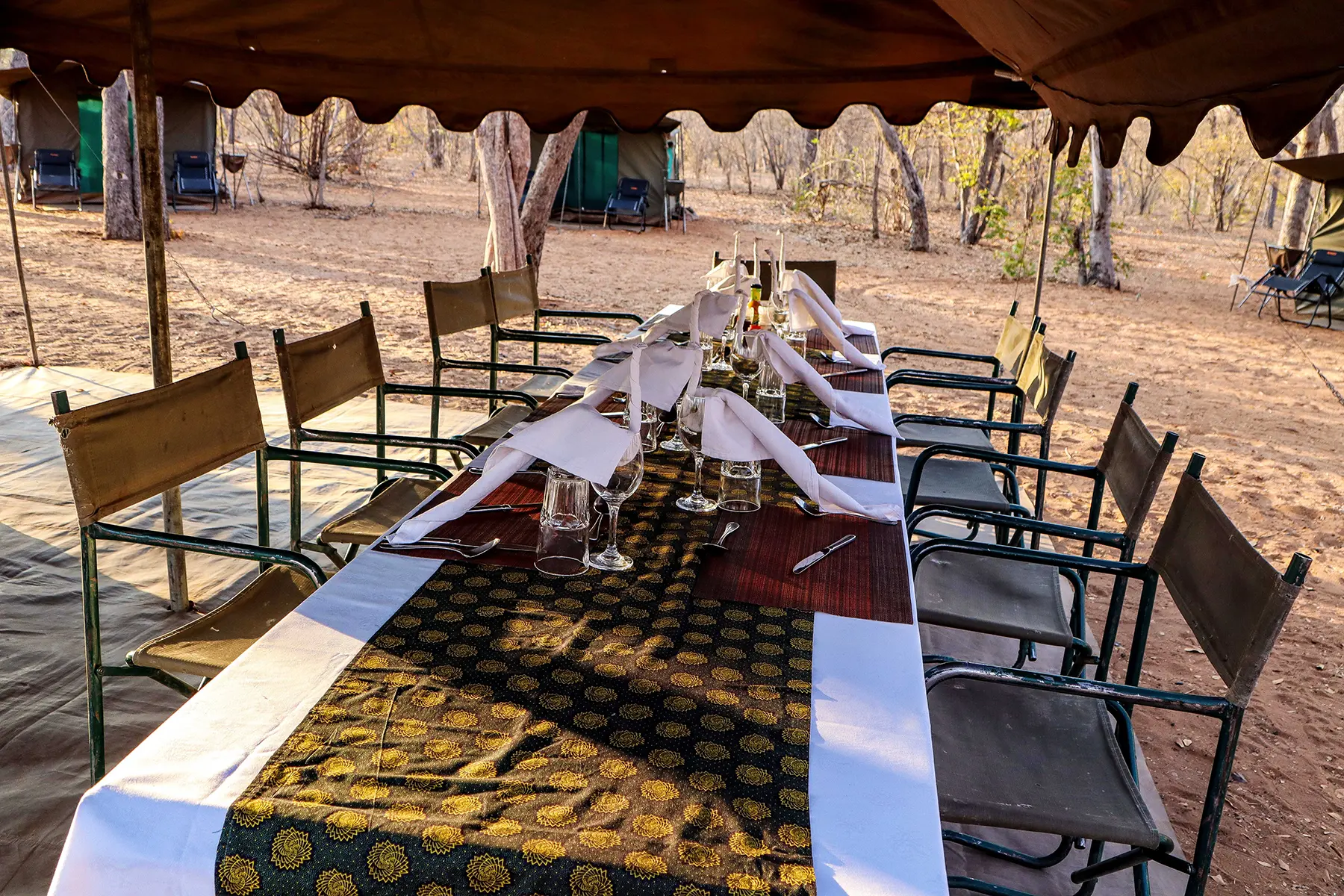
Day 3: Central Kalahari Game Reserve to Maun
Drive time (excluding game drives): 5 hours
After a final morning game drive over the vast plains, it’s time to bid goodbye to Central Kalahari and make the trip back to Maun, where your safari ends. Depending on how much time you can spare, you can either spend a final night here, relaxing and exploring the town, or simply connect directly to a flight home.
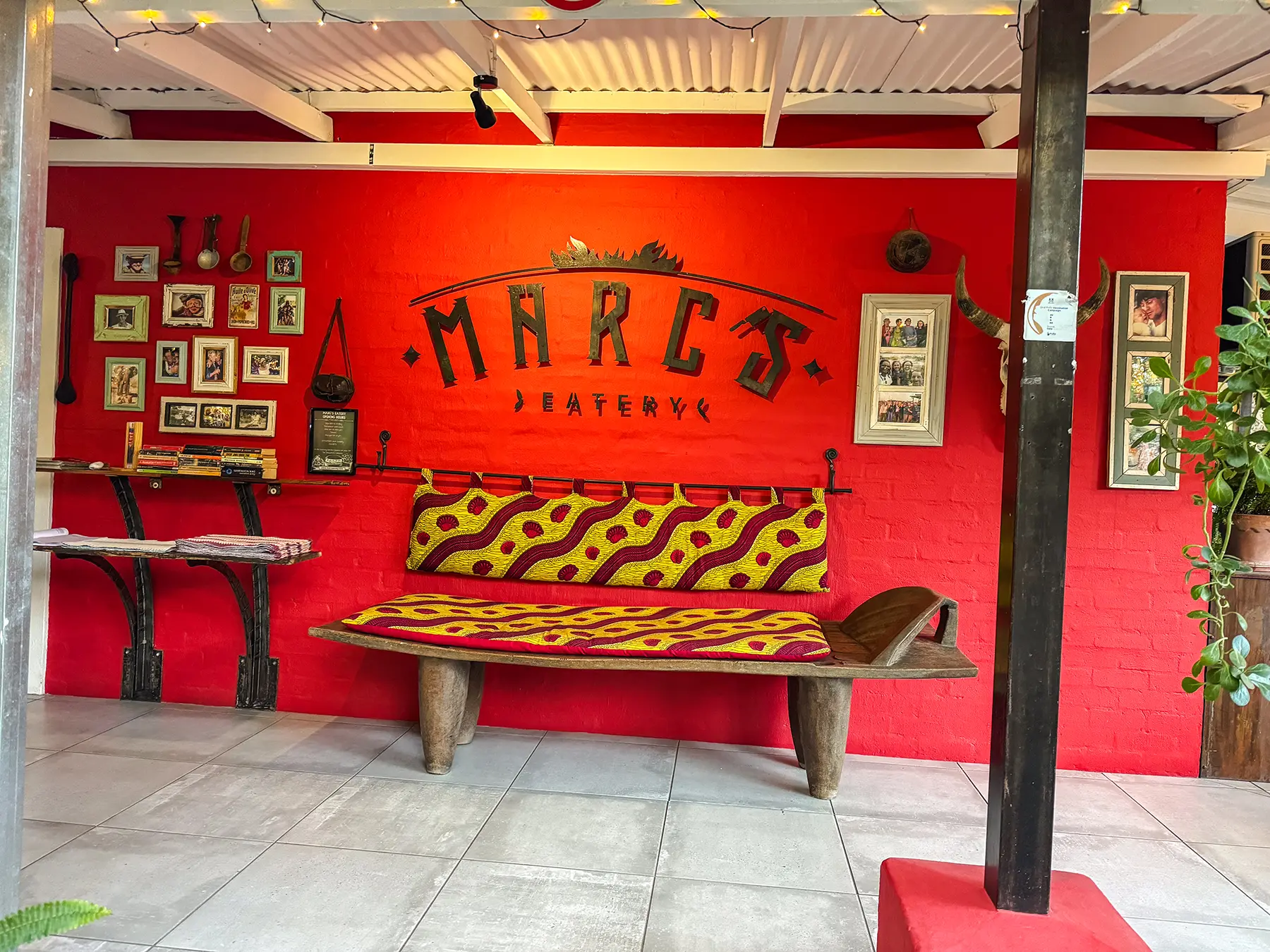
Itinerary
It’s another early start today as you enjoy your final game drive in the Central Kalahari Game Reserve. You’ll leave before daybreak to make the most of this cool morning period when wildlife are at their most active. Prey animals are rousing from their sleep now, and the birds are also starting to sing, announcing the dawn to anyone who will listen.
Kestrels, kites and eagles take to the skies and you might even see a secretary bird or two striding across the plains. Take this one last chance to glimpse the reserve’s iconic black-maned lions and the cheetahs that prowl its flat expanses of grassland before taking leave of this wild, remote desert.
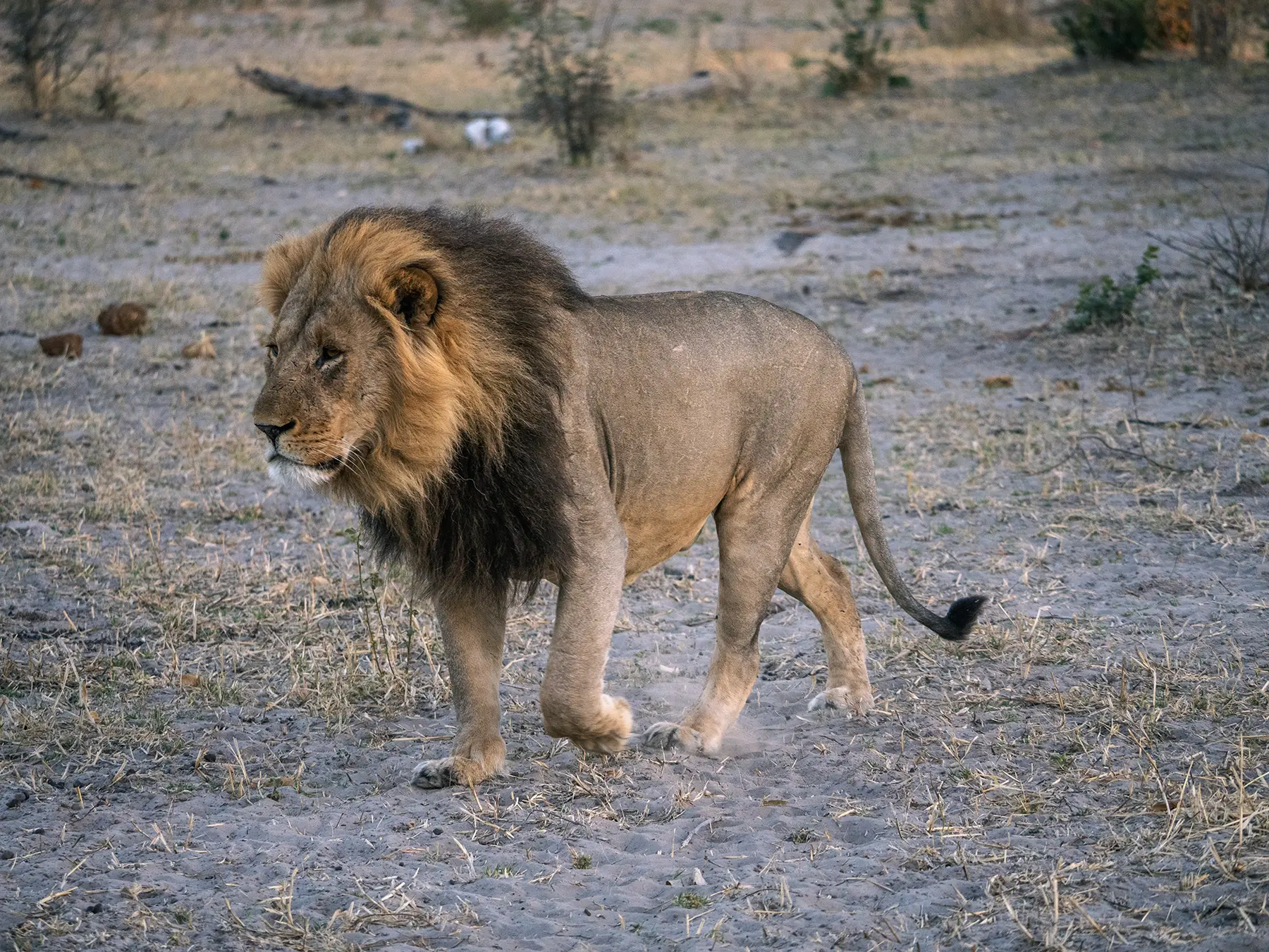
After the drive you’ll begin the journey back to Maun, which lies about 125 miles (200 km) to the north. By road the transfer takes around five hours over bumpy tracks, while a light-aircraft flight covers the same distance in just 30 to 45 minutes.
Your safari ends on arrival in Maun, where you can spend a final night before flying home, or connect straight to an onward flight.
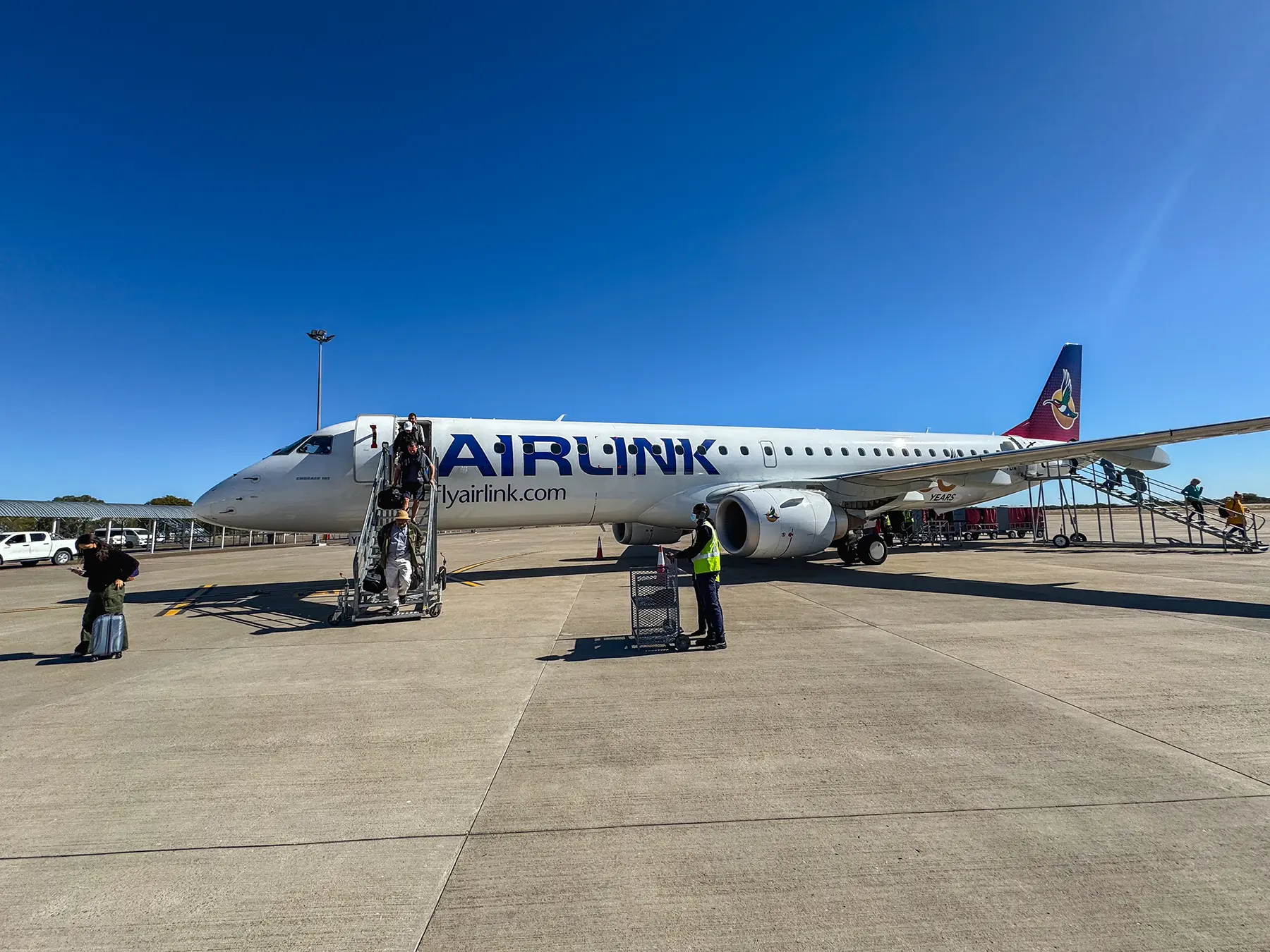
Where to Stay in Maun
Maun is home to a number of lovely lodges and guest houses where you can spend a comfortable night before heading out on safari or catching your flight home. The majority of these are located close to the beautiful Thamalakane River.
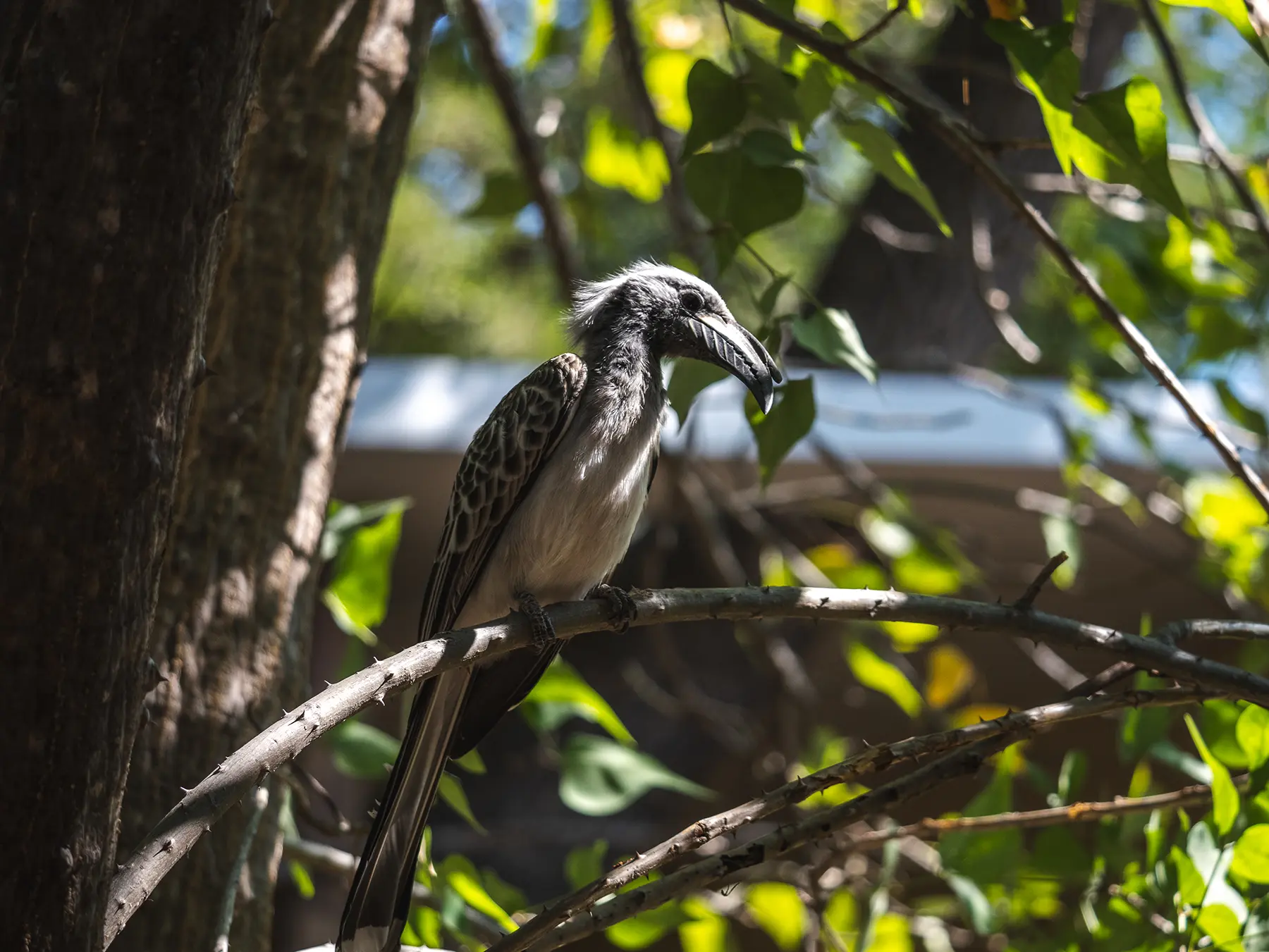
The Waterfront is my personal favourite place to stay in Maun. It enjoys a lovely location on the banks of the Thamalakane River (which is dry for much of the year), but is also a short 15-minute drive from the airport and the town centre.
The rooms are contemporary and spotlessly clean, and breakfast is included in the price of your stay. The staff are also super friendly and welcoming.
Option 5
3-Day Makgadikgadi Pans Safari Itinerary Overview
This 3-Day Makgadikgadi Pans itinerary takes you out to the largest salt pans on earth, the snow-white floor of a drained ancient super-lake in northern Botswana.
I built it around my own Botswana travels, basing the trip at Maun, the quiet gateway town where you can decompress before and after the bush.
Quick Facts
Total drive time (excluding game drives): Around 7 hours over 3 days, averaging around 2.5 hours per day. The longest single transfer is about 3.5 hours (Days 1 and 3), or a 30 to 45-minute light-aircraft flight.
Best times of year: November to April for the zebra migration and flamingos, or the dry season for Boteti River lions and stargazing.
3-Day Makgadikgadi Pans Safari Map
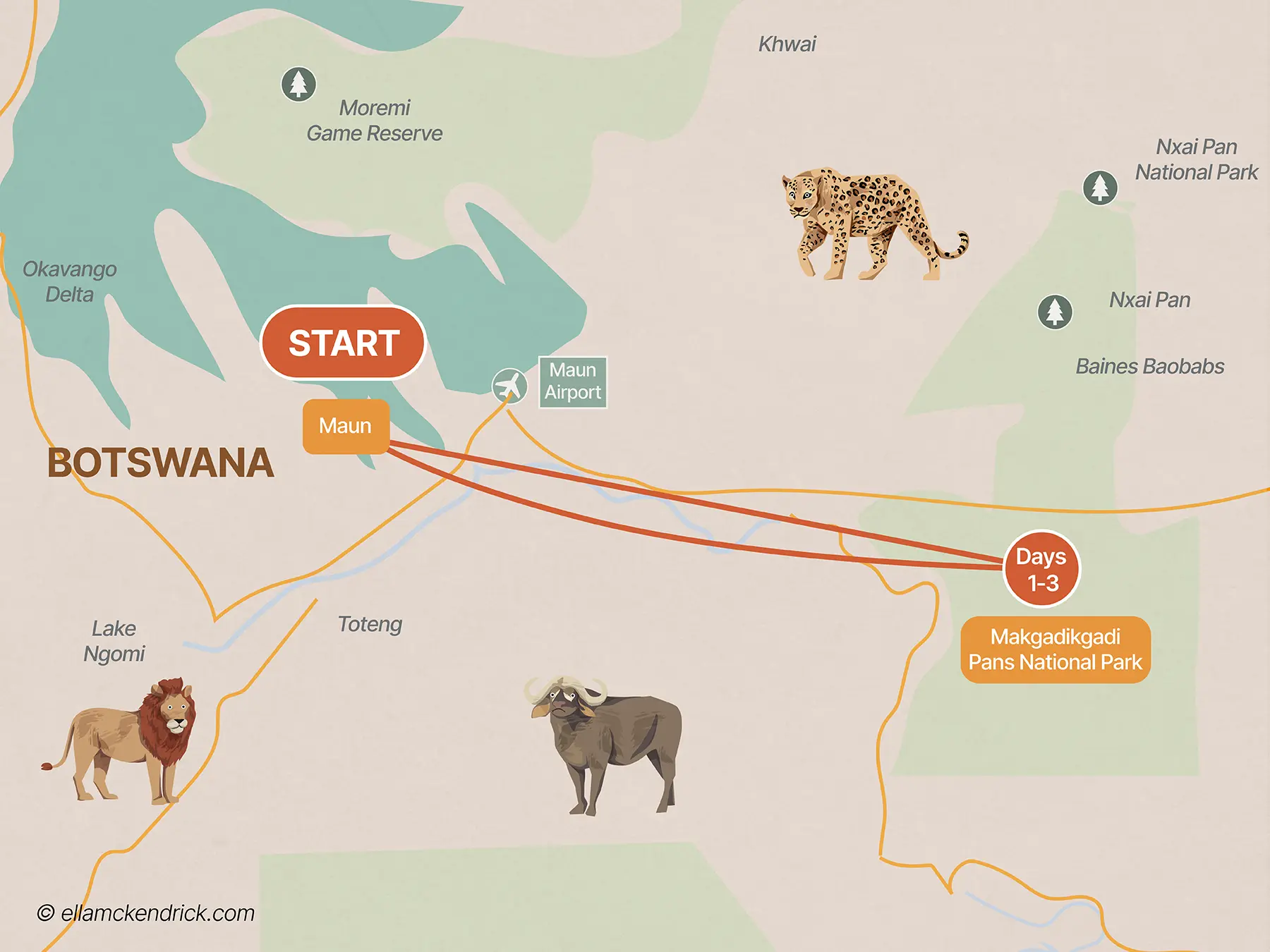
Day-by-Day Breakdown of the Perfect 3-Day Makgadikgadi Pans Safari
Botswana has so much to offer, and three days will zip by, so I have crafted this itinerary to make sure you make the most of every moment out on the pans!
I have also considered the distance from Maun and the driving times in order to come up with the most enjoyable itinerary.
You can get quotes from the same local tour companies I use to organise my own trips here: Safaris By Ella
Click any of the days below to jump to my full notes on that day.
Day 1: Maun to Makgadikgadi Pans
Drive time (excluding game drives): 3.5 hours
Your Botswana safari begins in earnest today with your transfer from Maun to the Makgadikgadi Pans. The largest salt pans in the world, these brilliant white patches actually form the floor of an enormous ancient super-lake that covered huge swathes of northern Botswana in times past.
You’ll get there in time for a spot of lunch before leaving on your first afternoon game drive across this exceptional, mineral-rich wilderness where you can watch animals gathering to lick salt and minerals straight from the ground.
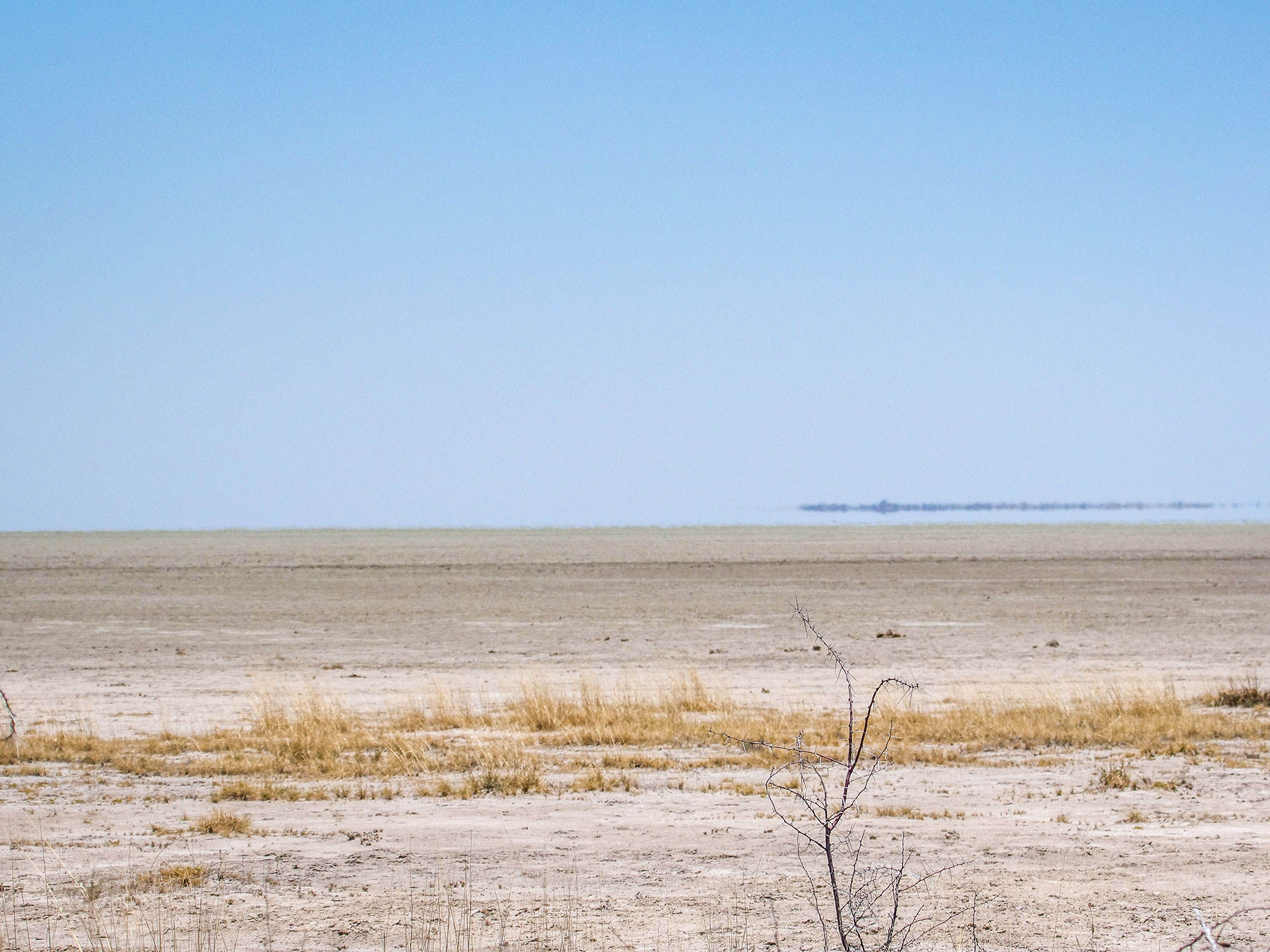
Itinerary
Whether you opt to drive the 3.5 hour road route from Maun to Makgadikgadi or plump for the 30-45 minute flight instead, you should aim to depart between 7am and 8am so that you get there in time for lunch. You don’t want a growling tummy scaring the wildlife away!
This afternoon, you’ll enjoy your first game drive in Makgadikgadi. As you skirt around the salt pans, keep a sharp eye out for the distinctive black-maned Kalahari lions that prowl along the wooded Boteti River. There are also herds of grazers, attracted by the minerals in the enriched soil.
The pans themselves are dazzlingly white, their brightness only becoming a little more muted as the light of the setting sun softens to a warm red glow.
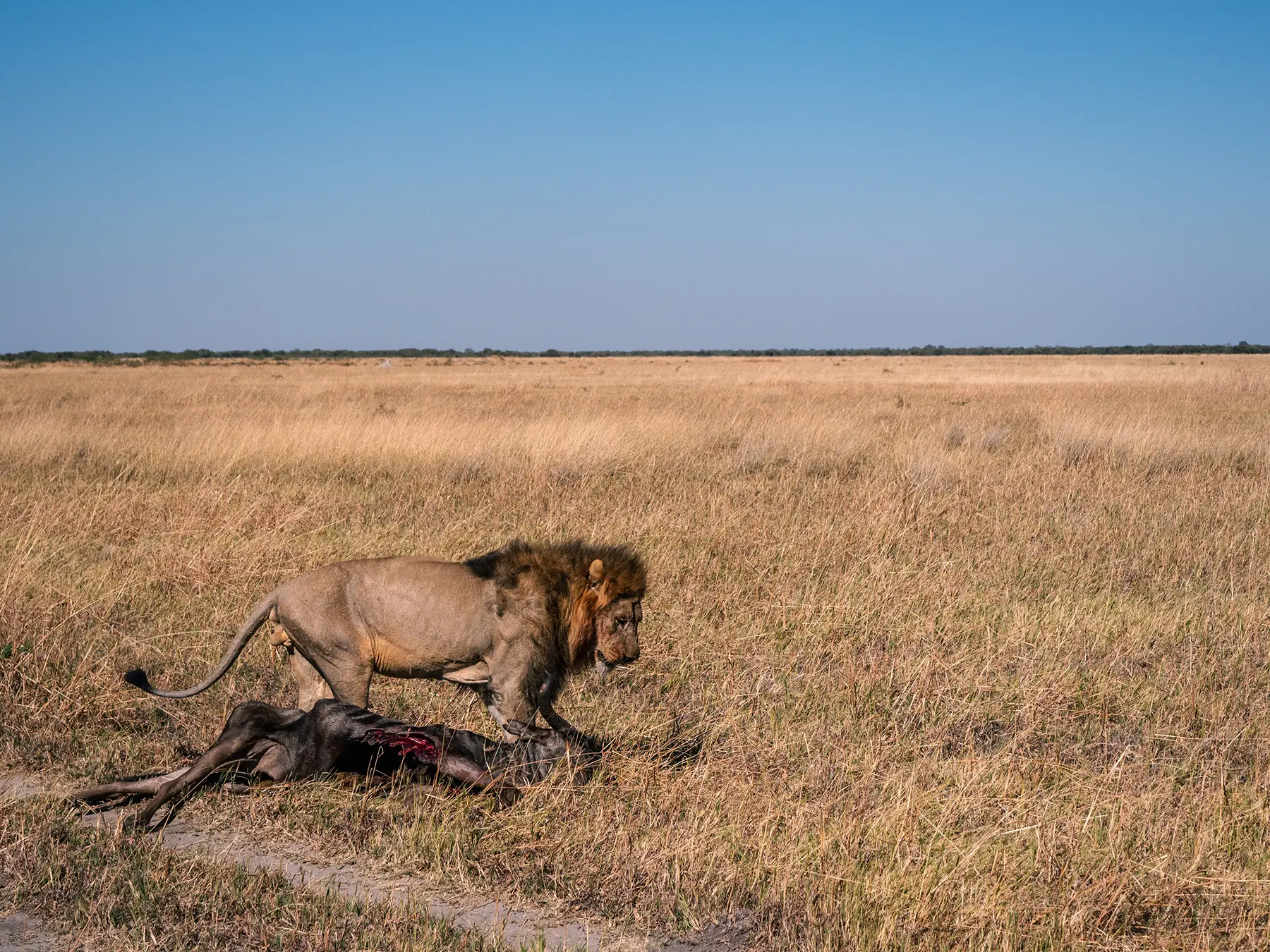
About Makgadikgadi & Nxai Pans
Once the floor of an ancient super-lake that occupied much of northern Botswana, the Makgadikgadi salt pans along with the smaller Nxai Pan slightly north of them now form the world’s largest salt pans. The lake was drained by a tectonic movement many thousands of years ago, leaving behind a blindingly white bowl lined with mineral-rich clay.
Animals now flock to the pans to lick the ground and access the valuable salts and minerals it contains.
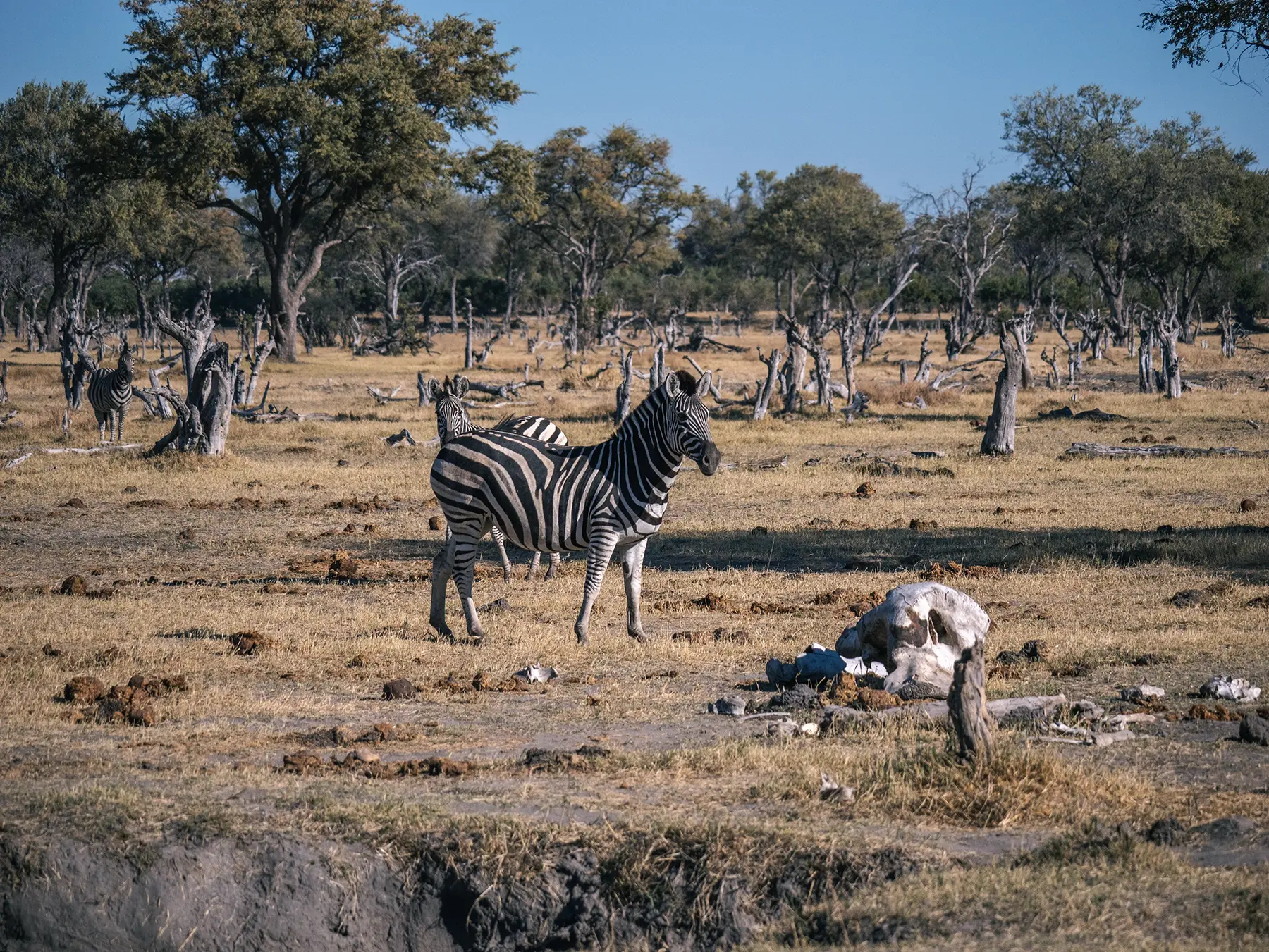
Dry season and rainy season in the park are like night and day. In the dry period, it’s so arid the landscape seems almost lunar. During this time, only the most resilient species can survive here.
By contrast, the rainy season triggers nothing short of a metamorphosis as the pans fill with water and vibrant green growth bursts forth from the once scorched earth. Other species flock to this oasis, drawn by the life-giving water in the pans and the shelter of the lush new growth.
Makgadikgadi harbours some of Africa’s largest, most ancient baobab trees, including the famous baobab that explorers Livingstone and Selous used as a “mailbox” as well as the striking Baines’ Baobabs in the Nxai Pan, which were immortalised in paint by the explorer and artist Thomas Baines, from whom they get their name.
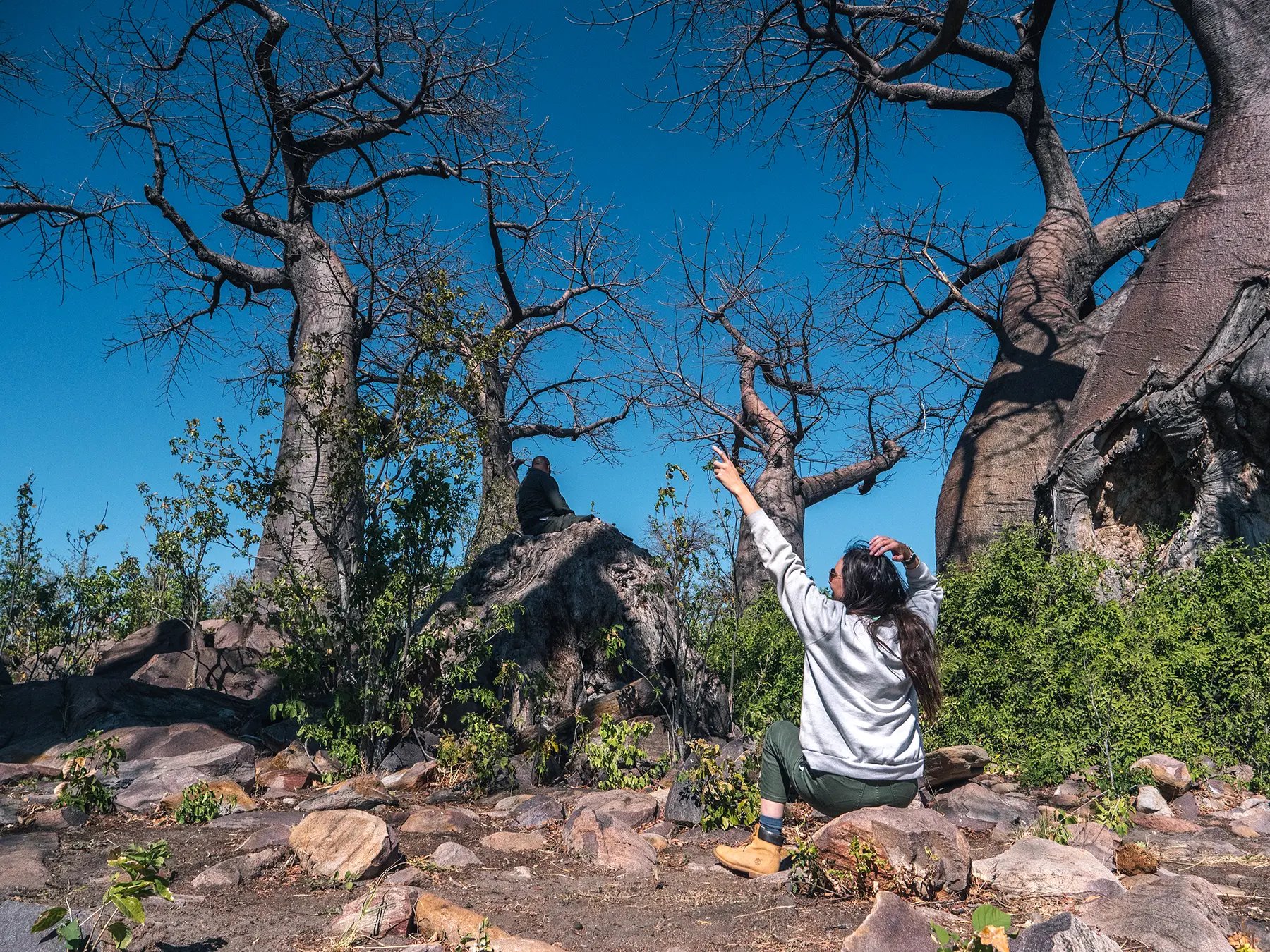
What Wildlife Can I See in Makgadikgadi & Nxai Pans?
Best known for the zebra and wildebeest migration, the pans see huge numbers of both arrive every year during the wet season (roughly November to April), drawn by the fresh water and good grazing that the rains have brought.
Regular residents found here all year round include black-maned Kalahari lions, cheetahs, brown and spotted hyenas, jackals, bat-eared foxes, gemsbok, kudu, giraffe and even the occasional elephant or buffalo. Meerkats are a special highlight, their comical antics never failing to make people smile.
During the rainy season, the number of bird species in the park skyrockets. Birders can look forward to spotting ostriches, pelicans, saddle-billed storks and even around a million flamingos when the conditions are just right. You’ll also find hippos wallowing in the deeper pools of the Boteti.
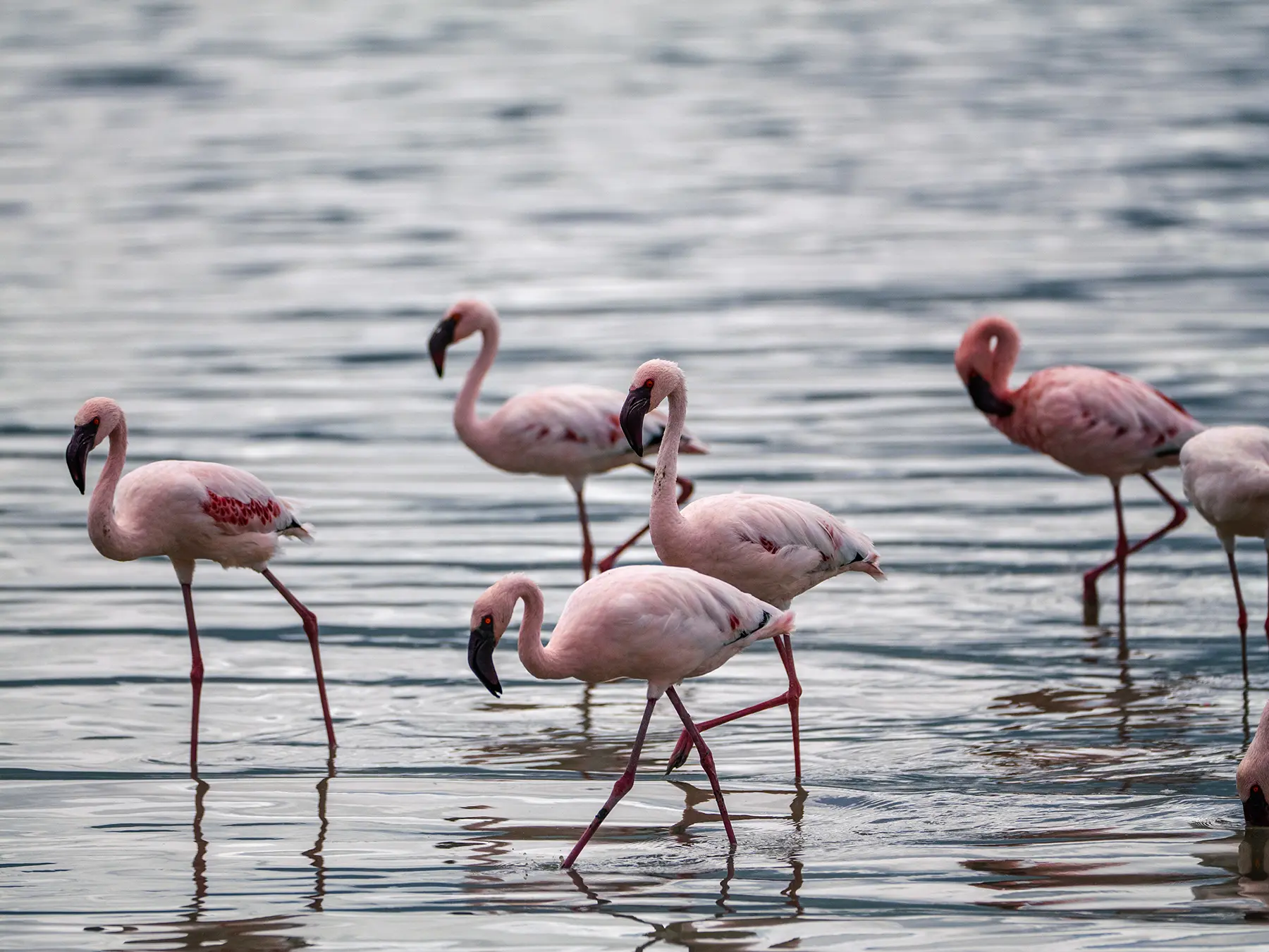
Tips for Your Journey to Makgadikgadi
Makgadikgadi can be reached from Maun in 3.5 hours by road, or 30-45 minutes by light aircraft.
- I recommend flying if visiting during the wet season, as the ground gets very soft and muddy, which can impede vehicles.
- Be sure to set out early from Maun (between 7am and 8am) so you get to the park in time for lunch. You’ll then have the whole afternoon to explore.
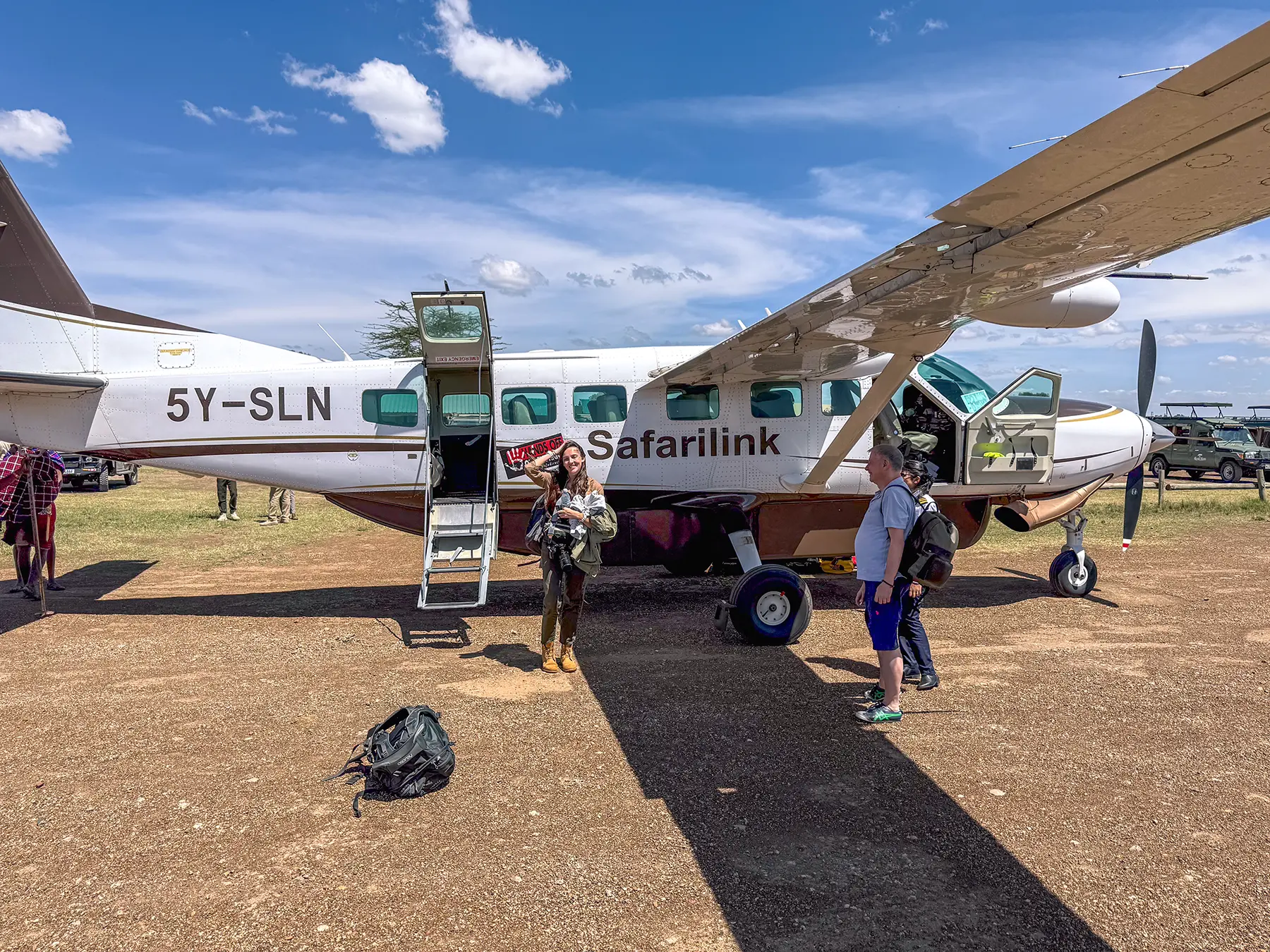
Where to Stay in Makgadikgadi & Nxai Pans
The majority of camps and lodges in Makgadikgadi are on the western flank close to the Boteti River, as this is where the wildlife tend to congregate all year. In addition, quite a number are located around the Nxai pan near the game-viewing areas.
You can choose from chic permanent camps such as Jack’s Camp, San Camp and the more relaxed Camp Kalahari, which offer stunning views out over the pans, or mobile camping if you want to sleep right out in the wilderness.
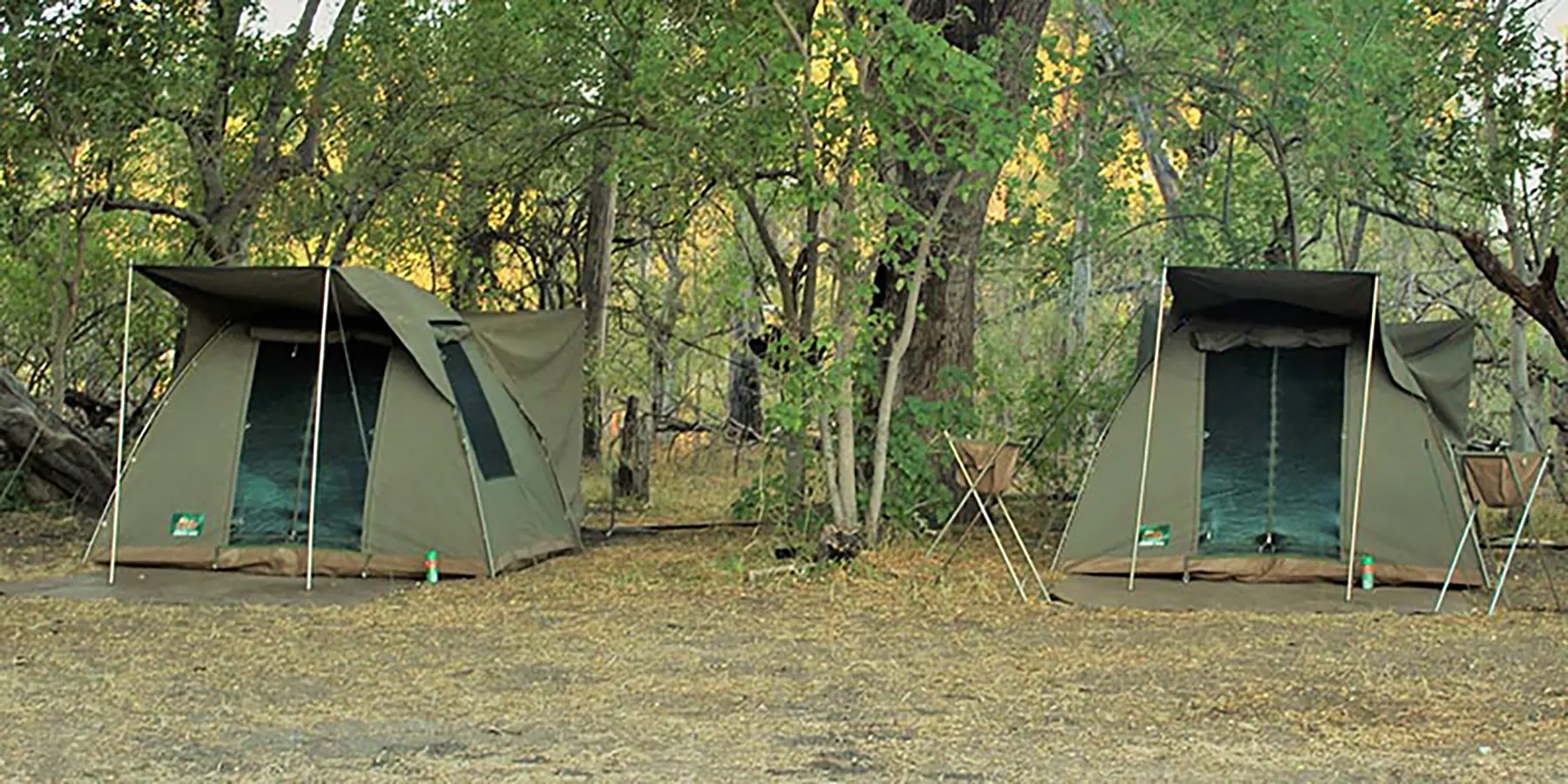
Day 2: Makgadikgadi Pans
With no long transfers to worry about, you’ll be spending the whole of today exploring the Makgadikgadi Pans at a more leisurely pace, enjoying a game drive before exchanging your 4×4 for a guided walk across the salt pans and then visiting the region’s renowned meerkat colonies.
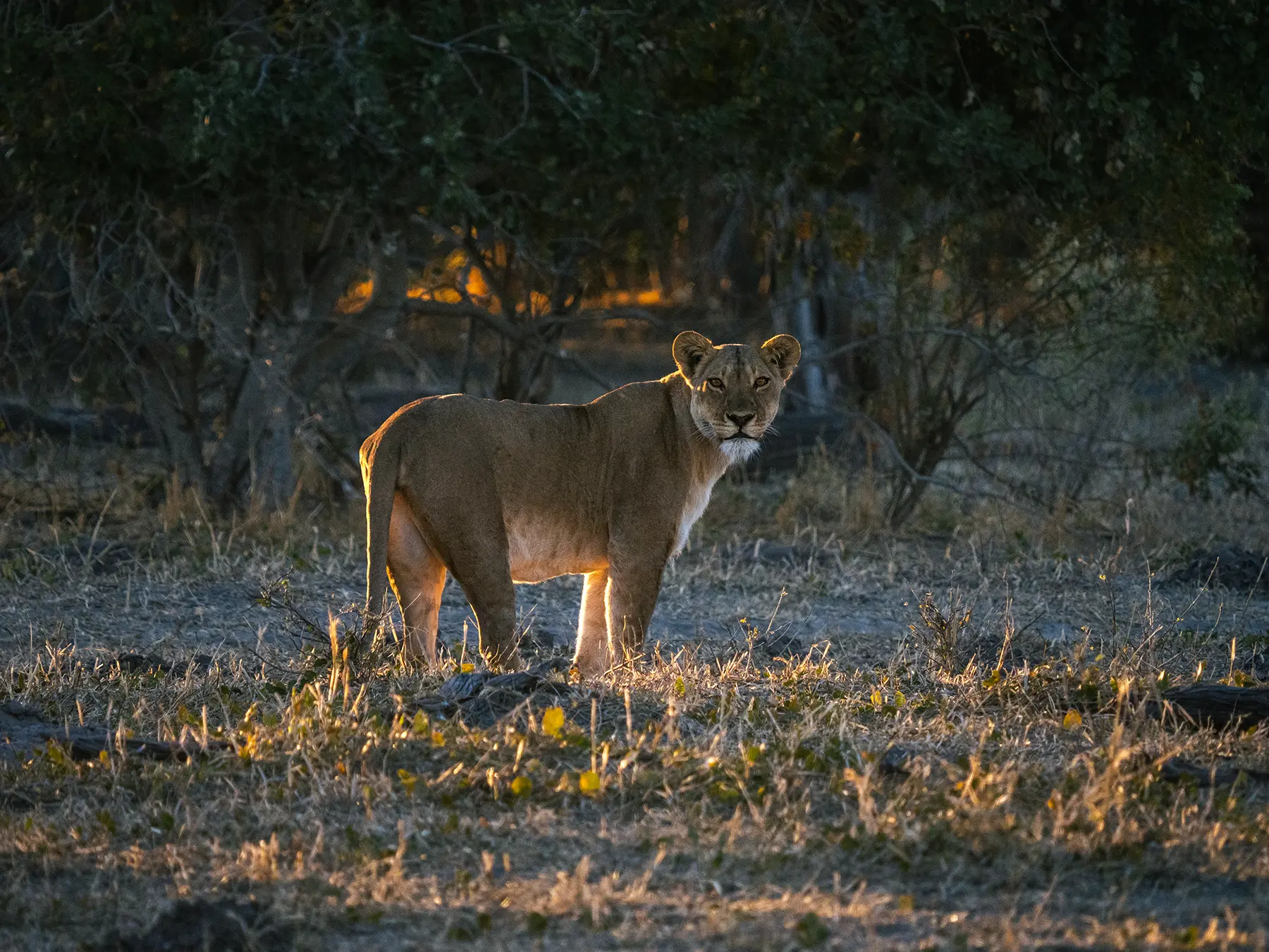
Itinerary
As there are no transfers on the itinerary for today, Day 2 can be devoted completely to Makgadikgadi. You’ll start out early on a morning game drive when the black-maned Kalahari lions are most active and the herds make their way to the pans to lick the mineral-rich ground.
As the rising sun lights up the dazzling expanse of the pans, gemsbok, kudu and even the odd elephant can be seen making their way through the wooded areas on the periphery.
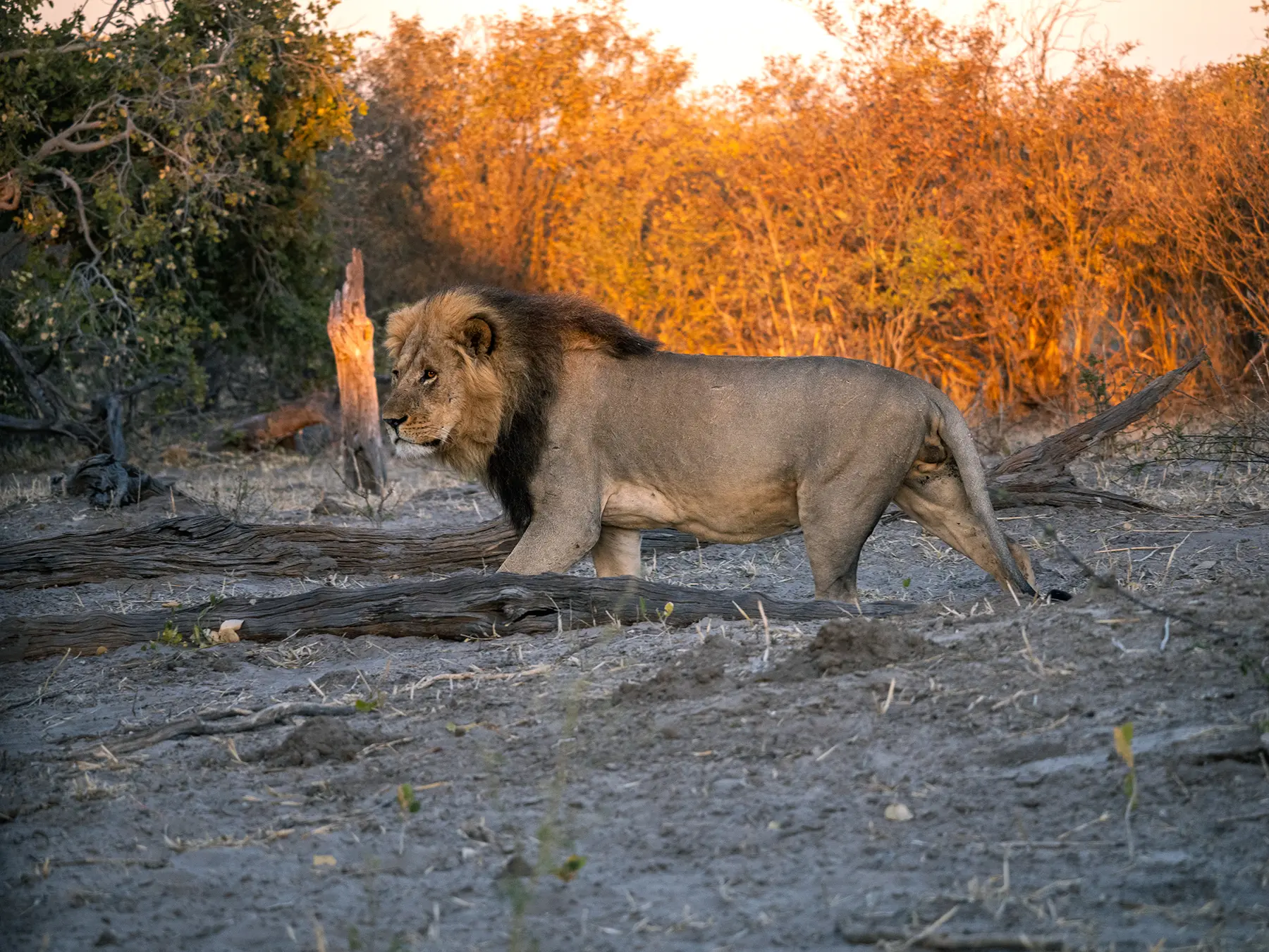
Afterwards, you’ll be leaving behind your safari vehicle and stretching your legs as a local San tracker takes you on a guided walk across the pans. Along the way, your guide will teach you the bush signs that have been used since ancient times to read the sands.
You’ll then spend the rest of the morning at one of the park’s habituated meerkat colonies, watching these fascinating little creatures as they emerge from their sleep to seek out food or simply bask in the sun. These adorable critters don’t fear humans and will even climb onto you to use you as a lookout post if you stay still enough!
Once the hottest part of the day has passed, it’s time for an afternoon game drive, watching closely for nocturnal residents as the sun sinks lower. Then, just as you thought Makgadikgadi couldn’t get any more spectacular, the stars emerge overhead in their trillions, their splendour revealed as soon as the sun slips below the horizon, with virtually no light pollution to diminish their brightness.
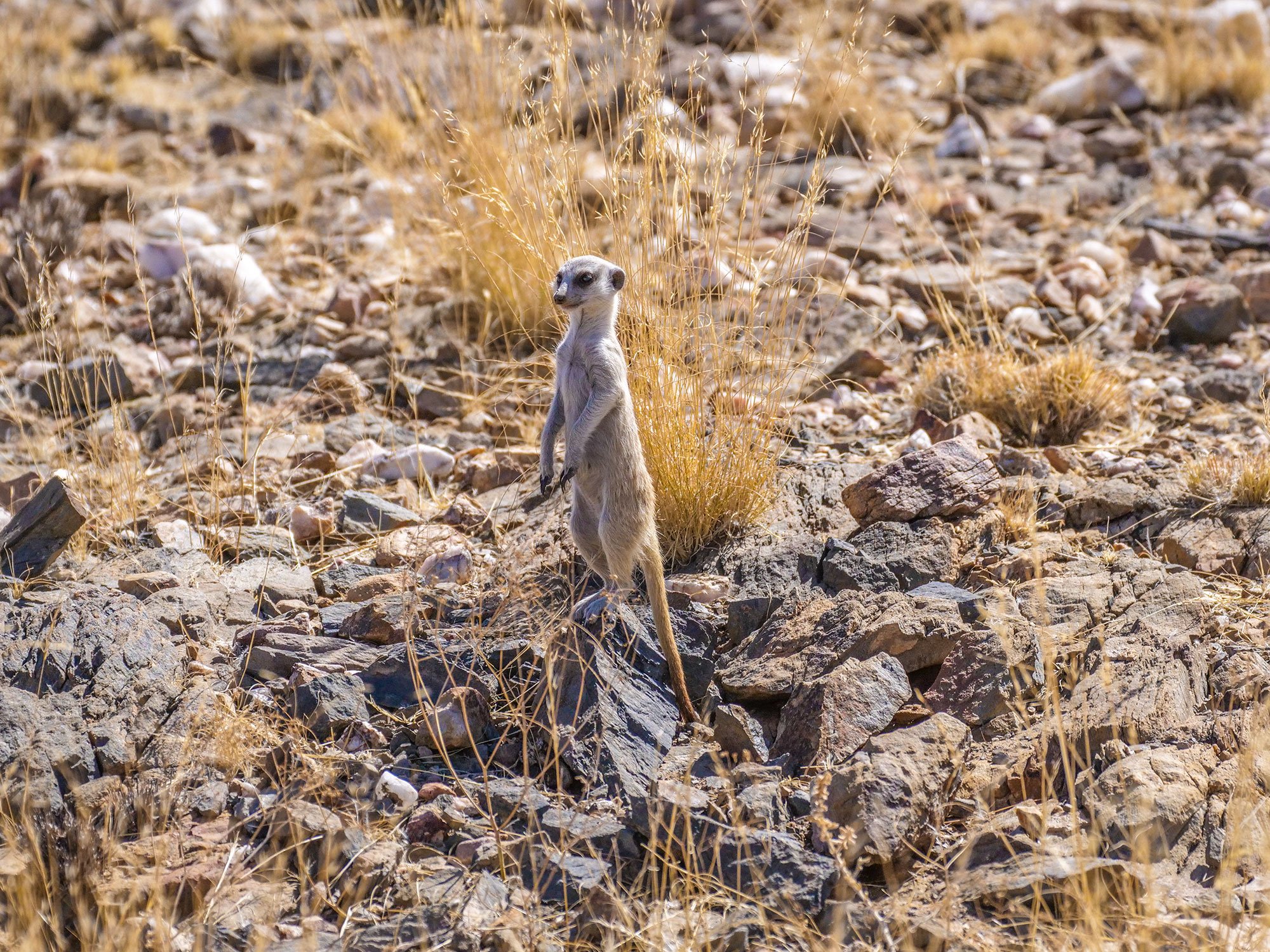
Tips for Visiting Makgadikgadi & Nxai Pans
- Don’t forget to ask your guide to show you the famous “mailbox” baobab, where explorers Livingstone and Selous left letters for one another in slots carved into the trunk.
- At dawn and dusk, be sure to look close to the ground for the park’s smaller, less common residents such as aardvark, porcupine, honey badger and bat-eared fox.
- Temperatures can plummet to near freezing in the early morning and at night, so bring plenty of warm layers for game drives and if you’ve booked a mobile safari, take your shower at midday when it’s warm.
- The pans offer some of Africa’s premier stargazing, with no light pollution for miles – don’t miss out!
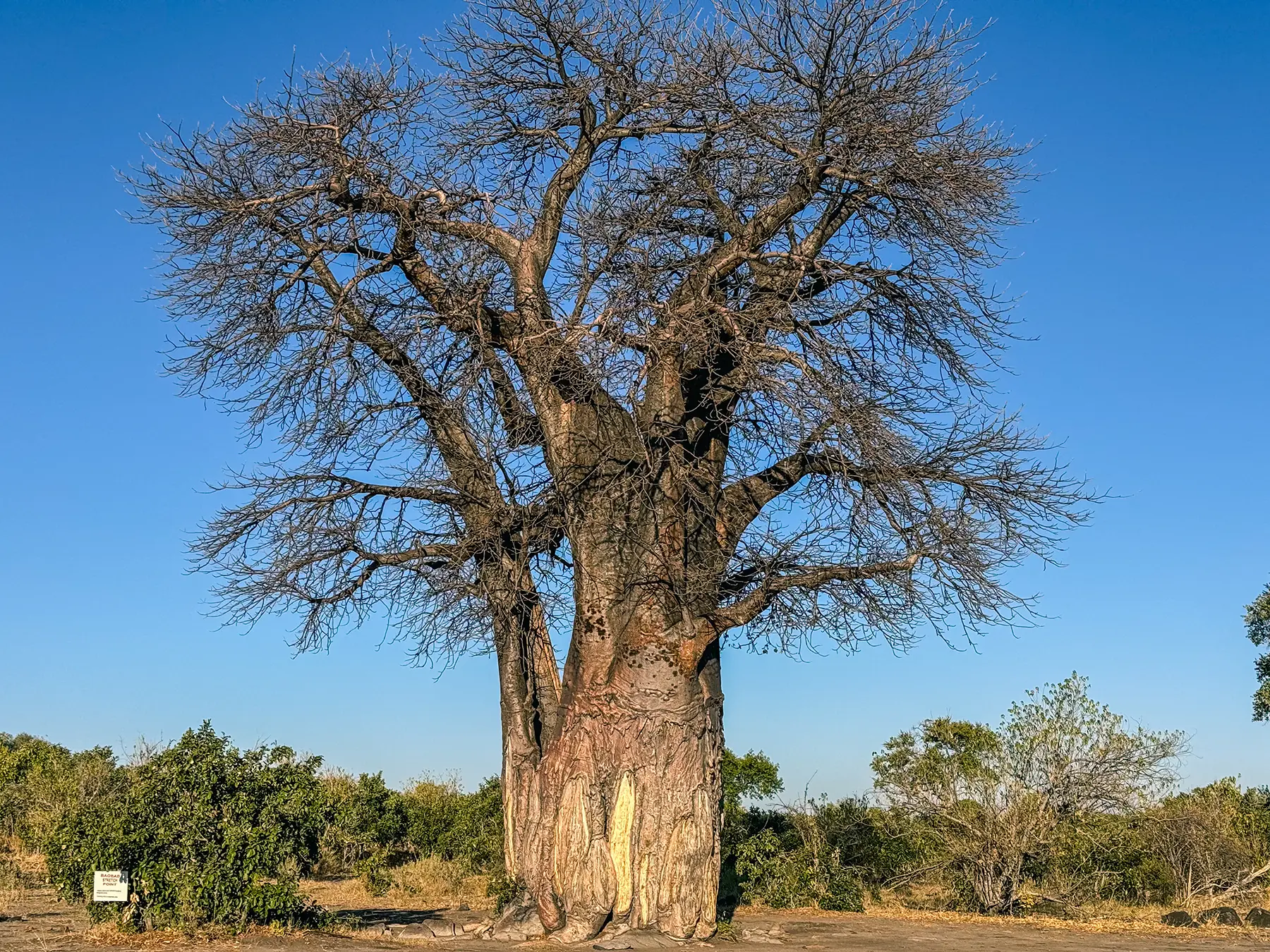
Where to Stay in Makgadikgadi & Nxai Pans
The majority of camps and lodges in Makgadikgadi are on the western flank close to the Boteti River, as this is where the wildlife tends to congregate all year. In addition, quite a number are located around the Nxai pan near the game-viewing areas.
You can choose from chic permanent camps such as Jack’s Camp and San Camp, which offer stunning views out over the pans, or mobile camping if you want to sleep right out in the wilderness.
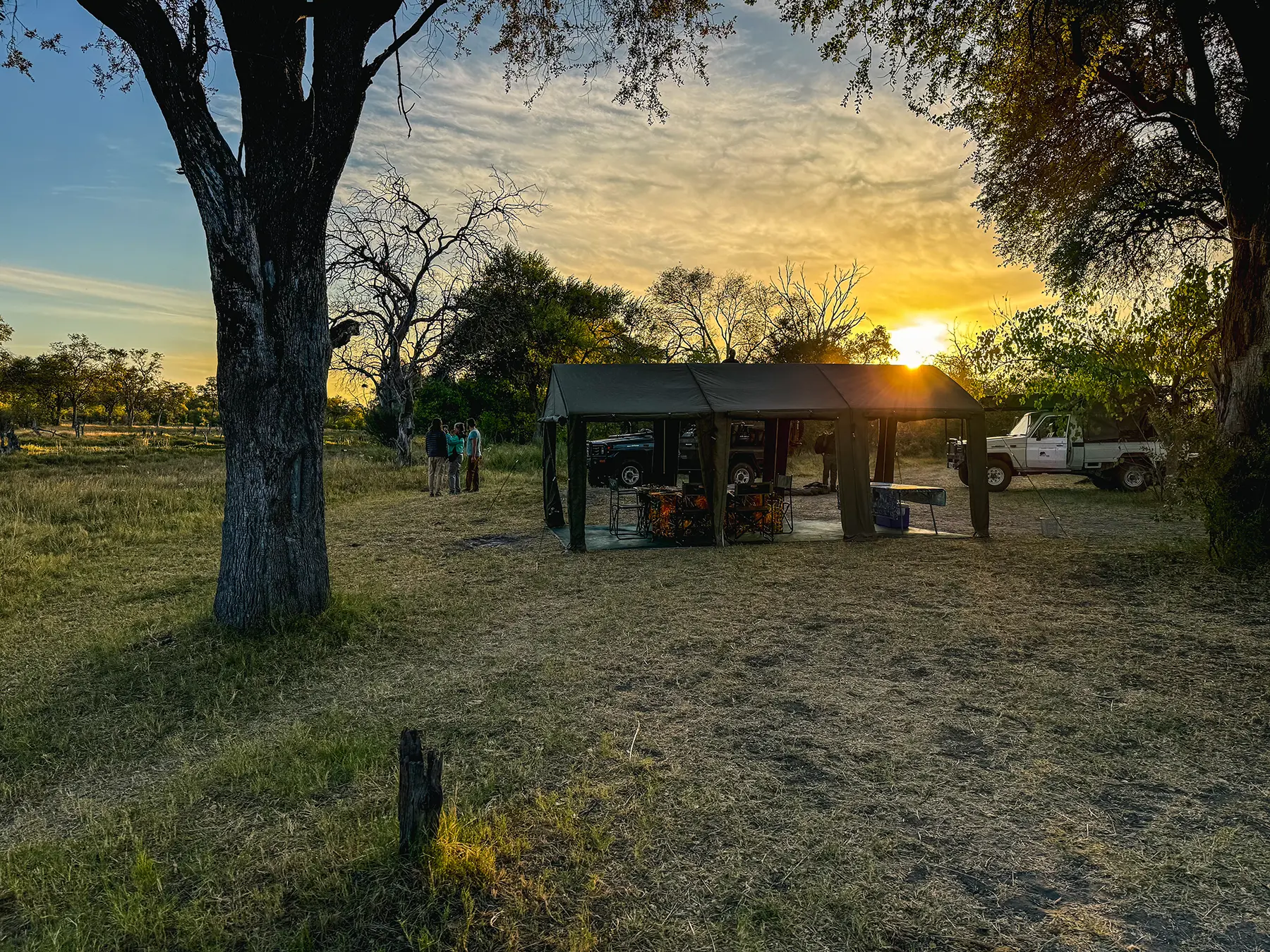
Day 3: Maun
Drive time (excluding game drives): Approximately 3.5 hours from Makgadikgadi Pans to Maun, or 30-45 minutes by light aircraft
Today marks the last day of your Makgadikgadi adventure as you return to the sleepy town of Maun right beside the Okavango Delta. You’ll have one last morning to explore the salt pans before your transfer, followed by a chill night in the town before flying back home.
Itinerary
You’ll start your day with a last game drive through Makgadikgadi’s salt pans, rising early to capitalise on the cool morning air when wildlife is more active. Look out for the resilient species that have adapted to make this desert habitat their home, scanning the grasslands around the pans as well as the wide, open expanses.
In the green season, you’ll see herds of zebra and wildebeest grazing in the distance and perhaps some stealthy predators trying to get closer to them. The best time to spot meerkats is during the dry season, as the colonies are largely inaccessible during the wet period. These comical cuties are such a joy to watch, their little noses twitching as they scan for predators.
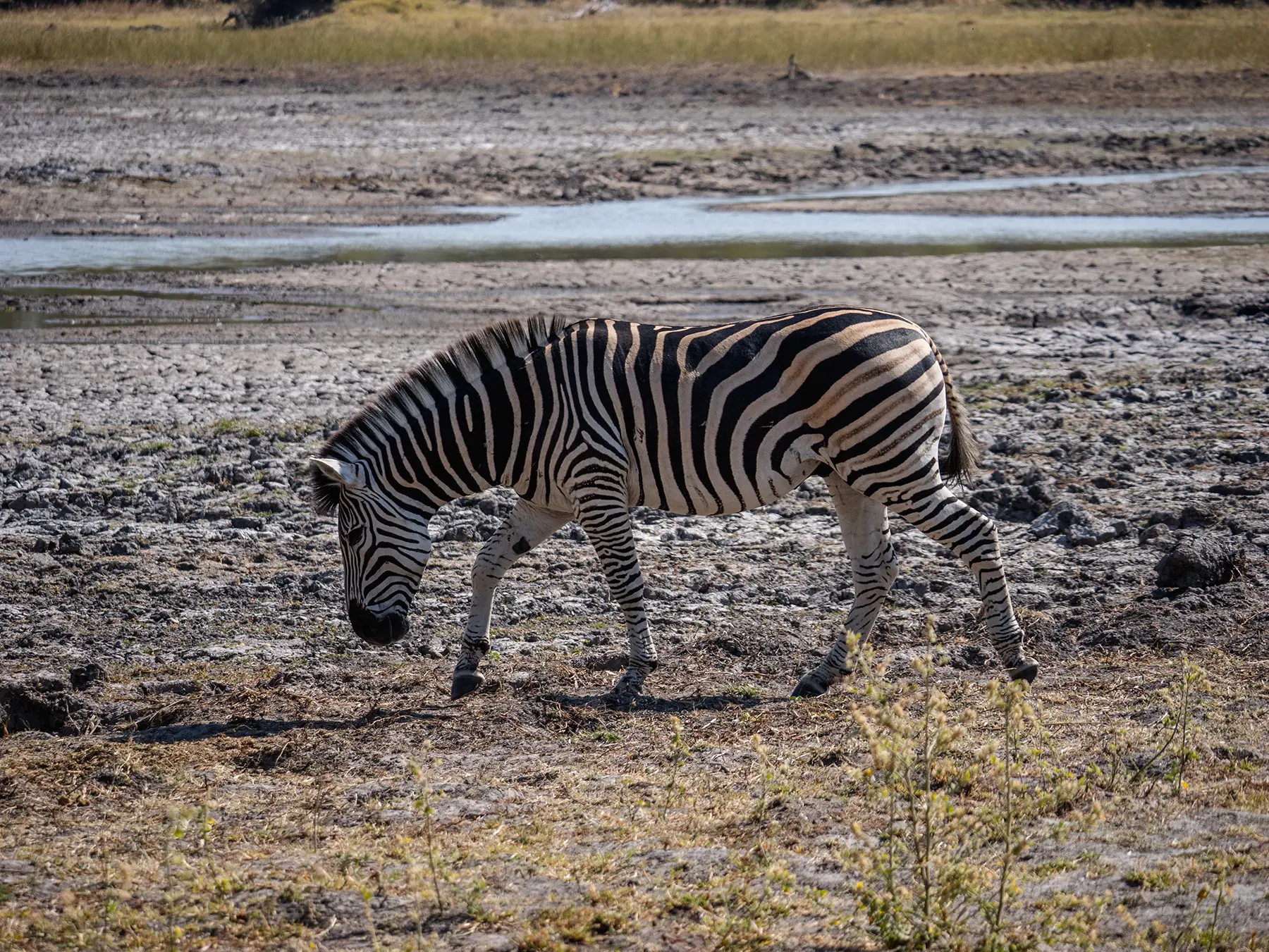
Once you return to camp, you’ll have time for breakfast before starting your transfer back to Maun. While you can drive or fly, flying is definitely the better choice in the wet season as the tracks across the pans can get very slippery and muddy, hampering progress significantly. A light aircraft transfer is also a lot faster, taking just 30-45 minutes compared to 3.5 hours on the road.
Once you reach Maun, your wilderness safari is at its end. Depending on your flight time, you might have a little time to relax and grab a bite to eat in town, or even stay overnight before flying home.
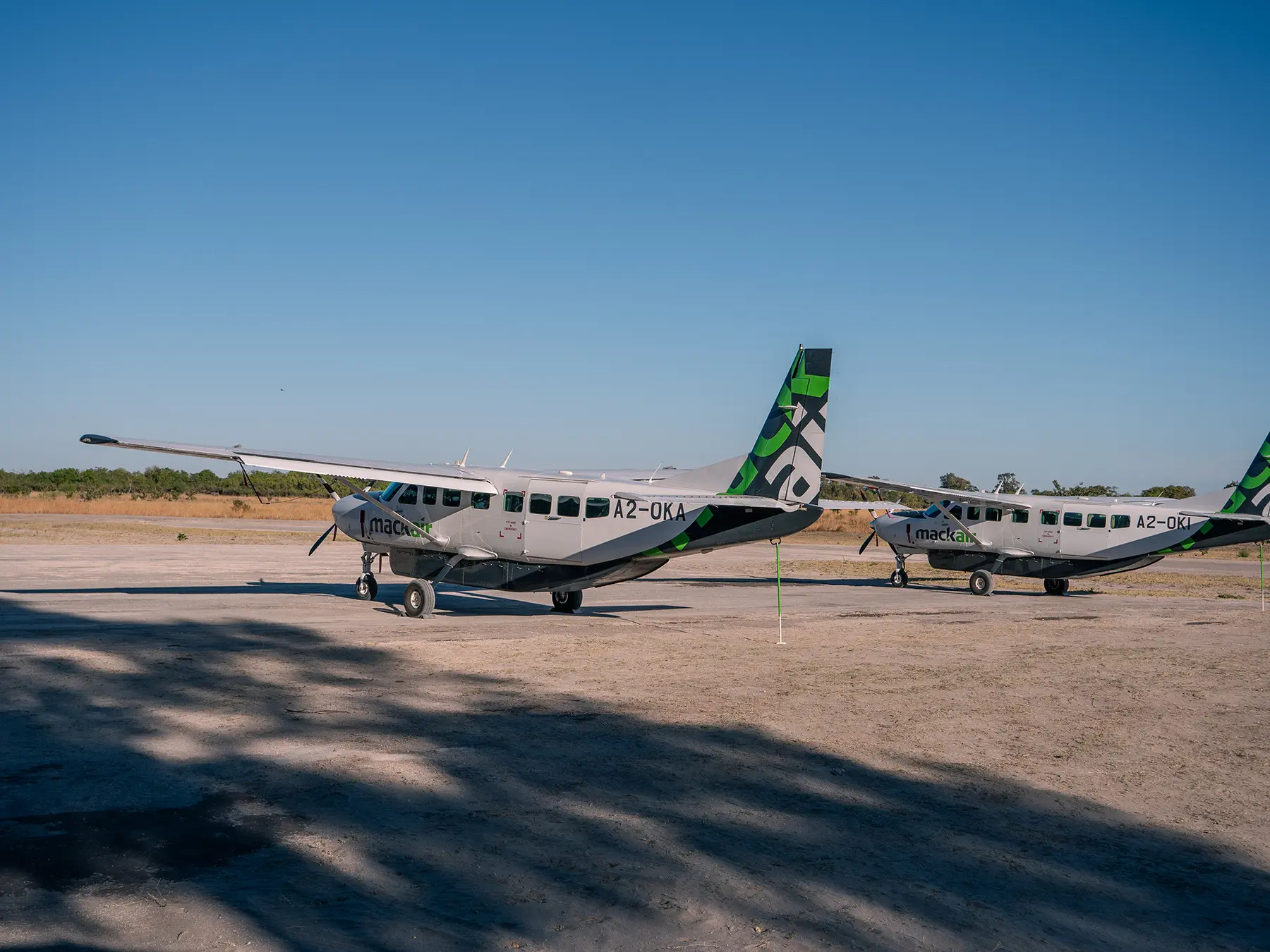
Where to Stay in Maun
Maun is home to a number of lovely lodges and guest houses where you can spend a comfortable night before heading out on safari or catching your flight home. The majority of these are located close to the beautiful Thamalakane River.
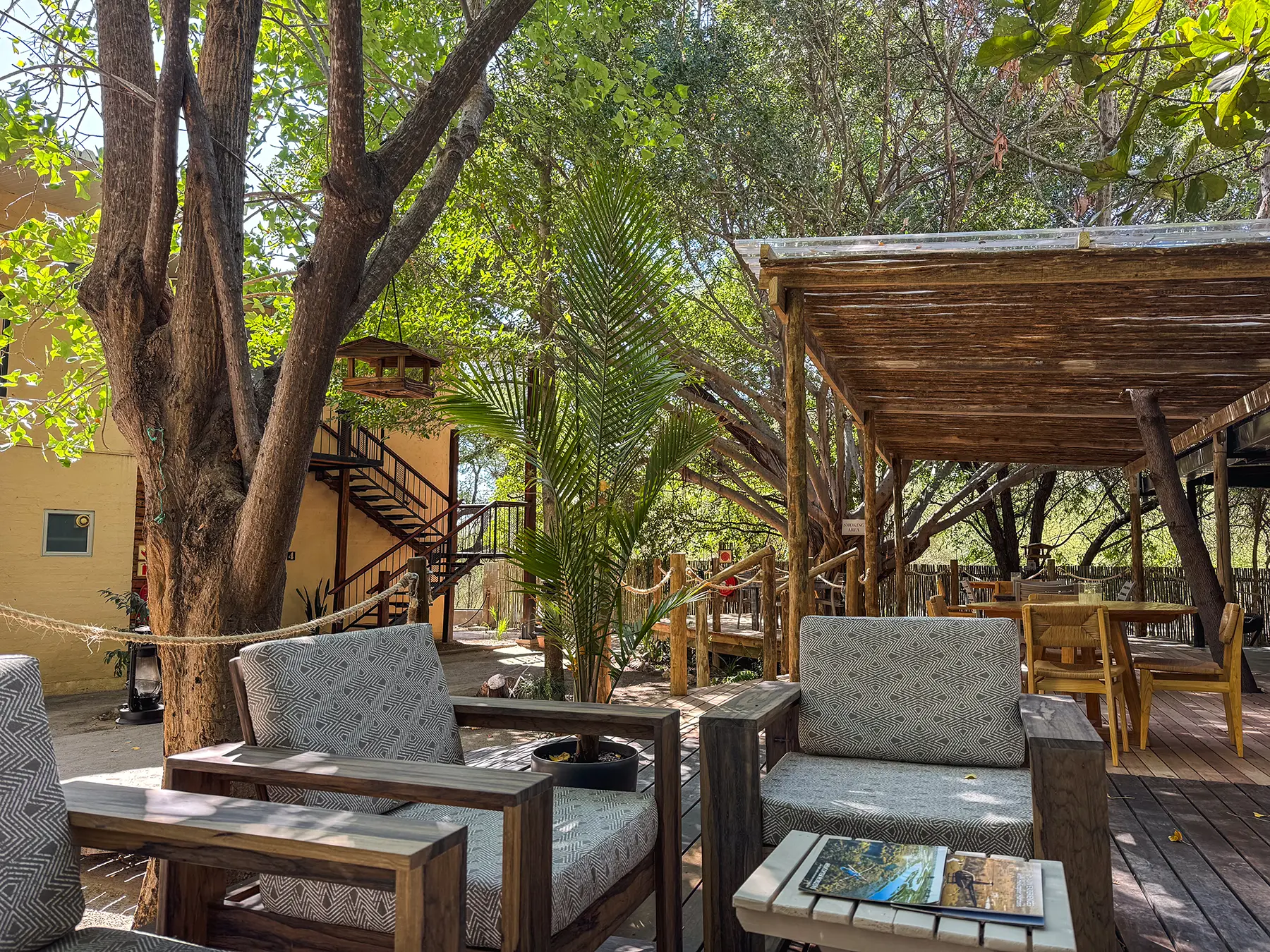
The Waterfront is my personal favourite place to stay in Maun. It enjoys a lovely location on the banks of the Thamalakane River (which is dry for much of the year), but is also a short 15-minute drive from the airport and the town centre.
The rooms are contemporary and spotlessly clean, and breakfast is included in the price of your stay. The staff are also super friendly and welcoming.
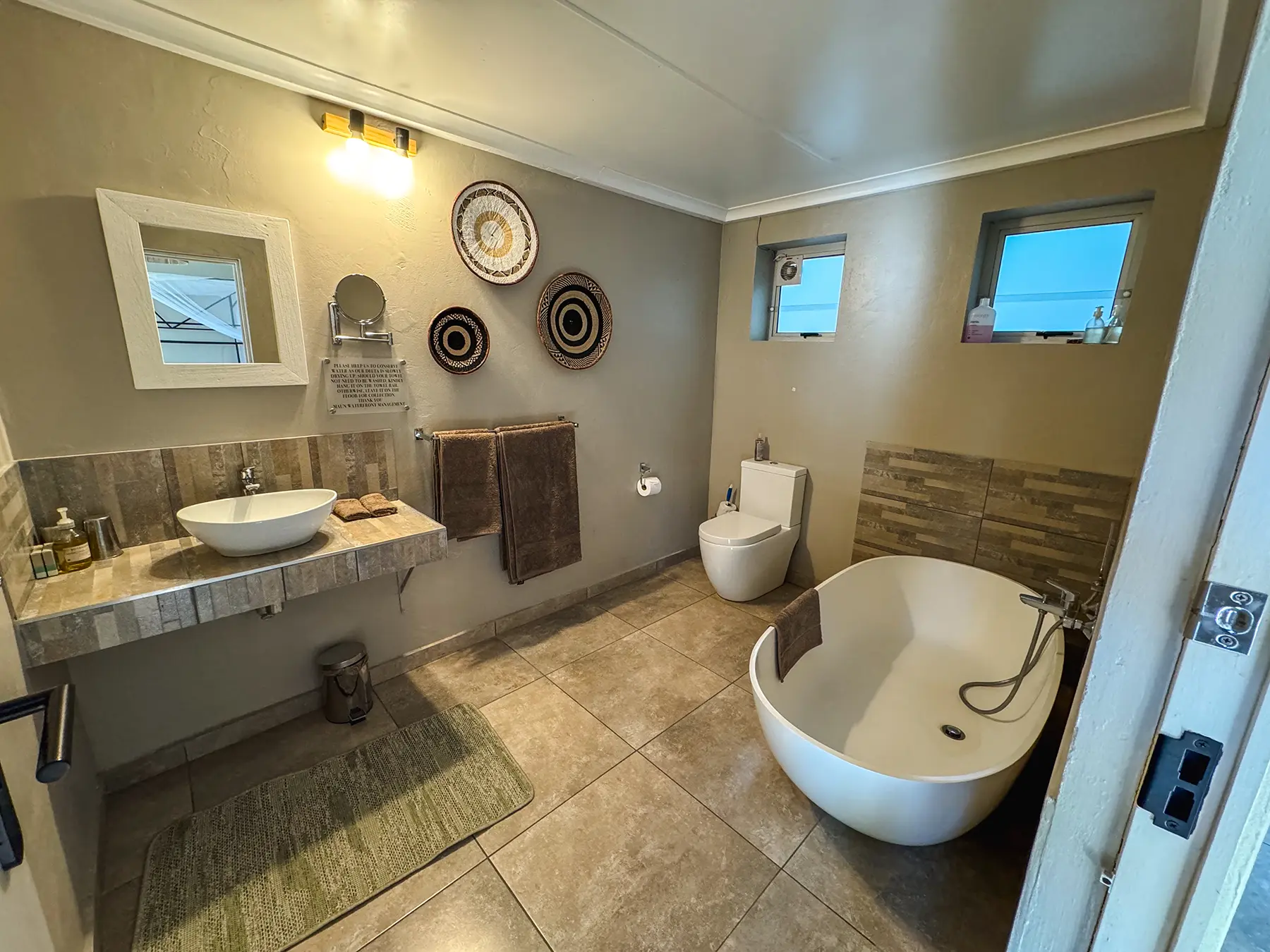
Botswana Safari FAQs
Simply click on any of the frequently asked questions below to view the answer.
When is the best time to visit Botswana for a safari?
General wildlife viewing is best during the dry season from July to October as animals are drawn to rivers and other water sources, making their movements more predictable. Vegetation is also sparse during this period, making wildlife easier to spot.
However, the green season from December to April is best for birding and adorable baby animals. Lodge prices are also up to 40% lower, and the stormy skies make for incredible photos. I would say May offers the best of both worlds, with good viewing conditions and accommodation prices about 20% lower than peak rates.
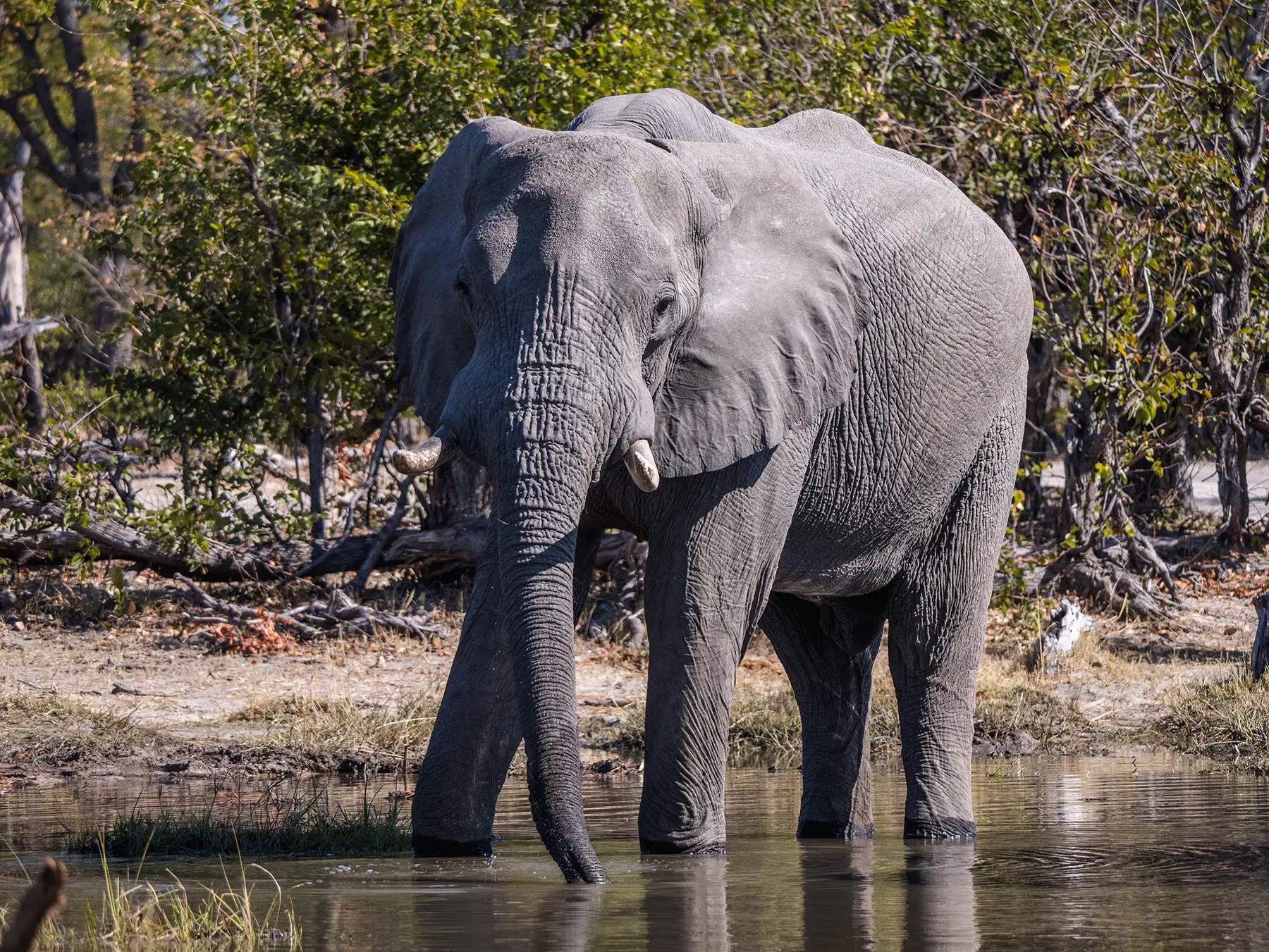
How much does a Botswana safari cost?
Private safaris in Botswana cost from around $450 per person per day, while group camping safari prices start at roughly $350. Due to its high-value, low-impact tourism model, Botswana is more expensive than Kenya (from about $300 per day) or Tanzania (from about $350 per day), but in return, parks are quieter and there are way fewer vehicles at sightings.
I strongly recommend booking through a local tour operator to get the best value, as international agents usually apply huge markups for the same services.
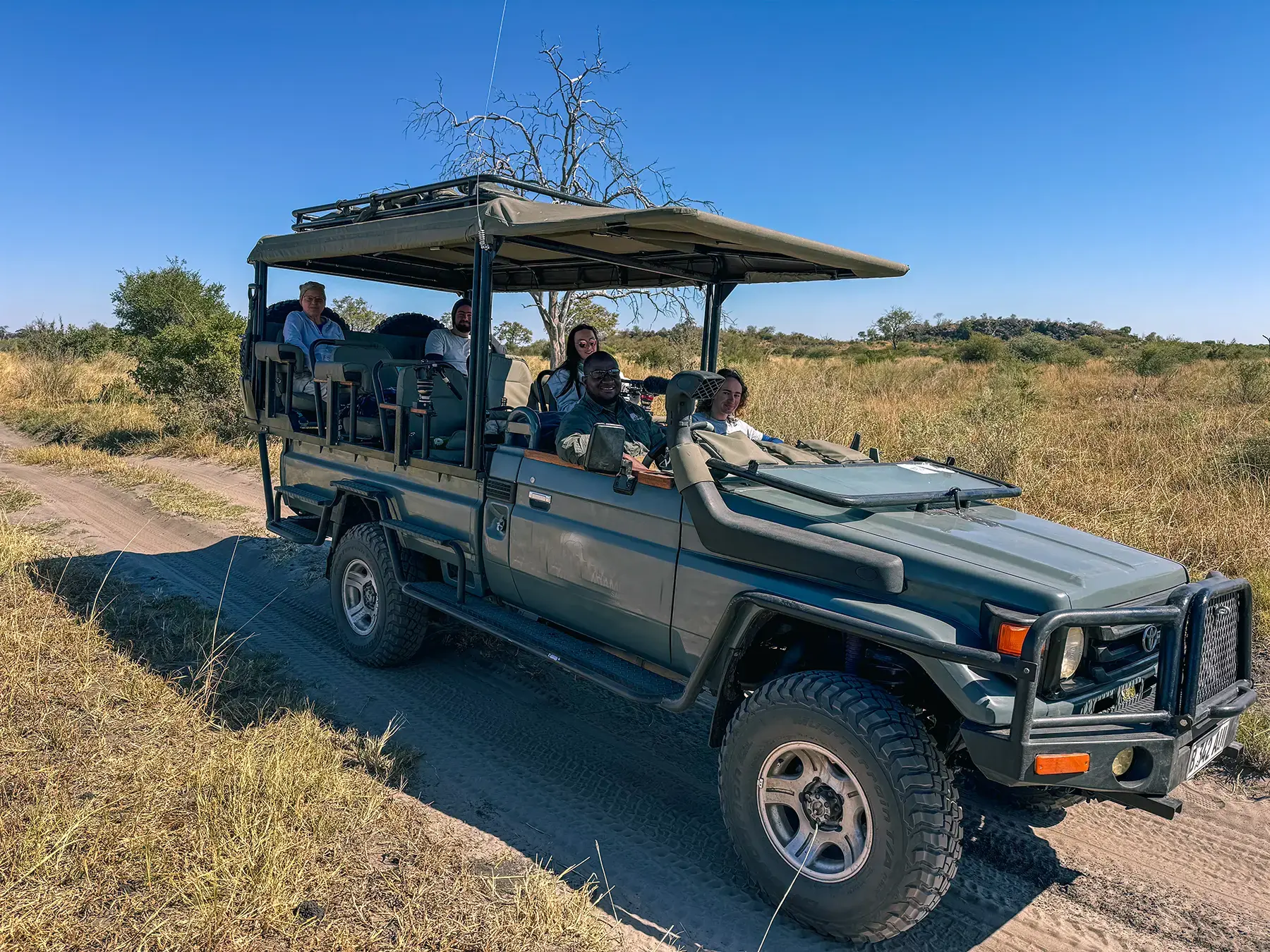
Do I need vaccinations or anti-malaria tablets for Botswana?
Yes. The recommended vaccinations for Botswana are Hepatitis A, tetanus and typhoid, and you might also need to get hepatitis B and rabies vaccinations depending on your itinerary.
Costing about $2 per day, anti-malarial tablets are also recommended. These must be taken for a few days before you go and then for some time after your return.
If the country you’re travelling from has a yellow fever transmission risk, you’ll also need to provide proof of yellow fever vaccination. Make sure you consult a healthcare provider at least two months before your trip, as it can take weeks to complete some vaccination courses.
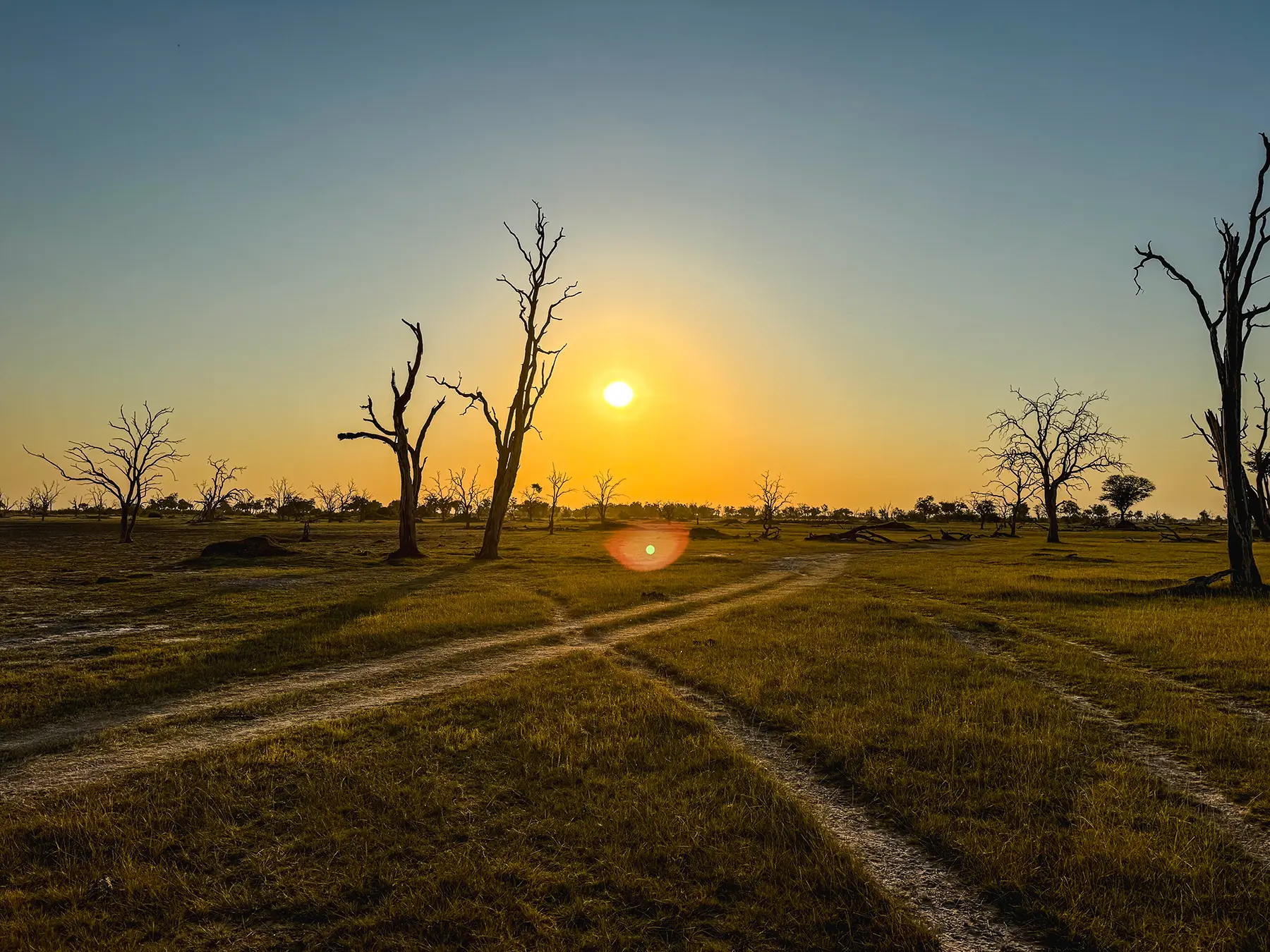
Do I need a visa to visit Botswana?
Citizens of the UK, US, Canada, Australia and most European countries can enter Botswana without a visa and stay for up to 90 days. Be aware that your passport must be valid for a minimum of six months beyond your arrival date and have no fewer than three blank pages.
When travelling with children aged 17 or under, you must have a certified copy of their birth certificate.
Travellers of other nationalities can check the relevant requirements on the Botswana eVisa website. If you opt for my Chobe and Victoria Falls itinerary, bear in mind you’ll also cross into Zimbabwe on Day 3. A single-entry Zimbabwe visa costs around $30 to $55 depending on your nationality, or you can ask for the KAZA Univisa (around US$50), which covers multiple crossings between Zimbabwe and Zambia for up to 30 days. Be sure to bring US dollars in cash, as the card machines at the border often don’t work.
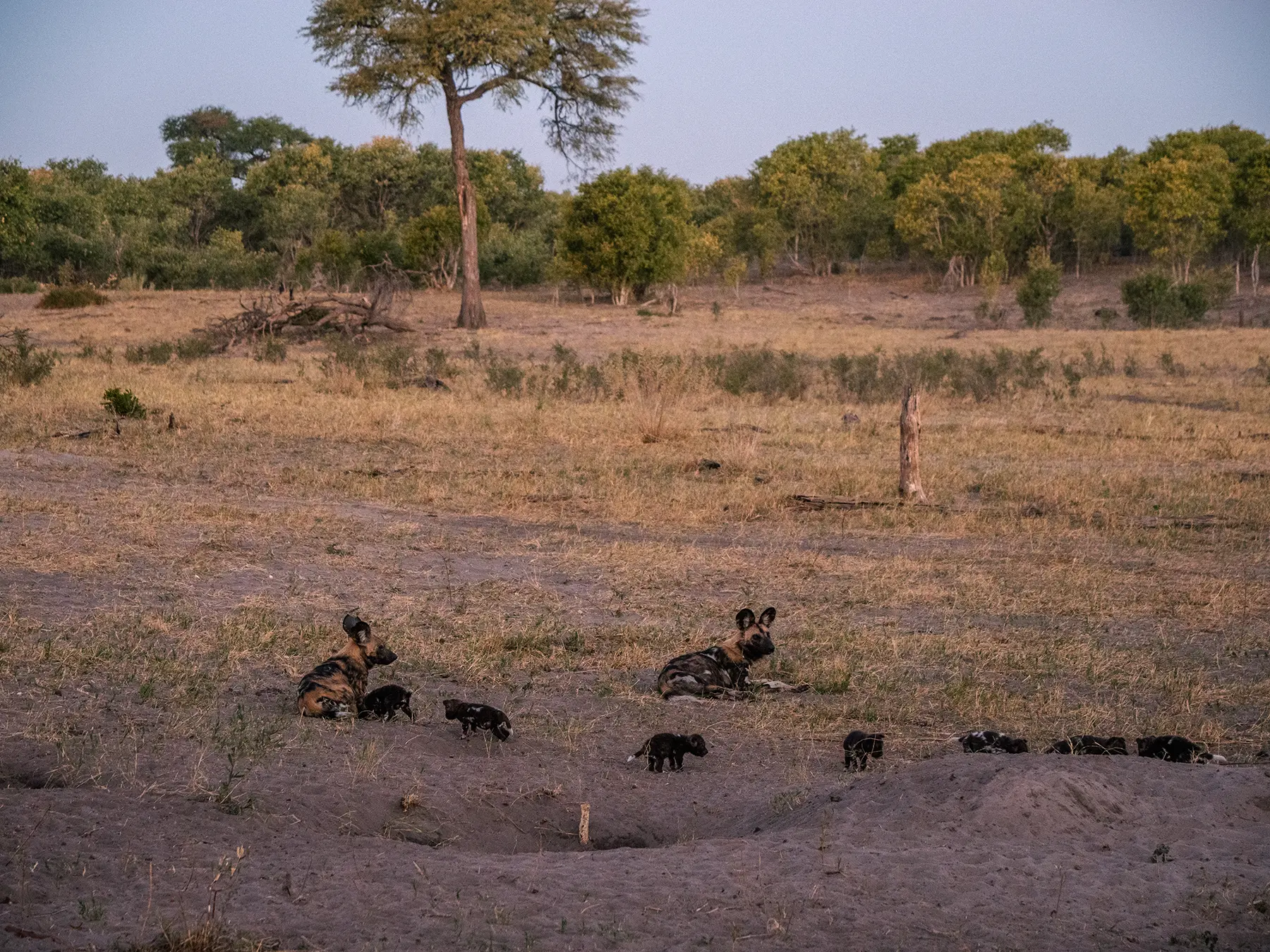
What wildlife can you see in Botswana?
Botswana boasts all of the Big Five (lion, leopard, elephant, buffalo and rhino) as well as healthy cheetah, hippo, giraffe and zebra populations and a great many species of antelope. It’s home to the largest population of elephants in the world, numbering over 100,000, and is one of the leading destinations in Africa for sightings of the critically endangered African wild dog.
Together, the Okavango Delta, Chobe and Kalahari harbour more than 600 bird species.
I remember finding a large elephant herd drinking at the river on our last morning in Khwai, with a cute little one frolicking about in the shallows. Just downstream, we were delighted to encounter a hippo with a teeny little calf, and almost immediately after that, we heard some impala alarm calls, which led us to two cheetah brothers stalking a zebra.
It is that kind of variety of sightings that makes me love Botswana so much – every game drive is unforgettable.
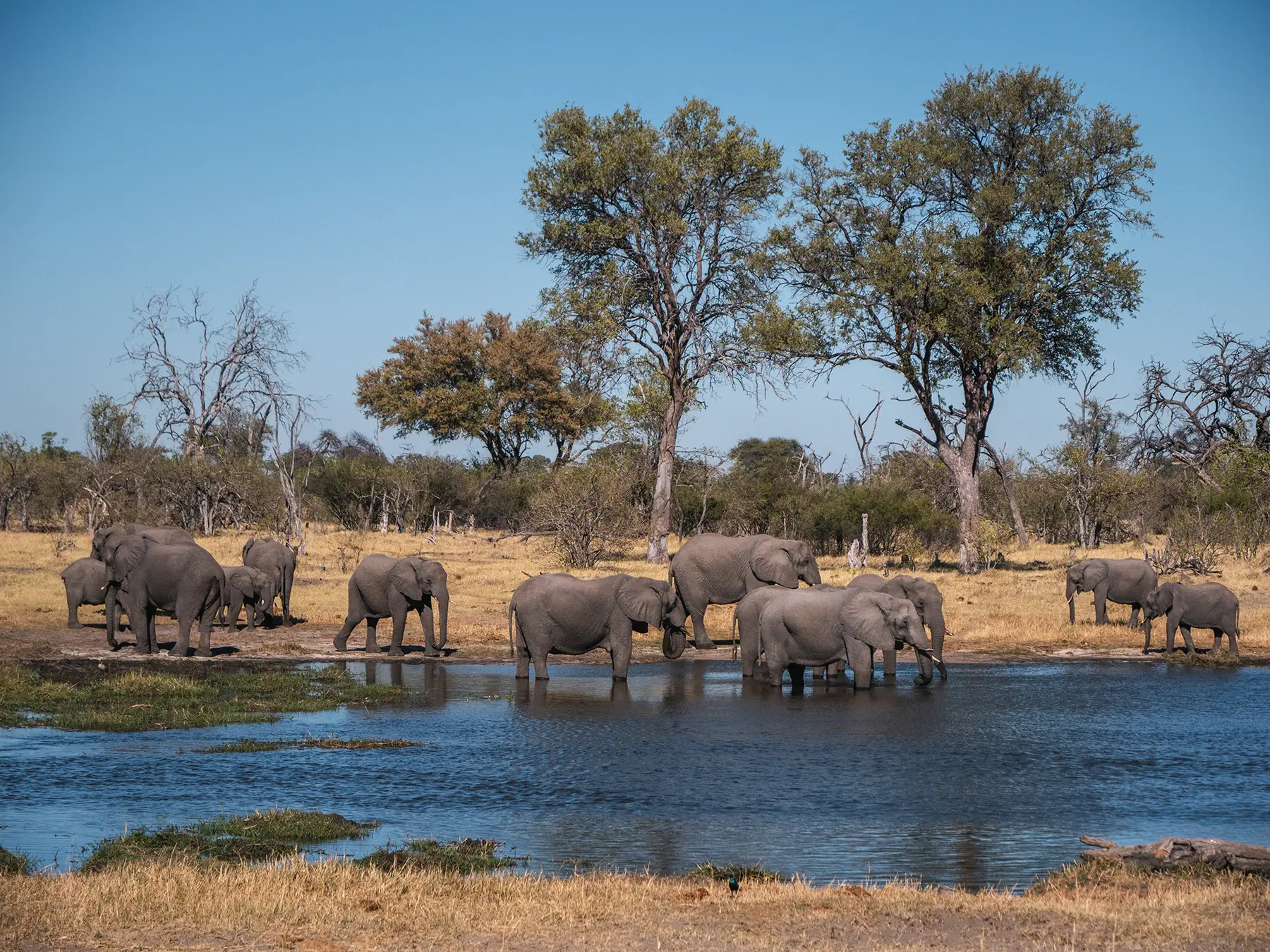
What is a mobile camping safari in Botswana like?
Mobile camping is one of the most popular options with those visiting Botswana, and it’s a lot more glamorous than it sounds! A dedicated team will set up your camp at a private site inside the national park each evening and move it between locations as you travel.
With luxury camps, the team take care of everything, so you don’t need to help set up camp or assist with the cooking. Budget options will require you to muck in a bit, but are still very comfortable.
My own luxury mobile camping safari through Moremi, Khwai and Savuti was an eye-opening new take on camping, not remotely reminiscent of any camping trip I’d ever been on before.
The tents were airy and roomy with real double beds, bedside lockers and even en-suite bathrooms with basins, long-drop toilets with proper seats and bucket showers. The team took care of every detail, leaving us to simply enjoy our safari.
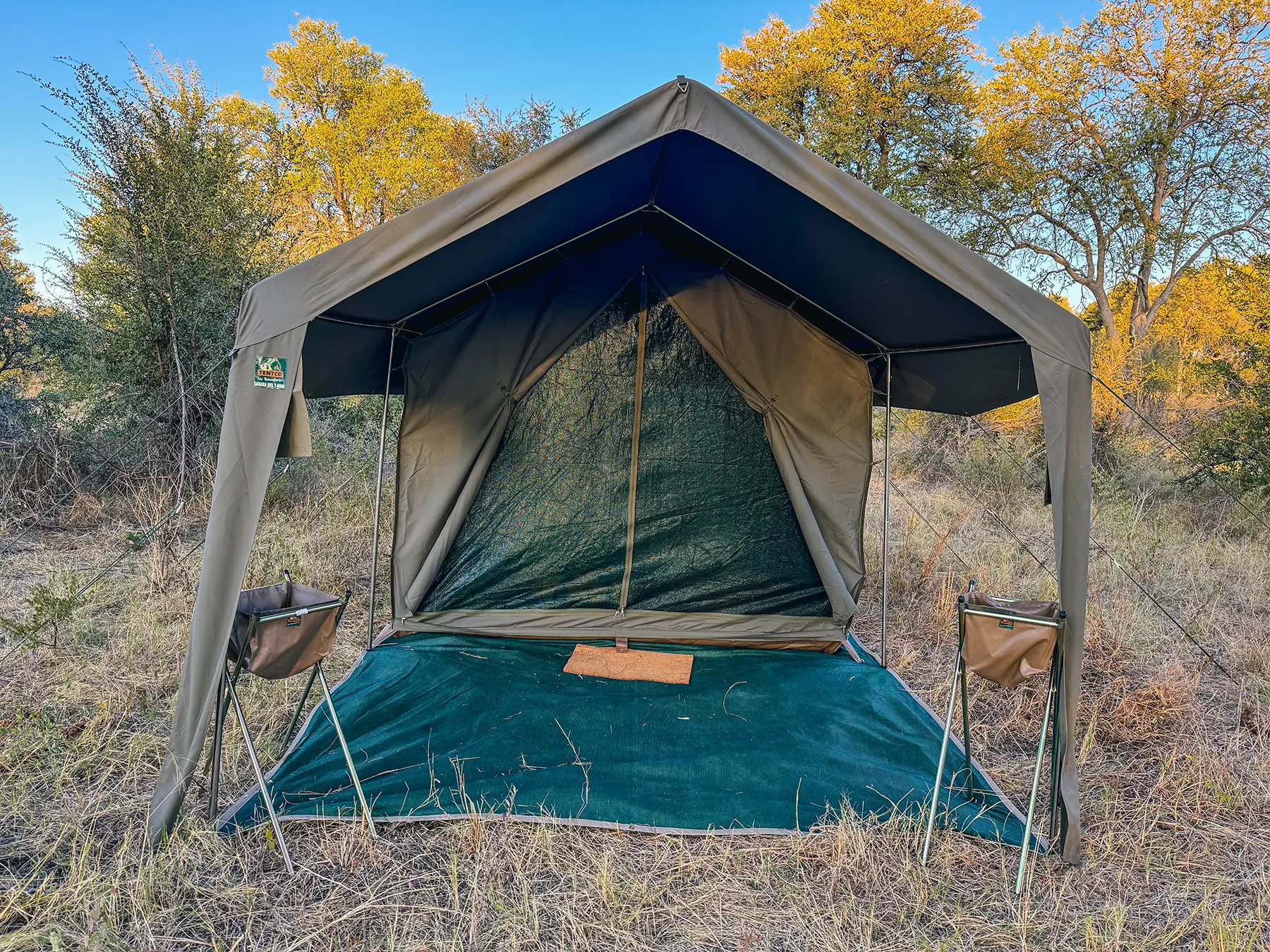
What makes Botswana different from other safari destinations?
Thanks to its high-value, low-impact tourism model with strict limits on visitor numbers, Botswana’s parks are much quieter than their East African equivalents.
The country also has an untouched, rugged feel to it, with nearly 40% of its land protected as dedicated wilderness areas. There are no fences, so wildlife can travel freely among reserves and regions. Lastly, the standard of guides is among the highest on the continent.
Botswana gave me some of the wildest, most peaceful and remotest safaris I’ve ever experienced. For me, what makes it so unique is the unbelievable sense of wilderness you get, along with the absence of crowds.
You can end up attending a sighting with dozens of other vehicles on an East African safari, but I never saw more than four vehicles at a sighting in Botswana, and even that was unusual. The vast majority of the time, we were the only vehicle, even for amazing sightings like the time we came across a whole pride of lions devouring an elephant carcass.
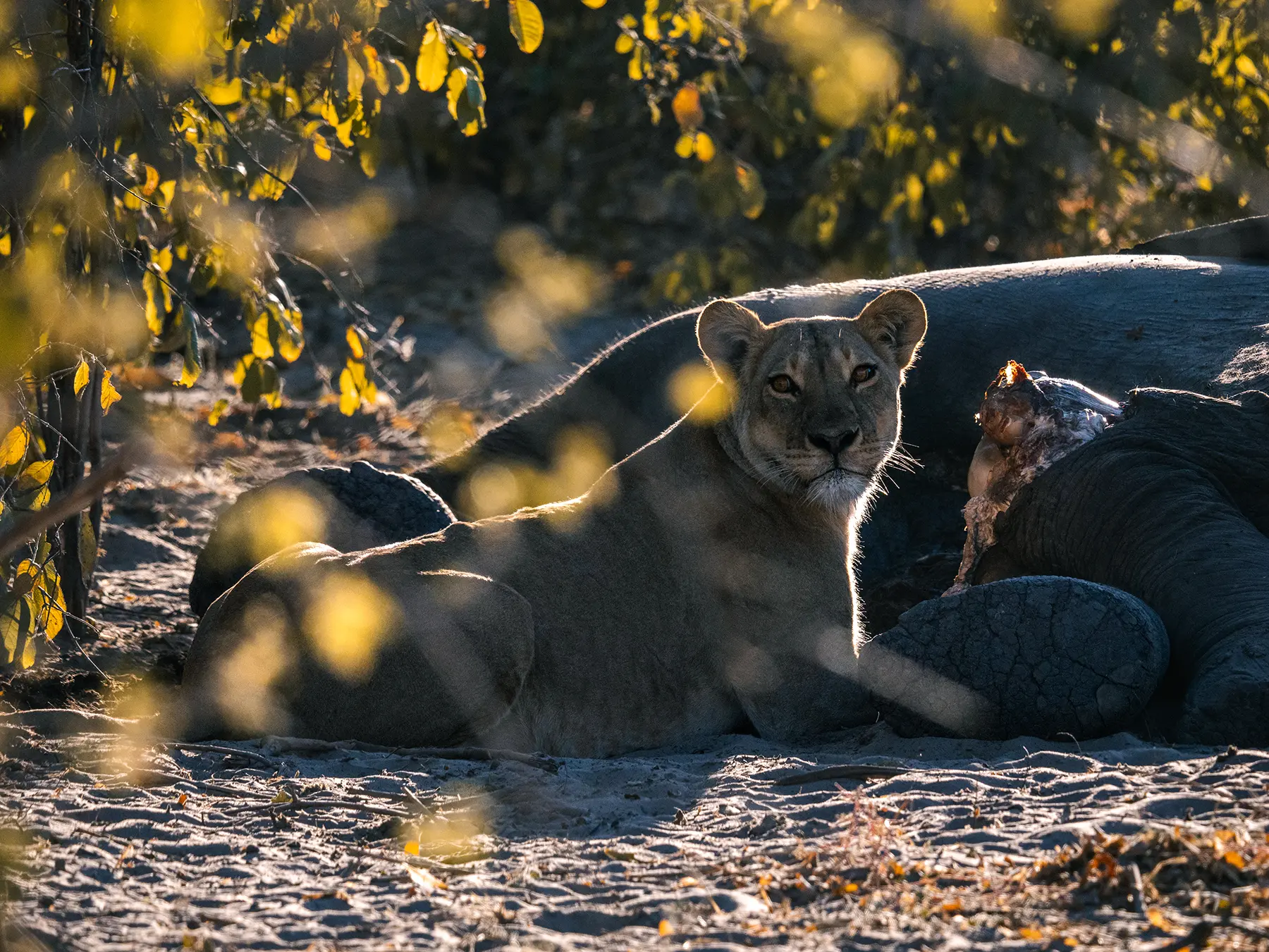
How do you get around Botswana on safari?
As so many of the reserves in Botswana are remote, safaris in the country usually involve light aircraft transfers between camps and then 4×4 game drives once you arrive. With many of the remote concessions only accessible by air, it’s very likely you’ll end up flying for at least some of your transfers.
However, some itineraries include road transfers for reserves that are closer together. Your tour operator will coordinate your fly-in schedule.
Bear in mind that the size of the aircraft means that luggage is usually limited to soft bags only with a strict weight allowance.
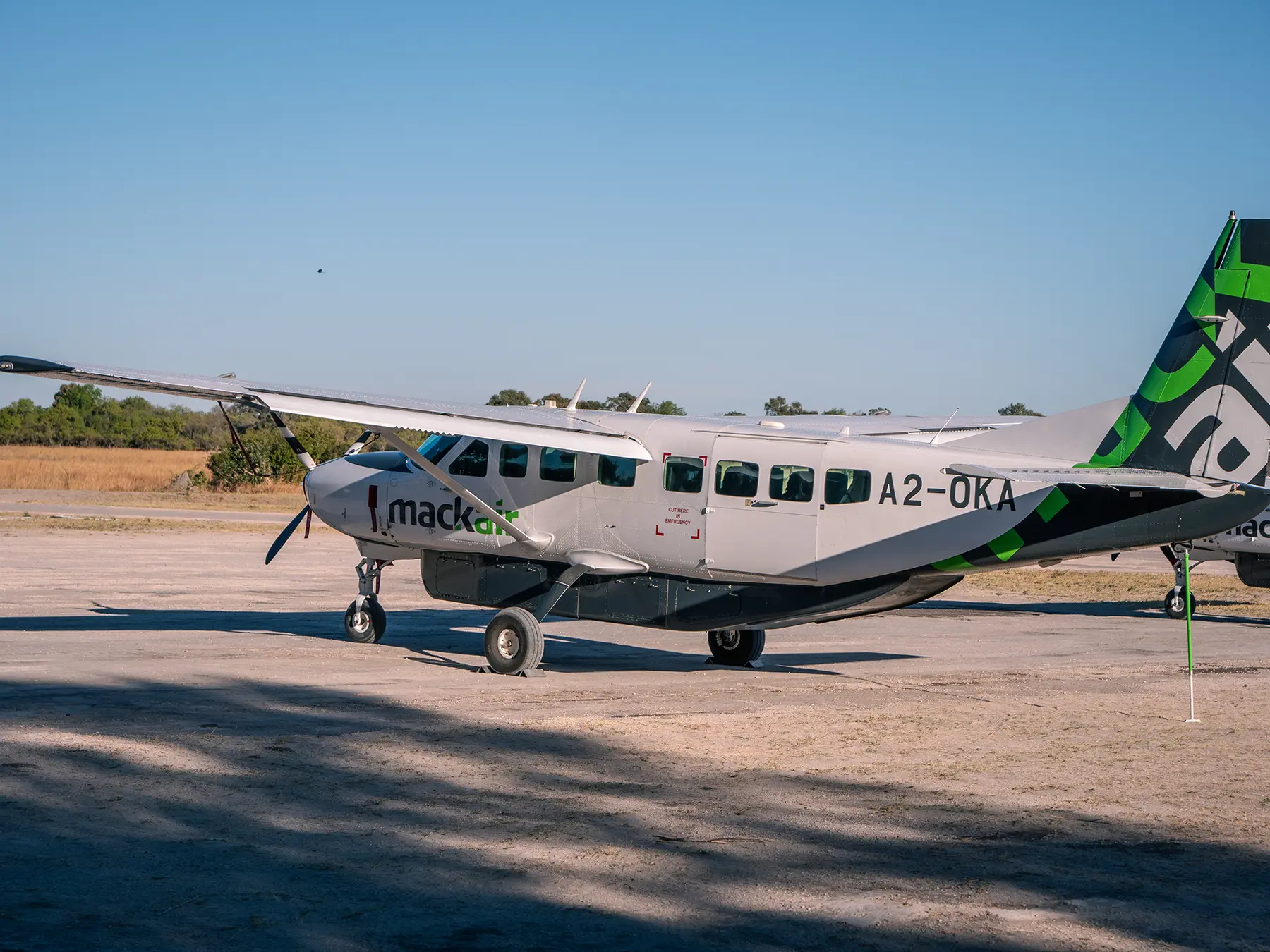
Recommended Booking Options For Your 3 Day Botswana Safari Itinerary Itinerary
Private Safari
Most popular & best experience – typical prices for this itinerary start from $450 per person per day.
Visit safarisbyella.com for free quotes from trustworthy local tour companies I use to book my own trips.
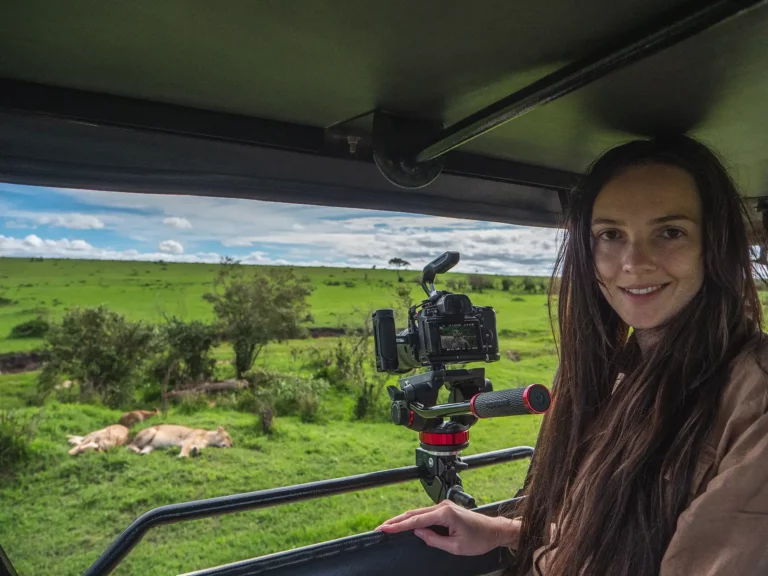
Final Thoughts – Is a 3-Day Botswana Safari Worth It?
Absolutely! A 3-day Botswana safari offers ample time to get a real feel for one of the country’s many amazing regions, and the low-volume, high-value tourism model will ensure you can enjoy wildlife sightings without having to contend with crowds.
The five 3-day itineraries I’ve prepared for you are intended to give you an insight into the varied regions that make up this beautiful country so you can choose the one that best reflects the safari of your dreams.
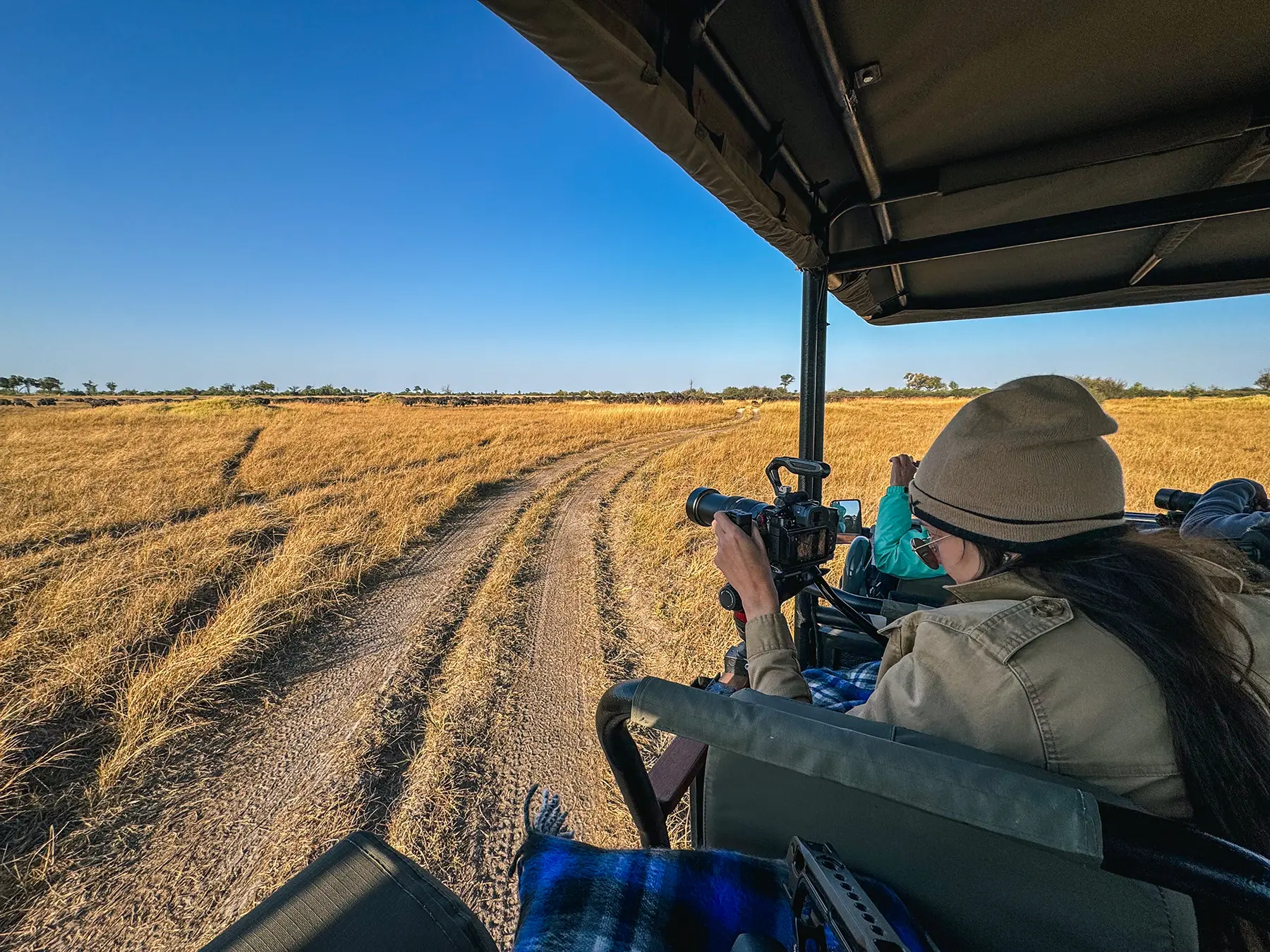
Each of these five trips showcases a unique facet of Botswana, whether it be a water-based safari in the lush floodplains of the Okavango Delta and Moremi, a thrilling game drive in the predator-rich Savuti followed by a cruise along the elephant-lined Chobe Riverfront, the added cross-border trip to see the jaw-dropping Victoria Falls, the resilient desert wildlife of the Central Kalahari and Deception Valley, or the dazzling salt pans and comical little meerkats of Makgadikgadi.
The real beauty of these itineraries is that as well as delivering an in-depth experience of a single region, they can also be combined for a longer trip that takes in more of Botswana. If you have longer to spend, take a look at my 7-day Botswana itinerary and my 10-day Botswana itinerary to see how these regions combine.
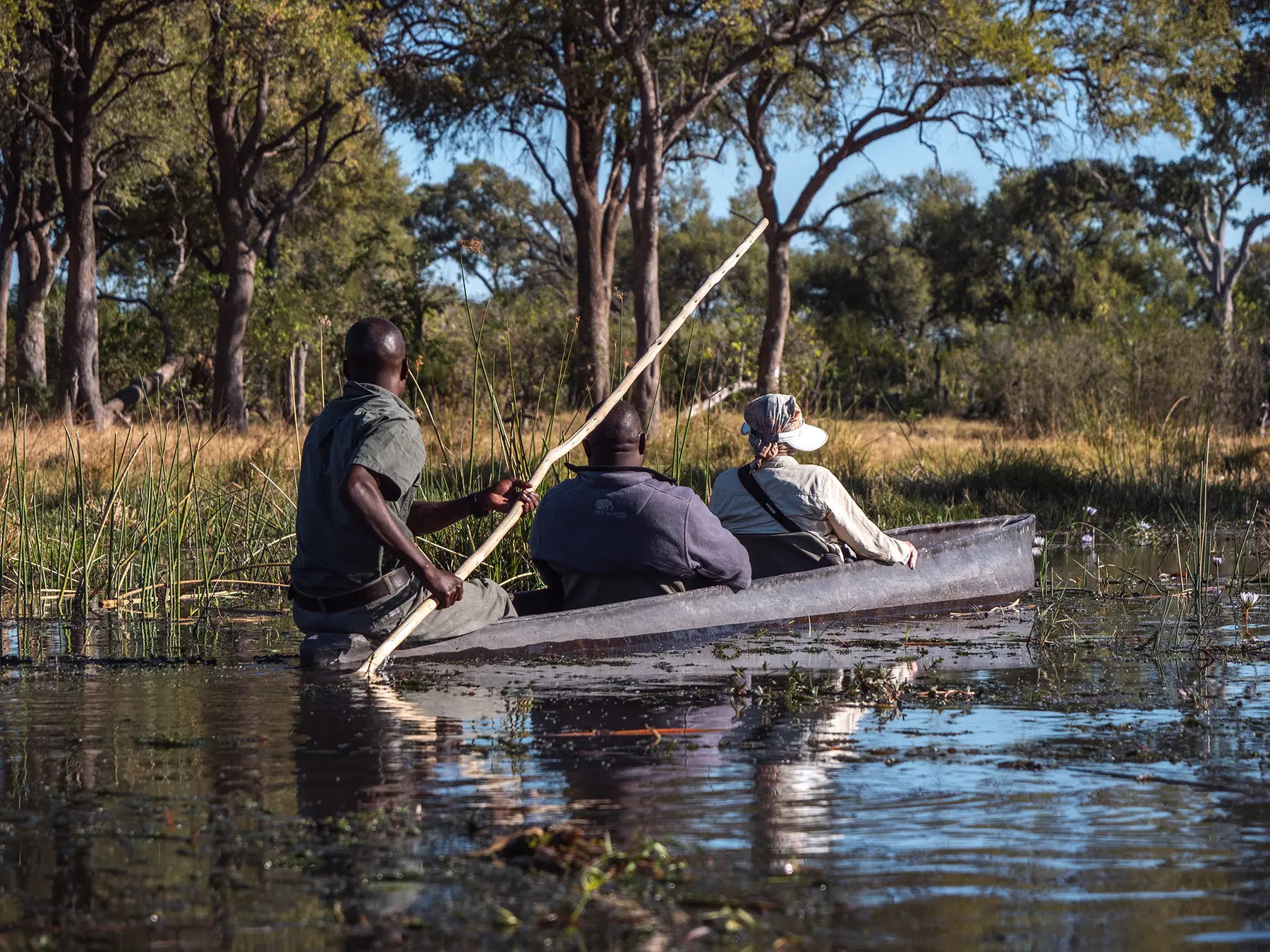
Botswana has truly captured my heart as my favourite safari destination. From the first day I arrived in Savuti, the country gifted me spectacular wildlife encounters that are etched in my mind.
I had booked my safari in fervent hopes of catching even the briefest glimpse of an African wild dog, and we ended up finding a whole pack of them on our very first afternoon! There were six adults sleeping at the entrance to the den, so close we could see their distinct markings.
As we waited, they woke and greeted each other joyously, wagging their tails excitedly. And if that wasn’t enough, eight tiny puppies then tumbled out of the den to nurse from their mother, wriggling in between one another and pushing each other out of the way in their eagerness. It was such an emotional experience to have a long-cherished dream come true in such spectacular style!
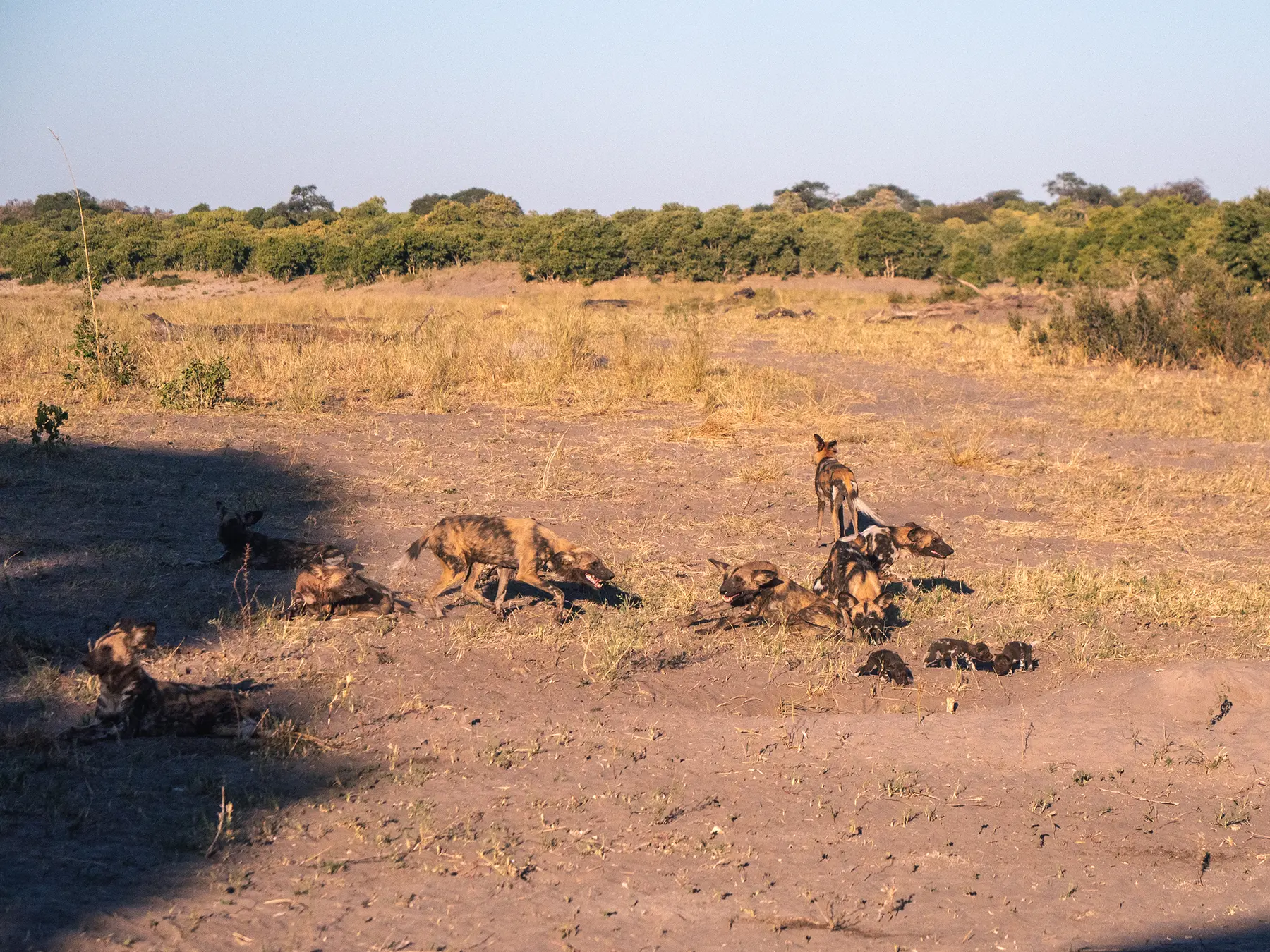
Another standout moment for me was watching a herd of elephants cross the river during my Chobe river cruise, their trunks raised like snorkels. Watching from the water level added a special dimension; I’d never experienced anything quite like it before.
There were many other moments like this besides, and they just came out of nowhere – proof that even a short safari trip will leave you with memories that endure long after you leave.
With so much to see, choosing one corner of Botswana to focus on for a mere 3-day safari may seem quite a daunting prospect. But rest assured that whichever of these itineraries you choose, Botswana’s wild, untouched nature and uncrowded parks are sure to deliver experiences that will be written indelibly on your heart.
I wish you an absolutely unforgettable trip – and please feel free to reach out if you need any help or advice with planning or booking your safari. Here’s to the trip of a lifetime!
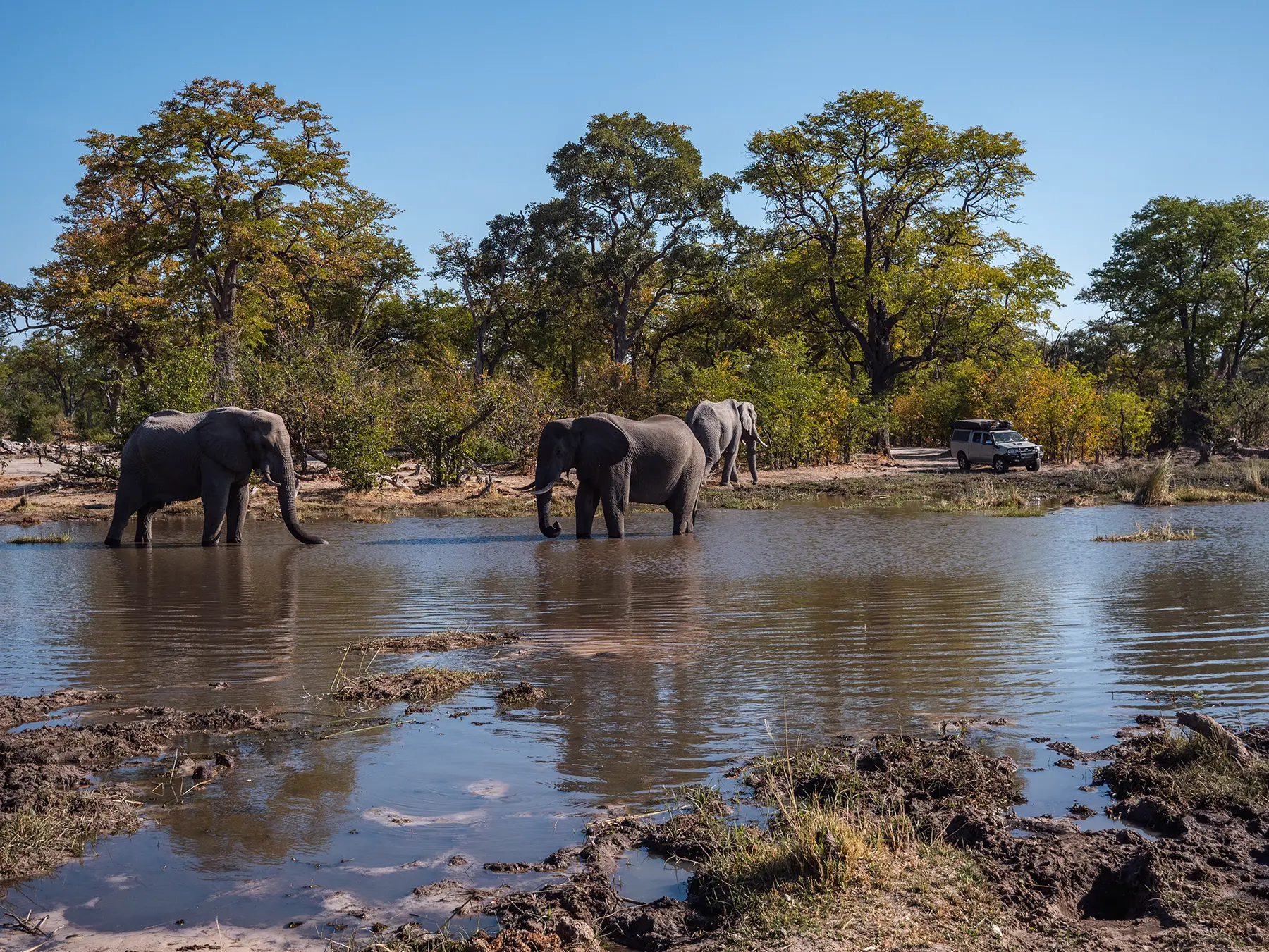
Read More Botswana Guides
For an overview of planning your safari, you can read my Ultimate Botswana Safari Guide.
Botswana Itineraries
Recomended itineraries and how to book them.
3-Day Botswana Safari Itineraries & Costs (5 options)
5-Day Botswana Safari Itineraries & Costs (5 options)
7-Day Botswana Safari Itineraries & Costs
10-Day Botswana Safari Itinerary & Costs
3-Week Botswana & Victoria Falls Safari Itinerary & Costs
3-Week Botswana and Victoria Falls Safari Itinerary & Costs
Costs & Planning
How to get the most bang for your buck and the best time of year to visit depending on what you want to do and see.
Botswana Safari Cost – Everything You Need to Know!
National Parks & Reserves
Complete guides to the best and most famous safari reserves, including the wildlife you’ll see, entrance costs and best time to visit.
Coming soon.
How to Book Your Safari
Save time and ensure an incredible safari experience by getting quotes from my recommended local safari companies.
Join the rapidly growing tribe of over 1,000 travellers who’ve booked their dream safari using my insider tips and recommendations.