
Kenya is one of my favourite safari destinations, boasting an incredible 23 national parks and a further 28 reserves and conservancies, which are home to high densities of the famous Big Five!
The country is one of the top 3 most popular safari destinations on earth (for good reason) and with three weeks, you really can see it all!

The Maasai Mara’s sweeping grasslands provide prime big cat habitat, while Amboseli delivers stunning Kilimanjaro views alongside one of Africa’s most impressive elephant populations.
I have been lucky enough to experience multiple safaris in Kenya, and have come to cherish it as one of my favourite African safari destinations.

Three weeks lets you visit lesser-known parks like Samburu and Laikipia as well as the world-famous Maasai Mara National Reserve and Amboseli National Park, with time left over for some well-deserved relaxation on the white sands of Diani Beach.
However, if you’re pressed for time or budget then a 7-10 day or 2-week Kenya safari itinerary will allow you to take in the key highlights.
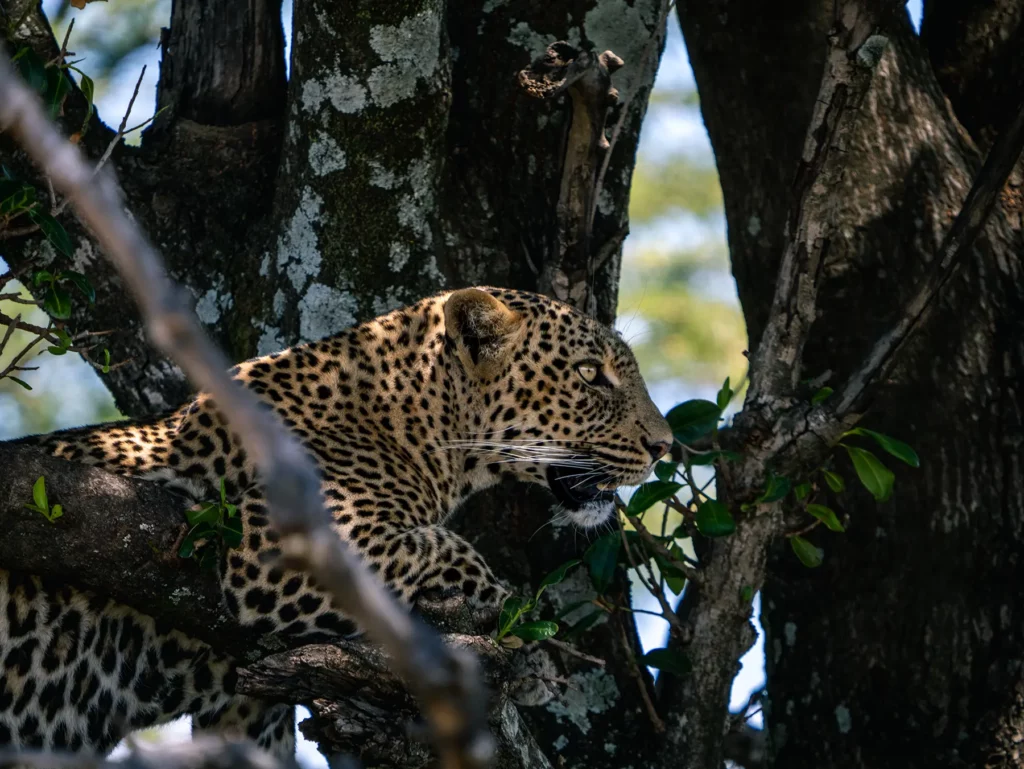
After visiting Kenya multiple times, I’ve perfected this 3-week Kenya itinerary to show you all of what Kenya has to offer as well as giving you the most ‘bang for your buck’.
I’m going to give you an idea of how much it will cost, the best time to visit and how to find the best safari tour company.
I’ve also spoken at length with my favourite Kenya guides as well as conducting copious amounts of additional research to ensure you receive everything you need to know to have the ultimate 3-week Kenya safari.
It’s easy to focus only on the fun stuff when planning the trip of a lifetime, but I’ll make sure your itinerary includes the practicalities too, like allowing time to navigate rough roads or building in moments to relax. These details often make all the difference.
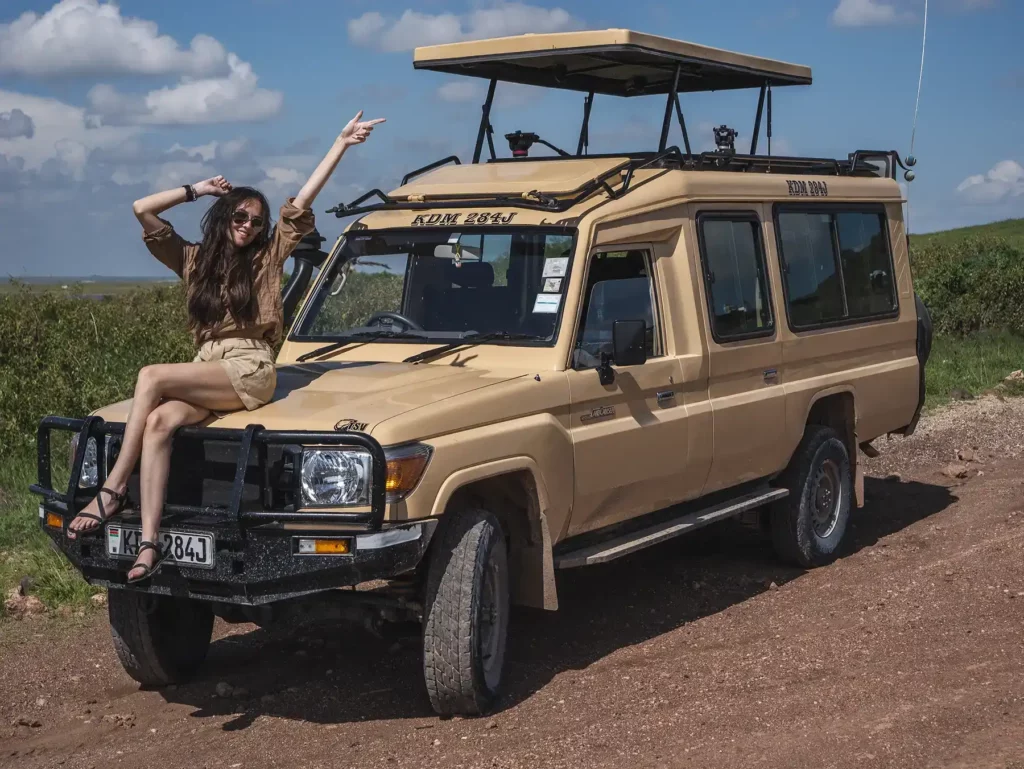
Kenya 3-Week Safari Itinerary Map
Below is the route map for my recommended 3-week Kenya itinerary. We’ll cover this itinerary in detail in this guide.
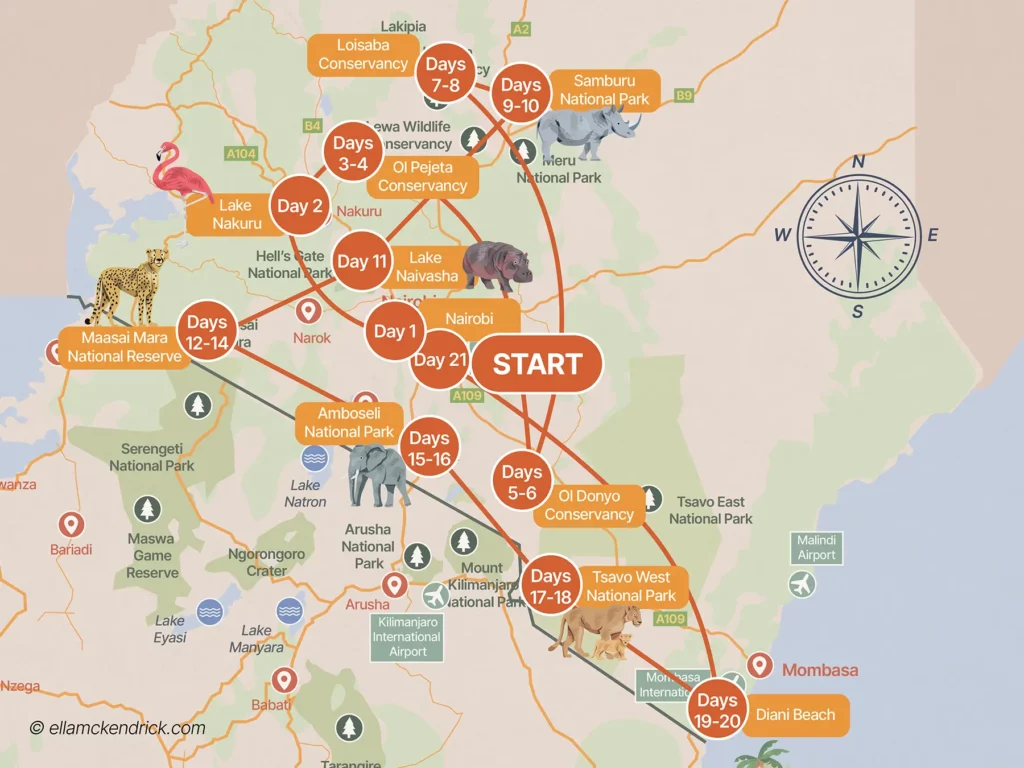
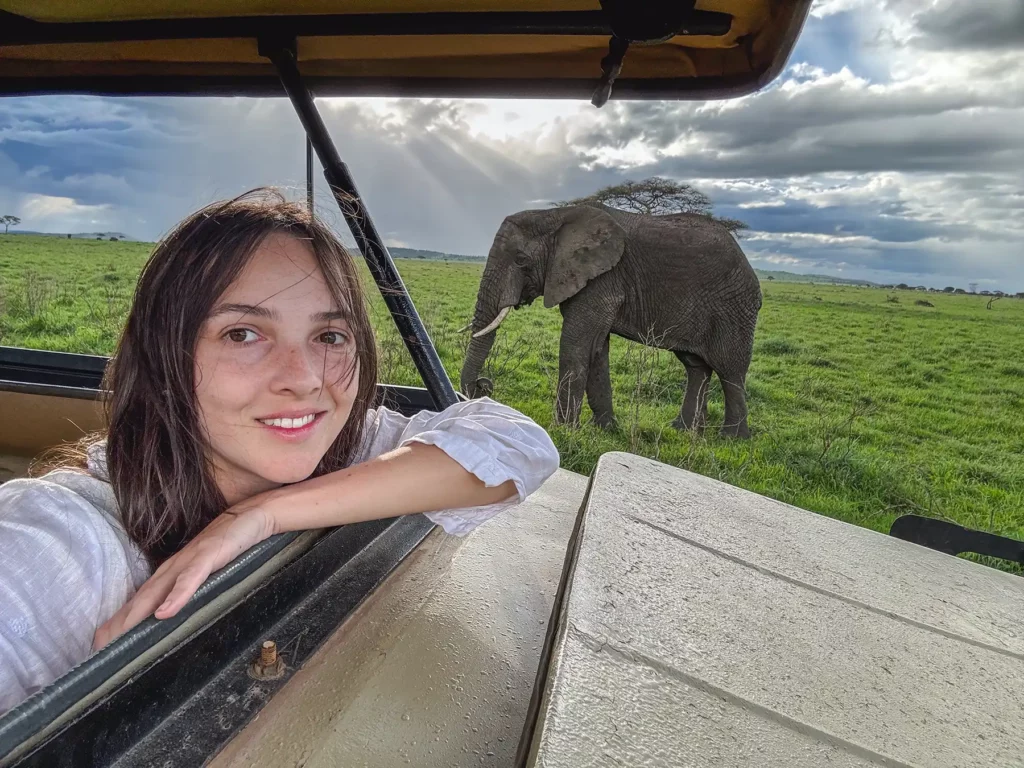
Embark on the Safari of Your Dreams
Save time and ensure an incredible safari experience by getting quotes from my recommended local safari companies
I’m here to make booking your perfect safari quick, easy and risk-free.
Join the rapidly growing tribe of over 1,000 travellers who’ve booked their dream safari using my insider tips and recommendations.

It takes under 60 seconds to fill out the form and in under 48 hours you will receive multiple, no-obligation proposals from my favourite local tour operators with glowing online reviews.
Get your free no-obligation safari quotes and my top safari tips and recommendations
In This Guide
- Why Go on Safari in Kenya?
- How to Book Your 3-Week Kenya Safari
- How Much Does a 3-Week Kenya Safari Cost?
- Best Time to Visit Kenya
- How Long to Spend in Kenya
- 3-Week Kenya Safari Itinerary Overview
- Day by Day Breakdown
- Day 1: Nairobi
- Day 2: Lake Nakuru National Park
- Day 3: Lake Nakuru to Ol Pejeta
- Day 4: Ol Pejeta Conservancy
- Day 5: Ol Pejeta to Ol Donyo Lomboro Conservancy
- Day 6: Ol Donyo Lomboro Conservancy
- Day 7: Ol Donyo Lomboro Conservancy to Loisaba Conservancy
- Day 8: Loisaba Conservancy
- Day 9: Loisaba Conservancy to Samburu National Reserve
- Day 10: Samburu National Reserve
- Day 11: Lake Naivasha
- Day 12: The Maasai Tribe
- Days 13-14: Maasai Mara National Reserve
- Day 15: Maasai Mara to Amboseli
- Day 16: Amboseli
- Day 17: Amboseli to Tsavo West
- Day 18: Tsavo West
- Day 19: Tsavo West to Diani Beach
- Day 20: Diani Beach
- Day 21: Diani Beach to Nairobi
- Final Thoughts
Why Go on Safari in Kenya?
Kenya is a wonderful choice for your safari adventure for several reasons:
Firstly, the country boasts one of Africa’s largest international airports with excellent connections and direct flights from numerous major cities worldwide, such as London and Amsterdam. That means easy access, with no excessive flight-hopping.
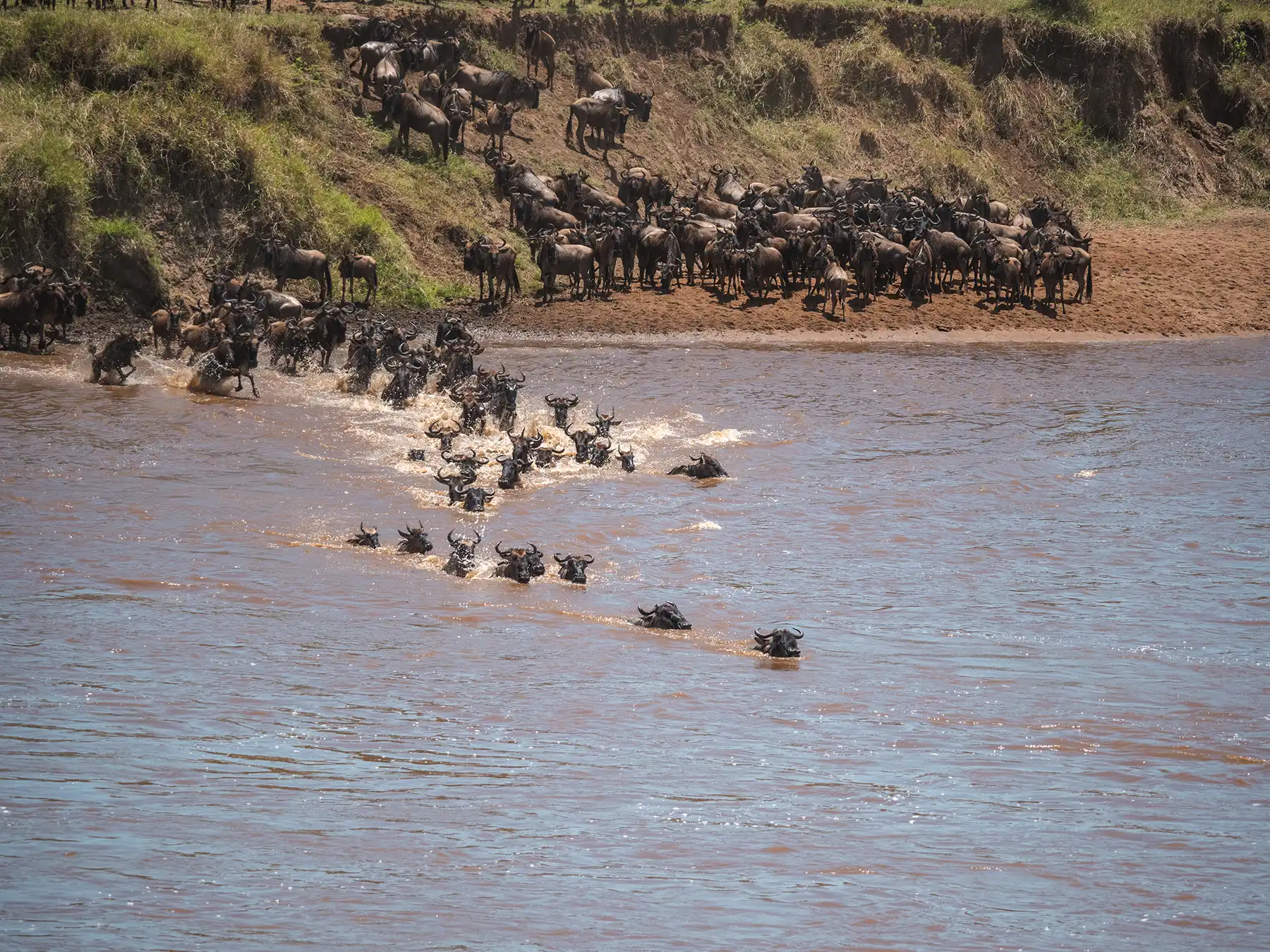
Secondly, Kenya boasts some of the world’s best wildlife reserves, such as the famous Maasai Mara National Reserve, which has been showcased in many wildlife documentaries. And for good reason: in the dry season, you can witness an unrivalled spectacle of nature as millions of wildebeest cross the crocodile-infested Mara River as part of the Great Wildebeest Migration.
What’s more, Kenya’s various parks and reserves are located quite close together, making it relatively easy to travel between them (for example, Tsavo West lies just a couple of hours’ drive from Amboseli). And if you don’t fancy spending a few hours driving between parks, you can always fly: the parks are also connected by a network of airstrips.
When it comes to wildlife, Kenya simply has it all. Its national parks house the Big Five (lions, elephants, rhinos, leopards and buffalos) as well as multitudes of other incredible creatures.
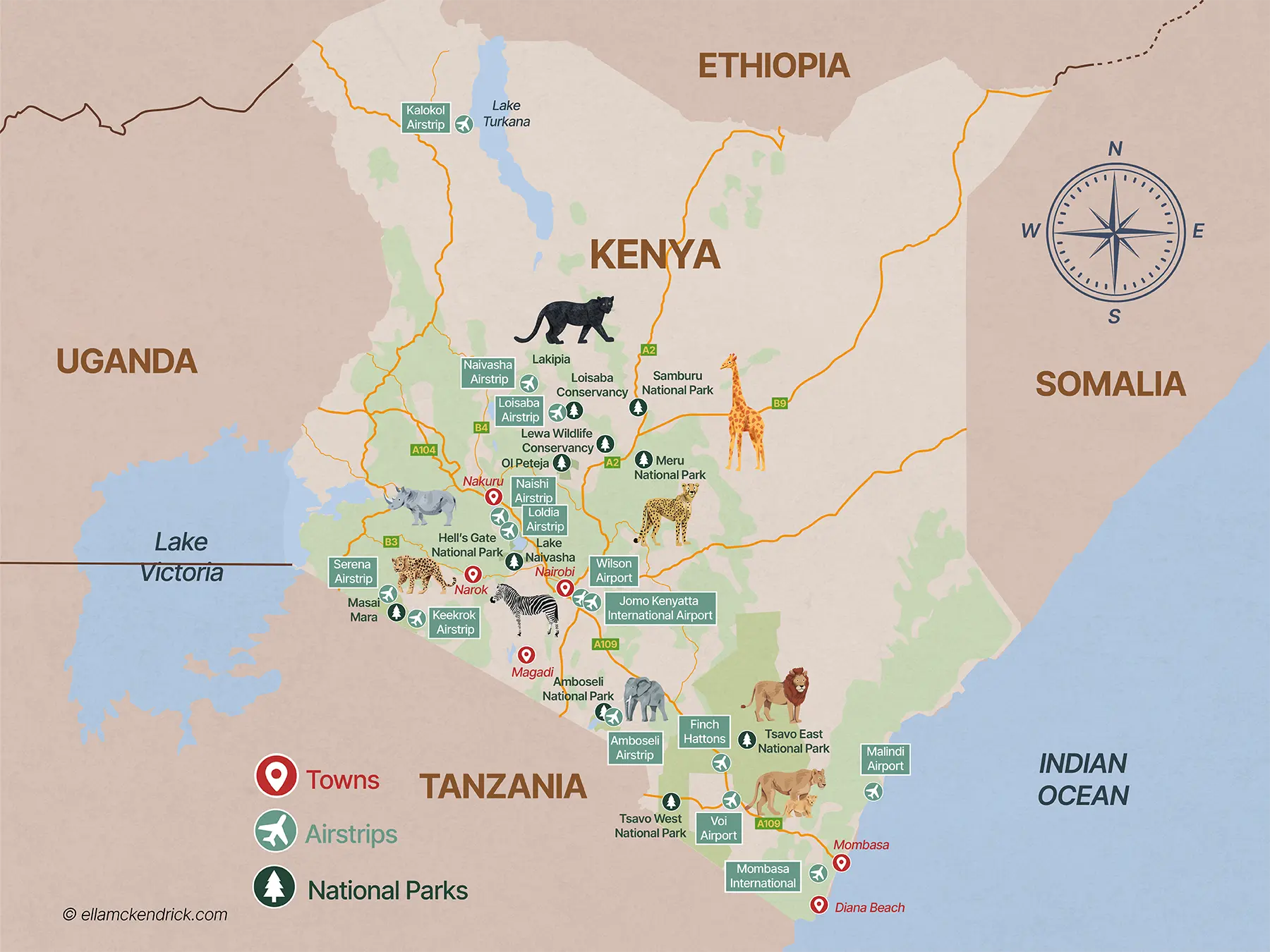
Below is map I made of Kenya showing the safari highlights.
Pros of Safaris in Kenya
- Home to all of the Big Five (lion, leopard, rhinoceros, elephant and buffalo)
- Witness the Great Wildebeest Migration
- More cost-efficient than other safari destinations
- Easily accessible with excellent connections via Nairobi Airport
- Top parks within comfortable driving distance of the international airport
Cons of Safaris in Kenya
- Park fees at Maasai Mara National Reserve are now higher than those for the Serengeti in Tanzania (a necessary measure to limit visitor numbers and protect the ecosystem). However, fees at other parks are still reasonable
- Peak periods can be busy at popular destinations like Maasai Mara and Amboseli, though increased park fees have helped
- The Great Wildebeest Migration can only be seen in Kenya for part of the year unlike Tanzania
You can watch my Kenya experience video below or, if you’re short on time, skip ahead to my 3-week Kenya itinerary.
How to Book Your 3-Week Kenya Safari
When it comes to organising your Kenya safari, booking through a reputable local tour operator is the easiest option and offers the best value for money.
That’s what I did for my own safaris in Kenya, and they were absolutely amazing.
Local operators cover everything, from reserving accommodation to sorting permits, and also provide key information on the best places to spot wildlife as well as details of recent sightings.
You can get quotes from the same local tour companies I use to organise my own trips here: Safaris By Ella
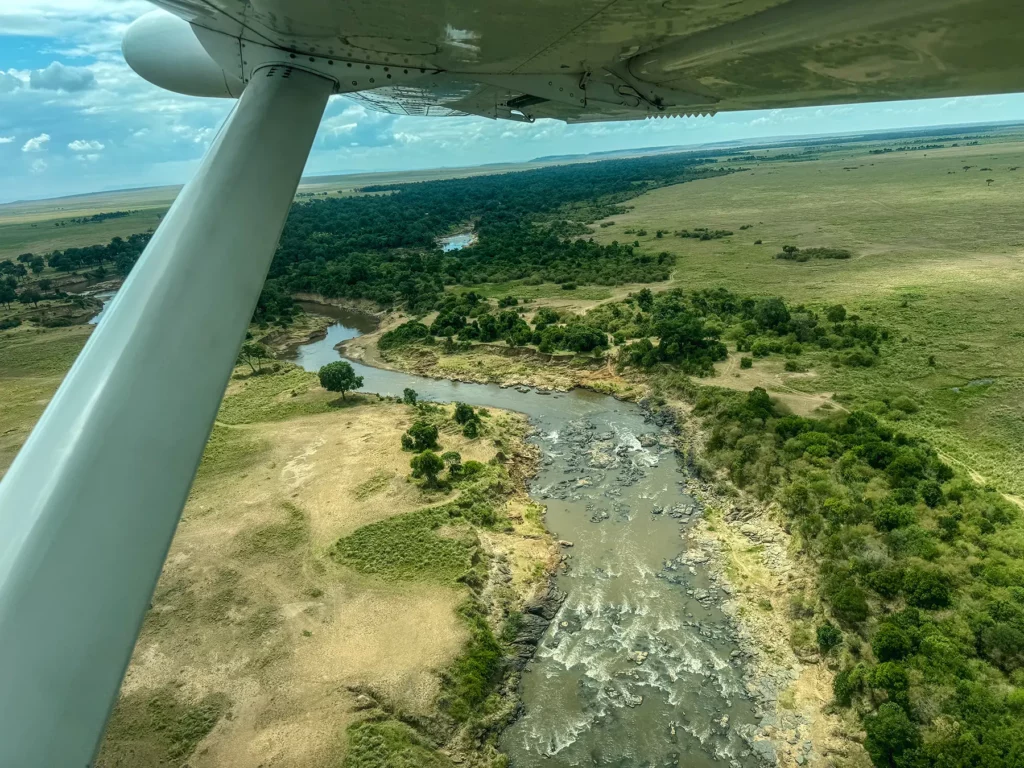
However, there are other types of safari to choose from including self-drive safaris and fly-in safaris, where you fly from lodge to lodge and go on shared game drives in their vehicles.
There are also package holidays, where an international travel agent organises everything including international flights.
Your chosen booking option will have a considerable impact both on the overall cost of your safari and on the type of experience you have.
Below I’ll break down the pros and cons of each option.
You can jump to more information on each of the booking options using the links below.
Option 3: Hotel-Provided Safaris
Option 1: Self-Drive Safari
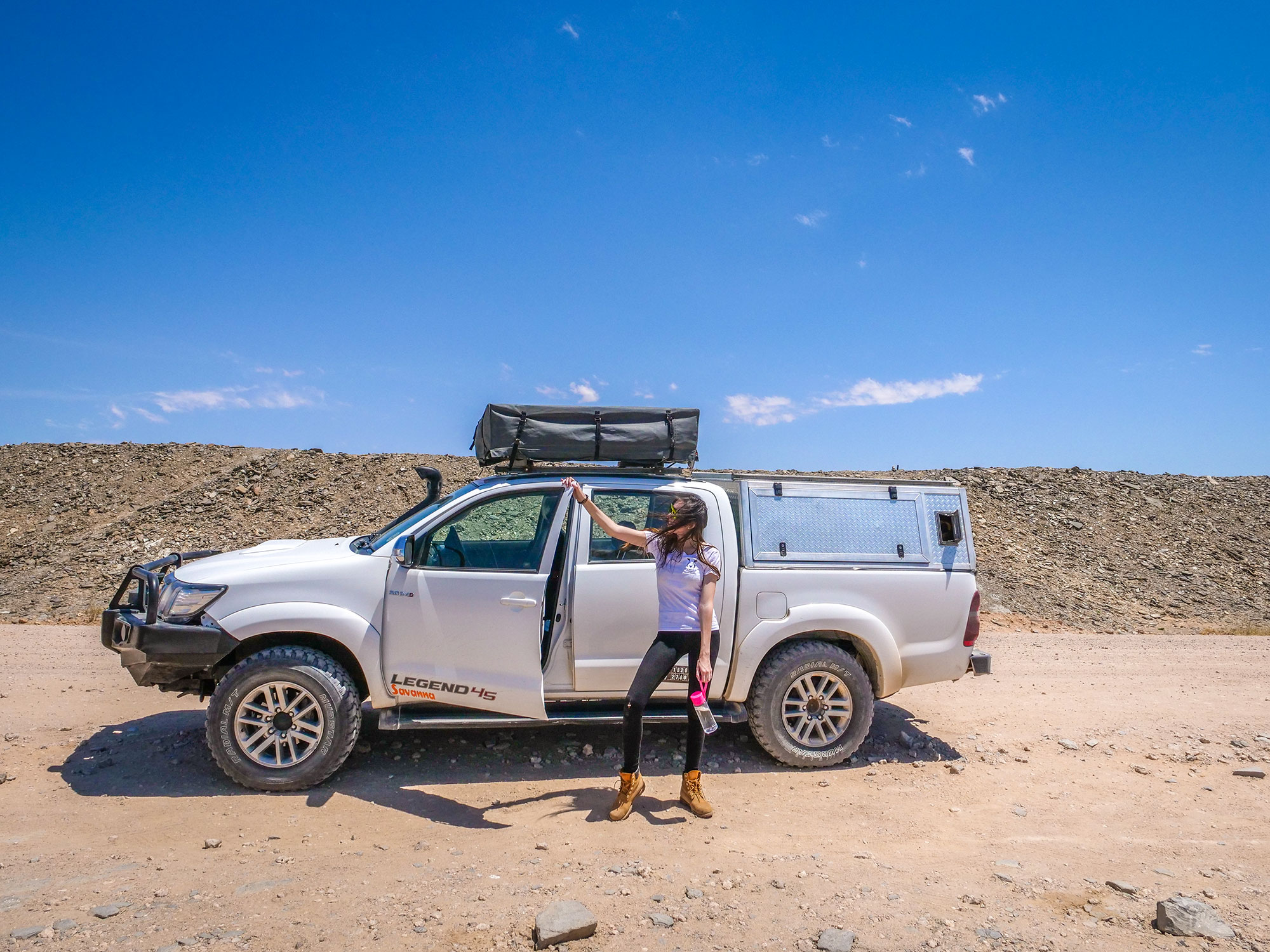
Self-drive safaris are ideal if you have a limited budget and have some experience with driving and maintaining off-road vehicles.
You will ideally need some degree of technical skill and must be confident and prepared to deal with difficult conditions.
Pros of Self-Drive Safaris
- Lowest-cost option
- Complete flexibility
- A feeling of independence, finding your own way through the terrain
Cons of Self-Drive Safaris
- Self-drive may seem significantly cheaper than other safari options, but the actual savings are often negligible: you still have to pay for national park permits, accommodation, food, car rental and fuel.
- Not having a professional guide means you have no access to key local expertise regarding wildlife movements, the best viewing spots or how to navigate the rough terrain safely.
- Professional guides have access to radio networks to help them track animal sightings, but self-drivers tend to rely on chance encounters, which can be unpredictable and frustrating.
- For self-drivers, basic camping is the typical accommodation inside the parks and reserves. This can eat into your time and may also sap your energy, which will likely already be impacted by long periods of driving.
- Self-driving is currently banned in the Maasai Mara to help moderate visitor numbers and protect the ecosystem
My Verdict on Self-Drive Safaris
A self-drive safari isn’t something I would recommend for most travellers. Although this option works in some places, e.g. South Africa or Namibia, the challenges it presents simply outweigh the savings it offers in many African destinations.
For me, booking with local safari companies who can offer all-round support, expert advice and no-stress accommodation will give you the most enjoyable and satisfying experience.
If your budget permits, a professionally guided safari trip will ensure the best balance of comfort, safety and opportunities to observe the local wildlife.
How to Book a DIY Self-Drive Tanzania Safari
- Option 1: Comparison sites which provide multiple quotes from verified suppliers such as Safaris By Ella. Make sure to write you want to self drive in the notes when requesting a quote. (This is a hybrid approach where you’ll drive yourself but they will arrange everything)
- Option 2: Research and book all elements of the trip yourself using Google and online travel agents.
Join the rapidly growing tribe of over 1,000 travellers who’ve booked their dream safari using my insider tips and recommendations. Get your free quotes and my top tips and recommendations now.
Option 2: Local Tour Operator
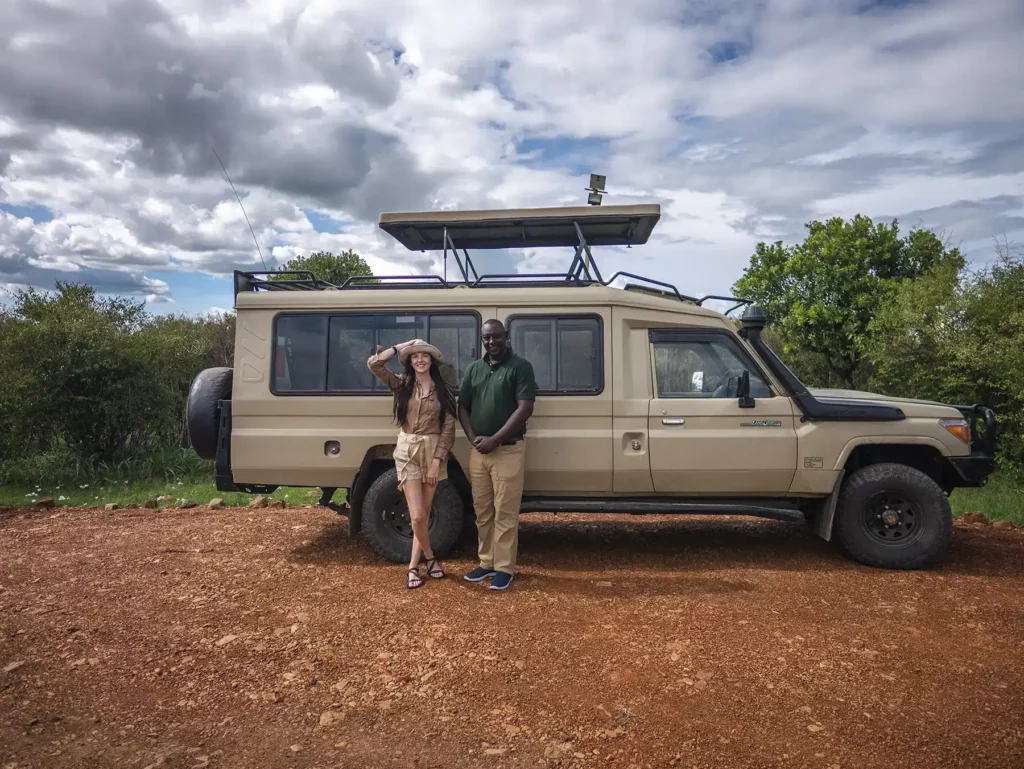
In my experience, the best way to explore Kenya is to organise your safari through a local tour operator.
That is how I book my own Kenya safaris and they have worked out perfectly! From the moment you land in Kenya your local tour operator will take care of your itinerary, providing a comprehensive service that makes this the most relaxing safari experience for most visitors.
Pros of Local Tour Operators
- Your local operator will organise pretty much everything short of booking international flights. They will reserve your accommodation and arrange any bush meals, safari permits and vehicle arrangements including fuel as well as supplying one of their driver-guides for your entire safari.
- I find that leaving all these details to a professional makes for a wonderfully relaxing holiday.
- This option really doesn’t cost a lot more than a self-booked safari. Local tour operators generally have access to special hotel rates, so the prices are similar to what you’d pay booking your own accommodation.
- You also save all the time you’d spend researching hotels and campsites. Plus, the close relationships these operators have with local hotels mean they can often get rooms even when a place appears booked out online.
- With expert knowledge of road conditions and wildlife patterns in the region, local tour operators are generally better equipped to help you plan your safari than international travel agents.
- Your guide can communicate with colleagues via radio to maximise wildlife encounters.
- Having a local operator on board to recommend accommodation options with your route in mind means that you’ll have optimal proximity to the right parts of the different wildlife reserves, minimising your travel time between destinations.
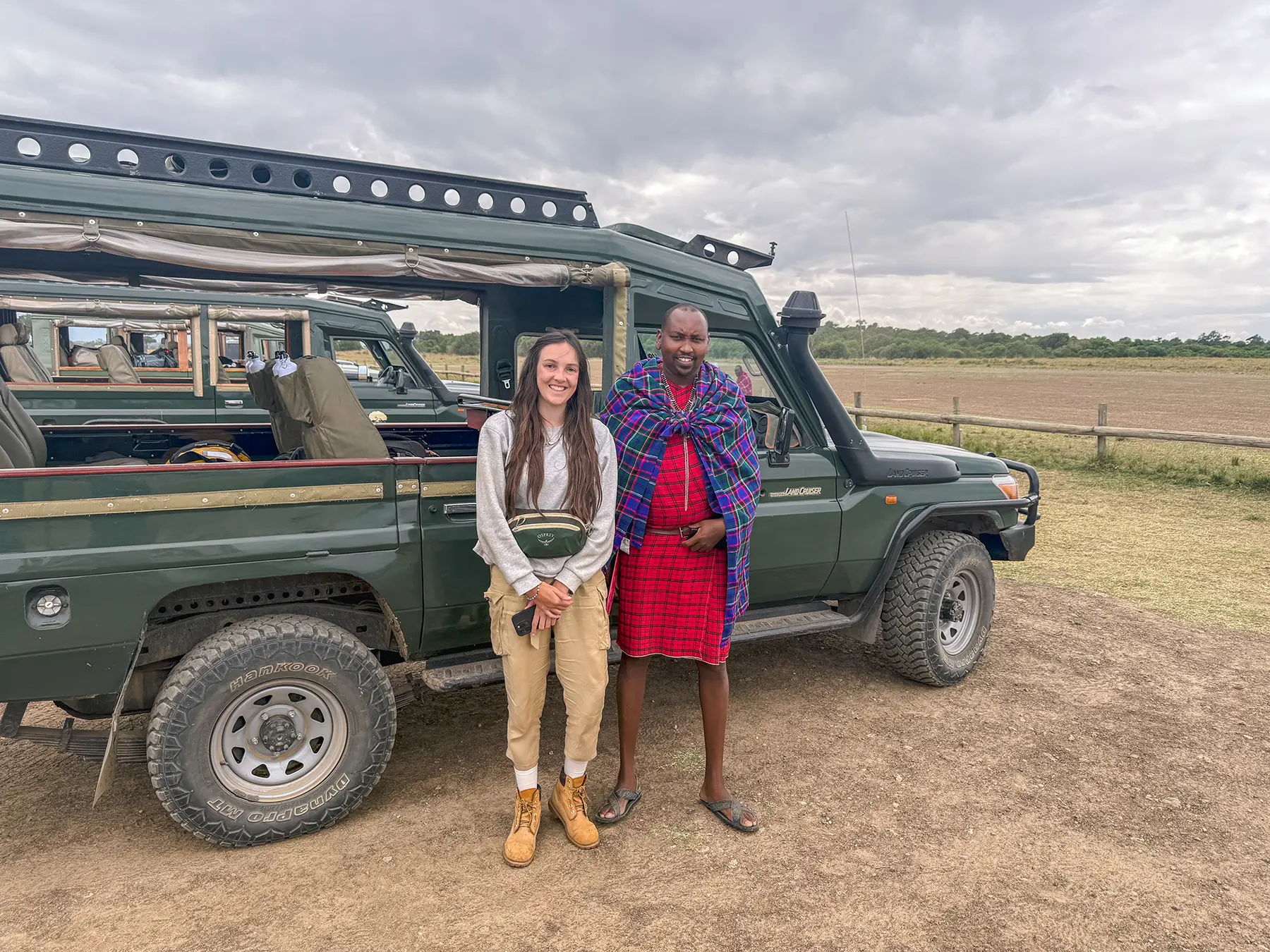
Cons of Local Tour Operators
- Not all tour operators are the same, so beware: the cheapest quote rarely equates to the best deal. Lower-prices often go hand in hand with inferior accommodation and less experienced guides.
- If the price you’re quoted is very low, that is probably a red flag and means that either the company’s margins are unrealistically thin and cannot be maintained or you’ll find yourself hit with various hidden costs during your holiday.
- Local tour operators generally do not book international flights.
Top Tips
- Less experienced guides might miss wildlife or not know the best spots for sightings so it’s important to choose a recommended local tour operator.
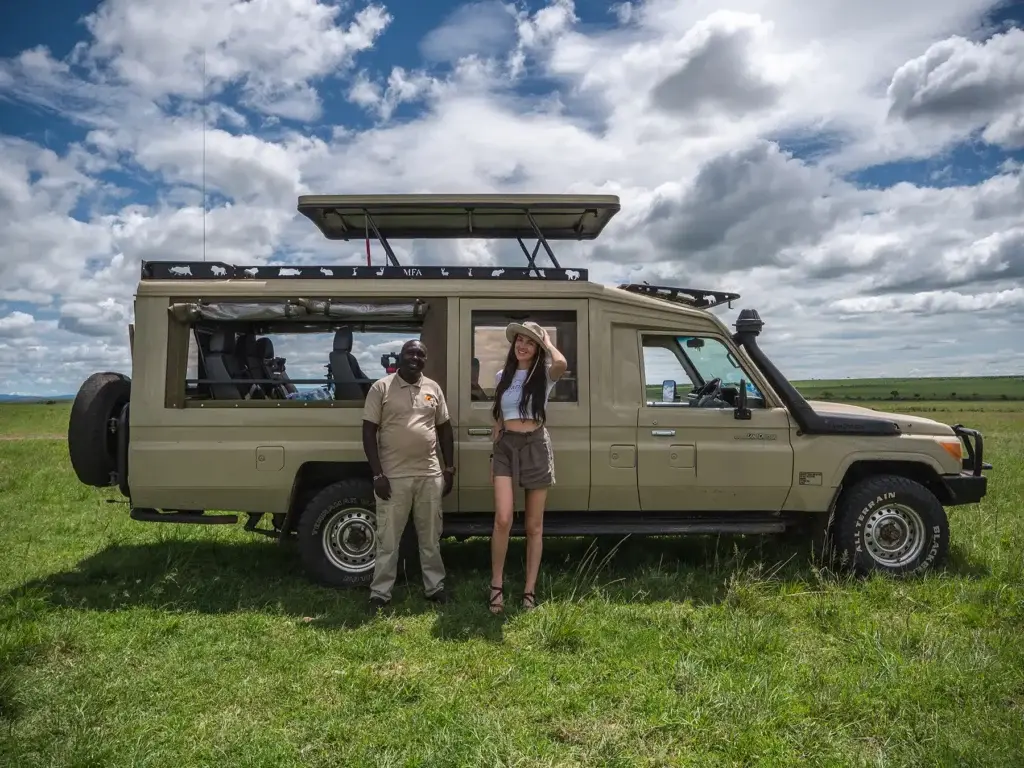
My Verdict on Local Tour Operators
Local tour operators can offer excellent value when booking a safari, but you should be sure to select one you’re comfortable with rather than simply going with the cheapest option.
Researching your choices in advance is crucial. Check out reviews of the various providers online and look for operators who consistently score highly for the quality of their guides and vehicles as well as the overall safari experience. Keep an eye out for the reasoning behind negative feedback as well.
Recommended Booking Options For Your 3-Week Kenya Safari Itinerary
Safari with local tour operator
Most popular & best experience – typical prices for this itinerary start from $300 per person per day.
Visit safarisbyella.com for free quotes from trustworthy local tour companies I use to book my own trips.
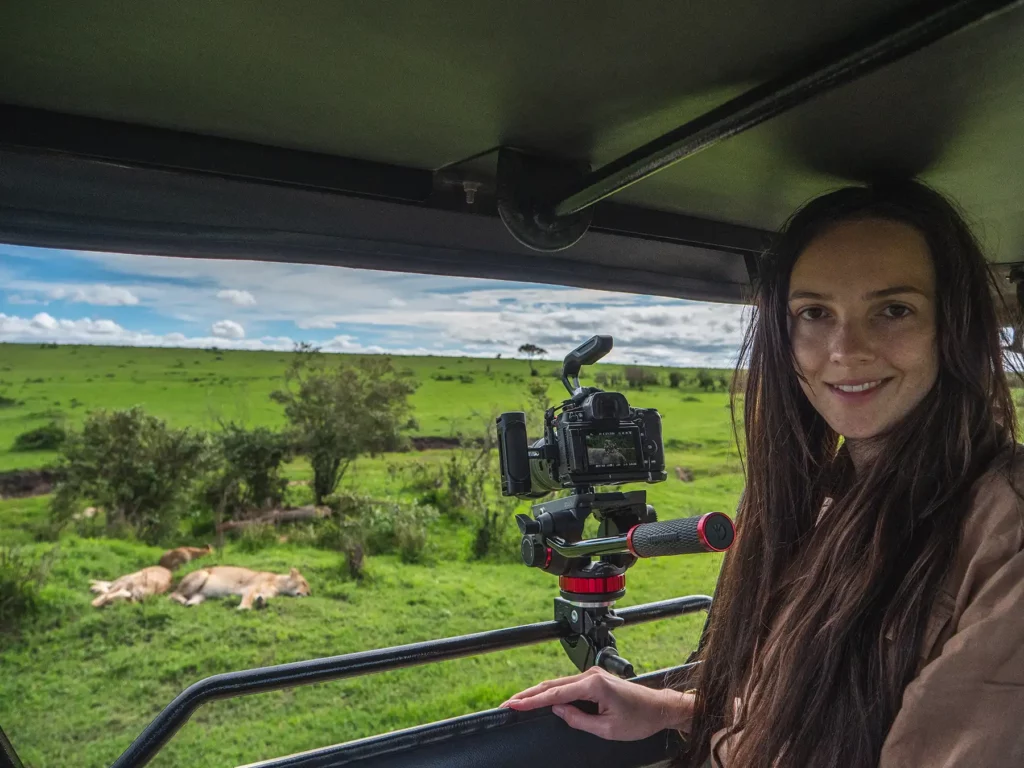
How to Book with the Best Local Safari Companies
- Comparison sites which provide multiple quotes from verified suppliers such as Safaris By Ella
Join the rapidly growing tribe of over 1,000 travellers who’ve booked their dream safari using my insider tips and recommendations.
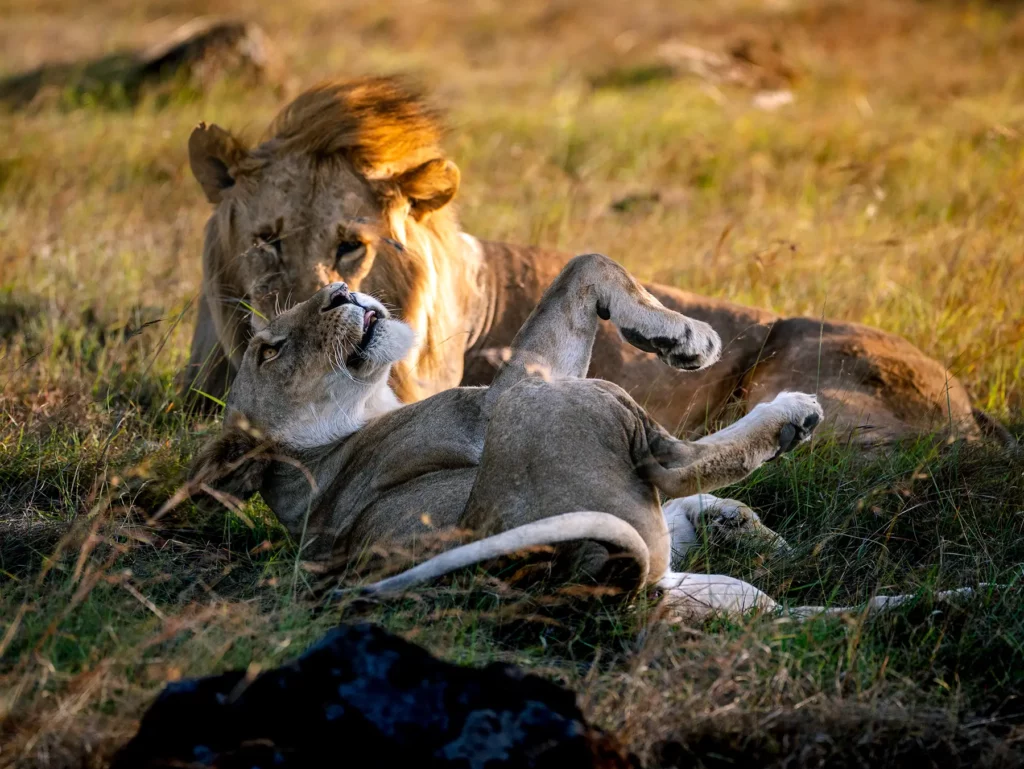
Option 3: Hotel-Provided Safaris
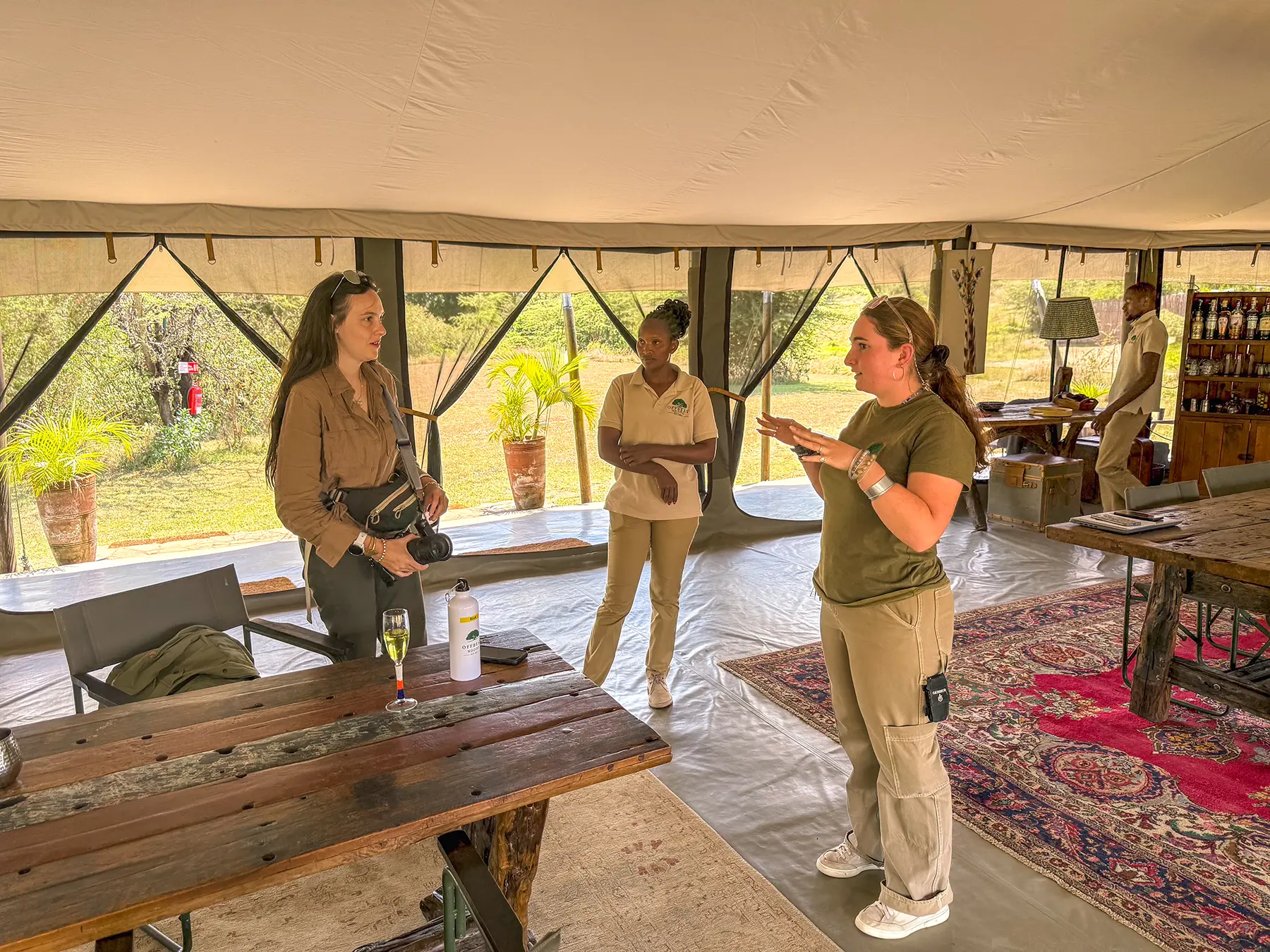
Some lodges, especially high-end ones, offer their own safari experiences for guests. If budget is not an issue and you plan on staying in the same area for an extended period of time or you want to fly from one lodge to another, this option is worth considering.
However, hotel-provided safaris are expensive and guests often end up sharing safari vehicles with other guests which limits flexibility.
Pros of Hotel-Provided Safaris
- This can be a relaxing option as you don’t have the upheaval of multiple accommodation changes.
- The standard of accommodation is generally high.
- As you do not need to drive for long periods when flying between lodges, you have more time to relax and make the most of your time in wildlife spots.
Cons of Hotel-Provided Safaris
- Lodge-based safaris usually cost significantly more than trips booked through local tour operators.
- These trips can involve scheduled flights (if flying to the more popular airstrips) or chartered flights. While the latter are more direct, they are a lot more expensive.
- Hotel-run safaris usually share safari vehicles with other guests. This reduces flexibility in terms of game drive timing and also impacts the time spent at each sighting and the overall safari experience.
Top Tip:
Consider combining lodge accommodation with private game drives arranged through local tour operators. This approach combines convenience and luxury with more exclusive and flexible options on your game drives.
This is achieved by booking through a local tour operator who will arrange preferential rates on the lodges, air transport between lodges and a private safari vehicle and expert guide for game drives.
My Verdict on Hotel Safaris
Hotel-run safaris are most suitable for those with generous budgets who prefer a more settled, luxurious safari experience and don’t mind riding in shared safari vehicles with other guests.
How to Book a Hotel-Provided Safari
- Option 1: My recommended tour operators on Safaris By Ella can arrange hotels and air or road transport to and from the hotels. If you opt for the more cost-effective road transport, since they have driven you to the hotel, you might find it cheaper to use the safari company for safaris rather than using the hotel-provided safaris.
- Option 2: Check with your chosen accommodation whether they provide this service and the booking requirements.
Option 4: International Travel Agents
Booking through International Travel Agents can be a good option if you have a large budget and are happy to pay a premium for someone to take care of your entire trip, including international flights.
That said, you should be aware that you’ll end up paying around 30% – 50% more for your safari than you would if booking through a local tour operator.
This is because international agents usually use local operators to organise the actual safari activities and then add a markup to cover their own overheads and also make a profit.
Pros of International Travel Agents
- It can be convenient to book all components of your safari through a single provider, including your international flights.
- Trips organised through international travel agents are usually subject to a certain degree of risk mitigation. UK travellers are protected by Package Travel Regulations and if your international flights have also been booked as part of your package, you’ll be covered by the ATOL scheme.
- Similar schemes are in place for travellers in the USA, e.g. the Airline Passenger Protection Act and the Federal Aviation Administration’s consumer protection rules.
Top Tip
High levels of protection are also available when booking directly with local tour operators but without the high costs of International travel agents.
- Using a credit or debit card for deposits typically comes with some protection of your purchase (in the UK it’s called Section 75).
- Good travel insurance with trip interruption coverage is another smart move.
- Choosing a recommended local safari company that allows balance payment closer to the trip date can further minimise financial risks.
- Some of my recommended local companies are Bonded, giving extra protection.
Cons of International Travel Agents
- International tour operators are typically the most expensive option when booking a safari.
- Often, they simply outsource the actual safari to local tour operators and then add a markup, leaving you paying 30-50% more for the same safari experience.
- You cannot research the local tour operators the travel agent uses, which may affect the quality of your safari.
- International travel agents do not have the same on-the-ground knowledge as local operators regarding conditions in the region and in the specific parks or wildlife movements. They cannot match the in-depth expertise of local tour operators who live and work in the area every day.
My Verdict on International Travel Agents
Other than booking your international flights, international travel agents really cannot offer you much more than a local tour operator when booking a safari. At best, you’ll have a similar experience to what you’d get with a local operator, but you’ll end up paying a lot more for it.
My own experience has taught me that local tour operators offer the best combination of value and experience.
How to Book Your Safari with an International Travel Agent / Safari Company
- Comparison sites which provide multiple quotes from verified suppliers such as Safaris By Ella. When you select a luxury budget on the quote request, you will receive a quote from my recommended International safari company as well as my recommended local companies for comparison.
Join the rapidly growing tribe of over 1,000 travellers who’ve booked their dream safari using my insider tips and recommendations.
Private vs Group Kenya Safaris
Your overall safari experience will differ greatly depending on whether you opt for a private safari, either solo or with travelling companions, or go as part of a larger group with people you do not know.
I would recommend a private safari over a group tour for most visitors. Let’s take a look at some of the pros and cons of both options.
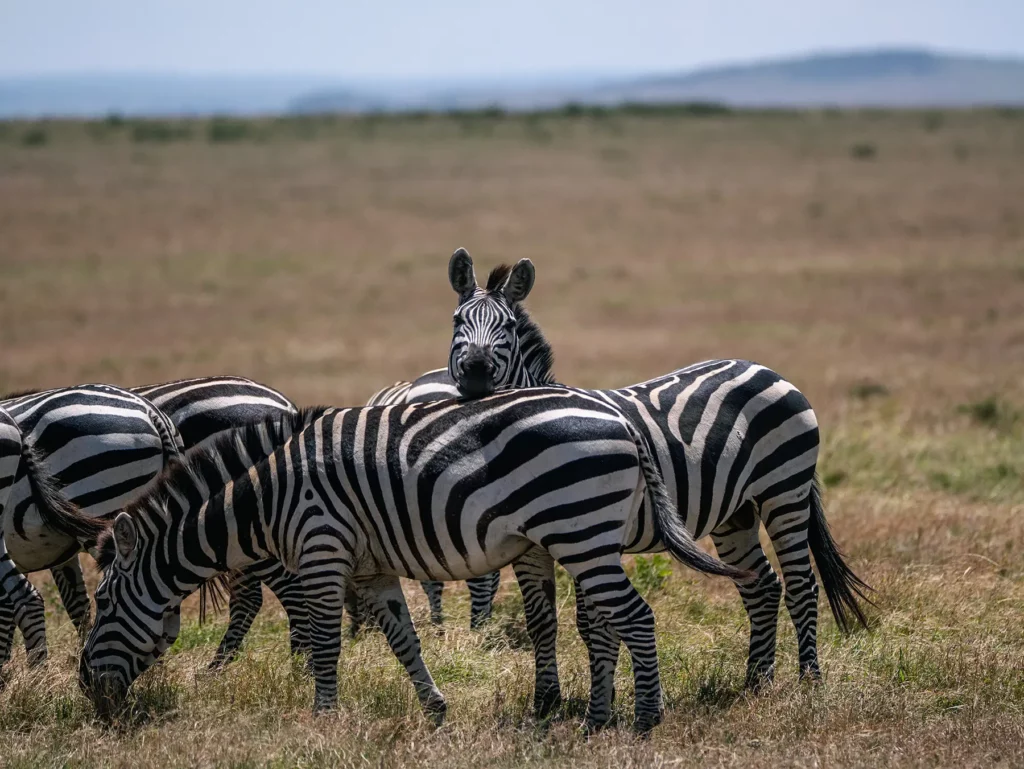
Private Kenya Safaris
Tailored to your individual preferences, a private safari is generally the best option for most travellers.
Pros of Private Safaris
- You have control in pretty much every aspect of your safari, from what areas of the reserve you visit and when you visit them to which encounters to focus on and how long to spend at each sighting.
- You can choose which type of safari vehicle you want which will impact comfort and wildlife viewing.
- Many safari companies reserve their top guides for private safaris.
- Since you’ll be travelling in a private vehicle, you will get to spend more time focusing on the wildlife as you won’t be collecting or dropping off other passengers at the start and end of the day.
Cons of Private Safaris
- Private safaris are usually more expensive than group safaris, especially for solo travellers.
Conclusion on Private Safaris
I always recommend a private Kenya safari, if your budget allows. I find that private safaris almost always provide a more enjoyable and fulfilling experience, and for that reason are better value for money.
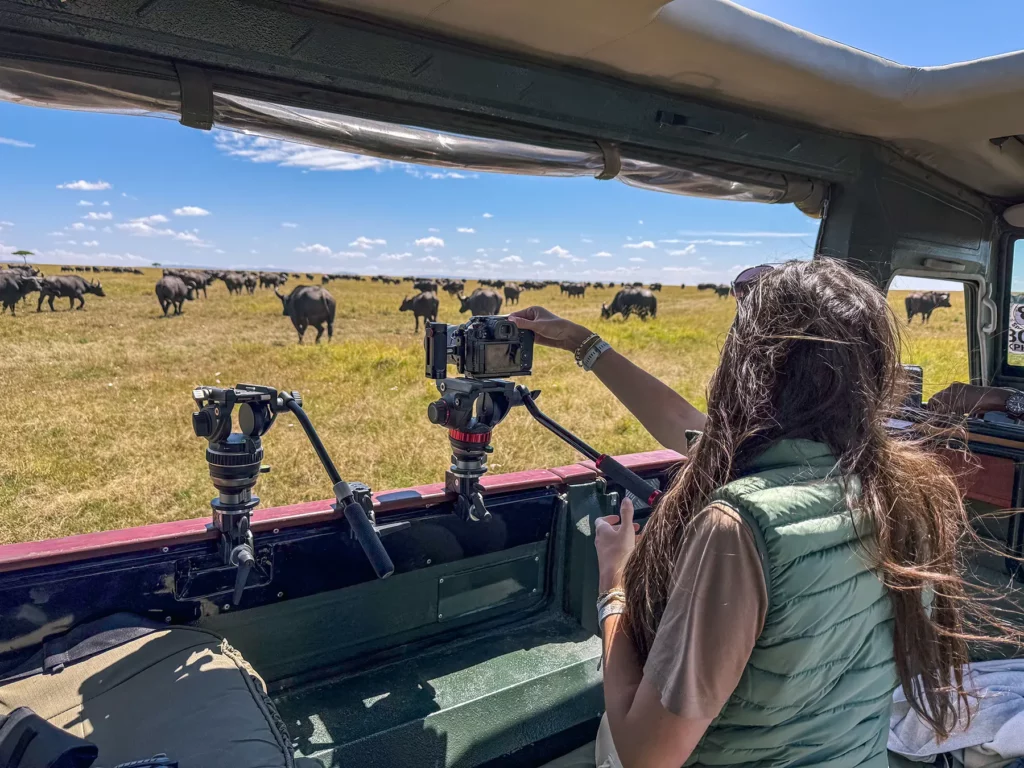
Group Shared Kenya Safaris
Group shared safaris are usually more popular with those on a limited budget or solo travellers who want to meet new people on game drives.
Pros of Shared Group Safaris
- Shared safaris are usually less expensive than private safaris. Members of the group share all fixed costs, such as the vehicle and the driver-guide costs, this can be a rather appealing option for solo travellers who would otherwise have to shoulder all the fixed costs.
- This is worth considering if you like to meet new people and share your travel experiences.
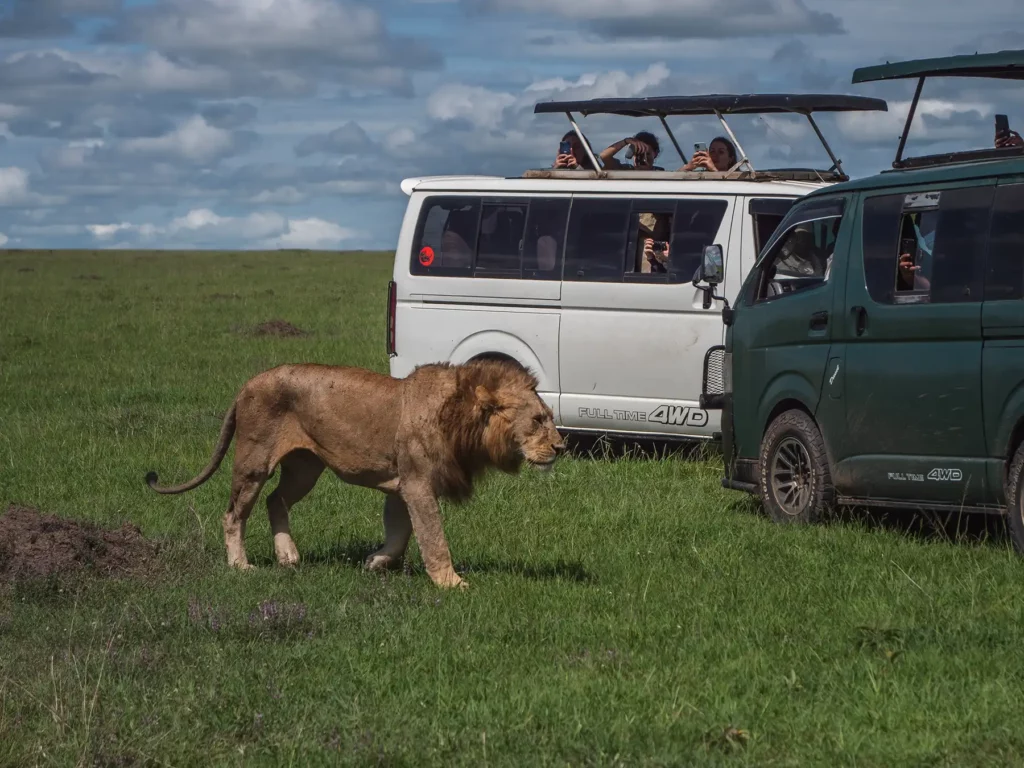
Cons of Shared Group Safaris
- Shared group safaris are less flexible – trips run at set times along pre-planned routes.
- You cannot influence the sightings the group will focus on or how long to spend at them.
- If your shared vehicle is fully occupied, you may not always get the best seat. Operators sometimes also squeeze a third row of seats down the middle, from which the view is restricted.
- Your vehicle will have to collect and drop off all the passengers before and after each game drive, which can delay your actual start time and cause you to miss prime viewing times in the mornings and evenings when predators and other animals are most active.
Conclusion on Group Shared Safaris
If you’re a solo traveller on a budget, shared group safaris can be a cost-effective choice. However, they’re not ideal for everyone. Sharing vehicles and having limited flexibility are major drawbacks for those who want a more personalised experience.
How Much Does a 3-Week Kenya Safari Cost?
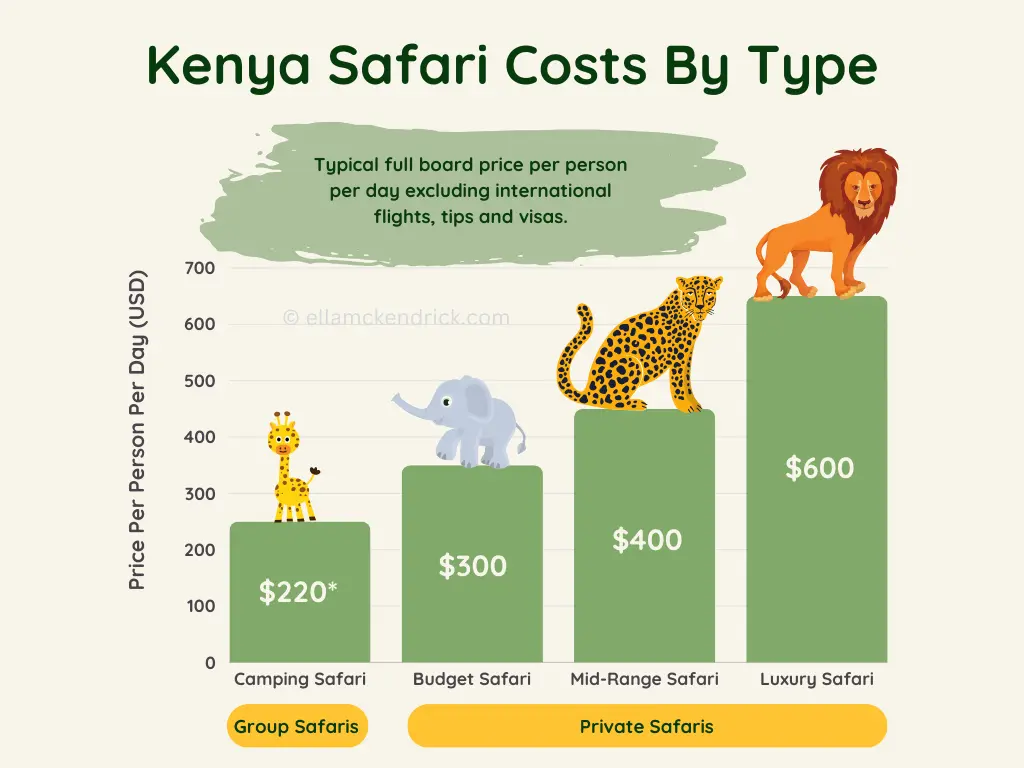
A private 3-week safari in Kenya costs from $270 per person per day, while shared group safaris in Kenya start at around $200 per person per day.
Typically you’ll pay less per person per day for a 3-week safari compared to a shorter 5-day or 7-day Kenya safari as the lower park fees for additional reserves which you can include in a longer safari will offset the higher park fees for the Maasai Mara and Amboseli. Additionally 3-weeks allows for more rest days which may not incur park fees if they are spent at at accommodation outside of the park.
The chart below shows typical prices for Kenya safaris by luxury level. Three week safari prices can be slightly lower for the reasons explained above.
Safari Prices Typically Include
- Park fees
- Unlimited game drives
- Accommodation
- Full-board meals
- Drinks (including alcoholic beverages)
- Transport
- Driver guide
- All activities
Safari Prices Typically Do Not Include
- International flights
- Tips and gratuities
How Do Kenya Safari Costs Compare to Other African Safaris?
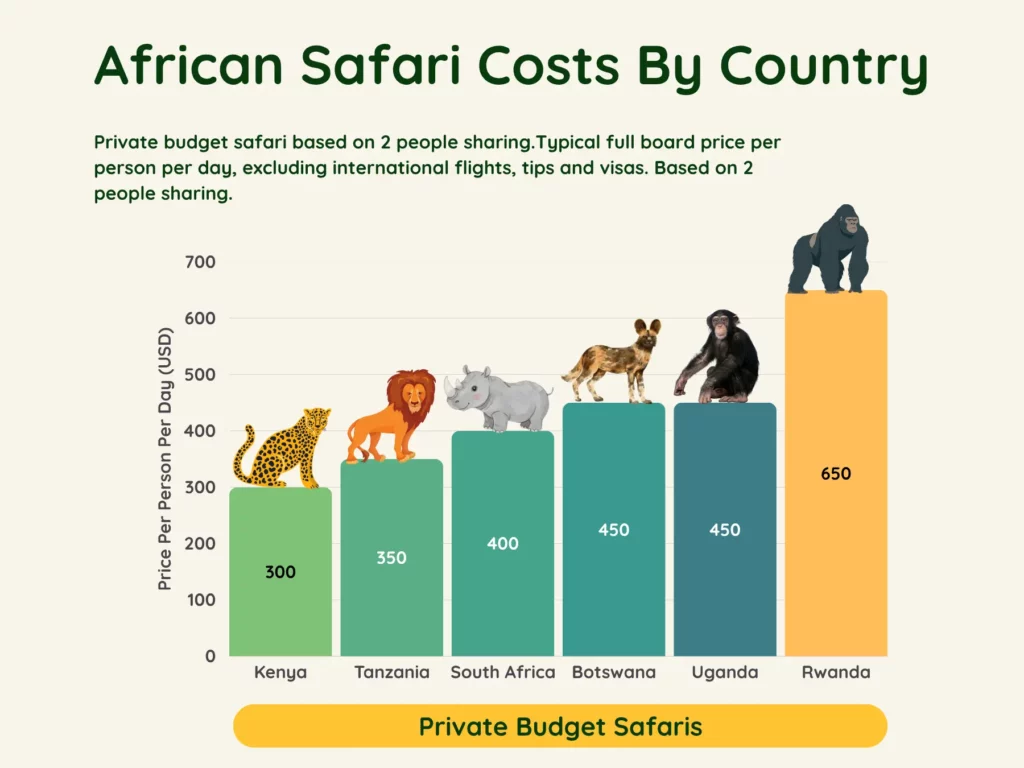
Safaris in Kenya can be slightly less expensive than visiting other African safari destinations. For example, private safari prices start at around $350 per person per day in Tanzania and $450 in Botswana.
Nevertheless, the gap is closing thanks to the recent increase in park fees for Kenya’s Maasai Mara. This was a necessary measure aimed at curbing excessive visitor numbers at the reserve during peak periods and protecting its ecosystem.
You can see how costs compare across popular African safari destinations below:
| Destination | Private Budget Safari Cost PP/Day |
|---|---|
| Kenya | 300 USD |
| Tanzania | 350 USD |
| South Africa | 400 USD |
| Botswana | 450 USD |
| Uganda | 450 USD |
| Rwanda | 650 USD |
Breakdown of Kenya Safari Costs
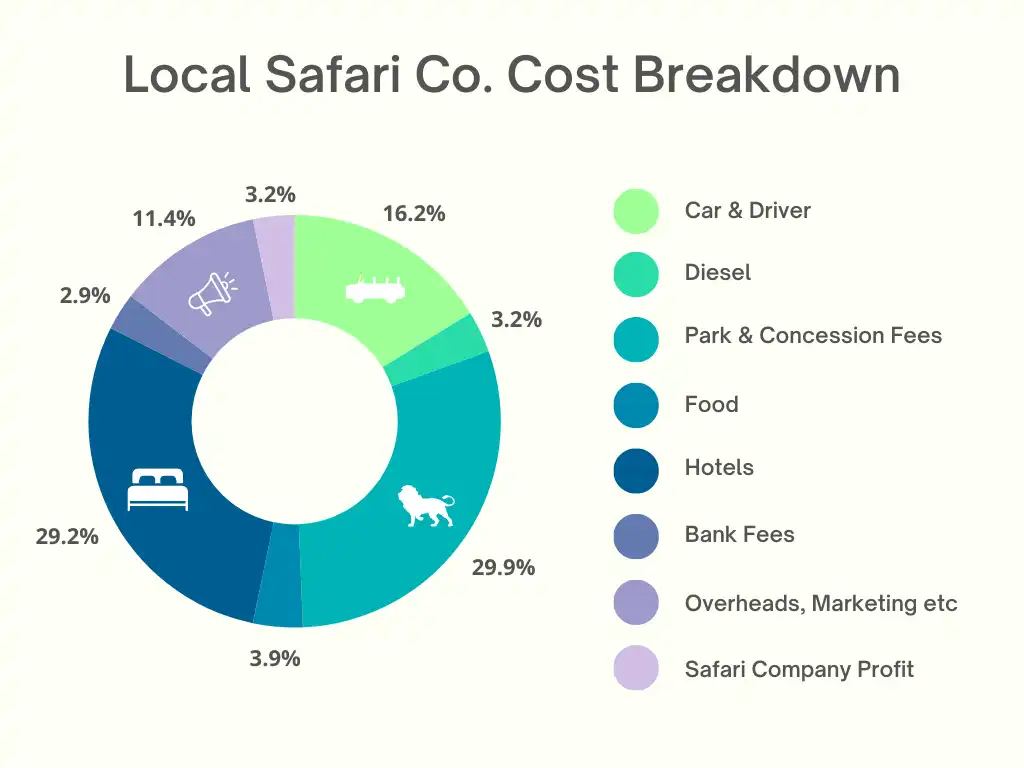
Let’s break down the cost of a Kenya safari booked with a local tour operator so you can see what you’re actually paying for.
Around half of the total cost (about 48%) funds the core safari experience, including accommodation, a well-maintained safari vehicle, fuel for game drives and an expert professional guide.
Another 30% covers park and concession fees, which go directly towards supporting conservation and local community development. Together, these two elements account for almost 80% of your total cost.
The remaining expenses are tied to administration. About 2.9% covers bank charges, 11.4% goes towards your safari operator’s operational costs such as insurance and administration, and the operator retains a profit of around 3.2% for organising your trip.
Factors Impacting Kenya Safari Costs
If you’ve booked a budget safari, the element that has the strongest effect on the total cost is the park fees.
The most expensive aspect of a mid-range or luxury safari is accommodation. Staying inside a safari reserve usually costs more than staying outside, but the price also depends on the luxury level of the accommodation; both tented camps and lodges come in a whole range of comfort standards.
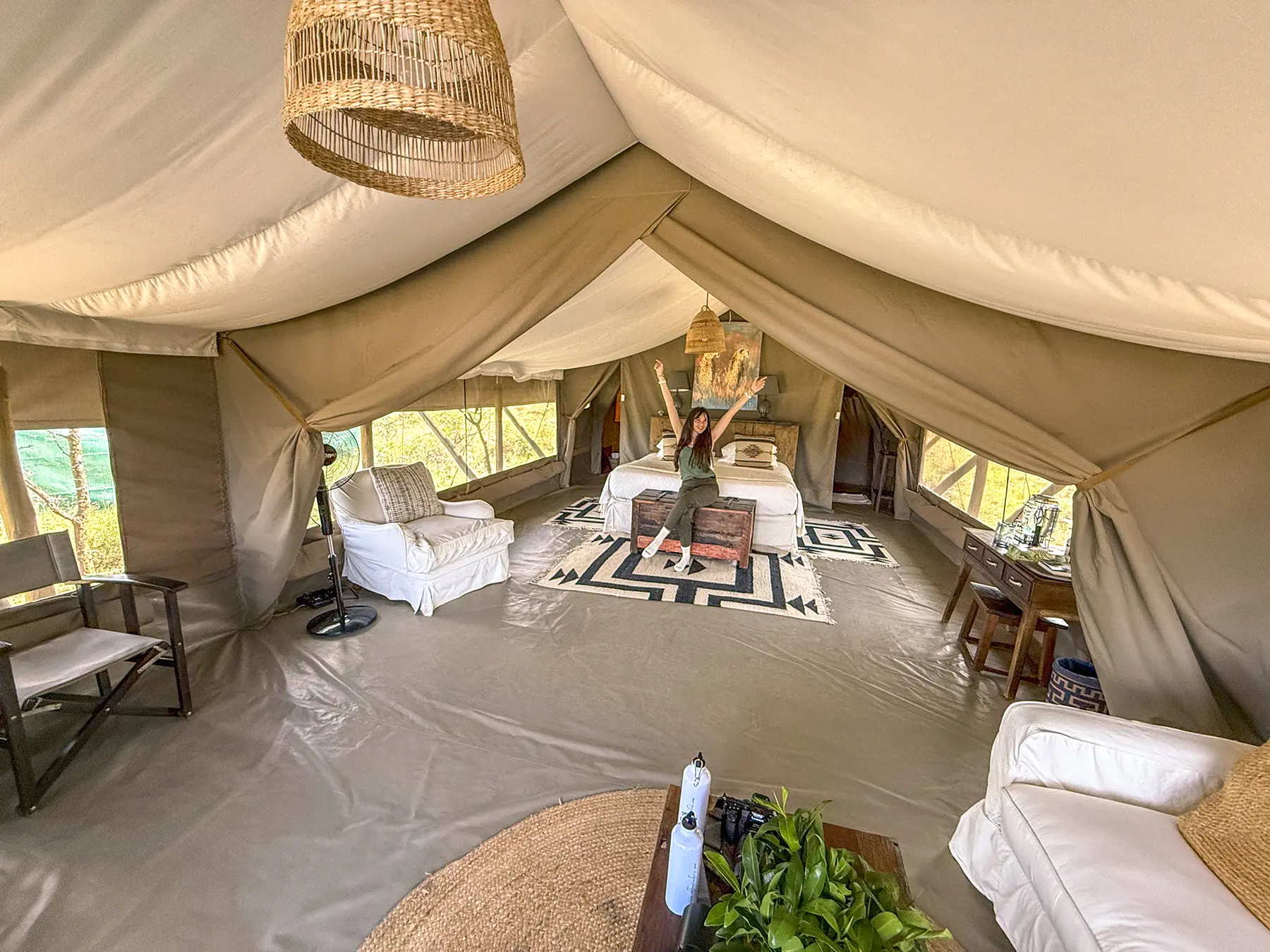
Accommodation Prices in Maasai Mara (Peak Season Jul-Oct)
| Accommodation Level & Location | Price Per Person Per Night |
|---|---|
| Budget inside Maasai Mara | $90-$150 |
| Mid-range inside Maasai Mara | $250-$400 |
| Luxury inside Maasai Mara | $600-$1,000 |
| Luxury Plus inside Maasai Mara | $1,000-$2,500+ |
How you book your safari is also a factor: booking through a local tour operator is usually more cost-efficient than using an international travel agent, for example.
Let’s look at the main elements that can impact how much your safari will cost:
How You Book Your Safari
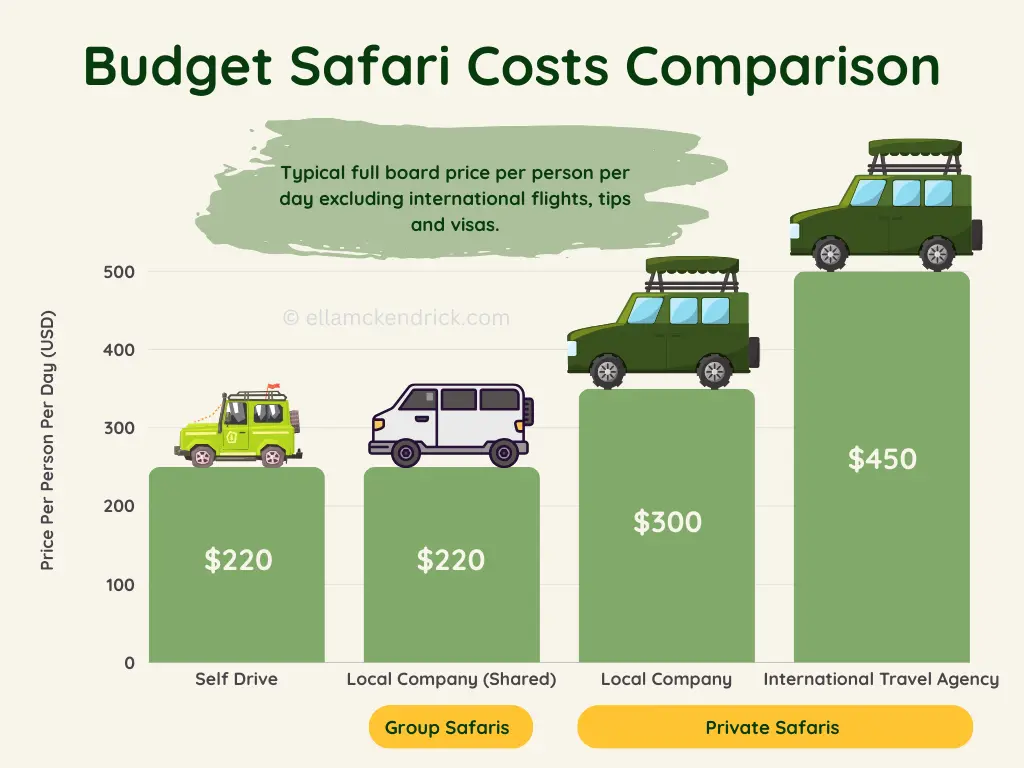
Using an international travel agent or booking a safari directly with a hotel will cost the most. Whilst self drive safaris usually work out cheapest but at the cost of reduced wildlife sightings due to not having a guide.
These days i always work with local tour operators to book all my safaris as this is the best value booking method.
Even when I choose a fly-in safari, I still use local tour operators to book everything down to game drives and other arrangements: they handle everything, including airport transfers.
My Preference: I always book through local tour operators as they offer the best balance of value and quality.
The below chart shows how the cost for a budget Kenya safari varies by booking method.
Accommodation
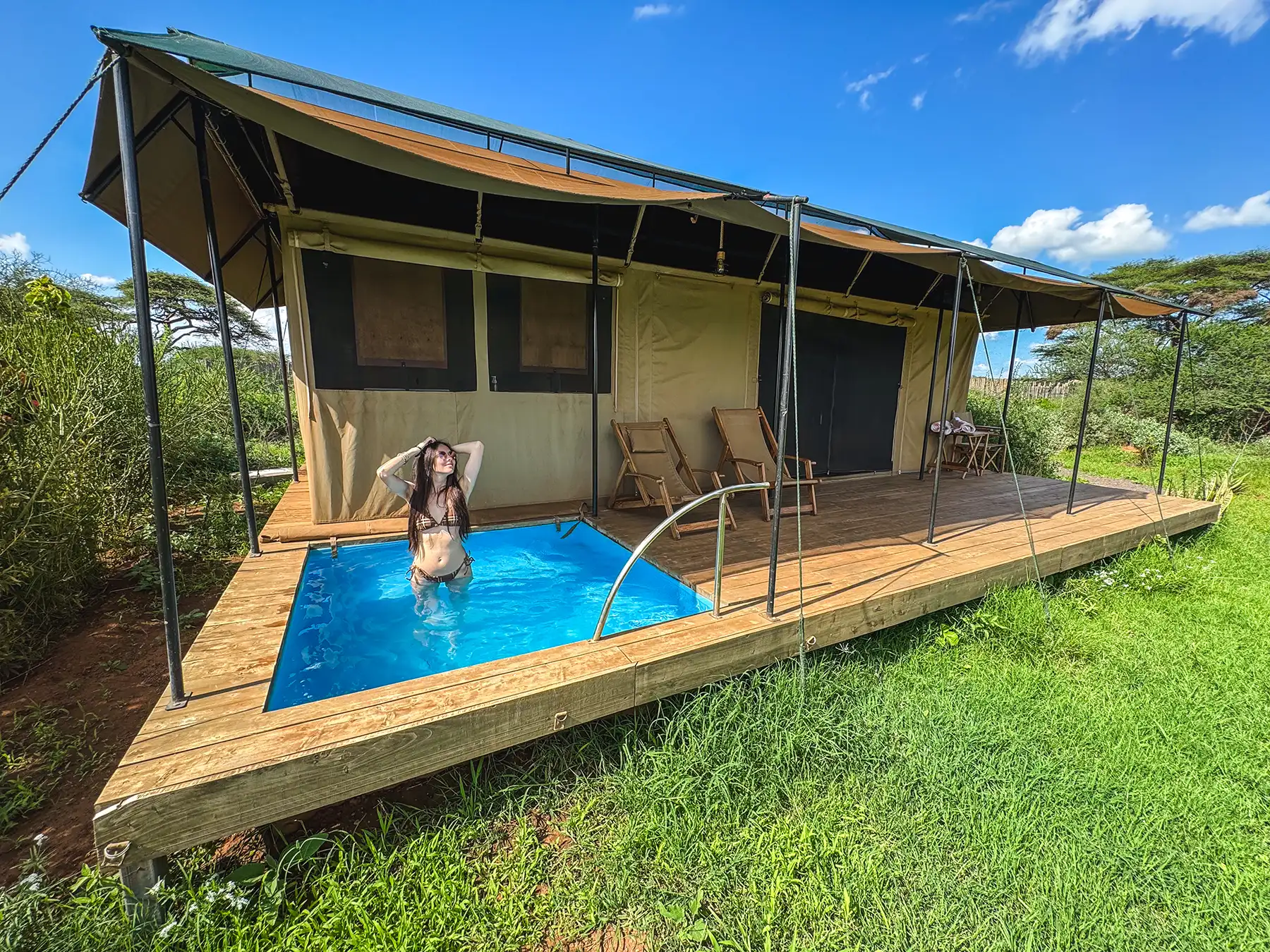
The level of luxury you choose will strongly influence the overall safari cost of your safari. I would recommend mid-range accommodation if your budget allows. This is largely because of the catering standards: I’ve never gotten food poisoning at a mid-range or luxury safari lodge/camp.
With regard to the room itself, bear in mind that you’ll be on safari most of the time so it doesn’t have to be too lavish. That said, you might appreciate staying at a more luxurious hotel at the end of your safari so you can unwind properly before flying home.
My Preference: Mid-range accommodation for most of the trip, with a luxury stay at the end to unwind before flying home.
Time of Year
The cost of accommodation and park fees can vary depending on the time of year you book your safari; other costs generally do not change much.
While some lodges close for the low season, others (primarily luxury lodges) offer discounts of up to 50% during this time.
Park fees change over the year, with Maasai Mara park 25/26 fees ranging from $100 per person per day from January to June to $200 from July to December.
My Preference: I’d go for January or February if value is your priority. Park fees are half the price of peak season (the Maasai Mara is $100 vs $200 per day), accommodation rates are lower, and you’ll still have fantastic wildlife viewing with baby animals everywhere. September is my overall favourite month but it does come at peak prices.
The cheapest time to visit is during the long rainy season (March to May) when lodges offer their lowest rates. However, you’ll have to contend with sometimes heavy downpours, so while it’s the cheapest option, it might not be the best value.
Mode of Transport Between Parks (Road or Air)
Whether you travel between locations by safari truck or safari plane (fly-in safaris) will impact your safari cost.
Flights save time, but add approximately $300 per person per flight to your overall costs. I would usually fly if the driving time for the same trip exceeds 6 hours.
My Preference: I fly if the drive would exceed 6 hours, otherwise I prefer road travel to see more of the landscape and have flexibility for wildlife sightings en route.

Group Size
Since fixed costs are shared between the members of a group, bigger groups make for cheaper tours up to a maximum of 7 people per vehicle.
However, as long as you are 2 or 3 people, private safaris work out fairly cost-effective.
My Preference: No more than 2-3 people in the back of the safari truck so I can move around freely for sightings and photography.
Best Time to Visit Kenya
The best time to visit Kenya for most travellers is during the dry seasons: June to October or January to February.
However, the ideal timing can differ based on what you want to see and do. Whether you want to spot the Big Five, witness the Great Wildebeest Migration, hike up the amazing Mount Kenya or have a snorkel in the crystal waters at Diani Beach, or all of the above, I can help you choose the perfect time to go.
I’ve ranked each month of the year for safari in Kenya as Excellent, Good, OK, or poor, based on typical game viewing and weather conditions.
If you want to know more about which activities work best in which months, and how costs fluctuate throughout the course of the year, you’ll find the chart below helpful.

For more information take a look at my ultimate guide to the best time to visit Kenya.
Making sure you’re in the right place at the right time of year will help you get everything you want to get out of your trip.
For example, if you dream of taking in the Great Wildebeest Migration crossing the crocodile-filled Mara River in the Maasai Mara, you should plan your trip for between mid-July and mid-October.
If you want to combine an unforgettable safari with a hike up Mount Kenya and then head to the beach to unwind, the best time to travel would be either January, February or September.
My Preference: I feel that the best month to visit Kenya is September. It’s quieter than peak season in August, the weather is amazing and you also get more for your money.
The Mara River crossing, part of the Great Wildebeest Migration, is in full swing in the Maasai Mara’s Mara Triangle. What’s more, this time of year offers unbeatable opportunities for spotting big cats!
If you’re feeling extra adventurous, you could also include a hike up Mount Kenya in your Kenya itinerary for September and then reward yourself with some downtime in Mombasa or Diani Beach before heading home.
Just because September is my favourite time to visit Kenya doesn’t mean it will be yours, however. We all have different preferences and priorities. So read on to find out more about the advantages and disadvantages of each time of year so that you choose the time that suits you best!
Let’s look at the pros and cons of each season.
Jump to more information on each of the seasons using the links below.
The Short Dry Season (December – February)
The Long Rainy Season (March – May)
The Long Dry Season (June – September)
The Short Dry Season (December – February)
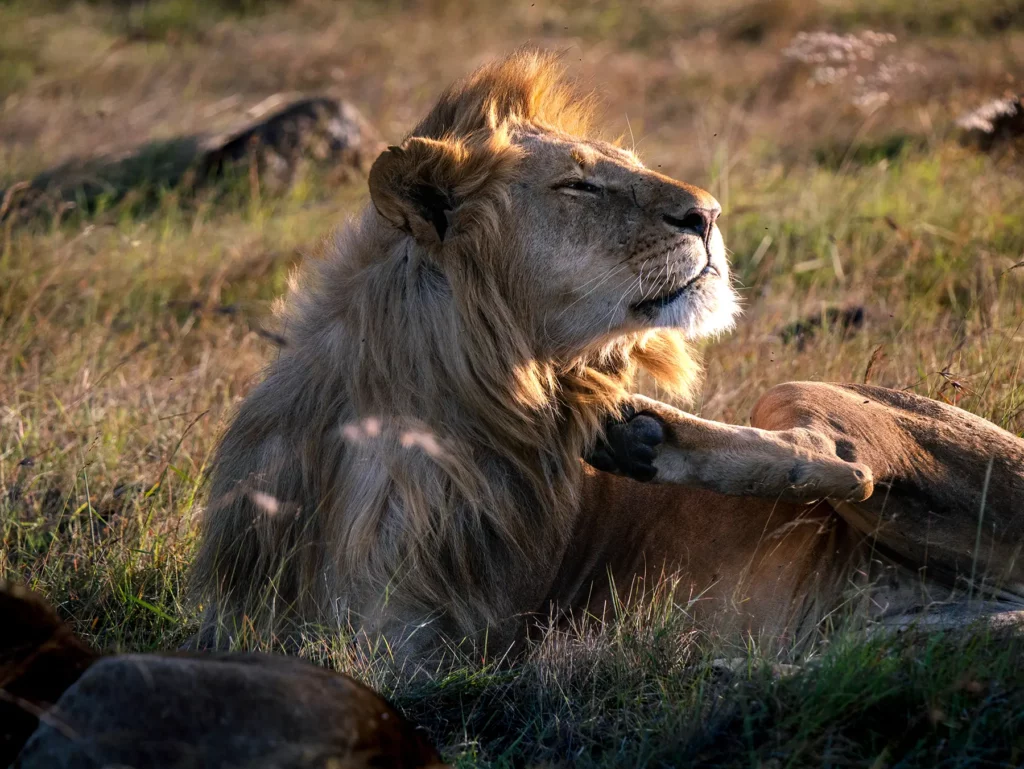
If you’re looking for nice weather but want to avoid peak season crowds, the short dry season is for you. This time of year is good for photographers and visitors wanting to see baby animals and related predator activity, and is also great for climbing Mount Kenya.
With sunny, dry weather and ample wildlife sightings, this is the second most popular time of year to visit Kenya.
Below are this season’s ratings for wildlife, the great migration, Zanzibar, busyness, and weather.
Quick Facts
Prices: Moderate.
Weather: Sunny, dry days with little chance of rain and temperatures of between 15°C (59°F) at night and 30°C (86°F) during the day. The hottest time of year.
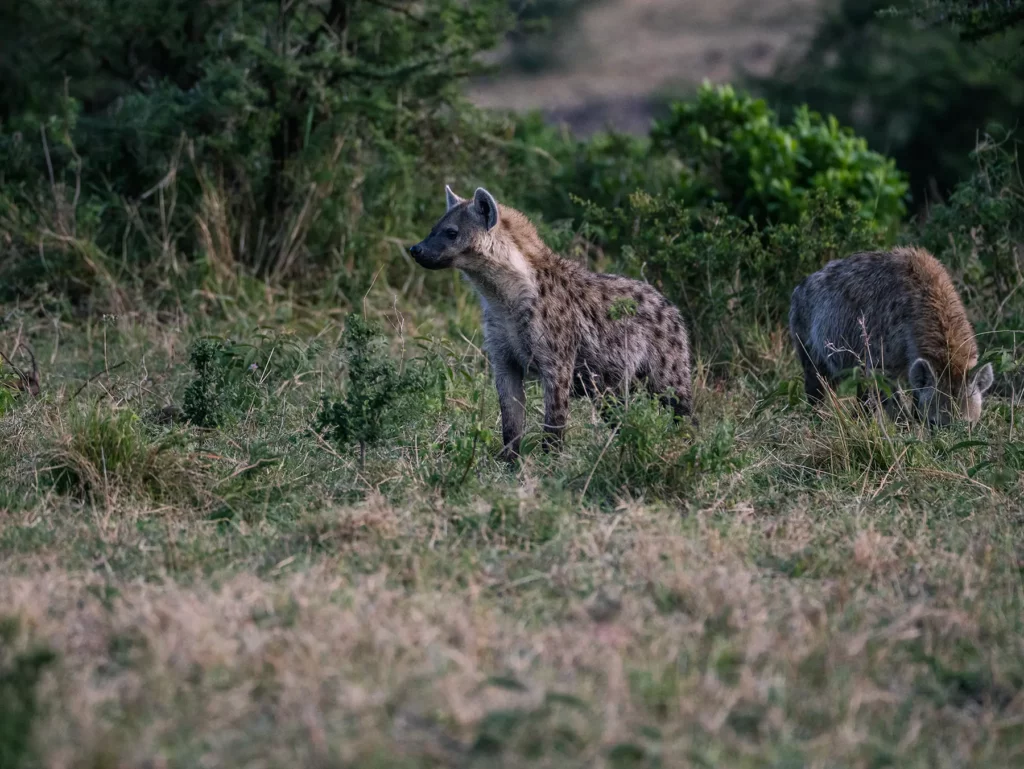
Wildlife: Fresh grass growth means baby animals aplenty and the contrasting green colour also makes it easier to spot big cats. Animals are more spread out than during the long dry season and vegetation is thicker, making wildlife movements less predictable.
Birding: This is a great season for birding: not only is it the breeding season for native birds, but this period also sees migratory species arriving from Europe and Asia.
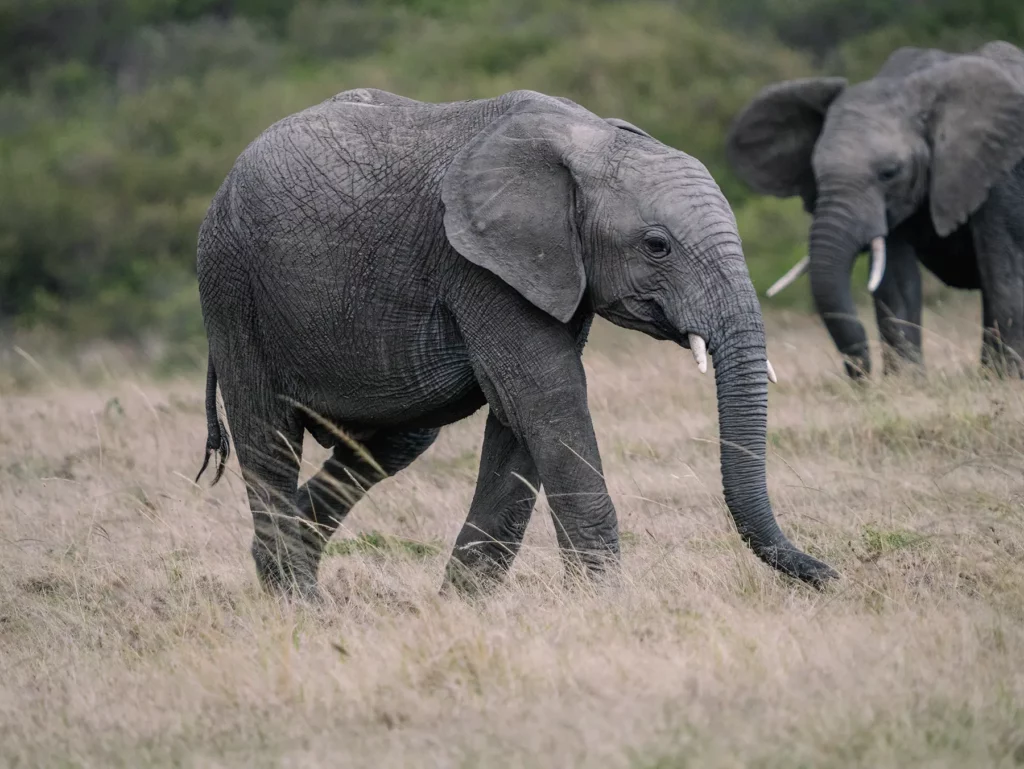
Unique features: With food in plentiful supply from November to March, this is also the best time to see newborn elephants. Palearctic migrants, intra-African migrant birds and resident birds are all present in December. What’s more, you’ll be able to admire some colourful breeding plumage as breeding continues until towards the end of the month. February is prime time for whale shark encounters near Diani Beach and Mombasa, and along the nearby coast.
Pros of The Short Dry Season (December – February)
- Outstanding game viewing
- Constantly pleasant temperatures
- Very little rainfall
- Quieter than the long dry season
- Breeding season for native bird species plus arrival of migrant European and Asian species
- Lush green vegetation, which makes for great photos
- Chance of spotting newborn elephants
- Ideal time to enjoy a safari and then head to the beach, e.g. Diani Beach or Mombasa, as water visibility is excellent
- Maasai Mara park fees are lower during the first half of the year, which includes January and February
- Dry, warm conditions are great for hiking Mount Kenya
Cons of The Short Dry Season (December – February)
- Weather at its hottest
- Animal movements less predictable than in the long dry season because water is plentiful
- Thicker vegetation can make it more difficult to spot wildlife and abundant water means less animal concentration around watering holes (an experienced guide is crucial)
- Rain more likely than in the long dry season
- Higher humidity and more mosquitoes
- Maasai Mara park fees still at higher rate in December
- The Great Migration will have moved on to Tanzania
For more information you can see my full guide on the best time to visit Kenya.
The Long Rainy Season (March – May)
The long rainy season might suit you if you’re a more adventurous traveller and are willing to deal with the added challenges of travelling at this time of year in return for lower costs.
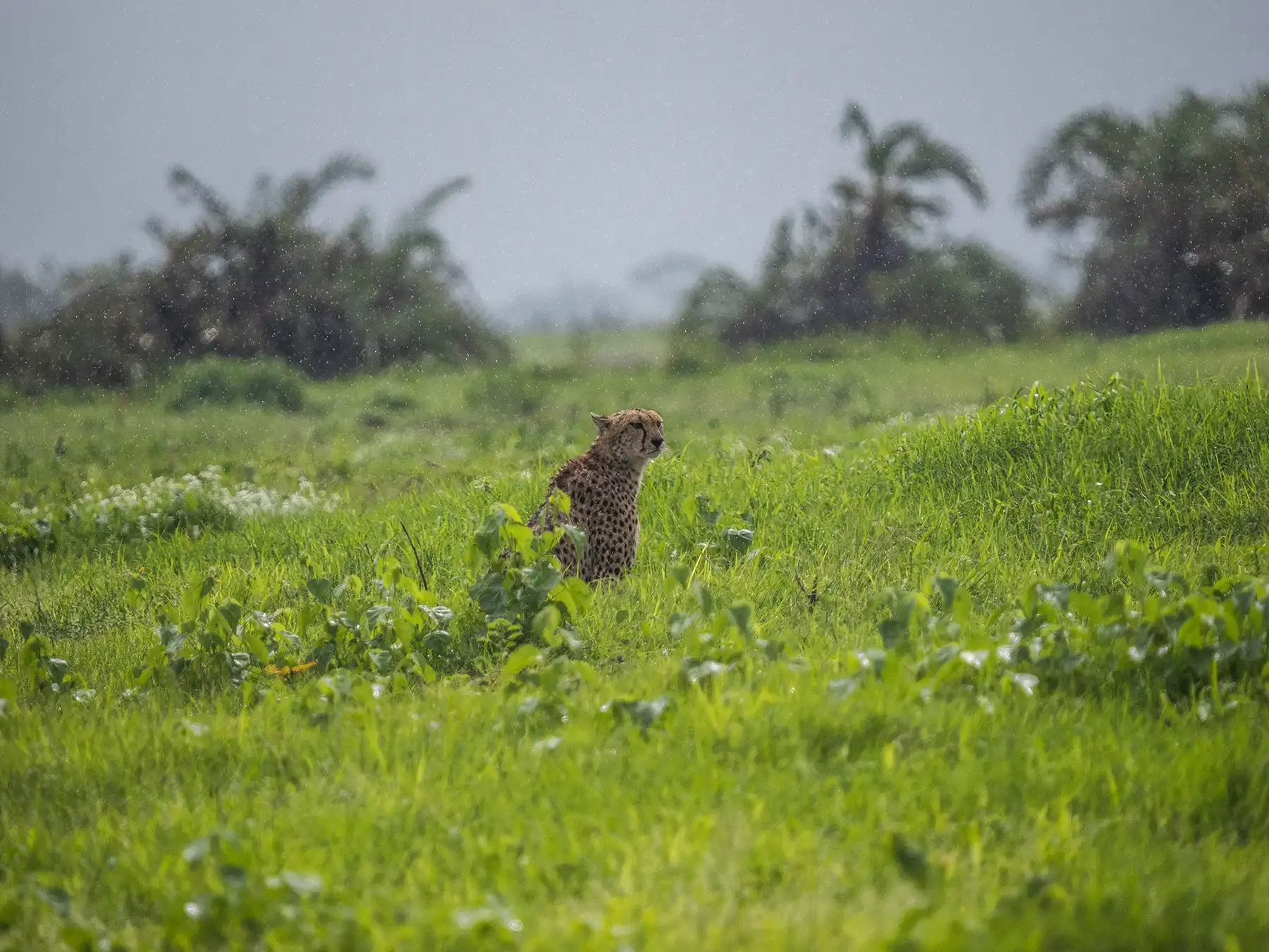
This is the low season in Kenya when visitor numbers to the parks are at their lowest and the prices reflect this. The weather is also at its worst as this is the heart of the rainy season, with most days bringing heavy showers, often later in the day, and even the possibility of flooding.
Below are this season’s ratings for wildlife, the great migration, Zanzibar, busyness, and weather.
Quick Facts
Prices: At their lowest.
Weather: The wettest time of year, with torrential daily showers. Temperatures are usually 15°C – 28°C (59°F – 82°F) but can be higher.
Wildlife: Although wildlife is still plentiful in all of the parks, the heavy rain can complicate viewing. This is often compounded by dense foliage.
Birding: While tracking wildlife can be challenging during this time of year, it’s still a great time for bird-watching: you’ll still be able to spot both native species and a number of European and Asian migratory birds.
Unique features: The fresh, long grass draws black rhinos out into the open in parks such as the Maasai Mara and Lake Nakuru so you can observe them as they graze. Young animals are everywhere and bird enthusiasts can observe local species showing off their attractive breeding plumage.
Pros of The Long Rainy Season (March – May)
- Lowest prices
- Lush green vegetation which looks great in photos
- Parks are quieter
- Lots of baby animals
- Among the best seasons for birding
- Highest chances of spotting black rhinos as they are drawn to the long fresh grass for grazing
Cons of The Long Rainy Season (March – May)
- Rain can impact viewing conditions
- Possibility of flooding, which can block some roads
- Some camps and lodges close for this season
- Ample water makes wildlife movements less predictable than in the dry season
- Rainfall results in denser greenery, which can make it harder to spot wildlife (you will need an experienced guide)
- Mosquito numbers are at their highest
For more information you can see my full guide on the best time to visit Kenya.
The Long Dry Season (June – September)
Boasting the best weather, the long dry season is the most popular time of the year to visit Kenya and is ideal if you want to take in the famous Great Wildebeest Migration Mara River crossing.
Because it’s such a popular time for visitors, expect costs to be higher and parks to be busier.
Below are this season’s ratings for wildlife, the great migration, Zanzibar, busyness, and weather.
Quick Facts
Prices: High.
Weather: Dry and sunny with little chance of rain. Temperatures from 10°C (50°F) at night to 25°C (77°F) during the day. The coolest time of year for visitors.
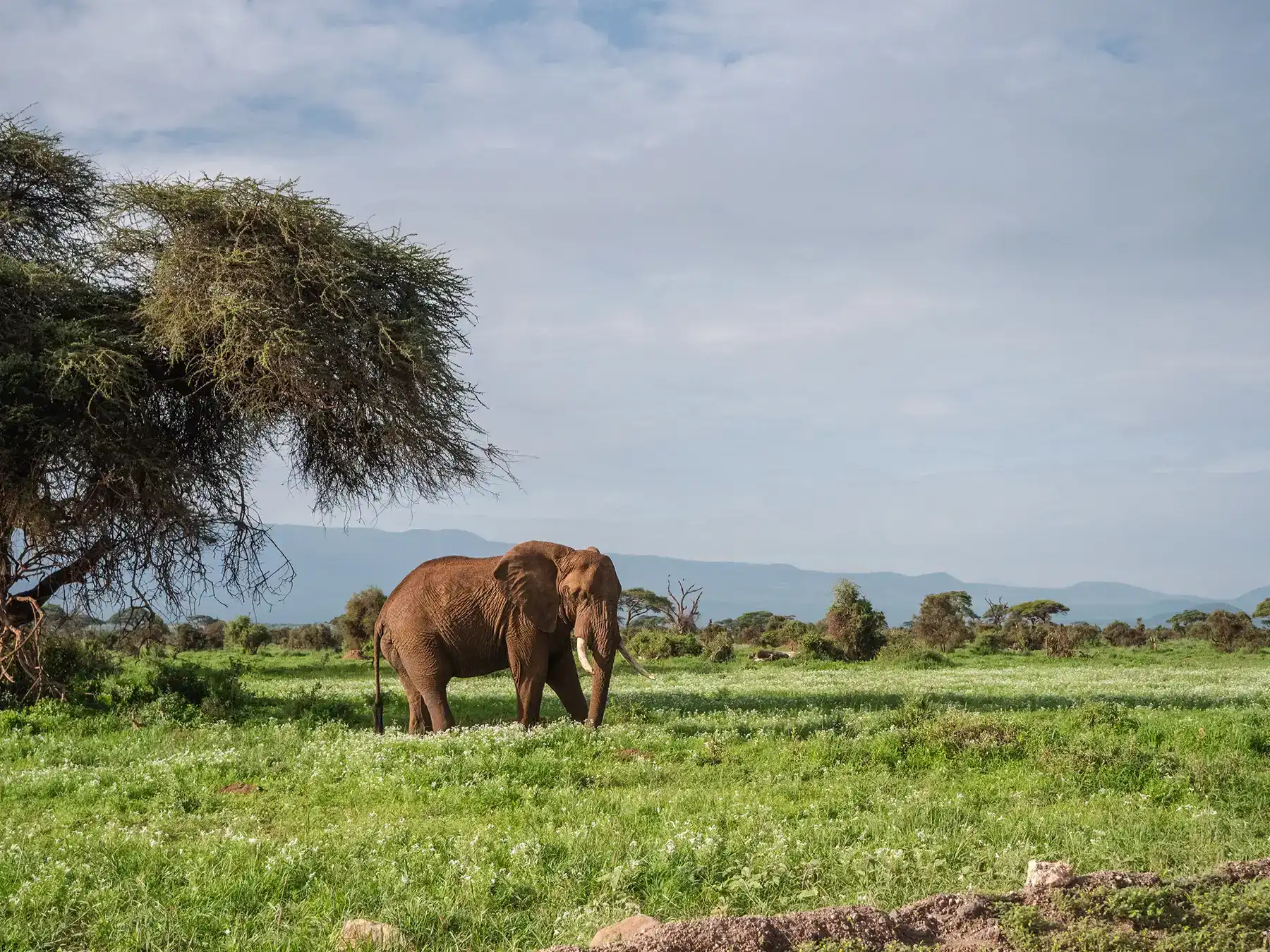
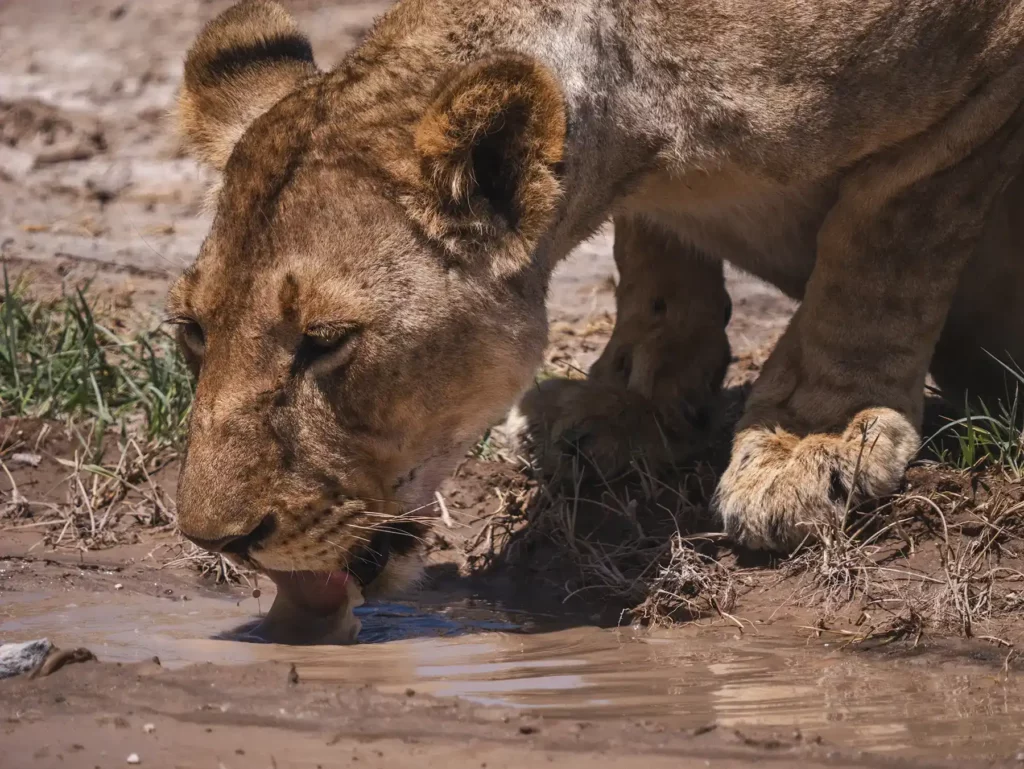
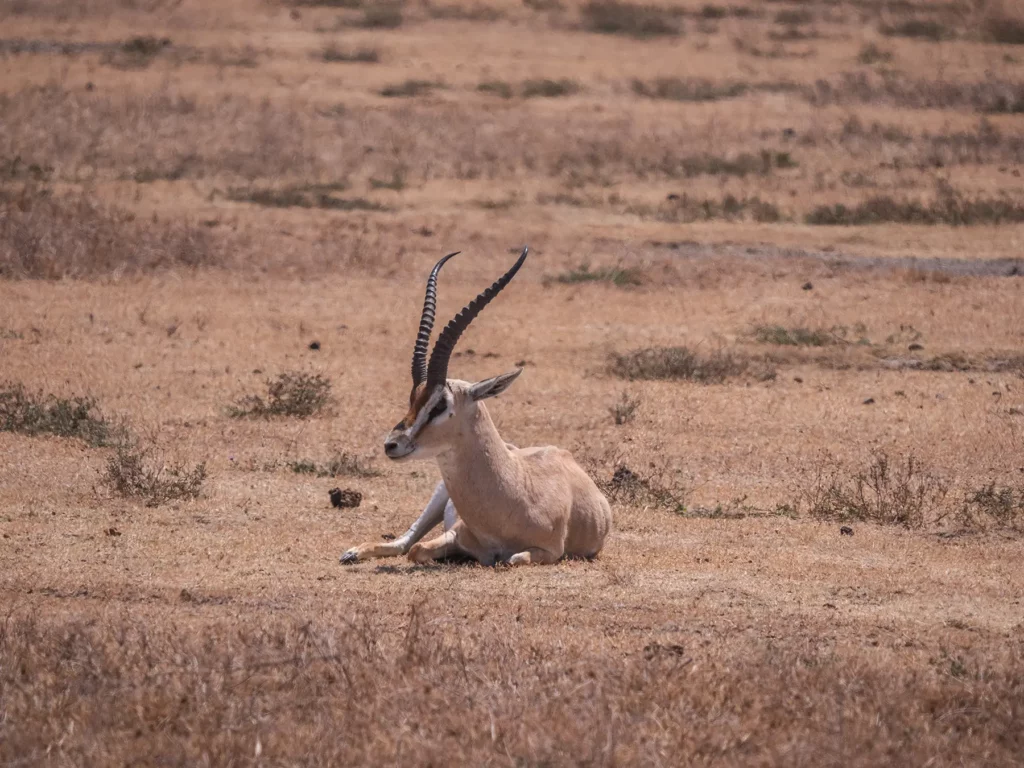
Wildlife: With vegetation sparse, wildlife are easy to spot. What’s more, water scarcity drives wildlife to gather at the remaining water sources, making it easier to find them.
Birding: Although migratory bird species will have flown away by this time of year, leaving only the resident species behind, there are still many birds to see.
Unique features: Mid-July marks the start of the Great Wildebeest Migration across the crocodile-filled Mara River.
Pros of The Long Dry Season (June – September)
- Dry, sunny weather with low chances of rain
- Generally pleasant temperatures
- Sparse vegetation makes wildlife easy to spot
- Water is less abundant, making wildlife movements predictable as they gather at the remaining watering holes
- Mid-July marks the start of the Mara River crossing, which is the peak of the Great Migration
- This season is ideal for combining safari and beach (e.g. Diani Beach or Mombasa)
- Perfect conditions for a hike up Mount Kenya
- Lower risk of malaria due to decline in mosquito population
Cons of the Long Dry Season (June – September)
- Highest prices of the year
- Park visitor numbers are highest during this time
- Hardest season to see black rhinos
- It can be hard to secure last-minute accommodation, with many of the top lodges selling out up to a year in advance
For more information you can see my full guide on the best time to visit Kenya.
The Short Rainy Season (October – November)
If you’re hoping to avoid the crowds but still want to enjoy largely nice weather and consistently good wildlife sightings, the short rainy season may be perfect for you.
This season offers the ideal balance of pleasant weather and quieter parks. As wildlife does not really fluctuate throughout the year, there should be plenty of animals to spot, too.
Below are this season’s ratings for wildlife, the great migration, Zanzibar, busyness, and weather.
Quick Facts
Prices: Moderate.
Weather: Dry and sunny in the mornings with rain possible in the afternoons. Temperatures from 10°C (50°F) at night to 25°C (77°F) during the day.
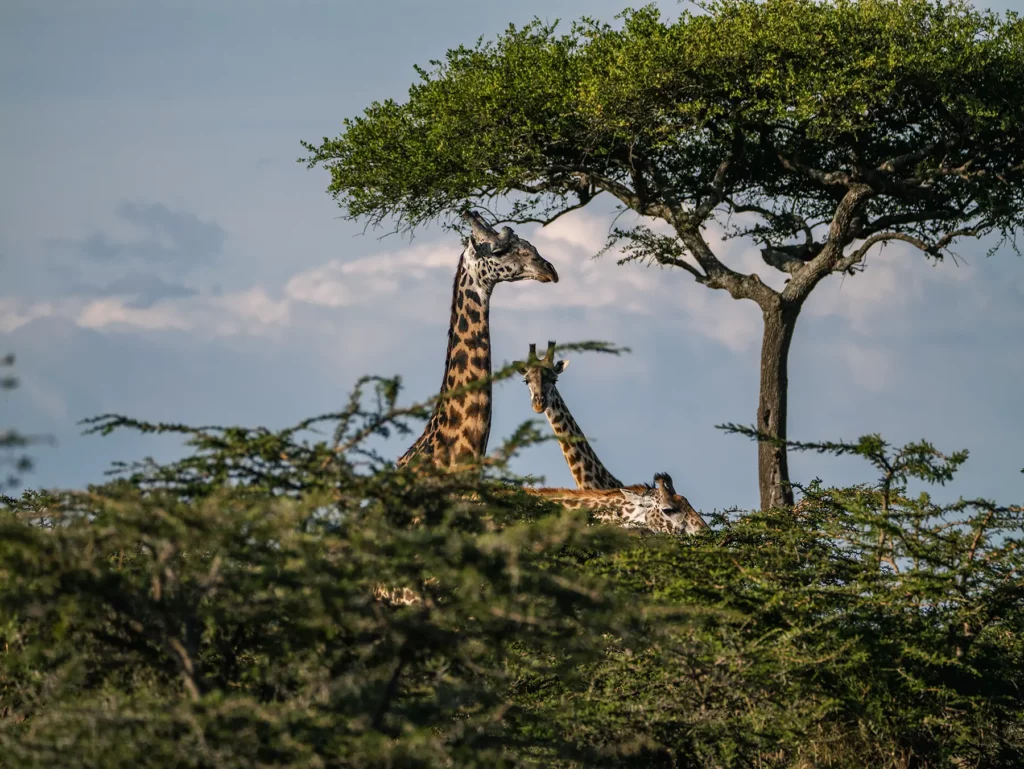
Wildlife: This is the season when most herbivores have their young, so there will be plenty of baby animals to see and also lots of related predator action. Although the thick, fresh vegetation can make it harder to see wildlife, big cats tend to contrast more with the green, making them easier to see.
Birding: This is when the migratory birds start to arrive. You can also look forward to seeing huge flocks of flamingos on Lake Natron for the breeding season.
Unique features: Visitors can often see the Mara River crossing part of the Great Wildebeest Migration right up to mid-October. If you’re lucky, you could also spot some newborn elephants in December.
Pros of The Short Rainy Season (October – November)
- Better prices than in peak season
- Significantly fewer visitors to the parks
- Thick, fresh vegetation makes for wonderful photographs
- It generally only rains in the afternoons, with pleasant, dry conditions in the mornings
- This is when herbivores start to have their young, so you should see plenty of baby animals not to mention the related predator action
- Easier to see black rhinos than in the dry season
- Excellent water visibility makes this a great time to combine your safari with some time at the beach, e.g. Diani Beach or Mombasa
- This is the peak breeding season for intra-African migrant birds as well as some local species, meaning you should be able to admire their splendid breeding plumage
- Chance of spotting newborn elephants between December and March thanks to abundant food
Cons of The Short Rainy Season (October – November)
- Rain possible, particularly in the afternoons
- Can be harder to spot wildlife amid the thick vegetation
- Higher humidity and more mosquitoes
- The last of the Great Migration has usually left for Tanzania by mid-October
For more information you can see my full guide on the best time to visit Kenya.
How Long to Spend in Kenya
3 Weeks is the perfect amount of time to spend in Kenya if you want to experience everything this incredible country has to offer, including a beach extension to Diani Beach or Mombasa to unwind after your safari.
With 21 days, you’ll have time to explore all of the highlights, discover some lesser-known gems, and still have plenty of downtime to relax after those long drives between destinations.
A 2-week itinerary allows you to take in most of Kenya’s highlights, from the Maasai Mara to Amboseli, with time for lesser-visited gems like Samburu or Lake Nakuru.
With 7-10 days, you can explore several of Kenya’s top parks and still have a relaxed pace.
A 5-day Kenya safari works well if you want to focus on one or two key reserves, such as the Maasai Mara or Amboseli.
My preference: If you have the time, I’d always recommend spending 3 weeks in Kenya. It lets you see everything without feeling rushed and gives you proper time to recover from those long drives between parks.

3-Week Kenya Safari Itinerary Overview
This 3-week Kenya safari itinerary covers all of my favourite national parks and reserves, from the world-famous Maasai Mara to the elephant herds of Amboseli.
I’ve designed it based on my own experiences travelling around Kenya, making sure to include plenty of rest days so you don’t burn out from the long drives. You’re pretty much guaranteed some incredible wildlife sightings following this route.
Quick Facts
Average driving time per day: 2.4 hours
Best times of year: June to October (dry season, Great Migration) or January to February (good weather, lower prices). Avoid April to May as Tsavo West roads can become impassable.
3-Week Kenya Safari Map
Day-by-Day Breakdown of the Perfect 3-Week Kenya Safari
Kenya has so much to offer, 3 weeks will zip by – I’ve crafted this 3-week safari itinerary to make sure you make the most of every moment!
I have also considered the distance between the parks and driving times in order to come up with the most enjoyable itinerary.
You can get quotes from the same local tour companies I use to organise my own trips here: Safaris By Ella
Click any of the days below to jump to my full notes on that day.
- Day 1: Nairobi
- Day 2: Lake Nakuru National Park
- Day 3: Lake Nakuru to Ol Pejeta
- Day 4: Ol Pejeta Conservancy
- Day 5: Ol Pejeta to Ol Donyo Lomboro Conservancy
- Day 6: Ol Donyo Lomboro Conservancy
- Day 7: Ol Donyo Lomboro Conservancy to Loisaba Conservancy
- Day 8: Loisaba Conservancy
- Day 9: Loisaba Conservancy to Samburu National Reserve
- Day 10: Samburu National Reserve
- Day 11: Lake Naivasha
- Day 12: The Maasai Tribe
- Days 13-14: Maasai Mara National Reserve
- Day 15: Maasai Mara to Amboseli
- Day 16: Amboseli
- Day 17: Amboseli to Tsavo West
- Day 18: Tsavo West
- Day 19: Tsavo West to Diani Beach
- Day 20: Diani Beach
- Day 21: Diani Beach to Nairobi
Day 1: Nairobi
Drive Time (Excluding Game Drives): Dependent on the activities you choose
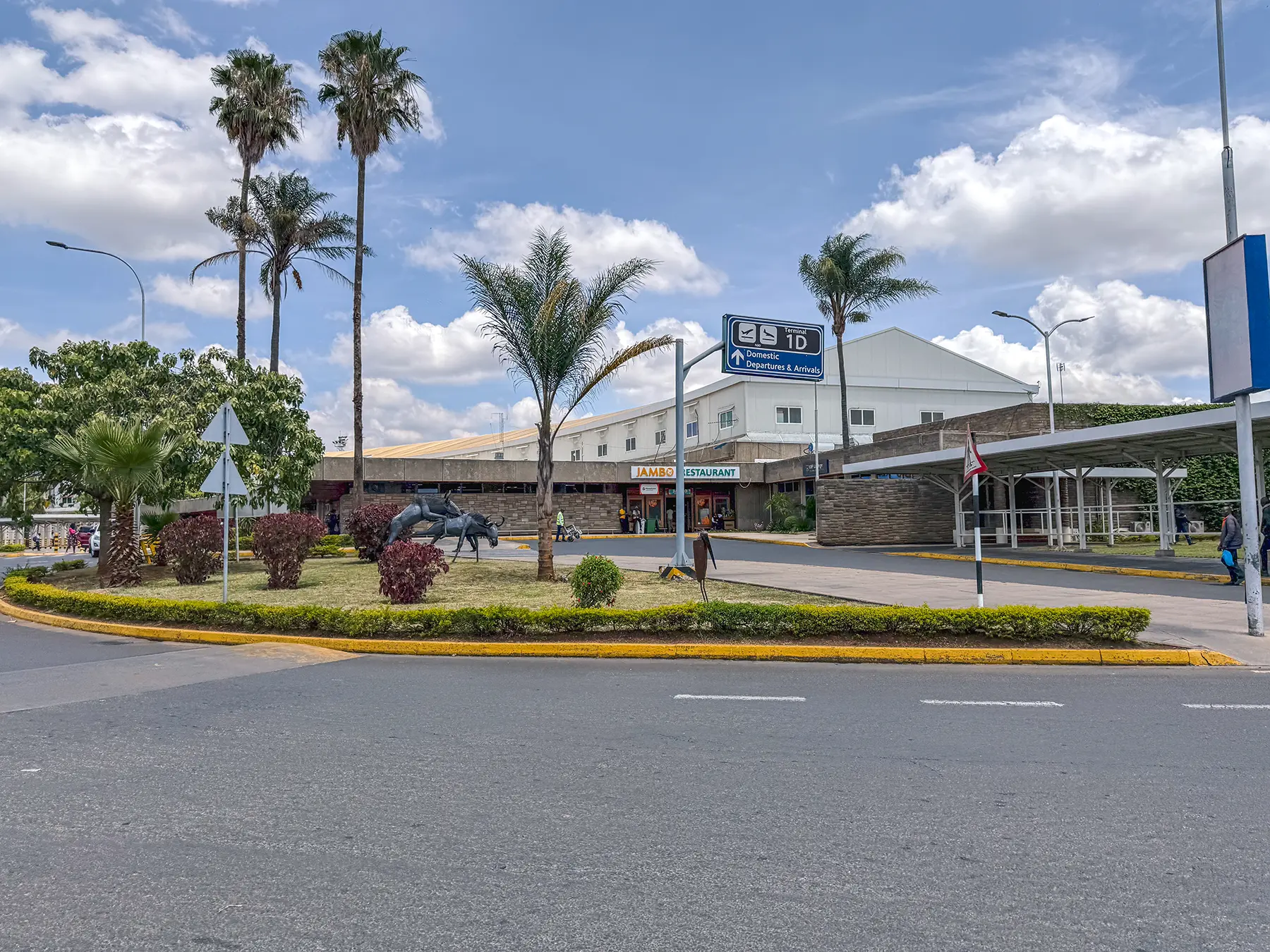
Welcome to Nairobi! Kenya’s bustling capital is the gateway to some of the world’s top safari reserves. With many tour operators based here, your tour package will probably include an airport pick-up service that will bring you straight to your accommodation.
Depending on your arrival time (and energy levels!), you can arrange some activities for the day or simply grab a bite and relax at the hotel before getting an early night – after all, you have an action-packed three weeks ahead!
Itinerary
If your flight arrives at a suitable time, you may have the chance to explore Nairobi. Below, you’ll find some suggestions on how best to plan your day if this is the case.
About Nairobi
Home to over 4 million people, Nairobi is a colourful, busy city. It takes its name from the Maasai phrase ‘Enkare Nairobi’, meaning ‘place of cool waters’, reflecting the fact that the original settlement was built on a swamp.
As one of Africa’s largest cities, Nairobi boasts a hugely varied food scene and offers a wealth of activities for visitors to enjoy.
Nairobi has some very affluent areas, such as Karen. Often dubbed the Beverly Hills of Kenya, this leafy suburb is characterised by tree-lined avenues backed by gated mansions and exquisite, landscaped gardens.
Things to Do in Nairobi
Nairobi is a city that offers some truly unforgettable experiences, from seeing baby elephants up close to hand-feeding giraffes. And how many cities can you go on safari in? Here are my recommendations for things to do while visiting this city like no other.
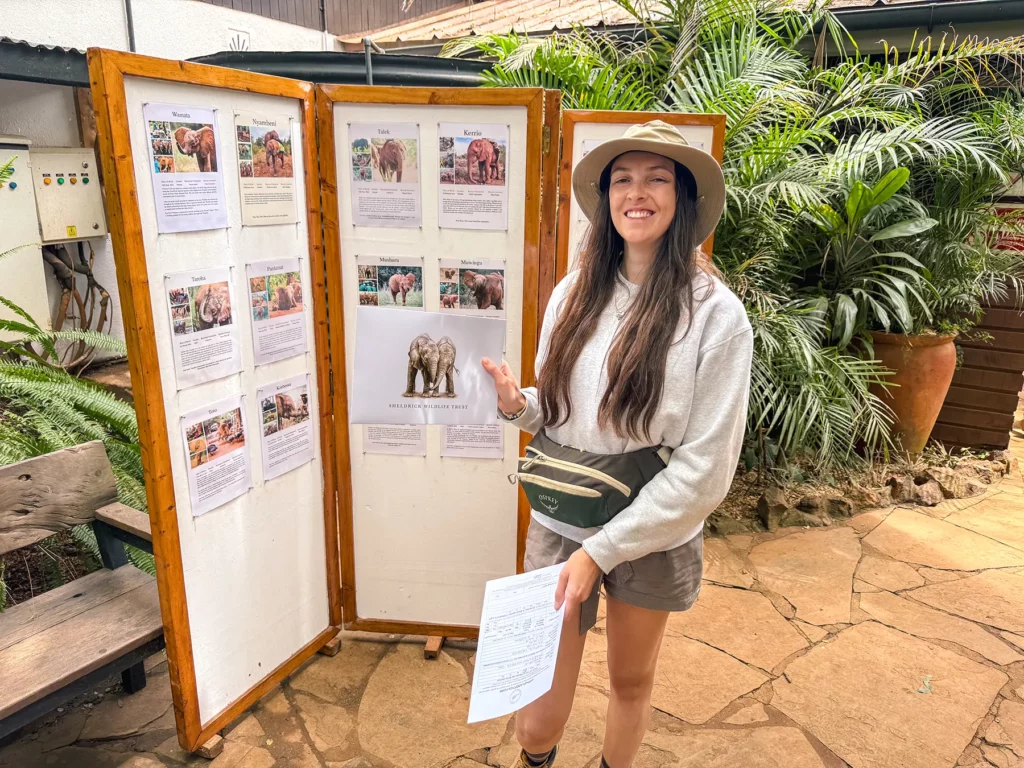
1. Visit the Elephant Orphanage at the Sheldrick Wildlife Trust
The Sheldrick Wildlife Trust is a Nairobi-based conservation initiative doing wonderful work for wildlife. The organisation rescues baby elephants from all over Kenya that have been orphaned, often due to poaching or human-wildlife conflict.
The aim is to raise them before releasing them back into the wild, and the sanctuary has succeeded in doing just that for numerous elephants since its inception.
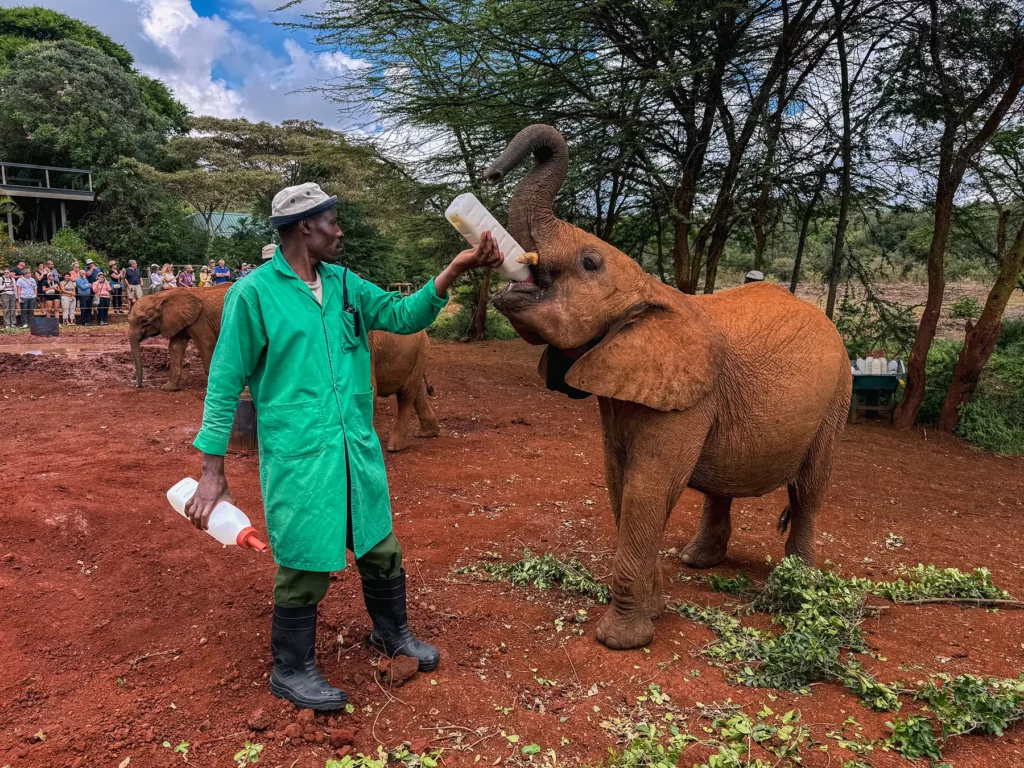
In addition to its work with elephants, the Sheldrick Wildlife Trust rescues black rhinos and giraffes, too. It has also helped to fund many anti-poaching units across Kenya in addition to establishing permanent water sources for wildlife in national parks to help combat droughts.
Visitors to the elephant orphanage in Nairobi National Park can view the daily feeding of the baby elephants between 11am and 12pm each day. Please note that you must book your visit in advance. You can find all the information you’ll need on how to book on the Sheldrick Wildlife Trust’s website or leave it up to your safari company.
As I’ve already mentioned, I never recommend sanctuaries that allow animals to be harmed. To limit the impact on its resident animals, the Sheldrick Wildlife Trust strictly prohibits contact with the animals and only allows one hour-long visit per day.
2. Go on Safari in Nairobi National Park
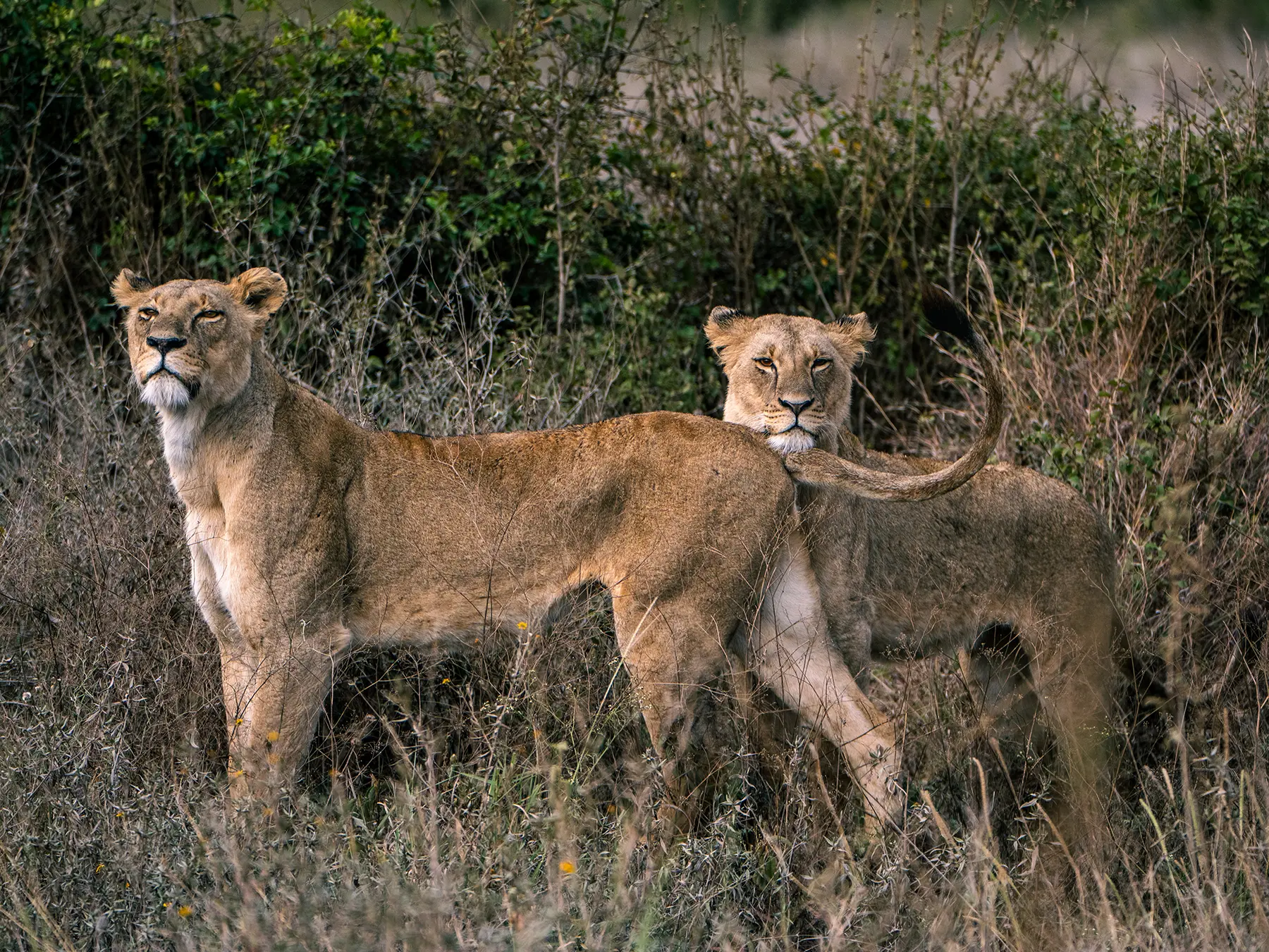
Nairobi National Park is an area of untouched nature located just below the city’s central business district, a wild oasis that coexists peacefully with the bustling metropolis that surrounds it.
One of the only national parks in the world that exists within a capital city, its compact area of just 117 sq km in size makes it one of Africa’s smallest parks and means you can easily tour it within a day.
For me, Nairobi National Park is well worth a visit for the striking contrast of observing wildlife against a background of towering skyscrapers.
The park is home to all the Big Five (elephants, lions, rhinos, leopards and buffalos) as well as giraffes, cheetahs, hyenas and many others.
3. Hand-Feed Giraffes at the Giraffe Centre
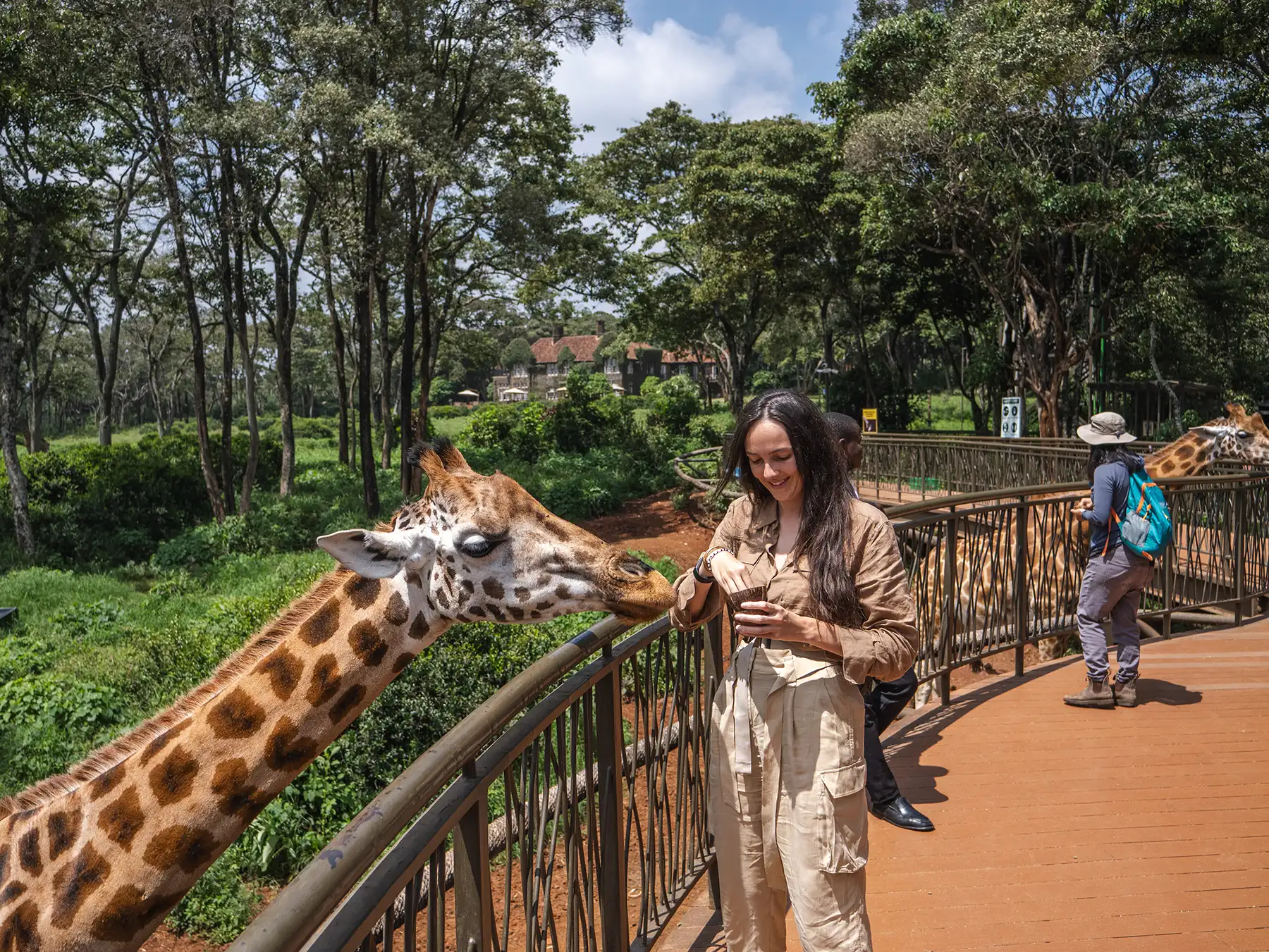
If you’re a regular on Instagram, you’re sure to have seen dazzling photos and videos of Giraffe Manor, a fabulous luxury hotel where guests get to feed giraffes from their balconies. But did you know you can enjoy a similar experience with the very same giraffes that visit Giraffe Manor for a fraction of the price?
Just 20 kilometres outside Nairobi city centre is the Giraffe Centre, a sanctuary that supports the conservation of the rare Rothschild giraffe and belongs to the same organisation as the world-famous Giraffe Manor.
Generally, I am very cautious about endorsing wildlife sanctuaries as many establishments claiming to be sanctuaries are far from it in reality, instead devoting themselves solely to human entertainment and profit.
The Giraffe Centre is a sanctuary in the truest sense of the word, however, and has really helped to boost the population of Rothschild giraffes in Kenya, introducing breeding pairs into various parks across the country, among them Lake Nakuru National Park, Mwea National Reserve, Ruma National Park and Nasalot National Reserve.
Indeed, the sanctuary’s efforts have helped to grow the number of Rothschild giraffes in Kenya from 120 to over 300.
Visiting the Giraffe Centre will not only give you the satisfaction of supporting a wonderful cause, it’s also lots of fun!
When you arrive, you’ll receive a coconut shell full of food pellets that the giraffes really love. You’ll then be able to feed the pellets to some of the resident giraffes, some of whom are more polite than others! Be prepared for some giraffe drool and beware of Daisy the headbutting giraffe!
I would say that 1-2 hours is plenty of time to spend at the Giraffe Centre. If you want to stay a little longer, there’s also a nature trail across the road.
4. Dine in one of Nairobi’s Delicious Restaurants
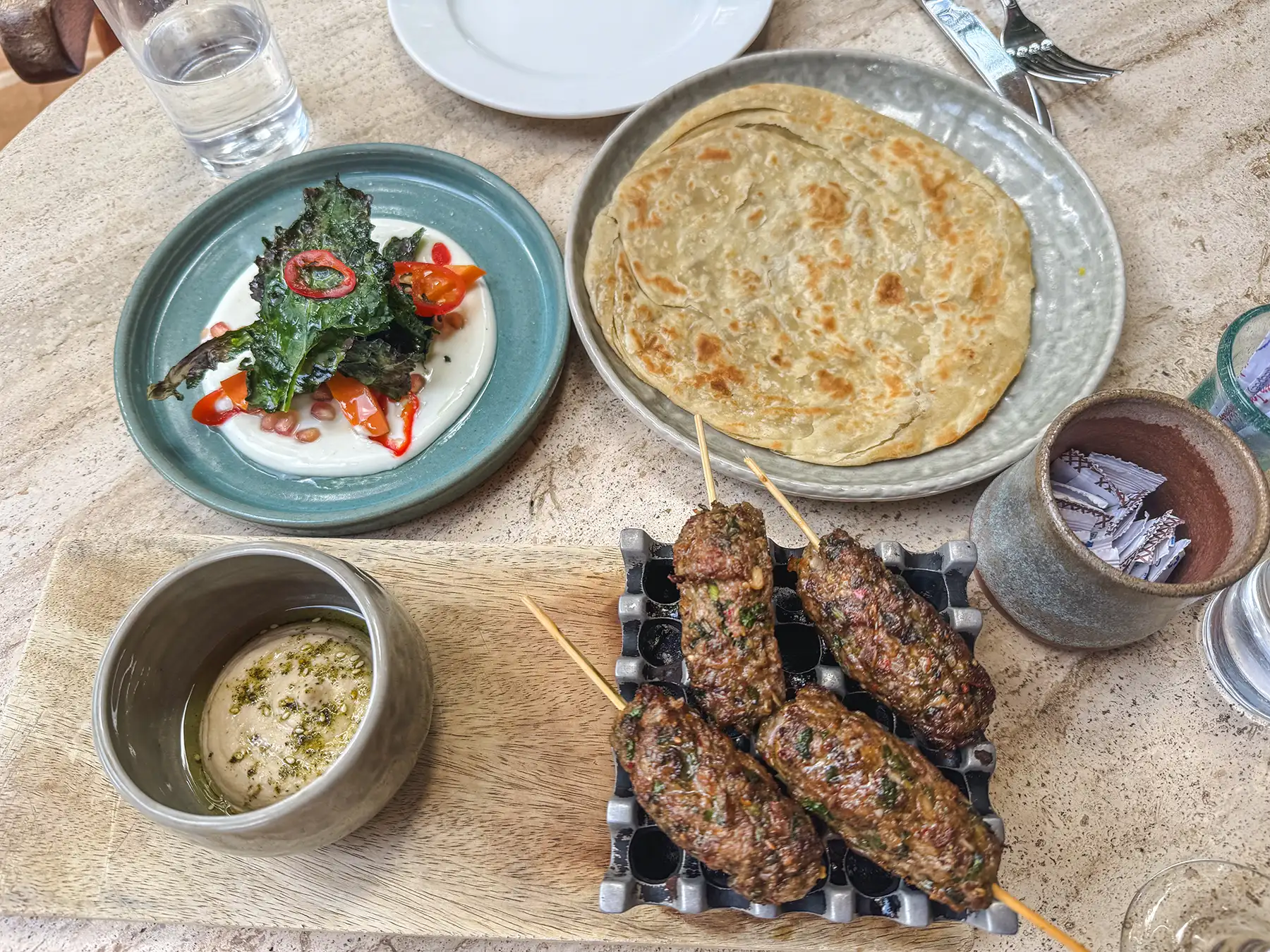
Nairobi is packed with wonderful restaurants for you to try.
My top pick is ‘Talisman Restaurant’ in Karen. Serving both lunch and dinner, this eatery offers a selection of Asian-inspired dishes including sushi (my favourite)!
The world-renowned ‘Carnivore Restaurant’ is one of Nairobi’s most unique places to eat. Food is served on an all-you-can-eat basis and each table is equipped with a white flag that you lower to indicate when you can’t eat any more. While the flag is raised, you’ll be presented with various kinds of meat (including crocodile and ox balls), served on Maasai swords.
While it is undoubtedly a special experience, I’d only recommend eating here for true meat lovers with huge appetites. I love meat but can’t eat that much, so the fixed price you pay to dine here didn’t really feel like the best value for me.
I would also recommend eating at ‘The Wine Shop’ and ‘Wasp and Sprout’, both in Loresho.
Tips for Visiting Nairobi
I had a fantastic time in Nairobi! Here are some quick tips to make sure you do, too!
- The city is extremely easy to get around, with reasonably-priced Ubers available everywhere.
- Like every other major city, you have to take reasonable care while out and about. Don’t have any jewellery or other valuables on display – a bum bag/fanny pack is a great way to store your phone and passport safely on your person.
- As most crime and car accidents occur at night, it’s best to plan your days so you don’t need to go out after dark. Food delivery on Uber Eats works great and will save you going out at night to eat.
- Nairobi has a number of neighbourhoods that are better avoided, such as Eastleigh and Kibera. This really shouldn’t be an issue, however, as taxi and Uber drivers are well aware of which areas to avoid.
- I tend to stay in the leafy suburbs such as Karen which I find more relaxing compared to staying in the city centre.
Where to Spend the Night
If you book your safari through a local tour operator, your hotel in Nairobi will often be included in your package.
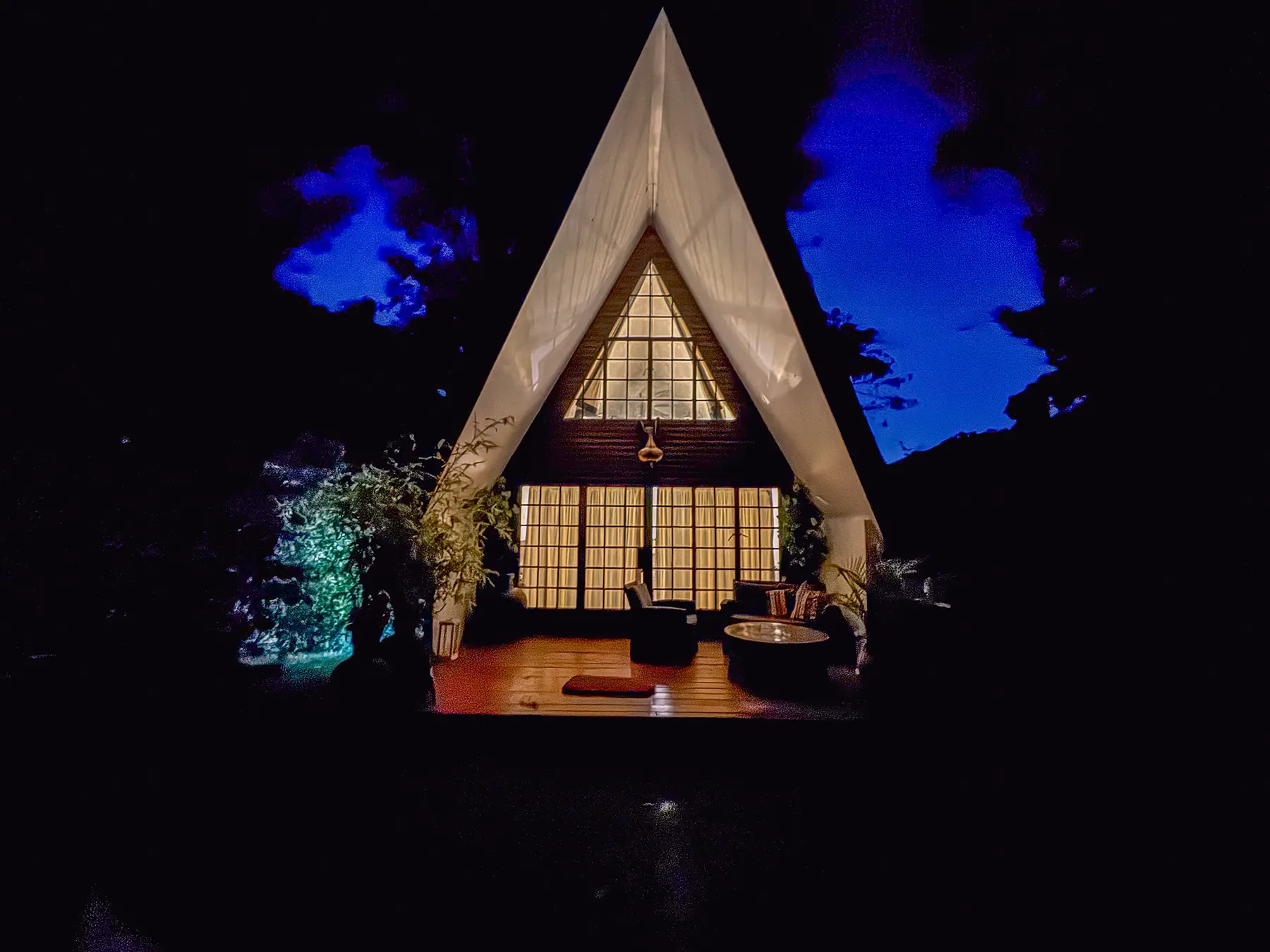
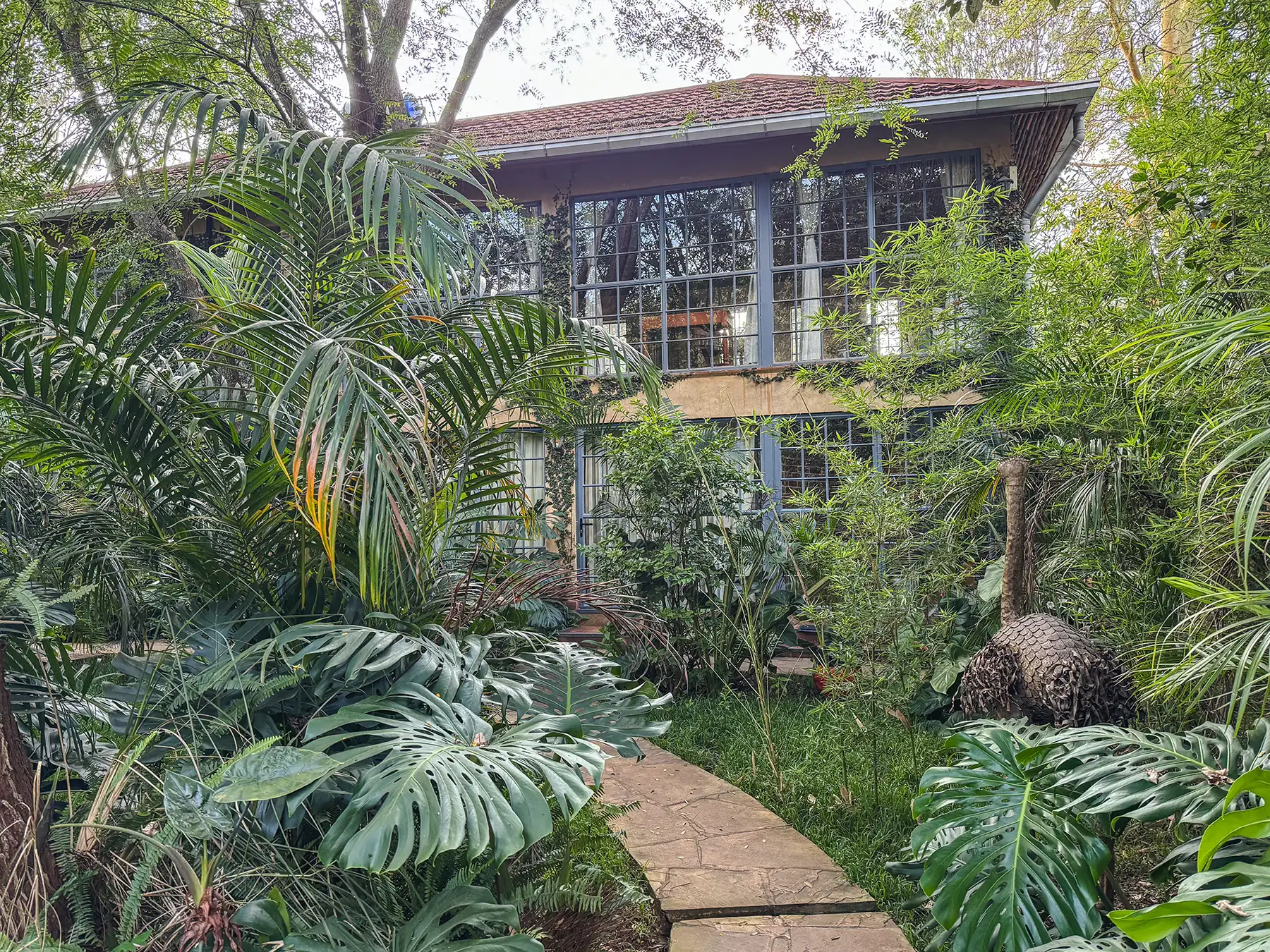
If not, my recommendation is to book an Airbnb in Nairobi. There’s a good selection to choose from, both in the centre and slightly further out. The green, tranquil suburb of Karen in the south is my personal favourite place to stay, and it has several highly-rated properties.
My Experience Visiting Nairobi
Given Nairobi’s rough-around-the-edges reputation, I was somewhat apprehensive about visiting the city, but I ended up loving it!
Hand feeding the resident giraffes at the Giraffe Centre was amazing and the baby elephants at the Sheldrick Wildlife Trust’s elephant orphanage were adorable. I was so inspired to hear about the work both organisations do to support Kenya’s wildlife and even ended up adopting a female baby elephant called Nyambeni.
Nairobi has some excellent eateries and I felt very safe dining at them as they were all secured behind manned gates. My top three are Talisman Restaurant, Carnivore Restaurant and The Wine Shop. Talisman was my firm favourite – I went twice and would highly recommend the sushi and lamb koftas.
Carnivore was a fun, unique experience, but I simply couldn’t eat enough to make their fairly pricey all-you-can-eat service feel like value for money! Lastly, the Wine Shop served delicious pizza! I also used Uber Eats for pizza deliveries and found it great.
Karen was my favourite district as it was very safe and had the best restaurants and shopping centres. The main shopping centre, The Hub, is modern and clean and I had a pleasant, safe, hassle-free experience there. Loresho is also very nice and has some really good restaurants and cafes.
All in all, I was pleasantly surprised by Nairobi and would say it is well worth visiting!
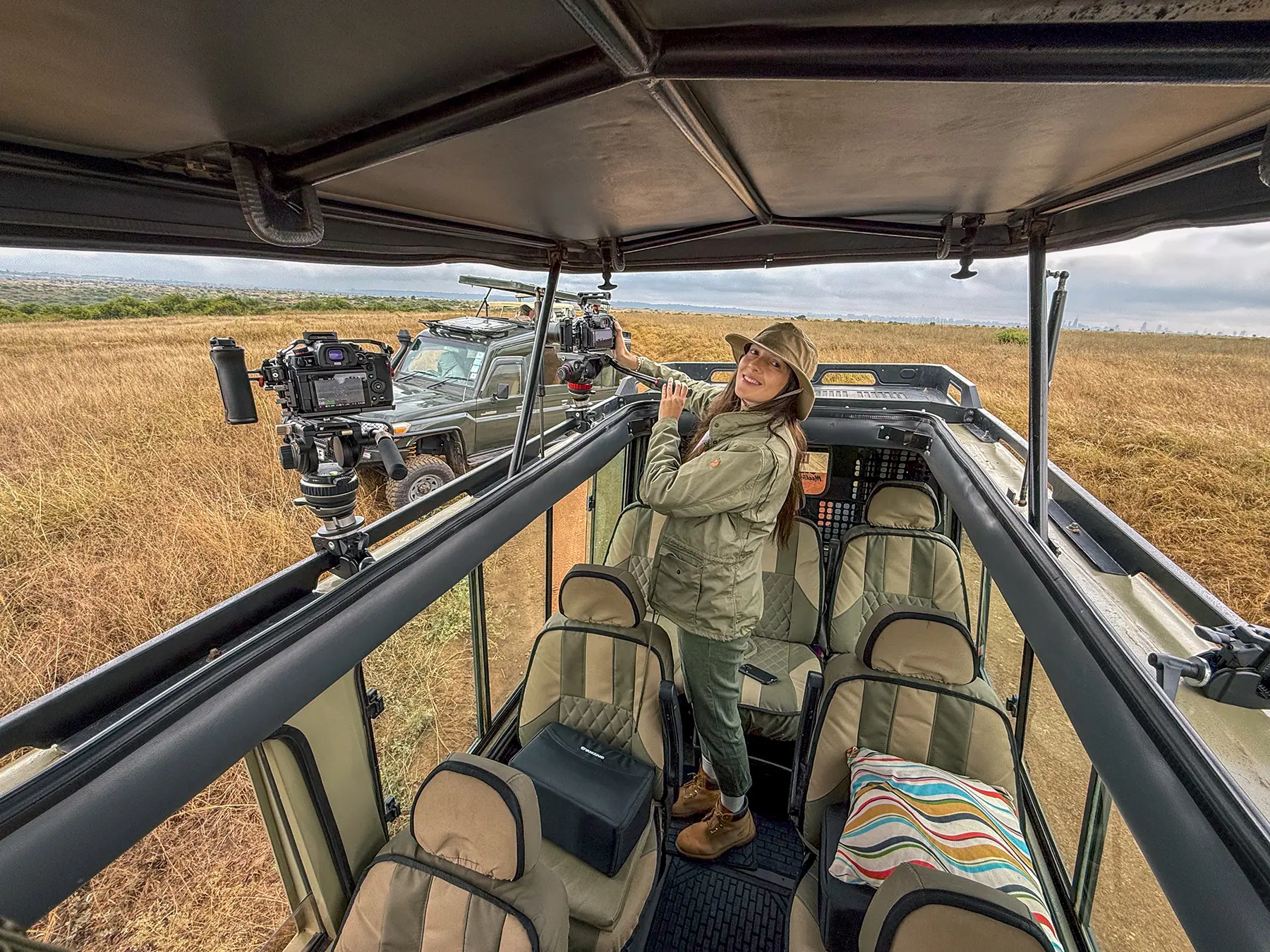
You can watch a video of my experience visiting Nairobi National Park below.
Day 2: Lake Nakuru National Park
Drive Time (Excluding Game Drives): 4 hours
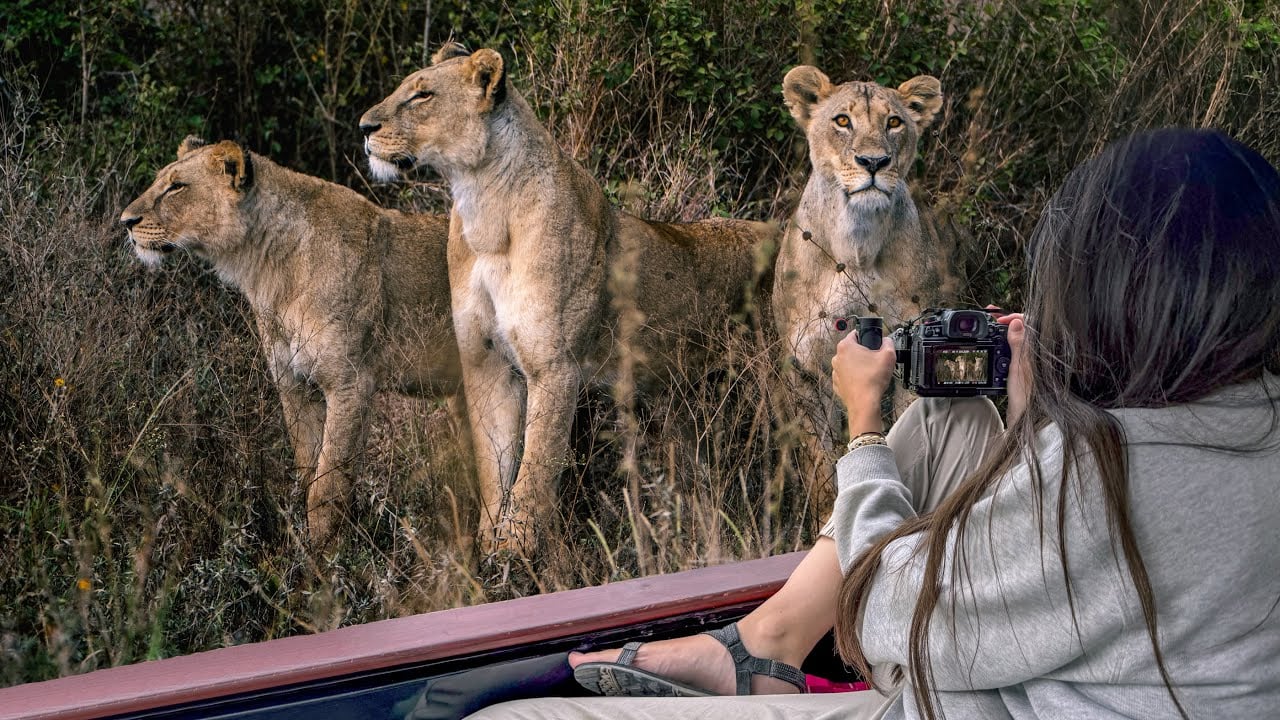
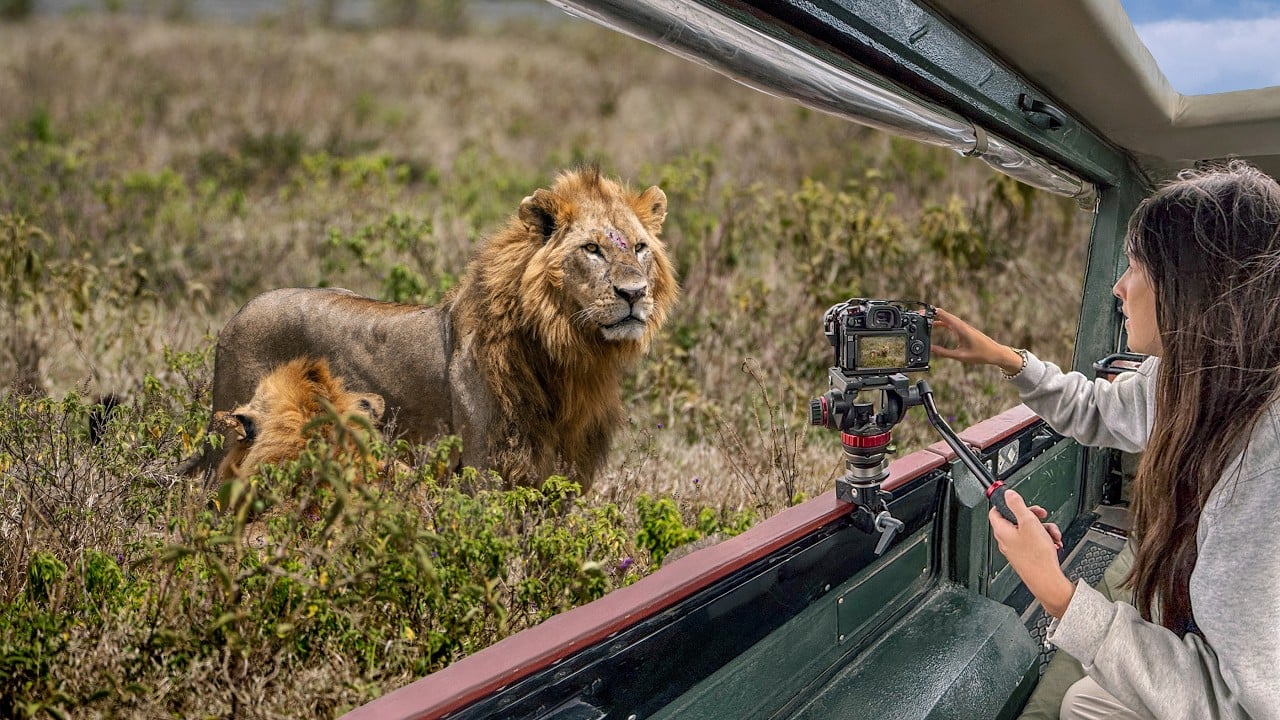
The beautiful Lake Nakuru National Park is home to a host of wildlife species. As soon as you arrive, you can take in its incredible, diverse landscape on a morning game drive. Then, after some lunch at the lodge, it’s time to head out again!
You can look forward to spotting numerous animal and bird species during your visit, including four of the Big Five, endangered white and black rhinos and of course the reserve’s famous flamingos.

Itinerary
Day 2 is when your safari experience begins in earnest! To make the most of the day, you’ll set off early in the morning on the drive from Nairobi to Lake Nakuru.
Once you arrive, you’ll be jumping straight into the spirit of things with a late morning game drive on the way to the lodge, giving you your first look at the stunning Lake Nakuru. Then it’s back to the lodge for a spot of lunch before heading out again on an afternoon game drive!
The park’s landscape is as varied as its residents, and this diversity of habitats maximises your chances of spotting a wide array of wildlife, from the elusive leopard to the rare Rothschild’s giraffe. Four of the Big Five can be found here (lions, leopards, rhinos and buffalos), and the reserve is also home to a wealth of bird species.
As you drive across the rolling savannah, watch out for the park’s famous protected black and white rhinos, which can be found here all year round.
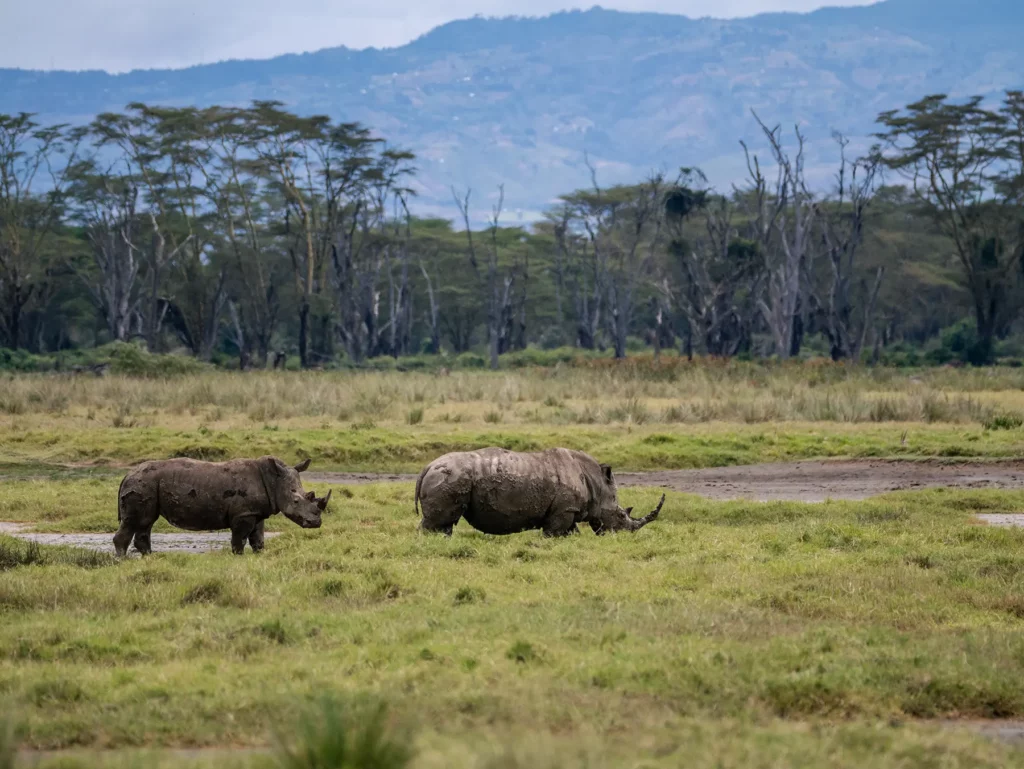
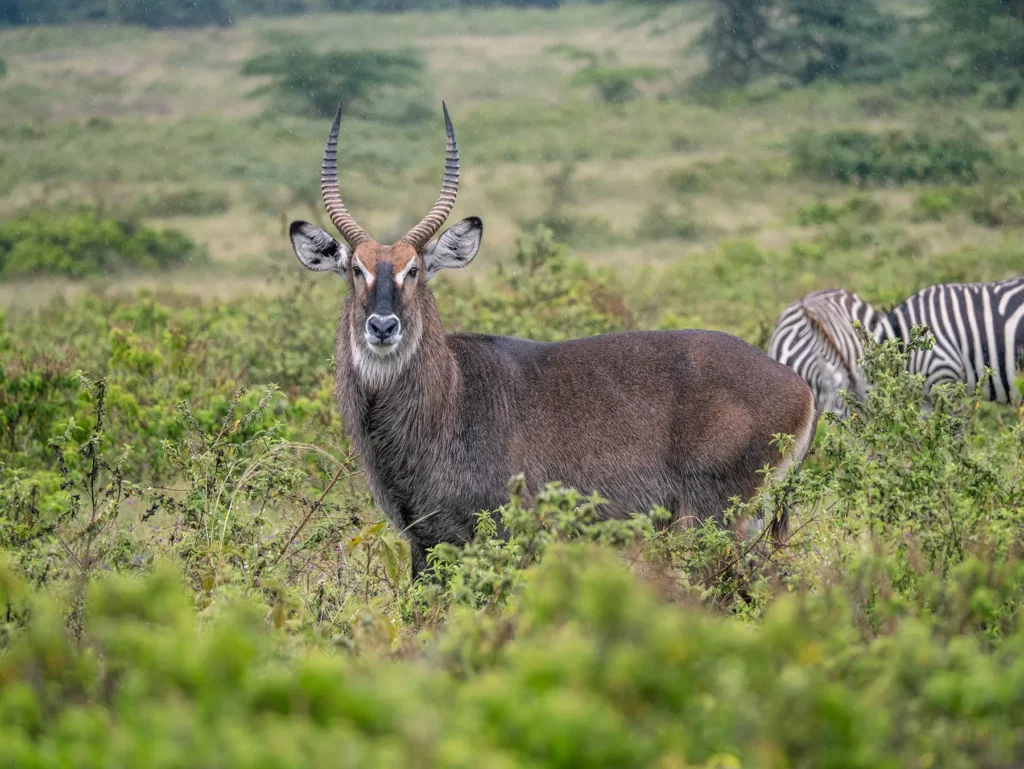
You’ll also see waterbucks, leopards and lions roaming here. These grasslands stand in spectacular contrast to the dense acacia forests with their cactus-like trees and the thick acacia woodlands, which offer shelter to giraffes, impalas, lions, leopards and baboons, to name but a few.
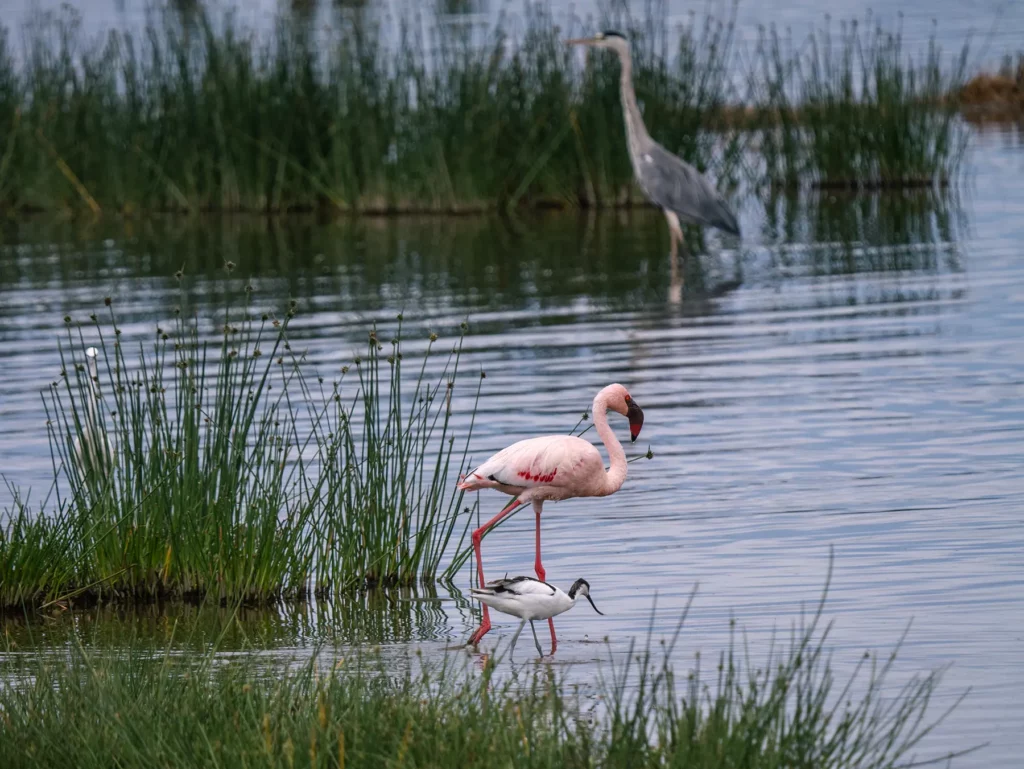
At the shores of the lake itself, see if you can spot some hippos wallowing in the cool water. And don’t forget to look for the flamingos for which the park is best known!
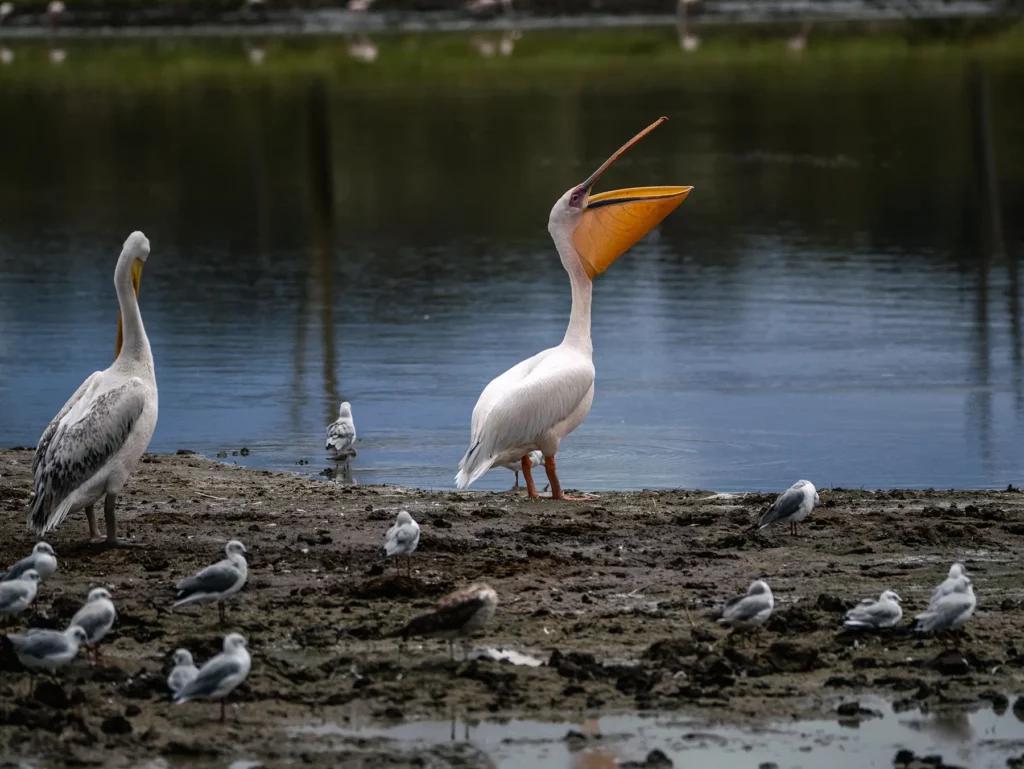
The algae that gives the water its beautiful blue-green colour is one of the main food sources for these birds and is also responsible for the brilliant pink hue of their plumage. As the sun sparkles on the water, you’ll also see countless other birds including pelicans, cormorants, herons and storks.
About Lake Nakuru National Park
With over 450 bird and over 50 mammal species, including four of the Big Five, Lake Nakuru stands apart as the most biodiverse of all of Kenya’s Great Lakes.
Considered one of the country’s best-conserved parks in the country for decades, Lake Nakuru National Park was established in 1961 and became a rhino sanctuary around 1984. Although it boasts some of Kenya’s most magnificent mammals, Lake Nakuru is best known for its resident rhinos and flamingos. While rising waters have seen their numbers decrease over the past decade, and while numbers can increase in some years, scientists still regard the population and its habitat as under significant pressure.
Tips for Visiting Lake Nakuru National Park
- For the best panoramic views of Lake Nakuru, make your way to Baboon Cliffs.
- As the name suggests, the cliffs are home to some (very impish!) baboons, but if you’re early enough, you should be able to enjoy the vista without the distraction of their antics!
- Thanks to its location right at the equator, Lake Nakuru enjoys a more moderate climate than other parks.
- In wetter months, roads can be muddy and some tracks temporarily closed, but birding can be excellent, with large numbers of resident and migratory species.
- Carry binoculars for birding.
Where to Spend the Night
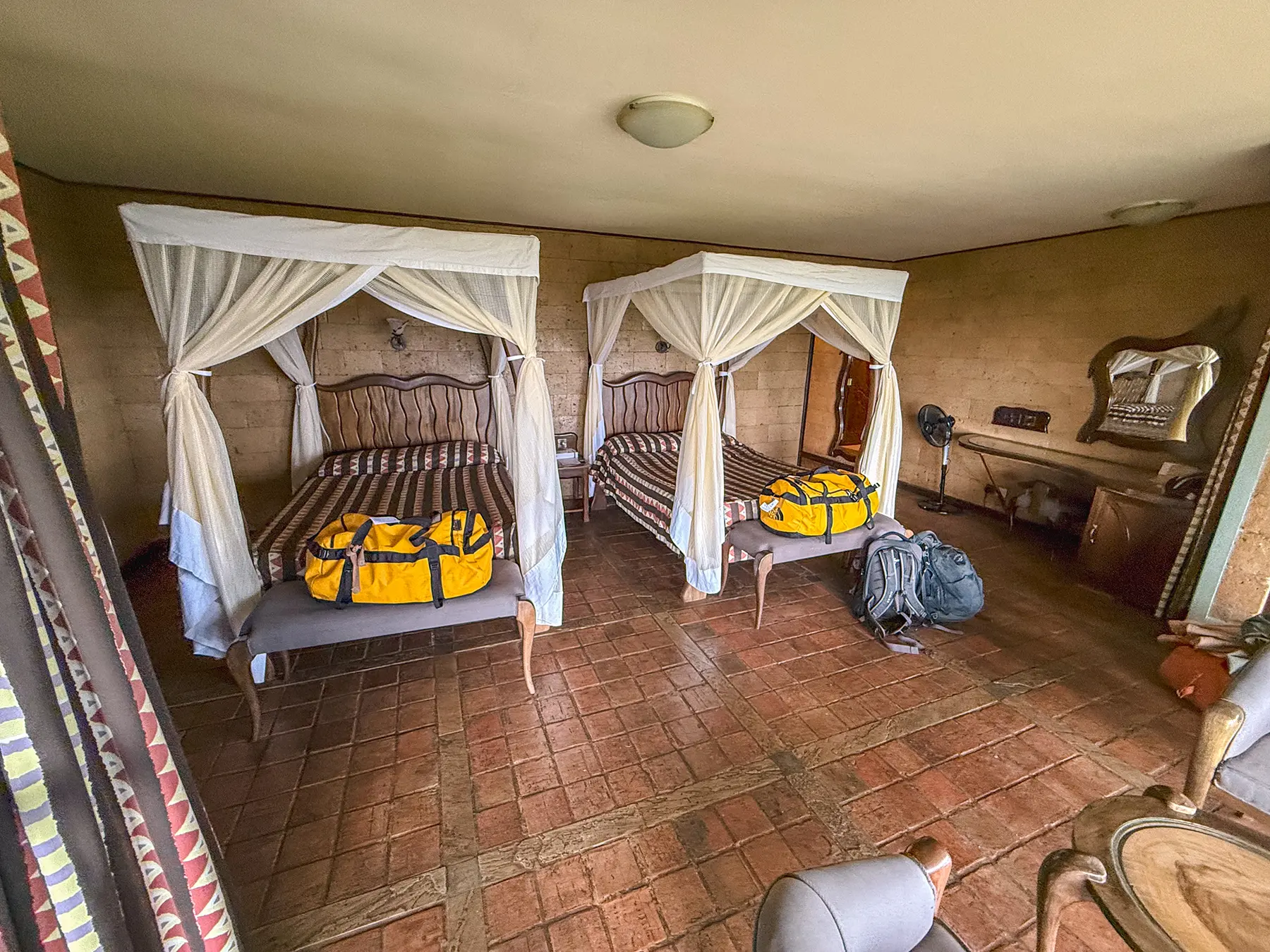
Accommodation at Lake Nakuru ranges from economically priced cottages to high-end game lodges, with some of the more luxurious options situated within the park itself.
Most other places are just off Highway A104, but you can also stay in downtown Nakuru, the biggest city in the Rift Valley.
The majority of the accommodation outside of the park is located just a short drive from one of its three main gates. When choosing where to stay, you might want to bear in mind that Baboon Cliffs is located closest to the main gate!
My Experience Visiting Lake Nakuru National Park
When I entered Lake Nakuru National Park, the first thing that struck me was the beauty of the scenery. The landscape is so varied and colourful, it’s definitely one of the prettiest parks in Kenya.
With so many diverse habitats, it’s no wonder the park is home to so many different species of wildlife including four of the big five. My time there was filled with one amazing sighting after another!
There were an unbelievable number of birds around the lake – storks, cormorants, herons, pelicans and of course flamingos. The flamingo population has declined over the last ten years or so due to flooding, but we still saw plenty in the water, where some hippos were also wallowing!
During our game drives, we spotted numerous animal species including buffalos, zebras, impalas, Thomson’s gazelles, elands, vervet monkeys and baboons.
We were also treated to not one but two white rhino sightings! The first was of two females sleeping near the lake. As we watched, they got up and headed for the forest.

The second one was just before sunset and it was even better than the first. It was just before sunset when we saw a huge number of rhinos including a young calf grazing in the forest. Seeing such a large number of these endangered animals was truly magical.
But for me, the absolute highlight of my time at Lake Nakuru was when I noticed a huge group of Rothschild giraffes at the airstrip, all looking in the same direction.
Following their gaze, I spotted a male lion just strolling across the airstrip. A little distance behind him, I saw a buffalo bull who was charging full tilt at what I later realised was a second male lion.
The second lion went to the first and nuzzled against him. The giraffes seemed totally unfazed by the lions and actually started marching towards them, much to my disbelief! It was fascinating to see the giraffes appear to take on the aggressive role, almost seeming to intimidate the lions.
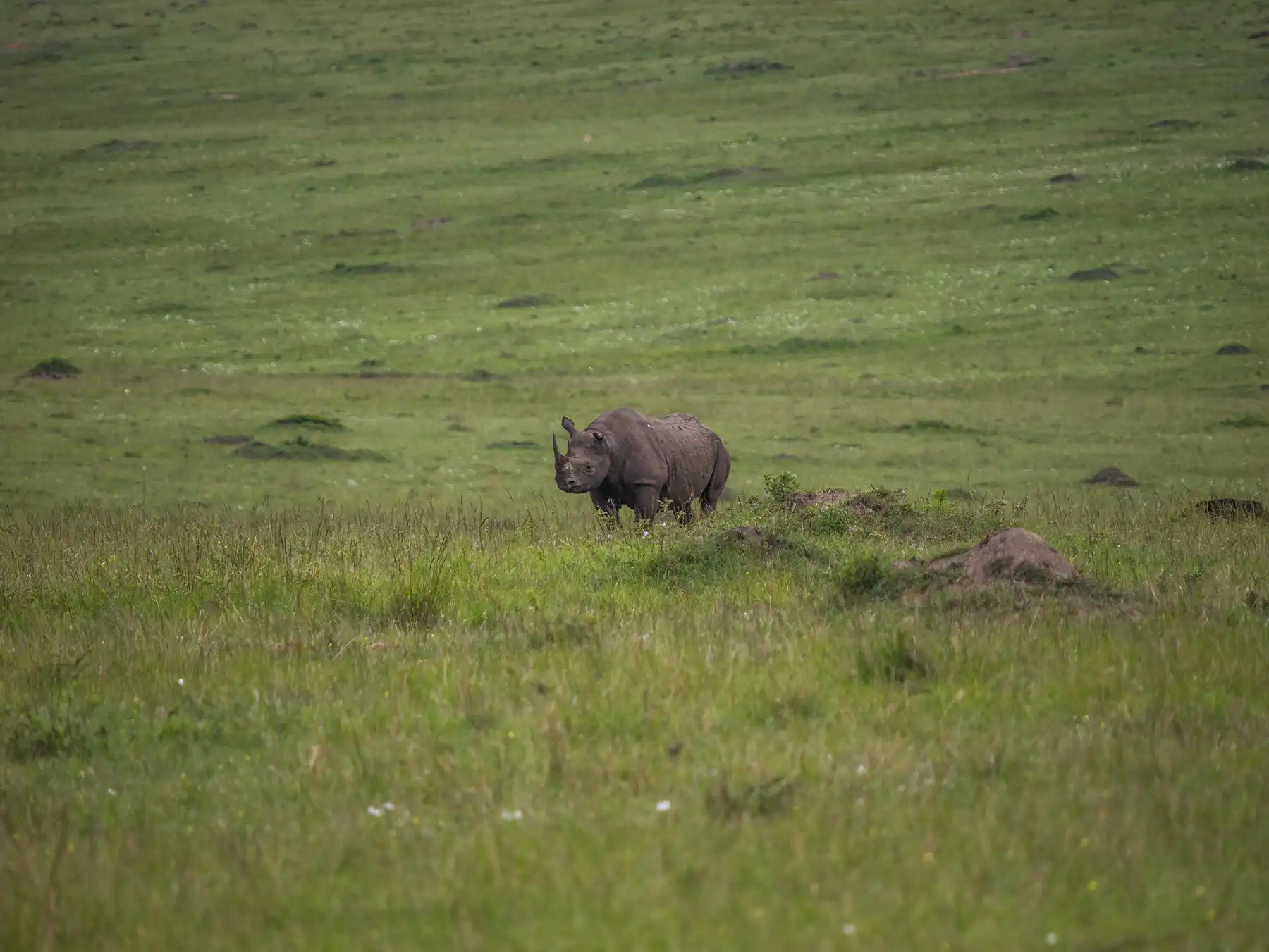
Things got even more exciting after that when our eagle-eyed guide alerted us to two black rhinos – a mother and calf – walking between two sections of forest some distance off before they disappeared again into the trees.
To top it all off, the two lions then suddenly darted forwards in pursuit of some zebras. I watched them try their best to bring one down, but they ended up with nothing to show for their efforts and just wandered off to have a nap under a bush. It was so thrilling to see so much action within such a short space of time! Simply unforgettable.
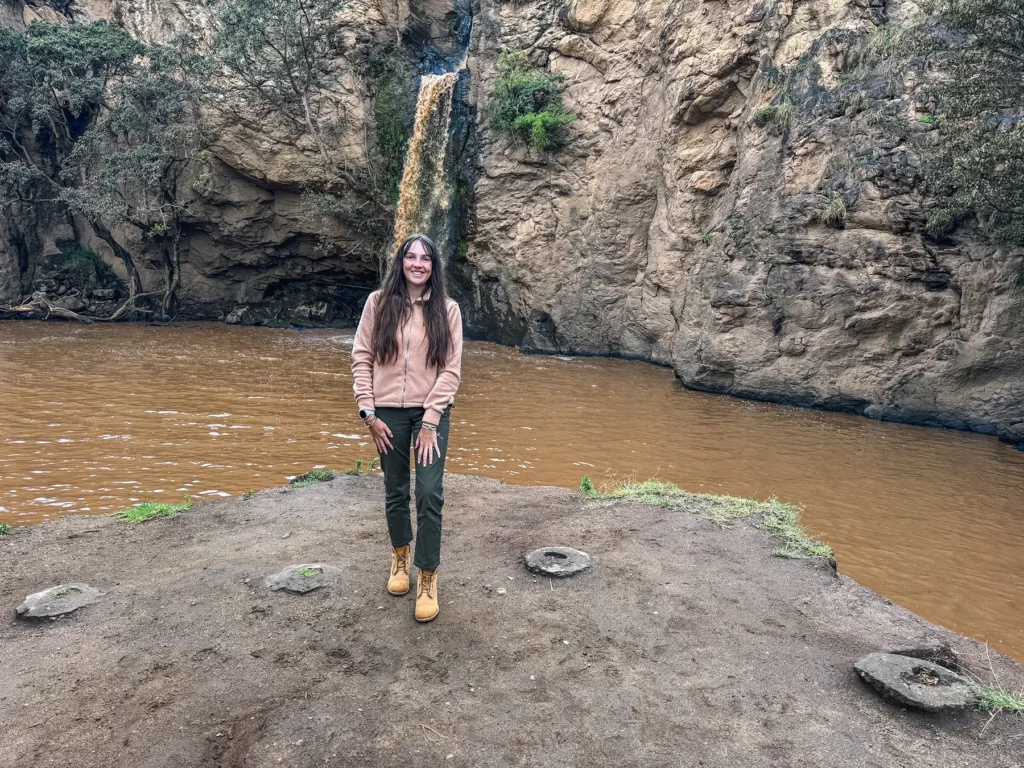
On our evening game drive, we saw two black-backed jackals grooming one another, which was very sweet, plus a mother hyena with two adorable, playful cubs. We also went to Makalia Falls, where I was able to get out of the car for a better view. Although relatively small, the falls were very full thanks to recent heavy rain, and I really enjoyed seeing them.
You can watch a video of my experience visiting Lake Nakuru and Lake Naivasha below.
Day 3: Lake Nakuru to Ol Pejeta
Drive Time (Excluding Game Drives): 4 hours
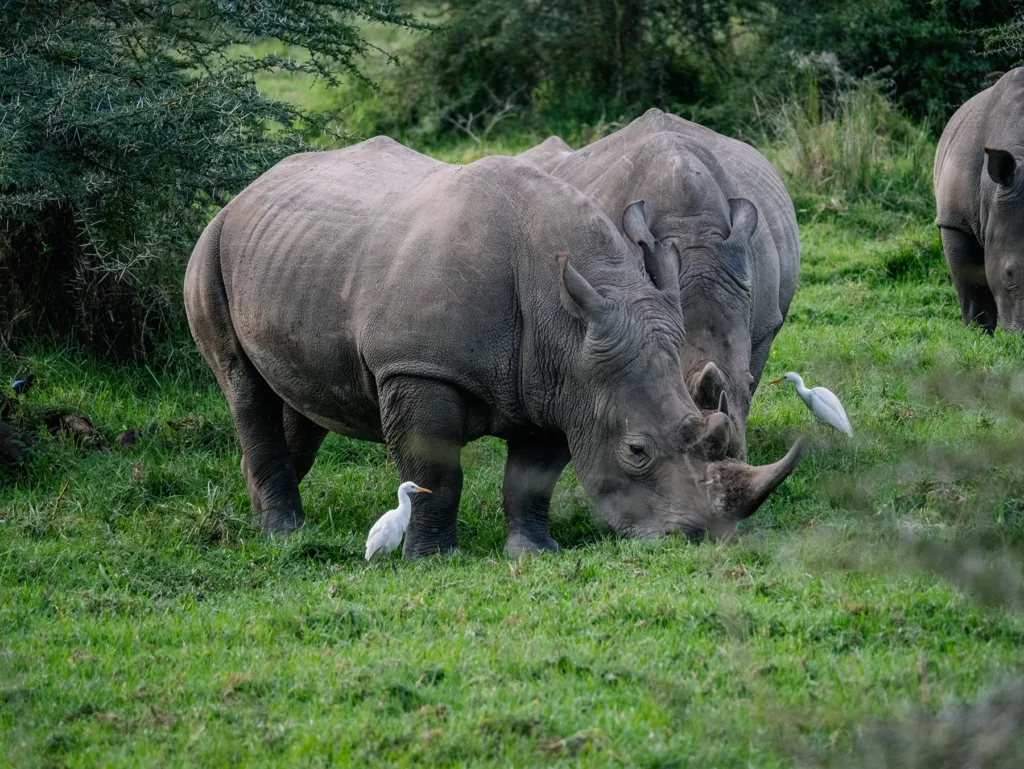
Today’s destination is Ol Pejeta Conservancy, about 4 hours’ drive northeast of Lake Nakuru. After lunching at the lodge, you’ll spend the afternoon exploring this unique conservancy – be sure to look out for the black and white rhinos that call this sanctuary home. The conservancy boasts all of the Big Five amid a wealth of other species, so you can be sure this will be an experience to remember!
Itinerary
Ol Pejeta is about 4 hours’ drive from Lake Nakuru, so you’ll be starting out in the morning to arrive in time for lunch at the lodge. Once you’ve eaten, you can take the afternoon to have a look around Ol Pejeta and discover all this unique conservancy has to offer – which includes all of the Big Five.
As you cross the rolling expanse of the savannah, the jagged outline of Mount Kenya in the distance provides a stunning backdrop. Have your camera at the ready and keep an eye out for the rhinos, zebras, antelope and black and white rhinos that graze here.
Ol Pejeta has one of the highest predator densities in Kenya, so you should also see plenty of action depending on the time of day. In addition to no fewer than six prides of lions (numbering 72 individuals), leopards, hyenas, black-backed jackals and caracals as well as ostriches and Martial Eagles all hunt here.
Beyond the grasslands, keep a sharp watch for giraffes, elephants, leopards, olive baboons and vervet monkeys in the acacia woodlands, particularly along the water. Numerous nesting birds also live among the trees, including multiple species of weaver, lapwing, cuckoos and colourful Superb Starlings. The Ewaso Nyiro River sparkles like silver in the sun and attracts elephants, hippos and water birds in particular.
About Ol Pejeta Conservancy
Currently the largest black rhino sanctuary in East Africa, Ol Pejeta is also home to the world’s last two surviving northern white rhinos, a mother and daughter named Najin and Fatu which have been living at the facility since December 2009.
At Ol Pejeta, livestock and wildlife live side by side, reflecting its colonial origins as a working cattle ranch before it became a conservancy that has set new standards for innovative conservation.
Ol Pejeta’s boundary fence includes specially designed wildlife corridors that allow elephants, wild dogs and most other species to move freely between the conservancy and neighbouring ranches and conservancies, helping maintain regional migration routes while keeping rhinos safely inside.
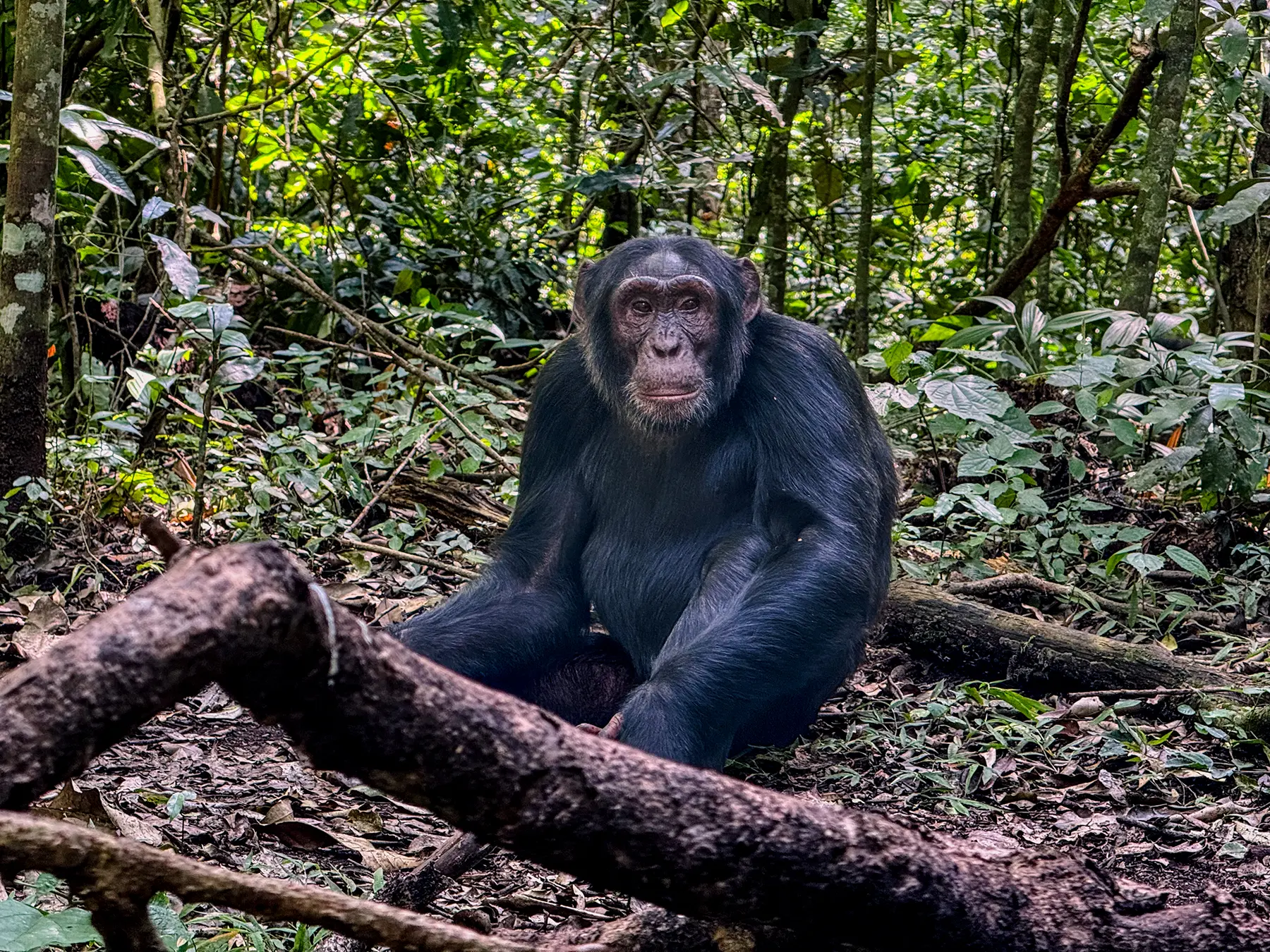
Although they are not native to this part of Africa, Ol Pejeta also has some 40 resident chimpanzees, which were moved here in the early 90s as part of a joint initiative with the Jane Goodall Institute when the Burundi rescue centre they lived in was forced to close due to the civil war.
Tips for Visiting Ol Pejeta Conservancy
- No visit to Ol Pejeta would be complete without seeing Najin and Fatu, the world’s last two remaining northern white rhinos. Daily from 8:30-9:30am, 11am-12pm, 3:00-4:00pm and 4:30-5:30pm, cost $70 per adult and $35 per child, advance booking recommended.
- Ol Pejeta’s Sweetwaters Chimpanzee Sanctuary is the only place in Kenya where you can see chimpanzees. Access is included with your Ol Pejeta entry fee, opening hours 8:30am-12:30pm and 2:00-4:30pm.
- The conservancy offers an amazing lion tracking experience from 6:30-8:30am or 3:30-5:30pm, cost $70 per adult and $35 per child.
- Ol Pejeta also offers an anti-poaching dog tracking display, allowing guests to witness the fascinating work of its specialised K9 dog unit firsthand. Daily at 8:30am, cost $70 per adult, $35 per child.
- Other activities include rhino monitoring, conservation talks, wildlife photography safaris, night game drives, kayaking, abseiling, mountain biking, guided bird and bush walks, guided walking safaris, horseback safaris and even trail runs.
Where to Spend the Night
During your visit to Ol Pejeta, you can stay at a lodge or tented camp either inside or just outside the grounds of the conservancy.
Accommodation at the conservancy itself ranges from luxury lodges to budget cottages and campsites, with prices from US $100–600 per person per night. Most options include ensuite bathrooms, solar power and views of Mount Kenya.
Day 4: Ol Pejeta Conservancy
Drive Time (Excluding Game Drives): 0 hours
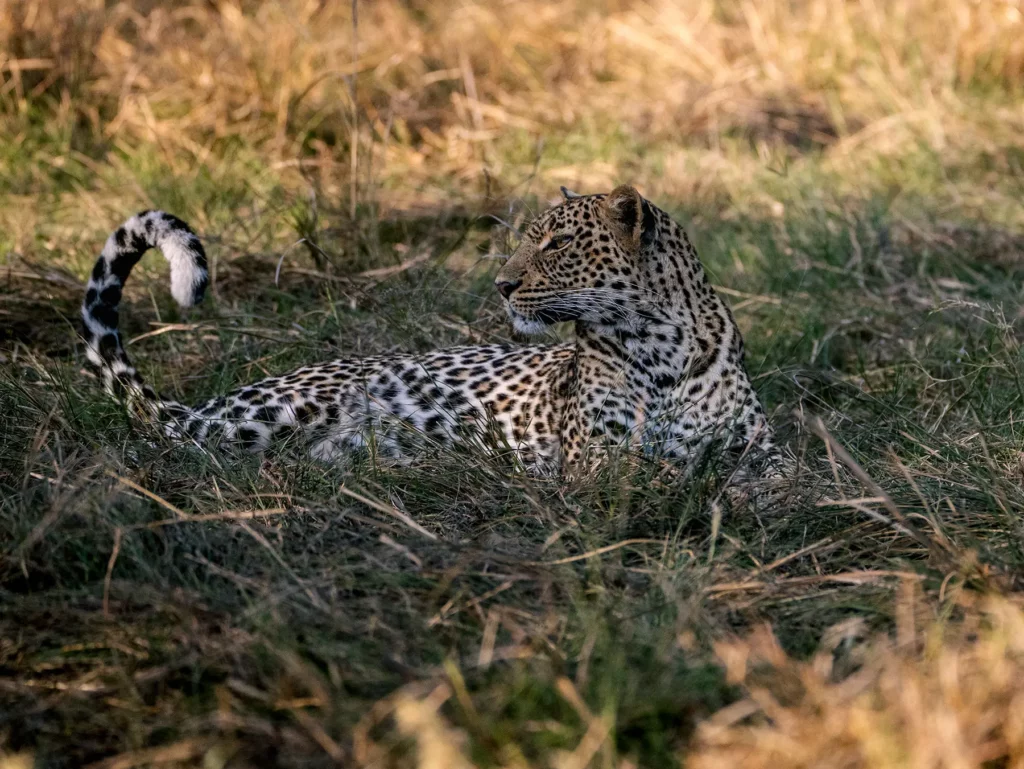
Ol Pejeta Conservancy has so many incredible activities to offer. After getting an overview of the park on your first day, Day 2 is a great time to choose some of these experiences and become more familiar with the park’s amazing residents.
I particularly recommend meeting the world’s last two northern white rhinos. A night game drive makes for a spectacular way to end your second day.
Itinerary
Today is the ideal time to get to know Ol Pejeta better by enjoying some of the unique activities the conservancy offers.
If you’re an early bird, you could go lion tracking at 6:30am, operating the radio telemetry equipment to find the facility’s collared lions as the rising sun bathes the savannah in pinkish-gold light.
There is something special about driving across the grasslands and along the river to the peaceful sound of birdsong as you seek out these fearsome predators. Observing the pride through your binoculars in the light chill of dawn is a memory that will stay with you always. If you’d rather sleep in a little, however, you can always opt to go in the afternoon instead!

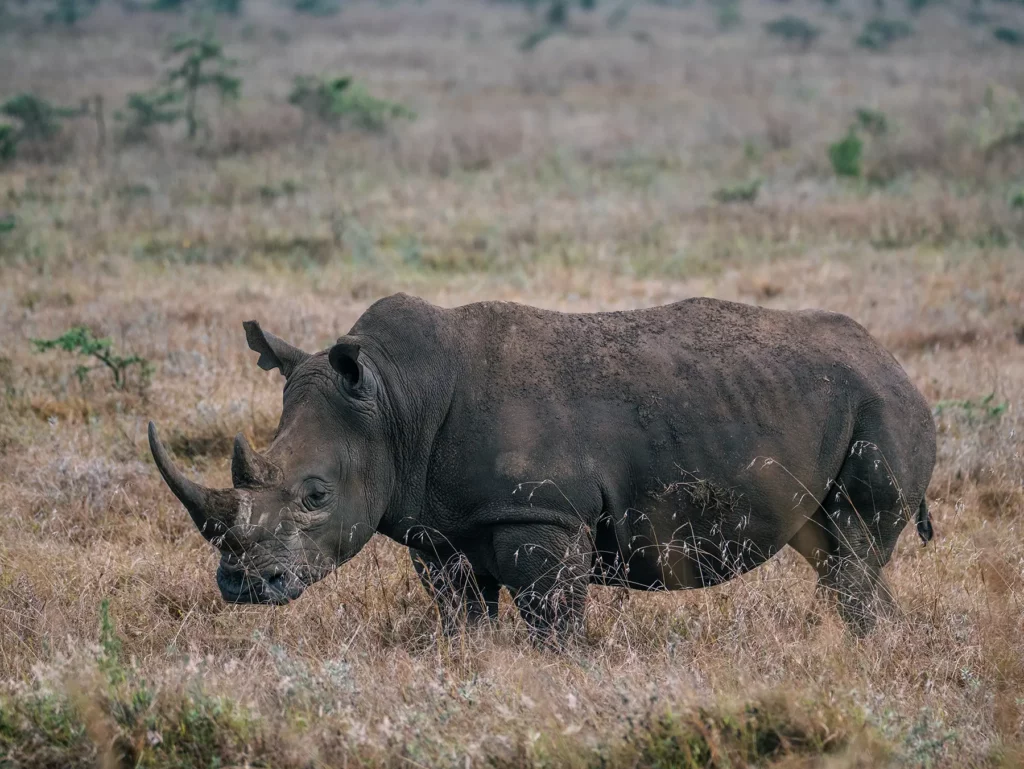
One thing you absolutely won’t want to miss is the chance to meet the world’s last two northern white rhinos, mother Najin and her playful daughter Fatu. As your guide drives you through their enclosure, you’ll even have the opportunity to pet these incredible creatures from the comfort of your vehicle!
When you meet the Girls, as they’re fondly called, you can also find out about their history and the work Ol Pejeta is doing to try and save their subspecies. What’s more, all proceeds from ticket sales go directly towards supporting this conservation work.
For another unforgettable wildlife encounter, head to the Sweetwaters Chimpanzee Sanctuary to visit its resident chimpanzees. These animals have been rescued from captivity and, in many cases, severe abuse. Nursed back to health before being released into one of the conservancy’s two expansive natural enclosures, they are now living their best lives as they explore, climb and socialise in their spacious surroundings.
If you’d like to stretch your legs and take a break from driving, you might consider booking a guided bush/bird walk. These are also best suited to early risers, starting at 6:30am at the Morani information centre.
Along the way, you’ll learn about game trails and how to identify animal tracks as well as finding out more about the insects, birds and smaller mammals of Ol Pejeta.
Alternatively, you can join the conservancy’s anti-poaching K9 unit, taking turns to run and hide as the sharp-nosed dogs expertly track your scent.
For more of a workout, why not book a Run the Wild experience? This involves a 5 to 7km trail run on gentle terrain across the plains of Ol Pejeta accompanied by armed rangers. There’s a good chance of encountering all sorts of wildlife as you run – even big game such as elephants or rhinos!
Ol Pejeta also offers visitors the opportunity to experience a different side to safari with a night game drive. At night, the savannah comes alive with sounds and sights that can only be witnessed after dark.
As the sun slips below the horizon and the stars begin to twinkle in the sky, you can watch the conservancy’s nocturnal creatures begin to emerge: aardvarks, white-tailed mongooses, zorillas and with a bit of luck, even bat-eared foxes.
Lions, which often spend extended periods sleeping in the heat of the sun, are sometimes more active and alert during the night, and this is also a good time to spot the elusive leopard. The perfect way to round off your second day at this unique conservancy.
Where to Spend the Night
You’ll be staying at the same accommodation as Day 3 – either a lodge or tented camp inside or just outside the grounds of the conservancy.
Day 5: Ol Pejeta to Ol Donyo Lomboro Conservancy
Drive Time (Excluding Game Drives): 3 hours
Today, you’ll be taking advantage of your last opportunity to explore Ol Pejeta with a morning game drive.
Then you’ll be making the 3-hour trip to Ol Donyo Lomboro Conservancy, which is another conservancy within Laikipia. Once there, you’ll have lunch and head out on an afternoon game drive.
Itinerary
You’ll be starting your day off with a morning game drive.
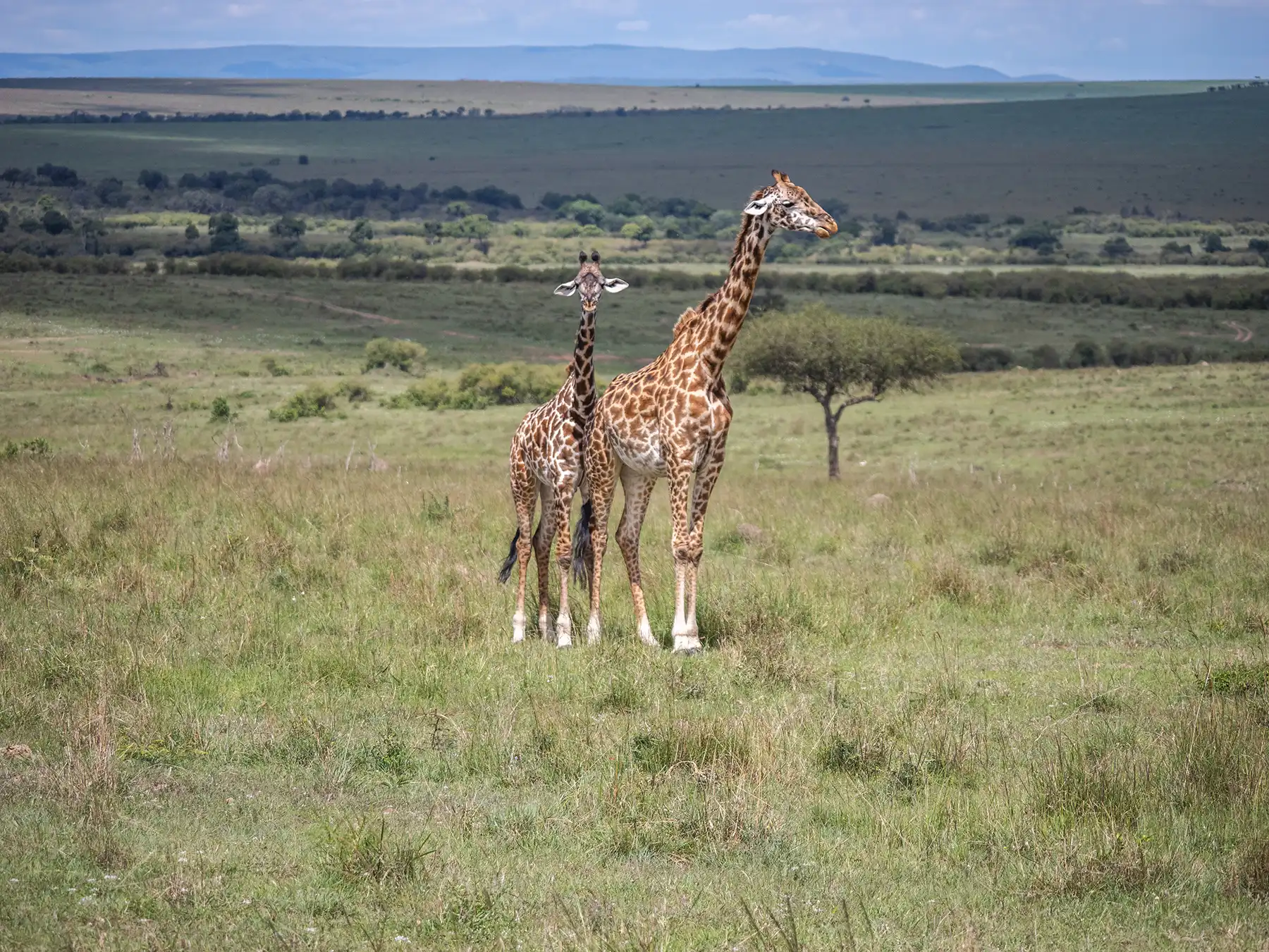
Alongside the buffalo, zebras, wildebeests and elephants that graze here, you should also see Masai giraffe – one of the two giraffe species that live at the conservancy.
These are recognisable by their jagged, irregular spots, contrasting with the smoother, more regular patterns of the endangered Rothschild giraffe, which tends to stick to the more wooded areas.
Lined with trees and shrubs, the glittering Ewaso Nyiro River meanders through the terrain. The lush, marshy ground either side of it is teeming with all manner of birds and mammals, drawn by the promise of water, shelter and soft greenery to munch on.
All the while, the breathtaking Mount Kenya looms in the background. Standing some 5,199 metres tall, this extinct volcano is Africa’s second-highest peak and its craggy silhouette certainly makes an impression even at this considerable distance (well over 200km).
As the sun climbs higher in the sky, it’s time to return to the lodge to collect your bags and set off for Ol Donyo Lomboro Conservancy. The journey takes about 3 hours – ample time to digest and rest before lunch and then an afternoon game drive.
Ol Donyo Lomboro is a place of spectacular contrasts, from the low-lying lands around the Ewaso Narok River with their border of ridgelines and forest remnants to its western plateaus, perched on the edge of the great Rift Valley and offering unforgettable views.
The wildlife here is just as diverse as the terrain, with lion, dik-dik, warthog and striped hyena, to name but a few, plus 350 bird species among the 545 recorded across Laikipia County, all waiting for you to discover!
About Ol Donyo Lomboro Conservancy
Nestled amid Kenya’s volcanic Chyulu Hills, Ol Donyo Conservancy covers 20,000 acres of richly varied landscape. The land here is largely wild and untouched and home to a staggering diversity of mammal and bird life.
Large permanent herds of elephant, lion, leopard, spotted hyena, common zebra, warthog, hippo and buffalo roam freely here, along with numerous different species of antelope.
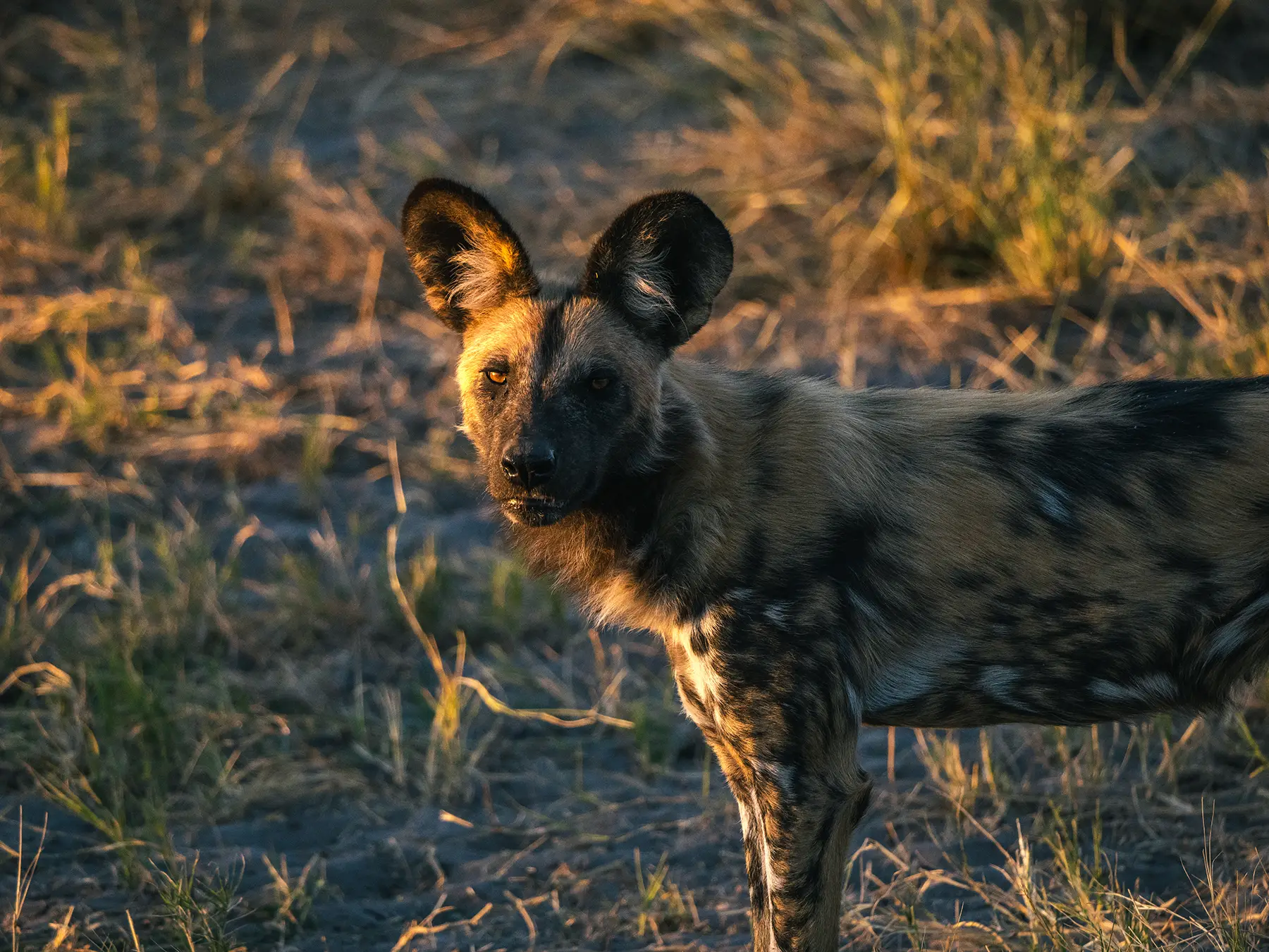
As well as the Big Five, the conservancy boasts a flourishing wild dog population, which have been monitored by conservationists since 2001
Ol Donyo Lomboro Conservancy has become a haven for a number of rare species, housing a small population of some of the remaining 3,000 Grevy’s zebra along with reticulated giraffe, Beisa oryx, zorilla, striped hyena and aardwolf.
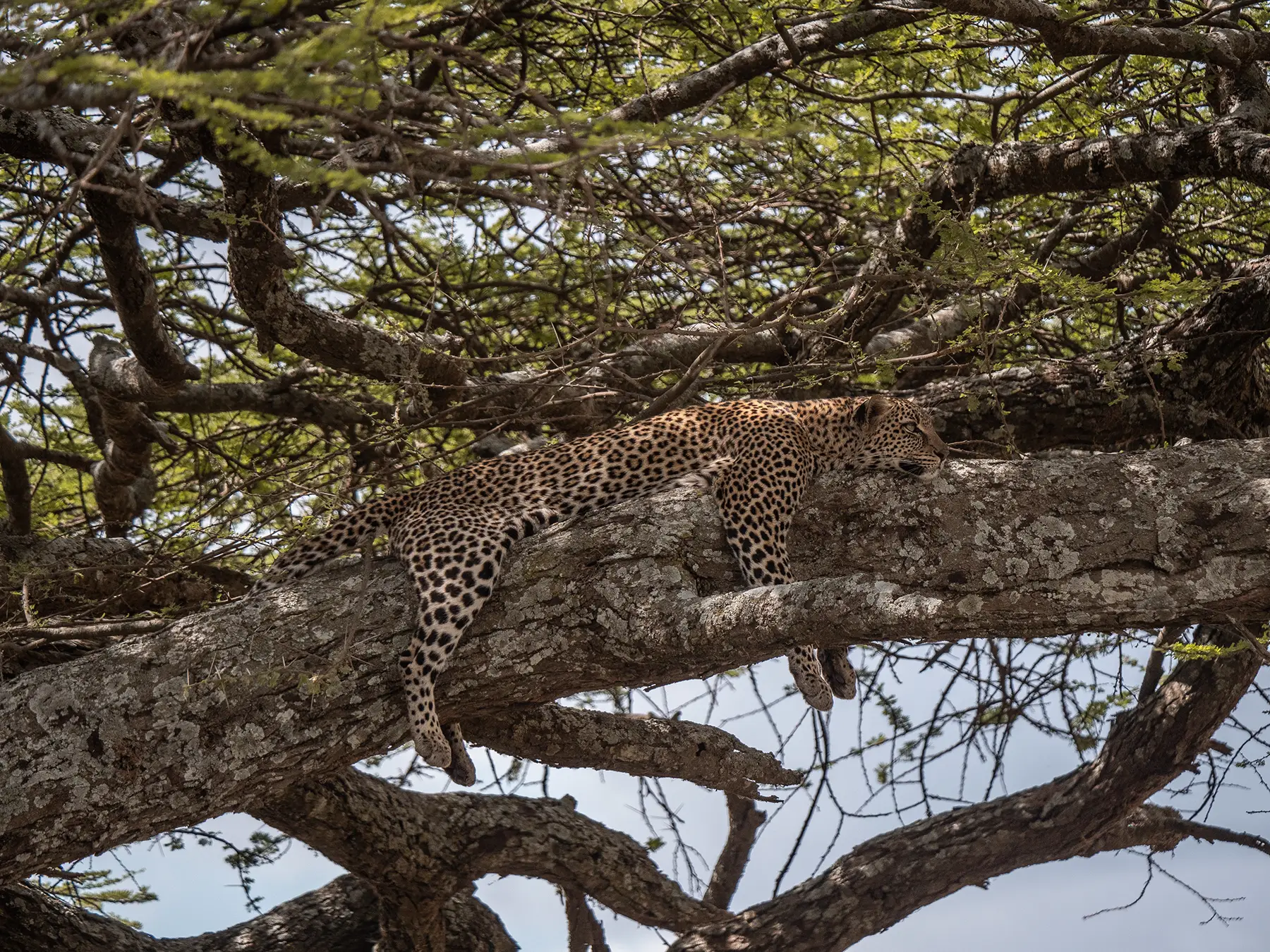
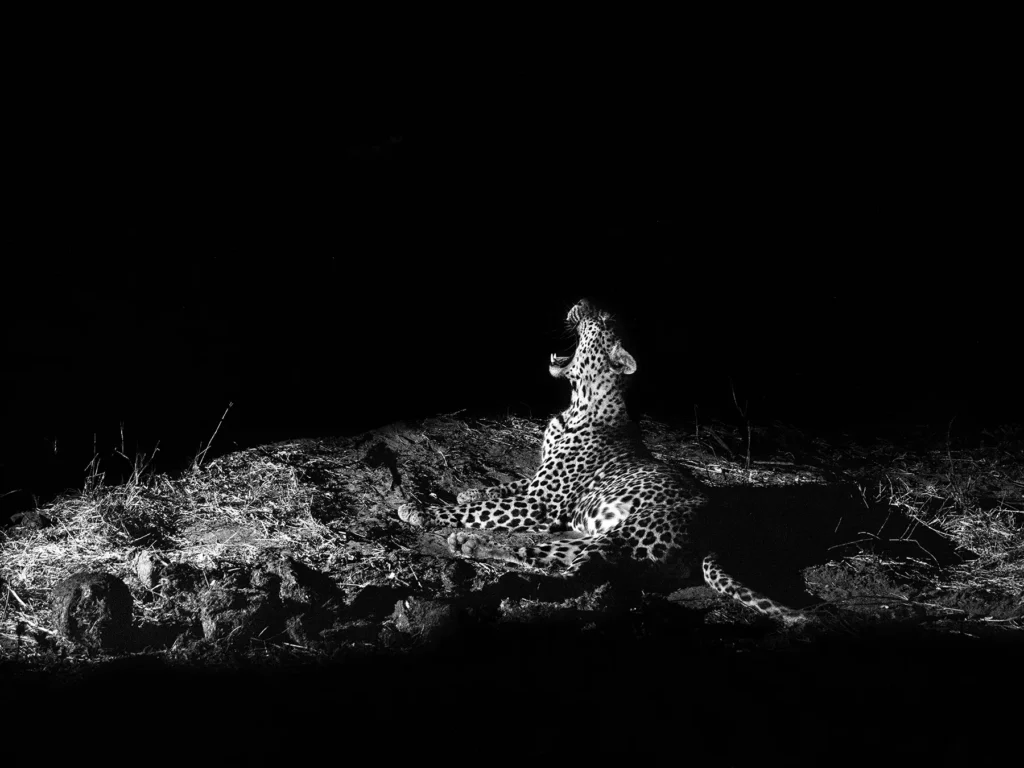
But the animal for which the conservancy is most famous is the black leopard (or melanistic leopard), also known as the black panther. Giza as she is known, was first photographed in the region in 2019 and born and raised right on the doorstep.
Though very rare, in the wider Laikipia region, there are reports of a handful of black leopards making this the best place in Africa to see them.

Tips for Ol Donyo Lomboro Conservancy
- To dramatically increase your chances of a black leopard sighting, you can book a Black Leopard Priority Vehicle during your stay at Laikipia Wilderness Camp: simply ask your tour company to reserve a dedicated or shared Black Leopard Vehicle for you. These vehicles are granted first priority at any confirmed sighting, making viewing and photographing the black leopard much more likely, though sightings still depend on luck and conditions.
- Plan night drives during full or near-full moons if possible: the dim natural light combined with the guides’ red-filtered spotlights minimizes disturbance and creates ideal conditions for observing and photographing Laikipia’s famed black leopard Giza as she hunts.
- If you have your heart set on a black leopard sighting, you should extend your visit to 4-5 nights in the area to maximise your chances. You can always skip Loisaba and Samburu if you want to keep your total itinerary to 3 weeks.
- The denning season, which occurs roughly every 12 months, is the best time to see wild dogs. Denning lasts about 10–12 weeks, during which the pack’s movements contract around the den.
Where to Spend the Night
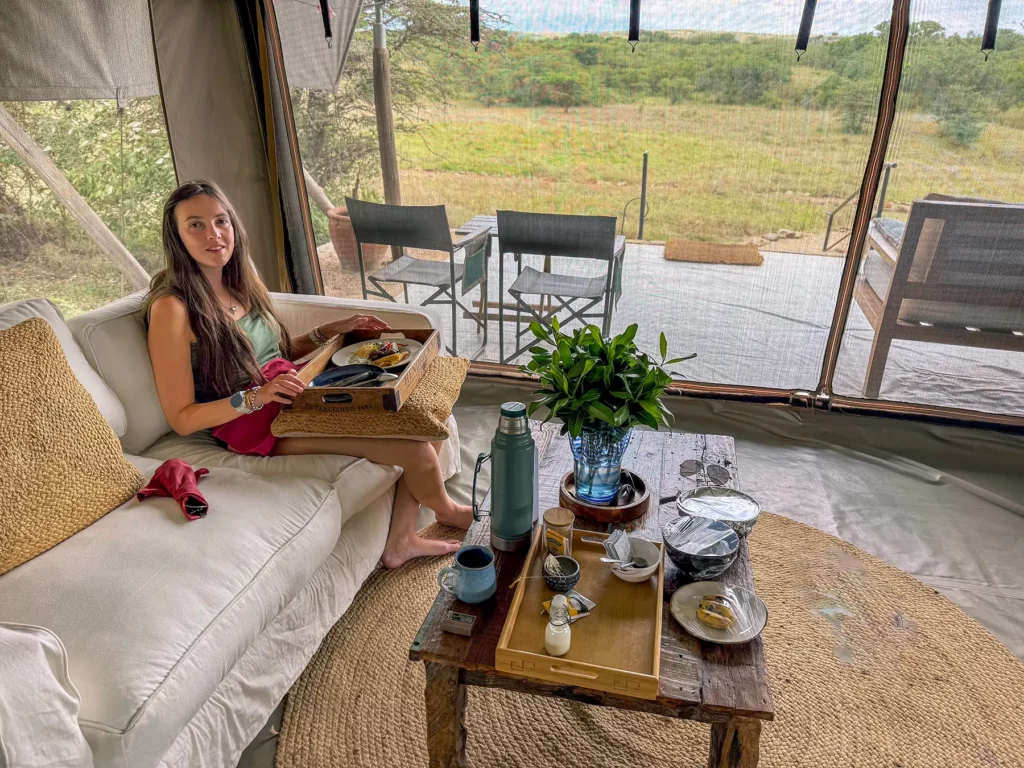
In Ol Donyo Lomboro Conservancy, the main options are the Laikipia Wilderness camps.
Day 6: Ol Donyo Lomboro Conservancy
Drive Time (Excluding Game Drives): 0 hours
Today, you’ll be exploring Ol Donyo Lomboro Conservancy more fully, starting with a morning game drive. After that, you’ll return to the lodge for lunch before heading out again in the afternoon on another game drive.
Itinerary
As you embark on your morning game drive, you can enjoy a closer look at your surroundings. And there are some incredible sights to see! The wide plains stretch out all around and the warm light of the morning sun spills across the rolling hills. Jagged ridge-lines and forest add wonderful contrast.
Crossing the savannah, you should be able to spot buffalo, elephants and baboons as well as warthogs, waterbucks and countless other animals besides.
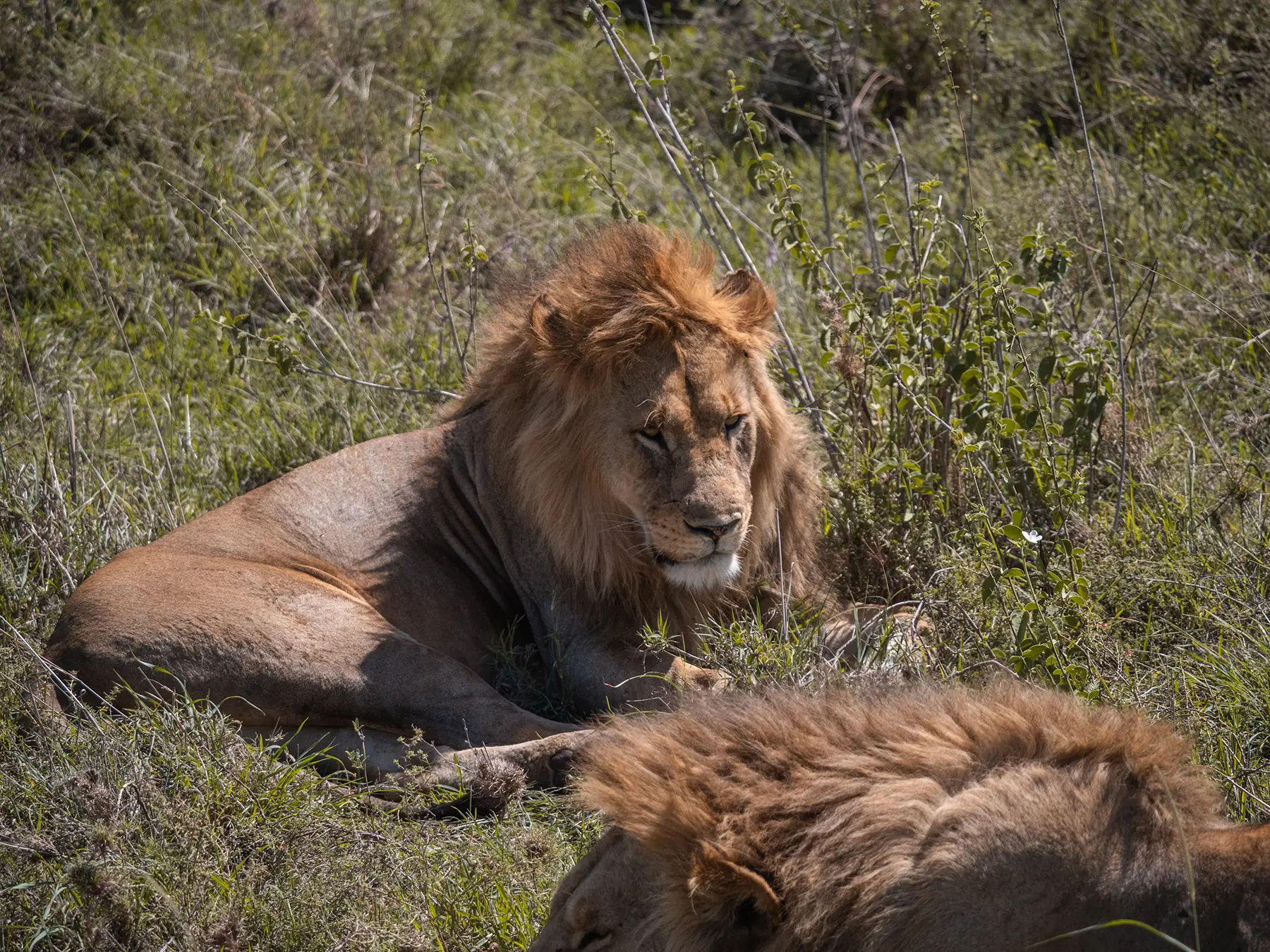
You may already have been able to hear lions roaring from your accommodation, and an early morning game drive offers a chance to spot their tracks and maybe even catch up with them before they retire to a shady spot for some rest after their night’s hunting.
After a tasty lunch at the lodge, you’re sure to be feeling refreshed and ready for your afternoon game drive. Afternoon drives are often a more laid back experience, and you’ll spot many animals emerging from their sleep now that the midday heat has receded.
You may hear lions calling to locate the rest of the pride in the golden late afternoon light, and your sightings during the morning drive can often help you locate specific animals as you explore.
Watering holes draw elephants, giraffes, secretary birds, warthogs, zebras and many other species for a refreshing drink or even a cooling mudbath!
Where to Spend the Night
You will be staying at the same accommodation as the previous night before you move on to Loisaba Conservancy tomorrow.
Day 7: Ol Donyo Lomboro Conservancy to Loisaba Conservancy
Drive Time (Excluding Game Drives): 2 hours
You’ll start today with a morning game drive – your last at Ol Donyo Lomboro Conservancy. Afterwards, you’ll have some lunch at the lodge and then get going on the 2-hour drive to Loisaba Conservancy. Once there, you’ll be heading straight out on an afternoon game drive.
Itinerary
This morning begins with your final game drive at Ol Donyo Lomboro Conservancy. You may be fortunate enough to sight a black leopard or two in the early hours as they return from a night’s hunting.
Other predators should also be in evidence. By now, you will have learned a little more about the resident animals and their behaviours, which may help you piece together some details of their activities the night before from tracks and other signs in true Sherlock style!
Then, it’s back to the lodge for some lunch, prepared by expert chefs using local produce and even herbs and vegetables from the Conservancy’s own gardens.
Ol Donyo prides itself on its small carbon footprint, and the delicious fare served here is cooked using eco-friendly wood stoves or over open fires using wood damaged by elephants.
Once you’ve eaten your fill, it’s time to get on the road as you journey to Loisaba Conservancy, where you’ll embark on an afternoon game drive. With extensive grass plains, river valleys, steep escarpments and acacia-rich forests not to mention views of Mount Kenya, this 57,000-acre site is a feast for the eyes before you even get to the wildlife.
But the animals that call this place home are even more spectacular. Loisaba acts as a key wildlife corridor connecting the Laikipia Plateau with Samburu and Isiolo counties and allowing elephants and large predators to pass through safely. You’ll see these and many more as you navigate the terrain in the pleasant afternoon sun.
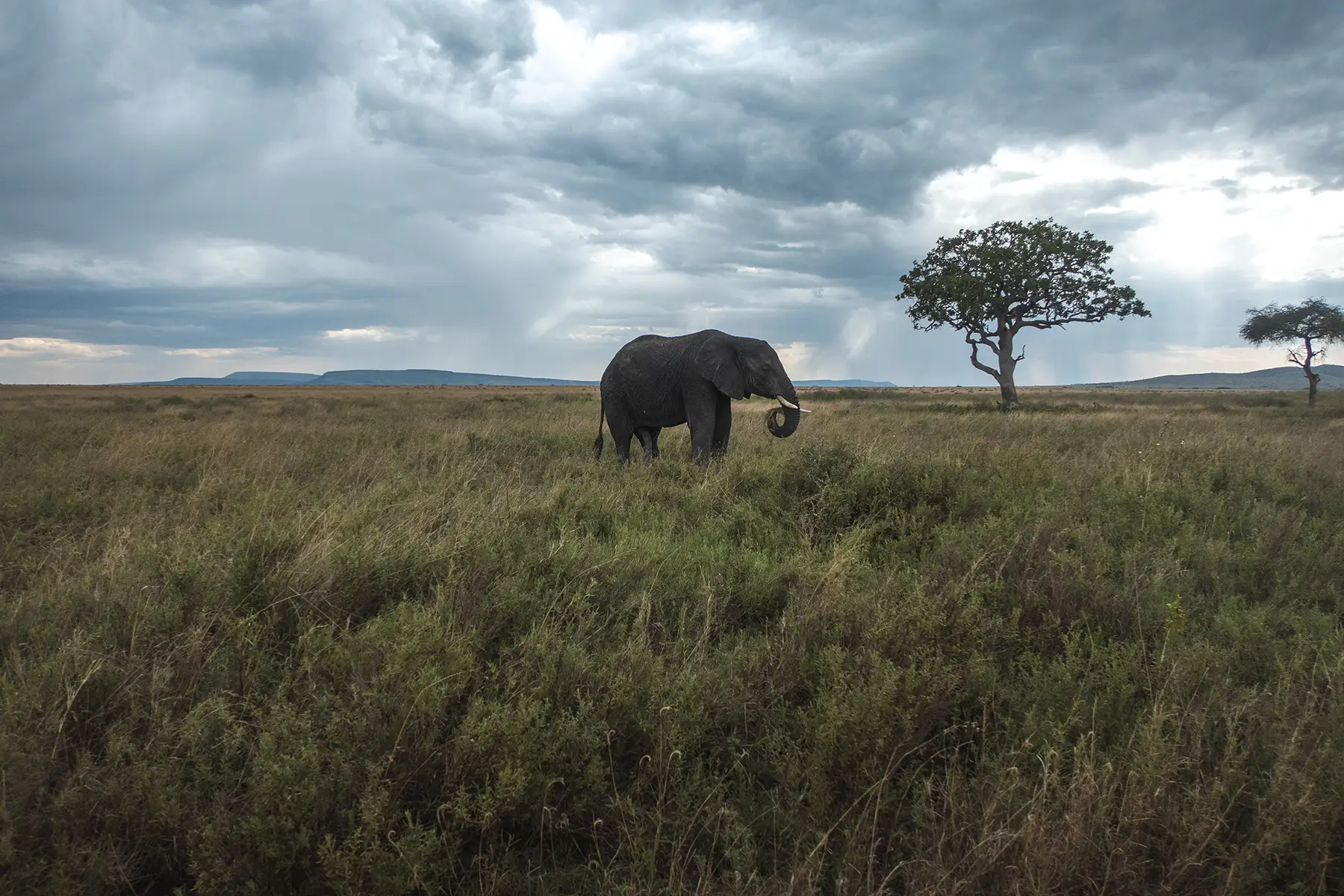
About Loisaba Conservancy
Perched on the northern edge of the Laikipia Plateau about 100 kilometres north of Mount Kenya, Loisaba Conservancy is a wildlife and community conservancy that blends conservation with luxury ecotourism and cultural engagement.
The conservancy’s lands encompass a wildlife corridor that connects the Laikipia Plateau with Samburu and Isiolo counties, offering vital access for elephants and large predators.
Loisaba is something of a poster child for what can be achieved through active collaboration: the Nature Conservancy, Space for Giants, and local Samburu and Maasai communities all work together here to combine wildlife protection with sustainable ranching and tourism – and to great success.
With wide grass plains, escarpments, river valleys and acacia forests plus the life-giving Ewaso Ng’iro River, the site supports a rich variety of wildlife including lions, leopards, rhinos, elephants and various rare species including Grevy’s zebra, reticulated giraffe, Beisa oryx, gerenuks (giraffe antelopes) and the endangered African wild dog.
All of the Big Five call this place home, and it became an official rhino sanctuary in 2024 when critically endangered black rhinos were reintroduced after 50 years. Twenty-one black rhinos were translocated from overcrowded sanctuaries in early 2024, and the conservancy has already welcomed two calves in early 2025—a promising sign that the new sanctuary is thriving.
Loisaba is home to Kenya’s second-largest elephant population. These amazing creatures use the conservancy as a migration corridor, helping them stay connected with other herds across the region. In addition, it is a haven for big cats such as lions, cheetahs and leopards, with growing numbers of rare melanistic leopards (black leopards) a particular draw for both researchers and wildlife enthusiasts.
Visitors to the conservancy can choose from both traditional and more adventurous safari experiences. Offering day and night game drives as well as walking safaris, horse and camel rides, mountain biking, and authentic Samburu cultural visits, Loisaba truly has something for everyone.
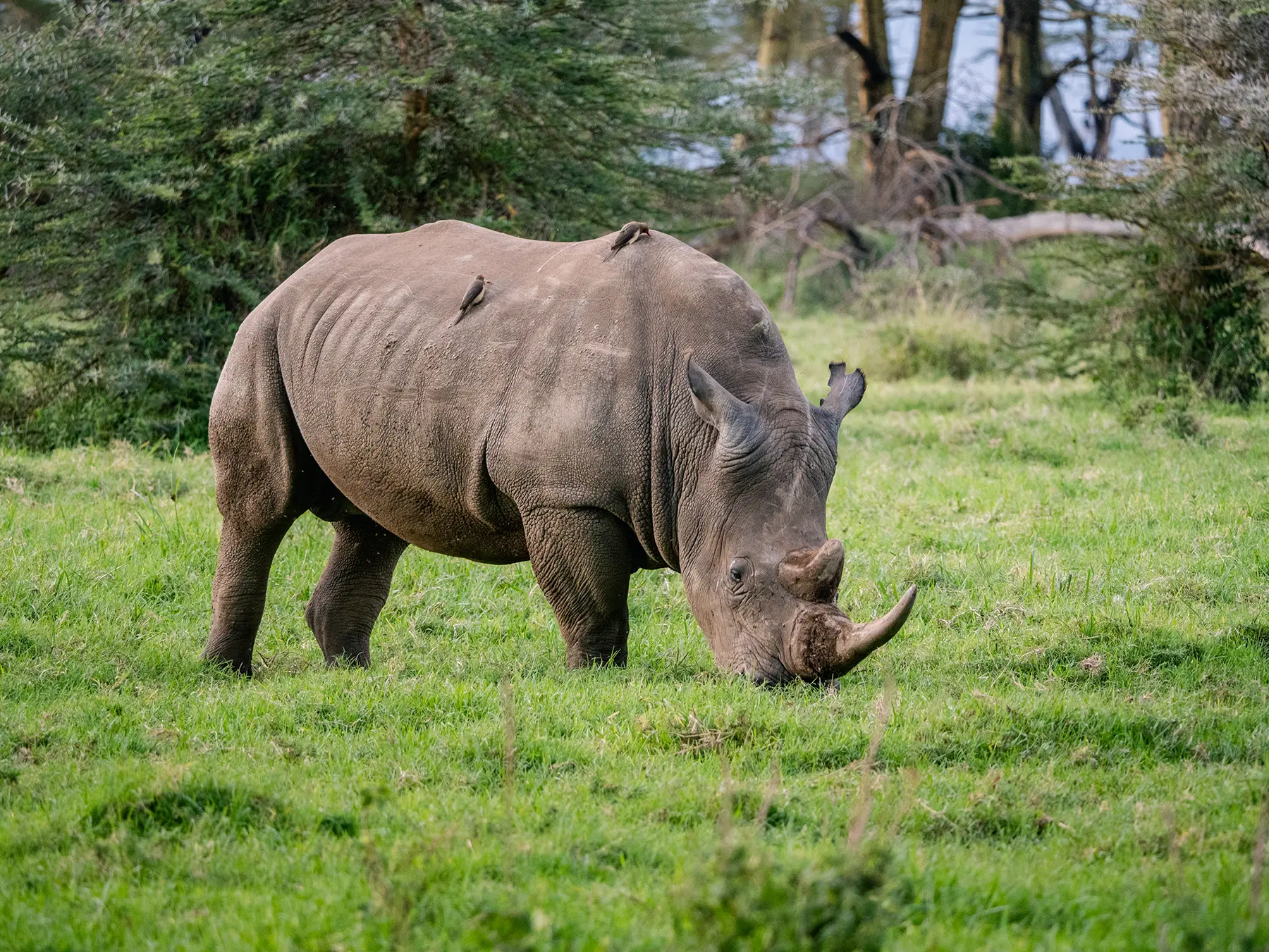
Tips for Loisaba Conservancy
I strongly recommend booking a guided bush walk outside the camp through your safari company during your time at Loisaba. The experienced guides and armed rangers who will accompany you can teach you so much about analysing animal tracks, scents and sounds.
This is a truly personalised experience that allows you to take a much closer look at the flora and fauna of the conservancy than the faster-paced game drives allow.
Indeed, Loisaba is one of only a small number of conservancies that offer a range of alternatives to game drives. Choose from horseback, camel and mountain bike safaris, all of which will bring you closer to the site’s incredible wildlife. Advance booking is recommended as group sizes for these activities are limited.
As part of an essential migratory corridor for multiple birds of prey, Loisaba is also one of the best places in Laikipia for birding, particularly from February to April. Be sure to bring your binoculars and try to spot a raptor or two!
You should also do your best to take in a night drive or patrol during your visit. Loisaba becomes a different place at night as its leopard and lion populations prowl the terrain.
Normally reclusive during the daytime, these creatures are much more active under cover of dark. Guests can enjoy night safaris or shadow the reserve’s anti-poaching canine units – both unique experiences that are not offered by many other Kenyan conservancies.
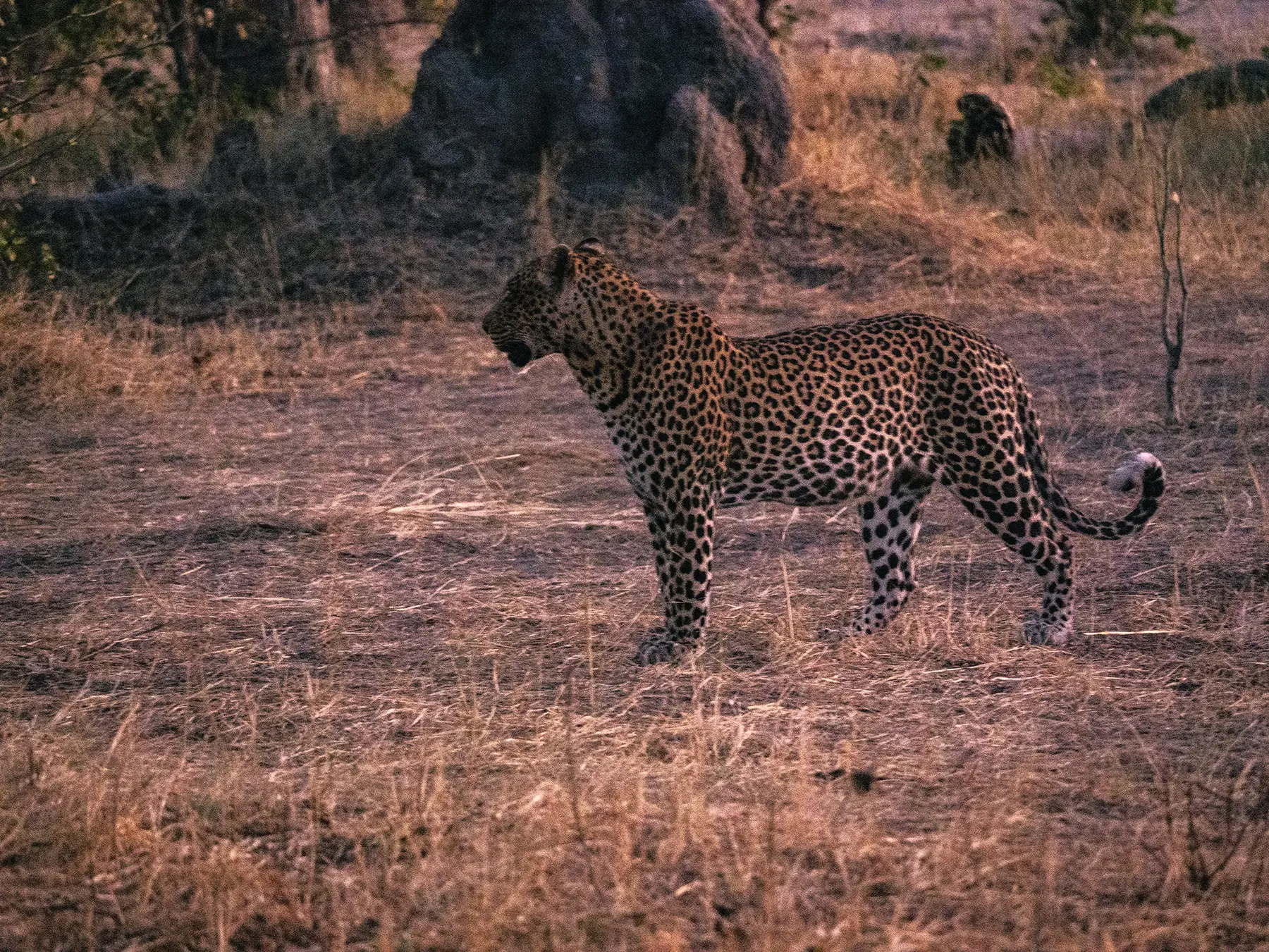
If your visit falls between July and October, you will be able to observe the elephant migration through the wildlife corridor. With over 800 elephants passing through, it is certainly a memorable sight! The drier weather during this season also attracts animals to water sources, making them easier to find on game drives.
Where to Spend the Night
With tourism forming a core pillar of Loisaba’s community-owned conservation model, most accommodation for visitors to Loisaba Conservancy is found inside the conservancy itself.
While the camps in many other parks in Kenya are concentrated around the boundaries, Loisaba has opted to disperse its accommodation facilities throughout a 230 km² area of private wilderness. As a result, guests are given unparalleled privacy, with exceptional views of the Ewaso Ng’iro Valley and Mount Kenya.
Day 8: Loisaba Conservancy
Drive Time (Excluding Game Drives): 0 hours
This morning will take you out on a game drive to explore Loisaba further. You’ll then have some lunch at the lodge before embarking on another game drive in the afternoon.
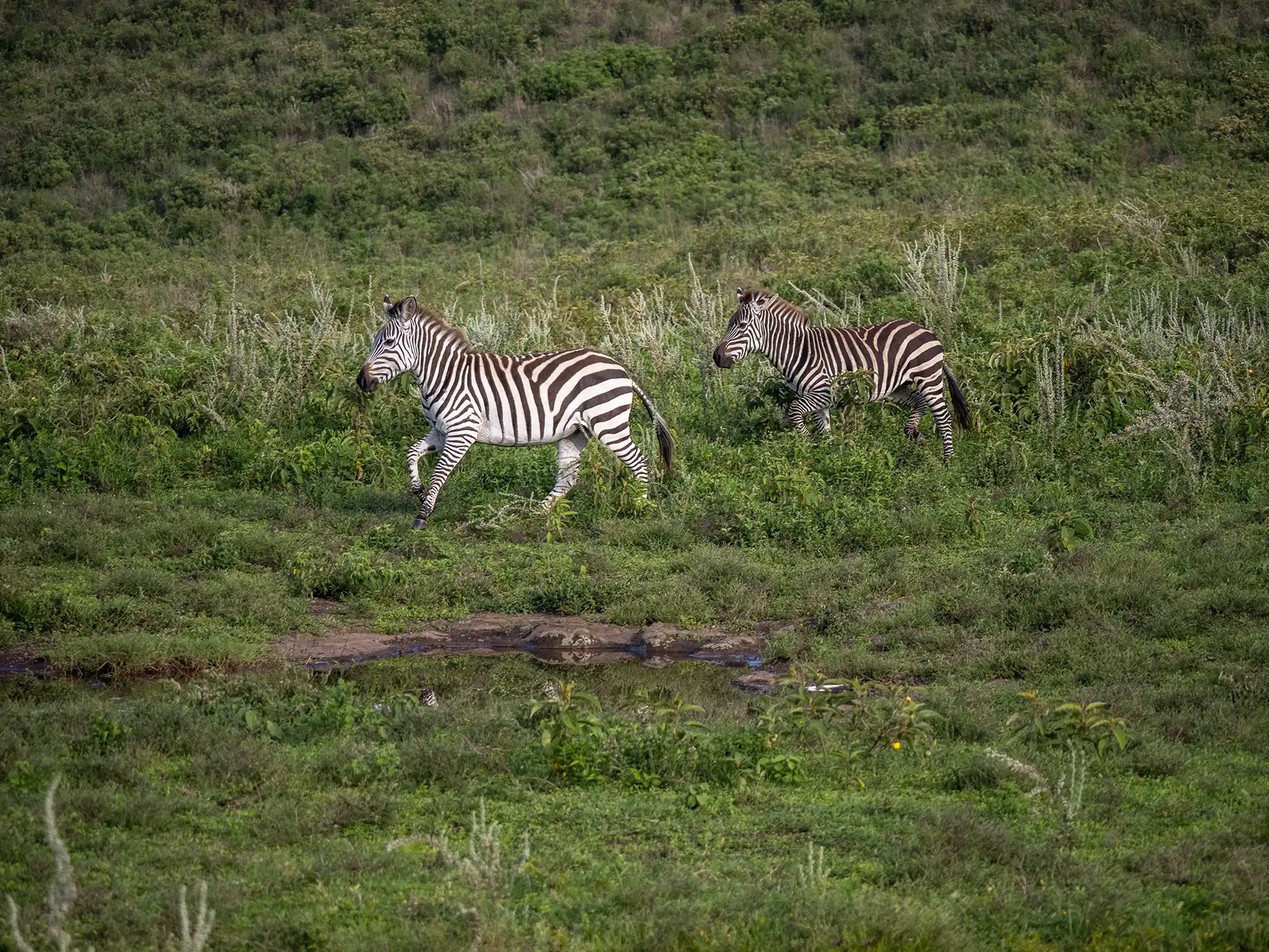
Itinerary
As you leave for your morning game drive at Loisaba, the sunrise streaks the infinite sky overhead with colour.
The reserve takes conservation seriously, permitting fewer vehicles to operate than other parks in order to protect nature, so you can easily go for hours without spotting another vehicle.
You’ll see graceful giraffes and mighty elephants as you bounce across the broad expanse of the savannah, along with zebras, gerenuks and gazelles. Hyenas skulk among the scrub and you might even spot a leopard or two, especially if there have been reported sightings in the area the night before.
There’s also plenty of bird activity, with flocks of pelicans to be found at the watering holes and the magnificent Verreaux’s eagle with its impressive 2.3-metre wingspan soars overhead in search of prey.
Long-legged secretary birds search for snakes on the savannah – when they find one, they’ll kill it by stomping on it and then tossing it into the air to kill it! Grey-crested cranes nest in the marshes or wetter areas of grassland. These birds are known for their elaborate dances, which are performed year-round and involve lots of jumping about and bowing.
As the sun climbs higher in the sky, many predators will be seeking out a comfortable spot in the shade to sleep until the heat eases once more, but you may be lucky enough to see some before they have settled. By this time, your stomach will probably have started talking to you, so it’s back to the lodge for a tasty lunch and some rest.
Later in the afternoon, when temperatures have cooled to a more pleasant level again, your guide will bring you out on a second safari – your last at Loisaba. The chances of spotting leopards and wild dogs are markedly better later in the day as they become more active, and the lions should also be waking up and starting to seek out some dinner.
As dusk falls and the sun slips towards the horizon, the sounds of nature change too. You’ll notice new animal sounds and different bird calls – some species are finding a safe place to rest for the night while others are just getting started! With any luck, you’ll see plenty of predator action before it’s time for you to sleep as well!
Where to Spend the Night
Tonight, you will be staying at the same accommodation as the night before.
Day 9: Loisaba Conservancy to Samburu National Reserve
Drive Time (Excluding Game Drives): 5 hours
Today, you’ll be making the 5-hour drive from Loisaba Conservancy to Samburu National Reserve. On arrival, you’ll have some lunch at the lodge and then enjoy an afternoon game drive.

Itinerary
It will be an early start this morning – you have a long drive ahead of you! Today, you’ll be making the 5-hour journey from Loisaba to the amazing Samburu National Reserve. When you arrive, you can look forward to a hearty lunch before you set out on an afternoon game drive.
Samburu has a unique mix of terrains and vegetation, from the thick forests of towering acacia trees along the Ewaso Ng’iro River to the hardy, drought-resistant grasses on the savannahs. The grasslands here stretch as far as the eye can see, with grazers such as antelopes, gazelles, warthogs, hippos and the scarce reticulated giraffe to be admired as you drive along.
North of the river, where the land is drier, look out for elephants and oryx. Predators, on the other hand, tend to prefer the wetter land south of the water. The thicker vegetation here also provides better shelter for a variety of birds and other smaller animals.
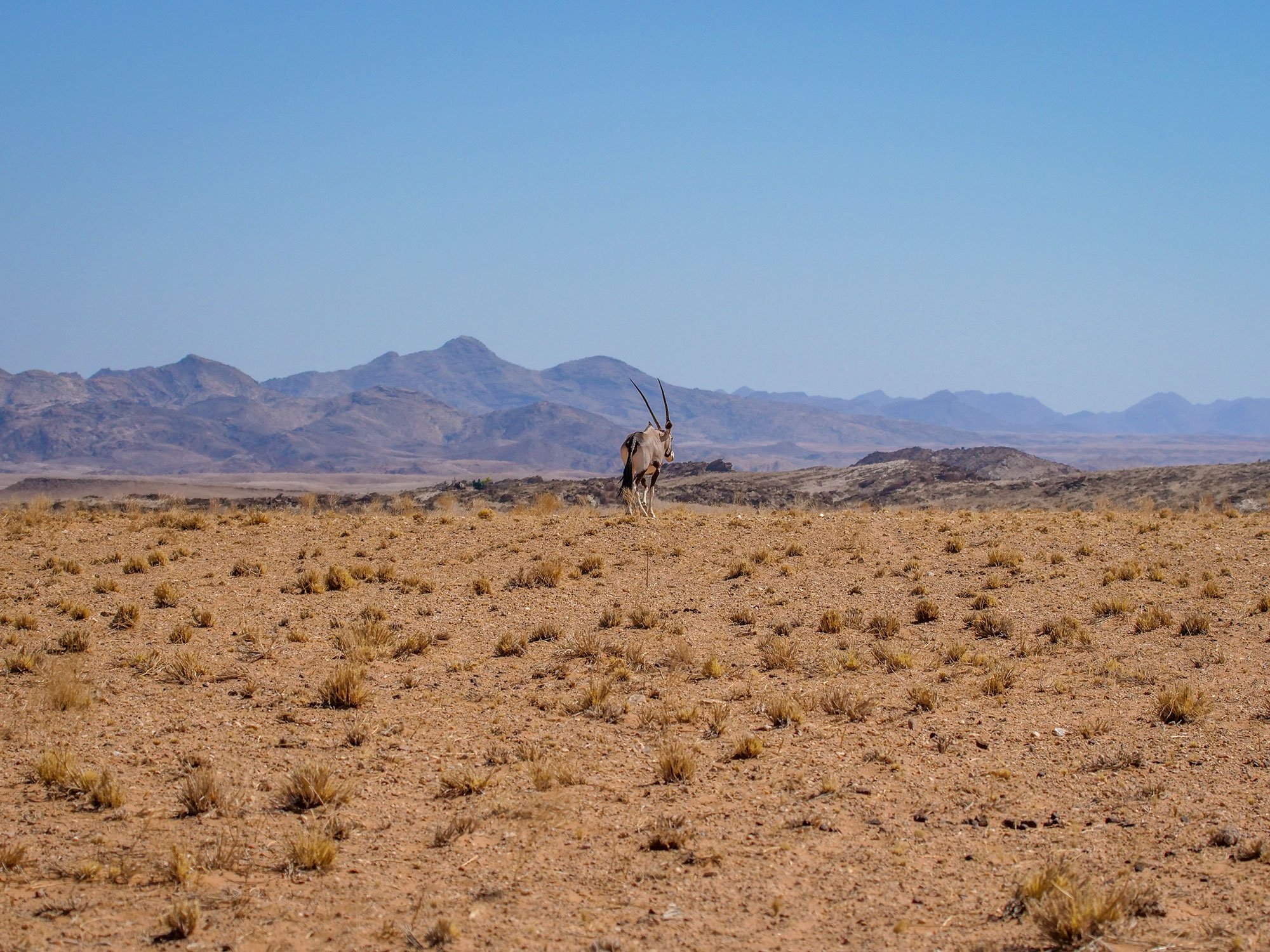
The reserve is best known for a number of species that can be seen in few if any other places, such as the reticulated giraffe and Grevy’s zebra as well as the Somali ostrich. Your guide should be able to help you track these rare creatures if you let them know you particularly want to see them.
About Samburu National Reserve
Named after the nomadic Samburu tribe who live in the region, farming sheep and cattle, Samburu National Reserve is famous for what are known as its ‘Special Five’, Grevy’s zebra, Somali ostrich, reticulated giraffe, gerenuk and the Beisa oryx including the endangered Grevy’s zebra and reticulated giraffe.
It is also one of a very small number of Kenyan reserves where you can encounter the endangered African wild dog, and is known as an excellent site for spotting leopards (pardon the pun!).
The African elephant is particularly abundant here, with over 900 individuals monitored by Save the Elephants using GPS collars. Samburu has become a safe haven in which these gentle giants can thrive.
Tips for Samburu National Reserve
- I would recommend wearing light clothing for your visit to Samburu, as the temperatures there can get pretty high due to its northerly location. However, mornings can be chilly: your best bet is to go for layers. I would generally wear a vest top under a linen shirt with a fleece or jumper on top.
- High-factor sunscreen and insect repellent are non-negotiable for your safari! If you bring both along with you on your game drive, you can then top up as needed throughout the day.
- Be sure to tell your guide you want to spot the unique species that inhabit the arid lands of this region: reticulated giraffe, Grevy’s zebra, Beisa oryx, Somali ostrich, and gerenuk – otherwise known as the “Samburu Special Five”. The best place to spot them is on the open acacia plains to the north of the Ewaso Ng’iro River and chances are greatest during early morning drives.
- You should also ask your guide to help you explore both sides of the Ewaso Ng’iro River. This body of water cuts the reserve into north and south halves, which harbour very different habitats. These in turn shelter different kinds of wildlife: the drier land to the north is best for elephants and oryx, while vegetation and predators thrive in the southern section.
- If you would like to, you can always choose to extend your trip to take in the nearby Buffalo Springs or Shaba National Reserve, which are also part of the same northerly ecosystem as Samburu. Taking in multiple parks often ensures you get to see more diverse scenery while having fewer other vehicles to contend with as you explore.
Where to Spend the Night
While there are a number of lodges within Samburu National Reserve or nearby, you should be aware that there are few budget options to choose from when booking your accommodation.
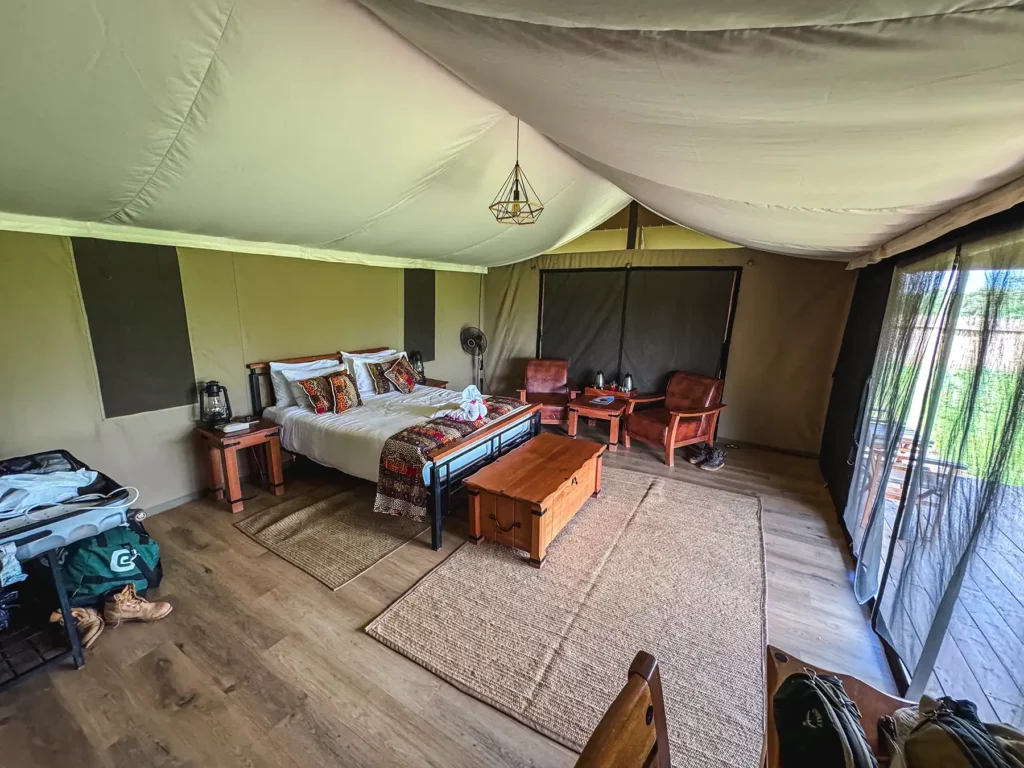
Day 10: Samburu National Reserve
Drive Time (Excluding Game Drives): 0 hours
Today will be dedicated entirely to discovering all the beautiful Samburu National Reserve has to offer with a morning and an afternoon game drive.
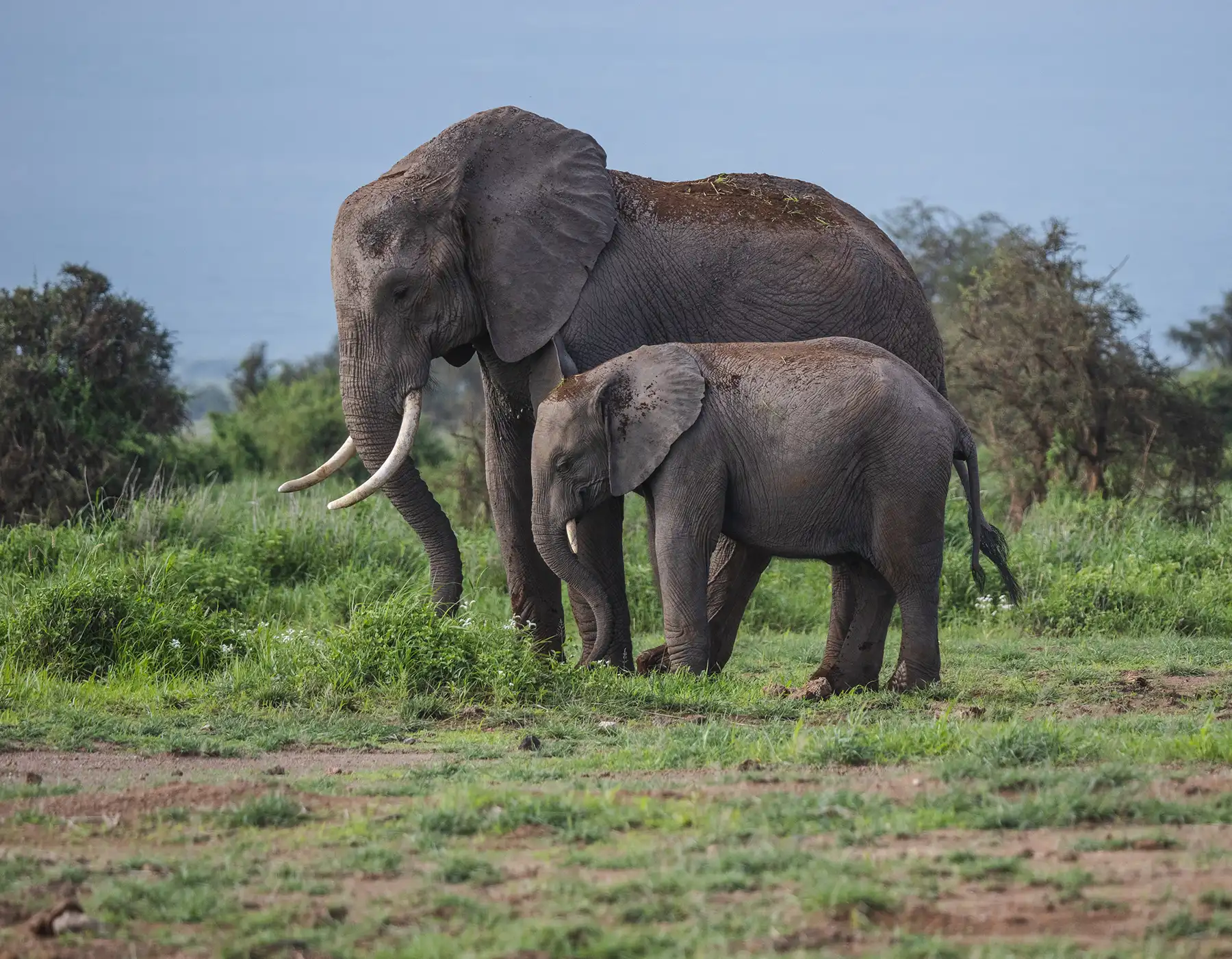
Itinerary
You’ll be rising early again this morning as you prepare for your morning game drive. The terrain here is ruggedly beautiful, with riverine forest and acacia that contrast strikingly with the arid savannah. The early morning light is wonderful for photographs and will make your pictures even more beautiful.
One of Kenya’s northernmost reserves, Samburu boasts some wildlife that are not seen in many other parks. Its relatively small size means that game populations are unusually dense here, and also boosts your chances of seeing leopards as they return from a night’s hunting.
The Samburu Special Five are what makes this reserve stand out, and I would strongly urge you to do your utmost to seek them out during your visit! They are the reticulated giraffe, Grevy’s zebra, Beisa oryx, Somali ostrich, and gerenuk, and your guide will be happy to help you maximise your chances of sighting each.
Once your morning game drive is over, you’ll drive back to the lodge in the growing heat for a refreshing lunch before getting ready for your afternoon drive. This is a further opportunity to spot any of the Special Five you may have missed earlier.
But don’t fixate solely on the Five: Samburu has good numbers of many of the species you’ll delight in sighting. The thriving elephant population makes an encounter very likely, and giraffes, lions and buffalo are also plentiful.
African wild dogs, cheetahs and leopards are rarer, but have also been seen on the reserve, while rhinos are sadly absent.
If time allows, you may also be able to meet members of the local Samburu tribe, which is typically a rich cultural experience.
As the sun sinks in the sky, the shadows of the acacia trees lengthen on the ground and groups of herbivores such as zebras and giraffes gather in groups to feed.
You may spot some elephants cooling themselves at the river as you pass by. Predators, too, are stirring after their rest during the heat, and you may well witness some of them in action as you drive back to the lodge in the warm glow of the sinking sun.
Where to Spend the Night
Tonight, you will be staying at the same accommodation as before.
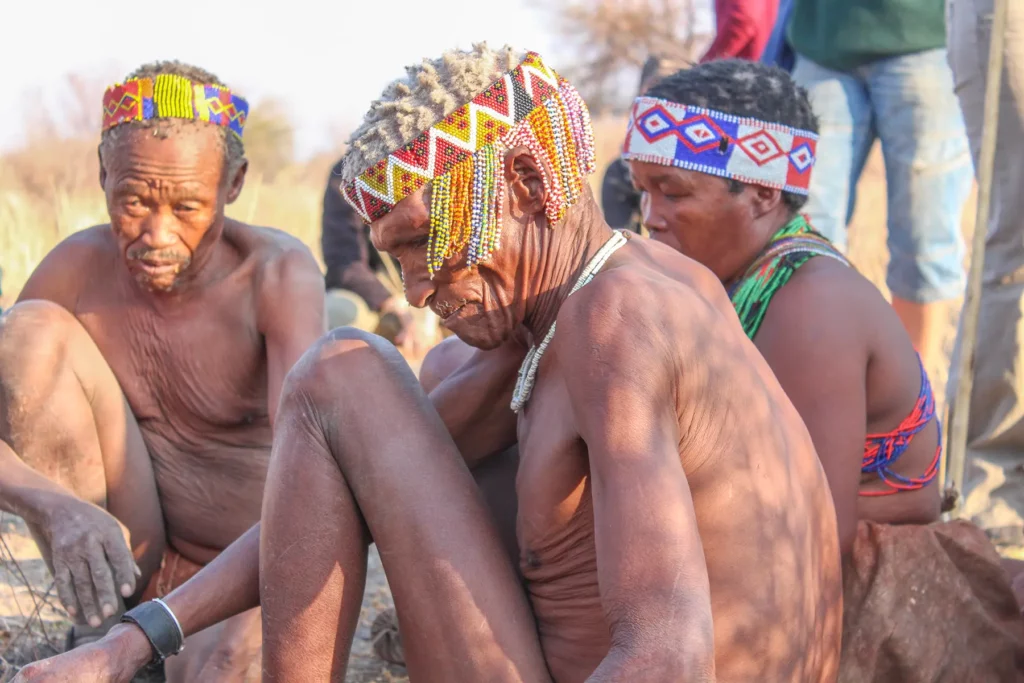
Day 11: Lake Naivasha
Drive Time (Excluding Game Drives): 7 hours
It’s a long drive today from Samburu to Lake Naivasha, so you’ll be getting on the road early to make good time. Once there, you’ll have lunch at the lake before embarking on an evening boat cruise to Crescent Island.
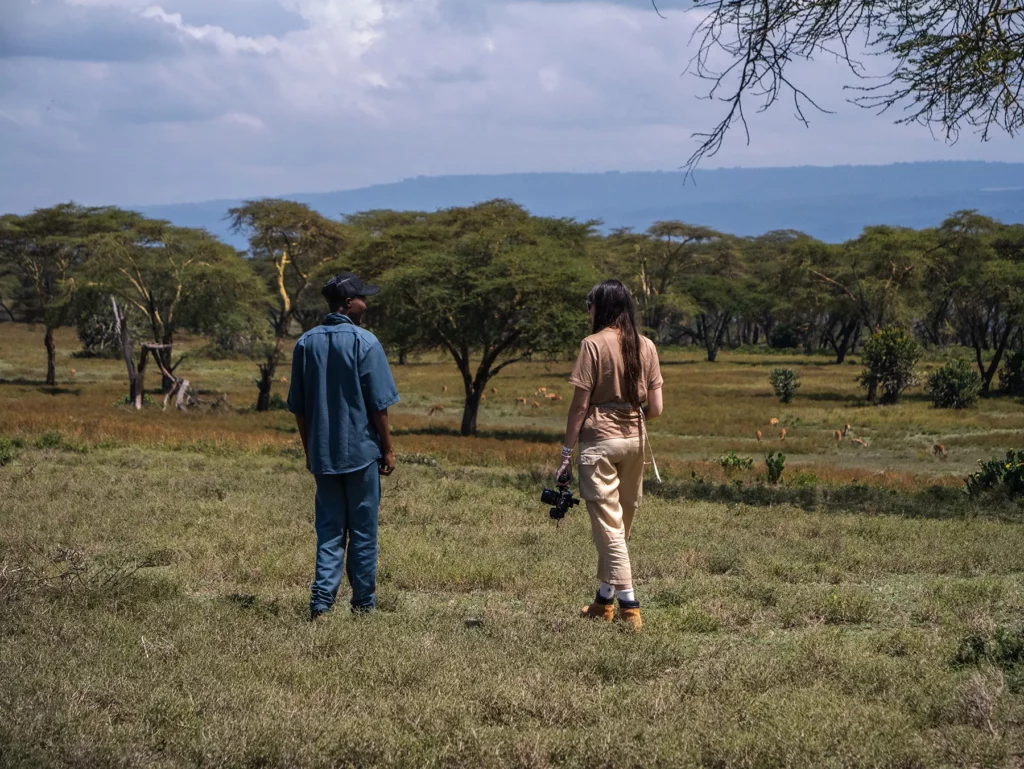
Itinerary
Buckle up, because today’s drive will be a bit of a marathon! You’ll be rising early to start on the 7-hour journey that will bring you to Lake Naivasha in the southern Rift Valley.
As you will be having lunch at the lake, you may have the opportunity to admire some of its resident wildlife while you eat. The lake itself is very picturesque, surrounded by swamps and forests that are a haven for all kinds of creatures, from antelopes to warthogs.
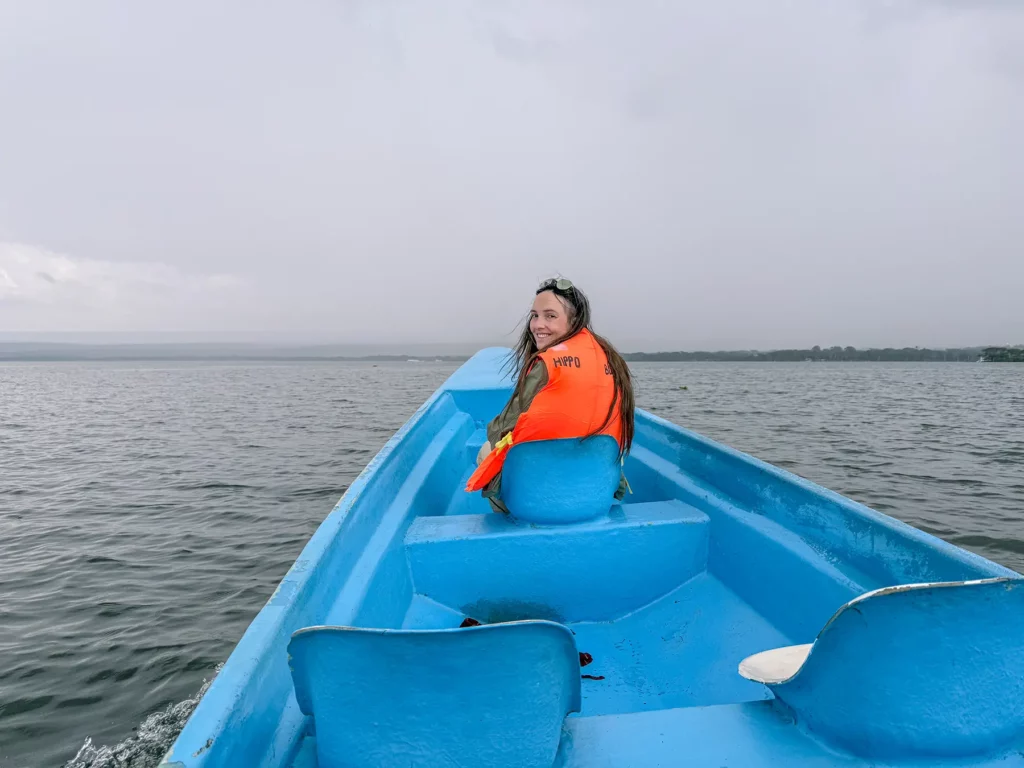
After lunch, you’ll be boarding a boat for an evening cruise to Crescent Island, where you will be able to explore on foot! Thanks to the absence of lions or elephants, the island is a perfectly safe place for visitors to walk around. The animals here roam freely and are calm and approachable, so you’ll be able to walk among zebras, antelopes and giraffes without fear for an unforgettable experience.
The flat landscape of the island makes it easy to hike, and there are an abundance of animals, birds and plants to discover. You might even spot a leopard tortoise, ostrich or silver-backed jackal! Then, as the sun sets, you’ll make your way back to the shores of the lake to settle down for the night.
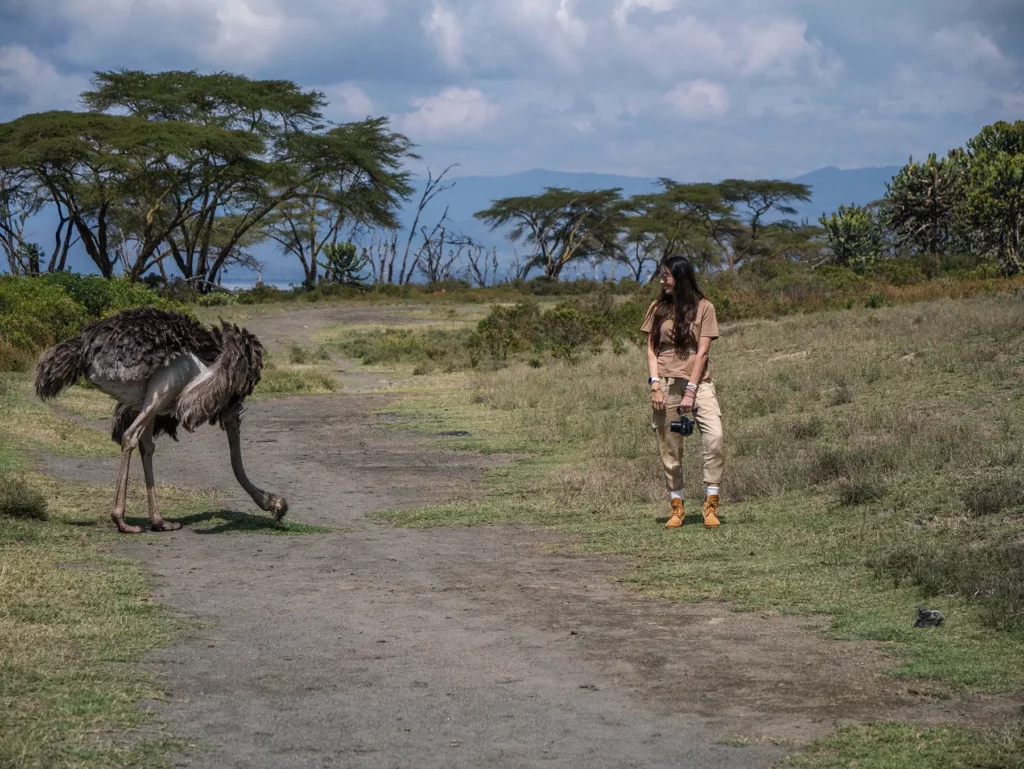
About Lake Naivasha
Standing some 1884 metres above sea level, the 139km² Lake Naivasha is the highest lake in the Rift Valley. It gets its name from the Maasai word meaning “that which heaves” which reflects the frequent storms that batter the locality.
This freshwater lake is known for its flamingo and hippo populations and is one of the best birding spots in Africa, with over 400 distinct bird species in residence. It boasts what may well be the densest concentration of African fish eagles in Africa and is also a haven for cormorants, pelicans, Sacred Ibis, Hadada Ibis, Pied Kingfisher, Giant Kingfisher and African Spoonbill.
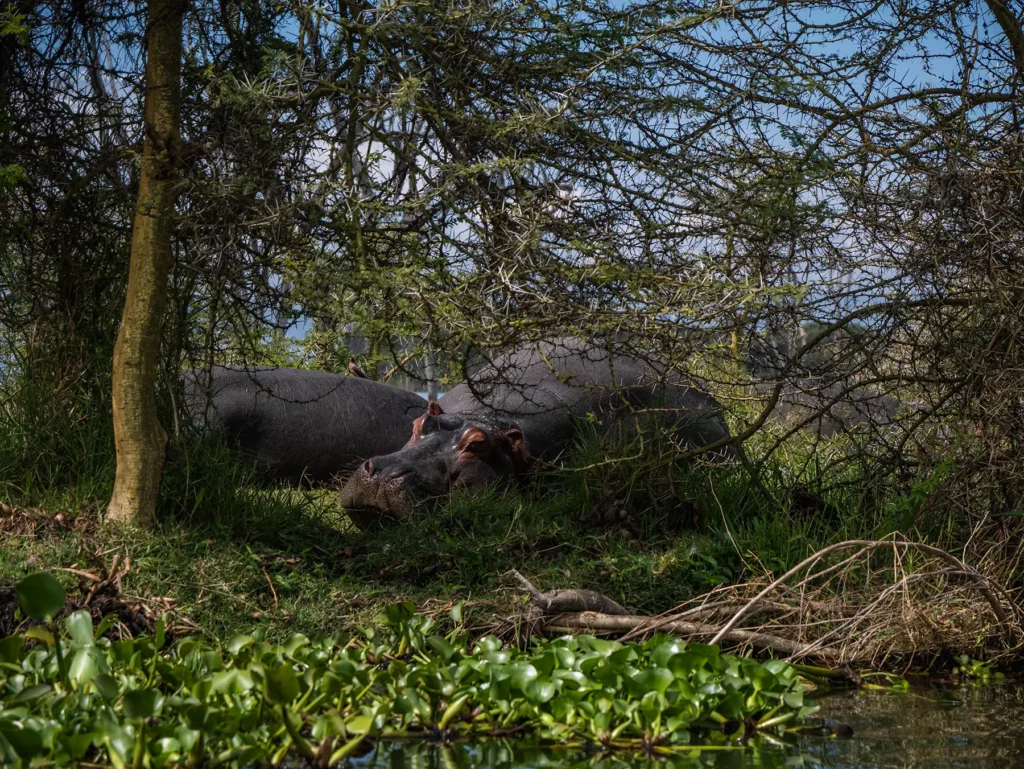
With a large hippo population in residence here, it would probably be difficult to avoid seeing one wallowing in the cool waters or grazing along the shore! Birders will also be in their element here, with a jaw-dropping number of species recorded here – over 400, in fact!
The privately managed game sanctuary of Crescent Island located in the middle of this tranquil lake is best known for its walking safaris among wildlife that are free to roam as they please.
There are no fences or vehicles here, and visitor numbers are low, which makes for an exceptionally intimate experience and ensures spectacular photos. What’s more, the absence of large predators means this is a family-friendly destination that is safe for anyone of any age to explore.
Crescent Island has also been used as a filming location for the movies “Out of Africa” and “Living Free”. A number of the animals brought here for filming were subsequently left behind, which is why the island today hosts such a diverse array of wildlife including giraffes, zebras, wildebeest, waterbucks, and antelopes.
Tips for Lake Naivasha
- I would strongly recommend going on a boat trip at Lake Naivasha – and if you are planning one, you should go in the afternoon so you can enjoy sundowners on Crescent Island in the evening.
- Most boat trips will bring you to Crescent Island for a walking safari, so come prepared: wear closed toe shoes, preferably with ankle support, so you can walk comfortably through the island’s vegetation. Be sure to bring a full water bottle per person, too, as you can end up walking for an hour or more.
- Although the island’s resident wildlife are comfortable around humans, it’s important to remember that they are still wild animals and must be treated with respect. Give them space and don’t be too noisy as you may startle them.
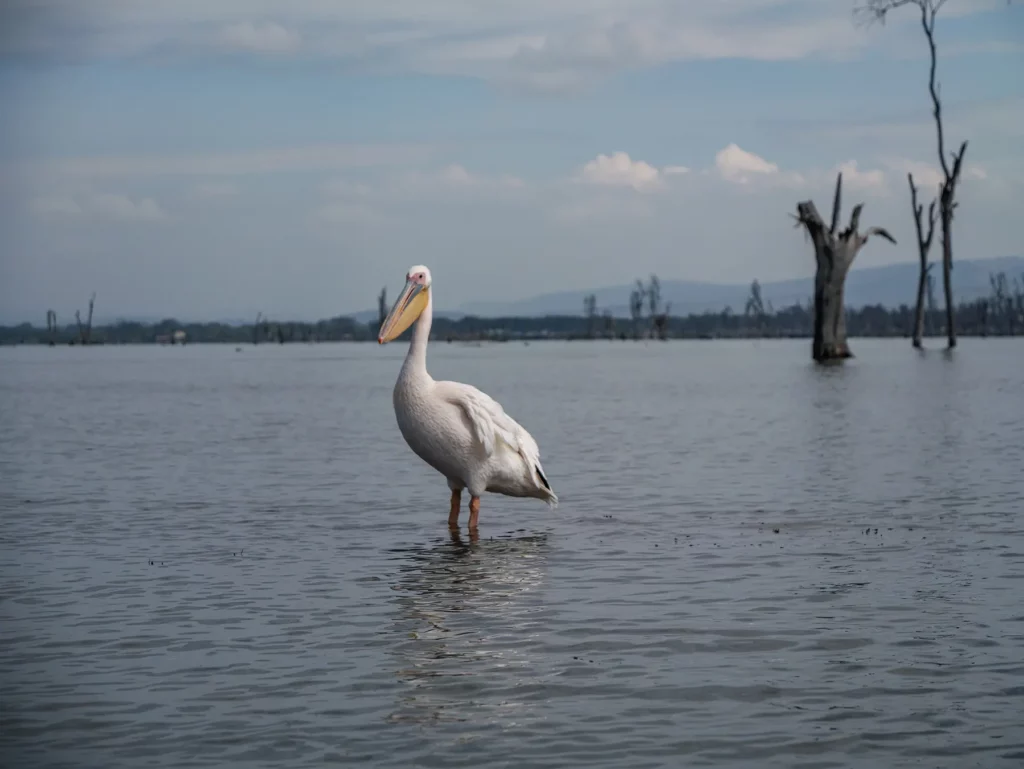
Where to Spend the Night
Guests can choose from a selection of lodges located on the southern banks of the lake.
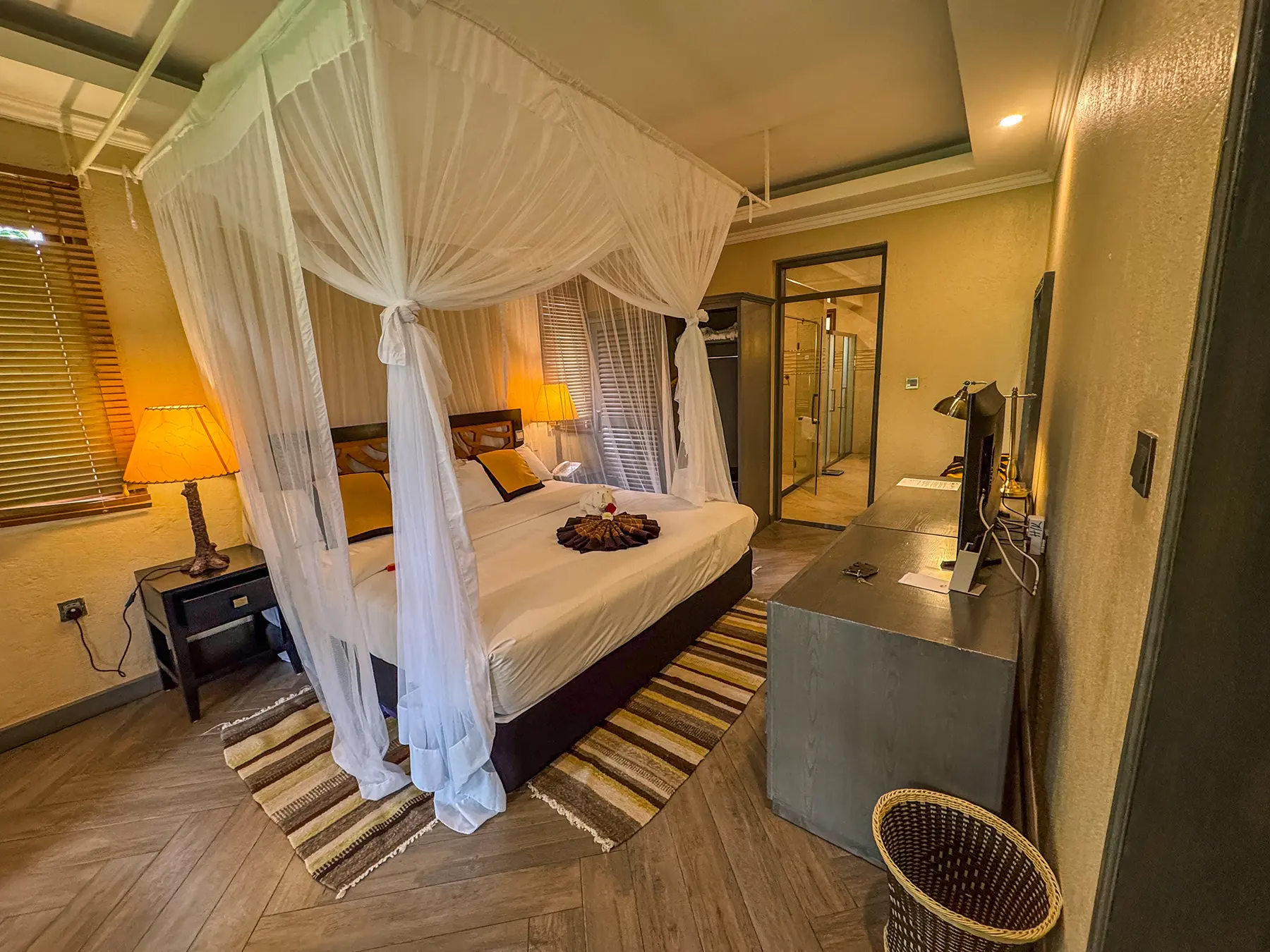
My Experience Visiting Lake Naivasha
During my visit to Lake Naivasha, we went on a morning boat ride to Crescent Island for a fantastic walking safari. We saw so many hippos on the boat ride over to the island and lots of birds as well – pelicans, Egyptian geese, hamerkops, storks and herons.
A guide met us on the island and brought us on our walking safari. He explained that the island is very safe to walk around because there are no large predators. It was so unusual being able to wander about without a second thought about safety from predators. The island is pretty flat for the most part, so it was relatively easy going, too.
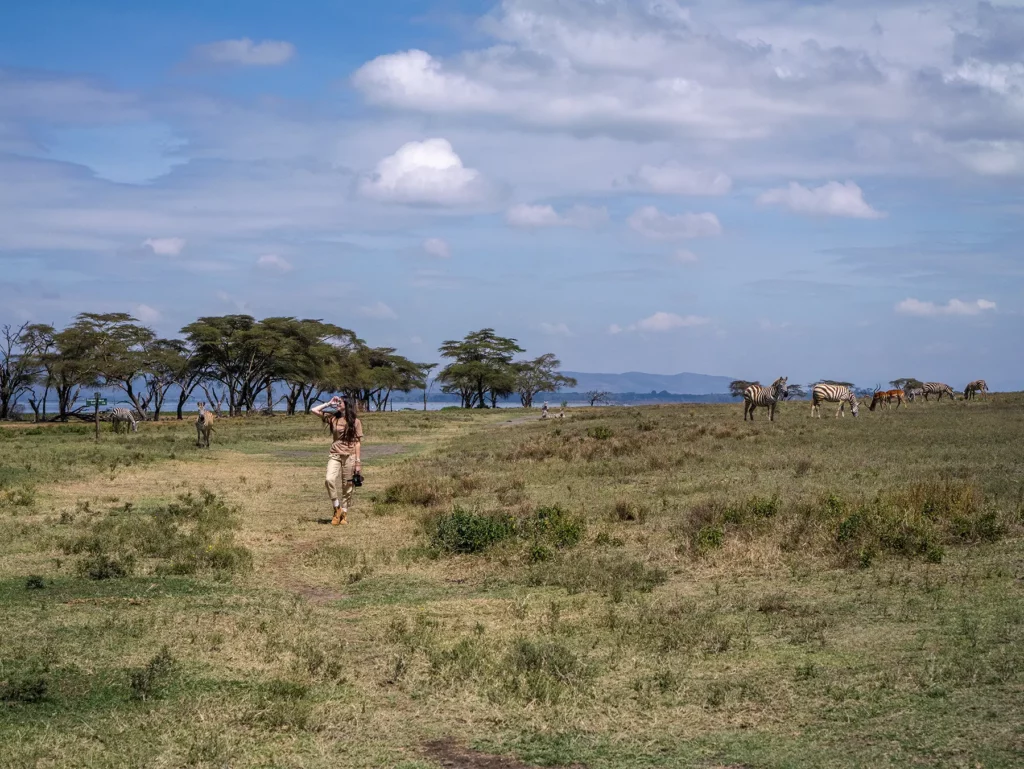
As we walked, we saw waterbucks, impalas, zebras and ostriches. I particularly remember spotting an adorable little zebra foal galloping excitedly around its mother. What a cutie! But for me, the absolute highlight was when we found a python.
Our guide had told us that they could sometimes be seen peeking out of burrows when it was hot and sure enough, I eventually saw one sticking its head out of a burrow. It was a fleeting encounter, as the snake soon got spooked and retreated inside, but I’ll never forget it!
After our safari, we had some lovely cool drinks on a hill in the middle of the island. But we couldn’t hang on there too long as we soon saw the storm clouds rolling in and decided to beat a hasty retreat back to the mainland. We didn’t quite make it before the heavens opened, but that didn’t ruin our enjoyment of the experience a bit!
You can watch a video of my experience visiting Lake Nakuru and Lake Naivasha below.
Day 12: The Maasai Tribe
Drive Time (Excluding Game Drives): 5 hours
Another long drive today, but not as long as the last. You’ll depart Lake Naivasha in the morning for the 5-hour trip to Maasai Mara, arriving in time for lunch at your lodge just outside the park. Then in the afternoon, you’ll visit a local Maasai tribe.
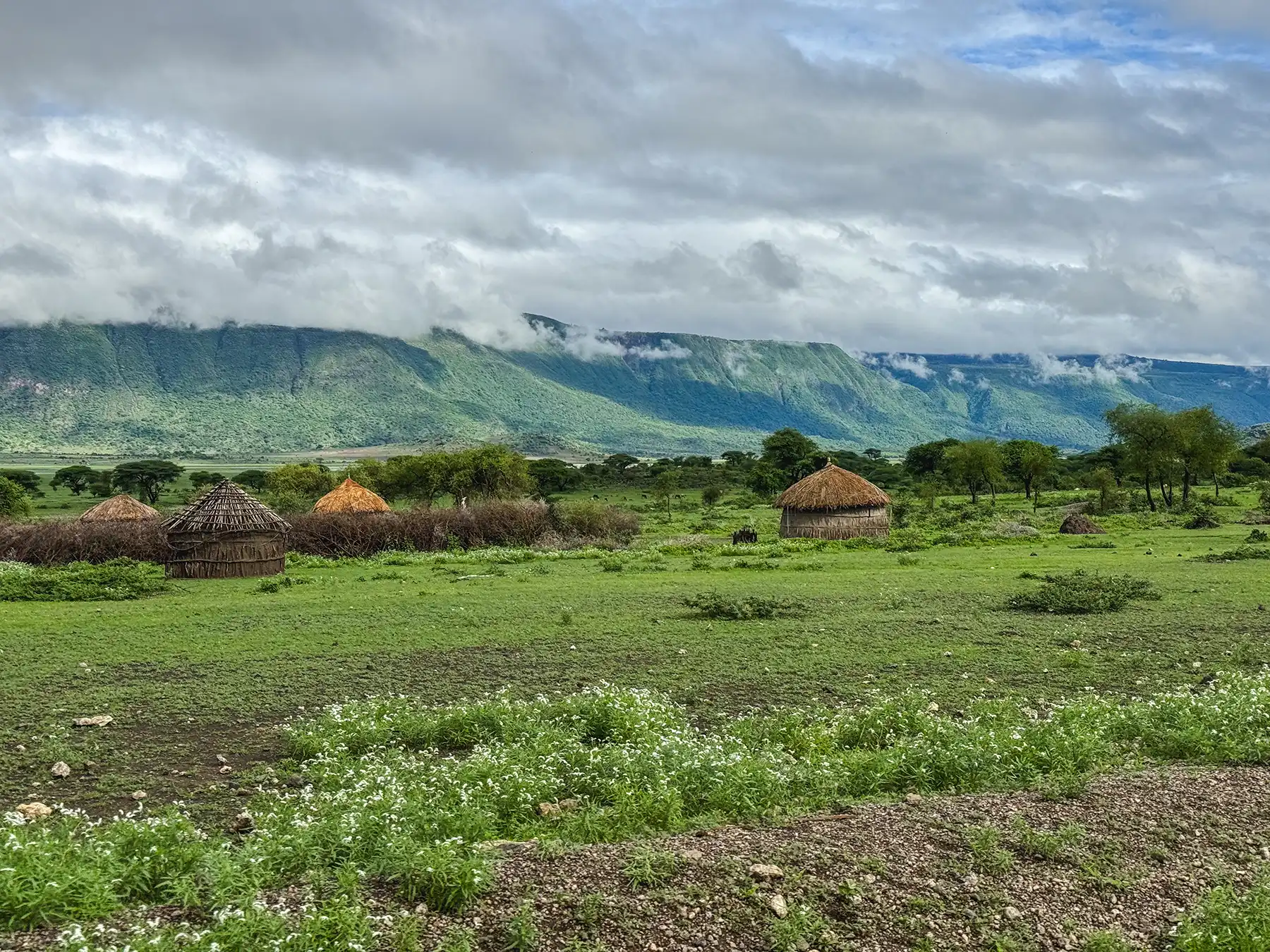
Itinerary
You’ll be leaving Lake Naivasha relatively early this morning as you start the drive to Maasai Mara. Here, you’ll head straight to your lodge just outside the park for some much-needed lunch.
In the afternoon, you are in for a very special experience. You will be visiting a local Maasai tribe – one of Africa’s most famous tribes. Known for their colourful beaded jewellery and vibrant red chequered shukas (blankets), the Maasai people are warm, welcoming and eager to share their culture with you.
You’ll be greeted with welcome dances and a guide from within the tribe will show you around the boma where the tribe lives. A boma is a particular kind of village – a circular settlement of houses with a grassy area for livestock.
Your guide will explain how the huts in which the tribe live are constructed and explain the customs of the Maasai in more detail.
At the end of your visit, you will be brought to a traditional market with lots of stalls selling souvenirs. There is no obligation to do anything, but I usually like to make a small purchase to support the tribe. And it’s nice to have a small memento of such a special cultural encounter!
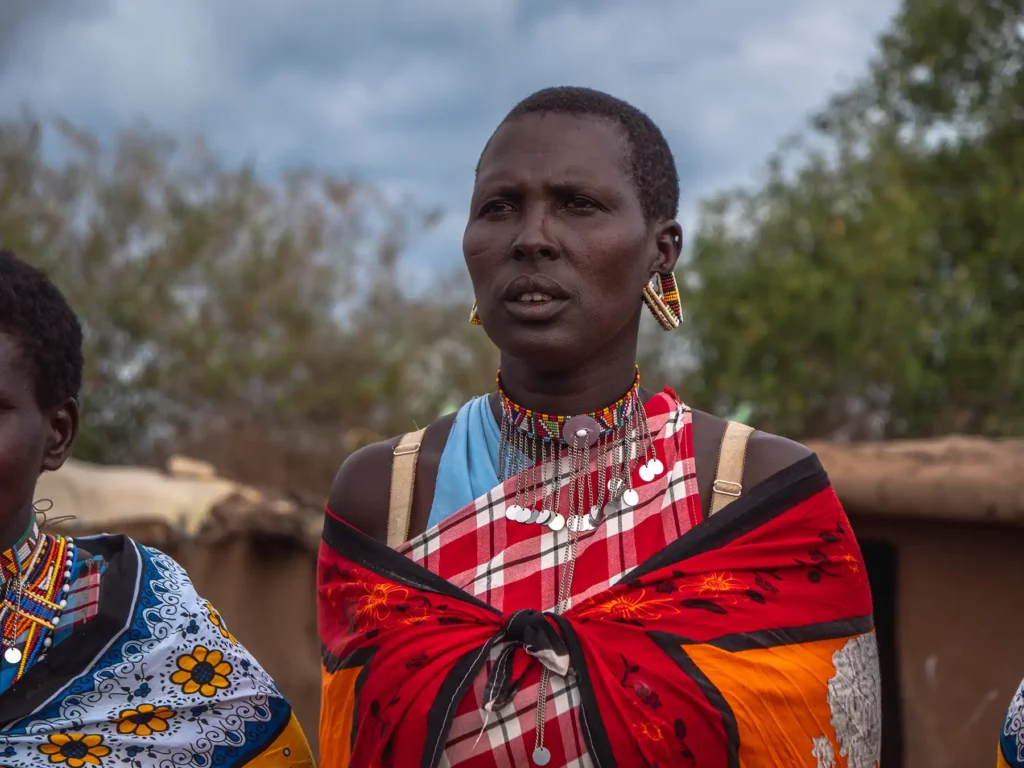
About the Maasai Tribe
As you’ve probably guessed from the name, the Maasai tribe originally lived in the region around the Maasai Mara National Reserve. You’re sure to have heard of the tribe before, as they are one of Africa’s best-known tribes. The semi-nomadic Maasai are a pastoral people, meaning that they keep livestock, particularly cattle but also goats and sheep. Cattle are revered among the tribe and represent their main source of income.
Nowadays, the Maasai can be found throughout Kenya and northern Tanzania. Their distinctive culture and customs are well known, partly because they have strived to protect their ancient ways for centuries and are happy to share them with visitors today.
During your visit with the Maasai, be sure to look closely at their unique red shukas. These are made in various intricate designs and shades, which represent the various stages of life.
The tribe’s colourful beaded jewellery is also iconic and is usually worn on special occasions like weddings. Making and selling the beads is also a further source of income for the tribe. At the end of your visit, you can purchase a shuka or a piece of jewellery to help you remember this amazing cultural encounter.
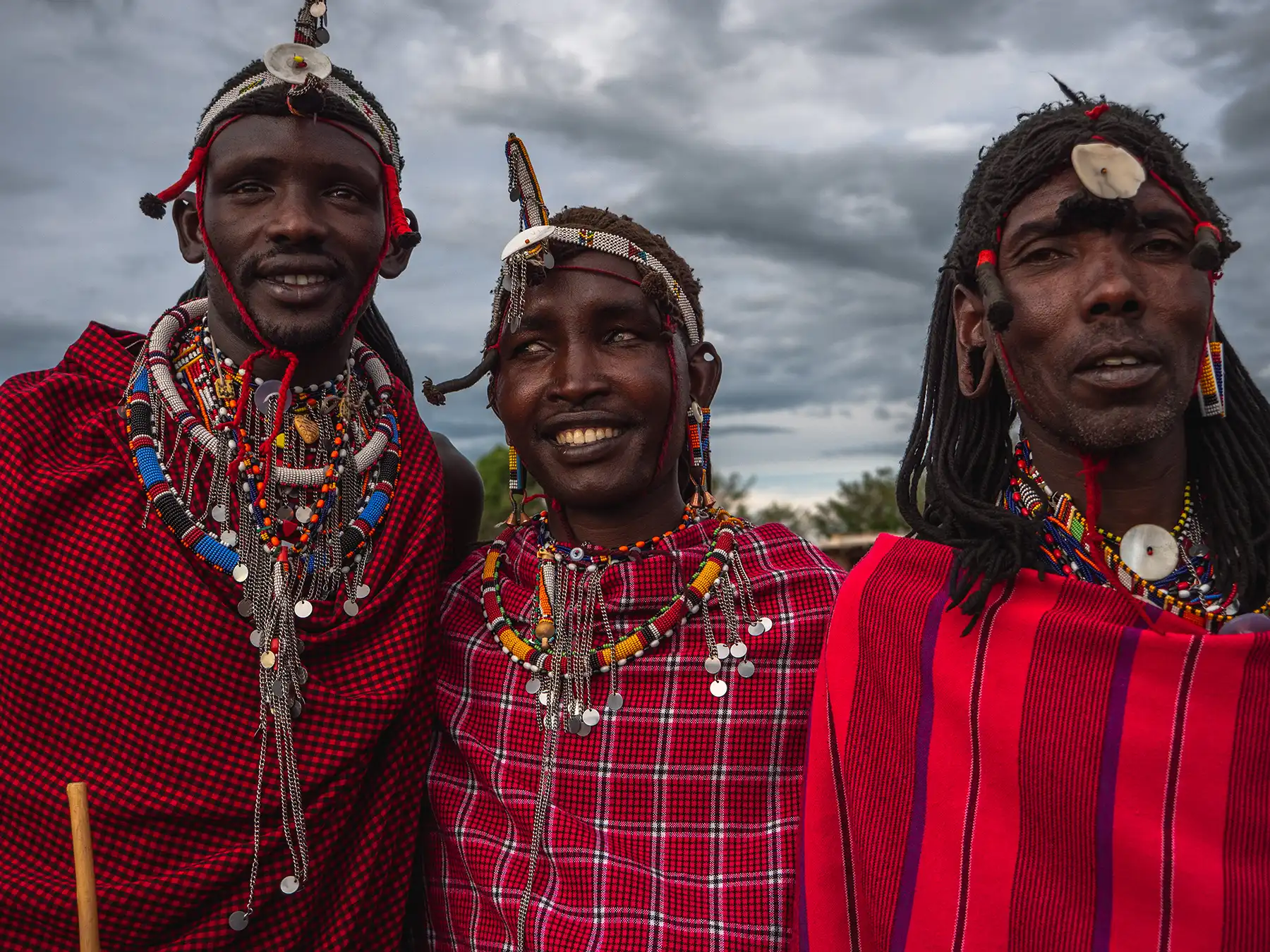
Tips for Visiting the Maasai Tribe
Some visits to the Maasai bomas can feel a little commercialised, so you might want to ask your safari company to organise a trip to one of the less frequented villages for a more authentic feel.
Regardless of which boma you go to, at the end of your visit you will be shown some jewellery made by tribe members and offered the option to buy something.
This is optional, so don’t feel pressured to purchase anything if you don’t want to. Haggling is also welcomed if not expected, and the starting price is often several times the price a seller will happily accept! I generally prefer to buy something during these visits because it is a means of supporting the tribe and also encourages them to protect the wildlife that bring tourists to their region.
Where to Spend the Night
Tonight, you’ll be staying at a lodge or tented camp in or near Maasai Mara.
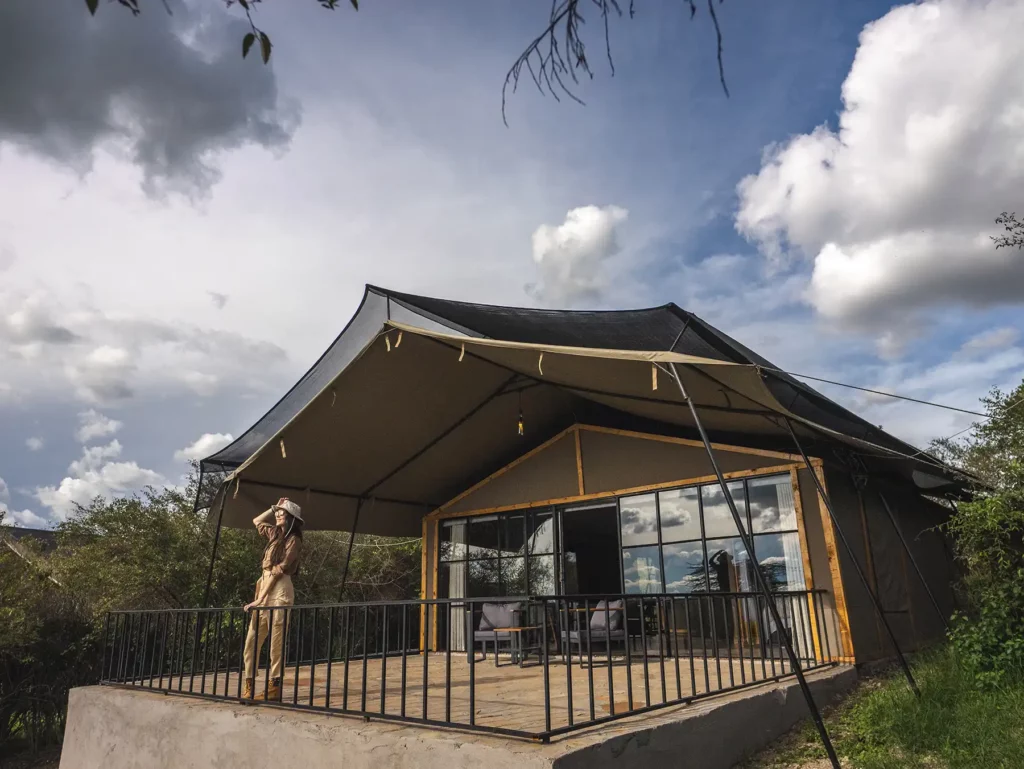
My Experience Visiting the Maasai Tribe
The Maasai boma we visited was on the edge of the Maasai Mara, very close to Little Zebra River Camp, where we were staying. We really enjoyed our time with the Maasai tribe.
They were incredibly friendly and hospitable, even going so far as to invite us to spend the night in one of their traditional houses and watch them drink fresh cow’s blood. I would have loved to return for another visit and take them up on their kind offer, but my packed itinerary unfortunately didn’t allow for that. Another time for sure!
While we were there, the Maasai performed a number of welcome dances including the jumping dance – a warrior dance in which the men compete to see who can jump the highest.
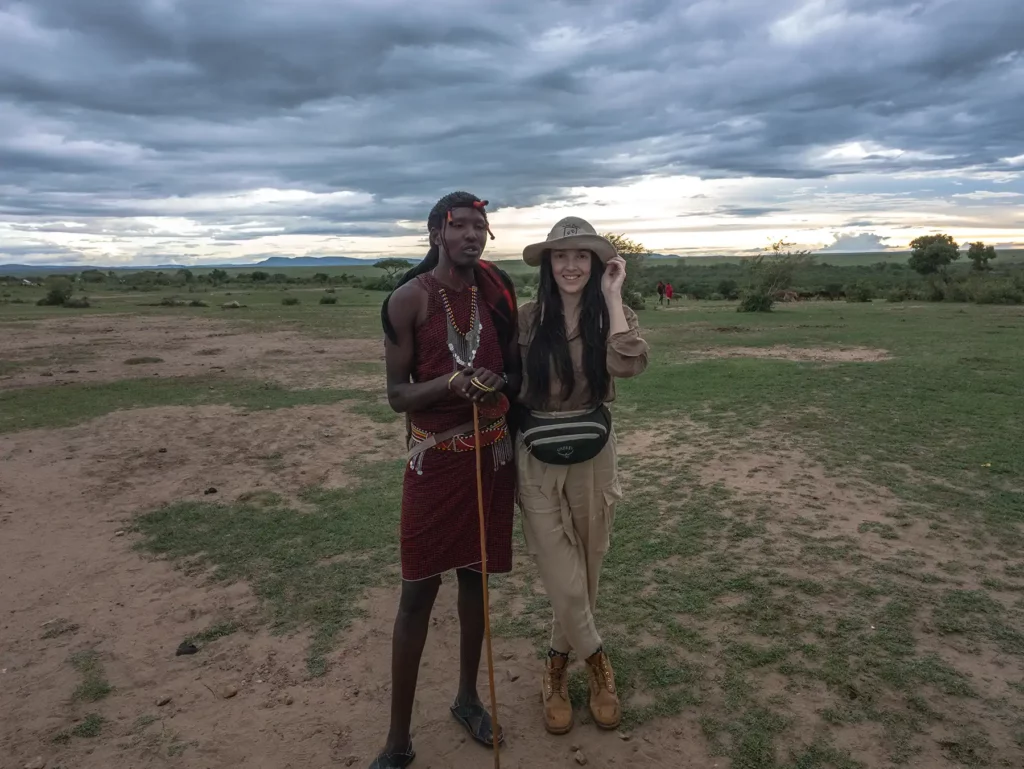
The victor is declared the strongest warrior and can even win a wife when the dance is being performed in earnest and not just to entertain visitors! The highest jumper in the boma we visited was called David and he was super friendly, even tagging along with us as we toured the village.
Our Maasai guide was called Eric and was one of the chief’s numerous sons. He showed us around the boma and explained that the cows in the grassy area are brought outside the boma at night to graze, accompanied by herders from the tribe.
He also showed us inside one of the traditional houses in the village, made from cow dung, sticks and mud with a grass roof. Houses are constructed by the women of the tribe and are quite dark as they usually have only one window near the kitchen that acts as a sort of extractor.
We then went to the boma’s market, where there were lots of stalls selling souvenirs. We were told that the purchases made here help to support the Maasai women.
It’s important to remember that you’re expected to haggle – for example, the seller will happily let a bracelet originally marked $20 go for $5! The haggling is part of the fun for both the sellers and the visitors. I always like to buy something and support the tribe – and it’s lovely to have a reminder of such a special visit, as well.
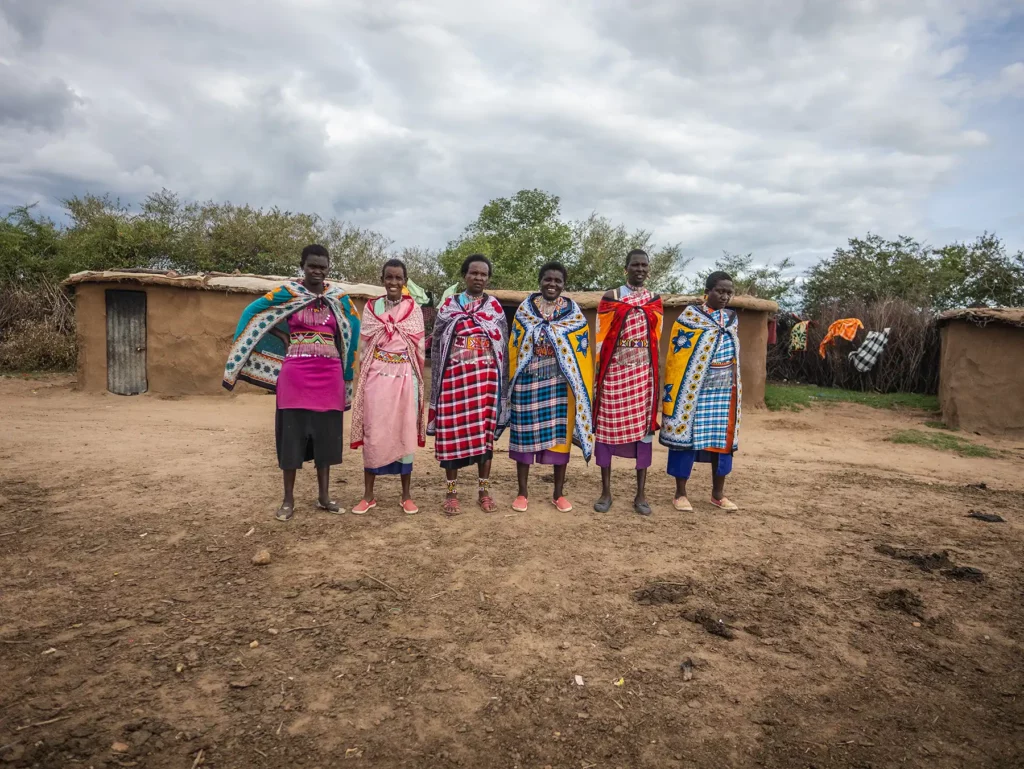
Days 13-14: Maasai Mara National Reserve
Drive Time (Excluding Game Drives): 0 hours
You’ll be happy to know that there’ll be no long drives today or tomorrow, leaving you two full days to appreciate the utterly spectacular Maasai Mara National Reserve. Get ready for some of the most unforgettable wildlife sightings of your life!
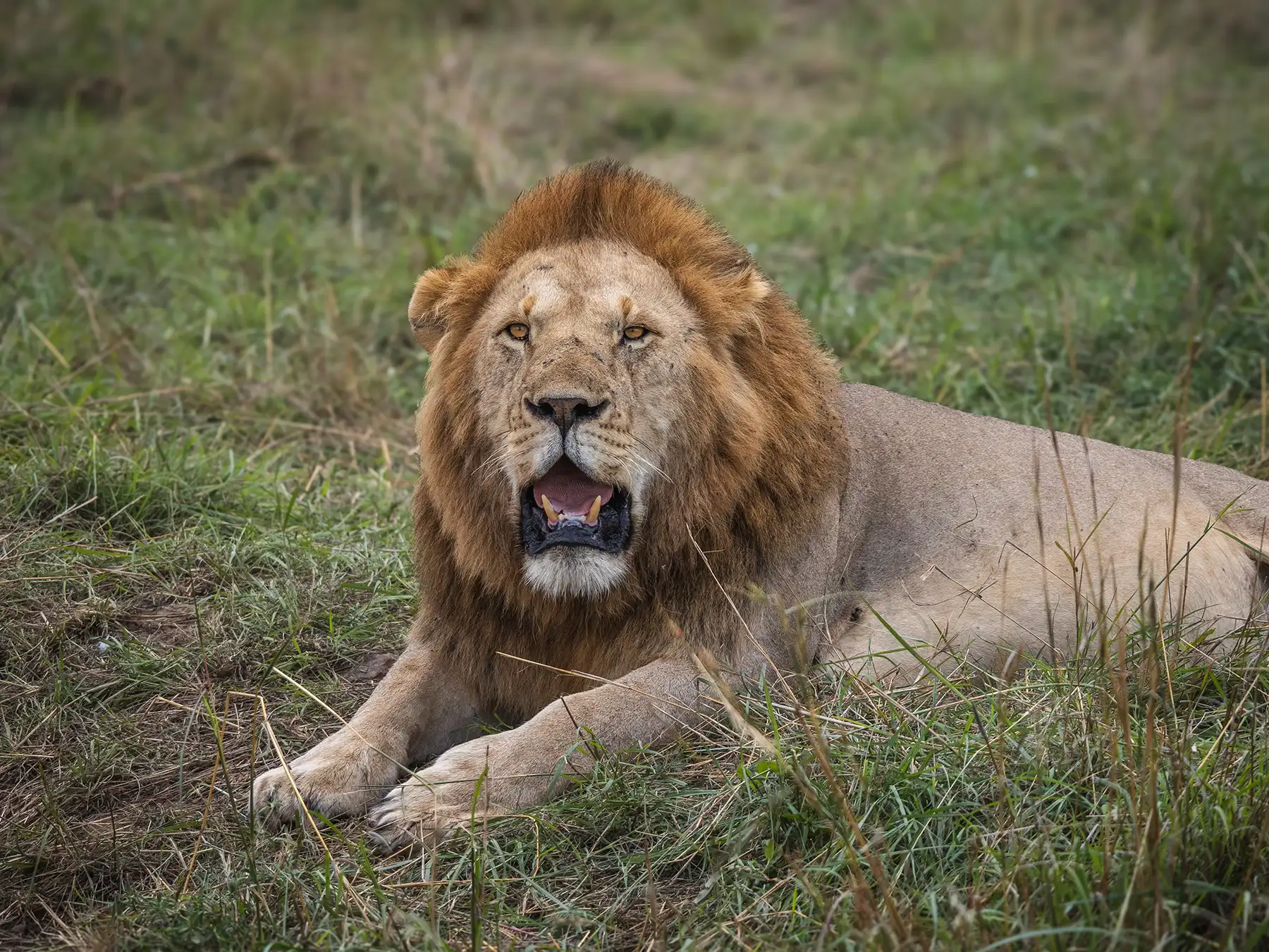
Itinerary
Welcome to the Maasai Mara! This world-renowned safari destination needs no introduction: anyone with the faintest interest in African wildlife will know it is one of the premier locations for sightings of the Big Five along with a host of other animals and birds.
You’ll be spending all day today and tomorrow exploring the reserve, including a picnic lunch each day to maximise your safari time – and avoid being charged again for re-entry if you leave to go back and lunch at the lodge!
You will be starting out as early as possible, as the wildlife is at its most active early in the morning and after sunset. As you enter the park, the immense savannah sprawls out ahead of you in the purplish early dawn light.
The sheer expanse of it is dizzying, and as the sun climbs into the sky, its warming rays seem to set the golden grass on fire. The endlessness of the grassland here is one of the reasons the Maasai Mara is such an excellent destination for those in search of wildlife, offering unimpeded views of grazers and predator chases alike.
But the Maasai Mara is more than just savannah. The renowned reserve also has lush green riverine forests along the banks of large rivers such as the Mara River. The sheer rock wall of the Olooloo Escarpment towers to the west and the Ngama Hills, a favourite haunt for rhinos, lie to the east.
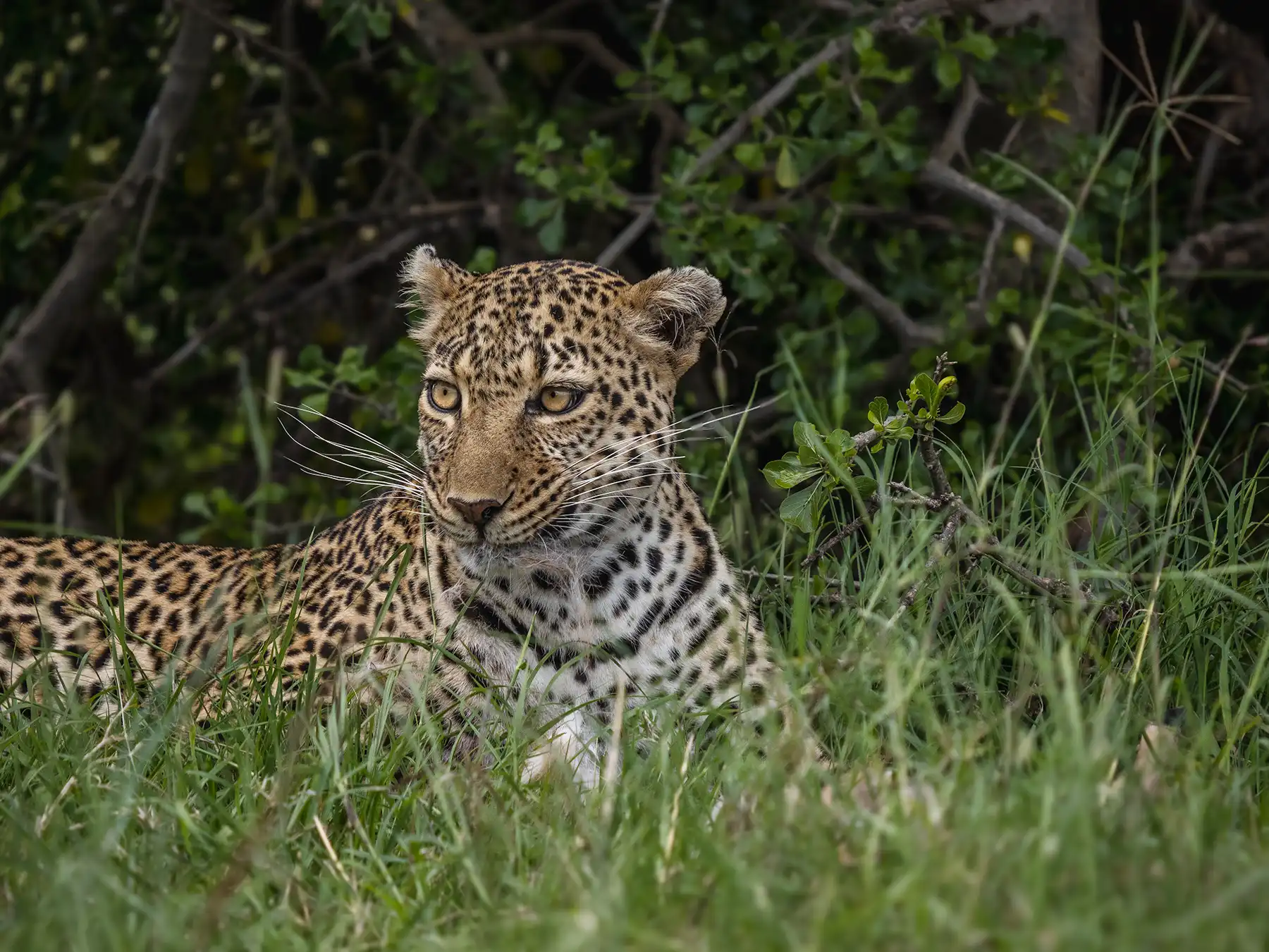
As you navigate the Mara plains, you’ll be wowed by sightings of multiple species. Elephants are one of the most common animals seen here, along with lions, leopards and Cape buffalos. Large herds of plains zebra wander by as you look on. These usually consist of a single male with a harem of females, but there are also a number of all-male bachelor groups.
Cheetahs hunt in the early morning and again in the late afternoon, preying mainly on small antelopes but also other species such as kudu, warthog, hartebeest, oryx, sable, rabbits and various game birds. Watching a cheetah in hot pursuit of its quarry is such an exciting experience – their speed and agility are simply unrivalled.
When you break for lunch, nobody stands on ceremony – you’ll just find a convenient tree for a bit of shade where you can enjoy a bite without missing out on the spectacular sights around you. Fortunately, the animals don’t take a break even when you do!
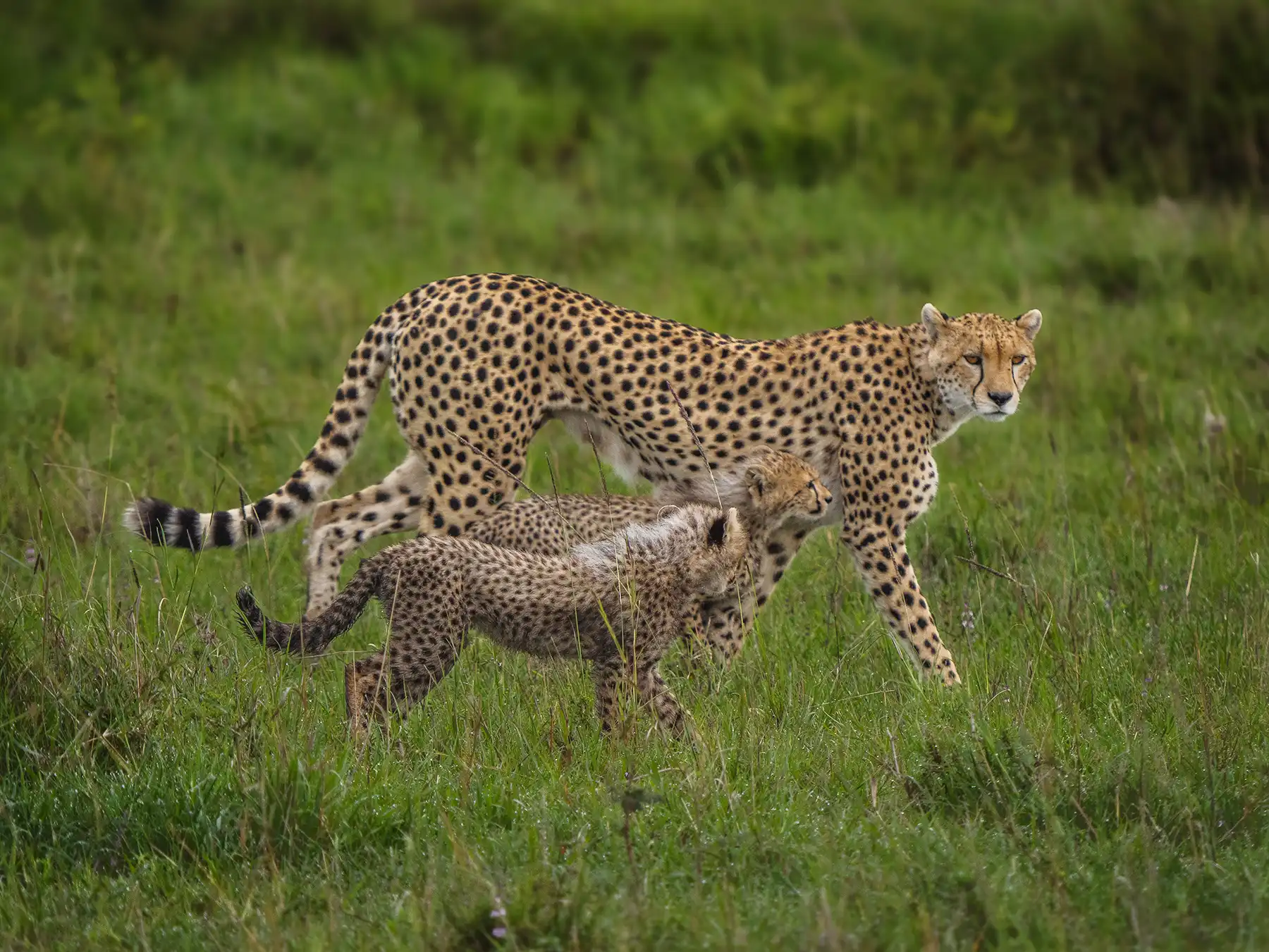
Giraffes, another common sight on the plains, can also be found grazing on the acacia trees along the river. The river is also a prime viewing location for hippos, which spend the hot days keeping cool in the water and mud, emerging at dusk to graze.
While the reserve has a healthy rhino population (especially white rhinos), they’re notoriously difficult to spot here. They tend to stick to the Mara Triangle near the rivers, so keep your eyes peeled for them when you’re close to the water but don’t be disappointed if you don’t see one. There are plenty of other species to watch out for!
As the sun sinks out of sight, it’s time to head back to the lodge for some dinner and a well-earned sleep. You’ll need your rest – tomorrow’s sure to be another action-packed day!
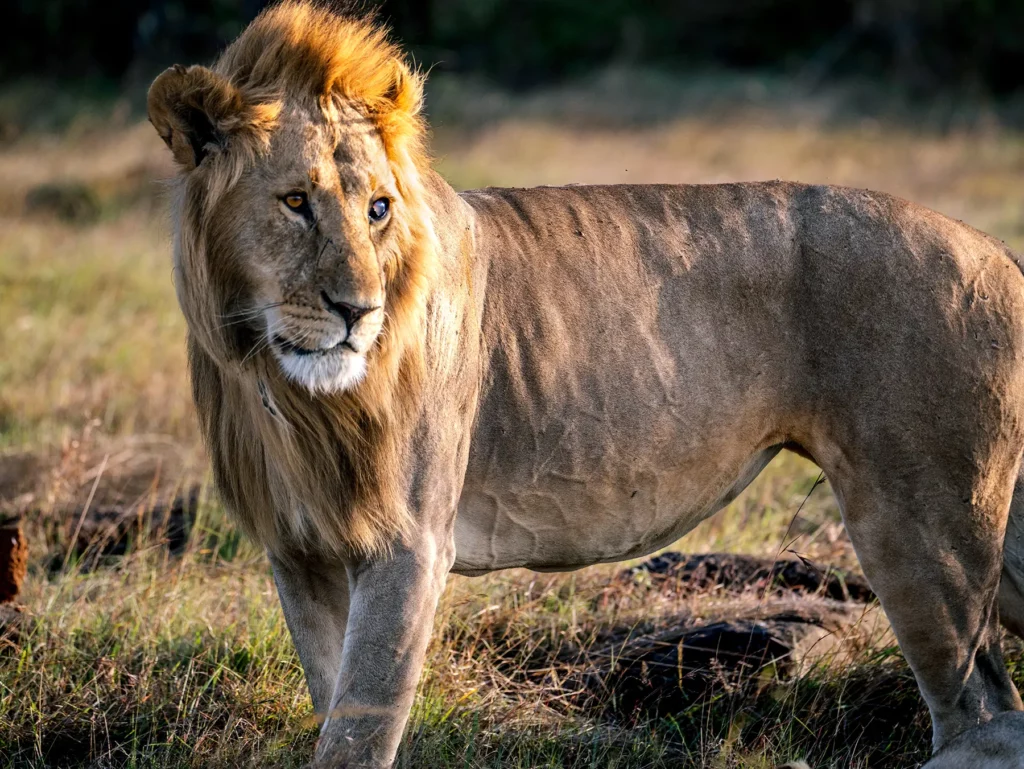
About Maasai Mara National Reserve
Forming part of the wider Serengeti ecosystem, the Maasai Mara is well known as one of world’s top safari destinations and is home to an unbelievable abundance of wildlife, including the Big Five (lions, elephants, leopards, rhinos and buffalos).
However, the park is probably most famous as the location of the Great Wildebeest Migration between July and October every year. As the wildebeest cross in their millions from the Serengeti National Park to the south into the Maasai Mara in search of fresh grazing, they are forced to navigate the treacherous crocodile-filled Mara River – a journey to remember!
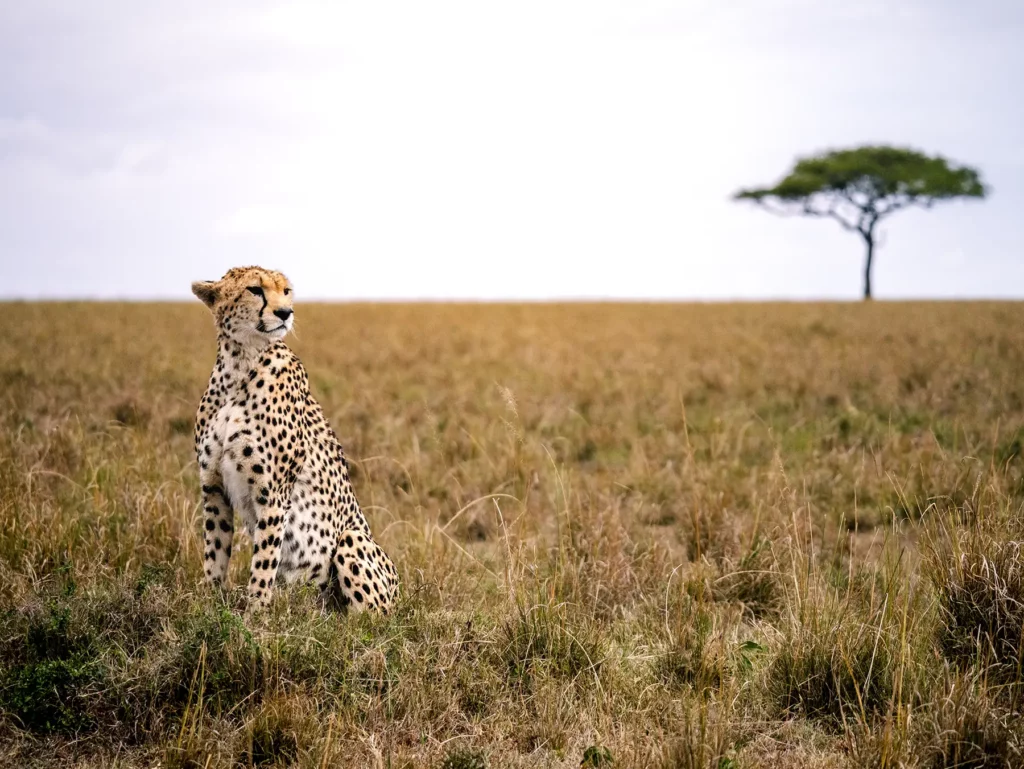
With healthy lion, cheetah, leopard and hyena populations, the Maasai Mara is also known for its high predator density. It is one of the best places on the planet for spotting these animals, drawing large numbers of enthusiasts yearly.
Animals are free to move between the reserve and other parts of the larger Serengeti wilderness area because there are no boundaries around the Maasai Mara to block them. This helps to facilitate the Great Migration, but also supports the reserve’s renowned species diversity.
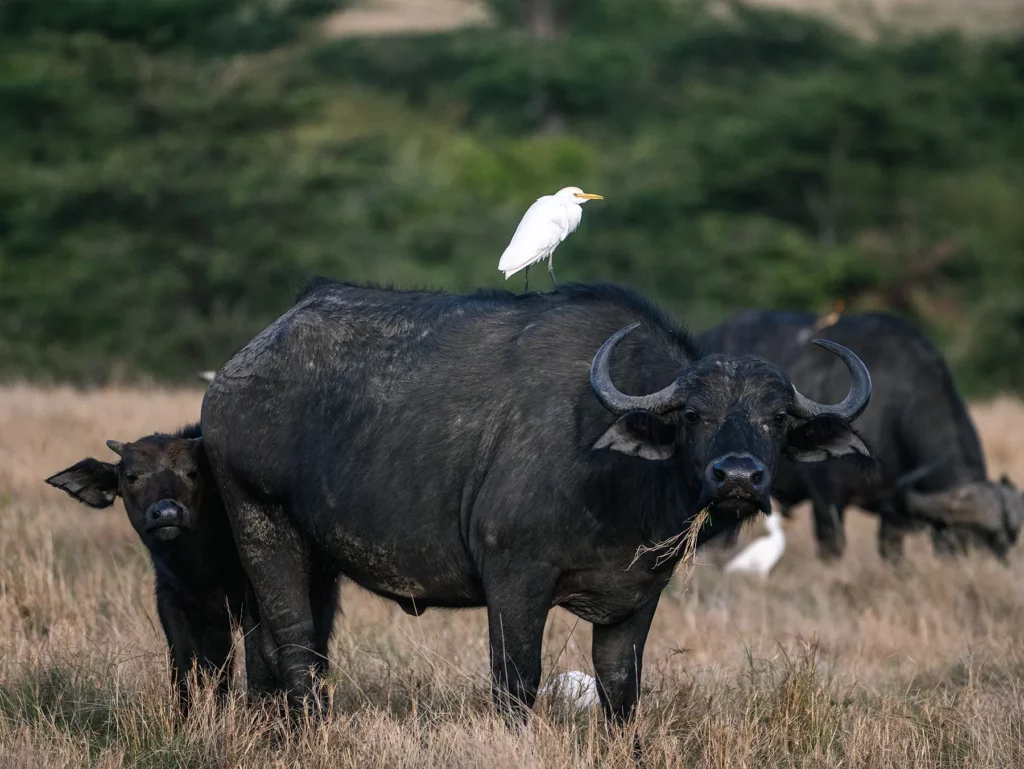
Tips for Maasai Mara National Reserve
Visiting the Maasai Mara is guaranteed to be amazing, but here are a few tips to help you make it even more enjoyable!
- Firstly, layer up: the savannah can be rather chilly in the early hours of the morning, but temperatures skyrocket in the late morning and afternoon. If you wear plenty of layers, you’ll be able to adjust to whatever weather the Maasai Mara throws at you!
- Make sure you bring along a sweatshirt or jacket, too – you’ll be glad of it once your vehicle picks up speed and the wind hits you.
- Speaking of clothing, light neutral colours are best as these reflect the sun and also discourage tsetse flies. Dark clothing tends to attract these pesky little insects, and they give a pretty nasty bite that’s best avoided.
- Try to stay covered as much as possible and apply insect repellent before venturing out on an afternoon or evening trip in Kenya.
Where to Spend the Night
While visiting Maasai Mara, you’ll be sleeping at a lodge or tented camp near the reserve.
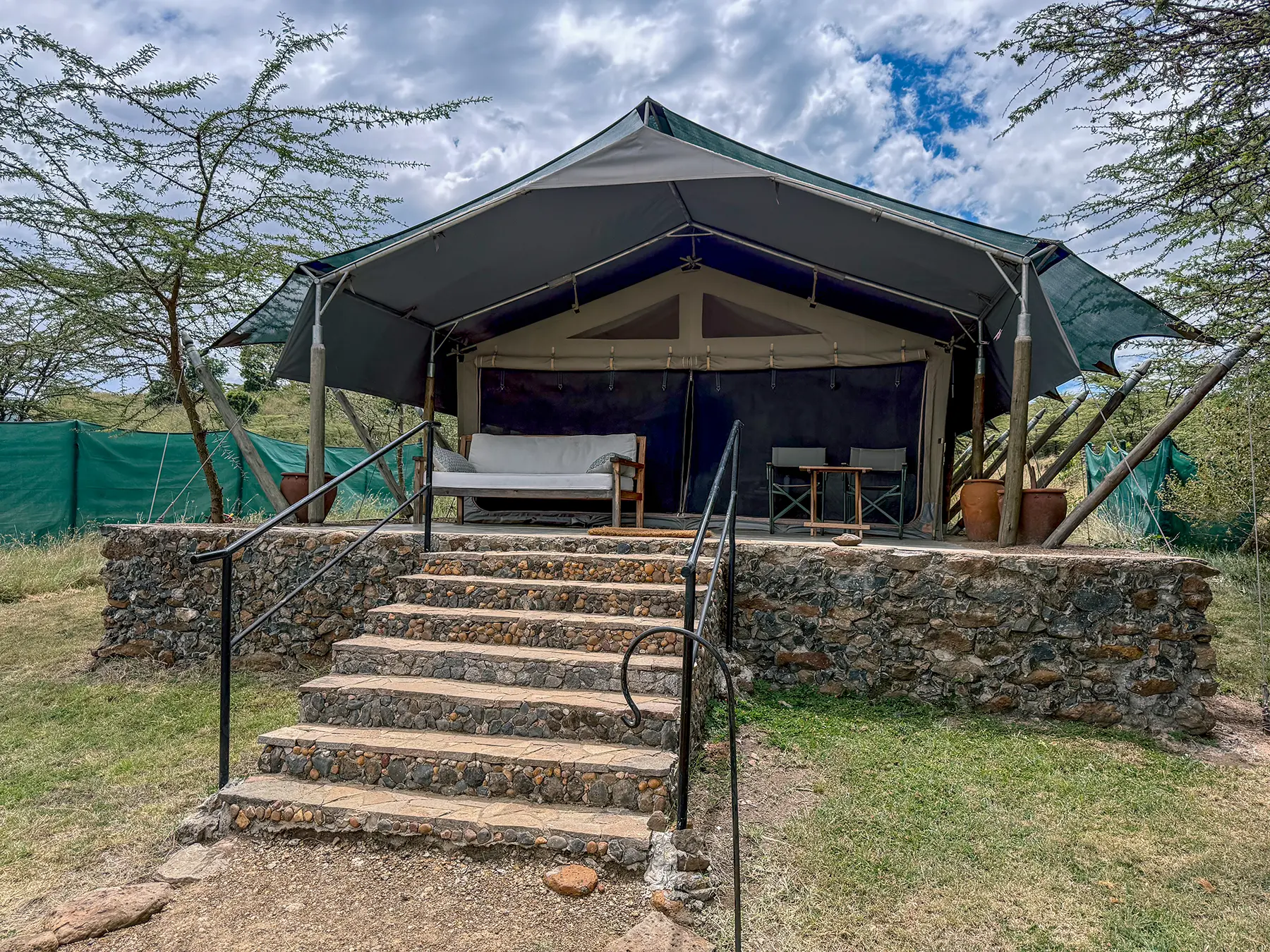
My Experience Visiting Maasai Mara National Reserve
I absolutely loved my time at Maasai Mara – it is hands down my favourite safari destination in Kenya! We stayed at Little Zebra River Camp in the Talek region and also at Enkorok Mara Camp, near Ololaimutiek Village in the south.
While at the reserve, we went on full-day game drives to maximise our chances of sighting wildlife – the animals are most active in the early morning and evening, when temperatures are cooler. We even brought a packed breakfast some days to get an earlier start.
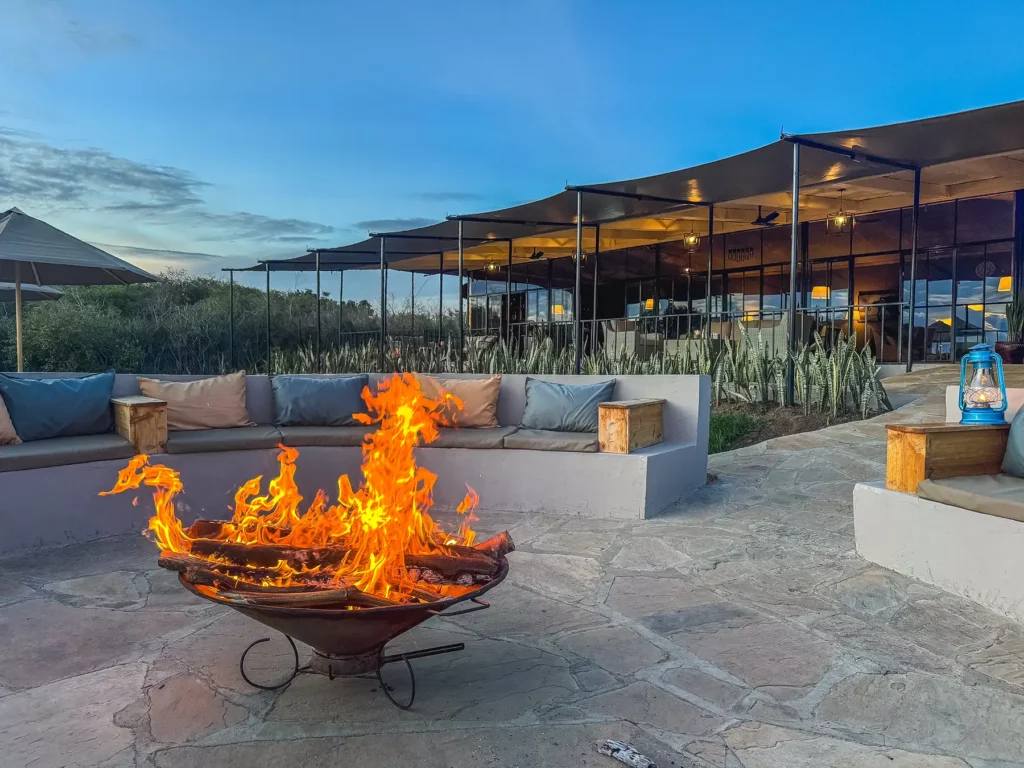
I had so many incredible wildlife sightings at the reserve – some of the best I’ve ever had. One of the most memorable was when we spotted a mother cheetah with her four adorable little cubs playing and wrestling with each other. We later saw another female called Nora (the oldest cheetah in the Mara) and a male in the Keekorok area of the Mara. His name is Mwanga.
The Maasai Mara was also where I had one of my best ever leopard sightings – a female in a tree with a gazelle kill. As we watched, she climbed down the tree with her kill and brought it right over to our car to eat it!
We saw lots of lions here, too, but for me, the best sighting was when we came across a huge male lion with a buffalo kill right beside the road, guarding it under the jealous gaze of some vultures as the rest of the pride slept.
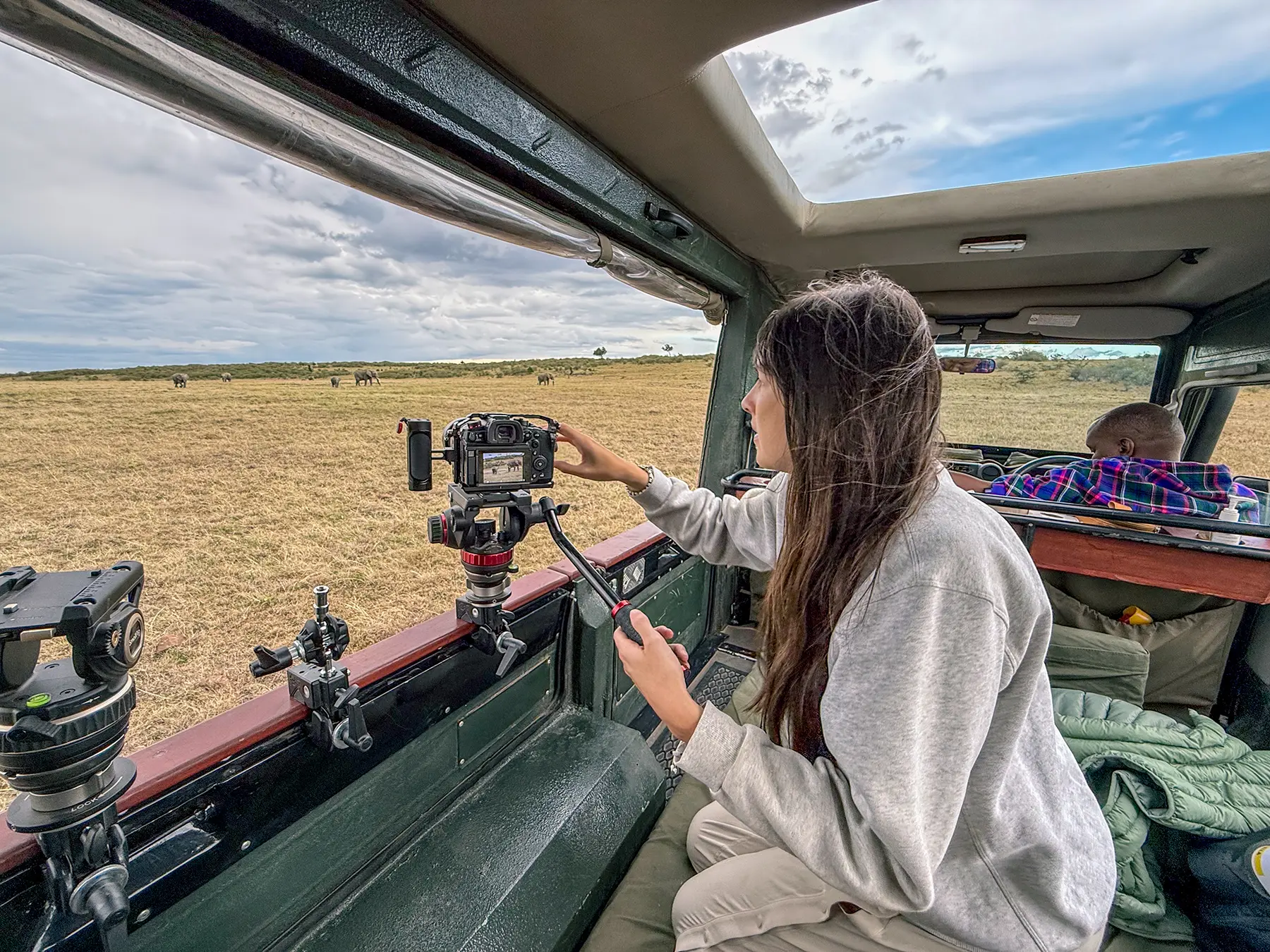
Our visit was in November, which meant we saw lots of baby animals as many herbivores are born during the short rainy season: gazelles, topis, giraffes, zebras and more. This was also where I saw my first baby giraffe and it was so cute! We encountered a breeding herd of elephants one day (one of many elephant sightings) with several young calves grazing contentedly and completely unbothered by our presence.
One other unforgettable sighting was when I saw a black rhino, which our guide said was extremely rare because there are only about 60 individuals in the Maasai Mara and these often move to the Serengeti. I felt so fortunate to have spotted it! We also saw hyenas and jackals and there were lots of crocodiles (including some surprisingly cute babies) along the river.
You can watch a video of my experience visiting the Maasai Mara below.
Day 15: Maasai Mara to Amboseli
Drive Time (Excluding Game Drives): 10 hour drive or 1 hour flight
Today will be a very long day of driving – the longest of your trip. You should start out early to make the most of the day and perhaps arrive at Amboseli in time for an evening game drive.
Alternatively, you could choose to fly if your budget permits.
Itinerary
Today, you’ll leave behind the stunning Maasai Mara reserve and set your sights on Amboseli National Park, some 10 hours’ drive away. If you set off early enough, you may have time for an evening game drive on arrival at Amboseli.
If your budget allows and you want to save time, you could also fly directly to Amboseli from Mara Serena Airstrip with Mombasa Air Safari. Tickets cost around $350 per person and the flight time is about one hour. If you choose to fly, you should book a morning flight so you get to Amboseli in time for lunch and an afternoon game drive.
Amboseli National Park has been designated a UNESCO World Heritage Site and is famed for its large herds of big tuskers, who migrate from swamp to swamp daily in processions that you won’t see anywhere else.
On a clear day, Mount Kilimanjaro hulks in the distance, providing a stunning backdrop for your photos. The best time to spot Africa’s tallest mountain is during the dry season – it’s often obscured by clouds during the wetter seasons.
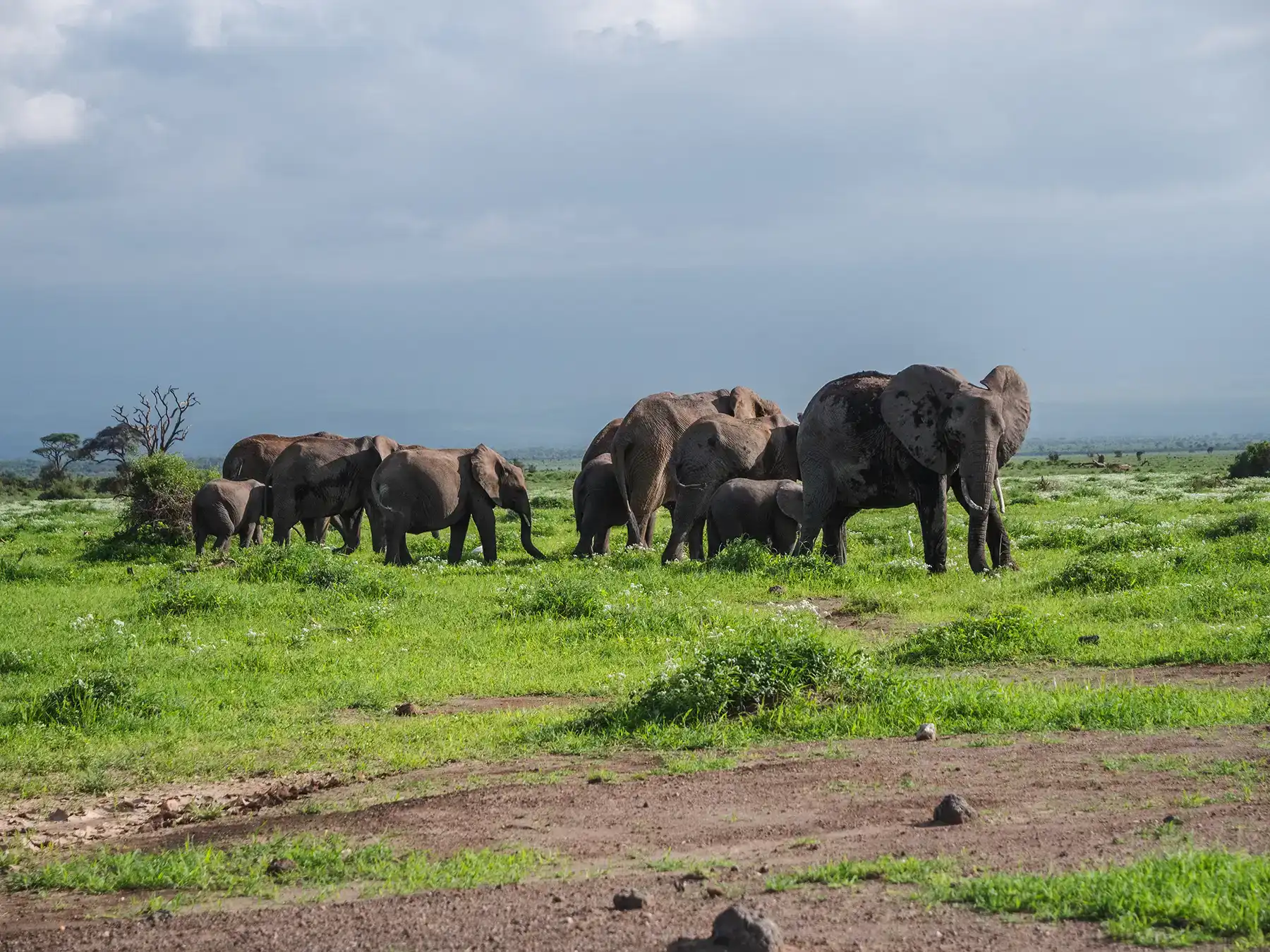
About Amboseli National Park
Amboseli gets its name from the Maasai word ‘Empusel’ meaning ‘salty dust place’. This is a very apt description for Lake Amboseli in the dry season, when much of the lake bed dries out to form an arid, salty plain.
As it’s relatively small compared to Maasai Mara at just 392 km² in size, Amboseli can easily be explored within 24 hours.
Located in the heart of the park, Lake Amboseli dominates the landscape. When the lake dries out during the dry season, it’s solid enough to drive across. In the rainy season, however, the lake fills up, limiting access to the west of the park.
Most wildlife sightings in Amboseli are on the east of the park – the side where most of the lodges can be found. The park boasts some of the largest herds of African elephants in the world.
The presence of the Maasai tribe here, with their fearsome reputation, has deterred poachers and allowed the elephant population to thrive.
Besides elephants, you can look forward to seeing a great many other animals in Amboseli including lions, buffalos, cheetahs, giraffes and hyenas. Rhinos are absent from the park, and leopards though present are rarely spotted due to the open terrain, so seeing all of the Big Five is unlikely.
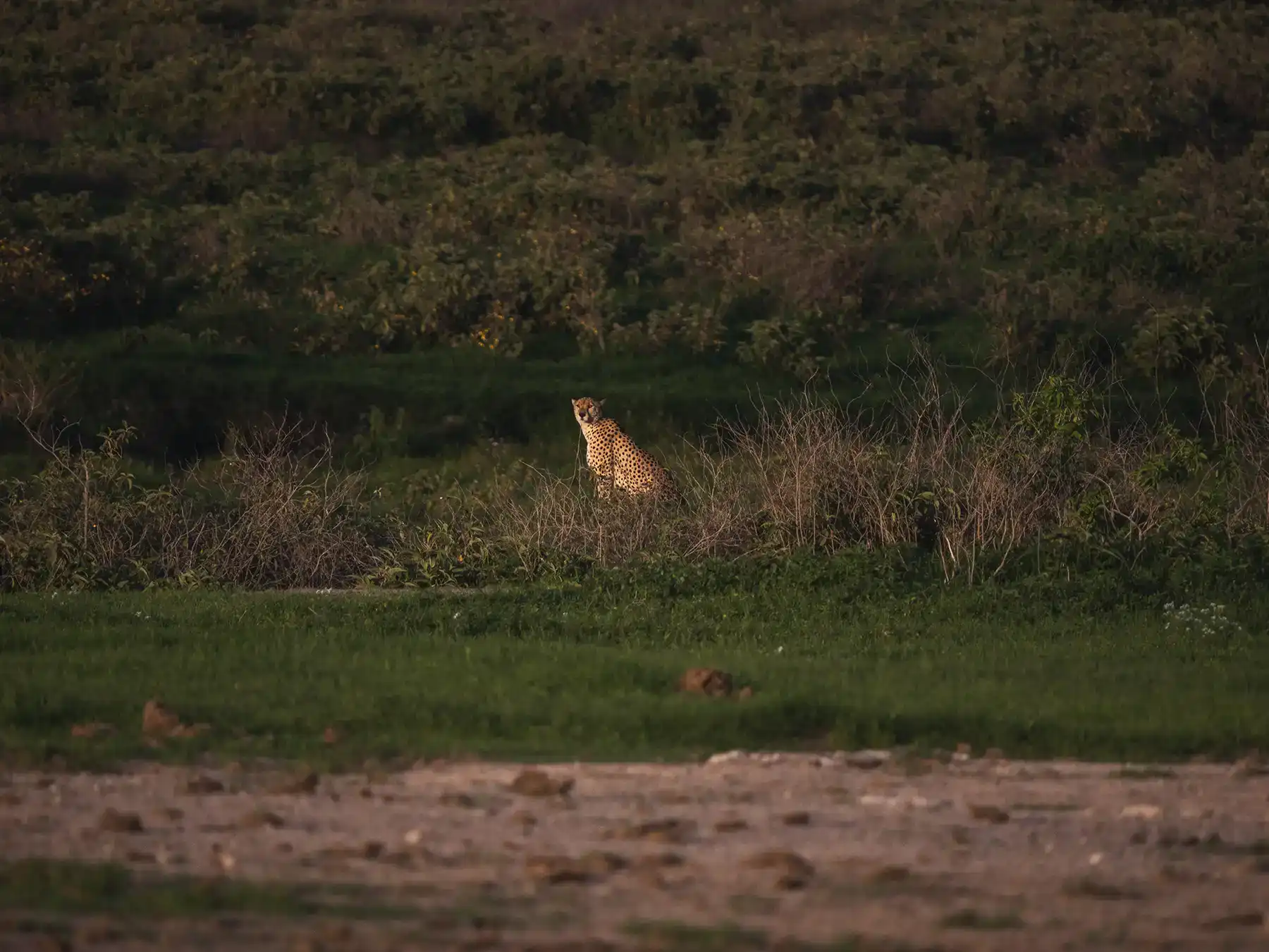
Tips for Amboseli National Park
- If you want to see Mount Kilimanjaro, you should try to plan your visit to Amboseli during the long dry season between June and the end of September when cloud cover is thinner.
- The best time to see the park’s famous elephants is either early in the morning (around 7am) or in the evening (around 5pm), when they march to and from the swamps in the heart of Amboseli.
- The elephants aren’t really bothered by the presence of vehicles, but they’re still huge wild animals and that needs to be respected. Avoid causing a lot of noise when viewing them as this could disturb them.
- Amboseli is one of Kenya’s hottest national parks, so you should dress accordingly and put on plenty of sunscreen.
Where to Spend the Night
Amboseli National Park has three safari lodges within the confines of the reserve, and I would recommend staying at one of these if possible. This will save you spending time travelling to and from the park itself, leaving you more time for safari.
However, most lodges outside the park are not far from Amboseli’s gates, so the driving time is not a huge issue.
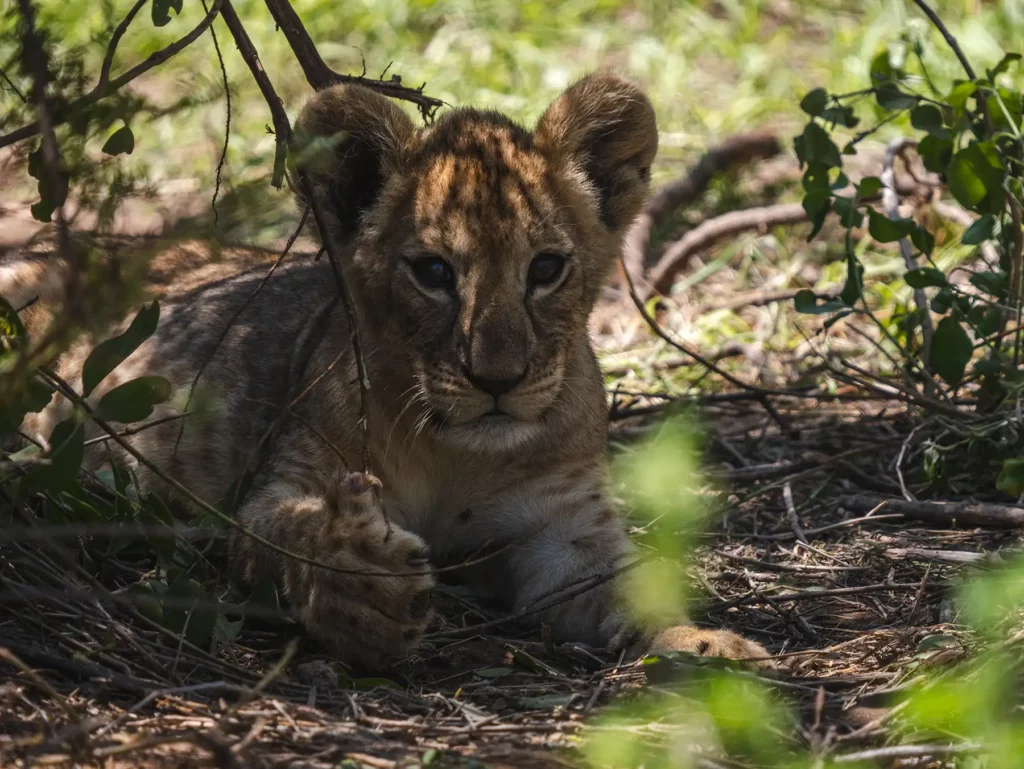
Day 16: Amboseli
Drive Time (Excluding Game Drives): 0 hours
Today is all about exploring Amboseli National Park. You’ll go on a morning and an afternoon game drive to maximise your chances of seeing the park’s famous elephant herds and other wildlife.
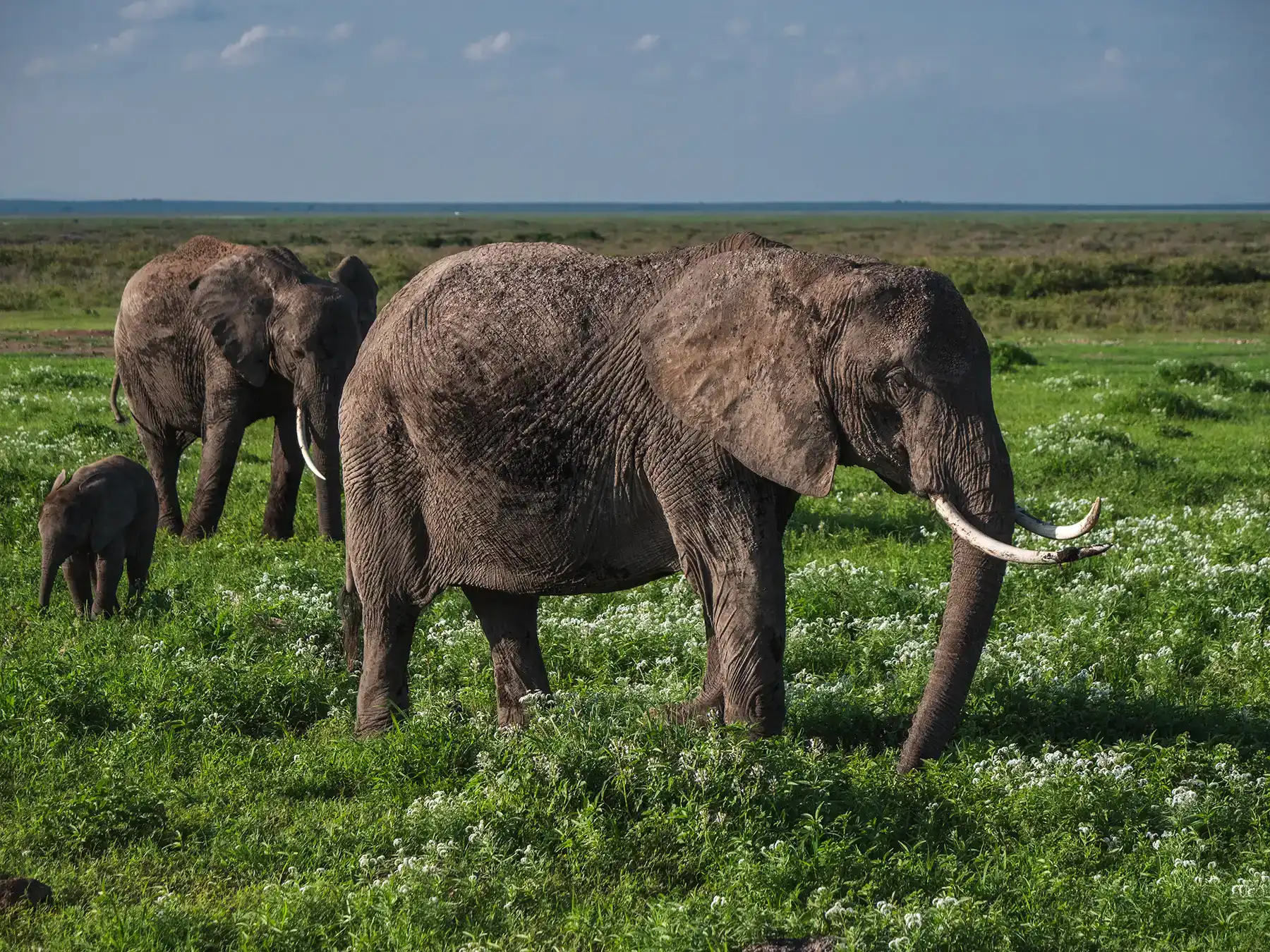
Itinerary
Today, you’ll be exploring Amboseli National Park with a morning and an afternoon game drive. This gives you the best chance of witnessing the famous elephant processions as they march to and from the swamps.
In the early morning, you’ll head out to catch the elephants as they begin their daily journey to the swamps. The sight of hundreds of elephants walking in procession across the plains, with Mount Kilimanjaro as a backdrop on a clear day, is truly unforgettable.
Besides elephants, keep your eyes peeled for lions, cheetahs, buffalos, giraffes, zebras, wildebeests and hippos. The park is also home to over 400 bird species, so birdwatchers will be in their element here.
After lunch at your lodge, you’ll head out again in the afternoon to catch the elephants returning from the swamps. The golden afternoon light makes for spectacular photographs.
My Experience Visiting Amboseli National Park
Amboseli really exceeded my expectations! We stayed at Tulia Amboseli Camp and absolutely loved it. They grow their own fruit and vegetables and the chefs are amazing.
Although I knew Amboseli was an elephant hotspot, I wasn’t prepared for the scale of the herds I saw – hundreds of them marching across the plains and some of them with tusks that reached almost to the ground! We also saw a teeny tiny baby elephant that our guide said was probably only a couple of months old.
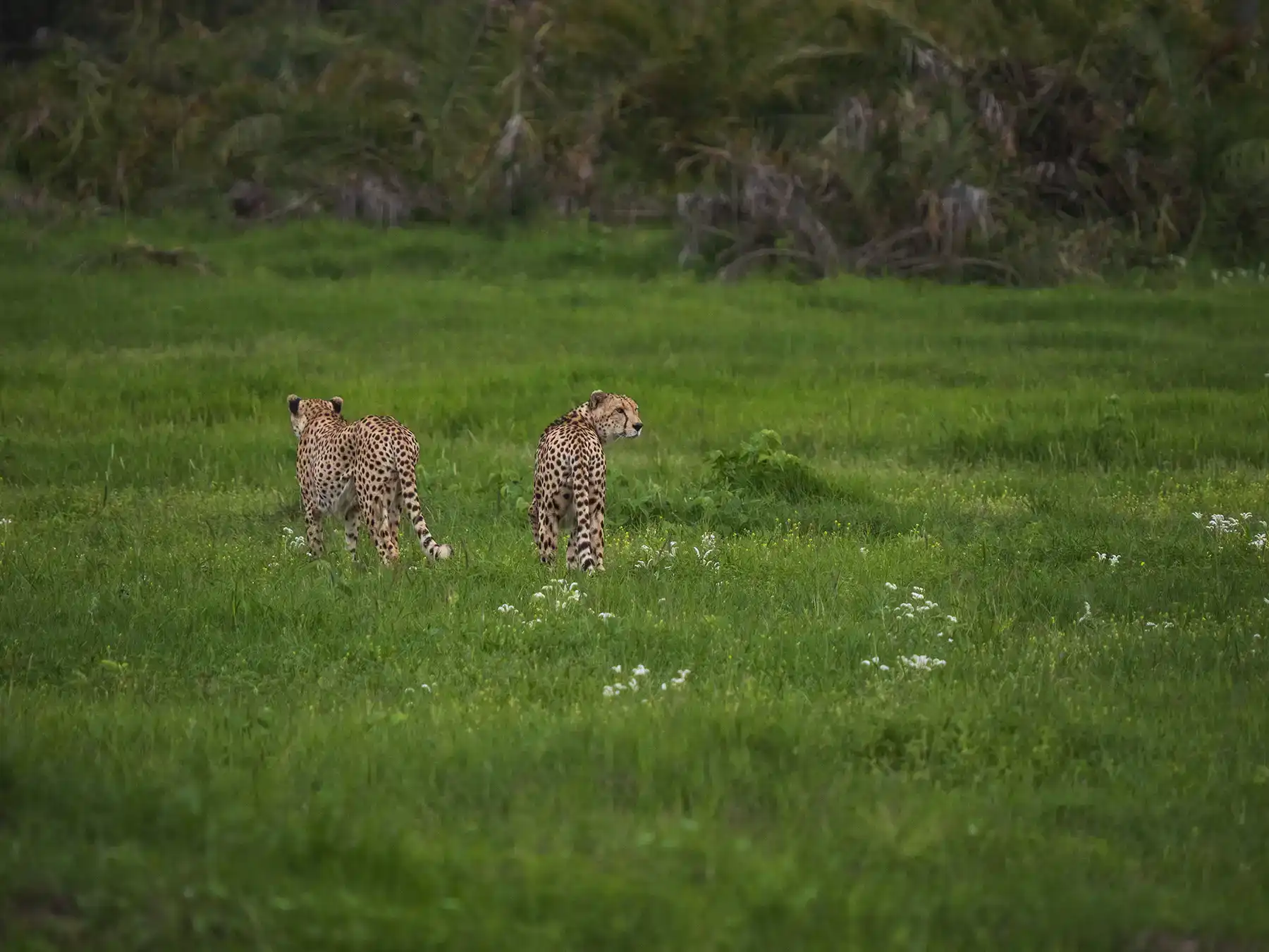
Strangely enough, Amboseli was also where I had some of my best ever big cat sightings, although it isn’t known as a predator hotspot. We saw a cheetah with two cubs hunting, and on another occasion we watched a lioness and her cubs resting under a bush. We also spotted hippos out of the water, which is quite rare!
You can watch a video of my experience visiting Amboseli National Park below.
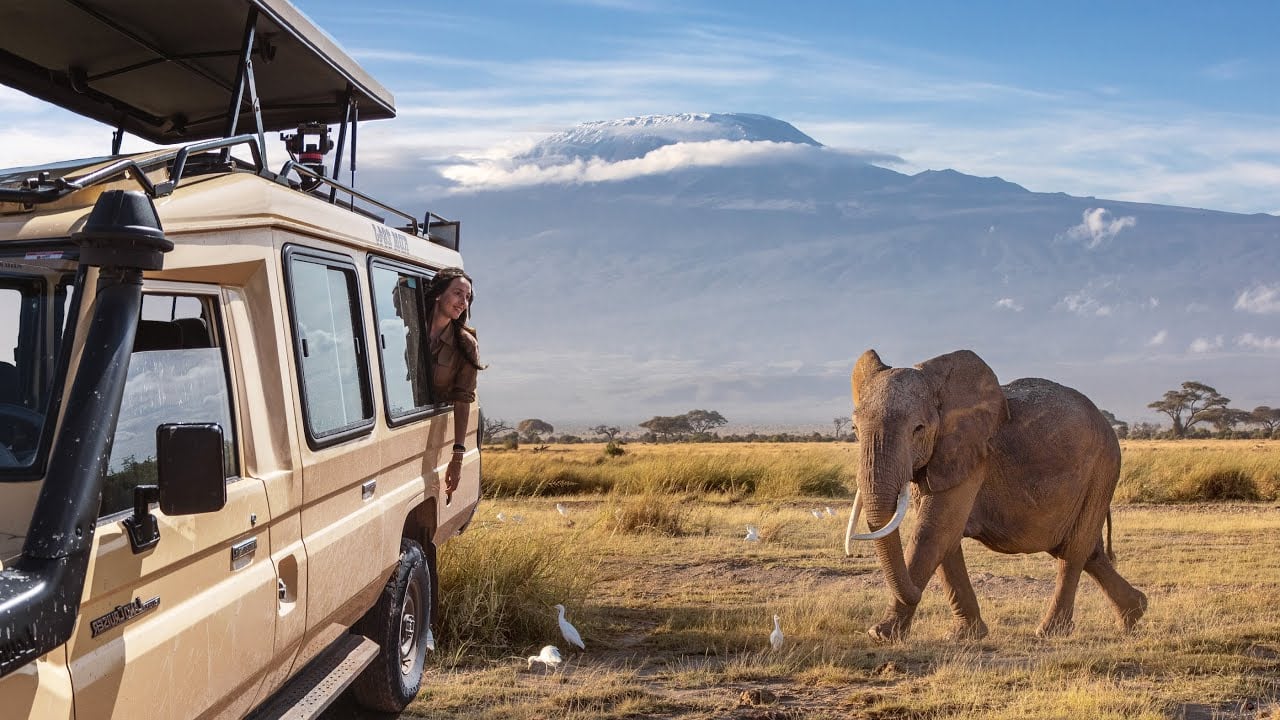
Where to Spend the Night
Tonight, you’ll be staying at the same accommodation as before.
Day 17: Amboseli to Tsavo West
Drive Time (Excluding Game Drives): 3 hours
Today you’ll be leaving Amboseli and making the 3-hour drive to Tsavo West National Park. After lunch at the lodge, you’ll head out on an afternoon game drive to explore this vast wilderness.

Itinerary
After breakfast, you’ll set off on the 3-hour drive from Amboseli to Tsavo West National Park. This is one of Kenya’s largest and oldest parks, known for its dramatic volcanic landscapes, lava flows and the famous Mzima Springs.
Once you arrive and have lunch at your lodge, you’ll head out on an afternoon game drive. The terrain here is very different from what you’ve seen before – expect red-soiled plains, rocky outcrops, and thick scrubland.
Tsavo West is home to the Big Five, though rhinos and leopards are rarely seen. You’re more likely to spot elephants (often coated in red dust), lions, buffalos, giraffes, zebras and various antelope species.
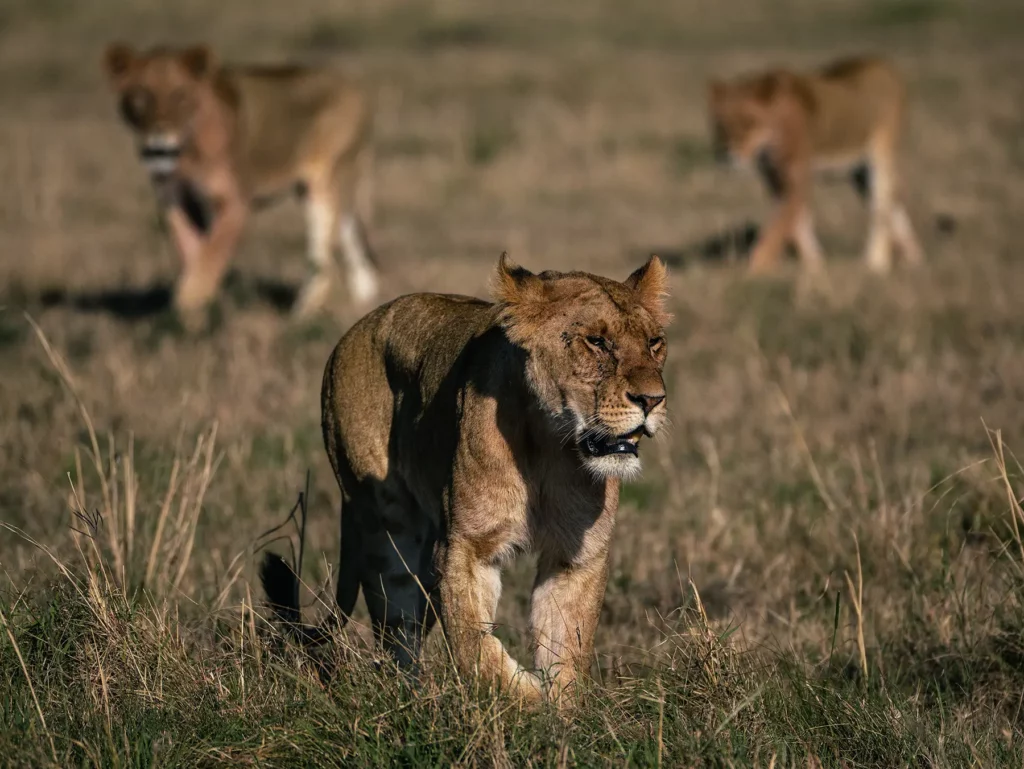
About Tsavo West National Park
Tsavo West forms part of the larger Tsavo Conservation Area, which also includes Tsavo East National Park. Together, they make up one of the world’s largest wildlife sanctuaries at over 22,000 km².
The park is famous for the Mzima Springs, a series of natural springs that produce an estimated 250 million litres of fresh water daily. The crystal-clear pools are home to hippos and crocodiles, and there’s an underwater viewing chamber where you can watch them from below the surface.
Tsavo West is also known for its red elephants – not a separate species, but African elephants that coat themselves in the park’s distinctive red volcanic soil. The park has a volcanic landscape with lava flows, craters and caves to explore.
Tips for Tsavo West National Park
- Don’t miss the Mzima Springs – the underwater viewing chamber is a unique experience where you can watch hippos and crocodiles from below.
- The Shetani Lava Flow is worth a visit if you’re interested in geology. This vast expanse of black lava was created by an eruption around 200 years ago.
- The park is less crowded than the more famous reserves, so you’re more likely to have wildlife sightings to yourself.
Where to Spend the Night
There are several lodges within Tsavo West National Park, ranging from budget to luxury options.
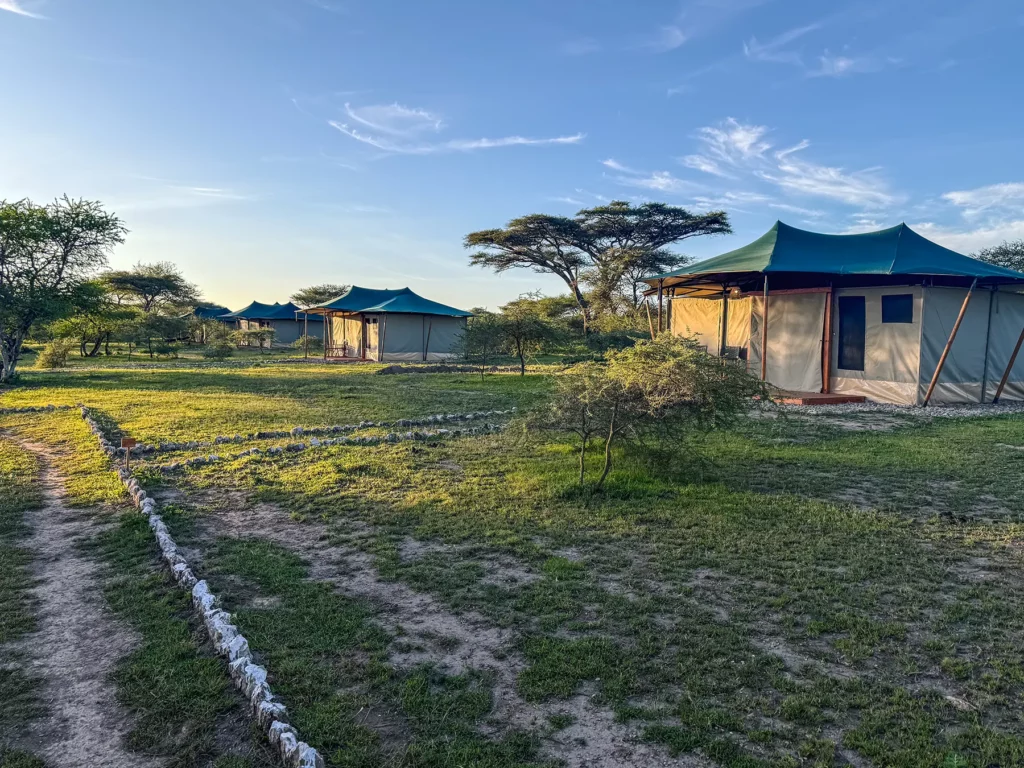
Day 18: Tsavo West
Drive Time (Excluding Game Drives): 0 hours
Today you’ll spend a full day exploring Tsavo West National Park with morning and afternoon game drives. Be sure to visit the famous Mzima Springs and keep an eye out for the park’s distinctive red elephants.
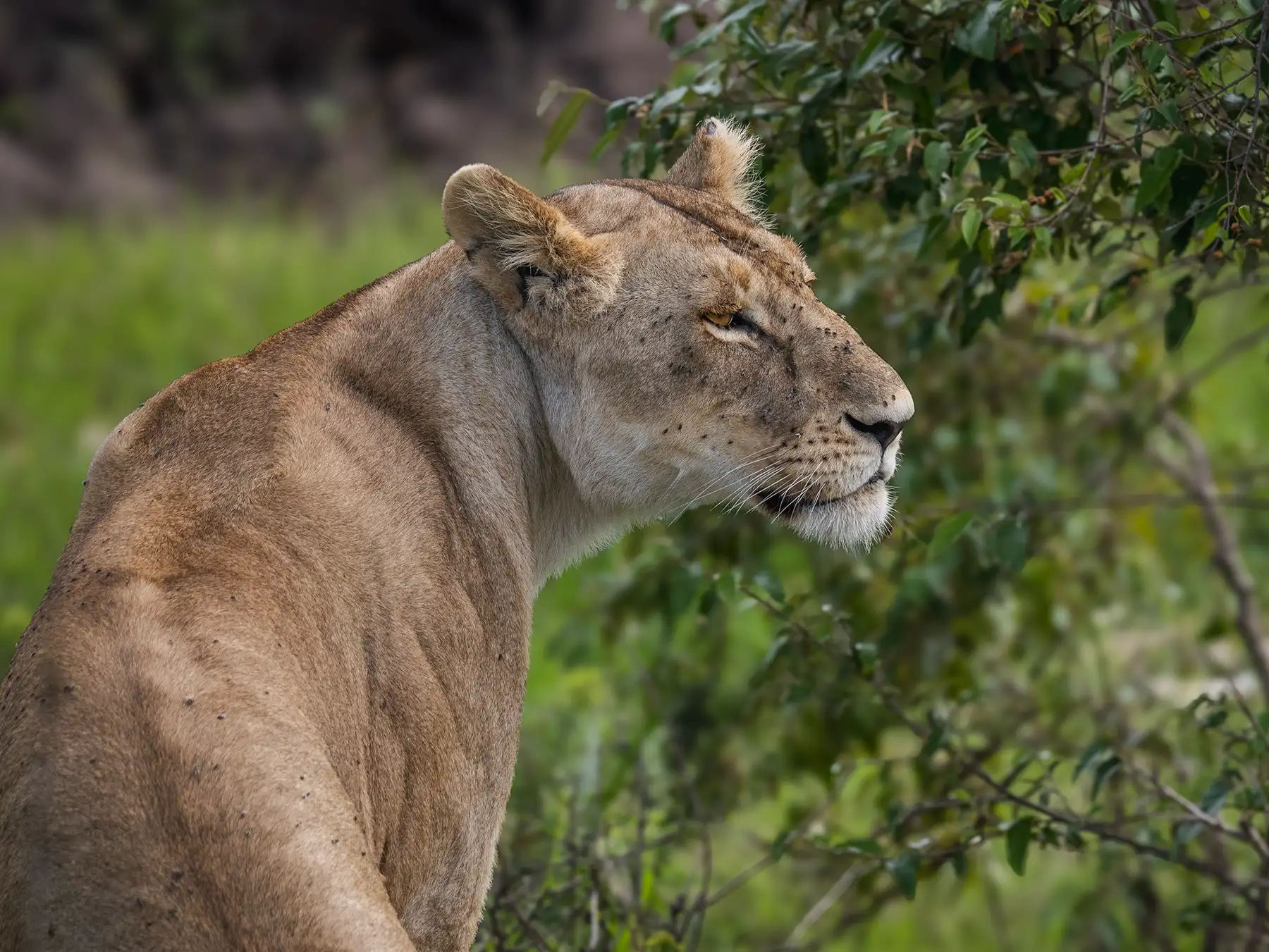
Itinerary
Rise early for your morning game drive through Tsavo West. The landscape here is rugged and dramatic, with volcanic hills, lava flows and thick bushland. This is a great time to spot the park’s wildlife before the heat of the day sets in.
A visit to Mzima Springs should be on your agenda today. These crystal-clear freshwater pools are fed by underground streams from Mount Kilimanjaro and are home to hippos, crocodiles and various fish species. The underwater viewing chamber offers a unique perspective on these animals.
After lunch at your lodge, head out on an afternoon game drive. The elephants in Tsavo West are famous for their reddish appearance, caused by dust-bathing in the park’s red volcanic soil. You may also spot lions, buffalos, giraffes, zebras, and if you’re lucky, the elusive leopard.
As the sun begins to set, the volcanic landscape takes on a golden glow, providing spectacular photo opportunities.
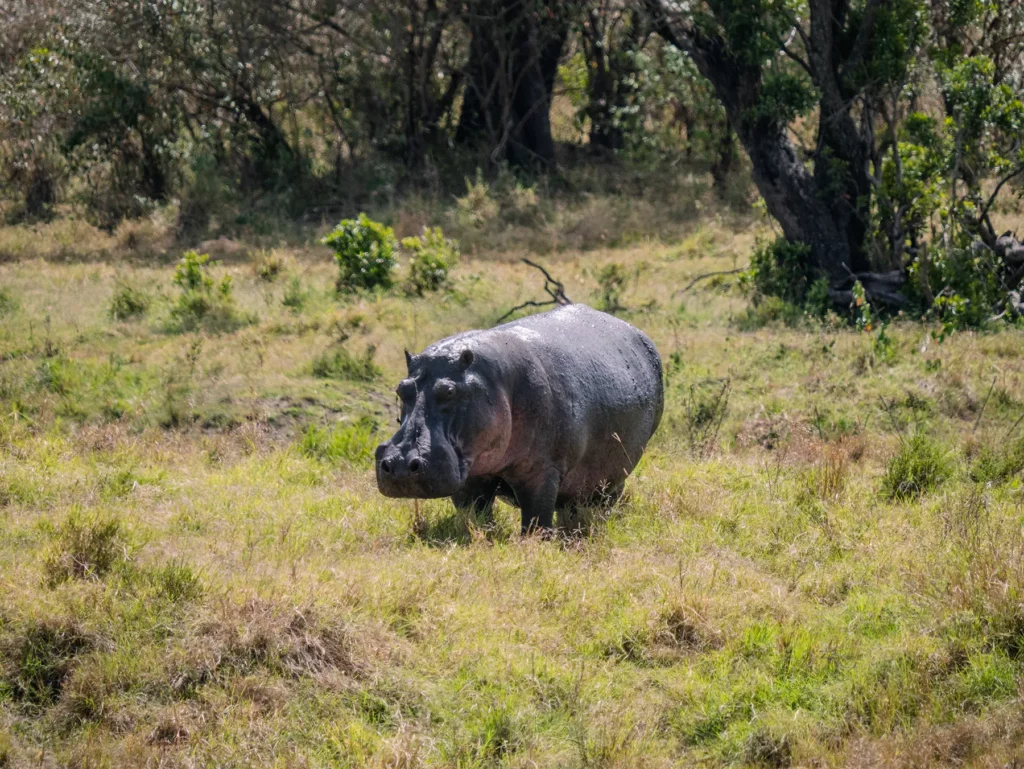
Where to Spend the Night
Tonight, you’ll stay at the same accommodation as the previous night.
Day 19: Tsavo West to Diani Beach
Drive Time (Excluding Game Drives): 4 hours
Today marks a change of pace as you leave the safari parks behind and head to the stunning Kenyan coast. The 4-hour drive from Tsavo West will bring you to Diani Beach, where you can relax and unwind after your action-packed safari adventure.
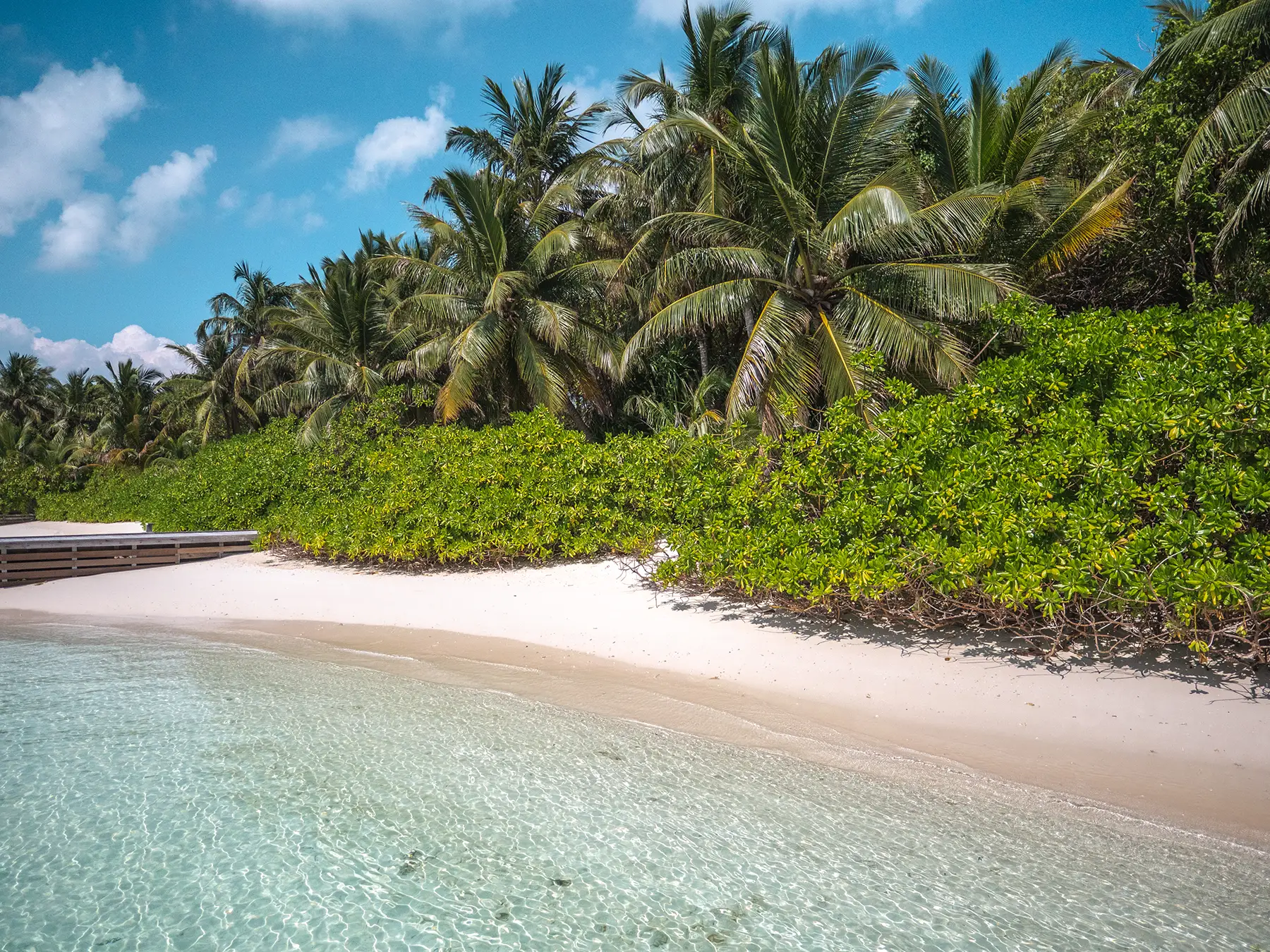
Itinerary
After breakfast, you’ll bid farewell to Tsavo West and begin the 4-hour drive to Diani Beach on Kenya’s south coast. As you travel east, the landscape gradually transforms from dry savannah to lush coastal vegetation.
Diani Beach is consistently rated as one of Africa’s best beaches, and once you arrive, you’ll see why. The powdery white sand stretches for miles along the turquoise Indian Ocean, fringed by swaying palm trees.
After checking into your beachfront accommodation, take some time to relax on the beach, swim in the warm ocean, or simply enjoy a cold drink while watching the waves. After nearly three weeks of early morning wake-up calls, you’ve earned it!
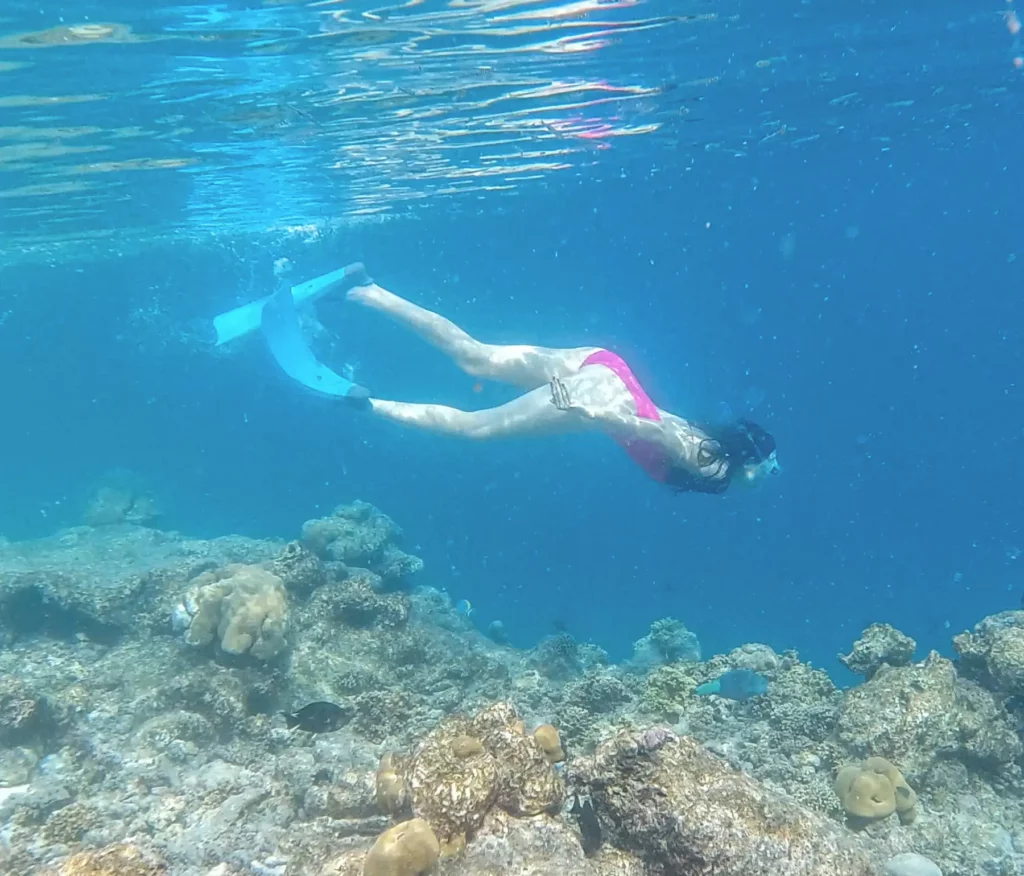
About Diani Beach
Located about 30 kilometres south of Mombasa, Diani Beach is a 10-kilometre stretch of pristine white sand beach along the Indian Ocean. The beach is protected by a coral reef, making the waters calm and perfect for swimming.
Beyond relaxing on the beach, Diani offers plenty of activities including snorkelling, diving, kite surfing, and boat trips. The nearby Colobus Conservation centre works to protect the endangered Angolan colobus monkeys that live in the coastal forests.
The area has a good selection of restaurants and bars, so you won’t be short of dining options during your stay.
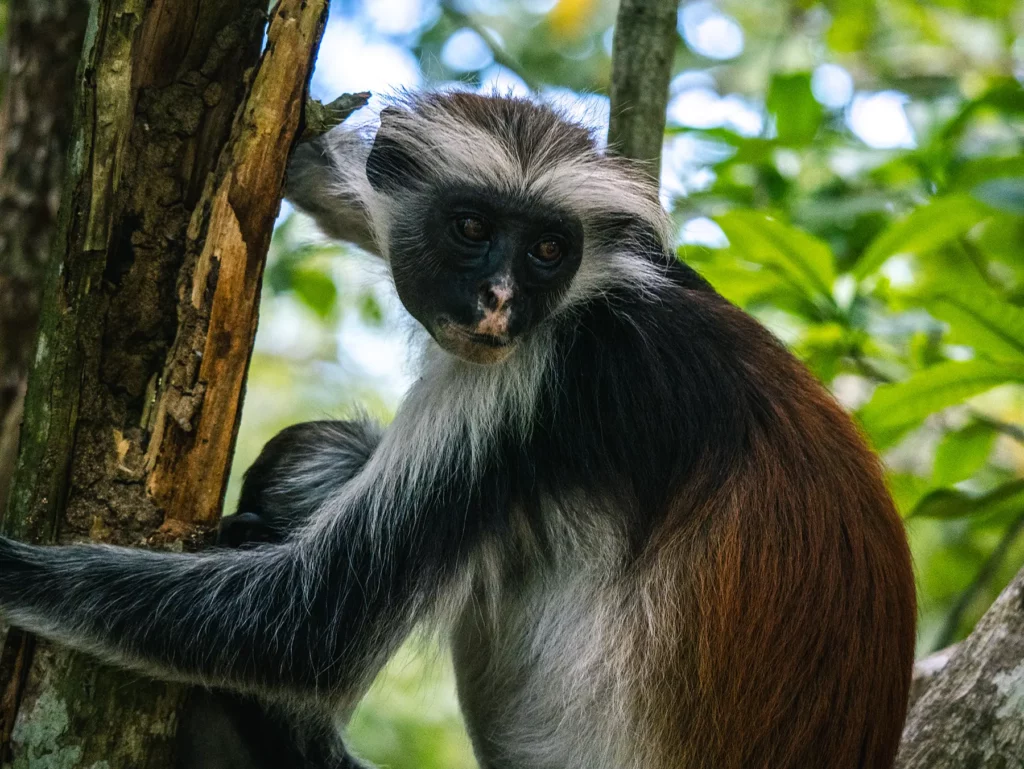
Tips for Diani Beach
- The beach is at its best during the dry seasons (January to March and July to October) when the weather is sunny and the sea is calm.
- If you’re interested in snorkelling or diving, the coral reef offshore is teeming with colourful fish and marine life.
- Watch out for the cheeky vervet monkeys and colobus monkeys that frequent the beachfront hotels – they’re known for stealing food!
Where to Spend the Night
Diani Beach has a wide range of accommodation options, from luxury resorts to mid-range hotels and budget guesthouses. Most are located right on the beach or a short walk away.
Day 20: Diani Beach
Drive Time (Excluding Game Drives): 0 hours
Today is all about relaxation and enjoying the beautiful Kenyan coast. Spend the day lounging on the beach, swimming in the ocean, or trying some of the water activities on offer.
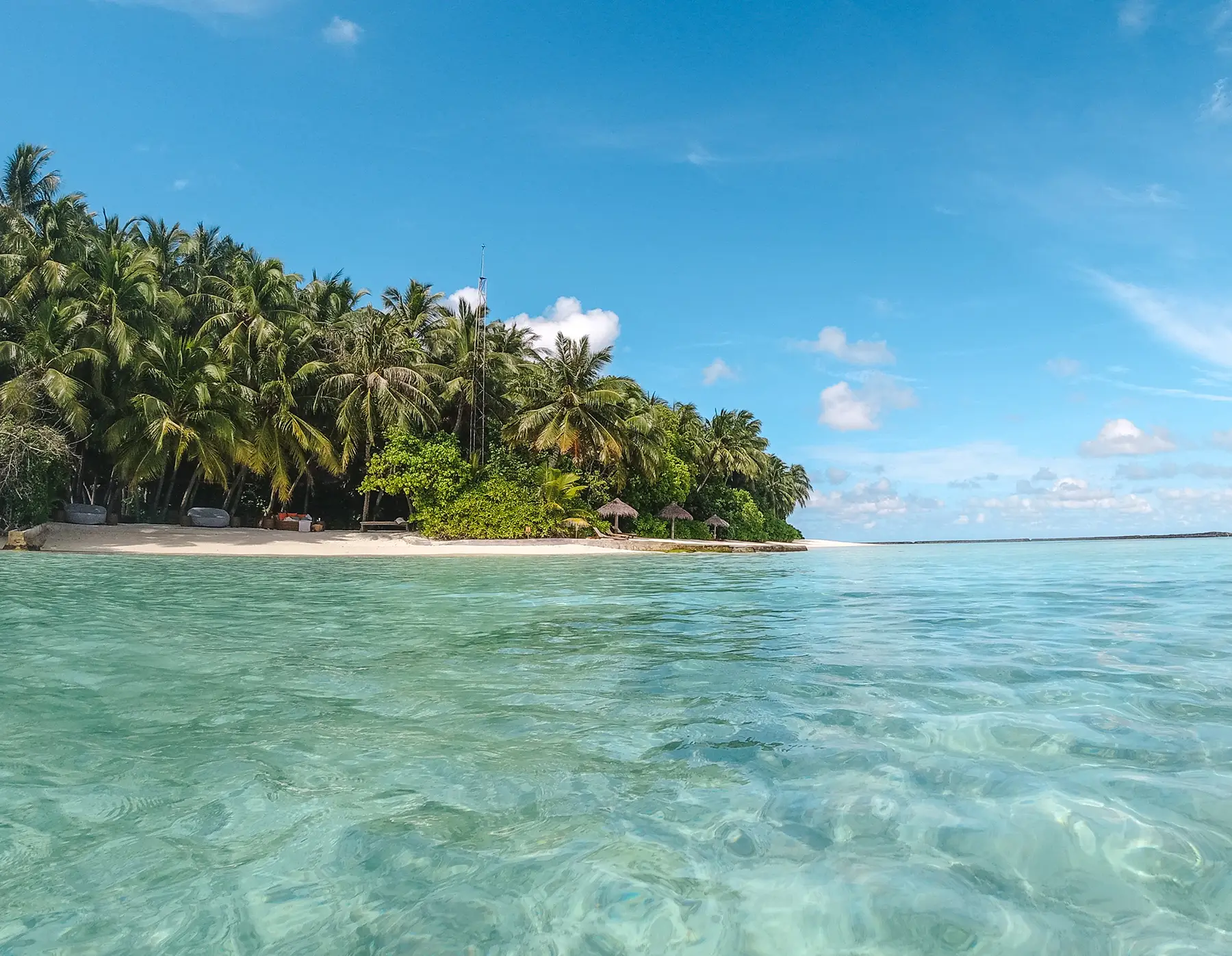
Itinerary
After nearly three weeks of early mornings and action-packed safari days, today is your chance to sleep in and take things easy. Wake up whenever you like and enjoy a leisurely breakfast before deciding how to spend your day.
If you’re feeling active, there are plenty of water sports to try: snorkelling on the coral reef, diving, kite surfing, or jet skiing. You could also take a boat trip to Wasini Island to see dolphins and enjoy a seafood lunch.
If relaxation is more your style, simply spend the day on the beach, alternating between sunbathing and cooling off in the turquoise water. Most hotels have beach loungers and umbrellas set up for guests.
In the evening, enjoy a sunset dinner at one of Diani’s beachfront restaurants. The fresh seafood here is excellent!
Where to Spend the Night
Tonight, you’ll stay at the same accommodation as the previous night.
Day 21: Diani Beach to Nairobi
Drive Time (Excluding Game Drives): 1 hour flight or 8 hour drive
Today marks the end of your 3-week Kenya safari adventure. You’ll make your way back to Nairobi for your onward journey home.
Itinerary
Depending on your flight time, you may have a few hours to enjoy a final morning at the beach before heading to the airport. Make the most of this time – take a last swim, have breakfast overlooking the ocean, and soak up the coastal atmosphere.
To get back to Nairobi, I would recommend flying from Ukunda Airstrip (near Diani Beach) to Nairobi’s Wilson Airport. The flight takes about an hour and avoids the long 8-hour drive. Several airlines operate this route, including Safarilink and Jambojet.
If you’re flying internationally out of Jomo Kenyatta International Airport (JKIA), you’ll need to transfer from Wilson Airport. This can be done by taxi or arranged shuttle, and takes about 30-45 minutes depending on traffic.
As you fly back over the Kenyan landscape, take a moment to reflect on the incredible experiences you’ve had over the past three weeks – from the wildlife of the Maasai Mara and Amboseli to the cultural encounters with the Maasai tribe and the relaxation of Diani Beach.
Where to Spend the Night
If you have a late evening international flight, you may not need accommodation. However, if you have an early morning flight the next day, you might want to book a hotel near the airport for convenience.
Recommended Booking Options For Your 3-Week Kenya Safari Itinerary
Private Safari
Most popular & best experience – typical prices for this itinerary start from $300 per person per day.
Visit safarisbyella.com for free quotes from trustworthy local tour companies I use to book my own trips.
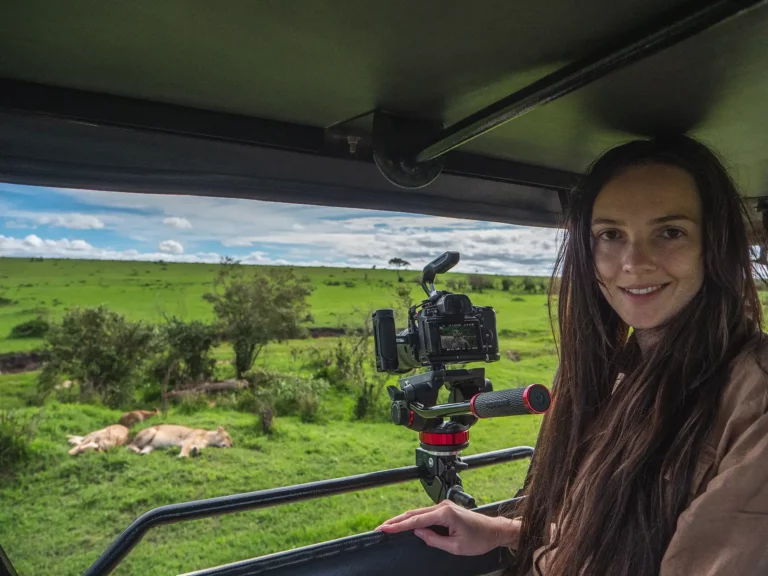
Final Thoughts
And there you have it – my perfect 3-week Kenya safari itinerary! This comprehensive journey takes you through some of Kenya’s most spectacular wildlife destinations, from the rhino sanctuaries of Ol Pejeta and the rare species of Samburu to the world-famous Maasai Mara and the elephant herds of Amboseli.
Three weeks gives you the luxury of time – time to fully immerse yourself in each destination, time to seek out those special wildlife encounters, and time to experience the incredible diversity that Kenya has to offer. From the arid northern reserves to the lush Maasai Mara, from the volcanic landscapes of Tsavo to the pristine beaches of Diani, this itinerary covers it all.
Kenya truly is one of the world’s greatest safari destinations, and I hope this guide helps you plan an unforgettable adventure of your own. If you have any questions about this itinerary or would like help booking your Kenya safari, please don’t hesitate to get in touch!
Read More Kenya Guides
For an overview of planning your safari, you can read my Ultimate Kenya Safari Guide.
Kenya Itineraries
Recomended itineraries and how to book them.
7-10-Day Kenya Safari Itinerary
3 Day Kenya Safari Itinerary & Costs
2-Week Kenya Safari Itinerary & Costs
3-Week Kenya Safari Itinerary & Costs
Kenya & Tanzania Itineraries
Multi-country itineraries and how to book them.
10-Day Kenya and Tanzania Safari Itinerary
2-Week Kenya & Tanzania Safari Itinerary
Costs & Planning
How to get the most bang for your buck and the best time of year to visit depending on what you want to do and see.
Kenya Safari Costs – Everything you Need to Know
The Great Wildebeest Migration Guide
National Parks & Reserves
Complete guides to the best and most famous safari reserves, including the wildlife you’ll see, entrance costs and best time to visit.
Coming soon.
Other Popular Safari Destinations
How to Book Your Safari
Save time and ensure an incredible safari experience by getting quotes from my recommended local safari companies.
Join the rapidly growing tribe of over 1,000 travellers who’ve booked their dream safari using my insider tips and recommendations.